How to Make a Mocha Without the Chocolate Sinking
The coffee behaves as it does in any milk drink, and the chocolate is the thing that clumps, sinks or drowns it in sugar.
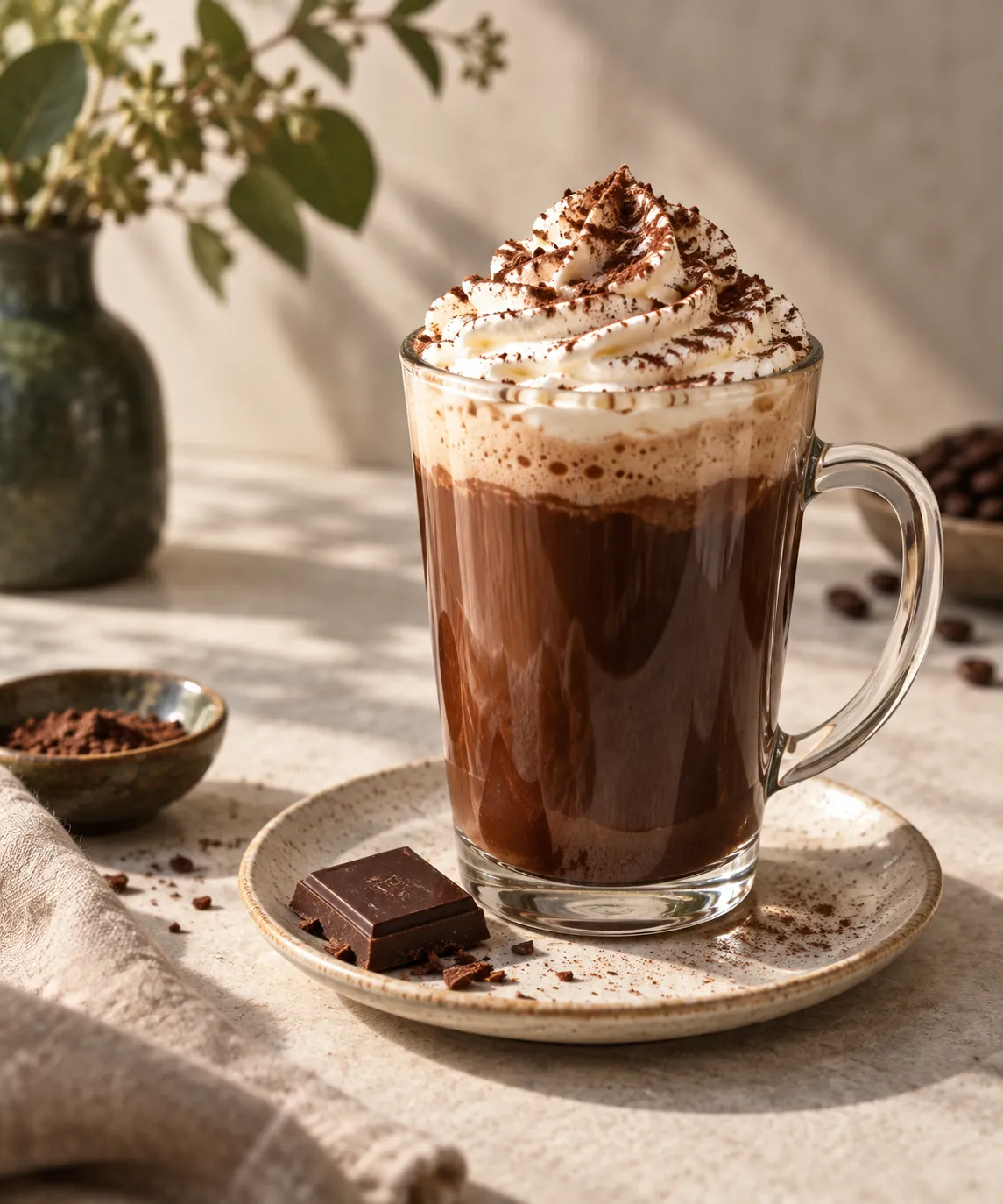
A mocha at home is a latte with chocolate in it, and the chocolate is the only difficult part.
The coffee behaves the way it does in any milk drink. The chocolate is the thing that clumps, sinks, or drowns the espresso in sugar, and which of those happens depends on what form it arrived in.
What form of chocolate should go in a mocha?
Syrup, cocoa powder and real chocolate all make a mocha, but each makes a different one and goes in a different way.
| Form | Dissolves | Sugar | Body | Best for |
|---|---|---|---|---|
| Chocolate syrup | Instantly, in anything | Already sweetened | Thin | A fast, reliable cup |
| Cocoa powder | Only in hot liquid, with stirring | None | Light | Control over sweetness |
| Melted chocolate | Slowly, in hot espresso | Whatever the bar carries | Rich | A thicker drink |
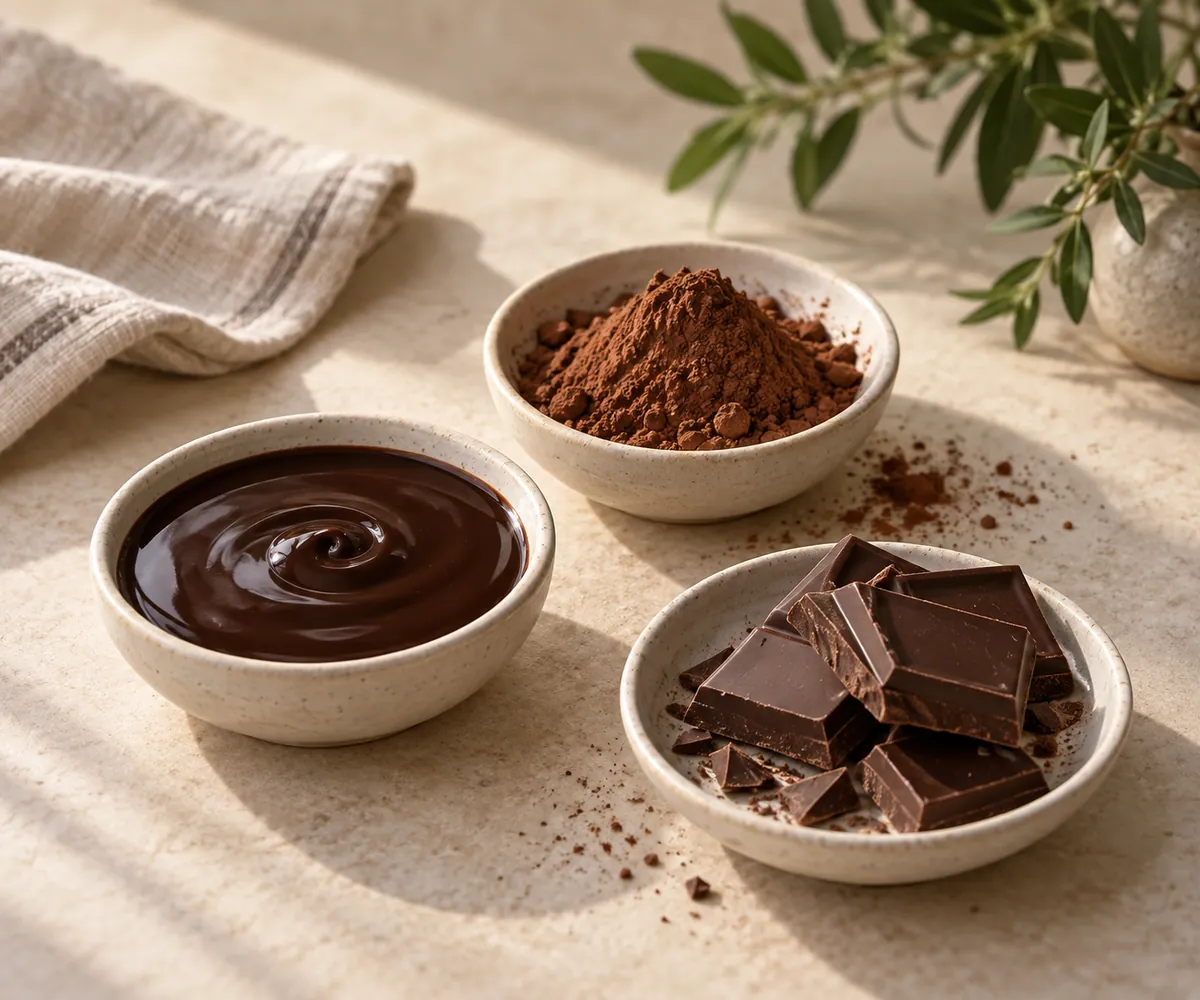
Syrup is the cafe default because it never fails, being already a liquid that disperses on contact and needs no stirring at all.
Powder is what most people actually have in the cupboard, and it is the one that goes wrong. It carries no sugar, which is an advantage, and starch, which is not.
A melted bar gives more body than either of the others, because cocoa butter is a fat and fat adds to how thick a mocha feels.
How sweet the cup ends up depends on the form, since a sweetened drinking chocolate already contains sugar and anything you add on top lands on a drink that was finished.
If you are buying cocoa, Dutch-processed cocoa has been treated with alkali and disperses more readily than the natural kind, which matters more here than it does in baking.
How do you make a mocha with espresso?
The order matters more than anything else in the build, because the chocolate has exactly one chance to meet liquid hot enough to dissolve it, and that liquid is the espresso rather than the milk.
Chocolate first, coffee onto it, stir, then milk.
Mocha, in order
- ChocolatePut the syrup, powder or chopped chocolate into the bottom of the cup.
- EspressoPull a double espresso straight onto it.
- StirWork it for about fifteen seconds, until the surface goes glossy.
- MilkSteam and pour roughly 200 ml, the same as a latte would take.
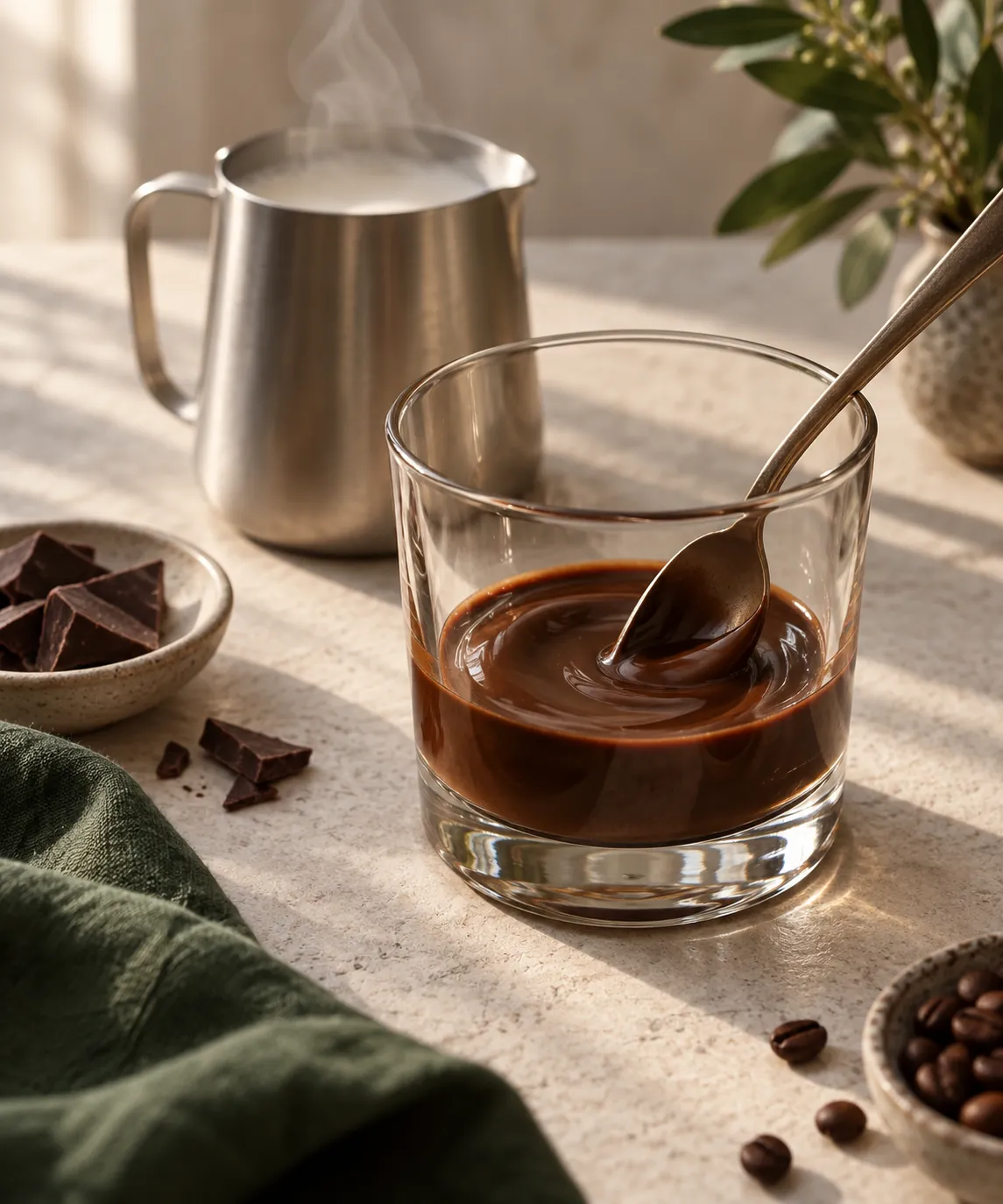
Fifteen seconds sounds fussy, but it is roughly how long a shot needs to stop steaming.
The milk volume is the same as a latte in the same glass, and shrinking the milk to make room for chocolate makes something closer to a sweetened cortado.
If you are putting cream on top, leave about two centimetres of headroom, which is enough and comes out of the milk rather than the coffee.
White chocolate is the exception to the whole procedure. It melts far lower than dark and can seize into grains against a fresh shot, so let the espresso stand for a few seconds first.
Why does cocoa powder go grainy in a mocha?
Cocoa powder does not dissolve, being a ground solid carrying starch, so the specks you find at the bottom of a bad mocha are often hydrated starch that never got hot enough to swell and disperse.
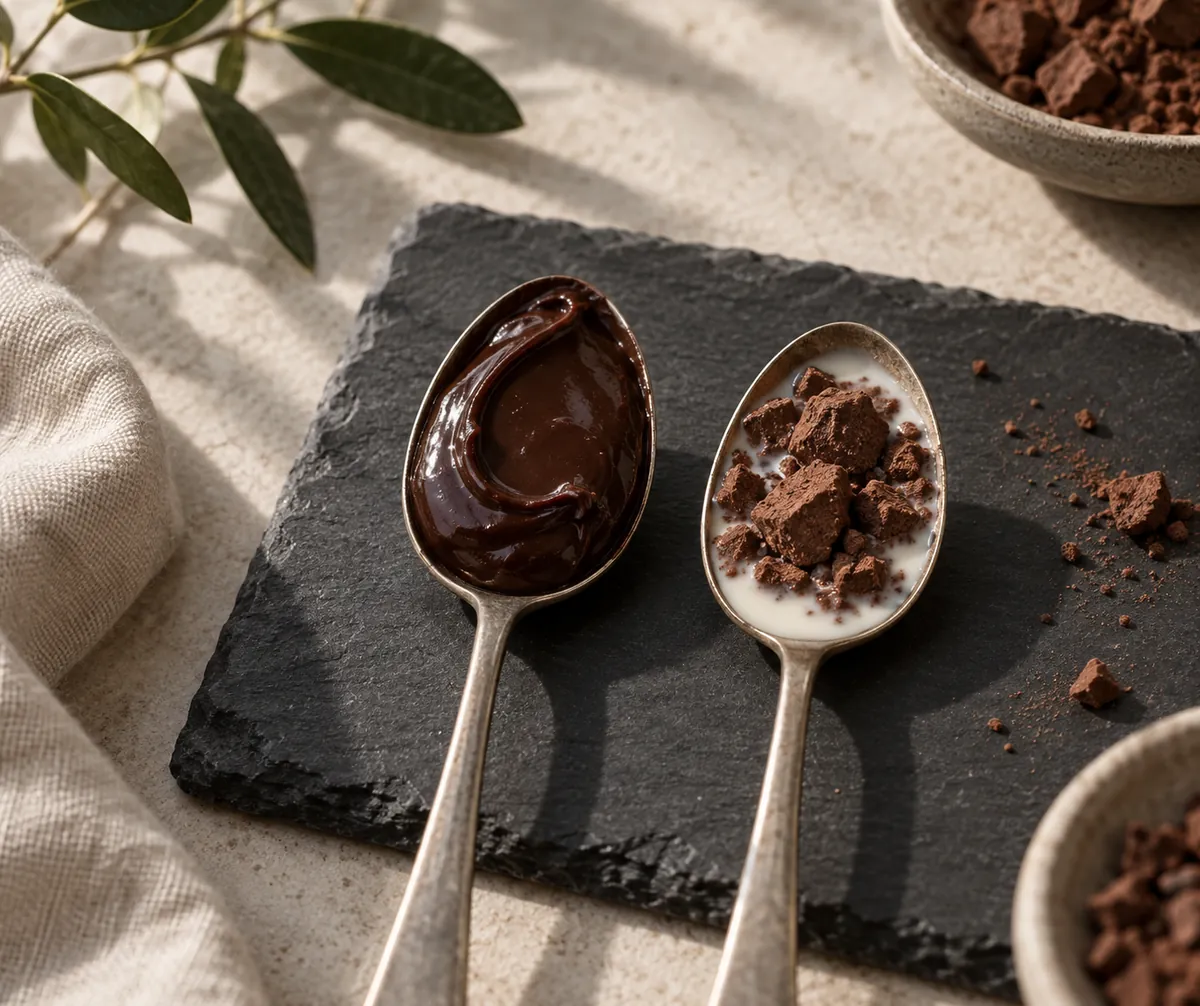
Cold milk is the usual culprit: powder tipped onto it seals into little dry-cored balls, and no amount of later stirring opens them.
Sift it if the tin has been open a while. Lumps that already exist will still exist in the cup, and a sieve costs three seconds.
The same paste logic runs through stovetop cocoa, where the pan exists mostly to give the powder heat and room. A mocha has no pan, so the espresso has to do that job in the bottom of the cup.
Instant drinking chocolate is engineered around this problem, having been agglomerated to wet quickly, so it needs no paste stage and will go into milk directly.
How do you make a mocha without an espresso machine?
A mocha needs strong coffee more than it needs a machine, because the coffee has to survive both chocolate and 200 ml of milk, which is a lot to be tasted through, and ordinary filter coffee simply does not manage it.
Four routes to enough strength
- Moka potClosest to espresso without a machine, and about the same volume.
- AeroPressPressed short at roughly 1:5, it gives concentrate rather than a cup.
- InstantTwo rounded teaspoons, dissolved in a splash of hot water first.
- FilterOrdinary strength disappears entirely, so brew it at double dose or skip it.
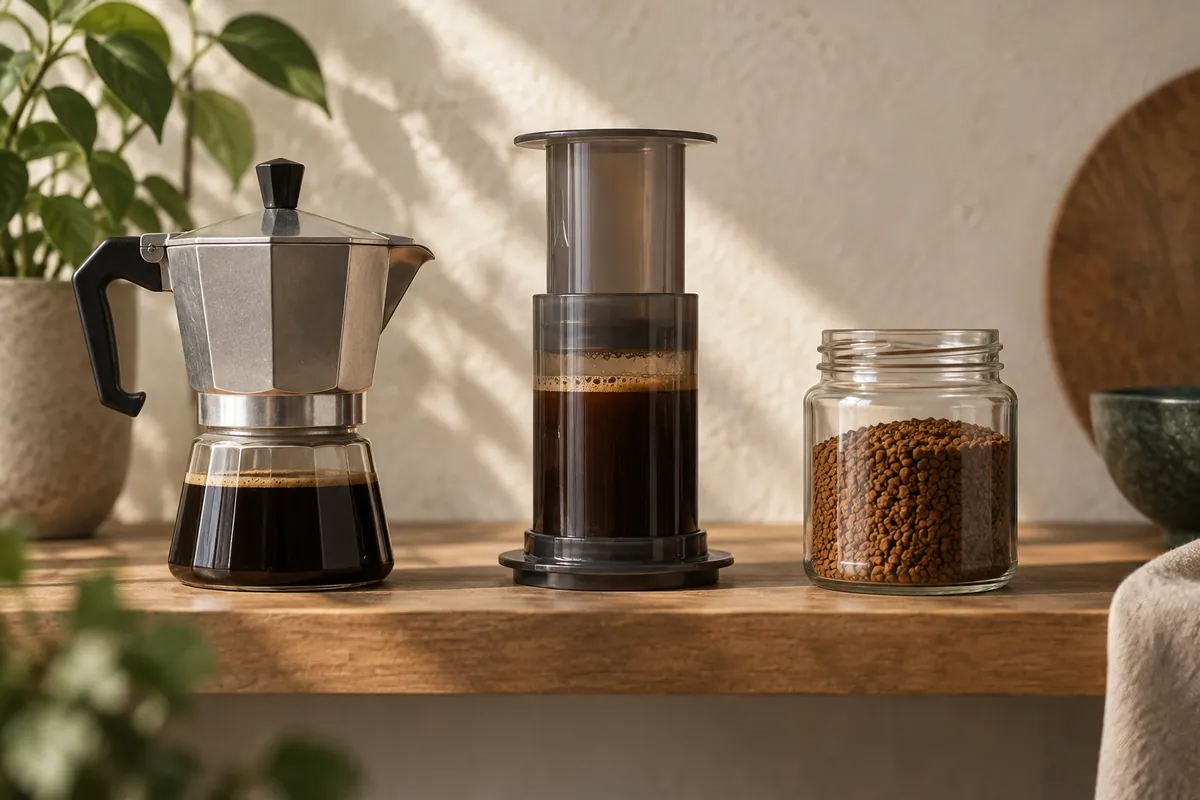
A three-chamber pot is the closest thing most kitchens have. It brews at a concentration a mocha can be built on, and it costs nothing to run.
Instant coffee works better here than its reputation suggests, at roughly double the usual dose. Dissolve it in a little hot water before it meets the chocolate, or it will chase the same clumping problem the cocoa has.
An AeroPress press pressed short does the job too. Use about a fifth of the water you normally would and treat what comes out as a concentrate rather than as coffee.
Filter coffee is the poor fit here, because at normal strength it vanishes under the chocolate and what is left tastes like slightly bitter chocolate milk.
How much chocolate does a mocha need?
Start at 30 ml of syrup, or 15 g of cocoa, against a double shot, then add about 200 ml of milk, which fills a standard glass and leaves the coffee still noticeable.
A double shot is about 60 ml, and added sugar goes in only if the chocolate carried none.
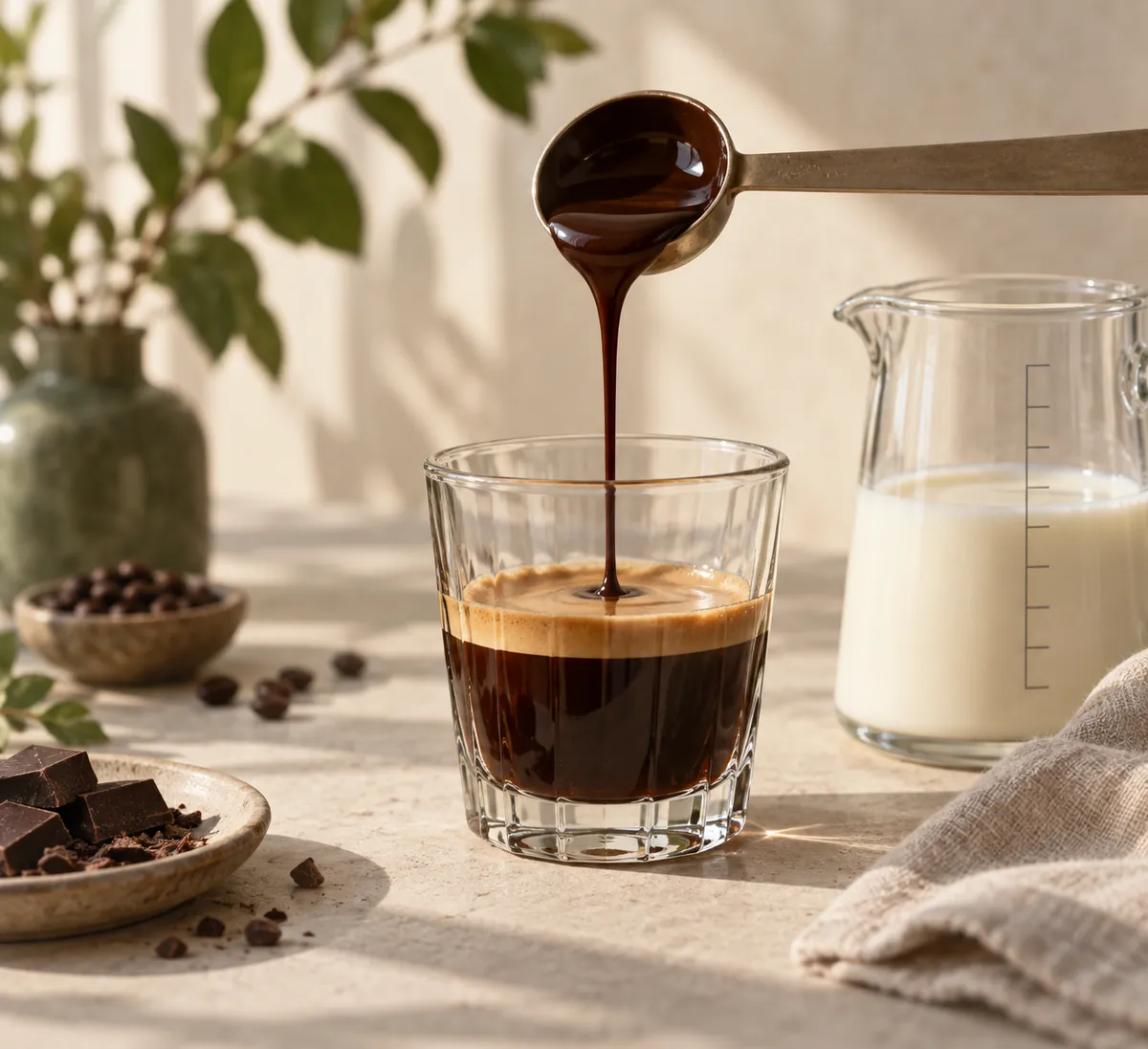
When a mocha tastes weak, the instinct is to add more chocolate. That is almost always the wrong direction, because more chocolate buries the coffee rather than strengthening it, and the fix is a second shot.
Darker chocolate lets you use more of it. A bar at seventy percent carries less sugar per gram, so the same volume tastes less sweet and more of itself.
Syrup brands are not interchangeable. The same 30 ml from two bottles can differ enough that one drink needs sugar and the other is already too sweet.
Scale the coffee with the glass, not the chocolate. A 350 ml glass wants two shots and the same proportion of chocolate, or the whole thing thins out.
How do you make an iced mocha?
The cold version fails in a way the hot one never does, because ice water will not dissolve chocolate at all and pouring it over powder guarantees a layer of sludge at the bottom of the glass.
Dissolve hot, cool, then ice.
Let the base drop out of steaming heat before any ice goes in, or it will melt the ice on contact.
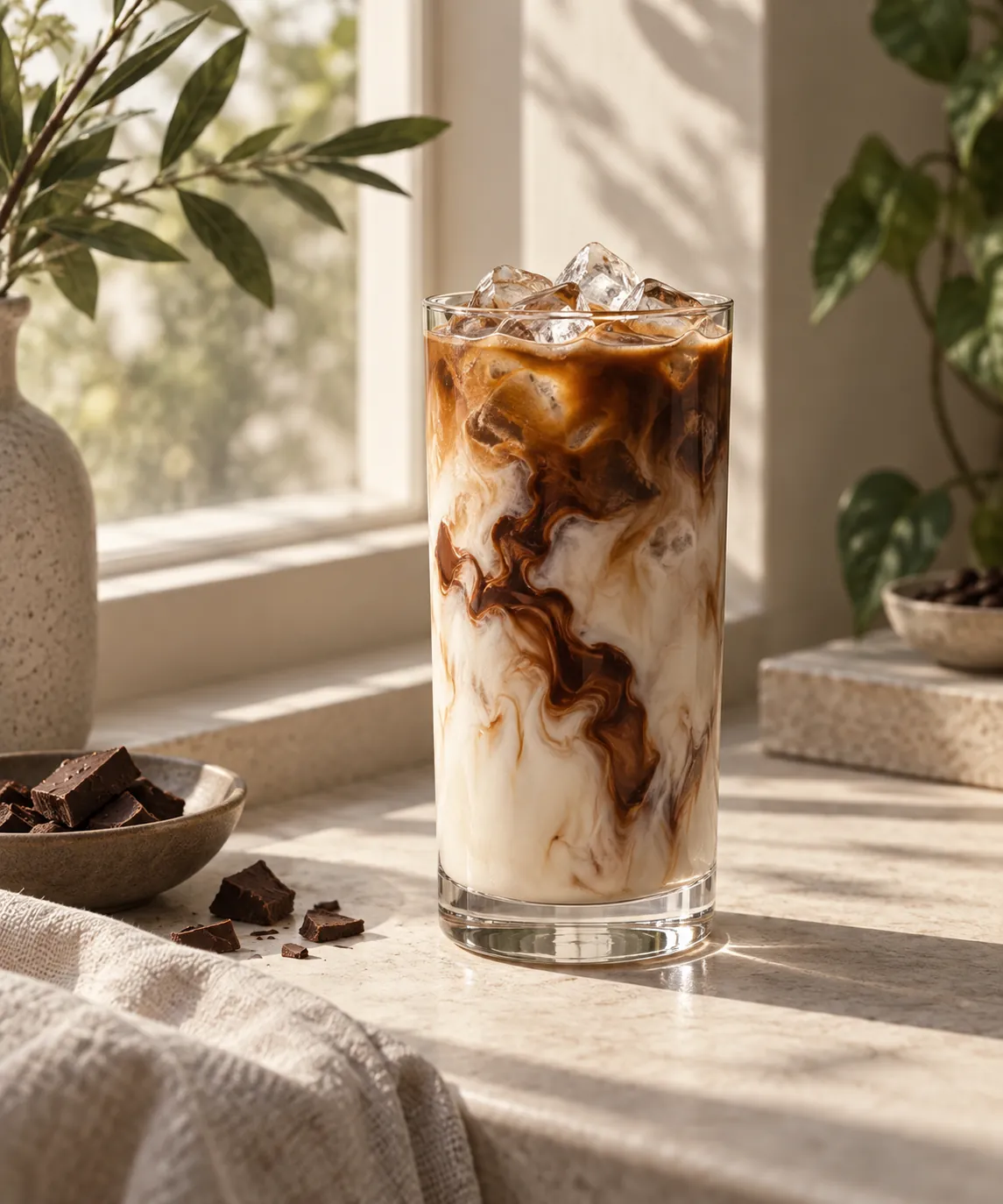
Syrup earns its keep in a cold drink. It has nothing left to dissolve, so the sludge at the bottom of the glass cannot happen to it.
The ice in the glass goes in after the milk rather than before. Added first, it starts melting while you are still assembling, and the finished glass is more watery before anyone drinks it.
Cold brew is the other route, and it changes the balance. It is milder and less bitter than espresso, so an iced mocha built on it can take a little less chocolate, not more.
A blended version is a different drink with a different tool. The blender jug disperses everything mechanically, which sidesteps the dissolving problem and also the texture that makes a layered iced mocha worth building.
Why does my mocha taste flat?
Usually because the sugar arrived twice.
A sweetened syrup plus a spoonful of sugar tastes dull rather than sweeter, because sweetness past a certain point flattens everything underneath it instead of adding to it.
- Did the chocolate already contain sugar before you added more?
- Was the coffee a single shot under 200 ml of milk?
- Did the milk go past steaming, to the point of smelling cooked?
- How long ago were the beans roasted?
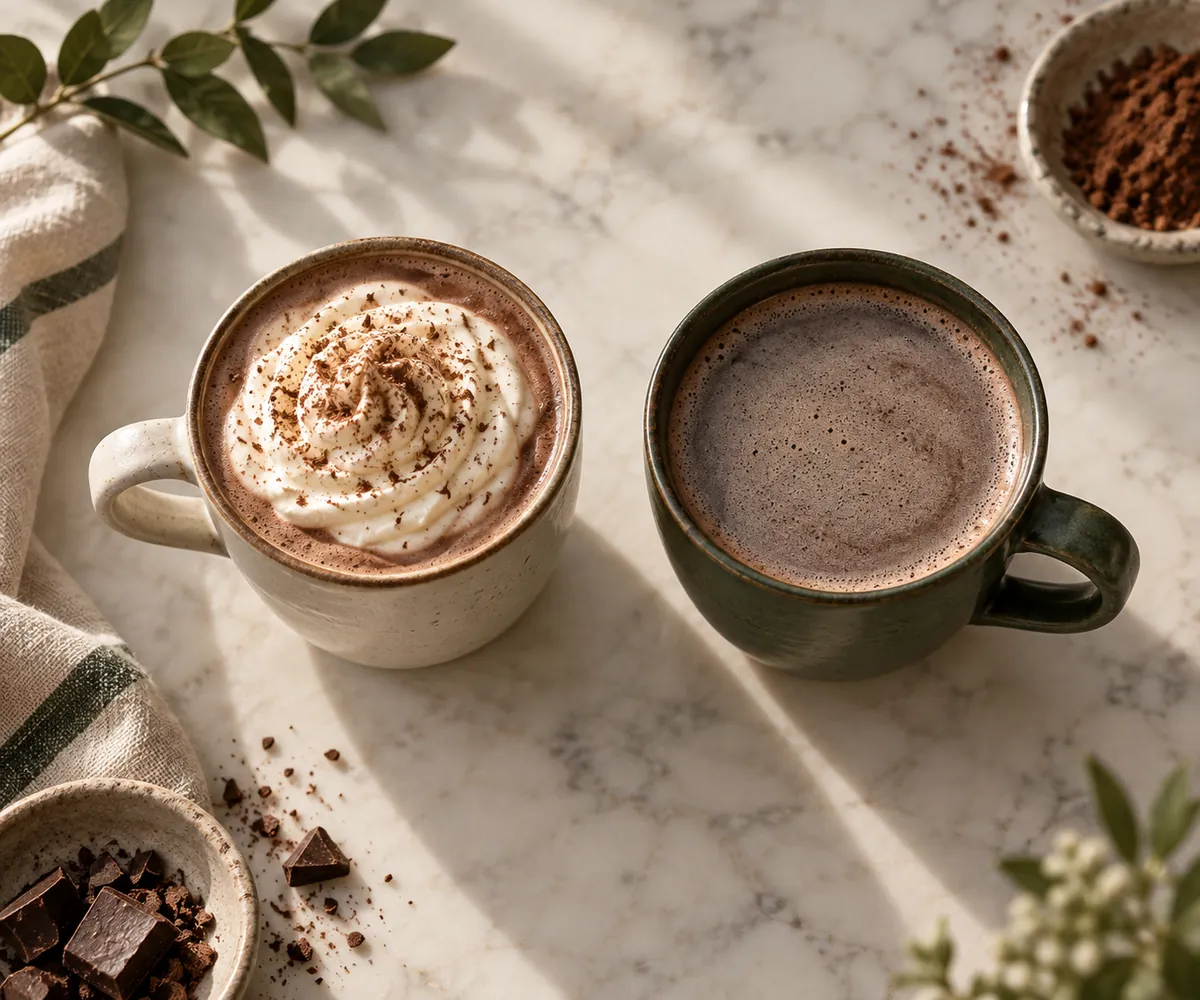
Weak coffee is the second cause and the easiest to miss. One shot under a full glass of milk gives you warm chocolate milk with a coffee note, which is a real drink but not the one you were making.
Scalded milk dulls a mocha from underneath. Past about 70 C it tends to taste cooked, and extra chocolate rarely covers that.
A pinch of sea salt rescues a dull cup more often than more chocolate does. It sharpens the edges of both the coffee and the cocoa without registering as salt at all.
Stale beans are the cause nothing fixes. If the coffee has been ground for a fortnight, the mocha will taste flat whatever you do to the chocolate, and that is a shopping problem rather than a method one.
Mocha method
- Makes
- 1 glass, about 290 ml
- Ratio
- 30 ml chocolate syrup to 60 ml espresso to 200 ml milk
- Water temp
- Milk stopped at 60 to 65 C
- Total time
- 5 min
What you need
- 30 ml chocolate syrup or 15 g cocoa powder
- 60 ml espresso
- About 200 ml milk
- Sugar only if the chocolate carried none
Equipment
- Espresso machine, moka pot or AeroPress
- Milk jug or frother
- Long spoon
- Glass of 300 ml or more
Method
- ChocolatePut the syrup, powder or chopped chocolate into the bottom of the glass.
- EspressoPull a double shot straight onto it.
- StirWork it for about fifteen seconds, until the surface goes glossy.
- MilkSteam and pour roughly 200 ml, the same as a latte would take.
- TopLeave two centimetres if whipped cream is going on.
Common questions
Can you make a mocha with cocoa powder instead of syrup?
Yes, at about 15 g against a double shot. Make a paste with a splash of the hot espresso first, or the powder will clump and settle.
Why does my mocha taste more like chocolate milk than coffee?
The coffee is too weak for the milk volume. A single shot under 200 ml of milk disappears, so use a double or a stronger concentrate.
What chocolate is best in a mocha?
A dark chocolate or dark syrup around 60 to 70 percent. It carries less sugar per gram, so more of it can go in before the coffee is buried.
Do you add sugar to a mocha?
Only when the chocolate brought none. Sweetened syrup plus added sugar tastes flat rather than sweeter.