What Is White Hot Chocolate? A Drink With No Cocoa Solids
White chocolate contains no cocoa solids. It is cocoa butter, sugar and milk solids, which is why white hot chocolate is sweeter, paler and considerably more temperamental than the dark version.
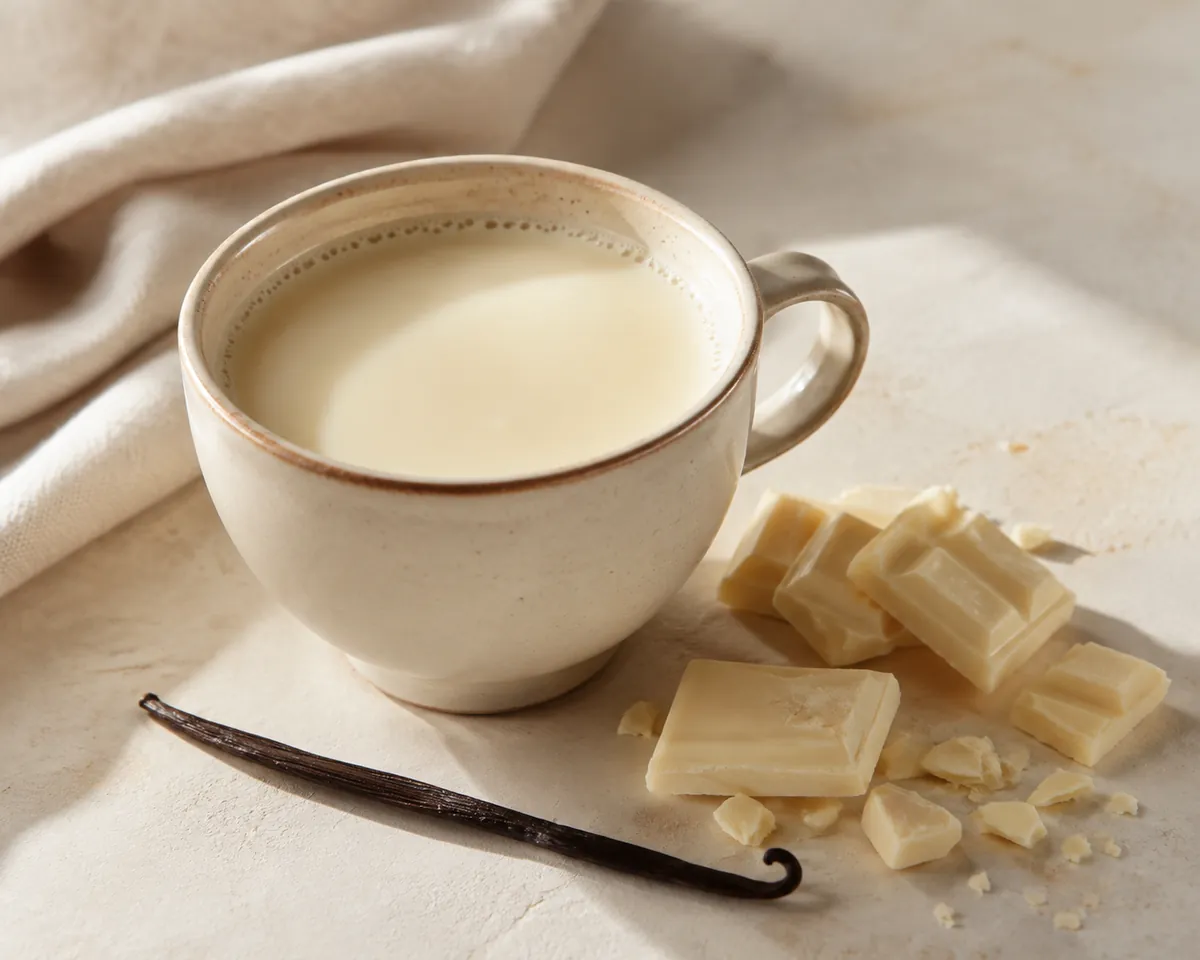
White hot chocolate is made by melting white chocolate into hot milk. White chocolate itself is cocoa butter, sugar and milk solids, with no cocoa solids in it at all.
That absence is why the drink is ivory rather than brown, why it carries essentially no caffeine, and why it argues with a hot pan far more than dark chocolate does.
White hot chocolate at a glance
- Made from
- White chocolate melted into hot milk
- Cocoa content
- Cocoa butter only, with no cocoa solids
- Colour
- Ivory, and it never darkens
- Sweetness
- Very high, with nothing bitter in the bar to offset it
- Caffeine and theobromine
- Essentially none, since both sit in the solids
- Serving
- Small. Sixty grams of chocolate to 200 ml of milk is already rich
- Needs added
- Salt, acid or coffee, to give it something to push against
Cocoa butter, sugar, and nothing bitter
Removing the cocoa solids from a chocolate bar removes five separate things at once, and every peculiarity of this drink traces back to one of them.
| White | Dark | |
|---|---|---|
| Cocoa solids | None | The main ingredient |
| Cocoa butter | The only cocoa component | Present alongside solids |
| Colour | Ivory | Brown to near-black |
| Sweetness | Very high, nothing balances it | Balanced by cocoa bitterness |
| Caffeine and theobromine | Essentially none | Present, and rising with cocoa percentage |
| Seizes | Readily, at a lower temperature | Less readily |
What cocoa solids provide, and white chocolate lacks
- Colour
- The brown. Without them the drink is ivory
- Bitterness
- Nothing balances the sugar, so white versions read very sweet
- Chocolate flavour
- The recognisable cocoa character comes from the solids
- Body from particles
- Suspended solids give dark hot chocolate some of its texture
- Caffeine and theobromine
- Both sit in the solids, so white chocolate has essentially none
What remains is fat and sugar. Cocoa butter supplies richness and a melting texture that arrives all at once on the tongue, and sugar supplies everything else, which is why opinion on this drink divides so sharply and so early.
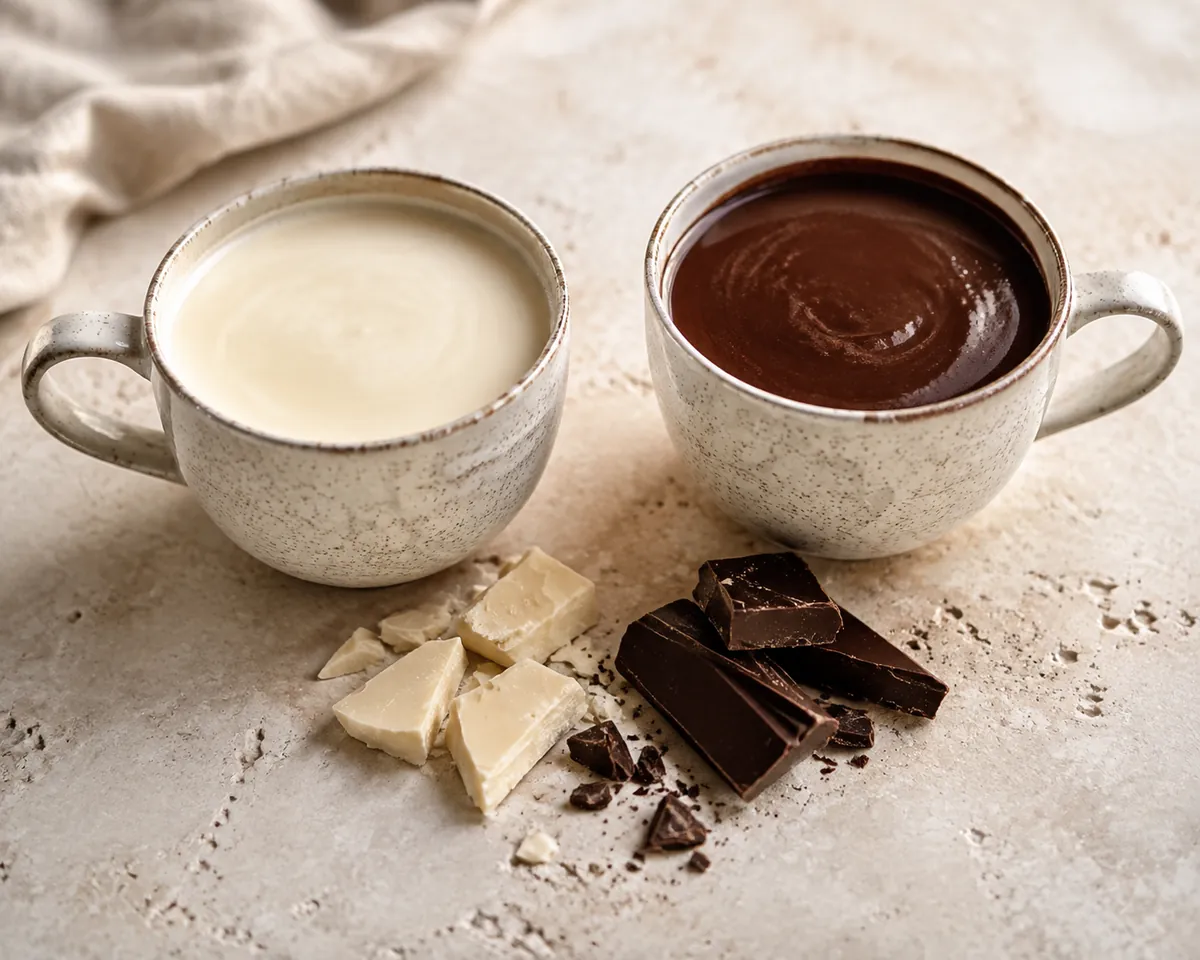
The lost body matters as much as the lost bitterness. Suspended cocoa particles give a dark cup part of its texture, so a white one leans entirely on fat for weight, and that is why it can feel heavy and thin in the same mouthful.
What that combination reads like in practice is set out in white hot chocolate taste.
What the law says a white bar must contain
The EU and the US both define white chocolate by minimum composition. Those four numbers explain almost everything the bar goes on to do in a pan.
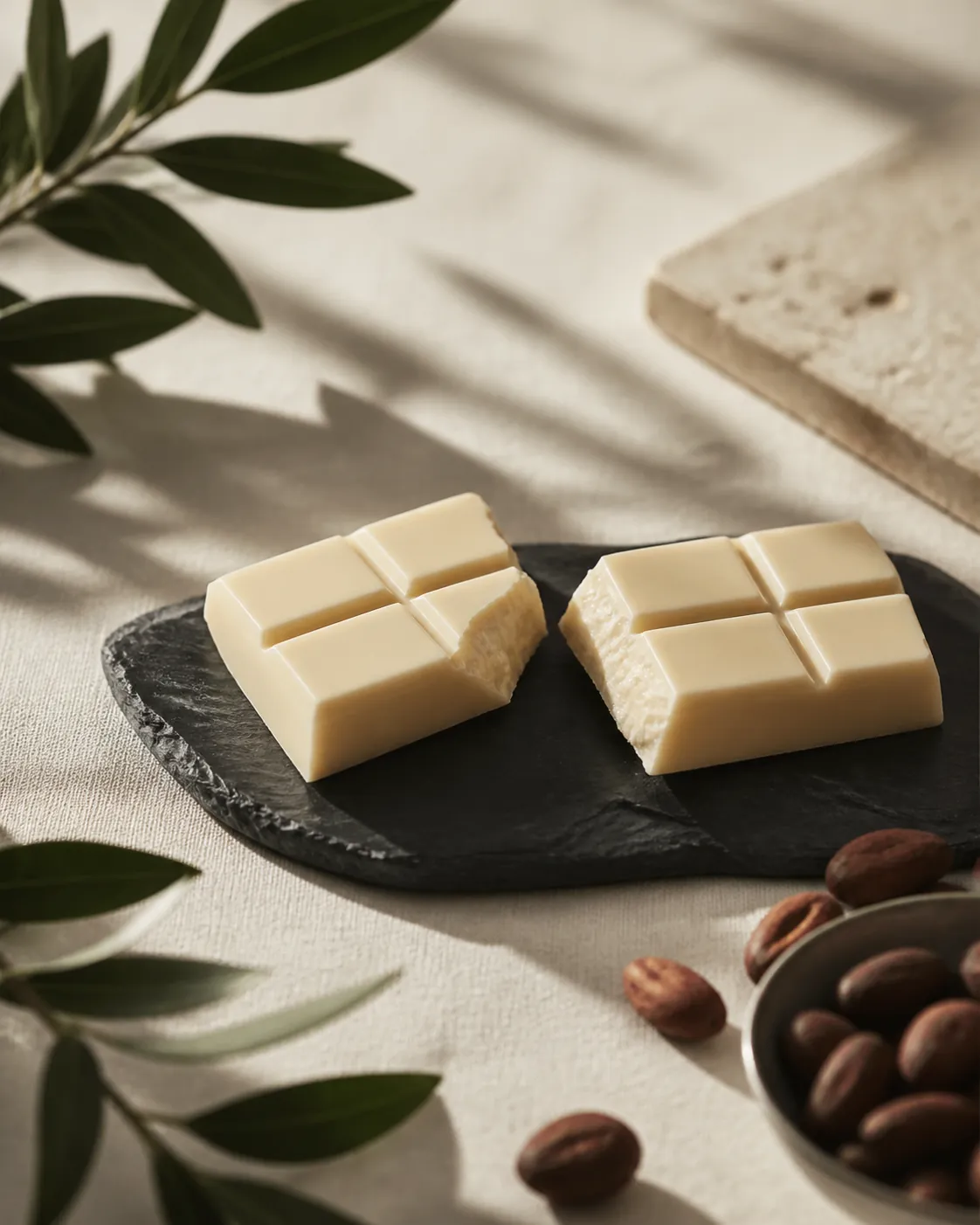
A sugar ceiling of 55 per cent that most bars sit close to is the whole reason this drink is sweeter than the dark kind, and it is why every recipe below removes added sugar rather than adding any.
Milk solids are the second consequential number. They are what scorch on a pan base, they set the temperature at which the bar starts misbehaving, and they are the reason a white chocolate drink can be made with water where a dark one cannot.
Anything below those minimums cannot legally be called white chocolate and is sold as a confection or a coating instead. Those products swap cocoa butter for cheaper vegetable fats, and they behave badly enough in a drink that white hot chocolate substitutes is a more useful route than buying one.
Warm the milk, then take it off the heat
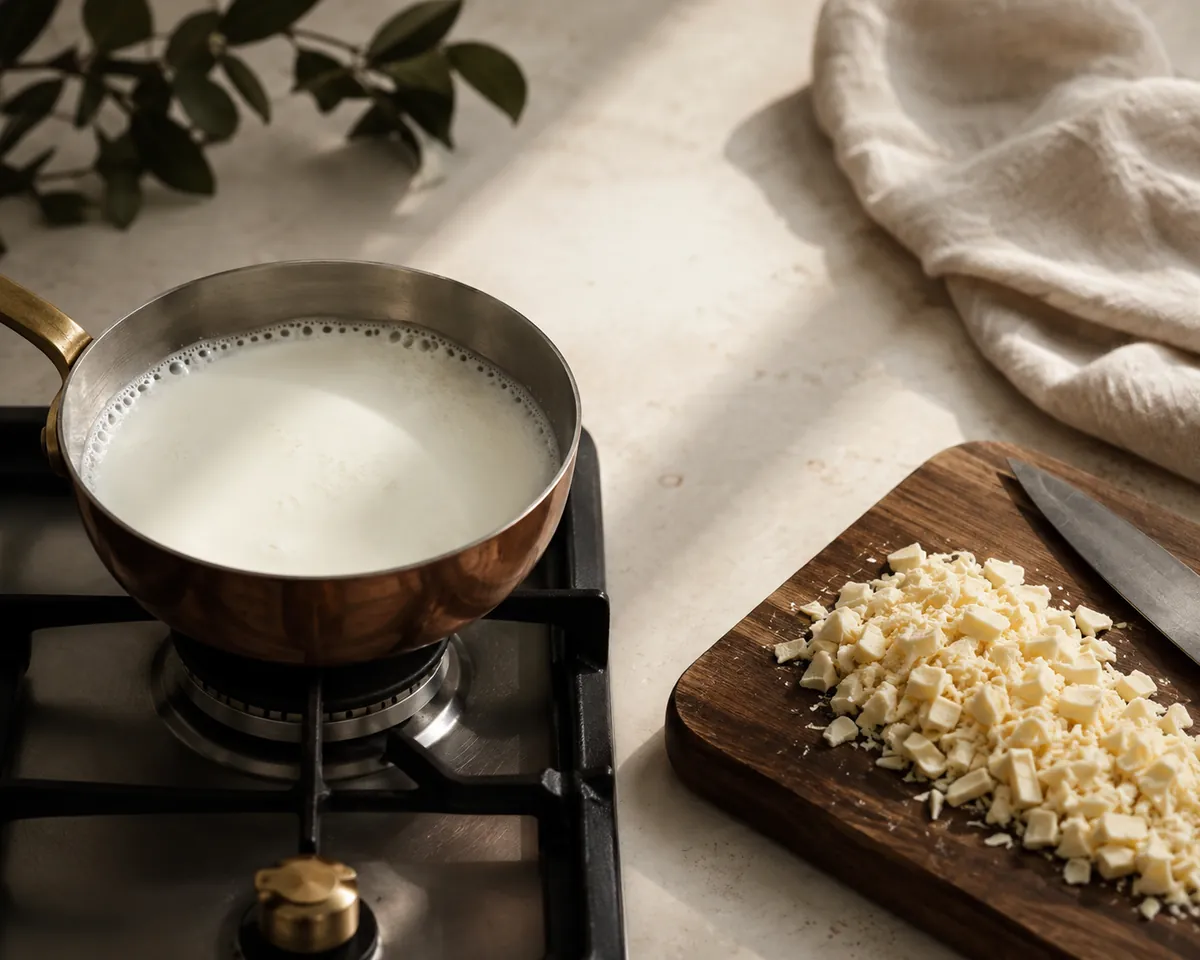
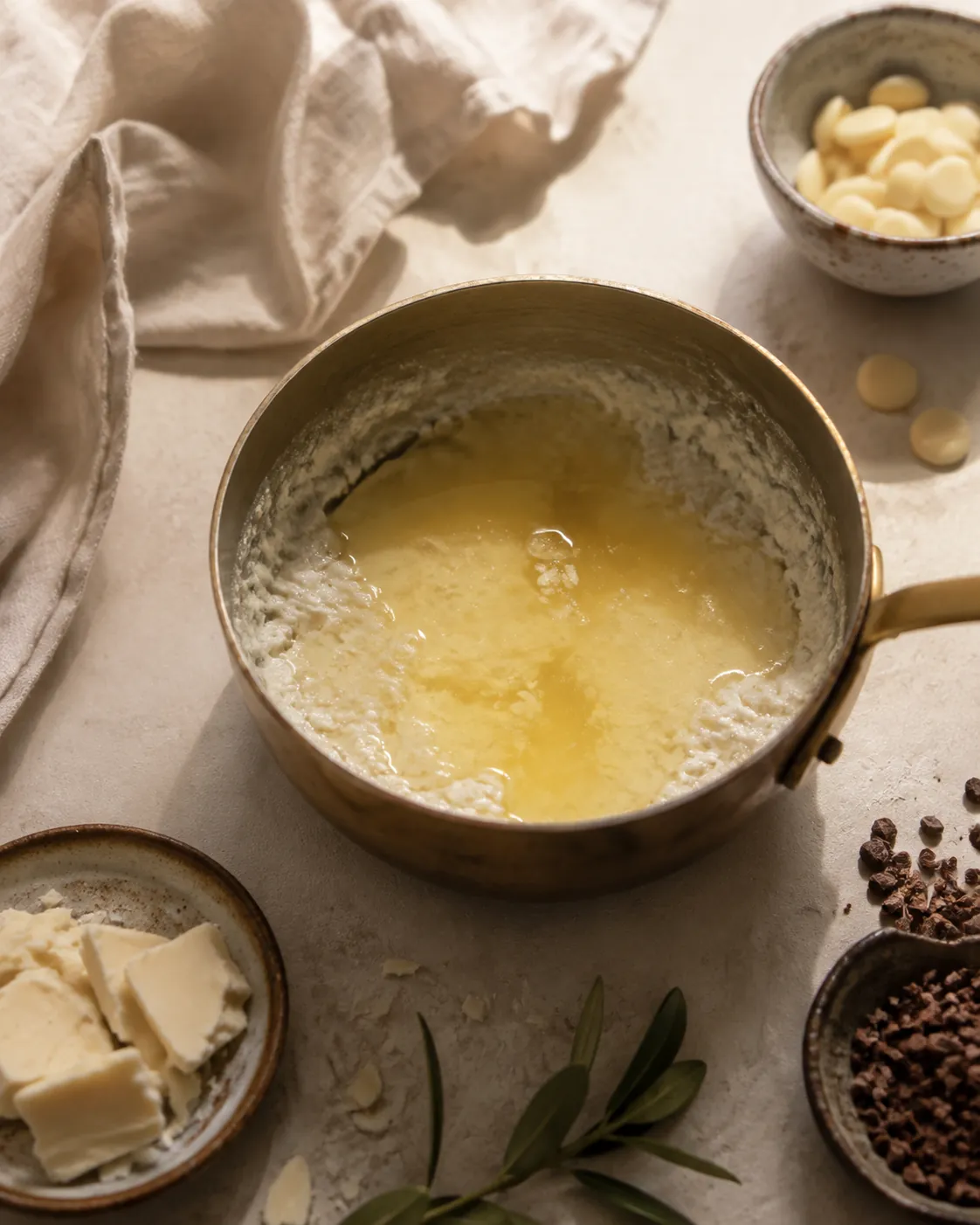
Order is the whole method here. White chocolate is the most fragile chocolate to melt, and warming the milk before the chocolate goes anywhere near the heat is what keeps a pan usable.
White hot chocolate
- White chocolate
- 60 g, chopped small
- Milk
- 200 ml whole
- Method
- Heat the milk to just below a simmer, remove from the heat, add chocolate
- Stir
- Until fully melted and smooth
- Balance
- A pinch of salt, and vanilla if the chocolate is plain
Its melting point sits lower than dark chocolate's, because cocoa butter is the only fat present and no cocoa solids are there to raise it. The milk solids in it also catch on a hot pan base within seconds, and a scorched note cannot be stirred back out.
The water rule from hot chocolate applies unchanged. A splash of liquid seizes chopped chocolate into a grainy paste, while a generous pour dissolves the sugar and keeps the emulsion intact, and the fix for a seized pan is more liquid rather than less heat.
The full sequence, including quantities for several cups, is at making white hot chocolate.
Reading the bar, and how long it keeps
Quality varies more in white chocolate than in dark. Both the label and the date on it repay more attention here than anywhere else on the cocoa shelf, and for different reasons.
- Check that cocoa butter is listed, and ideally listed early.
- Look for a cocoa butter percentage; 28 per cent or above is a reasonable floor.
- Avoid anything listing vegetable fat or palm oil in place of cocoa butter.
- Prefer bars over chips, which contain stabilisers that resist melting.
- Vanilla should be real if the bar is otherwise good; artificial vanillin is a signal.
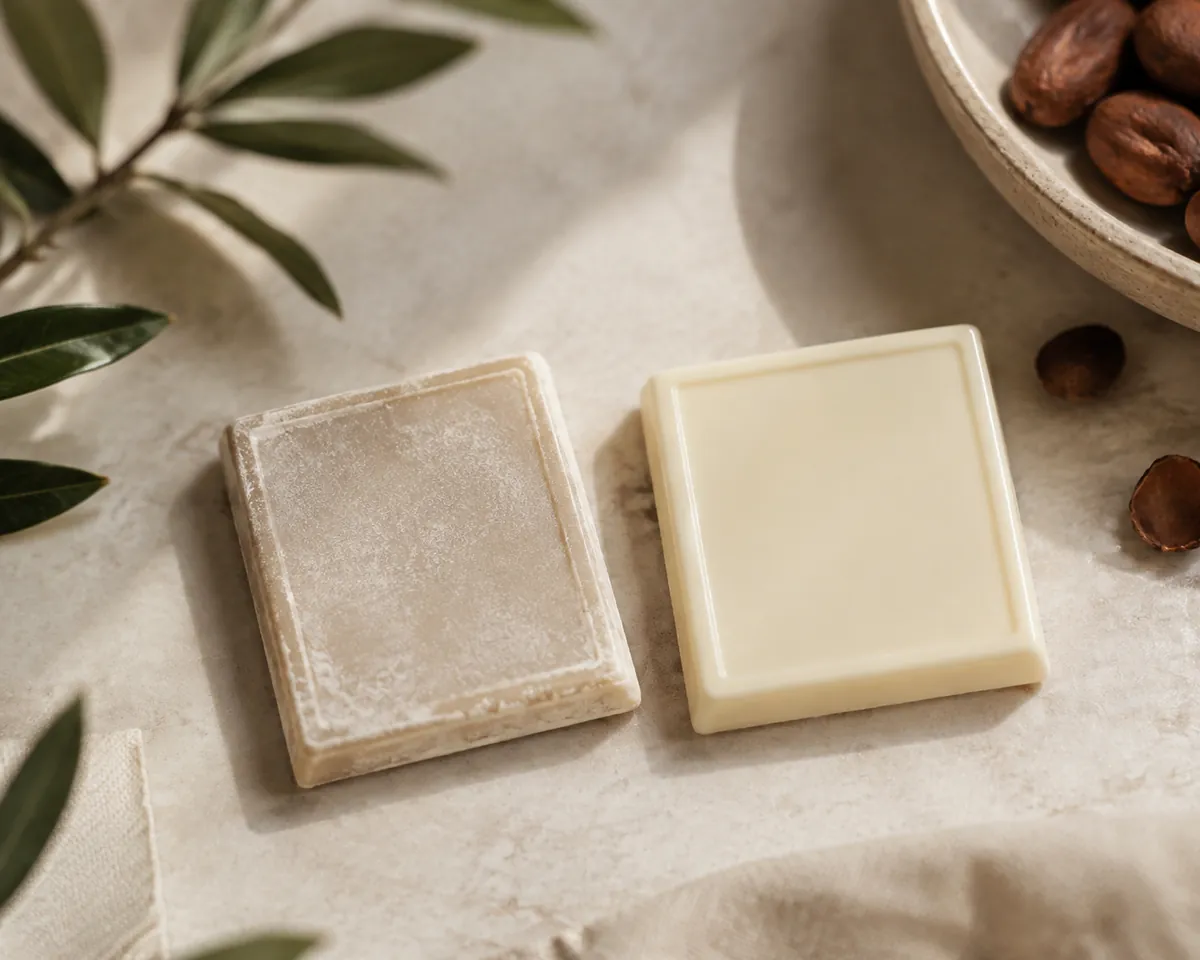
Milk fat is what limits the life of the bar. It turns rancid over months rather than years, and there are no cocoa solids present to slow the process, so a bar past its date tastes faintly of old cream rather than of nothing much.
Fat bloom is cosmetic, whatever it looks like. The pale grey film in that photograph appears when a bar has warmed and set again, and it changes appearance and snap rather than safety or flavour, so a bloomed bar melts into a drink perfectly well.
Buy quantities you will finish within a few months and keep them sealed, cool and dark. This is one of the very few places in cocoa where a best-before date is telling you something real, and storing white hot chocolate covers the made drink as well as the bar.
Salt, acid and coffee, or it is only sweet
Nothing in the bar pushes back against the sugar, so whatever balance the cup ends up with has to be added deliberately.
Salt is not optional here. A few grains of sea salt stand between the drink and undiluted sweetness, and the difference is larger than the quantity suggests, because salt suppresses the perception of sweetness directly rather than masking it.
Acidity is the second correction. A little lemon zest, or a spoonful of a sharp fruit purée, cuts through the fat in a way that adding another flavour never does.
Raspberry or passionfruit
Acidity against fat. The most effective correction.
Salted caramel
Doubles down rather than balancing, and it is very sweet.
White mocha
- White chocolate
- 40 g, or 30 ml of a white chocolate syrup
- Espresso
- A double, poured over the chocolate first
- Milk
- 180 ml, steamed to 60 to 65 C
- Salt
- A few grains, which matters more here than in a dark mocha
- Note
- Add no sugar. There is already a great deal in the chocolate
Coffee is the best correction the drink has, since its bitterness does exactly the job cocoa solids do in a dark cup. Use a darker roast than you would in an ordinary mocha, because a bright light roast contributes acidity to something that needs bitterness instead.
The matcha version works on the same logic in the other direction, with the sugar taming the powder's astringency while the powder supplies what the bar lacks.
A by-product that became a bar
White chocolate is younger than almost every other kind of chocolate, and it exists for an industrial reason rather than a culinary one.
Nestle began producing it in Switzerland in the 1930s, using the cocoa butter left over from making cocoa powder. Pressing cocoa liquor to extract powder leaves a surplus of fat, and a bar of sugar, milk powder and that surplus was a way to sell it.
The composition follows directly from that industrial accident. It is the fat fraction of the bean combined with two ingredients the industry already had in quantity, which is why it has never contained anything that tastes of cocoa.
Regulation arrived a long time afterwards. The United States had no legal definition until 2004, and before that anything pale and sweet could carry the name, which is a fair part of why the product's reputation is so uneven even now.
Caramelising it into blonde chocolate
Cooking white chocolate slowly produces a version that solves its central problem, and the change is a chemical one rather than a matter of added flavouring.
Held at around 120 C for an hour or two with regular stirring, the milk solids and sugar undergo a Maillard reaction. What comes out is deep gold and tastes of caramel, toffee and biscuit rather than of sugar alone.
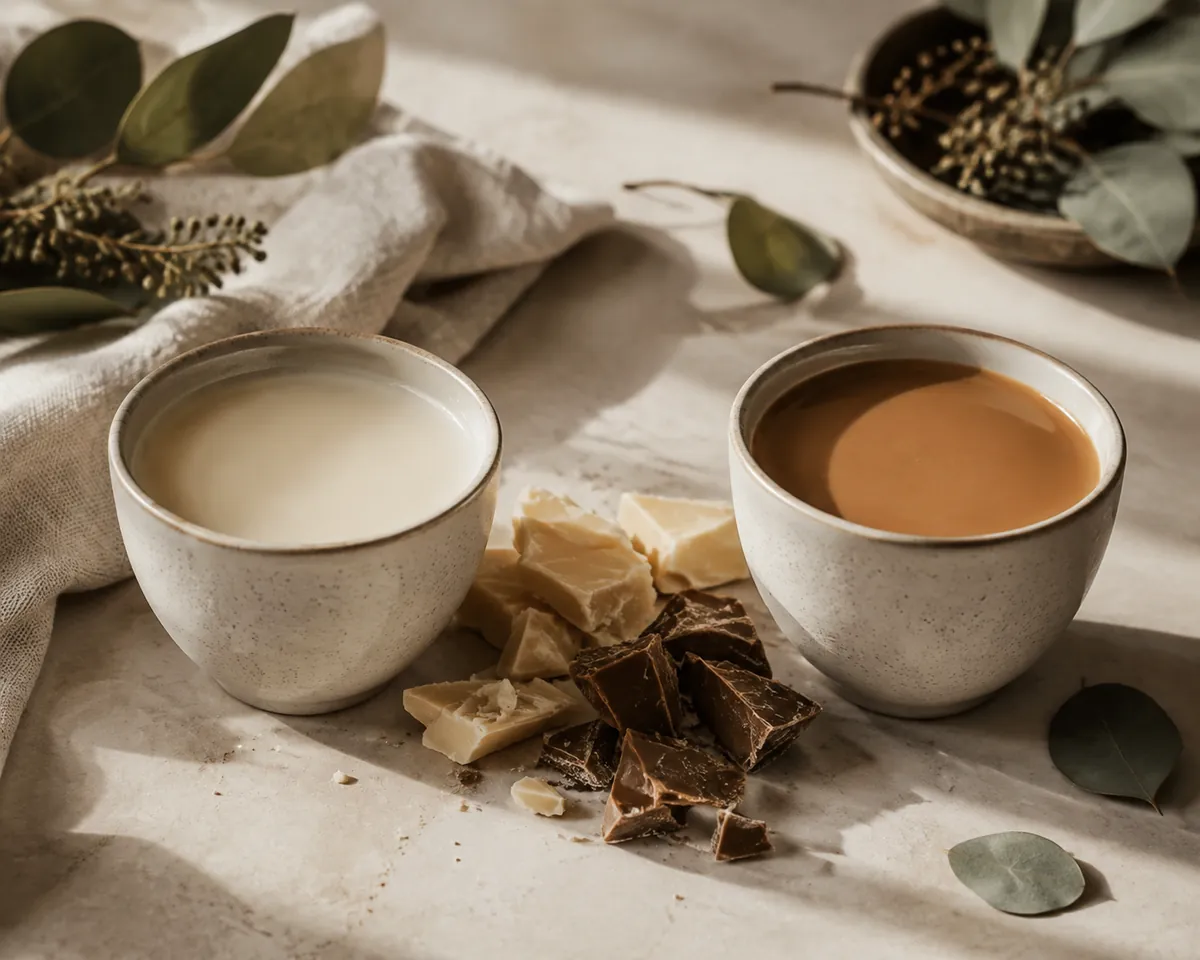
Caramelising it at home
- Chop and spread200 g of good white chocolate on a lined oven tray, in a thin layer.
- Low oven120 C, no higher. Above that the milk solids scorch rather than brown.
- Stir every ten minutesIt will look grainy and wrong at first. Keep going.
- Continue for 45 to 90 minutesUntil it is the colour of dulce de leche and smooth again.
- Cool and storeIt sets hard and keeps like any chocolate.
- Use it in a cupExactly as plain white chocolate, at the same quantity.
The graininess partway through alarms everyone the first time and is entirely normal. Sugar crystallises out as the water leaves, the mixture seizes, and it comes smooth again as caramelisation proceeds, so the instruction that matters is to keep stirring rather than to rescue it.
A blonde cup is a genuinely different drink and, for most people, a better one. The caramel notes give the tongue something to work on where a plain white cup gives it only sweetness.
Made with water instead of milk
Because the bar already carries milk solids, the water version works here in a way it does not for a dark bar.
Melting 60 g into 180 ml of hot water gives a drink that is intensely chocolatey and noticeably less heavy, since there is no second dose of dairy fat and protein arriving on top of what the chocolate brought with it. The bar's own character comes through much more clearly.
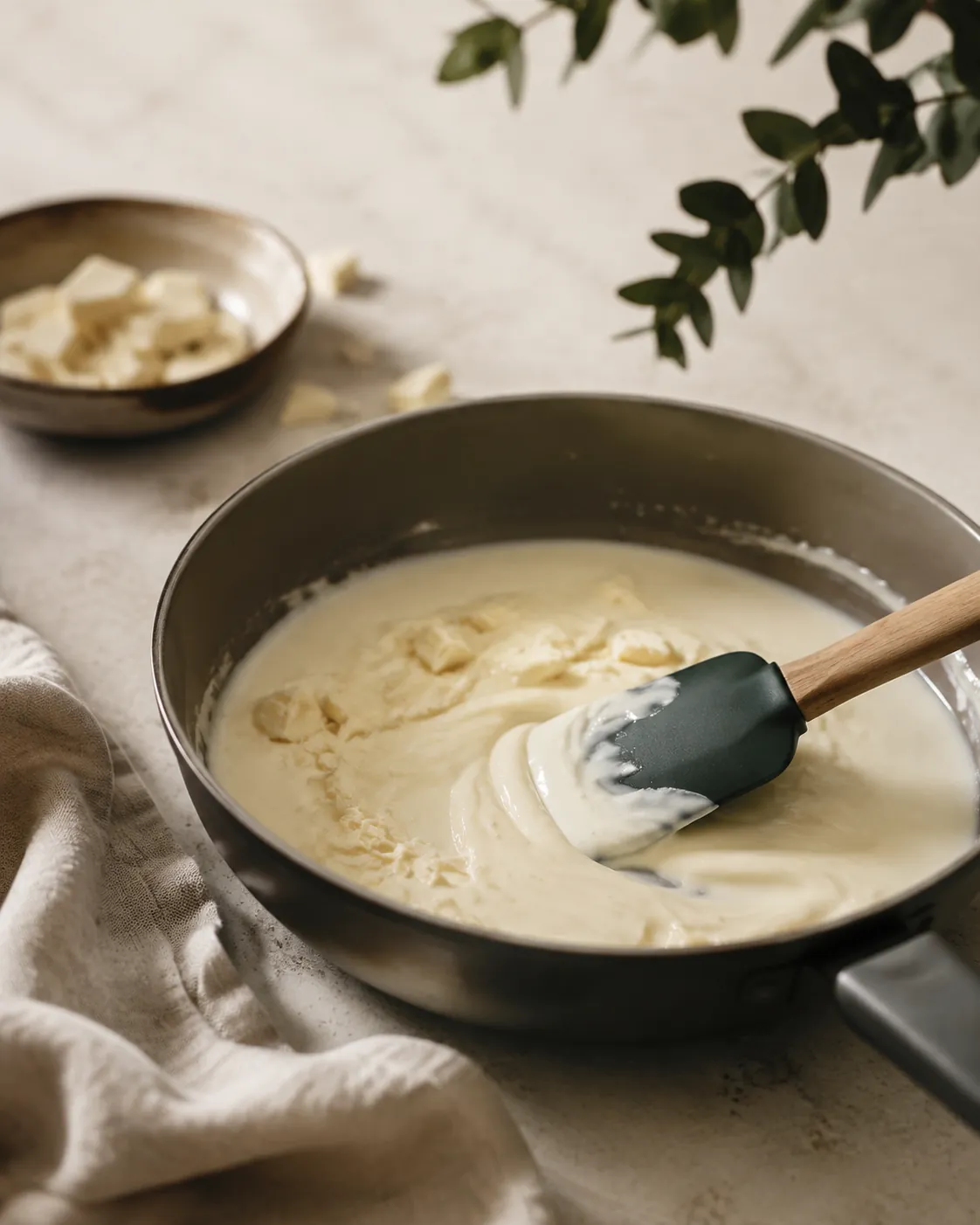
The technique is identical and the tolerance is narrower. Water carries less protein to stabilise the emulsion, so it splits more readily, and it wants stirring throughout rather than a stir at the end.
This is the version to try when the milk-based one has always seemed too rich to finish. Most people who dislike white hot chocolate are objecting to the fat rather than to the sugar, and taking the milk out addresses that directly, which a smaller cup does not.
A milk frother will still put a head on it if the texture is what you miss.
Why the iced version sets into flecks
Cocoa butter sets at around 34 C, which is above fridge temperature and well above the temperature of a glass with ice in it.
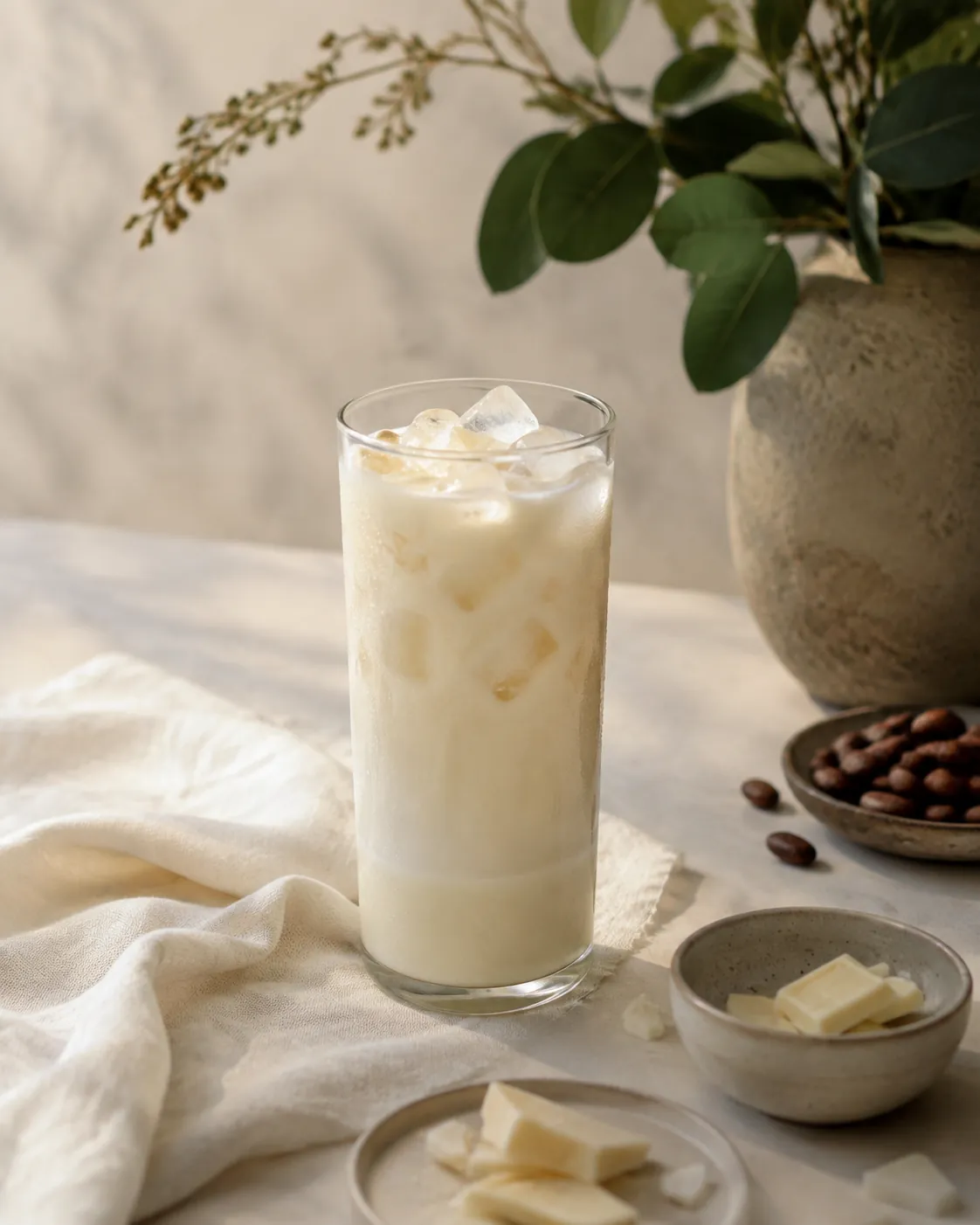
Pour a hot white chocolate drink over ice and the fat crosses that threshold in seconds, seizing into pale flecks and leaving a greasy film on the surface of the glass. Nothing about the recipe is wrong, and the drink is simply being asked to cross its own setting point in the wrong direction.
Building a syrup avoids it. Melt the chocolate into a small quantity of hot milk, thin that thoroughly, then chill the whole thing before it meets any ice, and the fat stays in suspension because it never sets in a hurry against a cold surface.
A blended version sidesteps the problem entirely, which is why the iced white chocolate sold in cafes is nearly always blended rather than poured. Ice, cold milk and a white chocolate syrup in a blender produce something stable enough to sit on a counter for ten minutes without separating.
Diagnosing a cup that has gone wrong
Heat causes nearly all of it. The table below sorts the failures by what is visible in the pan rather than by what the finished drink tastes like.
| Symptom | Cause | Fix |
|---|---|---|
| Grainy and separated | Chocolate added over direct heat | Warm the milk, take it off, then add the chocolate |
| A greasy film on top | Overheated, so the cocoa butter has split out | Lower temperature; stir as it melts |
| Scorched, catching on the pan | Milk solids burnt on the base | Low heat and constant stirring, or a bain-marie |
| Waxy in the mouth | Vegetable fat rather than cocoa butter | Check the bar's ingredients |
| Sickly | No salt and no acid to balance it | A pinch of salt, or a little citrus zest |
| Seized to a paste | A small splash of water got in | Add more liquid, not less, and stir hard |
The last row is the counterintuitive one, and it holds for every chocolate. A few drops of water make the sugar and solids clump, while enough liquid to form a proper emulsion brings the whole thing back smooth.
Two of those faults are unrecoverable rather than fixable. A scorched pan and a waxy bar both mean starting again, since burnt milk solids carry through the whole batch and vegetable fat never melts into anything better.
The rest come back with lower heat and more patience, and further cases are collected in white hot chocolate problems.
Against the rest of the cocoa shelf
Placing it beside its neighbours is what makes the point of the drink clear, because it is the only one on the shelf that arrives unbalanced.
Dutch-process cocoa
Alkalised powder. Smoother and darker, and it has nothing in common with a white bar.
Every other drink on that list carries its own bitterness and arrives finished. This one arrives as fat, sugar and milk, and whatever balance it ends up with was added by the person making it.
That is why salt, acid, coffee and matcha appear on this page as corrections rather than as variations. A plain white hot chocolate with none of them is the version most likely to be left half-drunk on a table, and the fix is a few grains of salt rather than a smaller cup.
Common questions
Is white chocolate really chocolate?
It contains cocoa butter but no cocoa solids, which is why it is white and has essentially no caffeine. Whether that counts as chocolate is a labelling question that different markets answer differently, and products using vegetable fat instead of cocoa butter often cannot use the word at all.
Why does white hot chocolate seize so easily?
Cocoa butter is its only fat, so it melts at a lower temperature than dark chocolate, and its milk solids scorch and stick to the pan. Warm the milk first, take it off the heat, then stir the chocolate in.
How do you stop white hot chocolate being too sweet?
Salt and acid. A pinch of salt is the single most effective correction, since there are no cocoa solids providing bitterness. Lemon zest, tart fruit or matcha all work on the same principle.