What Is an Affogato? Hot Espresso Over a Hard Scoop
A hot shot poured over a hard scoop melts a thin shell into a coffee-cream sauce while the centre stays frozen. That gives three textures in one small glass, and it survives for about ninety seconds.
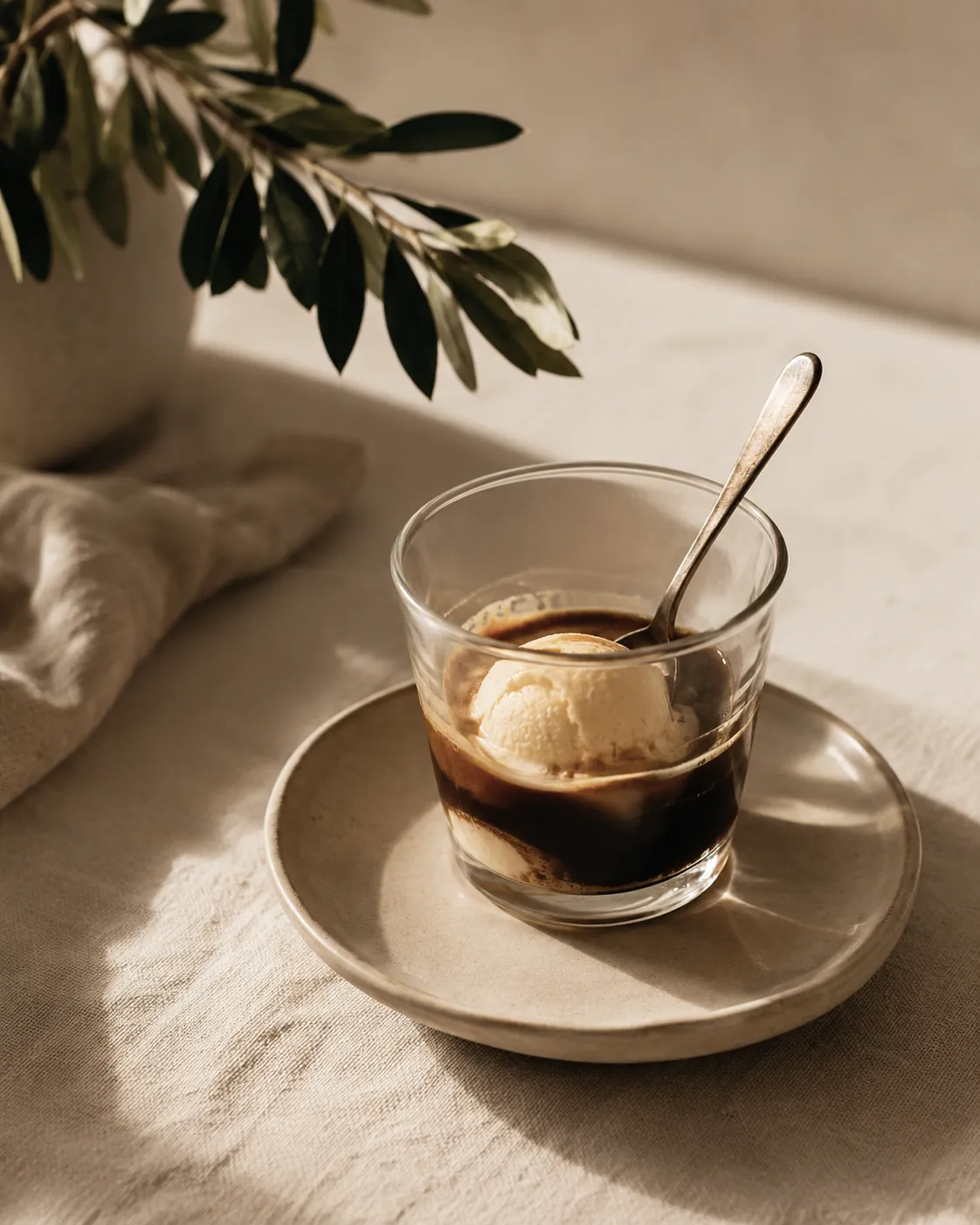
An affogato is a scoop of vanilla ice cream or gelato with a shot of hot espresso poured over it at the table. It arrives with a spoon rather than a straw, and in Italy it turns up on the dessert list rather than beside the coffees.
That placement is the whole point, and it is the thing most people outside Italy get wrong about it. Nothing here is a coffee served cold.
It is a hot drink used as a sauce, and making an affogato comes down to two variables that are both about temperature: how hot the coffee is when it lands, and how hard the ice cream is when it does.
Get those two right and the shot melts a thin shell of the scoop into a coffee-cream sauce while the middle stays solid, giving you three textures in the same glass. Get them wrong and you have a lukewarm beige puddle within twenty seconds.
Affogato at a glance
- What it is
- Ice cream or gelato drowned in a shot of hot espresso
- The name
- From the Italian affogare, to drown
- Served
- In a small glass or cup, with a spoon, immediately
- Standard build
- One shot, 25 to 30 ml, over one or two scoops
- The flavour
- Fior di latte or plain vanilla, almost always
- Caffeine
- One shot, about 63 mg, unchanged by the ice cream
- The failure mode
- Soft ice cream, a cool shot, or a delay of a minute
Drowned, and why the Italians serve it after the meal
The word is a past participle. Affogato al caffe means drowned in coffee, and the grammar puts the ice cream first and the coffee second, which is a fair description of the hierarchy on the plate.
In an Italian bar it sits with the desserts because that is what it does at the end of a meal: it is the sweet course and the after-dinner coffee at once, ordered by people who wanted both and did not want to sit through two courses to get them. The glass is small, the spoon is small, and it is finished standing at the counter as often as at a table.
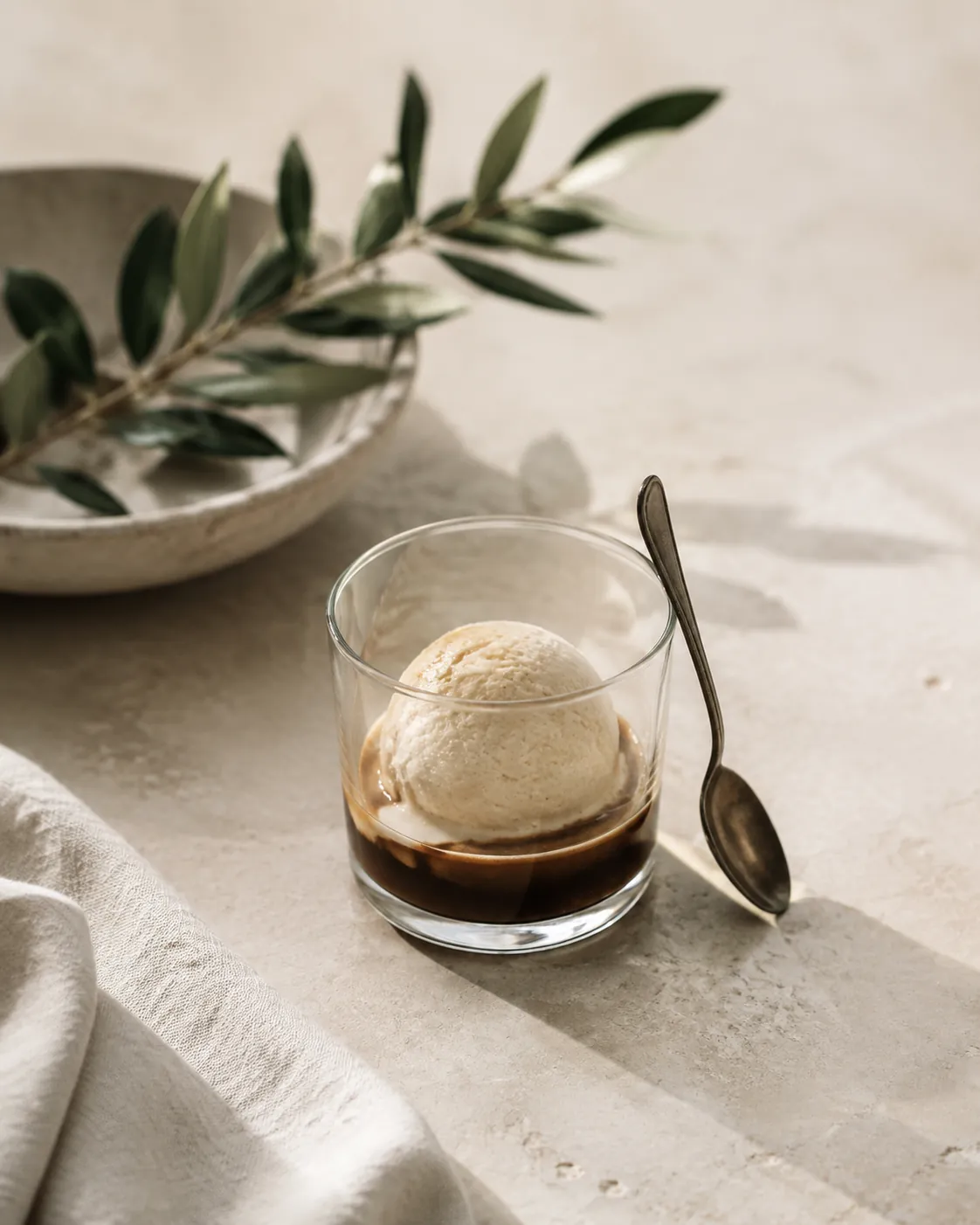
That origin explains a detail that puzzles people ordering one abroad. There is no milk anywhere in it, which makes it the only sweet, creamy item on an espresso menu that is not built from steamed dairy the way a latte is.
The cream arrives frozen, and it arrives as food.
Outside Italy the drink has drifted towards the coffee list, gained a larger glass, and occasionally gained a straw. All three of those changes work against it, for reasons that are entirely physical rather than a matter of tradition.
What happens the moment the shot lands
A shot leaves the group head at somewhere near 90 degrees and reaches the glass a little below that. It meets a scoop sitting at anything from minus 12 to minus 18 degrees.
The gap is enormous, and almost all of it discharges in the first two or three seconds.
Heat moves fastest where the temperature difference is greatest, so the outer skin of the scoop goes first. It does not melt evenly.
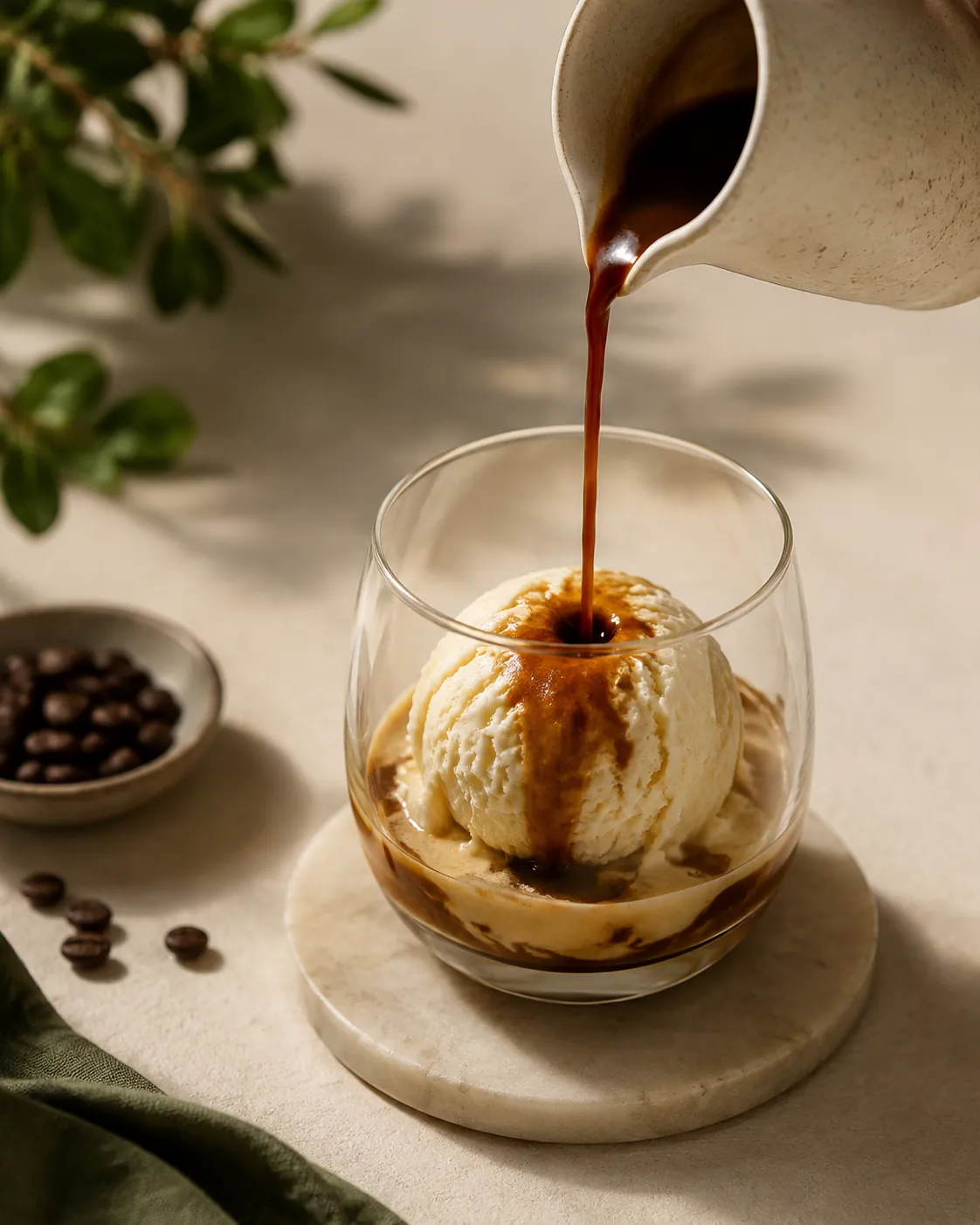
What melts is a shell perhaps a millimetre or two thick, and that shell contains milk fat, sugar and milk proteins, all of which mix straight into the coffee and thicken it.
The first thirty seconds
- ContactThe shot strikes the scoop and the crema disperses immediately
- ShellA thin outer layer melts and releases fat, sugar and protein
- SauceThat layer mixes with the coffee and thickens it into a pale sauce
- PoolThe sauce runs to the bottom of the glass and sits under the scoop
- CoreThe centre of the scoop stays frozen and cold in the mouth
The result at the halfway point is genuinely three things at once: frozen core, warm sauce and a bare mouthful of coffee at the bottom. That is the drink, and the reason it has to be eaten in the state it arrives in rather than stirred into one thing.
Stirring is the commonest table error. It converts all three layers into a single tepid milky coffee, which is a worse version of something you could have ordered directly.
Why the ice cream has to come out of the freezer hard
Ice cream is never fully frozen. Sugar and milk solids depress the freezing point, so even in a domestic freezer a scoop is a mixture of ice crystals suspended in an unfrozen sugar syrup, and how much of it is solid depends entirely on the temperature it has been held at.
That is why holding temperature does more damage here than any other variable. A tub kept at minus 18 is mostly ice and resists the shot.
The same tub left on the counter for ten minutes is already halfway to liquid, and the espresso finishes a job that the kitchen started.
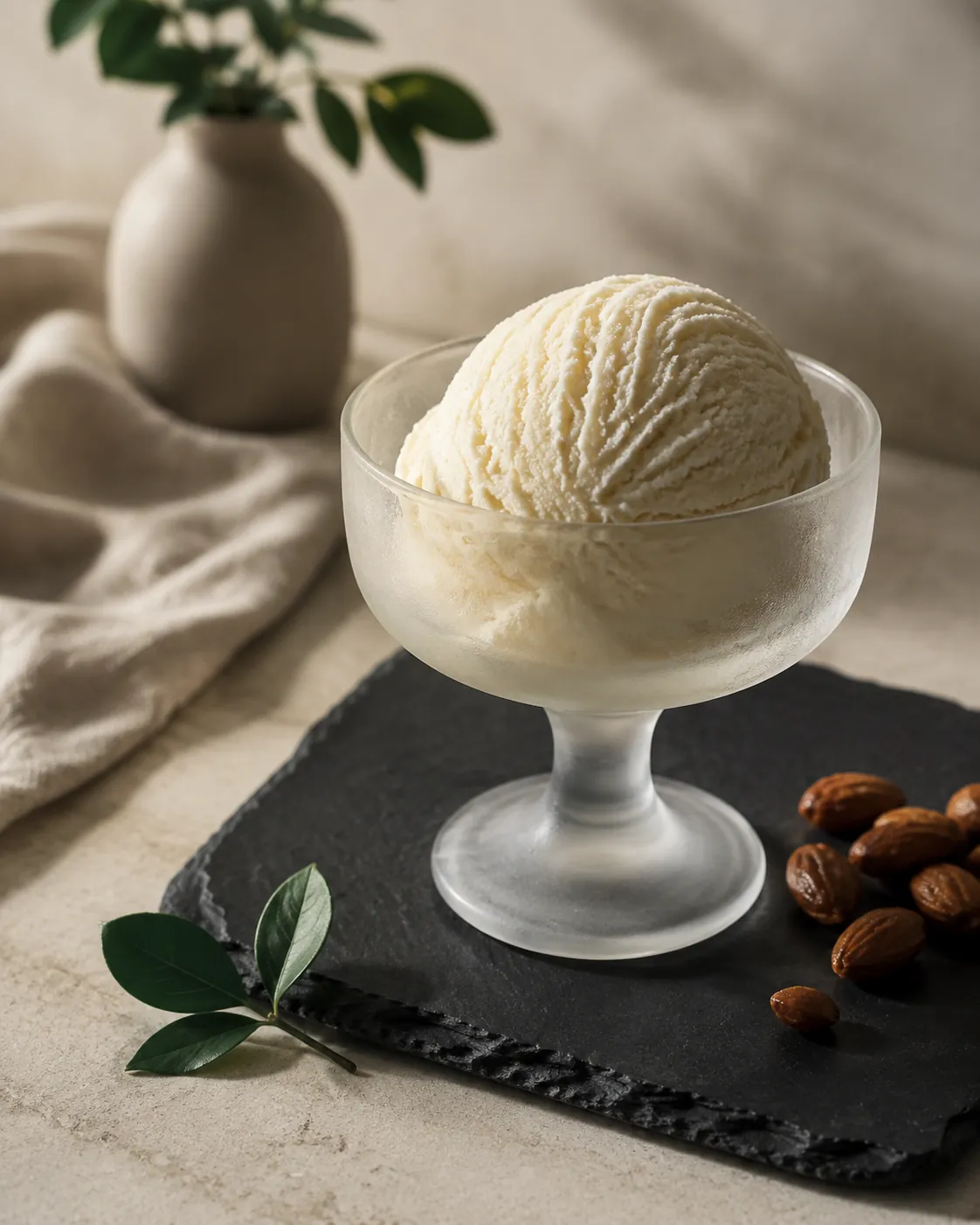
The scoop should still show the ridge left by the scoop when the coffee arrives, and it should sit up rather than slump. A scoop that has already lost its edges will collapse into the shot before you have picked up the spoon.
Gelato, ice cream, and how much air is in the scoop
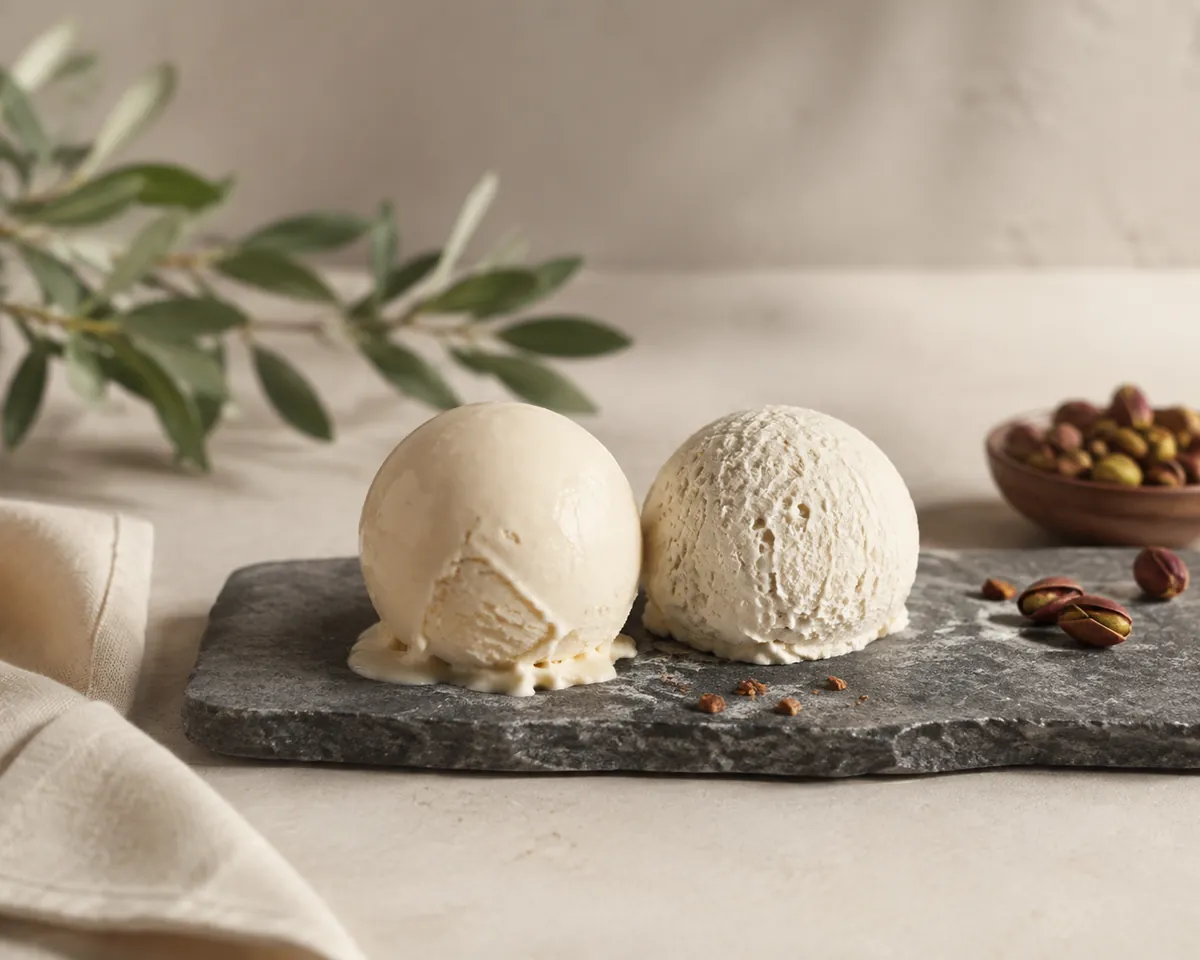
The two are not the same product and they behave differently under a hot shot, mostly because of a number that never appears on the tub: overrun, which is how much air has been whipped into the mix.
Gelato is churned slowly and carries relatively little air, often around a fifth to a third of its volume. Commercial ice cream is churned fast and can be half air or more, which is why a cheap tub feels light in the hand and why the same weight fills a bigger box.
| Gelato | Ice cream | |
|---|---|---|
| Air by volume | Roughly 20 to 35 per cent | Often 50 per cent or more |
| Fat | Lower, around 4 to 9 per cent | Higher, typically above 10 |
| Served at | About minus 12, soft and dense | About minus 18, hard |
| Under a hot shot | Yields fast, makes a rich sauce | Holds shape longer, thinner sauce |
| Best for | Flavour and body, if eaten at once | A slower affogato and a longer window |
Neither is the correct answer, and anyone who insists otherwise is stating a preference. Gelato gives a denser and more flavoured sauce because there is more milk fat and less air per spoonful, and it gives you less time.
Hard ice cream gives you a longer window and a thinner sauce.
What does settle the question is what you are working with at home. A domestic freezer runs near minus 18, which suits ice cream and makes shop-bought gelato behave exactly like ice cream anyway.
Which flavours survive being drowned
Fior di latte and plain vanilla dominate for a reason that has nothing to do with tradition and everything to do with what espresso does to a flavour sitting under it.
A shot is bitter, aromatic and acidic, and it arrives in a much smaller volume than the ice cream. Anything delicate underneath is simply covered.
Anything assertive underneath fights the coffee, and the two rarely settle their differences.
How well a flavour holds up under a shot
- Fior di latteClean milk and sugar, nothing to compete with the coffee
- VanillaThe classic. Adds aroma without adding a second flavour
- HazelnutWorks, and turns the drink into something closer to a nut praline
- Dark chocolateDoubles the bitterness, which some people want and most do not
- Salted caramelOverpowers the shot entirely and reads as a caramel sundae
- Fruit sorbetNo fat, so no sauce forms and the coffee just melts a hole in it
The sorbet case is instructive because it fails mechanically rather than on taste. Without milk fat and protein there is nothing to emulsify with the coffee, so the shot bores straight through and pools at the bottom without thickening at all.
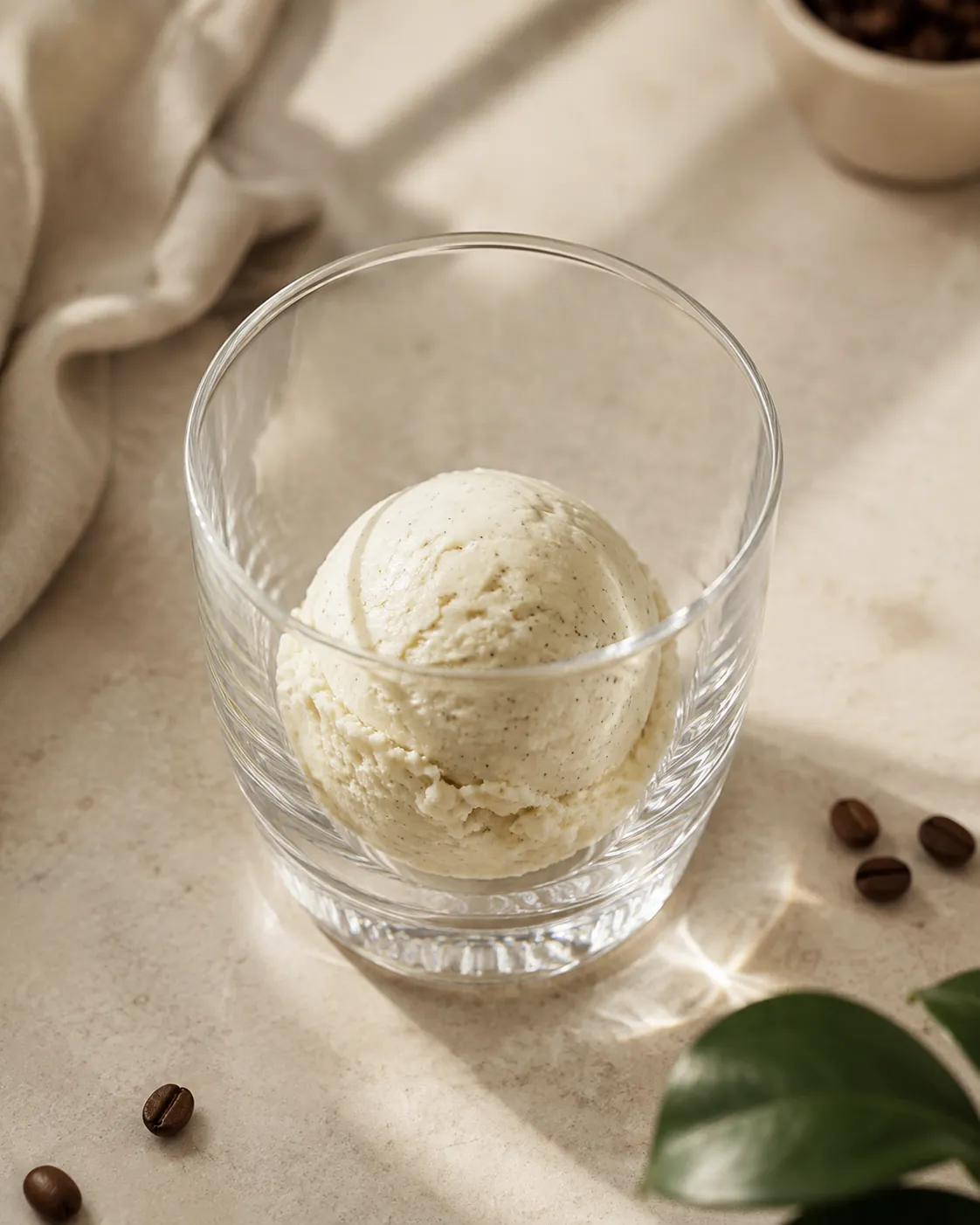
Vanilla is the safe answer and it earns its place. Its aroma compounds sit comfortably alongside the roast aromatics in a shot rather than arguing with them, in much the same way vanilla syrup does in a milk drink, and it never takes the lead.
How much coffee to how much ice cream
The classic build is one single shot over one scoop, which lands at roughly 30 ml of coffee to 60 or 70 g of ice cream. That is a great deal less coffee than it looks like on paper, and it is the correct amount.
Add a second shot and the balance tips fast. The coffee stops being a sauce and becomes a small cup of espresso with something melting in it, and the sweetness that was suppressing the bitterness is now outnumbered.
A single affogato
- Ice cream or gelato
- 1 scoop, about 60 to 70 g
- Espresso
- 1 shot, 25 to 30 ml
- Glass
- 100 to 150 ml, pre-chilled
- Sugar
- None. The ice cream is the sweetener
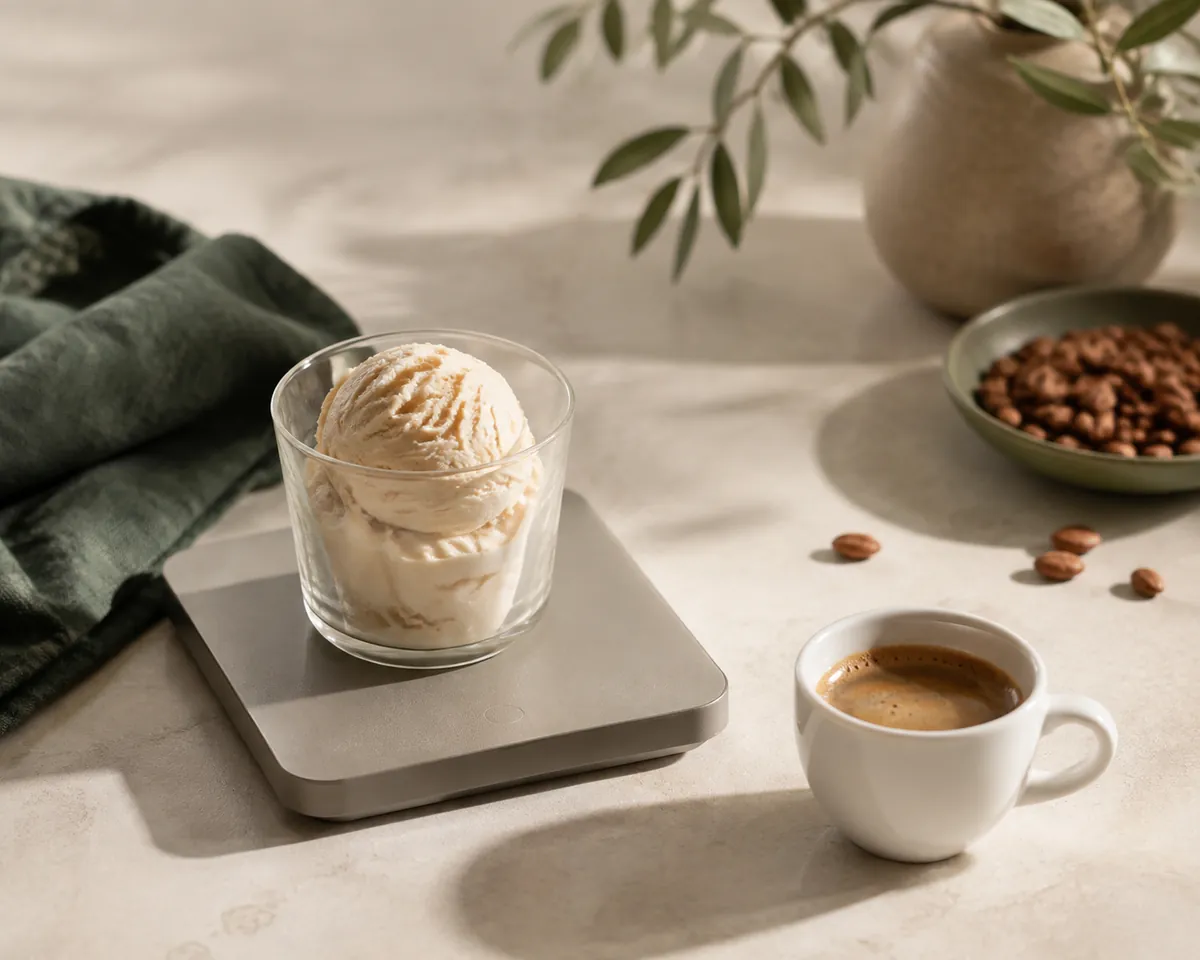
The glass matters more than the numbers do. A wide bowl lets the shot spread into a thin film with a large surface area, which cools it and melts the scoop from every side at once, and a narrow glass keeps the coffee in a deep pool under the ice cream where it stays hot and does less damage.
Two scoops with one shot works, but it makes a different drink. It is less coffee-forward and more of a sundae, and it needs eating faster still because there is more surface to lose.
One scoop is the version that balances, and it is the one served in Italy.
How to build one in the right order
Every step here is about not losing heat from the coffee or gaining it in the ice cream, and the order is not negotiable because the shot cannot wait.
Building an affogato
- ChillPut the glass in the freezer while you set up, and leave the tub in there until the last moment
- ScoopIce cream into the cold glass first, one firm scoop, and back to the freezer
- GrindGrind fresh and prepare the shot, with a burr grinder if you have one
- PullPull the shot straight into a warmed cup, and do not let it sit
- PourTake the glass out, pour the shot over the scoop at the table, and serve it in the same movement
The ordering trap is scooping last. It feels natural to pull the shot and then reach for the tub, and it costs you the twenty seconds in which a shot loses most of its heat and its crema.
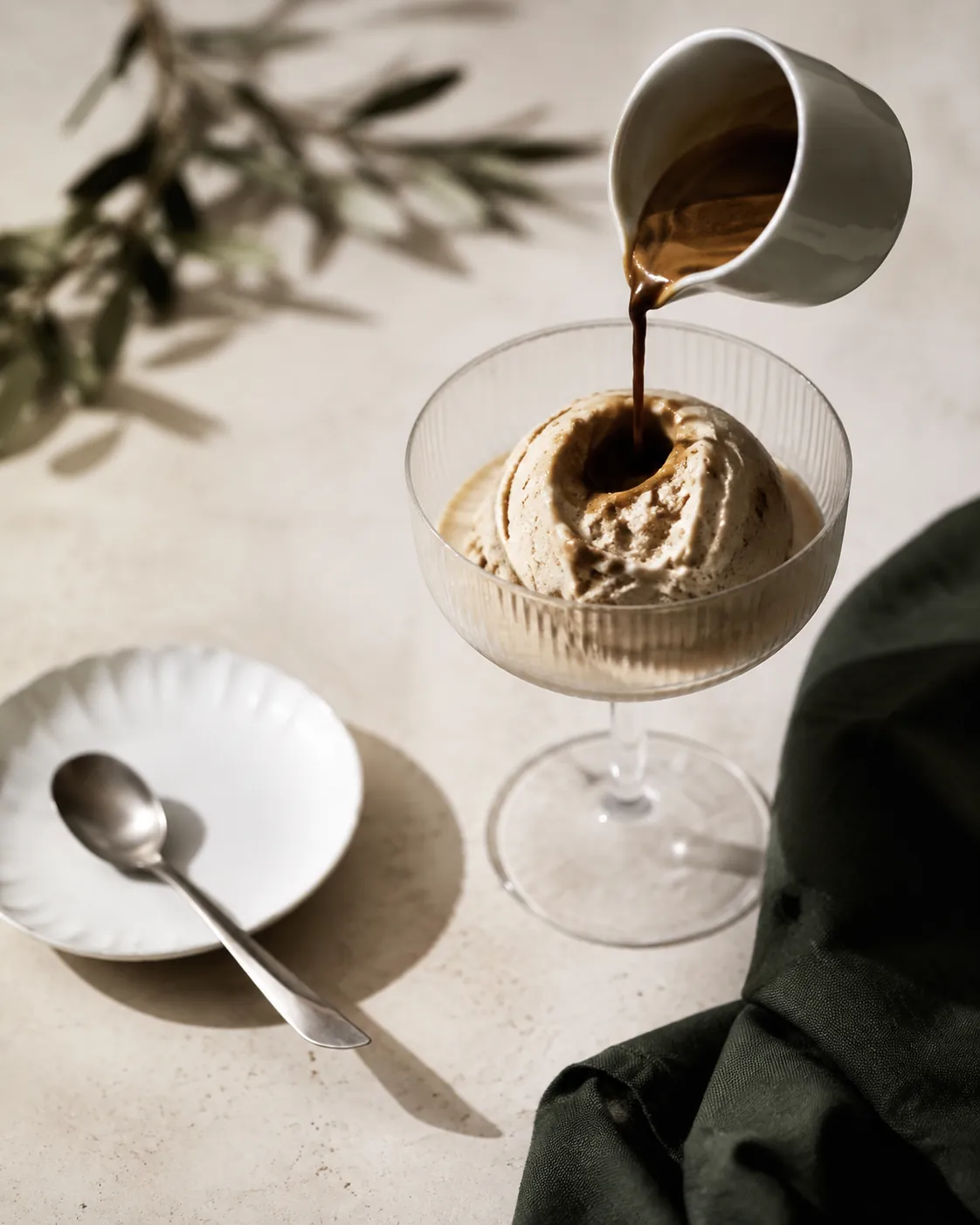
If there is no espresso machine in the house, the workable substitutes are the strong, small and hot ones. A moka pot is the closest, a very concentrated Turkish pour works if you keep the grounds out of the glass, and a double-strength instant is honest and better than a full mug of weak filter.
What does not work is anything cold, and a cold brew poured over ice cream is a coffee float rather than this.
Why it has to be eaten immediately
The eating window is about ninety seconds in a chilled glass and rather less in a warm one, and nothing about that is dramatic licence. Once the scoop is fully melted, the three textures have become one and cannot be recovered.
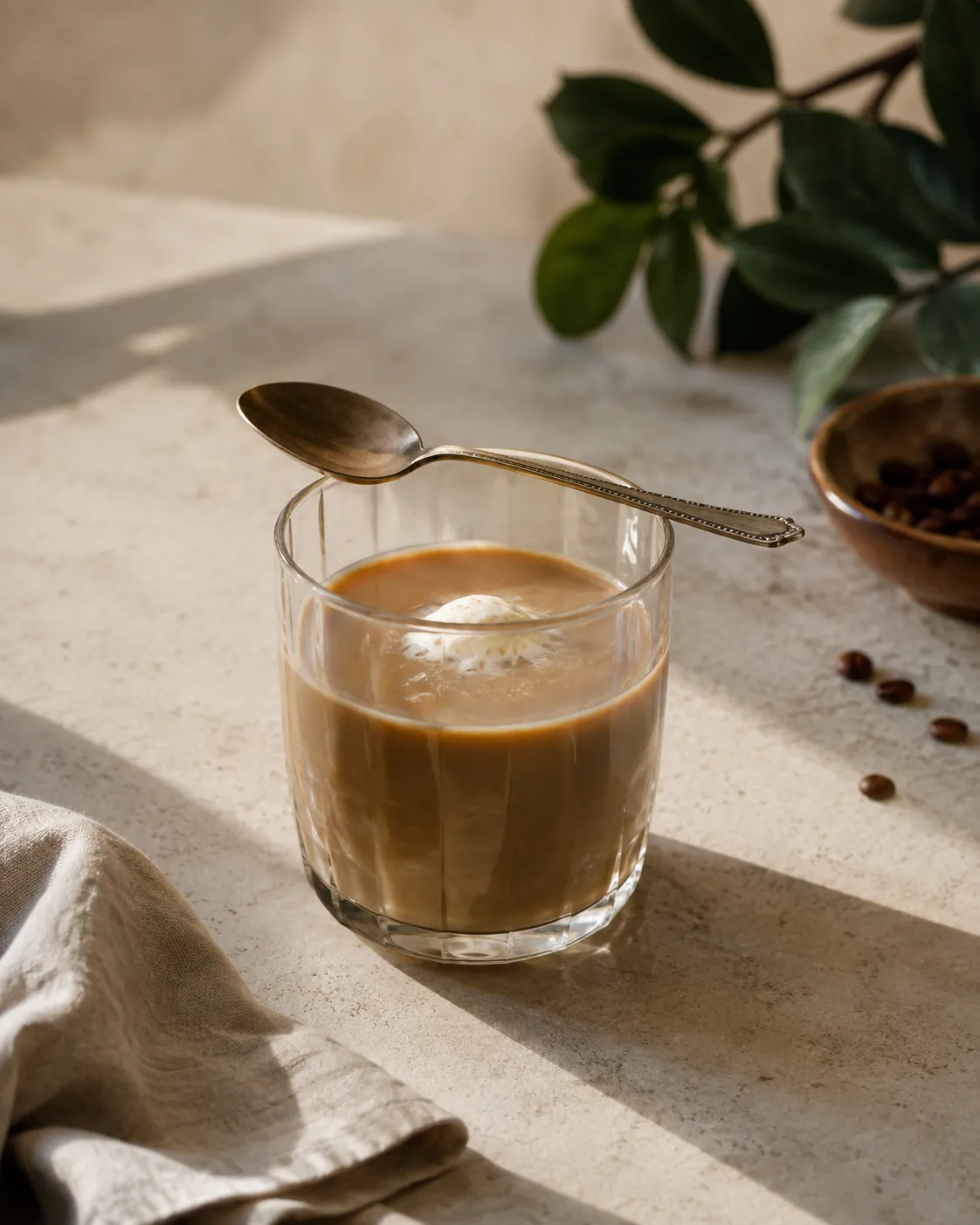
There is a way to eat it that gets the most out of the window, and it is worth knowing because the drink is unusually sensitive to sequence. Spoon the melted edge first, where the coffee and the cream have just combined and the sauce is at its richest.
Work inwards to the frozen core. Drink whatever coffee is left in the bottom of the glass at the end.
- Serve it the second the coffee is poured, and never carry it far.
- Eat from the outside inwards rather than stirring the glass.
- Do not use a straw, which draws the coffee out from underneath and leaves plain ice cream.
- Never assemble it in advance, and never hold it in a fridge.
- If it has to travel, carry the shot and the glass separately and combine them on arrival.
Made ahead it becomes something else entirely, and not a good version of that either. What you get is a sweet milky coffee that has been diluted by melt, which is the same failure that ruins an iced coffee built on too much ice, arriving twice as fast.
What the coffee choice changes, and what it does not
The shot is doing three jobs: it is the heat source, the bitter counterweight to the sugar, and the aromatic. Only the second and third are affected by which beans you use.
Roast level is the lever that matters most. A dark, chocolatey roast reinforces what the vanilla is already doing and gives the familiar, comfortable version.
A bright, acidic light roast reads sharply against the cold sweetness and makes a much more interesting drink that some people dislike on the first spoonful.
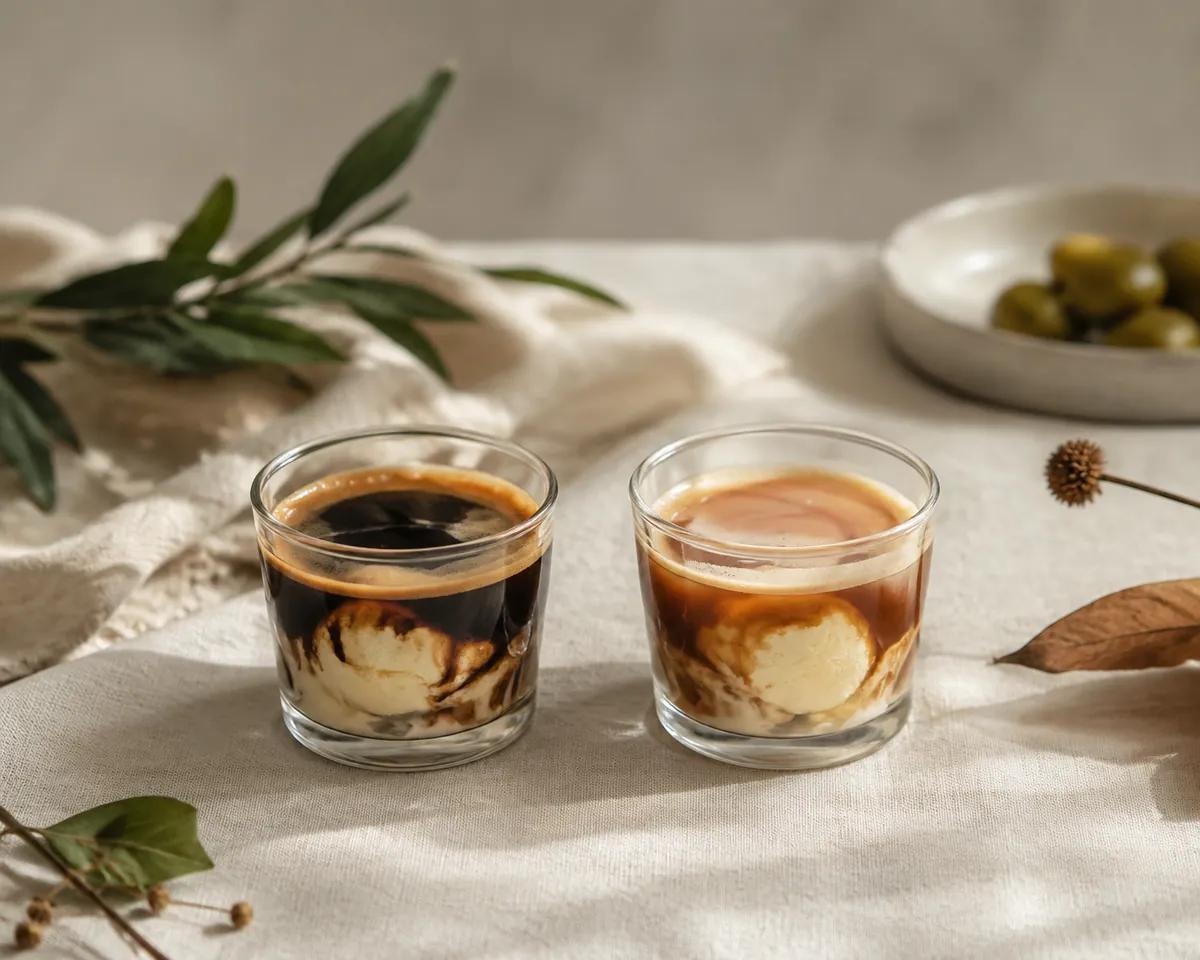
Caffeine is where the choice changes nothing worth noticing. The figure follows the dry coffee in the basket rather than the drink built around it, so an affogato carries the same amount as the shot it was made from, and the ice cream contributes none.
A decaffeinated shot behaves identically in the glass, since heat and bitterness are unaffected by the decaffeination.
What goes on top, and what it costs
Toppings are common and most of them are a net loss, because they add texture to a drink whose entire appeal is the three textures it already has.
Two things earn their place. A hard almond biscuit on the side gives you something to eat the last of the sauce with, and a scatter of toasted chopped hazelnuts adds a crunch that survives contact with hot liquid instead of going soft in it.
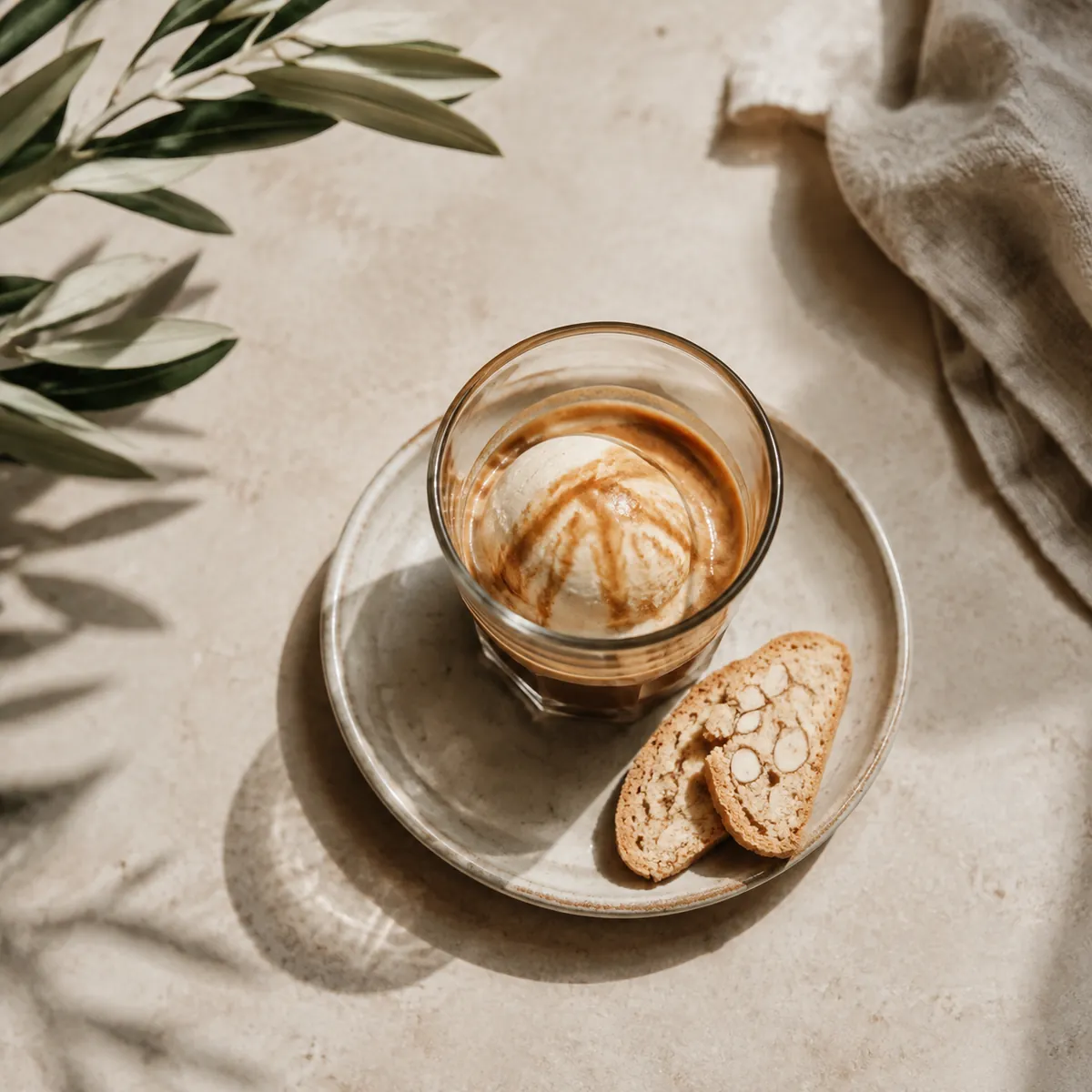
Almond biscuit
On the side rather than in the glass, and the classic accompaniment
Toasted hazelnuts
Stay crunchy under the coffee, and match a dark roast well
Grated dark chocolate
Adds bitterness to a drink that already has plenty
Cocoa dusting
Disappears into the shot within seconds and reads as nothing
Caramel sauce
Buries the coffee, and gives you a sundae with a coffee note
Whipped cream
Insulates the scoop and blocks the shot from reaching it
The whipped cream case is the clearest illustration of the principle. It looks generous and it physically prevents the thing the drink is for, because a layer of aerated cream is an excellent insulator and the shot never reaches the scoop underneath at full heat.
If you want a sweeter version, the honest route is a sweeter ice cream rather than anything added at the top, and none of it needs sugar stirred in. Everything you put on the surface is between the coffee and the ice cream.
Affogato against the rest of the cold coffee menu
Set beside the other cold coffees it is the odd one out on almost every axis, and knowing which one you actually want is the difference between ordering well and being disappointed.
An iced latte and a mocha are drinks: they are large, they are drunk over time, and they are stable in the glass. An affogato is small, is eaten, and has a shelf life measured in seconds.
It is also the only one on the list where the dairy arrives frozen rather than cold or steamed.
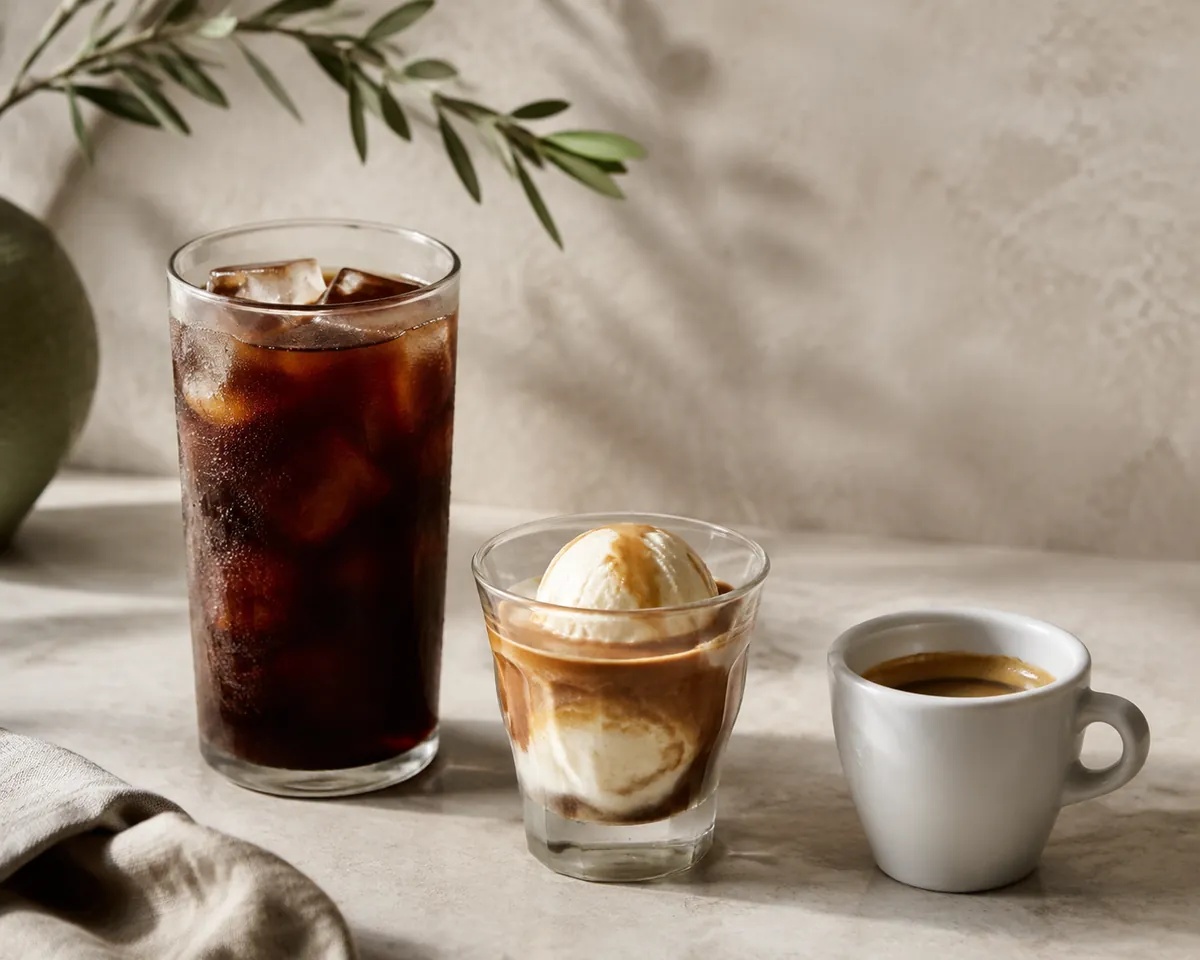
| Affogato | Iced coffee | Coffee float | |
|---|---|---|---|
| Base | A scoop, drowned | Brewed coffee over ice | Cold coffee with ice cream added |
| Coffee temperature | Hot | Cold | Cold |
| Eaten or drunk | Eaten, with a spoon | Drunk | Drunk, then eaten |
| Time it holds | Under two minutes | An hour | Fifteen minutes |
| Course | Dessert | Any time | Dessert |
The float comparison is the useful one because it is so nearly the same list of ingredients. Cold coffee poured over ice cream never forms a sauce, since there is no heat to melt the shell, so the scoop bobs and slowly dissolves in the way it does in a root beer float.
The hot shot is the entire mechanism, and without it the drink is a different one wearing the same ingredients.
Ordering it well comes down to two questions. If you want to sit with something for half an hour, order almost anything else on the menu, and if you want the texture this drink is made of, order it last and eat it standing up.
Anyone building one at home should start with the method rather than the shopping list, because the sequence is where it usually goes wrong rather than the ingredients.
Common questions
Is an affogato a coffee or a dessert?
In Italy it is listed with the desserts, and it arrives with a spoon rather than a straw. It is a scoop of ice cream with a hot shot used as a sauce, which is why it is eaten from the outside inwards rather than drunk.
Why does an affogato have to be eaten straight away?
The eating window is around ninety seconds in a chilled glass. The shot melts only a thin outer shell of the scoop into a sauce, leaving a frozen core and a pool of coffee beneath, and once the scoop has melted through, those three textures have become one tepid milky coffee.
Can you make an affogato without an espresso machine?
Yes, as long as the coffee is small, strong and hot. A moka pot is the closest substitute, a concentrated Turkish pour works if the grounds are kept out of the glass, and a double-strength instant is serviceable. Cold coffee makes a float rather than an affogato, because no sauce forms without heat.