What Is Dutch-Process Cocoa? What the Alkali Actually Changes
Dutch-process cocoa has been treated with an alkali to neutralise its natural acidity. That one step changes its colour, its flavour and, crucially, which raising agent a recipe needs.
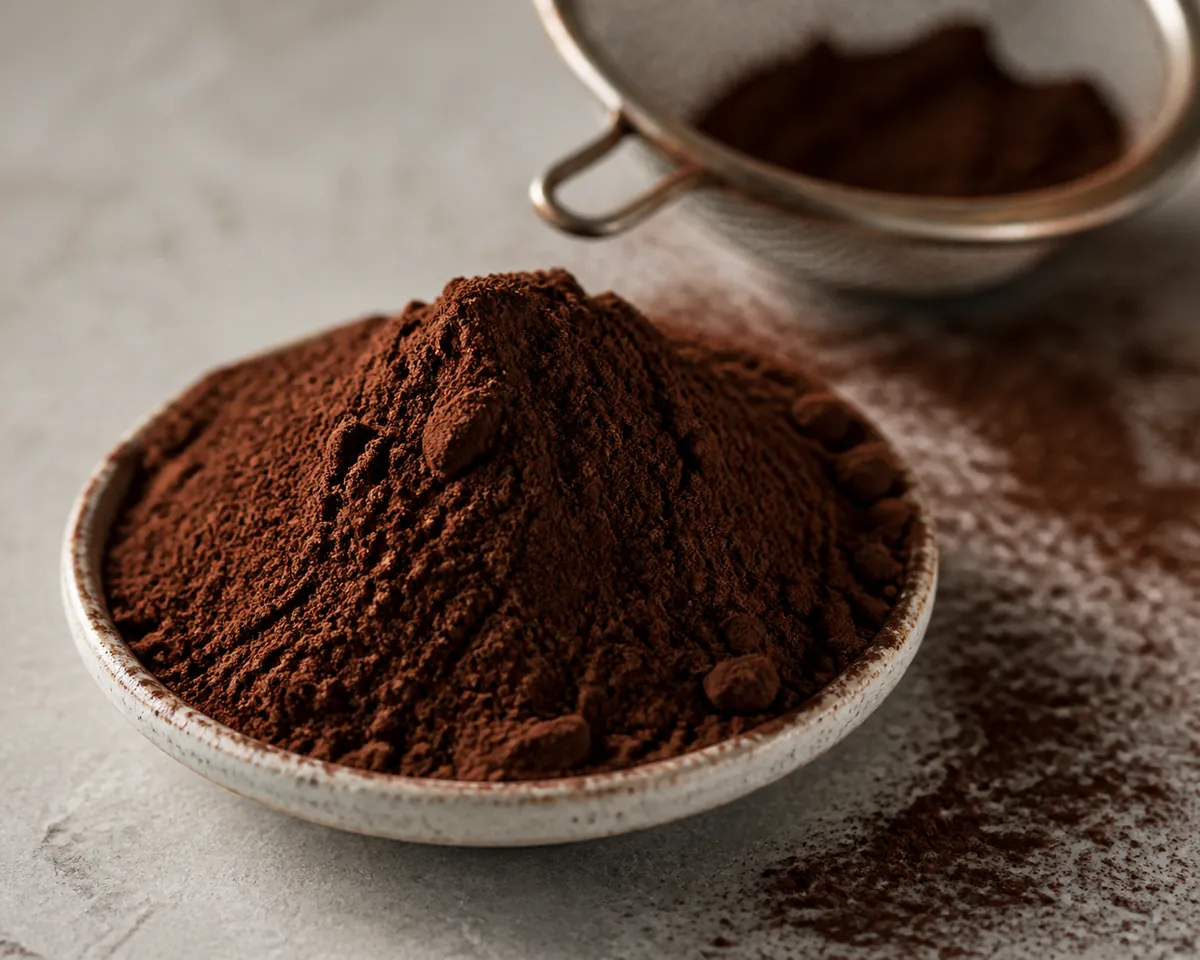
Dutch-process cocoa is cocoa powder that has been treated with an alkali, usually potassium carbonate, to neutralise the acidity the bean carries naturally. Everything that follows from that one step is set out in alkalised against untreated.
It is also sold as alkalised cocoa or, on European labels, as cocoa processed with alkali.
The treatment is a single step applied before the powder is packed, and almost everything distinctive about the product follows from it. Colour, flavour and behaviour in a batter all move together, because all three are downstream of the same shift in pH.
What alkalising changes
- pH
- From roughly 5.3 up to 6.8 or as high as 8 for heavily treated cocoa
- Colour
- From reddish-brown to deep brown, and in heavy treatments almost black
- Flavour
- Milder, smoother, less fruity and less sharp
- Solubility
- Improved. It disperses in liquid more readily
- Reactivity
- Loses the ability to react with an alkaline raising agent
What the alkali actually changes
Cocoa comes off the press acidic, at somewhere around pH 5 to 6, and treating it with an alkaline solution moves it toward neutral or a little beyond, which is a small number with disproportionate consequences.
The colour change is the most visible effect and the least important one. What matters in a recipe is the pH itself, because that single figure decides which raising agent will work and how the powder will behave against everything else in the bowl.
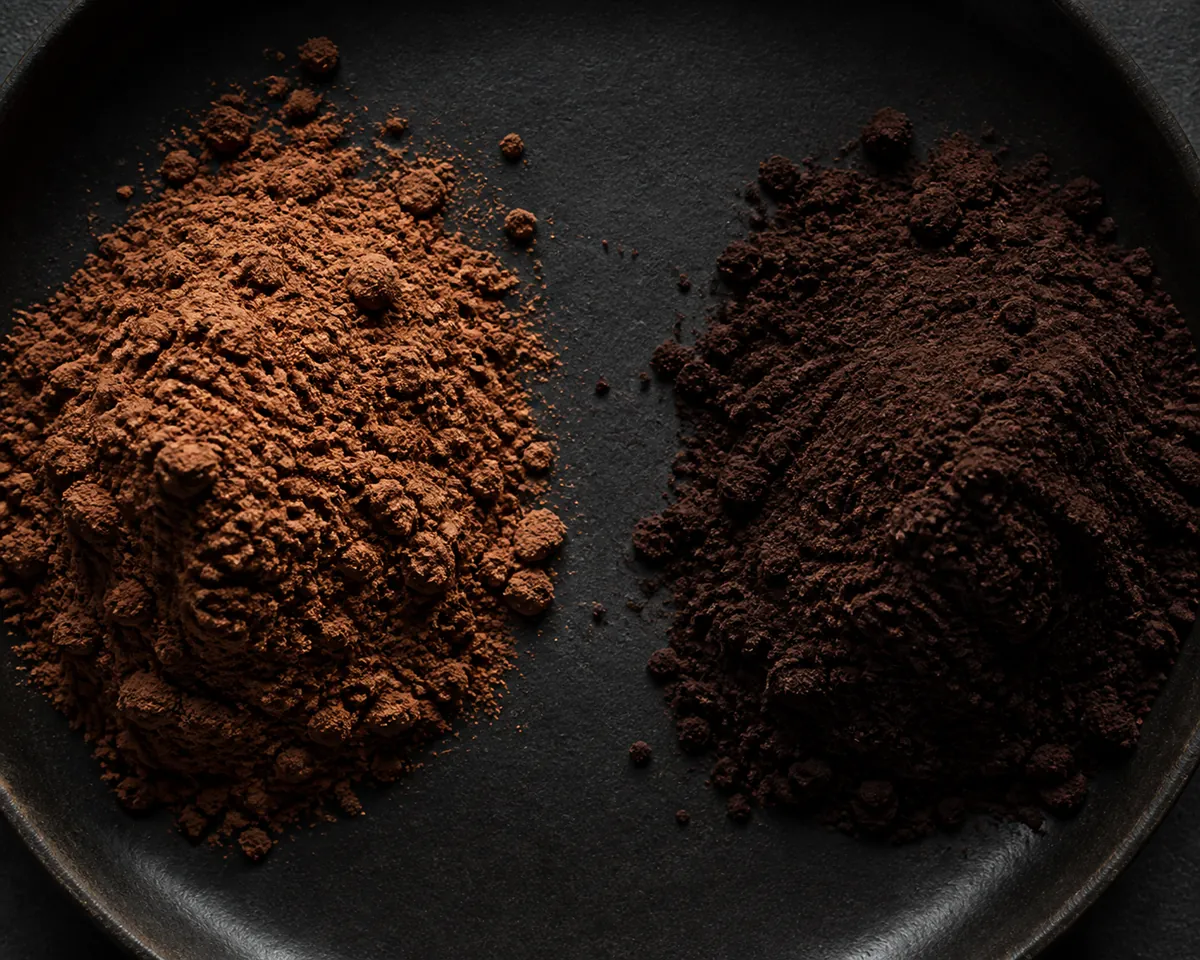
Alkalising changes the chemistry of the powder beyond pH as well. It reduces the level of certain compound groups present in the raw bean, and the degree of that reduction tracks how heavily the cocoa was treated, so a lightly dutched powder sits closer to natural than a heavily dutched one does in more than colour.
No health claim is made about those compounds or about cocoa generally, so this page stops at noting that composition shifts along with colour and flavour. What stays relevant to a cook is unchanged by any of it: the pH decides the leavener, the fat content decides the richness, and the depth of treatment decides how dark and how smooth the powder tastes.
The sensory end of that is covered in Dutch-process cocoa taste.
Baking soda, baking powder, and which cocoa each needs
The practical consequence of that pH shift is a rule about leaveners, and ignoring it ruins bakes rather than merely altering them.
Baking soda is sodium bicarbonate, an alkali, and it needs an acid to react with before it will produce the carbon dioxide that lifts a batter. Natural cocoa is acidic and supplies exactly that acid.
Alkalised cocoa has had the acid taken out of it and supplies nothing.
How the pairing works
- Natural cocoaAcidic. Pairs with baking soda, which needs an acid to react.
- Dutch-processNeutral. Has no acid to offer, so baking soda alone will not lift it.
- Baking powderContains its own acid, so it works with either cocoa.
- Both togetherCommon in recipes, where the soda balances pH and the powder does the lifting.
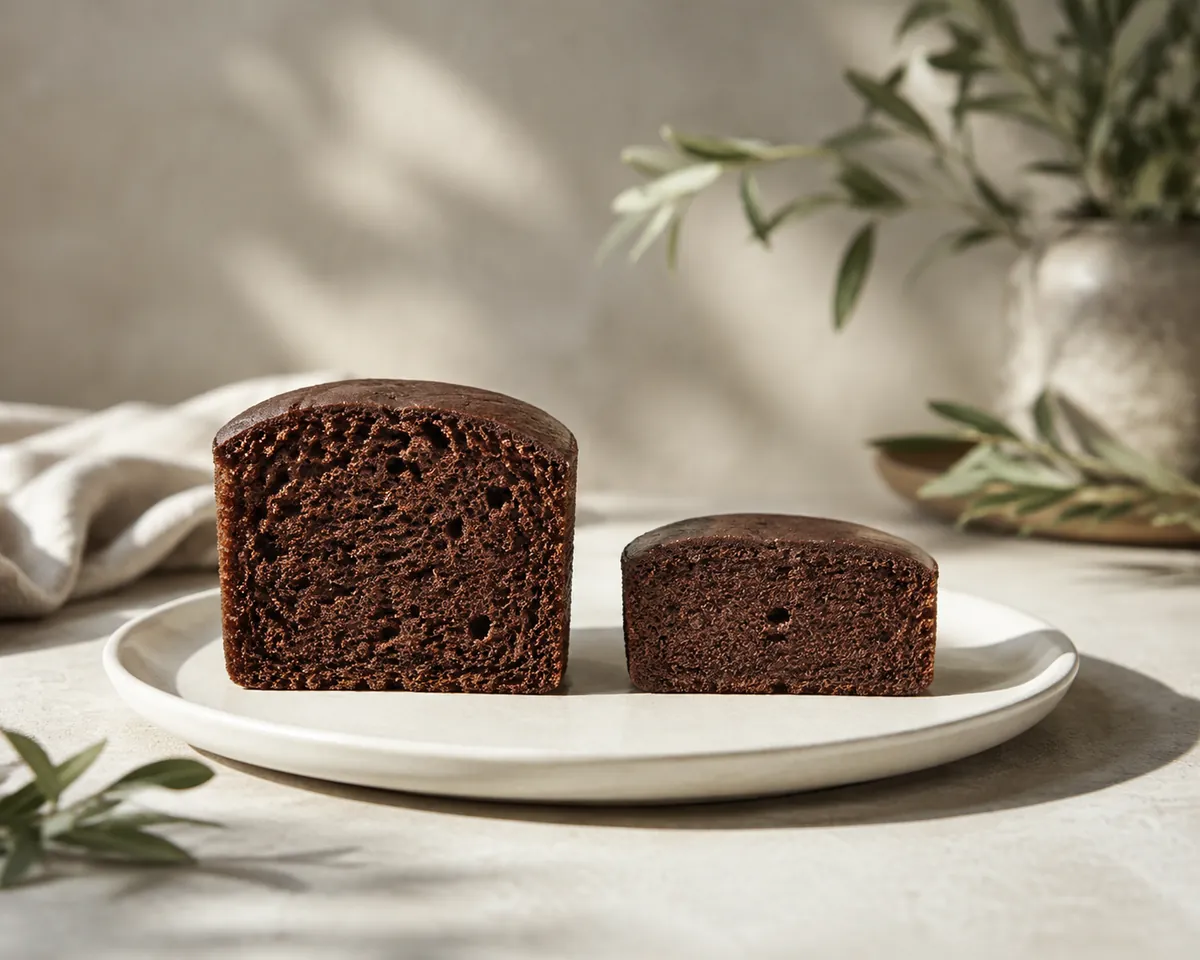
Swapping one powder for the other without changing the leavener is the classic failure. A recipe written for natural cocoa and baking soda, made with an alkalised powder, gives a flat dense bake with a faintly soapy taste from soda that never found anything to react with.
A bake that came out flat and slightly soapy is diagnosed in natural cocoa problems. Read the leavener rather than the cocoa line when a recipe simply says cocoa powder.
Baking soda alone with no buttermilk, yoghurt or vinegar in the list means the recipe assumes an acidic powder, baking powder means either will do, and no leavener at all means the choice is purely one of taste. Where the wrong tin has already gone in, Dutch-process cocoa substitutes sets out what can be adjusted.
Reading the tin, and the fizz test that settles it
Labels disagree between markets.
| Dutch-process | Natural | |
|---|---|---|
| Label wording | "Alkalised", "processed with alkali", "Dutch" | Often just "cocoa powder", or "natural" |
| Colour | Deep brown to nearly black | Lighter, reddish-brown |
| Smell | Mellow, roasted, smooth | Sharper, fruitier, more acidic |
| Common origin | European brands predominantly | American brands predominantly |
| Recipe pairing | Baking powder | Baking soda |
The ingredients list is the most reliable place to look, because the alkalising agent has to be declared even where the words Dutch-process and alkalised are not required on the front of the packet. Potassium carbonate is the commonest, and sodium carbonate and potassium hydroxide both do the same job under different names.
Where no such agent appears in the list at all, the powder is natural cocoa. Colour on its own settles nothing, since a very dark powder is usually heavily dutched but a mid-brown one could be either, which is why the window on the tin is a worse guide than the small print on the back.
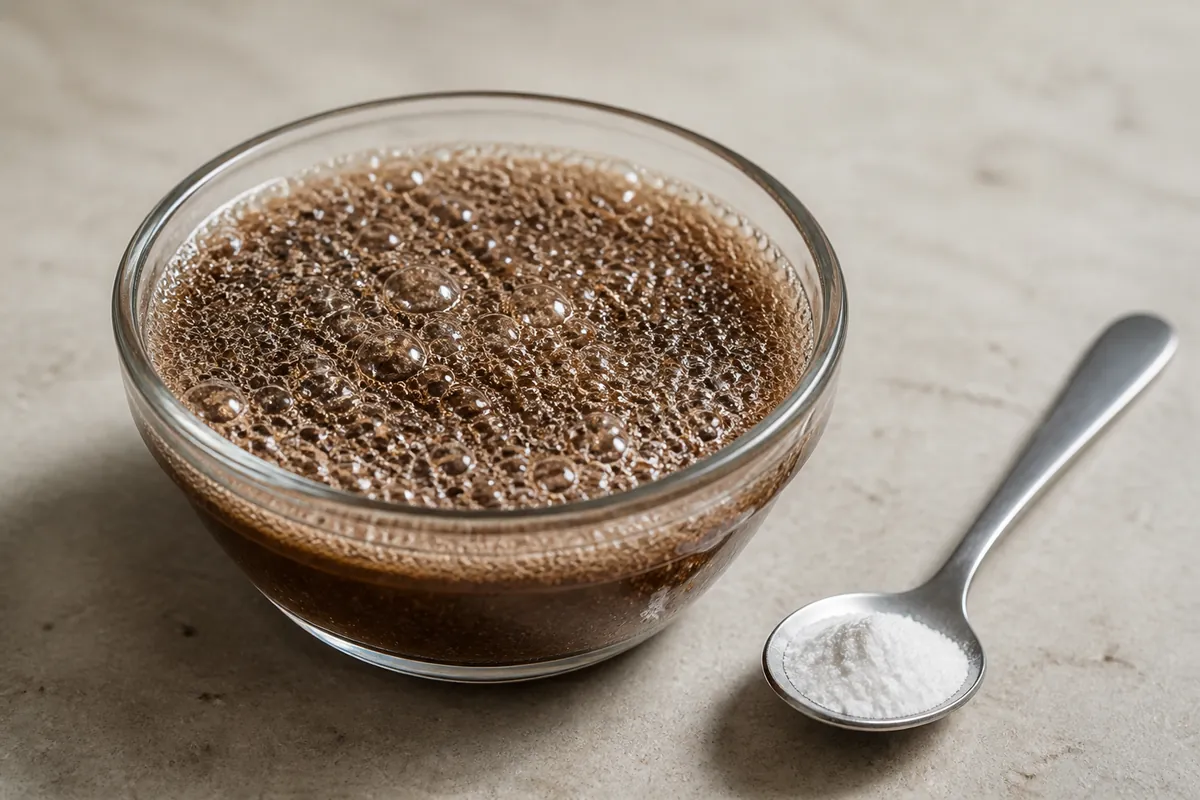
A vigorous fizz like that one means the powder is acidic and therefore untreated, and Dutch-process gives barely a ripple in the same glass. Most cocoa sold in Europe is alkalised and most sold in the United States is not, which is why recipes from the two regions so often assume different powders without ever saying so.
What alkalising takes away, and what it leaves
Brightness is traded for smoothness, and neither end of that trade is better in the abstract.
How the flavour shifts with alkalising
- NaturalSharp, fruity, acidic, distinctly cocoa
- Lightly alkalisedRounder, with the sharp edges taken off
- Standard DutchSmooth, mellow, deeply roasted
- Heavily alkalisedVery dark, earthy, and noticeably flatter
- Black cocoaAlmost no fruit, strongly biscuit-like, used for colour
The fruity, acidic notes that make an untreated powder taste vividly of cocoa are precisely what the process removes, and natural cocoa taste describes what is on the other side of that trade.
Most people's reference point for the flavour of cocoa is already an alkalised one. Commercial chocolate drinks, chocolate ice cream and dark biscuits use it almost universally, because the darker colour and the smoother flavour both sell better, and so does most of the drinking chocolate powder sold in Europe.
The colour of a finished product therefore tells you very little about its quality. A very dark biscuit is usually reporting the depth of the alkali treatment rather than a high cocoa content, and someone whose expectations were formed on those products finds natural cocoa unfamiliar and sharp rather than wrong.
The spiced tablets used for Mexican hot chocolate are one of the few traditional products that never took the treatment up.
Van Houten's press, and how the powder is made
Both halves of this product were invented in the same Amsterdam workshop within a few years of each other, which is why a process used worldwide carries a Dutch name.
Coenraad van Houten built a hydraulic press in the 1820s that could separate cocoa butter from cocoa solids. That press is what made cocoa powder possible at all, and therefore what split one drink into the two that hot chocolate and hot cocoa have been ever since.
He or his father then developed the alkalising treatment, which improved solubility and rounded off the flavour. The name records where the method was worked out rather than where any of the cocoa is grown, and the modern sequence is set out in making Dutch-process cocoa.
From bean to alkalised powder
- Ferment and roastCocoa beans are fermented, dried and roasted as normal.
- NibShells are removed, leaving the nibs.
- AlkaliseNibs or the resulting liquor are treated with potassium carbonate solution.
- PressCocoa butter is pressed out, leaving a solid cake.
- MillThe cake is ground into powder and sieved.
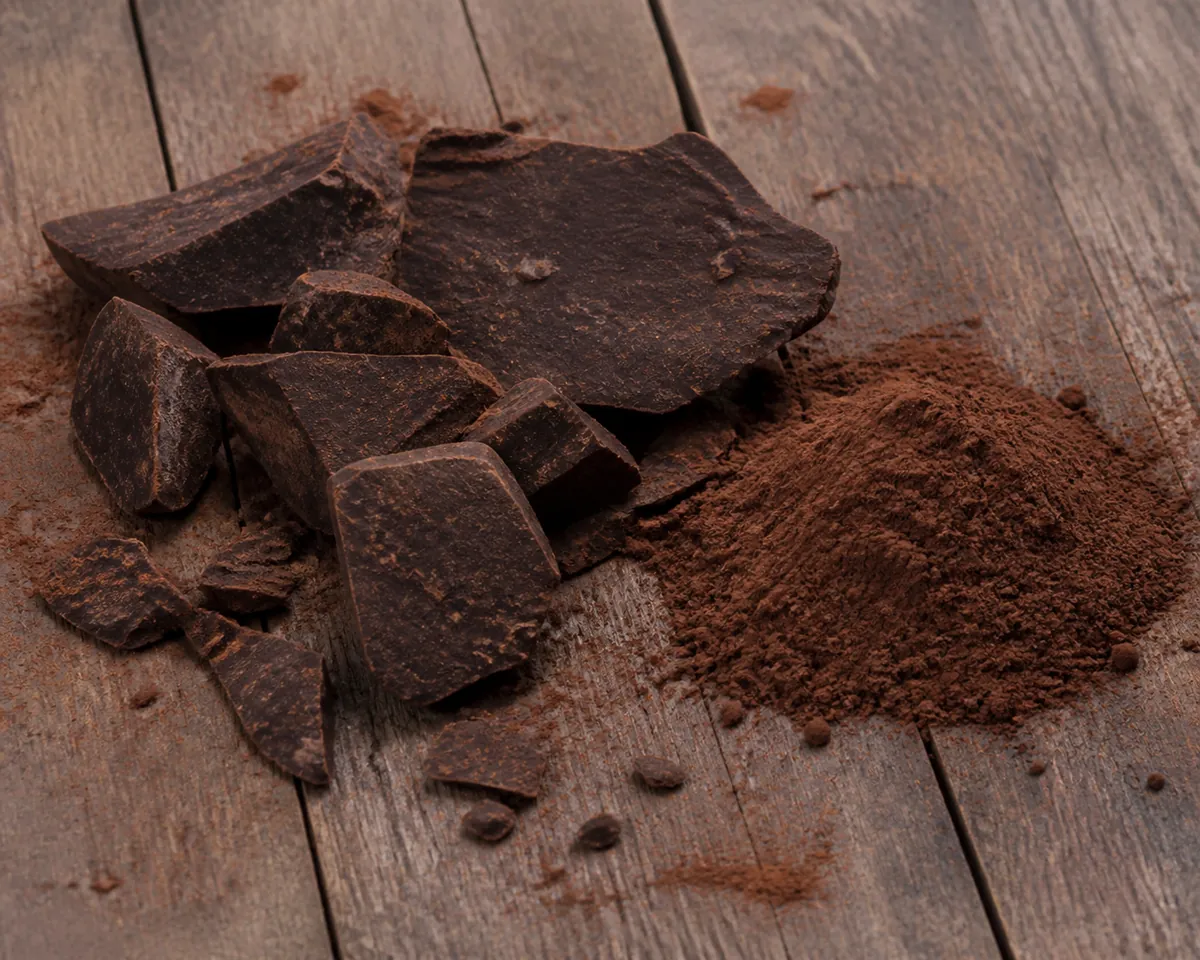
Where in that sequence the alkali is applied varies by producer and it shows in the tin. Treating the nibs gives the most even result, while treating the liquor or the finished powder is cheaper and commoner at the lower end of the market, and it tends to produce a flatter flavour at the same colour.
The number that predicts richness better than the brand
Fat content is printed on most tins and ignored by most shoppers, and it does more to determine how a drink turns out than the name on the front does.
Cocoa powder by fat content
- Low fat
- 10 to 12 per cent cocoa butter. Cheaper, and thinner in a drink
- Standard
- 20 to 22 per cent. The usual for good cocoa
- High fat
- 22 to 24 per cent. Richer, and noticeably better in a drink
- Black cocoa
- Often very low fat, and used for colour rather than flavour
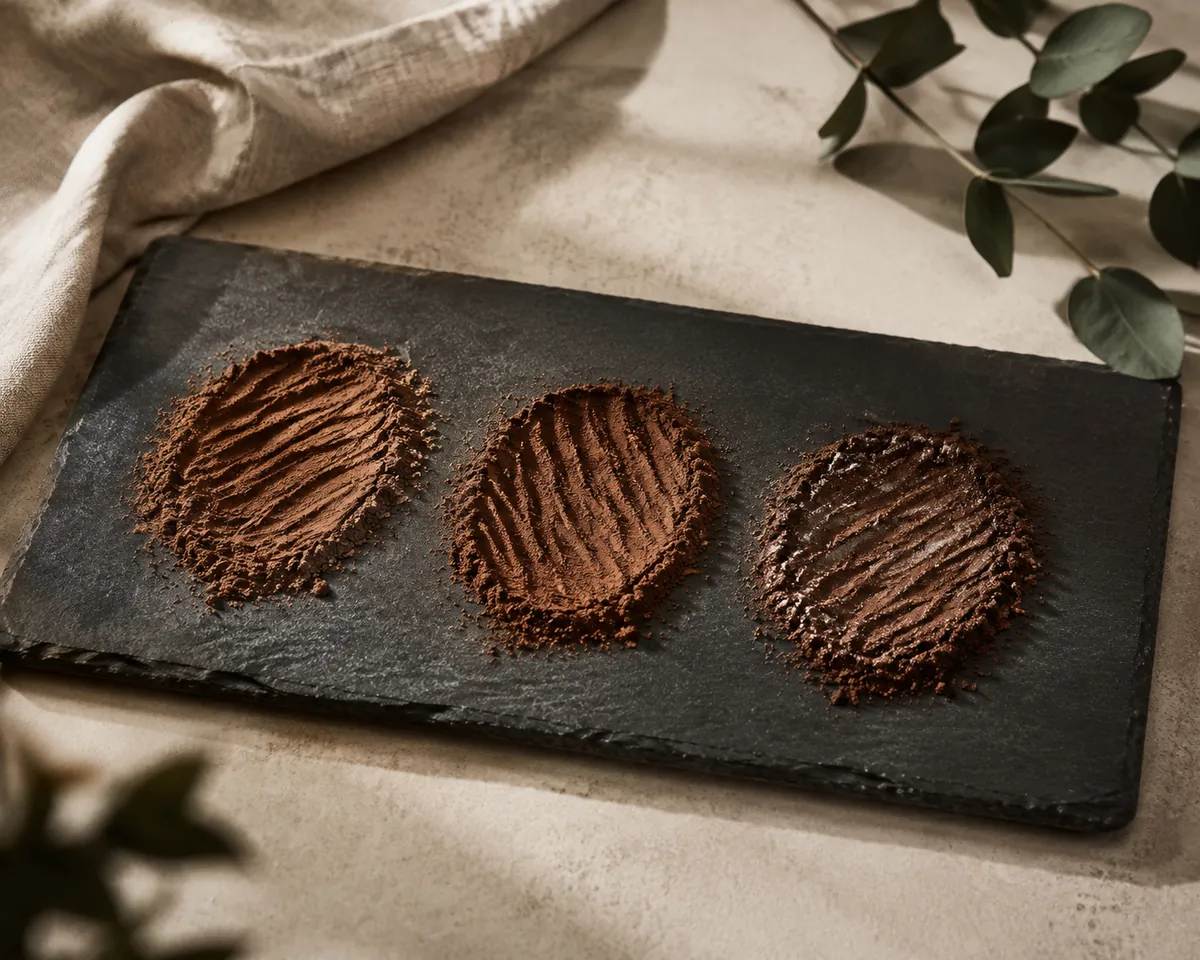
A 22 per cent powder makes a visibly richer cup than a 10 per cent one, and the difference is easy to see before anything is mixed, since the higher-fat powder clumps slightly and catches the light where the low-fat one sits dusty and flat.
The percentage figure causes confusion because it means something different here than on a bar. On chocolate it describes total cocoa content, combining solids and butter.
On a powder there is no such number, because the product is essentially all cocoa already, so fat content is the figure standing in its place.
Anything on a powder tin advertising a percentage the way a bar does is usually a drinking mix with sugar in it, and the number refers to the cocoa portion of that mix. Those are a different product altogether, and what they are for is set out in drinking chocolate.
Black cocoa at the far end of the scale
Heavier treatment, and a different job.
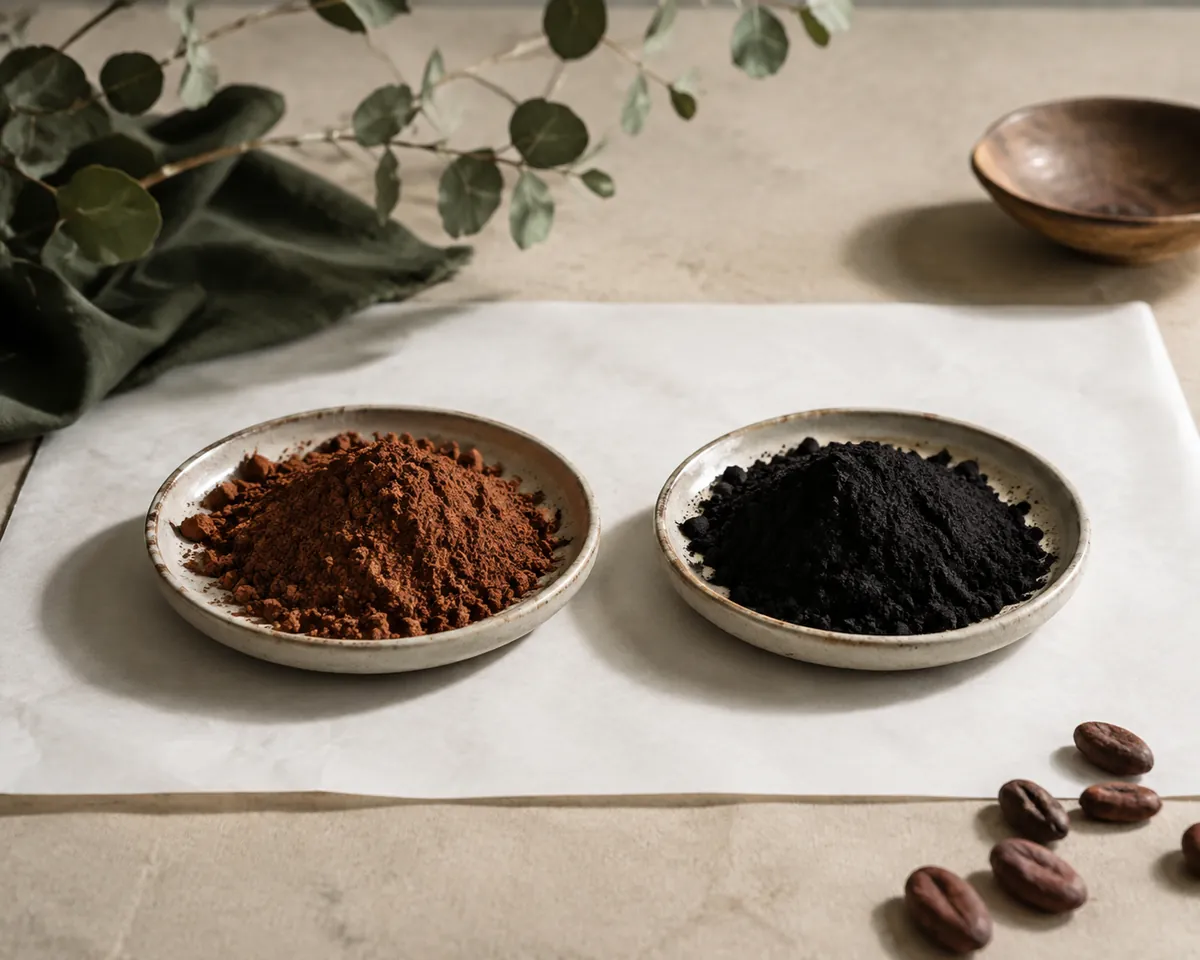
Black cocoa is alkalised far past the standard point, taking the pH up toward 8 and the colour to something close to true black. It is what gives certain very dark biscuits both their appearance and their particular flavour, and it is the reason those biscuits taste of something other than chocolate.
Working with black cocoa
- Colour
- Almost black, and it carries strongly into a bake
- Flavour
- Biscuit-like and faintly ashy, with almost no fruit left
- Fat
- Usually very low, around 10 per cent
- Use
- Rarely alone. Commonly blended at 25 per cent with standard cocoa
- In a drink
- Poor on its own. It reads flat and dusty
It is a colouring ingredient far more than a flavouring one. Used alone where a recipe expects standard cocoa, it produces a bake that looks dramatic and tastes hollow, and blending it at about a quarter of the total keeps the colour while leaving the flavour to the powder underneath.
Choosing a tin, and keeping it dry
Two decisions sit on top of each other at the shelf: which of the two types the recipe wants, and whether the tin in front of you is any good at either.
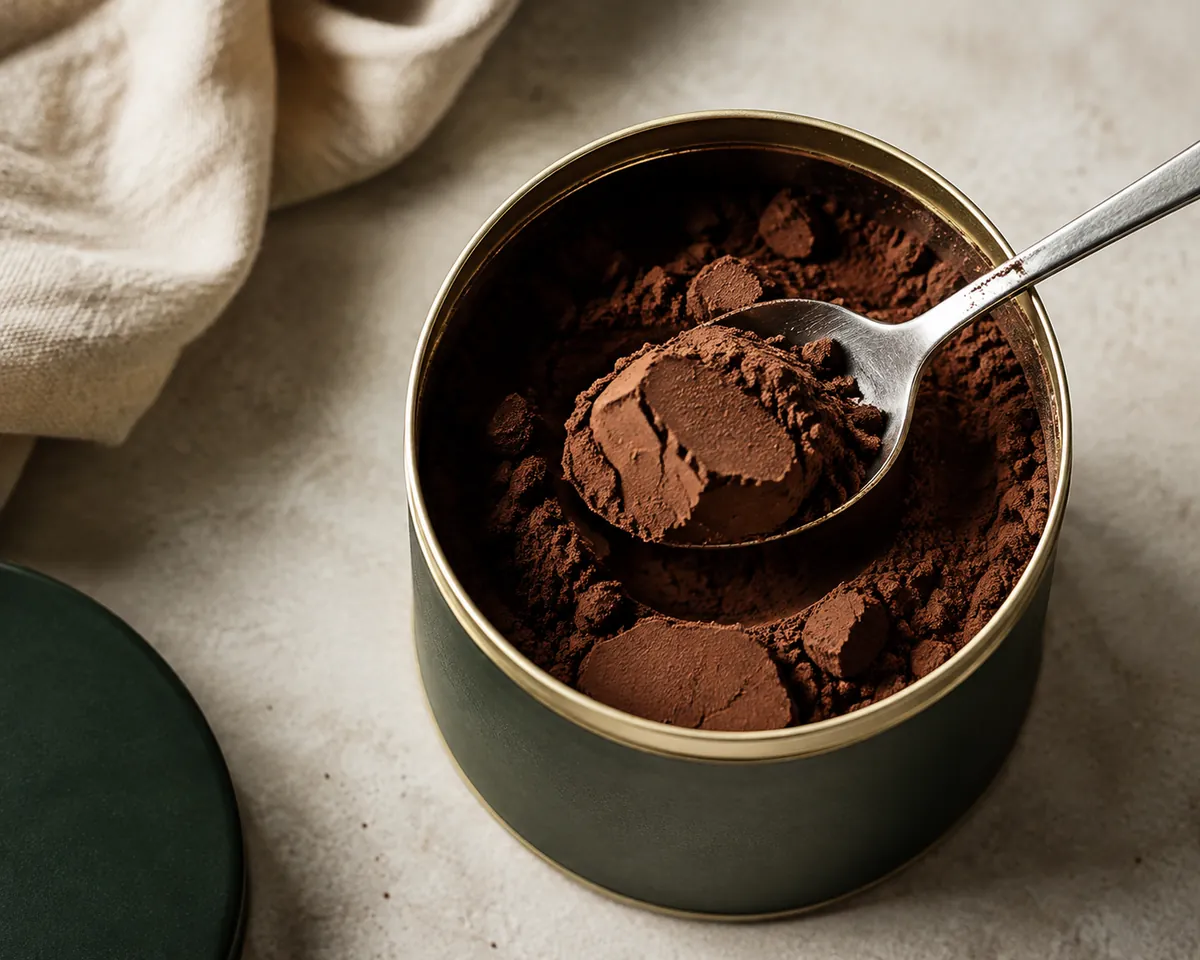
- Check for "alkalised" or "processed with alkali" if a recipe specifies one type.
- Look for the fat percentage, and prefer 20 per cent or above for drinking.
- Buy it in a tin or resealable pouch rather than a paper box, which lets moisture in.
- Avoid drinking chocolate mixes if you want cocoa; those are mostly sugar.
- Smell it. Good cocoa smells strongly and immediately of chocolate through the packet.
The widest quality gap on that shelf is between cocoa powder and cocoa-based drinking mixes, which run to 70 per cent sugar or more. That gap is far larger than the one between natural and alkalised powder, and it is the one most shoppers walk straight past.
Once it is home, cocoa is among the most durable things in a cupboard. Kept dry and sealed it holds for two or three years with little loss, and it does not turn rancid readily because most of the fat has already been pressed out of it.
Moisture and odour are what actually spoil it rather than time. It takes up smells from whatever sits beside it and it clumps hard once it has drawn in humidity, so an airtight tin kept away from spices is the whole requirement, and a clumped tin has been exposed rather than aged.
Practical detail is in storing Dutch-process cocoa.
Which powder a drink wants
No leavener is involved in a cup, so the baking rules fall away entirely and the choice comes down to what you want the drink to taste like.
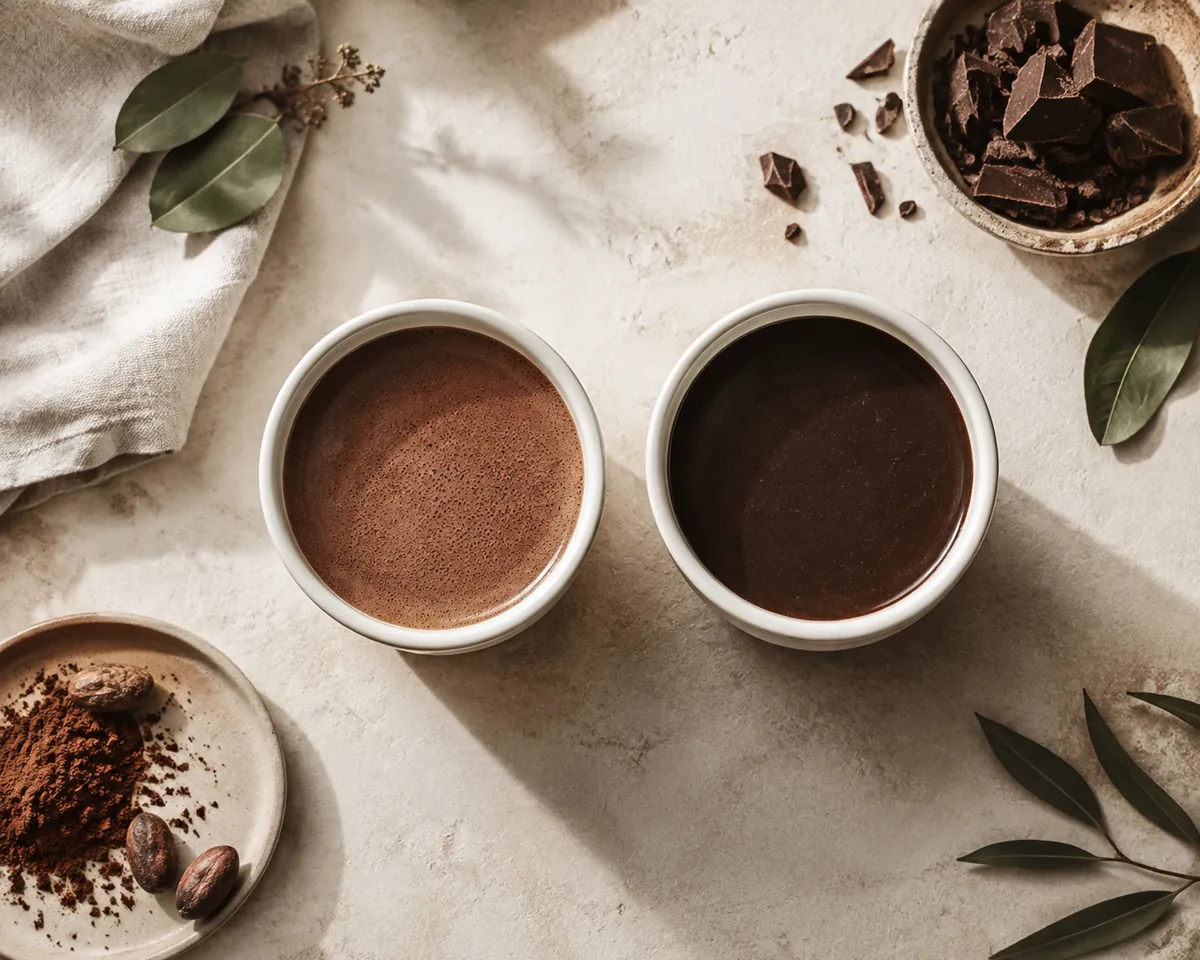
Alkalised powder gives a rounder, darker, less sharp cup and it disperses more willingly at the paste stage, which is why it is the default in commercial hot cocoa and why it suits milk. Natural powder gives a brighter, fruitier cup with more of the bean's own character, and it is the more interesting choice and the less forgiving one.
Against a plant drink the difference becomes a practical matter rather than a preference. Natural cocoa is acidic enough to push a marginal plant drink toward splitting, for the reasons set out in plant milk curdling, while an alkalised powder makes that far less likely.
Either powder wants the same treatment in the pan, and the sequence belongs to hot cocoa on the stove rather than here. A few grains of sea salt help both, a pinch of cinnamon suits the alkalised one better, and faults that survive a good tin are collected in Dutch-process cocoa problems.
Common questions
Can I substitute Dutch-process for natural cocoa?
Not without adjusting the leavener. Natural cocoa is acidic and activates baking soda; Dutch-process is neutral and does not. Substituting without changing to baking powder gives a flat, dense bake and can taste soapy.
How can I tell which cocoa I have?
Check the label for the words alkalised, or processed with alkali. If it is unclear, stir a teaspoon into hot water with a pinch of baking soda: natural cocoa fizzes, Dutch-process barely reacts.
Is Dutch-process cocoa better for drinking?
Generally easier, yes. It dissolves more readily and its mellower flavour suits milk. Natural cocoa is sharper and fruitier, which comes through better in a drink made with water.