Dutch-process cocoa vs Natural cocoa
Dutch-Process Cocoa vs Natural Cocoa: One Alkali Step Apart
Both powders start as the same pressed, milled cocoa. One is then treated with an alkali, and that single step moves the pH, the colour, the flavour and how the powder behaves in hot milk.
Natural cocoa is acidic, around pH 5 to 6, light reddish-brown, sharp and fruity, and it clumps readily in liquid. Dutch-process cocoa has been treated with an alkali to around pH 7 to 8, which darkens it, rounds off the sharpness, costs it some aromatic complexity, and makes it wet more easily. Dutch is the safer partner for coffee and the basis of European hot chocolate; natural gives the livelier drink and suits spice. Darker does not mean stronger, only more processed.
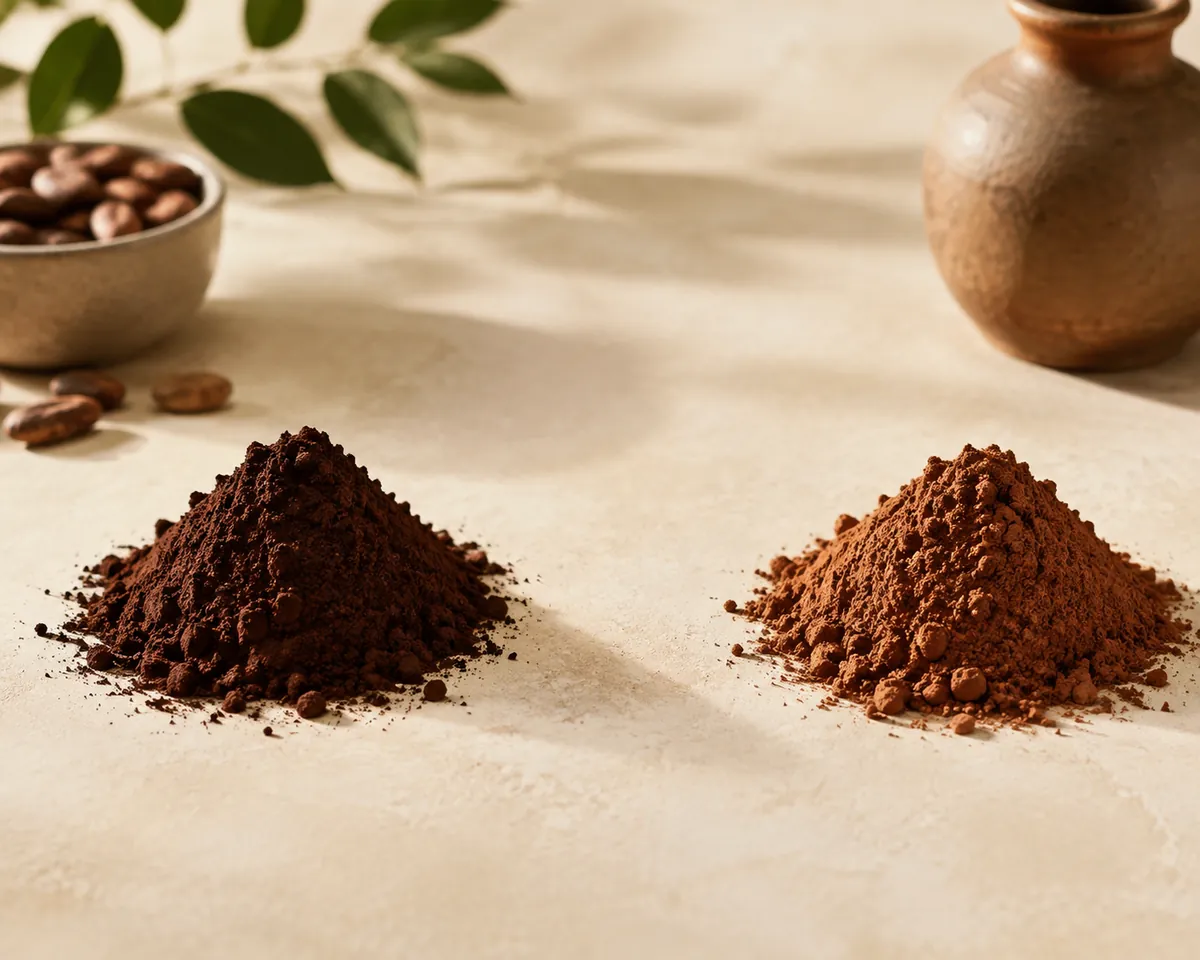
Side by side
| Attribute | Dutch-process cocoa | Natural cocoa |
|---|---|---|
| pH | Around 7 to 8, neutral to alkaline | Around 5 to 6, acidic |
| Colour | Mid-brown to near-black | Light reddish-brown |
| Flavour | Smooth, mellow, rounded | Sharp, fruity, intense |
| Bitterness | Lower and flatter | Higher and brighter |
| Wetting in liquid | Disperses more easily | Clumps more readily |
| With coffee | The safer choice in a mocha | Stacks acid on acid |
| With spice | Mutes it | Gives spice something to lean on |
| Label wording | Processed with alkali | Usually says nothing |
| Keeping | A year or two, sealed and dry | A year or two, sealed and dry |
Both powders start as the same thing: cocoa beans, fermented, roasted, pressed to remove most of the fat, and milled to a fine dust. One of them then gets treated with an alkali and the other does not.
That single step is the whole comparison. It moves the powder's pH from acidic to roughly neutral, and everything else follows from that one number: the colour, the sharpness, the way it behaves in hot milk, and which drinks each belongs in.
Neither is a better product. They are two different ingredients that happen to share a name on the front of the tin.
The one difference: pH
Natural cocoa is acidic, usually landing somewhere around pH 5 to 6. That acidity is native to the bean and survives roasting and pressing intact.
Dutch-process cocoa has been treated with an alkaline solution, typically potassium carbonate, either as nib, liquor or finished powder.
The treatment neutralises much of that acid and brings the powder up to around pH 7 or 8.
| Natural | Dutch-process | |
|---|---|---|
| pH | Around 5 to 6, acidic | Around 7 to 8, neutral to alkaline |
| Colour | Light reddish-brown | Mid-brown to near-black |
| Flavour | Sharp, fruity, intense | Smooth, mellow, rounded |
| Bitterness | Higher and brighter | Lower and flatter |
| Wetting in liquid | Clumps more readily | Disperses more easily |
| Label wording | Usually says nothing | Processed with alkali |
The process is Dutch by origin, developed in the Netherlands in the nineteenth century by Coenraad van Houten, and the name has stuck to the method ever since. Both powders are the same base ingredient described under cocoa powder, separated only by that step.
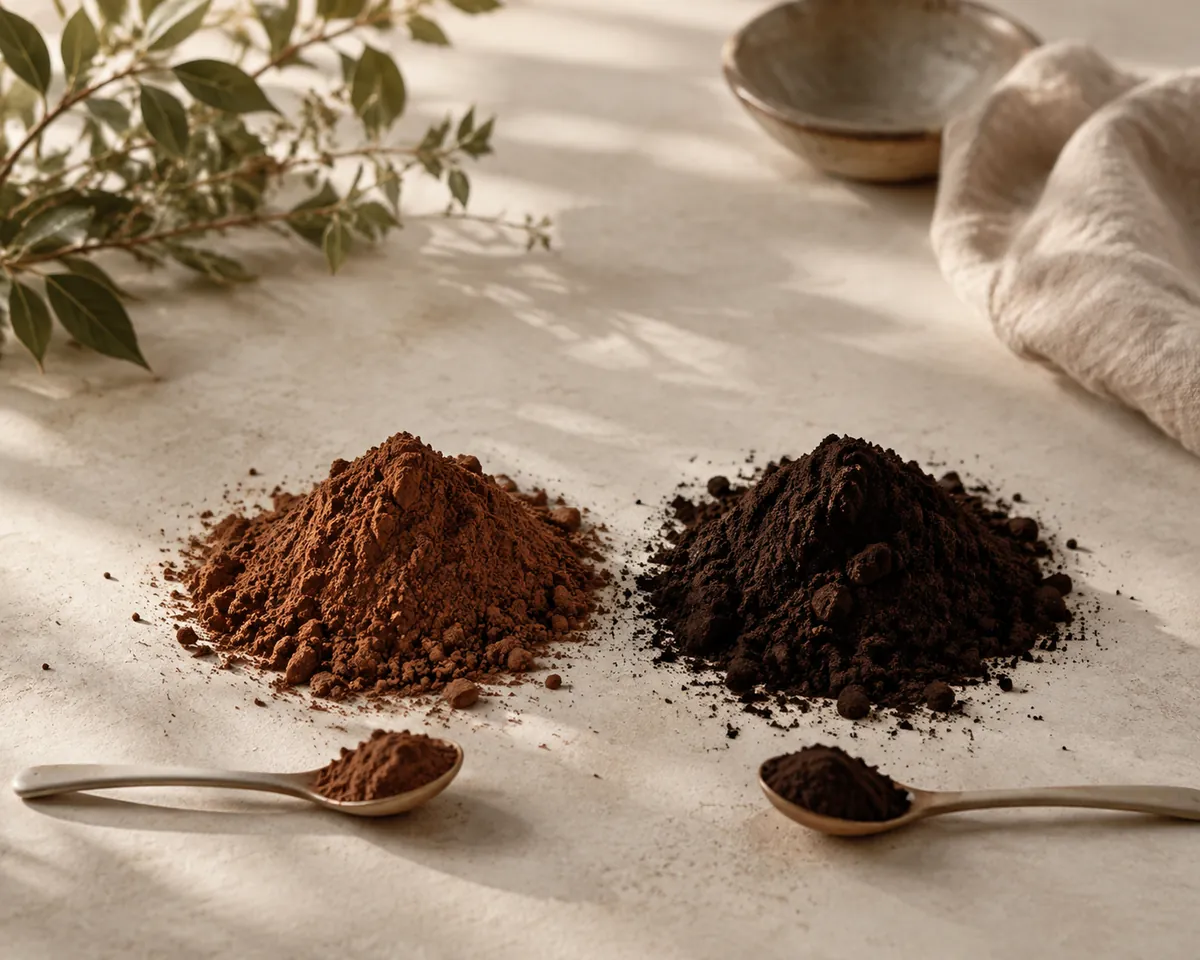
What alkalising actually does to the powder
Neutralising the acid changes more than the pH reading. Acids in cocoa are part of what the tongue registers as brightness and fruitiness, so removing them removes a whole dimension of the flavour.
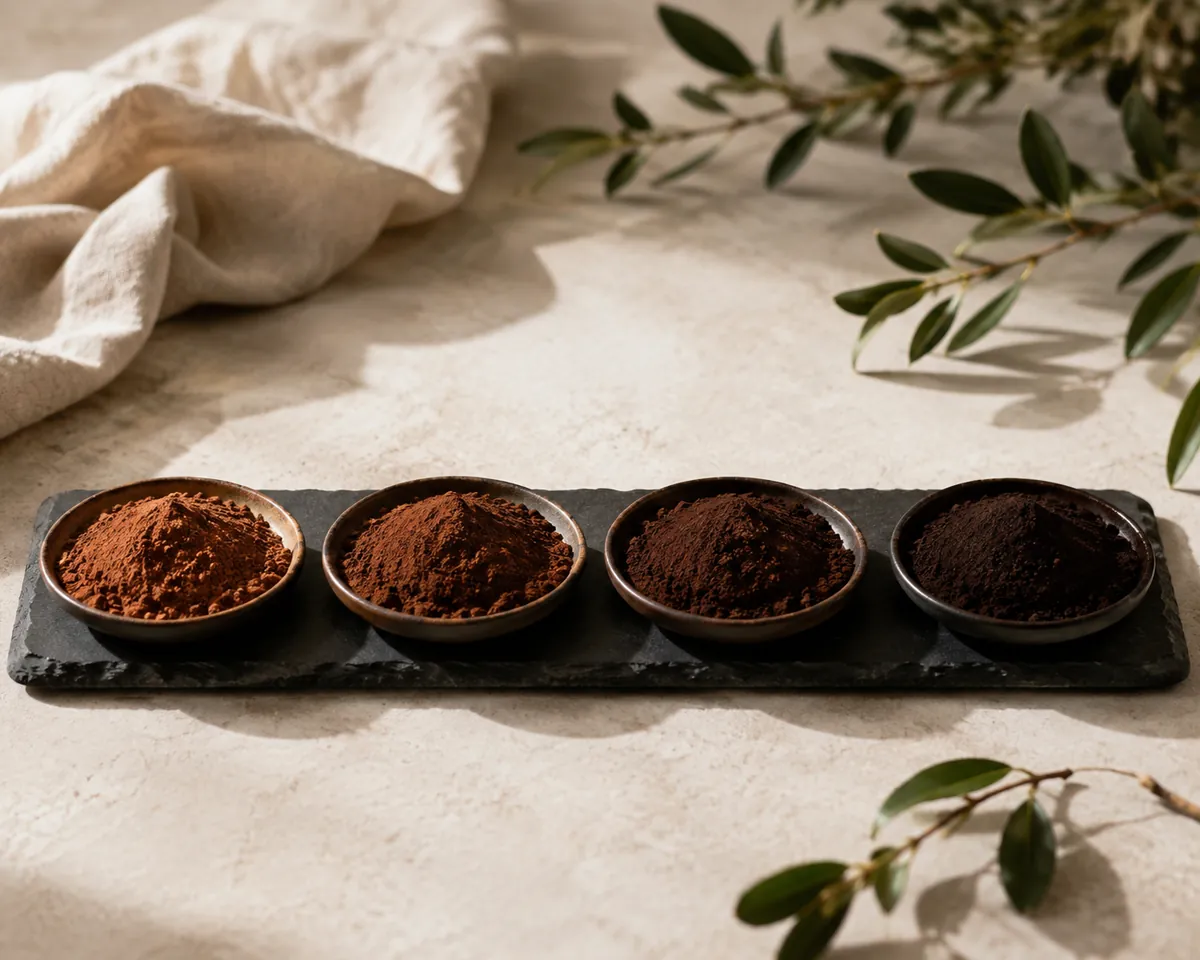
At the same time, alkaline conditions push the colour compounds towards darker, redder and eventually near-black forms. That is why heavily Dutched powders can look almost like squid ink while natural cocoa stays a modest brown.
What the alkali changes
- AcidityNeutralised, and the sharpness with it
- ColourDarkens, sometimes dramatically
- FlavourFruity top notes reduced, rounder overall
- SolubilityWets more readily in liquid
- BitternessSoftened, though not removed
Some flavour compounds are lost along the way, which is the honest cost of the process.
A heavily Dutched powder is smoother and more uniform and has genuinely less to say than a good natural cocoa does.
The degree varies enormously between brands. Lightly Dutched powders keep much of the character and sit close to natural; heavily Dutched ones are a different ingredient altogether.
Colour, and why it is not a quality signal
Very dark cocoa reads as intense, and marketing leans on that hard. It is worth being clear that the darkness comes from the alkali rather than from the beans or from concentration.
A near-black powder has been treated heavily, which means it has lost more of its acidity and more of its aromatic complexity. Darker cocoa is not stronger cocoa; it is more processed cocoa.
Natural cocoa's lighter, reddish tone is often mistaken for weakness. In the cup it usually delivers the sharper and more obviously chocolatey drink of the two, and the colour tells you nothing about that.
Judge by pH claim and by smell, not by shade. A good natural powder smells bright and slightly fruity in the tin; a good Dutched one smells deep and even, without the top note.
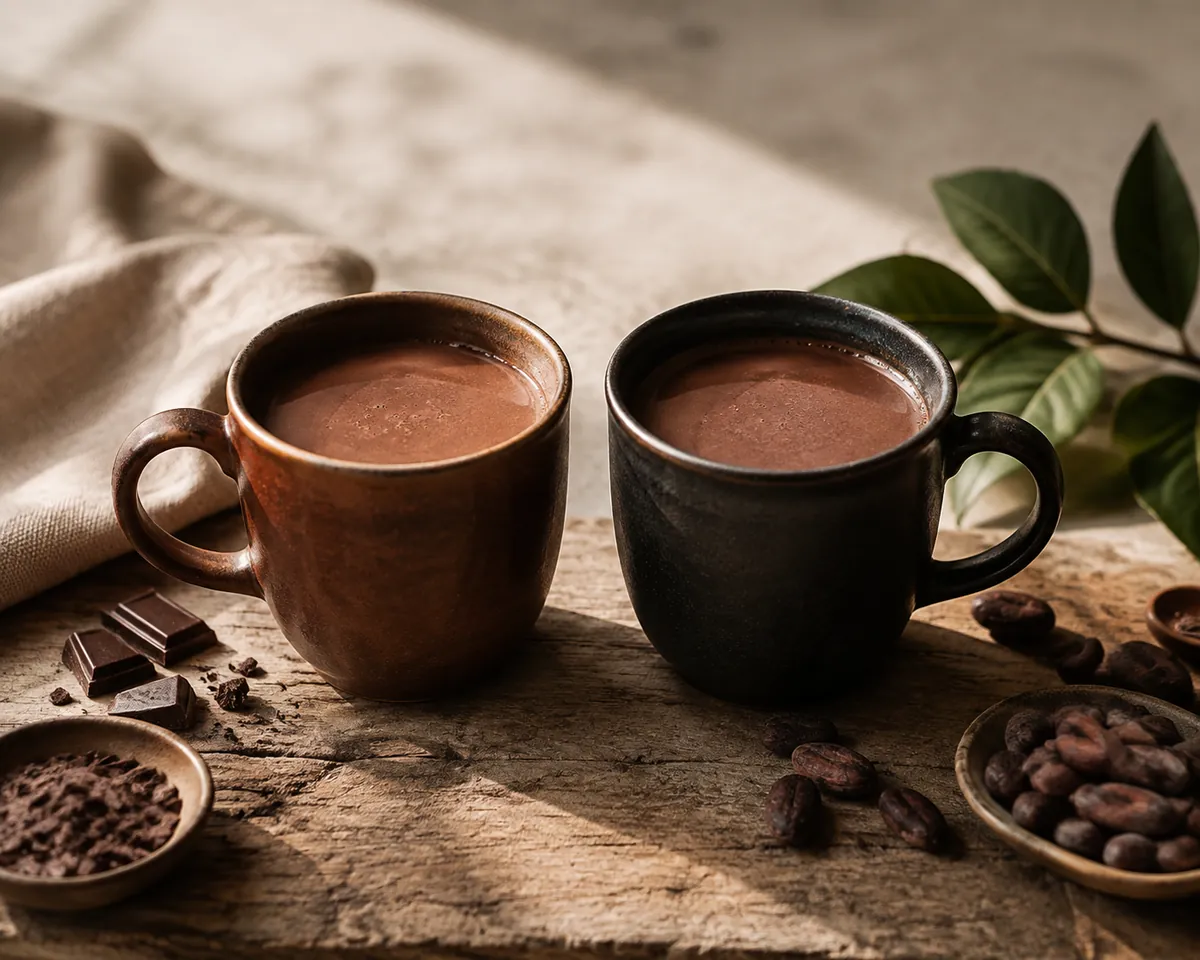
How they taste in a cup
Made into a plain hot drink with milk and a little sugar, the two are easy to tell apart, and most people have a clear preference within a mouthful.
Natural cocoa gives a brighter, sharper drink with a fruity edge and a more assertive bitterness. It tastes more like the raw material, and in a thin drink it can read as slightly astringent at the finish.
Dutch-process gives a rounder, softer, darker-tasting drink with less bite. The chocolate character is more even and less complex, and it holds together better when there is not much sugar to carry it.
Sharpness in the cup, brightest first
- Natural cocoa, water onlySharp and fruity, occasionally harsh
- Natural cocoa, with milkBright chocolate with a fruity lift
- Lightly Dutched, with milkBalanced, some brightness retained
- Heavily Dutched, with milkDeep, even, and quite flat
- Heavily Dutched, water onlyDark and rather one-dimensional
Sugar changes the ranking. Sweeten heavily with cane sugar and the natural powder's acidity becomes an asset that stops the drink cloying; sweeten lightly and the Dutched powder is the easier drink.
Which disperses better in liquid
Neither powder truly dissolves. Cocoa is a suspension of fine solids, and the fat left in the powder resists wetting, which is why both clump if you tip them straight into hot milk.
Dutch-process is noticeably better behaved. The alkali treatment changes the surface of the particles so they take up water more readily, and it clumps less and settles a little more slowly.
Getting either one smooth
- Dry mixStir the cocoa with the sugar before any liquid goes near it
- PasteAdd a splash of hot liquid and work it to a smooth paste
- ThinAdd the rest of the milk gradually, stirring throughout
- HeatBring up to temperature slowly rather than boiling
- RestGive it a minute off the heat; both powders thicken slightly
The paste step matters more with natural cocoa, which clumps enthusiastically, and it is the reason a stovetop method beats tipping powder into a mug of hot milk. The full technique is under stovetop hot cocoa.
Settling is the shared weakness. Both powders drop to the bottom of a mug within a few minutes, and neither the alkali nor any stirring technique prevents it.
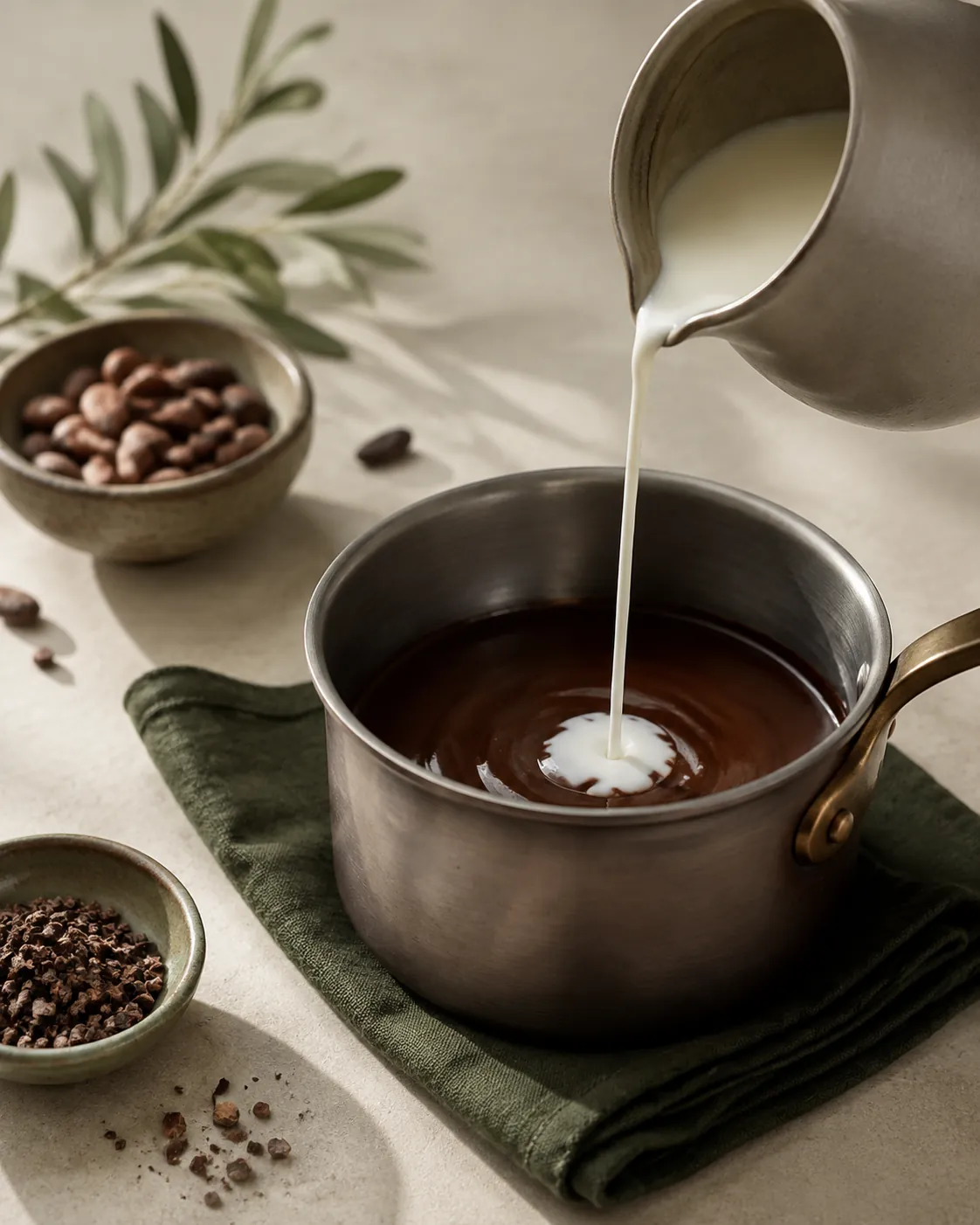
Hot chocolate, and which powder the tradition uses
European hot chocolate is built on Dutch-process cocoa, and that is a matter of history as much as of taste. The process was invented to make cocoa mix into liquid more easily, which was the practical problem of the day.
The result is the deep, smooth, slightly bitter style familiar across the continent, and it is what most commercial mixes for hot chocolate use. The distinction between a cocoa drink and a true drinking chocolate is separate from this one and worth keeping straight.
Natural cocoa makes a livelier, sharper hot chocolate that suits people who find the standard version dull. It needs a little more sugar to balance and it rewards a pinch of sea salt, which suppresses the bitterness without adding sweetness.
Mexican hot chocolate sits with the natural camp by tradition, since the spice and the cinnamon have something to work against.
Sharpness gives spice something to lean on, and a heavily Dutched powder mutes both together.
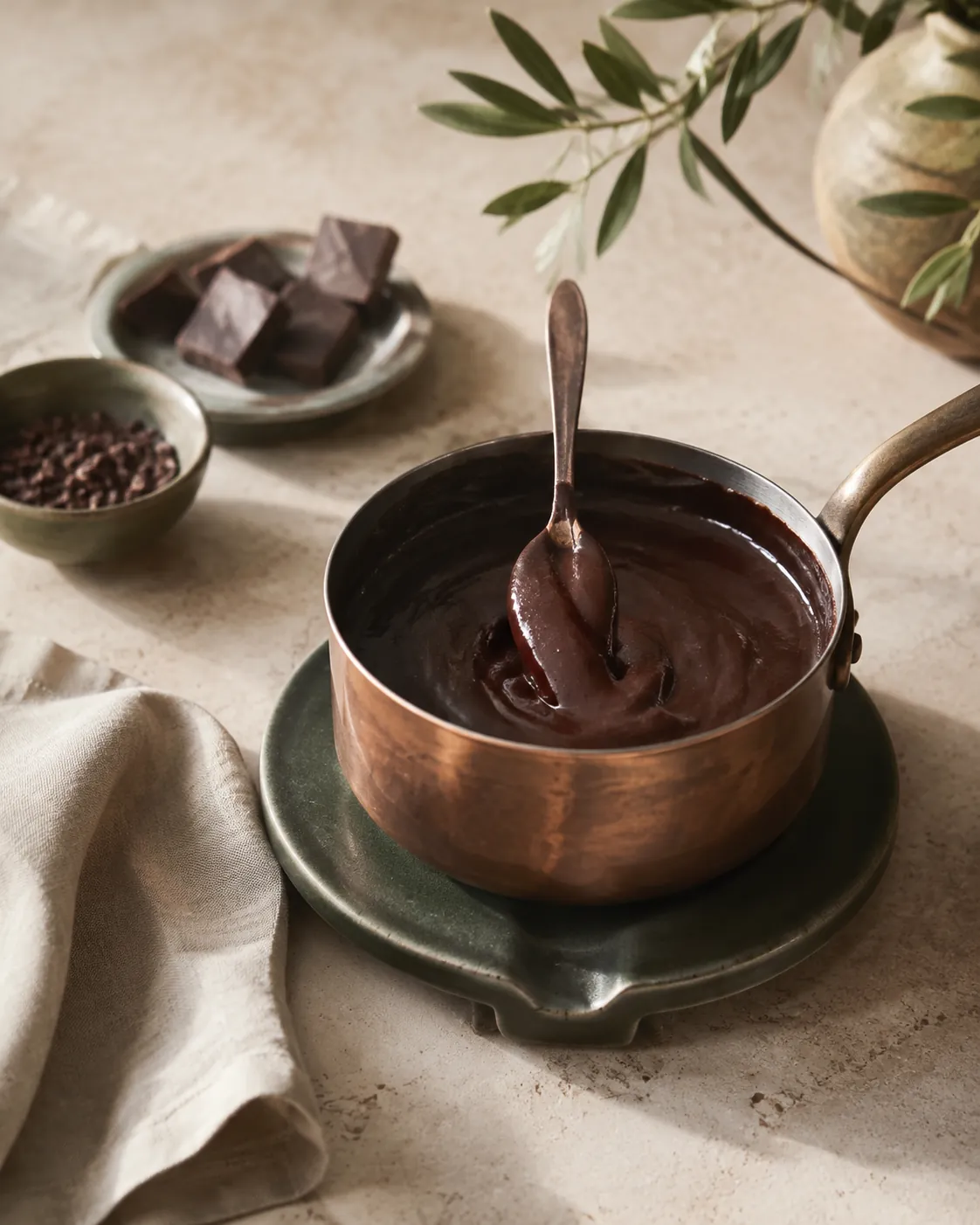
In a mocha, and against coffee
Coffee is acidic, and that changes the calculation. Adding natural cocoa to espresso stacks acidity on acidity, and the drink can end up sharper than either component suggests.
Bright filter coffee
Dutch-process, so the acidity is not doubled
Dark espresso
Either, and natural adds the lift the roast lacks
Instant coffee
Dutch-process, which softens rather than sharpens
Large milky mocha
Barely separable; the milk mediates both
Dutch-process is the safer choice in a mocha for exactly that reason. Its neutrality lets the coffee's own brightness come through without competing, and the flatter chocolate note sits underneath rather than alongside.
There is a case for natural cocoa with a dark, low-acid roast, where there is little brightness to clash with and the cocoa supplies it instead. That is a deliberate choice rather than a default, and a drop of vanilla syrup softens the join either way.
Milk mediates all of this. With enough whole milk or oat milk in the cup, the difference narrows considerably, which is why a large milky mocha is the drink where the two powders are hardest to tell apart.
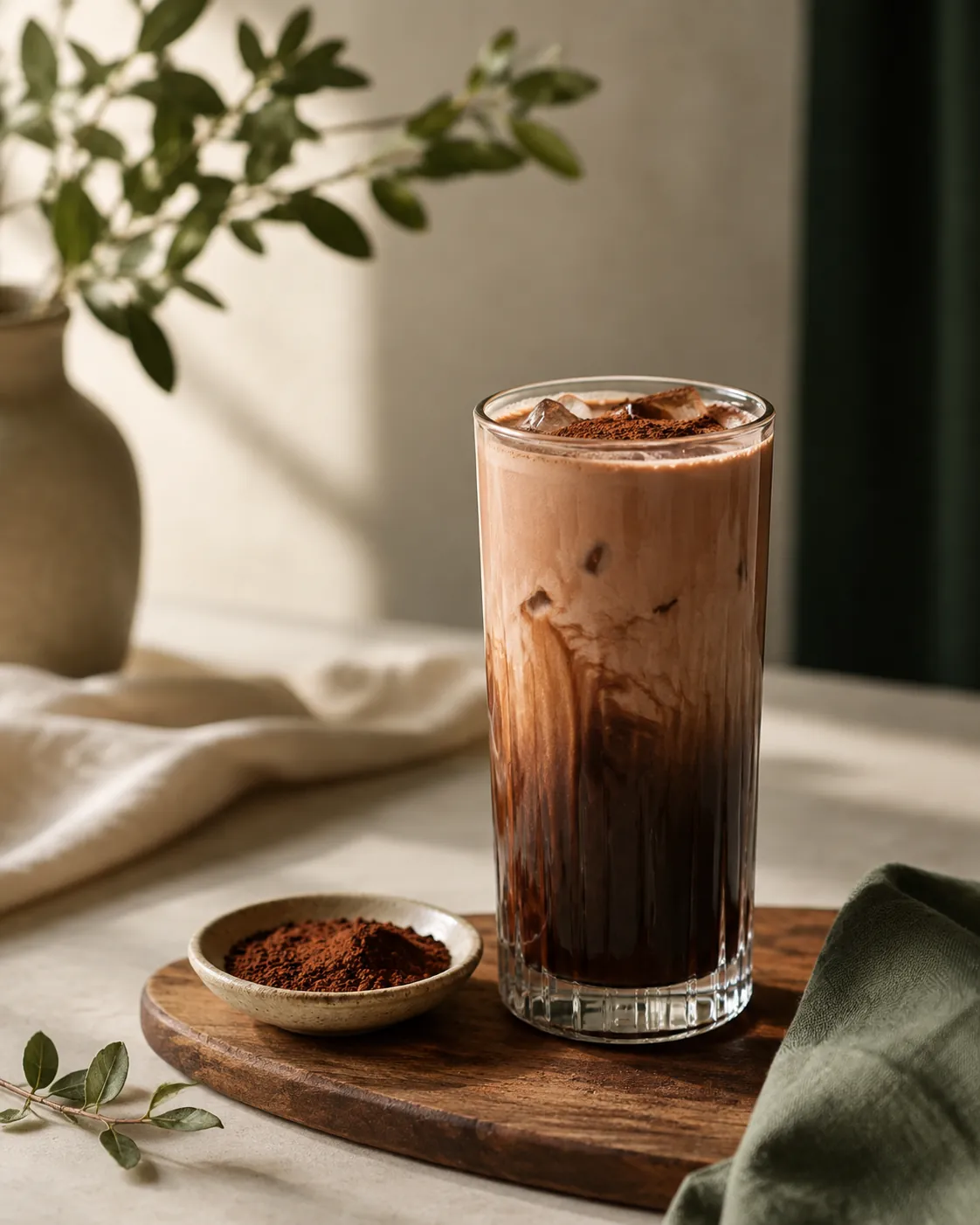
In cold drinks and smoothies
Cold is where dispersal problems get worse, because neither powder wets well without heat and cold liquid gives it no help at all.
Dutch-process has a clear advantage here and it is worth using it. Even so, the reliable method is to make a paste with a little hot water first and then chill, rather than trying to beat powder into cold milk.
A cold cocoa base
- Cocoa powder
- 15 g
- Sugar
- 15 g
- Hot water
- 40 ml, to make a paste
- Cold milk
- 200 ml, added after
In a blended drink the question largely disappears. A blender applies enough shear to disperse either powder, so cocoa powder of either kind works in a smoothie, and the choice comes back to flavour alone.
Sweetness matters more in cold drinks than hot ones, since cold suppresses perceived sweetness. A cold cocoa needs more sugar than the hot version of the same recipe, whichever powder went in.
Reading the label
The labelling convention is unhelpful in one direction and clear in the other, which catches people out regularly.
- Look for processed with alkali or alkalised, which means Dutch-process
- Treat a tin that says nothing as natural cocoa, most of the time
- Take cacao and cocoa as the same thing for this purpose
- Ignore darkness on the packaging photograph, which proves nothing
- Check the fat content, which is a separate axis from the alkali question
Fat content is the variable people confuse with this one. Cocoa powders run roughly from 10 to 24 per cent fat, and a higher-fat powder makes a richer drink regardless of whether it has been alkalised.
The two axes are independent, which is worth holding onto at the shelf. A high-fat natural powder and a low-fat Dutched one are both common, and so are the reverse, so a tin cannot be placed on one axis by reading the other.
Quantity differs between them too. Natural cocoa is more assertive per gram, so a recipe written for a Dutched powder often tastes sharp when made with natural at the same dose, and dropping the cocoa by a fifth is usually a better correction than adding sugar to cover it.
Neither label tells you where the beans came from, and origin does show in the cup. A single-origin natural powder can carry a distinctly fruity or nutty character that a blended one flattens out, and that difference is entirely separate from the alkali question.
A white hot chocolate sidesteps the question entirely, since it contains no cocoa solids at all. Some tins state a pH, and those are worth seeking out because they let you place a specific product on the scale rather than guessing.
A stated pH is the only precise information available on this question.
Storage, which is the same for both
Neither powder is fragile, and both keep considerably better than a dried leaf or a ground coffee. Sealed, dark and dry, either will hold for a year or two without meaningful loss.
Air
Slow to matter, but an open bag dulls over months
Damp
The real enemy; cocoa cakes and then will not disperse
Heat
Keep it away from the hob, where fat can migrate
Smell
Cocoa picks up strong odours, so seal it properly
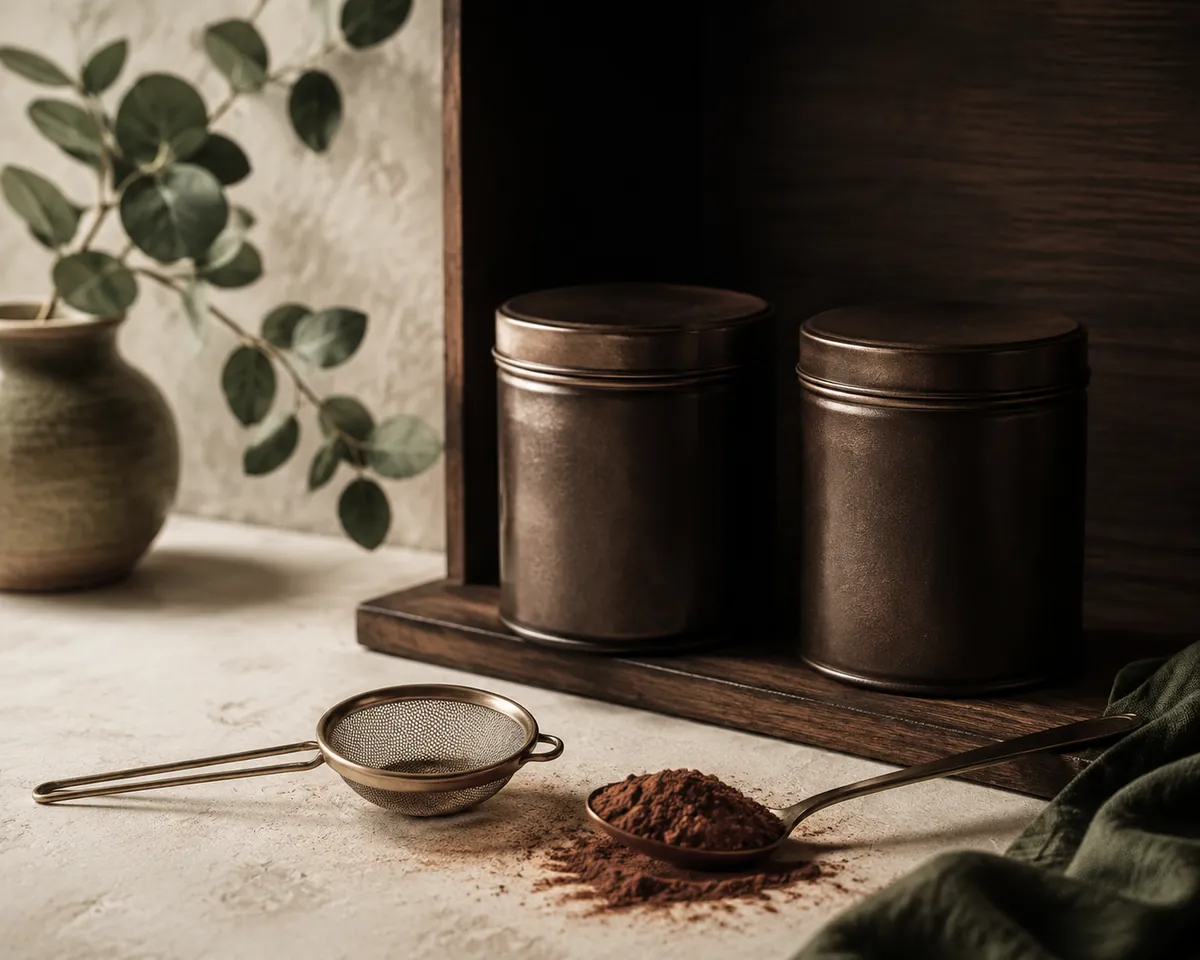
Caking is the failure to watch for. A powder that has taken on moisture forms lumps that will not break down in liquid, and sieving recovers a caked powder only if the lumps are soft.
The fat is the part that eventually goes. Very old cocoa can develop a faintly stale, waxy note from the residual cocoa butter, and that is the point to replace it rather than the date on the tin.
Which to keep
If you keep only one, keep a good Dutch-process powder. It is the more forgiving ingredient, it makes the more familiar drink, it mixes more easily, and it is the safer partner for coffee.
If you make hot chocolate often and care about it, keep both. The full case for each is set out under natural cocoa and dutch-process cocoa, and they are genuinely different drinks rather than two grades of one.
The rest of the cocoa shelf divides along other lines, chiefly how much fat and sugar arrive with the cocoa. This one axis is only about the alkali, and it is the one most likely to explain why a recipe you followed exactly tasted wrong.
Common questions
Does darker cocoa mean stronger cocoa?
No. Darkness comes from the alkali treatment rather than from the beans or from concentration, so a near-black powder has been treated heavily and has lost more of its acidity and aromatic complexity along the way. Natural cocoa's lighter reddish tone often delivers the sharper, more obviously chocolatey drink.
Which cocoa should go in a mocha?
Dutch-process, usually. Coffee is already acidic, and natural cocoa stacks acidity on acidity so the drink can end up sharper than either part suggests. Dutch-process sits underneath the coffee rather than competing with it. Natural cocoa works with a dark, low-acid roast, but that is a deliberate choice rather than a default.
How do you tell which one you have bought?
Read the ingredient line for processed with alkali or alkalised, which means Dutch-process; a tin that says nothing is usually natural. Some tins state a pH, and that is the only precise information available. The photograph on the packaging proves nothing.