Mint, and Why It Is a Sensation Rather Than a Taste
Mint barely registers as a taste. It arrives as a smell and as a cooling sensation, and nearly every mistake made with it in a cold glass comes from treating it as a flavour to be extracted.
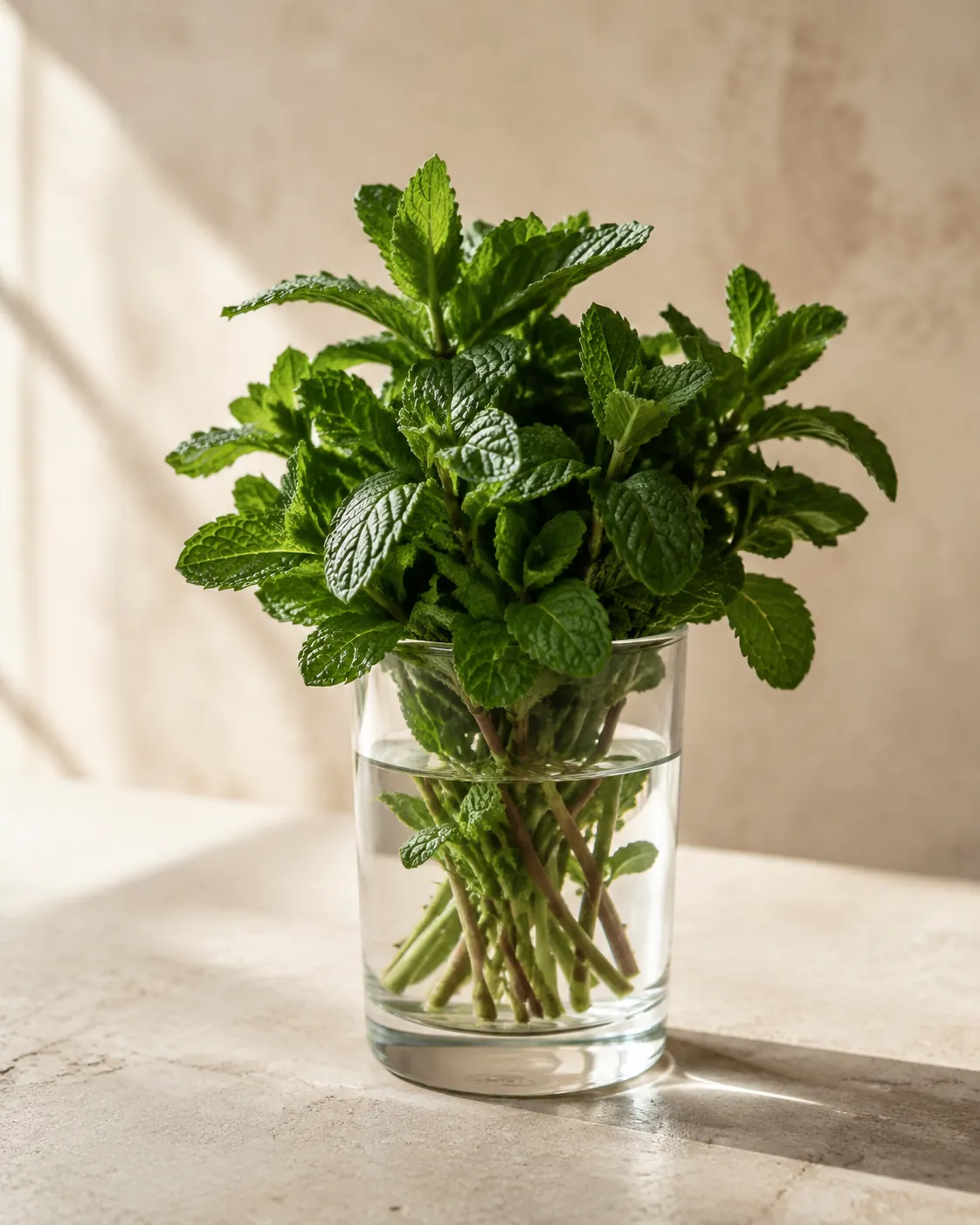
Mint is the most misused ingredient in a cold drink, and the reason is a category error. People treat it as a flavour, which implies that more of it, pressed harder and left longer, will give more of what they wanted.
Almost nothing mint does happens on the tongue. What it contributes is a smell and a physical sensation of cold, and both of those are carried by a volatile oil that sits on the outside of the leaf waiting to escape.
Every practical rule about mint follows from that one fact.
Mint in a cold drink, at a glance
- What it contributes
- Aroma and a cooling sensation, and very little actual taste
- Where the oil is
- In glands on the leaf surface, not inside the flesh
- The cooling
- Menthol acting on the nerve that reports cold, not a change in temperature
- What a cold glass wants
- Spearmint, which is what an unlabelled bunch nearly always is
- Handling
- Press or slap. Cutting releases chlorophyll instead of oil
- Steeping
- Ten to twenty minutes in cold liquid, then take the leaf out
- Keeps
- About a week, stems in water, loosely bagged, in the fridge
Almost none of what mint does is taste
Hold your nose, chew a mint leaf, and pay attention to what is left. It is faintly bitter, faintly green, and otherwise close to nothing, because mint scores almost zero on every one of the tastes the tongue actually reports.
The smell arrives through the back of the throat rather than through the nostrils, which is why it feels like taste and is not. Let go of your nose halfway through and the whole thing switches on at once.
The cooling is a third channel again, and it is neither taste nor smell. Menthol binds the receptor that reports cold, so the nerve fires while nothing in the glass has moved a degree.
The sensation carries on well after you swallow.
On the tongue
Very little. A trace of bitterness and a green note, nothing more.
Through the nose
Almost all of the character, arriving retronasally as you swallow.
On the nerve
Menthol reading as cold, on the same system that reports heat and pepper.
Take those three apart and the failures explain themselves. A drink built with mint that smells of nothing has lost the oil somewhere; a drink that tastes green and bitter has had the leaf destroyed rather than opened.
Peppermint as a hot infusion is a different problem with the same chemistry underneath it.
Where the oil actually sits on the leaf
The oil is not inside the leaf at all. It is held in glandular trichomes, which are microscopic blisters standing on the surface, thickest on the underside, and they burst under very little pressure.
Rub a leaf between finger and thumb and the smell arrives instantly. That is not extraction in any meaningful sense, it is several hundred tiny sacs rupturing at once, and it is the entire mechanism by which mint gets into a drink.
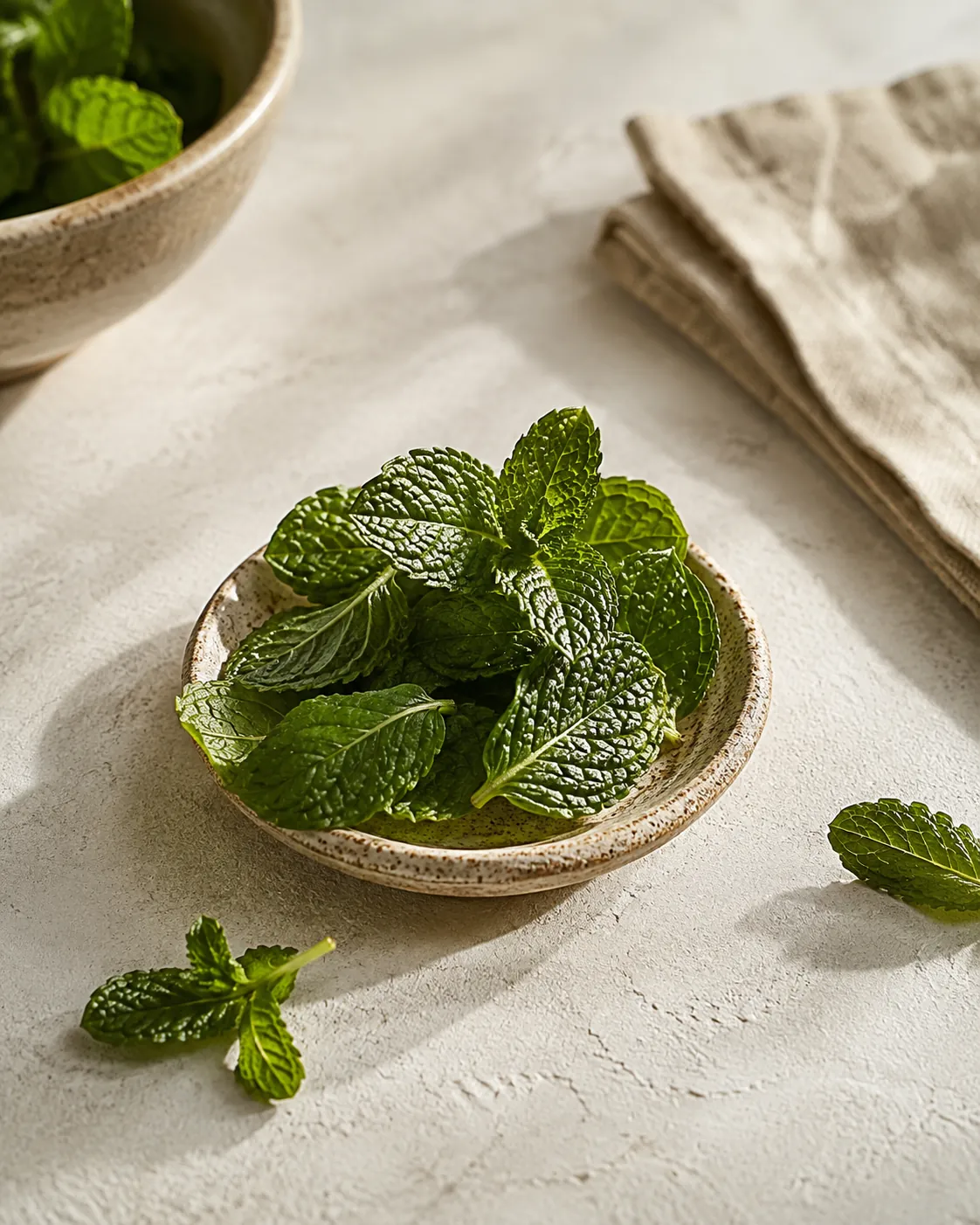
What sits underneath those glands is ordinary leaf: chlorophyll, water, cell walls, and the enzymes that go to work the moment a cell is cut open. Nothing in that layer smells of mint, and a good deal of it tastes green and slightly bitter.
So there are two separate things you can do to a leaf, and only one of them is wanted.
Opening the glands gives you aroma, and opening the cells gives you a vegetal, spinach-adjacent flavour with a colour to match, which is exactly the failure that turns a jug of infused water murky.
What bruising does that chopping does not
Three things can happen to a leaf on its way into a glass, and they are not three intensities of the same action. They are different actions with different results.
| Method | What it opens | What you get |
|---|---|---|
| Slap between palms | Surface glands, into the air | Aroma above the drink, no leaf damage at all |
| Press or bruise | Surface glands, into the liquid | Mint in the drink, leaf intact and still green |
| Muddle hard | Glands and a lot of cells | Mint plus green bitterness, leaf shredded |
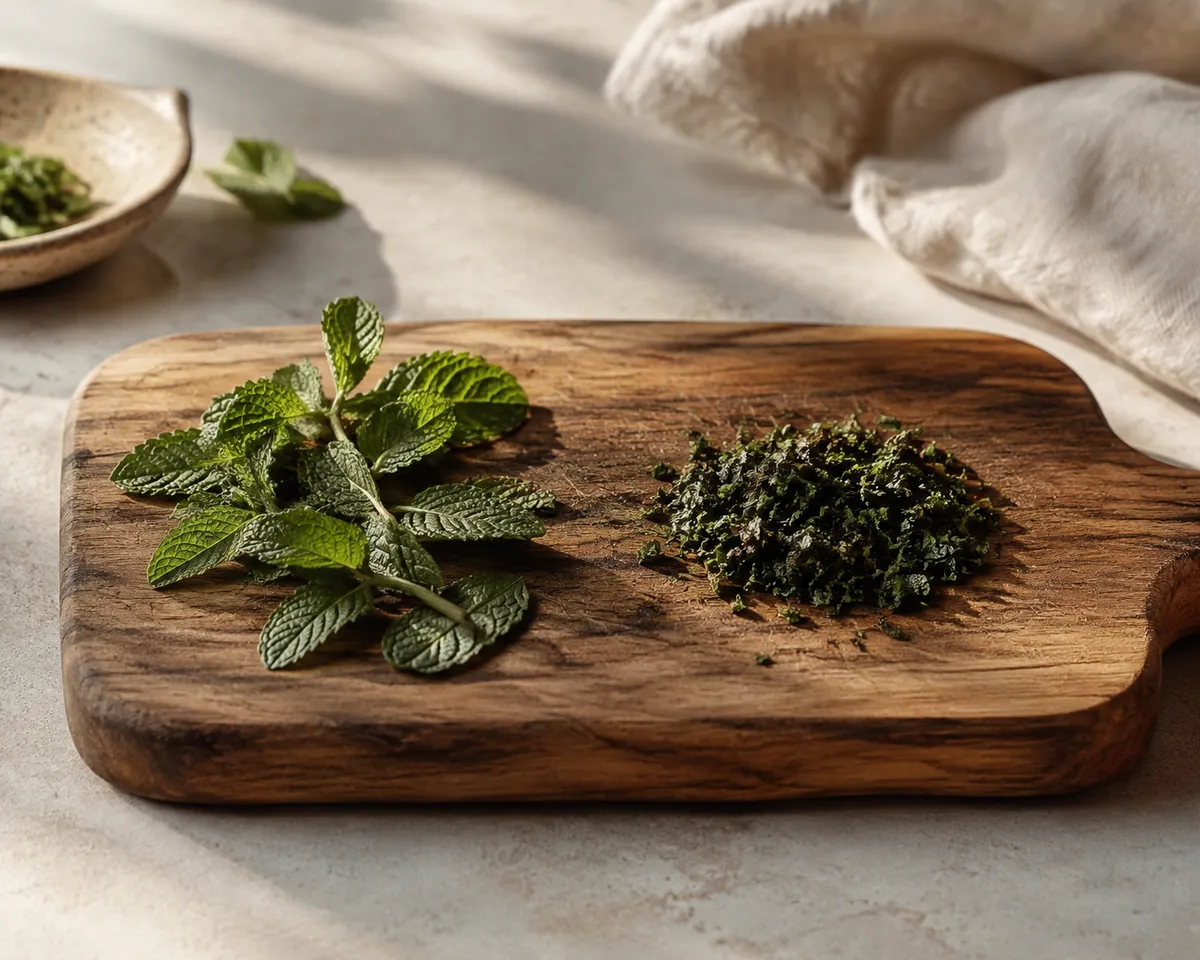
| Chop or blend | Cells, mostly | Chlorophyll, bitterness, and blackened edges |
The slap is the one people assume is theatre. It is not: clapping a sprig once between your palms over the glass ruptures the glands and puts the aroma directly into the air you will be breathing while you drink, and it costs the leaf nothing.
Muddling is where most home drinks go wrong. The grinding, twisting motion people use is the motion for a lime, and applied to mint it tears every cell in the leaf, which is why an over-muddled drink tastes bitter and looks like pond water.
Press straight down four or five times and stop.
Blending is the honest exception. A green smoothie or a berry smoothie has enough fruit and enough body to absorb the chlorophyll, so there is no point protecting the leaf from a blade that is going to pulverise everything anyway.
Why boiling water wrecks it in a cold drink
In a hot cup this hardly matters, because the volatiles rise in the steam and reach you within a minute of the water going on. In a cold drink you are storing the aroma for later, and anything that leaves the pan is gone for good.
Boiling water does two things at once, and both of them are losses. It drives the oil off into the room, and it holds the leaf at a temperature where the chlorophyll degrades, so what you strain out an hour later is olive-brown and tastes cooked.
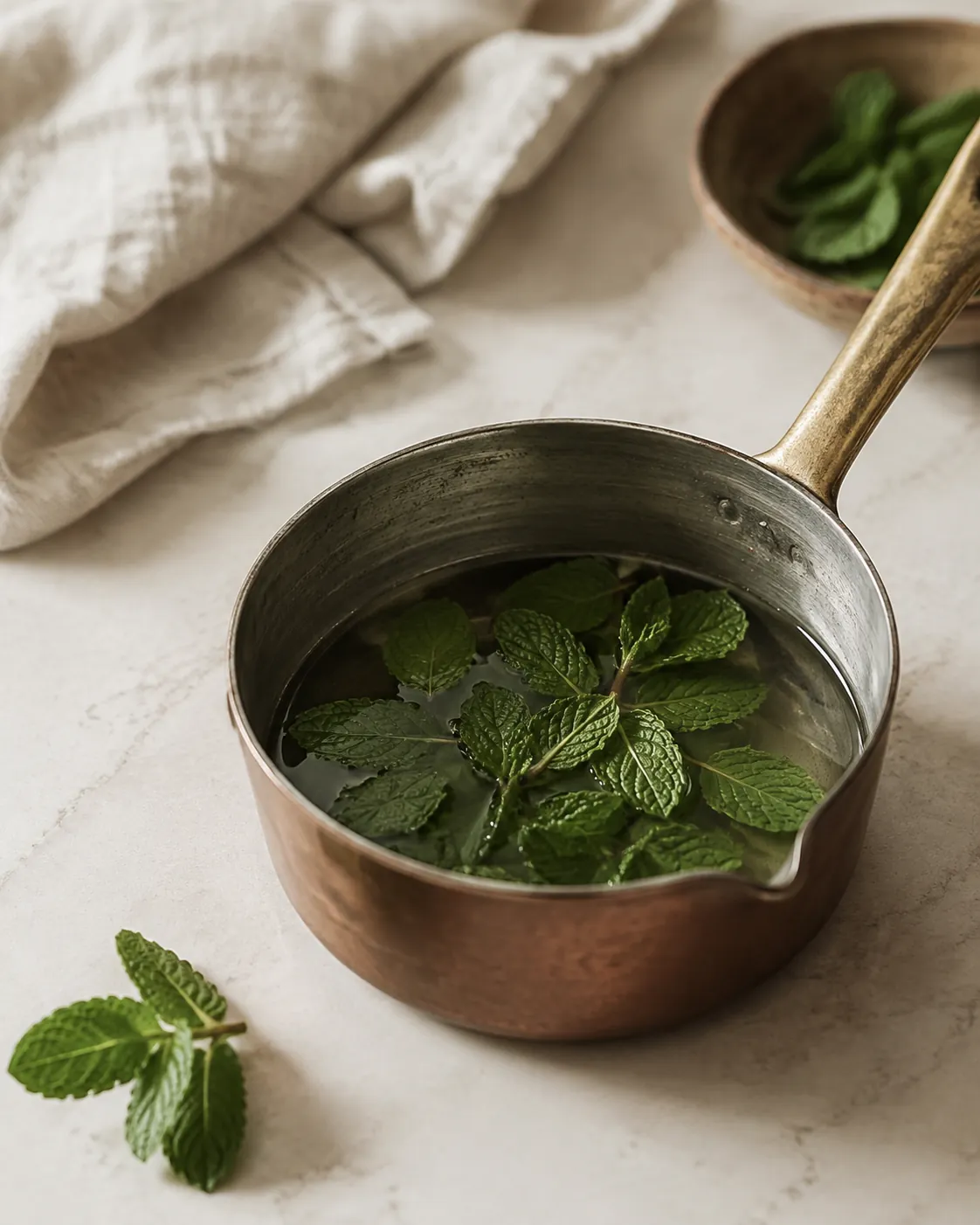
The fix costs nothing but patience.
Make the syrup, take it off the heat, and wait until it has stopped steaming before the leaf goes anywhere near it.
A mint syrup that still smells of mint
- Dissolve the sugarEqual weights of sugar and water, heated only until clear. This is ordinary simple syrup.
- Take it off and waitFive minutes at least, until the surface is still. Hand-hot is the target.
- Add the leaf wholeA generous handful per 250 ml, pressed lightly, not chopped.
- Cover itA lid keeps the aroma in the pan rather than in the kitchen.
- Steep and strainTwenty minutes, then strain and cool it fast. Squeezing the leaf adds bitterness.
A cold infusion works too and is more forgiving, though it takes four hours in the fridge rather than twenty minutes. The same temperature logic runs through steeping in general, but mint punishes heat harder than most leaves because the thing you want is the thing that evaporates first.
Spearmint is what a cold glass wants
Ask a greengrocer for mint and you will almost certainly be handed spearmint, whatever the label says. It is the mint of cooking, of cold drinks, and of every recipe that says only mint without qualifying it.
Peppermint is the other one, and it leads on menthol where spearmint leads on carvone. In a hot cup that menthol is the point.
In a cold glass the ice has already supplied the cold, and a second cooling on top of it reads as medicinal rather than refreshing.
| Spearmint | Peppermint | |
|---|---|---|
| Leads on | Carvone, sweet and herbaceous | Menthol, cold and sharp |
| Over ice | Green, soft, refreshing | Doubles the cold, tips towards confectionery |
| With sugar | Rounds out and lengthens | Blunted, and the cooling fights the sweetness |
| With citrus | Excellent, they lift each other | The lemon and the menthol argue |
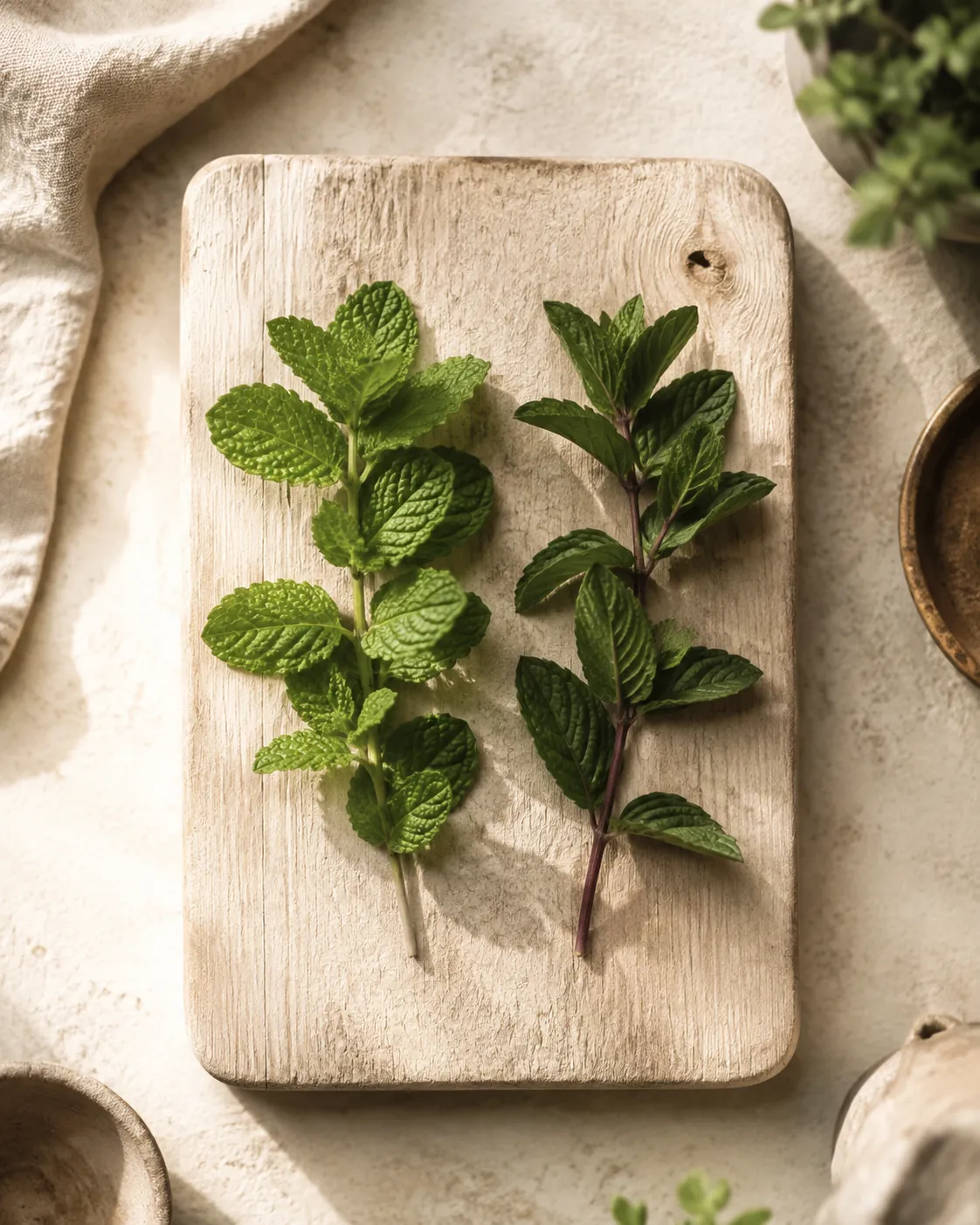
| Leaf | Bright green, crinkled, almost stemless | Darker, smoother, purple-tinged stems |
Telling them apart by sight is unreliable and telling them apart by smell takes a second. Rub one leaf and you will know, because peppermint announces itself as cold and spearmint as sweet and green.
Garden mint is the wildcard. Mints hybridise readily, so a plant that came from a neighbour may be anything at all, and the only way to find out what it is for is to rub a leaf and taste it in water before you commit a jug to it.
How long to leave it in before it takes over
Longer is not better, and mint is unusual in how quickly longer becomes worse. The surface oil transfers in minutes, and everything that transfers after that is leaf rather than mint.
A jug of mint and water over time
- Ten minutesMost of the aroma is already in the water. Leaf still bright
- One hourA little more aroma, and the first green edge underneath it
- Four hoursThe green note now leads. The mint has flattened rather than strengthened
- OvernightOlive-coloured, bitter, and no longer recognisably minty
So the instruction is to take the leaf out, which is the opposite of what people do with fruit. A slice of orange left in a jug keeps giving sweetness and colour, while a handful of mint left in the same jug starts subtracting at around the two-hour mark.
Citrus peel behaves the same way for a different reason, and a jug that has gone bitter overnight has usually been ruined by both at once. The mint is done long before the fruit is.
The same clock runs in a glass. A built drink with muddled mint sitting under the ice is best in the first ten minutes, which is why iced tea batched with mint is better made with syrup than with loose leaf that will still be there tomorrow.
Where the leaf goes in a built drink
Order matters more here than in almost any other cold drink, and it is decided by one question: what is going to be sitting on top of the mint.
Leaf goes in first, at the bottom of the empty glass, with the sweetener. Pressed lightly against a pinch of granulated sugar rather than against bare glass, the crystals abrade the surface and open the glands with less force than a muddler needs on its own.
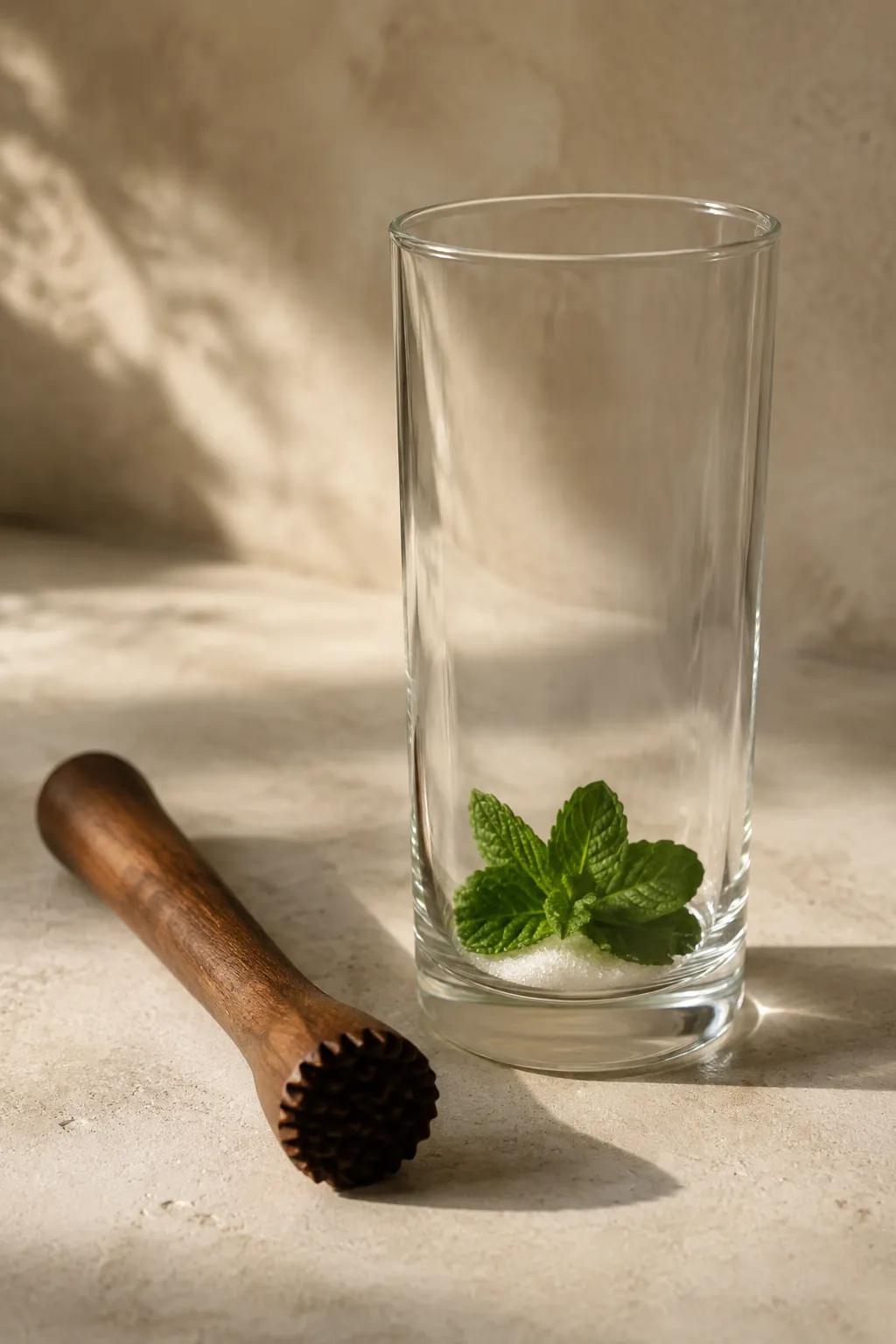
Ice goes in after the mint and before the liquid. Cubes dropped onto loose leaf grind it, so the leaf wants to be under the ice rather than mixed through it, and a drink built the other way round is green within a minute.
Building a tall mint drink in order
- Leaf and sugarFour or five leaves, a pinch of sugar, pressed straight down a few times
- AcidLemon or lime juice, or a few drops of citric acid solution if you are batching
- IceFill the glass properly. A half-filled glass dilutes faster
- LiquidSoda water or juice, poured down the side rather than onto the leaf
- GarnishOne slapped sprig on top, on the side you will drink from
The garnish is not decoration and it should not be buried. A sprig sitting at the surface next to the straw puts aroma under your nose on every sip, and the same sprig pushed down into the drink does almost nothing at all.
Fresh, frozen, dried and extract over ice
Four forms reach a kitchen and only two of them belong in a cold glass. The other two are useful elsewhere and are the usual reason a homemade mint drink tastes wrong.
Fresh leaf is the default and needs no argument.
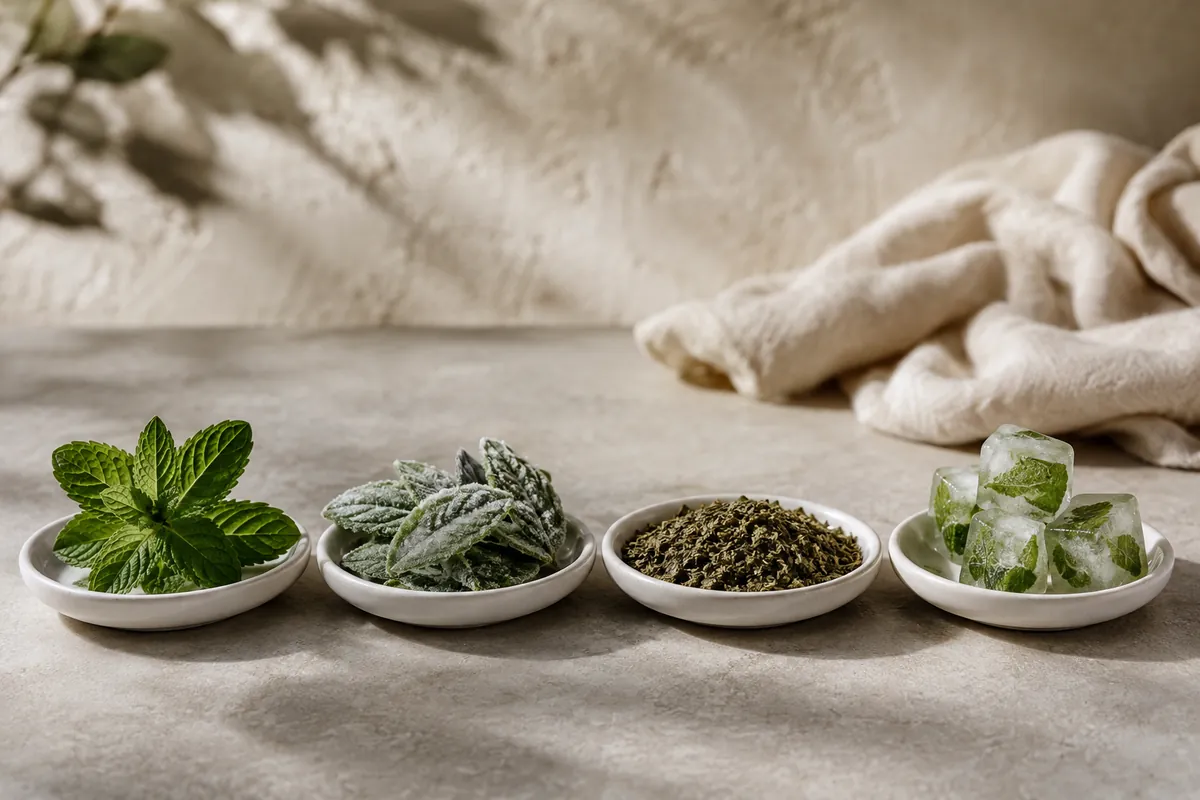
Frozen is the surprise: ice crystals rupture the glands from the inside as the leaf freezes, so frozen mint gives up its oil immediately and can go into a drink without thawing.
Fresh leaf
The standard. Whole, pressed, and pulled out before it turns.
Frozen whole leaves
Nearly as good, and better than tired fresh leaf. Use straight from the freezer.
Frozen into cubes
Mint that arrives as the ice melts, which suits a long drink well.
Dried mint
Made for a hot infusion. In cold liquid it floats, looks like debris, and gives up the green notes without the top ones.
Mint extract
Isolated menthol. One-dimensional, overwhelming at any sensible quantity, and it tastes of confectionery.
Mint syrup is the fifth option and the practical one for anything batched. It fixes the strength, removes the leaf from the equation entirely, and keeps for a fortnight, which is what makes an Italian soda or a jug for six people repeatable rather than a fresh negotiation each time.
Dried mint deserves one defence. It is not a bad ingredient, it is an ingredient for a covered pot of hot water, and asking it to work in a cold glass is asking it to do the one job it was not dried for.
How to buy a bunch and keep it alive
A bunch of mint is a cut plant, and it wants what cut flowers want. Most of what is sold has already been mishandled, and the damage is visible before you get it home.
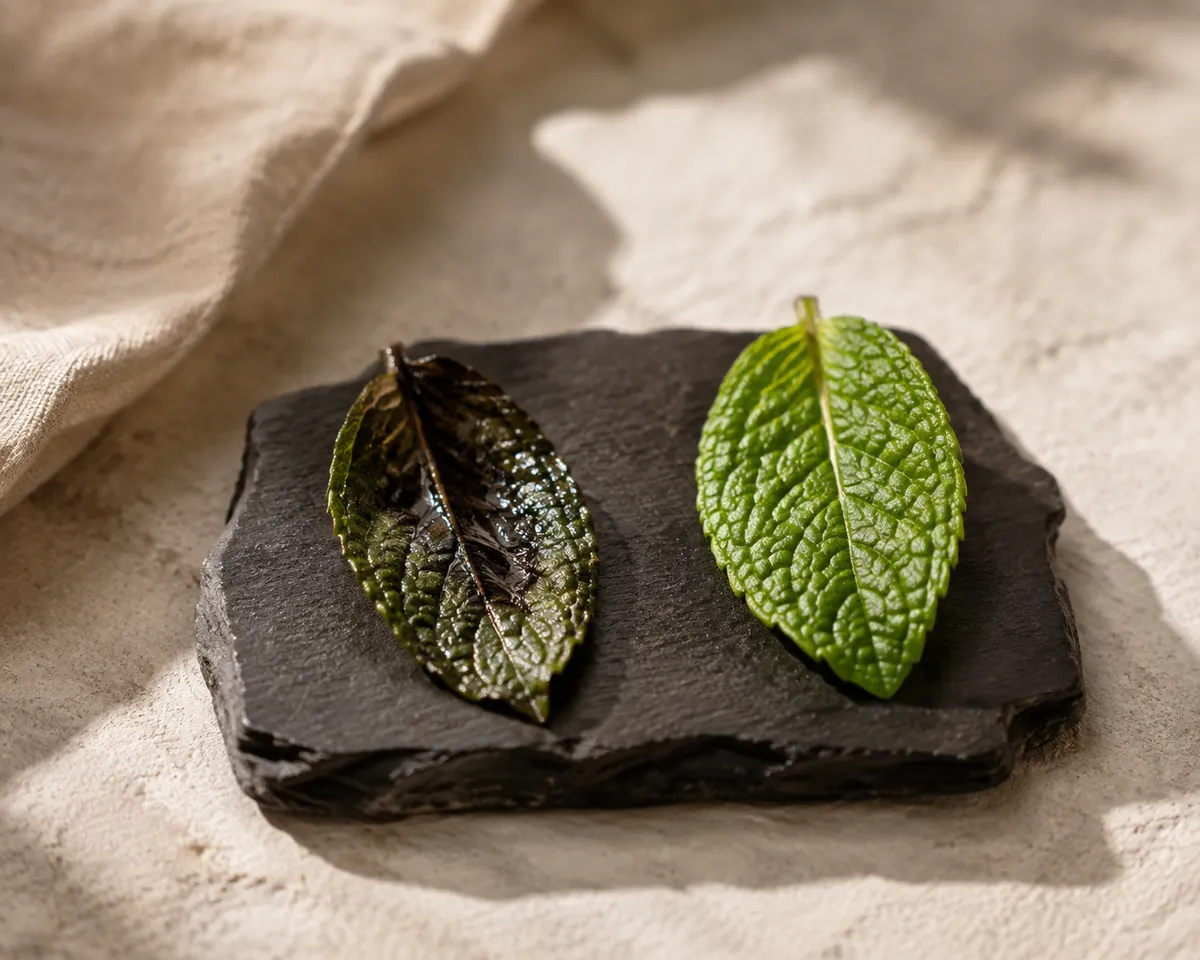
Look at the leaf edges first.
Blackening at the edge or at the fold means cells have been crushed and oxidised, and those leaves will not recover; limpness, by contrast, is only thirst and reverses in an hour in water.
- Smell the bunch through the bag before buying. It should reach you without being crushed.
- Reject anything with black edges or slimy patches at the base of the stems.
- Trim the stem ends and stand the bunch in two centimetres of water, loosely bagged.
- Keep it in the fridge door rather than the coldest shelf, where the leaf can chill-damage.
- Do not wash it until the moment you use it, since water on the leaf speeds up blackening.
- Freeze what you will not get through, whole, in a bag rather than crushed into a box.
Treated that way a supermarket bunch holds for about a week, against two or three days flat in its bag in a drawer. The stems in water make most of the difference, and it takes ten seconds.
Growing it is the other answer, and mint is famously happy to oblige. It spreads by runner and will take a bed if it is not confined to a pot, which is a gardening problem rather than a drinks one, but it does mean a plant on a windowsill outlasts any bunch you can buy.
What it will and will not sit beside
Mint is a loud voice, and it is loud in the same register as most of the things people put it next to. That is the whole of its blending behaviour, and it predicts every pairing that works and every one that does not.
What survives it is anything either equally assertive or working on a different axis. Acid, sweetness and body are different axes, which is why lemon, lime, sugar and cucumber all sit under mint comfortably rather than competing with it.
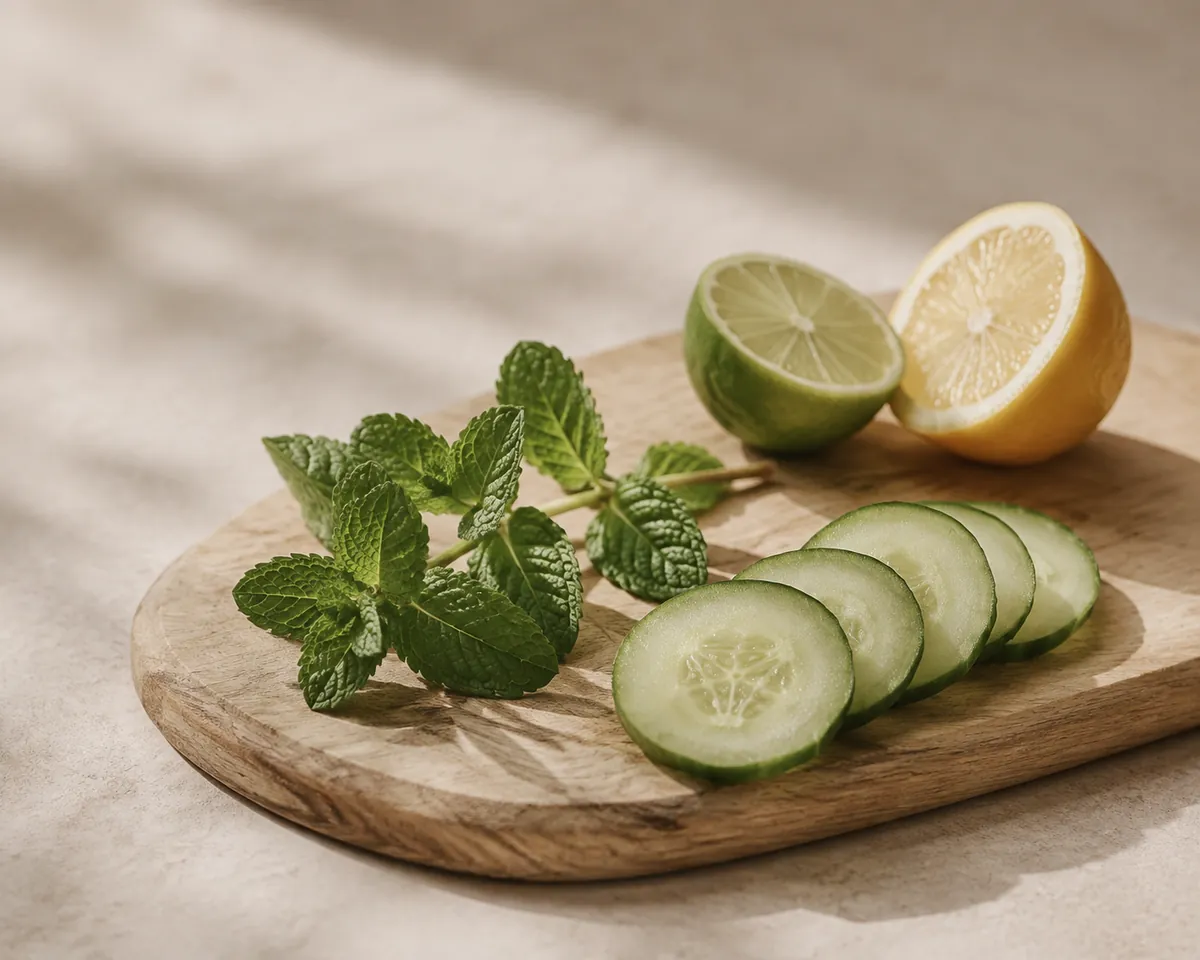
| Partner | Verdict | Why |
|---|---|---|
| Lemon and lime | Excellent | Acid works on a different channel from aroma |
| Cucumber | Excellent | Quiet, watery, and asks for nothing back |
| Berries and melon | Good | Sweet and aromatic enough to be heard underneath |
| Fresh ginger | Good | Equally assertive, and warm against mint's cold |
| Green juice | Careful | Mint covers the vegetal notes rather than fixing them |
| Delicate tea or floral notes | Poor | Erased completely. Nothing of them survives |
Bitterness is the interesting case. Mint does not reduce bitterness, it distracts from it, so the quinine in tonic water or the pith in a bitter lemon is still fully there with a cold green smell laid over the top.
A pinch of salt does the actual job, and the two together do rather more than either alone.
When mint is the wrong idea
There is a reflex worth resisting. A drink tastes dull, mint is in the fridge, and a handful goes in on the assumption that it will improve things.
Mint adds no acid, no sweetness and no body. It lays a strong smell and a cooling sensation over whatever was already wrong, which registers as an improvement for about two sips and then reads as a drink with something else wrong with it.
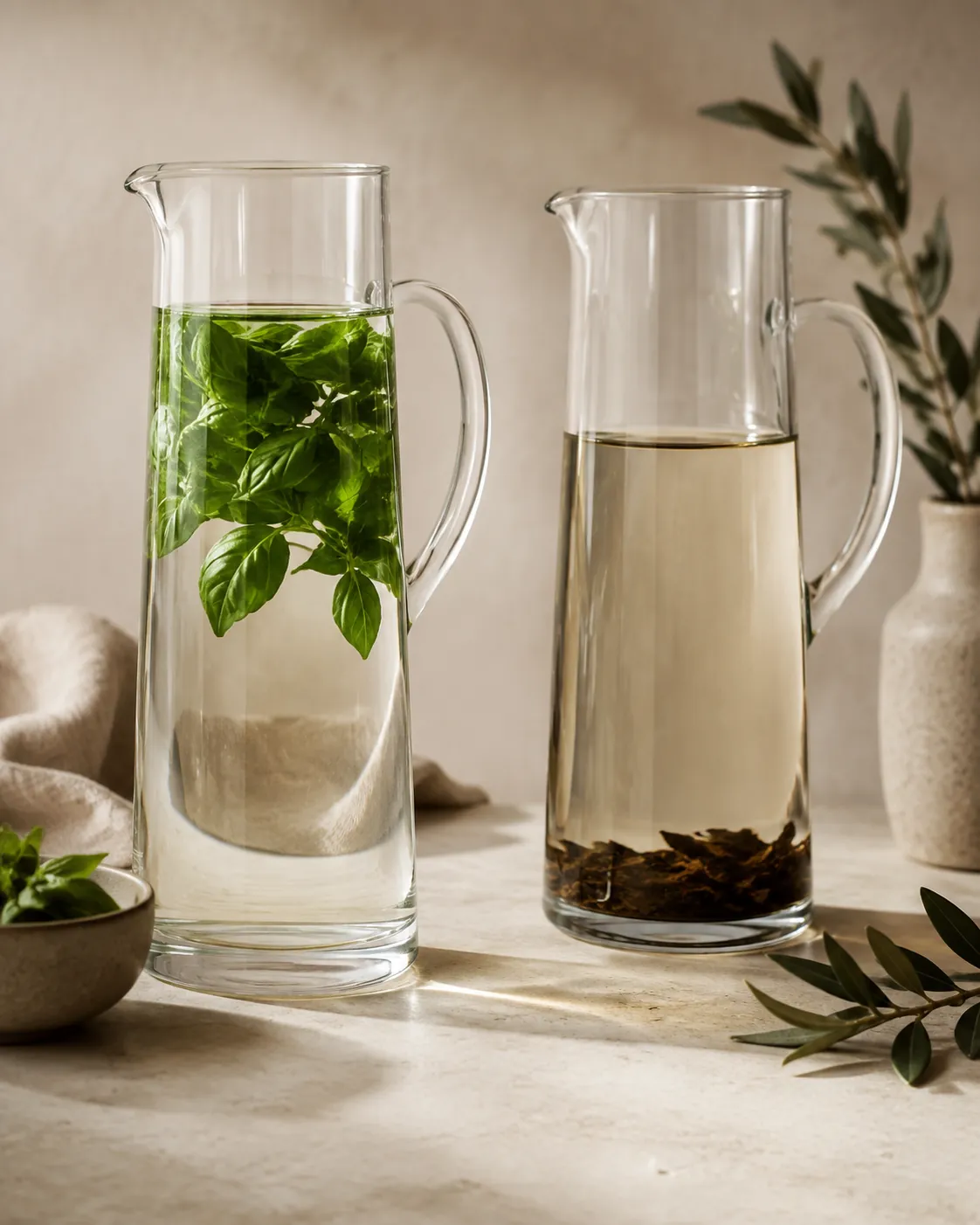
The diagnosis is usually elsewhere, and it is usually simpler.
Flat and sweet
Acid, not mint. A squeeze of citrus or a few drops of solution.
Bitter and harsh
Salt or sugar. Mint only sits on top of bitterness.
Watery and thin
Too much melt. Build it colder, or make it stronger.
Dull but correctly balanced
Aroma is genuinely missing, and this is mint's actual case.
Already cold and sweet
Adding mint here is what tips a drink towards toothpaste.
The other limit is company. A glass carries one loud aroma comfortably and two badly, so mint alongside a strong green tea, a spiced syrup or a heavily aromatic fruit ends with neither of them legible.
Used properly it is one of the cheapest upgrades available to a cold drink. Whole leaf, pressed not chopped, kept away from heat, and pulled out before it turns: four rules, and a bunch that costs less than a bottle of anything.
Common questions
Should you muddle mint or bruise it?
Press or bruise it. The aromatic oil sits in glands on the leaf surface and bursts under very little pressure, so bruising releases the mint. Muddling hard also ruptures the cells underneath, which adds a green, vegetal bitterness and turns the drink murky.
Why does mint go dark and bitter in a jug?
Because the leaf has been left in too long or cut rather than pressed. Opening the surface glands gives aroma; opening the cells beneath gives chlorophyll and a vegetal flavour. Ten to twenty minutes in a cold liquid is enough, then take the leaf out.
Is the cooling from mint a real drop in temperature?
No. Menthol acts on the nerve that reports cold, so the sensation is a signal rather than a change in the drink's temperature. Nothing about the liquid has actually got colder.