Why Assam Turns Drying, and How Short the Window Really Is
A cup of assam that grips the roof of your mouth has been brewed too long, and the leaf gets blamed for what the clock did.
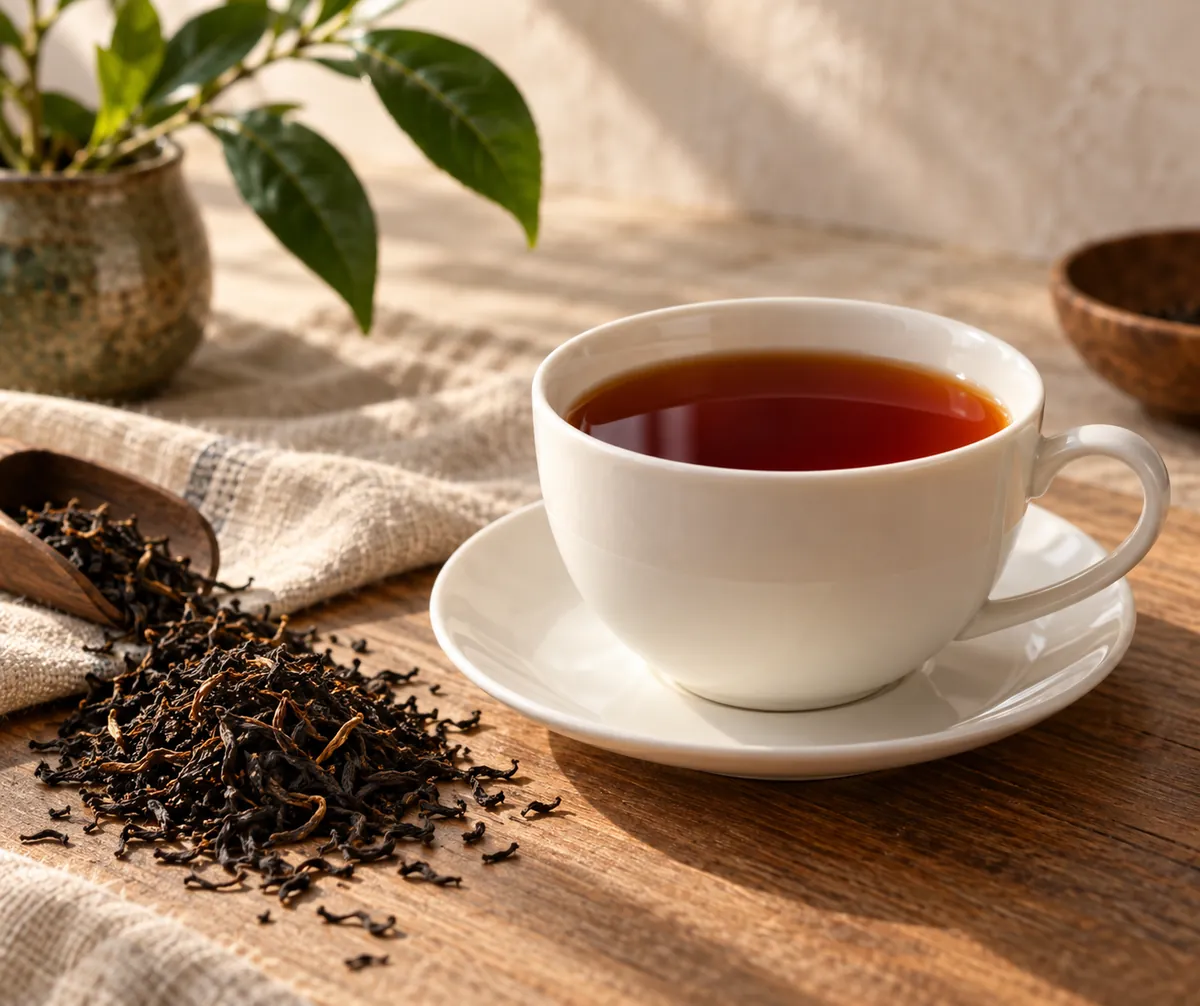
Assam tea is meant to be strong, but it is not meant to be drying, and those are two different things that get called the same thing.
So a cup that leaves the roof of your mouth rough has been brewed too long.
Why does assam turn astringent so fast?
Most people brew black tea for four or five minutes because that is what the box said once. This leaf gives up its tannins faster than that, so in the last two minutes you are adding the fault rather than the strength.
How the window closes
- Two minutesBright, malty, light body | A CTC cup is already there
- Three to fourFull, sweet, rounded | The working window
- Five and beyondDrying, rough, hollow | Astringency has arrived
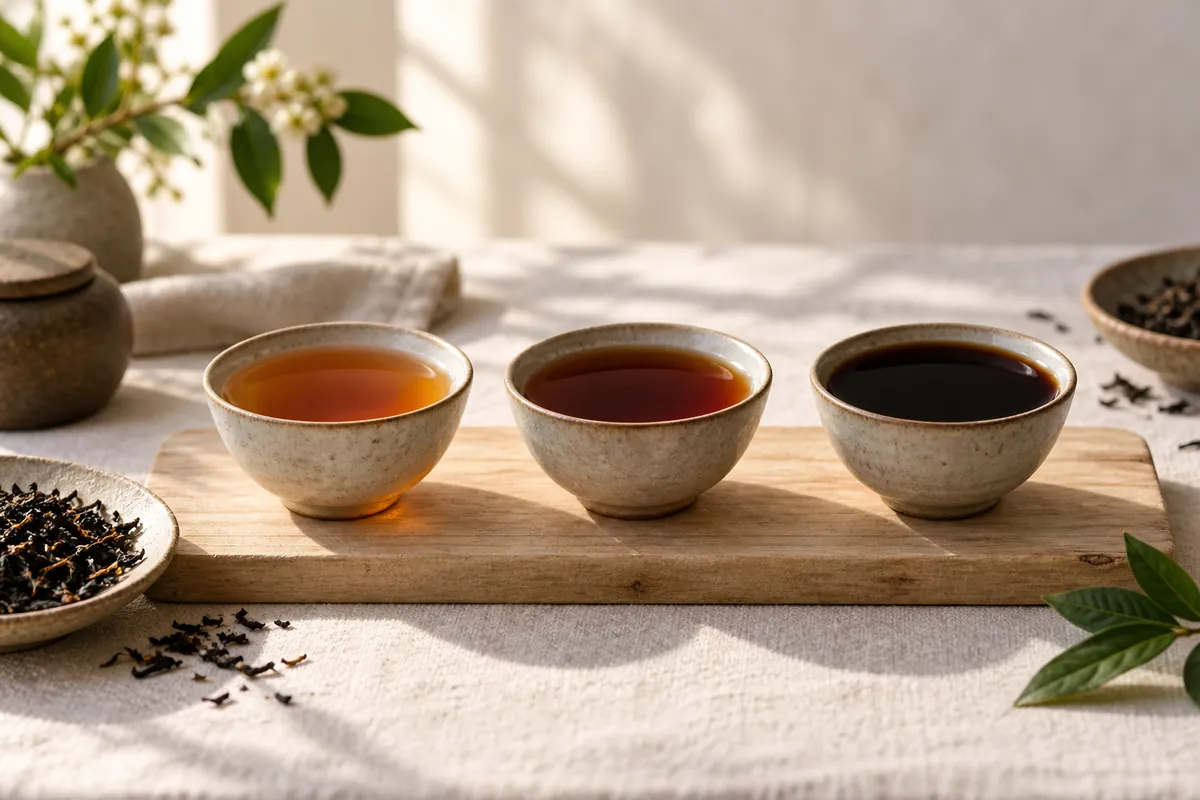
Astringency is the drying grip on the tongue and the cheeks, a feeling rather than a flavour, which is why people describe it as bitter when it is really tactile.
Strength runs on a separate axis: a short brew with more leaf is strong and smooth, and a long brew with less leaf is weak and rough, which is the combination nobody wants and plenty of people make.
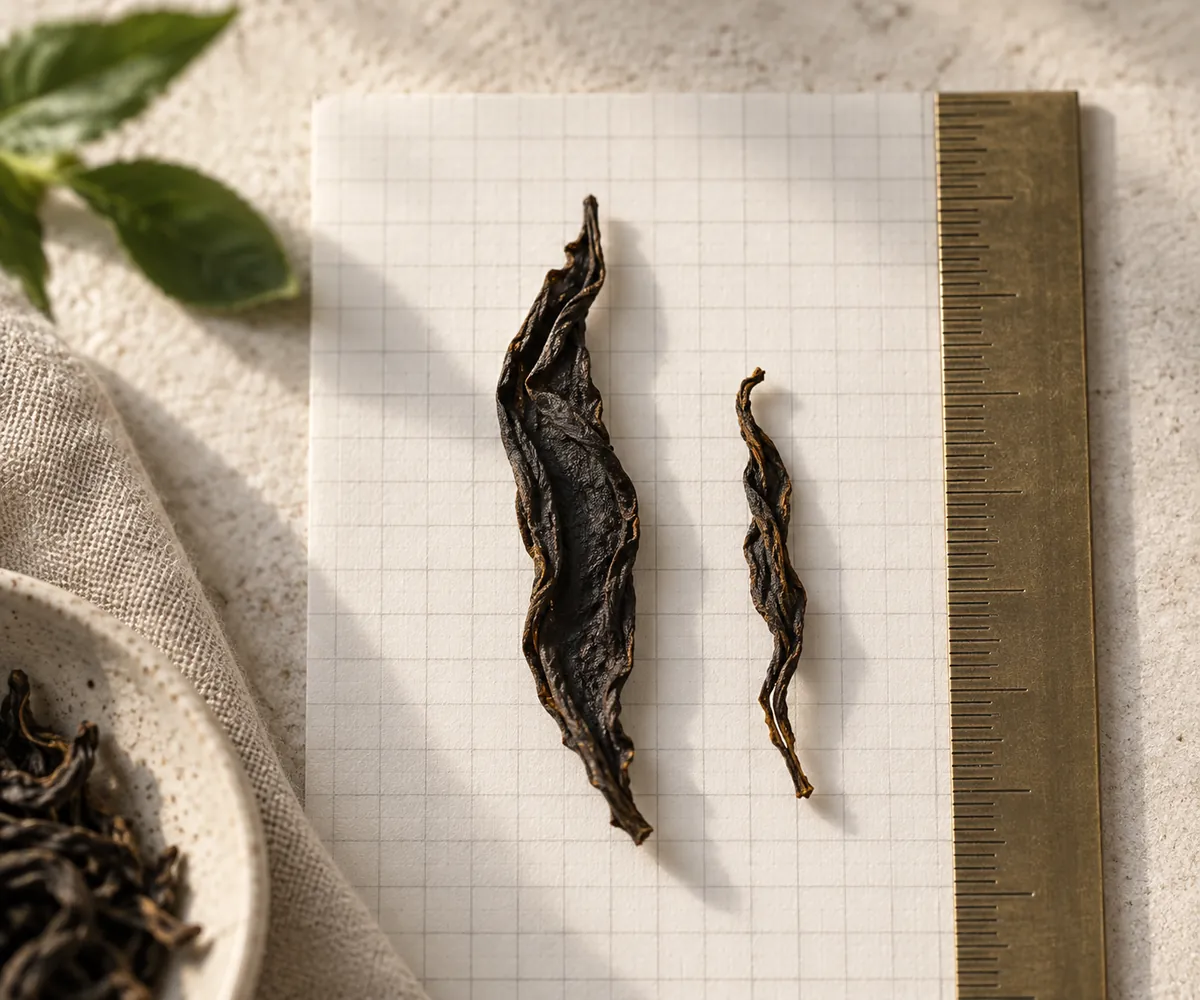
Whole leaf holds out longer, because a big twisted orthodox leaf has less surface exposed, which makes its window genuinely wider than a broken one's.
Why does this leaf carry more of it than other black teas?
Because it is a different variety of the plant, bred and grown for exactly the strength that produces the fault.
| Variety | Leaf | Polyphenols | In the cup |
|---|---|---|---|
| Camellia sinensis var. assamica | Broad, long | Higher | Strong, malty, quick to turn |
| Camellia sinensis var. sinensis | Narrow, short | Lower | Lighter, more forgiving |
| Both | Fully oxidised for black tea | Converted to tannins | Astringency depends on the starting load |
The assamica plant carries more polyphenols to begin with. Full oxidation then converts those into the compounds that make a cup drying, so this leaf starts the process with more raw material than a Chinese variety does.
Growing conditions push it further. Low, hot and humid ground produces a vigorous leaf with strong character, which is what the region is famous for and also what makes it unforgiving.
Flush matters within a single garden. A second flush picked in the heat of summer is maltier and more astringent than the first, the same way Darjeeling flushes differ, and one brewing time gives two results.
None of this is a defect. The tea was bred for the strength that also produces the problem, and the correction lies in your timing rather than in a different bag.
What temperature and time does assam actually want?
Water just off the boil, three to four minutes, and the leaf out at the end of it.
Use 3 g of leaf per 200 ml, with the water at about 95 C.
Ninety-five rather than a hundred is a real difference, because a rolling boil accelerates the extraction of exactly the compounds you are trying to leave behind. About a minute of standing after the boil brings the water close, and a thermometer settles it.
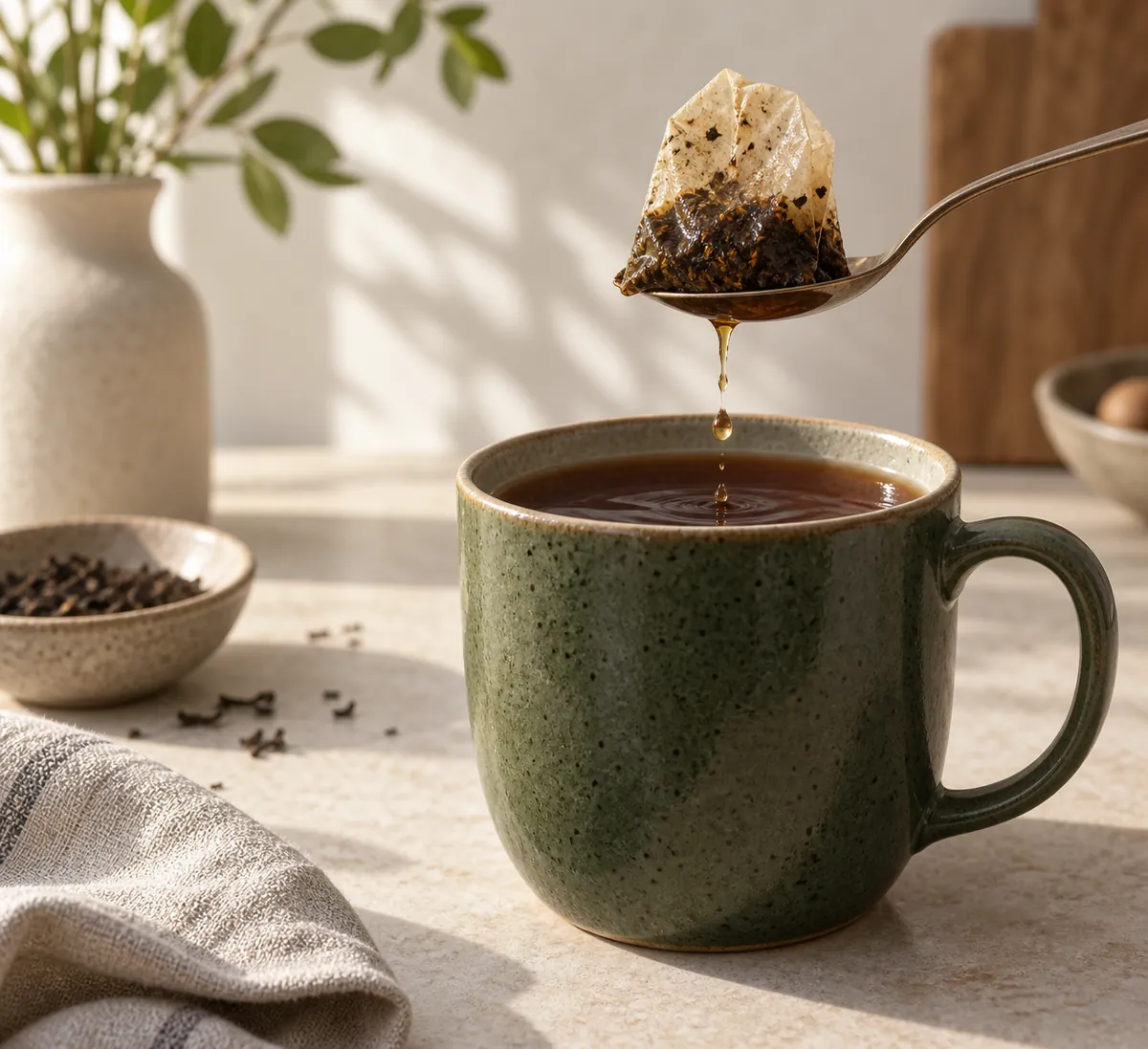
The bag left in is the commonest fault of all. A mug drunk over ten minutes with the bag still floating is a ten minute brew, which is what a basket infuser exists to prevent.
Dose is where people go wrong in the other direction. A thin cup gets a longer brew when it wanted more leaf, and the result is thin and rough at once.
Some people want the drying edge, and if the cup is going under milk and sugar in a builder's mug, you can push the long end on purpose. A four-minute brew there is a coherent choice, and the wider steeping table puts this tea at the assertive end for exactly that reason.
Which leaf grade are you brewing?
Look at what is actually in the packet, because the grade sets the clock.
CTC
Hard rounded pellets that extract in one to two minutes and are what most strong blends contain.
Orthodox
Long twisted leaves that take three to four minutes, with a wider window and more nuance.
Dust
Fine dark powder in most teabags. Under two minutes and it is done.
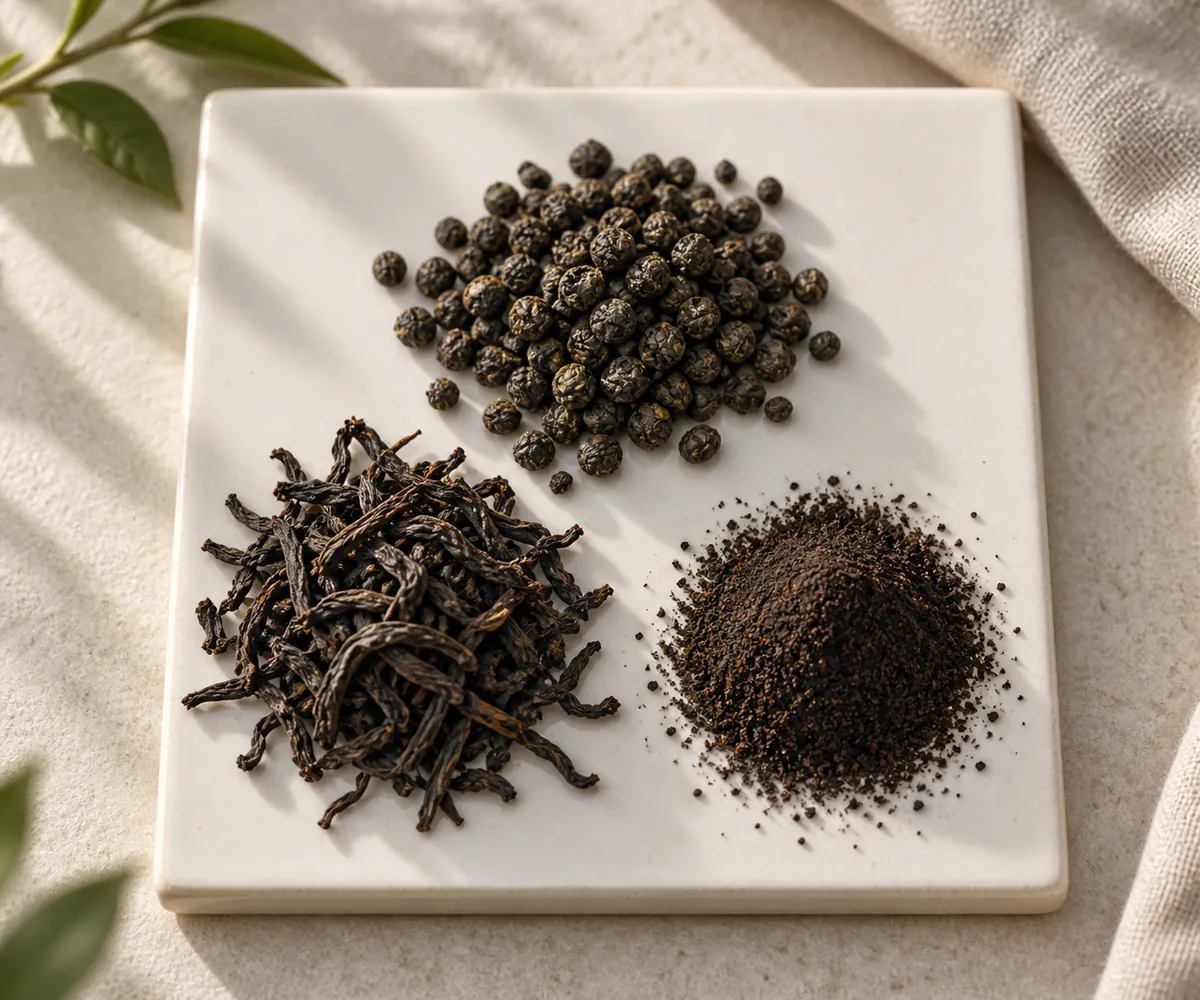
CTC stands for cut, tear, curl, and it is a processing choice rather than a quality one. The leaf is rolled into hard pellets that give everything they have very quickly, which suits a builder's tea and punishes a four minute timer.
Orthodox leaf, by contrast, is rolled whole, so it releases more slowly, which is what a wider window actually means in practice. Teabag dust is the fastest of all, because there is more surface than leaf, and a bag that sits for four minutes has been over-brewing for at least two.
Most packets do not say which you have, but the pellets are unmistakable once you have seen them, so tipping a spoonful out is more reliable than reading the box.
What does milk actually fix?
Milk binds the tannins, but it cannot un-brew the tea.
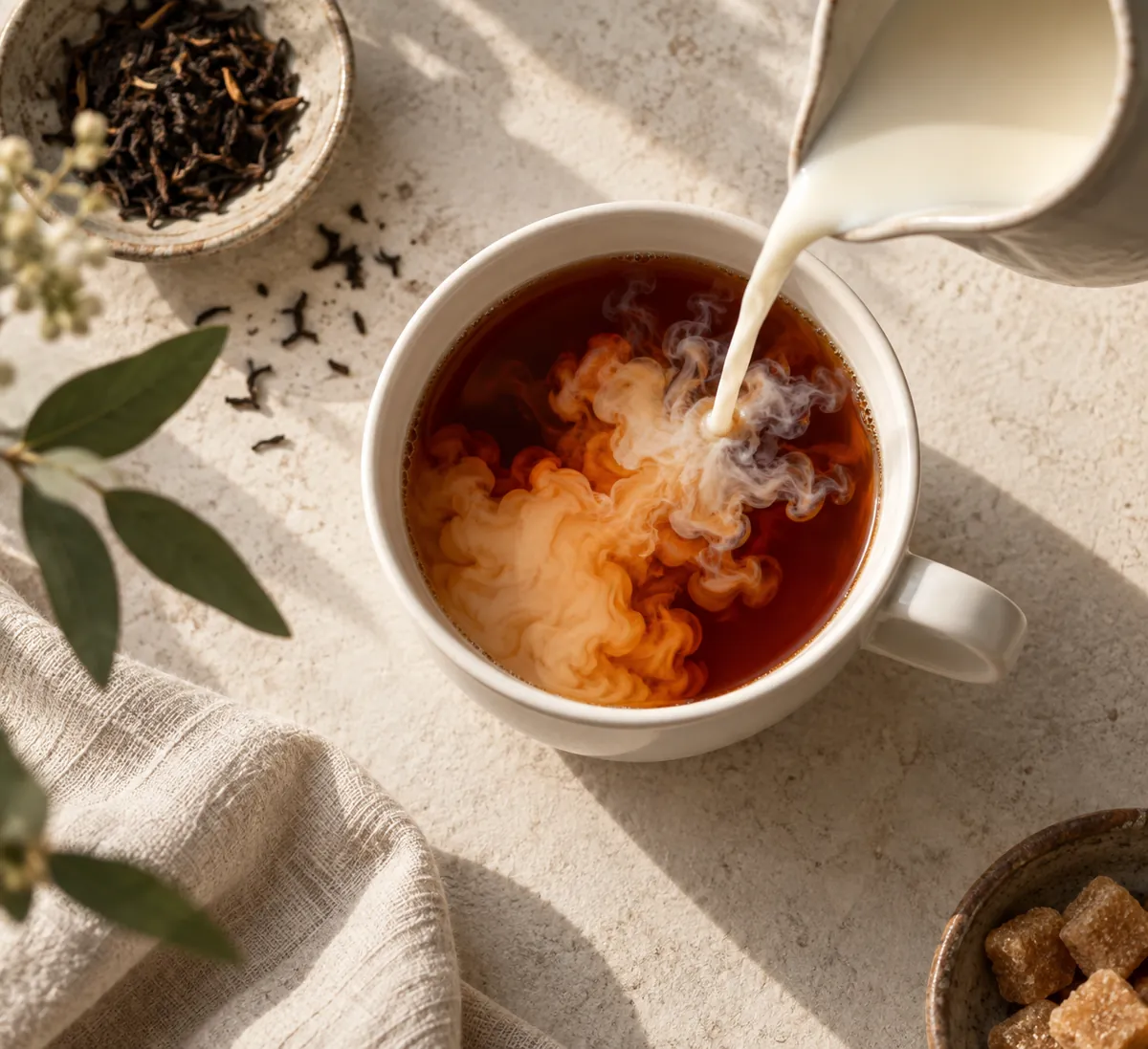
The tea and the habit suit each other, because assam survives milk where a delicate leaf disappears under it, and the strength that makes that possible is the same strength that turns drying.
But an over-brewed cup is still over-brewed underneath. Taste one without milk if you want to know what you have actually made, and the answer is usually uncomfortable.
Plant drinks do this less well. They carry different proteins in different quantities, so an oat drink softens the cup without binding the tannins the way dairy does.
Either way, milk has a cost, because it flattens the malty character people buy this tea for, which is a reasonable trade and worth making knowingly.
Why does it taste flat instead of harsh?
Flat and harsh are opposite complaints, and only one of them is about the timer.
How a packet fades
- Freshly openedMalt on the nose, sweetness in the cup.
- A month inAroma noticeably quieter. Still fine.
- Six monthsHay and cardboard. The malt has gone.
- The testSmell the dry leaf. Nothing dry means nothing wet.
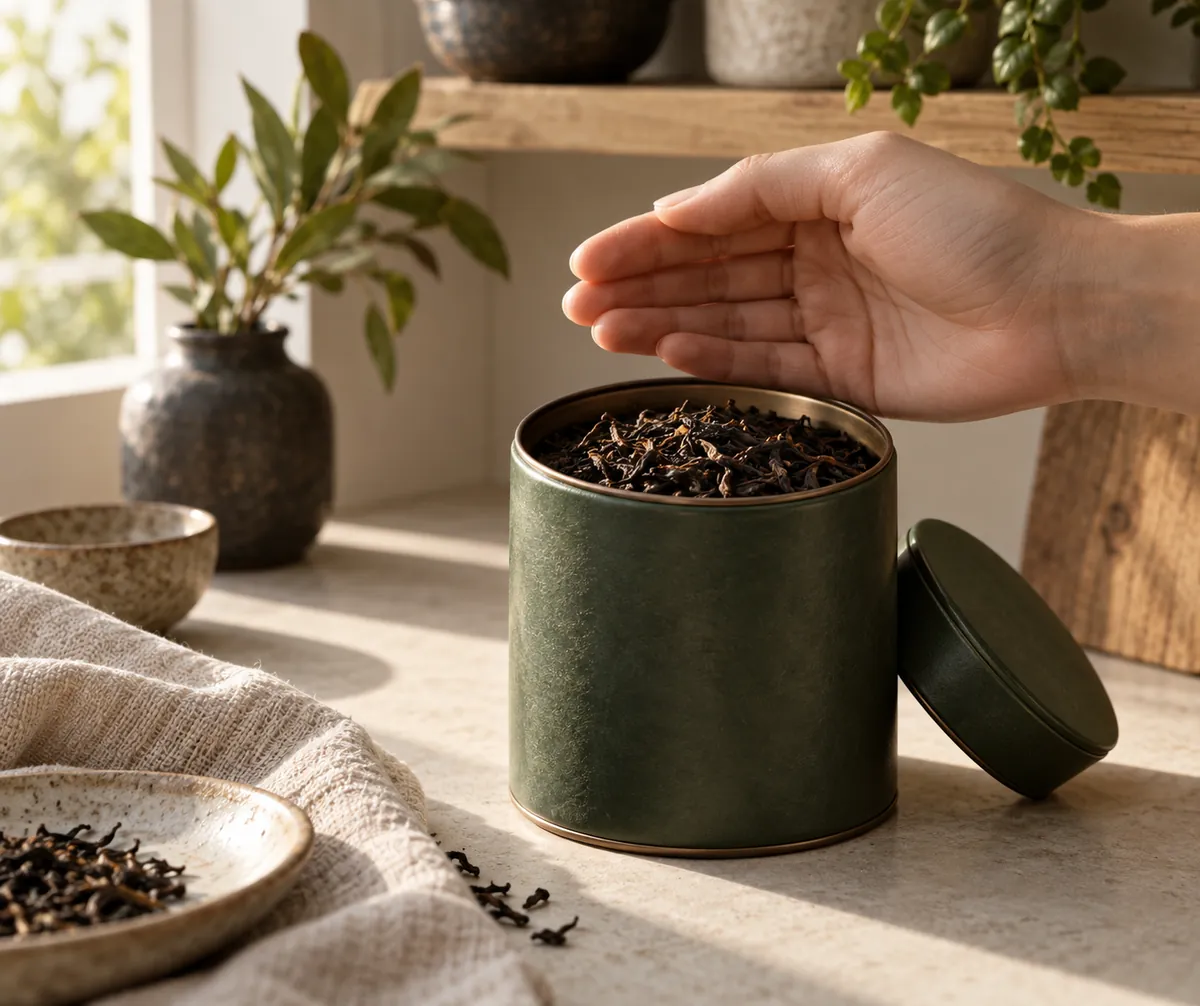
Aroma goes first and body stays, so a stale packet still gives you something brown and vaguely tea-like that is nonetheless disappointing.
A warm cupboard accelerates all of it. Above a kettle or beside a hob is the worst place in the kitchen, and it is where the tea caddy usually lives.
Teabags in an open box fade fastest. There is nothing between the leaf and the air, and how the caddy is kept decides more than the packet date does.
Thin is not the same as flat. An under-dosed cup tastes weak but still smells of tea, where a stale one smells of very little either way.
Some blends are flat even when fresh, and no storage or timing rescues what was never there.
Which faults belong to the water?
If every packet tastes dull and your kettle scales, look at the tap before the tea.

Hard water can mute maltiness specifically, because the minerals it carries interfere with the compounds holding the character, and the result is a cup that is strong and somehow boring.
The surface film is a reaction between the water and the tea, and it appears on any tea brewed in hard water rather than being a sign of a bad packet.
Chlorine carries straight through. If you can smell it in cold tap water, it will be in the cup, and letting the water stand for an hour before boiling removes most of it.
Very soft water fails in the other direction, leaving the tea thin and faintly sour, so distilled water makes a worse cup rather than a purer one.
Brewing the same black tea with bottled water at the same time and temperature, and comparing the two cups side by side, settles it.
If the difference is obvious, the fault is the tap. No timing change was ever going to reach it, and no packet you buy will either.
Common questions
Why does assam taste so astringent?
Most people brew black tea for four or five minutes, and this leaf gives up its tannins faster, so the last two minutes add the fault rather than the strength.
How long should assam steep?
Three to four minutes for whole leaf at about 95 C, and closer to two for CTC pellets or teabag dust. Take the leaf out at the end rather than drinking around it.
Does milk fix bitter assam?
Milk proteins bind the tannins, so it genuinely reduces the drying feel. It masks rather than corrects, and the cup is still over-brewed underneath.
Why does my assam taste flat rather than harsh?
That is staleness rather than over-brewing. Smell the dry leaf: if there is no malt on the nose, there will be none in the cup, and no timing change reaches it.