What Is Coconut Water? The Liquid Inside a Young Coconut
Coconut water is the liquid inside a young green coconut, not a pressed product. Its character is decided almost entirely by how old the nut was when it was opened.
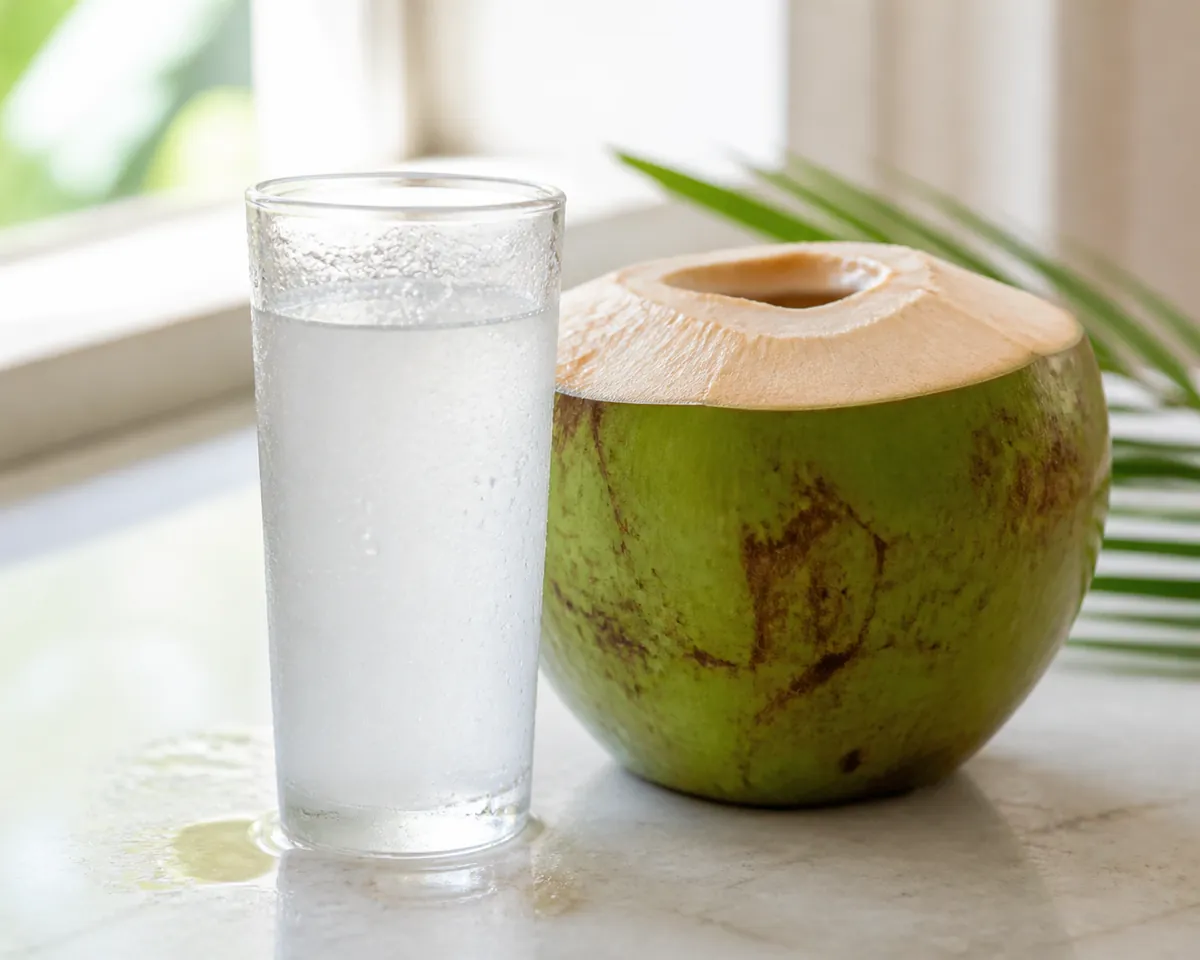
Coconut water is the clear liquid found inside a coconut. It is not pressed or extracted from the flesh; it is already there, and opening the nut is the whole of the harvest.
That single fact separates it from every other coconut product on a shelf, and it is the source of most of the confusion around it.
Coconut water at a glance
- What it is
- The liquid endosperm inside a growing coconut, drunk as it comes
- Best stage
- Young green nuts, roughly six to eight months old
- Colour
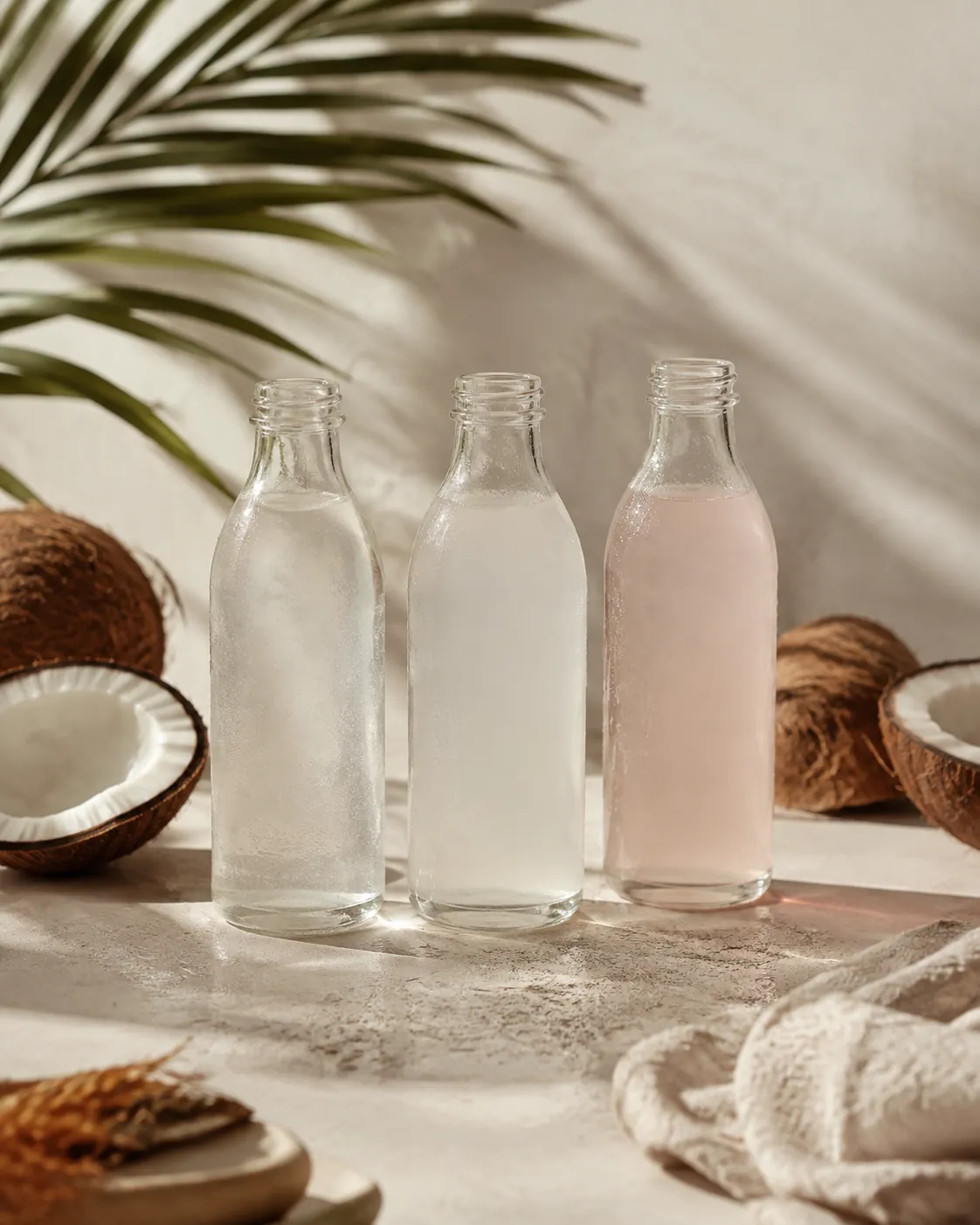
- Clear to faintly cloudy, turning pink on exposure to air
- Taste
- Lightly sweet with a faint mineral salinity and very little coconut
- Dominant mineral
- Potassium, with sodium low by comparison
- Yield
- Around 200 to 400 ml from one drinking nut
- Stability
- Poor. It changes within an hour of opening
Water from inside the nut, milk from the flesh
Two products from the same fruit get used as though they were versions of one another, and they have nothing in common beyond the tree.
| Coconut water | Coconut milk drink | Tinned coconut milk | |
|---|---|---|---|
| Source | Liquid inside the nut | Pressed flesh, heavily diluted | Pressed flesh, concentrated |
| Fat | Near zero | 1 to 2 g per 100 ml | 15 to 25 g per 100 ml |
| Appearance | Clear, slightly cloudy | Opaque white | Thick, white |
| Taste | Light, sweet, faintly saline | Sweet, clearly coconut | Rich and intense |
| Made by | Opening the nut | Pressing and diluting | Pressing and concentrating |
Coconut water is a naturally occurring liquid; coconut milk is manufactured. The flesh has to be grated, soaked and pressed to make milk, and no amount of processing turns either one into the other.
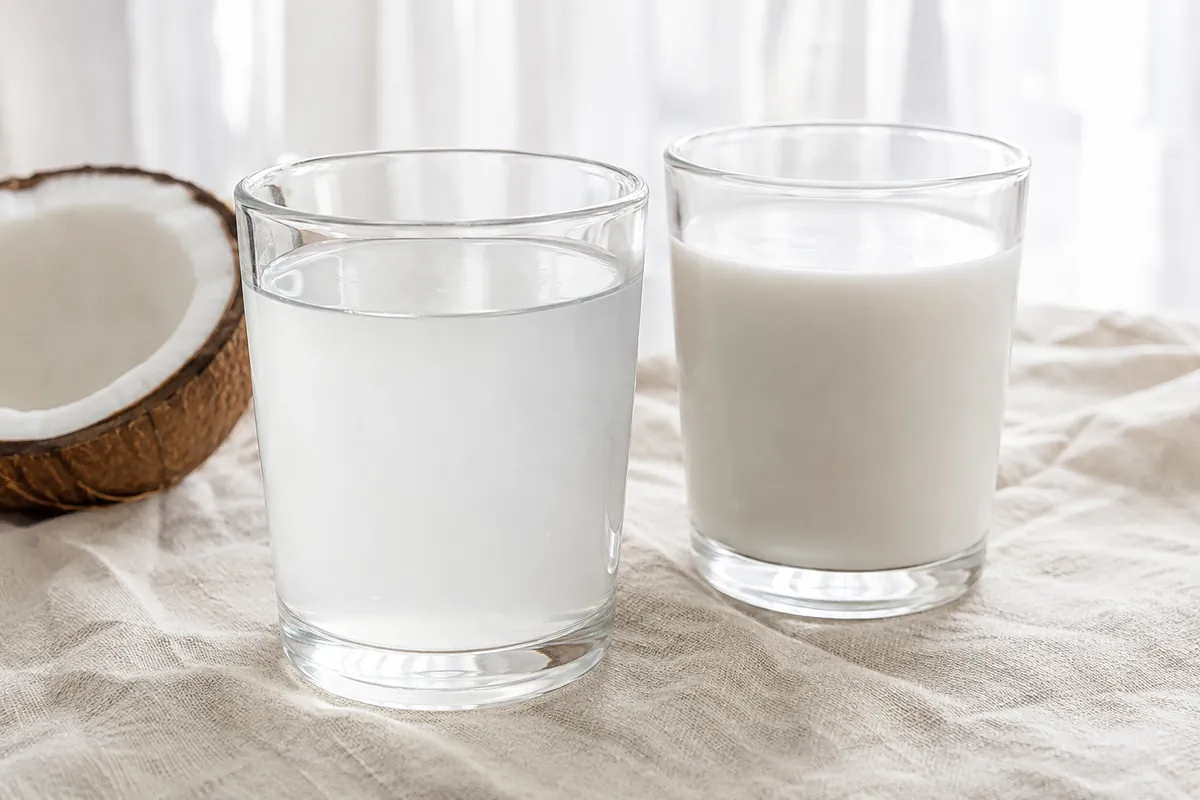
The practical difference shows up in a pan rather than a glass. Coconut water carries effectively no fat, so a curry built on it is a thin, faintly sweet broth rather than a sauce, and nothing will thicken it into one.
The carton drink sold in chiller cabinets sits between the two and is a diluted press of the flesh, covered under coconut milk drink, which is why it looks white while the water looks like water.
Six months old, and everything that changes after that
Maturity is the single biggest variable in this drink, and it changes the liquid so completely that two nuts from the same tree can be different products.
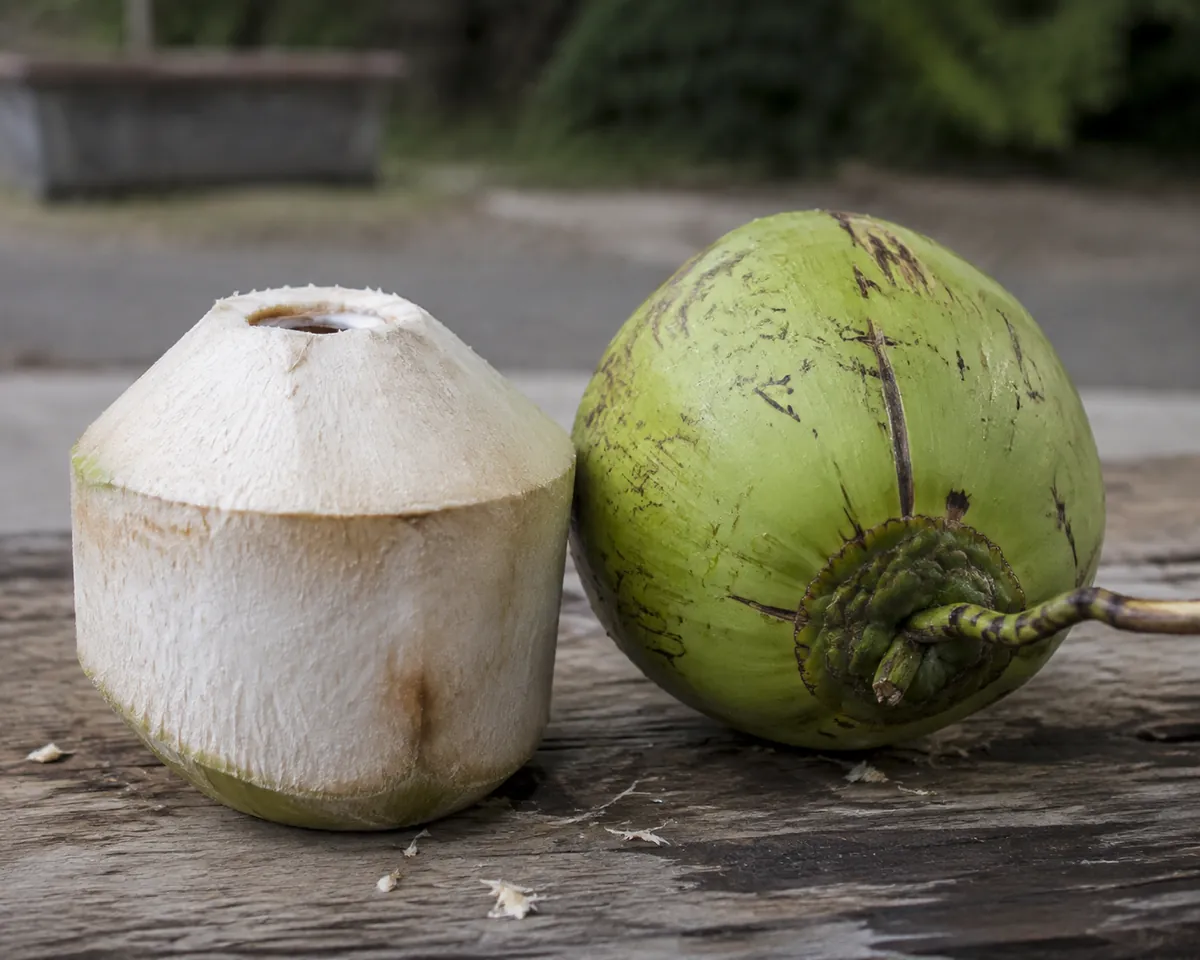
A coconut is a seed, and the water is its endosperm: the nutrient store the growing embryo will draw on. As the nut matures that liquid is progressively converted into the solid white flesh, so the volume falls, the sweetness fades and a sour, soapy note takes its place.
How the water changes as the nut ages
- 6 to 7 monthsMost water, sweetest, very little flesh. The drinking stage
- 8 to 9 monthsStill good, slightly less sweet, a thin layer of soft flesh
- 10 to 11 monthsNoticeably less water, flatter and more sour
- 12 months and beyondLittle water left, and what remains tastes soapy and stale
Almost all coconut water sold for drinking comes from young green nuts. The brown hairy coconuts stacked in supermarkets are mature, their water is a byproduct of a crop grown for flesh and oil, and anyone disappointed after cracking one open has met the twelve-month line rather than a bad batch.
The flavour, described
- Sweetness
- Light and clean, from naturally occurring sugars
- Salinity
- A faint mineral saltiness that is the most distinctive note
- Sourness
- Slight, and increases sharply with maturity or poor handling
- Nuttiness
- Very mild. Far less coconut character than the flesh
- Aftertaste
- Short and clean when fresh; soapy when the nut was too old
The saline quality is what divides opinion, and it is not added by anyone: it comes out of the mineral content, and it is why the drink reads as savoury to people who approached it expecting something like apple juice. How much of that survives in a given bottle is largely a processing question, and the taste in detail sits with the flavour rather than the nut.
Heat, pressure, and the aromatics that survive neither well
Few packaged drinks vary as much between brands as this one does.
What happens between nut and bottle
- HarvestNut maturity at picking sets the baseline sweetness and salinity.
- ExtractThe water is drained, and exposure to air begins changing it immediately.
- TreatHeat pasteurisation or high-pressure processing, which taste noticeably different.
- ReconstituteSome products are made from concentrate rather than shipped as liquid.
- SweetenSugar or fruit juice is added in some products, and must be declared.
The trade-off at the centre of the category is that the aromatics are volatile and the enzymes are active, so the liquid starts changing the moment it meets air. Heat stops the enzymes and drives off the aromatics in the same operation, which is why heat-pasteurised coconut water tastes cooked and faintly caramelised.
High-pressure processing gets round part of that by using pressure instead of temperature, keeping far more of the fresh character at the cost of a cold chain and a higher price, which is why those products sit in a chiller rather than on an ambient shelf.
From concentrate is the label phrase that matters most. Concentrating drives off aromatics a second time and reconstituting cannot put them back, so the result is flatter than a not-from-concentrate bottle of the same origin.
Some cartons list coconut water alongside natural flavour, which usually means aromatics lost in processing have been added back deliberately; that is legal, common, and a reliable signal the base was heat-treated. Nothing in a bottle matches an opened nut, and that is a limit of the product rather than a failing of any brand.
Choosing between a carton and a whole nut
Both routes reward a small amount of attention, and the things worth checking are completely different.
- Look for "not from concentrate", which is the single best quality signal.
- Check for added sugar or fruit juice; genuine coconut water needs neither.
- Prefer chilled, high-pressure processed products if you can find them.
- Check the ingredients list length. It should be one item, or two with vitamin C as a preservative.
- Ignore claims about the variety or island of origin, which affect it far less than maturity does.
With whole nuts the label disappears and the nut itself has to answer the questions.
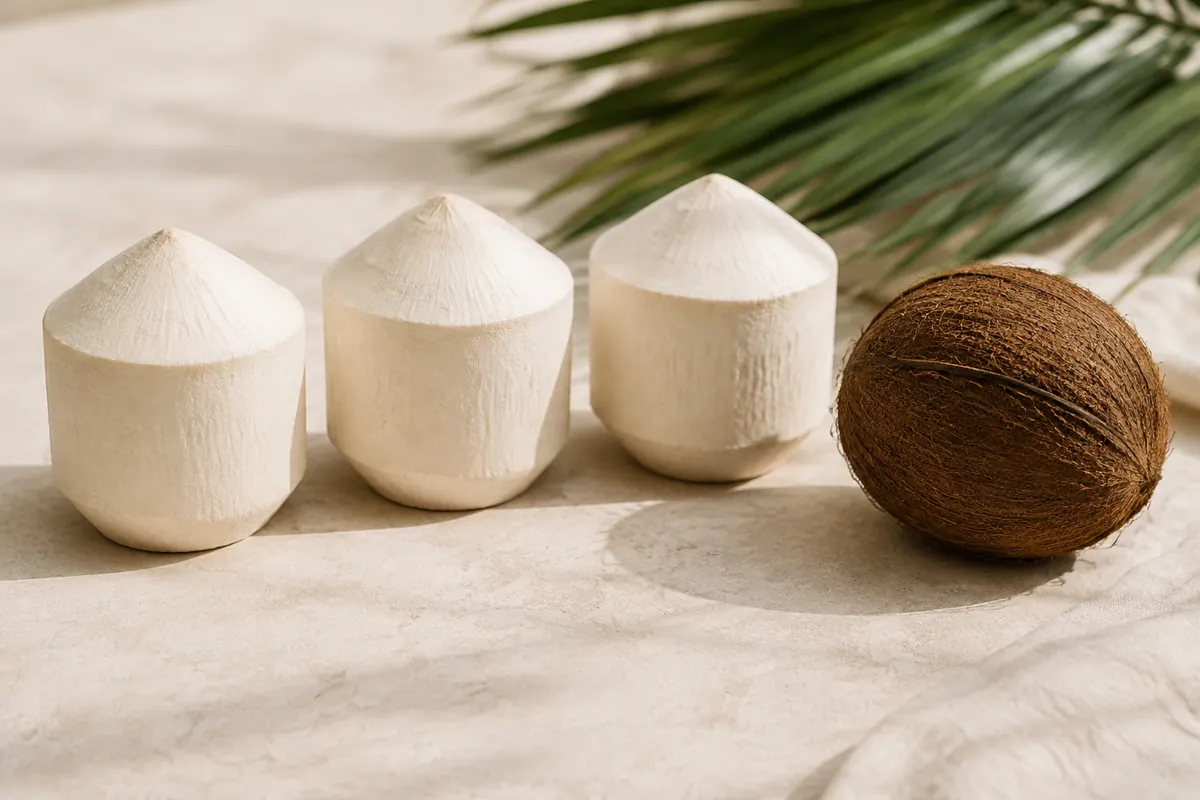
- Pick one that feels heavy for its size, which means it still holds plenty of water.
- Shake it. You should hear liquid moving, and the more the better.
- Check the trimmed base for mould or dark patches, which spread quickly.
- Avoid any with a fermented or sour smell at the cut surface.
- Buy from somewhere with turnover; these are perishable and do not improve on a shelf.
Weight is the most reliable signal of the five. A light nut has either dried out through the husk or matured on the tree, and both mean less water and worse water.
Trimmed white nuts, sold as neat cylinders with the husk cut away, are far more convenient and keep for a shorter time, because the husk that was protecting the shell has gone. Use those within a few days, and treat a sour or fizzy taste as a fault rather than a variety.
Opening a young green nut
Fresh water from a nut you opened yourself is a different drink from anything in a carton, and the gap is wider than most people expect.
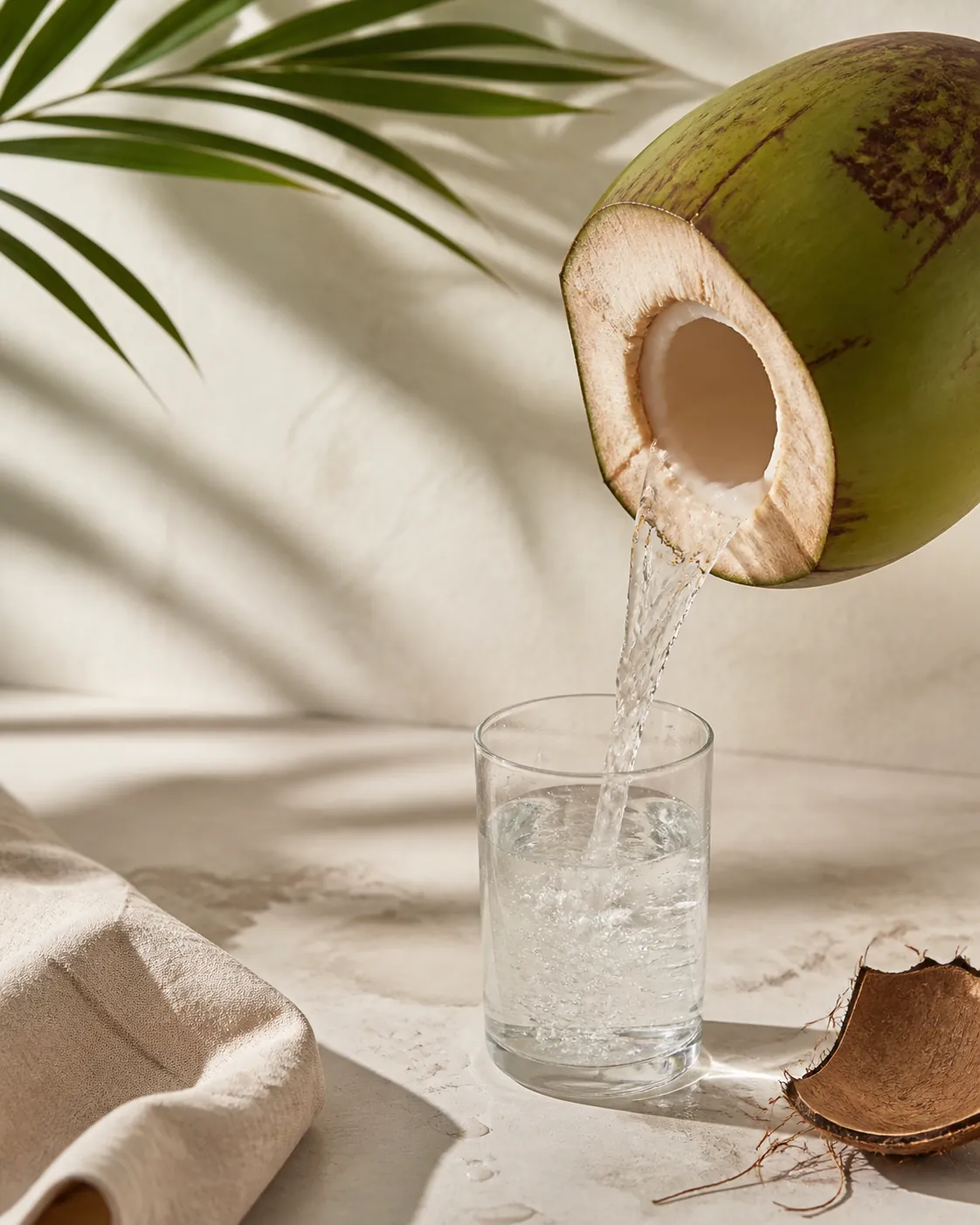
Young coconuts sold for drinking usually arrive trimmed into a white cylinder or cone with most of the husk removed, leaving a soft top that a heavy knife or a purpose-made opener will go through. The shell underneath is thin enough to cut rather than crack at that age, which is what makes the operation possible; a mature brown nut needs a hammer and gives you far less for the effort.
What one nut gives
- Volume
- Typically 200 to 400 ml
- Best drunk
- Immediately. It changes within an hour of opening
- Flesh
- A soft translucent layer, edible with a spoon
- Refrigerated
- A day at most, and it loses the clean note fast
- Signs of a bad nut
- Pink or purple tinge, sour smell, or a fizzy taste
The last line is the one worth memorising, because a bad nut is not always obvious until some of it has been drunk. Colour is the earliest warning and the most misread one.
That same reaction explains why some bottled products taste flat: they were stabilised specifically to stop the colour shift, and the treatment that achieves it takes the aroma with it. If you want to try the fresh version without hunting for green nuts, the practicalities are covered under getting the water out of a coconut.
What is measurably in it, and how that sits against the shelf
Composition is the part of this drink that is well documented, and the numbers explain the taste more usefully than they explain anything else.
Potassium is present in the largest quantity and is genuinely high relative to most drinks, while sodium is low. Together those two figures are why the liquid reads as faintly salty rather than simply sweet, and the ratio between them is the reverse of a formulated electrolyte drink, where sodium leads and potassium trails.
| Coconut water | Sports drink | Mineral water | |
|---|---|---|---|
| Origin | Natural, from the nut | Formulated | Natural, from a spring |
| Sugars | Around 4 g per 100 ml, naturally present | 4 to 8 g, added | None |
| Sodium | Low, around 25 mg per 100 ml | Moderate to high, added | Varies enormously by source |
| Potassium | High, around 250 mg per 100 ml | Low | Usually low |
| Consistency | Varies a lot by nut and processing | Highly consistent | Fixed by the source |
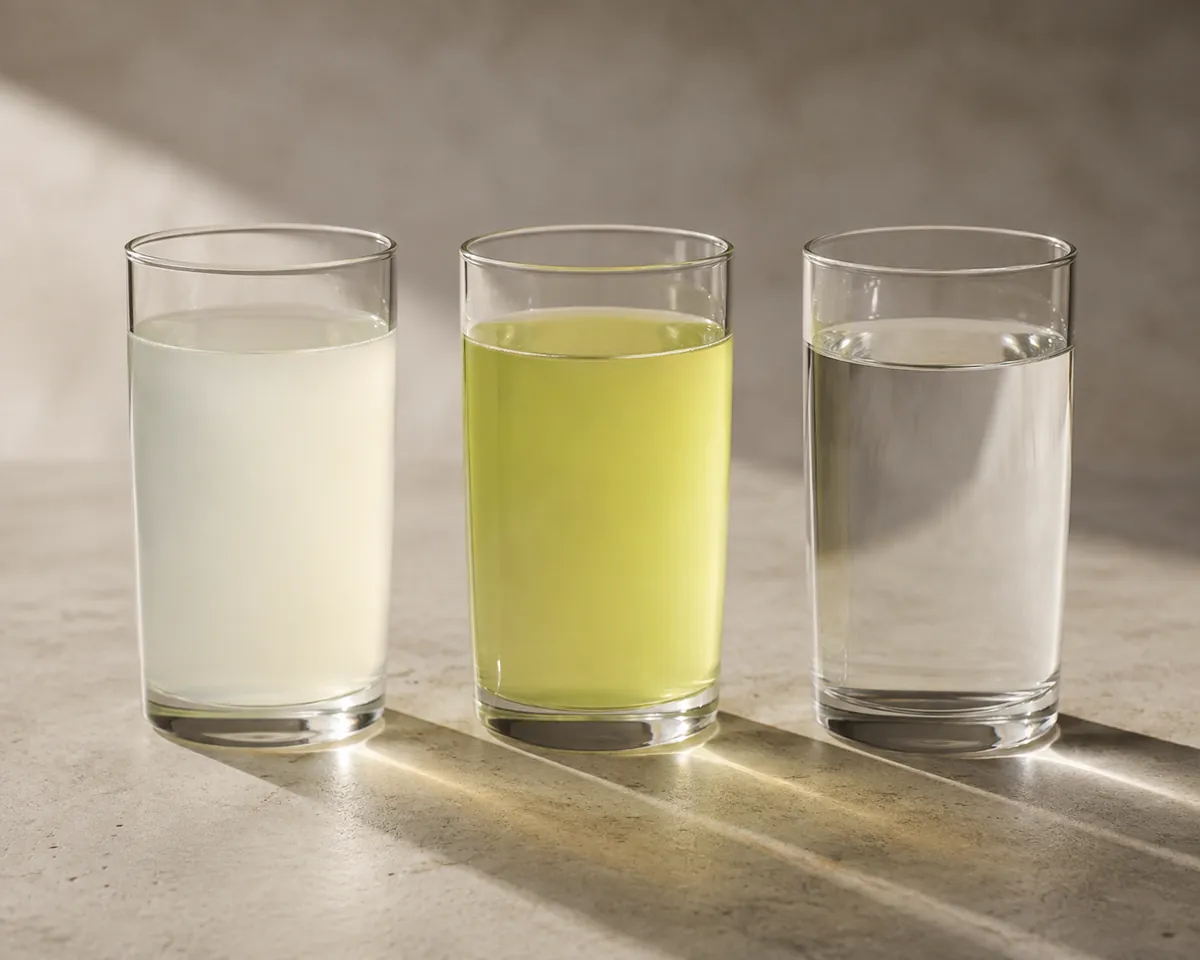
Against a sports drink the sugars are the same order of magnitude and arrived by a different route, and against mineral water the difference is that one carries sugars and the other carries none. All three descriptions are compositional, and this site draws no conclusion from them about which anyone should drink; the direct comparison stays on the same footing.
The clean note goes first
Once a nut or a carton is open, this is among the least stable drinks in the section.
Sealed and ambient, a UHT carton holds for months without much changing. Chilled high-pressure products keep a few weeks and have to stay cold the entire time, since the process that preserved their aroma did nothing to make them shelf-stable.
Fresh from the nut, the window is measured in minutes rather than days.
Once opened, the decline runs in a predictable order: the clean sweetness goes first, a flat sourness comes up behind it, and by the second day even a refrigerated bottle tastes noticeably older than it did. Buy the size you will finish in one sitting, because the second half of a large bottle is measurably worse than the first, and that is a false economy rather than a preference.
What slows the process, and what does not, is the subject of storing coconut water.
Why a drinking nut costs what it does
Price in this category is set by agriculture and freight rather than by anything about the liquid.
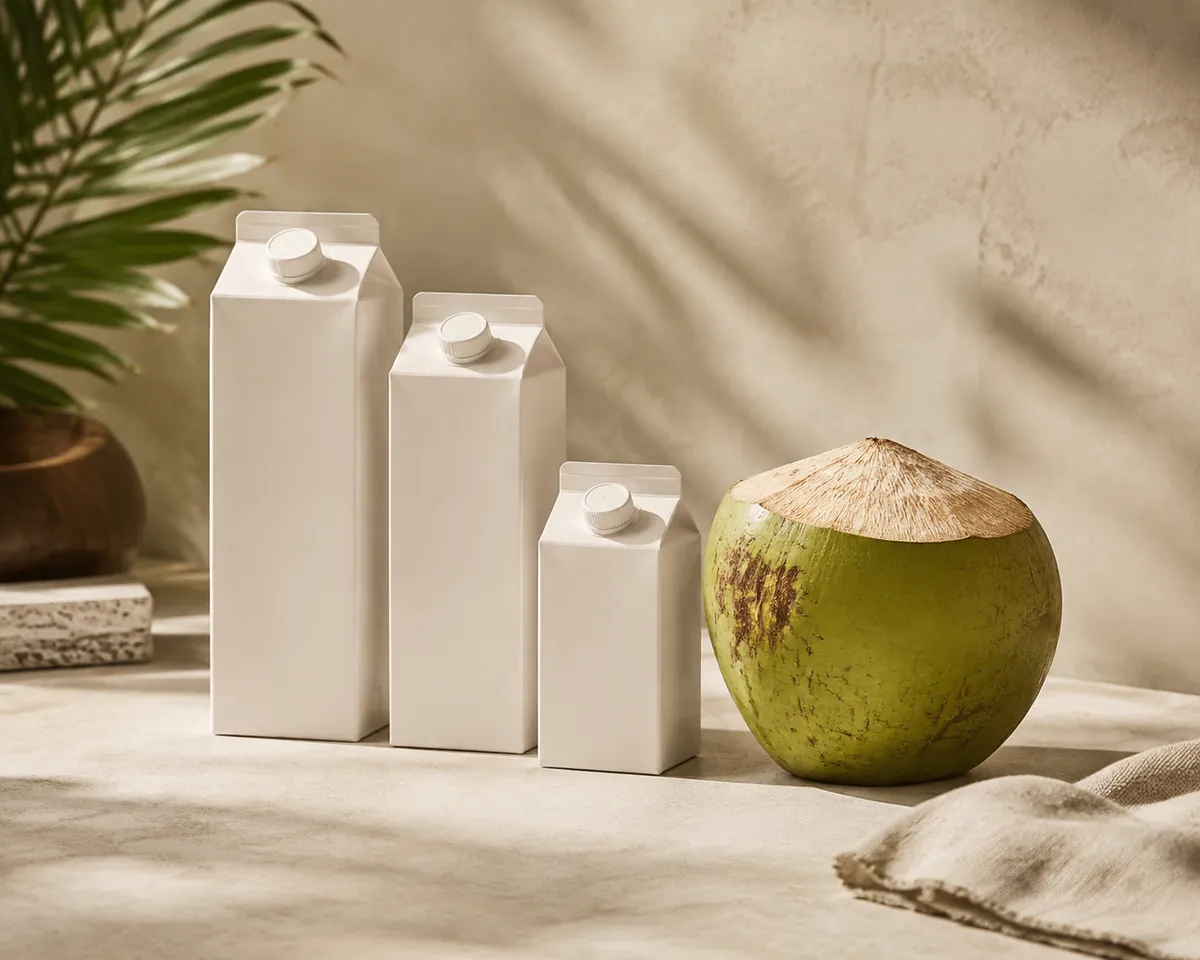
Coconut palms grow throughout the tropics, with the Philippines, Indonesia, India, Brazil and Thailand among the largest producers, and the same crop supplies the flesh pressed for coconut drinks and oil. A nut harvested young for its water is a nut that will never become a mature one, so the grower gives up the more valuable crop to sell the drink, and that forgone harvest is built into every carton.
Freight does the rest. Coconut water is almost entirely water by weight, so shipping it costs a great deal relative to what arrives.
The industry has two answers. It can be concentrated, which is cheap to move and costs aromatics, or it can be produced close to where it is sold, which limits where the nuts may come from.
Both are compromises on the same problem, and neither is disclosed anywhere except in the phrase from concentrate.
Thailand's aromatic varieties are the ones most often named on premium packs, and unlike most origin claims that one is audible in the glass, since they are markedly more floral than the standard nut. Fresh whole nuts are usually the best value where a shop stocks them, often costing less than a premium carton while giving a better drink.
Over ice, in a blender, and in a pan of rice
Beyond the plain glass, coconut water earns a place in a narrow but genuine set of uses.
In smoothies
Works well as the liquid base, adding sweetness without fat or dairy.
With citrus
Lime especially. The acid lifts the flat sweetness and sharpens the saline note.
As a rice liquid
Cooking rice in it gives a faintly sweet, aromatic result.
In sorbet
Freezes well and the salinity keeps it from being cloying.
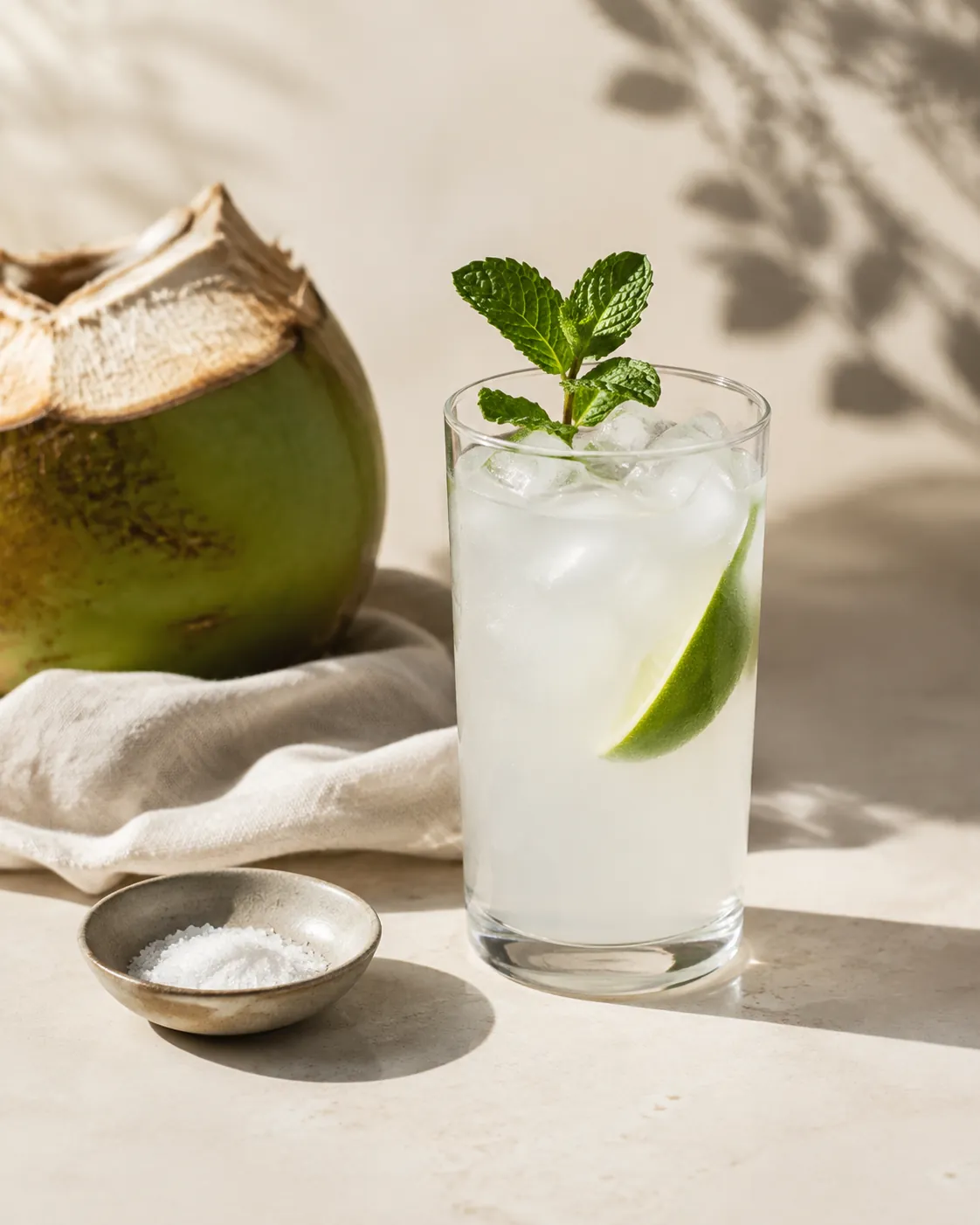
It blends into a berry smoothie better than juice does, thinning the mixture without adding dairy and bringing a faint sweetness that suits soft fruit; the same works in a green smoothie, where the salinity does something useful against bitter leaves. With lime and a pinch of salt over plenty of ice it turns into the sharper, more savoury long drink that is closer to how it is served where the nuts grow than any plain carton is.
Heat and cream are the two things it will not take. Warming flattens the delicate sweetness into something faintly cooked, and set beside a creamy coconut drink the two coconut flavours are close enough to be confusing while neither is improved.
Common questions
Is coconut water the same as coconut milk?
No. Coconut water is the clear liquid already inside the nut and contains almost no fat. Coconut milk is made by grating and pressing the white flesh, and is thick and high in fat. They are unrelated products from the same fruit.
Why does coconut water sometimes turn pink?
An enzymatic reaction on exposure to air and light. It is a freshness signal rather than spoilage in itself, and some producers treat the water specifically to prevent it, which costs aroma.
Why does bottled coconut water taste so different between brands?
Three variables: how mature the nuts were at harvest, whether it was heat-pasteurised or high-pressure processed, and whether it was made from concentrate. Not-from-concentrate and high-pressure processing taste closest to fresh.