What Is Barley Tea? Roasted Grain, and Why It Costs So Little
Barley tea is roasted grain in water. It is caffeine-free, costs almost nothing, and is the drink that sits in the fridge in millions of Japanese and Korean households through the summer.
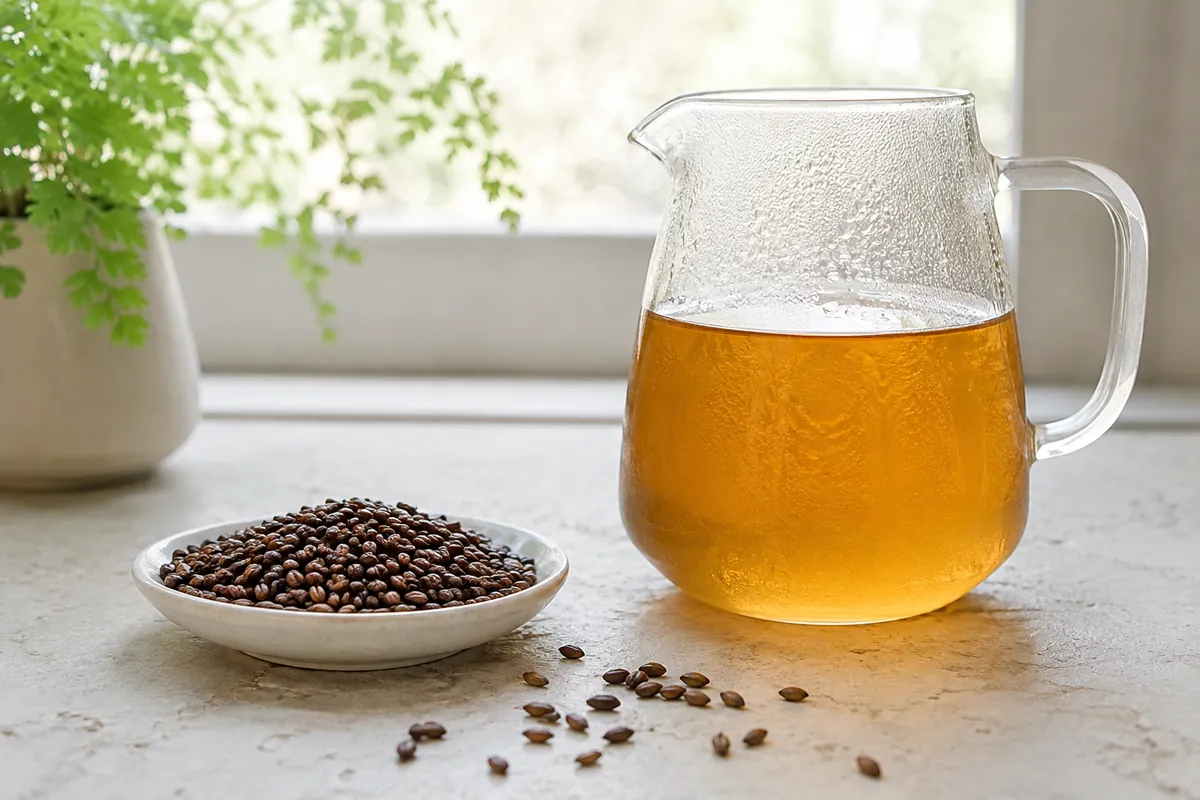
Barley tea is made by steeping roasted barley grains in water. It is called mugicha in Japan and boricha in Korea, and versions of it exist across east Asia.
There is no tea leaf involved and no caffeine, which is most of why it fills a litre jug in the fridge rather than a cup on a tray, and why it is drunk late in the evening without a second thought.
Barley tea at a glance
- What it is
- An infusion or decoction of roasted barley grain, with no tea leaf in it
- Names
- Mugicha in Japan, boricha in Korea
- Flavour source
- The roast alone. Raw barley in water tastes of almost nothing
- Caffeine
- None, at any strength or steep length
- Two methods
- Cold-brewed by the litre, or simmered briefly and strained
- Keeps
- Two to three days refrigerated, once the grain is out
- Cost
- Among the cheapest drinks on this site
What the roast puts in, and what it is not
Raw barley in water tastes of almost nothing.
The roast is the entire flavour, and everything the drink carries comes out of a hot dry pan rather than out of the grain that went into it. Grains are taken to dark brown, developing the toasted, nutty, faintly bitter compounds that make roasted coffee and hojicha taste as they do.
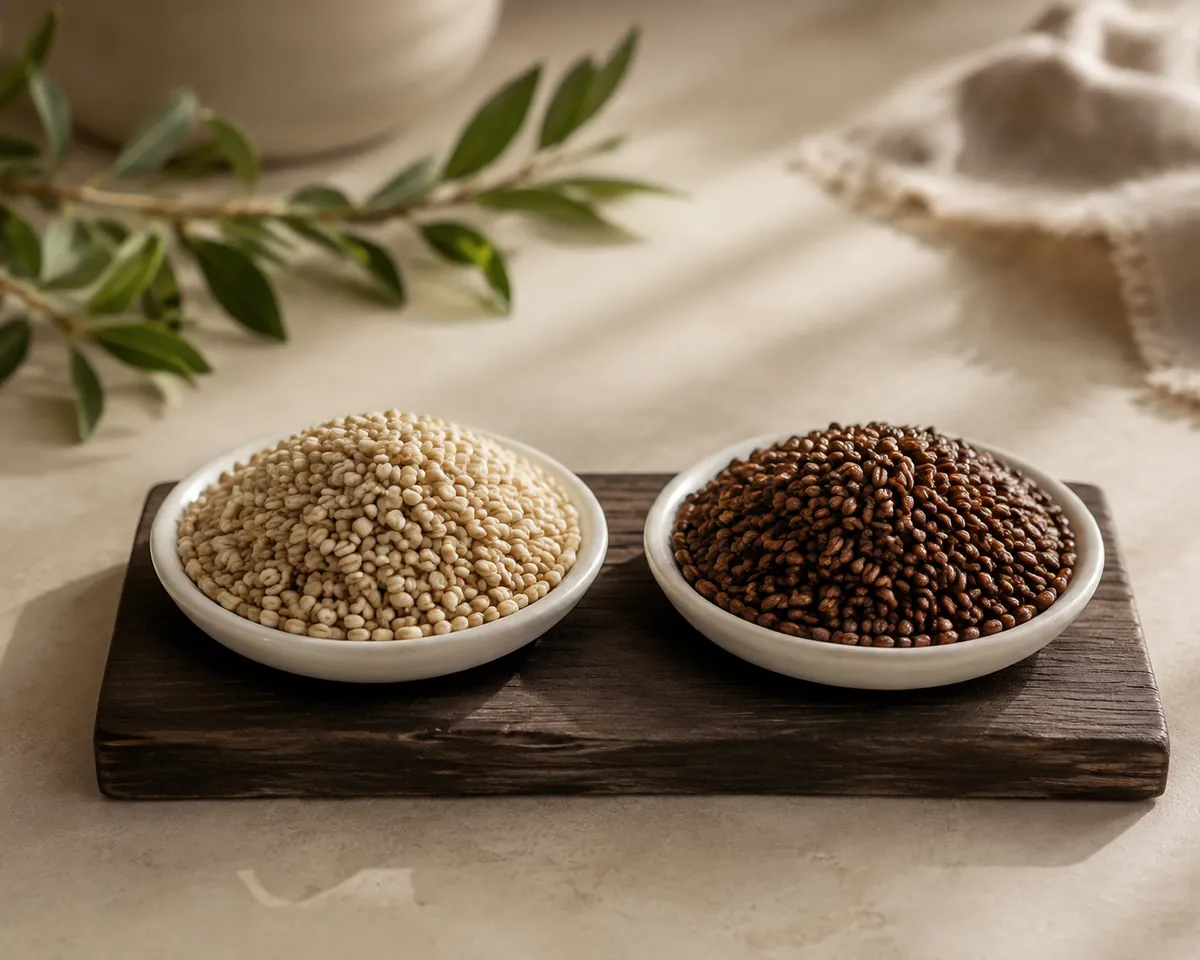
It tastes closer to roasted coffee than to anything herbal, without the acidity, the caffeine or the intensity.
Two other drinks get confused with it. The first is barley water, the British cordial, which is barley simmered with sugar and citrus and comes out sweet; barley tea is unsweetened, and its grain is roasted rather than boiled raw.
The second confusion is the name itself. There is no tea leaf in it at all, which puts barley tea alongside rooibos as an infusion rather than a tea, however the packet is labelled.
It does contain gluten, being barley, which is a compositional fact about the grain and not advice about anyone. Barley tea's flavour takes the rest of the profile apart.
The cold jug and the hot decoction
Barley tea is one of very few drinks made both ways as standard, with a genuinely different method for each.
Cold brew, the usual summer method
- Barley
- One teabag, or 20 g loose grain
- Water
- 1 litre, cold
- Method
- Refrigerate 2 to 3 hours, or overnight
- Remove
- Take the bag out once brewed, or it turns bitter
- Keeps
- 2 to 3 days refrigerated
For the hot version, simmer 20 g of grain in a litre of water for five to ten minutes and strain. It is a decoction rather than an infusion, because the grain is dense and steeping alone will not open it.
| Cold brew | Hot | |
|---|---|---|
| Method | Steep in cold water | Simmer, then strain |
| Time | 2 to 3 hours, or overnight | 5 to 10 minutes |
| Grain | One bag, or 20 g per litre | 20 g per litre |
| Character | Cleaner, lighter, less bitter | Fuller and more roasted |
| Risk | Turns harsh if the bag is left in | Turns bitter if simmered too long |
| Usual use | The summer household jug | A hot drink with a meal |
Leaving the bag in is the standard mistake. Barley keeps extracting in cold water, and a jug left overnight with the bag still in turns noticeably harsh without ever looking any different.
The cold route dominates for a practical reason. It is made by the litre and kept in the fridge as a household default, in the role plain water plays elsewhere, and it is cheap enough to drink without thinking about it.
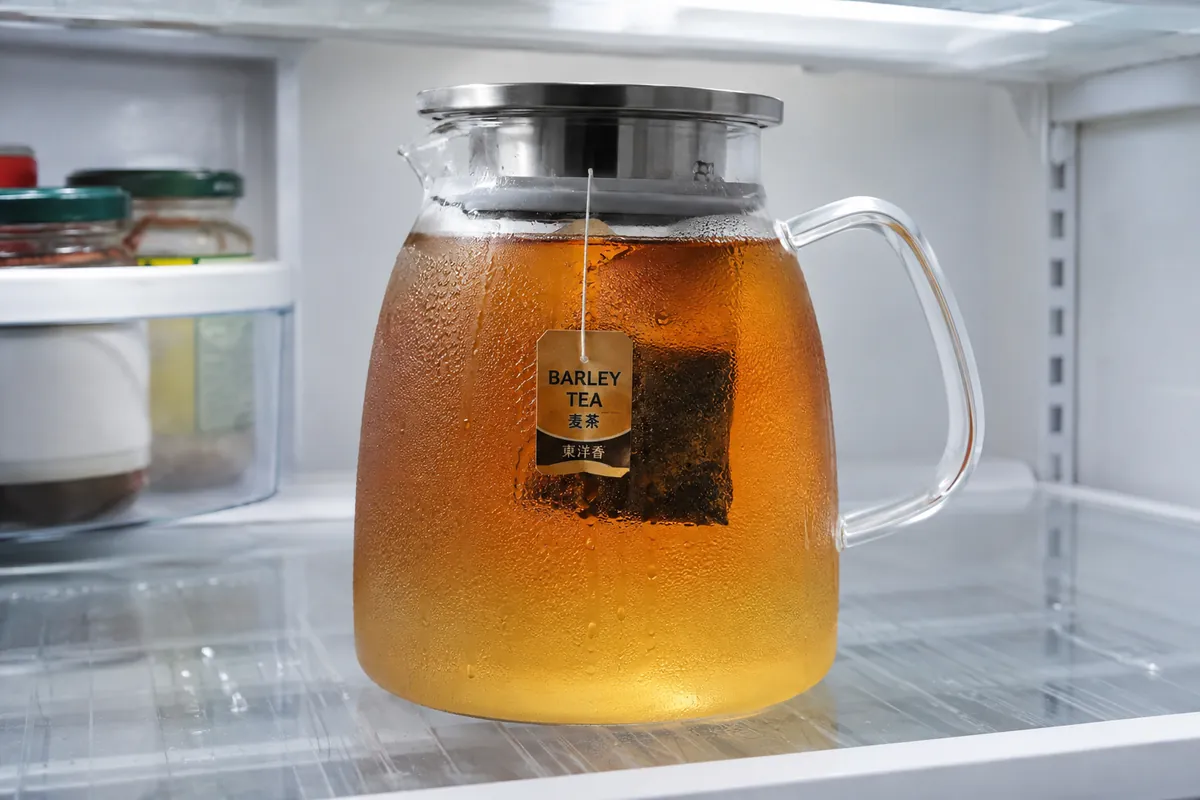
It also holds its character when chilled, which the delicate green teas of the same regions do not. Roasted flavours survive cold and grassy ones fade, which is the same reason cold brew works on coffee and not on a fine leaf.
Japan, mugicha
Usually pure barley. The summer household staple.
Korea, boricha
Often served in place of water in restaurants, hot or cold.
Korea, oksusu-cha
Roasted corn tea, frequently blended with barley.
Blends
Barley with roasted corn or brown rice, which adds sweetness.
Both routes are set out at jug scale in making barley tea, including the ratio for a two-litre bottle.
Keeping a jug for three days
The cold method has one failure mode, and it arrives gradually enough that most people meet it without working out what went wrong.
A jug lasts two to three days refrigerated once the bag is out. What ends it is a slow souring rather than anything dramatic, since roasted grain sitting in water at fridge temperature will eventually ferment.
- Take the bag or the grain out as soon as it has brewed, not when you pour.
- Use a clean jug each time. Topping up an old jug restarts nothing and shortens everything.
- Keep it in the body of the fridge rather than the door.
- Smell it before pouring. A sour or slightly fizzy note means it has gone.
- Make a litre at a time rather than three, unless the household drinks it that fast.
The bag-left-in fault matters more than the age does. Grain steeping for a full day gives a harsh, over-extracted jug that is perfectly safe and no longer pleasant, and diluting it does not put the roast back into balance.
Water chemistry matters less here than for a delicate infusion, though hard brewing water does flatten the roast slightly and mute the grain sweetness underneath it.
Loose grain kept dry outlasts the jug by months, and storing barley tea covers the grain and the finished drink separately.
Roasting raw barley at home
Barley tea is one of the few drinks here you can make from a supermarket staple in fifteen minutes.
Pearl barley works and hulled barley works better, being closer to the commercial article. Either goes into a dry pan over medium heat with no oil and no water.
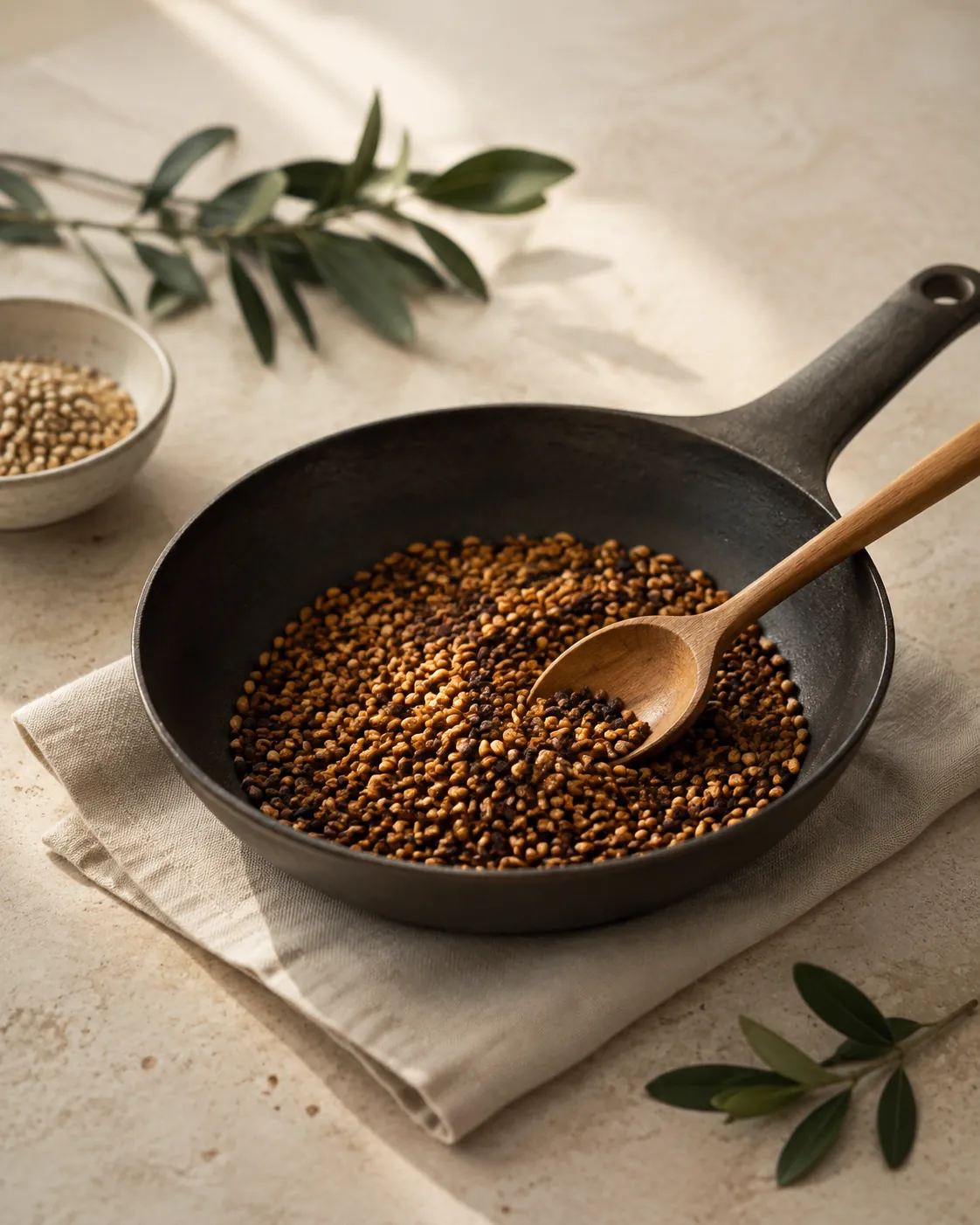
A pan of roasted barley
- Start dry and hotMedium heat, no oil. A heavy pan holds temperature better than a thin one.
- Shake constantlyBarley scorches in seconds once it starts to colour, and scorched grain is bitter rather than toasted.
- Watch for the colourPale gold at five minutes, mid brown at eight, deep brown at ten to twelve.
- ListenThe grains crackle faintly as they dry, and the sound falls away as they finish.
- Cool completelyOn a tray, in a single layer. Grain left heaped in the pan keeps cooking.
- Store sealedIt keeps two to three months before the roast notes flatten.
Roast depth is the only real variable and it changes the drink completely. A pale roast gives something close to grain water; a dark one gives the coffee-adjacent drink most people recognise as mugicha.
Home-roasted grain is noticeably fresher than bagged, which is the argument for bothering, and it works out considerably cheaper at the price of a quarter hour and a pan to wash.
Loose grain also holds more back after one pass than a teabag ever does.
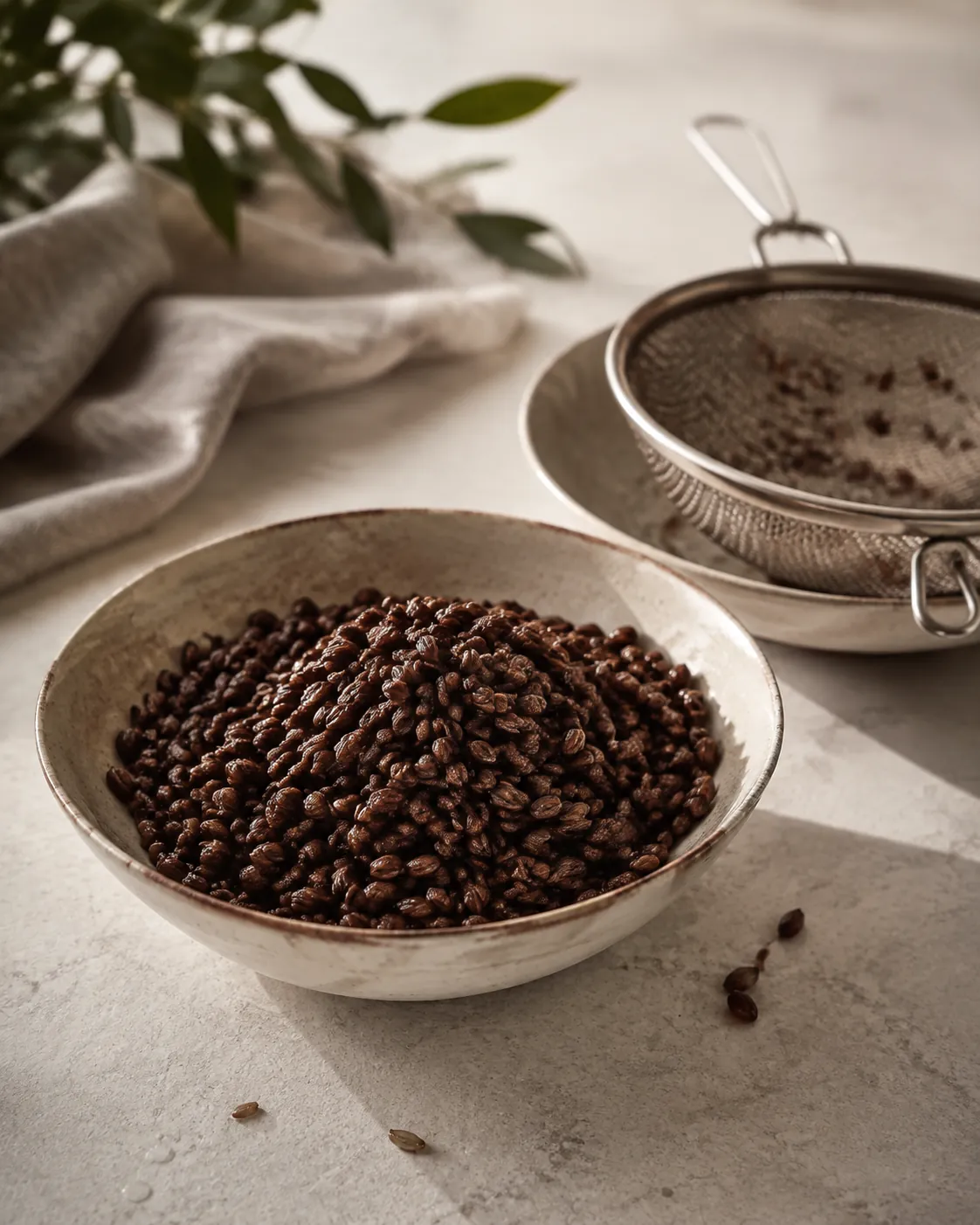
A second hot brew works, at a longer simmer and a lighter result. The grain gave up its most soluble compounds first, so ten minutes the second time produces roughly what five minutes gave the first.
The spent grain can also be eaten. It is softened cooked barley with the roast flavour still in it, and it goes into a soup or a salad the way any cooked grain does.
Teabags are not worth reusing at all. The grain inside is milled fine precisely so that it gives everything up quickly, which is what makes the cold jug method work and what leaves nothing behind for a second pass.
Bags, loose grain and where to find it
Two forms are sold, and the difference is convenience.
Teabags are the norm and are built for the jug: one bag per litre, cold-brewed and lifted out. Loose roasted grain is cheaper, keeps longer and lets you set the strength, at the cost of straining every time.
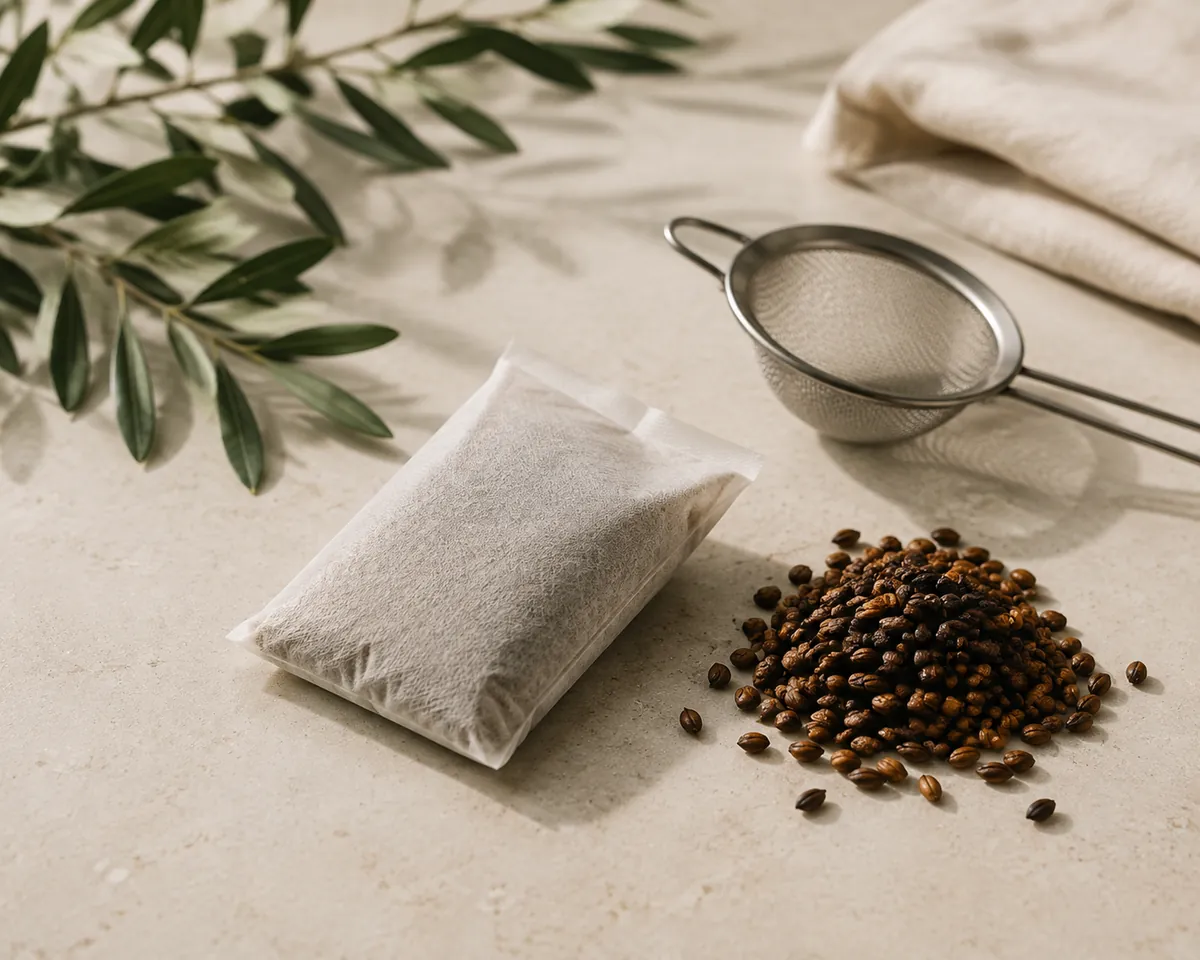
- Check the roast colour: dark brown grains give a fuller cup than pale ones.
- Unhulled or hulled barley are both used; unhulled tends to be nuttier.
- Look for pure barley if you want the plain version, since corn blends are common.
- Store loose grain sealed and dry; it goes stale rather than spoiling.
- Buy teabags for the fridge jug, loose grain if you make it hot.
The quality range is narrow enough that brand matters far less than roast depth and freshness, which is unusual on a shelf where price normally tracks something.
Outside east Asia it turns into a specialist purchase. Asian groceries carry bags of thirty or fifty teabags at very low prices, and that is the cheapest and easiest route by a wide margin.
The Japanese product is usually pure barley and the Korean one more often blended with corn, so the ingredients list is worth reading even where the price is not worth comparing.
Health-food shops sometimes stock roasted barley as a coffee substitute under names such as barley coffee, shelved beside the decaf rather than the tea. It is the same grain taken darker, and it behaves perfectly well in a jug.
Failing both, the pan method above turns ordinary pearl barley into the drink in a quarter of an hour, and it keeps as long as any dried leaf does under the rules in storing loose-leaf tea.
Zero caffeine, and the litre jug that follows
Because barley is a grain rather than the leaf of Camellia sinensis, there is no caffeine in it to extract at any temperature or for any length of time.
That absence is what sets the serving size. Barley tea arrives in a large jug or a litre bottle rather than in a cup, and the volume is a consequence of the composition rather than a stylistic choice.
It is drunk through an evening in quantities nobody would drink of tea, and barley tea and caffeine sets that zero against the figures for the rest of the drinks here.
Nothing in the roast puts caffeine back, which is worth stating because roasted drinks are so often assumed to carry it. A roasted tea leaf does, since it began as tea; a roasted grain never had any to begin with.
Corn, brown rice and buckwheat
Pure barley is the reference, and a large share of what sits on the shelf is blended with another roasted grain.
| Name | Grain | Character |
|---|---|---|
| Mugicha, boricha | Barley alone | Toasted, faintly bitter, the reference |
| Oksusu-cha | Roasted corn | Distinctly sweet, rounder, less bitter |
| Oksusu-suyeom-cha | Corn silk | Very mild and faintly sweet, often blended |
| Hyeonmi-cha | Roasted brown rice | Nutty and light, close to the rice in genmaicha |
| Memil-cha | Roasted buckwheat | Earthy and rich, with a distinct savoury edge |
Barley and corn together is the commonest blend and the easiest to like. Corn brings a sweetness that offsets barley's mild bitterness and rounds the body at the same time.
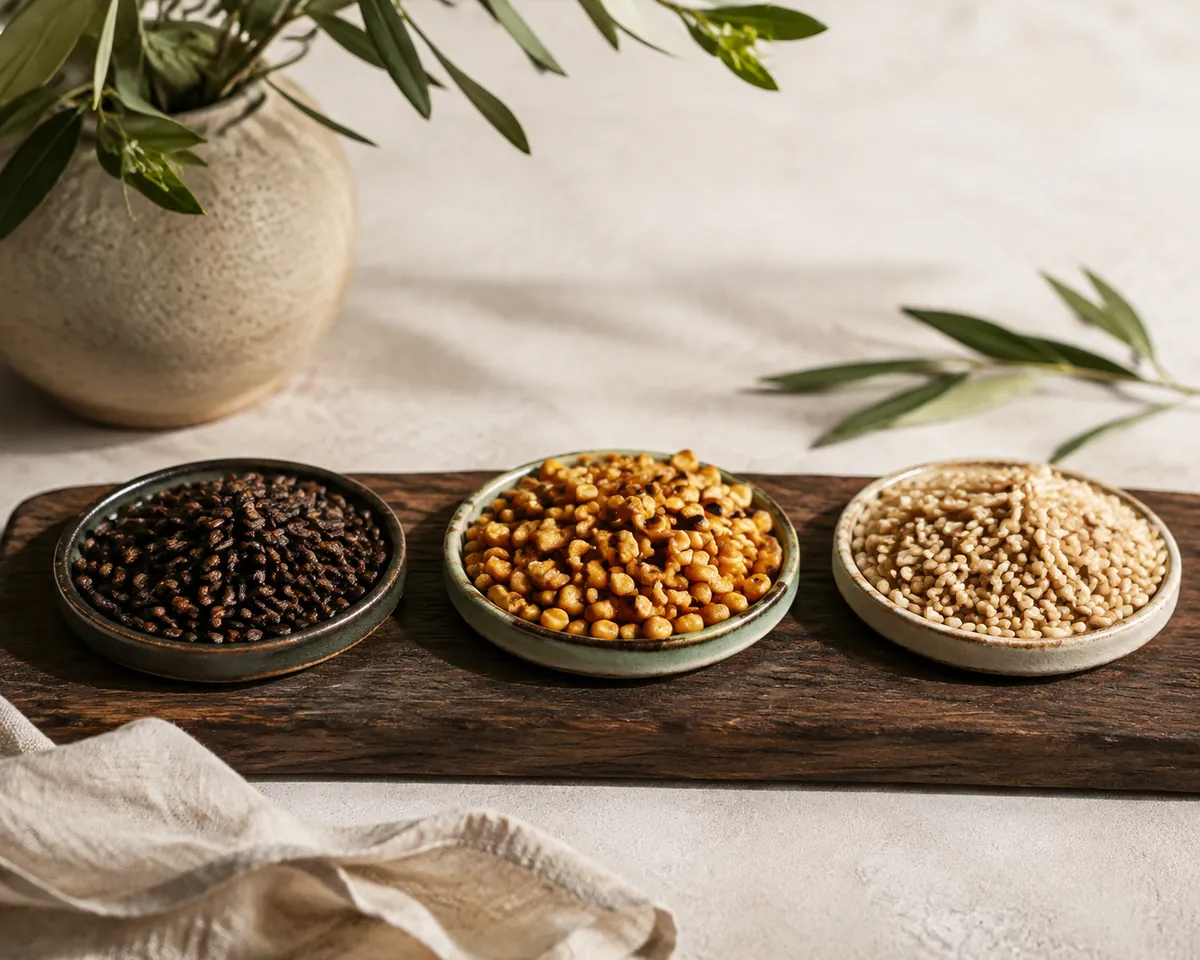
Buckwheat is the outlier and worth trying once. Memil-cha reads almost like a light broth, with a savoury edge no other grain infusion has, and anyone who finds plain barley thin often prefers it outright.
Corn silk is the mildest of the group and rarely sold alone, since by itself it is faint enough to read as flavoured water. Blending is the norm here rather than an adulteration, and a packet naming two grains is usually doing it on purpose.
Where the blend costs you something is control. A pure barley bag can be pushed dark or kept light by choosing the roast, while a blend arrives at a balance somebody else has already fixed.
Where it sits among roasted drinks
Barley tea belongs to a small family whose flavour arrives from a roast rather than from a leaf, and the family is easiest to navigate laid out by how hard that roast lands.
Roast character, strongest to lightest
- ChicoryDeeply roasted root. Bitter, coffee-like, and the most assertive
- Barley tea, darkToasted grain, mild bitterness, light body
- HojichaRoasted tea leaf, so it carries a little caffeine and more aroma
- Roasted corn teaSweet and mild, with the roast well back
- GenmaichaRoasted rice against green tea, so half the cup is not roasted at all
What distinguishes barley tea inside that group is how little it asks of anyone. It carries no caffeine, cannot be over-brewed in the cold, costs almost nothing, and is drunk in litres rather than in measured cups.
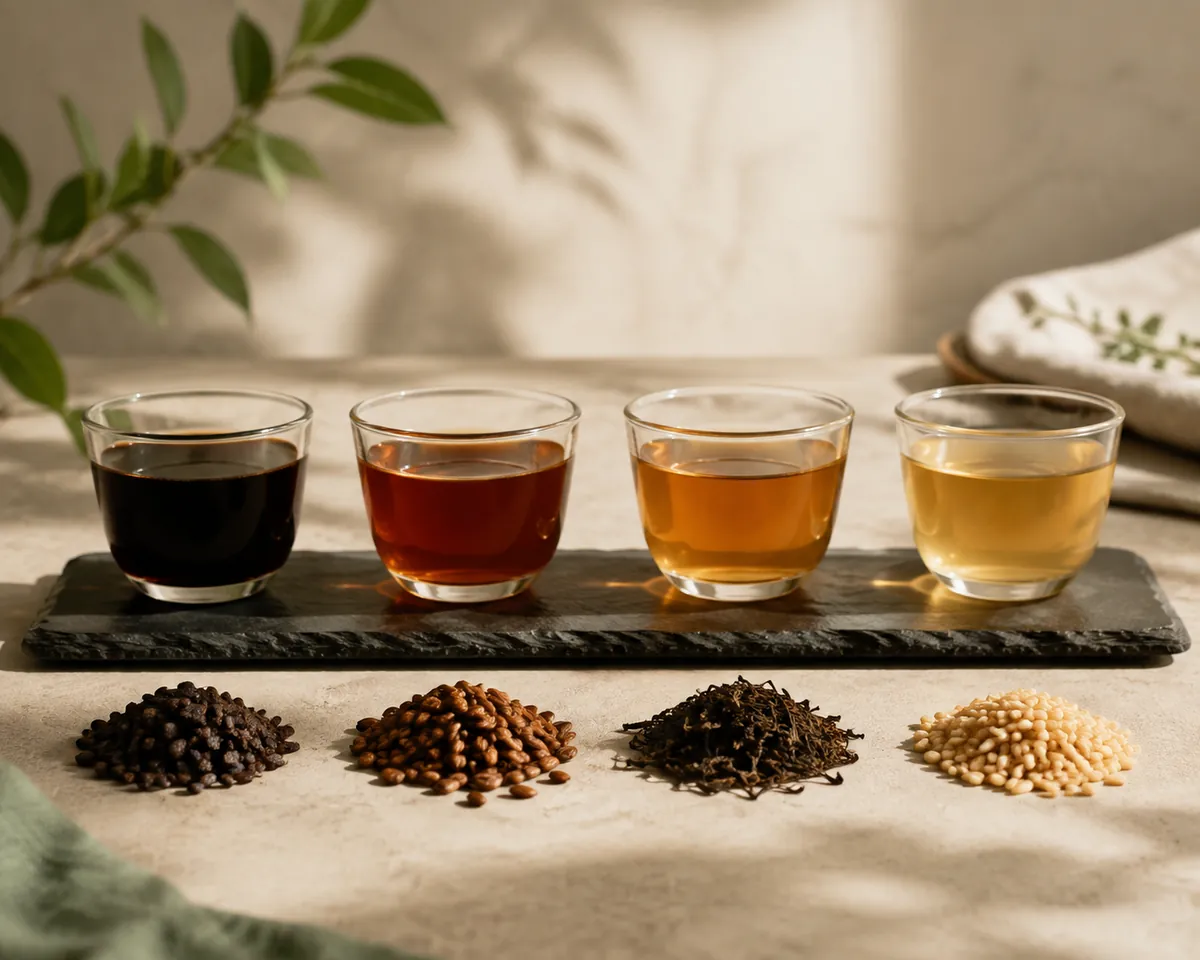
Chicory sits at the far end as a deliberate coffee replacement, which is a different job entirely. Barley is milder, and it is not standing in for anything.
Set against the unroasted infusions the gap widens again. Hibiscus leads with acid and lemongrass leads with an aromatic, where barley leads with toasted grain and offers nothing else at all.
That narrowness is a strength at a table and a weakness on its own, which is why the drink is almost never the thing anyone is paying attention to.
Its place at a Korean or Japanese table
The job of it at a table is to accompany the food.
In Korean restaurants boricha frequently arrives instead of water, hot in winter and cold in summer, without anyone ordering it. It is treated as the default liquid rather than as a choice from a list.
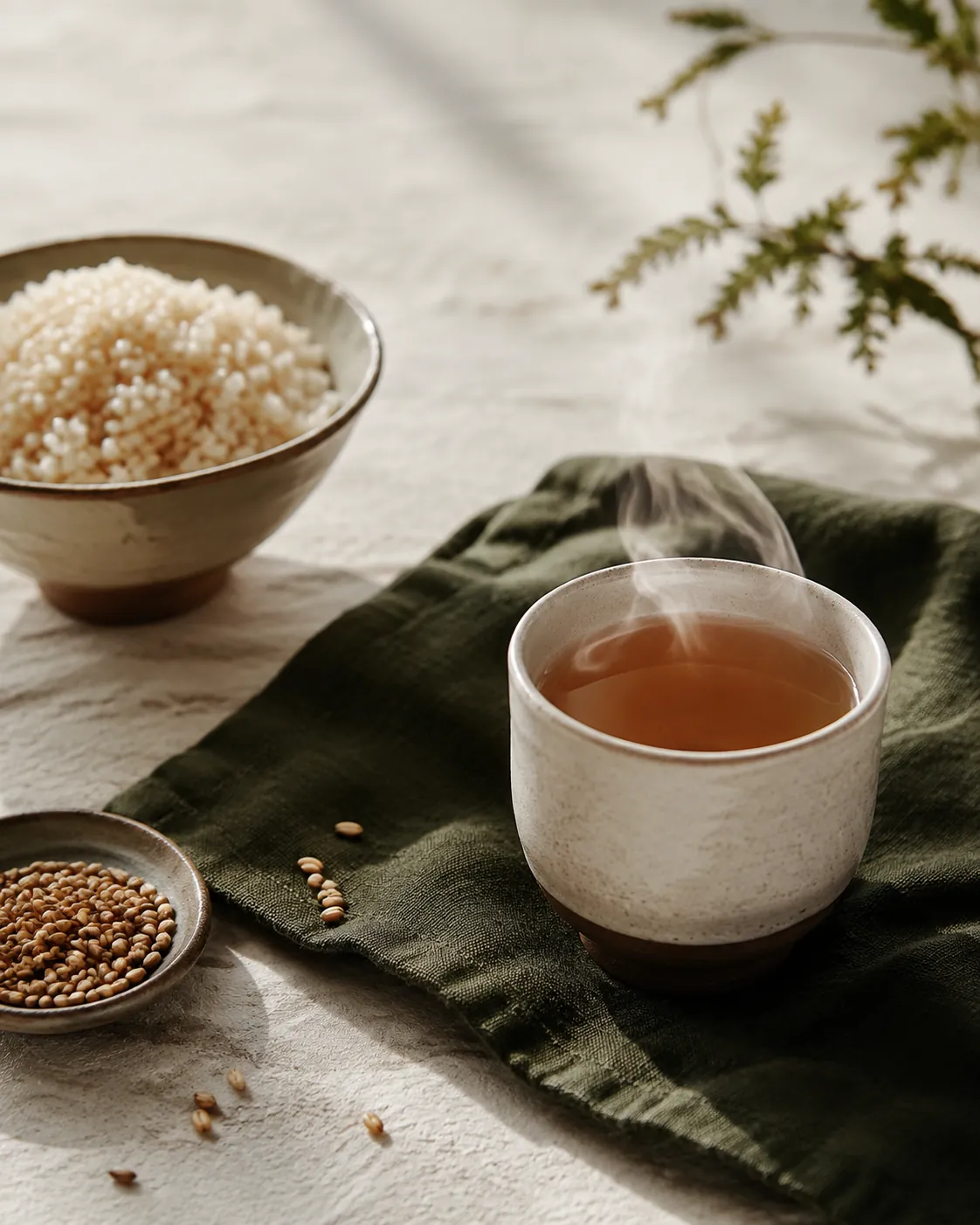
That works because it has no caffeine, no tannin and almost no acidity, so it does not fight food the way a tea or a soft drink would. It cuts through fried and oily dishes without competing with them.
Grilled and fried food
Where it works best. The light bitterness cuts through oil without adding acidity, which is why it sits beside Korean barbecue and Japanese fried dishes as a matter of course.
Plain rice and noodle meals
It stays in the background and does not compete, which is the whole point of it at a Japanese or Korean table.
Sweet dishes
The weakest pairing. A roasted, unsweetened drink reads as thin next to dessert.
On its own, cold
Over ice in a tall glass it works as a plain everyday drink rather than as an accompaniment.
Hot barley tea is drunk from small cups alongside a meal rather than from a mug afterwards, and the cold version is drunk from glasses, in quantity, all day.
It sits badly with anything sweet. A roasted unsweetened drink with a mild bitterness reads as thin beside dessert, where a naturally sweet infusion such as honeybush would carry the course easily.
Served over ice in a tall glass it works simply as the household cold drink, which is the role it actually occupies for most of the people who make it.
It travels well in a bottle too, which is why it fills vending machines across Japan and Korea. A brewed green tea develops off-flavours after days cold, while barley has no delicate aromatic left to lose once it has been roasted.
Where it does go wrong is almost always the jug rather than the grain, and barley tea faults collects those cases in one place.
Common questions
Does barley tea have caffeine?
None. It is made from roasted barley grain rather than any caffeinated plant, which is why it is commonly given to children and drunk in the evening across Japan and Korea.
Why does my barley tea taste bitter?
Usually because the bag was left in. Barley keeps extracting in cold water, so a jug left overnight with the bag still in turns harsh. Remove it once brewed, after two to three hours.
Is barley tea the same as barley water?
No. Barley water is a sweetened British drink made by simmering barley with sugar and citrus. Barley tea is roasted grain steeped in water, unsweetened, and tastes toasty rather than sweet.