Ginger, and the Two Unrelated Things It Does in a Glass
Ginger does two unrelated things in a glass. One is a smell that leaves with the steam, and the other is a burn that is not a flavour at all, and every technique that favours one of them costs you the other.
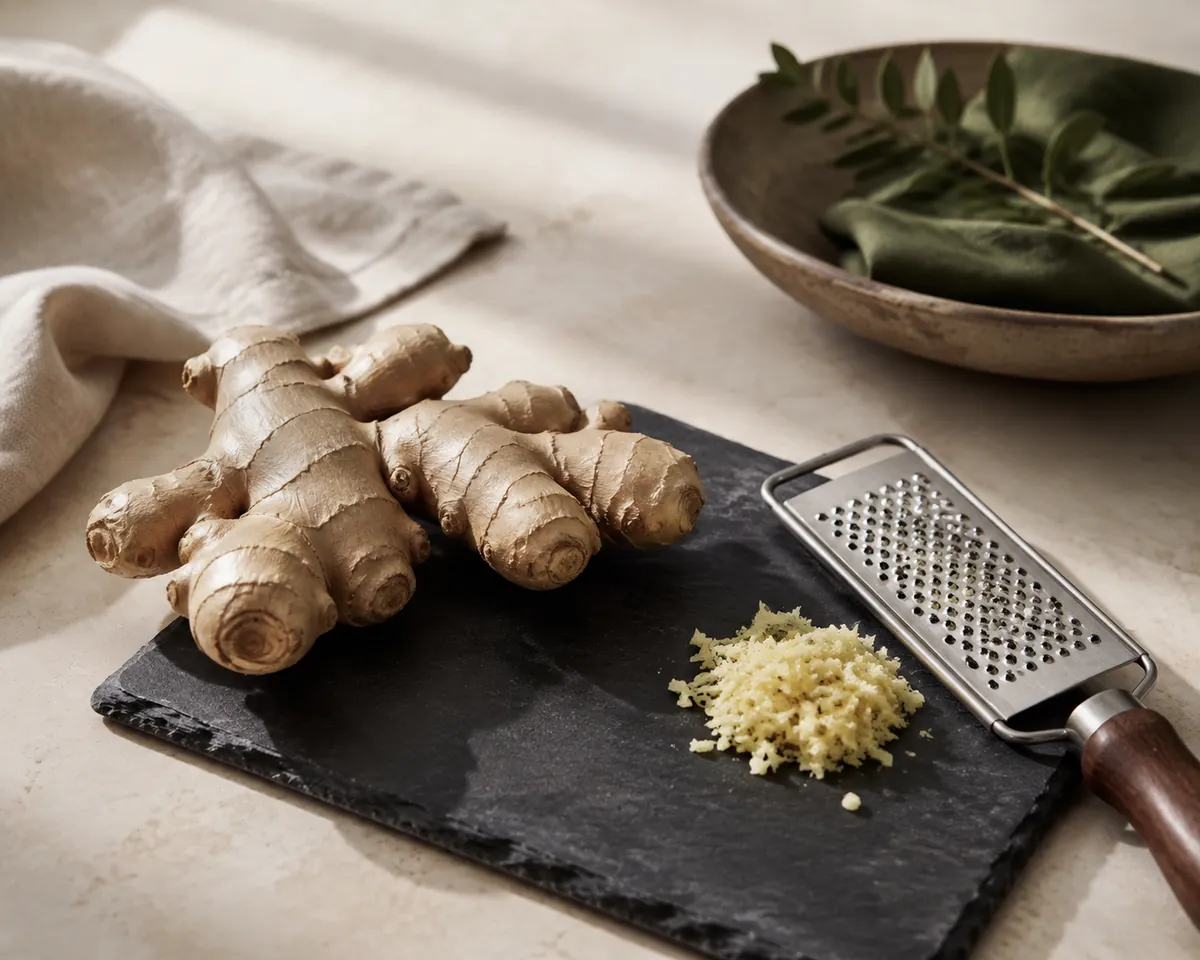
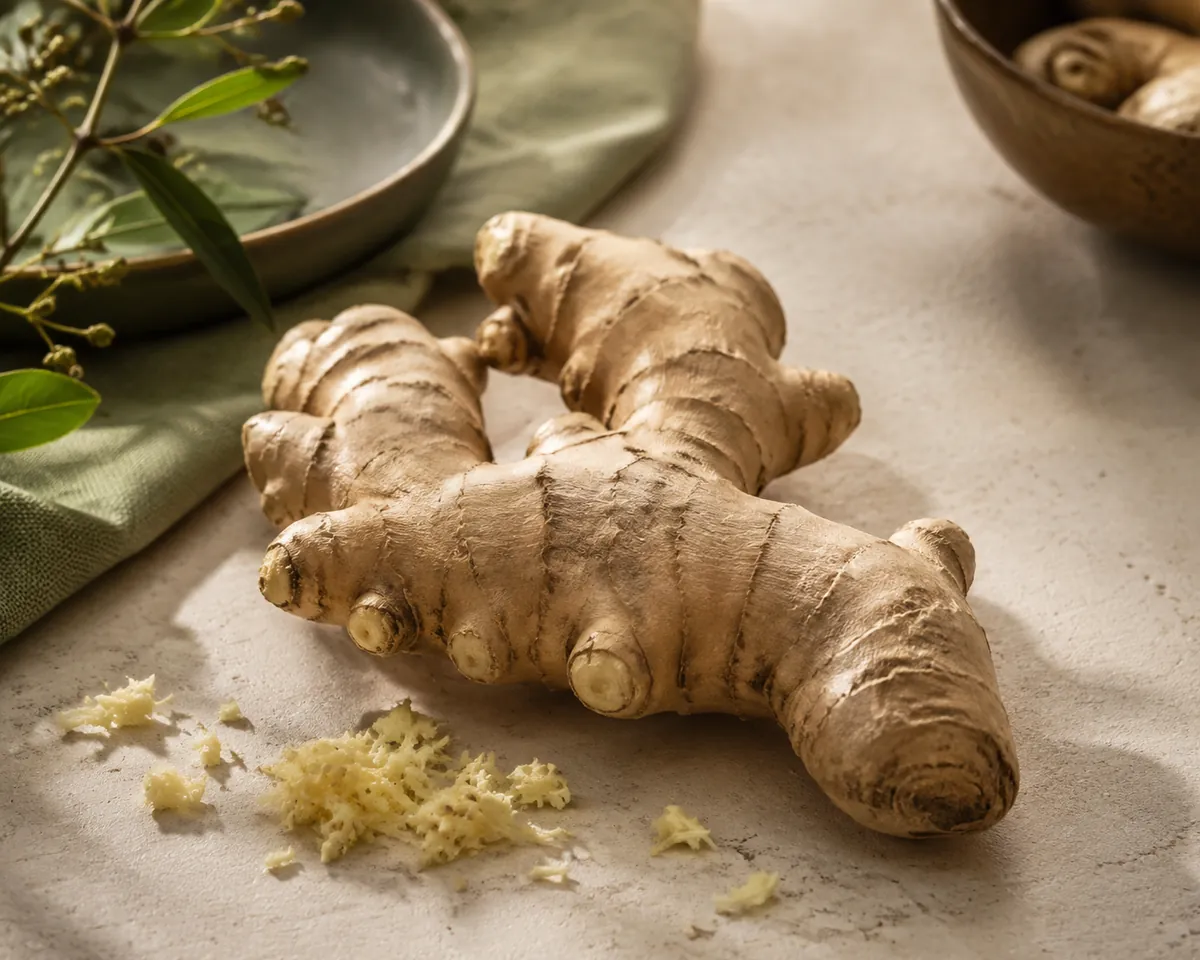
Ginger is the rhizome of Zingiber officinale, and in a drink it does two entirely separate things that most descriptions run together.
One of them is aroma: a bright, faintly citric, resinous smell that comes from volatile oils and behaves like any other aromatic. The other is heat, and heat is not a flavour at all.
It is a physical irritation, reported by a different set of nerves, and it obeys different rules about temperature, dilution and time.
Almost everything people find confusing about ginger follows from those two halves pulling in opposite directions.
Ginger in a drink, at a glance
- Plant part
- A rhizome, which is an underground stem rather than a root
- The aroma half
- Volatile oils, including zingiberene and a lemony citral note
- The heat half
- Gingerol in the fresh rhizome, shogaol in the dried
- What the heat is
- A trigeminal irritation, not a taste. The same channel as chilli
- What it needs
- Simmering rather than steeping, covered in full under ginger as a hot infusion
- Where it fails
- Anything short, cold and quick. A five-minute steep gets almost nothing
Ginger is two ingredients in one rhizome
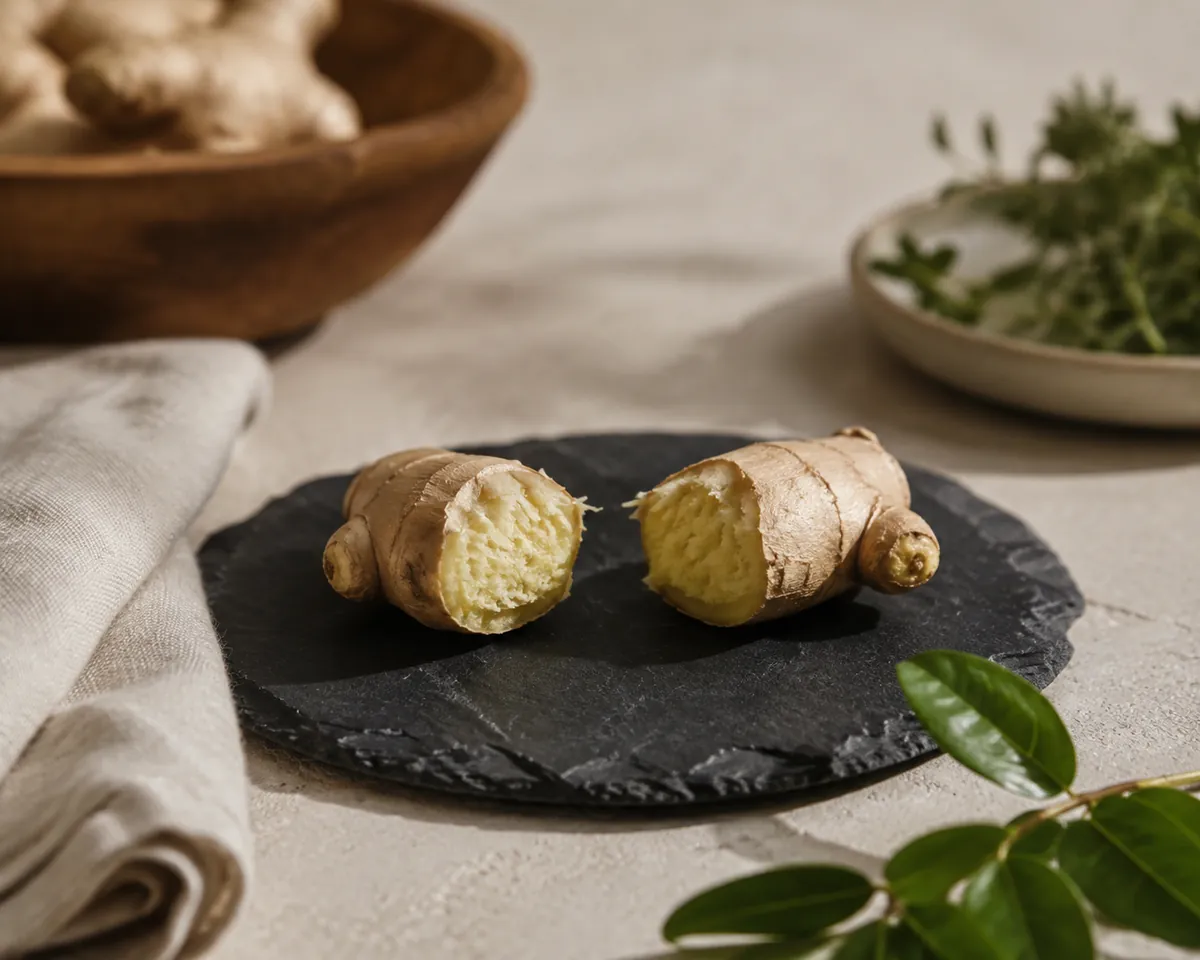
Chemically the rhizome carries two families of compounds that have almost nothing in common except an address. The volatile oils are light, they evaporate readily, and they are what you smell when you break a piece open.
The pungent compounds are heavy, oily, non-volatile, and you will never smell them at all.
| The aromatic half | The pungent half | |
|---|---|---|
| Main compounds | Zingiberene, citral, camphene | Gingerol, shogaol, zingerone |
| What it does | Smell: bright, lemony, resinous | Heat: a burn at the back of the throat |
| Volatile | Yes, and it leaves with the steam | No, and it stays in the pan |
| Survives long cooking | Poorly | Yes, and it concentrates |
| Survives drying | Largely lost | Yes, and it intensifies |
| Reaches the nose | Entirely | Not at all |
Two ingredients, one piece of root, and the reason ginger is so easy to get wrong is that any technique which favours one half penalises the other. Boil hard and you keep the heat and lose the perfume.
Barely warm it and you keep the perfume and get no heat worth the name.
Why the heat is not a taste at all
Sweet, sour, salty and bitter are tastes, detected by receptors on the tongue and reported through the gustatory nerves. Ginger's burn is not one of them.
It is chemesthesis: a chemical irritation of the trigeminal nerve, the same system that reports the sting of chilli, the sinus hit of mustard and the prickle of carbonation.
That distinction sounds academic until you notice what follows from it.
It does not compete
Occupying a different channel, it adds to a drink rather than displacing what is there.
It accumulates
Tastes fade between sips. Irritation builds across a glass.
It arrives late
A second or two after the swallow, well behind the sweetness.
It ignores dilution
Halving the concentration does not halve how long the burn lasts.
It answers to temperature
The receptor is a heat sensor, so a warm drink reads hotter.
The last two are where recipes go wrong most often. Somebody dilutes a ginger drink because the third mouthful was too hot, and the fourth mouthful is still too hot, because what was building was not concentration but accumulation.
Waiting is the fix that works, and waiting is the one nobody tries.
Heat moves the two halves in opposite directions
Applying heat to ginger does two things at once, and they are not in balance. It drives the volatile oils off as vapour, and it converts the pungent compounds into other pungent compounds.
What a pan of simmering ginger is doing
- First minutesAromatics come out fast and start leaving with the steam.
- Ten minutesPungency is climbing steadily as the oleoresin dissolves.
- Twenty minutesAromatics substantially reduced unless the lid is on.
- Longer stillGingerol converts toward zingerone, which is milder and sweeter.
- Drying insteadGingerol dehydrates to shogaol, which is hotter than either.
That last pair is the counter-intuitive part and it settles a common argument. Dried ginger is hotter than fresh, because drying converts gingerol into shogaol.
A fresh rhizome simmered a long time goes the other way and turns milder and rounder, since prolonged wet heat makes zingerone instead.
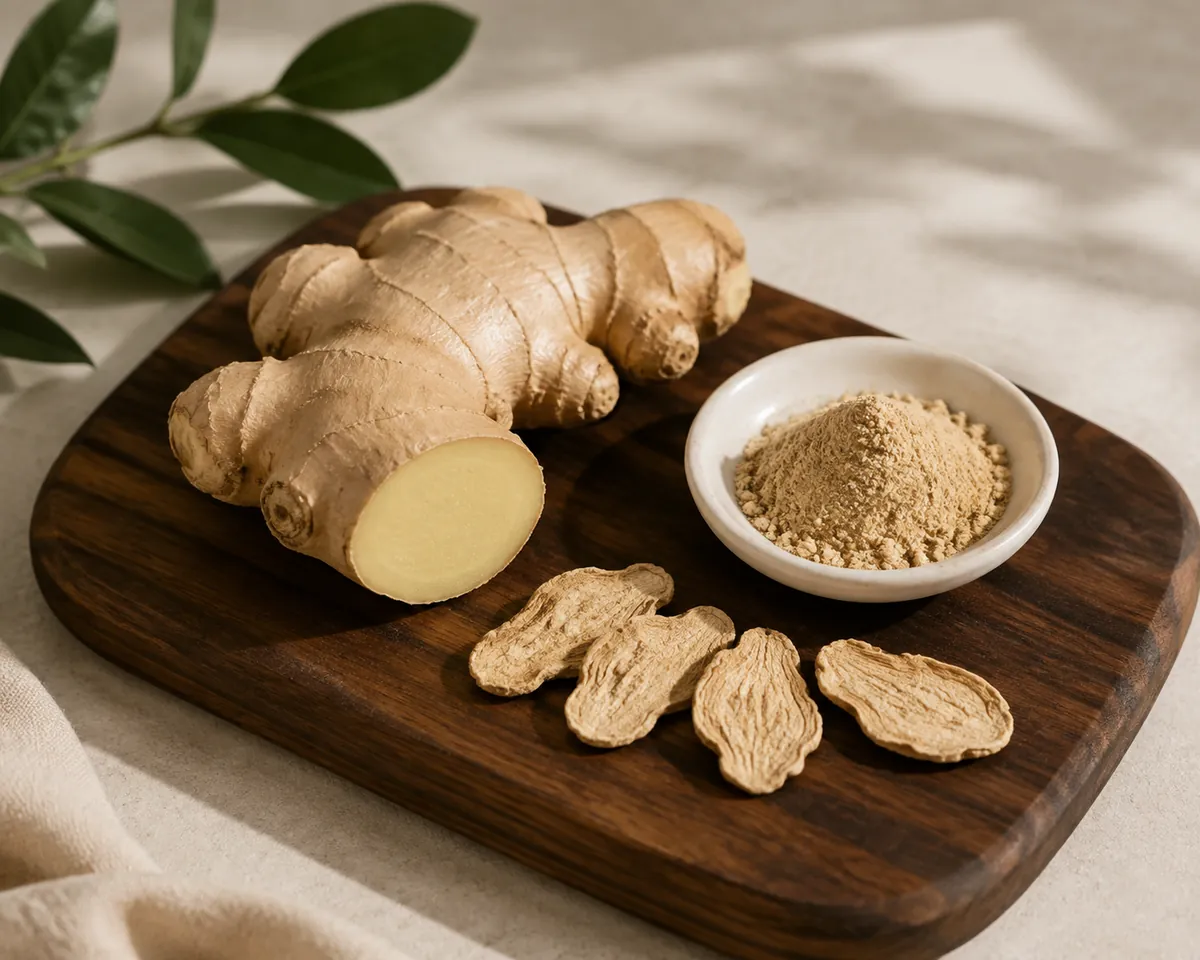
So there is no single answer to how long to cook ginger. There is a decision about which half of it you want, and a lid, which keeps the volatiles in the pan rather than in the kitchen, is worth more than any amount of extra rhizome.
Fresh, dried, ground and crystallised are not interchangeable
Substituting one form for another by weight produces a different drink rather than the same drink at a different strength, and the differences are not only in intensity.
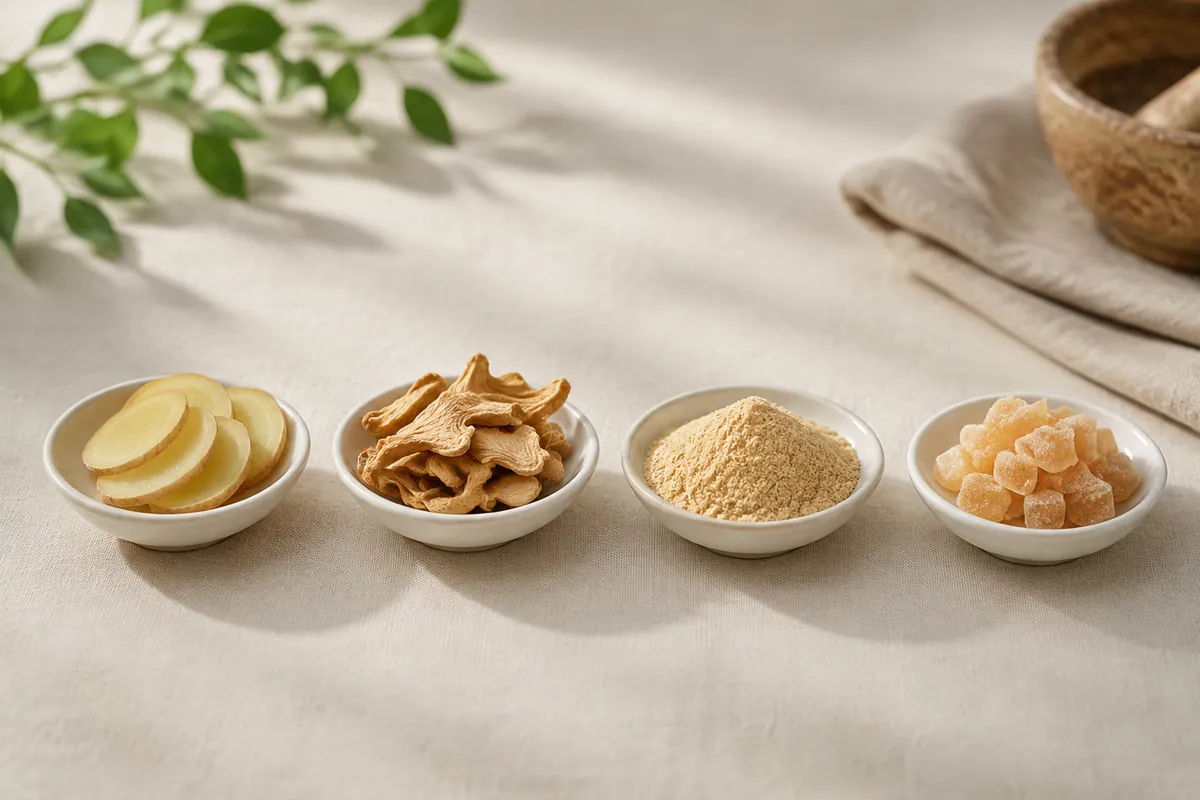
| Form | Character | Best used in |
|---|---|---|
| Fresh rhizome | Bright, citric, sharp heat | Anything where the aroma matters |
| Dried slices | Deeper, hotter, no top note | Long-simmered spiced drinks |
| Ground powder | Hot, dusty, does not dissolve | Blended drinks and syrups, never a clear one |
| Crystallised | Sweet, mild, heavily sugared | Garnish, or a lazy syrup |
| Ginger juice | Very sharp, fades within a day | Cold drinks made and drunk at once |
| Ginger syrup | Whatever the maker put in | Cold drinks, where it is the only practical route |
Ground ginger is the one people reach for and the one that disappoints most reliably in a clear drink. It never dissolves, so it settles as grit at the bottom of the glass, and drying has already taken the citric brightness that made the fresh rhizome interesting.
It comes into its own where there is something to hold it in suspension. In a milky or blended drink the powder disperses and behaves, which is why it works in masala chai and in a spiced cocoa alongside cinnamon and cardamom but not in anything you can see through.
Why a short steep gets you almost nothing
The pungent compounds sit in an oleoresin, which is a resin-and-oil mixture rather than something water-soluble in any straightforward sense. Water at brewing temperature extracts it slowly and grudgingly.
Add to that the physical problem. A rhizome is dense fibrous tissue, not a thin dried leaf, so the water has to work its way in before it can dissolve anything at all.
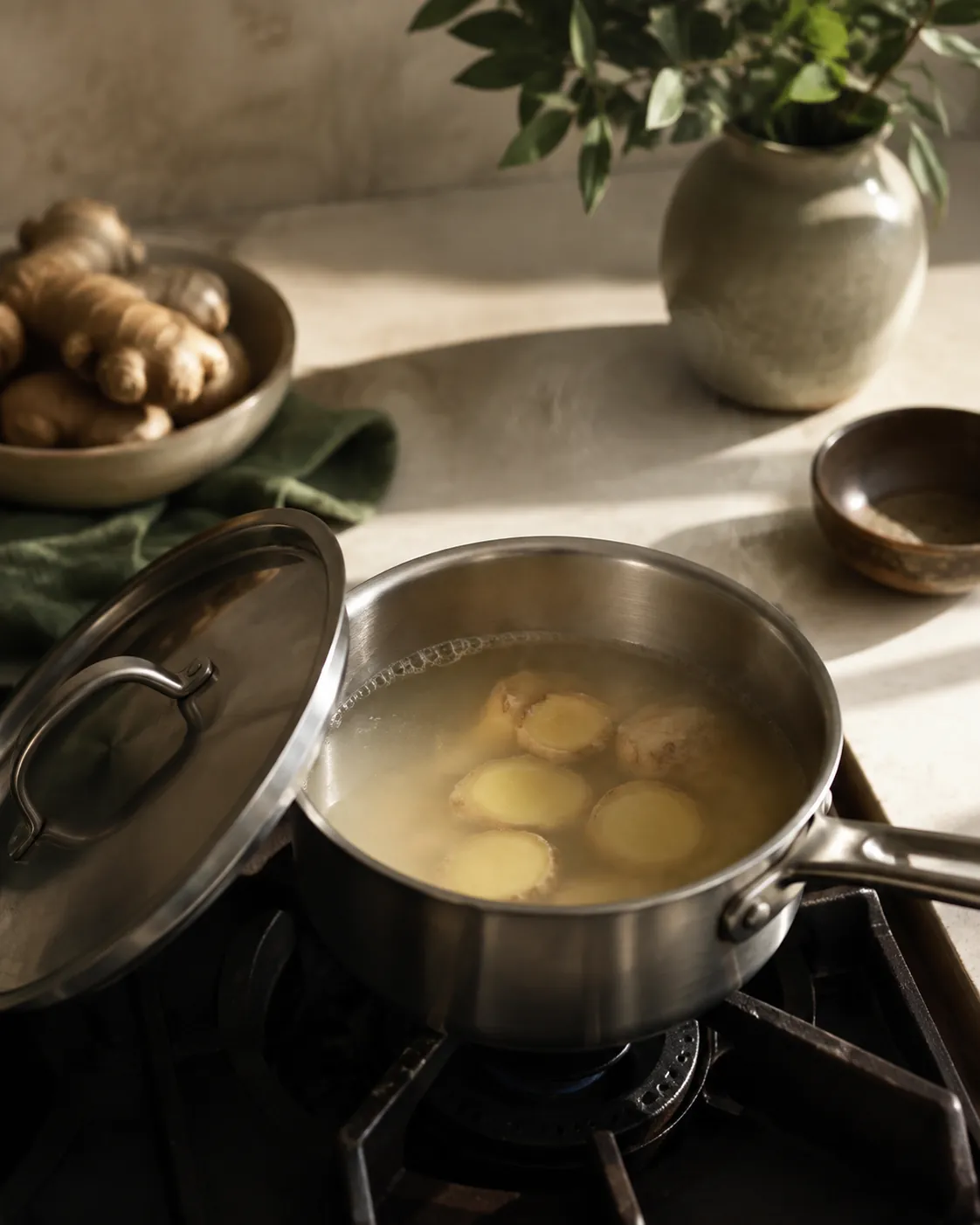
What actually gets into the liquid
- Sliced, steeped five minutesFaintly aromatic water
- Grated, steeped ten minutesAroma present, heat barely
- Sliced, simmered fifteen minutesBoth halves, in balance
- Crushed, simmered twenty minutesHeat dominant, aroma fading
- Simmered in syrupThe most complete extraction of the pungents
Surface area is the lever that costs nothing. Grating, crushing or smashing the piece with the flat of a knife exposes several times as much tissue as slicing, and it roughly halves the time needed to get anywhere.
Freezing the rhizome first helps for the same reason: the fibres shatter instead of stringing, so a frozen piece grates to a paste.
Sugar is the other accelerant, and it is why so many good ginger drinks begin as a syrup. A sugar solution extracts the oleoresin better than plain water does, which is the practical case for building a ginger drink on a simple syrup rather than trying to brew one and sweeten it afterwards.
How the burn changes as the drink cools
The receptor that reports ginger's heat is also the one that reports actual physical heat, which is why the same drink is a different drink at two temperatures.
Warm it and the burn is amplified, because the receptor is already partly triggered by the temperature and the gingerol only has to finish the job. Chill it and the burn is suppressed, along with every volatile aroma the cold is holding down.
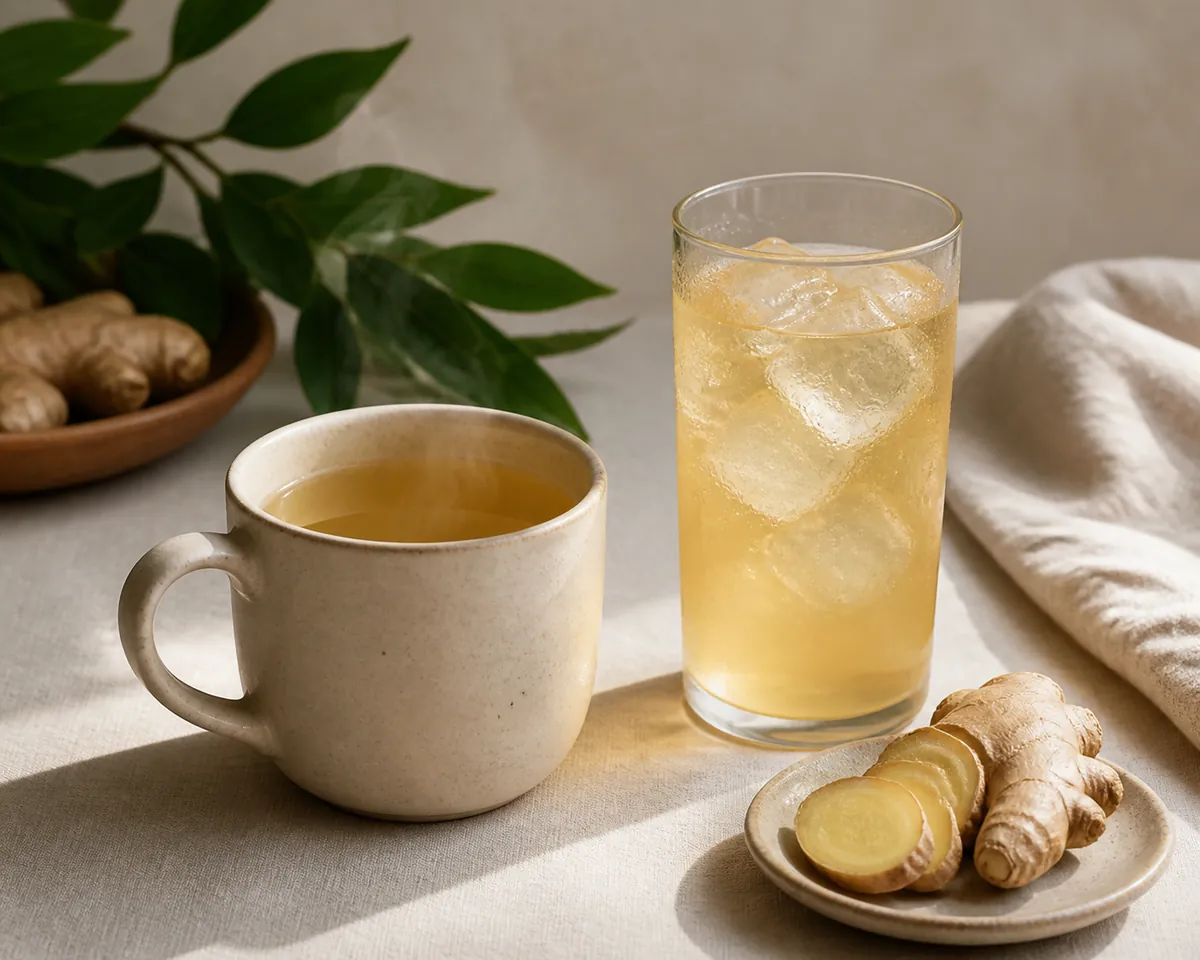
Carbonation is the useful trick here because it is trigeminal too. Bubbles stimulate the same nerve, so sparkling water poured over a ginger syrup restores some of the prickle the cold removed, and it does it without adding anything to taste.
That stacking is why a homemade ginger ale reads so much hotter than the quantity of rhizome in it would suggest.
Acid does the other half of the repair, since lemon supplies a bright top note in place of the volatiles the fridge suppressed.
Why it does not compete with whatever it sits beside
Most strong ingredients in a drink are in a zero-sum argument with each other, because they are all shouting down the same channel. Ginger is not, and that is the whole of its usefulness as a background ingredient.
Heat occupies a channel nothing else in the glass is using. So ginger can be present at full strength alongside a delicate tea, a fruit juice or a spiced cocoa without erasing any of them, which is a trick mint cannot manage and a stick of bark manages only partly.
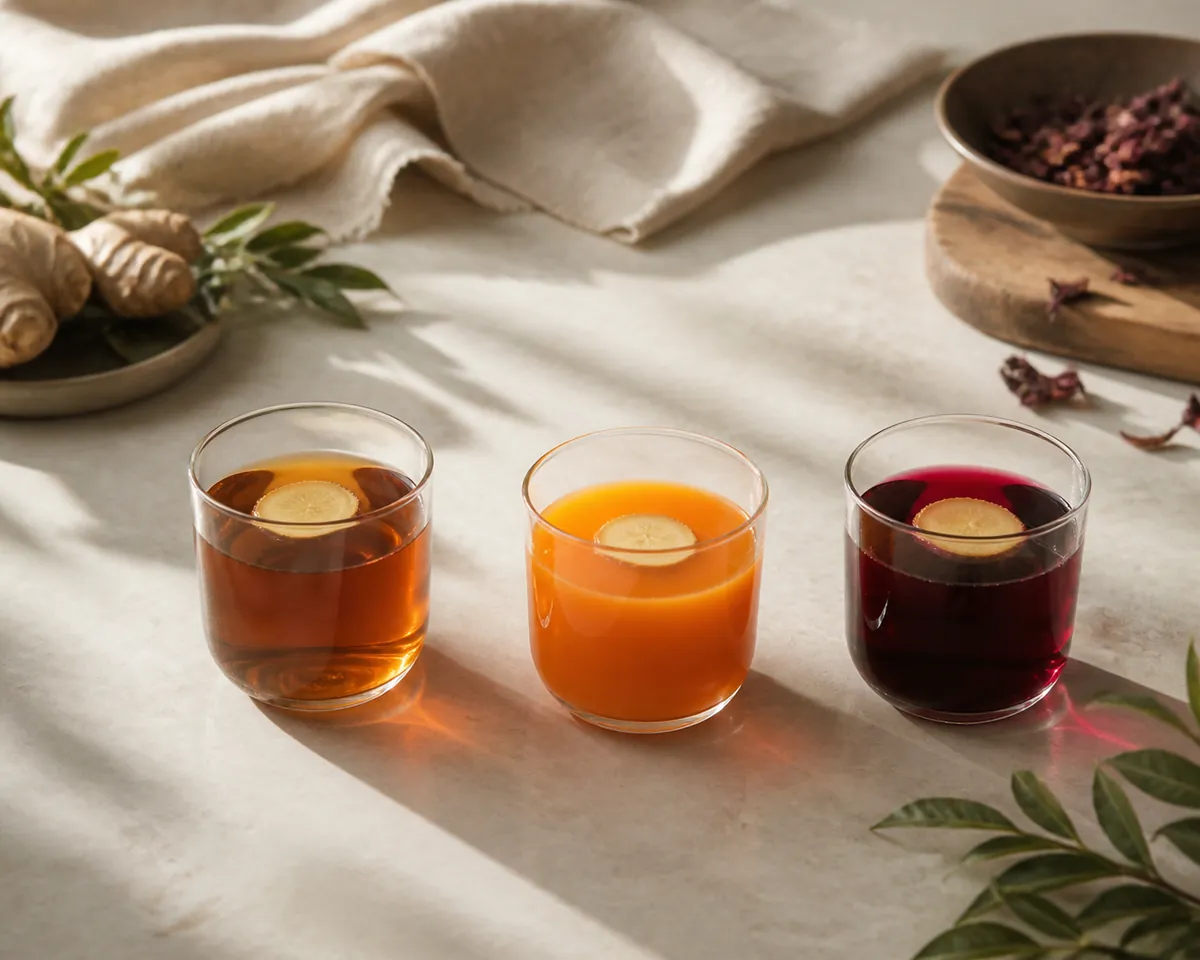
With a Mexican hot chocolate
Sits beside the chilli on the same channel, which is the one place it does compete.
The exception in that list is instructive. Put ginger next to chilli or pepper and they do compete, because for once they are using the same nerve, and the result is additive in a way two flavours never are.
What it does to the sugar and the acid in the glass
Ginger changes how sweet a drink tastes without contributing any sweetness of its own, and the direction of the change surprises people.
It cuts sweetness. A syrup that tasted cloying at a given strength stops tasting cloying once ginger is in it, not because there is less sugar but because a competing sensation is taking up attention.
That is the same lever salt pulls on bitterness and the bitterness in tonic water pulls on its own sugar load.
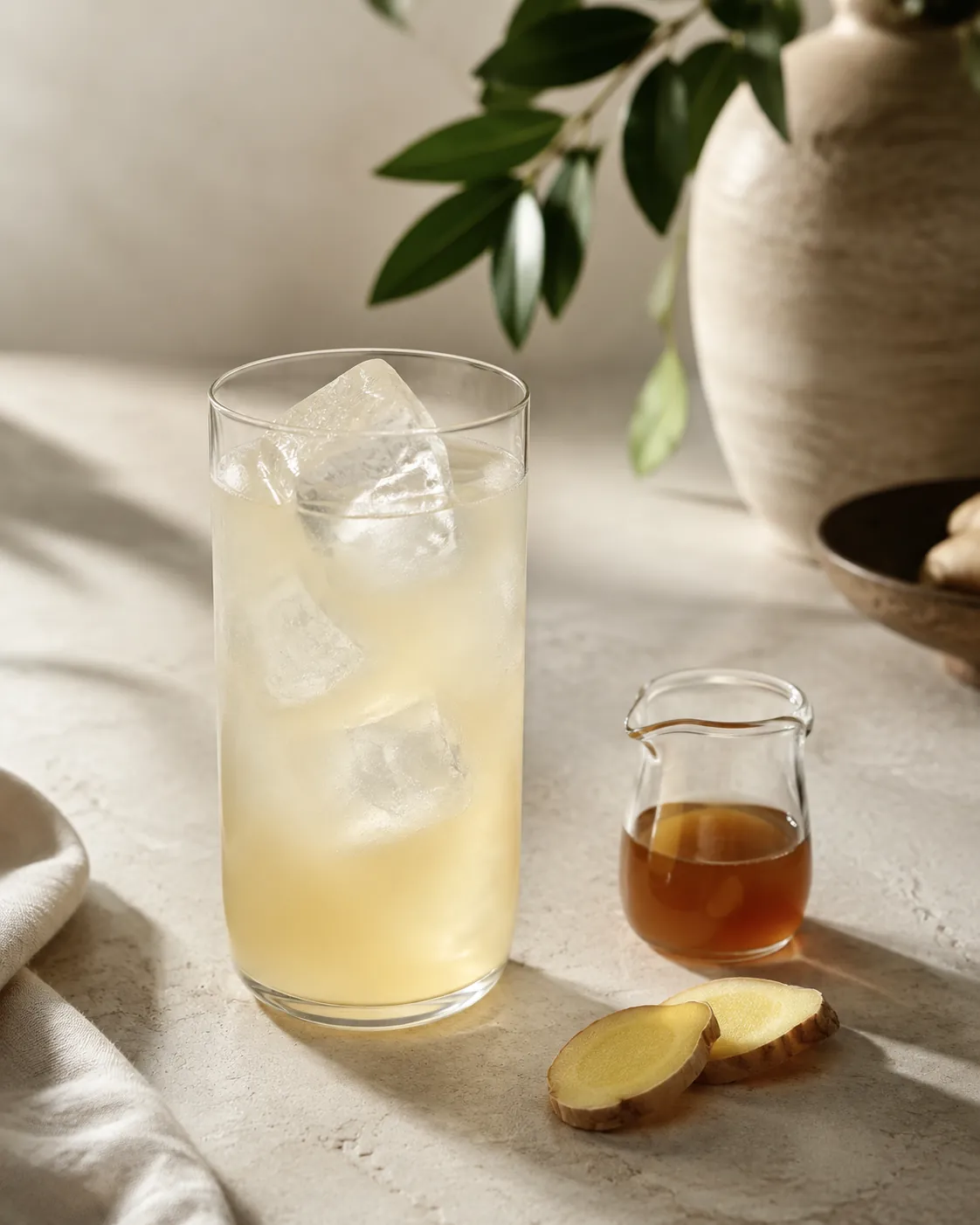
Acid works the other way and is close to mandatory. Ginger supplies heat and a resinous base and almost nothing at the top, so without citric acid from a fruit or a powder the drink reads heavy and slightly muddy however much rhizome went into it.
A squeeze of citrus restores a lift that no additional ginger will ever supply.
Sweetness and acid together are what make ginger drinkable, which is why ginger drinks across every cuisine converge on the same three-part shape: heat, sugar, sour. Honey does the sugar half with a flavour attached, and plain syrup does it without one.
Where the heat lands, and how long it stays
Ginger's burn is not felt where a taste is felt. Very little of it registers on the front of the tongue, and most of it arrives at the back of the mouth and in the throat, which is why people describe it as a drink that goes down warm rather than one that tastes hot.
The timing is the other unusual part.
The sequence of a mouthful
- ImmediatelyAroma, from the volatiles, arriving through the nose.
- Half a secondSweetness and acid, if the drink has any.
- One to two secondsThe first of the heat, low in the mouth.
- After swallowingPeak burn, in the throat rather than on the tongue.
- A minute laterSlow decay, and a baseline that the next mouthful adds to.
That decay curve is why dosing ginger by tasting as you go is unreliable. The glass you are tasting has not finished arriving, so a syrup adjusted to taste at the second mouthful is almost always too strong by the sixth.
Make it weaker than feels right and judge it at the end of a full glass rather than the start. The same logic applies to a batch of syrup, where the temptation to strengthen it is strongest at exactly the moment you have least information.
What a label means when it says ginger
On a bought drink the word covers a very wide range, and none of the wide range is dishonest.
- Ginger extract or natural flavouring permits an aroma with no meaningful heat behind it.
- Ginger oleoresin is the concentrated pungent fraction, and it does carry heat.
- Ginger juice or ginger puree means real rhizome, and usually says so on the front.
- Caramel colour explains an amber colour and tells you nothing about ginger content.
- A drink that costs more usually has more rhizome in it, because rhizome is the expensive part.
The tell is the same in every case and it does not require reading anything. Real ginger leaves a slow heat at the back of the throat that arrives a beat after you swallow and fades over a minute, and no flavouring reproduces that curve, because reproducing it means putting the pungent compounds back in.
Aroma without that finish is the signature of an extract. It smells convincing, it tastes convincing for a second, and then nothing happens, which is the experience most people have had with a pale supermarket bottle and mistaken for their own palate being dull.
When to reach for it, and when to leave it out
Ginger earns its place wherever a drink is sweet enough to need cutting, flat enough to need a base, or cold enough to have lost its lift. It earns it least where the drink is already doing something interesting on the same channel.
- Use it under a sweet drink, where it removes cloying without removing sugar.
- Use it in anything simmered, since long cooking is where it gives most.
- Use it in a cold drink as a syrup, never as slices dropped into the glass.
- Skip it in a very delicate infusion, where its resinous base will sit awkwardly underneath.
- Skip it alongside chilli or pepper unless the stacking is the point.
For cold drinks specifically the practical form is a syrup and nothing else. Slices in a jug do very little in the time available, and the drink you get from soda water poured over a proper ginger syrup, with a squeeze of citrus and plenty of ice, is better than most bottled versions of the same idea.
The buying rule is the least interesting sentence here and the one that matters most. Fresh rhizome should be firm and heavy for its size with taut unwrinkled skin, and it should snap rather than bend, because a piece that bends has already lost water and with it a good deal of both halves of what you were buying.
Common questions
Is dried ginger hotter than fresh ginger?
Yes. Drying dehydrates gingerol, the pungent compound in the fresh rhizome, into shogaol, which is hotter still. Long wet cooking pushes it the other way, toward zingerone, which is milder and sweeter, so a fresh rhizome simmered for a long time gets rounder rather than fiercer.
Why does ginger not work in a five-minute steep?
Two reasons at once. The pungent compounds sit in an oleoresin that water dissolves slowly and grudgingly, and a rhizome is dense fibrous tissue rather than a thin dried leaf, so the water has to work its way in first. Grating or crushing exposes several times more surface and roughly halves the time needed.
Why does a ginger drink taste harsh when it is cold?
Chilling suppresses the volatile aromatics that supply the bright citric top note while leaving the resinous base behind, so what remains reads flat and heavy. Cold drinks want more acid and some carbonation to restore the lift, which is why a ginger syrup topped with sparkling water works where a chilled infusion does not.