What Is Lemongrass Tea? Lemon Flavour With No Citrus In It
Lemongrass tastes of lemon and contains no citrus at all. The compound responsible is the same one that dominates lemon peel, which is why the resemblance is so exact.
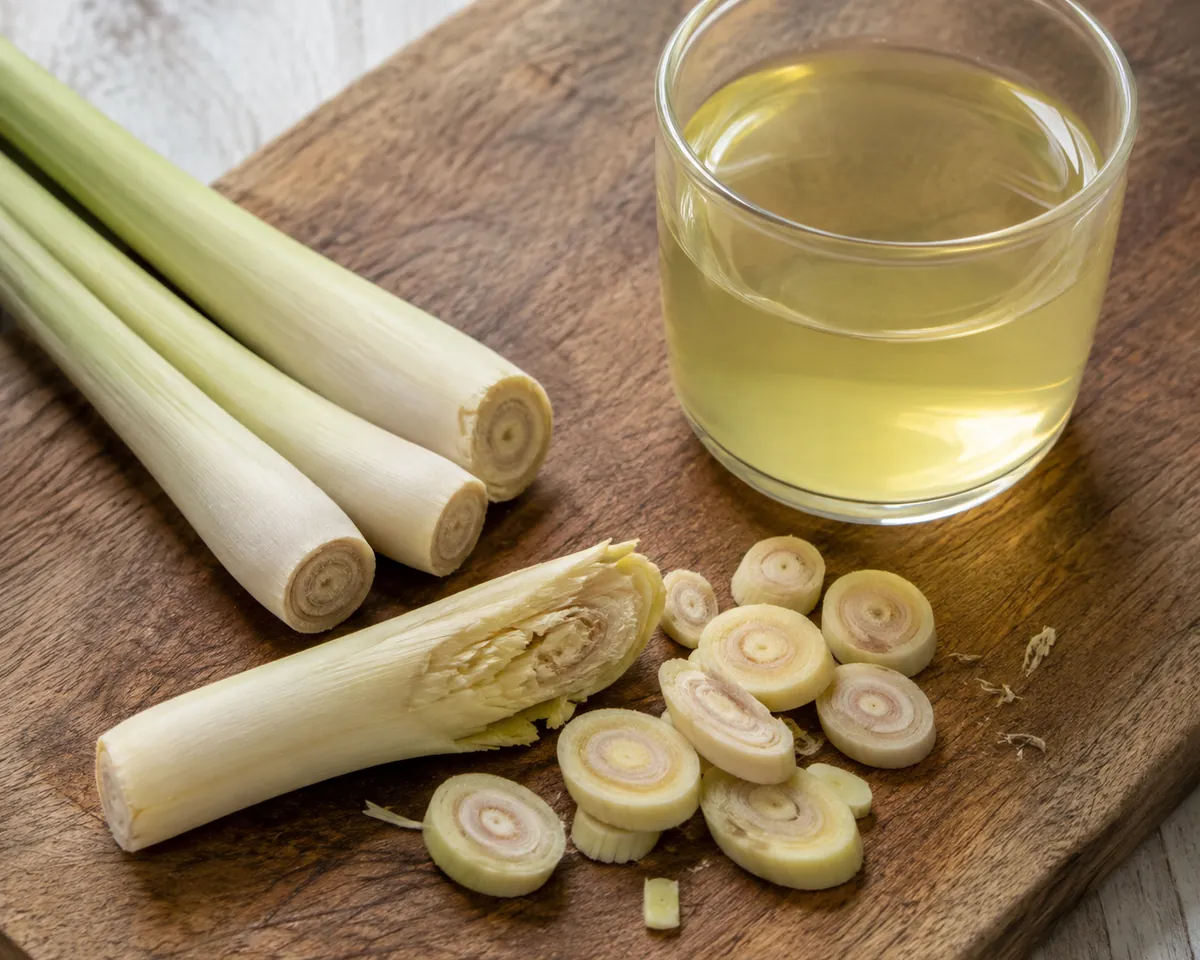
Lemongrass is a tropical grass, Cymbopogon citratus, grown across South and Southeast Asia. The part used is the thick pale base of the stalk.
It tastes strongly of lemon despite being unrelated to citrus, and the reason is a single compound that the plant happens to make in quantity.
Lemongrass tea at a glance
- What it is
- An infusion of the bruised pale lower stalk of a tropical grass
- The plant
- Cymbopogon citratus, a grass with no botanical link to citrus
- Lemon note
- Citral, the same aromatic compound that dominates lemon peel
- Acidity
- None, so it gives lemon aroma without lemon sourness
- Caffeine
- None, and none was ever removed
- Preparation
- Trim to the pale base, then bruise. Water alone will not open the stalk
- Water
- Just boiled, five to ten minutes, covered
Citral, and why a grass tastes of lemon
Citral is the dominant aromatic in lemongrass and also the dominant aromatic in lemon peel, which is why a plant with no botanical relation to citrus reads so unmistakably as lemon.
That is the same molecule rather than a coincidence of description. Lemongrass often carries more of it than the fruit does, which is how a single stalk flavours an entire pot.
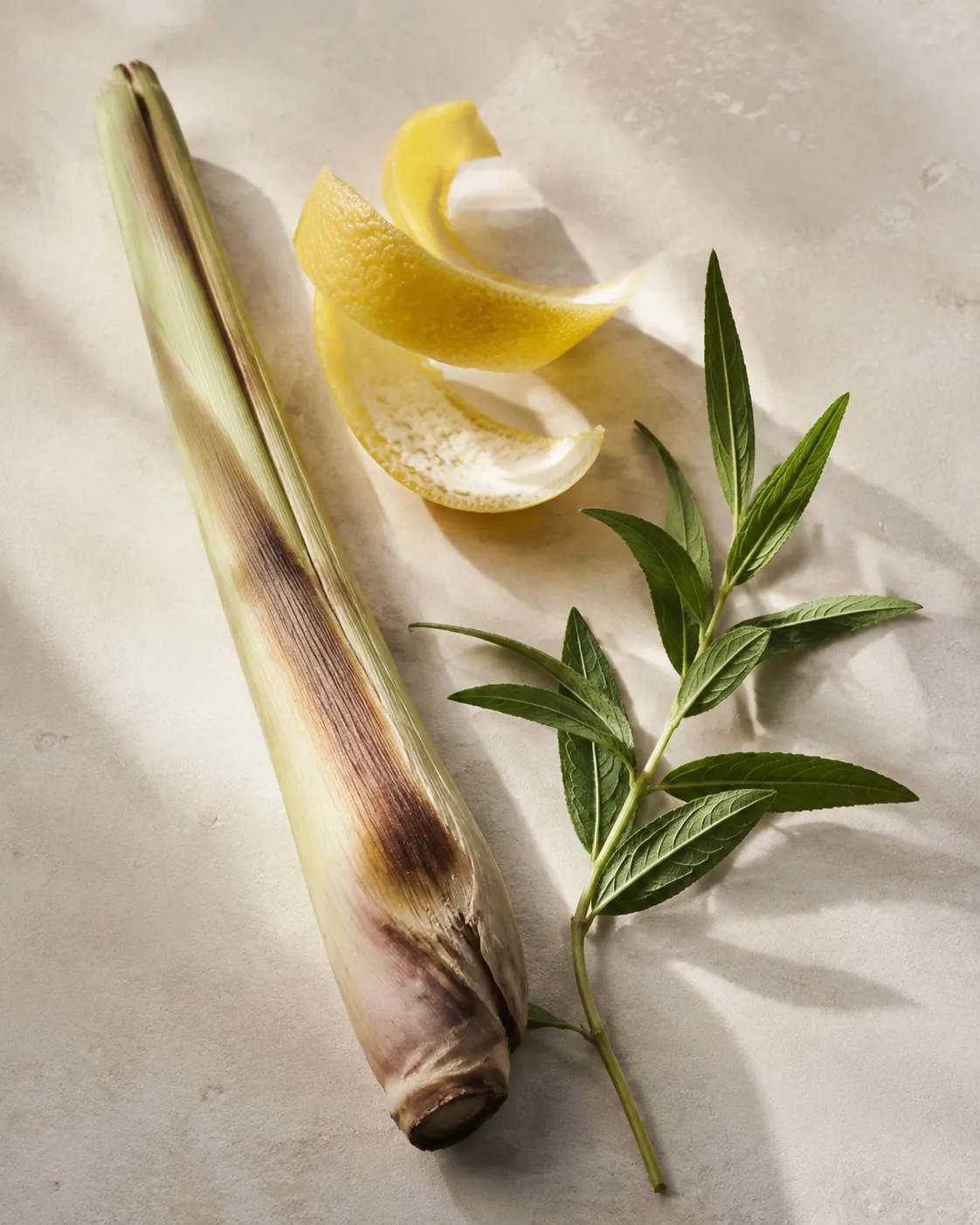
Almost all the flavour is in the bottom few inches. The green upper leaves are fibrous and grassy and contribute little beyond colour once the water goes in.
Lemon character, strongest to faintest
- Lemon peelActual lemon oil. Sharp, bright, and it carries the fruit's bitterness with it
- LemongrassHigh in citral, so it reads intensely lemon with no sourness at all
- Lemon verbenaAlso citral, softer and more perfumed, with a floral edge
- Lemon balmFaintly lemon and mostly herbal. A mint-family plant and it tastes it
- Lemon myrtleHigher in citral than lemongrass, and easily overpowering
Several infusions are sold on a lemon note and they arrive at it by different routes, which matters as soon as you try substituting one for another. Citral does the work in most of them, so they smell related and then taste nothing alike.
What lemongrass has that none of the others manage is that quantity of citral in a stalk with no acid at all. An infusion built on it will not curdle milk or shift the colour of a tea, which is exactly what a squeeze of the fruit would do to both.
Trimming and bruising, before any water goes in
Hot water alone barely gets in.
The stalk is woody and dense, and citral sits in oil glands within that structure rather than on a surface where steam can reach it. Crushing the stalk with the flat of a knife or the back of a spoon ruptures those glands, and that single action separates a strongly lemony infusion from hot water with a faint scent.
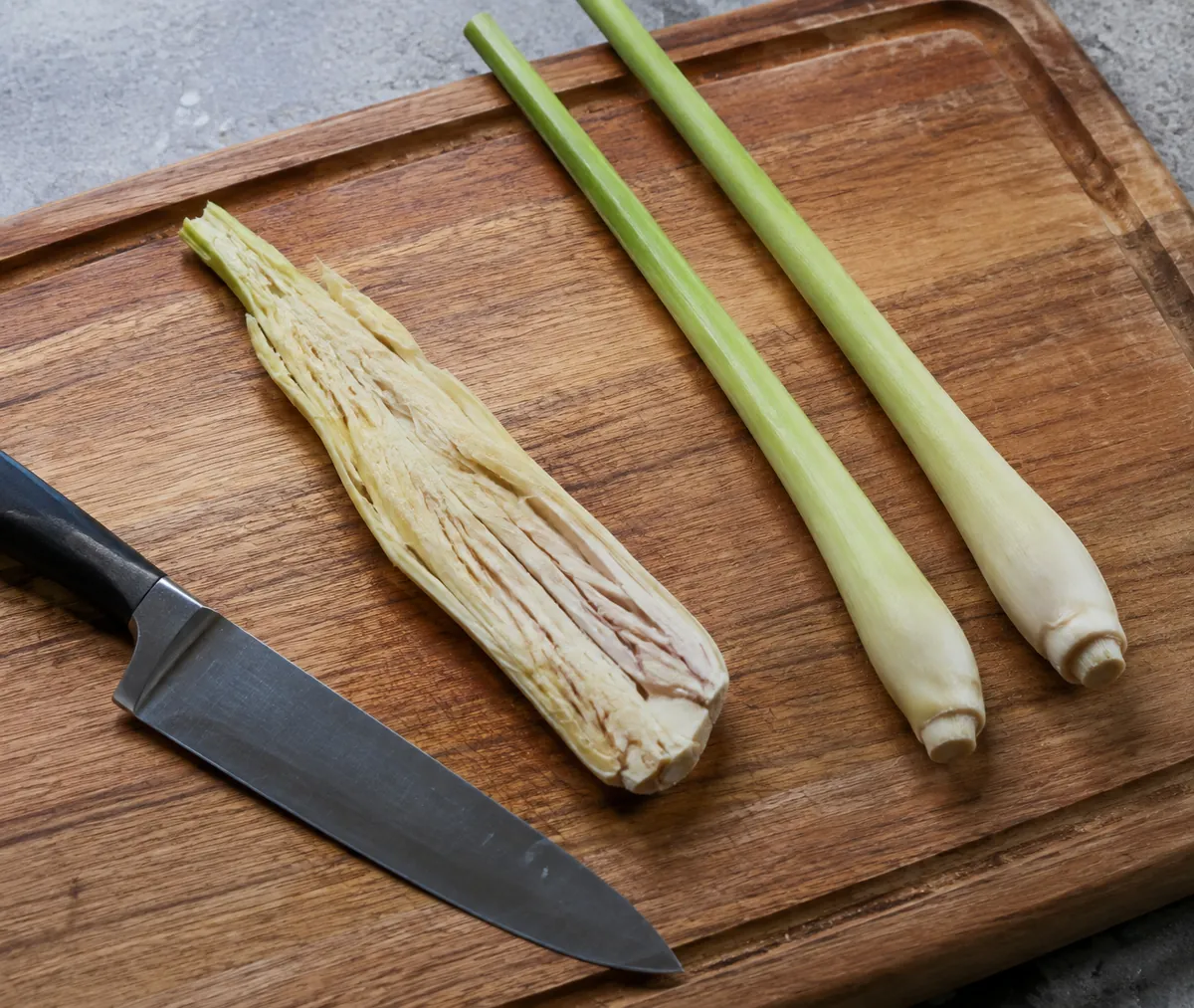
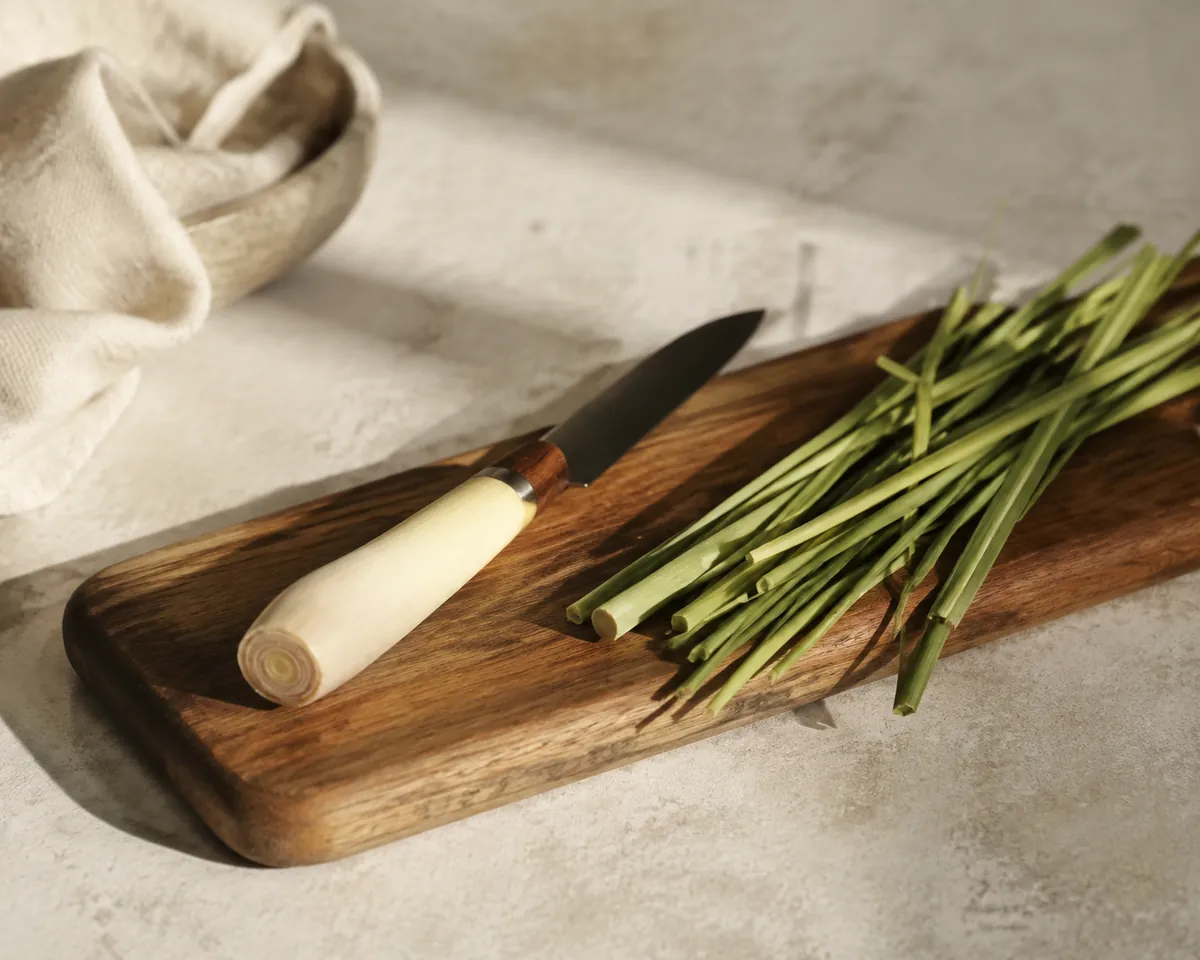
Trimming comes first and takes seconds. Cut off the dry root end and the tough green upper leaves, keep the pale bulbous lower section, and peel away any dry or fibrous outer layers, which contribute nothing to the cup.
What remains is the tender core, and that is what gets bruised. A whole untrimmed stalk gives a grassier, weaker infusion, because most of what went into the pot was leaf rather than base.
Fresh lemongrass tea
- Lemongrass
- 1 to 2 stalks, trimmed to the pale lower 10 cm
- Preparation
- Bruise firmly, then slice into 2 cm pieces
- Water
- 500 ml, just boiled
- Steep
- 5 to 10 minutes, covered
- Optional
- A slice of ginger, or honey once slightly cooled
Ten minutes does no harm and five is often enough, so timing is the least consequential decision on this page. Making lemongrass tea scales the same proportions up to a jug.
Fresh, frozen and dried stalk
All three forms are sold, and they are not interchangeable at the same quantity.
Fresh stalks carry considerably more citral and give a brighter, greener, more complex infusion. They are cheap in most Asian groceries, and they freeze whole and unprepared with almost no loss.
| Fresh | Dried | |
|---|---|---|
| Citral | High. The bright lemon note | Much reduced by drying |
| Character | Green, complex, slightly gingery | Flatter, hayier |
| Preparation | Must be bruised and sliced | Ready to use |
| Quantity | 1 to 2 stalks per 500 ml | Use more than the packet suggests |
| Availability | Asian groceries, and it freezes whole | Any supermarket |
Dried lemongrass loses much of its volatile citral during a commercial drying that is hot and fast, and it tastes flatter and hayier for it. The convenience is real and so is the drop in the cup.
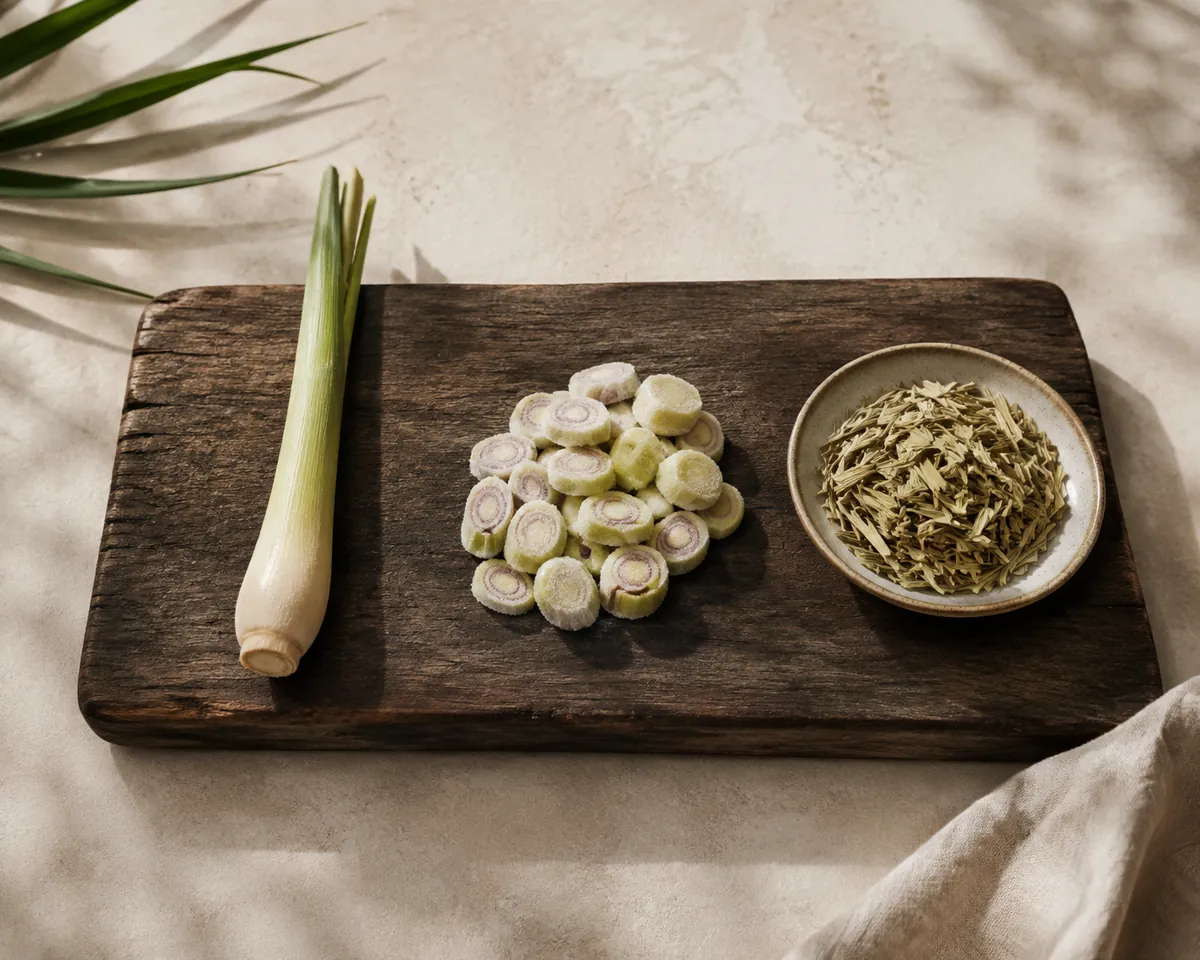
Fresh stalks
The best result. Bruise and slice. Freeze what you do not use.
Frozen
Nearly as good as fresh. Use straight from frozen, no thawing.
Dried, cut
Convenient and flatter. Use more than the packet suggests.
Lemongrass teabags
Usually blended with other herbs and quite mild.
Paste or purée
For cooking rather than infusing; it clouds the drink.
Trimming and bruising each time is what stops people making it, and the job batches well. Prepare a bundle at once, sliced into 2 cm pieces, and freeze them flat in a bag to break off from.
Bruising before freezing works and costs a little citral, since ruptured glands lose aroma to the air. Slicing without bruising and crushing the frozen pieces in the pot keeps more of it than either shortcut.
Drying your own beats buying dried, for the same reason. Air-drying sliced stalk in a warm room over a few days holds noticeably more of the lemon note, and storing lemongrass covers how long each form actually lasts.
Choosing a stalk, and rooting one on a windowsill
Buying fresh lemongrass well takes about ten seconds at the shelf, and the same stalk that makes a good pot will, if its root end is intact, turn into a plant that supplies a household for years.
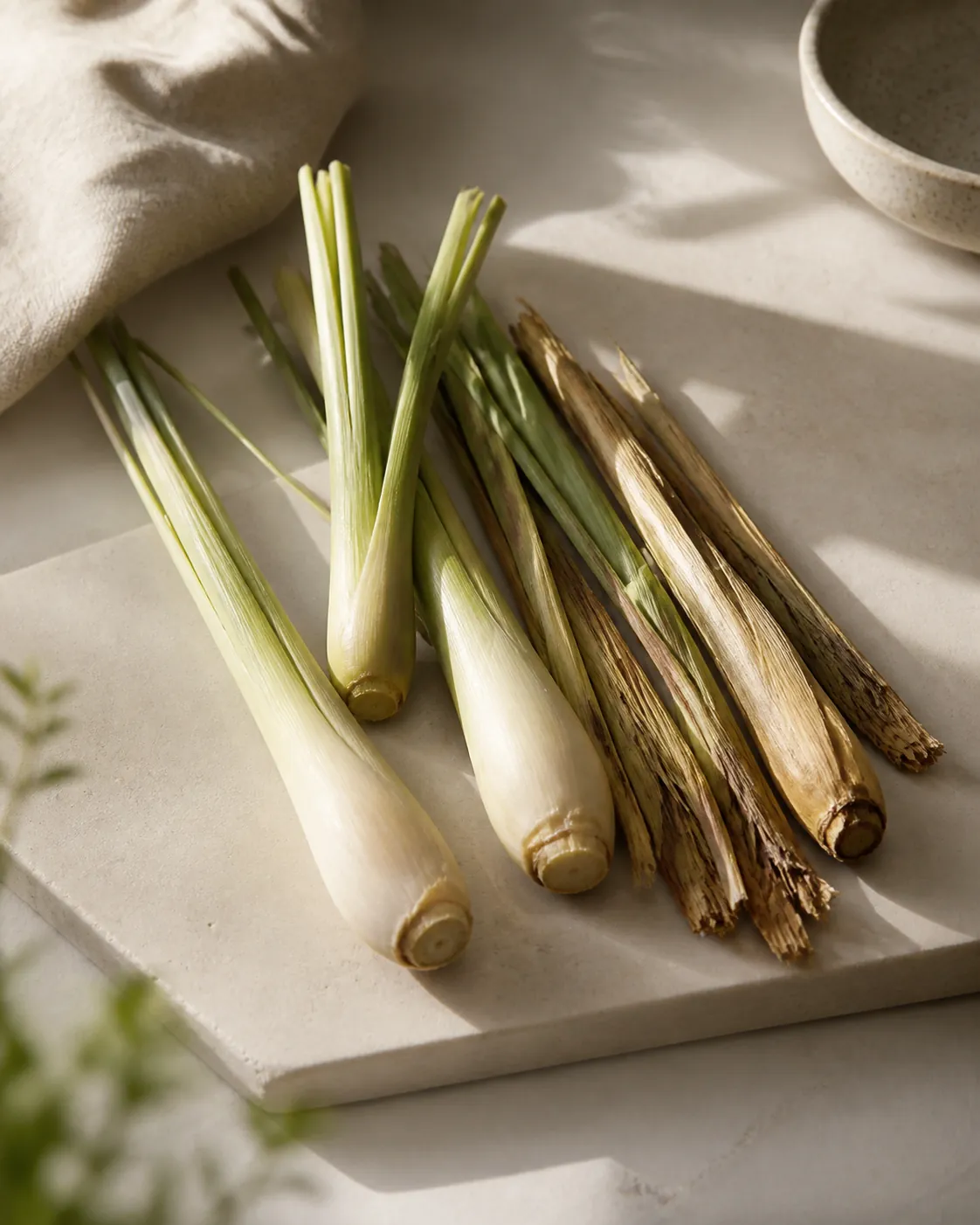
- Squeeze the base. It should feel firm and slightly springy, not dry or hollow.
- Look for a pale, plump bulb rather than a thin, uniformly green stalk.
- Check the cut end. Fresh stalks are moist and pale; old ones are brown and dried out.
- Smell it. A good stalk smells clearly of lemon through the skin.
- Avoid anything shrivelled or with loose flaking outer layers.
Wrapped loosely in the fridge, stalks last about two weeks before they dry out. Dryness is the failure mode rather than spoilage, since a desiccated stalk holds very little citral and no amount of bruising recovers it.
Freezing is the better answer beyond a week. Whole untrimmed stalks keep six months and slice more easily frozen than fresh, because the fibres stop sliding away from the blade.
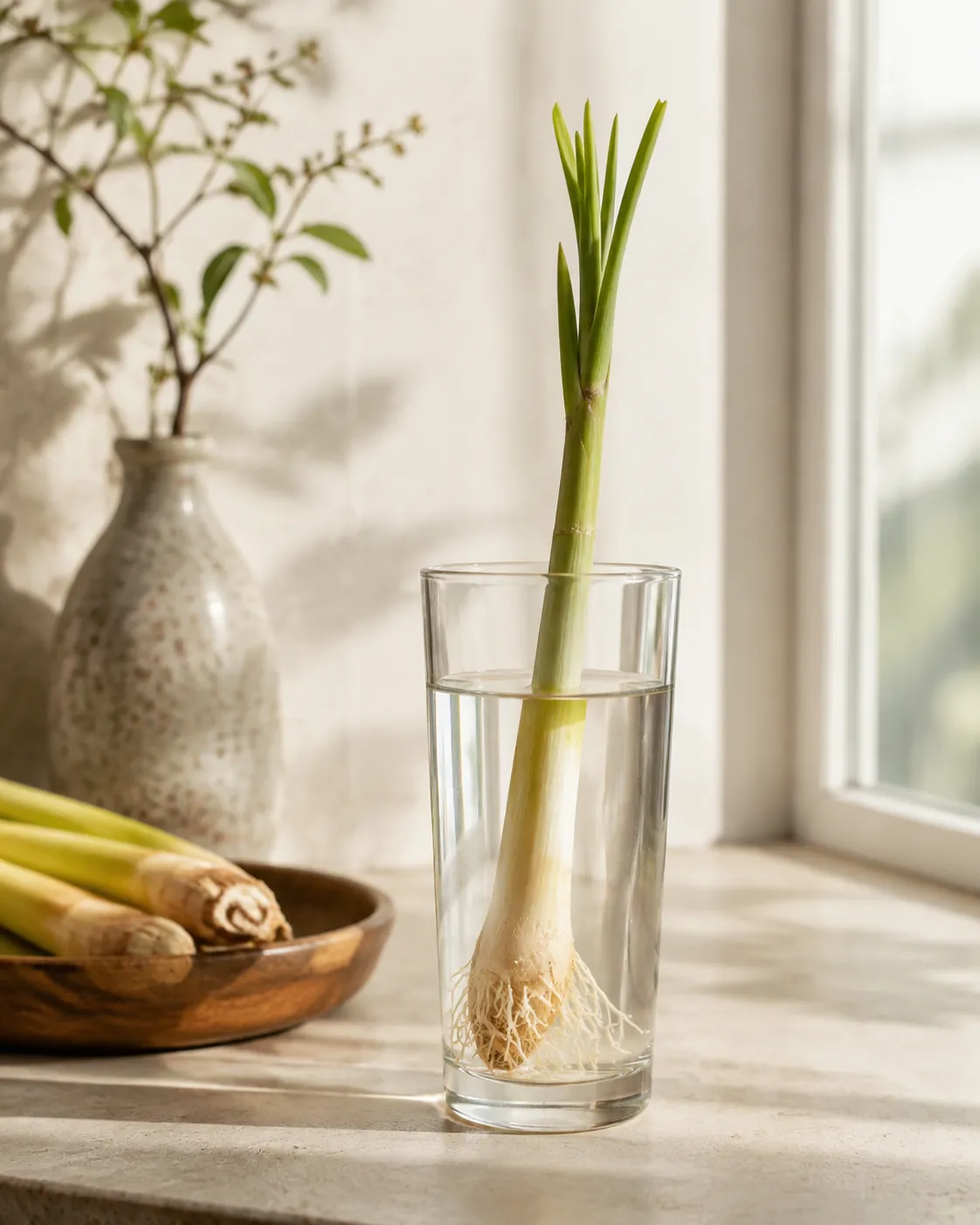
A stalk stood in two centimetres of water on a windowsill puts out white roots within one to two weeks. Change the water every couple of days, and pot it once the roots reach a few centimetres.
It wants warmth, full sun and generous water, and it will not survive a frost. In a cool climate it lives as a container plant that comes indoors for winter; in a warm one it becomes a large clump that needs dividing every few years.
One plant supplies a household easily, throwing up new stalks continuously. Harvest by cutting at ground level rather than by pulling, which leaves the clump intact to grow on.
West Indian and East Indian lemongrass
Two species are grown commercially and only one of them belongs in a pot.
| West Indian | East Indian | |
|---|---|---|
| Species | Cymbopogon citratus | Cymbopogon flexuosus |
| Usual role | Culinary and infusions | Oil extraction |
| Aroma | Sweeter, rounder citrus | Sharper, more medicinal |
| Stalk | Thicker and paler | Thinner and redder at the base |
| In a cup | The one you want | Harsher, and rarely sold for tea |
Cymbopogon citratus, West Indian lemongrass, is the culinary one. It is the thick, tender, pale-based stalk sold in groceries, and it is what every proportion on this page assumes.
Cymbopogon flexuosus, East Indian lemongrass, is grown for essential oil. It is thinner and more fibrous, carries even more citral, and is tough enough that it is distilled rather than cooked with.
Lemongrass essential oil comes mostly from that second species and is not a substitute for the stalk. It is enormously concentrated and sold to an aromatherapy specification rather than a food one, which is a different thing from a strong flavouring.
The distinction almost never appears on a label, because a grocery selling stalks is selling citratus by default and nobody selling oil expects it in a teapot. It only becomes a problem when somebody reaches for the bottle to skip the trimming, and what comes out tastes closer to a scented room than to a drink.
Cordial, cold brew and the jug in the fridge
Cold is where it shines.
The lemon character is bright enough to survive dilution, which is not true of most infusions poured over ice, and there is almost no tannin waiting to sharpen as the liquid cools.
- With ginger, which is the most common pairing across Southeast Asia.
- With pandan leaf, for a sweeter, more aromatic version.
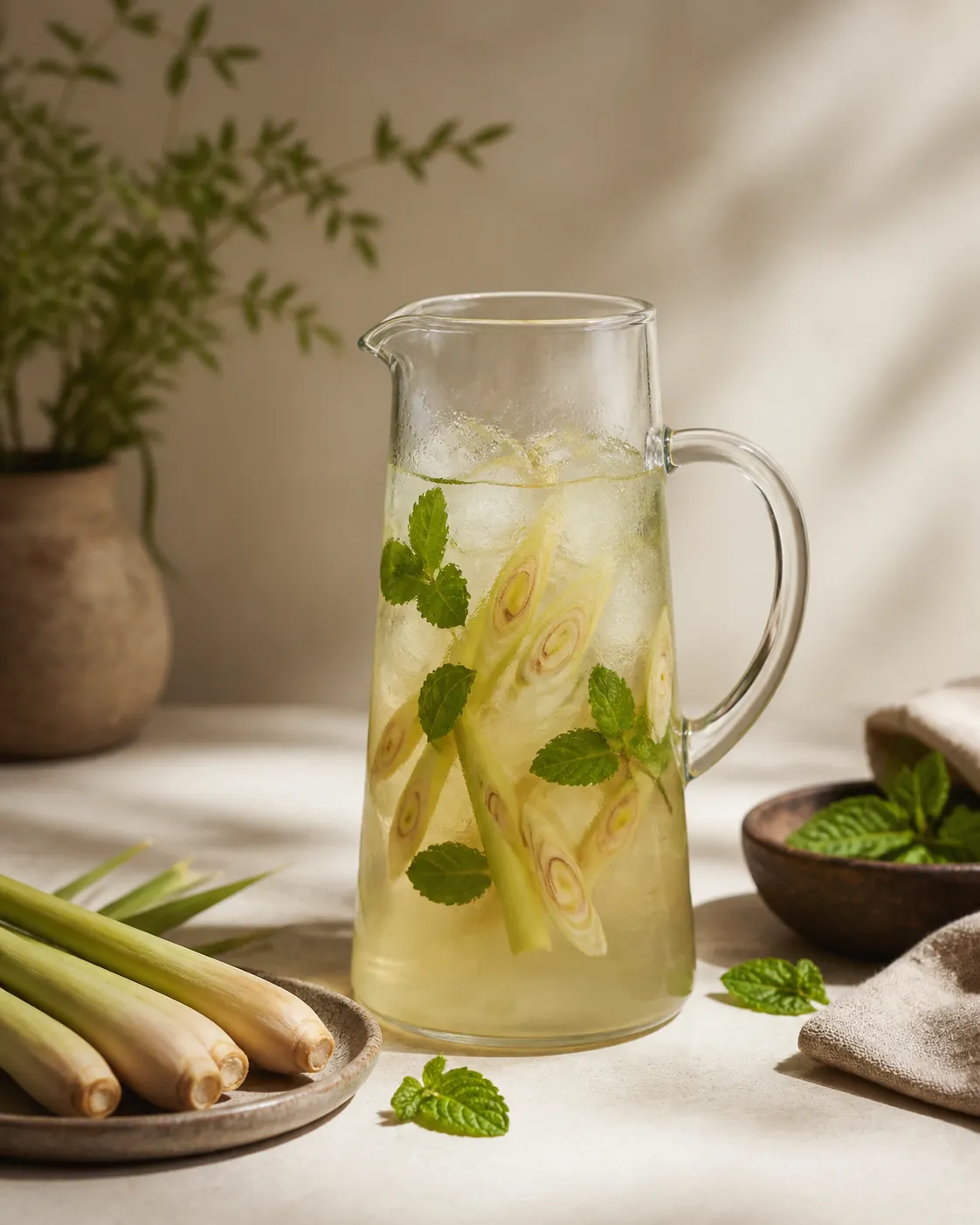
- With mint, where the two lift each other rather than competing.
- Iced, where the citral survives chilling far better than most aromatics.
- As a base for a cordial, since the flavour holds up to sugar and dilution.
A jug can stand in the fridge for days without turning bitter, because there is nothing tannic in it to turn. Chamomile flowers will not tolerate the same neglect, and neither will any true tea.
Lemongrass cordial
- Lemongrass
- 6 stalks, trimmed, bruised and sliced
- Sugar
- 400 g
- Water
- 400 ml
- Acid
- 10 g citric acid, or the juice of 3 limes
- Method
- Simmer 5 minutes, steep off the heat 1 hour, strain
- Dilution
- 1 part in 8, over ice
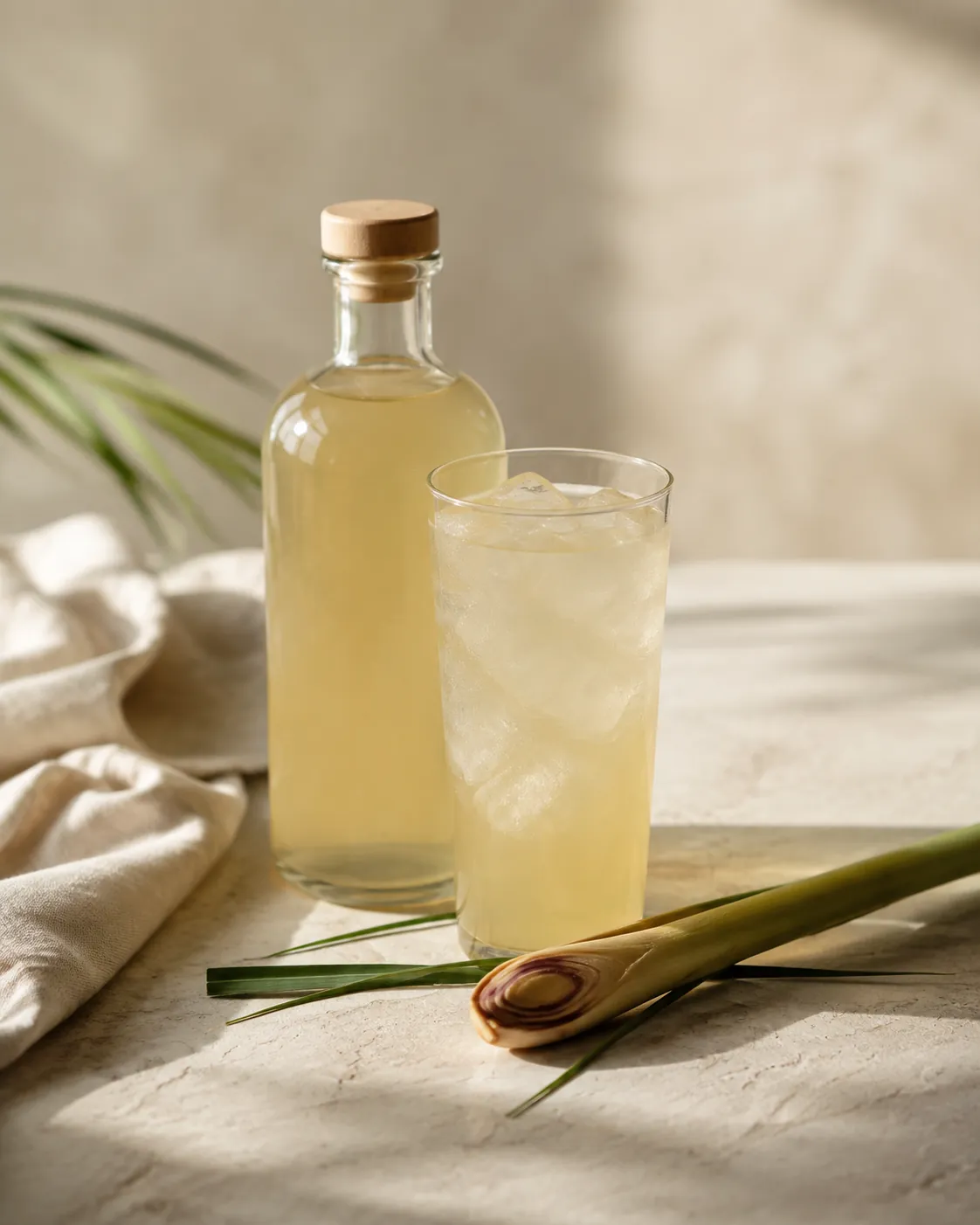
The acid is what makes that a cordial rather than a syrup, and it matters more here than it would elsewhere. Lemongrass tastes of lemon without being sour, so a sweet lemongrass syrup reads flat until acid completes the impression the aroma started.
Cold brewing is the other route and needs no heat at all. Bruised sliced stalk in cold water for six to eight hours in the fridge gives a clean, pale, intensely aromatic infusion that keeps two days.
What it does beside other drinks
Lemongrass is more often a component than a solo drink, and it combines in a specific way that is worth learning before buying a blend.
It sits well with anything sweet and creamy, which is why it appears constantly alongside coconut across Southeast Asian cooking. A coconut drink infused with lemongrass is a genuinely good hot drink and an unusual one.
Coconut
The classic pairing. Sweet and creamy, and lemongrass cuts through it without acid.
Light tea
A green or white base keeps both characters. A heavy one buries the stalk.
Soda
Carbonation lifts volatile aromatics, and lemongrass has plenty to lift.
Ginger
The Southeast Asian standard, since neither partner is acidic and neither backs down.
Pandan
Sweeter and more perfumed, and it turns the infusion into something closer to a dessert.
Against tea it works only with the lighter styles. A green tea carrying a little lemongrass keeps both characters intact and loses neither.
A strong black tea covers it completely, as does anything roasted, which is why lemongrass rarely survives in a blend built on a heavy base.
In a soda it holds up unusually well, since carbonation carries volatile aromatics upward and lemongrass has plenty of them to carry. The cordial above, topped with sparkling water, beats most commercial syrups outright.
Ginger is the standard partner across Southeast Asia, and it works because both are aromatic and neither is acidic, so nothing in the pot has anything to fight. Ginger tea alone is the sharper of the two by some distance.
Caffeine and tannin, and the long unattended steep
Two absences explain most of it.
Lemongrass is a grass rather than a tea plant, so no caffeine was ever in it, and there is very little tannin either.
The tannin point is the practical one. A pot left standing grows stronger rather than harsher, which is why lemongrass suits a jug in the fridge and a long unattended steep in a way no leaf tea ever will.
Quantity rather than time is therefore the lever for strength. Adding a third stalk changes the cup; adding five minutes barely registers, and lemongrass and caffeine sets the zero against the figures for tea and coffee.
Reheating costs flavour rather than adding harshness, because the citral has mostly left by the time a cup goes cold. That is the same behaviour a roasted infusion like barley tea shows, and the opposite of what happens to a reheated pot of tea.
Diagnosing a weak pot
Lemongrass is forgiving in the pot and unforgiving about preparation, so nearly every disappointing cup traces back to something that happened before the water went in.
| Symptom | Cause | Fix |
|---|---|---|
| Barely any lemon | Not bruised, so the oil glands are intact | Crush firmly before slicing |
| Grassy rather than lemony | The green upper stalk used instead of the pale base | Trim to the bottom 10 cm |
| Thin and watery | Dried stalk at fresh-stalk quantities | Use half again as much dried |
| Faded after a few minutes | Brewed uncovered, so the citral left with the steam | Cover the pot |
| Woody and dull | An old, dried-out stalk | Squeeze the base before buying |
The first two rows account for most of it. Both come from treating a stalk like a leaf, when it is a dense piece of plant that has to be opened up before water can reach anything inside.
The third is the commonest fault with dried material, because packets suggest a spoonful and a spoonful carries far less citral than one fresh stalk. Half again as much closes most of the gap.
An uncovered pot is the one that catches people out, since nothing about it looks wrong. The kitchen smells wonderful while it brews, and that smell in the room is the lemon note that should have ended up in the cup.
Lemongrass faults collects the rest of them.
Where lemongrass sits on the herbal shelf
Lemongrass occupies a specific corner of the herbal shelf, and knowing which corner makes it much easier to reach for.
It is aromatic rather than tannic, which puts it beside peppermint rather than anywhere near the tart infusions. Both lose their character to an uncovered pot, and neither can be over-steeped into bitterness.
Hibiscus is the opposite case on both counts, acidic and assertive where lemongrass is aromatic and mild, which is why the two blend better than either does with a heavy base.
What separates it from everything else here is that it tastes of a fruit it has no relation to. That makes it the obvious choice when a drink wants citrus brightness without acidity, and it is why lemongrass turns up in infused water so much more often than the lemon-scented herbs do.
On sweetness it sits dry and clean, well below rooibos, and it takes sugar better than most because there is no bitterness for the sweetness to argue with. Lemongrass flavour takes that profile apart in detail.
Common questions
Why does lemongrass taste like lemon?
Citral, the dominant aromatic compound in lemongrass, is the same molecule that dominates lemon peel. Lemongrass is often more concentrated in it than lemon is, despite the two plants being unrelated.
Do you need to bruise lemongrass?
Yes. The stalk is woody and the citral sits in oil glands inside its structure. Crushing it with the flat of a knife ruptures those glands. Without bruising, hot water barely extracts anything.
Is fresh lemongrass better than dried?
Noticeably. Drying drives off much of the volatile citral, so dried lemongrass tastes flatter and hayier. Fresh stalks are cheap in Asian groceries and freeze well whole, which is the practical answer.