What Is Carrot Juice? The Vegetable That Juices Best
Carrots juice better than almost any vegetable: dense, low in fibre relative to their water, and sweet enough to drink without help.
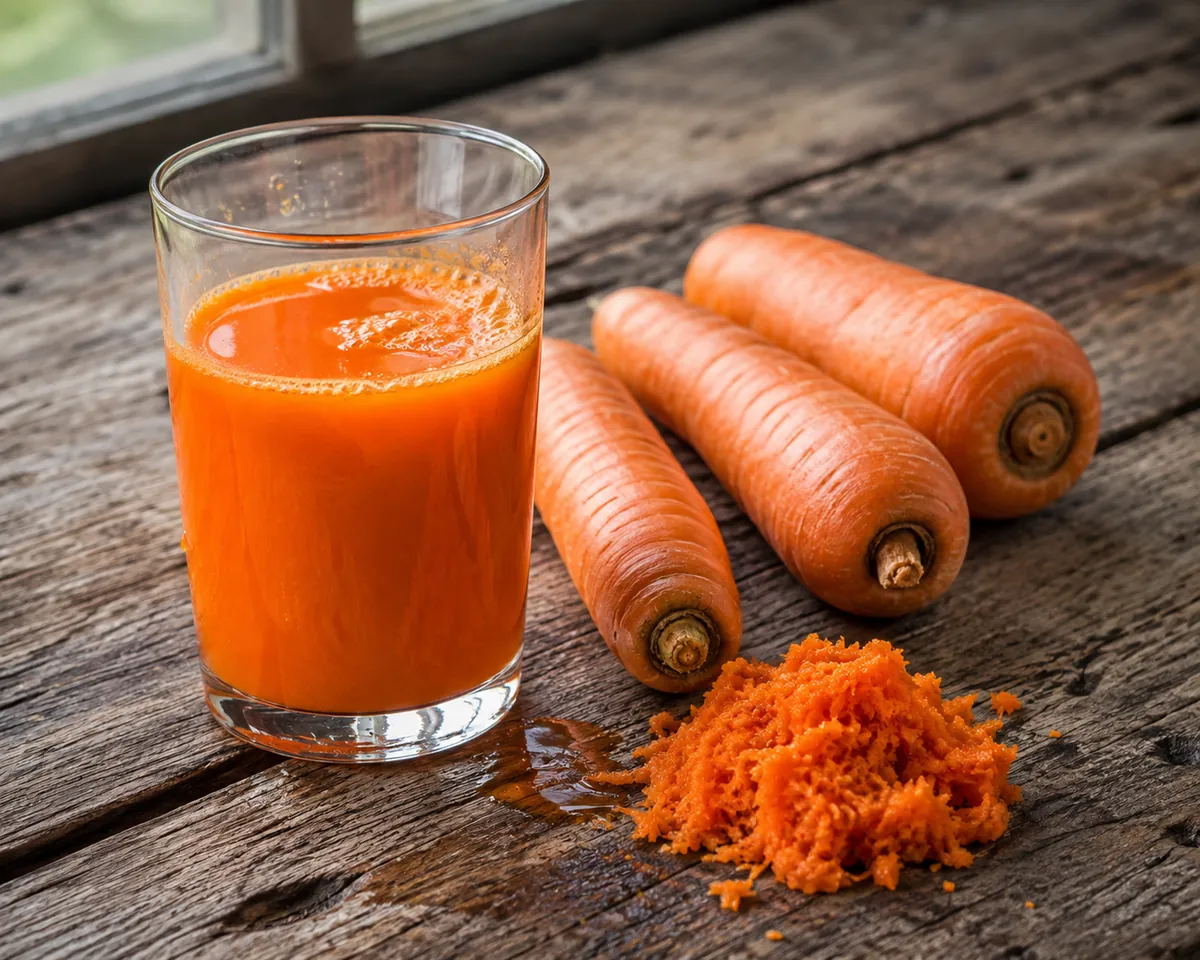
Carrot juice is pressed from raw carrots. It is among the highest-yielding vegetable juices and one of the few sweet enough to drink undiluted.
Roughly a kilogram of carrots gives about half a litre, which is a better ratio than most vegetables manage. That yield, and the sugar that comes with it, put carrot at the easy end of this section: there is no ratio to balance and nothing to add before it is drinkable.
Carrot juice at a glance
- What it is
- Raw carrots pressed, with the fibre discarded as pulp
- Yield
- 400 to 500 ml from a kilogram, depending on the machine
- Sweetness
- Around 9 g of sugars per 100 ml
- Acidity
- Close to pH 6, which is nearly neutral
- Best variety
- Nantes for sweetness, Imperator for availability
- Life once made
- A day refrigerated in a bottle filled to the top
- The classic partner
- Ginger, in a much smaller quantity than seems useful
Sweet enough to drink without help
Carrots carry more sugar than any root sold for juicing, and the figure sits close enough to fruit to be worth showing. Nothing in that is a nutrition claim; it is the reason the drink needs no construction.
That places it alongside fruit juices rather than with green vegetables. It is why carrot juice is palatable straight, and why it does the work of the sweetening base in almost every mixed vegetable blend sold.
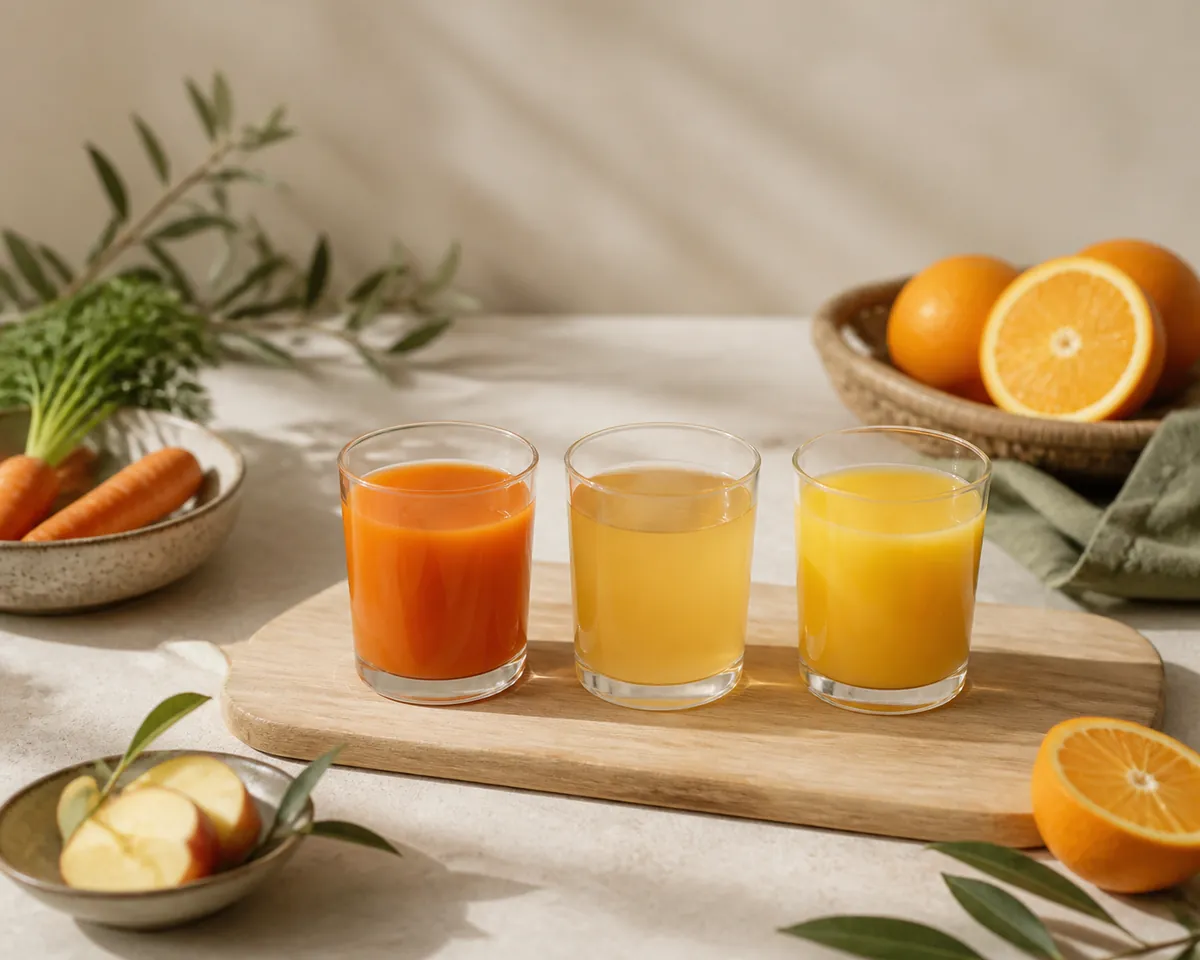
Against the vegetables it shares a chiller with, the position becomes clearer still.
| Yield | Sweetness | Keeps | Drunk alone | |
|---|---|---|---|---|
| Carrot | High | High | A day | Yes, commonly |
| Beetroot | High | High, and earthy | A day | Rarely. Usually blended |
| Celery | Very high | None. Saline | Hours | Yes, as a single-ingredient juice |
| Cucumber | Highest | Very low | Hours | As a base rather than a drink |
| Tomato | Moderate | Low, savoury | Days, being acidic | Yes, and usually seasoned |
Tomato is the useful contrast. It is the one vegetable juice with enough acid to keep like a fruit juice, which is why it is the only one sold ambient in cans and cartons.
Celery juice and cucumber sit at the opposite pole. Both yield heavily, neither carries a glass on its own, and both are bought as volume rather than as flavour.
Carrot needs no such scaffolding, and that is why it is the vegetable most people meet on the way to green juice rather than after it. Beetroot is the other sweet one, and it is almost always blended with carrot because carrot supplies the sugar that makes the earth drinkable.
Shape in the bag, and what a cold snap does
Shape is the only clue most supermarket bags give about which carrot is inside.
The four common types behave differently enough in a juicer to be worth recognising by outline alone.
| Type | Shape | Juicing character |
|---|---|---|
| Nantes | Blunt-ended, cylindrical | Sweet, tender, high yield. The best all-round juicer |
| Imperator | Long and tapered | The supermarket standard. Good yield, less sweet |
| Chantenay | Short, broad, conical | Dense and very sweet, and harder on a cheap machine |
| Danvers | Tapered, sturdy | Reliable, mid-sweetness, keeps well |
| Purple and yellow | Variable | Purple juices to a muddy brown; yellow stays pale and is mild |
Purple carrots are the surprise. Their pigment is anthocyanin over the usual carotenoid, and the two together give a juice that looks brown rather than the deep violet the raw carrot suggests.
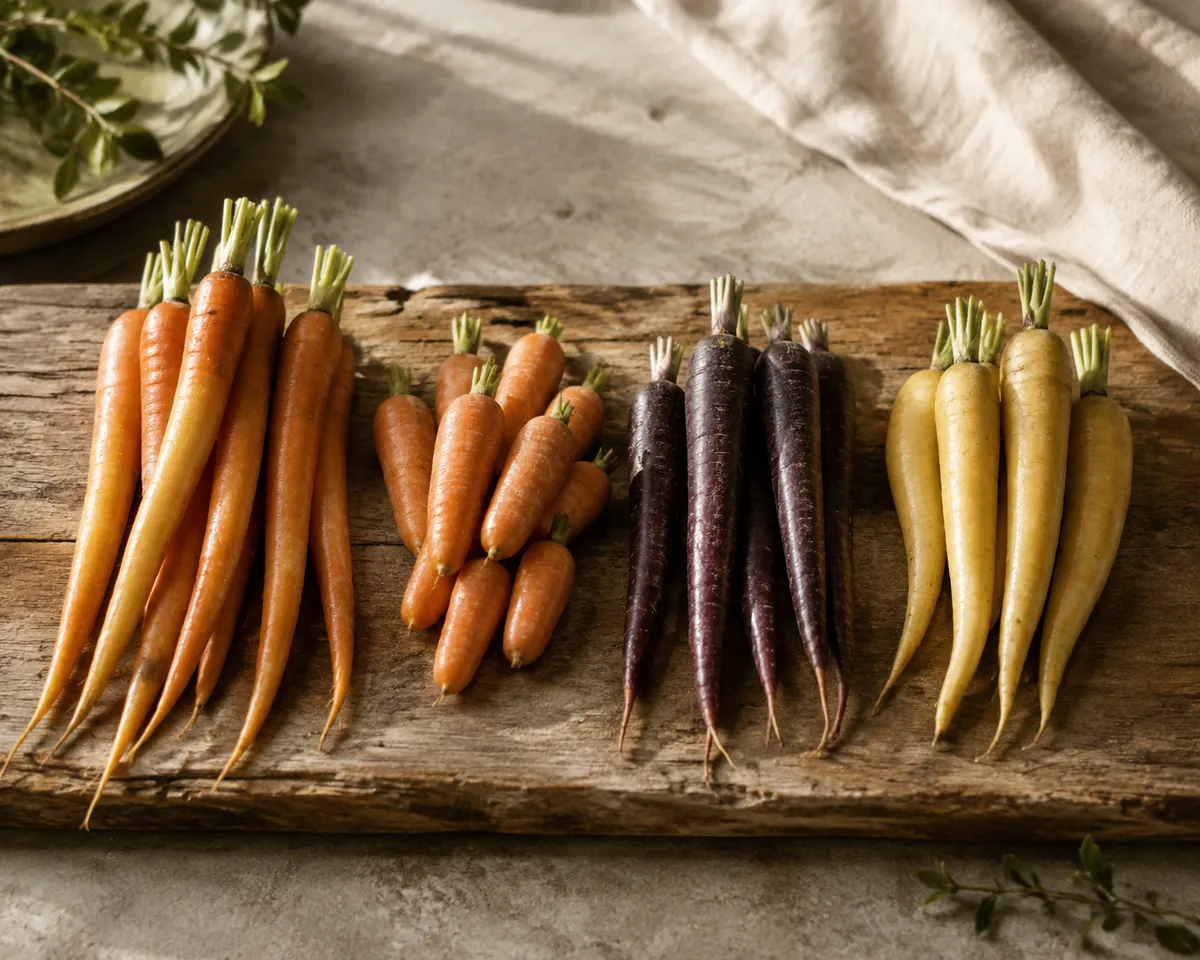
Season matters as much as variety. Carrots lifted after a cold spell are noticeably sweeter, because the plant converts starch to sugar in response to cold, and storage carrots sold in winter frequently beat new-season ones bought in summer.
Size is the one thing that barely matters. Large carrots are often said to be woody, and woodiness follows age and growing conditions rather than diameter, so a fat winter carrot from a cold field is usually the sweetest thing in the shop.
Where the varietal difference genuinely shows is in what it tastes like rather than in how much comes out.
What a kilo of carrots actually gives
Juicing carrots is unusually predictable. Weigh the bag and the glass can be called to within about 50 ml, which is not true of leaves, berries or anything with a stone in it.
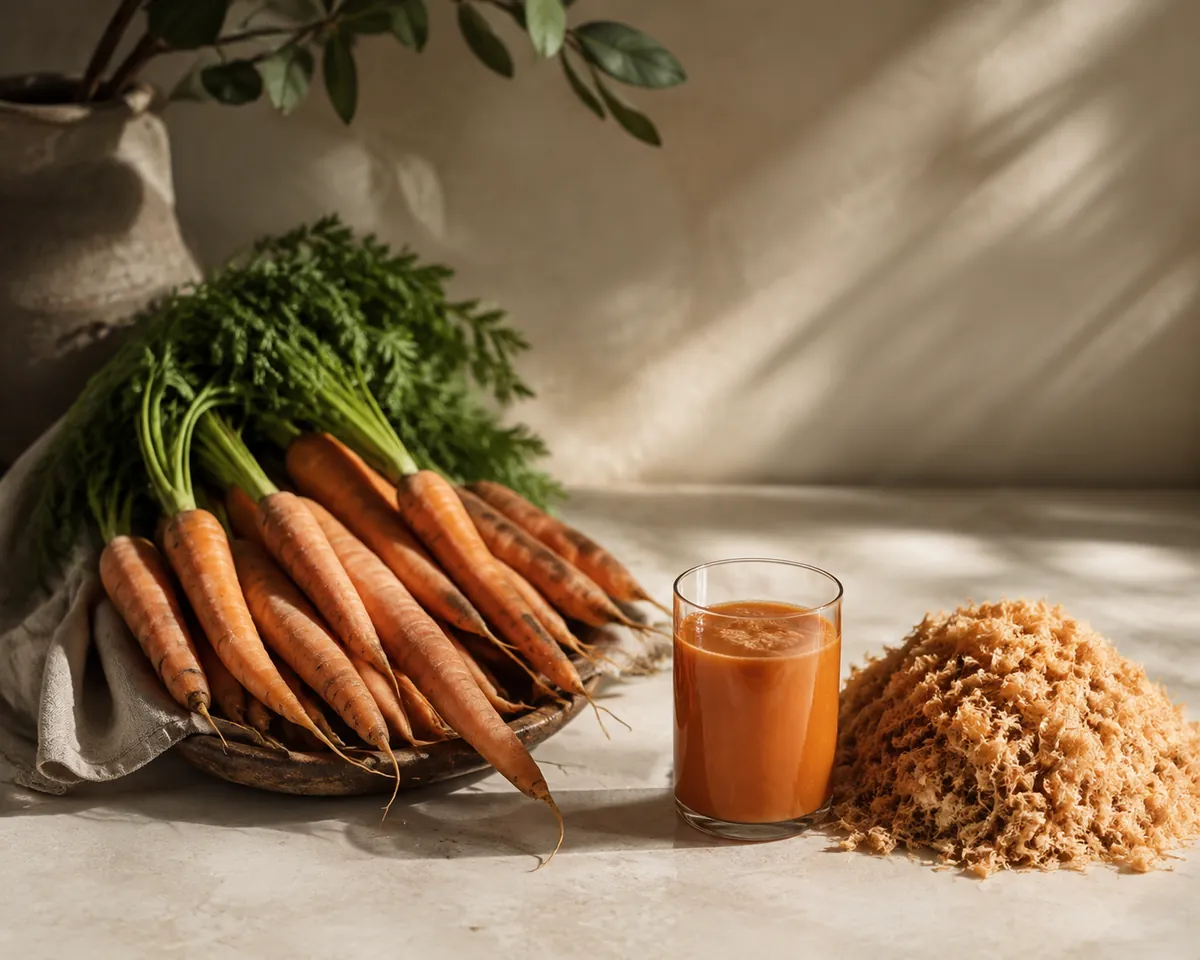
From a kilo of carrots
- Juice
- 400 to 500 ml, depending on the machine
- Pulp
- 500 to 600 g, damp and dense
- Carrots
- Roughly 8 to 10 medium ones
- Masticating machine
- Toward the top of that range
- Centrifugal machine
- Toward the bottom, and warmer
Under half by weight is a poor yield next to fruit, and it is why carrot juice costs what it does in a shop. Carrots are dense rather than watery, so most of the kilogram stays behind as fibre.
Machine type matters more here than for soft produce. A masticating auger crushes a hard root thoroughly, while a centrifugal disc throws a good deal of usable juice out with the pulp, which is the difference cold-pressed juice is built around.
The cost side of the same arithmetic reads far better than the yield does.
The gap between home and bottled is narrower here than for any other juice, because carrots are cheap and the yield is good. What you gain is freshness and colour, and what you spend is fifteen minutes including the cleaning.
Batching pays off more than it does with leaves, since carrots keep for weeks in a fridge drawer and a machine set up once will take three kilograms as easily as one. Making carrot juice works through the routine in order.
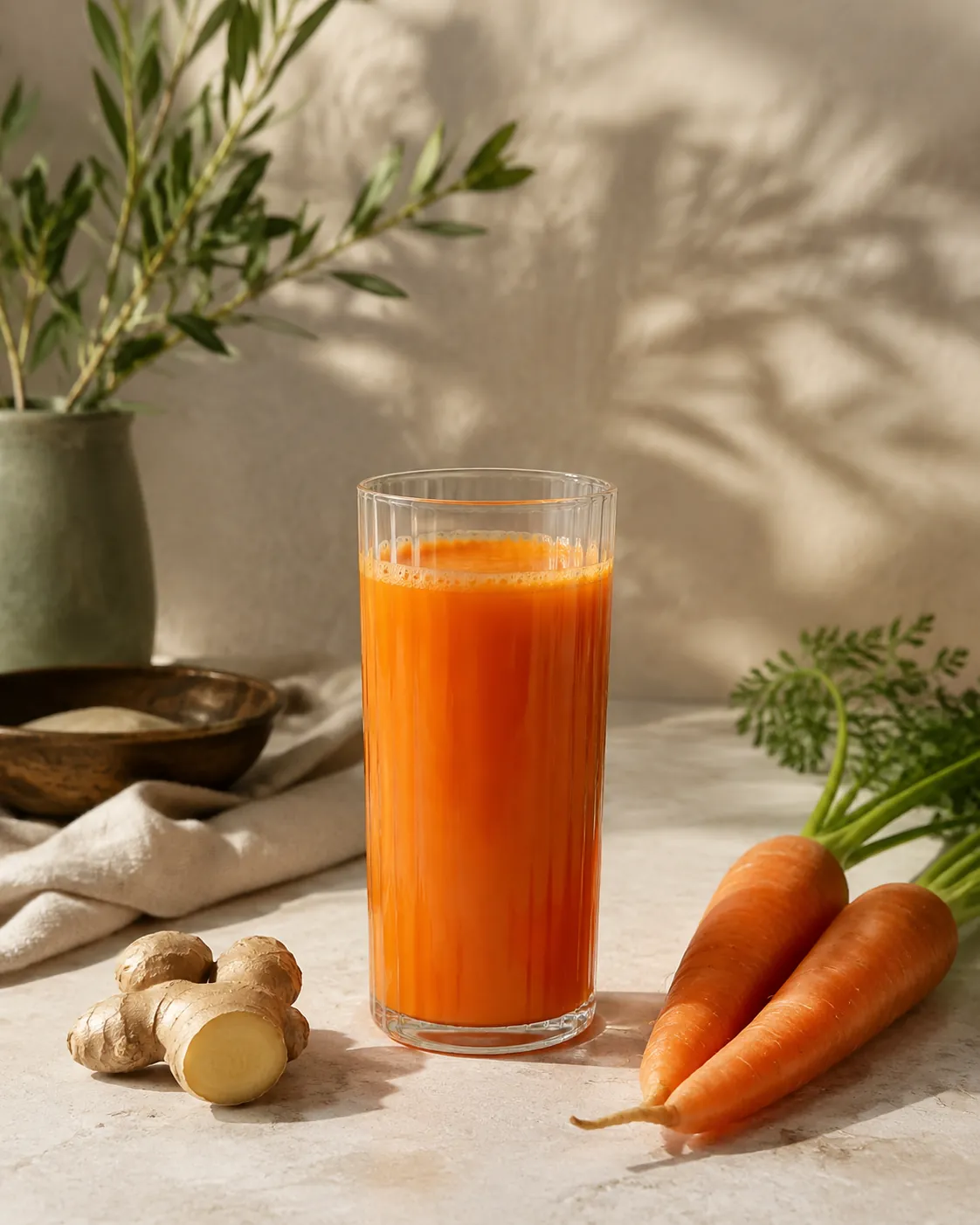
Scrubbing, trimming and feeding the chute
Carrots are among the easiest things to juice, and the handful of details that improve the result are all decisions made before the machine starts.
- Do not peel. Most of the flavour sits just under the skin; scrubbing is enough.
- Trim the green tops and the woody root end, both of which taste bitter.
- Choose firm carrots; limp ones yield noticeably less juice.
- Juice immediately before drinking, since it degrades faster than fruit juice.
- Alternate carrots with something wet, such as apple, to keep a centrifugal juicer clear.
Peeling is the most common wasted step. It removes flavour and yield and gains nothing beyond a marginally cleaner colour.
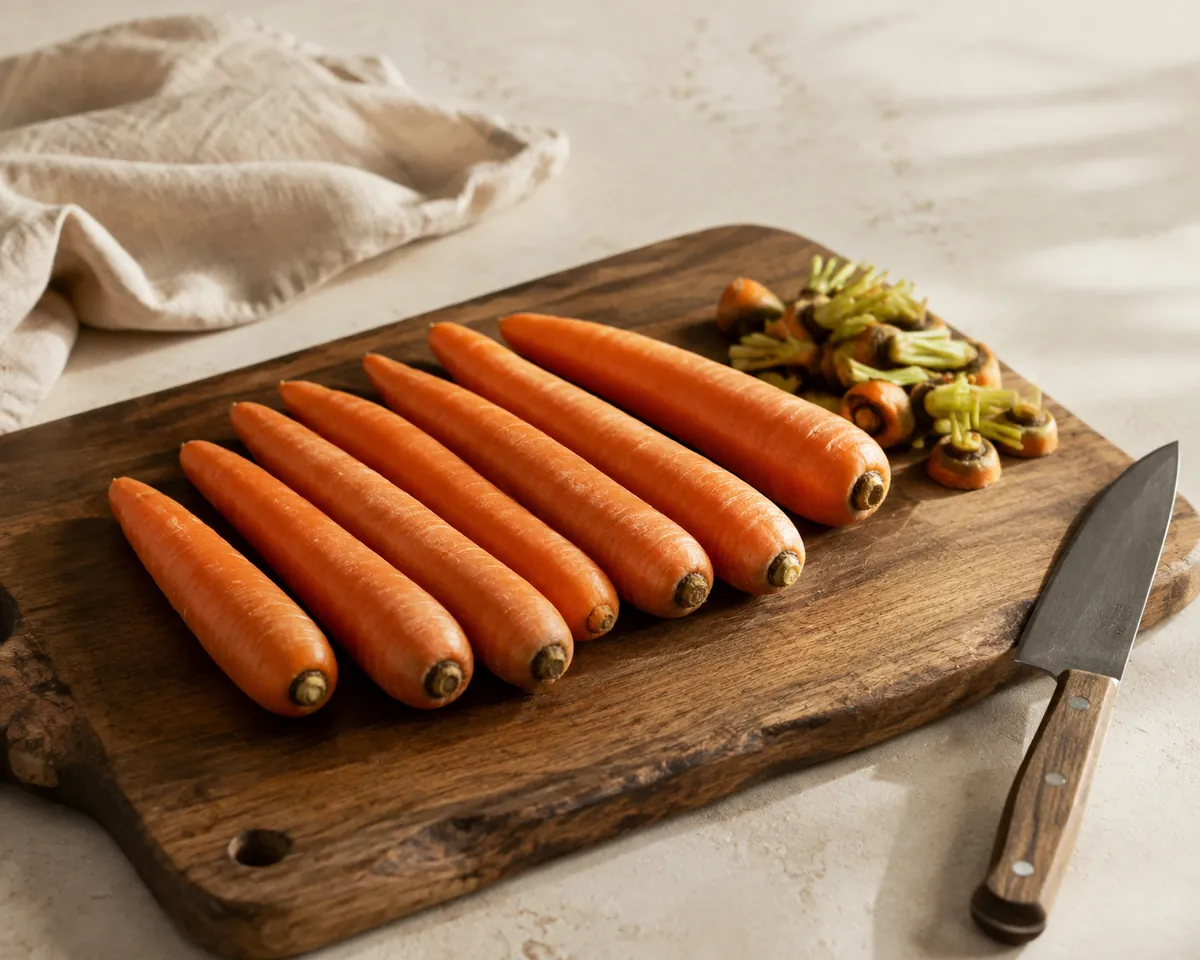
The tops and the woody crown are the two genuinely bitter parts of the root, and both come off in a second with a knife. Leaving them on is the usual explanation when a glass tastes sharp for no apparent reason, which is one of several common carrot juice faults with a cause upstream of the machine.
Feeding order matters more on a cheap machine than on an expensive one. Alternating carrots with something wet stops a centrifugal screen packing solid, and finishing the run on a hard piece drives the last of the pulp through instead of leaving it on the mesh to dry.
The two layers in a standing glass
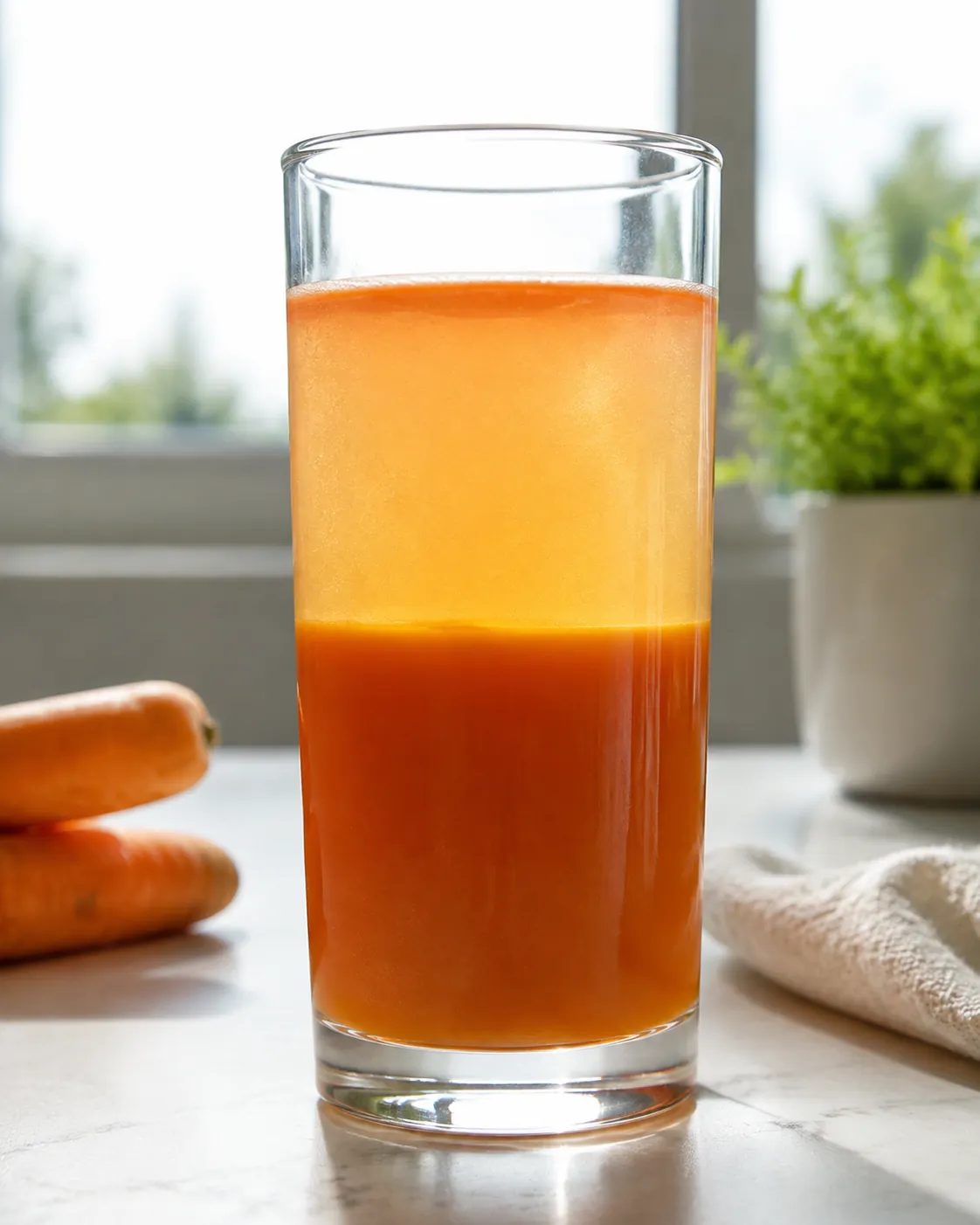
A glass left standing divides into a dense orange layer and a paler watery one. Nothing has spoiled, and a stir puts it back exactly as it was.
Carrot juice is a suspension rather than a solution: fine pulp particles are held in the liquid and gravity pulls them down. The rate depends on the machine, since a centrifugal juicer produces more fine pulp and more foam and therefore separates faster.
The distinction worth holding on to is that gravity is reversible and chemistry usually is not, which is why curdling in coffee looks similar in the glass and behaves nothing like it.
Settling can also be used deliberately. Letting a fresh glass stand for twenty minutes in the fridge drops most of the fine pulp to the bottom, and decanting the clear layer off the top gives a thinner, brighter, sweeter juice that looks like a commercial product.
The dense layer left behind is not waste. It carries most of the colour and body and it goes into a soup or a sauce, or straight back into the glass if you decide you preferred it cloudy.
Fine-straining through muslin achieves the same thing faster and costs a little more volume. It is worth doing if the juice is going into something where texture matters, such as a jelly or a chilled soup.
Near neutral, and why nothing keeps it
Orange juice can be sold fresh and unpasteurised in many places, and carrot juice essentially never is, for a reason that is entirely about acidity.
Carrot juice sits at around pH 6, which is close to neutral, while orange juice is near pH 3.5. Acidity is what preserves a fruit juice, and carrot juice has almost none of it.
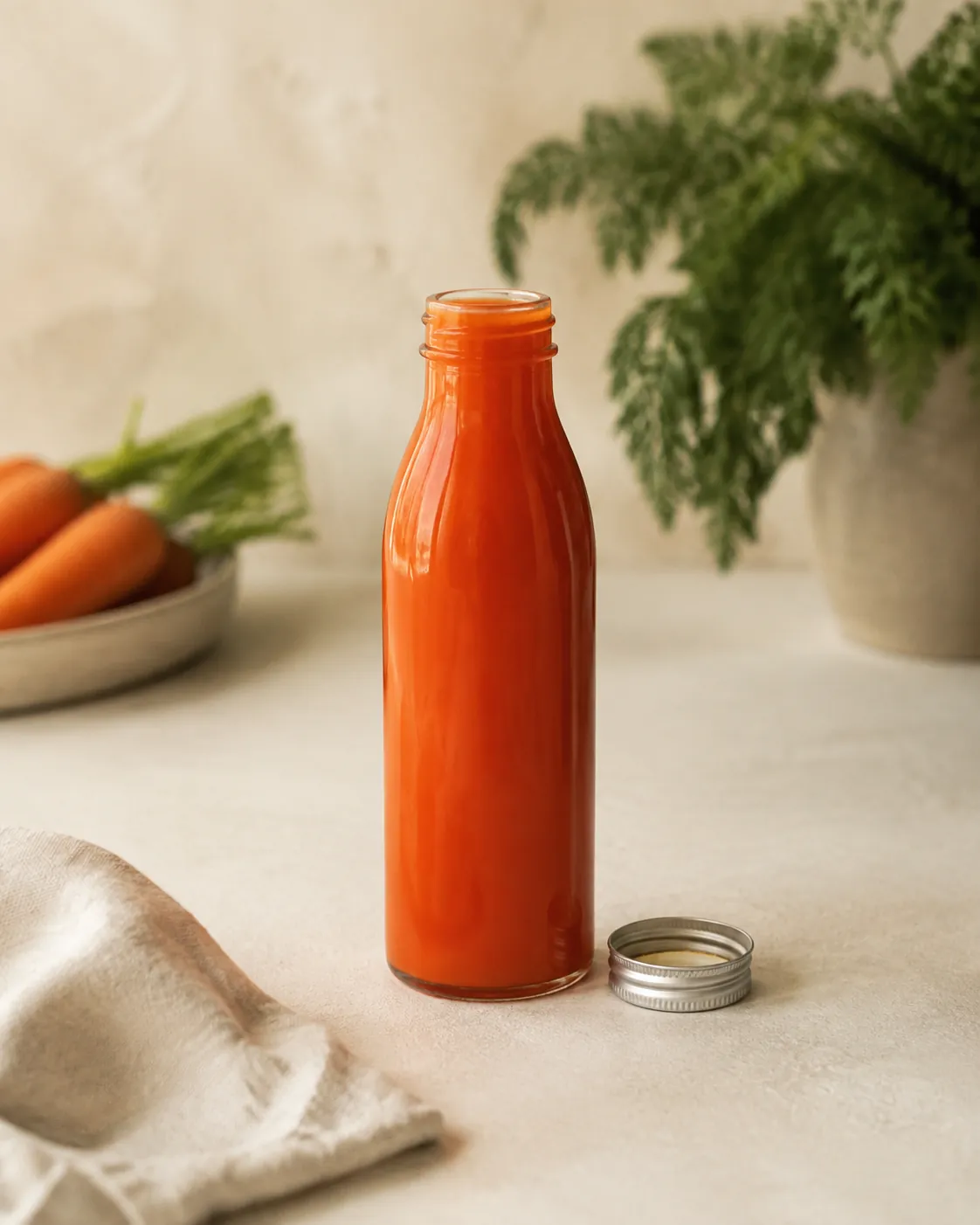
That leaves producers with two options and they use both. Heat pasteurisation is the traditional route and high-pressure processing is the modern one, which is why so-called raw bottled carrot juice is chilled, expensive and still treated.
At home the same fact shortens the window to about a day. Refrigerated in a sealed container filled to the top it holds a day or two, and headspace in the bottle is what shortens that, since oxidation dulls the colour and the flavour together.
A squeeze of lemon slows the change and brightens the taste, which is why so many carrot juice recipes include citrus even when it is not obvious why.
The acid is doing two jobs in one spoonful, and the second is why commercial recipes reach for citric acid rather than fruit. Seasoning and preservation happen at the same moment, and only one of them is ever given as the reason.
Freezing works for cooking but not for drinking, since the texture separates permanently on thawing. Storing carrot juice covers the rest of a very short life.
Bottled is the trade the shelf offers in exchange. A pasteurised carton keeps for weeks unopened and tastes noticeably cooked; cold-pressed bottled carrot juice sits between the two, closer to fresh, chilled, expensive, and gone within days of opening.
Ginger, beetroot and what carrot can carry
Carrot is a base rather than a partner. Its sweetness sits underneath other flavours instead of competing with them, which is why every classic blend is one assertive note against a sweet ground.
Ginger
The classic pairing. Heat against sweetness, and it needs very little.
Apple
Adds acidity and thins the texture. The most common commercial blend.
Orange
Works well, and the two sugars reinforce rather than compete.
Beetroot
Earthy and very strongly coloured. Use less than you think.
Celery or cucumber
Dilutes the sweetness for anyone who finds it cloying.
Ginger is the pairing worth trying first.
A thumb of fresh ginger through the juicer with a kilogram of carrots gives a drink neither ingredient produces alone.
The heat behaves differently here from the way it behaves in ginger tea, because nothing has been steeped and nothing has been diluted. Raw ginger juice is aggressive at a quantity that would read as mild in a cup, and a thumb is genuinely the ceiling rather than a starting point.
Beetroot is the pairing that most needs restraint.
A single small beetroot will colour and flavour a litre, and the earthiness it brings is precisely the note carrot's sugar was recruited to cover.
Six hundred grams of damp pulp
A kilogram of carrots leaves several hundred grams of damp pulp. Most of it goes in the bin, and none of it needs to.
That is a larger share than fruit juicing produces, because carrots are dense. The pulp holds the fibre and a good deal of the colour, and it is still perfectly good food.
- Use it the same day. Damp pulp sours quickly and does not keep.
- It works in soup, stock, fritters and carrot cake, where the texture is wanted.
- Freeze it in portions if you juice regularly and cannot use it immediately.
- Do not put it back through the juicer; the second pass yields almost nothing.
- Compost what is left rather than binning it, since it breaks down fast.
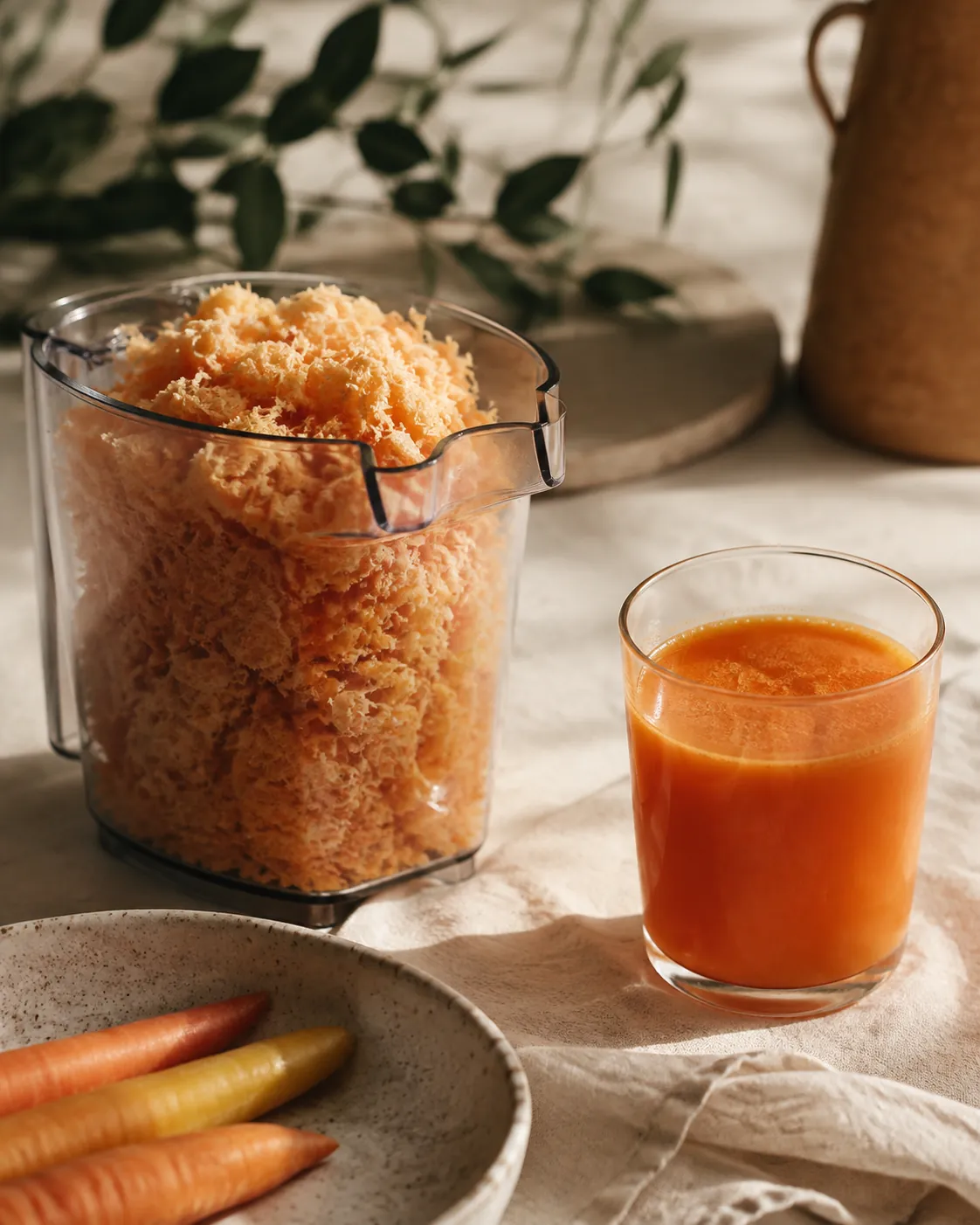
Pulp volume is the honest argument against juicing at home. A green smoothie keeps everything and produces none, which is a different drink but a great deal less waste.
A blender and a cloth split the difference, and the trade is not the one green vegetable juice offers.
Carrots are hard, so the blender needs water to turn over at all, and the juice is diluted before you start.
Around 200 ml of water to 500 g of chopped carrot is the minimum that will move. Straining through a nut milk bag then gives a juice thinner than a juicer's and a pulp that is wetter and considerably more useful in a pan.
The unstrained version is a different drink entirely and a good one. Blended whole with an apple and a piece of ginger it becomes a thick, sweet vegetable smoothie with nothing thrown away at any point.
In the pan rather than the glass
Carrot juice is an ingredient at least as often as it is a drink, and the uses all follow from its sugar and its colour.
Soup
Replaces stock or water. It thickens nothing and sweetens everything.
Risotto and pilaf
Cook the grain in half juice, half stock. It comes out orange and sweeter with no sugar added.
Glaze
Reduced by half in an open pan until it coats a spoon.
Braising liquid
For roots and pulses, where the sugar caramelises at the edges.
Ice lollies
Half carrot, half apple. It freezes without going icy, because of the sugar.
It replaces stock or water in a soup, where it thickens nothing and sweetens everything. Risotto and pilaf cooked in half carrot juice come out orange and noticeably sweeter without any sugar going in.
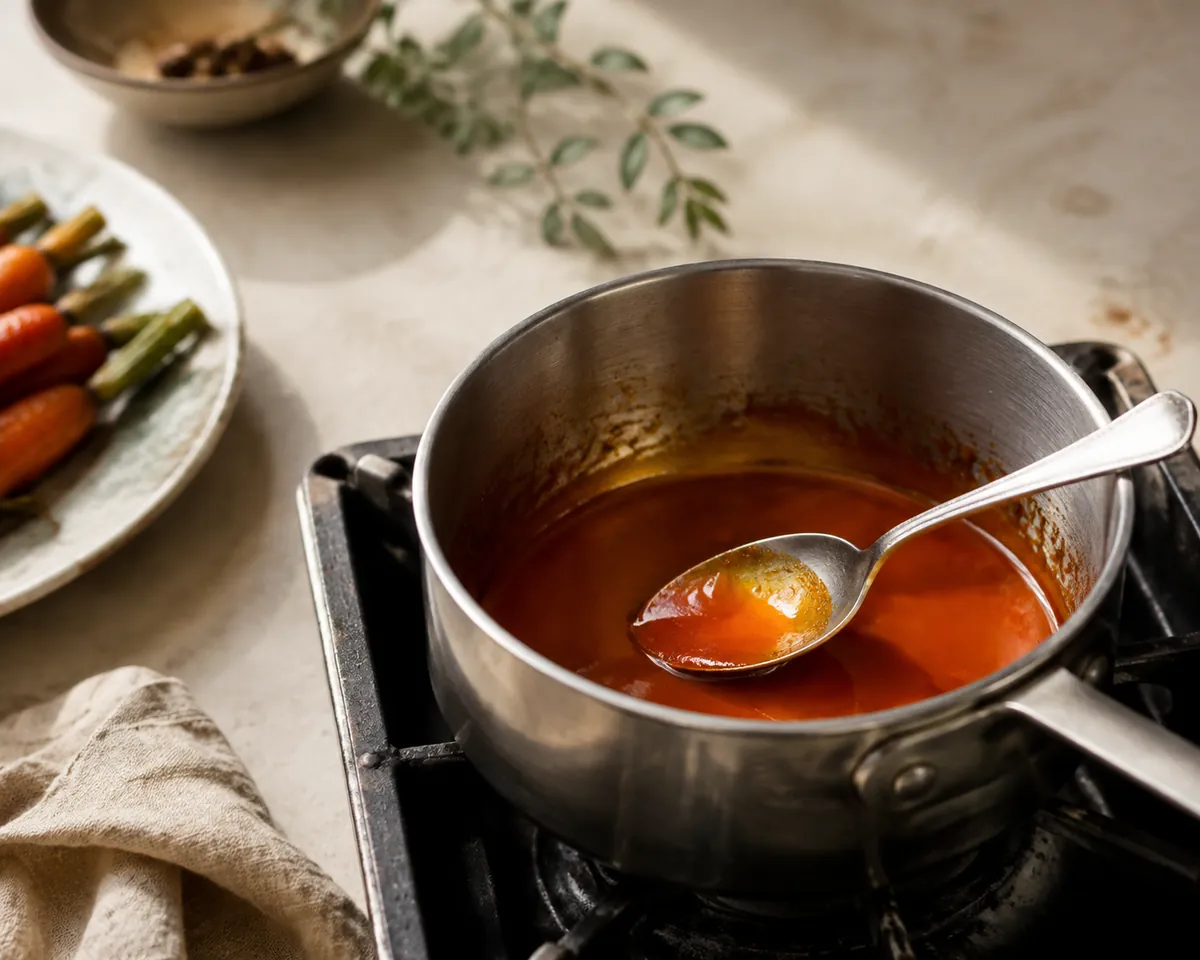
Reduced by half in a pan it becomes a glaze, which is the most concentrated form of carrot flavour available in a domestic kitchen. A squeeze of lemon at the end stops it tasting flat, and a few grains of sea salt do more for it than additional sweetness would.
As a drink component it dilutes well. Half carrot and half apple juice over plenty of ice is lighter than either alone, and it is the version most likely to be finished by someone who says they dislike vegetable juice.
Warm is the other direction, and carrot takes heat better than most juices. Held at about 60 C with a piece of fresh ginger and a strip of orange peel, it reads as a thin soup rather than a juice, and the sweetness survives the warming intact.
What it will not take is boiling.
Sustained heat dulls the colour and pushes the flavour toward cooked carrot, which is exactly the note that makes a pasteurised carton taste flat.
The tops are a herb, not a juice
Carrot greens are not waste. They are also not juice, and treating them as either is how a decent bunch ends up wasted twice.
The leafy tops are edible, strongly flavoured and bitter, closer to parsley than to the root. Juiced alone they behave like the leafy greens in a green juice: very little comes out, and what does is harsh.
A small handful through the juicer with a kilogram of carrots is the working quantity if you want to use them at all. Beyond that they overwhelm the sweetness that made the juice worth drinking in the first place.
Their better use is pesto, stock or a herb oil, where the bitterness is an asset rather than a fault to be covered. Buying carrots with the tops on is worth it for freshness regardless, since the leaves wilt long before the root does and are the clearest signal of how long the bunch has been sitting.
Common questions
Should you peel carrots before juicing?
No. Much of the flavour sits just under the skin, so peeling costs both flavour and yield. Scrubbing is enough. Trim the green top and the woody root end, which are bitter.
Why does carrot juice separate?
It is a suspension rather than a solution, so fine pulp settles under gravity. Nothing has spoiled and shaking reverses it. Centrifugal juicers produce more fine pulp and separate faster than masticating presses.
How long does fresh carrot juice keep?
A day or two refrigerated in a sealed container filled to the top. Oxidation dulls the colour and flavour quickly, and headspace accelerates it. A squeeze of lemon slows the change.