What Is Mexican Hot Chocolate? The Tablet, and Why It Is Grainy
Mexican hot chocolate is made from a pressed tablet of coarsely ground cocoa, sugar and cinnamon, whisked to a foam. The slightly grainy texture is not a fault, it is the defining characteristic.
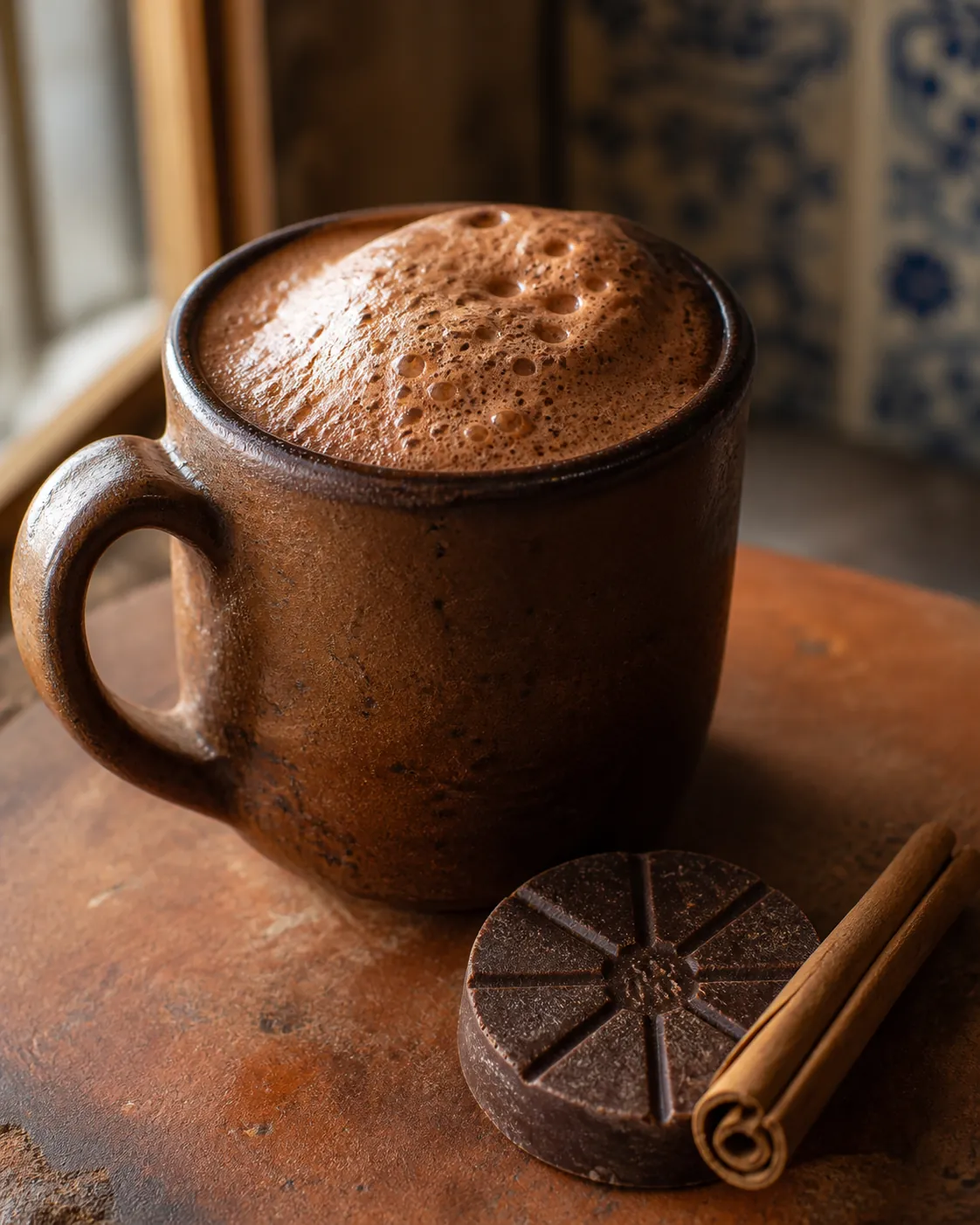
Mexican hot chocolate is made by dissolving a pressed tablet of coarsely ground cocoa, sugar and cinnamon into hot milk or water, then whisking it to a foam.
It differs from European hot chocolate in three ways: the chocolate is coarser, it is spiced, and the foam is part of the drink rather than a garnish.
Mexican hot chocolate at a glance
- What it is
- A pressed cocoa tablet whisked into hot liquid until it foams
- The solid
- Roasted cocoa stone-ground with sugar and cinnamon, deliberately coarse
- The spice
- Canela, the softer Ceylon cinnamon, rather than cassia
- The liquid
- Often water, and milk outside Mexico
- The tool
- A molinillo, or any whisk that will move fast
- The foam
- Essential rather than decorative, and it collapses in minutes
- When it is drunk
- Commonly at breakfast, alongside pan dulce or tamales
The tablet, and the grind that stays coarse
Everything distinctive about the drink is settled before anything reaches a pan, in how the solid was made. The starting point is a specific product rather than a bar of eating chocolate.
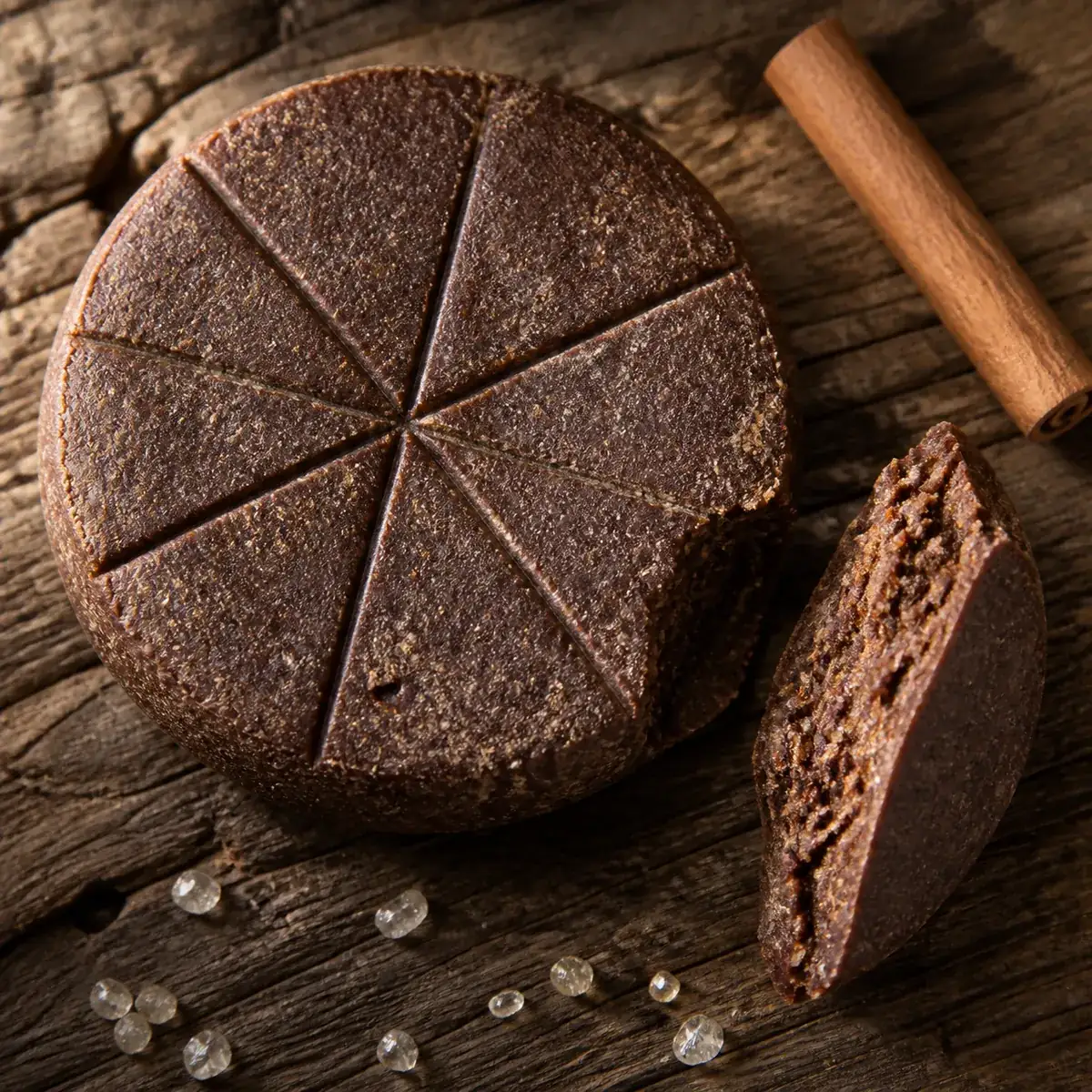
Mexican chocolate tablets are made from roasted cocoa ground with sugar and cinnamon, traditionally on a stone metate. The grind is deliberately coarse, and the sugar crystals are never fully dissolved into the cocoa butter as they are in a European bar.
What is in a tablet
- Cocoa
- Roasted and ground, usually 25 to 40 per cent
- Sugar
- A large proportion, and coarsely ground rather than refined in
- Cinnamon
- Canela, the softer Ceylon cinnamon, not cassia
- Occasionally
- Almond, vanilla, or chilli depending on the maker
- Texture
- Grainy by design, from the coarse grind
The graininess is the point. European chocolate is conched, ground and agitated for hours until the particles fall below the threshold the tongue can detect. That is a genuine industrial achievement and it is what makes a good bar feel silky.
A tablet skips it entirely, the particles stay above that threshold, and the faint sandiness is exactly what somebody who grew up with the drink is listening for.
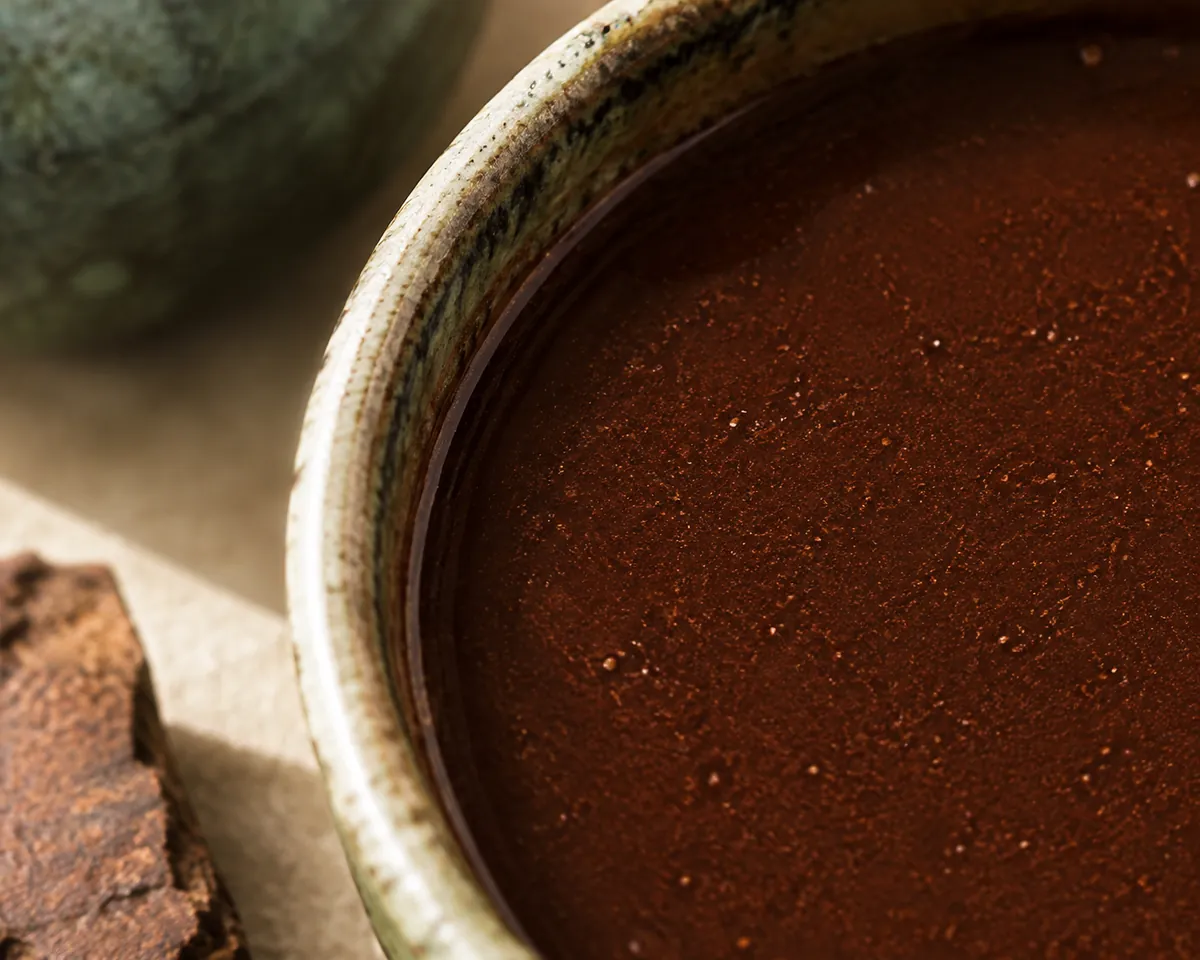
Two ways of making chocolate smooth
- Conching
- Hours of grinding and agitation, until particles drop below the tongue's threshold
- Stone grinding
- A metate crushes rather than cuts, and the process stops well above that threshold
- European result
- Silky, uniform, and built for eating as a bar
- Mexican result
- Coarse, aromatic, and built to be dissolved and whisked
- Neither is unfinished
- Both stop where their tradition intends
It is a different target, not a failed one. Coarse particles carry aroma differently, and the drink is built to be whisked and swallowed quickly rather than sipped smooth, so a newcomer put off by the texture is reacting to unfamiliarity rather than to a fault.
Substituting a smooth dark bar gives a perfectly good drink that is simply not this one, and what Mexican hot chocolate tastes like turns on that grind at least as much as on the spice.
Canela, and why cassia will not do
Spice here is not incidental, and the type is not interchangeable with what most supermarkets sell under the name.
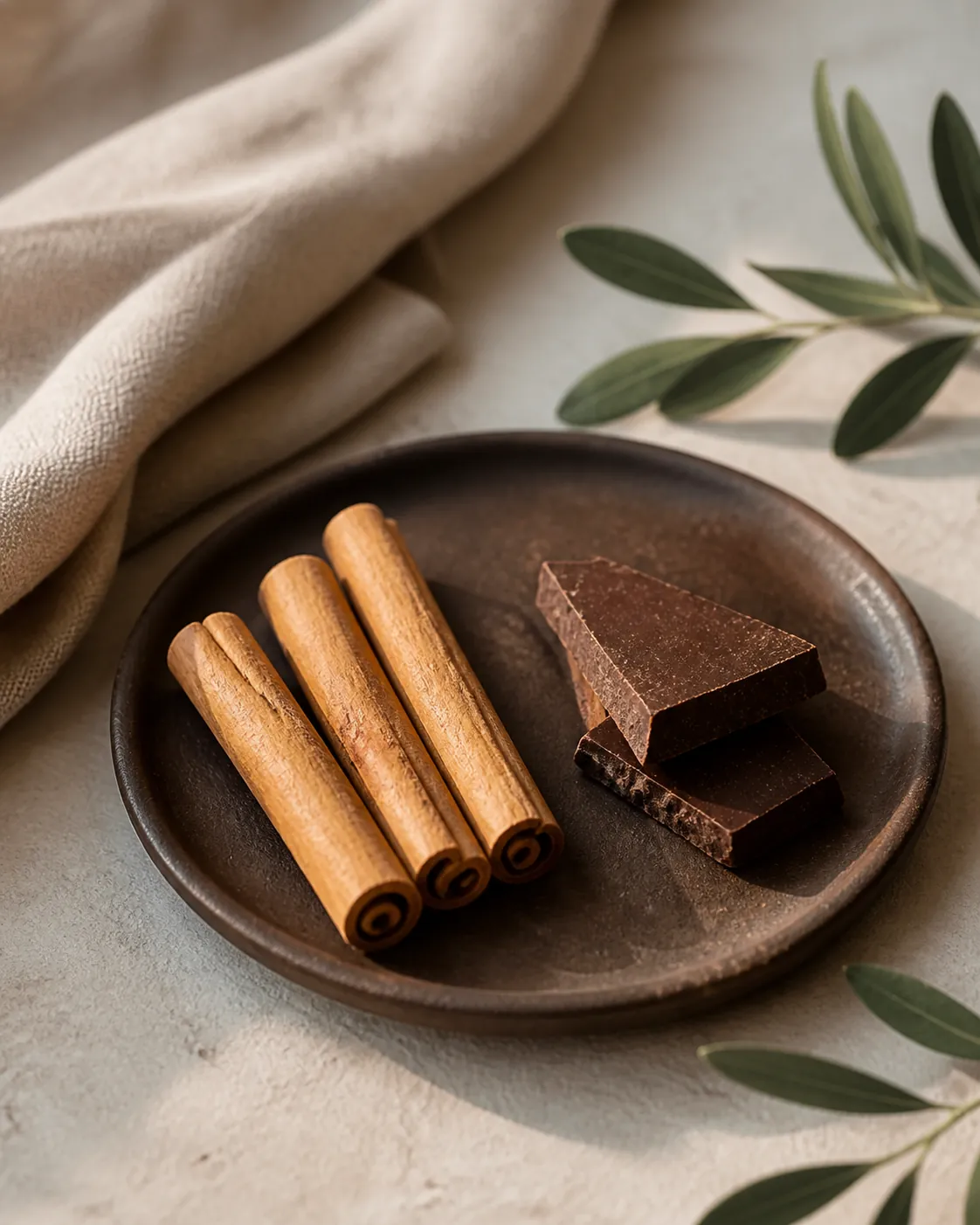
Canela, the softer Ceylon cinnamon, is thin, layered, floral and mild, and it crumbles between the fingers. Cassia is harder, hotter and considerably more assertive.
| Canela, Ceylon | Cassia | |
|---|---|---|
| Bark | Thin, layered, brittle | Thick, hard, single-rolled |
| Flavour | Delicate, floral, sweet | Hot, sharp, more intense |
| Used in | Mexican and Latin American cooking | Most European and American baking |
| In this drink | Traditional and correct | Overwhelms the cocoa |
Using cassia gives a drink that tastes of cinnamon rather than of chocolate carrying cinnamon, and that is the whole of the difference. Canela is sold as Ceylon cinnamon in most spice aisles and is visibly different in the packet: thin papery bark rolled in layers, rather than a single thick quill you could snap like a pencil.
If cassia is all you can get, use noticeably less than any recipe suggests. It is roughly twice as assertive, and the spice is meant to sit beside the cocoa rather than on top of it.
A bruised pod of cardamom dropped into the pan is a more interesting adjustment than reaching for more cinnamon, because it lifts the aroma without adding any heat.
The molinillo, and why the foam is not decoration
A carved wooden whisk explains the texture of the finished cup, and it is doing mechanical work rather than sitting on the tray for show.
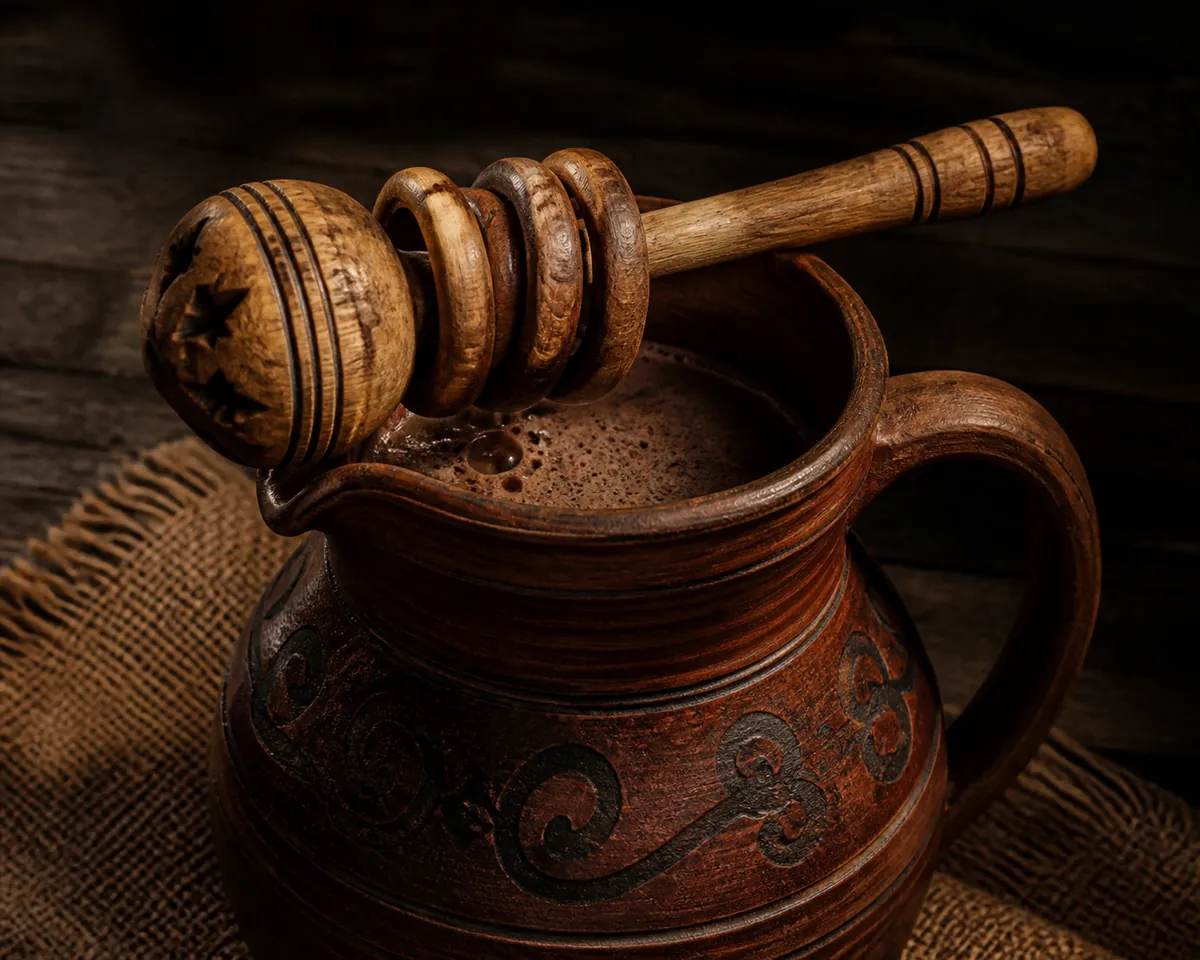
A molinillo is a turned wooden implement with loose carved rings. Held between the palms and spun rapidly, it whips air into the liquid and builds a thick head in under a minute.
Why the foam matters
- DissolveThe tablet is broken and melted into hot liquid.
- AerateRapid spinning forces air into the drink.
- FoamA thick head builds, which is considered essential rather than optional.
- ServeThe drink is poured with the foam, and drunk before it collapses.
The loose rings are the working part. They spin against the liquid rather than travelling with it, and that resistance is what drags air down into the cup instead of merely stirring it around.
Foam has been part of cacao drinks in Mesoamerica for a very long time, originally produced by pouring the liquid between vessels from a height, and the molinillo arrived later to do the same job with less mess on the floor. A balloon whisk or a milk frother will both get there.
What does not work is a spoon, which dissolves the tablet without aerating anything, and a spoon-made cup is the version most people have in mind when they decide the drink is not for them.
Melting it, whisking it, and never boiling it
Heat is the one part of this that can go badly wrong, and it goes wrong in a single specific way.
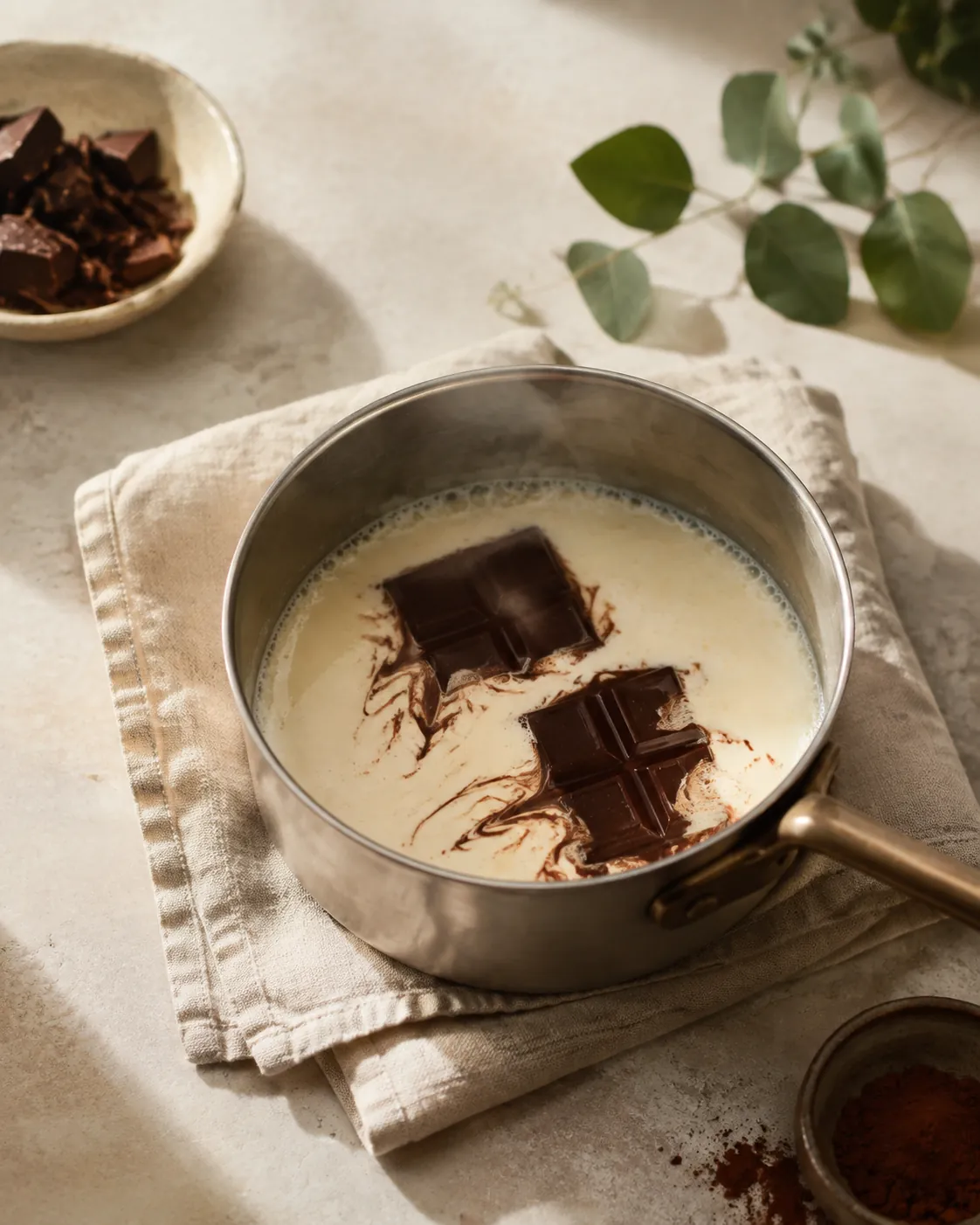
Mexican hot chocolate
- Chocolate tablet
- 1 tablet, about 45 g, chopped or broken
- Milk or water
- 250 ml
- Method
- Heat the liquid, add the chocolate, stir until melted
- Whisk
- Vigorously for 30 to 60 seconds until a thick foam forms
- Serve
- Immediately, foam and all
Traditionally it is often made with water rather than milk, which lets the cocoa and the canela come through more directly. Milk makes it rounder and is the commoner preparation outside Mexico.
A plant drink works as readily here as it does in a stovetop hot cocoa, though an almond milk foams thinly, and a coconut drink suits the tablet particularly well because the flavours belong to the same family.
That gentle-heat rule governs any cocoa drink and is the usual cause of a scorched flavour. Here it costs the foam as well, which is why the pan comes off the heat before the tablet goes in.
Making Mexican hot chocolate walks the timings through, and most of what turns up in Mexican hot chocolate problems is either a boiled pan or a spoon used where a whisk was needed.
Champurrado, atole and chocolate de agua
One relative is worth knowing about, because it is what a good many people actually mean when they ask for this drink.
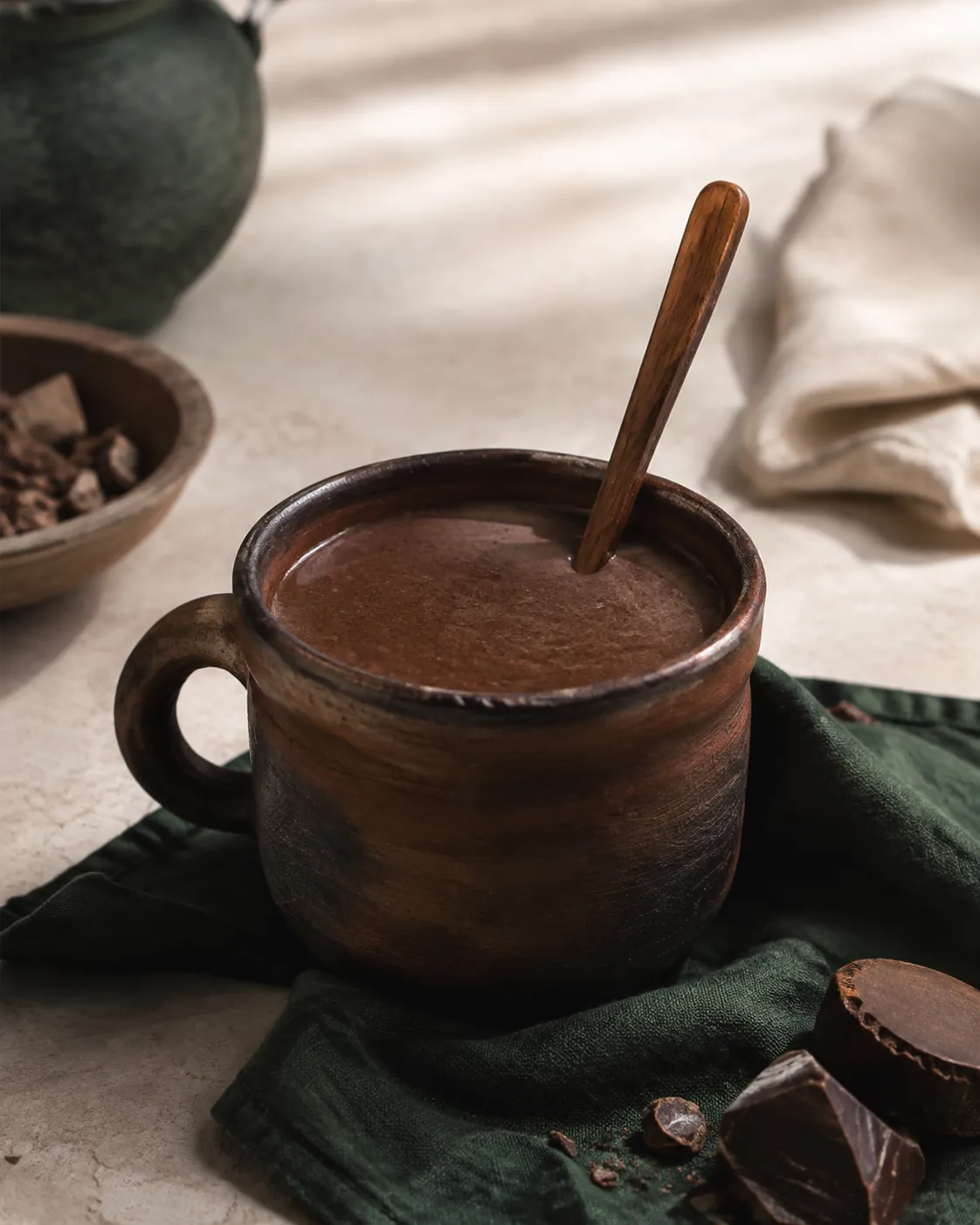
Champurrado is Mexican hot chocolate thickened with masa harina, the nixtamalised corn flour used for tortillas. That places it in the atole family: thick, warm, corn-based drinks eaten as much as drunk.
Mexican hot chocolate
Chocolate tablet, liquid, whisked to a foam. A drink.
Champurrado
The same, thickened with masa harina. Much thicker, closer to a thin porridge.
Atole
The broader family. Masa-thickened, often flavoured with fruit or vanilla rather than chocolate.
Chocolate de agua
Made with water rather than milk. The more traditional preparation.
Champurrado is a winter and festival drink, tied closely to Day of the Dead and to Christmas. It is substantial enough to be breakfast rather than to sit beside one, and a spoon is not an eccentric way to approach it.
The masa changes the whisking as much as it changes the body. A thickened liquid holds less air, so a champurrado carries a denser head that falls sooner.
Anyone expecting something in the register of a hot cocoa finds the first mouthful startling.
Chilli, and how it is actually used
Chilli in cocoa is genuine rather than invented, though it is far less universal than its reputation abroad suggests.
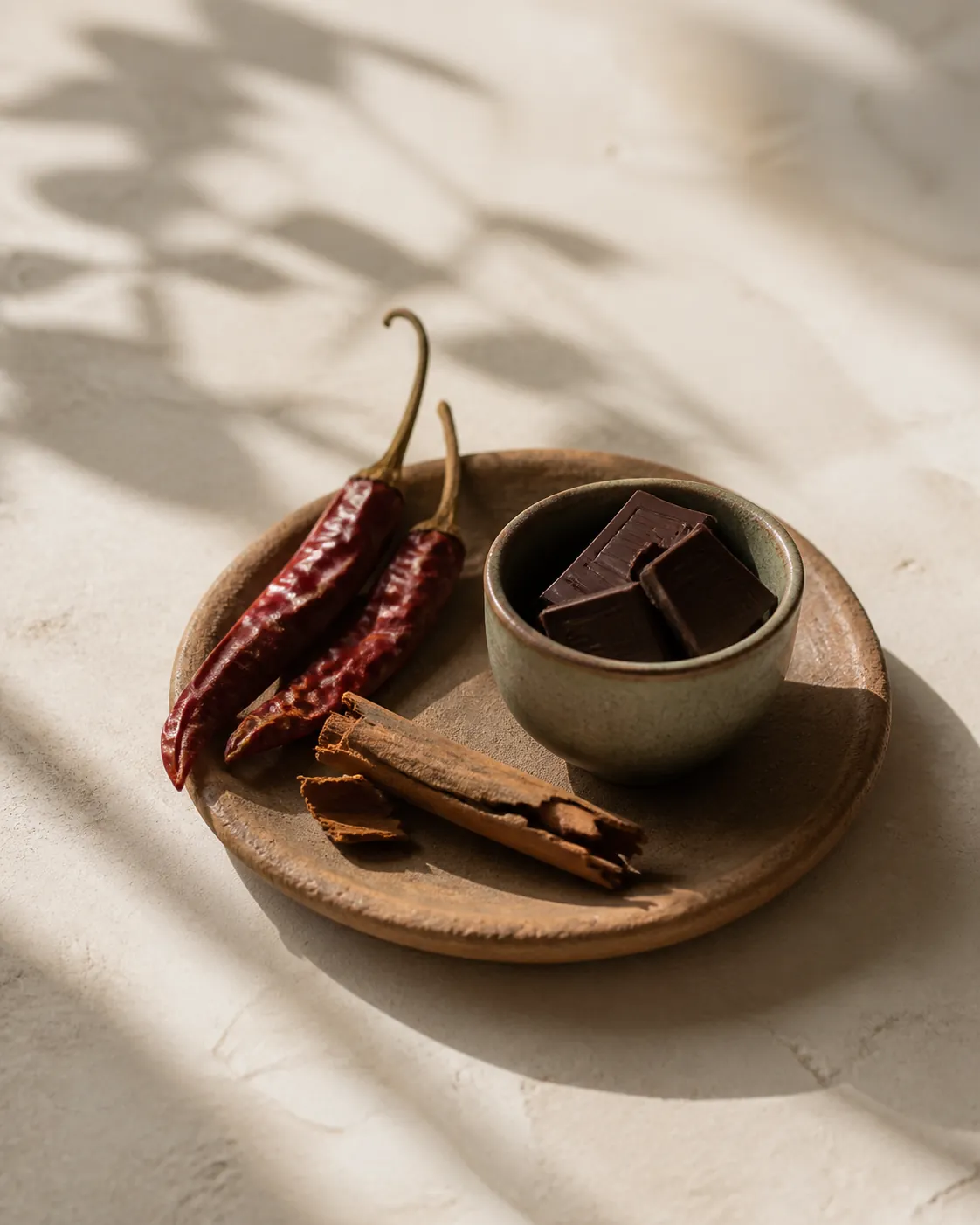
Cacao and chilli were combined in Mesoamerica long before sugar reached the region, so the pairing predates the sweet version of the drink entirely. Modern Mexican hot chocolate is usually not spicy at all, and chilli is a choice a cook makes rather than a defining ingredient.
Where it is used, a small quantity of ancho or a pinch of cayenne goes in with the chocolate. The heat is meant to arrive at the back of the throat after the sweetness rather than to lead the drink.
Start with less than you think, taste, and add more next time. Building the heat across two attempts is far easier than rescuing one, because a cup that has gone too far can only be lengthened with more liquid, which flattens the foam.
Sweetening it further with honey pushes it further out of balance rather than back into it.
Buying a tablet, finding the canela, or grinding your own
Two ingredients decide the result, and both are easier to source than they were a decade ago.
- Check the cocoa percentage. Many mass-market tablets are very high in sugar.
- Look for canela rather than generic cinnamon in the ingredients.
- Stone-ground artisan tablets are noticeably coarser and more interesting.
- Tablets scored into segments are easier to portion; one segment per 100 ml is a guide.
- Store them like chocolate, in a cool dry place away from strong smells.
A high-sugar tablet is the commonest disappointment. If a cup tastes mostly sweet, the tablet is the problem rather than the method, and no amount of whisking will correct it.
Two or three brands dominate the mass market while artisan stone-ground tablets come from specialist chocolate shops. None of them use Dutch-process cocoa, which would flatten precisely the character the tablet is built around.
Making something close at home is possible, and the attempt is instructive even when the result is approximate.
An approximation, roughly
- Cocoa nibs or unsweetened cocoa
- 100 g
- Sugar
- 100 g, ideally coarse
- Canela
- 1 to 2 teaspoons, ground
- Method
- Grind together as coarsely as you can, then press into a mould and dry
- Note
- Without a metate the texture will be finer than the real thing
The obstacle is the grind. A metate crushes rather than cuts, and no food processor reproduces what that does to the particle shape, so a home tablet comes out finer and smoother than it should.
What does transfer is the flavour balance: cocoa, a great deal of cane sugar, and canela in a quantity that would look excessive written into a European recipe.
Two traditions, and what each one is aiming at
Setting them side by side makes the character of each far clearer than describing either on its own.
| Mexican | European | |
|---|---|---|
| Base | Coarse spiced tablet | Smooth chocolate or cocoa powder |
| Texture | Slightly grainy, foamy | Smooth, often thick and dense |
| Spice | Cinnamon, sometimes chilli | Usually none |
| Foam | Essential | Absent or a garnish |
| Liquid | Often water | Almost always milk |
Neither is a lesser version of the other. The European drink aims at smoothness, richness and density, and everything from the conching to the choice of a wide cup serves that; this one aims at aroma, spice and a standing head, and it is finished inside a minute rather than built slowly over a low heat.
The cocoa differs before either drink is made. The alkali treatment that smoothed the European product was never part of the Mexican one, so the tablet keeps the fruit and acidity that natural cocoa retains.
A European drinking chocolate is a dessert, where this is closer to a breakfast, and drinking chocolate covers the dense end of that spectrum on its own terms.
Where the drink came from, and what survived
Drinking cacao is Mesoamerican, and the modern cup carries visible traces of that rather than a vague inheritance.
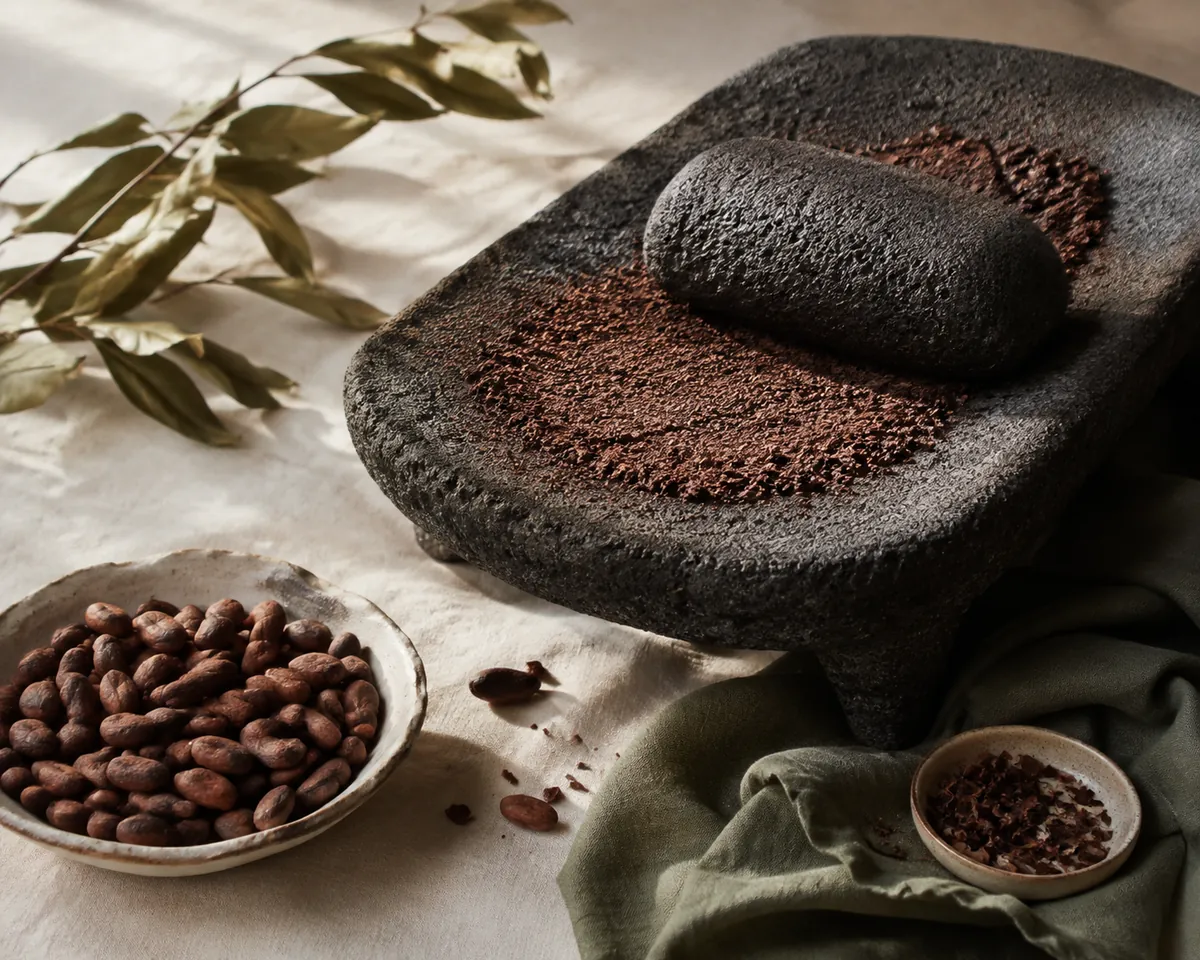
Cacao was drunk there for well over two thousand years: unsweetened, often spiced with chilli and vanilla, and served cold as often as hot. Nothing about it resembled the smooth sweet drink that cocoa powder and sugar later produced in Europe.
Foam was central from the beginning, made by pouring the liquid between vessels from a height. Sugar and cinnamon arrived with the Spanish, and milk followed later still.
What arrived when
- Cacao itselfDrunk in Mesoamerica for over two thousand years
- FoamProduced by pouring between vessels, long before the molinillo
- Chilli and vanillaPre-contact flavourings, still used
- Sugar and cinnamonArrived with the Spanish in the sixteenth century
- MilkThe most recent addition, and still optional
Read down that list and the drink stops looking like a European one with spices added, and starts looking like a much older one that later absorbed a few European ingredients.
That continuity is why the molinillo persists in kitchens where an electric frother would be quicker.
At the breakfast table, and keeping the tablets
Breakfast is where this belongs, which is the first thing a European drinker tends to get wrong about it.
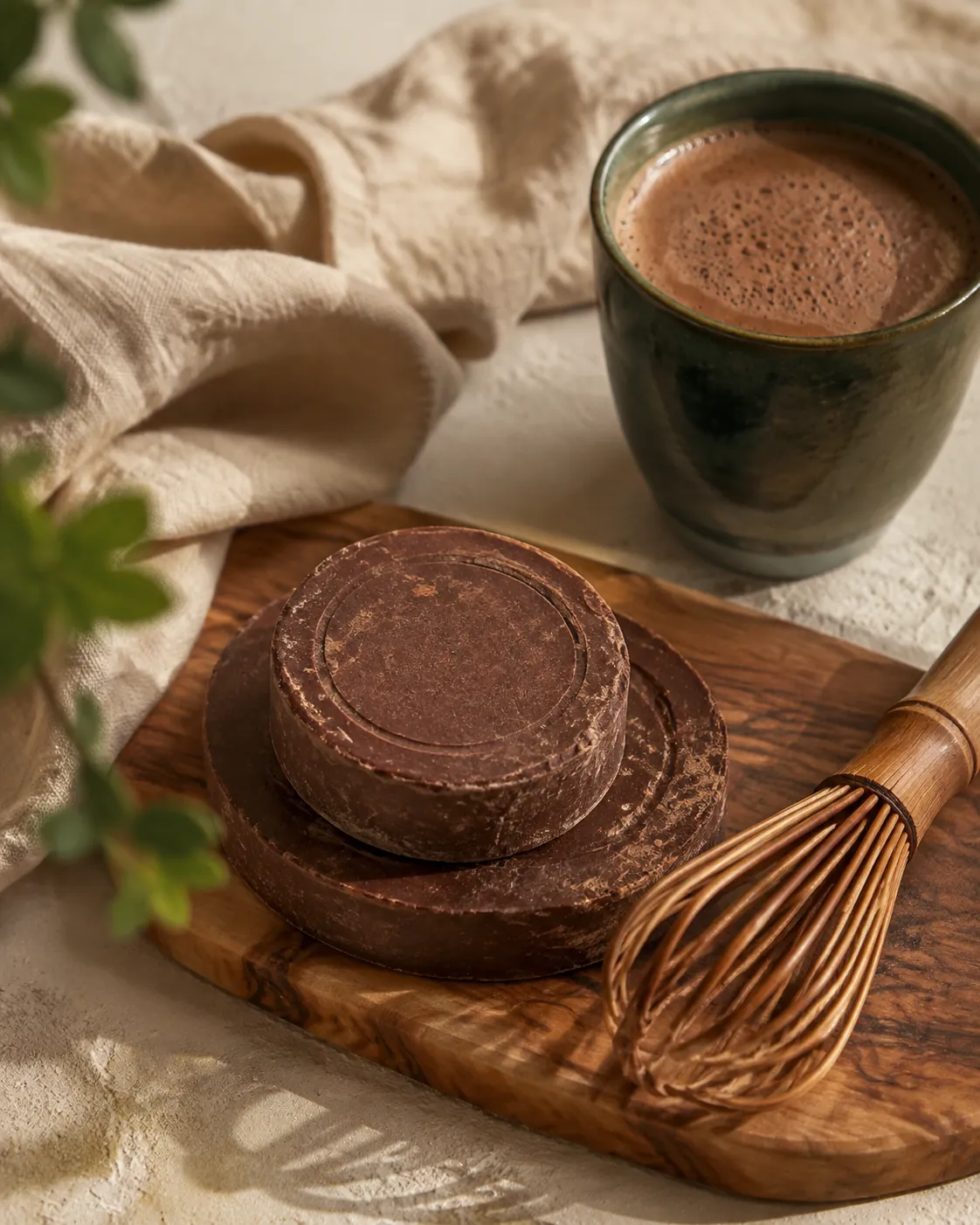
It is commonly a morning drink rather than an evening one, served alongside pan dulce or tamales, and champurrado in particular is substantial enough to be the meal rather than to accompany it. Serve it very hot and straight away, because the foam is the point and it collapses within a couple of minutes.
- Whisk it right before serving, not in advance.
- Use a tall narrow vessel, which keeps the foam standing.
- Do not add cream. It weighs down the foam the whisking just built.
- Taste before sweetening; the tablet already carries a lot of sugar.
- If using water rather than milk, expect a lighter and more direct drink.
Nothing about this drink survives being made ahead. A European hot chocolate batches happily as a concentrate, while here the whole character sits in the last minute of whisking, so the pan waits for the drinker rather than the other way round.
The tablets themselves keep well and have one specific vulnerability. Cool, dry and sealed, they hold for a year or more without much change, because the high sugar content makes them stable and the coarse texture hides bloom that would show on a smooth bar.
What they absorb readily is smells, thanks to the cinnamon oil already in them, so storing Mexican hot chocolate really means keeping the tablets well away from the spice shelf.
Common questions
Why is Mexican hot chocolate grainy?
By design. The tablets are coarsely ground rather than conched smooth like European chocolate, so the sugar crystals stay perceptible. That slight sandiness is a defining characteristic rather than a fault.
Can I use a normal chocolate bar instead of a tablet?
You will get a good drink, but not this one. A smooth dark bar has no cinnamon, no coarse grind and a different sugar balance. Adding canela helps, but the texture will still be European.
What is the difference between Mexican hot chocolate and champurrado?
Champurrado is the same drink thickened with masa harina, the corn flour used for tortillas. That makes it far thicker, closer to a thin porridge, and places it in the atole family of corn-based drinks.