What Is Rosehip Tea? Brewed From the Fruit of the Rose
Rosehip tea is made from the fruit of the rose, not a leaf, and that changes everything about how it brews. It also explains why so much of what is sold under the name is mostly hibiscus.
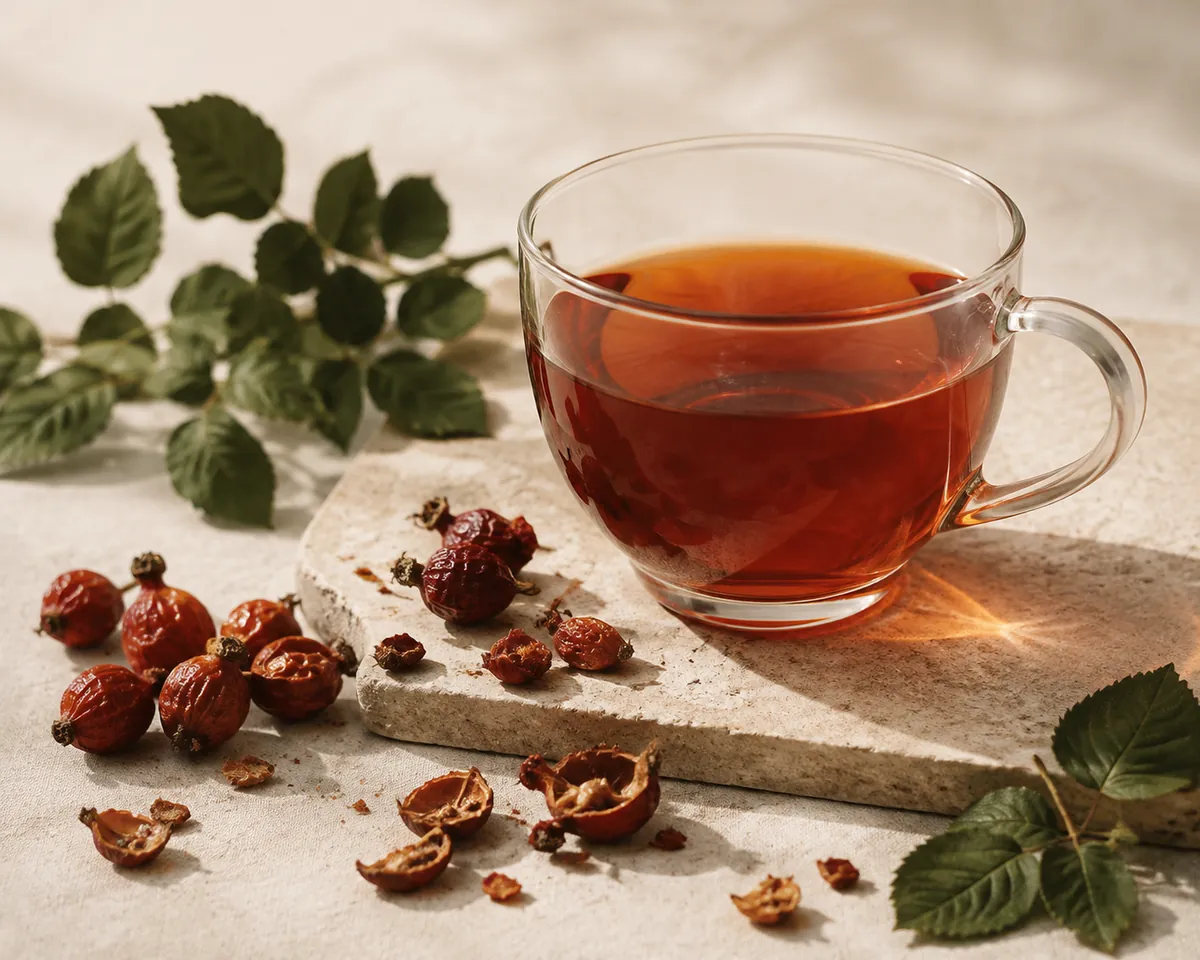
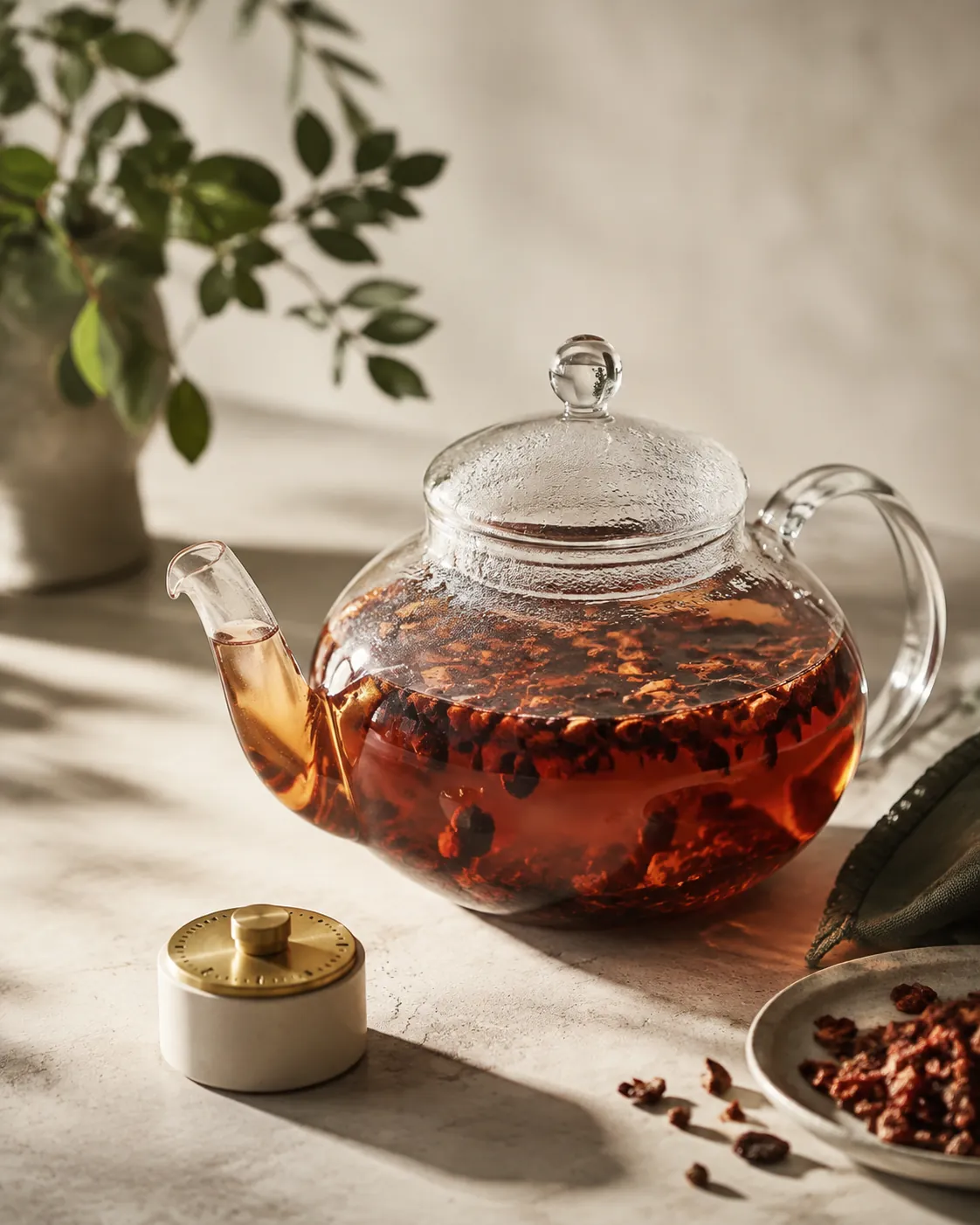
Rosehip tea is an infusion made from the fruit of the rose rather than from any leaf. The hip is the swollen pod left behind after the petals drop, and dried, broken and steeped it gives a tart, faintly floral drink with no caffeine in it.
Two things follow from it being a fruit. It behaves nothing like a leaf infusion in the pot, wanting more heat and far more time than any tea would tolerate.
And it is tart rather than astringent, which is a different sensation entirely: acid on the sides of the tongue instead of a drying grip across the whole mouth.
There is a third thing, and it explains most of the confusion around this drink. A great deal of what is sold as rosehip tea is mostly hibiscus, and the two taste and look nothing alike once separated.
Rosehip at a glance
- Plant
- Usually Rosa canina, the dog rose
- Part used
- The hip, the fruit left after the flower
- Caffeine
- None
- Liquor
- Amber to russet orange, not red
- Character
- Tart and fruity, with a light floral edge
- Common blend partner
- Hibiscus, often in the majority
What a rosehip actually is
After a rose flowers and drops its petals, the base of the flower swells into a firm oval fruit, ripening from green through orange to a deep red. That is the hip.
Left on the bush it stays through winter, which is why hedgerows carry them long after everything else has gone.
Commercially the hips come almost entirely from the dog rose, a wild scrambling species found across Europe, rather than from garden roses. Wild hips are smaller, firmer and more strongly flavoured than the fat ornamental ones, and they dry better.
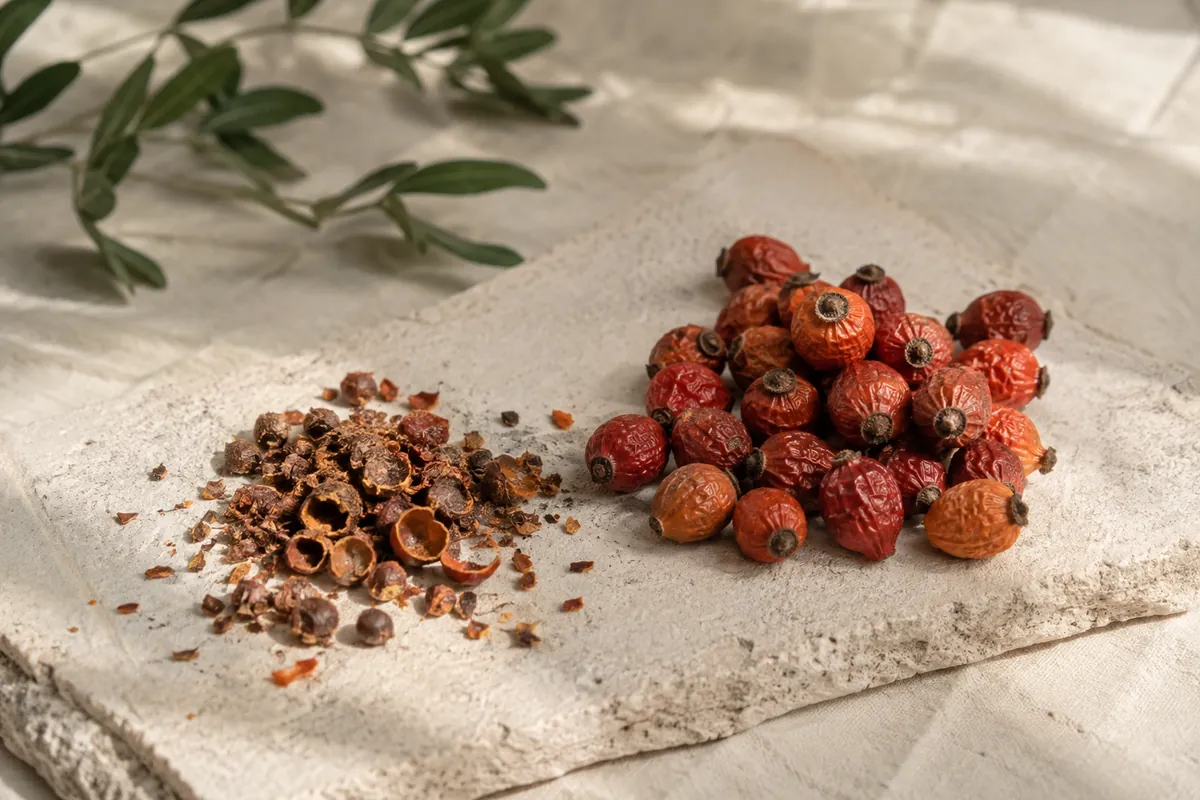
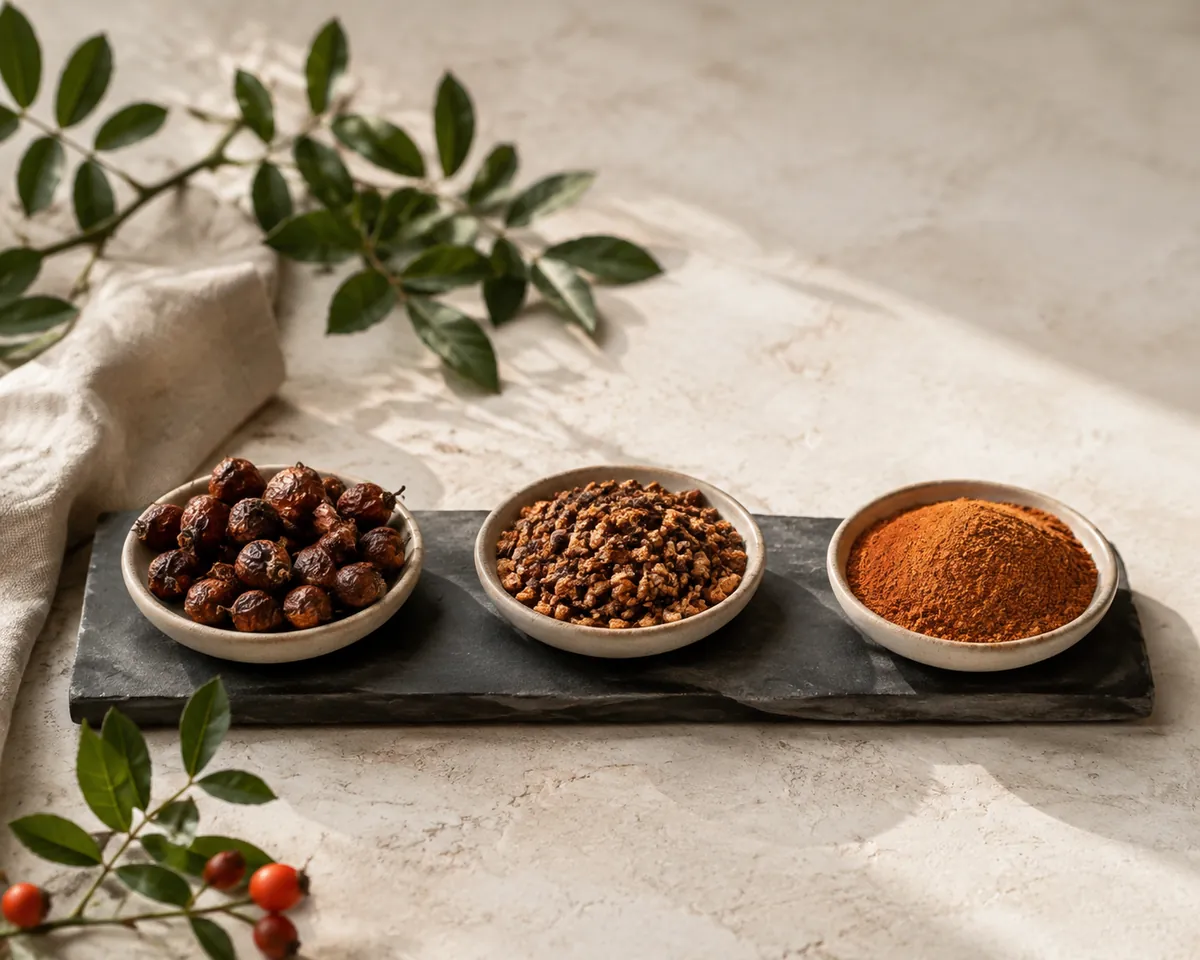
The fruit is processed by drying and then breaking, since a whole dried hip is close to a stone and gives up almost nothing to water. What ends up in a bag is either coarse shell pieces, a finer cut, or a powder.
None of this resembles tea processing. There is no withering, no oxidation and no rolling, because there is no leaf to do any of it to.
Rosehip belongs with the fruit infusions, and its closest handling relative on the shelf is hibiscus rather than anything from a tea bush.
Why most rosehip tea is mostly hibiscus
Pick up a supermarket box labelled rosehip and read the ingredients in order. Hibiscus is very often first, sometimes by a wide margin, with rosehip second or third.
The box is not lying, but the drink in it is not what the name suggests.
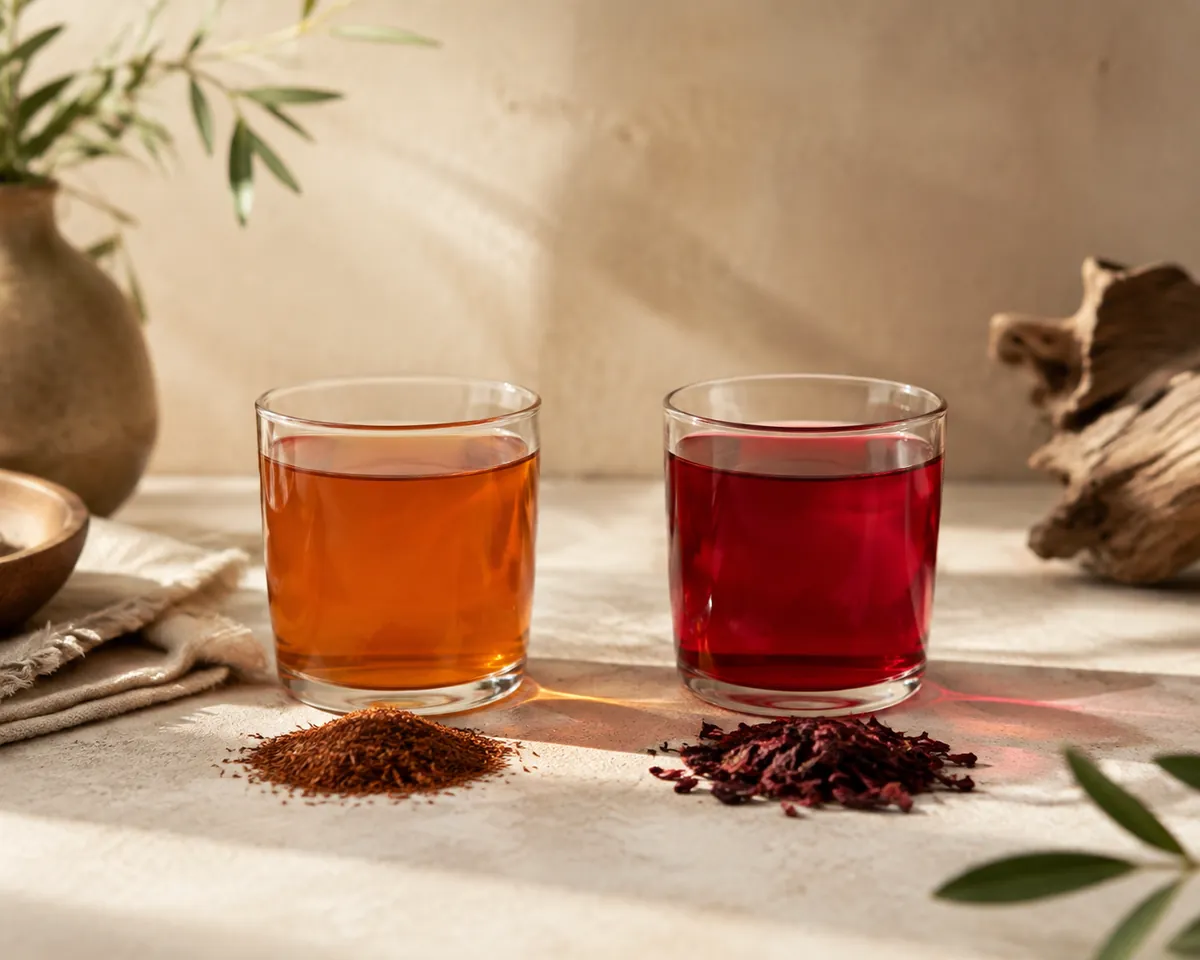
The reason is colour. Pure rosehip brews to a modest amber-orange that photographs badly and looks weak in a glass mug.
Hibiscus brews to a vivid crimson at a fraction of the dose, so a small proportion transforms the appearance of the whole cup.
Flavour follows the same split. Hibiscus is sharply, almost aggressively sour with a cranberry edge; rosehip is gentler, rounder and more obviously fruity, with a floral note behind the acidity that hibiscus does not have.
Blends are not a problem in themselves, and the two genuinely suit each other. The problem is only that a drinker who has never had pure rosehip may believe they dislike it, when what they actually met was a hibiscus drink wearing its name.
The taste of rosehip on its own
Unblended rosehip is far quieter than its reputation. The first impression is fruity and slightly sweet, somewhere between apple skin and dried apricot, with the tartness arriving a beat later rather than at the front.
The floral note is the part that surprises people. It is faint and rose-adjacent without being perfumed, and it sits at the end of the sip rather than in the aroma, which is why a cheap blend that buries it under hibiscus loses the whole point of the ingredient.
There is no astringency to speak of. Rosehip carries almost none of the tannin that makes a strong black tea grip, so a long steep produces a more concentrated, more acidic drink rather than a harsh one.
Body is where it disappoints if you expect too much. A pure rosehip infusion is thin, and it needs either a longer steep or more material than most packets suggest. A heaped tablespoon of cut hip per mug is a reasonable starting point, which is roughly triple what you would use of a leaf.
Why it needs longer and hotter than a leaf
A dried hip is dense shell.
Water has to penetrate a hard, low-porosity fruit wall before it can dissolve anything, and that takes time and temperature in a way that opening a rolled leaf does not.
Tartness, sharpest first
- HibiscusAggressively sour, cranberry-like, fast to extract
- Rosehip and hibiscus blendSour led by the hibiscus
- Rosehip alone, long steepFirmly tart with a fruity middle
- Rosehip alone, short steepMild, faintly sweet, underpowered
- Rooibos and honeybushNo acidity at all
Use water at a full boil. The careful temperature management set out in steeping temperature is aimed at leaf, and none of the reasons for it apply here: there is nothing delicate to scorch and nothing bitter waiting to be released.
Ten minutes is a reasonable minimum and fifteen is better. Rosehip rewards patience in a way almost nothing else on the shelf does, and a five-minute steep is the single most common reason people find it watery.
Simmering works too, and traditionally that is how hips were handled before anyone put them in a bag. Two to three minutes at a gentle simmer, then a rest off the heat, extracts more than a long steep at declining temperature.
The hairs inside the hip, and why they are removed
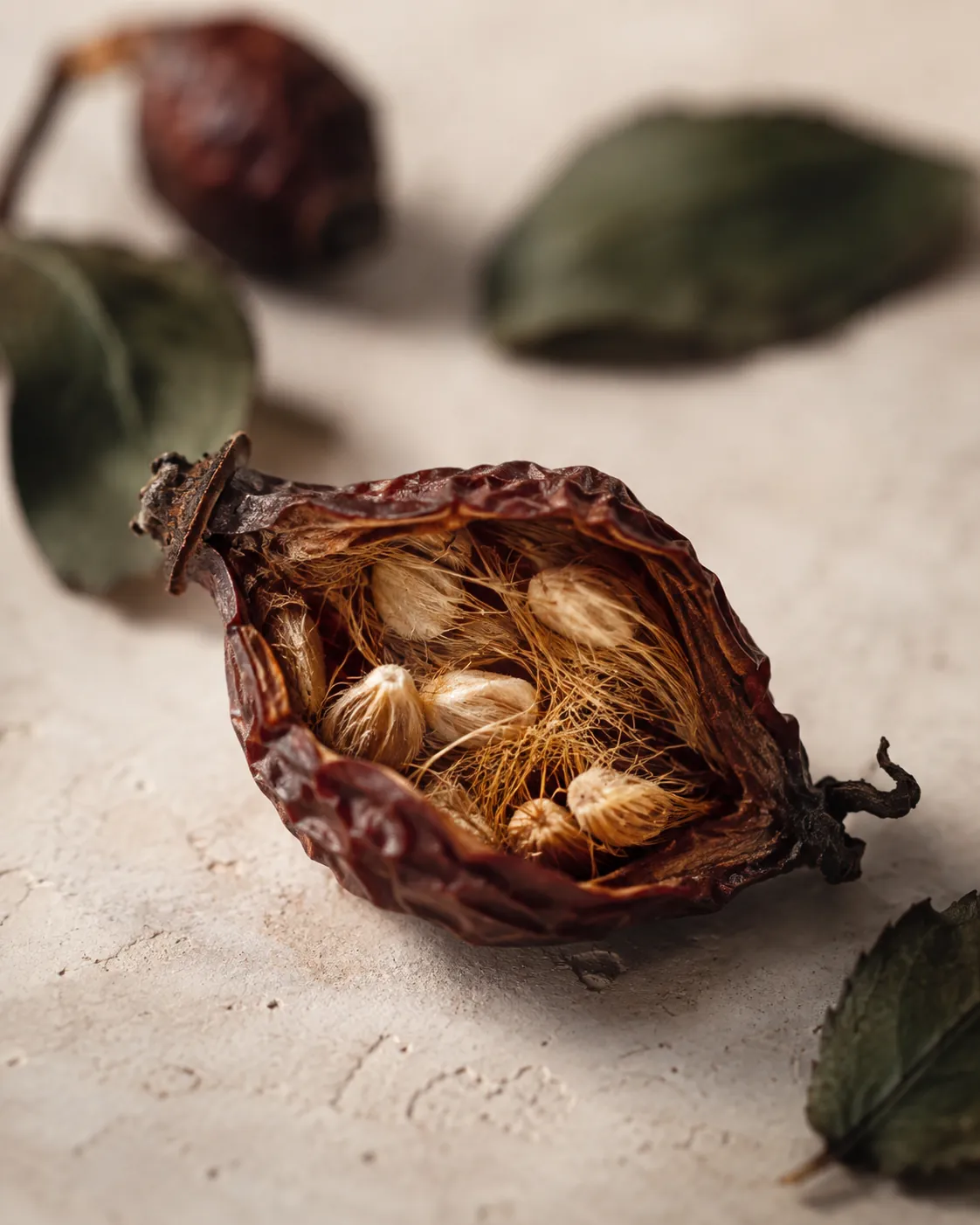
Split a fresh hip and you find seeds packed in a mass of fine, stiff hairs. Those hairs are the reason hips cannot simply be dried whole and dropped into water at home, and they are a genuine nuisance rather than a curiosity.
From hedgerow to bag
- PickingRipe red hips, traditionally after the first frost
- ToppingStalk and blossom end trimmed away
- SplittingThe hip opened and the seed mass removed
- DeseedingSeeds and hairs cleared out, which is the laborious part
- DryingSlow drying until the shell is hard and brittle
Commercial rosehip is always deseeded, and the material in a bag is shell only. That is worth knowing when you compare prices, because the yield from raw fruit to usable shell is poor and it is why rosehip costs more per gram than most dried leaf.
Home preparation is possible but tedious, and the fine filtering afterwards is not optional. Anyone gathering their own hips needs a close-woven cloth or a paper filter rather than the basket infuser that would do for shop-bought pieces.
Brewing whole hips, cut hips and powder
The three forms behave very differently, and the packet rarely says which you have bought until you open it.
| Cut shell | Powder | Whole hips | |
|---|---|---|---|
| Extraction | Slow and even | Fast, sometimes muddy | Very slow |
| Steep time | 10 to 15 minutes | 3 to 5 minutes | Simmer, 15 minutes plus |
| Clarity | Clear | Cloudy | Clear |
| Straining | Basket or bag | Fine cloth or paper | Easy |
| Best for | Everyday brewing | Blending into cold drinks | Making syrup |
Cut shell is the default and the most forgiving. Powder is faster but cloudy, and it can taste slightly dusty if over-dosed, which happens easily because a spoon of powder holds far more material than a spoon of shell.
Whole hips are for syrup rather than for tea. Simmered down with sugar and strained, they make the thick red preserve that was a familiar British pantry item for decades, and the flavour of it is what many older drinkers actually recognise in the cup.
Water hardness matters more here than for most infusions, because acidity is doing so much of the work. Hard water rounds off the tartness and dulls the colour, as water for brewing sets out in the general case.
Cold brew, and iced
Cold water extracts rosehip slowly but cleanly, and the acidity comes through with less of the flat cooked note a very long hot steep can produce. Twelve hours in the fridge is the working figure, and the result is clearer than a hot brew chilled.
Overnight in a jug
- Cut rosehip shell
- 30 g
- Cold water
- 1 litre
- Time in the fridge
- 12 hours
Iced from hot is the alternative and it needs the usual over-brewing correction described in iced tea, because melting ice will otherwise thin an already light drink into nothing. Brew at double strength and pour over a full glass of ice.
Sweetening is a matter of taste and rosehip takes it well, which is unusual for a tart drink. A little honey suits the fruit better than cane sugar does, since the floral note has something to hold on to.
A broken stick of cinnamon dropped into the jug does the same job without adding anything sweet.
What it blends with, and what it fights
Rosehip is a good team player and a poor soloist for most drinkers, which is why it appears in so many blends. Its tartness gives structure to herbs that lack any, and its mildness means it rarely dominates.
The acid at work is largely malic and citric, the same family described under citric acid.
- Hibiscus, for colour and a much sharper acidity
- Ginger, which adds the warmth rosehip has none of
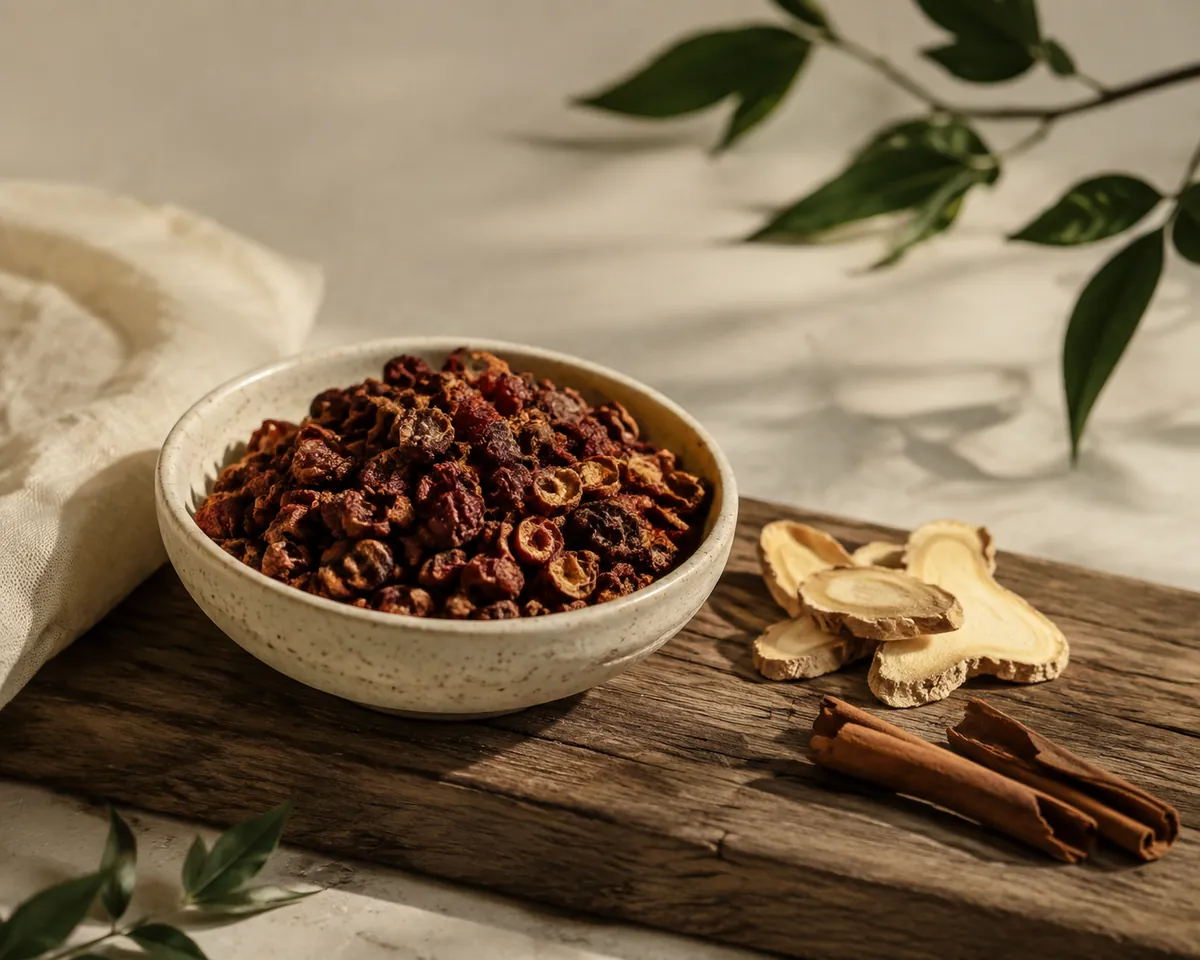
- Cinnamon, which reads as sweetness without any sugar
- Apple or elderberry, which extend the fruit line
- Lemongrass, for a citrus lift over the top of the fruit
What it fights is anything strongly aromatic and cool. Against peppermint the menthol and the acid pull in opposite directions and the result is confused rather than complex, and the same happens with strongly floral partners.
A slice of lemon is the one addition that never hurts, since it extends an acidity the drink already has.
Ginger is the blend worth making at home, and the ratio is roughly three parts rosehip to one of ginger. That combination is the one most likely to convert someone who has only met rosehip as a supermarket red drink.
Reading a rosehip packet
Read the ingredient list before the front of the box, and if rosehip is not first, treat what you are buying as a hibiscus blend and price it accordingly.
- Expect coarse shell pieces with a hard, glassy break, not soft crumb
- Look for a deep orange-red colour rather than dull brown
- Check that seeds and hairs are absent from the bag
- Prefer opaque resealable packaging to a clear window pack
- Buy pure rosehip once, to learn what it actually tastes like
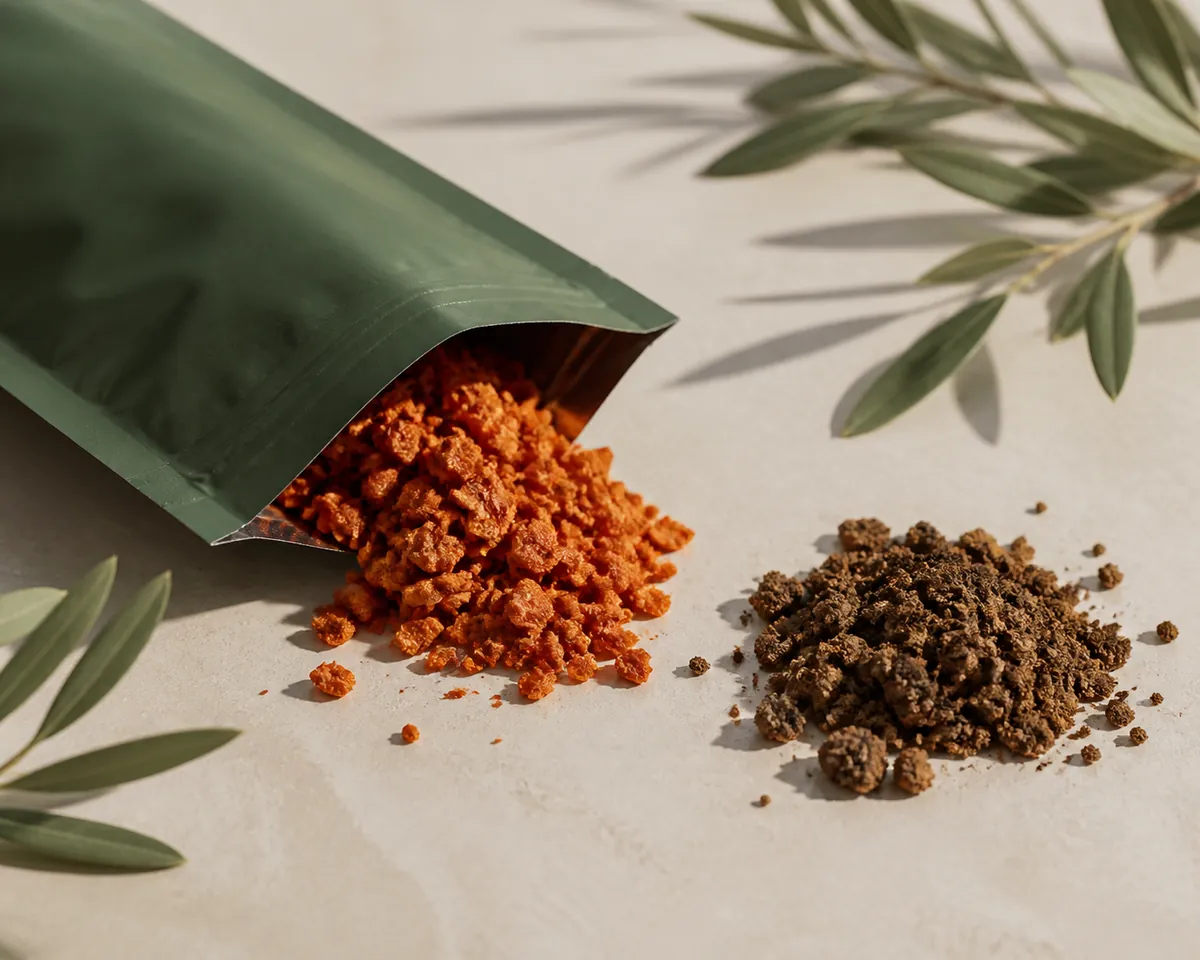
Brown, soft or dusty material has usually been dried too slowly or stored too long, and it brews flat and vaguely woody. Colour survives well in good rosehip, so a faded bag is a reasonable thing to reject on sight.
Price per gram looks high next to leaf, and that is honest rather than a markup. Deseeding is the expensive step, and a cheap bag has usually saved money by cutting the rosehip proportion rather than by being efficient about it.
How long a bag stays worth brewing
Dried rosehip is more robust than an aromatic leaf, because the flavour lives in acids and sugars in the shell rather than in volatile oils that can evaporate. Sealed and dark, a bag stays good for well over a year.
Air
Less critical than for leaf, but an open bag still dulls
Light
Fades the orange, which is the first visible loss
Damp
The real risk; shell picks up moisture and can go soft
Whole
Cut shell keeps better than powder, which stales faster
Damp is the failure mode to watch. Shell that has softened will not crack cleanly between the fingers, and it brews with a musty edge that no amount of steeping burns off.
A tin with a proper seal solves it; the general rules in storing loose leaf cover the rest.
Brewed rosehip keeps unusually well in the fridge, because the acidity works in its favour. Three or four days covered is realistic, and unlike a leaf infusion it does not develop the stewed note that makes day-old tea unpleasant.
Where it sits among the fruit infusions
Rosehip is the moderate one in a category full of extremes. Hibiscus is louder and far more acidic, dried berries are sweeter and simpler, and rosehip sits between them with more shape than either.
Lemongrass is the nearest thing to it in blend behaviour, though it works by aroma where this works by acid.
Against the rest of the herbal shelf it divides cleanly by sensation. Chamomile, honeybush and rooibos are soft and round with no acid at all; rosehip leads with tartness and no bitterness, which is a combination the leaf infusions cannot produce.
Its limits are real. It is thin unless brewed hard, it needs three times the material a leaf would, and on its own it lacks the immediate impact that makes people reach for a drink twice.
What it does better than anything else nearby is supply structure to a blend without shouting, and that is why it turns up in so many of them.
Common questions
Why is my rosehip tea bright red?
Because it is mostly hibiscus. Pure rosehip brews to an amber or russet orange and cannot reach crimson at any strength, so a vivid red liquor means hibiscus is doing the colouring. Read the ingredient list in order rather than the front of the box.
How long should rosehip tea steep?
Ten to fifteen minutes in water at a full boil, which is far longer than any leaf would tolerate. A dried hip is dense shell and water has to penetrate it before anything dissolves, so a five-minute steep is the usual reason the cup tastes watery.
Why does rosehip cost more than most dried leaf?
Deseeding is the expensive step. Each hip has to be split and the seeds and their fine hairs cleared out before the shell can be dried, and the yield from raw fruit to usable material is poor. A cheap box has normally saved money by cutting the rosehip proportion instead.