What Is Lemon Balm Tea? Sharp on the Nose, Soft in the Cup
Lemon balm smells sharply of lemon and tastes soft and sweet, and the whole drink turns on one thing: the aroma sits in volatile oils that leave the leaf during drying, storage and steeping.
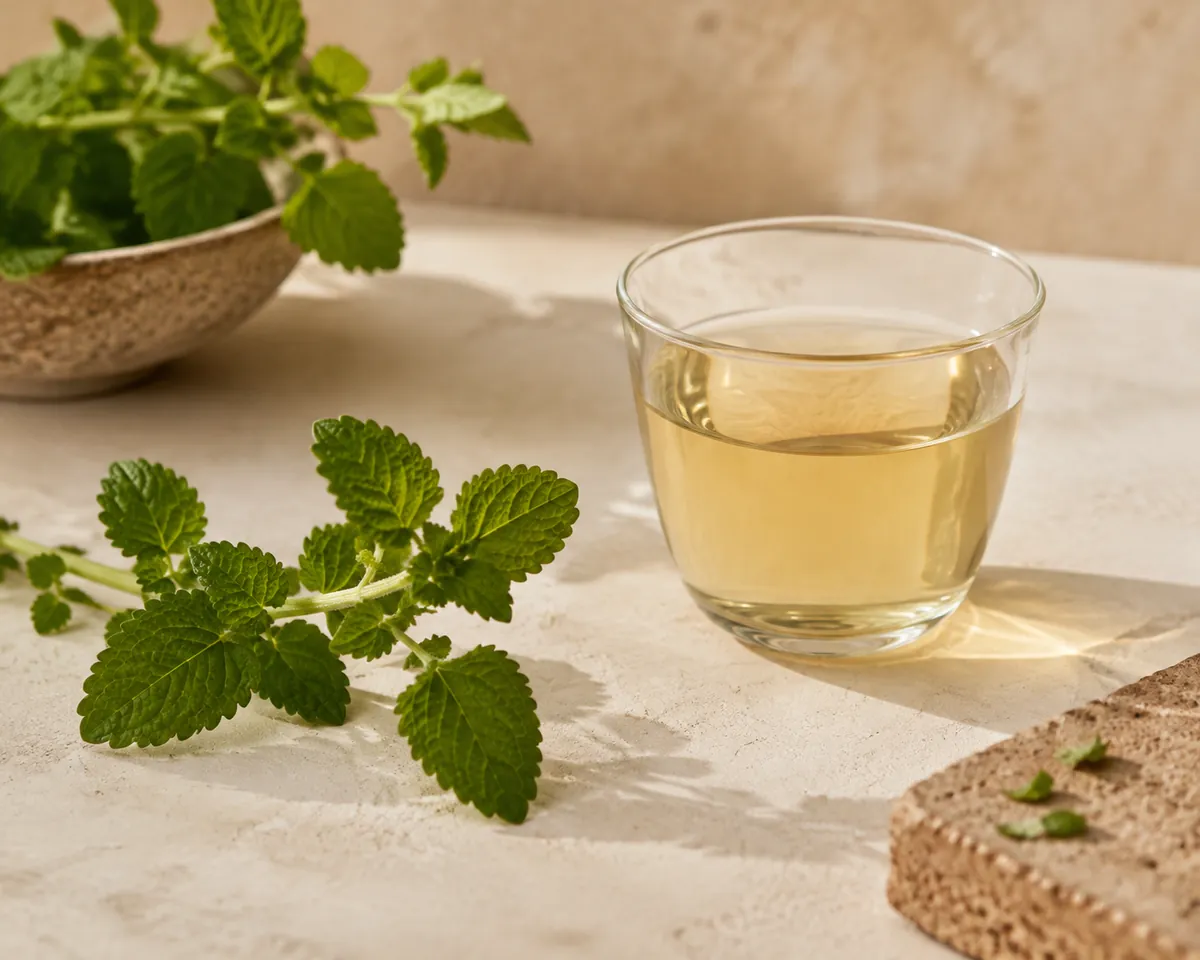
Lemon balm tea is an infusion of the leaves of Melissa officinalis, a soft-leaved member of the mint family that smells strongly of lemon and contains no citrus at all. It brews pale, it carries no caffeine, and it is one of the few herbs where the gap between a good cup and a disappointing one is almost entirely decided before the water goes in.
That gap has a single cause. The lemon character lives in volatile oils sitting in glands on the leaf surface, and volatile means exactly what it says: those compounds leave.
They leave during drying, they leave in storage, and they leave from an open cup.
So the useful question about lemon balm is not how to brew it. It is how much aroma is still there to brew.
Lemon balm at a glance
- Plant
- Melissa officinalis, a mint-family perennial
- Part used
- The leaf, fresh or dried
- Caffeine
- None
- Aroma
- Lemon, from citral and citronellal in the leaf oils
- Liquor
- Pale straw to light gold, never dark
- Best form
- Fresh, by a wide margin
What lemon balm actually is
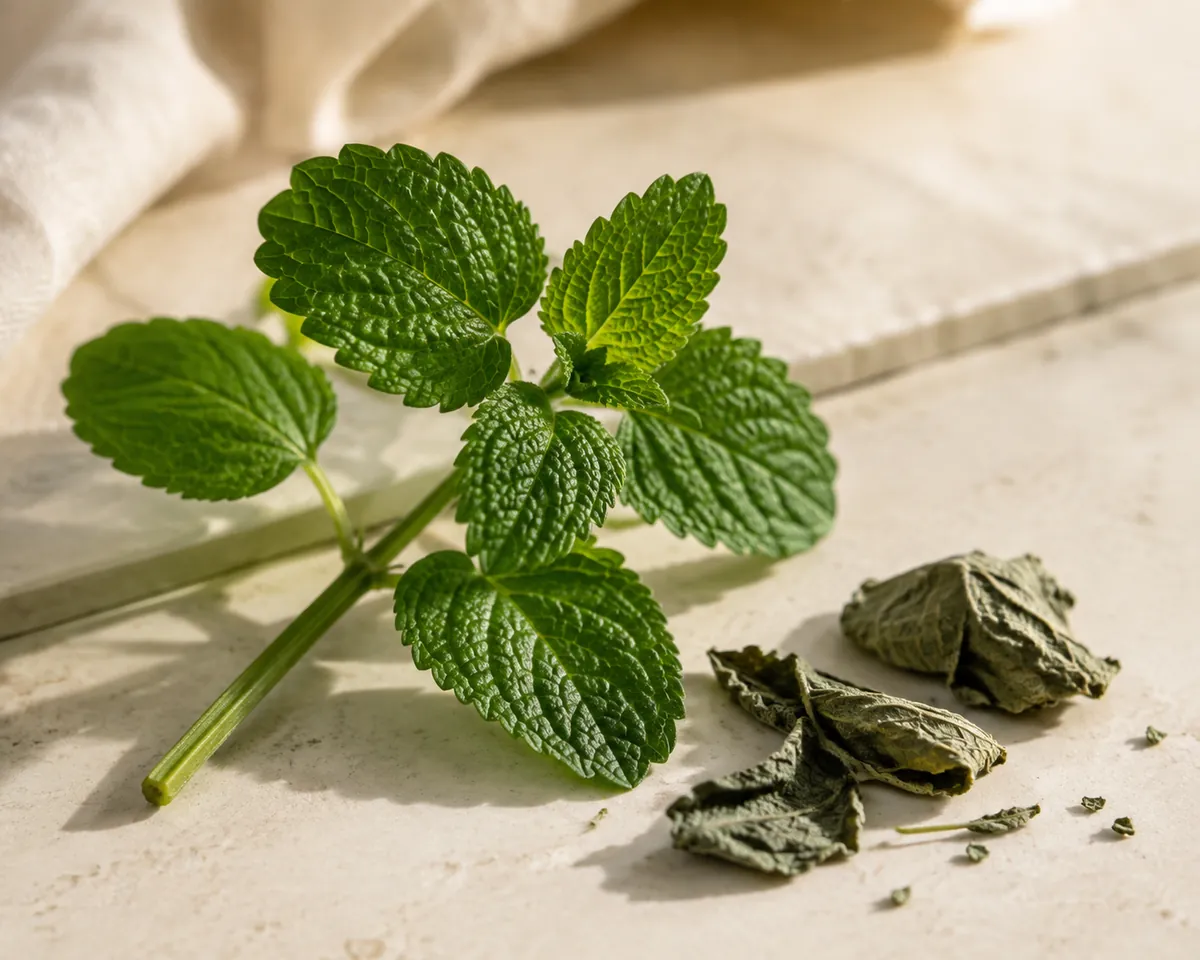
Lemon balm is a low, bushy perennial with soft, slightly crinkled leaves and the square stem that marks out the whole mint family. Crush a leaf between your fingers and the smell is unmistakably lemon, sharper and greener than the fruit itself and with a faint herbal edge behind it.
It is not related to lemons, lemongrass, or lemon verbena, all of which arrive at a similar smell by different routes. Convergent aroma, unrelated plants is the pattern here, and it is why the four taste noticeably different once brewed despite smelling alike on the shelf.
The name is old and slightly misleading. Melissa is the Greek for honeybee, and the plant earned it by drawing bees rather than by tasting of honey.
Its relatives are all familiar: mint sits in the same family, and so do basil, oregano and thyme.
In a drinks context it sits with the leaf infusions rather than the flower or root ones, closer in handling to peppermint than to chamomile or ginger.
Why the lemon smell disappears
Citral and citronellal are the two compounds doing most of the work, and both are small, light molecules that evaporate readily at room temperature. In a living leaf they are held in tiny surface glands.
Break the glands, or dry the leaf slowly in warm air, and they go into the room instead of into your cup.
This is why supermarket dried lemon balm so often tastes of nothing much. It is not adulterated and it is not old in any dramatic sense.
It has simply lost the volatile fraction that was the entire point, leaving a mild green herbal note that could belong to almost any leaf.
The same physics governs the cup. An uncovered mug loses aroma into the air as steam carries it off, which is why covering a lemon balm infusion while it steeps makes a bigger difference here than it does with rooibos or barley tea, where the flavour compounds are heavier and stay put.
Fresh leaf and dried leaf, side by side
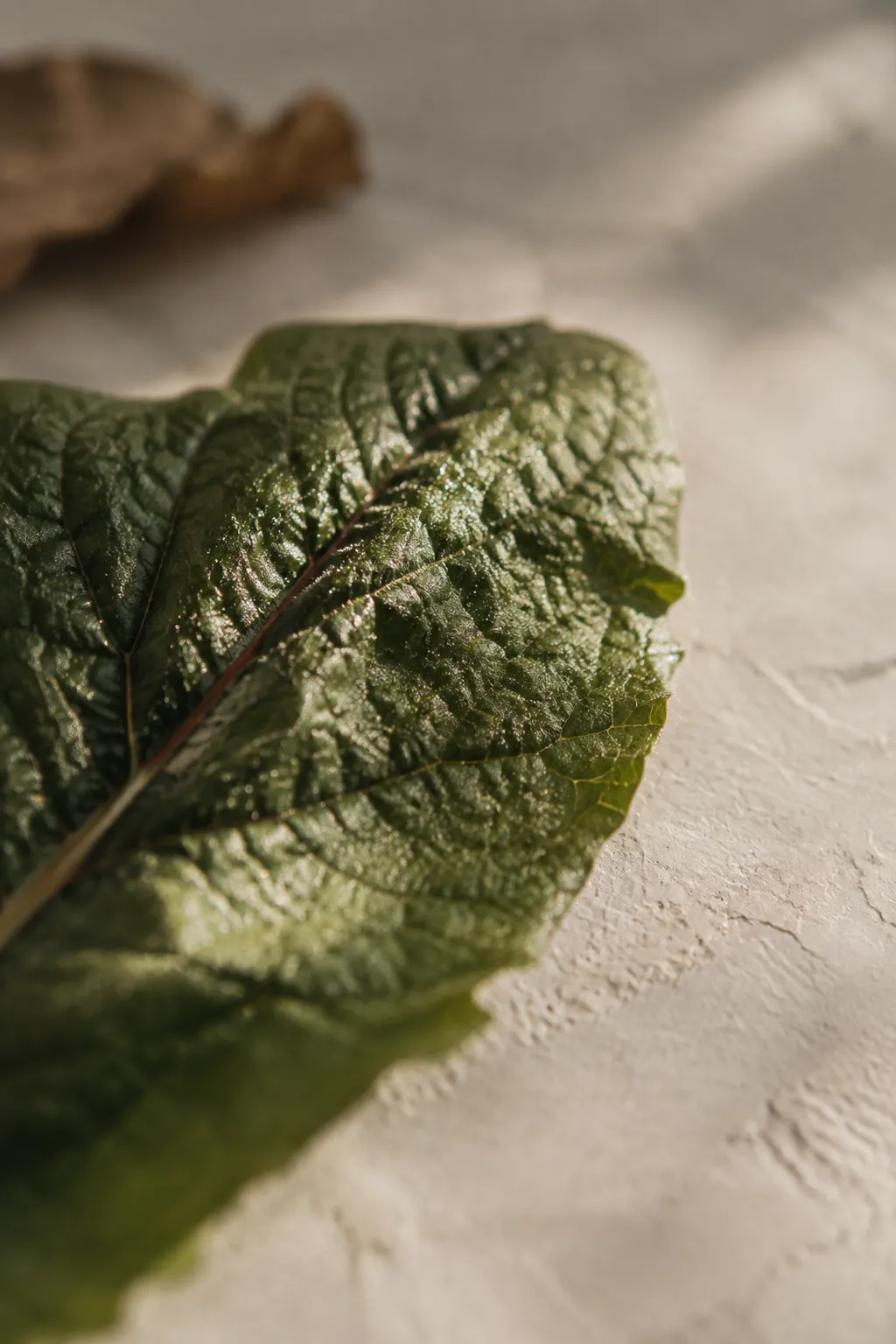
The difference is larger than any other variable in this drink, larger than water, quantity or steep time. A cup from fresh leaf is bright, sweet and clearly lemon.
A cup from ordinary dried leaf is soft, hay-like and only suggestive of it.
| Fresh leaf | Dried leaf | |
|---|---|---|
| Aroma | Bright lemon, immediate | Faint lemon over hay |
| Quantity per mug | A small handful, torn | Two teaspoons |
| Liquor | Pale green-gold | Straw, slightly duller |
| Steep | 5 minutes, covered | 7 to 10 minutes, covered |
| Best use | On its own | Blended, or bulked with mint |
Good dried lemon balm exists, and it is worth finding. Fast, low-temperature drying keeps a real proportion of the aroma, and a bag of it still smells of lemon through the packet.
The packet smell is the test, and it is the only reliable one available before you buy.
If the dried leaf you have is flat, the honest fix is not a longer steep. Longer steeping pulls out more of the dull green background without recovering any of the lemon, so you end up with a stronger version of the wrong thing.
The taste, and what it is not
Brewed well, lemon balm is gentle rather than sharp. There is a lemon-peel top note, a soft grassy middle, and a faintly sweet finish with no astringency and no bite, which is what separates it from a citrus infusion made with actual lemon.
It is not sour. Lemon balm contains no meaningful acid, so the drink registers as aromatic rather than tart, and people expecting the pucker of a lemon slice usually find it strangely soft.
The smell promises a sharpness the taste never delivers, and that mismatch is the whole first impression.
It is also not minty, despite the family. There is none of the cooling sensation menthol gives peppermint, and none of the sweet-hay depth of lemongrass, which is the herb it is most often confused with on a shelf.
Strength behaves oddly compared with tea. Adding more leaf lifts the lemon; steeping longer mostly lifts the green background.
More leaf, not more time is the rule that follows from that, and it is the opposite of what most people try first.
Lemon character, most to least
- Fresh leaf, torn, coveredThe full citral aroma, sweet and immediate
- Fresh leaf, cold infusedSlightly quieter but exceptionally clean
- Well-dried leaf, coveredRecognisably lemon over a hay base
- Well-dried leaf, uncoveredAroma lost to the room during the steep
- Supermarket powdered bagsMild green herbal note, little lemon left
How to brew it so the aroma survives
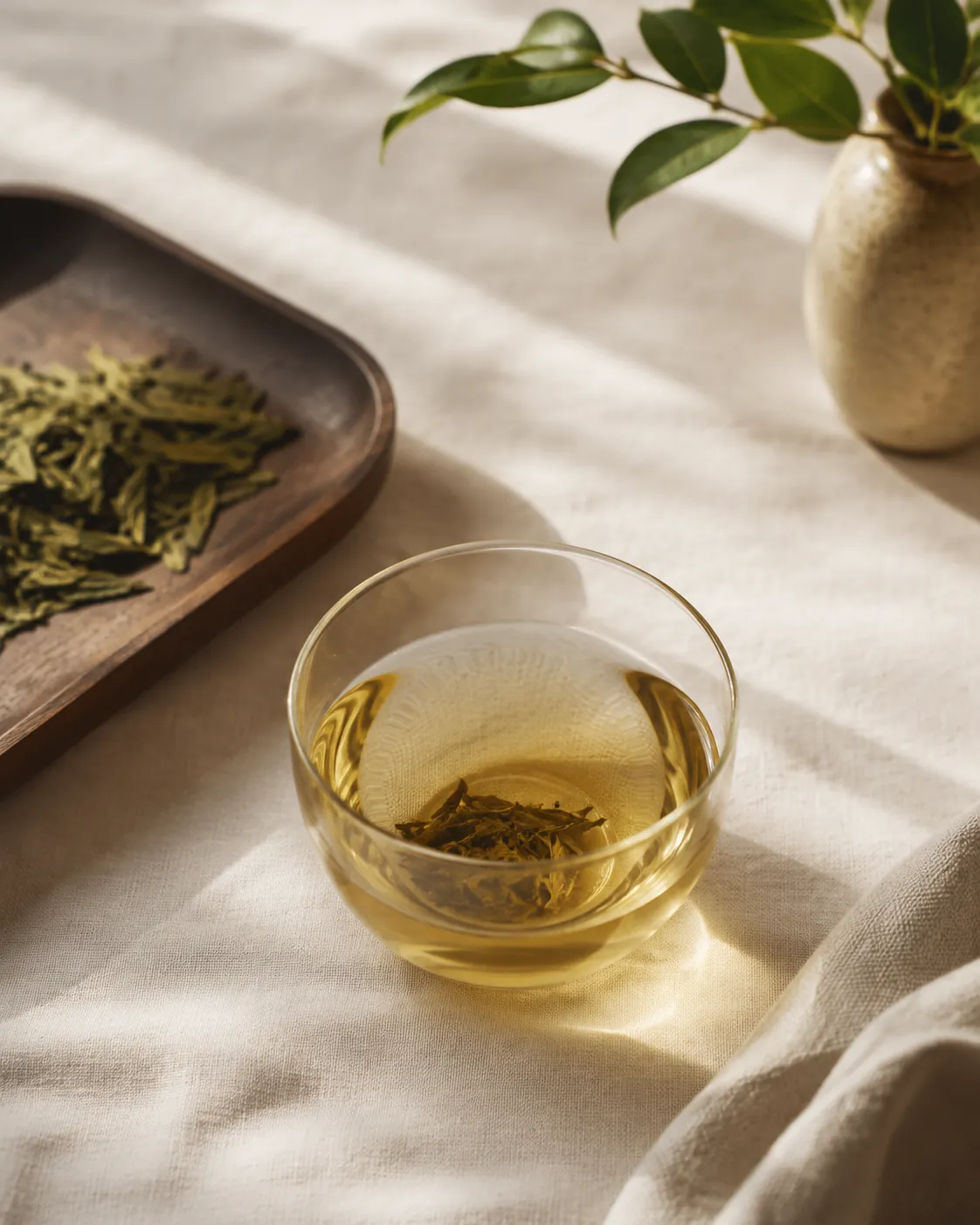
Everything in the method is aimed at keeping volatile compounds in the liquid rather than in the kitchen. Cover the cup, do not boil the leaf, and drink it while it is still fragrant.
A cup that keeps its lemon
- MeasureA loose handful of fresh leaf, torn, or two teaspoons of dried, per mug
- HeatWater around 90 C, off the boil for a minute
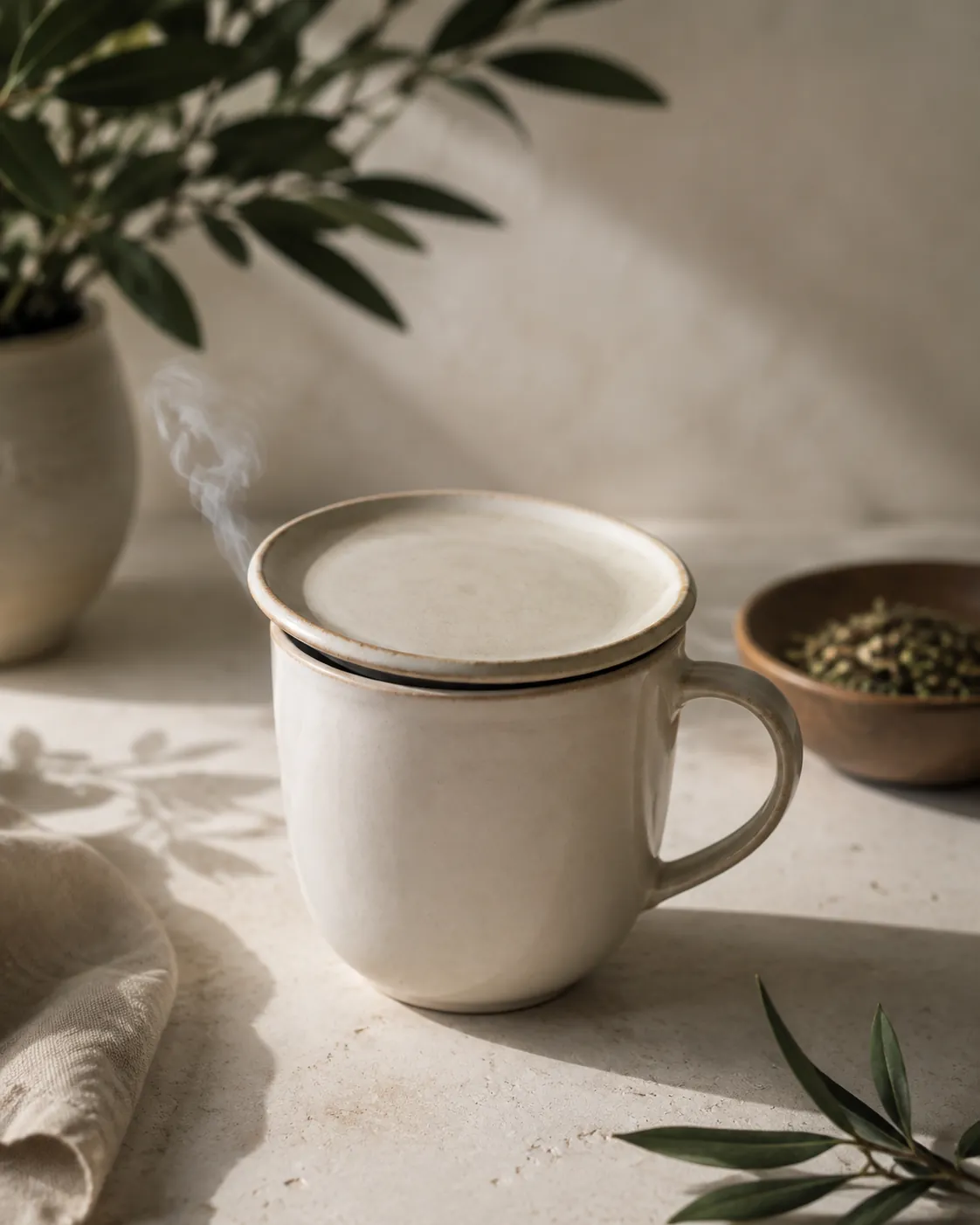
- CoverA saucer or lid over the cup for the whole steep
- SteepFive minutes fresh, seven to ten dried
- ServeStrain and drink promptly; it fades faster than most infusions
Tearing fresh leaf rather than chopping it matters more than it sounds. A knife crushes the surface glands against the board and leaves the aroma there; tearing opens the leaf with far less of that loss.
Boiling water is not catastrophic here, but it is unhelpful. It drives off aroma faster in the first seconds than any subsequent steeping recovers, so the general temperature argument in steeping temperature applies with unusual force.
Soft water helps too, for the reasons set out in water for brewing.
Use a vessel with room. A basket infuser lets whole leaves open; a tight ball crushes them and keeps half the leaf dry.
Growing it, and why fresh is so easy to have
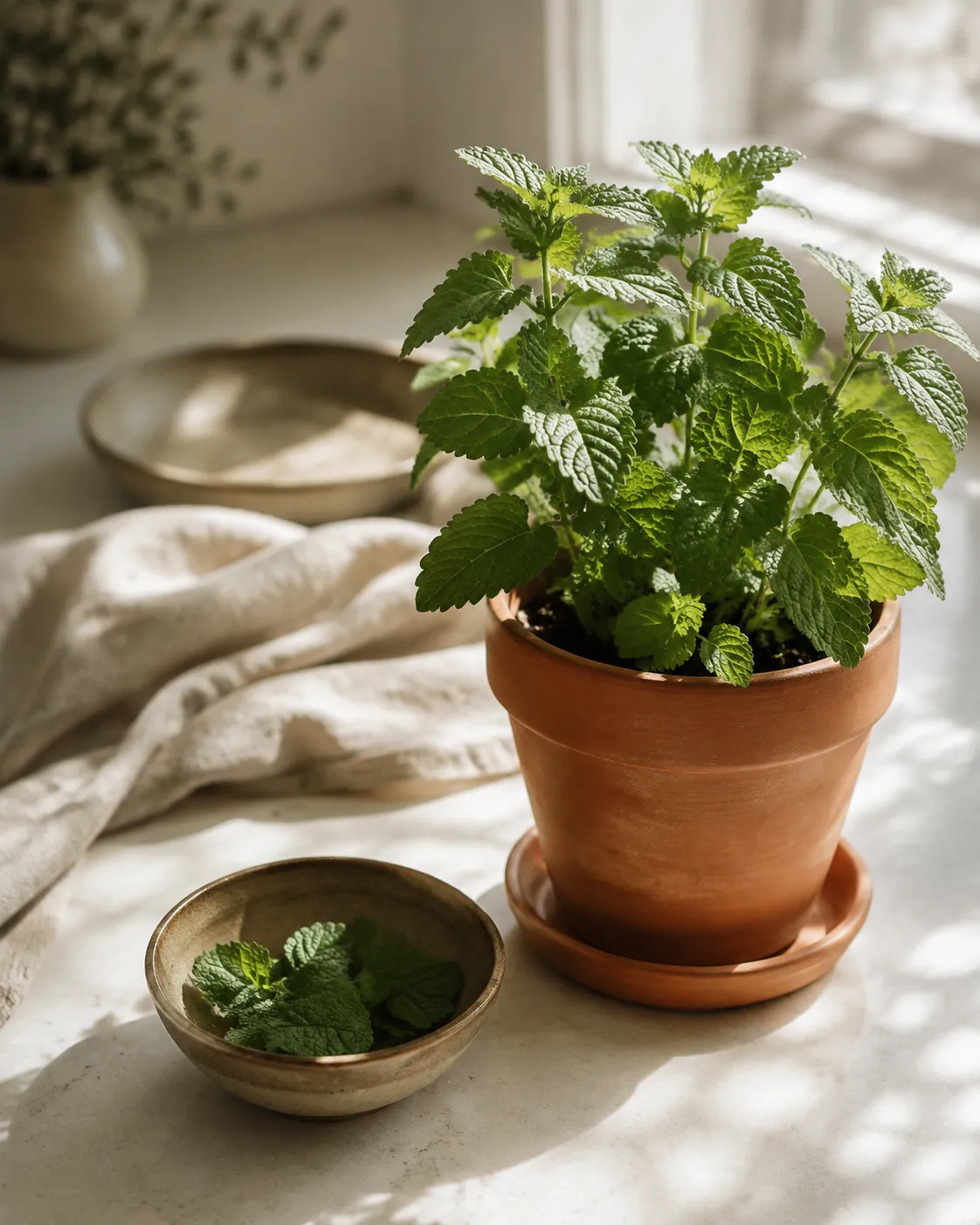
Lemon balm is close to unkillable. It grows in poor soil, tolerates shade, comes back every year, and spreads enthusiastically enough that most people who plant it end up giving some away.
A single plant in a pot on a windowsill supplies more leaf than a household drinks.
Light
Happy in full sun or half shade
Soil
Undemanding; poor soil gives more concentrated aroma
Habit
Perennial, dies back in winter, returns in spring
Spread
Vigorous; a pot keeps it honest
Harvest
Pick before it flowers, when the leaves are most aromatic
That accessibility is the reason to bother. For almost every other infusion on the herbal shelf, the dried commercial product is the realistic option and a fresh one is a curiosity.
Here it is reversed: fresh is both better and easier, and dried is the compromise.
Pick in the morning, after the dew has gone and before the day heats up, which is when the oil content in the leaf is highest. Once the plant flowers the aroma drops noticeably, so cutting it back to delay flowering is the one piece of maintenance worth doing.
Cold infusion, and iced
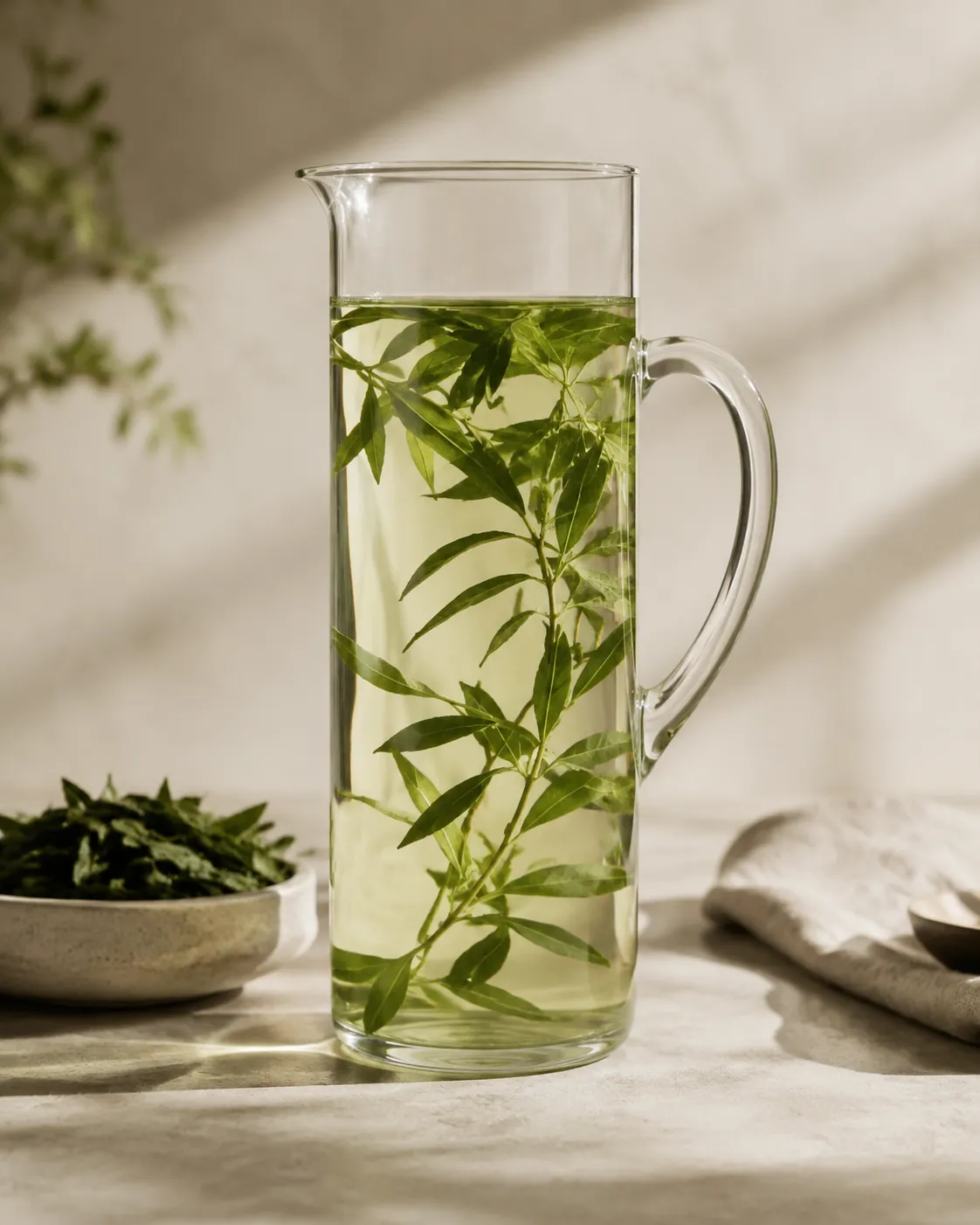
Cold water extracts the volatile aroma slowly but loses almost none of it, which makes cold infusion unusually flattering to this particular leaf. A jug left in the fridge overnight gives a cleaner, more distinctly lemon drink than the same leaf brewed hot and chilled.
Overnight in the fridge
- Fresh lemon balm leaf
- A large double handful
- Cold water
- 1 litre
- Time
- 8 to 12 hours, covered
Brewing hot and pouring over ice is the weaker route, for the obvious reason: the hot stage drives off aroma, and then dilution from melting ice thins what survived. If you must do it that way, the general technique in iced tea applies, brewed at double strength.
Sweetening is usually unnecessary and often counterproductive.
A little honey suits the herbal side of the flavour, but sugar pushes the drink towards lemonade without giving it lemonade's acidity, which lands somewhere unconvincing.
What it blends with
Lemon balm is a supporting flavour more often than a lead one, and it is generous about it. The aroma is distinctive without being loud, so it lifts other herbs rather than covering them.
- Mint, for a fuller body under the lemon top note
- Chamomile, where the lemon cuts the flower's slight heaviness
- Lemongrass, for a longer and more persistent citrus line
- Ginger, which supplies the warmth the leaf lacks entirely
- Green tea, where a little balm reads as freshness rather than as lemon
The blend that disappoints is with anything dark or roasted. Against rooibos or honeybush the lemon simply vanishes under the heavier base, and you are left paying for an ingredient that contributes nothing you can find.
A small amount in green tea is the blend most worth trying, and the ratio is lower than instinct suggests. One part balm to four of tea keeps the balm as a brightening note; anything stronger and the two fight.
What to look for when buying dried
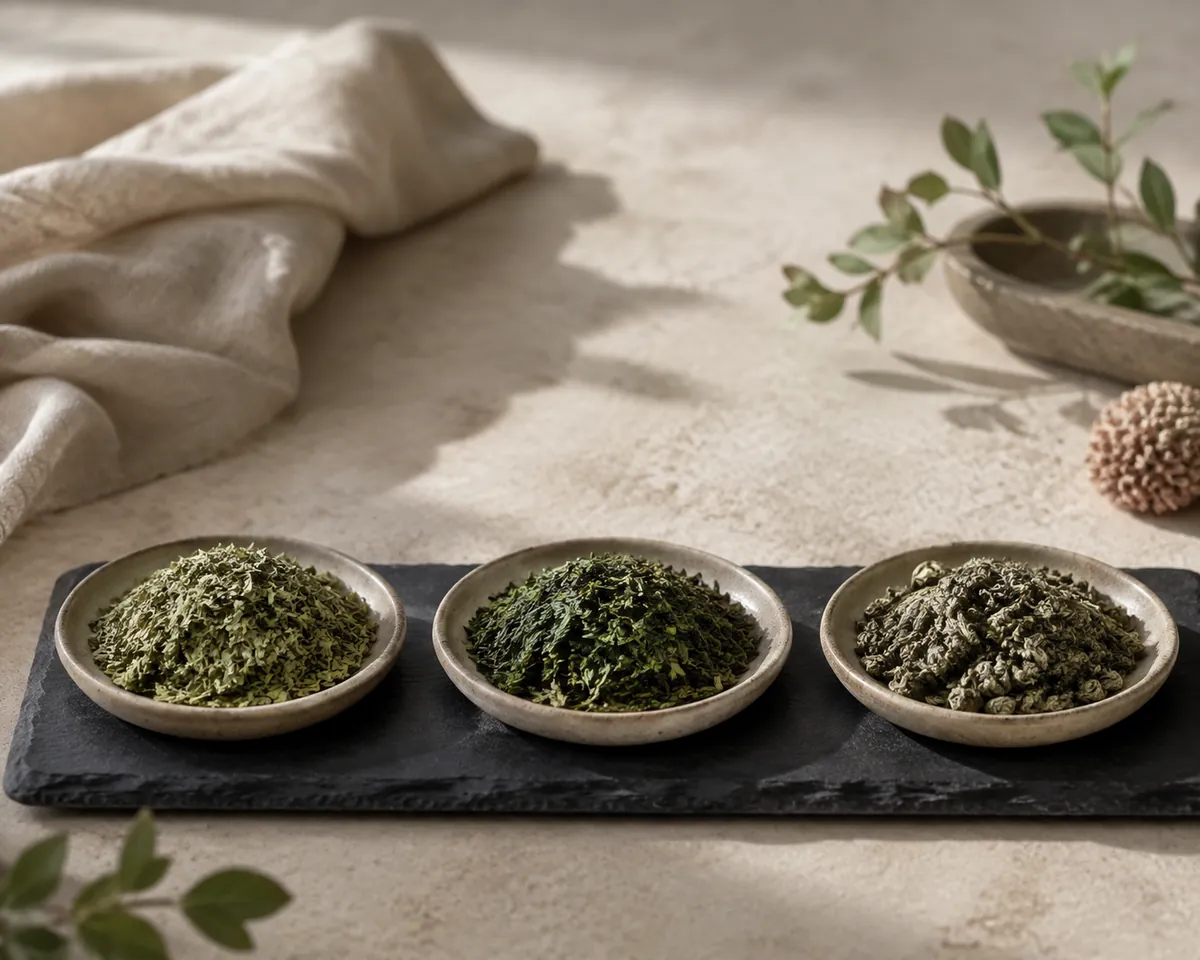
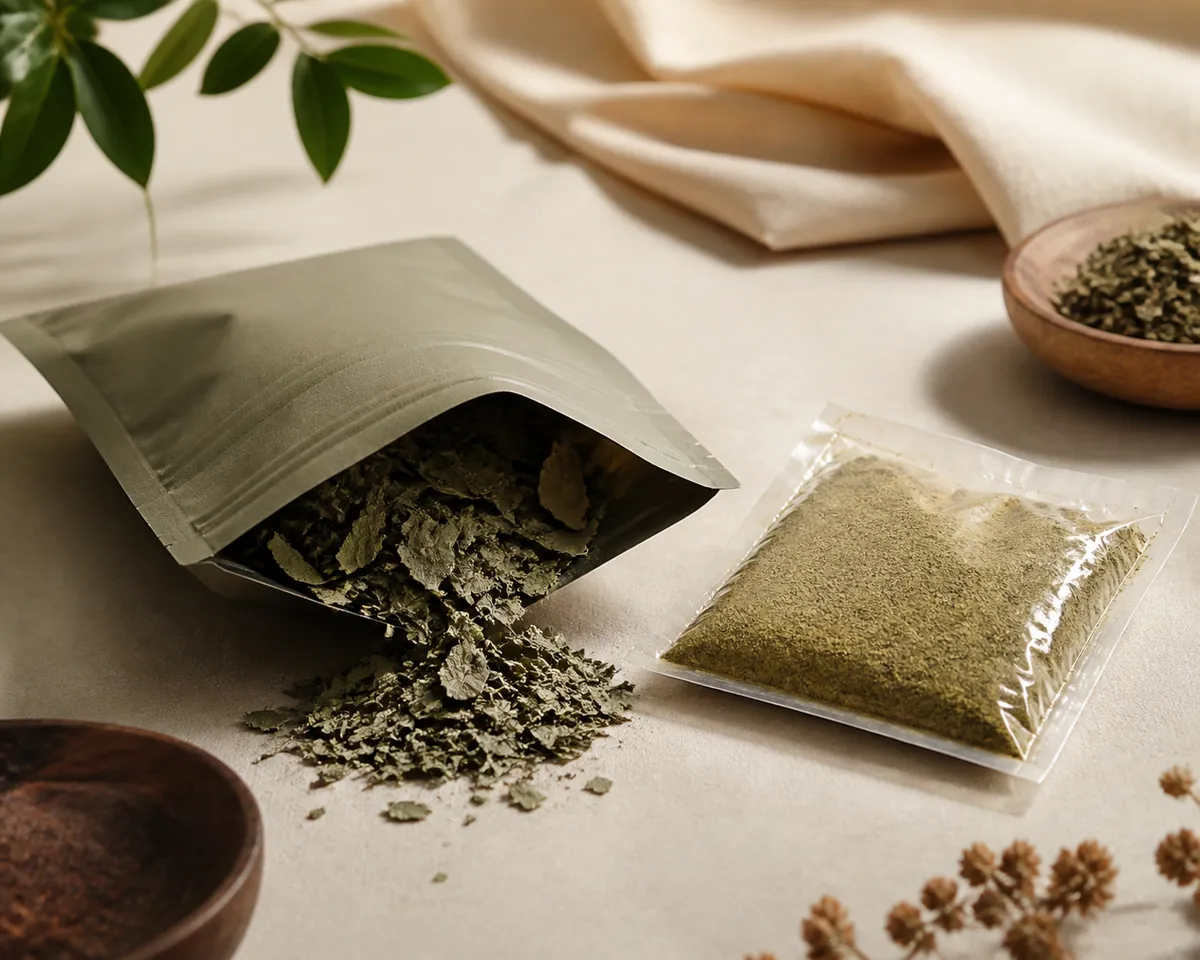
Smell the packet if you possibly can, and treat anything in a clear window pack with suspicion, since light degrades the oils that are already the fragile part.
- Expect visible whole or broken leaf, not a uniform green powder
- Look for grey-green colour rather than khaki or brown
- Choose opaque, resealable packaging over cellophane
- Prefer a recent packing date over a distant best-before date
- Buy small quantities; this is not a leaf to stockpile
Powdered lemon balm in a paper tea bag is the format most likely to disappoint. The grind exposes maximum surface area to air for however many months the box sits on a shelf, and the aroma is largely gone before the bag is opened.
Price is a poor guide here, because what you are paying for is drying quality and freshness, neither of which appears on the label. The packet that smells of lemon is worth more than the one with the better provenance story and no smell at all.
Storage, and how quickly it fades
Dried lemon balm has a shorter useful life than almost anything else in a tea cupboard. Six months in a sealed opaque tin is realistic; a year is optimistic; two years is a herb that has become a green colouring agent.
Air
Decant into a tin that seals properly, not a folded bag
Light
Store dark; the oils degrade under it
Heat
Away from the hob, kettle and any sunny shelf
Whole
Keep the leaf whole and crush it at the moment of brewing
Fresh leaf keeps a few days in the fridge, wrapped loosely in damp kitchen paper inside a bag, and it wilts rather than spoiling. Freezing works better than drying for home use: whole leaves frozen flat keep most of their aroma and go straight into hot water from the freezer.
The general rules in storing loose leaf all apply, only on a compressed timescale.
Buy less, more often is the whole storage strategy for this one leaf, and it is worth breaking the usual bulk-buying habit for.
Where it sits among herbal infusions
Lemon balm is the mild one, and that is a role rather than a shortcoming. It has no caffeine, no bitterness, no astringency and no heat, which leaves it as a plain, aromatic, easy drink for the times when something more assertive would be wrong.
Set against the rest of the shelf it is closest to chamomile in weight and closest to lemongrass in flavour, without quite matching either: less floral than one, less persistent than the other. Against hibiscus it is barely the same category, since that one leads with acidity and this one has none.
The honest summary is that lemon balm rewards proximity. Grown in a pot and picked that morning it is one of the best infusions available; bought dried from a supermarket shelf it is usually forgettable, and no amount of brewing technique closes that gap.
Common questions
Why does lemon balm tea taste weaker than it smells?
The lemon character comes from citral and citronellal, light volatile compounds held in glands on the leaf surface. They evaporate during drying, during storage and out of an uncovered cup, so most dried lemon balm has lost the fraction that carried the aroma. Fresh leaf, or dried leaf covered while it steeps, keeps far more of it.
Is lemon balm the same as lemongrass or lemon verbena?
No. All three arrive at a lemon smell by different routes and are unrelated plants. Lemon balm is a mint-family perennial with soft crinkled leaves, and it brews milder and less persistent than lemongrass, with no citrus acidity at all.
Should you use more leaf or a longer steep?
More leaf. Steeping longer mostly draws out the dull green background rather than the lemon, so a long steep gives a stronger version of the part you did not want. Adding leaf lifts the aroma instead.