How to Make Hibiscus Tea Hot, Iced, or Cold-Brewed
Hibiscus gives up colour almost immediately, but colour is not a timer. A balanced cup depends on the amount of dried calyx, the final volume and whether the drink will meet ice.
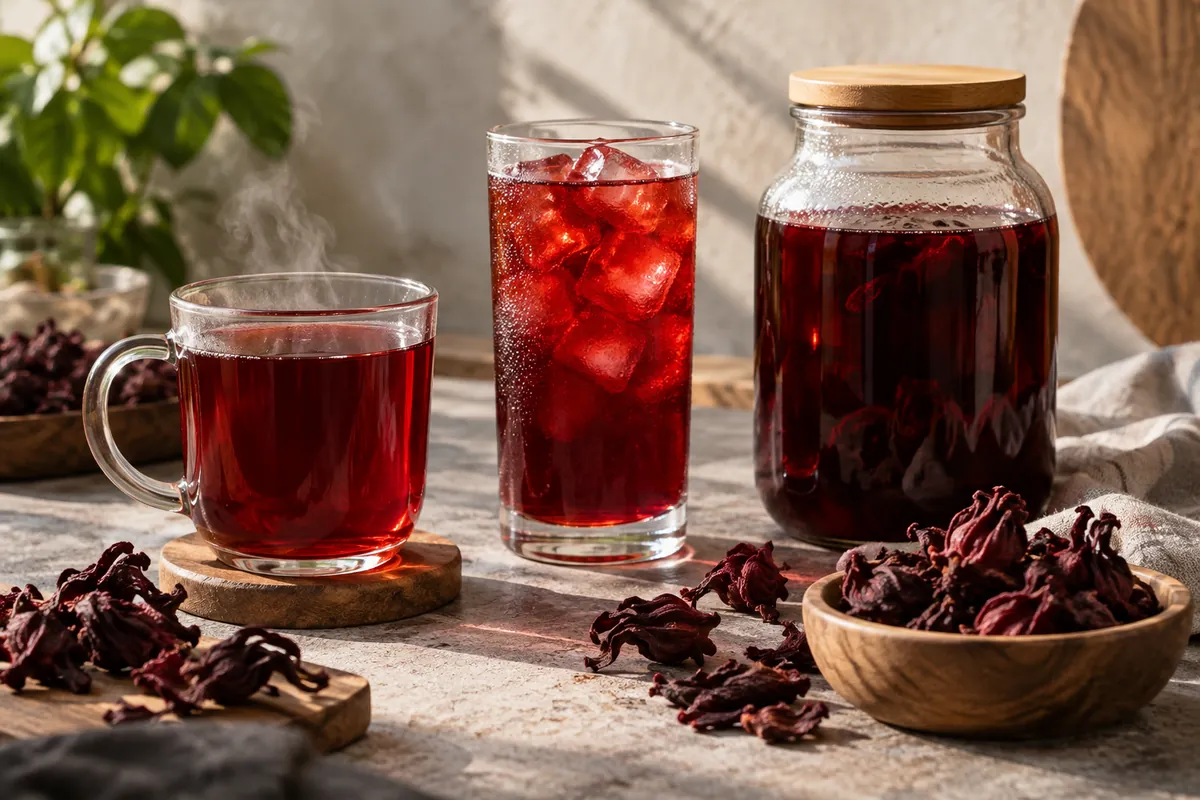
For one hot mug, pour 250 ml of near-boiling water over 3 to 4 g of dried hibiscus calyces, cover and steep for five to seven minutes.
Strain before sweetening so you can judge the real acidity first.
An iced pitcher needs a different calculation because melting ice dilutes it. Brew a measured concentrate, sweeten it while warm, then add cold water and ice to a known final volume.
Start with calyces that smell clean and tart
The dried calyx is the fleshy red cup around the seed pod of Hibiscus sabdariffa, and whole pieces are easier to inspect and strain than powdery material.
A roomy tea infuser can hold a mug dose, but compressed calyces need more space than a tight tea ball provides. The pieces should move freely around the vessel.
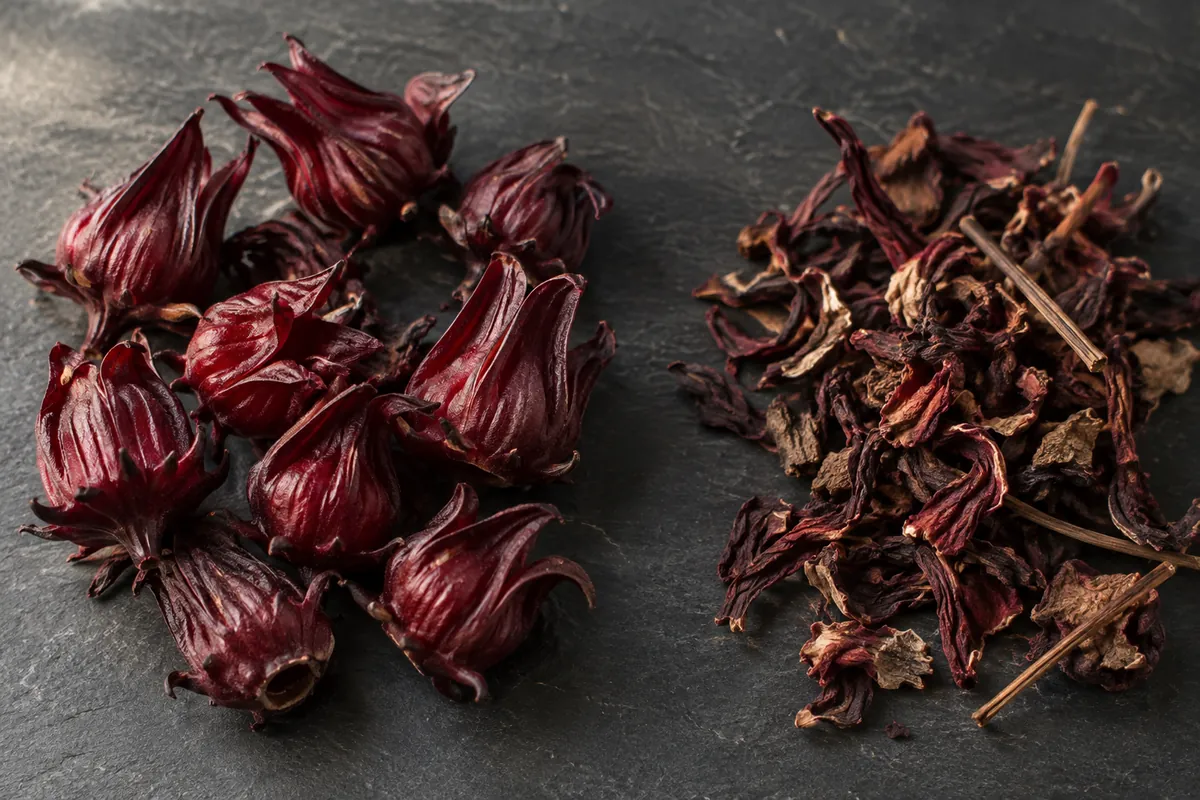
- Choose burgundy to deep-red calyces with a faint tart or fruity smell.
- Reject brown or musty material rather than compensating with a larger dose.
- Remove obvious grit, stems and seed pieces.
- Follow the supplier's washing direction.
- Drain a quick rinse immediately because extraction has already started.
Better raw material needs less correction in the cup. Increasing the dose cannot restore a clean aroma to stale calyces.
What ratio works for a hot mug?
Because spoon volume changes with fragment size, weigh 3 g for a bright lighter mug or 4 g for a fuller, sharper one.
Hot mug starting point
- Dried hibiscus
- 3 to 4 g
- Water
- 250 ml
- Temperature
- 90 to 100°C
- Covered steep
- 5 to 7 minutes
- Adjustment
- Change dose before extending far beyond 7 minutes
Water temperature and dose both change extraction and flavour. In measured tests, 90°C produced the strongest overall extraction, while moving to 100°C did not improve every result.
Near-boiling water is a workable range, so a kettle that has just clicked off needs no one-degree adjustment.
Covering the vessel keeps the temperature more stable and prevents aromatic additions such as citrus peel from escaping as quickly. It also makes a mug and a teapot behave more alike.
Build an iced pitcher around its final volume
Iced hibiscus turns weak when a normal-strength infusion meets ice that was never included in the water formula.
- For a 1 litre pitcher, measure 18 to 24 g dried calyces.
- Infuse them in 500 ml near-boiling water for 7 to 10 minutes.
- Strain and add sweetener while the concentrate is warm.
- Add 250 ml cold water.
- Add enough ice to bring the pitcher close to its 1 litre final volume.
- Taste after the ice has begun to melt, then adjust with water or reserved concentrate.
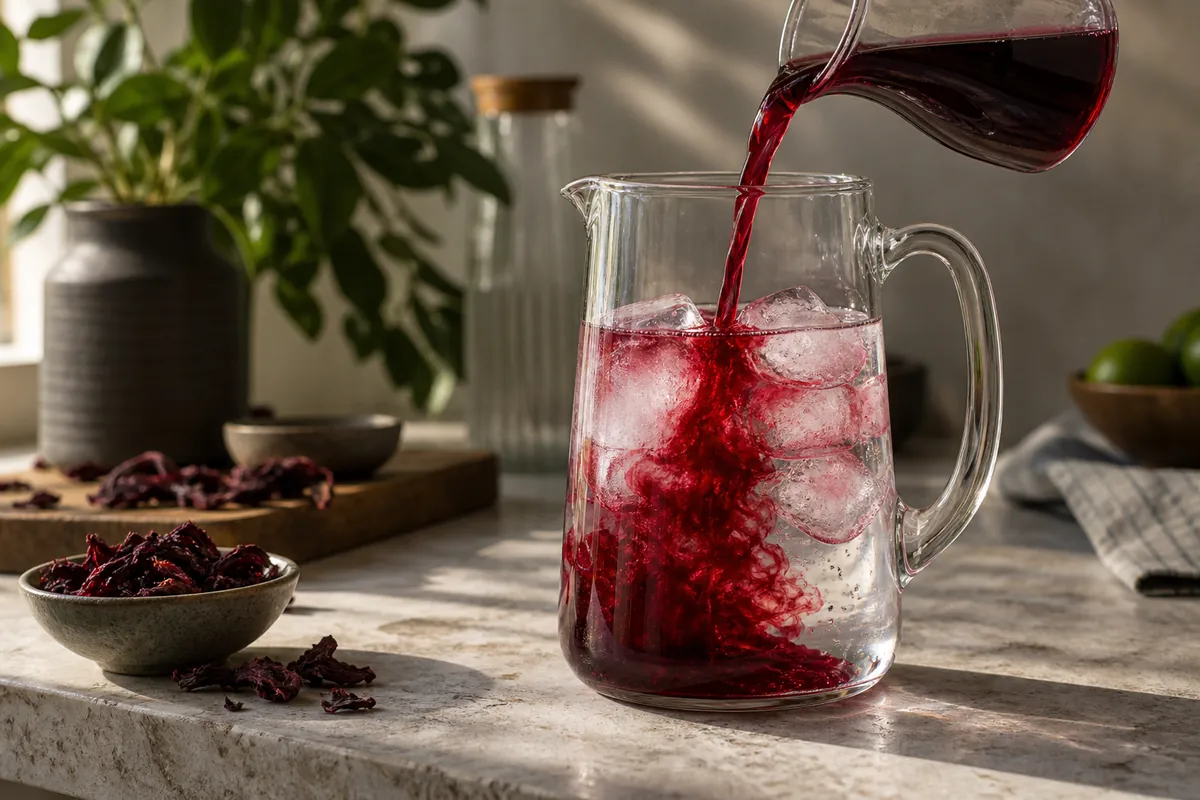
Final volume controls strength more reliably than ice count. Cube size, freezer temperature and serving speed all change how much ice melts.
For a party pitcher, hold some unsweetened concentrate back. It can strengthen a diluted jug without adding more sugar, and it prevents the first and last glasses from tasting like different recipes.
If guests sweeten individual glasses, chilled simple syrup dissolves without reheating the pitcher.
Cold brewing changes the shape of the acidity
For a slower, softer extraction, refrigerate 15 to 20 g of hibiscus per litre for 8 to 12 hours, then strain.
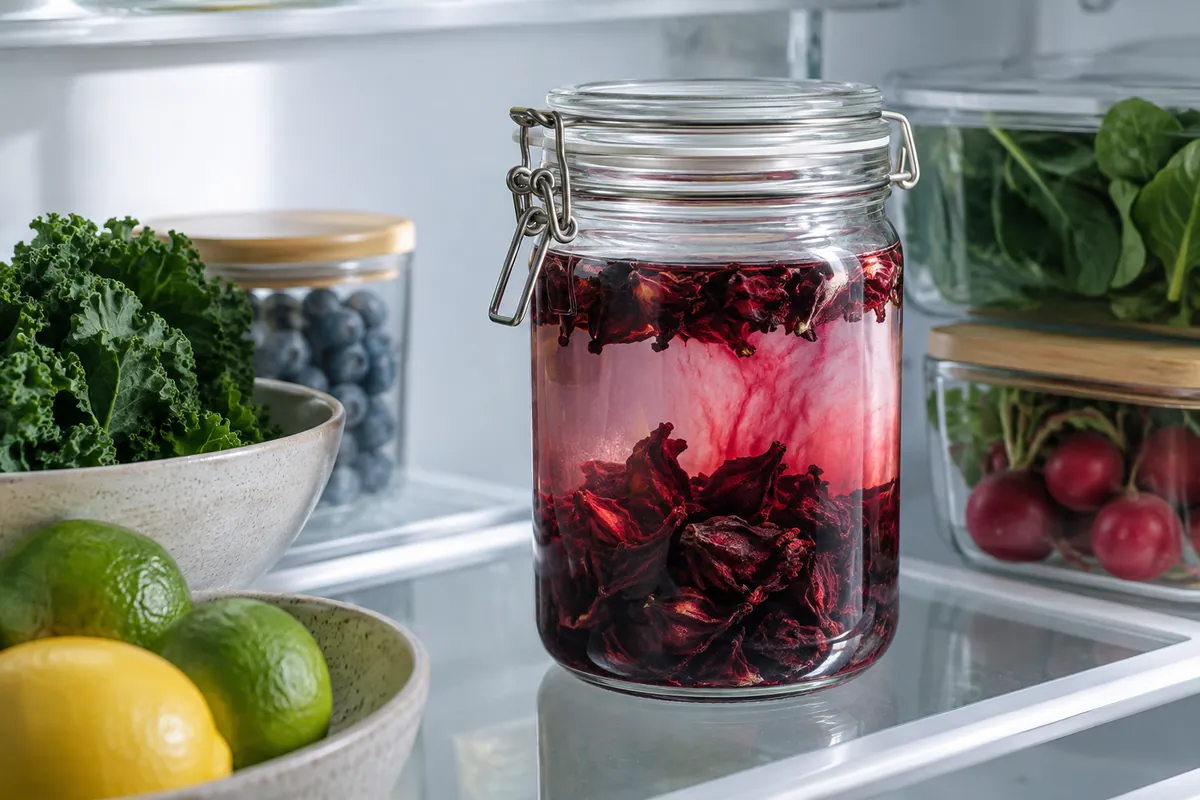
The result is still acidic because the calyx contains organic acids. Cold brewing does not remove sourness, but it avoids the cooked edge that can appear when a concentrated infusion sits hot for a long time.
Taste cold brew at serving temperature. Chilling changes how sweetness and aroma register, so a sample taken warm cannot set the final balance.
Keep the jar refrigerated through the steep. A countertop soak gives no flavour advantage worth the extra uncontrolled holding time.
Sweetness, citrus and spice each solve a different problem
Cane sugar changes the perception of sourness without neutralising the acid, so add it in small warm-dissolving steps and taste again after chilling.
Sugar
A neutral balance for a clear fruit-like profile
Do not add citrus to repair an already-sour drink. Dilute it or add measured sweetness first, then use citrus only when extra brightness is wanted.
| Choice | What changes | How to handle it |
|---|---|---|
| Whole spice or fresh mint | Adds aroma without muddy powder | Steep whole spice with the calyces; bruise mint during cooling |
| Fresh calyces | Carry far more water and vary with ripeness | Remove the seed pod, record cleaned weight and start with a small batch |
| Covered infusion | Limits evaporation and is easy to repeat | Set dose, temperature and time before brewing |
| Simmered decoction | Extracts aggressively and loses water | Reserve it for a measured concentrate and track final volume |
Choose infusion or simmering before setting the dose because combining them makes one pitcher much sharper than the next.
Water can turn the same calyces red or purple
Hibiscus anthocyanins respond to pH, holding a brighter ruby tone in acidic water and shifting toward purple in alkaline water.
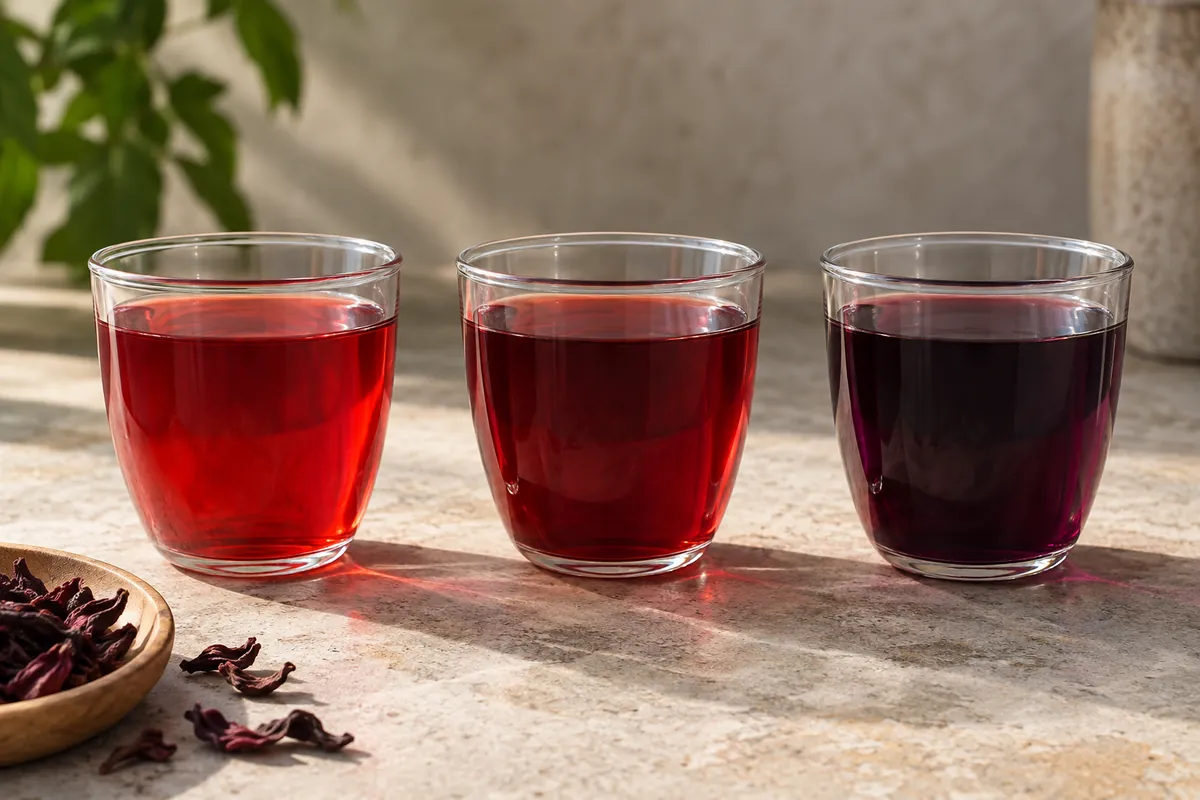
That colour shift is not a reliable strength scale. A purple cup may contain the same amount of calyx as a red one, with the water chemistry creating the visual difference.
Judge strength by taste and measured dose, not hue alone. If alkaline tap water makes the flavour dull, compare a small batch made with neutral brewing water before changing the recipe.
For this acidic infusion, glass, ceramic and stainless steel avoid the metallic contribution possible from reactive aluminium or unlined copper.
- Strain when the measured dose and taste are ready.
- Move the finished infusion away from the kettle and warming zone.
- Hold measured concentrate and hot water separately for several servings.
- Use a warmed ceramic pot instead of direct burner heat at the table.
Straining ends the brew, while sustained heat continues flattening colour and aroma.
Fix excessive sourness without making syrup
A harsh pitcher is usually over-dosed or under-diluted, so reserve concentrate before assembly and keep room to move in either direction.
| Symptom | Likely cause | Best correction |
|---|---|---|
| Too sour | Heavy dose or too little final water | Dilute in measured steps |
| Sweet but still harsh | Sugar added before strength was corrected | Dilute, then rebalance sweetness |
| Weak and pink | Too little calyx or too much melted ice | Add reserved concentrate |
| Dull brown-red | Old calyces or prolonged hot holding | Start with fresher material |
| Dusty texture | Fine fragments escaped the sieve | Pass through a finer clean cloth |
| Purple colour | Alkaline water | Compare neutral water before adding acid |
| Flat aroma | Open steep or long storage | Cover while steeping and serve fresher |
Correct concentration before flavouring. Mint, ginger and citrus add new signals but cannot restore the missing fruit character of stale calyces.
A longer steep can strengthen a light batch, yet it also changes the balance of extracted material. Increasing the next batch's dose is more predictable than leaving this one hot indefinitely.
Use a nonporous jug and rinse the sieve promptly because concentrated hibiscus pigment readily marks cloth, wood and grout.
Its acidity can feel more forceful alongside sour fruit and gentler beside rich or salty food. That is a serving choice, not a reason to keep adding sugar until the drink loses its calyx character.
Serve an unsweetened base before separate additions so a tasting flight distinguishes concentration from sweetness, citrus and spice.
Presentation should make the formula easier to read. A clear jug shows sediment and dilution, while an opaque vessel hides the two visual checks that matter.
A clear batch needs deliberate cooling and storage
Before storage, strain out the calyces and cool a large pitcher quickly in a shallow cold-water bath or with its measured cold-water portion.
Make the container date visible. Use refrigerated hibiscus within three to four days for its clearest aroma and do not top a new batch onto an old residue.
Cloudiness can come from fine plant particles or added spices and is not automatically spoilage. Filter a freshly made sample to identify sediment, but discard a stored batch when appearance changes alongside gas or an off odour.
Scale the recipe by water, not by spoonfuls
Once the preferred mug is known, a 3.5 g dose per 250 ml scales directly to 14 g per litre before ice dilution.
Scaling checkpoints
- Two hot mugs
- 6 to 8 g for 500 ml
- One litre served cold without ice
- 12 to 16 g, then chill
- One litre poured over ice
- 18 to 24 g brewed as a 500 ml concentrate
- Cold brew
- 15 to 20 g per litre for 8 to 12 refrigerated hours
- Adjustment size
- Change by about 2 g per litre, then taste again
Keep one written formula until you understand it. Switching dose, time, water and serving temperature together produces a different drink but gives no clue which change mattered.
The finished method should match the occasion. A hot mug rewards a moderate dose and short wait, an iced pitcher needs dilution control, and a cold brew needs refrigerator time rather than heat.
Hot hibiscus tea
- Makes
- 1 mug, 250 ml
- Water temp
- 90 to 100°C water
- Total time
- 8 min
What you need
- 3 to 4 g dried hibiscus calyces
- 250 ml water
- Optional sweetener
- Optional strip of citrus peel
Equipment
- A kettle
- A mug or small teapot
- A coarse infuser or sieve
- A scale or measuring spoon
Method
- Inspect the calycesRemove obvious stem, grit or seed pieces and rinse briefly if the packet instructs you to.
- Heat the waterBring fresh water close to a boil.
- InfusePour 250 ml water over 3 to 4 g dried calyces and cover.
- Taste before the clock decidesBegin tasting at four minutes and strain between five and seven minutes for a full cup.
- Balance while warmAdd sweetener only after tasting, then serve hot or chill promptly.
Common questions
How much dried hibiscus should you use per cup?
Use 3 to 4 g of dried calyces for 250 ml water. A scale is more reliable than a spoon because whole calyces and small fragments occupy very different volumes.
Can you cold-brew hibiscus tea?
Yes. Refrigerate 15 to 20 g dried calyces in 1 litre cold water for 8 to 12 hours, then strain. The drink remains acidic but avoids prolonged hot holding.
Why did hibiscus tea turn purple?
The anthocyanin pigments respond to pH. Alkaline water can shift a ruby infusion toward purple even when the dose and steep are unchanged.
How do you make iced hibiscus without watering it down?
Brew the calyces in half the final water as a concentrate, strain and sweeten while warm, then add measured cold water and enough ice to reach the final volume.