What Is Guayusa? An Amazonian Holly, and One Missing Compound
Guayusa is a caffeinated leaf from an Amazonian holly tree, and one missing compound explains almost everything about it. With very little tannin to turn astringent, it is close to impossible to over-brew.
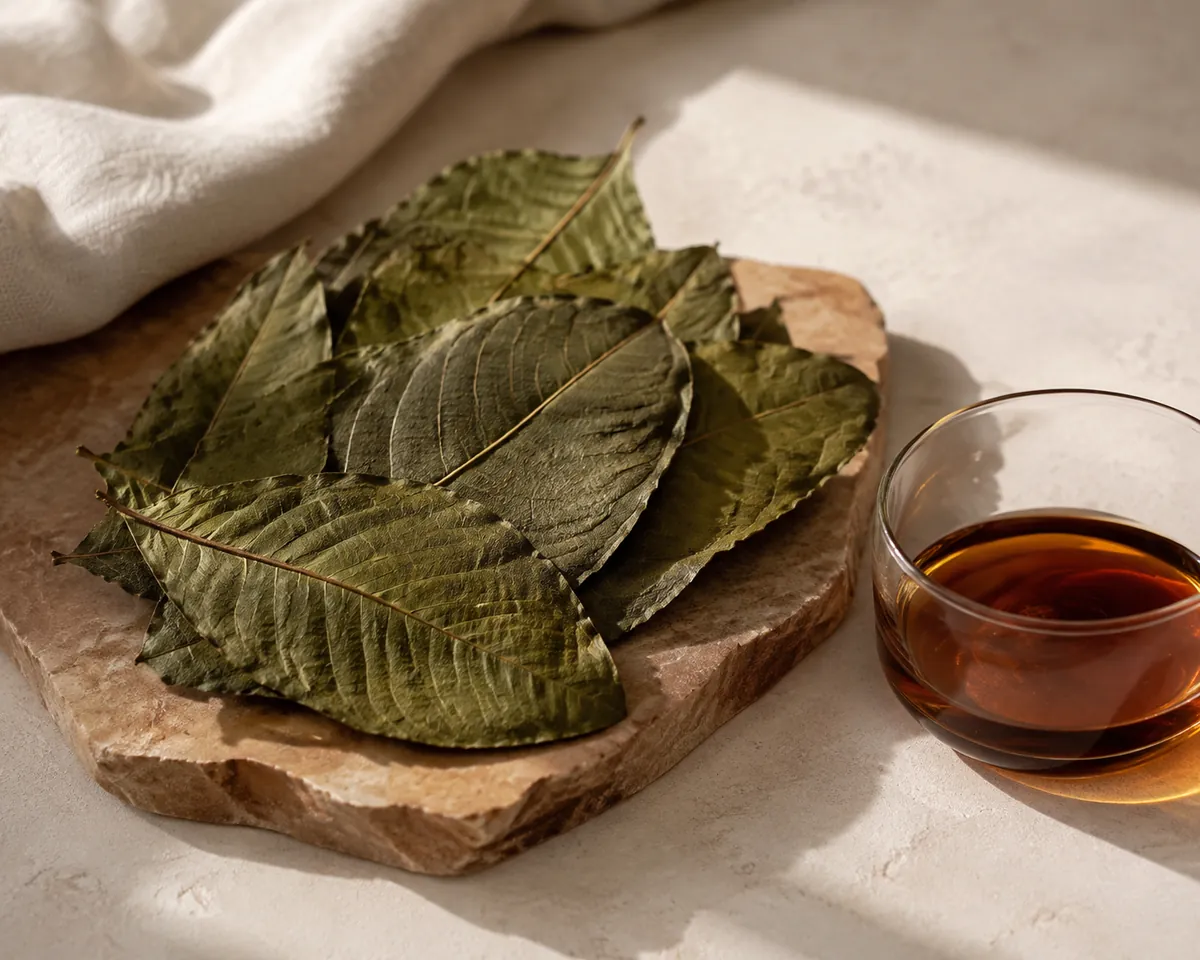
Guayusa is the dried leaf of an Amazonian holly tree, steeped in hot water and drunk the way tea is drunk. It carries caffeine, it comes from Ecuador in almost every bag sold abroad, and it is not tea in any botanical sense.
The single fact that explains most of the rest is what the leaf lacks. Guayusa holds very little of the tannin that gives black tea its grip and yerba maté its bite, so a long steep does not punish you for it.
That one property decides how it is brewed, how forgiving it is, and why people who dislike maté often get on with this instead.
Everything below follows from that absence: the brewing method, the taste, the way it handles cold water, and the reason it is worth a place on a shelf that already holds tea.
Guayusa at a glance
- Plant
- Ilex guayusa, a holly, not Camellia sinensis
- Part used
- The dried leaf, picked from trees rather than bushes
- Origin
- The upper Amazon, and commercially almost entirely Ecuador
- Caffeine
- Present, in the range people associate with a strong black tea
- Tannin
- Low, which is why long steeping does not turn it astringent
- Closest relative in a cup
- Yerba maté, from the same genus
What guayusa is, and why it is not tea
Ilex guayusa is a holly. It grows as a tree rather than a shrub in the humid forest of the eastern Andean foothills, mostly in the Ecuadorian provinces of Napo and Pastaza, and the leaves are large, thick and leathery in a way tea leaves never are.
Pickers take them by hand from branches that can sit well above head height, which is why the harvest looks nothing like the waist-high rows in a tea garden.
That puts guayusa in the same genus as yerba maté and yaupon, and nowhere near the plant that makes green tea, oolong and black tea. All real tea comes from one species, and this is not it.
The distinction is not pedantry. It changes the chemistry you are brewing with, so the habits you carry over from a teapot only half apply.
Water temperature matters less here than it does with green tea, steeping time matters far less than it does with anything from the tea plant, and the failure mode people brace for does not arrive.
It also changes what the drink is for. In the communities that have grown it longest, guayusa is brewed in a pot before dawn and shared while the household wakes, which is a very different ritual from a leaf built around a three-minute timer.
Why it can steep long and stay sweet
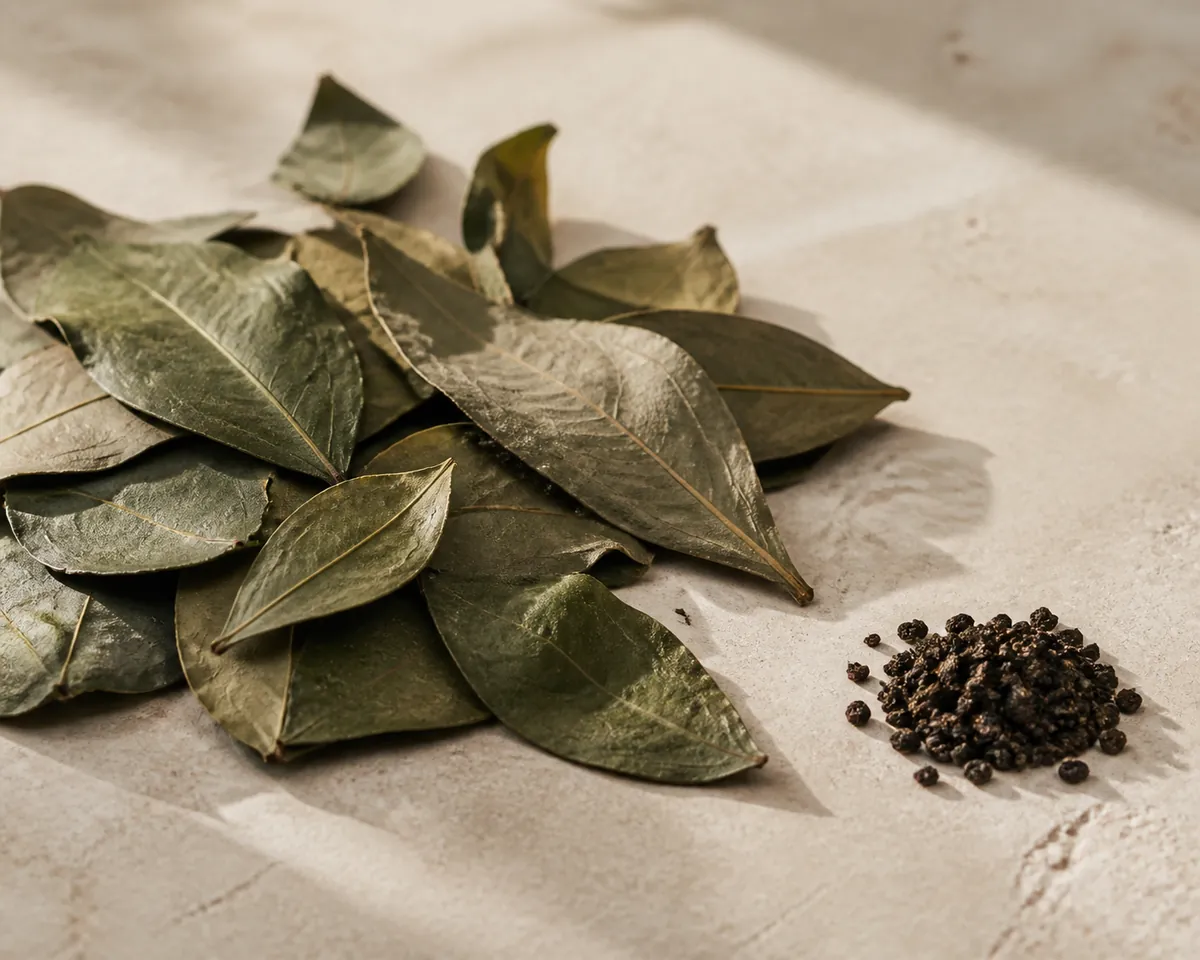
Astringency in a cup is mostly tannin binding to the proteins in your saliva, which is felt as a drying, puckering grip rather than tasted as a flavour. Tea has plenty.
Guayusa has strikingly little, and that absence is the property every other practical fact hangs off.
Leave green tea in the water for ten minutes and it becomes hard work. Do the same with guayusa and you get a stronger, darker, slightly sweeter cup that tastes like more of the same drink.
The leaf has no punishment mechanism, which makes it one of the hardest infusions in the world to ruin.
This is also why guayusa is often simmered rather than steeped in its home region, and why the same leaf is sometimes brewed twice from one pot. A tea leaf gives its best in the first few minutes and its worst thereafter.
This one gives roughly the same thing throughout.
The practical consequence is that guayusa suits a jug rather than a cup. Brew a litre in the morning, leave the leaf in it, and the drink at four in the afternoon is stronger than the one at nine but not worse.
The taste, from first sip to the finish
Guayusa arrives softer than its colour suggests. The liquor brews to a deep amber that looks like it should be robust, and the first impression is closer to warm hay, with a faint green edge underneath and no sharpness at the front of the mouth at all.
Mid-palate is where the character sits: earthy, a little woody, with a mild natural sweetness that survives without sugar. Some batches carry a note people describe as faintly like cinnamon or dried fruit, though it is closer to a suggestion than a flavour you could name blind.
The finish is the surprise. There is no drying grip and no bitter tail, so the cup ends clean and slightly sweet and does not build on itself over a mug.
Drinkers who find maté too vegetal and too sharp usually name that ending as the difference.
Strength changes the volume rather than the character. A short steep is a pale, light, faintly sweet drink; a long one is darker and heavier and more obviously earthy, but it is recognisably the same thing rather than a different, harsher drink wearing the same name.
The caffeine it carries, and how the steep moves it
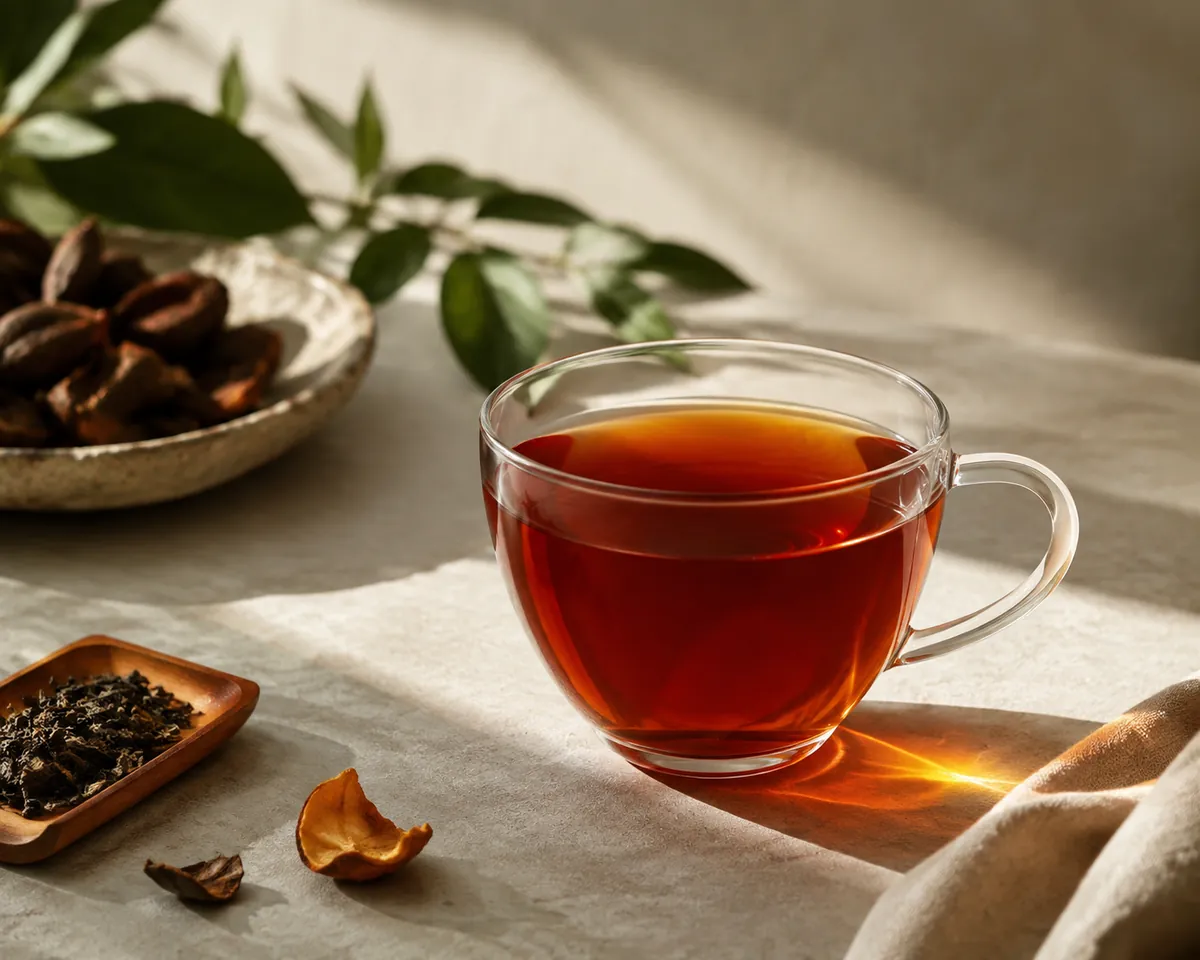
Guayusa is a genuinely caffeinated leaf, and it belongs on the same shelf as tea rather than beside chamomile or rooibos. A mug brewed at the usual strength lands where a strong cup of black tea lands, and a long or doubled steep pushes it higher.
Where guayusa sits, strongest first
- Brewed coffeeThe reference point most people carry
- Guayusa, long steepedRises with steep time rather than plateauing
- Black teaRoughly where an ordinary guayusa mug lands
- Green teaUsually below a comparable guayusa cup
- Rooibos and honeybushNaturally caffeine-free
- Chamomile and peppermintNaturally caffeine-free
The leaf also carries theobromine, the same compound that dominates cocoa. That is a compositional fact about the plant and nothing more, but it is one reason guayusa tastes rounder than a caffeine figure alone would suggest.
The steep time is the dial here, which is worth knowing precisely because nothing in the taste warns you. A tea that has gone strong announces itself as bitter.
A guayusa that has gone strong just tastes like good guayusa.
If you are ranking drinks by what they carry, the fuller picture is in caffeine across brewing methods, which puts the whole range on one axis rather than comparing two leaves at a time.
Drying the leaf, and what that decides
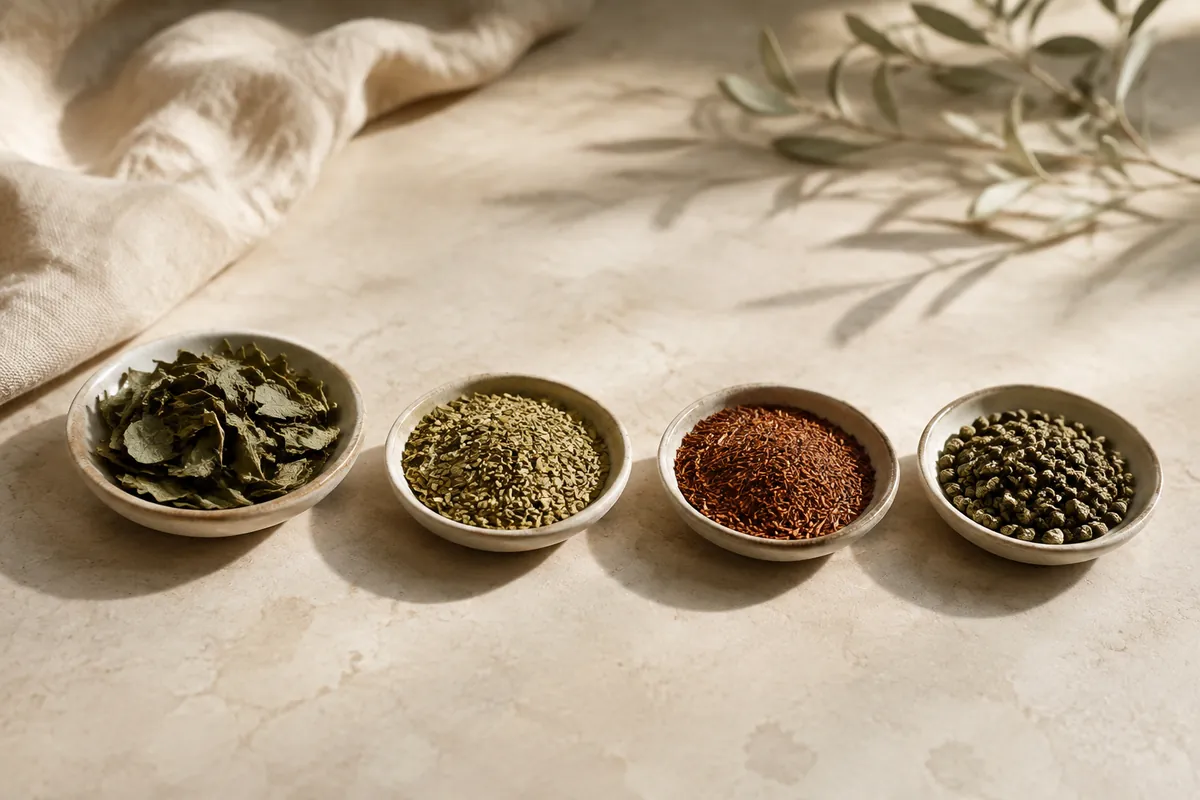
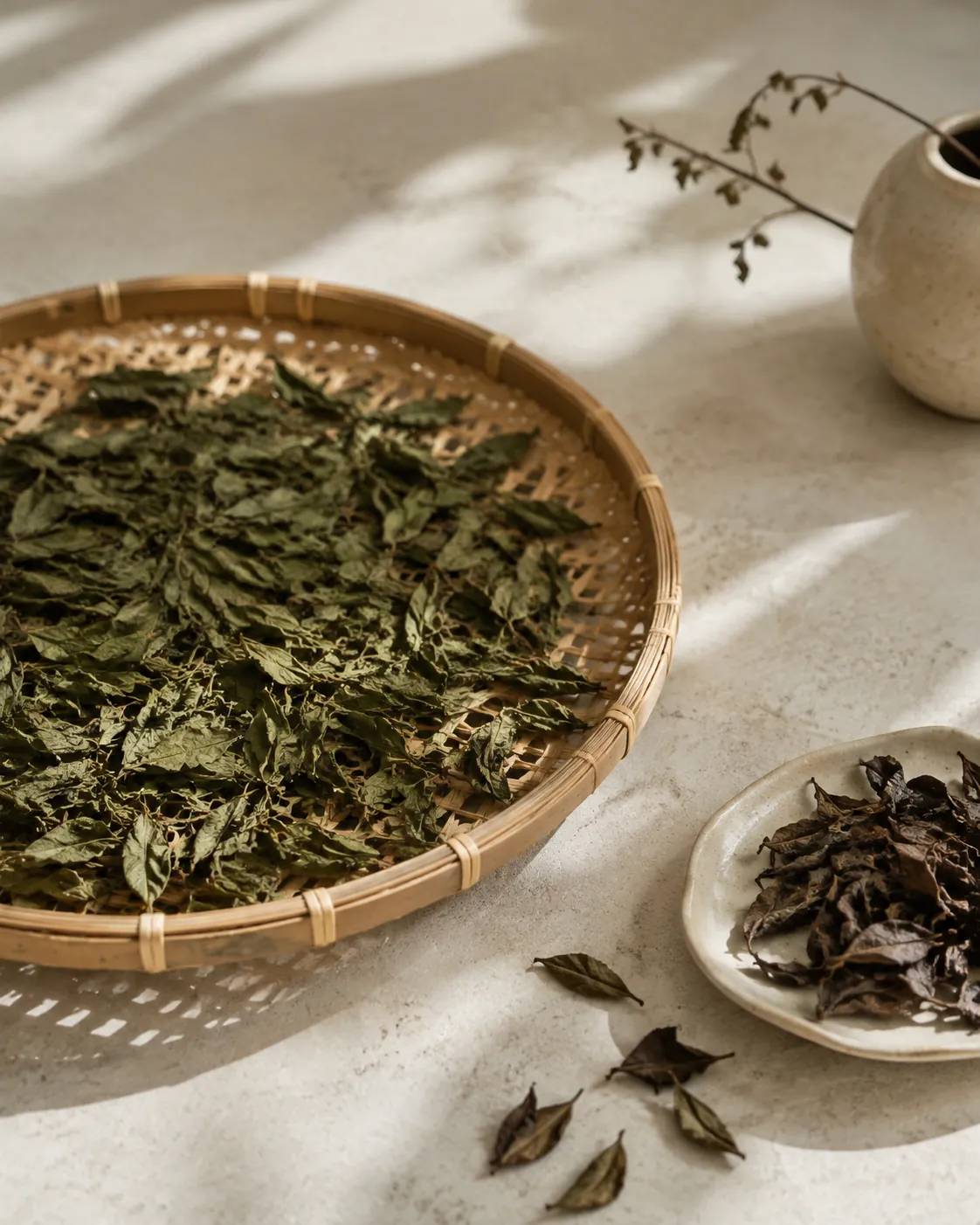
Nothing is fermented, oxidised or roasted here in the way tea processing means those words. The leaves are picked, wilted and dried, and the whole art is in doing that quickly enough that they stay olive-green rather than going brown.
Leaf to bag
- PickingMature leaves taken by hand, tree by tree
- WiltingA short rest to shed surface moisture
- DryingWarm air or gentle heat, kept below scorching
- CuttingLeft whole, or cut for bags and blends
- PackingSealed against air and light, which is where quality is lost
Slow drying in humid air is the common failure. The leaf darkens, picks up a musty note, and loses the light sweetness that is the whole reason to drink it.
Colour is the honest signal, and it is the first thing worth looking at when a bag is opened.
Some producers now roast a portion of the leaf deliberately, which deepens the colour and pushes the flavour towards toasted grain, closer to barley tea than to the unroasted version. That is a style rather than a fault, but it should be labelled.
Because there is no oxidation step to manage, there is also no grading vocabulary attached to any of this. A bag is well dried or badly dried, whole leaf or dust, recent or old, and those four things are the whole quality picture.
How to brew it, and the rule that does not apply
Use water just off the boil. Guayusa is not a delicate leaf and there is nothing here that scorches the way a young green tea does, so the careful temperature work described in steeping temperature is not the constraint it is elsewhere.
A cup that works
- MeasureAbout a tablespoon of cut leaf, or a generous pinch of whole leaf, per mug
- HeatWater at or just under boiling, straight from the kettle
- SteepFive minutes for a standard cup, ten or more for a stronger one
- StrainLift the leaf out or pour off, though leaving it in does little harm
- Second potRe-steep the same leaf longer for a second, lighter cup
The rule that does not apply is the timer. With tea, over-steeping is the mistake everyone is warned about first.
Here the timer only sets strength, and there is no cliff to fall off, so a mug forgotten for twenty minutes is a strong drink rather than a spoiled one.
Water still matters, though less dramatically than temperature. Hard water flattens the sweetness and dulls the amber; the general case is set out in water for brewing.
A basket infuser with room for the leaf to open beats a cramped ball, because these leaves are large and they need space to unfurl before they give anything up.
Cold brew, cans and blends
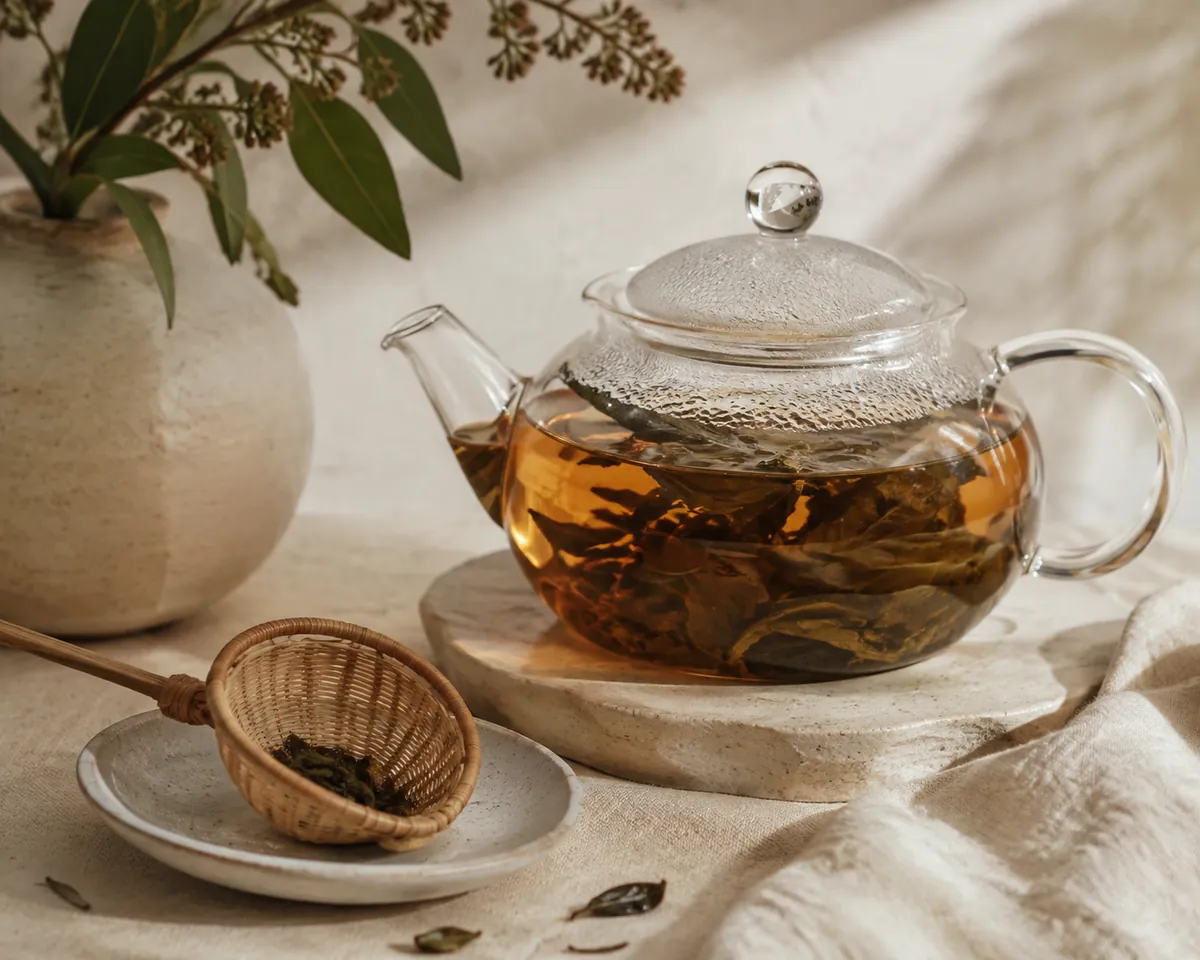
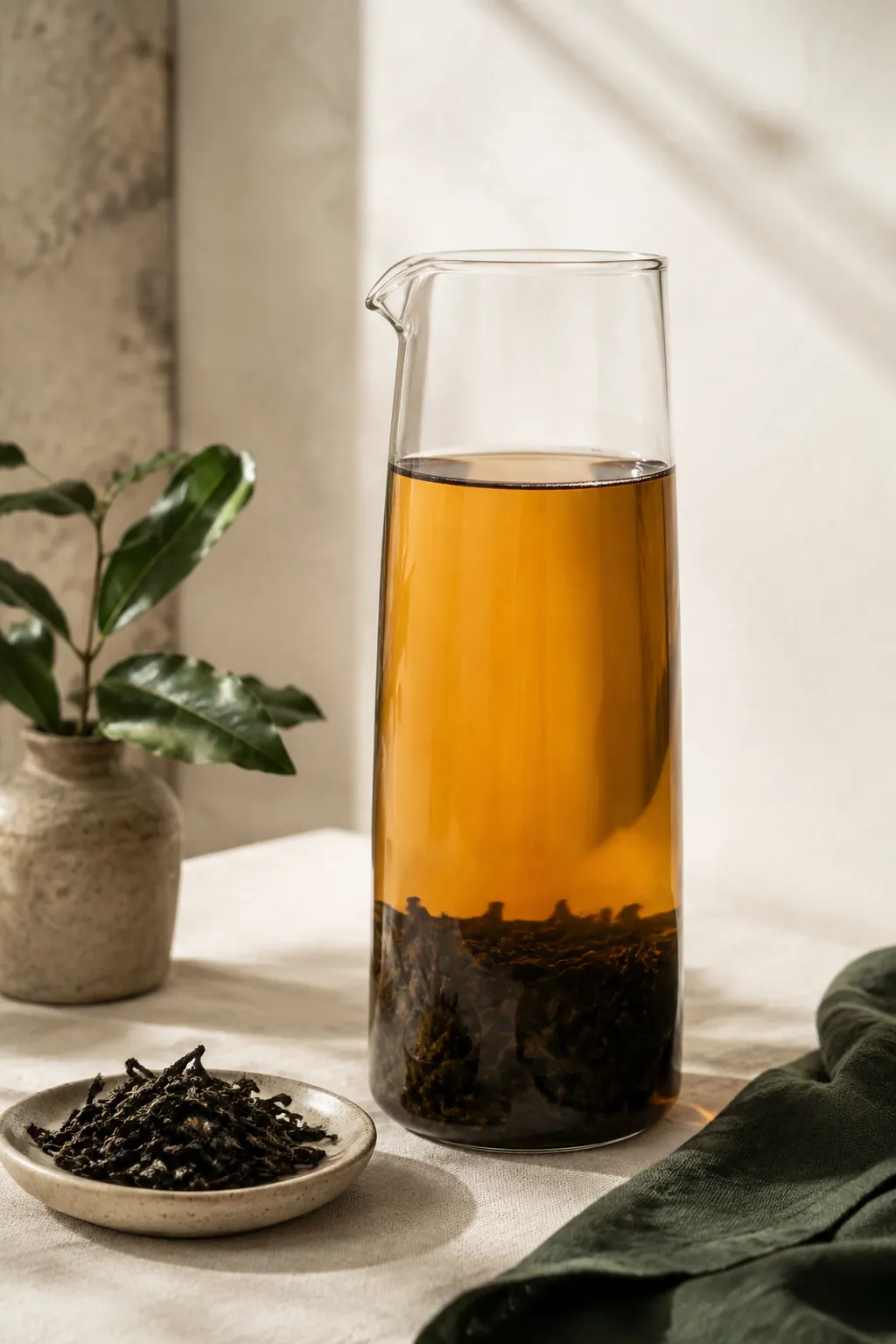
Cold brewing suits guayusa unusually well, and for the same reason everything else about it is forgiving. Left overnight in the fridge at roughly double the leaf you would use hot, it produces a smooth amber drink with no astringency to hide and no need for sugar to cover a rough edge.
Overnight, in a jug
- Cut guayusa leaf
- 20 g
- Cold water
- 1 litre
- Time in the fridge
- 8 to 12 hours
Canned guayusa is the form most people meet first outside Ecuador, usually blended with fruit juice and sold cold. Those drinks are pleasant and tell you almost nothing about the leaf, since the juice carries the flavour and the guayusa supplies the caffeine and a background earthiness.
Blends are the third form. Guayusa takes lemongrass, ginger and mint well, because it has body without sharpness and does not fight an aromatic.
It takes milk poorly, and it needs less honey than most people reach for.
What separates guayusa from yerba maté
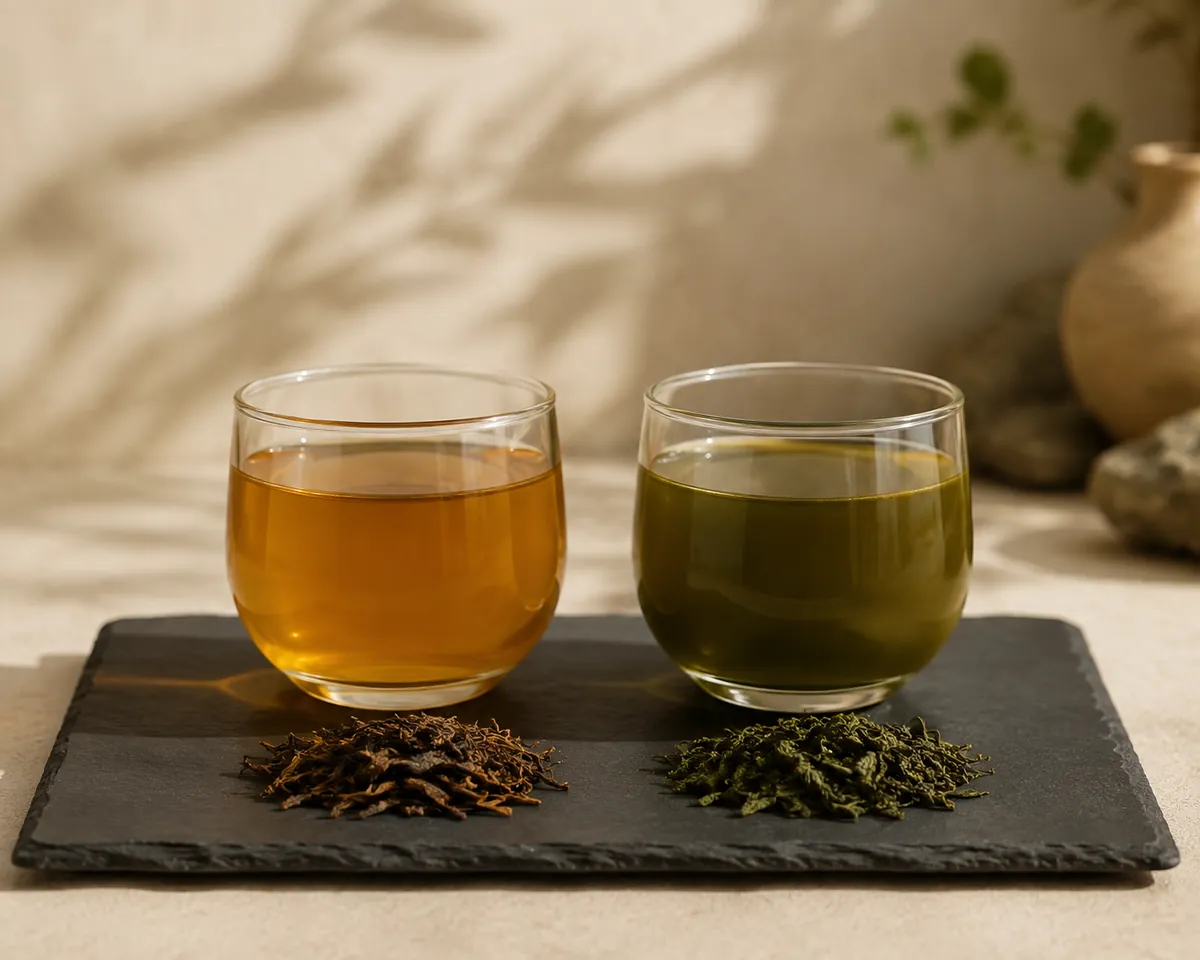
These two are cousins and are constantly mistaken for each other, which is fair enough: same genus, same continent, same role in the day. In the cup they are not close.
| Guayusa | Yerba maté | |
|---|---|---|
| Plant | Ilex guayusa | Ilex paraguariensis |
| Home range | Upper Amazon, mainly Ecuador | Paraná basin: Argentina, Paraguay, Brazil |
| Tannin | Low | Noticeably higher |
| Taste | Smooth, mildly sweet, hay and earth | Grassy, vegetal, distinctly bitter |
| Over-steeping | Gets stronger | Gets harsh |
| Usual vessel | Mug, pot or can | Gourd and metal straw |
Guarana is the other frequent mix-up, and that one is not even close: it is the seed of a climbing vine, used ground and usually in soft drinks rather than steeped as a leaf. Yaupon, the North American holly, is the genuinely near neighbour, and it sits between the two on bitterness.
The vessel difference matters more than it looks. Maté is built around repeated short infusions through a straw in a gourd, so the drinker manages a curve of strength across an hour.
Guayusa has no such curve to manage, which is why it ended up in a pot.
The practical version is short. If bitterness is what put you off maté, guayusa is the one to try; if the grassy vegetal note was the appeal, it is not.
What to look for when buying it
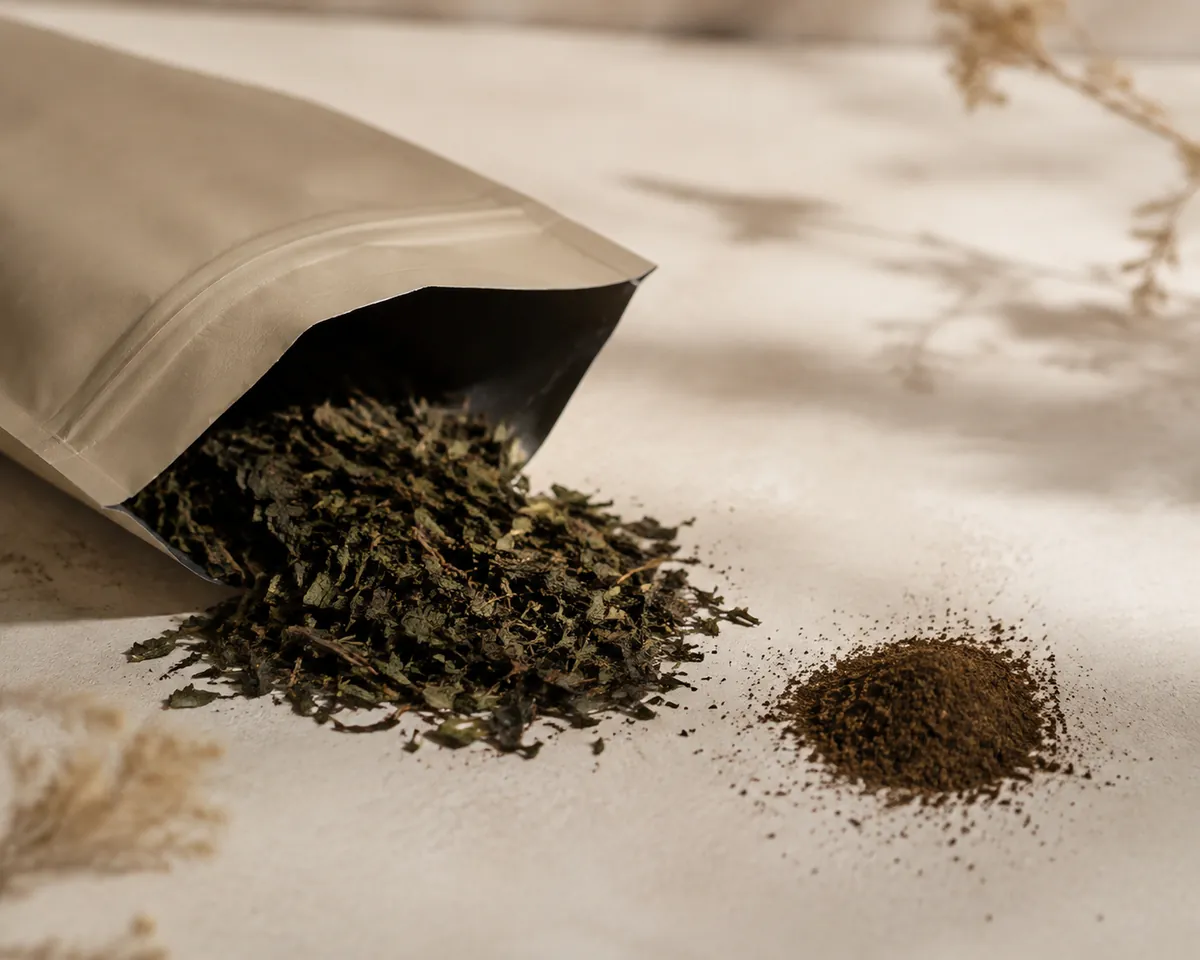
Colour first. Good dried guayusa is olive to sage green with some variation across the leaf, and a bag that is uniformly brown has either been dried badly or sat too long.
Roasted guayusa is legitimately darker, but the label should say so.
- Look for whole or coarsely cut leaf rather than dust in the bottom of the bag
- Check the packaging is opaque and resealable, not a clear window pack
- Prefer a stated Ecuadorian origin over an unnamed blend
- Expect visible leaf structure, not a uniform powder
- Treat a strong smell of hay as good and a musty smell as a reject
Dust and fannings are the same problem here as in a cheap tea bag: more surface area, faster extraction, and a flat cup that gives everything up in the first minute. With a leaf whose whole appeal is a long, even extraction, that is a bad trade.
Price tends to track how far the leaf travelled and how it was packed rather than any grading system, since guayusa has no equivalent of the grade ladder attached to Darjeeling or Assam. There is no ceremonial tier to pay for, and a mid-priced bag from a named Ecuadorian source is usually the whole of the decision.
Storage, and how long the leaf stays worth drinking
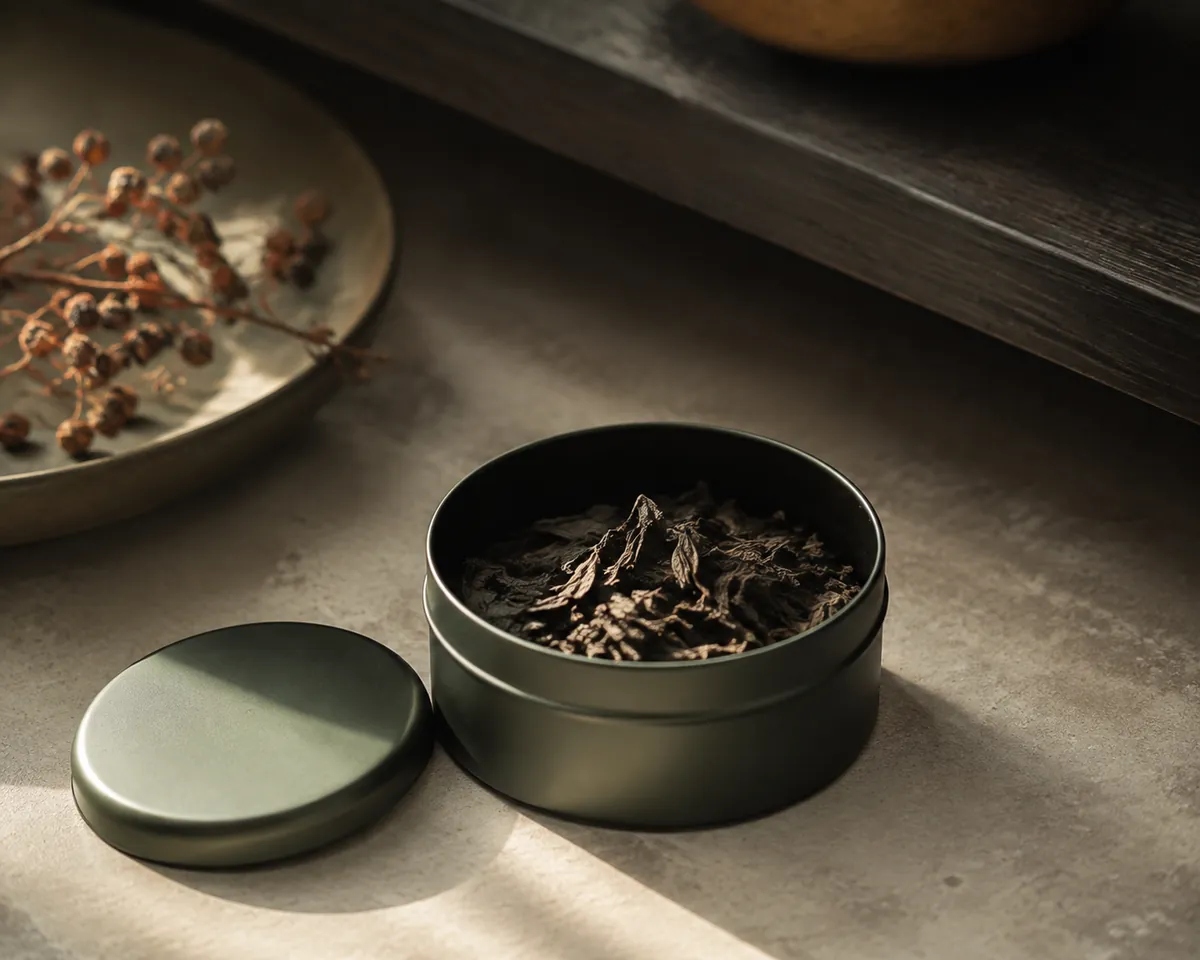
Dried guayusa keeps the way any dried leaf keeps, which means air, light, heat and damp are the four things working against it. Sealed in an opaque tin in a cupboard, a bag stays good for about a year, and it fades rather than spoils after that.
Air
The main enemy; decant into something that actually seals
Light
Bleaches the green and flattens the sweetness
Heat
Keep it off the shelf above the kettle or hob
Damp
A fridge is the wrong place; condensation on opening is the risk
Brewed guayusa behaves like brewed tea once it is off the leaf. Cold, in a covered jug, it is fine for two to three days, and it dulls slowly rather than turning.
The general keeping rules for leaf are in storing loose leaf, and they apply here without amendment.
One habit worth breaking: buying a large bag because the price per gram improves. A smaller bag finished quickly beats a big one going quietly stale, and that is truer of guayusa than of a robust black tea, because what fades first is exactly the delicate sweetness you bought it for.
Where it sits among caffeinated leaves
Guayusa occupies a narrow and useful gap. It is caffeinated like tea, smooth like honeybush, and almost impossible to over-brew, which is a combination nothing else on the shelf quite manages.
For anyone who drinks strong black tea and is tired of watching the clock, it is a straightforward swap. For anyone whose alternative is hibiscus or peppermint, it is a different proposition entirely, because those carry no caffeine and this one does.
The rest of the herbal shelf divides fairly cleanly along that line.
Its limits are worth stating plainly. It has none of the aromatic complexity of a good oolong, it does not reward the careful brewing that white tea or pu-erh repay, and it takes milk badly.
What it offers instead is a wide, forgiving window in which the cup is good, which for a lot of drinking is the more useful quality.
Common questions
Can you over-steep guayusa?
Not in the way you can over-steep tea. Guayusa holds very little tannin, so a long steep produces a stronger, darker and slightly sweeter cup rather than an astringent one. The timer sets strength here, not quality, and a mug left for twenty minutes is simply a strong drink.
Is guayusa the same as yerba mate?
They are different species of the same genus of holly. Guayusa is Ilex guayusa from the upper Amazon, mainly Ecuador, and tastes smooth, earthy and mildly sweet. Yerba mate is Ilex paraguariensis from the Parana basin, carries far more tannin, and tastes grassy and distinctly bitter.
Does guayusa contain caffeine?
Yes. A mug brewed at ordinary strength lands roughly where a strong cup of black tea lands, and a long or repeated steep pushes it higher. The leaf also carries theobromine, the compound that dominates cocoa, which is part of why the cup tastes rounder than a caffeine figure alone suggests.