What Is Honeybush? The Sweeter Neighbour of Rooibos
Honeybush grows on the same South African mountainsides as rooibos and is treated the same way. It is sweeter, more floral, and far less widely sold, mostly for reasons of agriculture rather than taste.
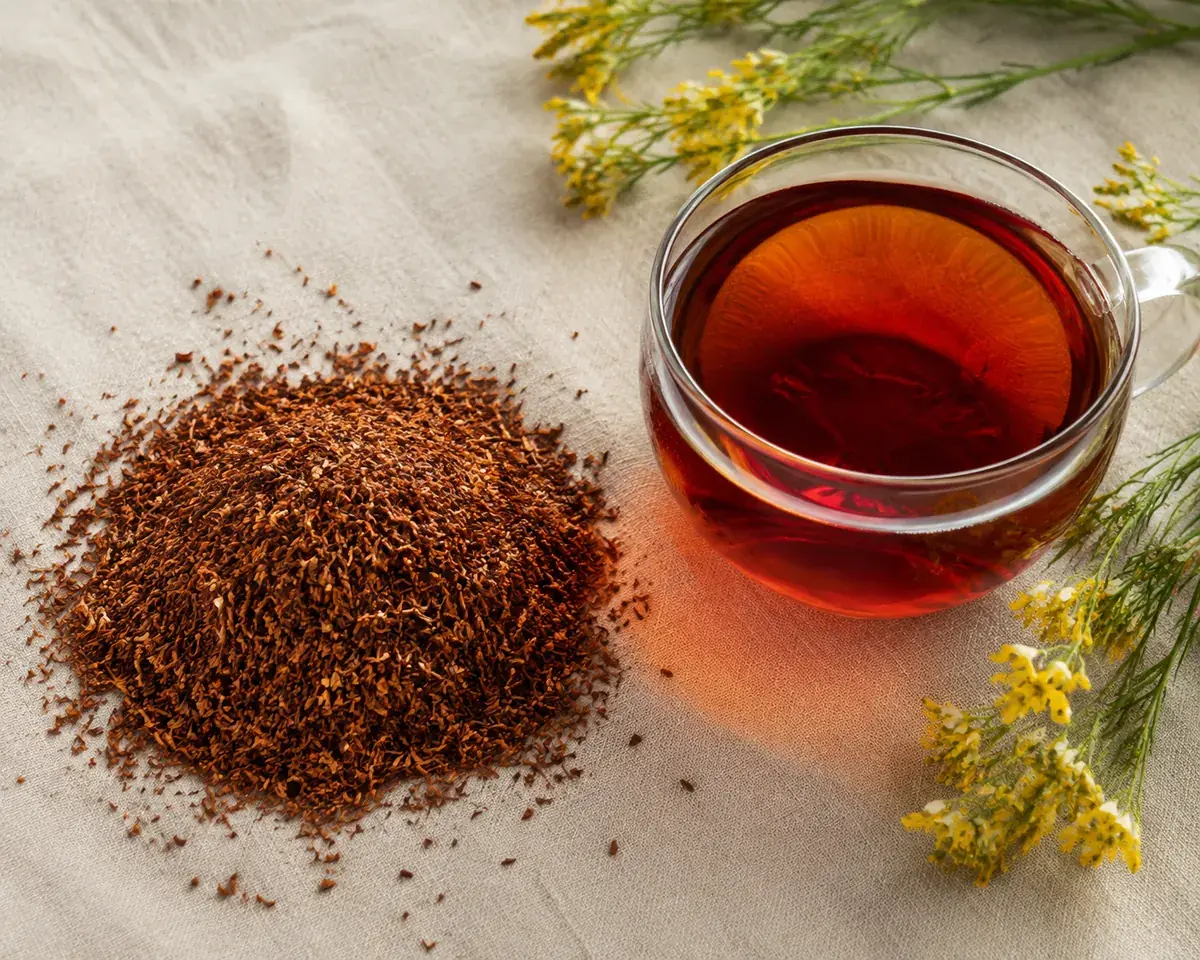
Honeybush comes from several species of Cyclopia, shrubs growing in the fynbos of South Africa's Cape region. Among caffeinated leaves the nearest thing to it in smoothness is guayusa, which is sweet in the same way and stimulant where this is not.
Rooibos comes from a different plant in the same family, growing in the same landscape.
The name is literal: the flowers smell of honey, and so does the dried plant. What the name leaves out is that honeybush is not one plant at all, and that a good deal of what reaches the market was cut on a mountainside rather than lifted out of a field.
Honeybush at a glance
- What it is
- An infusion of the shredded stem and leaf of a fynbos shrub
- The plants
- Several Cyclopia species rather than one. Mostly intermedia and subternata
- Where it grows
- The fynbos of South Africa's Cape region, and nowhere else commercially
- Supply
- Still partly wild-harvested, because most species resist cultivation
- Two forms
- Fermented, sweet and coppery. Green, lighter and herbaceous
- Caffeine
- None, and none was ever removed
- Water
- Boiling, five to ten minutes, and longer does no harm
The four Cyclopia species you actually drink
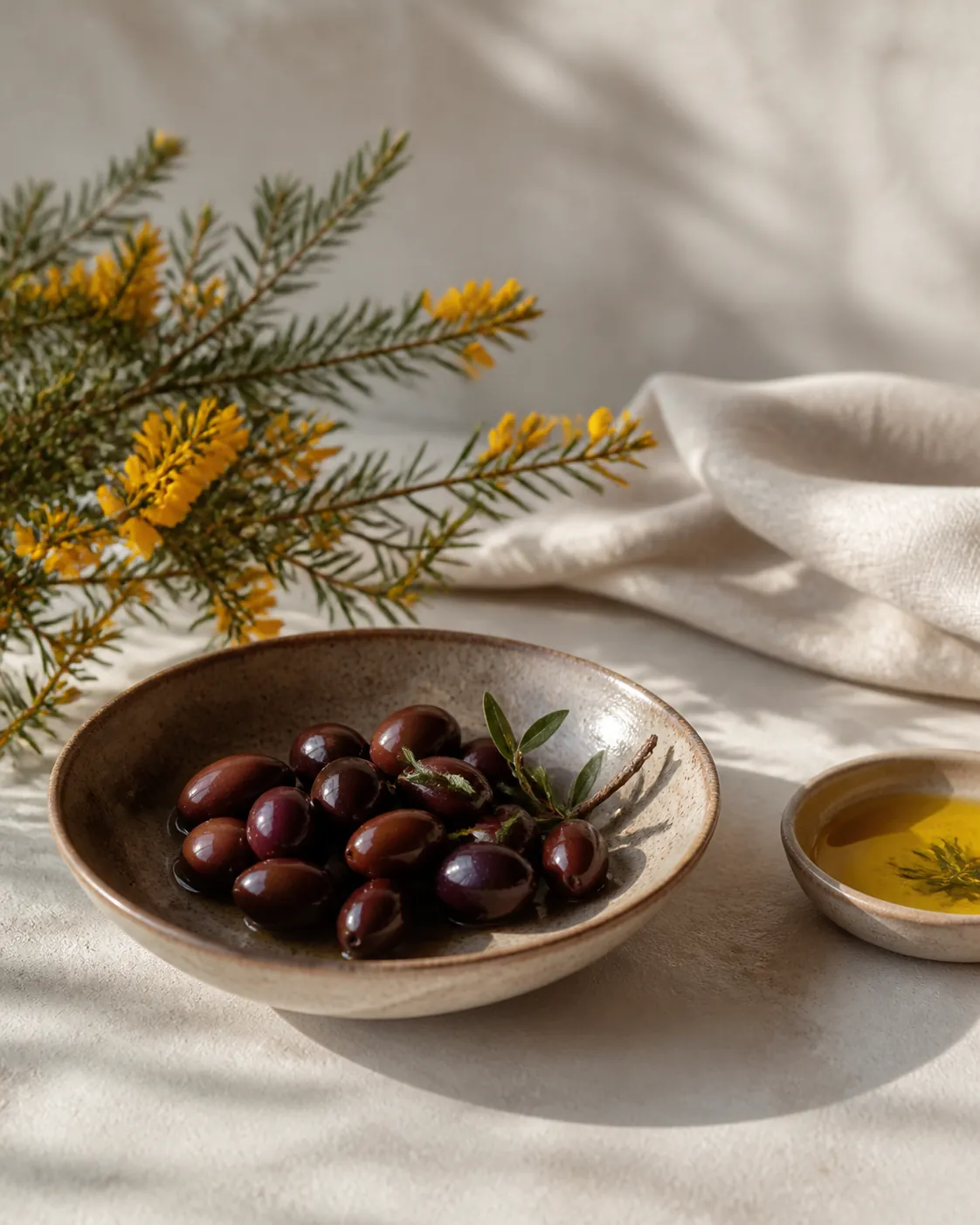
Honeybush is a genus rather than a plant, and although the fynbos holds well over twenty species of Cyclopia, four of them do very nearly all of the commercial work.
| Species | Local name | Character |
|---|---|---|
| C. intermedia | Bergtee, mountain tea | The classic. Mostly wild-harvested, full and honeyed |
| C. subternata | Vleitee, valley tea | The one that cultivates reliably. Softer, more floral |
| C. genistoides | Kustee, coastal tea | Grown near the coast. Fuller-bodied, slightly woodier |
| C. sessiliflora | Heidelberg tea | Small production. Distinctly aromatic, almost minty |
A packet rarely tells you which one is inside. Most commercial honeybush is intermedia, subternata, or a blend of the two, and the gap between those two is smaller than the gap between a good and a poor lot of either.
Where a species is printed, it usually signals a producer selling by origin rather than by weight, which tends to correlate with better material. Bergtee and vleitee are the two names worth recognising, since a South African packet often gives the Afrikaans rather than the Latin.
The outlier is C. sessiliflora, made in small quantity and distinctly aromatic beside the others.
If you find it, drink it plain before blending it, and honeybush flavour sets out where it sits against the standard material.
Why the mountain still supplies it
The scarcity is agricultural. Nothing in the flavour explains it.
Many Cyclopia seeds evolved for a fire-driven landscape and stay dormant until they meet the heat and the smoke chemicals a burn supplies. Sown in an ordinary nursery bed they sit there and do nothing at all.
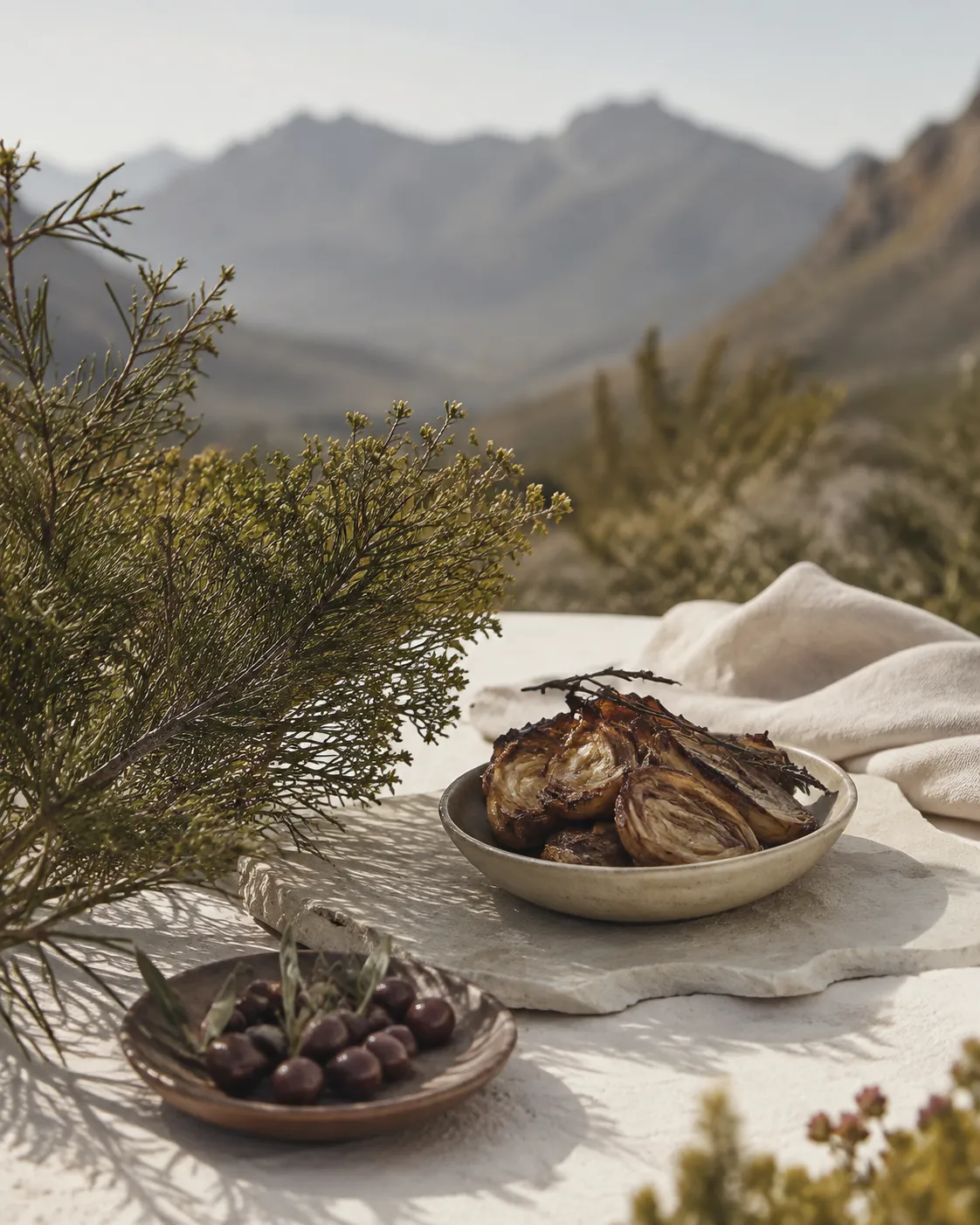
Growers worked around that with hot-water treatment and smoke-infused solutions, and C. subternata now farms reliably enough to plant at scale.
The others stayed stubborn, which is why so much honeybush still comes off the mountain.
Supply is capped by how much of it grows wild. That raises a conservation question farmed rooibos no longer does, since the wild stands are finite and slow to recover after cutting.
Uneven stocking follows from the same cause, and knowing the pattern saves a fruitless search. South African and specialist retailers carry it reliably, usually fermented and often as a single species, while supermarkets elsewhere rarely stock it plain and often bury it unnamed inside a blend.
Buying online from a seller who also handles the rest of the fynbos infusions is the practical route. The supply chains overlap, and a merchant who states the grade and the cut for one usually does for the other.
Set beside rooibos in the cup
The comparison is worth establishing early, since most people arrive at honeybush from the better-known plant growing on the same hillsides.
| Honeybush | Rooibos | |
|---|---|---|
| Plant | Several Cyclopia species | Aspalathus linearis |
| Flavour | Sweeter, floral, apricot and honey | Woody, vanilla, slightly nutty |
| Body | Rounder and softer | Fuller, more robust |
| Caffeine | None | None |
| Tannin | Very low | Very low |
| Availability | Limited | Widely sold worldwide |
| Price | Higher | Low |
Honeybush is the sweeter and gentler of the two. Anyone who finds the other one woody or faintly medicinal usually prefers it, and anyone who wants more body in the cup usually goes back. Black tea against rooibos sets that fuller end of the range against a true tea, which is the comparison most people are really making.
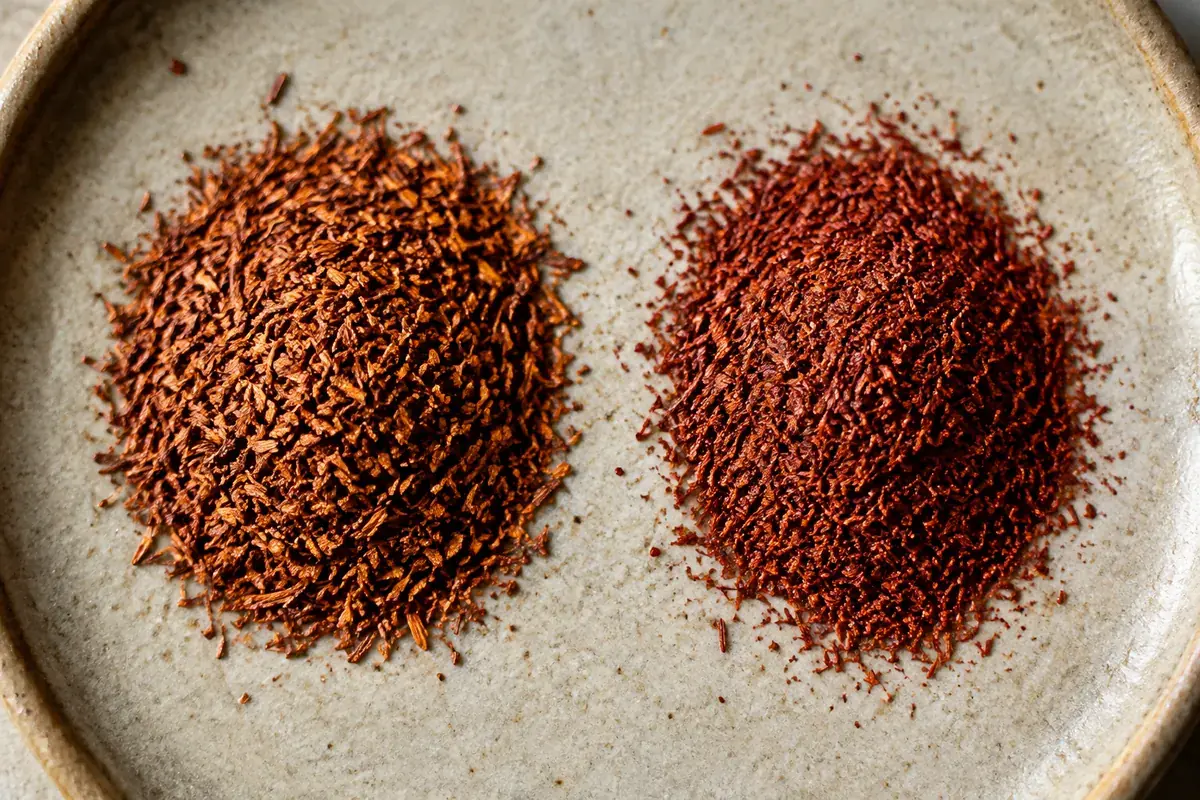
They are close enough to blend well and different enough that the blend earns its place, with honeybush carrying the sweetness and the apricot while the other supplies body and a woody base underneath it.
Price and availability separate them more sharply than taste does. Among caffeine-free infusions that are easy to find anywhere, only hibiscus is as widely stocked, and it goes in the opposite direction on sweetness entirely.
Fermented and green, and the heap between them
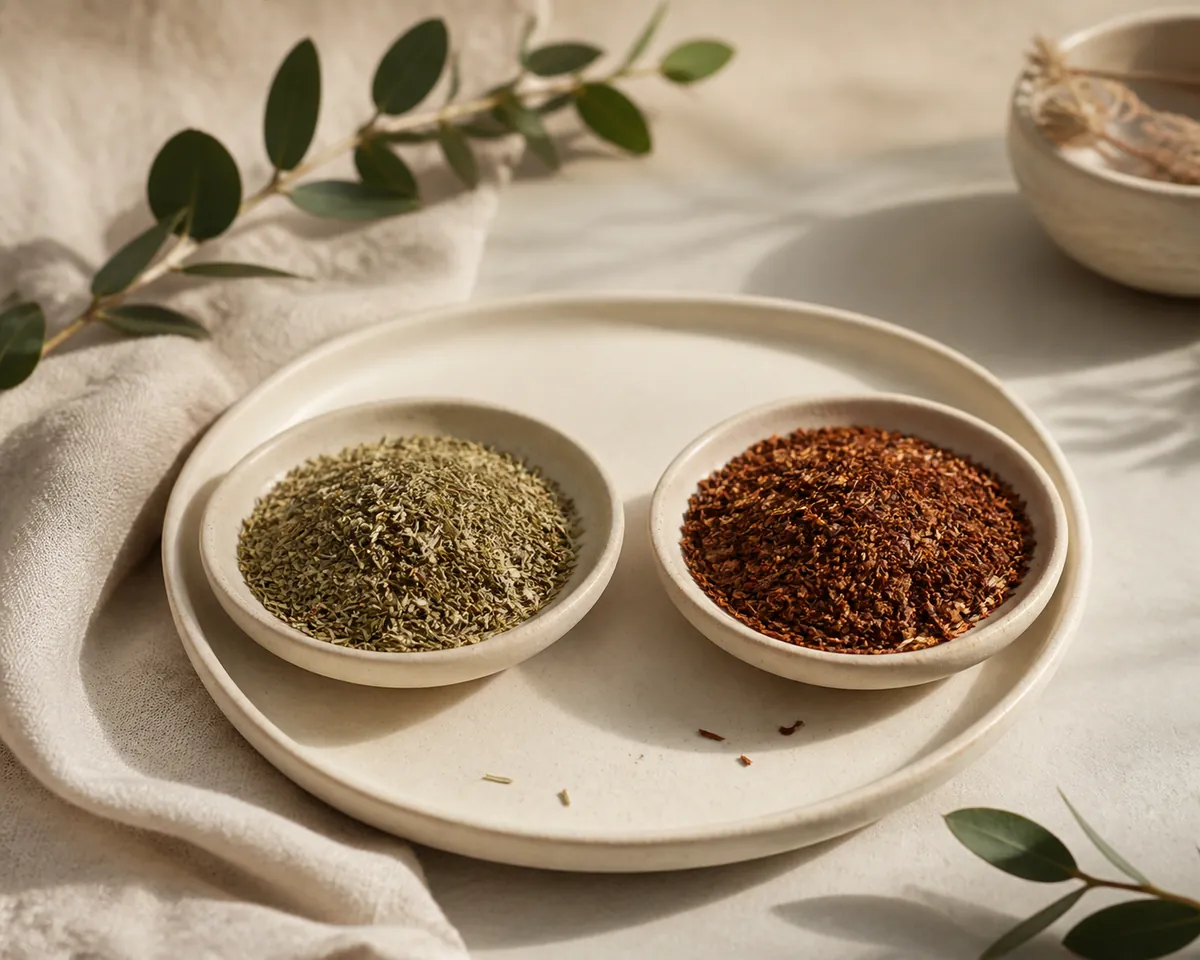
Honeybush is sold in two forms, and the decision that separates them is taken within hours of the cut.
What oxidation does
- HarvestStems and leaves are cut and shredded together.
- ChooseEither dry immediately, or heap and oxidise first.
- OxidiseHeaping under warmth and moisture turns the plant coppery-red and deepens the sweetness.
- DrySun or oven drying stops the process.
- ResultFermented honeybush is sweet and rounded; green is lighter and more herbaceous.
Fermented is the standard, and it is what most people mean by honeybush. Heaping the shredded plant under warmth and moisture turns it coppery-red and deepens the sweetness, where drying it straight away leaves it pale and grassy.
That is the same fork in the road red and green rooibos take, for the same reason and often in the same drying yard, which is part of why the two plants travel together through the trade.
Green honeybush is uncommon outside health-food shops. It tastes grassier and less sweet, closer in character to a light green tea than to the coppery version beside it on the shelf.
Neither form is the stronger one. They are different drinks made from the same cut material, and the green one rewards a shorter steep than the fermented does.
Where the honey note comes from
The honey in the name is accurate without being the whole picture, and the picture is worth having in full before deciding whether the drink is for you.
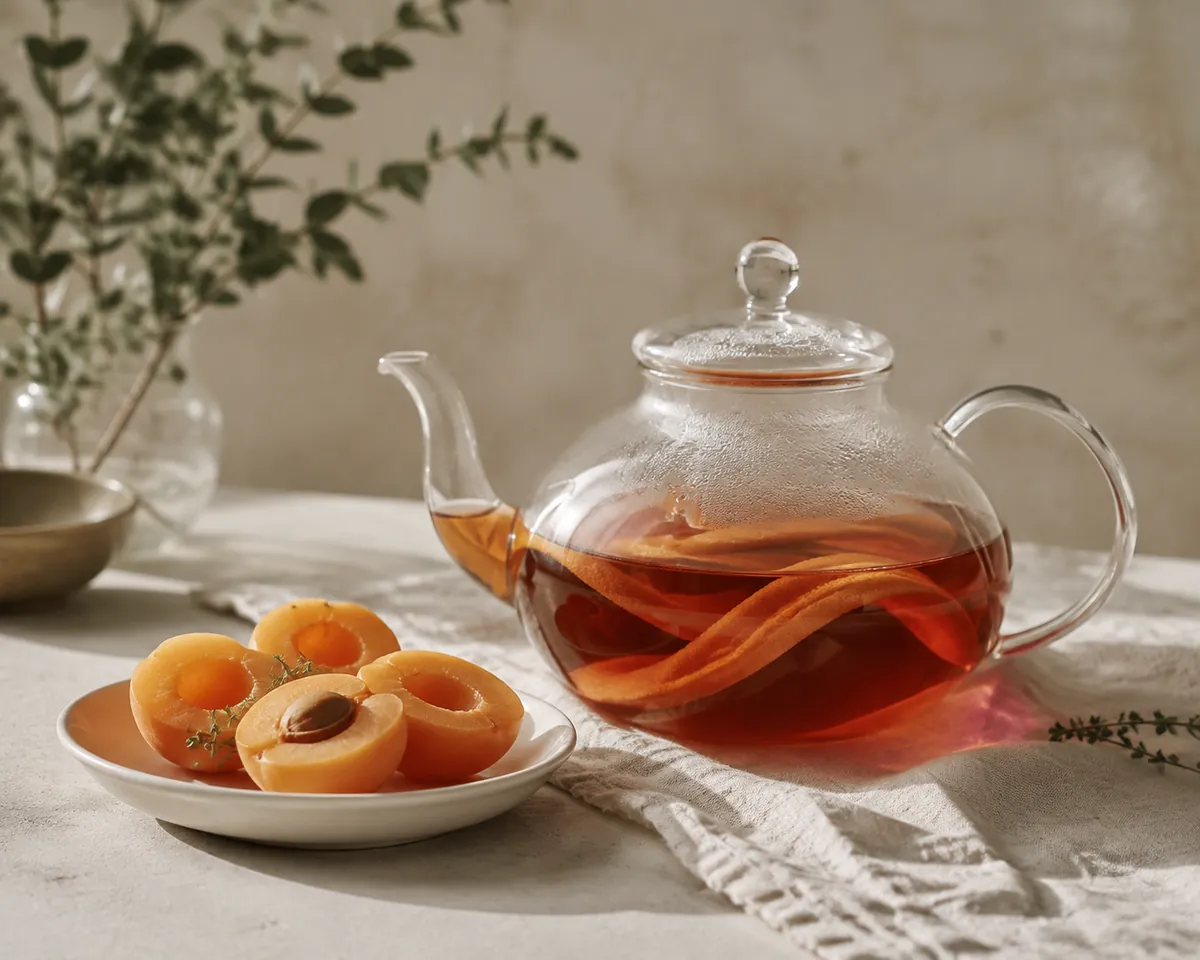
The dominant notes are honey and dried apricot, carried on a floral lift with a soft, rounded body underneath. A faint woody base connects it to rooibos, though it sits much further back here than it does there.
It is naturally sweet enough that sugar is rarely wanted, which is unusual among unsweetened infusions and accounts for much of its appeal.
Natural sweetness, no sugar added
- HoneybushHoney and dried apricot. Sweet enough that sugar is rarely wanted
- RooibosSweet, with a woody vanilla base underneath it
- Barley teaToasted and faintly sweet, closer to grain than to fruit
- ChamomileLightly honeyed with a distinct apple note, drier overall
- PeppermintNot sweet. Cooling and clean, and it reads almost savoury
That ranking is the practical reason honeybush gets recommended to anyone who stirs cane sugar into a caffeine-free cup. The sweetness is already at roughly the level they were reaching for.
None of it is sugar in any quantity worth measuring. What the tongue reads is a set of aromatic compounds the nose files under sweetness, which is why the drink tastes sweet while the nutrition panel shows almost nothing at all.
A steep with no upper limit
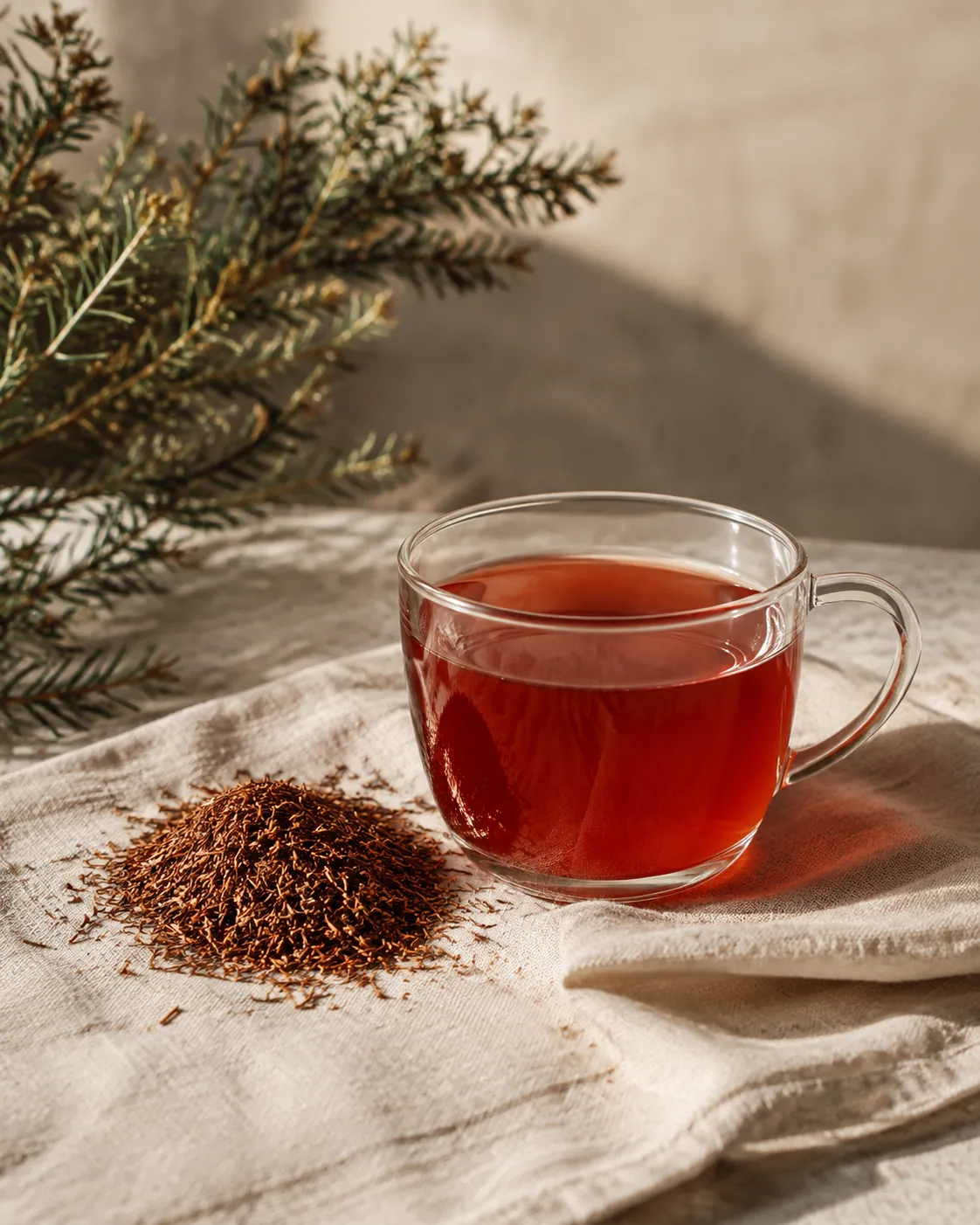
Ten minutes is normal here.
Most people under-brew honeybush because they arrive carrying tea habits, and the sweetness keeps developing well past the point where a leaf tea would have turned bitter.
Starting point
- Water
- Boiling
- Steep
- 5 to 10 minutes, and longer does no harm
- Leaf
- 2 to 3 g per 250 ml
- Second steep
- Yes, and it holds up well
- Milk
- Takes it comfortably, like rooibos
There is almost no tannin in it, so it will not turn astringent however long it stands. A pot left for half an hour comes out stronger rather than harsher, which is true of very few drinks and of no true tea at all.
The cut material also holds a good deal back for a second infusion, and reaching it takes a change of approach rather than a repeat of the first. Give the second steep ten to fifteen minutes instead of five and it arrives nearly as strong, slightly woodier, and noticeably drier.
Some Cape households boil the second infusion outright, simmering the used material for a few minutes rather than steeping it. The result is dark, thick and distinctly resinous, and making honeybush covers both routes side by side.
Caffeine and tannin, and what their absence allows
Two absences shape how honeybush is used more than any single note in its flavour does.
What having neither means in practice
- Caffeine
- None at all, since it is not a tea plant
- Steeping
- No upper limit. It cannot be over-brewed into bitterness
- Tannin
- Very low, so it does not dry the mouth or stain a pot heavily
- With milk
- Takes it comfortably, because there is no astringency to fight
- Reheating
- Survives it, which almost no true tea does
A pot of it can sit on the table through a long meal and still be worth drinking at the end. That property is genuinely unusual, and it is most of why the plant found a place in Cape households long before anyone exported it.
The caffeine point deserves stating precisely, because it differs from a decaffeinated tea: the Cyclopia plant never produced the compound, so nothing was removed and no residue remains. Honeybush and caffeine sets that against the figures for tea and coffee.
Low tannin has a second consequence people notice late. Honeybush does not stain a pot or a cup the way black tea does, so a glass teapot stays clear through months of daily use.
Cut, stem and dust
Because the whole plant is shredded rather than plucked leaf by leaf, honeybush has no whole-leaf grade at all, and what varies between packets is how finely it was cut and how much stem went in with the leaf.
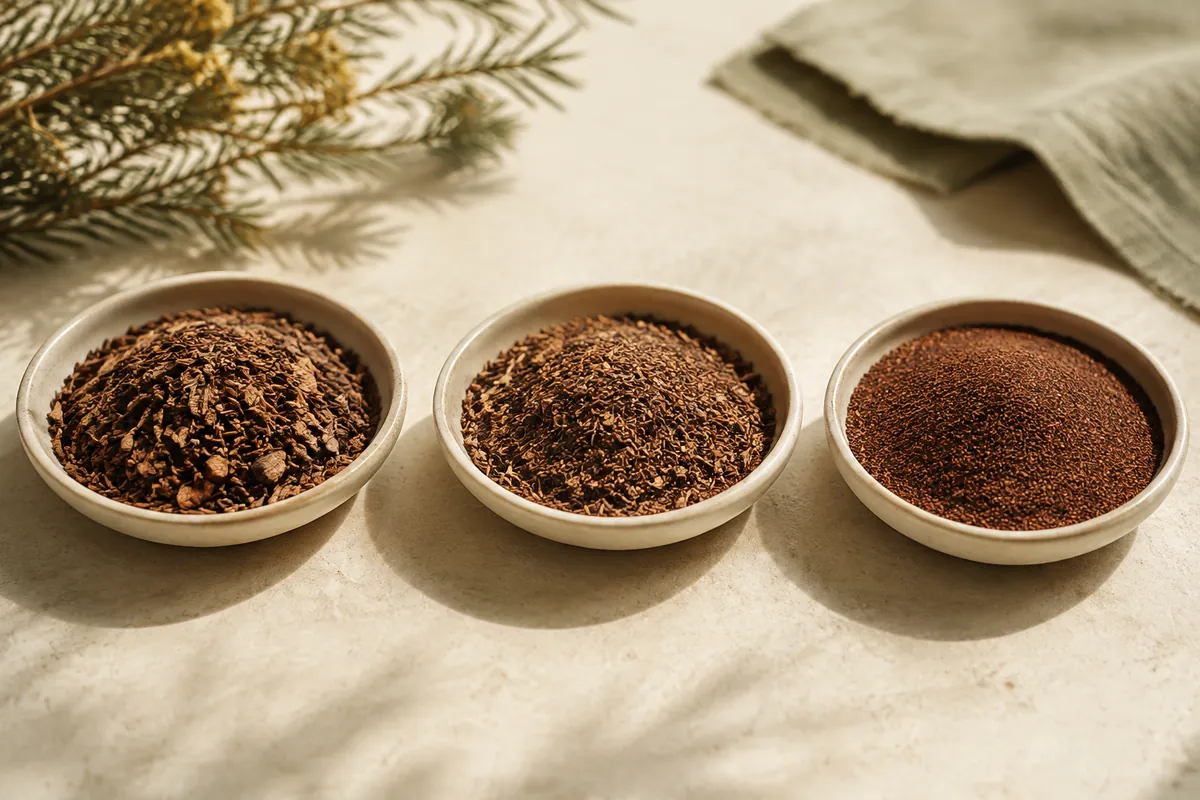
| Form | Where it is sold | How it brews |
|---|---|---|
| Coarse cut | Loose, from specialist sellers | Slower, sweeter, needs the full ten minutes |
| Fine cut | Loose, supermarket grade | Faster, and slightly more astringent at the edges |
| Dust | Teabags | Fast and strong at three minutes, then flat |
| Stem-heavy lots | Cheap loose packets | Woodier, less honeyed, and paler in the cup |
Stem content is the quiet variable. Stems carry less of the sweetness and more of the woody base, so a packet that looks pale and twiggy brews thinner than one with a deeper copper colour and visible leaf in it.
Teabag honeybush is a different product rather than a worse one. The dust gives up almost everything it has in three minutes, which suits a bag and removes the long forgiving steep that is the loose form's main advantage.
- Check whether it is fermented or green; fermented is the sweet, coppery standard.
- Look for a stated Cyclopia species if you are curious, though few sellers give one.
- Expect to pay more than rooibos, and expect availability to vary by season.
- Buy from a seller who also sells rooibos properly; the supply chains overlap.
- Store it sealed and dry, and it keeps for years without much change.
Being fully oxidised and very low in volatile content, it survives a cupboard better than almost anything on a tea shelf, holding two to three years without fading. Storing honeybush covers the one thing that genuinely spoils it, which is damp rather than time.
Iced, cold-brewed and with milk
Very little of it is drunk hot and plain outside South Africa.
Each of the other forms behaves differently, and honeybush comes through all of them better than most infusions manage.
Iced
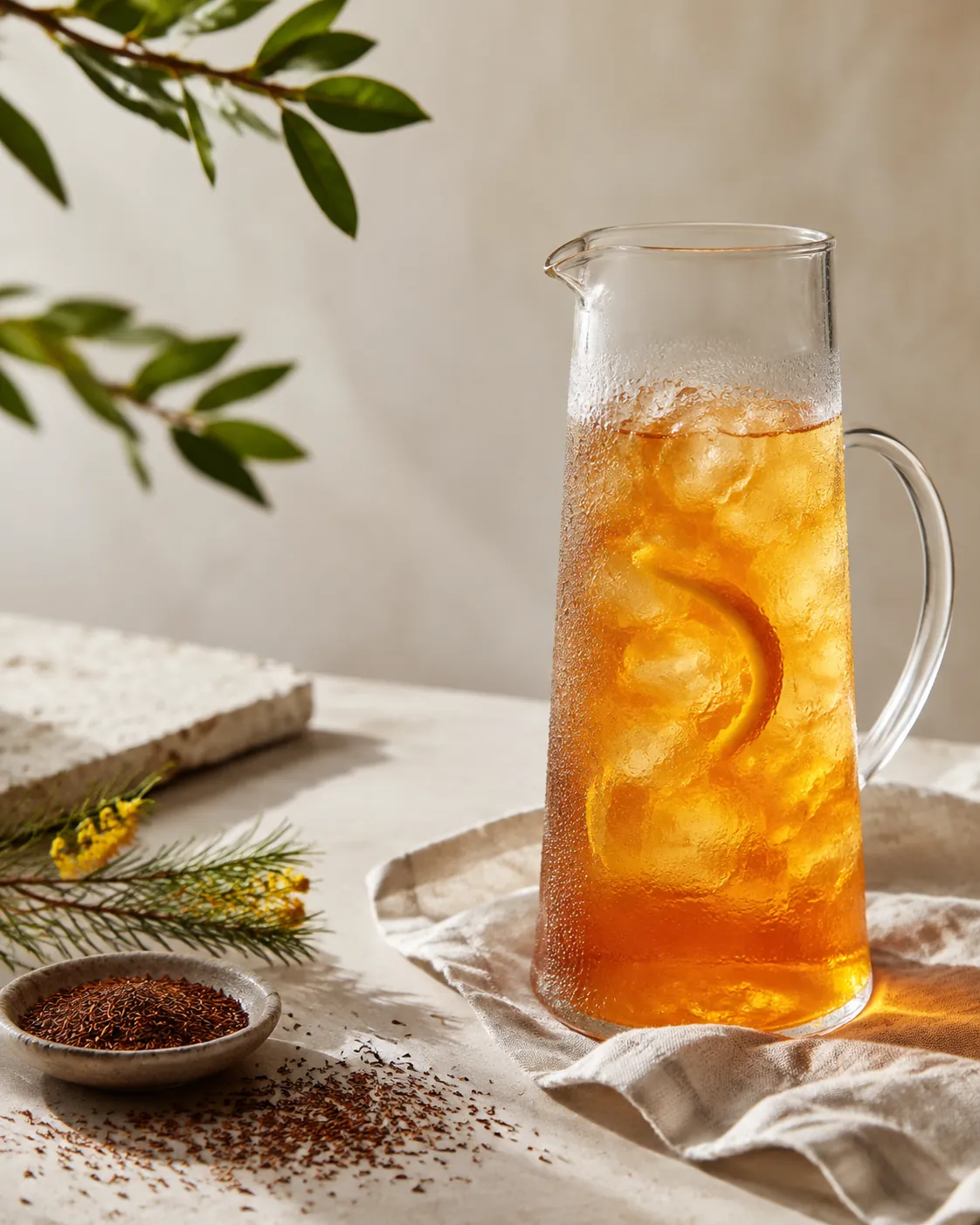
Excellent. Brew double strength and pour over ice; the sweetness survives chilling better than a black tea's does.
Cold-brewed
Works, and takes eight hours or so. Cleaner and more floral than the hot version.
With milk
A rounder, softer drink than a rooibos latte, and it needs no sugar.
Blended with rooibos
Common and sensible. Honeybush supplies sweetness, rooibos supplies body.
With vanilla or citrus peel
The standard commercial flavourings, and both sit naturally with it.
Chilling suppresses less here than it does elsewhere. Cold flattens aroma in most infusions, and honeybush registers its sweetness as taste rather than smell, so an iced glass keeps most of what made the hot cup good.
Brew at double strength and pour over a full glass of ice if you want it cold in a hurry, or give it eight hours in the fridge for a cleaner and more floral result.
Milk behaves here the way it does in rooibos, since there is no astringency for the protein to fight. Oat milk suits it particularly well, being sweet already, and the cup needs no sweetening on top.
What to put beside it, in the pot and on the plate
Honeybush is sold blended more often than plain outside South Africa, and the additions are not all decoration.
Vanilla
The standard flavouring, and it works because both are sweet and neither is acidic.
Caramel and butterscotch
The same idea more heavily, and they tend to bury the apricot note.
Citrus peel
The most useful addition, since it supplies the acidity the plant lacks entirely.
Rooibos
Common and sensible, and the blend inherits the long unattended steep from both sides.
Citrus peel is the one that changes the drink rather than dressing it. Orange or lemon peel supplies an acidity honeybush has none of, and that acidity is what stops a ten-minute steep reading as cloying.
On the plate, stone fruit is the obvious match, since the infusion already tastes of apricot. Baked goods carrying honey, almond or vanilla work for the same reason, and both hold up against a second, woodier steep.
It sits badly against anything sharp or salty. A sour dish makes it read as cloying rather than sweet, and the drink has no acidity of its own to push back with.
Where it does something no other infusion here manages is at the end of a heavy evening meal, since it is sweet enough to stand in for a dessert course and cannot turn bitter while the table is still talking.
That is more than chamomile will do in the same position, and the reasons it goes wrong elsewhere are collected in honeybush faults.
Common questions
What is the difference between honeybush and rooibos?
Different plants from the same South African region. Honeybush is sweeter, floral and apricot-like; rooibos is woodier with a vanilla note. Both are caffeine-free and very low in tannin, and honeybush is the gentler of the two.
Why is honeybush harder to find than rooibos?
Agriculture rather than taste. Much honeybush is still wild-harvested because several Cyclopia species resist reliable cultivation, which caps supply. Rooibos was domesticated decades ago and is farmed at scale.
Can you over-brew honeybush?
Not really. It contains almost no tannin, so it gets stronger rather than more bitter. Ten minutes is normal and most people under-brew it by applying tea habits to it.