What Is Chamomile Tea? Dried Flower Heads, and No Tea At All
Chamomile tea contains no tea. It is an infusion of dried flower heads from a daisy-family plant, and the single thing that most affects the cup is whether you bought whole flowers or dust.
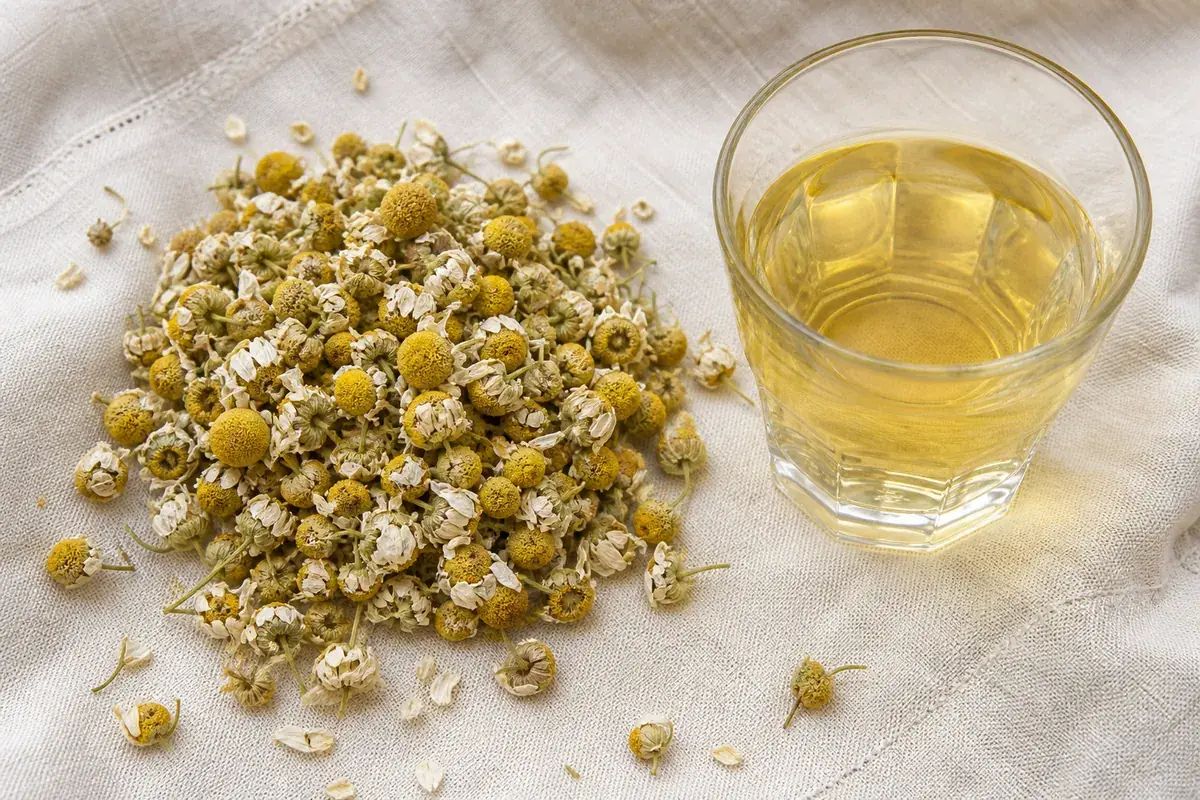
Chamomile tea is an infusion made from the dried flower heads of a daisy-family plant. It contains no Camellia sinensis, which makes it a tisane rather than a tea in the strict sense.
The word tea is used here in its loose sense, the way it is for rooibos and other tisanes, none of which contain tea leaf. What follows is the plant, the grade, and the four minutes that decide how the cup turns out.
Chamomile tea at a glance
- What it is
- An infusion of dried flower heads from a daisy-family plant
- The plant
- German chamomile, Matricaria chamomilla, in almost every packet sold
- Part used
- The flower head alone. Stem and leaf are contamination, not ingredient
- Dominant note
- Apple, over a honeyed sweetness and a dry hay base
- Water
- Genuinely boiling, four to five minutes, covered
- Over-brews
- Yes, and fast. Past six minutes only bitterness keeps arriving
- Keeps
- About a year as whole flowers in an opaque tin
German and Roman, and what the packet omits
Chamomile is not one species, and the two plants sold under the name are not interchangeable.
| German | Roman | |
|---|---|---|
| Species | Matricaria chamomilla | Chamaemelum nobile |
| Also called | Wild or Hungarian chamomile | English chamomile |
| Plant | Tall annual, branching | Low perennial, spreading |
| Flavour | Sweet, apple-like, gentle | Sharper, more bitter, more herbaceous |
| Availability | Almost everything sold as chamomile tea | Uncommon as a drink, more used in gardens |
Almost every chamomile tea on a shelf is German chamomile. A packet that says only chamomile is saying German, whether or not it knows it.
German chamomile is an annual with hollow, cone-shaped flower heads, and it gives the sweet apple character this page describes throughout. Roman chamomile is a low spreading perennial with flatter, denser heads.
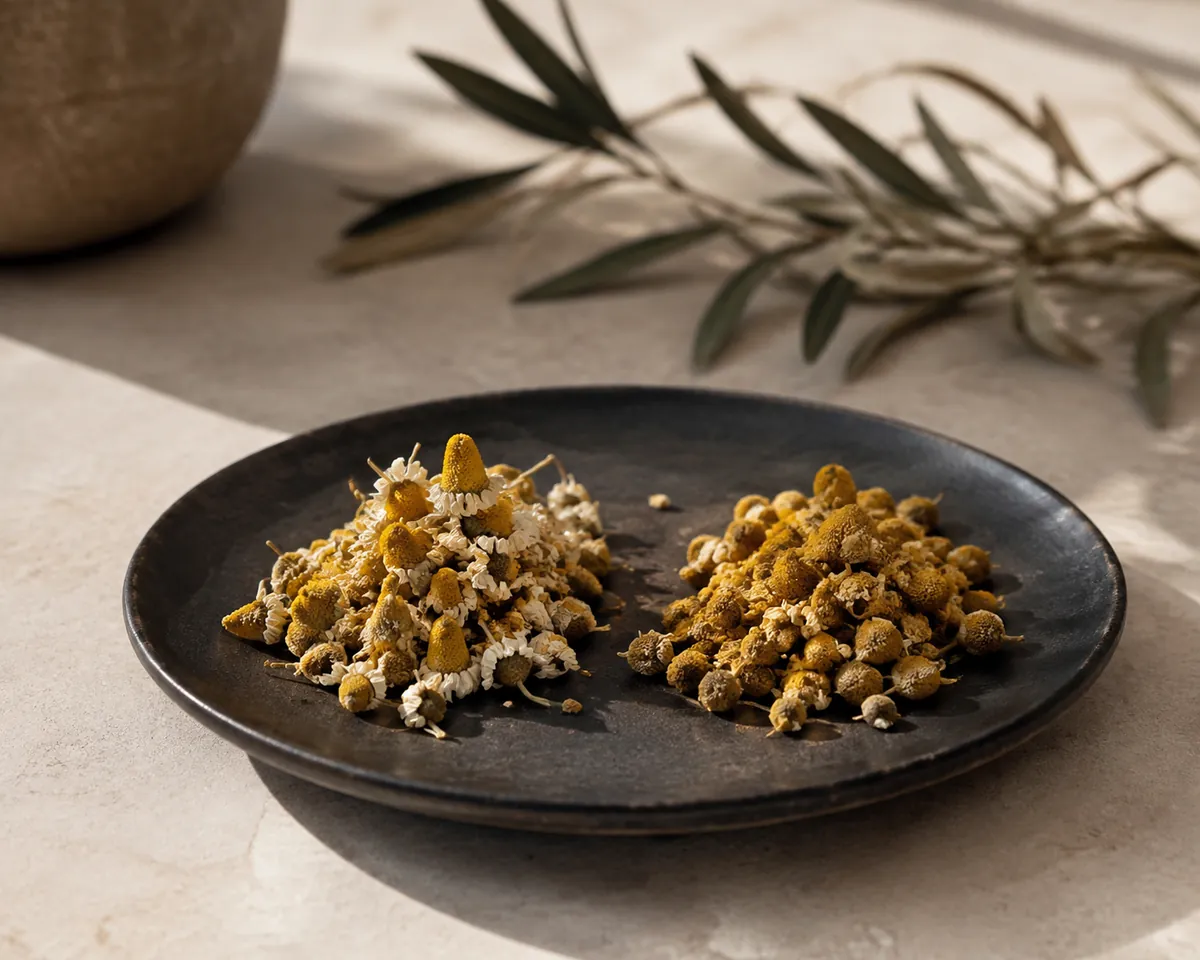
The Roman kind is more bitter, more herbaceous and considerably less sweet, and it appears far more often in gardens and essential oils than in a pot of anything.
That matters when a cup comes out bitter rather than apple-like, since the species is a likelier explanation than the brewing, and somebody who disliked one may well take to the other. Chamomile flavour separates the two profiles properly.
Apple, honey and the hay underneath
Chamomile is instantly recognisable and sharply divisive, and both of those trace back to a balance between three notes that shifts with how intact the flower heads were when they met the water.
The flavour, and where it comes from
- Apple
- The dominant note, and the origin of the name. Chamomile derives from Greek for earth-apple
- Honey
- A rounded sweetness that comes through most clearly in whole-flower infusions
- Hay
- A dry straw-like base note, which dominates in poor material
- Bitterness
- Present in all of it, and increases sharply with steep time
- Body
- Light and thin. It has none of the tannin weight of black tea
The flower head is where the aroma lives. The characteristic sweetness comes from volatile oils concentrated in the flower itself, and those escape fastest from broken material.
What you get, by grade
- Whole headsIntact flowers, visibly petals and centres. Sweetest and most aromatic
- Broken headsFlowers mostly intact with some fragmentation. Still good
- Cut and siftedDeliberately chopped. Brews faster, tastes flatter
- Fine particlesWhat fills most tea bags. Quick, strong, often harsh
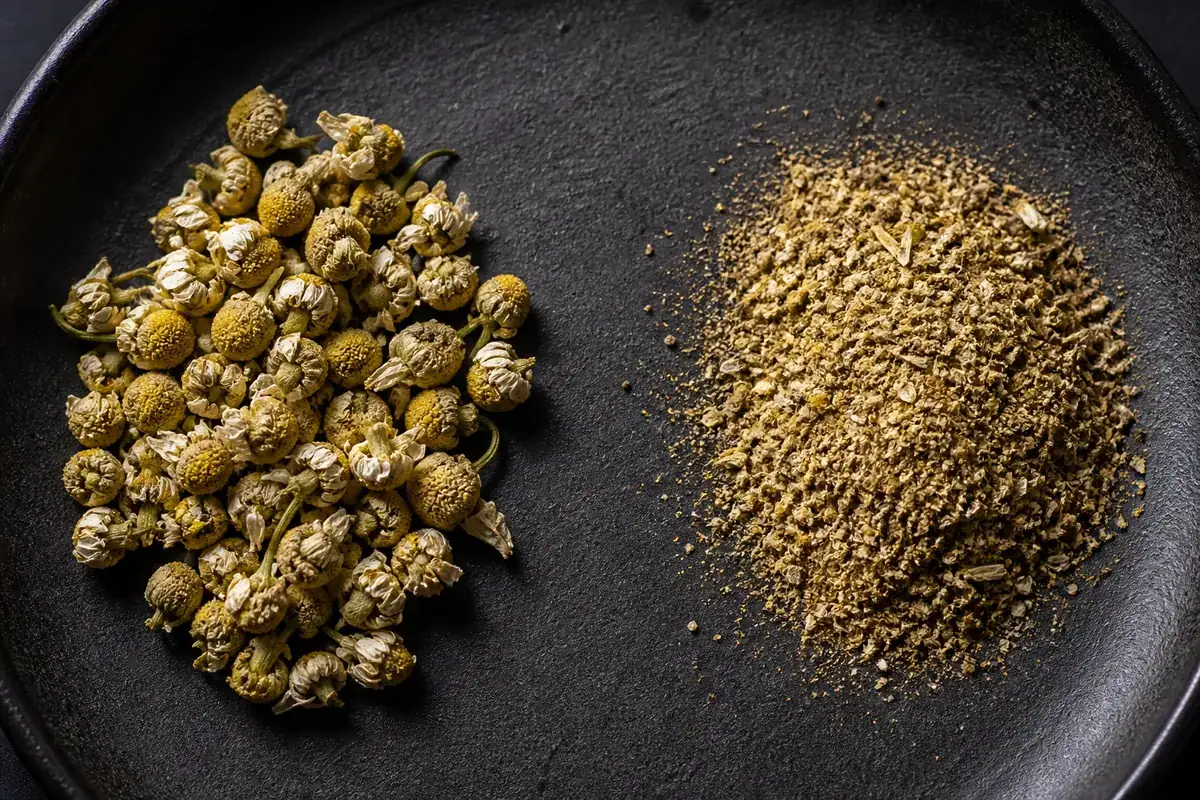
That is why a bag of chamomile and a pot of whole flowers can taste like unrelated drinks. The bag gives you the bitter, hay-like base; the whole flowers give you the apple and honey notes that sit on top of it.
The bitterness is the part people get wrong. Chamomile is routinely brewed as though it cannot be over-extracted, and it very much can, which is the largest single cause of a disappointing cup.
Four minutes under a saucer, and the water beneath it
Boiling water, and a short steep.
The received advice for herbal infusions is boiling water and a long soak, and for chamomile only the first half of that holds up.
Starting point
- Water
- 95 to 100 C, genuinely boiling
- Steep
- 4 to 5 minutes, and not much longer
- Flowers
- 2 to 3 g per 250 ml, which is a generous heap of whole heads
- Vessel
- Covered, so the volatile oils condense back rather than escaping
Boiling is correct because there is no catechin problem to sidestep here, unlike green tea bitterness, where water temperature is the main lever a drinker has.
Steeping longer does not make it stronger in any useful sense. Past about six minutes the aromatics are already fully extracted and only the bitter compounds keep arriving.
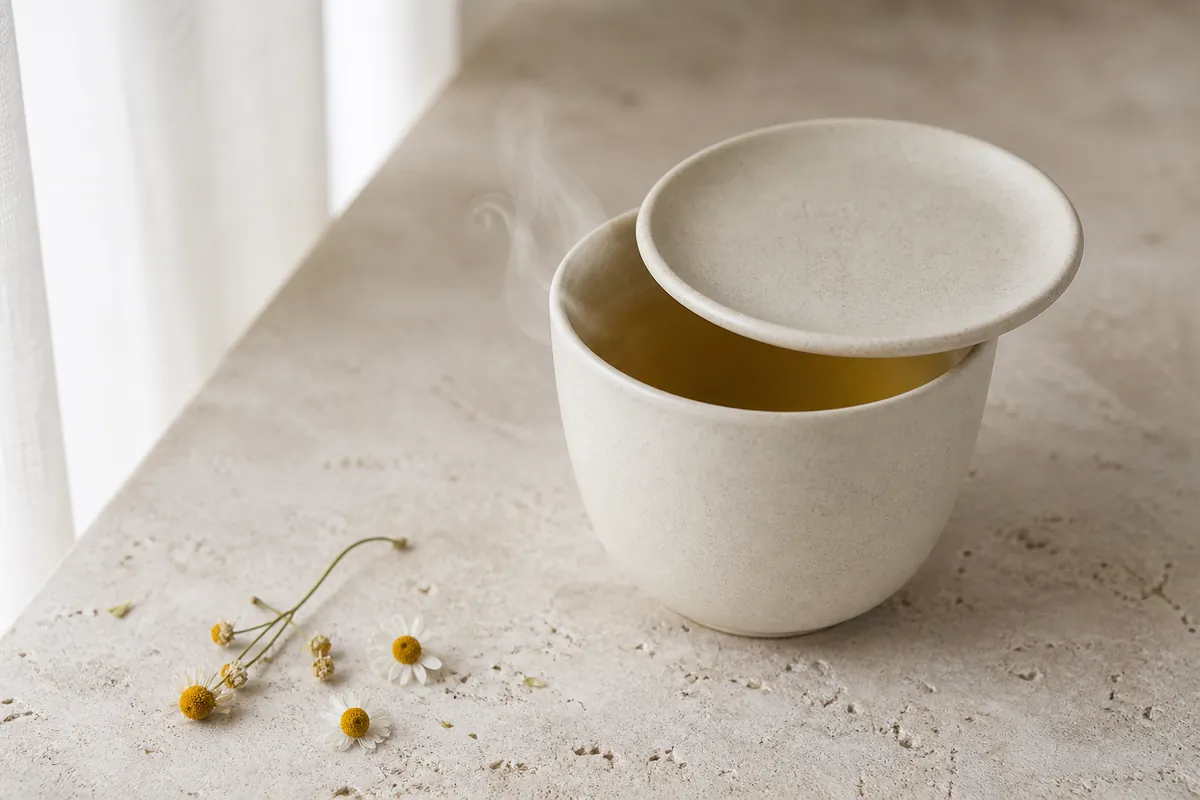
With no tannin to speak of, the infusion is unusually exposed to whatever it is brewed in. Hard water flattens it, neutralising the delicate sweetness and leaving the hay note standing on its own.
Soft or filtered water improves a hard-water cup more than better flowers would, and testing it costs nothing: brew the same heads once with bottled water and compare. The mechanism behind that is set out in brewing water.
Four minutes under a saucer is most of the technique, and making chamomile tea scales the same handling up to a pot.
Whole flowers against a supermarket bag
This one decision changes the drink more than anything else on the page.
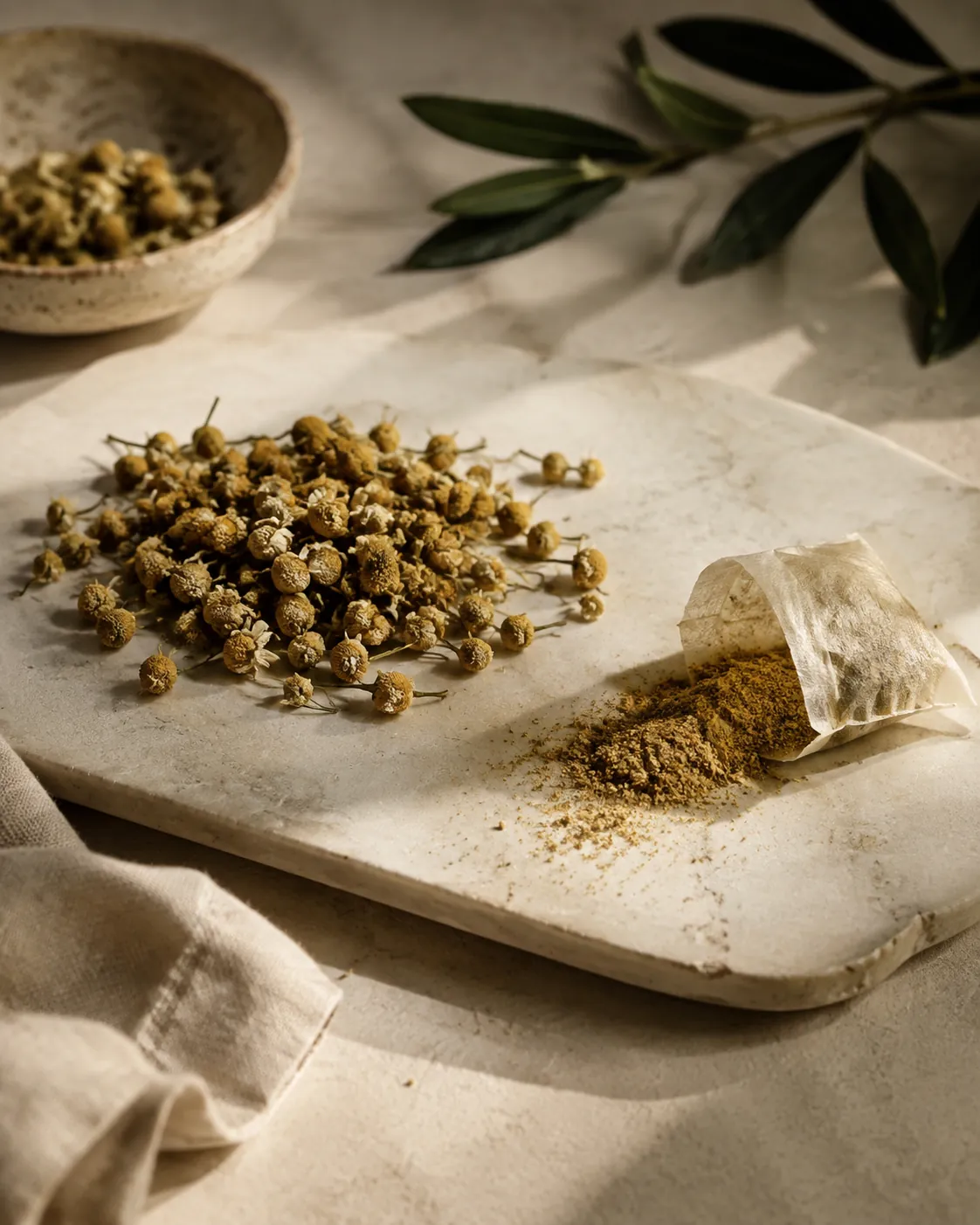
Whole flowers
More aroma, more sweetness, more control over strength. Needs an infuser or a strainer and a little more time.
Tea bags
Faster, no equipment, consistent. Made from fine material, so the aromatics are largely gone and the hay note leads.
Pyramid bags
A middle position. Room for larger pieces, and often a genuine improvement on a flat bag.
Loose blends
Chamomile mixed with lemon balm, lavender or mint. Reasonable, but the chamomile is rarely the best part.
Anyone who has tried chamomile from a supermarket bag and found it bitter and vaguely of straw has described what was in the bag rather than the plant.
Chamomile is also one of the easiest herbal products to judge by eye, which is unusual and genuinely useful at a shelf.
- Look for intact flower heads with visible white petals, not brown crumbs.
- Colour should be bright: golden centres and pale petals. Uniform brown means old.
- Smell the dry material. It should be clearly sweet and apple-like through the packet.
- Check for stem and leaf content. A lot of green stalk means a careless harvest.
- Prefer a stated harvest year, which good herbal suppliers print.
Egypt supplies most of the chamomile sold in Europe and North America, and Egyptian origin is often printed as a quality marker. It is a real distinction rather than pure marketing, though a well-handled crop from anywhere beats a badly stored Egyptian one.
Whole heads need an infuser or a strainer, and that is the only equipment question chamomile raises. A tea infuser roomy enough for the flowers to swell is worth more here than any grade upgrade, since cramped flowers extract unevenly and taste thin.
Grade beats brand at every price on this shelf, and the grade is visible through the packet before you have paid for anything.
Picking, drying and the tension between them
Chamomile flowers are roughly eighty per cent water when picked and have to come down quickly or they ferment and brown, while the volatile oils carrying the apple note are driven off by exactly the heat that would dry them fast.
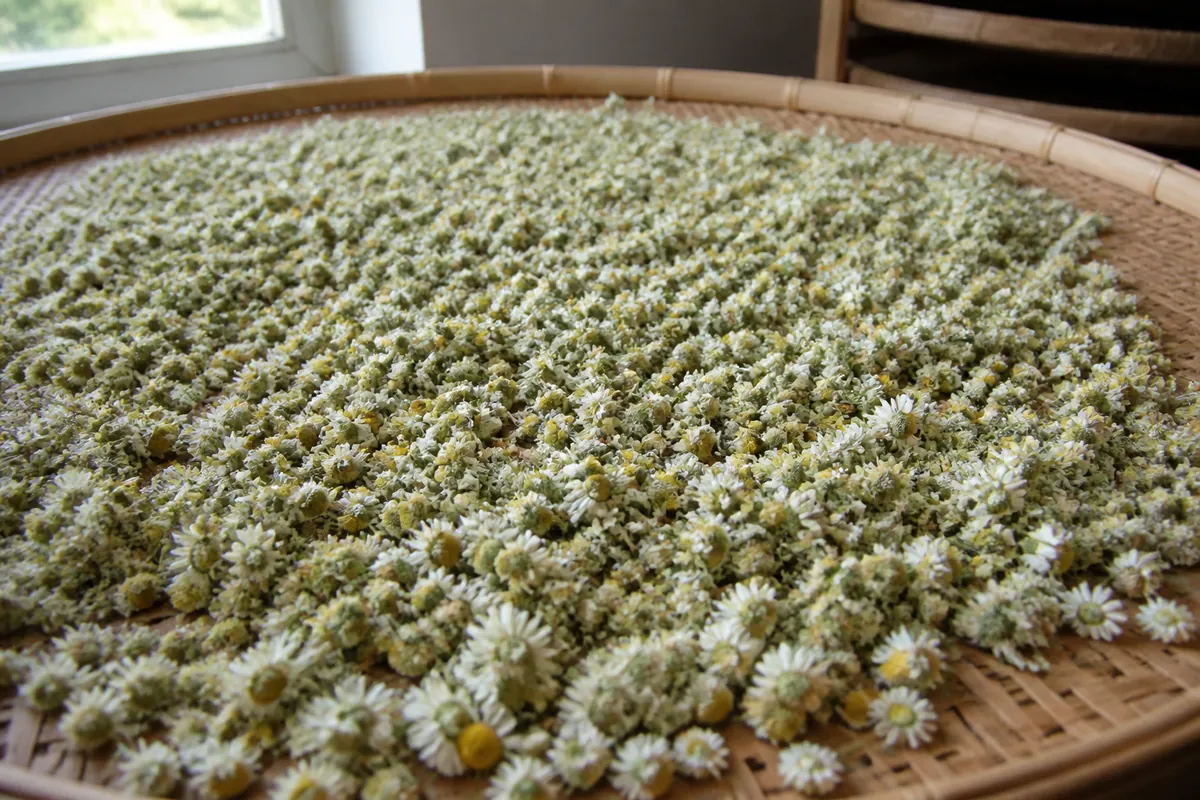
What happens after picking
- HarvestFlowers are taken at full opening, in a window of a few days.
- DryWarm moving air, ideally below 40 C, over many hours.
- SortStem, leaf and broken heads are separated from whole flowers.
- GradeWhole heads are sold at a premium; the fragments go to tea bags.
German chamomile is an annual that self-seeds readily and grows across Europe, Egypt, Argentina and eastern Europe. The flowers are taken at full opening, and that window is measured in days rather than weeks.
Machine harvesting sweeps the heads off the plant and inevitably collects stem and leaf with them. Hand-picking gives cleaner material and costs considerably more, which accounts for most of the gap between a cheap chamomile and an expensive one.
Grade therefore varies far more than origin does. Two Egyptian chamomiles at different prices are usually different harvests of one crop, sorted differently after drying, rather than different plants.
A chamomile that smells of hay and looks uniformly brown was dried too hot or too slowly. That is a processing failure rather than an old crop, and no amount of careful brewing recovers it.
Why the apple note goes first
It fades faster than people expect.
What fades is exactly the part you were buying. The volatile oils carrying apple and honey dissipate steadily while the hay and the bitterness do not, so old chamomile does not go weak so much as go out of balance.
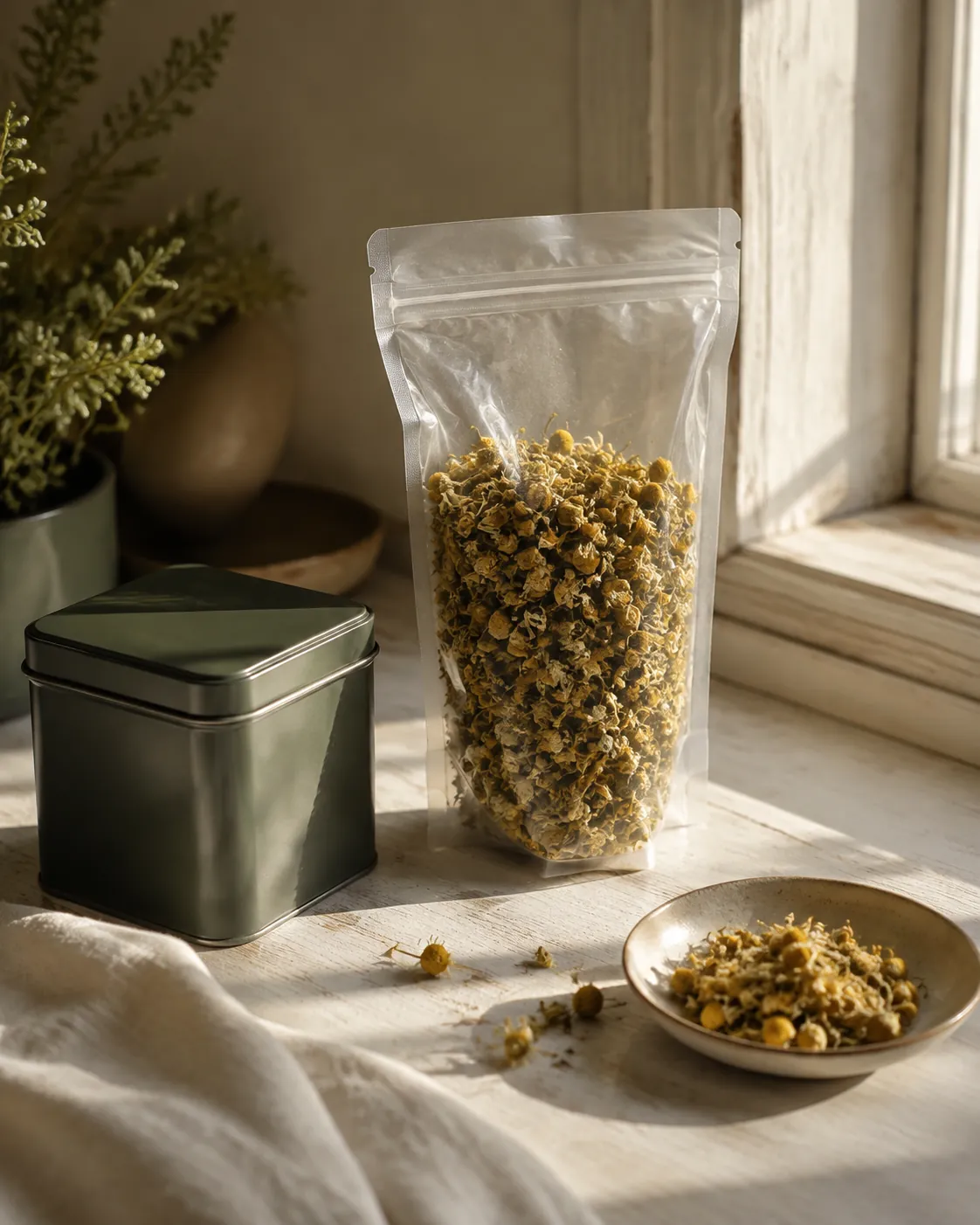
Light is the main enemy, which is awkward, because chamomile is usually sold in clear packaging so the flowers can be admired through it. Decant it into a tin the day it arrives.
The container logic is common to every dried flower and leaf, and storing loose-leaf tea sets it out in full.
Flower heads are more fragile than leaf, so the timeline is shorter than a tea's. Chamomile faults describes what a faded packet actually tastes like, which is hay without the apple rather than a weak cup.
Cold-brewed chamomile
Chamomile is routinely overlooked cold, and it works better that way than its reputation suggests.
The apple and honey notes survive chilling well while the hay note recedes, which makes an iced glass rounder than the hot cup rather than thinner.
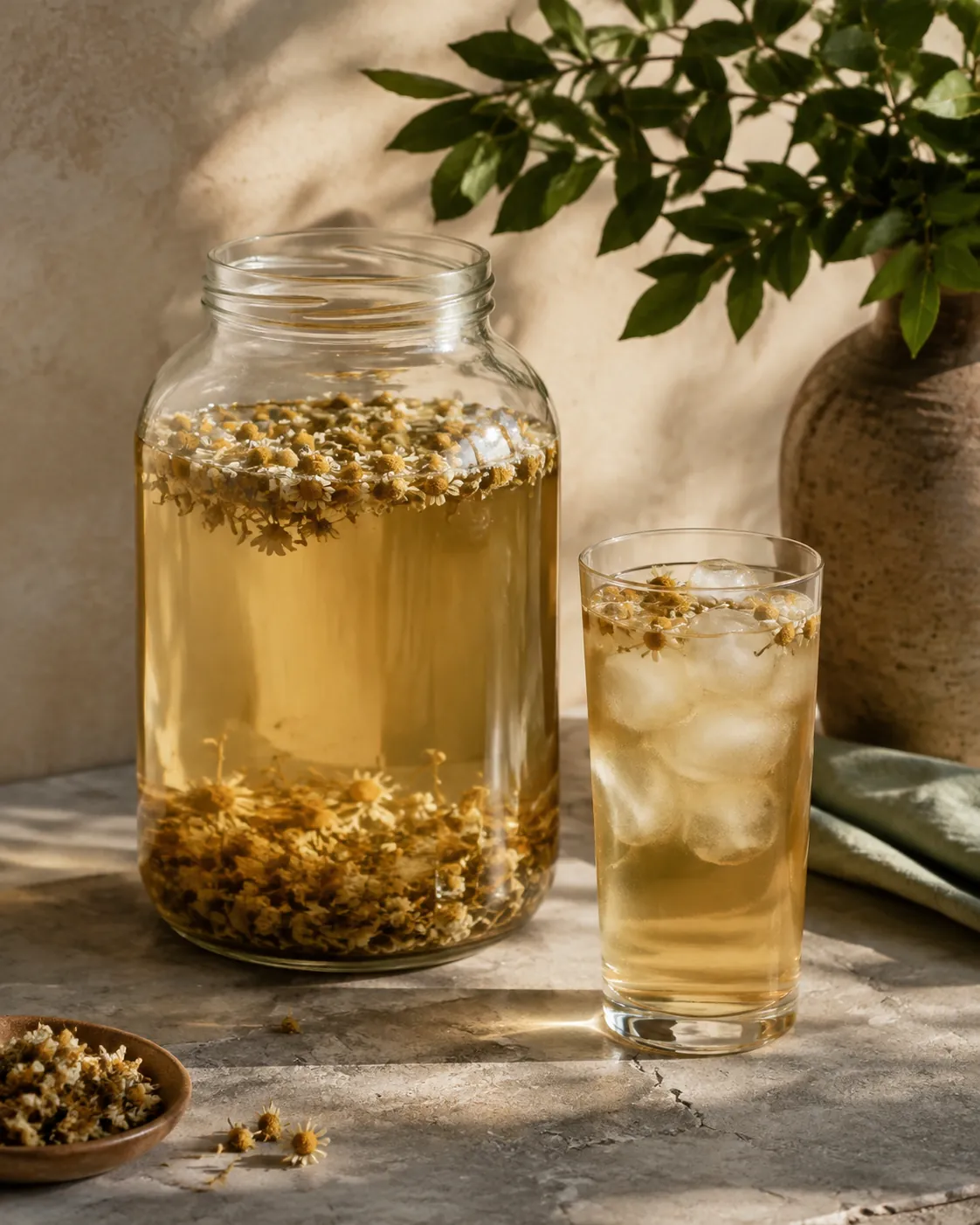
Iced chamomile
- Method
- Cold brew, which suits it better than hot-and-chilled
- Flowers
- 4 g whole heads per 500 ml
- Water
- Cold, straight to the fridge
- Time
- 6 to 8 hours
- Result
- Sweet and clean, with almost none of the bitterness
Cold water barely extracts the bitter compounds, so a jug can sit overnight without turning harsh. That is the reverse of the hot method, where the window has already closed at six minutes.
Pouring hot chamomile over ice is the weaker route. Bitterness extracted hot is still in the glass afterwards, and the dilution thins the sweetness that was covering it.
Cold brewing also forgives a mediocre grade. Fine material that turns harsh in four minutes of boiling water gives a clean, if quiet, jug after eight hours in the fridge.
The base that holds a blend together
Chamomile turns up in a great many blends, and it is nearly always playing the same part in them: a sweet, low-tannin base that does not fight whatever has been layered on top. Rosehip is the usual partner where a little acidity is wanted, and lemon balm where a citrus note is of it.
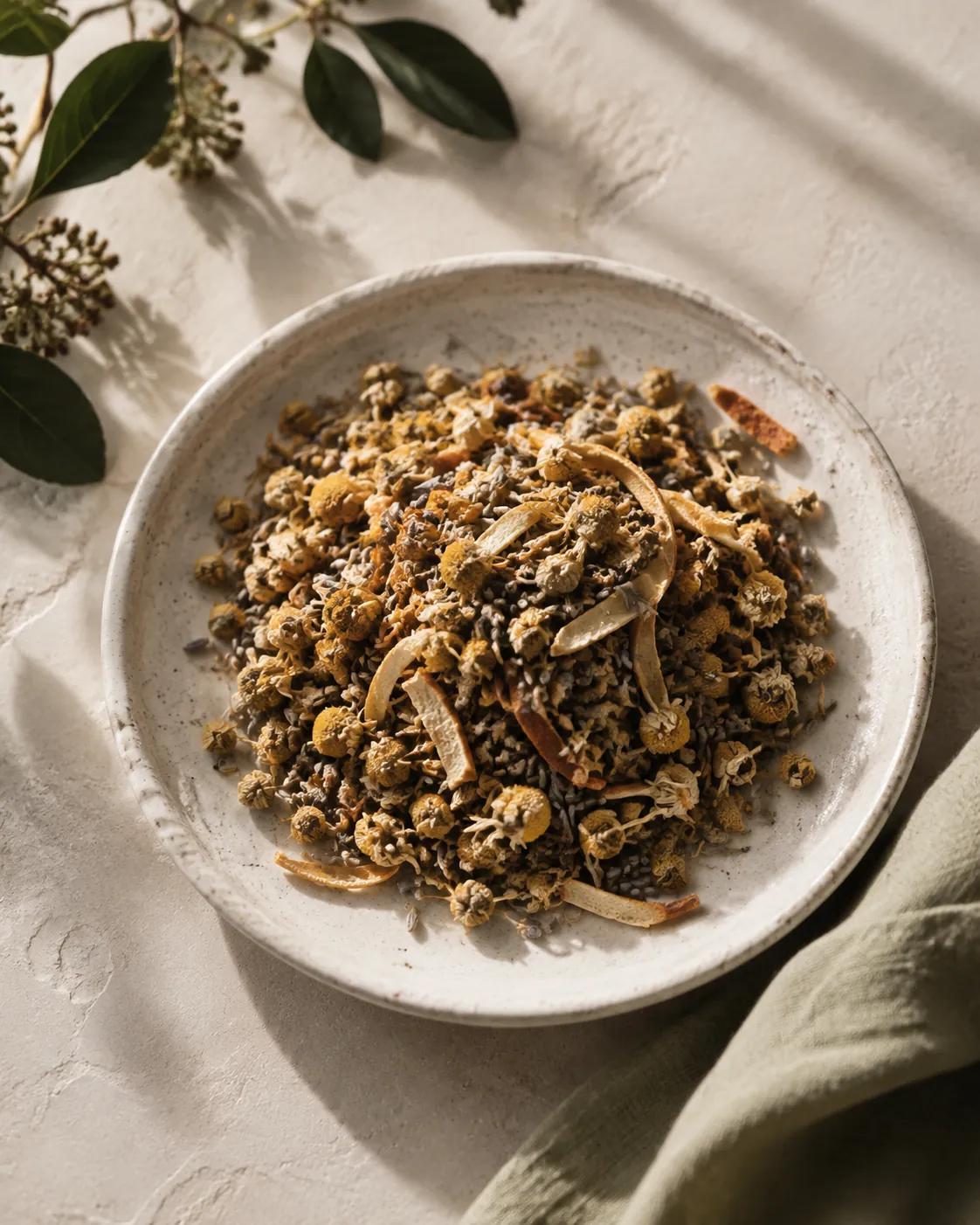
Mint, lemon balm, lavender and rosehip all sit on it comfortably, which is why so many mixed packets are built around it rather than around the plant named on the front.
The risk is that it becomes filler. A blend listing chamomile first but tasting mostly of lemon is often using cheap chamomile for bulk, and the same money spent on whole flowers plus a separate bag of mint buys more control.
Brewing it alone once settles the question for good. Most people have only ever met chamomile inside a blend, and the plant is a good deal sweeter on its own than any blend lets on.
Where it genuinely earns a partner is beside something equally mild. Honeybush works because both are sweet and neither is assertive, so neither buries the other over a four-minute steep.
Where chamomile sits among the herbal infusions
It is the delicate one here.
| Chamomile | Peppermint | Rooibos | |
|---|---|---|---|
| Plant part | Flower head | Leaf | Leaf and stem |
| Intensity | Low, easily overwhelmed | High, overwhelms others | Medium, rounded |
| Bitterness | Rises fast after 6 minutes | Rises slowly | Almost none |
| Takes milk | Poorly | No | Yes, comfortably |
| Over-brews | Easily | Eventually | Almost never |
Peppermint tea will erase it inside a blend, because menthol dominates anything mild put next to it.
A red bush infusion sits at the opposite pole and can be left in the pot for half an hour without penalty, which chamomile cannot survive for six minutes. Chamomile against peppermint works through that contrast in detail.
The two louder options in this section make the same point from another direction. Hibiscus goes sour rather than bitter when pushed too far.
Ginger has to be simmered rather than steeped at all, which puts it further still from a flower head that gives everything up in four minutes. For an infusion you cannot ruin, chamomile is the wrong choice; for one worth paying attention to, it is the obvious one.
Tisane, herbal tea, and what the word settles
The naming is a small confusion worth clearing up, because it explains a great deal of mislabelled packaging.
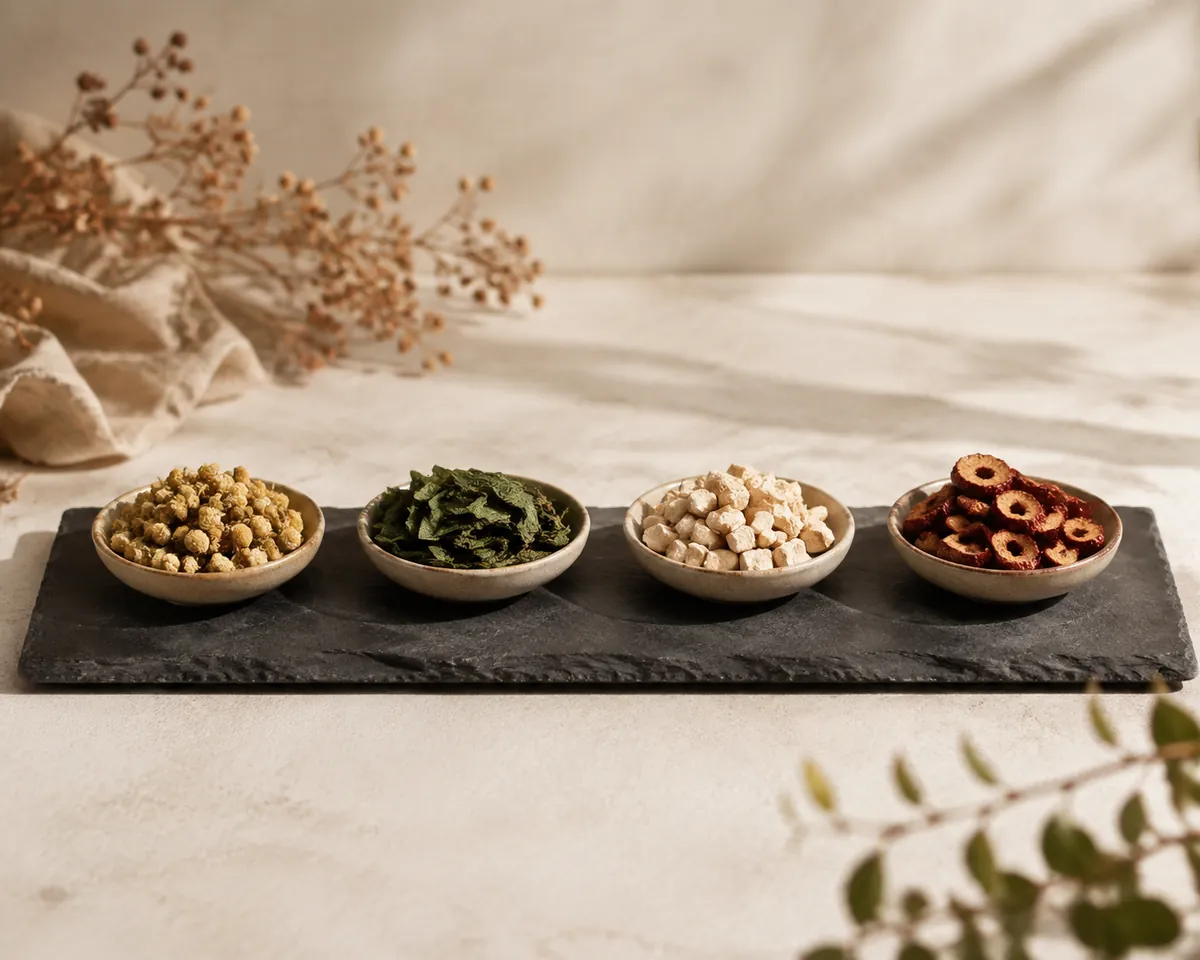
In English, tea came to mean both the plant and the act of infusing something in hot water. Chamomile arrived through the second sense, and the usage is far too settled now to argue with.
The precise word is tisane, from the French, covering any infusion that is not Camellia sinensis. Herbal tea and herbal infusion are both current, and all three mean the same thing.
The distinction matters in exactly one practical way. A packet labelled herbal tea contains no tea leaf and therefore no caffeine from tea, whereas one labelled chamomile blend may well carry a green or black base underneath the flowers.
The ingredients list settles it, not the name on the front, and chamomile and caffeine sets out what that means for a cup.
The same loose usage covers lemongrass and every other plant in this section, none of which have any relation to the tea bush beyond the kettle they meet.
Common questions
Is chamomile tea actually tea?
No. Tea means an infusion of Camellia sinensis leaf. Chamomile is made from dried flower heads of a daisy-family plant, which makes it a tisane. The word tea is used loosely for any hot infusion.
Why does my chamomile tea taste bitter?
Usually over-steeping or poor material. Past about six minutes the aromatic compounds are fully extracted and only bitterness keeps building. Fine tea-bag material also leads with the bitter, hay-like base because its aromatics have largely escaped.
What is the difference between German and Roman chamomile?
They are different species. German chamomile is sweet and apple-like and is what nearly all chamomile tea is made from. Roman chamomile is sharper and more bitter and is more often grown ornamentally than drunk.