Cocoa Powder, a Ground Solid That Never Dissolves
Cocoa powder is a ground solid, not a syrup or an extract, and it never dissolves. It hangs in the liquid as a suspension, which explains the paste step, the sediment in the last mouthful and every gritty iced version.
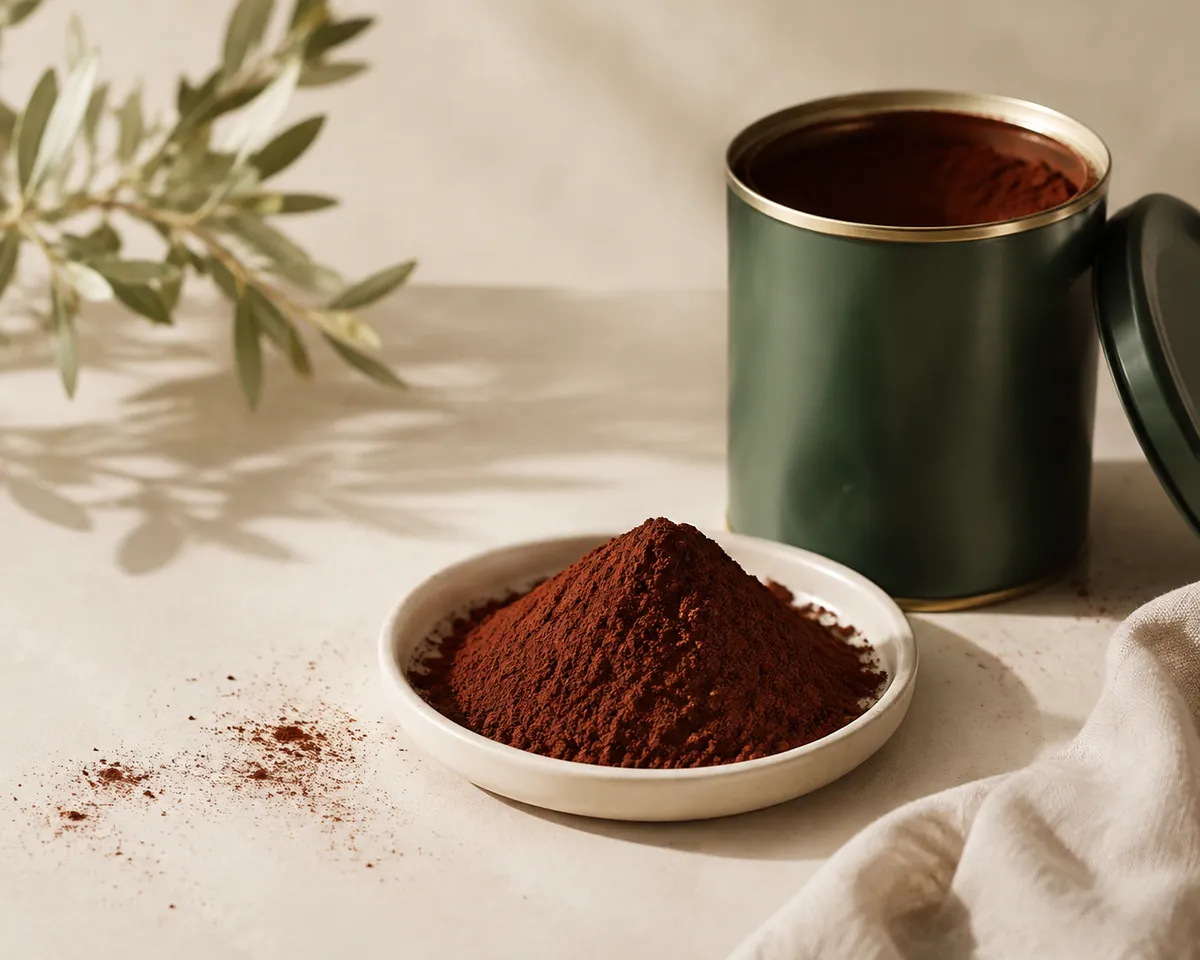
Cocoa powder is what is left of a roasted cocoa bean once most of its fat has been squeezed out. It is a ground solid rather than an extract, and almost everything that is awkward about using it follows from that one fact.
Sugar and salt go into a drink and vanish. Cocoa powder does not vanish.
It stays whole, hangs in the liquid as a cloud of fine particles, and will come back out again if the drink is left standing.
Cocoa powder in a drink, at a glance
- What it is
- The pressed cake of a roasted bean, milled to a fine dry powder
- Fat left in it
- Between 10 and 24 per cent cocoa butter, depending on the tin
- In liquid
- It disperses as a suspension. It never truly dissolves
- Why a paste first
- Dry powder skins over and traps a dry core inside each lump
- Typical strength
- 10 to 12 g per 250 ml for a standard cup
- Needs
- Sugar, because cocoa solids are bitter and drying on their own
What is left after the butter is pressed out
A cocoa bean is roughly half fat by weight, and that fat is the reason chocolate melts. Powder is made by taking almost all of it away.
Roasted nibs are milled into a thick brown paste, a hydraulic press drives most of the cocoa butter out of it, and the dry cake that remains is ground and sieved. The powder that comes out the other end is between 10 and 24 per cent fat, and the rest is cocoa solids: protein, starch, fibre, minerals, and the compounds that carry the colour, the bitterness and the aroma.
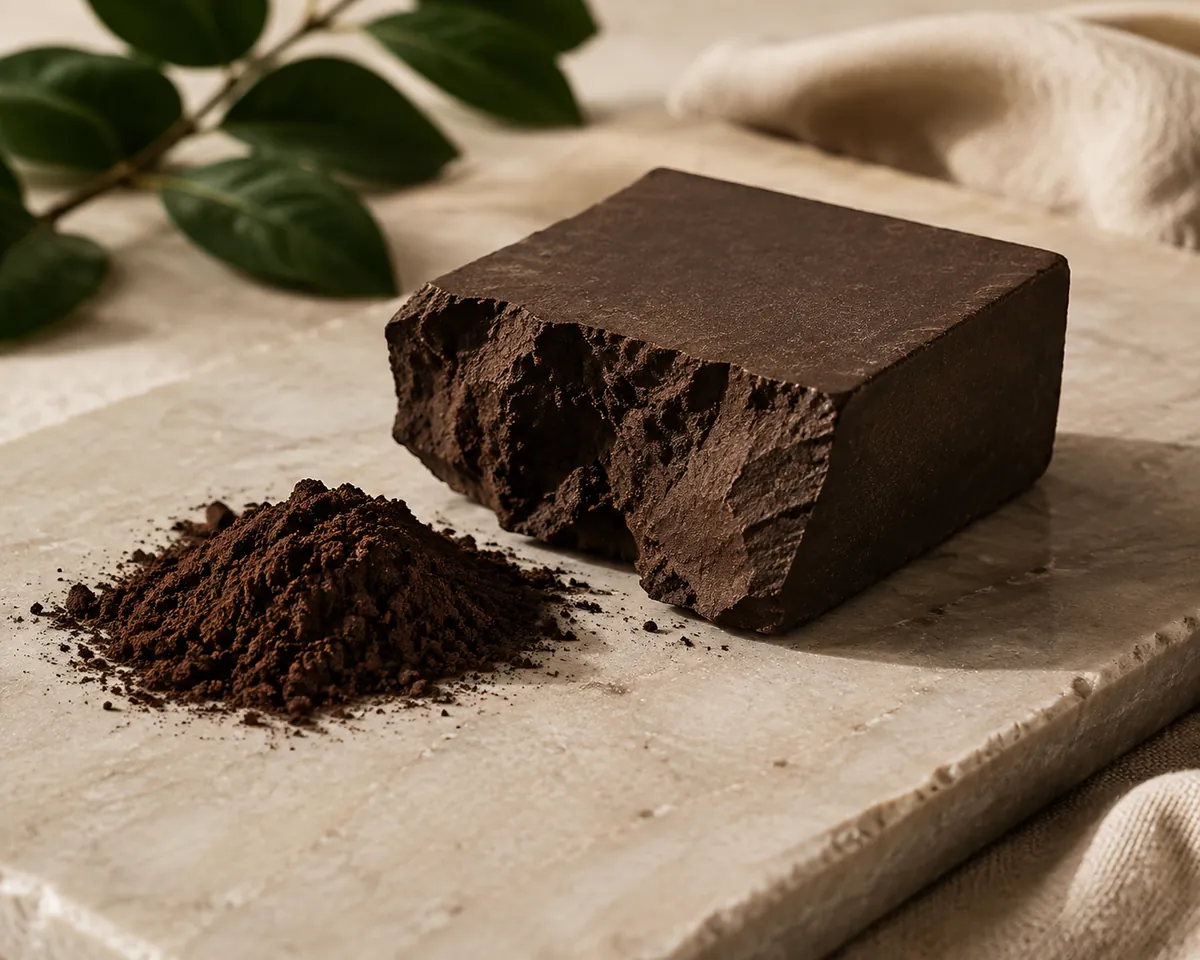
That is the whole ingredient. There is no flavouring, no sweetener and no emulsifier in a plain tin, which is why cocoa powder tastes so unlike the bar it came from and why a drink built on it has to be assembled rather than simply stirred.
Whether the powder has also been treated with alkali is a separate question with real consequences, and it is set out on its own terms under natural cocoa and under the Dutch-process kind. Everything below applies to both tins.
Why it disperses instead of dissolving
Dissolving means the molecules of a substance separate and slip between the molecules of the liquid, and the liquid stays clear. That is what sucrose does.
Cocoa solids cannot do it at all.
The particles stay intact. They spread through the liquid and hang there, held up by the movement of the water and by whatever thickness the drink already has, which is a suspension rather than a solution.
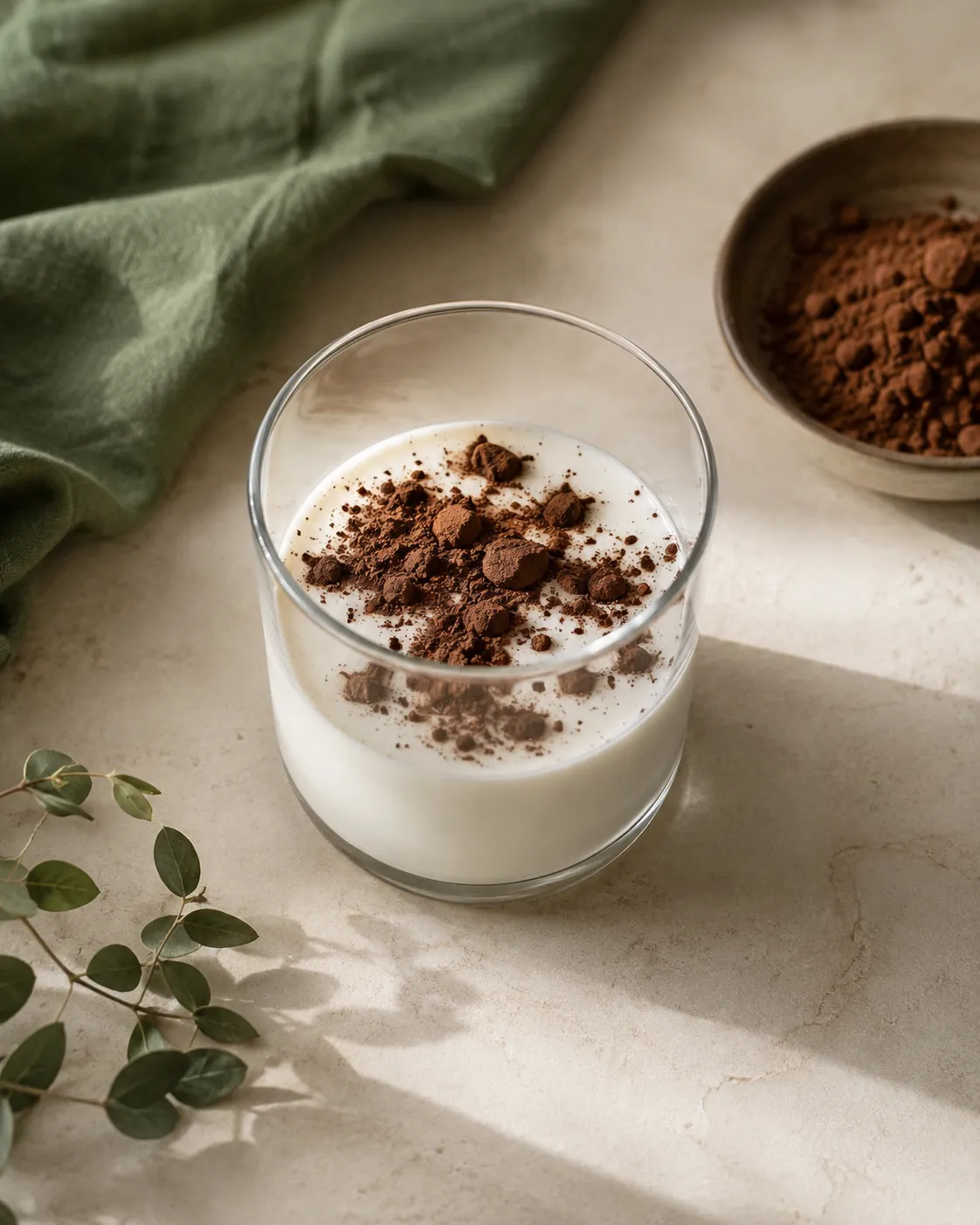
A cup of cocoa is a cloud of solids held in liquid, and anything held up can also fall back down. That single sentence predicts most of what goes wrong: the sediment in the last mouthful, the skin on a standing cup, and the gritty iced drink that tasted fine while it was being made.
Wetting is the second half of the problem and the one that ruins the drink at the start. Cocoa particles carry fat on their surfaces and resist water, so when dry powder meets liquid the outermost layer of each lump takes up water at once and sets into a soft skin.
Inside that skin the powder is still dry, and stirring only polishes the outside of it.
Sugar
Dissolves. Goes into solution, leaves the liquid clear.
Salt
Dissolves. Same behaviour, at a much smaller dose.
Instant coffee
Dissolves, which is the entire point of it.
Cocoa powder
Disperses. Stays solid, stays suspended, settles out.
Why the paste has to come first
Making a paste is not a nicety inherited from old recipes. It is the only reliable way to wet every particle before the liquid gets a chance to seal them into lumps.
The trick is the ratio. With a spoonful of liquid to a spoonful of powder there is nowhere for a dry core to hide, and the mixture can be worked against the side of the mug until it is glossy and even.
Add the same liquid all at once and there is far too much of it to work anything against.
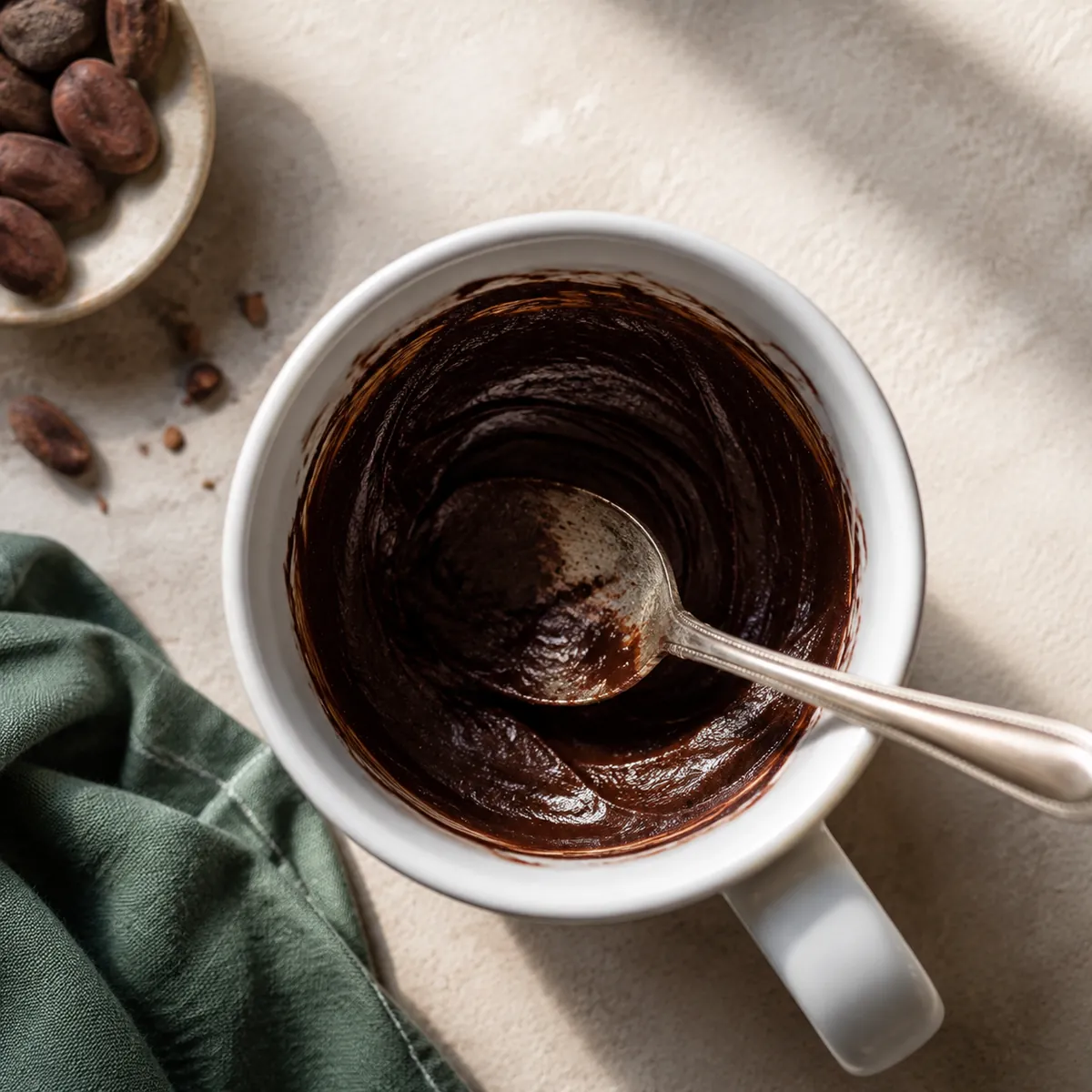
The order that works, every time
- Dry firstStir the cocoa and the sugar together in the empty mug or pan.
- Wet sparinglyAdd a tablespoon or two of hot liquid, no more.
- Work itPress the mixture against the side until it is smooth and shiny.
- Thin itAdd another splash and stir it out before it thickens again.
- FinishPour in the rest of the hot liquid, stirring as it goes.
The sugar earns its place in that first step for a mechanical reason as well as a culinary one. Crystals sit between the cocoa particles and hold them apart, so a dry blend of cocoa and sugar clumps far less than cocoa alone.
That is exactly the principle a sachet mix is built on.
Where the paste step gets skipped in a pan rather than a mug, the failure is worse rather than better, and hot cocoa made on the stove sets out what a scorched pan does on top of it.
What it changes in the glass besides flavour
Chocolate flavour is the obvious contribution and only about a third of what the powder is doing. Two other things arrive with it whether they are wanted or not.
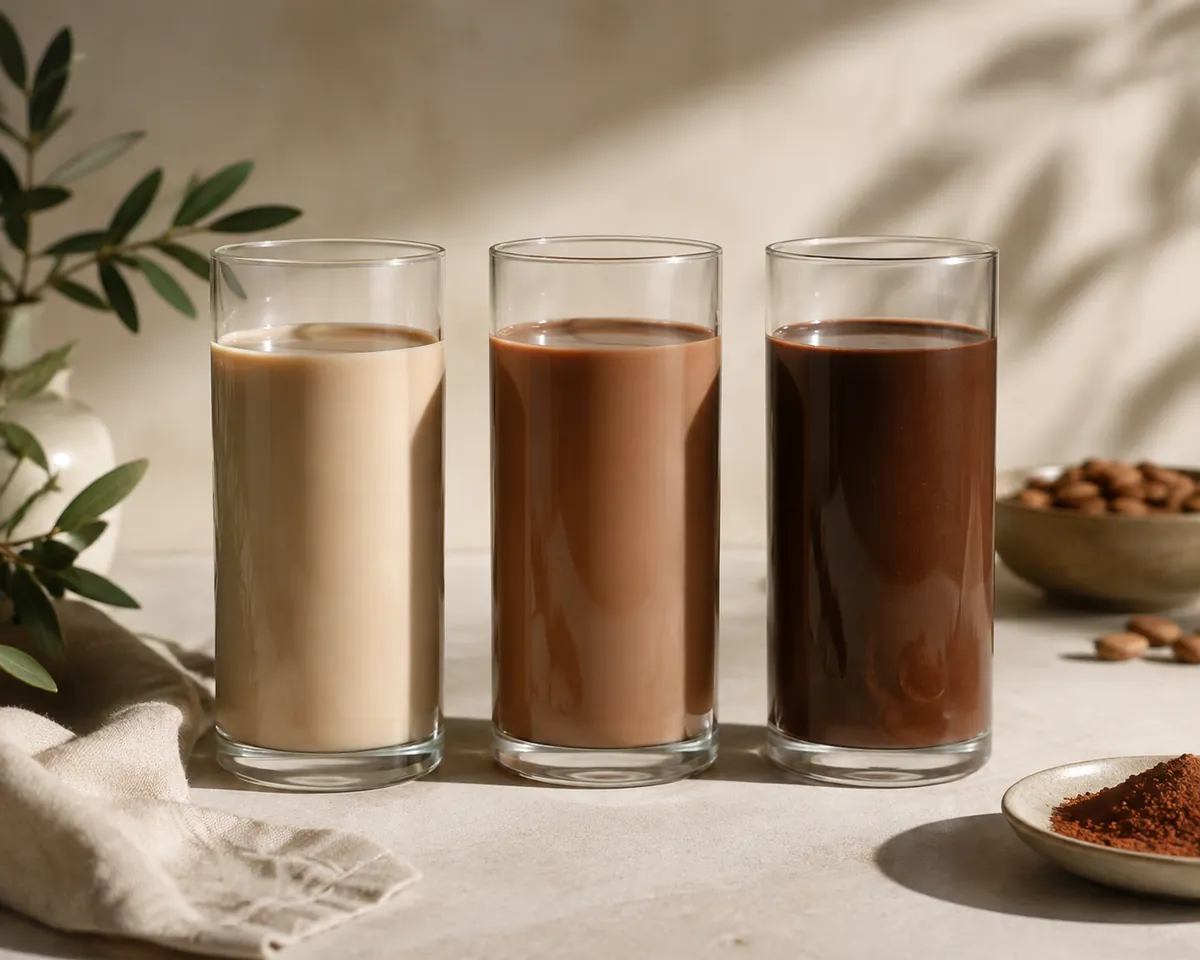
Colour is the first, and it is wildly disproportionate to the mass. Ten grams of cocoa turns a quarter of a litre of milk from white to deep brown, which is a stronger colouring effect per gram than almost anything else in a kitchen and the reason cocoa turns up in recipes purely for the shade it gives.
Bitterness and astringency are the second, and they are the reason unsweetened cocoa is close to undrinkable. Theobromine and the polyphenols in the solids give a bitterness that sits at the back of the tongue and a drying, mouth-puckering quality that is separate from it.
Sugar answers both, in the way described under what sugar does in a drink, and no cocoa drink anywhere is made without it.
Colour
Extreme per gram. A small dose changes the whole glass.
Bitterness
From theobromine and the polyphenols in the solids.
Astringency
A drying feel across the tongue, distinct from bitter taste.
Body
Suspended solids thicken the drink slightly, and starch thickens it more when hot.
Aroma
Carried by the cocoa butter still in the powder, which is why fat content shows.
Body is the quiet third contribution. A suspension of fine solids is thicker than the liquid it started as, and the small amount of starch in the powder swells with heat.
That is why a cocoa held at a simmer in a pan thickens visibly in a way instant coffee never does.
How much a drink needs
There is a broad working range and a real ceiling, and the ceiling is the more useful of the two to know about.
Cocoa per 250 ml, weakest to strongest
- 5 to 7 gChocolate-flavoured milk. A hint, mostly colour
- 10 to 12 gThe standard cup. Clearly chocolate, still easy to drink
- 14 to 16 gStrong and slightly drying. Wants more sugar and more fat
- 18 to 20 gApproaching a drinking chocolate in intensity, without the cocoa butter
- Over 22 gGritty and dusty. The suspension stops behaving
Sugar tracks it upward rather than staying fixed. Around 10 to 15 g per cup suits a standard 10 to 12 g of cocoa, and a stronger cup needs proportionally more, because the astringency rises with the flavour and the two come from the same solids.
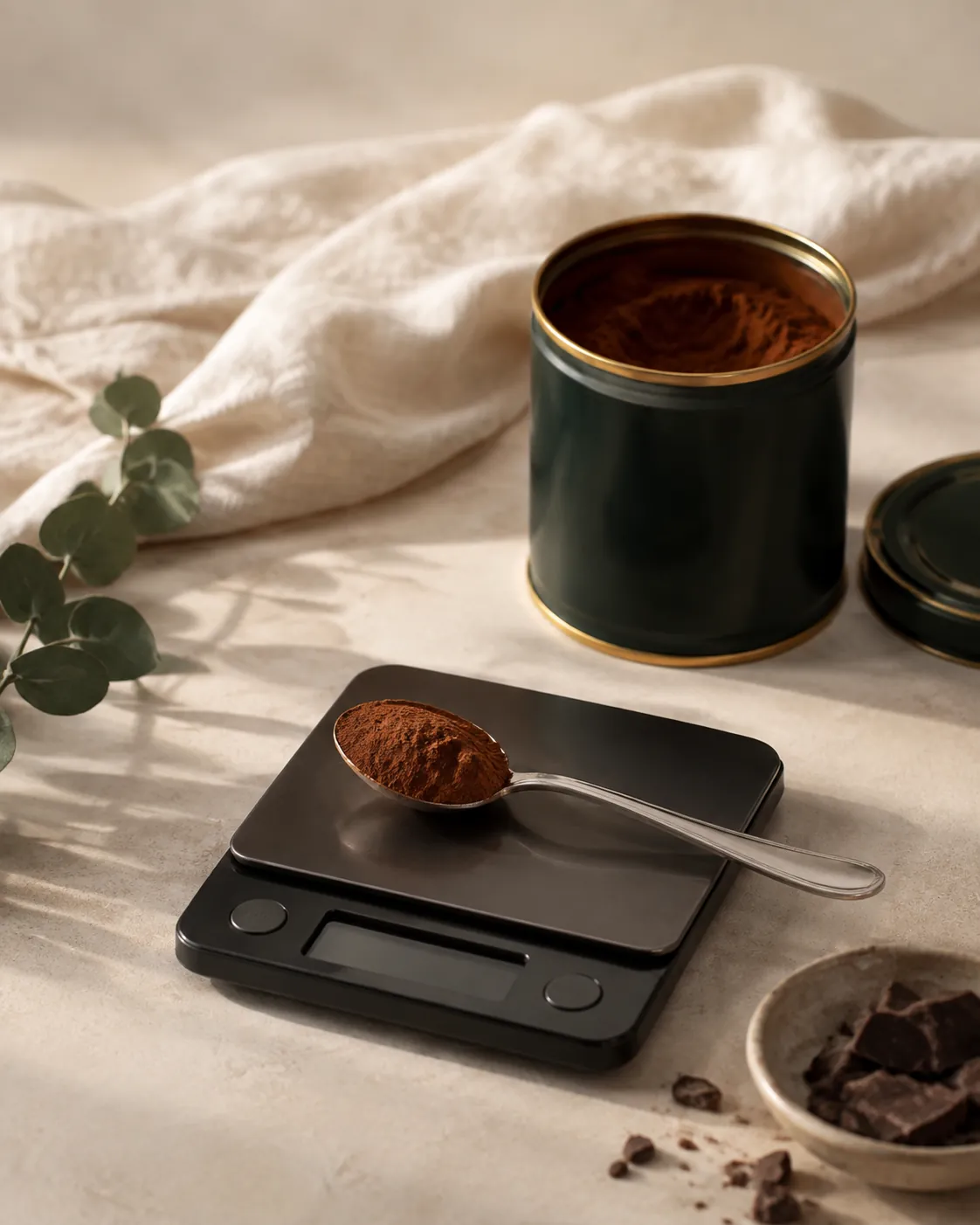
Past about twenty grams a cup you stop adding chocolate character and start adding texture. There is only so much solid a quarter of a litre of liquid will hold in suspension, and beyond that point the extra powder is felt on the tongue rather than tasted, which is a different drink and rarely the one anybody wanted.
Why it settles to the bottom
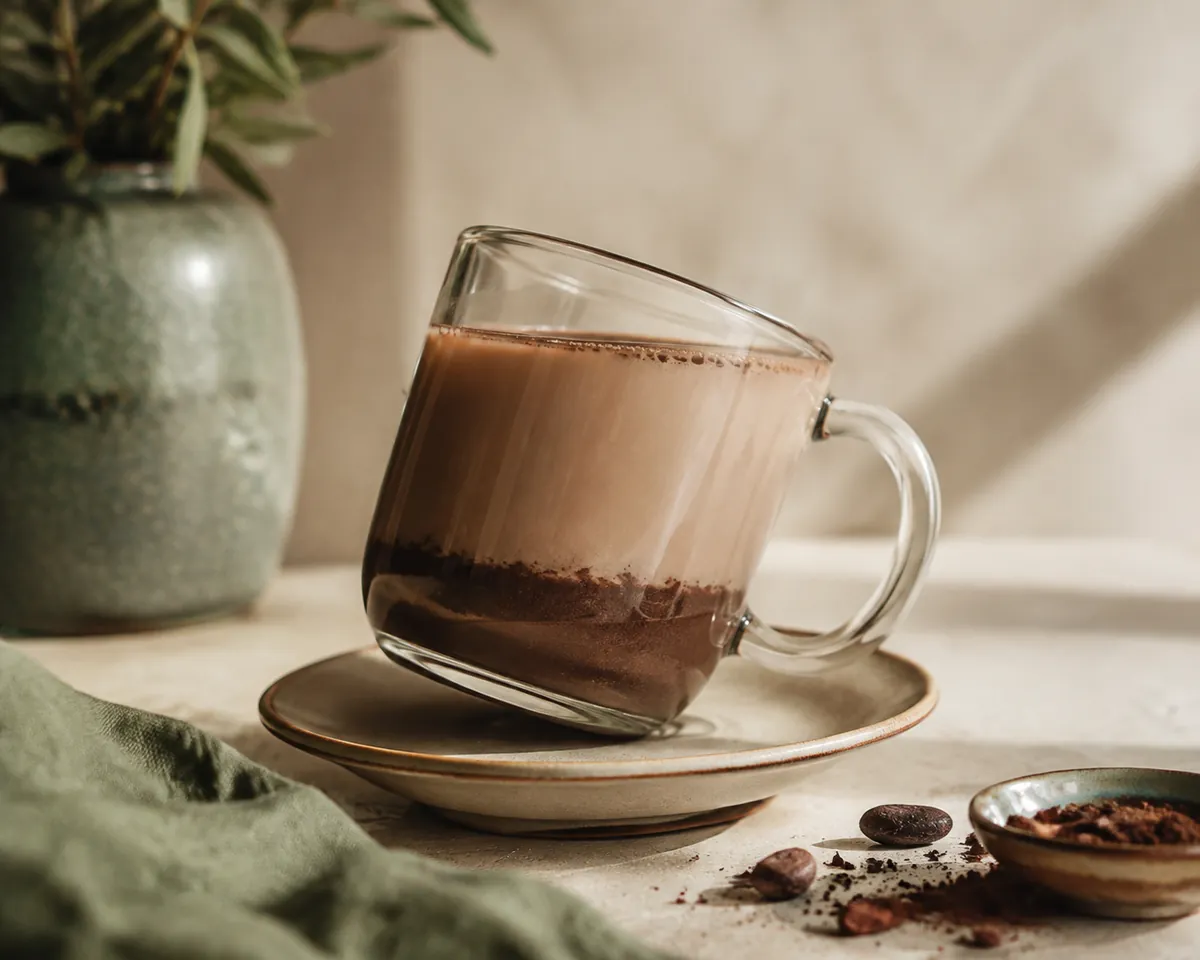
Leave a cup of cocoa on a desk for twenty minutes and it separates. That is not a fault in the powder or in the technique, and no amount of stirring at the start prevents it.
Suspended particles are denser than the liquid around them, so gravity pulls them down at a rate set by how thick the liquid is. In water they are on the bottom within a few minutes.
In whole milk it takes far longer, because the milk is thicker to begin with and its proteins and fat stick to the cocoa particles and slow their descent.
| Liquid | How long it holds | Note |
|---|---|---|
| Water | Minutes | The thinnest base, and the fastest to separate |
| Semi-skimmed milk | Longer | Some protein and fat to hold the solids up |
| Whole milk | Longest of the everyday options | Fat and protein both work in your favour |
| Evaporated milk | Very well | Concentrated protein makes a genuinely stable cup |
| Oat or almond drink | Variable | Thin ones separate fast, and heat can split them |
Two habits deal with it. Serve the drink promptly and stir it once more halfway down, or thicken the base slightly so there is more for the solids to hold on to, which is what a spoonful of evaporated milk does without announcing itself.
Plant drinks are the awkward case for a second reason on top of settling. Cocoa is acidic in its untreated form, heat and acid together are what make a plant drink split in a hot cup, and a thin almond milk is the least forgiving of them.
Making it work in a cold drink
Everything difficult about cocoa gets harder as the liquid gets colder. Cold water wets the powder more slowly, cold liquid is no thicker than warm liquid once it is moving, and there is no heat to swell the starch and give the drink some grip.
Tipping cocoa into cold milk is therefore the commonest way to produce a paste at the bottom of a glass of chocolate milk.
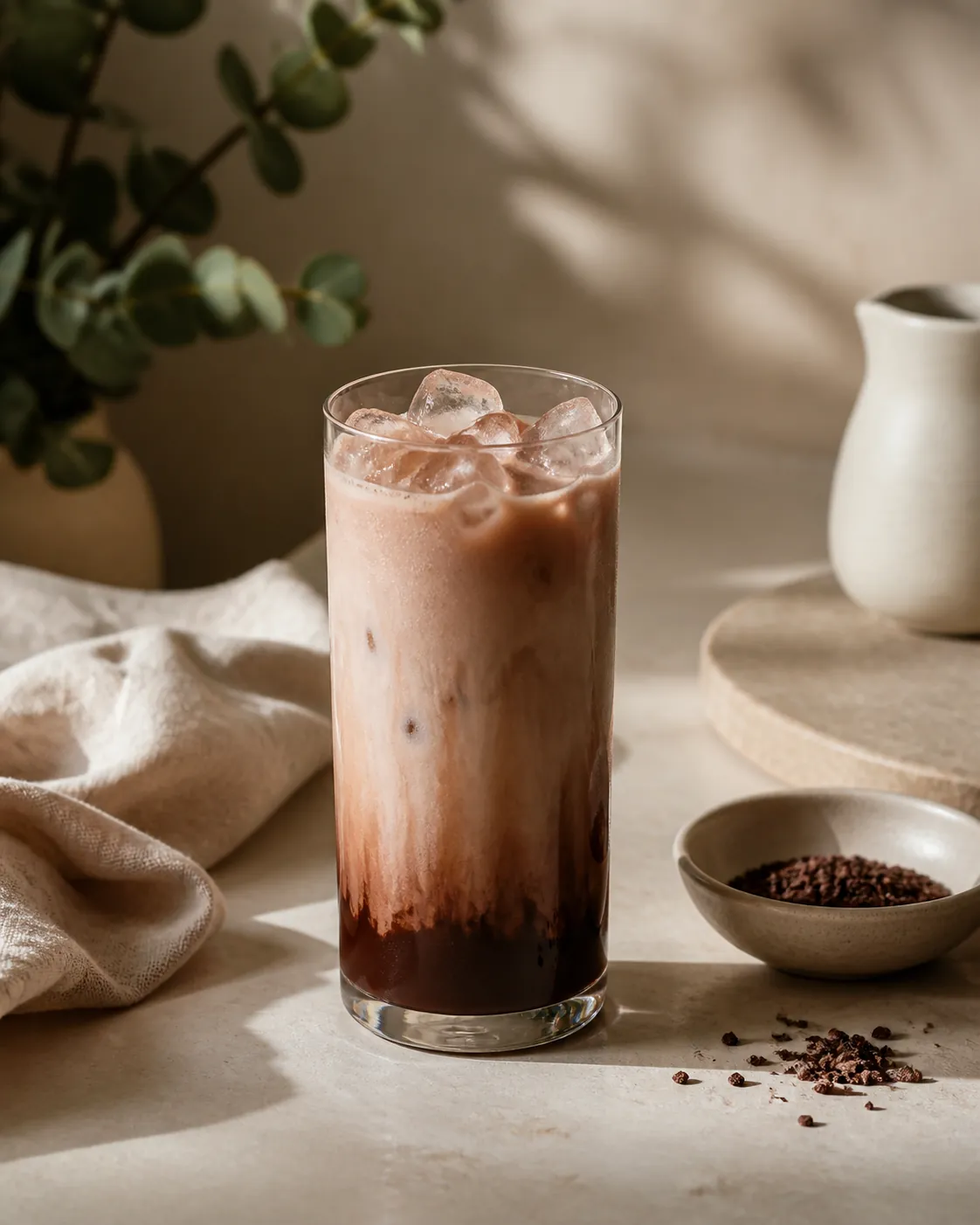
The route around it is to do the wetting somewhere hot and cool the result down. Make a small, strong concentrate with cocoa, sugar and a little boiling water, work it smooth, and then let it cool before it meets anything cold.
That concentrate keeps in the fridge for several days and behaves exactly like simple syrup does for a sweetened iced drink.
Ice makes the arithmetic worse, since a glass filled with ice dilutes as it stands, and a cocoa mixed to taste at the start is thin and separated twenty minutes later. Build the concentrate stronger than seems reasonable and let the melt bring it down.
When the cocoa goes in, and into what
Cocoa goes in early wherever there is heat available, because heat is what makes the powder behave. In a pan that means at the very beginning, with the sugar, before more than a splash of milk has gone in.
Where there is no heat, the powder needs either a blender or a pre-made concentrate, and the choice between them is mostly about whether the drink is being made one at a time or in a jug.
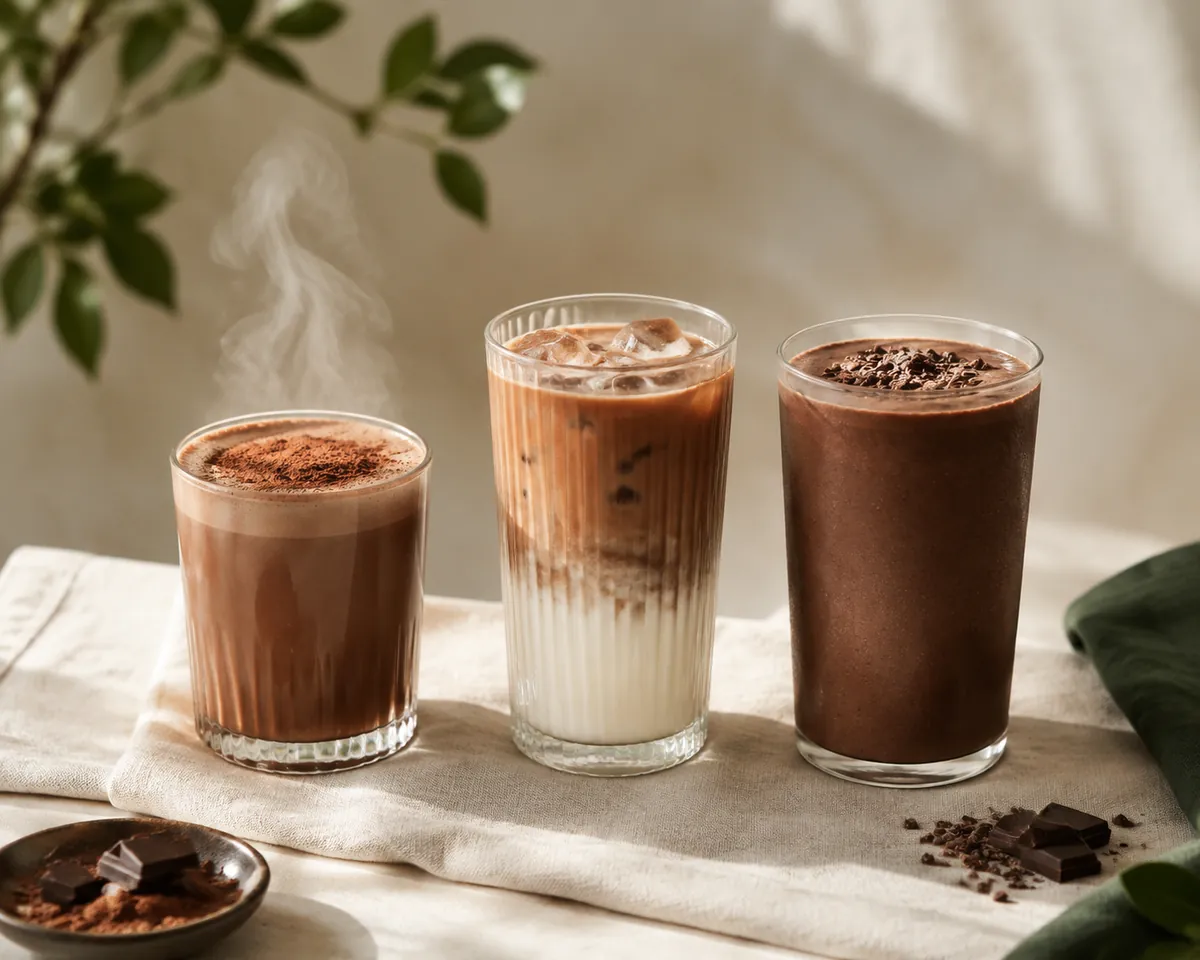
Hot cocoa
Paste in the mug or the pan, then the hot liquid. The default.
Mocha
Better built from a cooled concentrate than from dry powder, since espresso is too small a volume to work a paste in.
Smoothies
Straight in. The blender does the wetting.
Baked-in drinks
A dusting over foam is decoration and stays on top, which is a separate job from flavouring the cup.
A dusting on top of a matcha latte or a cappuccino is worth separating out from any of this. It never mixes and is not meant to, and a fine sieve rather than a spoon is what keeps it as a layer of aroma instead of a raft of clumps.
What can stand in for it
Nothing replaces cocoa powder exactly, because the alternatives all carry either cocoa butter or sugar or both, and each of those changes the drink beyond the chocolate flavour.
| Substitute | Chocolate flavour | What else arrives | The catch |
|---|---|---|---|
| Drinking chocolate | Rounder, less sharp | Cocoa butter and sugar | Richer and far harder to control the sweetness |
| Chopped bar chocolate | Full, with more body | A lot of fat and sugar | Melts rather than disperses. A different technique |
| Cocoa nibs | Faint, and roasted | Nothing at all | Must be steeped and strained. Slow |
| Carob powder | Not chocolate | Its own sweetness, and no bitterness | Tastes of carob, which some people like on its own terms |
| Sachet mixes | Mild | Sugar, milk powder, sometimes thickener | Convenient, and the sweetness is fixed for you |
Bar chocolate is the substitution most worth understanding, because the drink it makes is genuinely better and genuinely different. Cocoa butter melts into the liquid rather than hanging in it, so the result is smoother, heavier and free of sediment.
That is the whole distinction drawn under hot chocolate.
Going the other way, cocoa powder is the cheaper and far more controllable ingredient. You decide the sugar, you decide the strength, and a tin costs a fraction of the equivalent weight in couverture.
White hot chocolate sits outside the comparison entirely, since it contains no cocoa solids and so has none of the behaviour described here.
Storing a tin so it still disperses
Cocoa powder has almost no fat left to go rancid, so a sealed tin keeps for two or three years and loses aroma rather than becoming unpleasant. Storage is not really about time.
It is about humidity, and the damage is specific rather than general. A tin that has taken up moisture sets into lumps that have already been wetted once, and those will not break apart in a paste however long you work them.
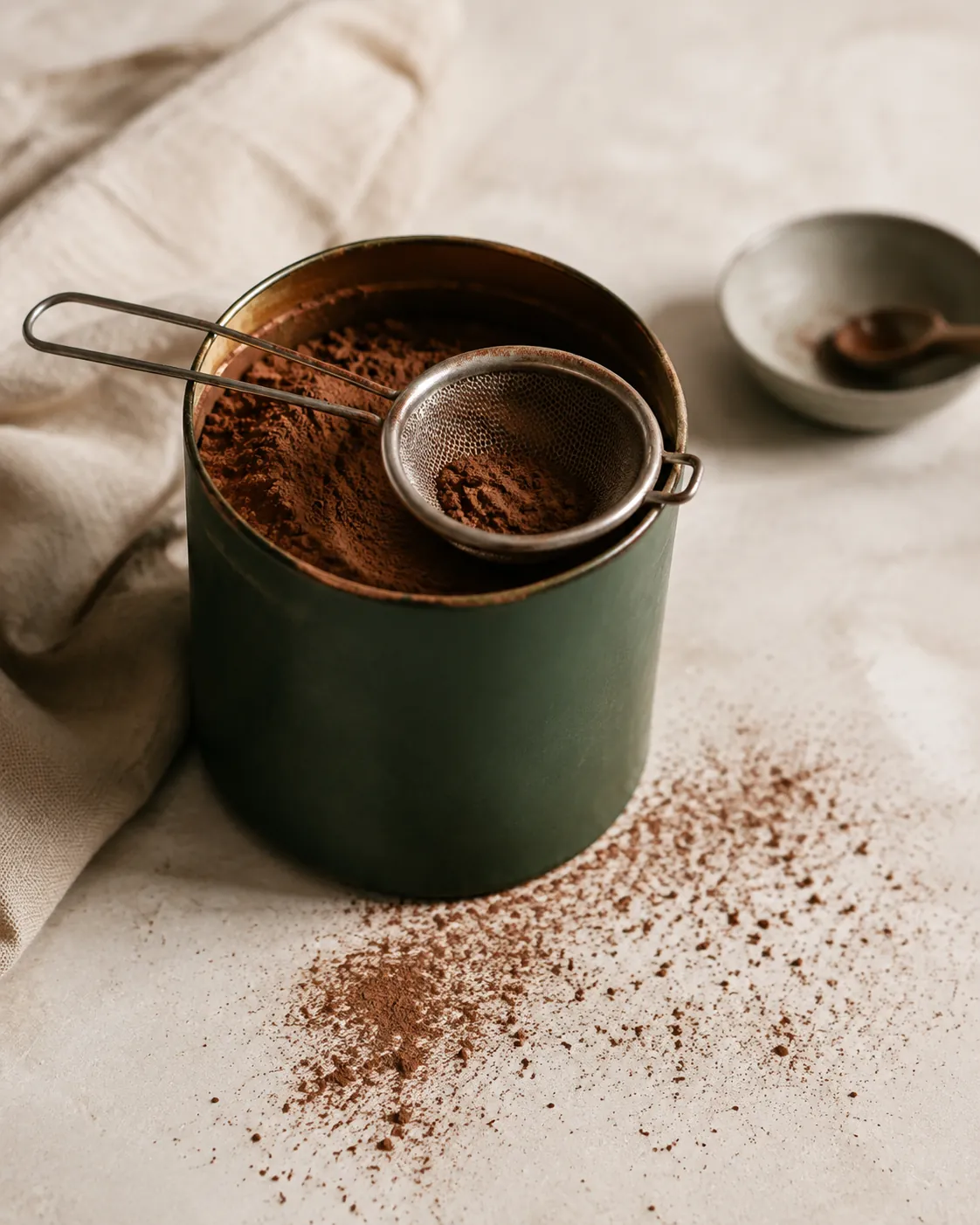
- Keep it airtight, in a cupboard, away from the kettle and the hob.
- Store it well clear of anything strongly aromatic, since cocoa takes up smells readily.
- Never dip a wet or hot spoon into the tin.
- Sieve it before use once it has been open a while, which takes ten seconds.
- Judge it by smell rather than by the printed date.
A tin that has gone flat rather than lumpy is still usable, and the honest fix is more of it plus a little more sugar. It will never be as good as a fresh one, and a cocoa that smells of the cupboard rather than of chocolate has already told you what the cup is going to taste like.
Common questions
Why does cocoa powder not dissolve in milk?
It cannot. Dissolving means the molecules separate and go into the liquid, which is what sugar does, and cocoa solids stay whole instead. They spread through the drink as a suspension of fine particles held up by the movement and thickness of the liquid, which is also why they settle back out when a cup is left standing.
Why do you have to make a paste with cocoa powder first?
Cocoa particles carry fat on their surfaces and resist water, so when dry powder meets a lot of liquid the outside of each lump wets instantly and seals a dry core inside. With only a tablespoon of liquid to a spoonful of powder there is nowhere for a dry core to hide, and the mixture can be worked smooth against the side of the mug before the rest goes in.
How much cocoa powder does a cup need?
Around 10 to 12 g per 250 ml for a standard cup, with 10 to 15 g of sugar alongside it. Past about 20 g per cup the drink stops gaining chocolate character and starts feeling gritty and drying, because there is a limit to how much solid that volume of liquid will hold in suspension.