Yerba Mate Caffeine: How Much Is in a Cup or Session?
Yerba mate has no honest single caffeine number because a tea bag, a mug of mate cocido and a repeatedly refilled gourd use very different amounts of leaf and water.
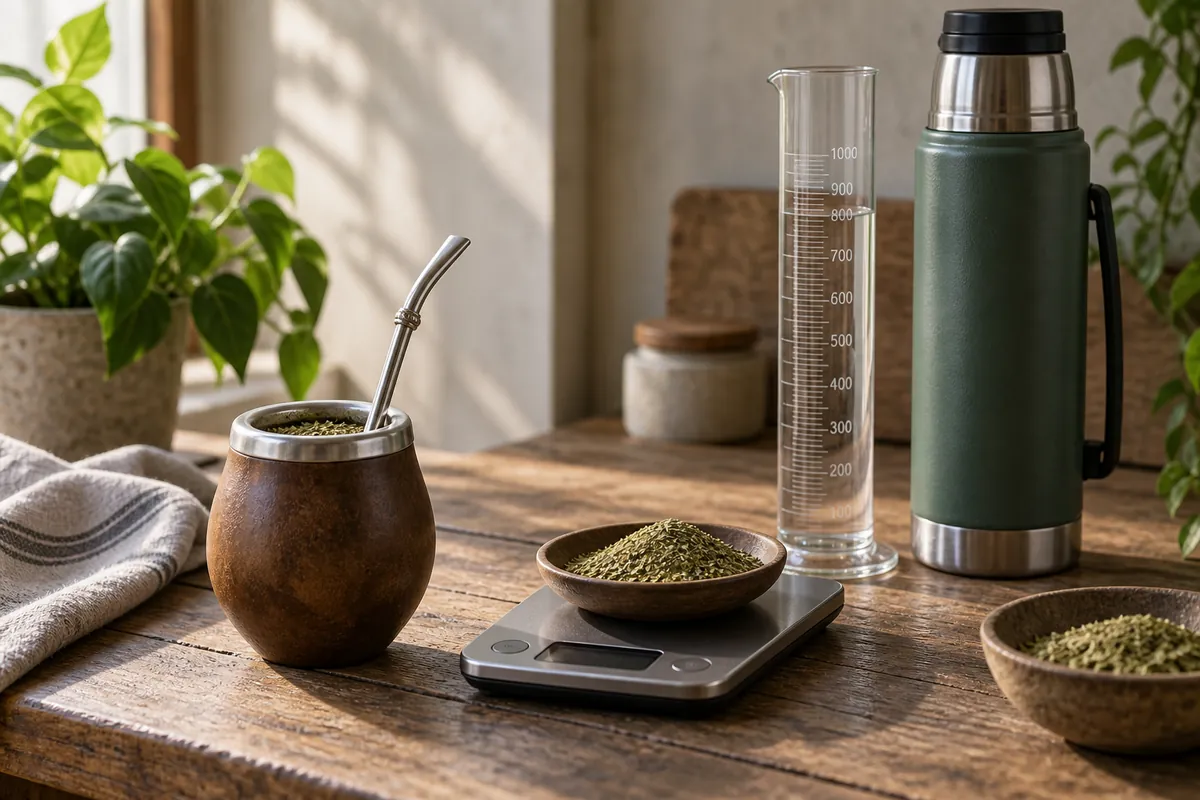
Yerba mate contains caffeine, but the useful answer depends on the serving. A 182 ml cup of mate cocido has been measured at 13 mg, while another prepared 150 ml cup reached about 80 mg.
Neither figure predicts a traditional gourd session: leaf mass, stem content, water temperature, contact time, total refill volume and the many small pours all change the amount delivered.
The number needs a preparation beside it
- Measured mate cocido
- 13 mg per 182 ml cup
- Long laboratory infusion at 70°C
- 15 mg per 100 ml after 15 minutes, rising to 25.8 mg after 60 minutes
- Measured commercial 500 ml infusions
- About 60 to 63 mg
- Reference, 8 oz brewed coffee
- About 80 to 100 mg
- Reference, 8 oz green or black tea
- About 30 to 50 mg
- Traditional gourd
- No dependable cup figure without leaf mass and total water
Why yerba mate caffeine numbers disagree
Read the unit before the number
- Per 100 ml
- Describes concentration
- Per cup
- Describes the amount in a stated vessel
- Per gram of dry matter
- May describe leaf or extracted solids rather than the drink
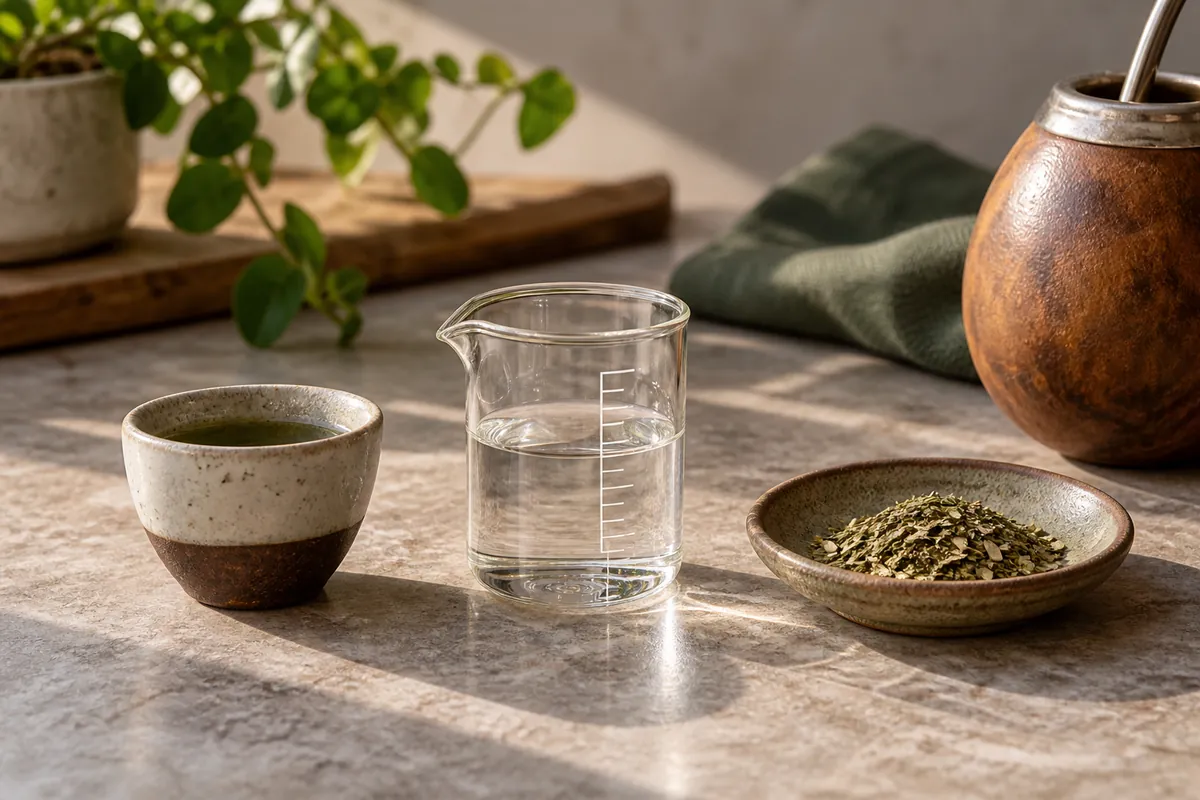
A caffeine figure without its unit and method is incomplete. Even two values labelled per cup may use cups of different sizes and very different leaf doses.
Measured samples vary by brand, harvest, leaf-to-stem ratio and processing, so caffeine being the main methylxanthine does not make every packet a standardised dose.
Choosing a single midpoint as a universal serving, instead of keeping the measured range, creates precision the plant and preparation do not support.
Mate cocido uses a tea-like dose
Mate cocido is brewed and strained like loose tea or sold in bags, using much less dry material than a traditional gourd.
Measured cups of mate cocido include 13 mg of caffeine in 182 ml and about 80 mg in 150 ml. The gap is too wide to treat either figure as the identity of the drink, because the product, leaf dose and preparation can all differ.
| Variable | Why it matters |
|---|---|
| Dry yerba mass | Sets the available caffeine pool |
| Cup volume | Converts concentration into a serving total |
| Bag or loose leaf | Changes particle size and dose |
| Water temperature | Changes extraction rate |
| Steep time | Longer contact can extract more |
| Stems in the blend | Stems generally dilute the leaf fraction |
The caffeine amount printed on the packet outranks a generic web number. When no amount appears, record the grams of yerba and the finished volume before comparing the drink with a general caffeine range.
A heaped spoon is not a repeatable dose because cut size and stem fraction change how it fills. Weighing the dry yerba is the cleanest way to compare one preparation with another.
A traditional gourd is a session, not one cup
A traditional mate session fills much of the gourd with dry yerba and passes many small pours through the same leaf bed.
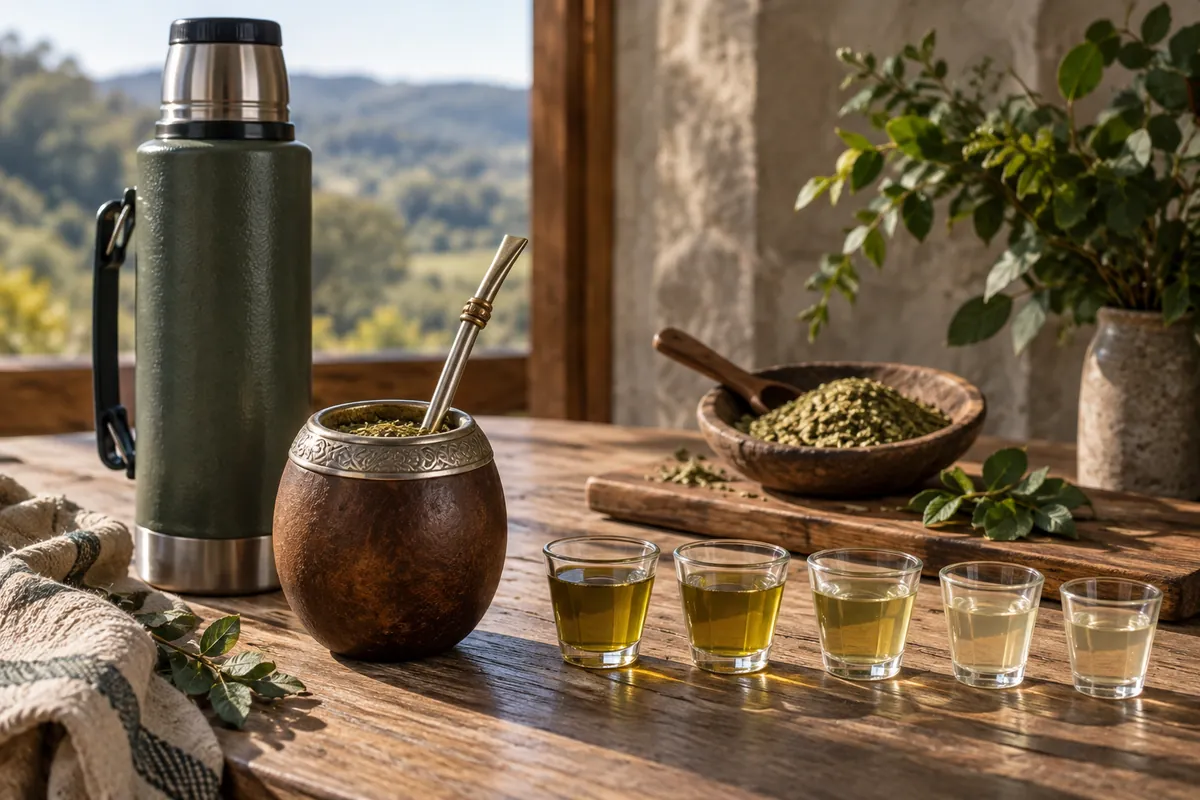
Counting the gourd volume once badly understates the water that passes through the leaf. Calling every refill a new serving creates the opposite problem because later pours extract less from an already washed bed.
Where the session total comes from
- Dry yerba loadedEstablishes the caffeine available
- First small poursMeet fresh leaf and tend to be concentrated
- Later refillsContinue extraction from an increasingly washed bed
- Thermos emptiedEstablishes total water used
- Yerba replacedStarts a new leaf dose and a new calculation
The measurable unit is the whole leaf load and thermos, recorded as grams loaded and millilitres poured, rather than a one-cup estimate multiplied by the number of sips.
Water left in the gourd and liquid retained by the swollen leaf mean poured volume is not identical to consumed volume. That uncertainty is another reason to report an estimate rather than a single exact milligram total.
Longer contact can extract substantially more caffeine
In a controlled extraction at 70°C, caffeine rose from 15 mg per 100 ml after 15 minutes to 25.8 mg after 60 minutes. Under the same protocol at 100°C, the measured values were 11.8 mg after 15 minutes and 15.8 mg after 60 minutes.
The measurements show a strong time effect without proving that cooler water always extracts more, because material, protocol and measurement basis remain part of the result.
Extraction controls
- Short contactLess time for caffeine to move into water
- Long contactMore extraction before equilibrium
- Small leaf doseSmaller total caffeine pool
- Large leaf doseLarger total caffeine pool
- Coarse leafy blendSlower access than finely milled material
- Repeated poursMore total water contacting the same dose
Time changes the amount, not only the taste. A long steep cannot be compared fairly with a quick wash just because both finished cups hold 200 ml.
Traditional pouring adds another timing pattern: many short contacts rather than one continuous steep. A laboratory jar held for 60 minutes models extraction, but it does not reproduce every gourd technique.
Temperature is only one part of extraction
Traditional yerba mate is often prepared around 65 to 80°C, but controlled comparisons do not support a simple hotter-means-more rule. Across different brands, single and double brews, and 70°C and 100°C conditions, some lower-temperature samples measured higher than their hotter counterparts.
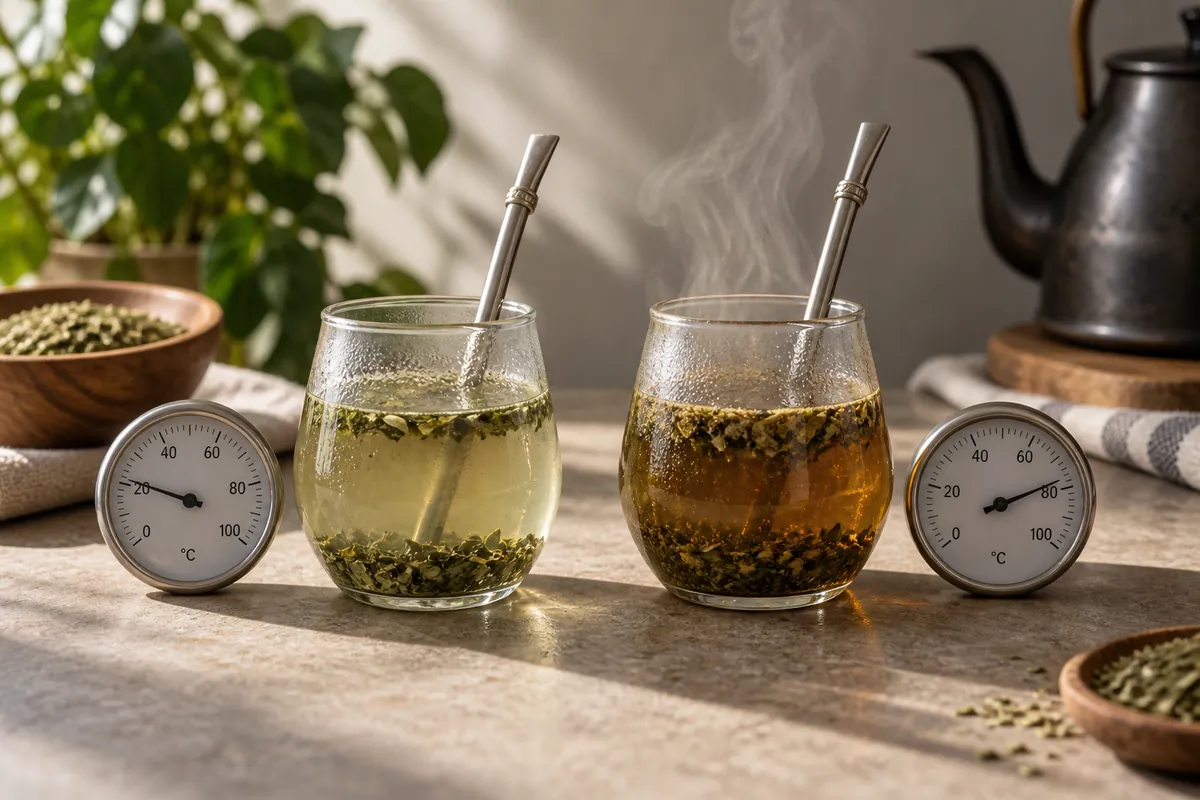
Dose and contact history can outweigh the kettle setting, so record temperature beside them instead of using it as a substitute.
Boiling water can also make the infusion harsher. Choosing a lower temperature for flavour does not make the drink caffeine-free, and choosing boiling water does not produce a predictable maximum.
Leaf, stem and particle size change the starting material
Because caffeine is concentrated mainly in leaf tissue, a stem-heavy yerba mate blend may provide less per gram than a leafy blend.
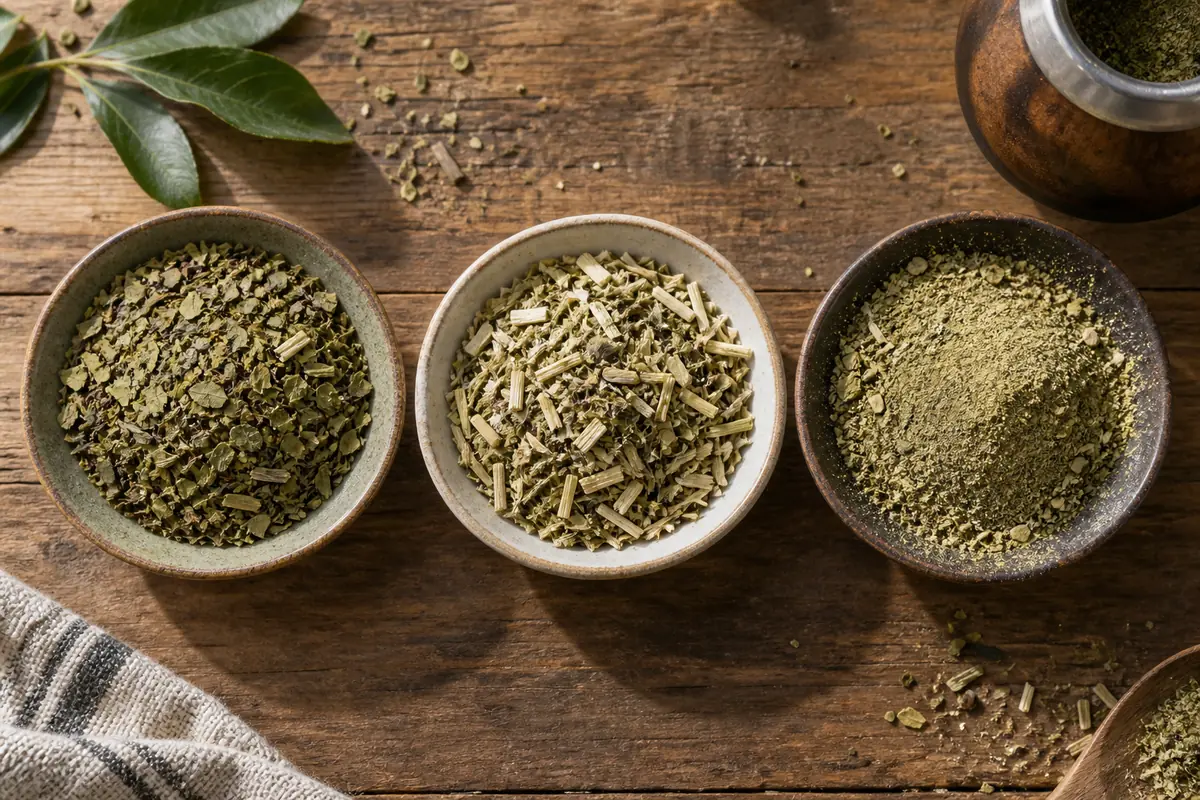
Fine particles expose more area to water and can extract quickly. They also change flow through the bombilla and may remain wet between pours, altering contact time.
Equal spoon volumes do not mean equal leaf mass. A coarse stemmy blend packs differently from a fine powder-rich one, so comparisons should begin on a scale.
Processing and harvest can change composition before the packet is opened. That natural variation explains why an estimate that worked for one brand should not be printed as the identity of all yerba mate.
Cold tereré still extracts caffeine
Tereré passes cold water, often with ice and lemon or herbs, through leaf that still contains caffeine.
Both hot and cold yerba mate infusions contain measurable caffeine. Time, agitation and repeated contact make a long cold session different from a quick refrigerated steep.
| Condition | Hot traditional mate | Tereré |
|---|---|---|
| Water | Warm, commonly below boiling | Cold, often with ice |
| Contact pattern | Repeated small pours | Repeated cold pours |
| Taste progression | Bitter and aromatic early | Cooler and often softer-perceived |
| Caffeine status | Present | Present |
| Best record | Leaf mass plus thermos volume | Leaf mass plus total cold water |
Cold means a different extraction path, not zero caffeine. A long tereré session can still move caffeine from a large leaf bed into a substantial volume of water.
Added fruit juice or herbs change flavour and volume but do not subtract extracted caffeine. A packaged tereré drink may also use an extract or added caffeine, so its label belongs above a loose-leaf estimate.
Bottles and cans should be read by the whole container
Ready-to-drink mate products are formulated beverages, not a direct measure of traditional leaf brewing. Some use brewed yerba, some use extract, and caffeine may be declared per serving or per container.
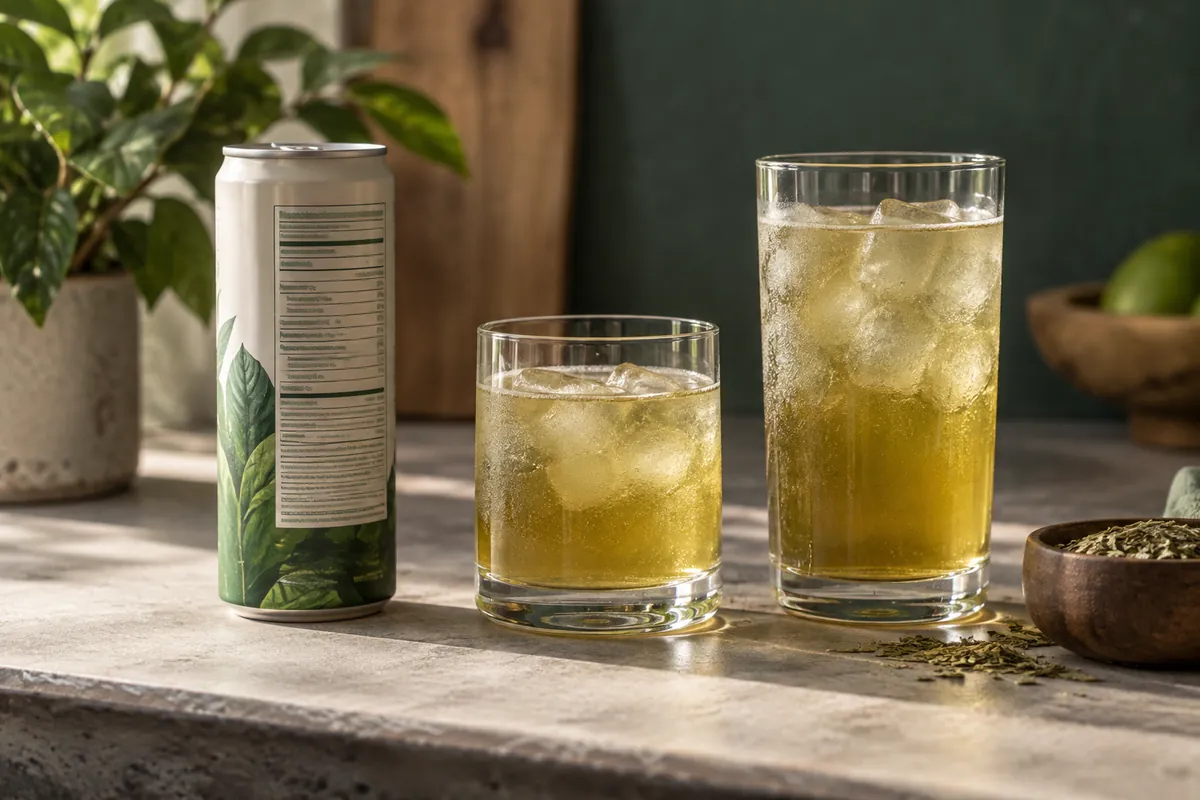
- Read the caffeine amount and stated serving volume together.
- Multiply by the number of servings in the container.
- Check the ingredient list for added caffeine.
- Ignore sugar, carbonation and fruit flavour as caffeine signals.
Container arithmetic turns 40 mg per 250 ml into 80 mg for a 500 ml bottle consumed in full.
How yerba mate compares with coffee and tea
An 8-ounce cup of coffee commonly falls around 80 to 100 mg, while an equal serving of green or black tea lands around 30 to 50 mg. These are category ranges, not a conversion table for every café cup.
| Drink | Example amount | Main uncertainty |
|---|---|---|
| Green tea or black tea | 30 to 50 mg per 8 oz | Leaf, time and tea type |
| Matcha caffeine | Whole-powder dose, not an infusion cup | Powder mass and preparation style |
| Brewed coffee | 80 to 100 mg per 8 oz | Bean dose, method and cup size |
| Mate cocido | 13 mg per 182 ml in one measured preparation | Product and leaf dose |
| Commercial mate infusion | About 60 to 63 mg per 500 ml in measured products | Brand and preparation protocol |
| Traditional gourd | Variable across full session | Large leaf dose and repeated pours |
The green tea and matcha distinction changes the dose basis because one infuses leaf and the other suspends consumed powder.
Milligrams compare fairly only at the same volume or across complete containers. Calling a small cup stronger than a large bottle from taste alone mixes concentration with total caffeine.
Yerba mate can taste bitter and persistent even when a measured sample has less caffeine than coffee. Bitterness is not a caffeine meter because many other compounds contribute to flavour.
Estimate your own preparation without pretending it is exact
Begin a home estimate with a product label whose tested leaf mass, water volume and method reasonably match your preparation.
- Record the exact product and whether it is leafy, stemmy or finely cut.
- Weigh the dry yerba rather than measuring a heaped spoon.
- Record the total water used, not only the vessel size.
- Note whether it was one steep, repeated pours or a cold session.
- Use a product value measured under similar conditions when available.
- State the result as an estimate or range and keep the original method beside it.
Do not calculate from dry-leaf percentage because water extraction is incomplete and changes through the session.
A laboratory assay is required for an exact batch measurement. Home records are still useful because they reveal when a new gourd, larger leaf charge or longer thermos has changed the preparation materially.
What a label number can describe
- Dry serving
- Does not mean the full amount transfers into the first pour
- Prepared drink
- Applies only to the stated water volume, temperature and extraction count
- Ingredient list only
- Confirms caffeine is present but gives no total amount
When the label does not state a comparable prepared amount, contact the producer instead of reverse-calculating from ingredient order.
Read the measurement basis before reading the milligrams. The same printed number can describe dry leaf, one serving or an entire container.
Decaffeinated yerba mate is not the normal shelf default
Yerba mate naturally contains caffeine, and words such as roasted, mild, suave or stemmed do not mean decaffeinated.
An explicit caffeine quantity or a clear decaffeinated claim supported by the producer marks a decaf pack. A caffeine-free herbal infusion is a different plant that never contained caffeine in the first place.
Less bitter does not prove less caffeine. Roasting, sugar, temperature and flavouring can change perception without providing a measured caffeine reduction.
For a strict zero-caffeine choice, yerba mate is the wrong unverified default. A plant known to be naturally caffeine-free, such as rooibos, fits that choice, although blends can carry added tea, guarana or caffeine.
Common questions
How much caffeine is in one cup of yerba mate?
There is no universal cup figure. Measured examples range from 13 mg in 182 ml of mate cocido to about 80 mg in a 150 ml prepared cup. Leaf dose, product, time and format must stay beside the number.
Does a traditional mate gourd have more caffeine than coffee?
It can deliver a substantial amount across a session because the gourd uses much dry leaf and many refills, but no dependable comparison exists without the leaf mass and total water. Compare complete session totals with a measured coffee serving.
Does cold yerba mate contain caffeine?
Yes. Tereré and cold-steeped yerba mate still extract caffeine. Cold water changes the extraction rate, but long contact and repeated pours continue moving caffeine from the leaf.
Does adding more water reduce caffeine?
Adding water lowers concentration in each millilitre, but it does not remove caffeine already extracted. Passing more water through the same fresh leaf bed may extract additional caffeine before the leaf is exhausted.
Is roasted yerba mate caffeine-free?
No. Roasted describes processing and flavour, not removal of caffeine. Use an explicit producer measurement or decaffeinated claim rather than colour or bitterness.