What Is AeroPress Coffee, and Is It Really Espresso?
AeroPress coffee takes its identity from the brew cycle, not from one recipe: the grounds steep together, then the liquid passes through a small filter under hand pressure.
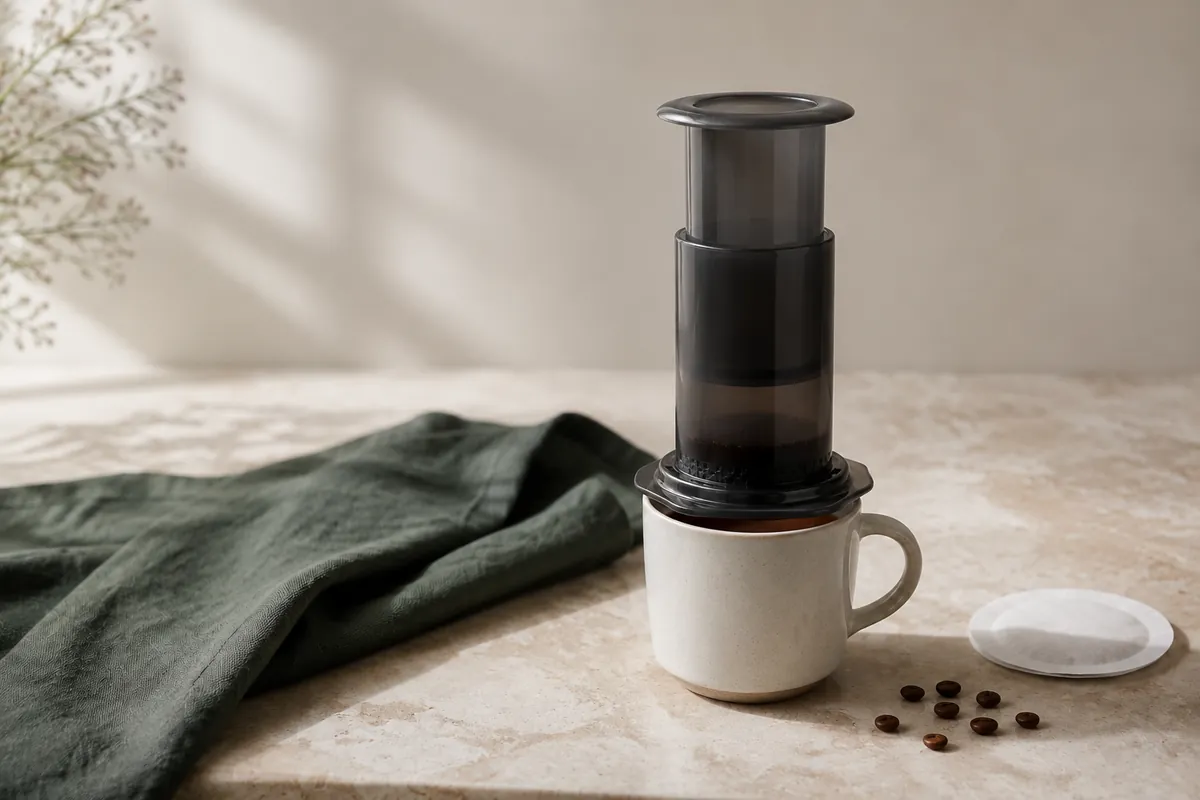
AeroPress coffee is a compact, paper-filtered immersion brew finished by pushing a plunger. Coffee and water spend most of the brew in contact inside one chamber, then gentle hand pressure moves the liquid through a small filter and into the cup.
That description matters because AeroPress coffee has no single fixed strength or serving size. It can be brewed as a full black cup, made as a short concentrate and diluted, poured over ice, or used as the coffee base for milk.
It is often called espresso-style coffee, but an AeroPress does not create the pressure that defines espresso. The drink takes its name from the brewing method: immersion, filtration, and a hand-powered press.
What defines AeroPress coffee
- Brewing method
- Coffee and water steep together before a hand-powered press
- Filter
- A small paper disc as standard, with metal alternatives
- Serving
- A full cup or a concentrate, with optional water, ice, or milk
- Espresso distinction
- Hand pressure does not reproduce espresso extraction
Why does AeroPress coffee have no fixed strength?
Two AeroPress cups can look and taste quite different while both remain faithful to the brewer. One may contain nearly a mugful of water from the start, while another begins as a small, strong concentrate that is diluted only after pressing.
The useful distinction is between brew ratio and serving ratio. Brew ratio describes how much water contacts the grounds in the chamber, while serving ratio also counts any water, ice, or milk added afterward.
Three common AeroPress serving shapes
- Full-volume cup
- Most of the drinking water enters the chamber and the pressed coffee is served as it is
- Short concentrate
- Less water meets the grounds, producing a small intense drink
- Bypass cup
- A concentrate is pressed first, then hot water is added to reach the final volume
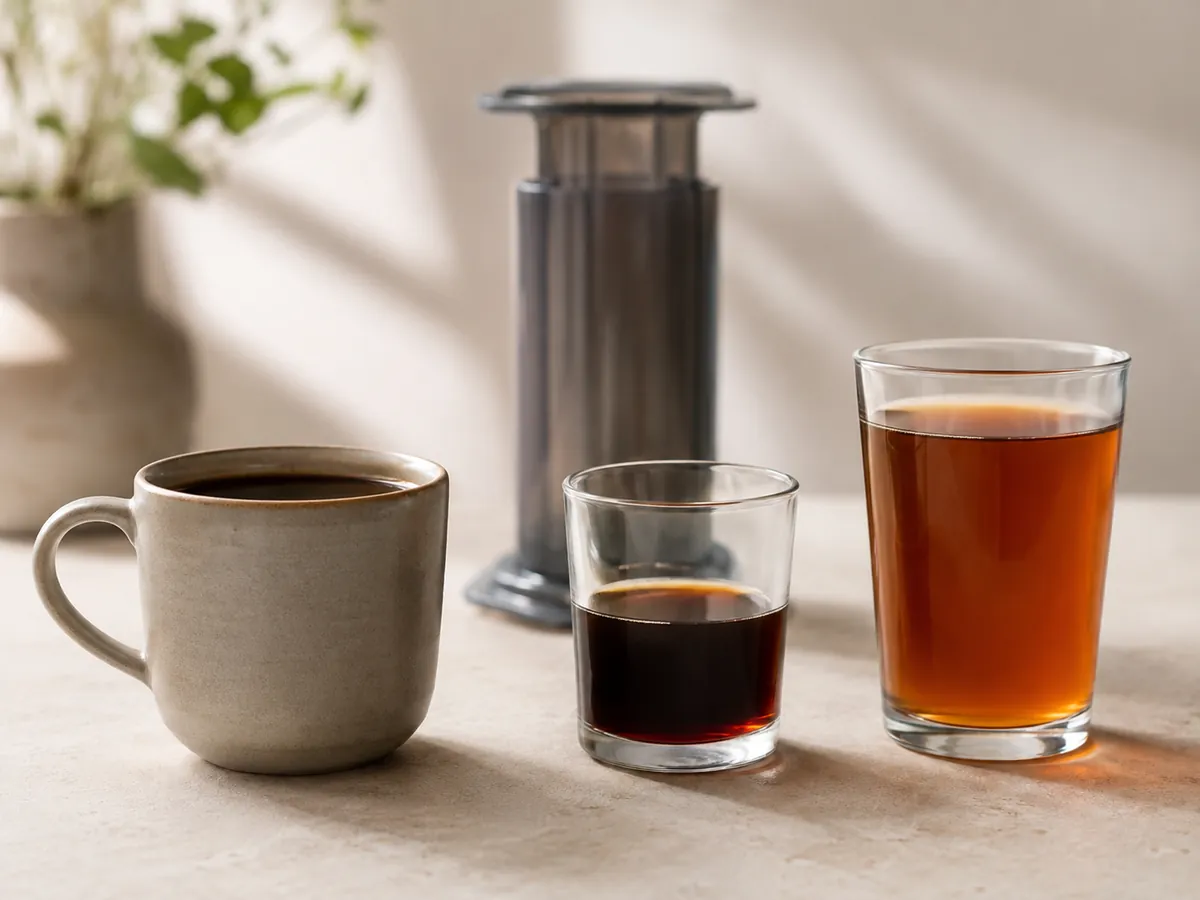
The three cups differ in volume and concentration, but each came from the same sequence of soaking and filtering under hand pressure.
This flexibility explains why one person's AeroPress coffee resembles a clear filter brew and another person's resembles a short cafe drink. A label such as strong or mild is incomplete unless you also know the coffee dose, the water used in the chamber, and whether anything was added after pressing.
Strength also needs separating from extraction.
Strength describes concentration in the finished liquid, while extraction describes how much soluble material the water removed from the grounds. A short cup can be strong yet under-extracted, and a larger cup can be well extracted without tasting heavy.
Adding water to a properly extracted concentrate makes it less intense, but dilution happens after extraction.
How does the AeroPress shape the cup?
Inside an AeroPress, water surrounds the grounds throughout the steep, then the plunger pushes the brewed liquid through a small filter at the bottom of the chamber.
The steep and the press have different jobs. Contact with water extracts soluble material, while the press moves the liquid away from the grounds through the filter.
- Coffee and water meetThe grounds become fully surrounded inside the chamber rather than sitting in an exposed pour-over bed.
- The mixture steepsTime, temperature, grind, dose, and agitation determine how much the water dissolves.
- The plunger movesGentle hand pressure drives the brewed liquid toward the filter.
- The filter separatesPaper holds back most fine particles and oils before the coffee enters the cup.
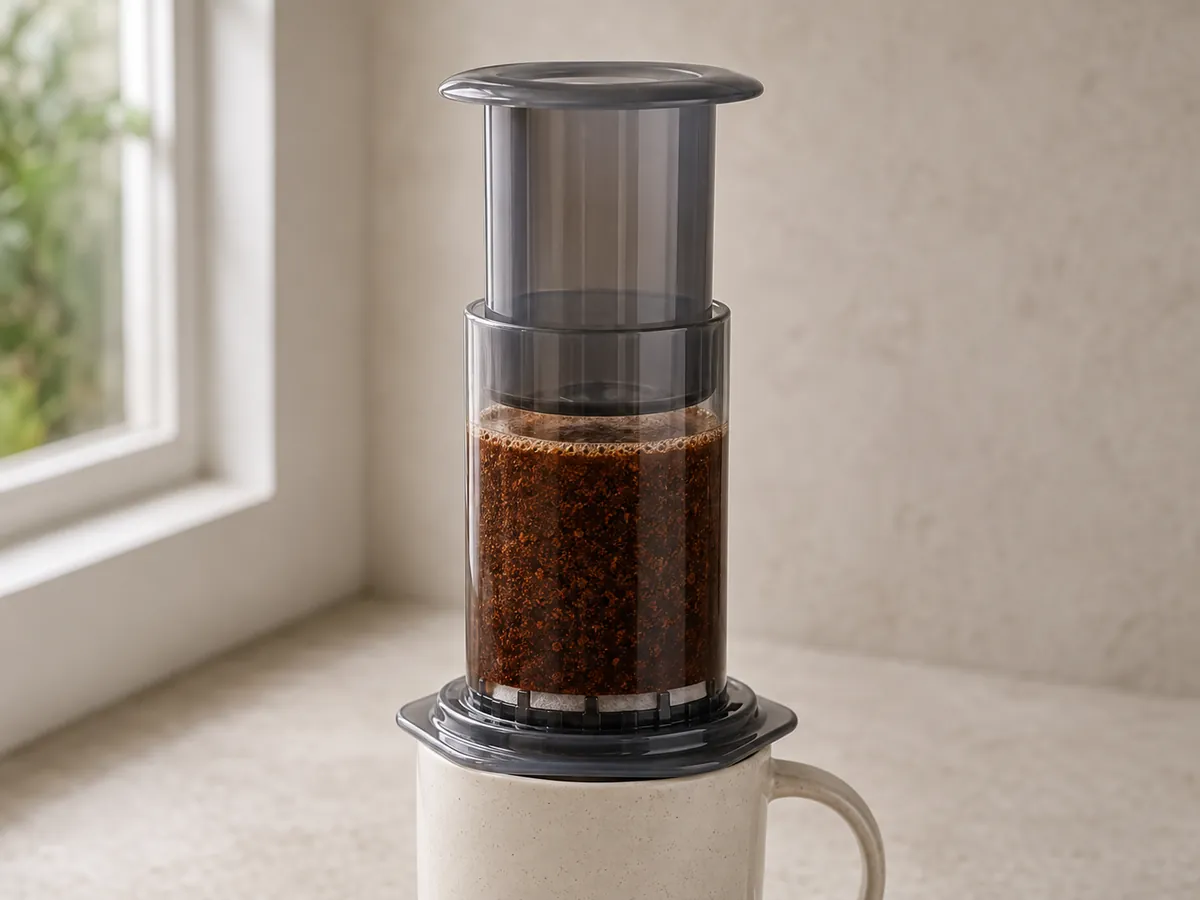
During immersion, the grounds are dispersed through the water instead of forming the deep compacted puck used for espresso.
That broad contact makes the AeroPress forgiving of how water is poured, although grind, temperature, time, and stirring still change the extraction.
Pressing then performs a practical separation job. The force pushes liquid through a small filter quickly enough for a compact brewer, but pressing harder does not convert the chamber into an espresso machine and may only make the plunge less controlled.
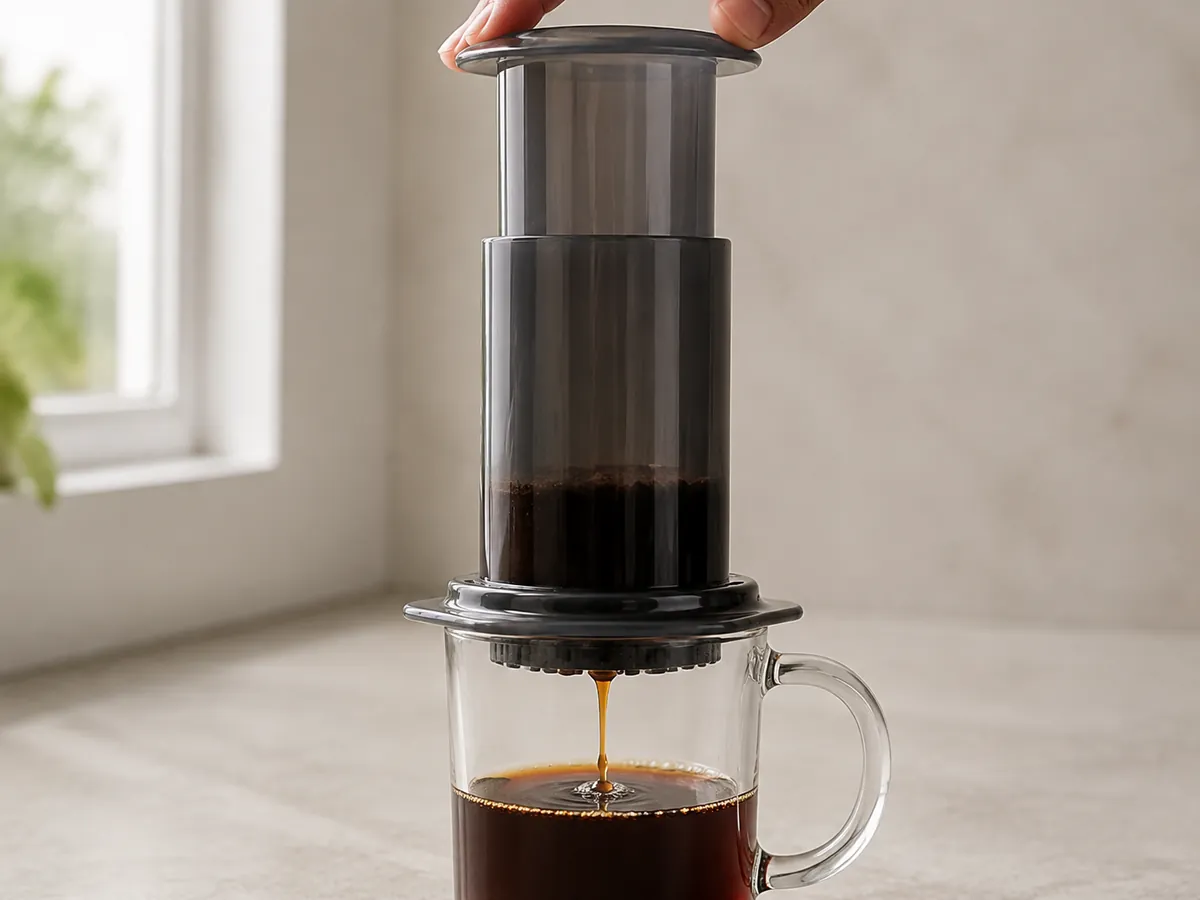
Filtration controls what reaches the cup, including suspended particles that change its texture.
The immersion stage decides how water and coffee meet before that separation. Changing the filter changes the separation stage without removing the earlier steep.
This combination places AeroPress coffee between familiar categories. It shares full contact between grounds and water with immersion brewers, shares a clean separation with paper-filter methods, and adds a brief hand-pressure stage of its own.
Is AeroPress coffee espresso or filter coffee?
AeroPress coffee belongs under filter coffee, with immersion followed by a pressed finish. Espresso is made by forcing water through a compacted fine-coffee puck at roughly nine bars of pressure, while an AeroPress steeps loose grounds first and uses much gentler hand pressure mainly to complete filtration.
The word espresso-style can still describe a serving choice. A short AeroPress concentrate may be intense enough to drink in a small cup or combine with milk, but the similar use does not make the extraction method identical.
| Feature | AeroPress | Espresso | French press | Pour-over |
|---|---|---|---|---|
| How water meets coffee | Immersion before pressing | Forced through a compacted puck | Immersion throughout | Flows through a coffee bed |
| Separation | Paper or metal filter under hand pressure | Metal basket under pump or lever pressure | Coarse metal screen | Usually paper under gravity |
| Typical texture | Clean with paper, fuller with metal | Dense, concentrated, often with crema | Full and sometimes silty | Clean and light to medium |
| Serving range | Short concentrate through to full cup | Small concentrated shot | Full cup | Full cup |
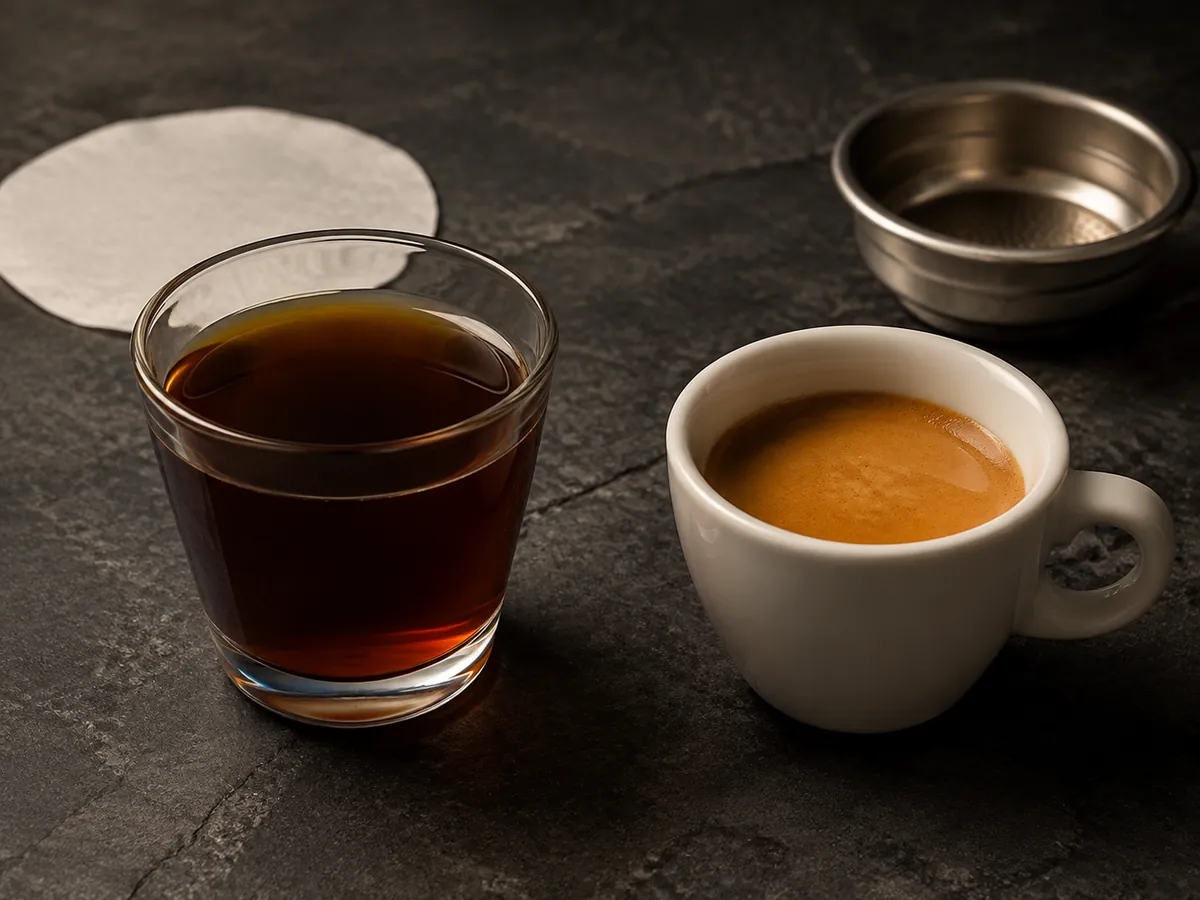
Crema is another visible boundary.
Fresh espresso can hold a persistent foam of gas and emulsified material, whereas a standard paper-filtered AeroPress concentrate usually has a clear surface even when its color and serving size resemble a shot.
French press is the closer relative during brewing because both immerse the grounds. Their filters create the largest difference in the cup: a French press metal screen lets more fine particles and oils pass, while an AeroPress paper disc removes most of them.
Pour-over is the closer relative after separation because both often use paper. The difference comes earlier, since pour-over water travels through a bed as it extracts and AeroPress water spends a distinct immersion period around the grounds.
What does AeroPress coffee taste like?
There is no universal AeroPress flavor because the brewer can hold many ratios, temperatures, grind sizes, filters, and coffees. With the standard paper filter, the dependable sensory traits are clarity, low sediment, and a lighter texture than an unfiltered immersion cup made from the same beans.
What changes the texture and intensity
- Paper filter
- Clearest texture, little visible oil, and very little grit
- More brew water
- Lower concentration when dose and extraction stay similar
- Short concentrate
- Greater intensity in a smaller serving
- Metal filter
- More oil and fine material, giving a fuller texture
- Darker roast
- More roast-led bitterness and less emphasis on delicate aroma

A clear cup can still be concentrated.
A paper-filtered concentrate can be intense because concentration and texture describe different properties. The filter removes suspended particles while dissolved coffee remains in the liquid.
The same distinction helps explain sweetness, acidity, and bitterness. Those impressions come from the coffee and its extraction, while the filter changes how oils and fine particles carry them across the tongue.
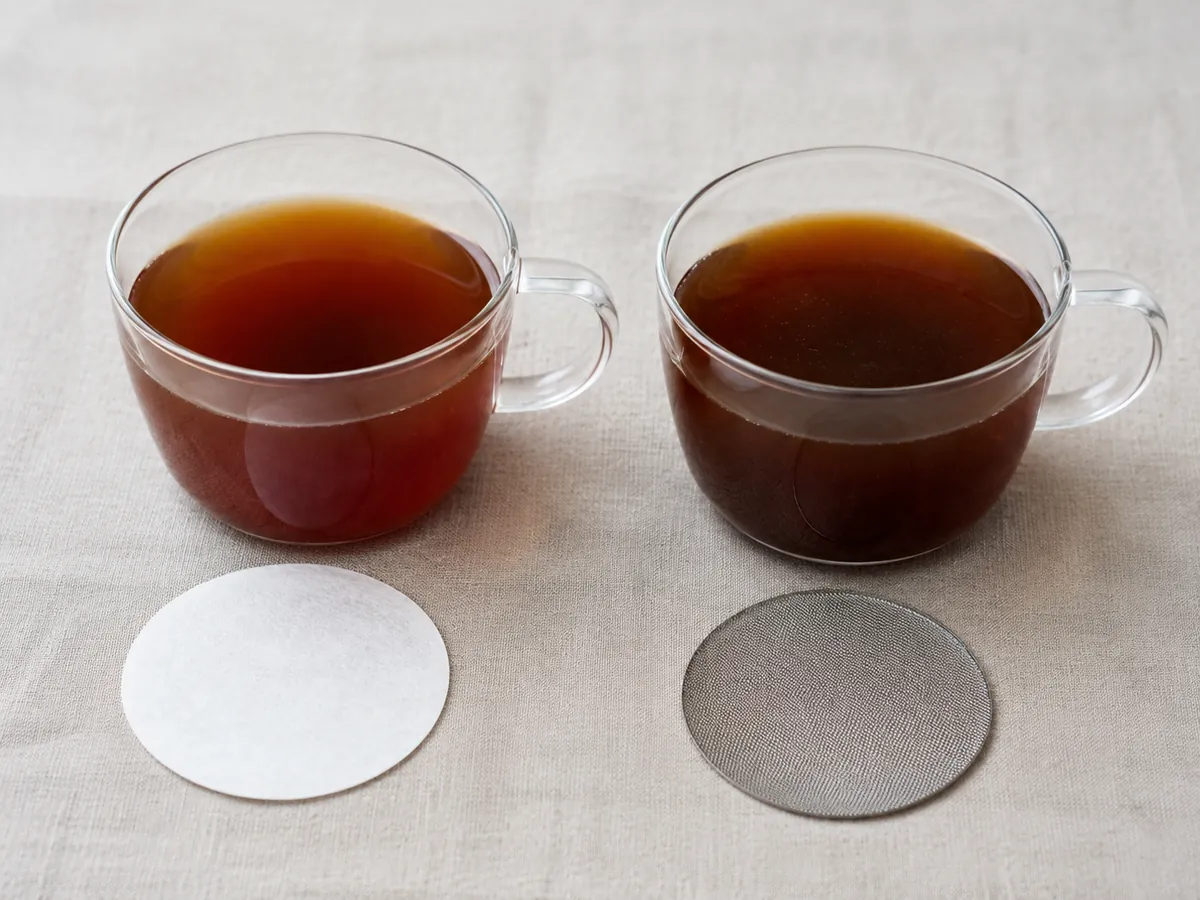
Paper traps more oil and fine material, which usually gives the cup a cleaner finish and makes separate flavor notes easier to distinguish. A reusable metal filter allows more oil through, adding weight and sometimes a little sediment without changing the basic immersion-and-press method.
Paper suits someone who wants a clean black cup, while metal makes sense for a fuller texture.
Claims that AeroPress coffee is always smooth, never bitter, or low in acidity go too far. Stale coffee, an unsuitable grind, excessive extraction, or an unbalanced ratio can still produce a thin, sour, harsh, or bitter drink, and the brewer cannot compensate for badly chosen inputs.
How do people drink AeroPress coffee?
The decision after pressing changes the drink almost as much as the brew inside the chamber. You can drink the output unchanged, dilute a concentrate with water, cool it over ice, or add milk according to the intensity and texture you want.
Black full cup
Served directly after pressing, with paper-filter clarity and a concentration close to other filter coffee.
Short concentrate
A smaller, more intense serving that keeps the AeroPress character but remains distinct from espresso.
Bypass coffee
Hot water added after pressing, which expands the serving without extending contact between water and grounds.
Iced coffee
A concentrated brew poured over measured ice so melting becomes part of the final dilution.
Milk coffee
A concentrated base combined with milk, where enough roast intensity is needed to remain noticeable.

Bypass controls drinking strength after pressing.
The chamber can produce a concentrated, well-extracted base, while water added afterward increases the serving volume. That lets you make a larger drink without fitting all its water into the chamber at once.
An iced version uses the same idea with a colder final balance. Ice counts toward the final dilution, so pouring an ordinary-strength hot cup over a full glass often produces a diluted drink before it becomes properly cold.
Milk favors a base with enough concentration and roast character to remain present after dilution. The result may occupy the same role as a latte-like home drink, but its coffee base still lacks espresso's pressure, texture, and crema.
These are serving formats rather than separate definitions. What makes all of them AeroPress coffee is what happened before the additions: immersion in the chamber followed by hand pressure through a filter.
Which coffee works well in an AeroPress?
Almost any roasted coffee can work because the AeroPress does not demand one roast level or origin. The better question is what you want to preserve in the final serving, then whether your filter and dilution choice support it.
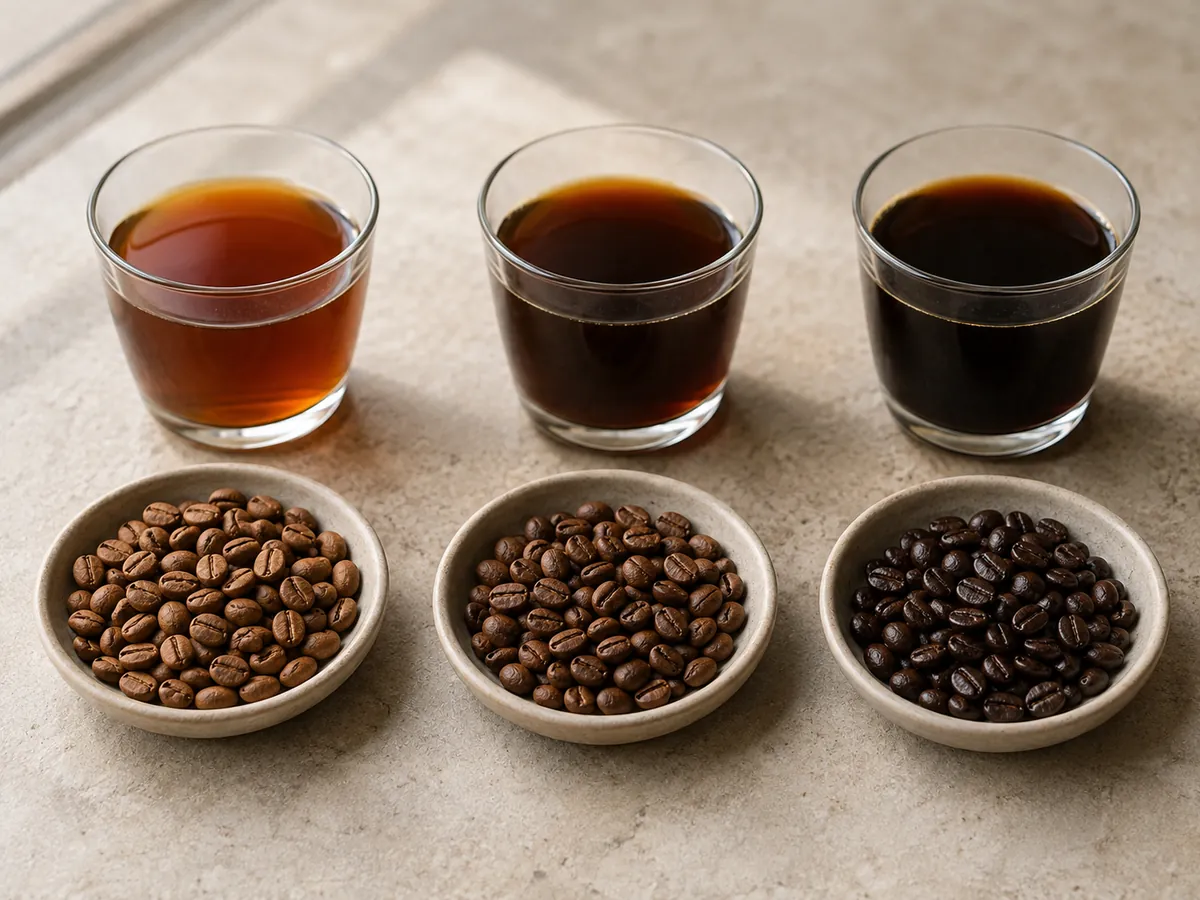
Light-roasted coffee often benefits from a full black serving and paper filtration, where aromatic and fruit-like notes are easier to separate. It may also need more effective extraction than a darker roast, so freshness and an even grind matter before any recipe adjustment.
Medium roast is a useful starting point because it works across several serving styles.
It can carry sweetness and distinct origin character in a clear cup while keeping enough roast depth for a concentrate, ice, or a modest amount of milk.
Dark roast brings stronger roast-led bitterness, toast, and smoke. A short or milk-based serving can use that intensity, but an aggressive grind or extended extraction can push the same coffee toward harshness.
- Roast profile: choose fresh coffee that suits the way you plan to serve it.
- Grind consistency: use an even grind to limit how differently small and large particles extract.
- Filter material: prefer paper for clarity, or metal for more oil and body.
- Final dilution: allow for water, ice, or milk when choosing your concentration.
- Adjustments: change one brewing variable at a time when the cup needs correction.
Pre-ground coffee can still make a recognizable AeroPress cup, but it loses aroma as it sits and gives you no control over particle size. A burr grinder adds consistency because it reduces the mixture of dust and large fragments that can extract at different speeds.
Water also has a direct sensory role because it makes up nearly all of the finished drink. Strongly chlorinated water can mask aroma, while water with very little mineral content may extract and taste differently from the balanced water used to describe a published recipe.
The AeroPress makes experimentation easy, but it cannot restore aroma to stale beans or make every roast taste the same. Coffee choice sets the available flavors, and the brewer only decides how clearly and intensely those flavors arrive.
Why are there so many AeroPress recipes?
The device leaves several independent controls in the brewer's hands: dose, water amount, grind, temperature, contact time, agitation, filter material, pressing, and final dilution. Different combinations can reach enjoyable cups, so recipe variety follows from the brewer's flexibility rather than from a missing official answer.
The first championship makes the point neatly. Three competitors began with the same coffee and were judged on the cups their different methods produced, turning controlled variation into the purpose of the event.
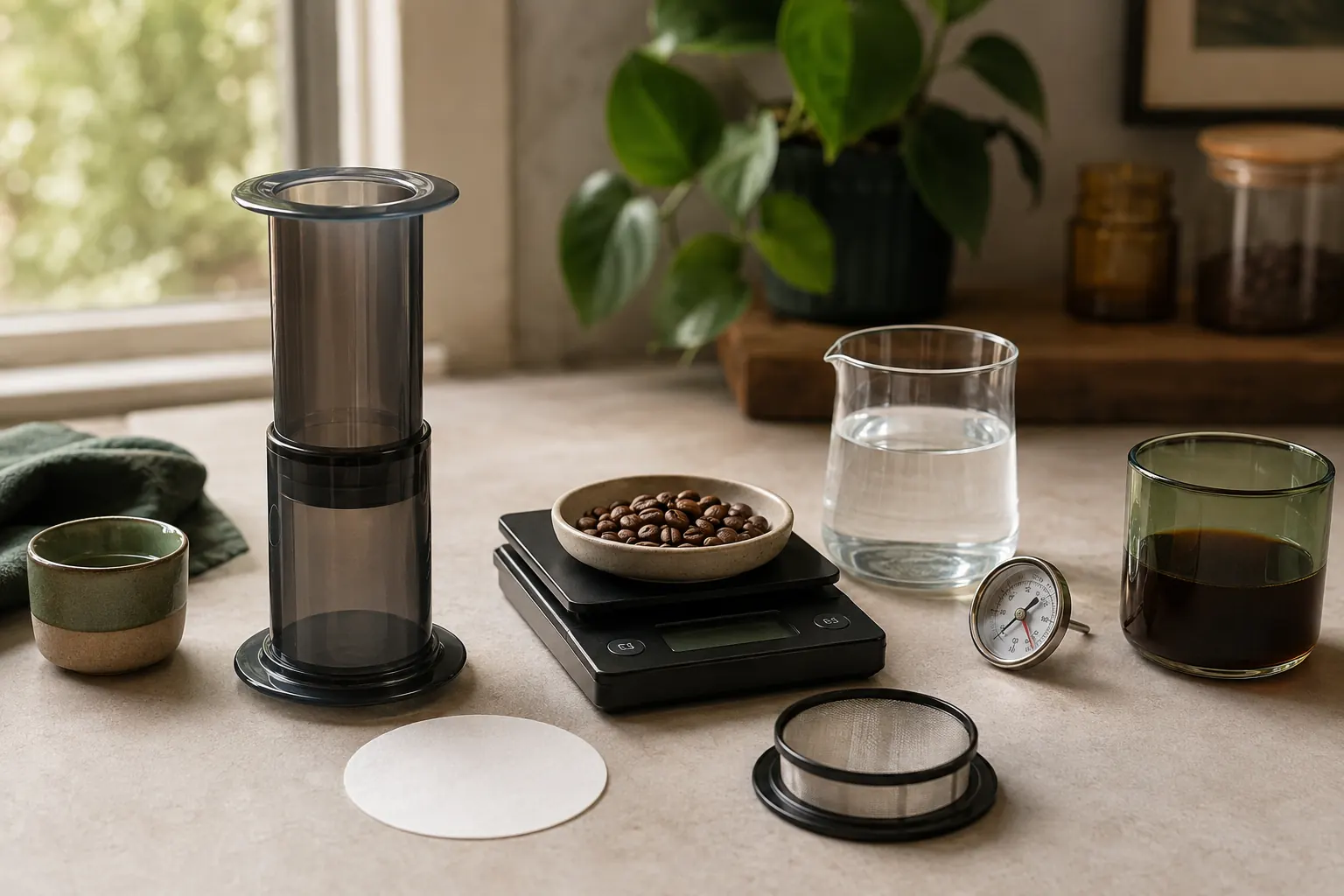
A recipe should therefore be read as a coordinated set of choices. Copying its grind while changing the dose, water, or filter may produce a very different extraction because the variables were designed to work together.
This also explains why isolated rules conflict. One recipe uses cooler water to control a darker roast, another uses hotter water to extract a lighter roast, and both can be sensible within their own combination of dose, grind, time, and serving style.
Read the variables as a system: a finer grind can shorten useful contact time, a paper filter removes more oil than metal, and bypass water changes serving strength after extraction. The picture only becomes repeatable when the dose, water, grind, temperature, time, filter, and final dilution are recorded together.
For a new brewer, start with one complete method.
Taste the result and change the variable most directly connected to the problem. Combining several champion recipes at once makes it harder to work out which adjustment changed your cup.
The many recipes do not weaken the definition of AeroPress coffee. They reveal the difference between a repeatable brew cycle and the adjustable choices inside it: the grounds steep together, the brewed liquid passes through a filter under hand pressure, and the finished cup can be served at several strengths.