What Is Nitro Coffee? Why Nitrogen Behaves Unlike Carbon Dioxide
Nitrogen is poorly soluble in water, which is the entire reason this drink exists. It leaves solution as bubbles small enough to hold together as a foam, so the coffee arrives with a cascade and a standing head while the liquid underneath is unchanged.
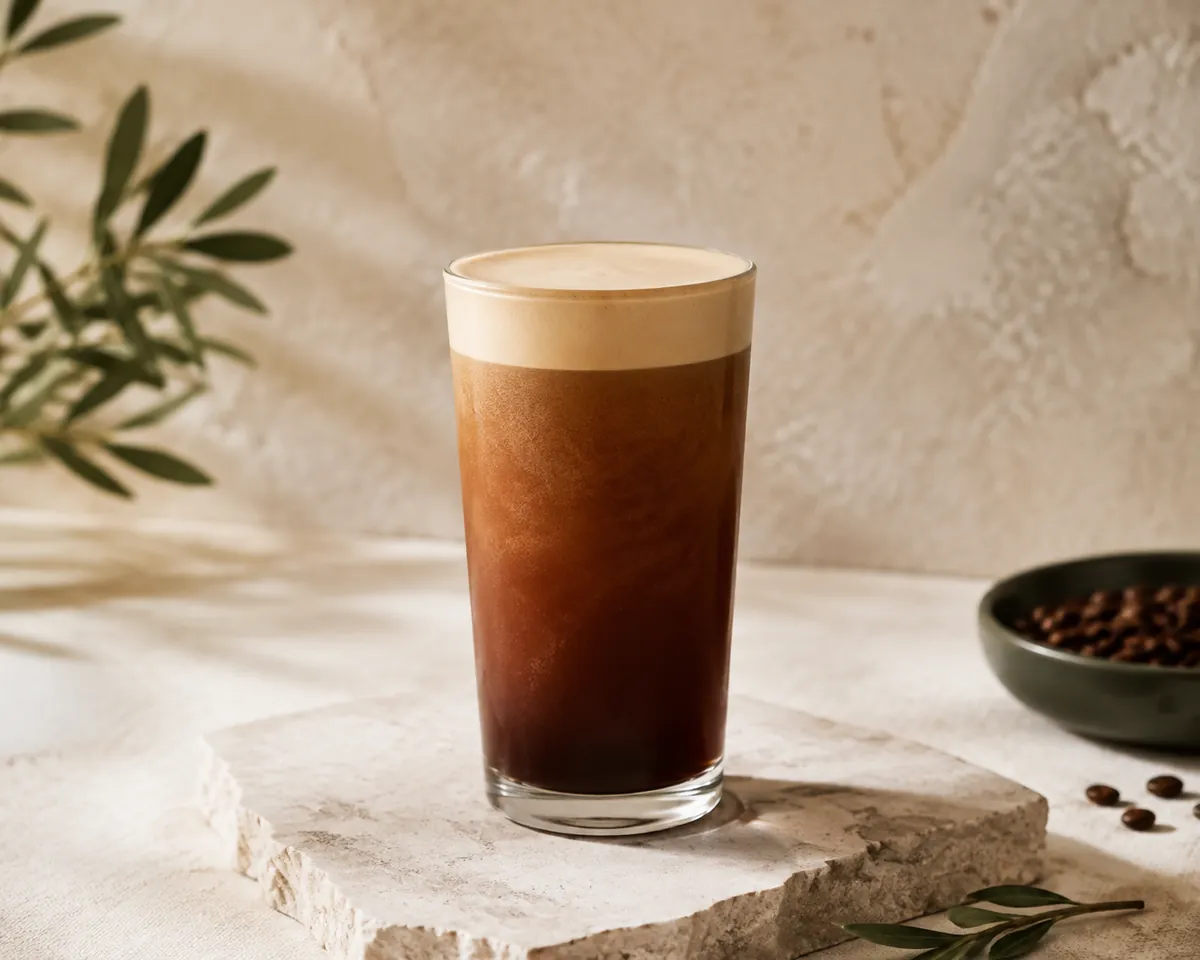
Nitro coffee is cold brew charged with nitrogen and pushed through a restrictor plate on its way into the glass. Nothing is added to the coffee, and nothing further is pulled out of the grounds.
What changes is the behaviour of the liquid. Carbon dioxide dissolves willingly into water and leaves in a rush of large bubbles, and nitrogen does neither of those things, which is the whole of the difference between a fizzy drink and the cascading, pale-headed glass a nitro tap produces.
That is worth stating plainly at the top, because the drink is often sold as though the coffee itself were special. It is the same coffee.
The gas is the ingredient, and what it changes is texture and how much of the sweetness already in the cup you notice, rather than anything a taste guide to the drink would find in the liquid.
Nitro coffee at a glance
- What it is
- Cold brew infused with nitrogen and dispensed under pressure
- The gas
- Nitrogen, which dissolves in water far less readily than carbon dioxide
- Served
- Cold, usually black, from a tap or a widget can, without ice
- What it changes
- Texture, head, and perceived sweetness
- What it does not change
- Extraction, caffeine, or the beans in the batch
- The head
- Fine dense foam that stands for several minutes
- Where it goes wrong
- Left standing, poured over ice, or drunk through a straw
Why nitrogen behaves nothing like the gas in a fizzy drink
Two gases can both be dissolved into a cold liquid under pressure and produce entirely different drinks, and the property that separates them is solubility.
Carbon dioxide is very soluble in water. It goes in readily, a good deal of it converts to carbonic acid, and that acid is a real part of why sparkling water tastes sharp rather than merely bubbly.
When the pressure drops, it comes out fast and in large bubbles that break at the surface almost as soon as they arrive.
Nitrogen does the opposite on every count. It is poorly soluble in water, it forms no acid at all, and the bubbles it makes on leaving solution are far smaller and far slower to rise.
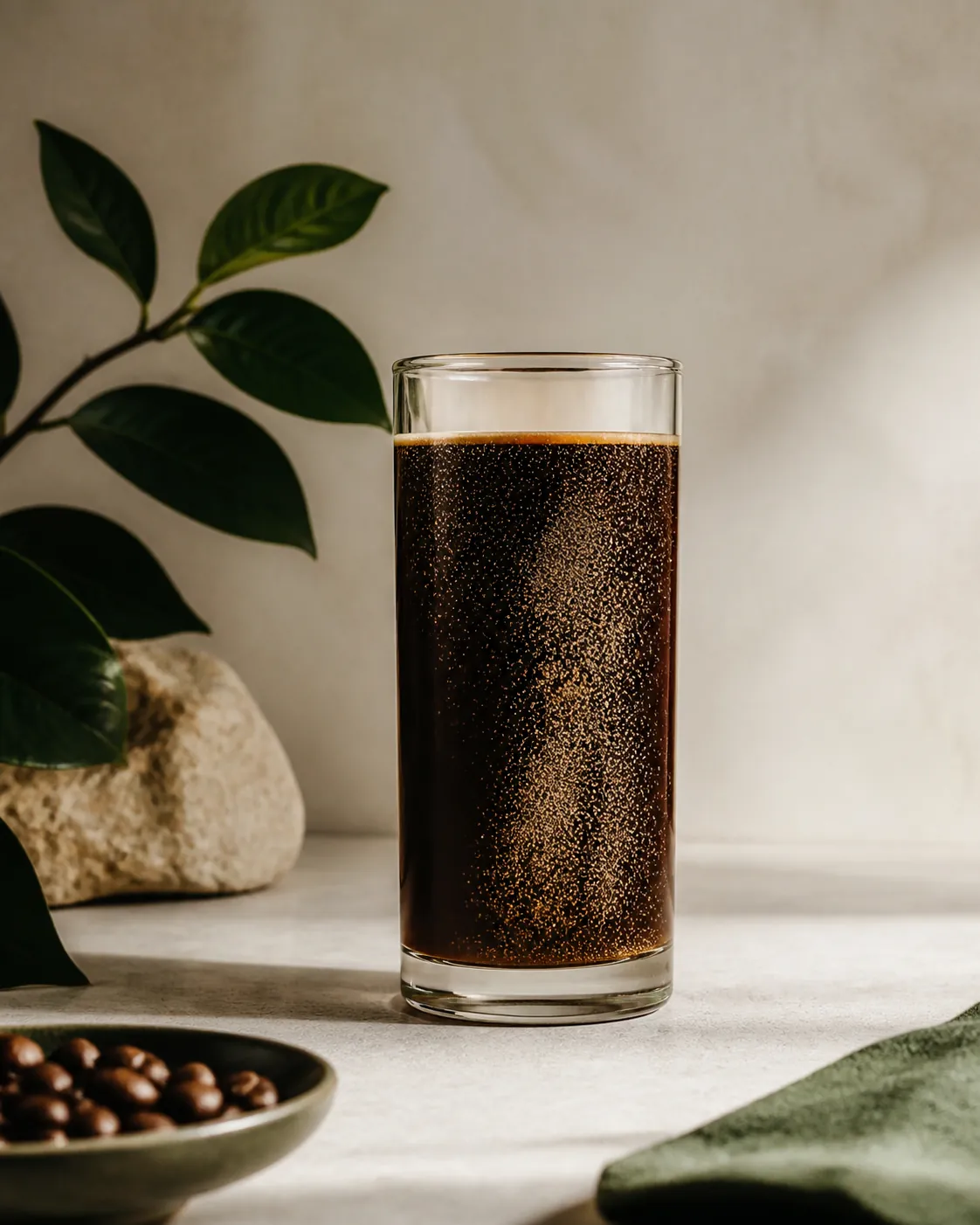
| Carbon dioxide | Nitrogen | |
|---|---|---|
| Solubility in water | High | Very low |
| Forms an acid | Yes, carbonic acid | No |
| Bubble size on release | Large and visible | Fine, near the edge of vision |
| What the tongue reads | Prickle and sharpness | Softness and weight |
| Head | Breaks quickly | Stands and holds |
| Typical drink | Club soda and every soft drink | Nitro coffee, and stout |
Because nitrogen contributes no acid, it takes none of the drink's own character away. A carbonated coffee tastes sour in a way that has nothing to do with the beans, while a nitro tastes like the batch it came from wearing a different coat.
What the restrictor plate does to the pour
The tap on a nitro line is not an ordinary tap. Behind the spout sits a small metal disc drilled with a ring of very fine holes, and the nitrogen-charged coffee is forced through it at pressure on its way out.
Two things happen in that fraction of a second. The liquid is sheared hard, which knocks the dissolved nitrogen out of solution as an enormous number of very small bubbles at once.
The stream is also broken up and slowed, so the coffee enters the glass turbulent rather than as a clean column.
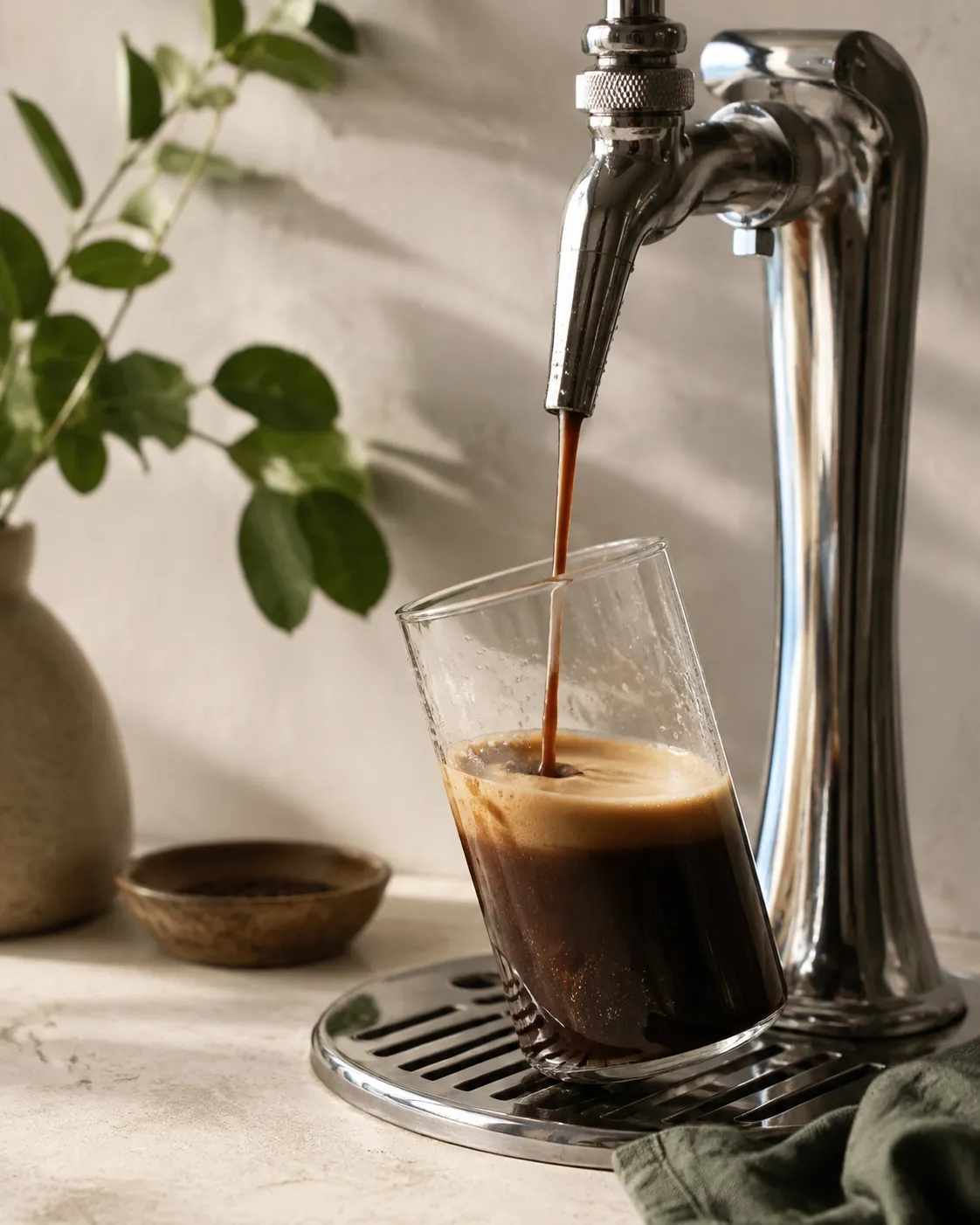
Without that plate the same coffee from the same keg pours flat and slightly foamy, then settles into an ordinary glass of cold coffee. The cascade and the head are made at the faucet, in the last few centimetres before the coffee reaches the glass.
That is also why a nitro poured badly is unrecoverable. A slow, timid pull through the plate shears less liquid, releases fewer bubbles and leaves a thin ring of foam instead of a standing head, and no amount of waiting will build one afterwards.
The same coffee run through a dedicated cold brew vessel and poured by hand will never do it either, because hand pouring cannot generate that shear.
Why the cascade runs downwards
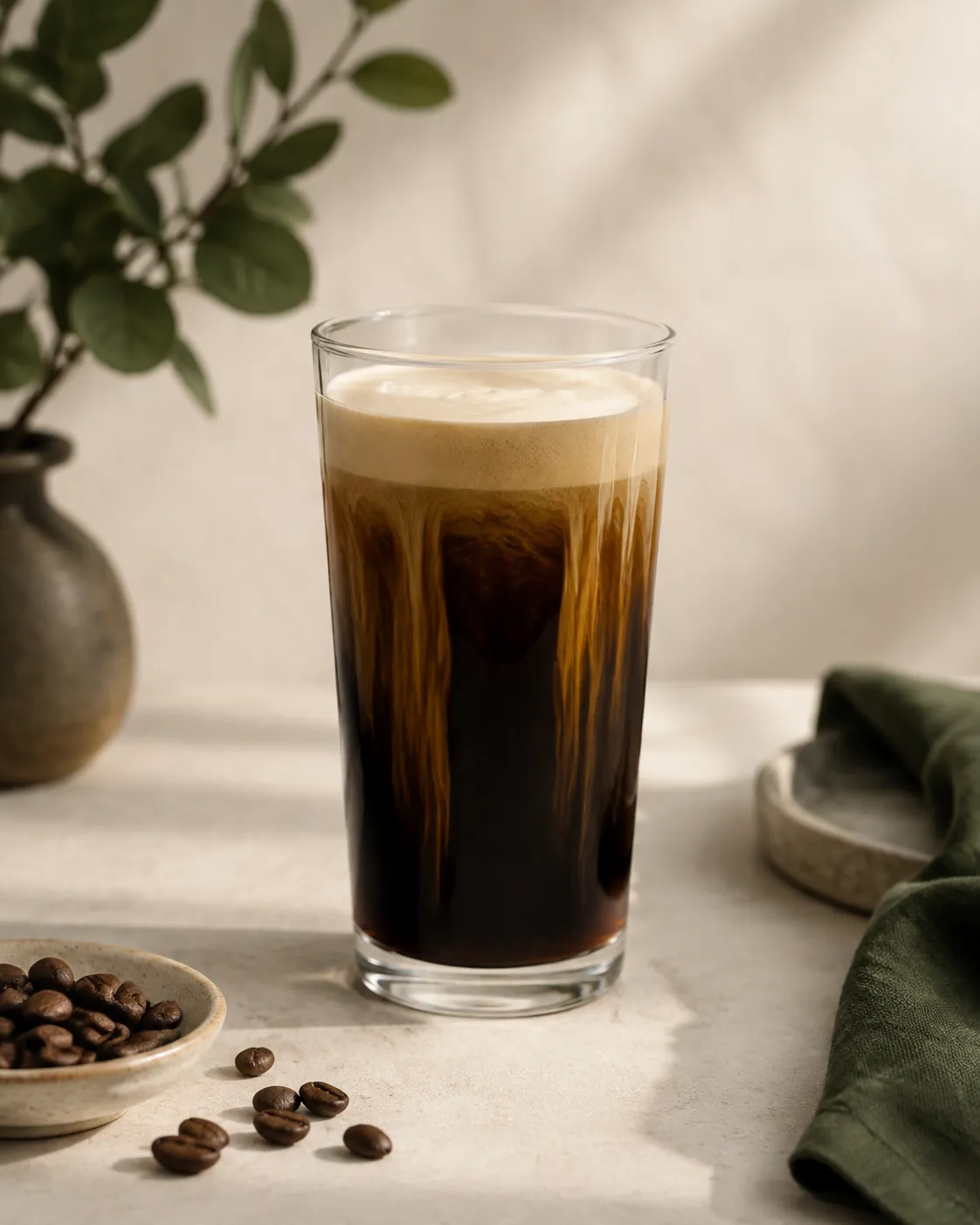
The single most photographed thing about this drink is the curtain of bubbles that appears to fall rather than rise, and it looks like a violation of something. It is not.
The bubbles themselves rise, as bubbles do. They rise fastest up the middle of the glass, where they are densest, and they drag coffee upwards with them.
That rising column has to be balanced by liquid coming back down, and the only route available is around the outside, against the glass.
So what you watch through the wall of the glass is the return leg of a loop: coffee descending at the edge, carrying with it the smallest and slowest bubbles that lack the buoyancy to fight the current. The bubbles in the middle are travelling upwards the whole time, and you cannot see them.
What happens in the thirty seconds after the pour
- ShearThe restrictor plate knocks nitrogen out of solution as fine bubbles
- RiseBubbles climb through the centre of the glass, dragging liquid with them
- ReturnDisplaced coffee falls at the glass wall, and that is the visible cascade
- SettleBubbles collect at the surface and pack into a dense foam
- ClearThe body of the drink goes dark and still, and the head remains
The whole cycle takes under a minute in a standard glass, and it is narrower and faster in a tall vessel than in a wide one, because the two flows have less room to separate. A wide tumbler gives the slowest and most legible cascade, which is why bars pour nitro into something with straight sides and a reasonable width.
How long the head stands, and what holds it up
A foam is a stack of liquid films with gas trapped between them, and it collapses when those films drain and thin until they break. Every question about the head on a nitro comes back to how fast that drainage happens.
Fine bubbles drain slowly. Because nitrogen leaves solution in bubbles far smaller than carbonated ones, the films between them are short and the liquid in them has further to travel before the wall thins to nothing.
The foam therefore lasts minutes rather than seconds.
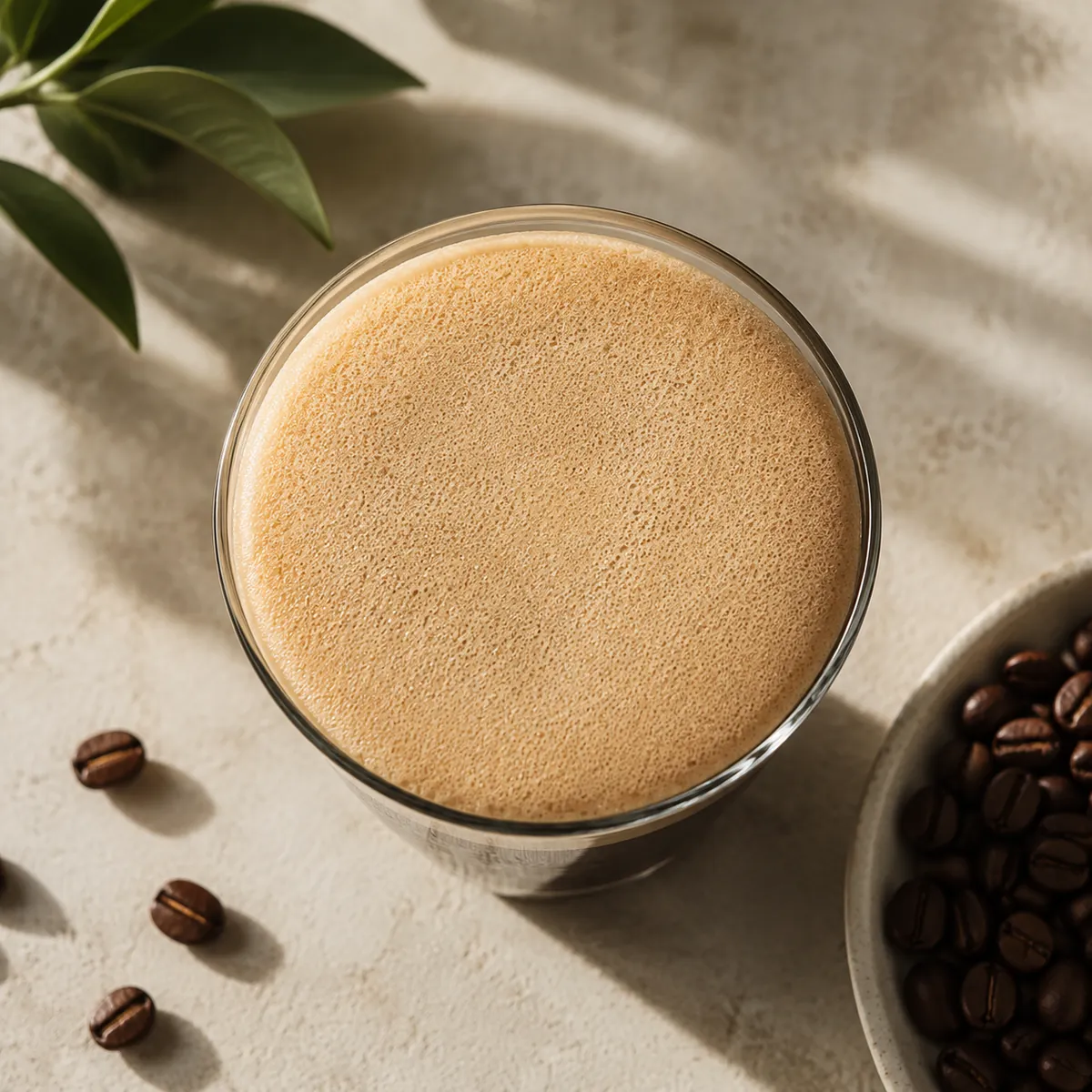
Coffee also brings its own stabilisers to the surface. Dissolved proteins and melanoidins, the brown compounds formed during roasting, gather at the boundary between gas and liquid and stiffen the films.
This is the same class of effect that lets a cappuccino hold a cap, though there the surfactants come from milk instead.
The practical consequence is that head quality reports on the coffee as much as on the gas. A thin, weakly extracted batch throws a poor head no matter how the tap is set, which is why cafes running nitro tend to brew the concentrate stronger than they would for a flat glass, and why the same batch behaves better than a supermarket bottle would.
What it changes in the mouth, and what it leaves alone
Two claims travel with this drink and only one of them survives inspection. The first is that nitro is smoother and sweeter.
The second is that it is stronger, or richer, or somehow more coffee.
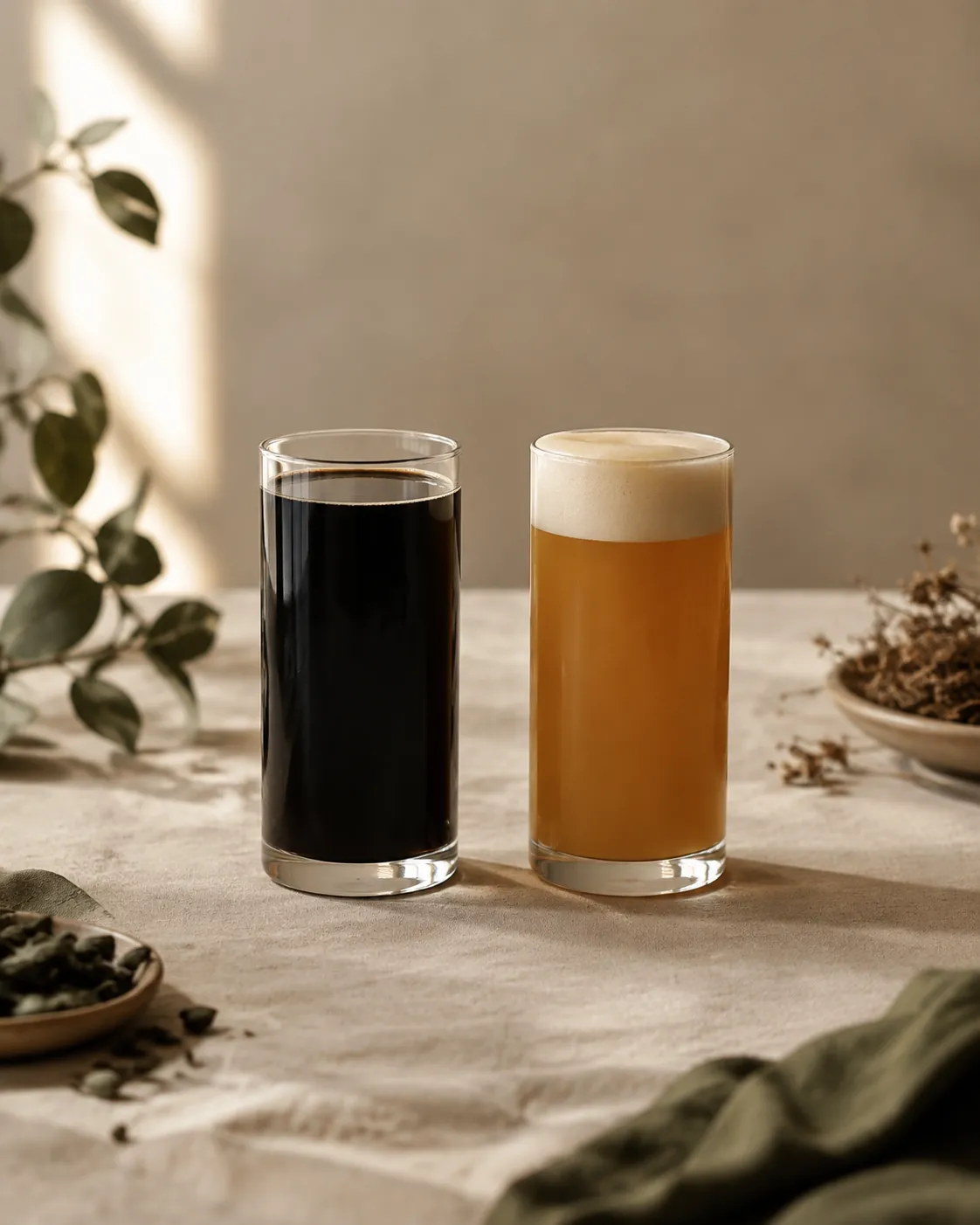
Perceived sweetness rises and perceived acidity falls, both genuinely, at the level of what a drinker reports, while the dissolved contents of the glass are unchanged. Texture is doing that work.
A liquid carrying a fine dispersed foam coats the tongue more slowly and more evenly, and slower delivery reads as rounder and less sharp.
Sweetness
Reads higher, with no sugar present and nothing added
Acidity
Reads lower, though the pH of the liquid has not moved
Body
Fuller, because the foam adds structure the flat drink lacks
Aroma
Muted, since the foam sits between the coffee and your nose
Caffeine
Identical to the batch it was poured from
Anyone who has compared a flat and a nitro glass from one keg has met the odd part of this. The drinks taste different, and yet nothing was done to the coffee between them.
The flavour that cold brew already has is where the sweetness originates, and nitrogen only changes how much of it you notice.
How a bar gets it into the glass
The equipment is borrowed wholesale from draught beer, and a nitro coffee line is the same hardware serving a different liquid.
Cold brew goes into a stainless keg. The keg is pressurised with nitrogen, or more often with a blend that is mostly nitrogen with a little carbon dioxide in it, and left cold for some hours so the gas dissolves.
It is then pushed to the tap at a pressure well above what a carbonated line runs, because nitrogen is so reluctant to dissolve that it takes force to get enough of it in.

From keg to glass
- ChargeNitrogen or a nitrogen-rich blend is applied to a keg of cold brew and left to dissolve
- ChillThe line and the keg stay cold, since gas dissolves more readily at low temperature
- PushPressure carries the coffee up the line at a rate a carbonated tap would never need
- ShearThe restrictor plate breaks the stream and releases the gas as fine bubbles
- SettleThe glass is left alone for half a minute before it is handed across
The pressure figure surprises anyone who has kept a soda line. A carbonated drink is pushed gently, because its gas is already eager to stay dissolved, and a nitrogen line has to be driven hard to achieve the same thing.
Getting that balance wrong is the commonest fault in a nitro glass, and it shows up as a weak head rather than as a flavour problem.
Cans, widgets and the whipping siphon at home
Away from a bar there are three routes to the same effect, and they differ mainly in how the gas is introduced.
The widget can is the oldest and the cleverest of them. A small hollow plastic sphere sits inside the can holding nitrogen under pressure, and when the can is opened the pressure around it drops and the widget fires its gas back through the liquid in a jet, shearing it much as a restrictor plate would.
Some cans dose nitrogen into the headspace instead, and those give a softer, shorter-lived head.
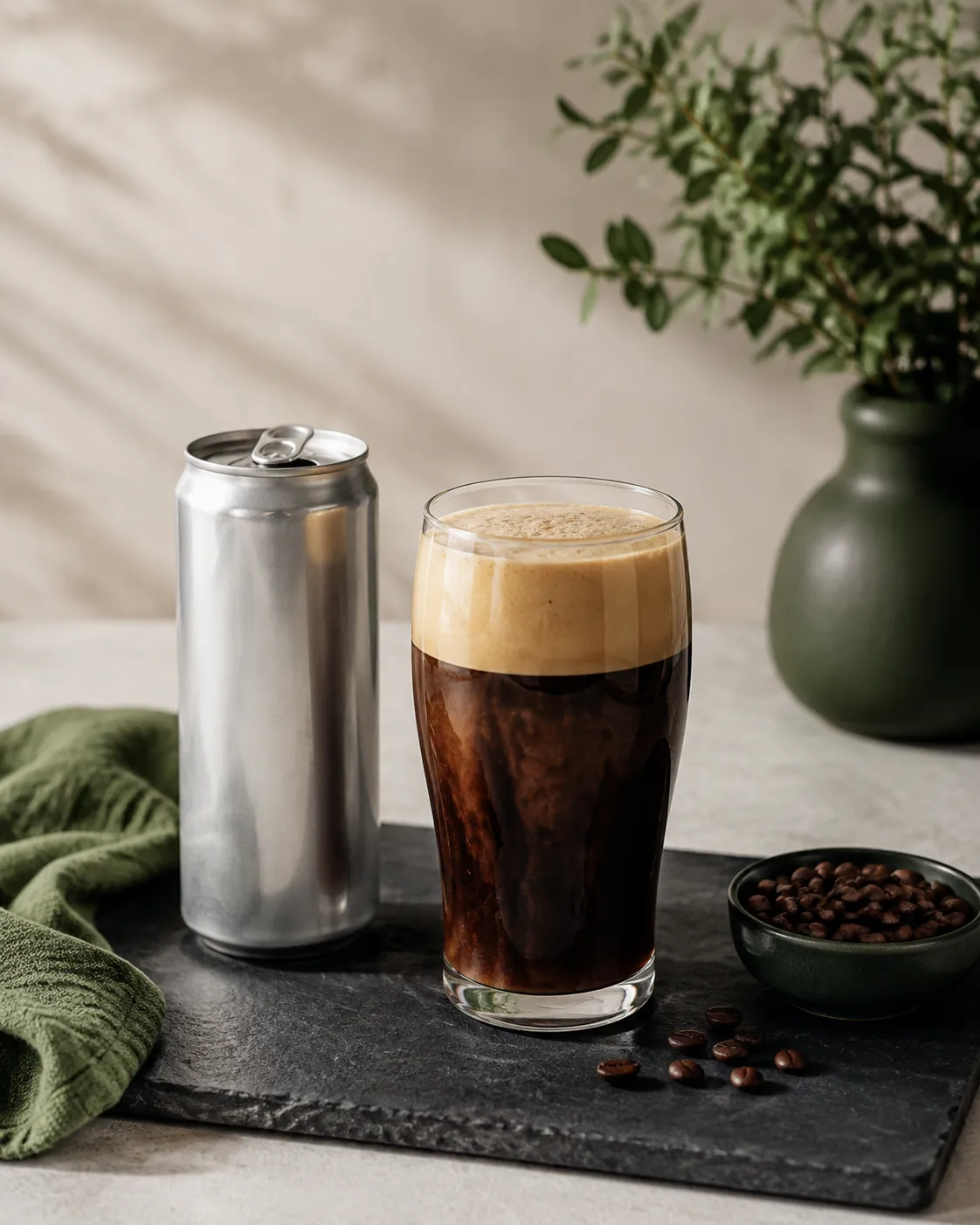
At home, a whipping siphon charged with nitrogen cartridges is the usual approach, and it works within limits. The head is short-lived because the siphon cannot hold the drink under pressure once it has dispensed, so the result sits closer to a foamed coffee than to a tapped one.
What none of the home routes reproduces is the sustained pressure of a keg, which is what lets a bar pour glass after glass with an identical head. A siphon gives you one good pour and a mediocre second one.
The milk frother in the same drawer is not a substitute either, since whipping air into cold coffee makes a coarse foam that falls apart inside a minute, and a countertop carbonator is the wrong gas entirely.
Why it arrives without ice and usually without a straw
Order a nitro and it comes in a glass with nothing in it but coffee. That is not a stylistic decision.
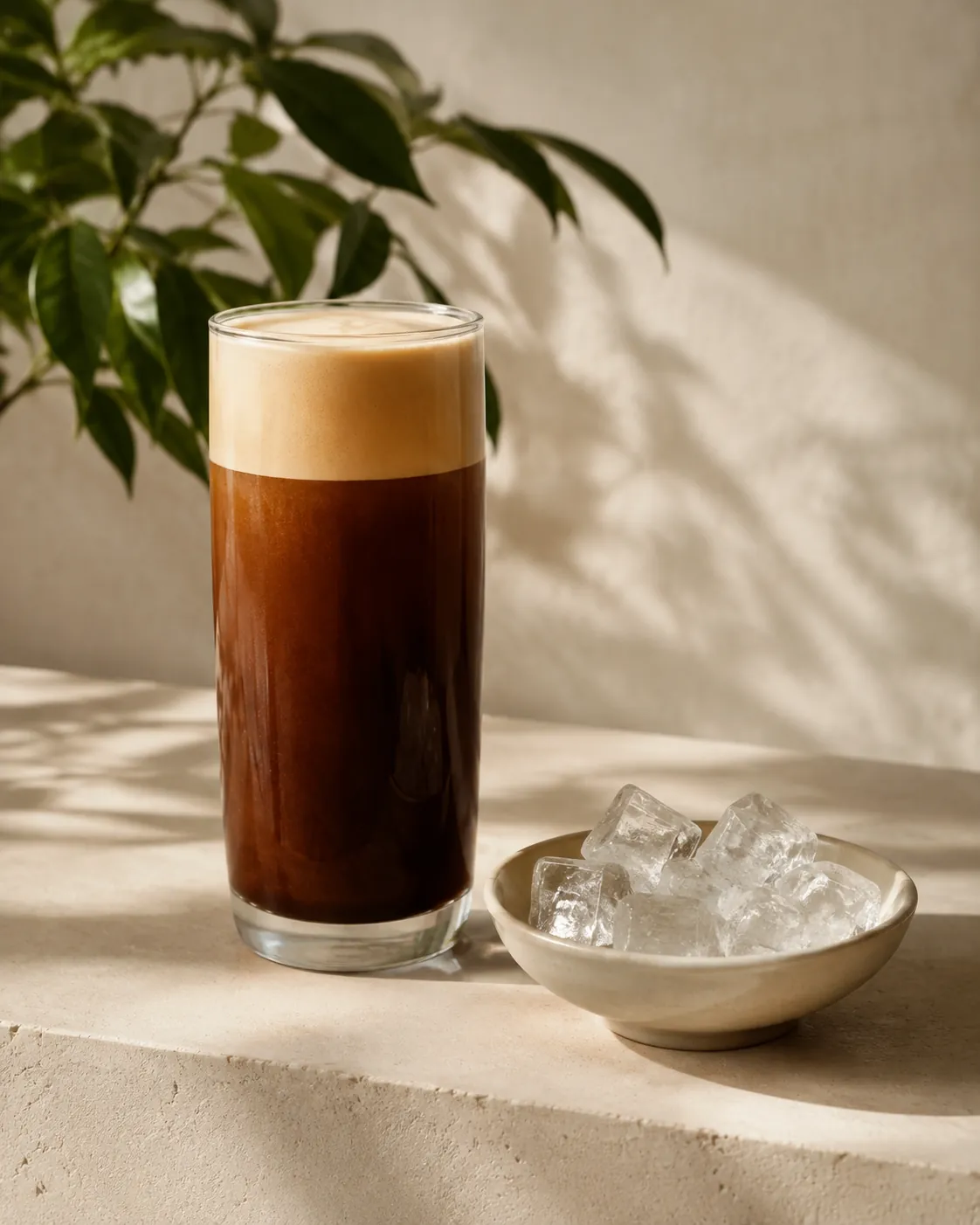
Ice does two separate kinds of damage. It gives the bubbles somewhere to break, since the rough surface of a cube is an excellent nucleation site and the gas then comes out of solution all at once rather than gradually.
It also dilutes, and the drink already arrives at the strength it is meant to be drunk at, unlike an iced coffee that is built around melt.
The straw problem is simpler and more annoying. A straw draws from the bottom of the glass and delivers the liquid past the head entirely, so the drinker gets a cold black coffee and never meets the foam the whole exercise exists to produce.
Drinking it through the head is the point, exactly as it is with a stout. If a glass arrives with ice in it, the honest reading is that someone has made a mistake rather than offered a variation.
Milk and sugar are the exception rather than the default
Nitro is normally served black, and there is a mechanical reason for that beyond any purist instinct.
Sugar syrup and milk both change the surface chemistry of the liquid, and a foam is entirely a surface phenomenon. Adding simple syrup to a nitro after the pour visibly collapses part of the head within seconds, because the syrup is denser than the coffee and drags through the foam on its way down.
Milk is less destructive but it changes what the drink is. Dairy brings its own surfactants and holds a foam perfectly well, so a nitro with milk gets a thicker, whiter, longer-standing head, and the fine texture that distinguished it is buried under a coarser one.

- If you want it sweet, sweeten the keg or the batch rather than the glass.
- Add whatever you are adding before the pour, never after it.
- Expect a plant drink to behave unpredictably, and read the curdling question first.
- Oat holds a foam better than the thinner nut drinks manage.
- Skip flavoured syrups entirely if the head matters to you.
The sweetened-at-source approach is what cafes use when they run a flavoured nitro, and it is the only version that keeps both the sweetness and the texture. Sweetening in the glass gets you one or the other, and most people who try it once go back to drinking the thing black.
How much caffeine a glass carries
The gas contributes nothing here, so the figure is the figure for the cold brew that went into the keg, at whatever strength it was diluted to.
That sounds like a non-answer and it is the useful one, because nitro is widely assumed to be stronger than the same coffee flat. The assumption comes from the texture and from the serving size rather than from the liquid in front of you.
Two things do move the number in practice. Nitro is often poured from a concentrate diluted less than a bottled ready-to-drink cold brew would be, and it is frequently served in a larger glass, since the head takes up room.
Both raise the amount in front of you without either being a property of the process.
The comparison worth having is with the rest of the menu, and the figures by brewing method hold for nitro exactly as they do for the flat version. A decaffeinated batch can go on a nitro tap and behaves identically, which is the cleanest demonstration that the gas is doing nothing chemical to the coffee.
When flat cold brew is the better order
Nitro is a texture upgrade with a real cost, and the cost is time rather than money.
A glass that has stood for ten minutes has lost its head and most of what made it worth ordering, and what remains is a slightly flat cold coffee that has warmed up. If you are going to sit with a drink for an hour, order the flat version and keep the batch you brewed intact.
What each format is good at
- Nitro from a tapThe full cascade and a standing head, drunk immediately
- Widget canMost of the effect, poured into a glass rather than drunk from the tin
- Siphon at homeA good first pour and a disappointing second
- Flat cold brewNo texture, complete flexibility, keeps for days
- Over iceA different drink, and the iced comparison explains why
Nitro also suits a narrow window of coffees. A light, bright, acidic batch loses much of what made it interesting once the perceived acidity drops, while a chocolatey darker roast gains from the same change.
That points at the honest summary: this is a serving format with a preference, not an improvement applied evenly across every bean.
Where a drinker wants intensity rather than texture, the answer is not on a nitro tap at all. An espresso delivers in thirty millilitres what the nitrogen route spends a whole glass approaching, and the two are answering different questions.
A keg that will not be finished within a few days becomes a storage question rather than a brewing one, which is a further argument for pouring nitro only at the rate it is drunk.
Common questions
Why do the bubbles in nitro coffee fall instead of rising?
They rise up the middle of the glass, where they are densest, and drag coffee upwards with them. That flow has to be balanced by liquid coming back down at the glass wall, and the small slow bubbles caught in that return current are the cascade you can see.
Does nitro coffee have more caffeine than regular cold brew?
The gas adds none. A nitro glass carries whatever the batch behind it carried, and any difference comes from being poured at a lower dilution or served in a larger glass rather than from the nitrogen.
Why is nitro coffee served without ice or a straw?
A cube is an excellent nucleation site, so the gas comes out of solution all at once and the head collapses, and the melt dilutes a drink already served at its intended strength. A straw draws from the bottom of the glass and delivers the coffee past the foam entirely.