What Is Moka Pot Coffee?
Moka pot coffee is concentrated and full-bodied, but it is not espresso. Its heat-driven upward flow, metal filter, and short serving explain the difference.
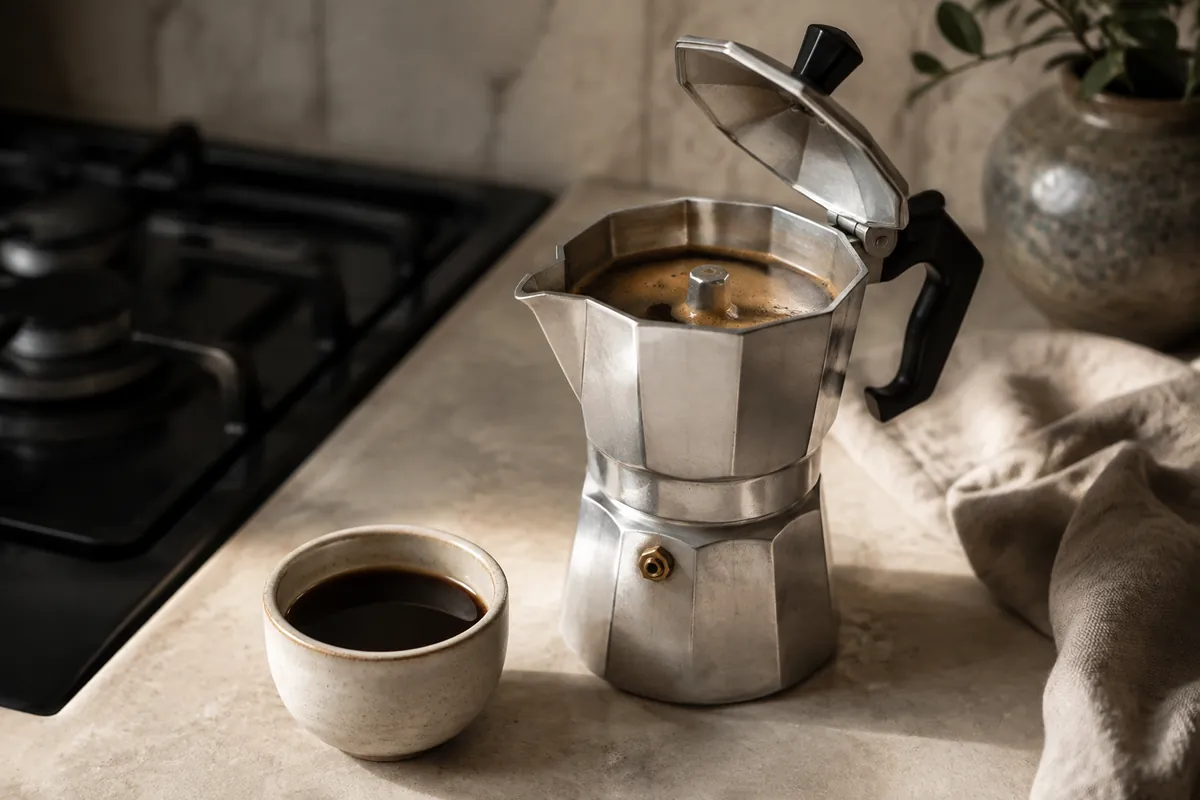
Moka pot coffee is a concentrated black coffee brewed when heat-driven pressure pushes water upward through ground coffee into a separate collecting chamber. It is often called stovetop espresso, but moka coffee is its own brewing style: stronger than most drip coffee, lower in pressure than espresso, metal-filtered, and normally served in a small cup.
The distinction matters because an espresso comparison can set the wrong expectations. A moka pot will not produce the syrupy texture or lasting crema of espresso, yet it can deliver a dense, aromatic cup that stands up well to hot water or milk.
What makes moka pot coffee a distinct drink?
The name refers both to the brewer and the coffee it produces. In the cup, moka coffee is identified by its upward pressure path, concentrated serving, metal filtration, and close contact with high-temperature water near the end of brewing.
Moka pot coffee at a glance
- Brewing path
- Water rises from a heated lower chamber, crosses the coffee bed, and collects above it
- Typical pressure
- Roughly 1 to 2 bar, depending on the pot and heating conditions
- Filter
- A perforated metal basket and filter plate, with no paper in the standard setup
- Cup character
- Concentrated aroma, firm body, some oils and very little sediment when brewed cleanly
- Usual serving
- Small and straight, lengthened with hot water, or softened with warm milk
- Common confusion
- Strong enough to resemble espresso, but brewed far below espresso pressure
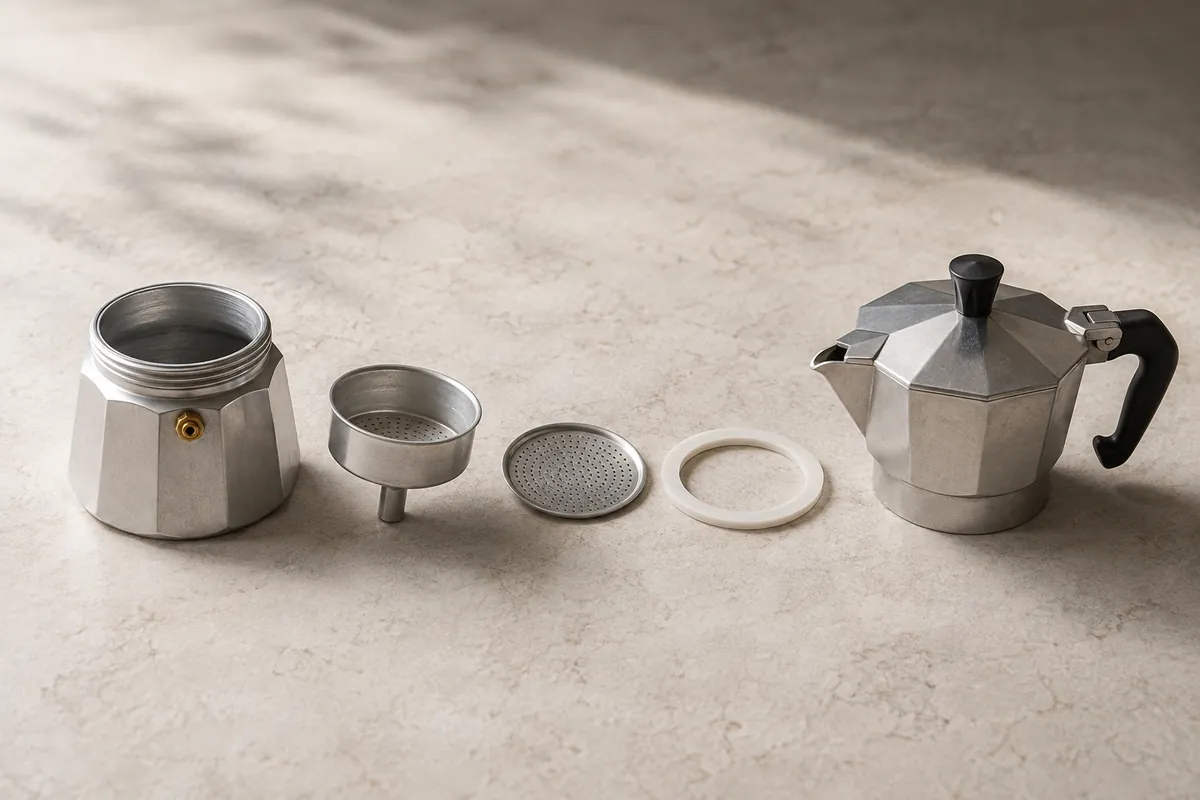
The lower chamber holds water, the funnel basket holds coffee, and the upper chamber receives the finished drink. Coffee and spent grounds finish on opposite sides of the filter.
That clean separation distinguishes the moka pot from French press coffee, where the brew and grounds share one vessel until plunging.
Moka coffee has no required bean species or roast.
A pale, fruit-led roast and a chocolate-toned medium roast can both be brewed in the same pot, although their heat tolerance and ideal grind will differ.
The brewer became closely associated with everyday Italian home coffee because it produces several small servings with no pump or separate paper filter. That history explains the compact cups and family-size pot labels better than the idea that it was designed to copy a café espresso machine.
Pot capacities are traditionally described in small moka cups, not standard measuring cups. A six-cup pot does not yield six full mugs, and choosing from the label alone can produce either too little coffee for a household or far more concentrate than one person expects.
Why does the coffee move upward?
The process begins below the coffee bed. As the lower chamber warms, air and water vapor expand in the sealed space above the water, raising pressure until it can drive hot water into the funnel tube.
The upward path
- HeatThe stove warms water and the trapped gas above it
- PressureExpanding gas creates a pressure difference between the lower and upper chambers
- ExtractionHot water moves through the coffee bed and dissolves soluble material
- FiltrationThe filter plate holds back the packed grounds while liquid enters the chimney
- CollectionBrewed coffee flows into the upper chamber and is removed from the heat
This is not ordinary boiling or percolation in a loop.
Water crosses the grounds once, then the brewed liquid remains upstairs rather than cycling repeatedly through the basket.
The pressure is created by a difference between chambers, so the lower chamber does not need to reach a rolling boil before coffee appears. Water can begin climbing while much of it is below its open-air boiling point, which is why a controlled stream may arrive before the pot sounds dramatic.
Heat continues entering the metal after flow begins. Heavy heat accelerates the final phase, while modest heat gives rising water more time to cross the bed without the upper chamber filling in a violent burst.
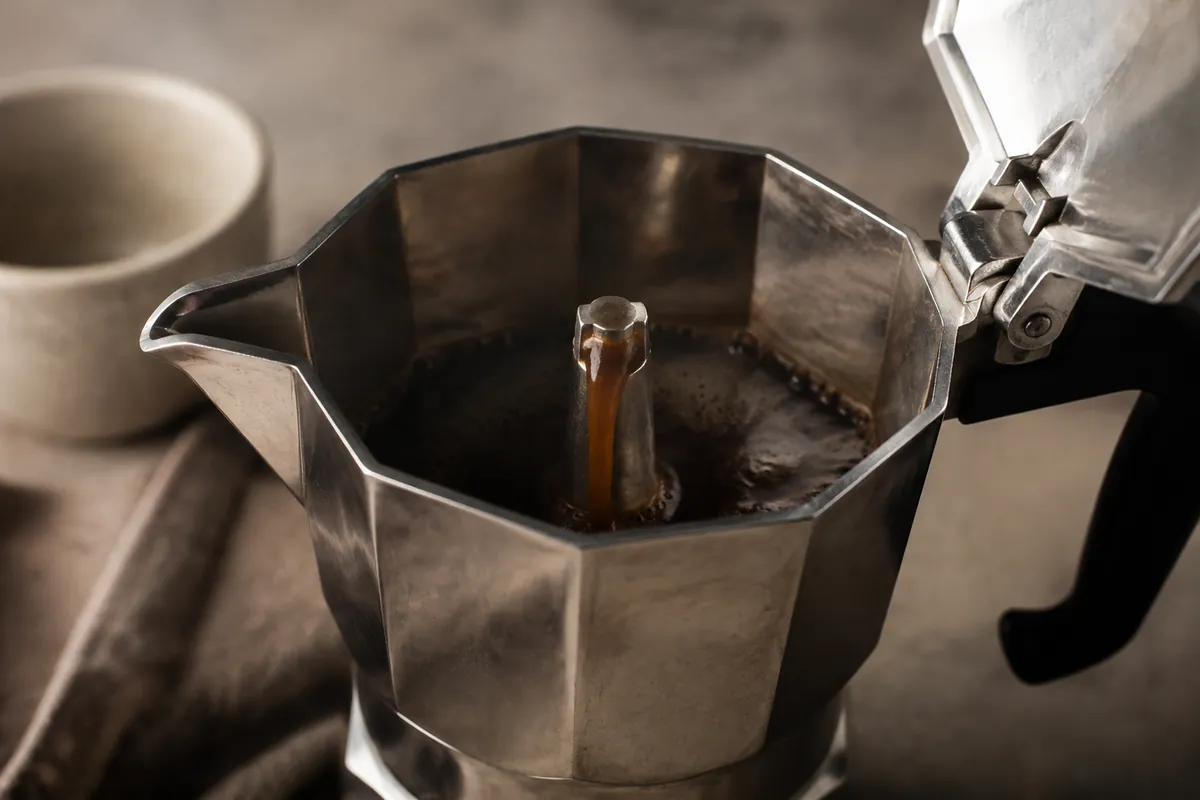
The familiar sputter appears when the lower chamber contains little liquid and more gas reaches the funnel. That late phase is hotter and less controlled, so letting it roar across the bed can add a dry, harsh finish without making the coffee usefully stronger.
The moka pot mechanism explains the valve, gasket, filter plate, and safe assembly in detail. For identifying the drink, the useful point is simpler: heat creates the pressure, and pressure moves the water in one direction.
Why is moka coffee not espresso?
Both drinks are compact and concentrated, which is why the nickname persists. Their extraction environments are nevertheless different enough to produce different texture, foam, and flavor concentration.
| Moka pot coffee | Espresso | |
|---|---|---|
| Pressure | Commonly around 1 to 2 bar | Commonly brewed near 9 bar |
| Coffee bed | Filled level in a funnel basket, not tamped | Finely ground and evenly compacted in a portafilter |
| Filter | Perforated metal plate | Metal basket with much smaller openings |
| Flow | Driven by heat and vapor expansion | Driven by a pump or lever |
| Surface | May foam briefly at the spout | Builds a crema layer from pressurized extraction |
| Serving | Often 40 to 90 ml depending on pot size | Usually a short shot or double shot |
At espresso pressure, carbon dioxide, oils, and dissolved material form a fine emulsion that contributes to crema and syrupy body. A moka pot cannot reproduce that environment, even when the coffee is dark and strong.
The grind and bed behave differently as well. Espresso relies on a carefully distributed, tamped puck to resist a pump, while a moka basket is filled level and left untamped so its much lower pressure can maintain flow.
That changes adjustment. An espresso grinder may move through very small setting changes to control seconds of shot time, while moka brewing needs enough open space for water to rise steadily through the whole basket.
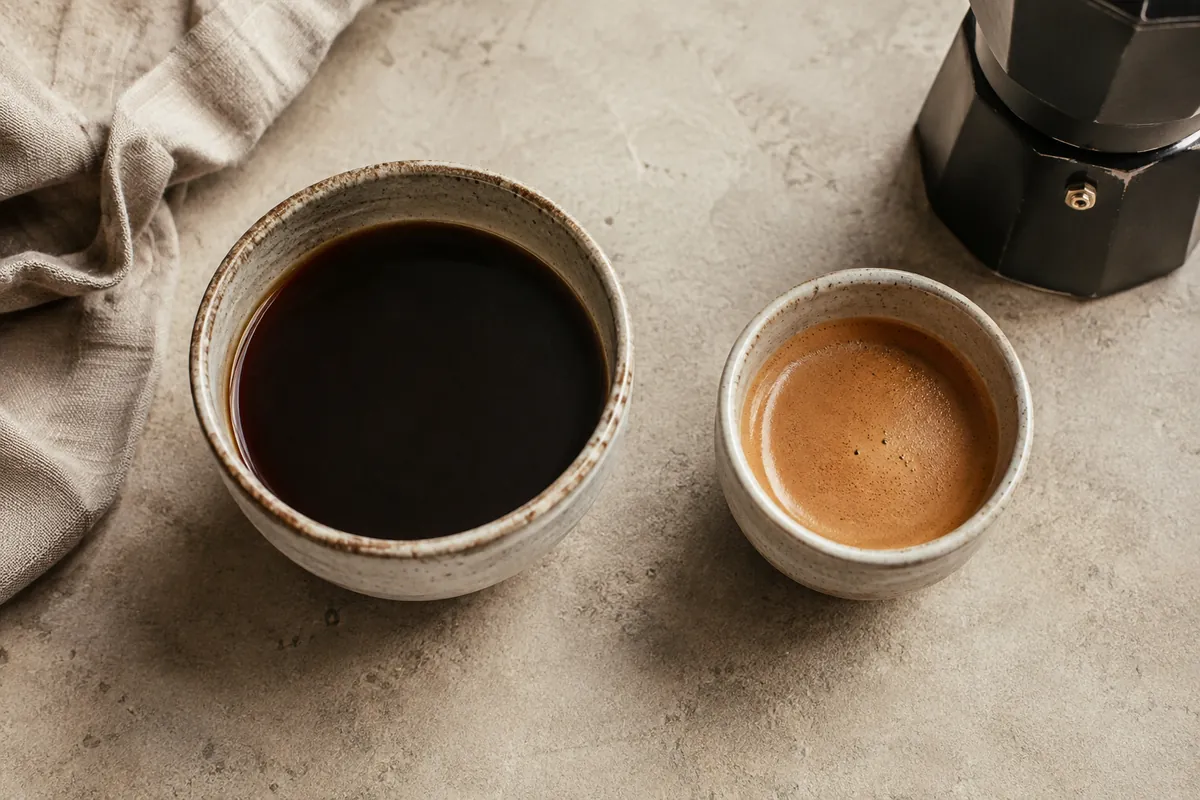
Espresso names a method, not a darkness level.
Calling moka coffee espresso because it looks dark is like calling every paper-filtered cup pour-over because water passed through paper.
That does not make moka coffee a weak substitute.
It means its dense body, direct aroma, and slightly broader serving are qualities to judge on their own, and the espresso-machine comparison can handle the separate equipment decision.
What should the cup taste and feel like?
A well-managed cup is concentrated, aromatic, and weightier than paper-filtered coffee. The metal filter permits oils and very small particles to pass, giving the drink a tactile body without the thick sediment expected from unfiltered methods.
The flavor can move from bright and structured to cocoa-like and roasty according to the coffee. Burnt is a fault, not a defining moka flavor, and it often comes from excessive heat, a long final sputter, stale coffee, or a basket packed so tightly that flow slows down.
From balanced to harsh
- Sweet and concentratedClear aroma, firm body, brief clean finish
- Roast-forwardCocoa, toast, caramelized flavors, restrained bitterness
- DryMuted aroma and a rough finish that lingers on the tongue
- HarshAcrid smell, burnt edge, and aggressive bitterness after the cup cools

Concentration can amplify a coffee's strengths and defects at the same time. A roast that tastes gently nutty in drip coffee may seem much darker in a moka cup, while a light roast can expose sharp acidity if the grind or heat does not extract enough sweetness.
Body should not be confused with sediment.
A clean moka cup may carry a faint trace of fine particles, but obvious mud suggests a damaged filter plate, an unusually dusty grind, or coffee escaping around the basket.
Aroma changes quickly after the upper chamber fills because the coffee remains in warm metal above the stove. Pouring promptly protects volatile aromas and prevents residual heat from holding the finished coffee at a high temperature.
Judge moka coffee after a brief cooling pause.
Scalding temperature hides sweetness and makes bitterness difficult to separate from simple heat.
How do you serve moka pot coffee?
Straight moka coffee is the clearest expression of the method, usually in a small cup rather than a full mug. The serving is concentrated, so sipping it slowly as it cools reveals more than drinking it at the temperature of the upper chamber.
Hot water can lengthen the cup without driving more water through the grounds. That creates a gentler black coffee while preserving the extraction already completed, much as an Americano dilutes espresso after brewing.
Straight
Keep the serving small when you want maximum aroma and body.
With hot water
Add water after brewing for a longer, less concentrated black cup.
With warm milk
Use enough coffee to remain legible beneath the milk rather than building a full latte ratio.
Over ice
Brew into a heat-safe vessel, then account for the water released as the ice melts.

The vessel makes the concentration difference visible before the first sip. A small straight cup keeps the aroma compact, while hot water or milk spreads the same brew through a larger serving and changes what the roast needs to carry.
Milk suits medium and medium-dark roasts because their cocoa, toast, and caramelized notes remain recognizable after dilution. A delicate light roast may lose its origin character beneath a large volume of milk, even when the underlying brew is sound.
For an iced serving, ordinary ice becomes part of the recipe. Ice melt is dilution, so a glass that begins balanced can turn thin when too much ice is used or the coffee sits warm before pouring.
None of these additions changes what came out of the pot.
The brew remains moka coffee while the serving format changes around it.
Serving size affects perception.
A small straight cup concentrates aroma near the nose, while a wide mug of diluted coffee cools faster and spreads the same aromatic material across more water.
If several people share one pot, stir the coffee in the upper chamber gently before pouring. The earliest and latest portions can differ in concentration, and mixing them gives each cup a closer representation of the complete brew.
Can you store moka pot coffee?
Moka pot coffee is most aromatic when served soon after brewing, but a surplus can be cooled and kept for a later cold or milk drink. Transfer it out of the upper chamber so residual heat and contact with the metal do not continue flattening the cup.
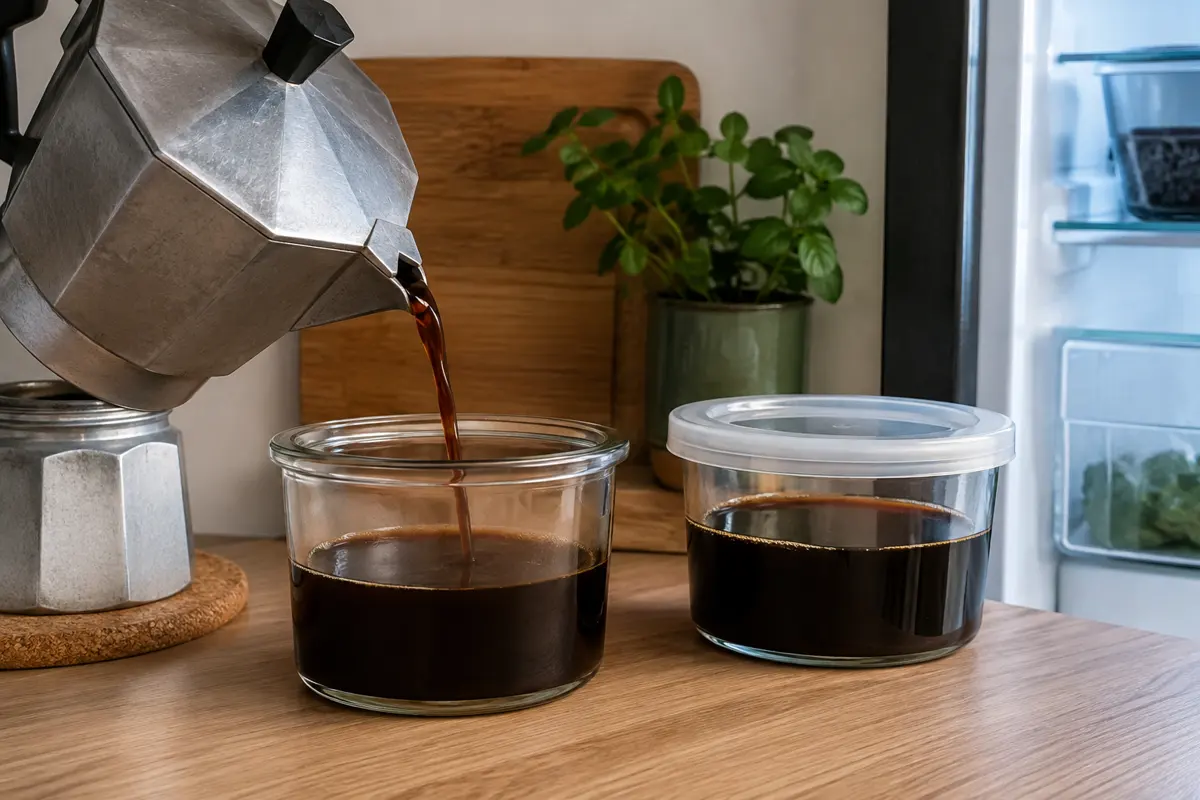
Cool the coffee promptly in a clean, shallow container, cover it, and refrigerate it rather than leaving the filled pot on the stove. A sealed container also prevents the small volume from taking on refrigerator aromas.
- Serve the fresh portion first while its aroma is most vivid.
- Transfer any surplus instead of storing it in the moka pot.
- Use a clean container with little empty headspace.
- Refrigerate once the coffee has cooled rather than holding it warm.
- Use the chilled portion where a softer aroma is acceptable, such as over ice or with milk.
Reheating cannot restore volatile aromas that have already escaped, and aggressive boiling adds a cooked edge. For a hot black cup, brewing fresh is the better result; storage is a practical use for surplus, not an equal serving method.
This is a coffee-quality boundary rather than a guide to maintaining the brewer. The moka pot method guide owns assembly, cleaning, gasket checks, and safe operation of the tool.
Which coffee works in a moka pot?
There is no special moka bean.
Choose coffee by the flavor you want after concentration, then choose a grind that permits steady flow without letting water rush through an open bed.
A practical buying and grinding check is:
- Choose a recent roast date and a bag size you can finish while the aroma is still lively.
- Start with a fine-to-medium grind, visibly coarser than flour-like espresso powder.
- Use an even grind from a burr grinder when possible, because mixed dust and boulders can taste bitter and sour in the same cup.
- Match the roast to the serving: lighter for a bright straight cup, more developed for milk or a traditional roasty profile.
- Avoid coffee ground months in advance, since concentration cannot restore aroma that oxidation has removed.
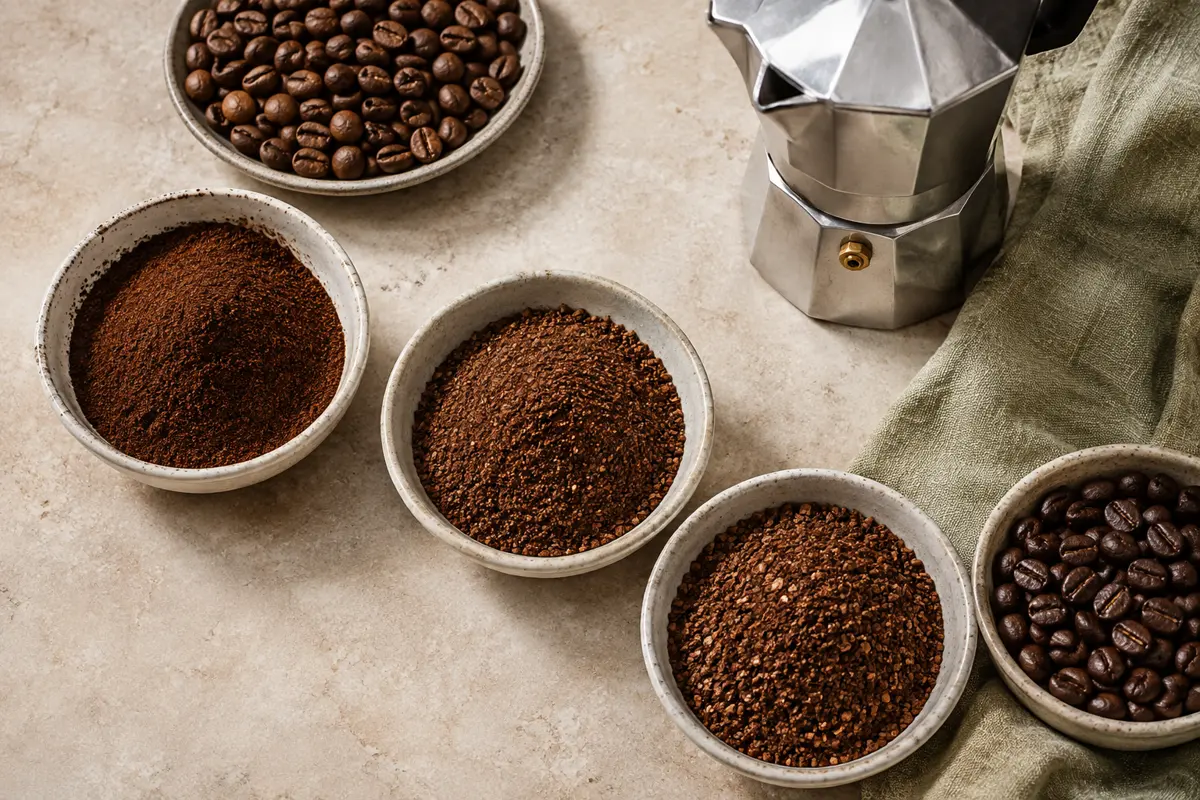
The centered fine-to-medium sample is a visual starting point, not a universal grinder number. Particle consistency matters alongside size because excess dust can slow one part of the bed while larger fragments release flavor too quickly.
Very fine coffee increases resistance and may slow the upward flow until the brew spends too long at high temperature. Very coarse coffee offers little resistance and can produce a fast, hollow cup with aroma but little sweetness.
Bean density changes how a nominal grind behaves. A dense, lightly roasted coffee may need more heat or a slightly finer grind, while a brittle dark roast can produce abundant dust and become resistant sooner.
Water quality remains visible because the drink is concentrated. Strong chlorine carries into the cup, extremely soft water can make acidity seem exposed, and heavily mineralized water can mute flavor while leaving scale inside the lower chamber.
The useful grind permits an even stream before sputtering. The exact setting changes with the grinder, pot size, roast, and bean density, so a numbered setting copied from another kitchen is only a starting clue.
Moka pot coffee rewards a clear expectation: concentrated rather than syrupy, metal-filtered rather than paper-clean, and pressure-brewed without becoming espresso. Once that identity is clear, roast, grind, and serving choices become easier to evaluate on their own terms.
Common questions
Is moka pot coffee espresso?
No. A moka pot uses much lower pressure than an espresso machine and produces concentrated metal-filtered coffee without true espresso crema.
Why does moka pot coffee taste strong?
It uses a relatively high coffee dose in a small water volume and retains oils through a metal filter, creating concentration and body.
Can you add milk or water to moka coffee?
Yes. The brewed coffee remains moka coffee, while hot water, warm milk, or ice changes the serving format and concentration.