How to Make Turkish Coffee: Grind, Sugar, Heat, and Foam
The grind has to be fine enough to settle, the sugar has to go in before the heat, and once the pot is on, stirring is over.

Turkish coffee is the one common method that never separates the grounds from the drink, and that single fact sets every rule that follows.
The grind has to be fine enough to settle, and the sugar has to go in before the heat. Once the pot is on, stirring is over.
What do you need to make Turkish coffee?
Less than you would think.
Apart from the coffee itself, it is all either already in your kitchen or optional, which is worth knowing before you decide that this drink needs a shopping trip.
| Item | Required | Why | Substitute |
|---|---|---|---|
| Cezve | Strongly | Its narrow neck concentrates the foam | A small saucepan, with less foam |
| Fine coffee | Yes | Grounds stay in the cup and must settle | None |
| Small cup | Yes | It measures the water as well as serving it | Any 60 to 90 ml cup |
| Teaspoon | Yes | For the cold stir and the foam | None |
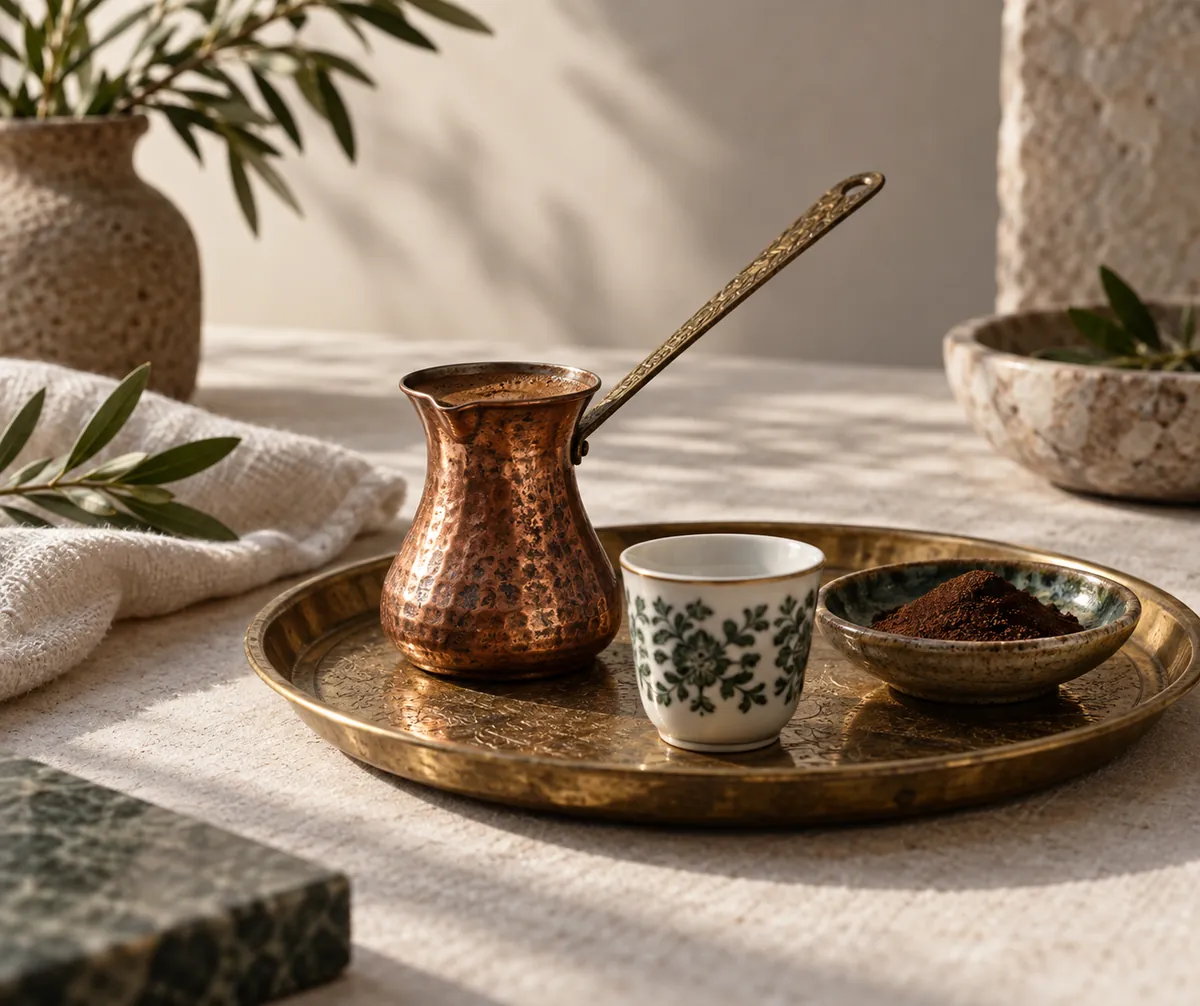
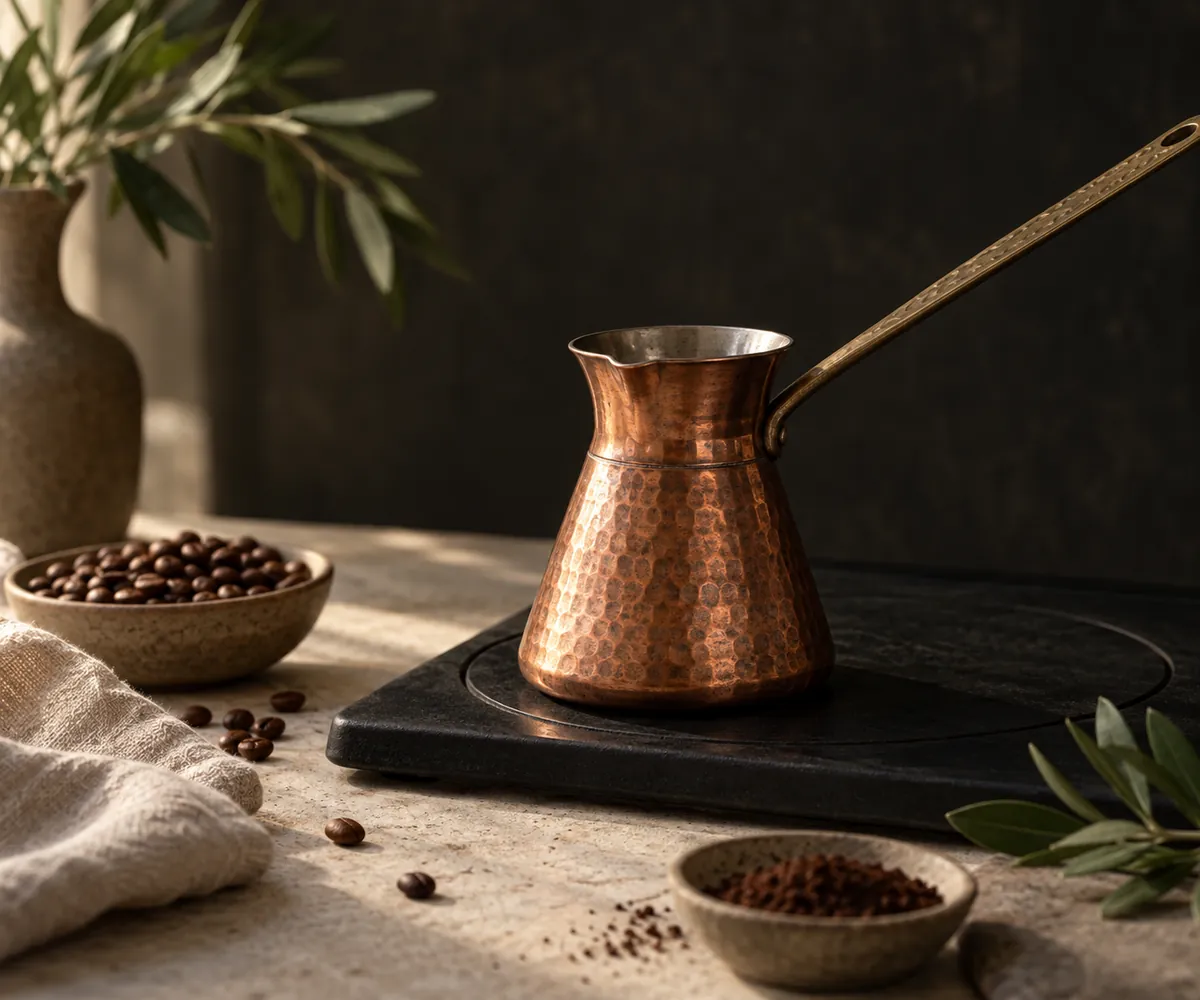
The cezve is the only piece worth arguing about. Its shape narrows toward the top, so the foam that forms across the whole base is pushed up into a smaller opening and arrives deep rather than spread thin.
A saucepan will brew the coffee. It will not concentrate the foam the same way, and the foam is most of what people mean when they say a cup was good.
Measure with the cup you will drink from. There is no jug and no ratio to remember, because the serving cup is the unit the whole method is built in.
Each cup of water takes one heaped teaspoon of coffee, which is a stronger dose than most brewing and normal here.
Size the pot to the batch. A cezve built for four making one cup gives a shallow foam, since the liquid never reaches the narrow part where the concentration happens.
How fine does Turkish coffee need to be ground?
Finer than espresso grind, close to flour.
This is the finest grind in ordinary coffee making, and it is not a preference. The particles stay in the cup, and only a powder settles into a smooth layer instead of a gritty one.
A filter grind is like coarse sand and an espresso grind packs into a lump, so both are still too coarse.
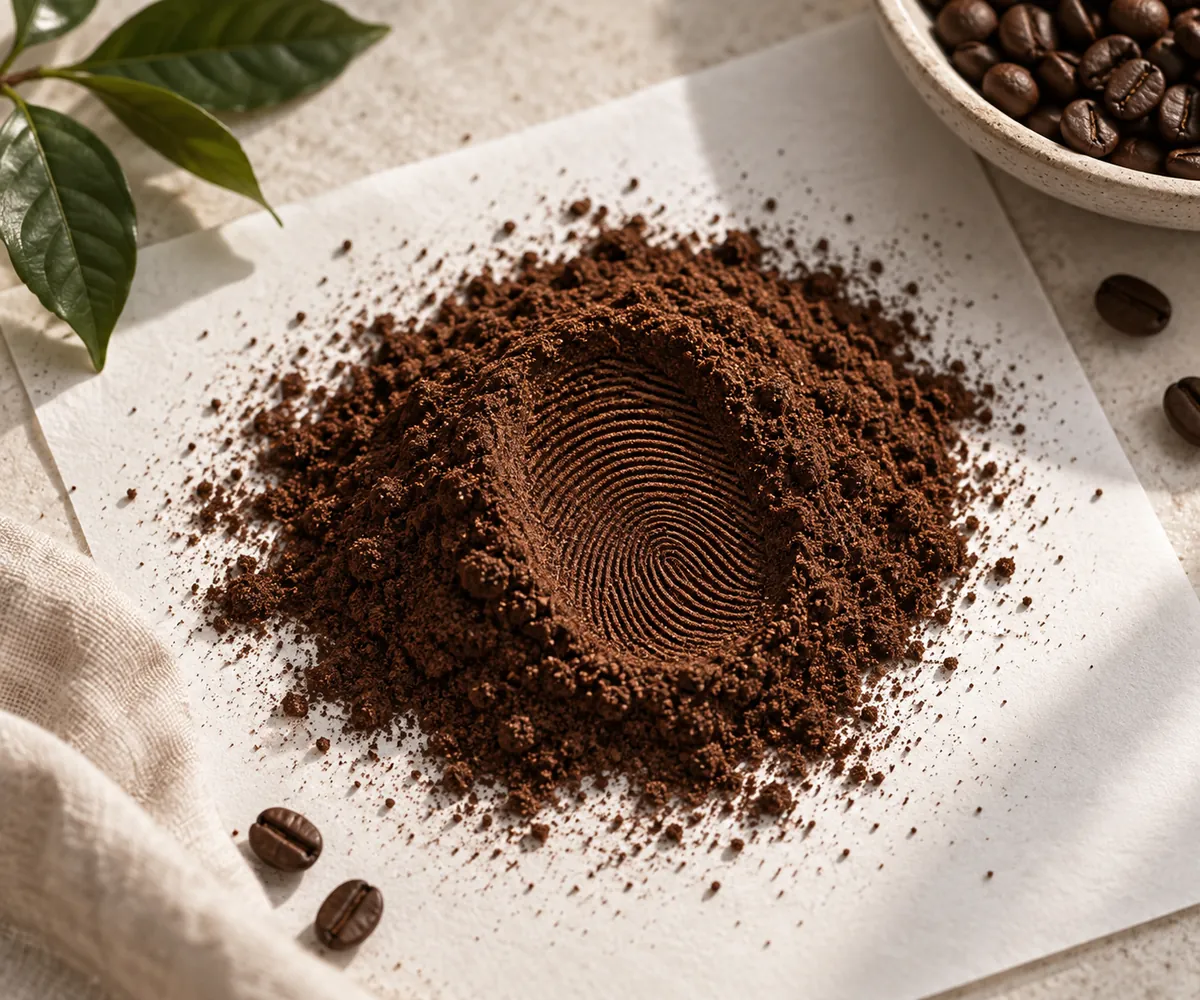
Every other method takes the grounds out, so grind size there is about extraction rate, and here it is also about what your mouth meets at the bottom of the cup.
A grind even slightly coarser gives grit. The particles are heavy enough to swirl up when you tilt the cup, and no amount of settling time fixes it.
Most home grinders cannot reach this at all. Domestic burr grinders bottom out around espresso, and pushing them further just produces heat and unevenness.
So buy it ground. Turkish coffee is sold at exactly this fineness in any shop that stocks it, and this is the one brewing method where pre-ground is the sensible route rather than a compromise.
A blade grinder is the rough fallback. Given a long enough run it approaches the fineness, unevenly, and the result is drinkable rather than good.
How do you make Turkish coffee step by step?
Cold water, one stir, then low heat and no further interference.
Turkish coffee, in order
- MeasureFill each serving cup with cold water and tip it into the cezve.
- AddOne heaped teaspoon of coffee per cup, plus granulated sugar now if you want it.
- StirMix it thoroughly while everything is still cold. This is the only stir.
- HeatLow ring, and stay with the pot from this moment on.
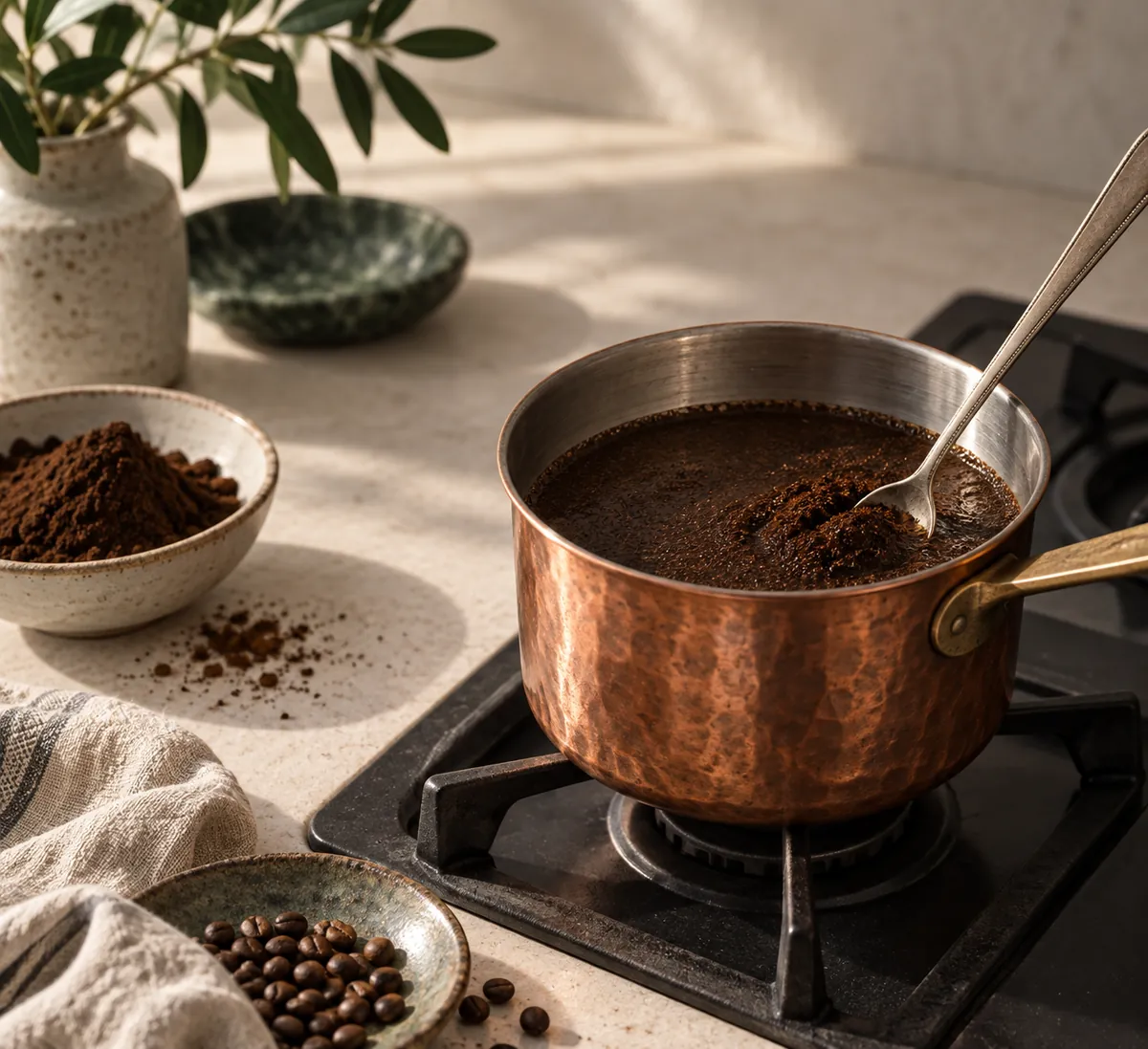
Starting with cold water gives the coffee time to wet through and begin extracting before anything approaches a boil, which is where the body of the drink comes from.
The single stir is the rule that catches everyone: once heat is on, anything you do with a spoon destroys the foam you are trying to build, and there is no way to rebuild it.
The brew takes eight to ten minutes on a low ring. That is slower even than a moka pot, and the slowness is the technique rather than a side effect.
Hotter is genuinely worse. A high flame gets you coffee in three minutes with almost no foam, which is a different and lesser drink.
Do not walk away. The pot sits quiet for most of those eight to ten minutes and then rises in about four seconds, and the hob does not forgive it.
When do you add sugar to Turkish coffee?
Before the heat goes on, at the same moment as the grounds, or not at all.

The sweetness levels have names because the choice has to be made in advance: sade is unsweetened, az şekerli is a little, orta is medium, and şekerli is sweet.
With guests, ask before you start, since a pot brewed sade cannot be sweetened once it is poured.
Sugar changes the foam as well as the taste. A sweetened pot foams a little more readily, which is one reason orta is the safe default for someone brewing this for the first time.
Anything else you want in the cup goes in at the same moment. Crushed cardamom is the usual addition, either a crushed pod or a pinch of ground, and it joins the cold water with everything else.
How do you get foam on Turkish coffee?
The foam is the whole point, and it is built by letting the pot rise and pulling it back two or three times rather than by boiling it once.
The first foam climbs the neck after eight to ten minutes, and that is the moment to lift the pot.
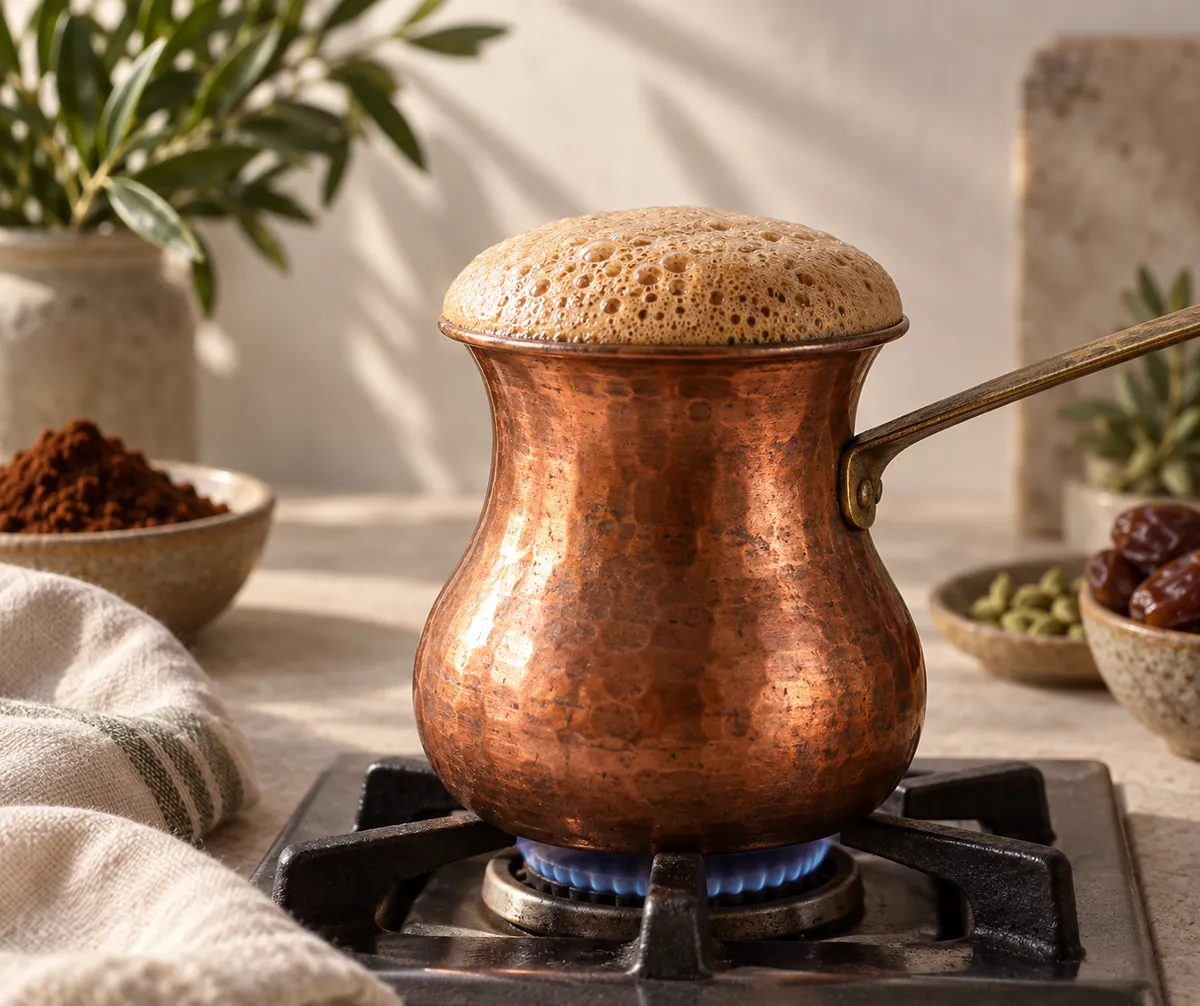
Spooning the first foam into the cups is the step that gets skipped. It matters because the first rise carries the finest foam, so dividing it early gives every cup some rather than one cup all of it.
The second rise arrives much faster than the first. Everything is already hot, so a pot that took nine minutes to climb the first time will do it again in forty seconds.
A rolling boil ends it. Once the surface breaks properly the foam is gone, and no amount of further heating brings it back.
Fresh coffee foams better. The gas that makes the foam comes out of the grounds, and a tin open for two months has very little of it left.
Water hardness matters more than you would expect. Very mineral-rich water can suppress the foam, so a thin foam is not always down to your technique.
How is Turkish coffee served and drunk?
Pour in stages, round the cups and back again.
Filling one cup at a time gives the first person all the foam and the last person none, so the pour moves across the cups in several passes.
Serve a glass of plain water alongside. Leave the last centimetre in the cup, because the bottom is grounds and is not meant to be drunk.
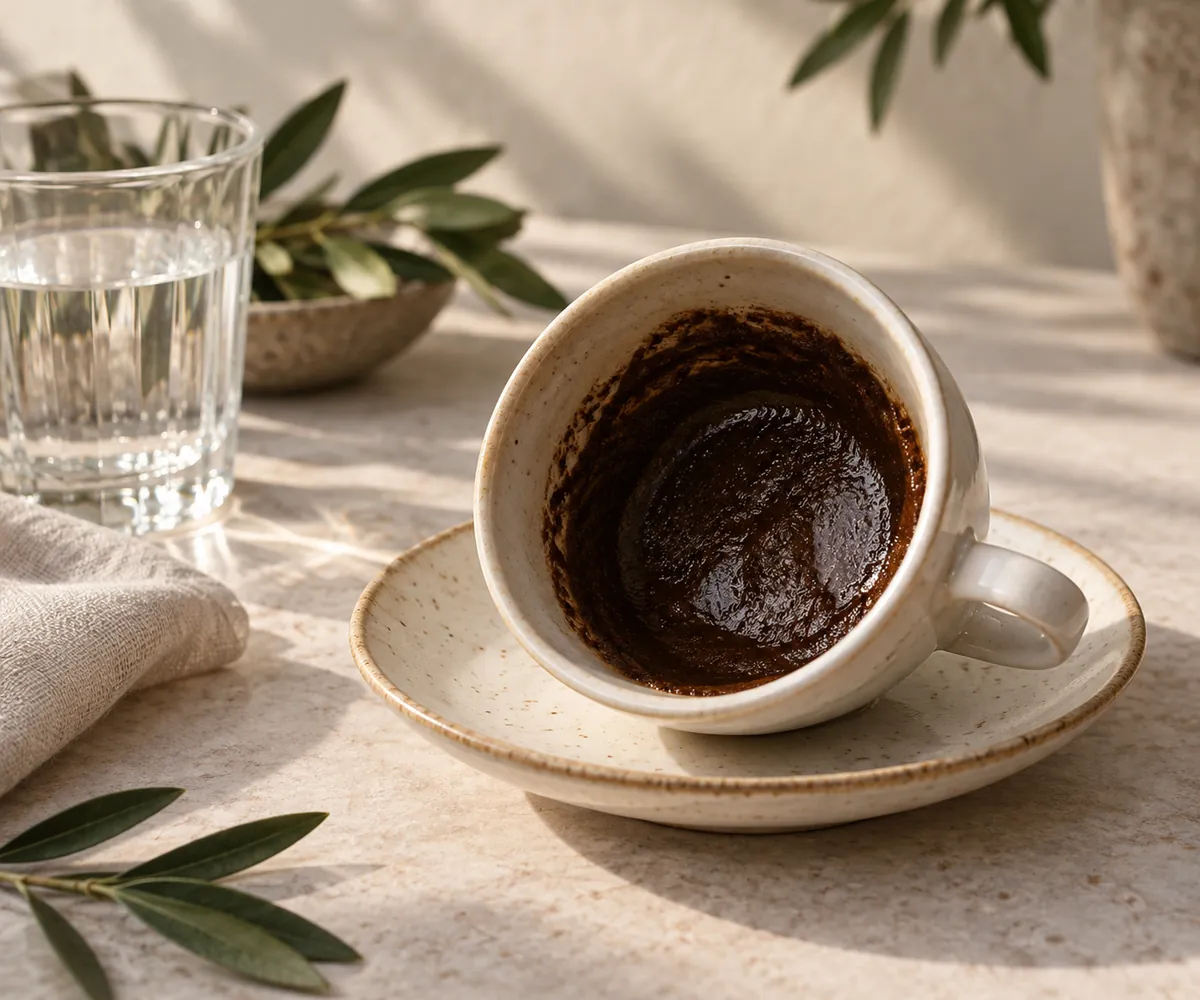
The water goes before the coffee rather than after, clearing the mouth so that the first sip lands cleanly on a drink more concentrated than an espresso shot.
Drink it slowly and do not stir. The grounds spend the first minute or two settling, and a cup that has stood is noticeably smoother than one drunk immediately.
Stop when the texture changes: near the bottom you will reach a point where the liquid thickens, and that is the sediment rather than the drink.
The traditional cup is narrow because a wide cup spreads the foam thin, and it breaks up within a minute.
Why did my Turkish coffee boil over?
The ring was too high, almost certainly.
Fill level is the second cause and the easier fix. The foam needs somewhere to climb, and a pot filled into the neck has nowhere to put it except your hob.
Stirring after heating is the commonest cause of no foam at all. It is such a natural reflex that people do it without noticing, and the drink cannot recover.
A coarse grind causes two faults at once: less foam, because there is less surface releasing gas, and grit, because the particles do not settle.
Species is worth a thought if the foam is stubbornly thin. A robusta component in the blend generally foams more heavily than pure arabica beans, which is one reason traditional Turkish blends are not always what a speciality shop would sell you.
Two causes lie outside technique altogether. Stale coffee gives a weak foam whatever you do, and an induction hob heats a rounded cezve base unevenly.
That last one produces a lopsided rise. The foam climbs one side of the neck and spills before the other side has caught up, which looks like carelessness and is not.
Turkish coffee method
- Makes
- 2 cups, about 60 ml each
- Ratio
- One heaped teaspoon of coffee per cup of water
- Water temp
- Low heat, flame no wider than the base
- Grind
- Finer than espresso, close to flour
- Total time
- 12 min
What you need
- 1 heaped teaspoon of powder-fine coffee per cup
- Cold water, measured in the serving cups
- Sugar to taste, added cold
- A crushed cardamom pod, optional
Equipment
- Cezve or small saucepan
- Small cups, used to measure
- Teaspoon
Method
- MeasureFill each serving cup with cold water and tip it into the cezve.
- AddOne heaped teaspoon of coffee per cup, plus sugar now if you want it.
- StirMix thoroughly while everything is still cold. This is the only stir.
- HeatLow ring, flame inside the footprint of the base, and stay with the pot.
- RiseAt the first foam, lift the pot and spoon foam into the cups, then return it.
- ServeAfter two or three rises, pour in stages so every cup gets foam.
Common questions
Can you make Turkish coffee without a cezve?
Yes, in a small saucepan. You get less foam, because the narrow neck of a cezve is what concentrates it.
When do you add sugar to Turkish coffee?
At the cold stage, before heating. Stirring sugar into the brewed cup collapses the foam, so sweetness is decided in advance.
Why did my Turkish coffee boil over?
The ring was too high, or the pot was filled into the neck. The foam needs about a third of the pot standing empty above the liquid.
Do you drink the grounds in Turkish coffee?
No. The last centimetre of the cup is sediment and is left behind.