How to Make Darjeeling Tea for Each Flush
Darjeeling does not have one useful black-tea setting. A green-edged first flush needs gentler water than a darker second or autumn flush, and the label and leaf appearance should set the first trial.
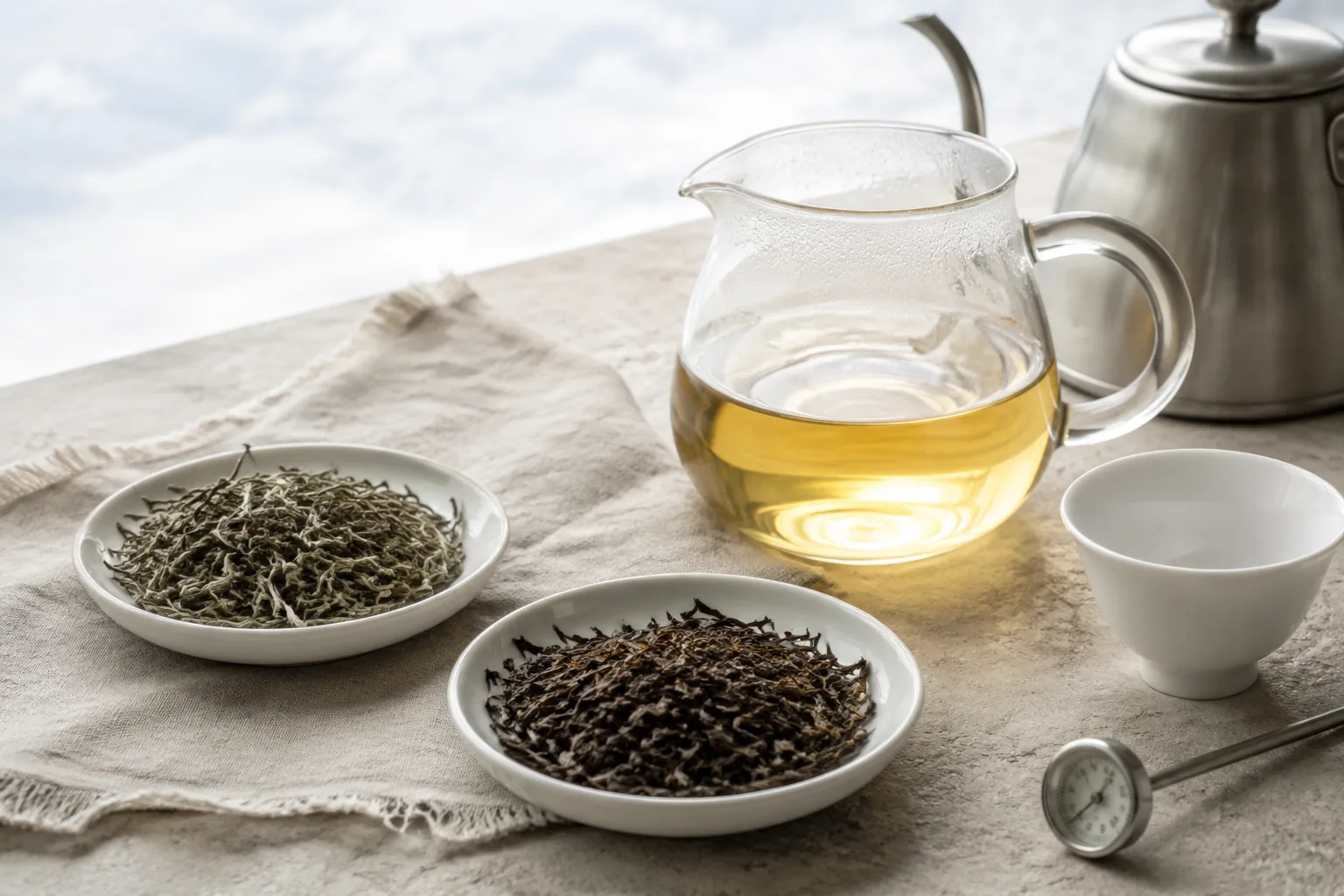
To make Darjeeling tea, use 2 to 2.5 g of leaf per 200 ml of water and let the flush determine the heat. Start first flush around 80 to 85 C for two to three minutes, second flush around 85 to 95 C for three to four minutes, and autumn flush near the warmer end for three to four minutes.
Those ranges are trials, not promises. Darjeeling lots vary in oxidation, leaf grade, and season, so the producer's instruction and the dry leaf should refine the setting before habit does.
Darjeeling starting points
- First flush
- 80 to 85 C, taste from 2 minutes
- Second flush
- 85 to 95 C, taste from 3 minutes
- Autumn flush
- 90 to 95 C, taste from 3 minutes
- Leaf
- 2 to 2.5 g per 200 ml
- Vessel
- Roomy basket or small porcelain pot
- Serving
- Plain first; milk only for a robust later flush
Read the flush and the leaf before heating water
The Darjeeling profile explains the protected place name and harvests. For brewing, the most useful clues are whether the packet says first, second, monsoon, or autumn flush and whether the leaf looks green-edged, coppery, whole, or finely broken.
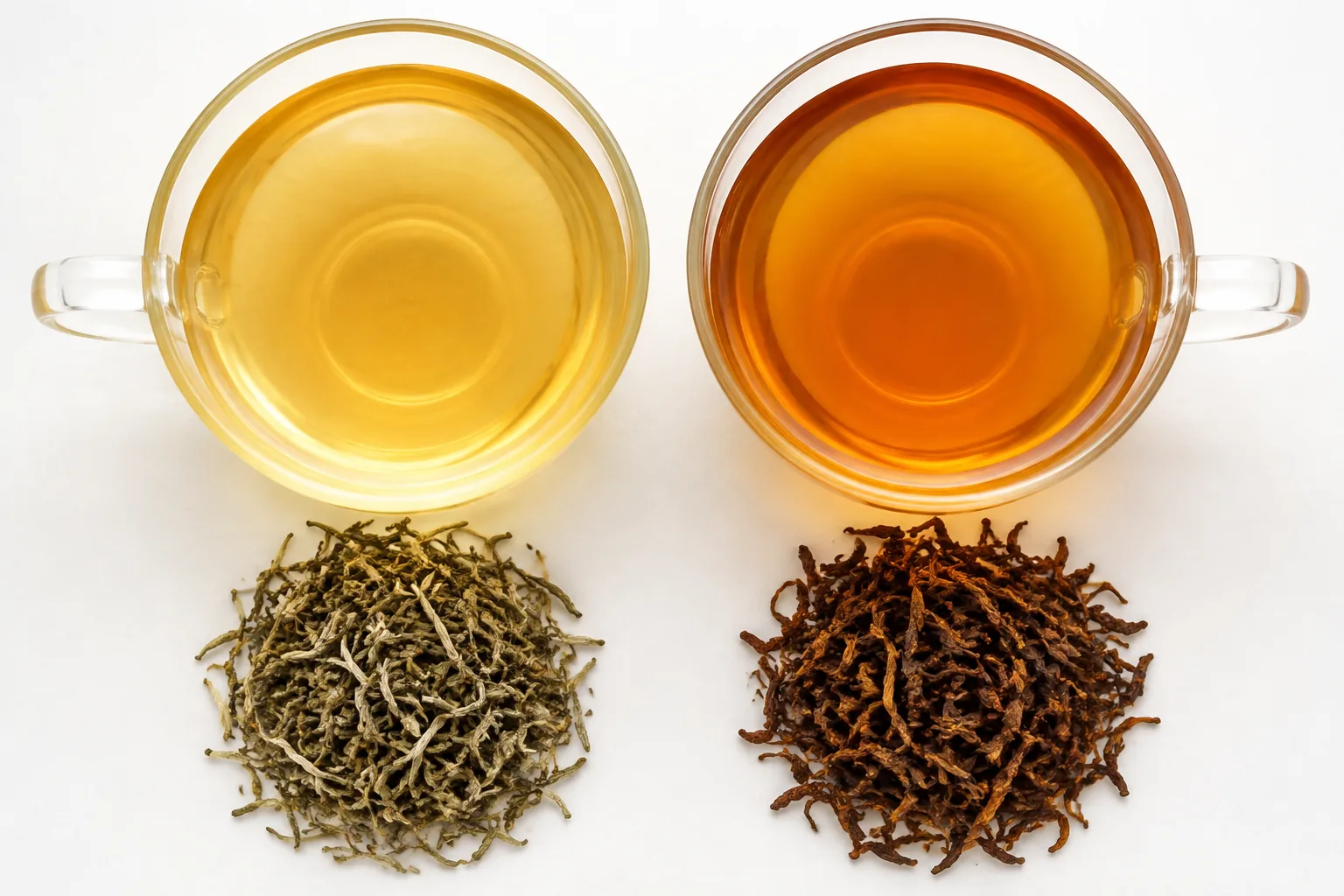
First-flush Darjeeling is often lightly oxidized enough to behave more like a delicate oolong than a conventional breakfast tea. Second flush is generally darker and fuller, with the muscatel character for which the region is known, while autumn tea can carry more body and tolerate hotter water.
The harvest changes the useful brewing window. Treating every packet with a hard boil and five minutes erases the distinction you paid to taste.
Broken leaf extracts faster than long wiry leaf even within one flush. Begin tasting earlier when the packet contains many small pieces, dust, or a tea-bag cut.
Use a measured, aroma-friendly setup
A white porcelain or clear glass vessel makes liquor color easy to read without contributing flavor. A roomy tea infuser allows twisted leaves to open and can be lifted completely at the end of the steep.
First-flush trial cup
- Leaf
- 2.25 g
- Water
- 200 ml
- Temperature
- 82 to 85 C
- First taste
- 2 minutes
- Likely finish
- 2.5 to 3 minutes
- Second infusion
- Same heat or slightly warmer, plus 30 to 60 seconds
Use fresh low-odor water.
Mineral-heavy brewing water can flatten floral aroma and make a light cup look dull, while very soft water may need a slightly larger dose to develop structure.
Pre-warm a cold heavy pot, but do not leave rinse water behind.
The point is to reduce heat loss, not to turn a measured 200 ml infusion into an unknown volume.
Cool boiling water deliberately for first flush
A variable-temperature kettle is convenient but not required. Bring fresh water to a boil, open the lid, and let it cool briefly; the exact waiting time depends on kettle material, room temperature, and volume, so a thermometer is the honest way to learn your setup.
Darjeeling tea method
- InspectIdentify flush and particle size
- MeasureUse 2 to 2.5 g leaf for 200 ml water
- HeatChoose a gentler first-flush or hotter later-flush range
- PourWet all leaves and cover the vessel
- TasteBegin at the lower end of the time range
- StrainRemove the leaf completely while aroma is still clear
- CoolLet the cup rest briefly before judging flavor
Water loses heat as it moves from kettle to pot, especially when the vessel is cold. Record the kettle setting rather than pretending it is the exact leaf temperature, then reproduce what made the best cup in your own equipment.
Lower heat protects first-flush lift; it does not excuse an endless steep. Time still extracts tannin, and a lukewarm five-minute cup can be both thin and drying.
Give second and autumn flush more heat, not automatic milk
Second-flush leaf often needs 85 to 95 C to open its deeper fruit, wood, and muscatel notes. Start near 90 C for three minutes, taste, and move upward only when the result remains closed or watery.
Second-flush trial cup
- Leaf
- 2.5 g
- Water
- 200 ml
- Temperature
- About 90 C
- First taste
- 3 minutes
- Likely finish
- 3 to 4 minutes
- Serving
- Plain while assessing the tea
- Milk
- Optional only when body remains after dilution
Autumn flush can be darker, rounder, and more tolerant of milk, but the packet still matters. A fine broken autumn tea may extract faster than a whole second-flush leaf even when its seasonal label suggests greater robustness.
Taste plain first.
A small splash of milk can suit a strong later flush, while it often masks the floral top notes and pale structure of first flush.
Stop when brightness becomes grip
Darjeeling's light body leads some brewers to chase the color of Assam by extending the steep. That extracts more drying polyphenols without creating the malt or density of a different tea variety.
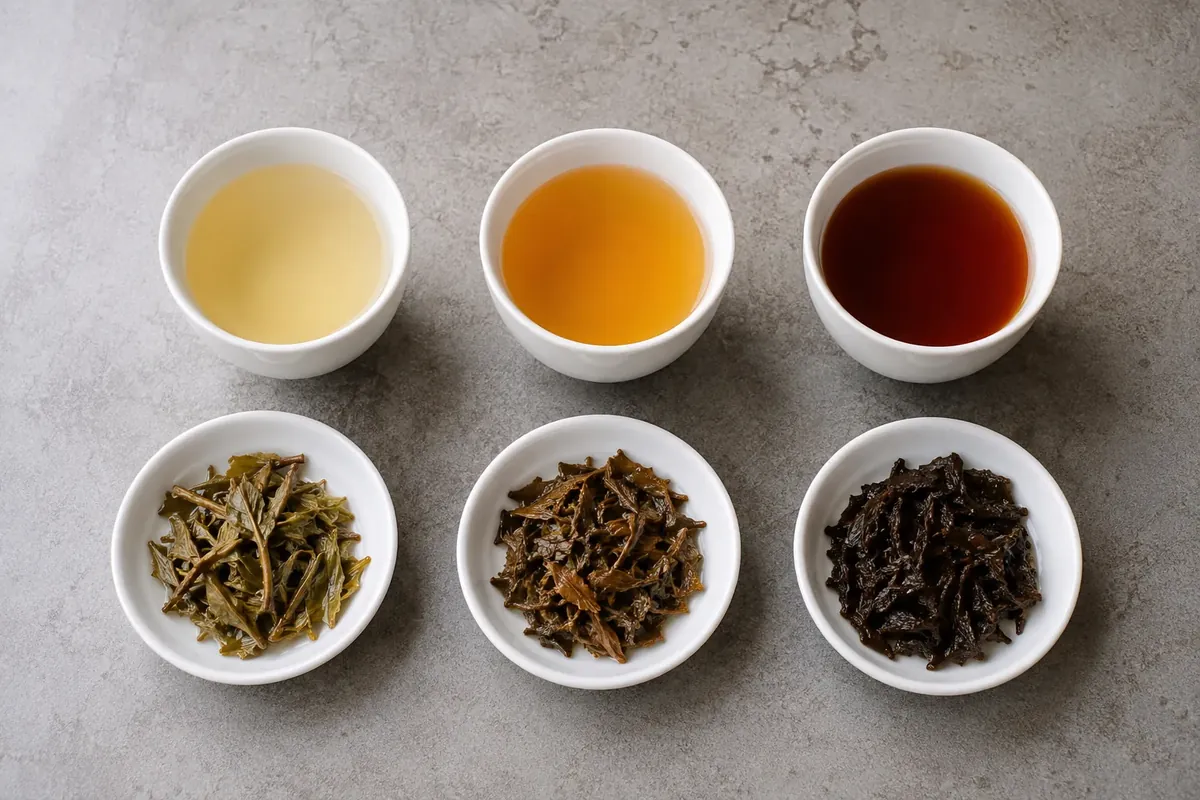
A balanced first flush may be pale gold yet carry a long floral aroma. A balanced second flush may be amber rather than dark brown, with fruit and muscatel notes followed by a clean, lively grip.
| Result | Likely cause | Next trial |
|---|---|---|
| Watery and fragrant | Too little leaf | Add 0.25 to 0.5 g |
| Watery and closed | Water too cool | Raise temperature slightly |
| Dark and drying | Too much time | Strain earlier |
| Sharp first flush | Water too hot or leaf too broken | Lower heat and taste sooner |
| Flat aroma | Stale leaf or mineral-heavy water | Check storage and test filtered water |
| Milk erases the tea | Flush is too delicate | Serve plain or use much less milk |
Astringency should give shape, not occupy the whole finish. When the gums and tongue stay rough after the aroma has gone, time or heat has passed the useful point.
The Darjeeling problems guide covers storage, stale aroma, and leaf quality when repeated brewing adjustments do not help.
Re-steep whole leaf while it is still fresh
Good whole-leaf Darjeeling can give a second infusion, especially a delicate first flush. Brew it promptly with the same temperature or a slightly warmer one and add 30 to 60 seconds, expecting a lighter but sometimes fruitier cup.
A third infusion is worth trying when the second remains aromatic. Small broken leaf and tea bags usually exhaust sooner because their exposed surfaces gave up soluble material quickly on the first pass.
Do not store wet leaf overnight at room temperature.
Drain it between same-session infusions, then discard it and rinse the vessel when the session ends.
Adapt the method to whole leaf, broken leaf, or a bag
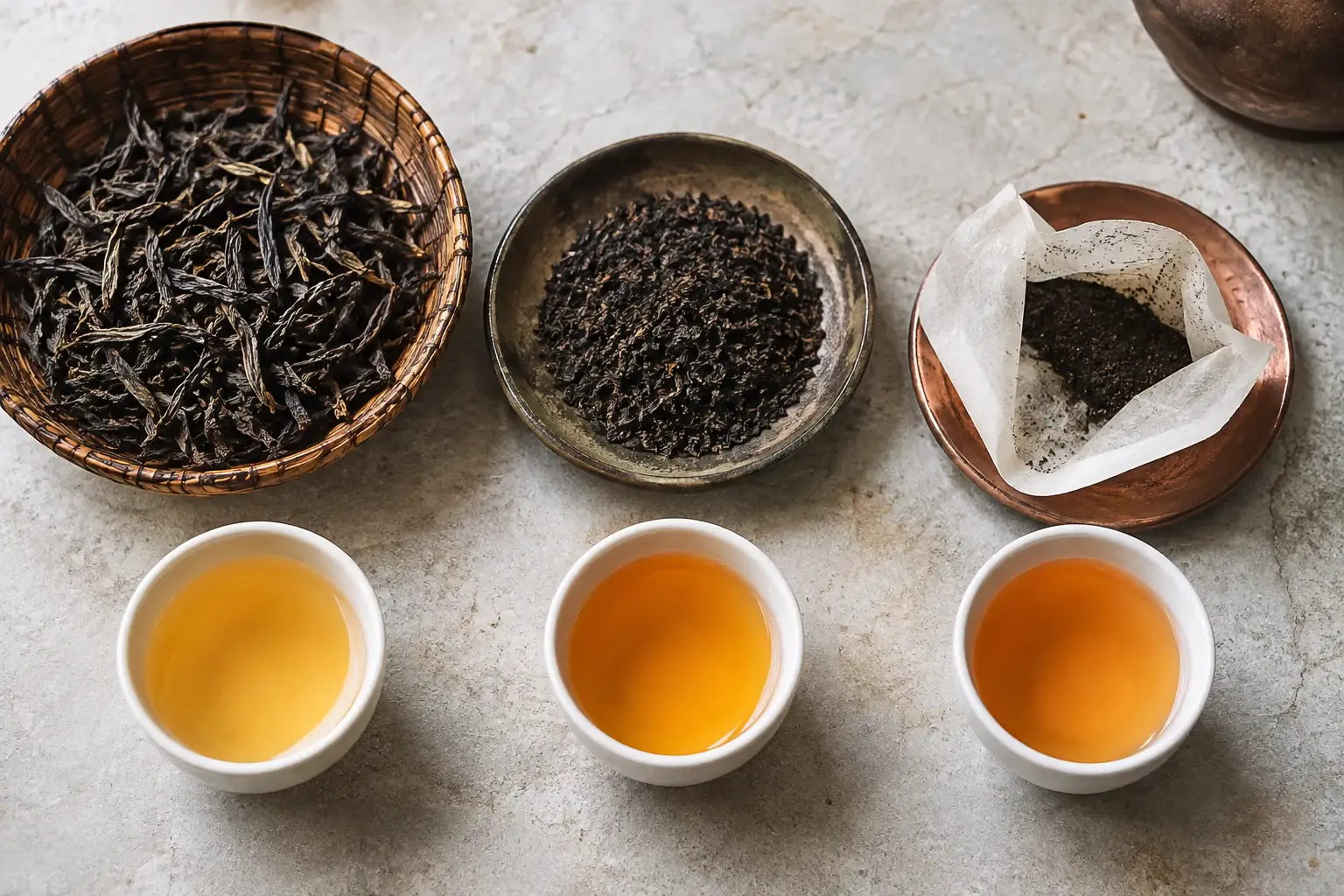
Whole wiry leaf | Give it room to open and judge aroma before color
Broken leaf | Keep the flush-appropriate heat but taste 30 to 60 seconds earlier
Fine bag cut | Treat it as a quick single infusion and remove it promptly
Pyramid sachet | Inspect the actual contents instead of assuming the bag means whole leaf
Whole wiry Darjeeling takes time to unfurl and rewards a basket with room around it. Its liquor may remain light while aroma and structure build, so inspect the wet leaf and taste instead of waiting for a dark breakfast-tea color.
Broken leaf exposes more edges and moves through the same extraction stages faster. Keep the temperature appropriate to the flush but begin tasting 30 to 60 seconds earlier than you would for an intact leaf.
Tea bags commonly contain a smaller cut designed for one quick infusion. Use the producer's temperature as the first trial, remove the bag promptly, and do not squeeze it against the cup when the finish already feels drying.
A large mesh pyramid does not guarantee whole leaf. Hold it to the light and judge the contents; recognizable twisted pieces need expansion room, while fine fragments need shorter contact.
The leaf grade predicts timing more reliably than the packaging does. Loose leaf can be fine and fast, and a spacious sachet can contain intact leaf that behaves slowly.
Separate western and high-leaf brewing experiments
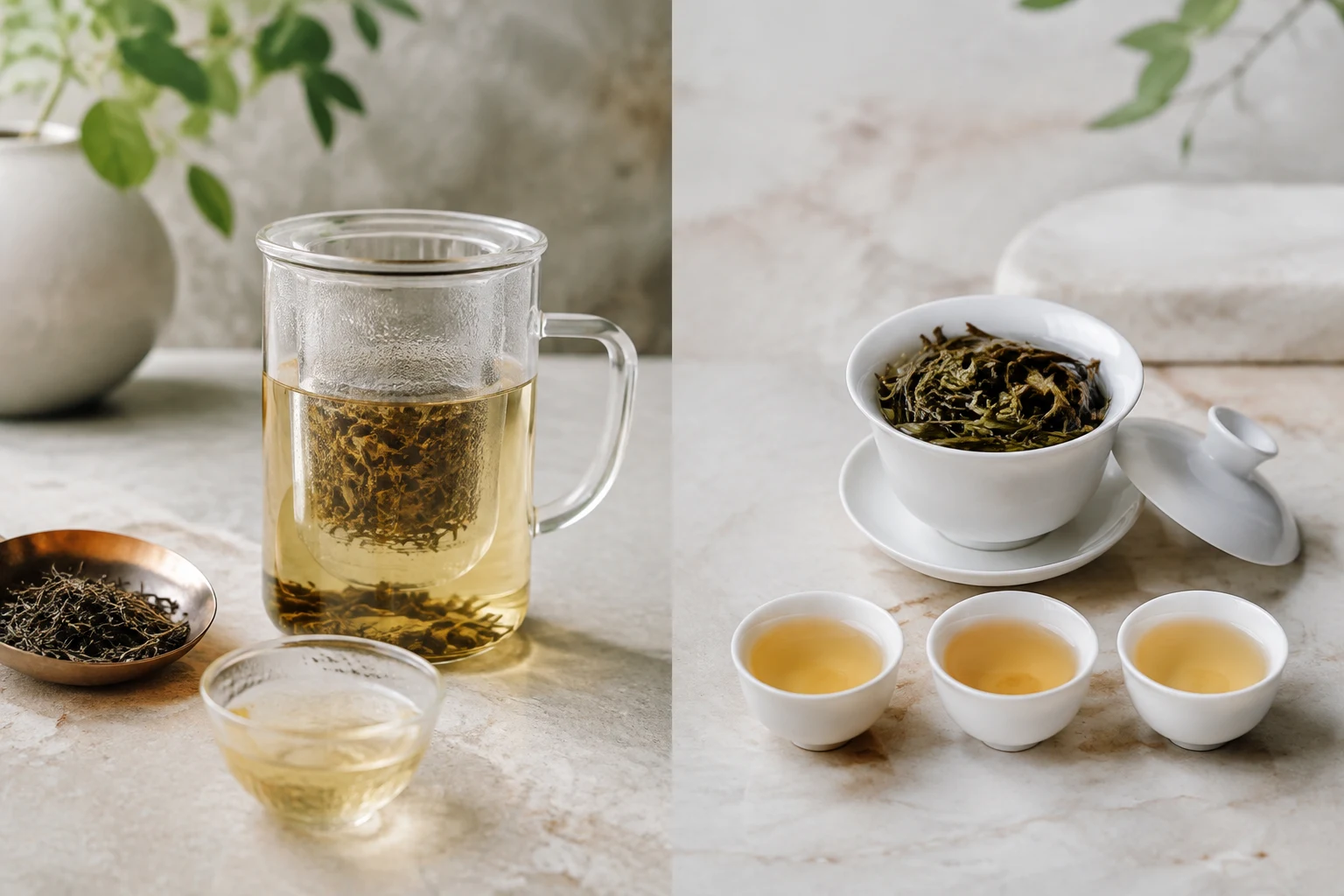
| Choice | Western basket | Gaiwan or small pot |
|---|---|---|
| Leaf concentration | About 2 to 2.5 g per 200 ml | About 4 to 5 g per 100 ml as a cautious trial |
| Contact time | Multi-minute infusion | Short repeated pours |
| Best for | One larger, consistent cup | Following how the leaf changes across steeps |
| Critical control | Lift the basket completely | Decant every infusion completely |
The method above uses a western-style ratio of roughly 2 to 2.5 g per 200 ml and a multi-minute infusion. A gaiwan or small pot with much more leaf uses short repeated infusions, so its seconds cannot be copied into a mug recipe.
For a high-leaf trial, start cautiously with about 4 to 5 g per 100 ml and brief pours, then lengthen later infusions as the leaf opens. This approach reveals change across steeps but uses tea quickly and requires complete decanting each time.
Do not rinse a delicate first flush automatically.
A rinse discards aroma with the water, and clean well-stored Darjeeling does not need washing as a routine safety step.
Keep the two methods in separate notes. Comparing a three-minute 200 ml cup with a 20-second 100 ml infusion without accounting for leaf concentration gives a false impression that time alone created the difference.
Ratio and contact time form one method together. Choose the method that suits the amount of tea, attention, and number of infusions you want rather than treating one as inherently superior.
Compare cups without wasting an expensive leaf
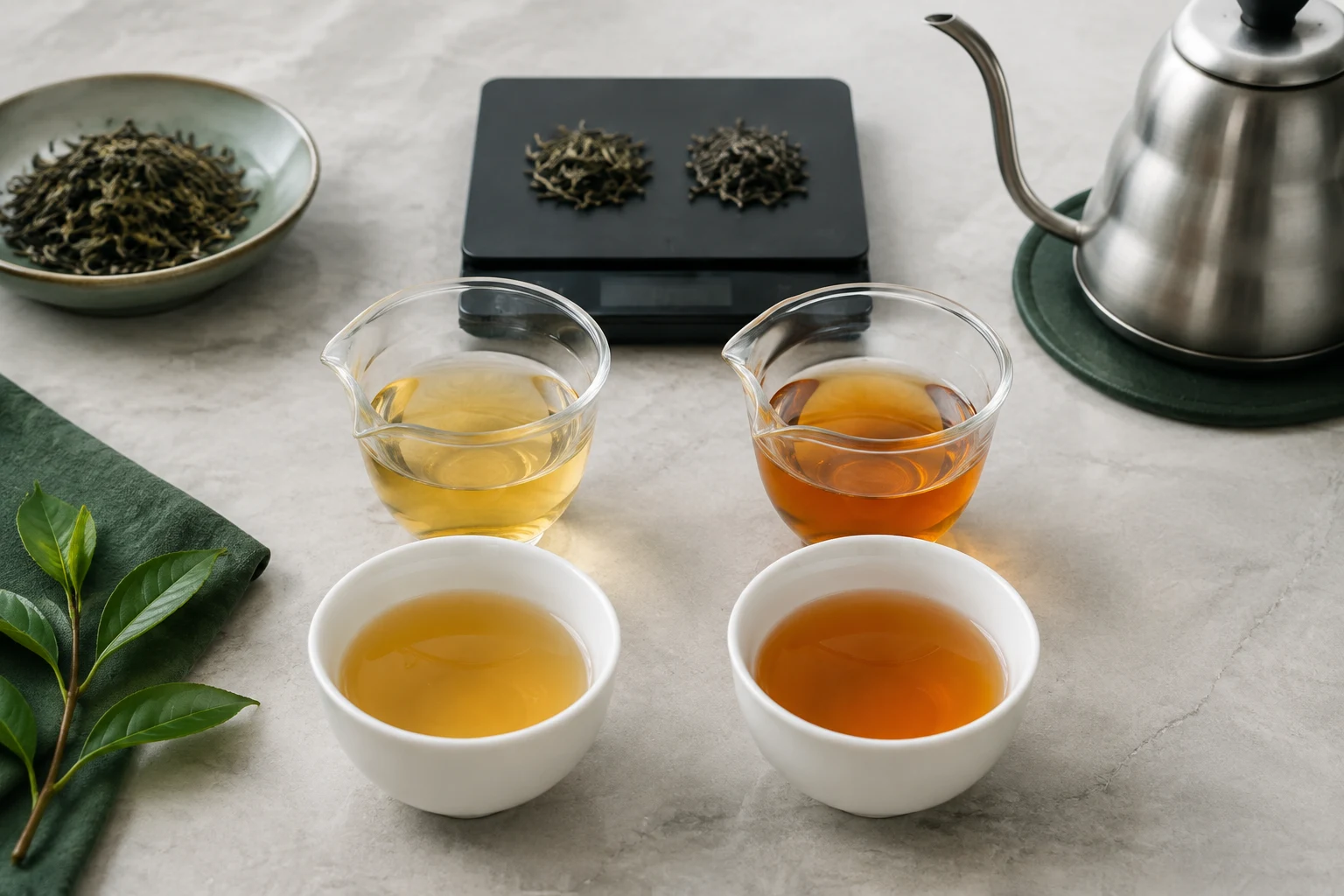
Run one useful side-by-side trial
- DivideSplit one batch of heated water between identical infusers
- HoldKeep leaf mass, cup size, and tasting temperature the same
- ChangeAdjust only temperature or time, not both
- CompareSmell and taste both cups as they cool together
- RecordWrite the preferred setting and date on the packet
When a new Darjeeling disappoints, divide one larger measured batch of hot water between two small infusers. Hold leaf mass constant and change only temperature or time, which turns one brewing session into a direct comparison.
Use identical cups and taste them as they cool. A hotter infusion may smell stronger at first simply because it releases aroma faster, while the cooler cup can show a longer floral finish once both reach the same drinking temperature.
A quarter gram of leaf or 5 C is a meaningful adjustment at this scale. Small controlled trials teach more than one large heroic pot, especially when the packet contains only 50 or 100 g.
Write the winning setting on the packet with the date.
Darjeeling changes gradually after opening, so a cup that needs slightly more leaf weeks later can reflect aroma loss rather than inconsistent technique.
Know when brewing cannot repair the leaf
No water setting can create muscatel character in a lot that never developed it, restore volatile aroma lost in an open bag, or turn monsoon crop into first flush. Brewing reveals the material and balances extraction; it does not upgrade origin or harvest.
Check that an expensive packet identifies estate or garden, flush or harvest period, and a credible seller. The Darjeeling name is a geographical indication, and vague packaging gives the brewer less evidence for choosing a method.
Very old leaf may still produce color because larger oxidation products remain while delicate aroma has faded. Extending time makes that cup darker and drier, which can look like improvement before the first sip proves otherwise.
Stop adjusting when every trial lacks aroma in the dry leaf and the cup. At that point, replace or repurpose the tea rather than pushing temperature and time until bitterness hides the original defect.
Decide on milk, sugar, or lemon after tasting plain
Milk | Softens grip but can erase first-flush floral aroma
Sugar | Reduces perceived bitterness while blurring subtle flush differences
Lemon | Brightens the cup and moves its flavor clearly toward citrus
Plain | Gives the cleanest evidence for the next brewing adjustment
First-flush Darjeeling is usually too light for milk because dilution removes its floral lift before milk has much tannin to soften. A fuller second or autumn flush may accept a teaspoon or two without losing its fruit and wood notes.
Sugar reduces perceived bitterness but can also blur the narrow differences between flushes. Add a small amount only after the cup has cooled enough to judge, then note whether the tea needed sweetness or whether the extraction needed correction.
Lemon brightens aroma and color but shifts the drink toward citrus. Never combine it with milk, since the added acid can make milk proteins gather into visible curds.
Serve additions beside the cup when sharing an unfamiliar lot. Each person can taste the same plain infusion before changing it, and the brewer learns whether the base itself was balanced.
The first plain sip is part of setting the method. It reveals what the leaf contributed before milk, sugar, or citrus begins doing its own work.
Protect what remains in the packet
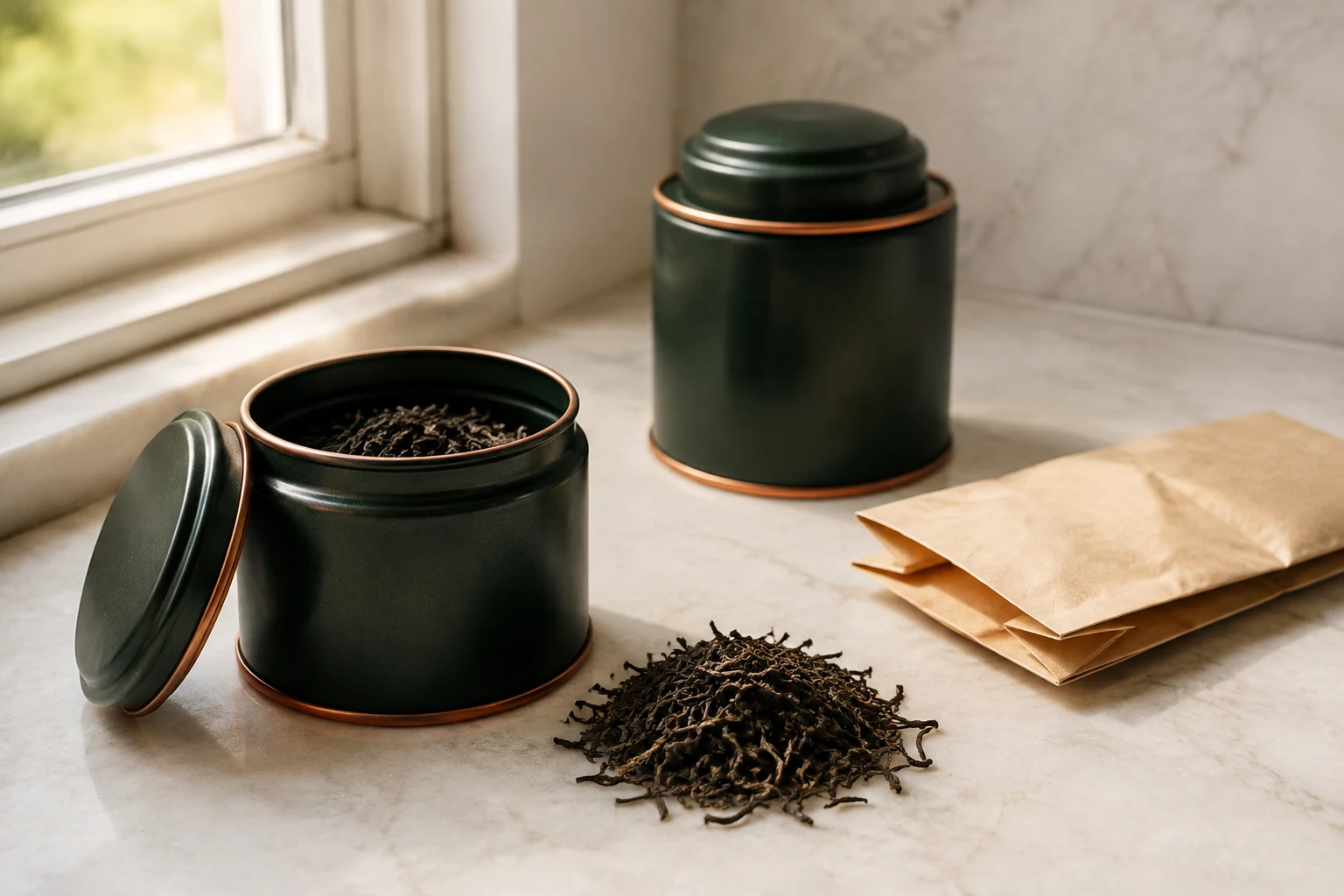
- - Keep a small working quantity in an opaque airtight tin
- - Seal the reserve away from heat, light, steam, and strong odors
- - Use a dry spoon so moisture never enters the container
- - Date the opening and compare aroma before compensating with longer steeps
Darjeeling's value often sits in volatile aroma, which is also the first quality lost to air, heat, light, moisture, and nearby odors. Keep the leaf in a small opaque airtight container and avoid opening a large reserve for every cup.
The full storage method belongs to storing loose-leaf tea. For an expensive lot, dividing it into a working tin and a sealed reserve reduces the number of times most of the leaf meets fresh humid air.
Let the finished tea cool briefly before deciding on the next adjustment. Darjeeling reveals its clearest fruit and floral detail below scalding temperature, when the cup is still warm but easy to sip.
Darjeeling tea method
- Makes
- 1 cup, about 200 ml
- Water temp
- 80 to 85 C first flush; 85 to 95 C second or autumn flush
- Total time
- 7 min
What you need
- 2 to 2.5 g Darjeeling tea
- 200 ml fresh water
- A small amount of milk only for a robust later flush, optional
Equipment
- Kettle
- Thermometer or variable-temperature kettle
- Scale
- Roomy infuser or small pot
- Timer
Method
- InspectIdentify flush and leaf size.
- MeasureDose leaf and water.
- HeatChoose the range for the flush.
- SteepCover and begin tasting early.
- StrainRemove every leaf while the aroma remains bright.
- JudgeLet the cup cool briefly before adjusting the next infusion.
Common questions
What temperature should you use for Darjeeling tea?
Begin first flush around 80 to 85 C and second or autumn flush around 85 to 95 C. The producer's instruction, oxidation level, and particle size should refine those starting ranges.
How long should Darjeeling steep?
Taste first flush from two minutes and later flushes from three. Most whole-leaf cups finish within two to four minutes, while broken leaf may need less time.
Can you add milk to Darjeeling tea?
A robust second or autumn flush may take a small amount, but milk commonly masks the floral lift and light structure of first flush. Taste the tea plain before deciding.