How to Make Oolong Tea for the Leaf You Actually Have
Oolong runs from almost green to almost black, so the shape and colour of the dry leaf decide the water more than the name on the packet does.
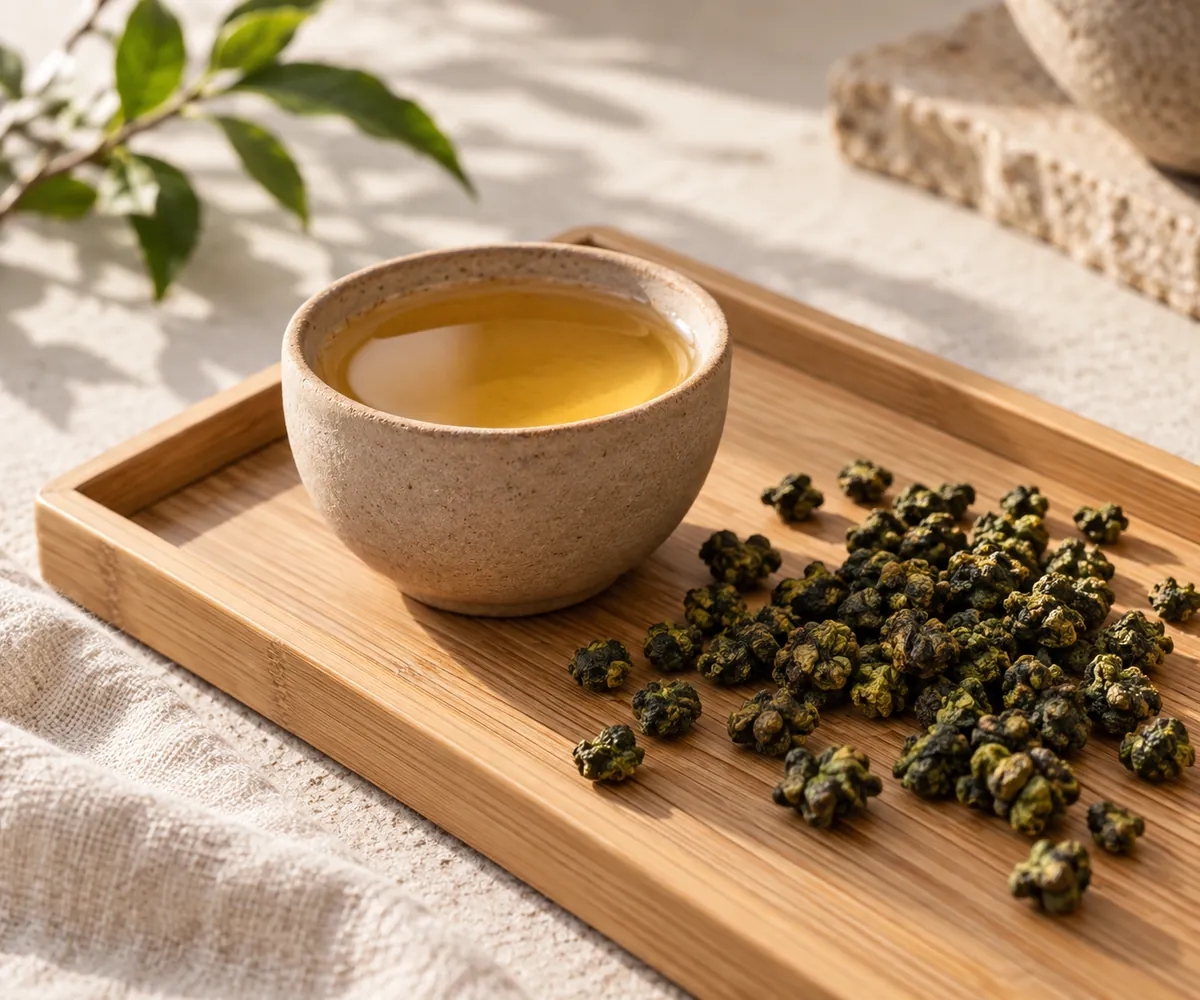
Oolong tea is a band of teas running from something almost green to something almost black, and the leaf in front of you decides the water.
Brew the floral end like a black tea and you get tannin. Brew the roasted end at green tea temperature and you get almost nothing at all.
Which oolong tea are you actually brewing?
Look at the shape, then the colour.
Rolled pellets usually mean the green end and twisted strips the roasted end, and that glance settles more than the name on the packet, with colour as the check.
| Leaf | Looks like | Oxidation | Tastes | Water |
|---|---|---|---|---|
| Green oolong | Tight jade pellets | 10 to 30% | Floral, creamy | About 85 C |
| Dark oolong | Long twisted strips | 50 to 80% | Roasted, woody | Up to 95 C |
| Teabag oolong | Broken fragments | Middling | Plain, brisk | 90 C, forgiving |
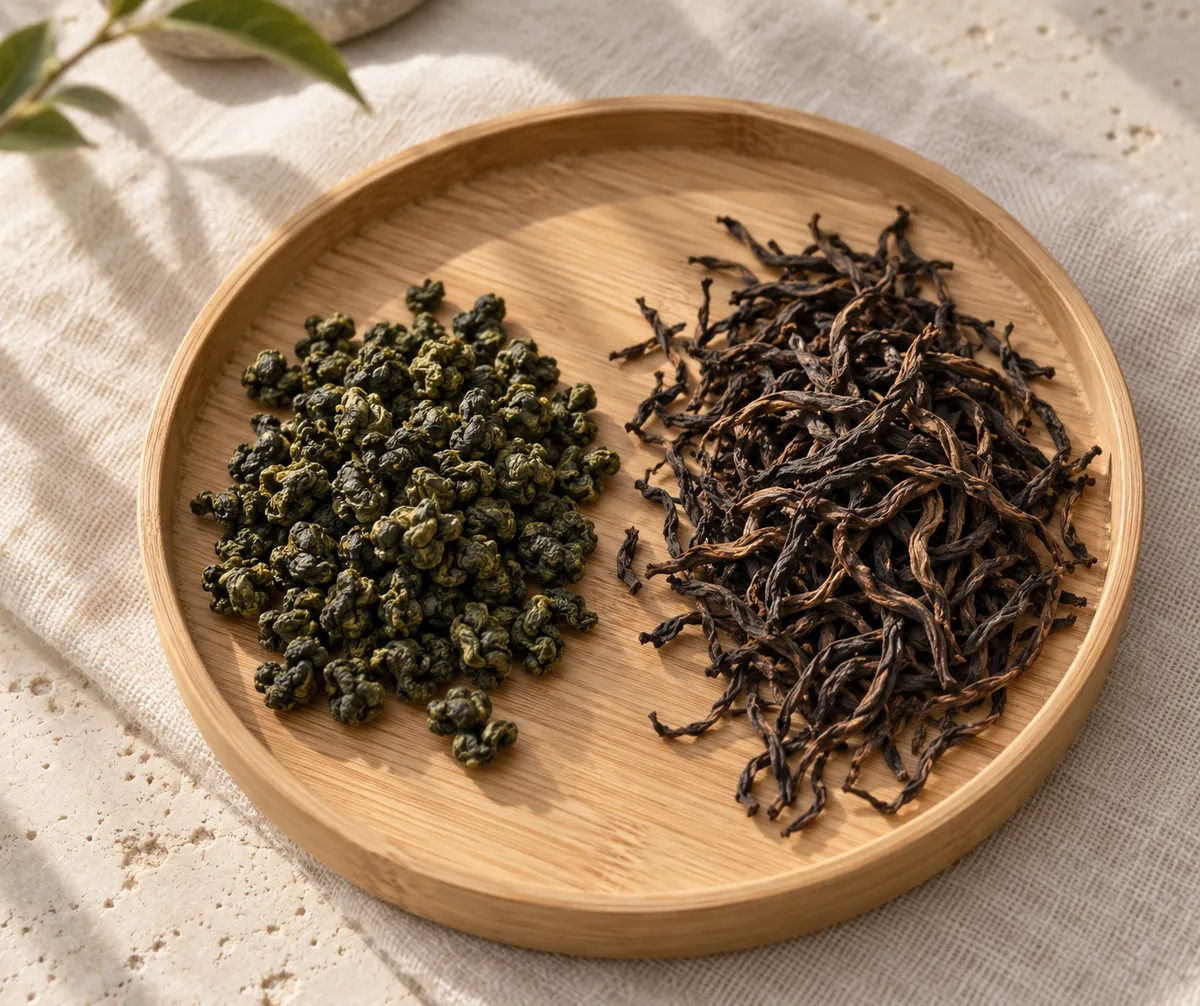
The band is genuinely wide. Oolong spans oxidation from about ten percent, which is barely past an unoxidised leaf, to eighty, which is nearly black tea.
Rolled leaf is compressed hard during processing. It looks like almost nothing in the pot and then swells to fill it, the way compressed pu-erh does, which catches out everyone the first time.
Strip leaf has already been opened out. It wets faster and gives its flavour sooner, so you need less encouragement at the start of a brew.
After shape, colour is the second clue: a pellet that is jade green is lightly oxidised, and one that is dull brown has been roasted after rolling.
Shape misleads with roasted pellets: a roasted rolled oolong looks like the green end and drinks like the dark one, so trust the colour when the two disagree.
What temperature and how much leaf does oolong tea need?
Around 85 C for green, up to 95 C for roasted, and about 5 g of leaf per 500 ml either way.
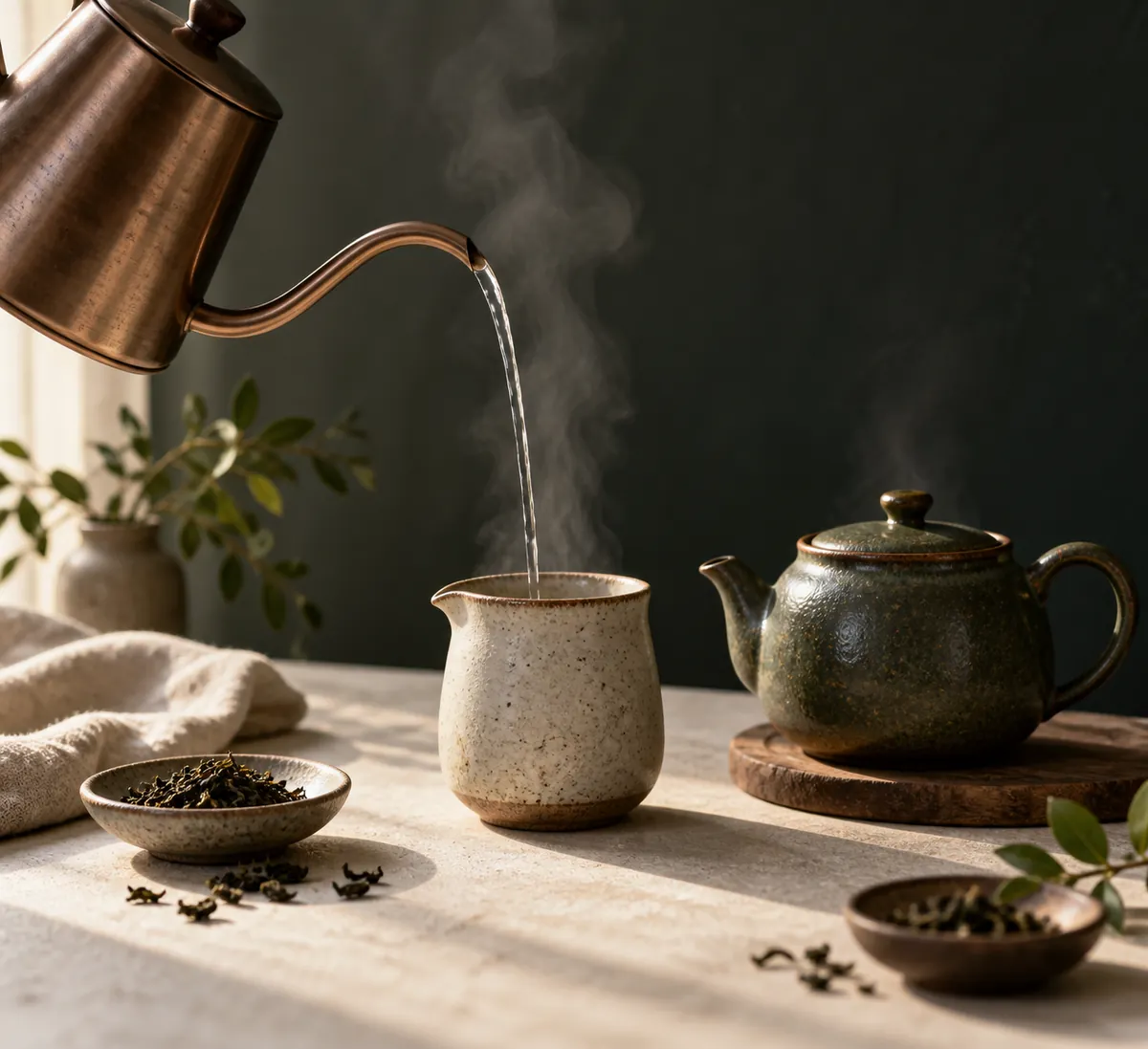
Boiling water on a green oolong is the mistake worth going out of your way to avoid. Catechins tend to come out of a lightly oxidised leaf quickly at 100 C, and once they are in the cup nothing takes them back out.
You do not need a variable kettle. Pour the boiled water into a second jug and wait a minute or two, which drops it far enough for the floral end.
The steeping temperature basics page carries the wider table if you brew several styles. What matters here is that oolong occupies two rows of it rather than one.
Leaf quantity is the other half of the same decision. Five grams per half litre is the western figure, and it looks like far too little in the pot until the pellets open.
Rolled leaf takes up much more space once wet, which is why a small measure fills a pot by the second infusion.
Should you rinse oolong tea leaves?
For rolled leaf, yes, and it takes five seconds.
The rinse is there to open the leaf rather than to clean it, because pellets are compressed so tightly that the first proper steep would otherwise be pulling flavour from the outside of a ball whose middle is still dry.
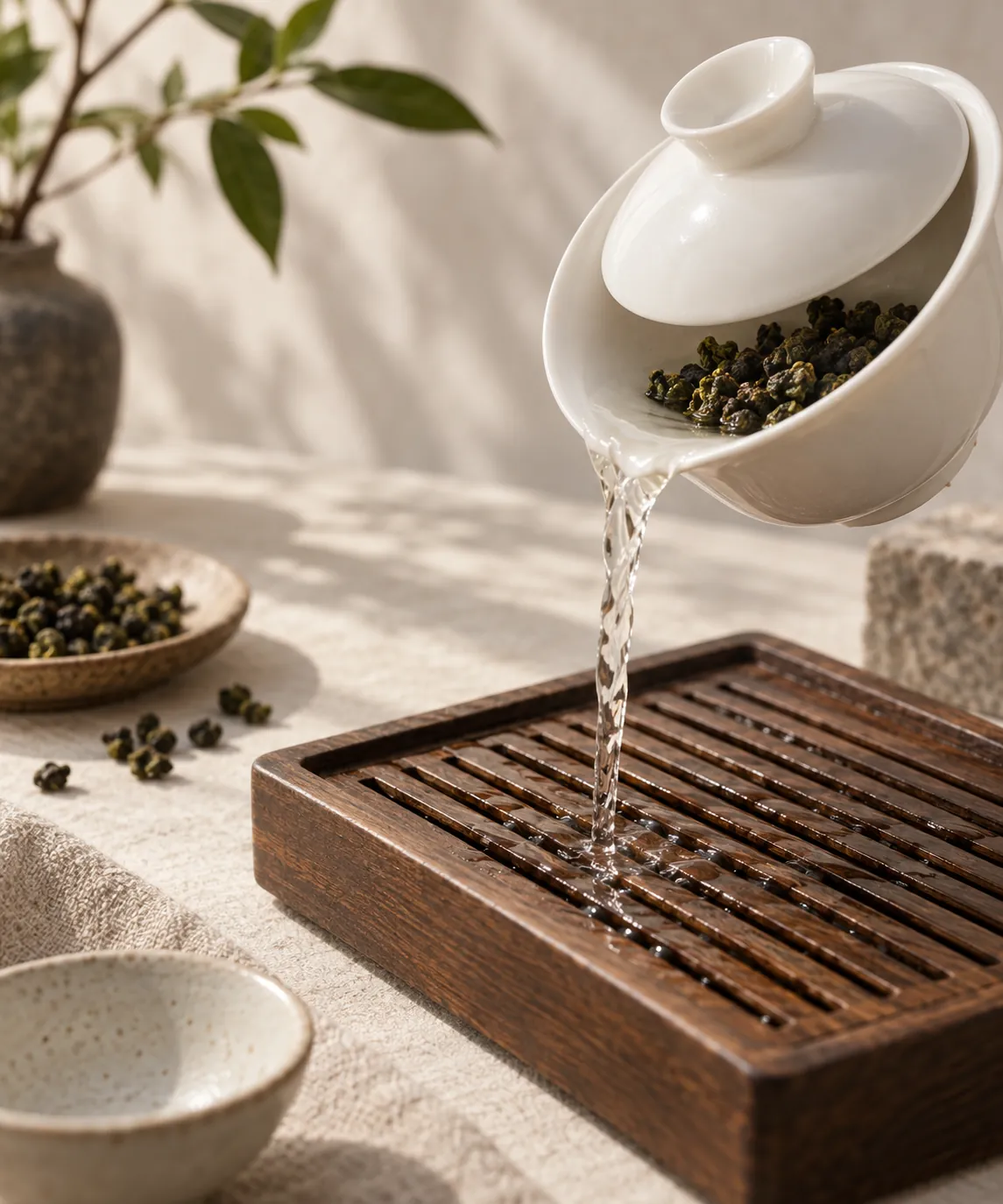
A rinsed pellet begins to relax before the clock starts. The first real infusion then arrives with body instead of the thin, faintly disappointing cup that rolled oolong otherwise gives.
Strip leaf needs it much less. It is already open, so a rinse buys a second or two of head start rather than transforming anything.
A teabag needs none at all. There is nothing left to unfurl in broken leaf, and rinsing simply discards the first and strongest part of the brew.
Keep it short and hot. The water should be the same temperature you intend to brew at, since a cool rinse wets the leaf without waking it.
How do you brew oolong tea in a mug or pot?
Warm the pot, leaf in loose, two to three minutes, then pour every drop out.
Western oolong, in order
- WarmSwirl hot water round the pot and tip it out.
- Leaf5 g per 500 ml, straight into the pot rather than an infuser.
- SteepTwo minutes for green oolong, three for dark.
- DecantPour the whole pot out, leaving the wet leaf behind for the next round.
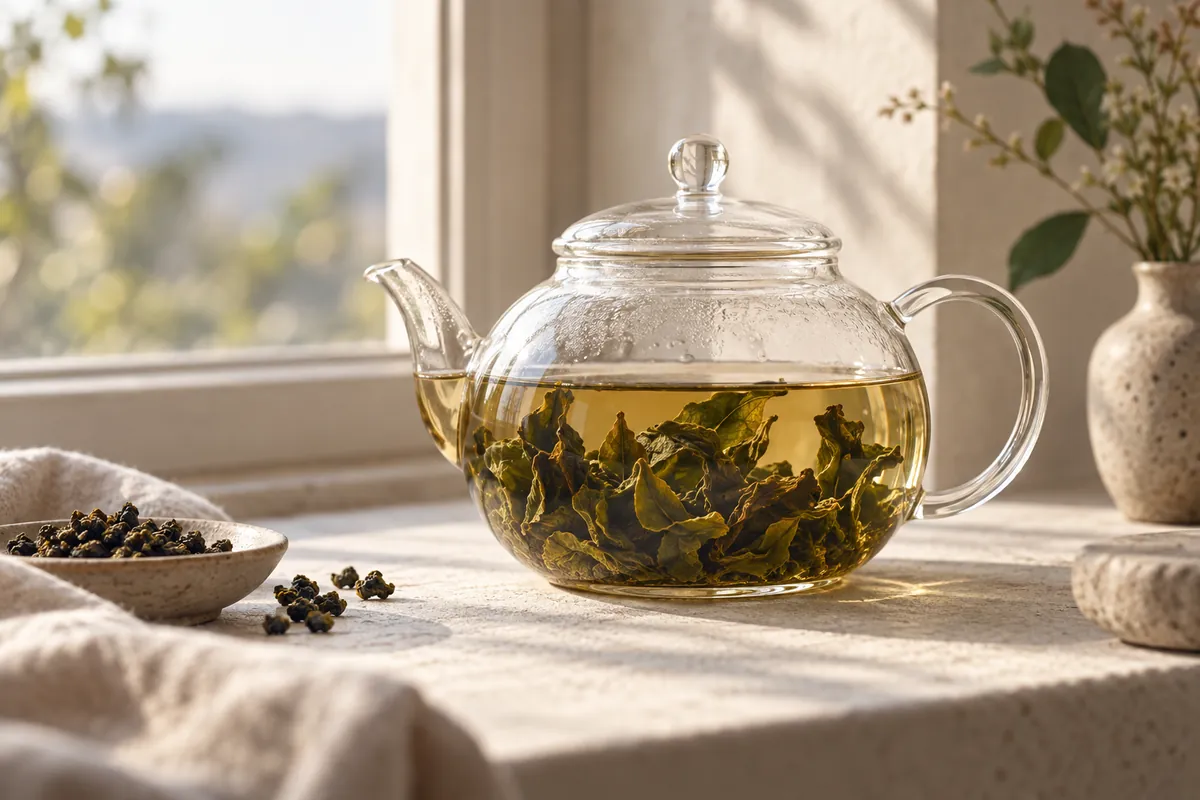
Warming the pot matters more here than for black tea. A cold pot pulls several degrees out of water you have already carefully brought down, and with green oolong those degrees were the point.
Two minutes is shorter than most people steep. Oolong has a genuine window, and the difference between two minutes and four is the difference between a floral cup and an astringent one.
Add about thirty seconds each round after that. The leaf gives up its flavour more slowly as it goes, so a fixed time makes each cup weaker than the last for no reason.
Pour it all out every time. Liquor left standing on the leaf keeps extracting between rounds, and the second cup arrives already over-steeped before you have poured any water on it.
A yixing teapot suits roasted oolong particularly well, though nothing about this method requires one. Any pot the leaf can open in will do the job.
How do you brew oolong tea gongfu style?
Gongfu inverts the ordinary arrangement, using several times as much leaf in a fraction of the water and taking it out again after seconds rather than minutes.
The dose is five to seven grams per 100 ml, which is roughly a third of a small vessel filled with dry pellets.
One gongfu session
- RinseFive seconds, poured away, to open the leaf.
- First steep30 to 45 seconds for rolled, nearer 20 for strip.
- Middle steepsAdd five to ten seconds each round. This is where it peaks.
- Later steepsKeep lengthening, up to a minute or more by the eighth.
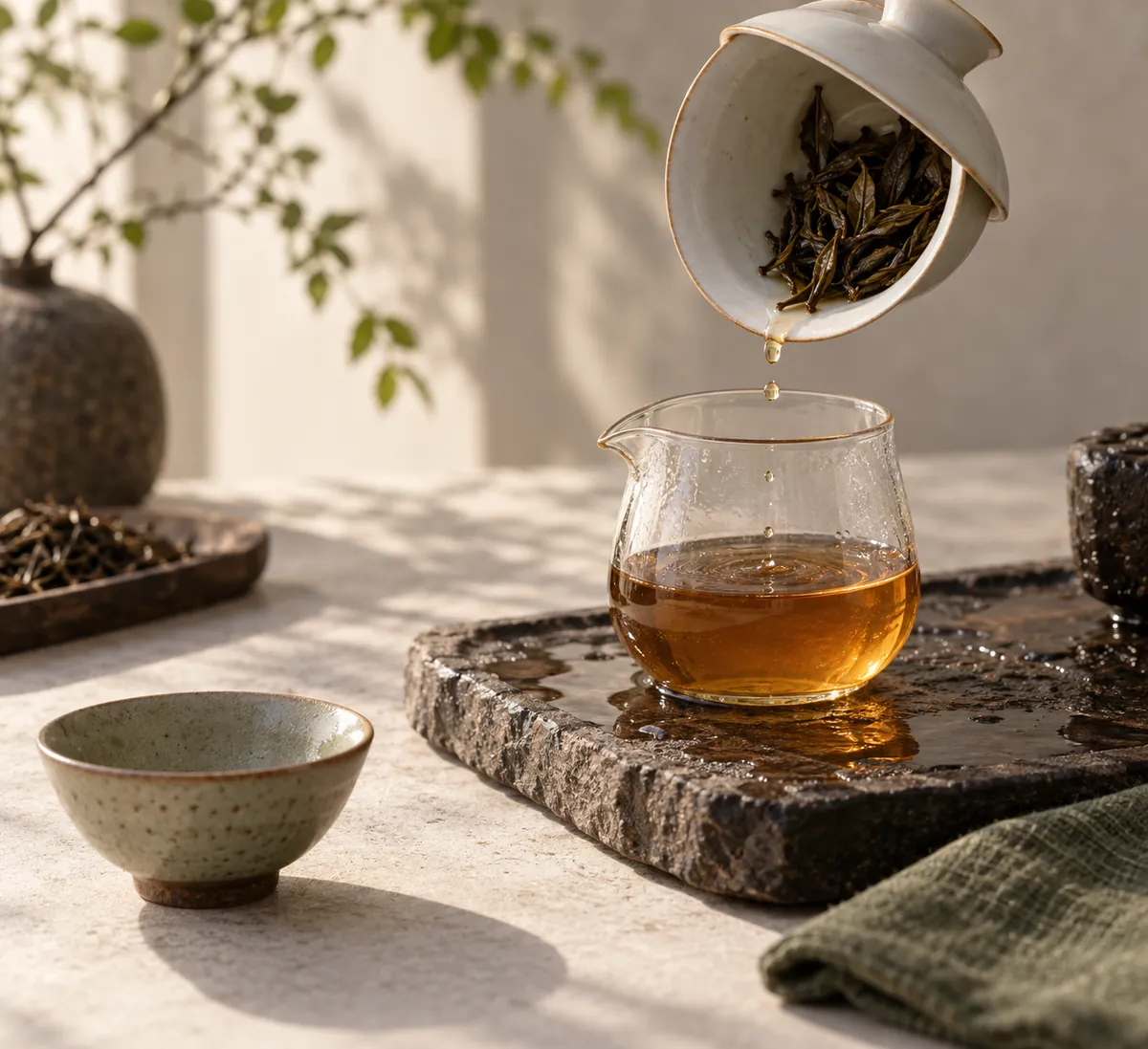
The shape of the leaf sets the first number. Rolled pellets need those extra seconds simply to open, while strip leaf is already extracting at twenty.
A lidded gaiwan makes this easier but is not required. Any small pot that pours quickly and completely will brew this way, including a 150 ml teapot you already own.
Pour out to the last drop each round. This is the rule beginners break, and it is one reason a session that started beautifully can turn bitter in the later cups.
The reward is watching one tea move. A rolled oolong opens floral, turns creamy in the middle, and finishes somewhere mineral, and none of that is visible in a single three-minute mug.
How many times can you resteep oolong tea?
Four to six times western, and eight or more gongfu.
Treating one measure as a single cup wastes most of what you bought.
How the cup moves
- First infusionLight, floral, thinner than expected | The leaf is still opening
- Third infusionFullest colour and body | Usually the best cup
- Sixth infusionPale, sweet, mineral | Approaching the end
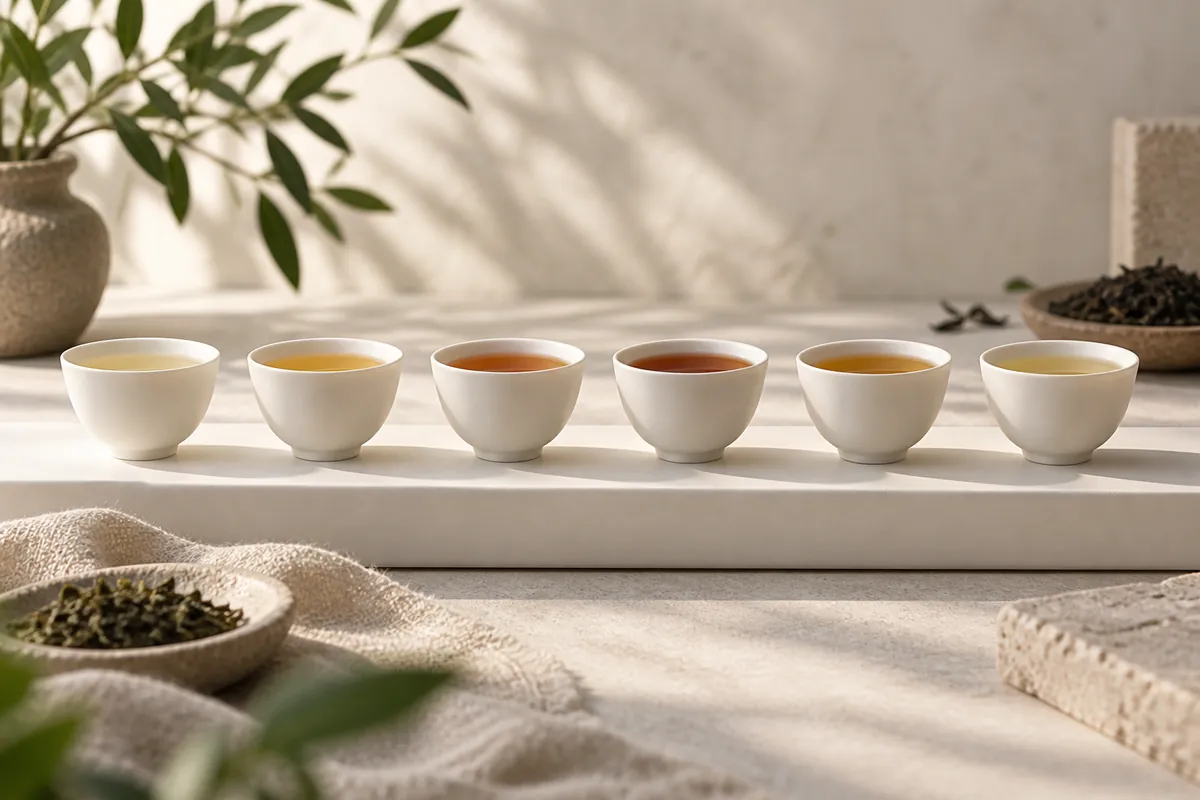
The third infusion is usually the best because rolled leaf is still opening through the first two, so the tea does not reach full strength until the pellet has genuinely unwound.
Lengthen each round to keep pace: what was thirty seconds becomes forty, then a minute, and by the last cup you may be steeping for two.
You can tell the leaf is finished by its colour rather than its taste. When a longer steep produces no more colour than the last one did, the leaf has given what it has.
Do not carry wet leaf overnight: it is less a keeping question than a taste one, since leaf left wet for hours goes sour and flat in a way no timing rescues.
Teabags are the exception to all of this, because broken leaf gives everything in one infusion and a thin ghost of a second, which is the trade a bag makes.
Why is my oolong tea bitter?
Water is the first suspect and time the second, and between them they account for nearly every harsh cup. They are easy to tell apart, because water makes the tea bitter from the first sip and time only after a few minutes in the pot.
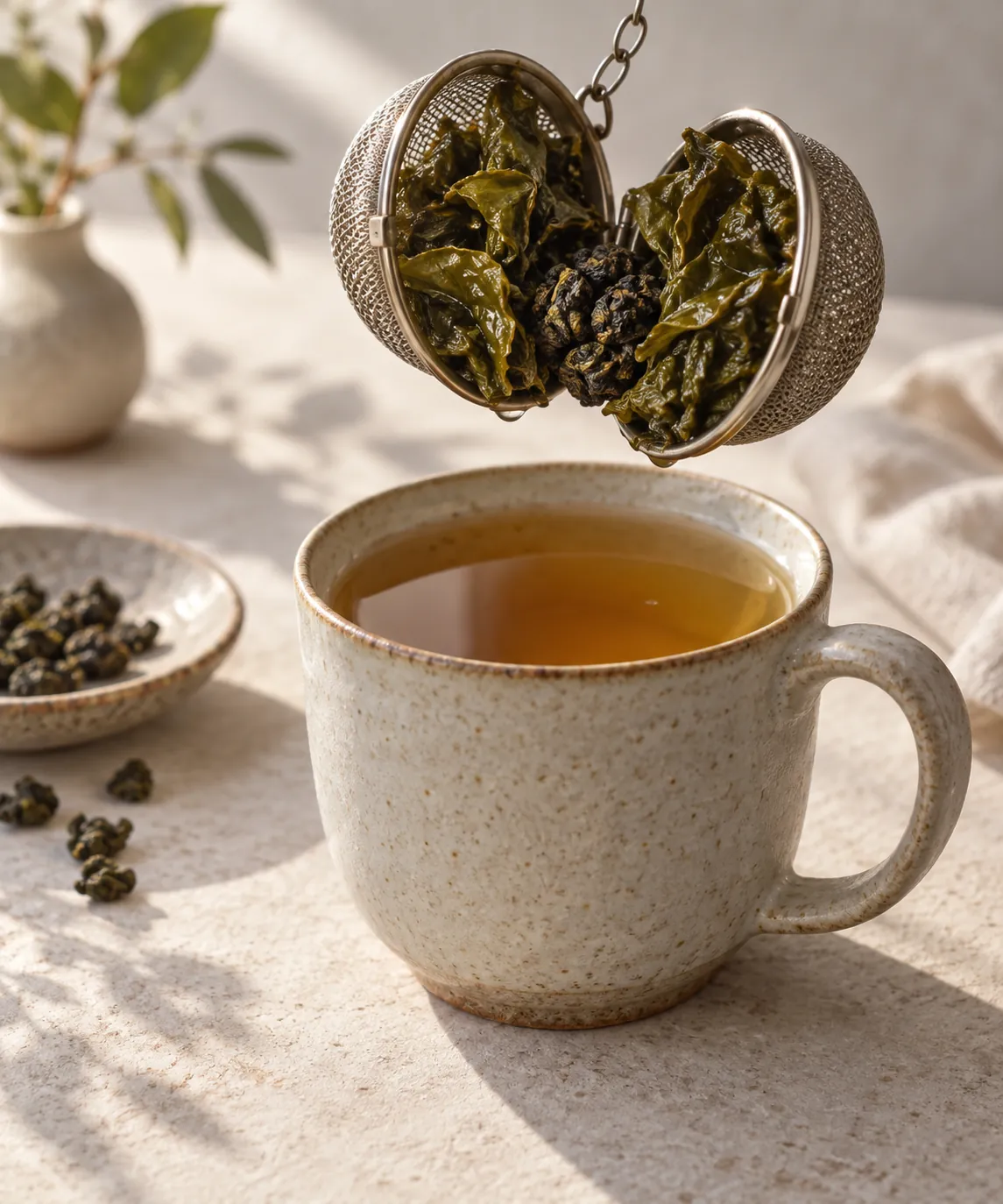
On the green end, boiling water is the leading cause, for the same reason that green tea turns bitter at 100 C, whereas roasted oolong is far more forgiving and can take water at 90 to 95 C.
Over-steeping is the second cause and shows up differently, arriving as a drying astringency in the finish rather than as bitterness on the tongue.
Thin and bitter get confused constantly. Too little leaf gives a weak cup that people then steep longer to strengthen, which is how an under-dosed pot becomes an over-extracted one.
The mesh infuser produces both faults together. Leaves that cannot open extract unevenly, so the outside over-extracts while the middle stays dry.
Two things sit outside your control. A heavily roasted oolong tastes bitter to some palates however carefully it is brewed, and old leaf goes flat rather than bitter, which is a different problem with a different answer.
Oolong method
- Makes
- 500 ml, and four to six infusions from the same leaf
- Ratio
- 5 g per 500 ml western, or 5 to 7 g per 100 ml gongfu
- Water temp
- 85 C for green oolong, up to 95 C for roasted
- Steep time
- Two to three minutes on the first western infusion
- Total time
- 6 min
What you need
- 5 g oolong leaf per 500 ml of water
- Water at 85 to 95 C depending on the leaf
Equipment
- Teapot or gaiwan
- Kettle
- Second jug for cooling water
- Small pitcher
Method
- WarmSwirl hot water round the pot and tip it out.
- RinseCover rolled leaf with hot water for five seconds and pour it away.
- Leaf5 g per 500 ml, straight into the pot rather than an infuser.
- SteepTwo minutes for green oolong, three for dark.
- DecantPour the whole pot out, leaving the wet leaf for the next round.
Common questions
What temperature should oolong tea be brewed at?
Around 85 C for tightly rolled green oolong and up to 95 C for dark roasted strip leaf. The shape of the dry leaf tells you which end you have.
Do you need to rinse oolong tea?
For rolled leaf, yes, and for about five seconds. Pellets are compressed so tightly that the first steep would otherwise pull flavour from the outside of a still-dry ball.
How many times can you resteep oolong tea?
Four to six times western style and eight or more gongfu. The third infusion is often the best, because rolled leaf is still opening through the first two.
Why is my oolong tea bitter?
Usually boiling water on a green oolong, or a steep past three minutes. A cramped mesh ball causes both faults at once by stopping the leaves opening.