The Percolator, and Why It Recirculates the Same Liquid
A percolator cycles the same liquid through the same grounds over and over, which is both how it works and why it tastes bitter. Understanding the loop explains the fault, and explains the settings where the pot is still the right choice.
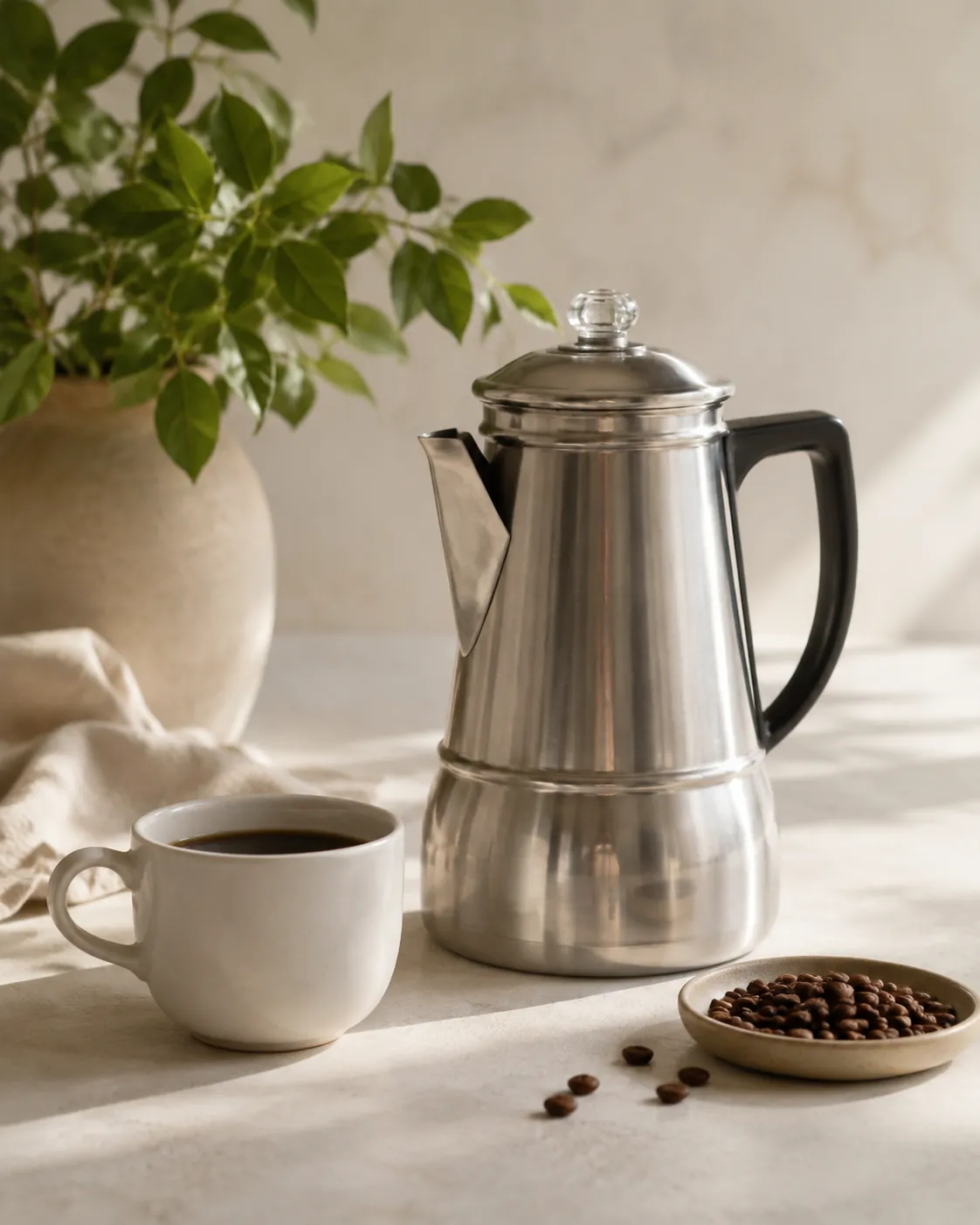
A percolator is a pot with a hollow tube standing up its middle and a perforated basket sitting at the top of that tube. Water goes in the pot, coffee goes in the basket, and heat drives the water up the tube and lets it fall back down through the grounds.
Then it does the same thing again. And again, for as long as the heat is on.
That loop is the entire design, and it is also the reason percolated coffee has the reputation it has. Every other brewer sends water through the bed once; this one sends the same liquid through over and over.
The percolator at a glance
- What it is
- A pot, a pump tube, and a perforated grounds basket above it
- What moves the water
- A steam bubble forming in the well under the tube
- The defining feature
- The brew recirculates through the same grounds repeatedly
- Brew temperature
- At or very near boiling, higher than most methods use
- Grind
- Coarse. Anything finer falls through the basket holes
- Typical cycle
- Six to eight minutes of visible perking
- Best at
- Large volumes, open fires, and places with no electricity
- Worst at
- Anything delicate, and anything you want to taste sweet
How a percolator moves water without a pump
There is no pump in a percolator, despite the tube being called a pump tube, and the trick it uses instead is worth understanding because it explains the rhythm.
The base of the stem sits in a small well or dimple pressed into the floor of the pot. Heat concentrates there, so the shallow layer of water inside the well reaches boiling before the rest of the pot does, and a steam bubble forms in a space narrow enough that it cannot rise past the water above it.
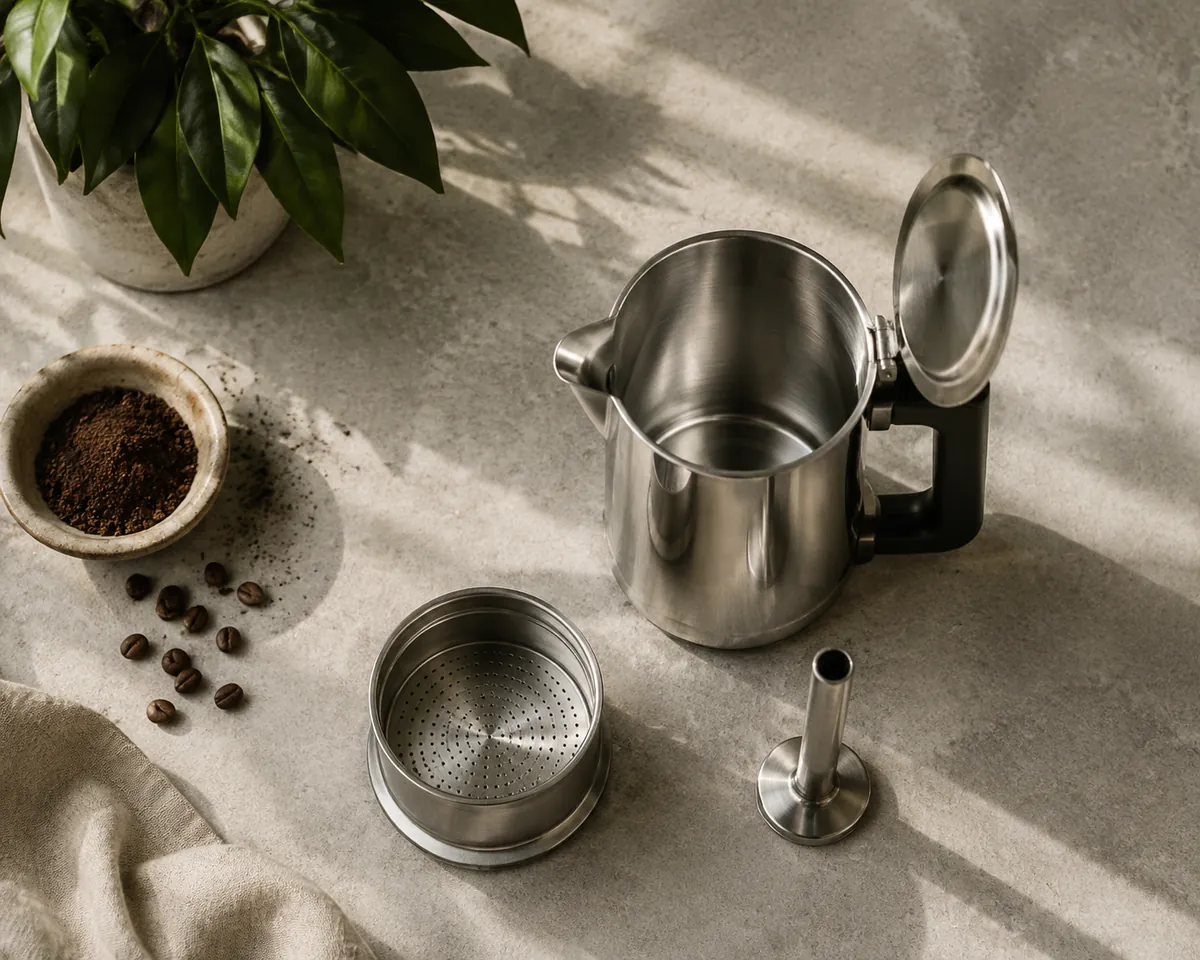
The bubble expands into the only space available, which is up the tube. It drives a slug of water ahead of it, that slug shoots up the stem and strikes the underside of the lid, and the water then falls onto the perforated spreader plate above the grounds.
One perk
- BoilWater in the well beneath the stem reaches boiling first.
- BubbleSteam forms and, hemmed in, expands upward into the tube.
- LiftA slug of water is pushed up the stem and hits the lid.
- SpreadIt falls onto the perforated plate over the basket.
- DrainIt filters down through the grounds and returns to the pot.
- RepeatThe pot reheats and the well boils again a second or two later.
The knock and gurgle of a percolator is that cycle running, once every second or two, and it is the same bubble pump principle a coffee machine uses to move water uphill without any moving parts at all.
Why the repeated pass is the whole problem
Recirculation sounds like thoroughness and is nearly the opposite. The liquid returning to the pot is not water any more, and sending it back through the bed a second time does something quite different from the first pass.
Coffee gives up its solubles in an order. Acids and sugars come out early, and the heavier, more bitter compounds come out slowly and late, which is why every other brewing method is designed to stop at a chosen point.
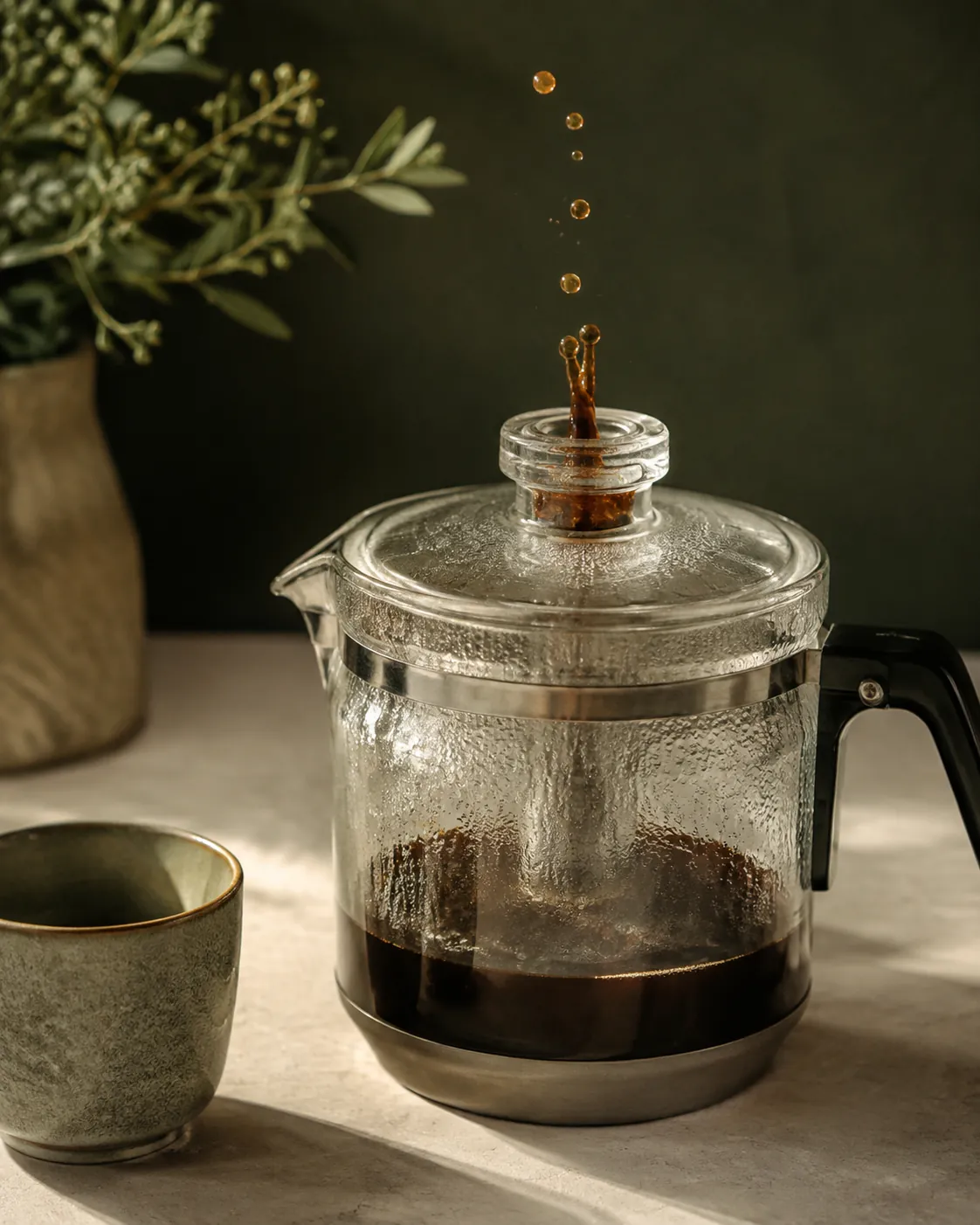
A percolator cannot stop at a chosen point, because it has no way to separate finished coffee from unfinished. Every cycle pushes already-extracted coffee back over grounds that have nothing pleasant left to give, so the pot keeps adding bitterness long after it has stopped adding anything else.
What comes out of the bed, and when
- Fruit acidsOut in the first pass. Bright, and quickly diluted by later ones
- Sugars and caramel notesEarly, and largely gone by the third cycle
- Body-forming solublesMiddle of the run, roughly where a good cup stops
- Bitter phenolicsLate, and a percolator is still running when they arrive
- Dry, astringent compoundsLatest of all, and the reason a long perk tastes hollow
The second half of the fault is the heat. The pot is sitting over a flame with brewed coffee in it, so the liquid is being boiled repeatedly, and boiling coffee drives off the aromatics that make it smell like anything.
That is the uncomfortable part of the famous smell.
A percolating pot fills a kitchen with coffee aroma because those volatiles are leaving the coffee rather than staying in it, which is why a percolator smells better than it tastes almost every time.
What temperature has to do with it
Brewing coffee is usually done somewhere between 90 and 96 C, and that range is not arbitrary. Below it, extraction is sluggish and sour; above it, the harsh compounds come out disproportionately fast.
A percolator brews at the top of that range and past it. Water arriving from the stem has just been at a rolling boil, and the pot underneath is kept hot enough to keep the cycle going, so the grounds are being washed with liquid at or near 100 C for the whole run.
| Method | Contact temperature | Passes through the bed | Result |
|---|---|---|---|
| Percolator | Near 100 C | Many | Strong, bitter, low in aroma |
| Automatic drip | 90 to 96 C at best | One | Balanced when the machine is good |
| Pour over | Falling from about 94 C | One | Clean, controllable |
| Siphon | Held near 92 C | One, by immersion | Even and bright |
| French press | Falling from near boiling | One, by immersion | Full-bodied, some sediment |
Those few degrees matter more than they look. Extraction rate roughly doubles for every ten degrees, so brewing at 100 C rather than 93 C is not a small adjustment to the same process.
Put the two faults together and the picture is complete. Hotter water than the coffee wants, applied more times than the coffee can stand, with the result reheated between each pass.
Stovetop and electric are not the same machine
They look almost identical and behave quite differently, and the difference decides whether a percolator is usable without standing over it.
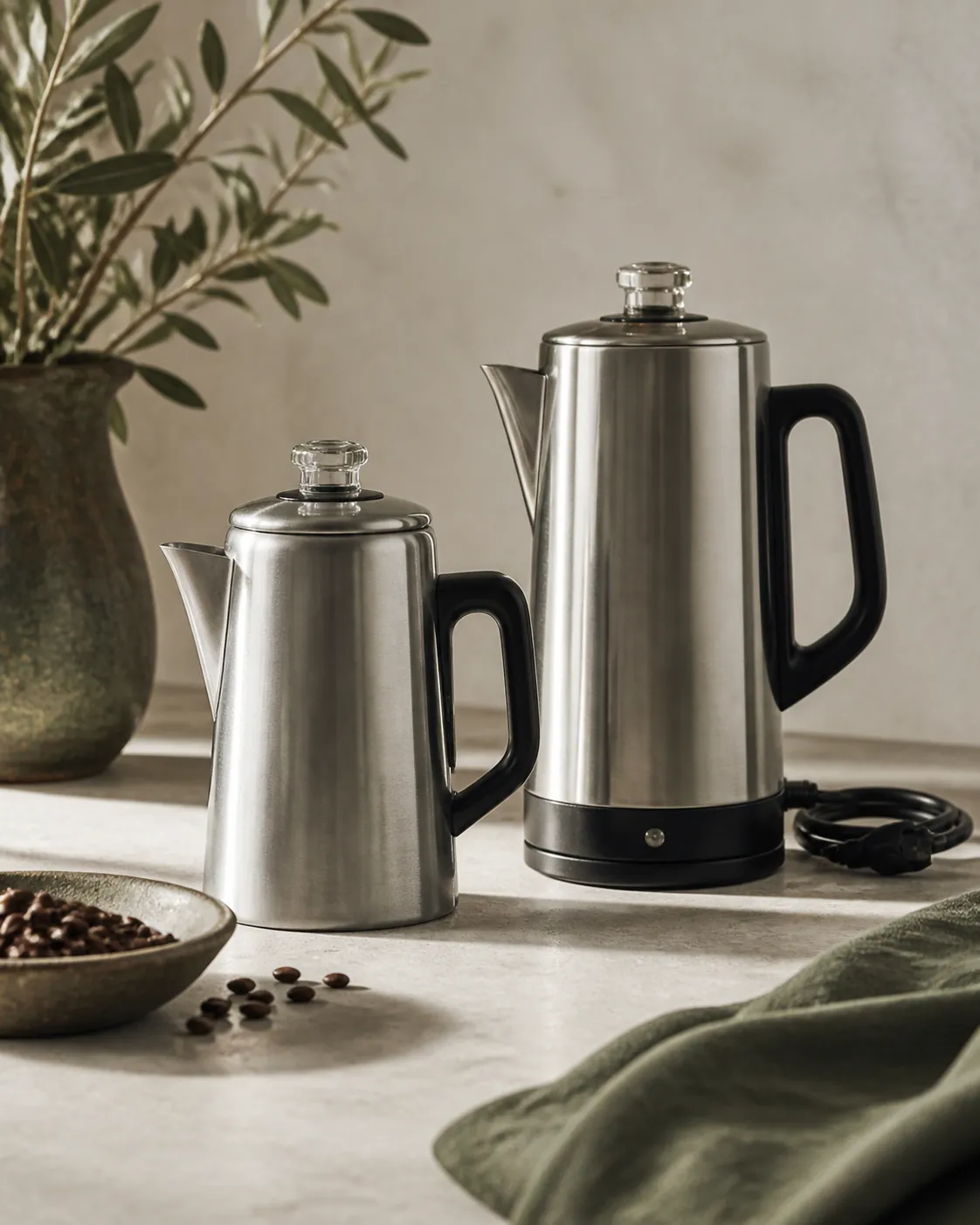
Stovetop
A pot with a stem. Nothing tells it when to stop, so the timing is yours.
Electric
A heating element in the base and a thermostat that ends the cycle.
Camp and enamel
Stovetop design built to sit in embers. The most robust of the three.
The thermostat
Reads the temperature of the coffee, not a clock, and cuts to a keep-warm setting.
Keep-warm
The other slow spoiler, since coffee held at 80 C for an hour stews.
The electric version is genuinely the better machine for a kitchen, and its thermostat is the only automatic brake any percolator has ever had. It cuts the perk when the liquid reaches a set temperature, which correlates loosely with strength, and that is why an electric pot is more consistent than a hob.
Loosely is doing some work in that sentence. The thermostat measures heat rather than extraction, so a smaller batch trips it sooner and a cold kitchen trips it later, and the same pot can deliver two different cups on two different mornings.
A stovetop pot has no brake at all. That sounds worse and is arguably better, because a person watching the glass knob can stop the cycle at exactly the colour they want, which no thermostat is measuring.
How to get a decent cup out of one
A percolator can make coffee that is genuinely good rather than merely strong, and doing it means fighting the design at three points.
A working method
- Grind coarseCoarser than a French press. The basket holes are large, and fines end up as sludge in the pot.
- Fill the basket evenlyLevel the bed. A sloped bed channels, and the high side stays dry.
- Start with hot waterIt shortens the run before perking begins, which is time the grounds spend soaking.
- Watch the knobStop when the jumping liquid runs the colour of dark tea, not black.
- Time it anywaySix to eight minutes of perking, counted from the first knock.
- Lift the basket outImmediately. Grounds left in the pot keep leaching into finished coffee.
- Take it off the heatA percolator left on a warm hob goes on stewing indefinitely.
Grind is the lever with the most travel, and a burr grinder is what makes a coarse setting actually coarse rather than merely averagely so. Here the practical point is narrower: a coarse, even grind slows extraction enough that six minutes of recirculation lands somewhere reasonable, while a medium grind at the same time is bitter.
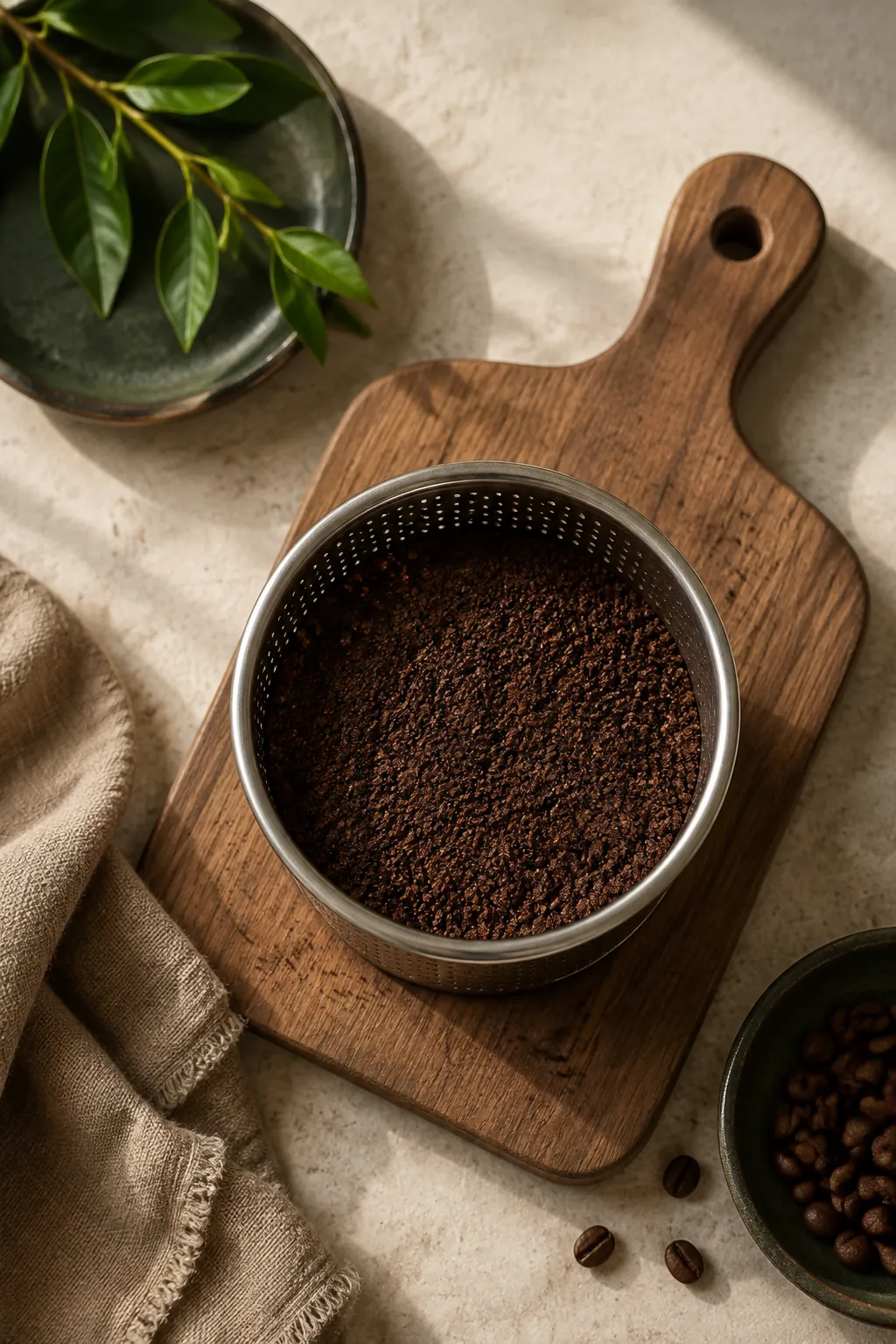
Ratio runs a little leaner than other methods for the same reason. Around 55 to 60 g of coffee per litre works where a drip brewer would take 60 to 70, because the repeated passes extract more from every gram than a single pass does.
The last instruction is the one most often ignored.
Lifting the basket out the moment the pot comes off the heat stops a slow drip of concentrated, over-extracted liquid falling into coffee that was otherwise finished.
Why it fell out of favour
The percolator was the standard home coffee maker across much of the world for the first two thirds of the twentieth century, and it did not decline because tastes became precious. It was beaten by a machine that did the same job in one pass.
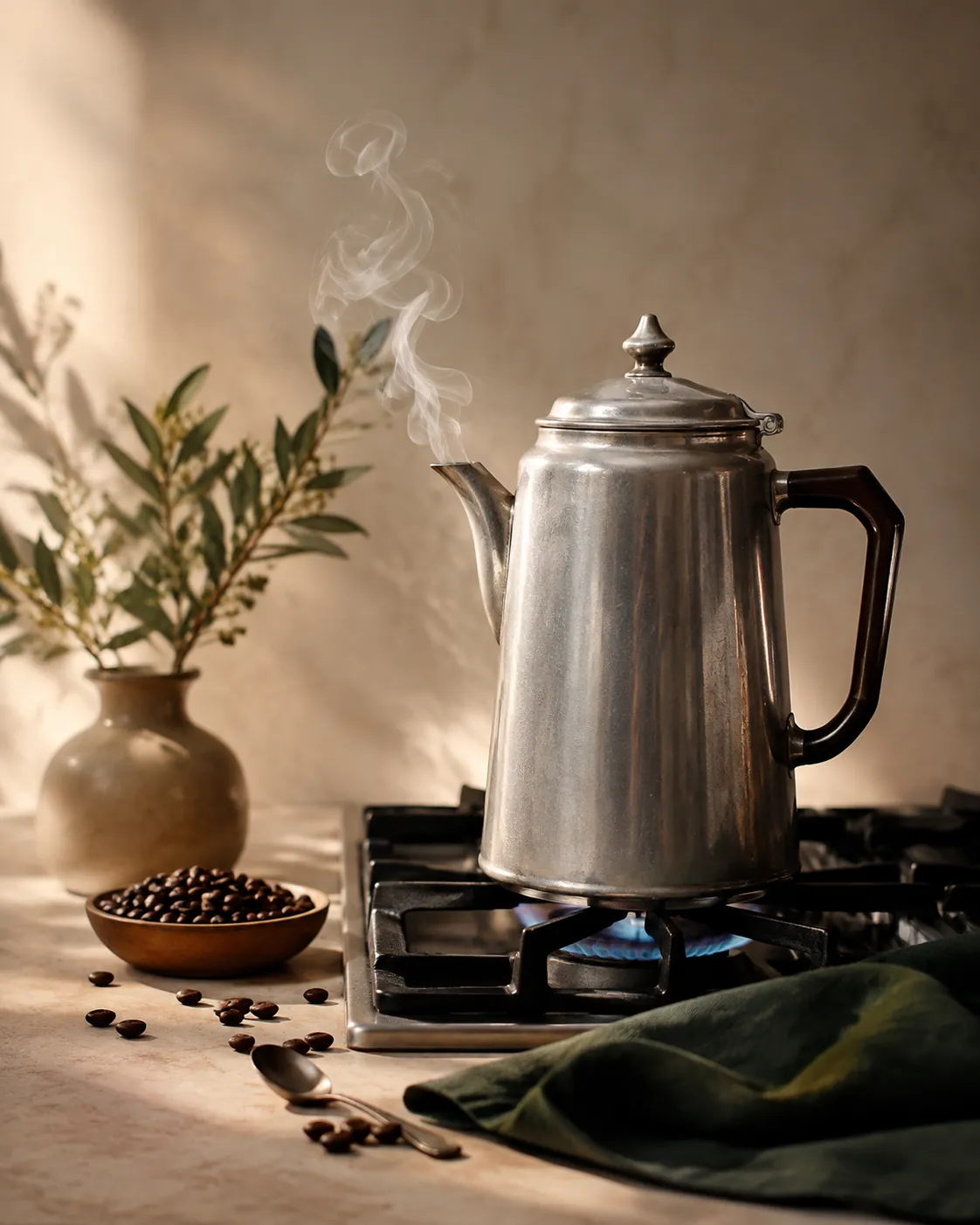
Automatic drip machines reached home kitchens in numbers in the early 1970s, and what they made became the default meaning of filter coffee. They heated water once, sent it through a bed of grounds once, and dropped the result into a carafe that was never boiled, which removed both of a percolator's structural faults at a stroke.
Convenience finished the argument. A drip machine takes a scoop and a switch, needs no watching, and cannot be ruined by a phone call, whereas a stovetop pot punishes exactly that kind of inattention.
The taste shift followed rather than led. A generation that had grown up on percolated coffee found the drip version thinner at first and then stopped noticing, and by the time lighter roasts arrived the older method had no route back, since light roasts are precisely what recirculation destroys.
Percolators never disappeared, though, and the reason is not nostalgia.
What it is still genuinely good for
Judge the pot on volume and robustness rather than on refinement and it looks like a completely different object, one with several real advantages that no modern brewer matches.
Volume
Twelve cups from one vessel, with no batch limit imposed by a filter.
No consumables
No papers, no pods, no cartridges. A basket and a stem, indefinitely.
Heat independence
Works on a fire, a camping stove, or a hob during a power cut.
Durability
Stainless and enamel pots survive being dropped, packed and knocked about.
Serves hot
The pot stays on the heat, so the last cup is as hot as the first.
Simplicity
Nothing to break except the glass knob, which is usually replaceable.
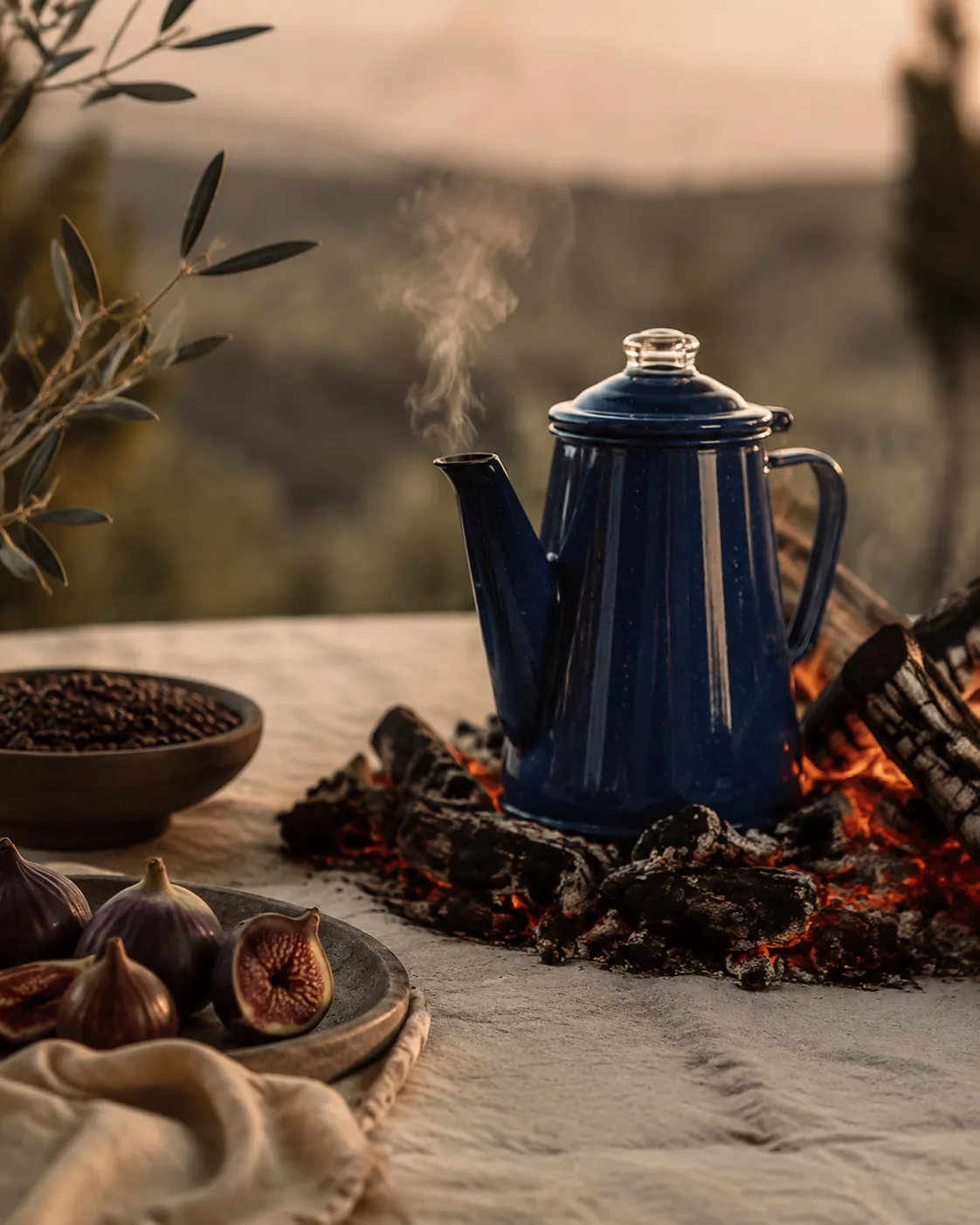
For outdoor use it is close to unbeatable.
A gooseneck kettle and a cone need a flat surface, a scale and patience, none of which a hillside supplies. Nothing needs power, nothing needs a paper filter that can go soggy in a pack, and the same pot boils water for anything else once the coffee is poured.
For volume it holds its own too. Making twelve cups by pour over is a twenty-minute job with a kettle in your hand, and a percolator does it while you lay a table.
The keep-hot property cuts both ways and is worth naming honestly. Coffee held over heat stews and goes flat, so the pot that serves the last cup hot is the same pot that makes that cup worse than the first, which is a real trade rather than a hidden fault.
What goes wrong, and what each fault tastes like
Percolator faults are unusually legible, because there are only a handful of variables and each one produces a distinct result in the cup.
| What you taste or see | Cause | The fix |
|---|---|---|
| Harsh, hollow bitterness | Perked too long | Stop at six to eight minutes |
| Sludge in the last mouthful | Grind too fine for the basket | Coarsen it several steps |
| Weak but still bitter | Too little coffee, run too long | More grounds, shorter perk |
| Flat and papery | Coffee kept hot after brewing | Decant into a flask instead |
| Never starts perking | Water below the bottom of the stem | Fill to the marked line |
| Perks furiously then stalls | Heat far too high | Turn it down once the knock starts |
| Metallic edge | Aluminium pot with residue, or hard water | Descale, and see the water below |
Bitterness from a percolator is not the bitterness of Turkish coffee, which comes from very fine grounds suspended in the cup. Here it is dissolved, and no amount of settling removes it.
The bitter-but-weak combination catches people out most, because instinct says to run it longer. A pot that is thin and harsh at once has had too few grounds recirculated for too long, and the answer is more coffee and less time rather than the reverse.
Hard water shows up here more than in most brewers. Repeated boiling concentrates whatever is dissolved in the pot, so the water you start with has a stronger say in a percolator than it does in a machine that boils each drop once.
Old coffee is the other multiplier. Stale beans are already low on the aromatics that boiling would otherwise drive off, so how the beans were stored shows up brutally in a pot that removes the rest, and keeping them properly does more for percolated coffee than for most methods.
Cleaning it, and why the stem matters
Two parts hold oil, and one of them is easy to forget because you cannot see inside it.
The basket and its perforated lid collect grounds and a film of coffee oil that turns rancid within days. Both wash easily under hot water with a brush, and neither needs detergent if it is done straight after use.
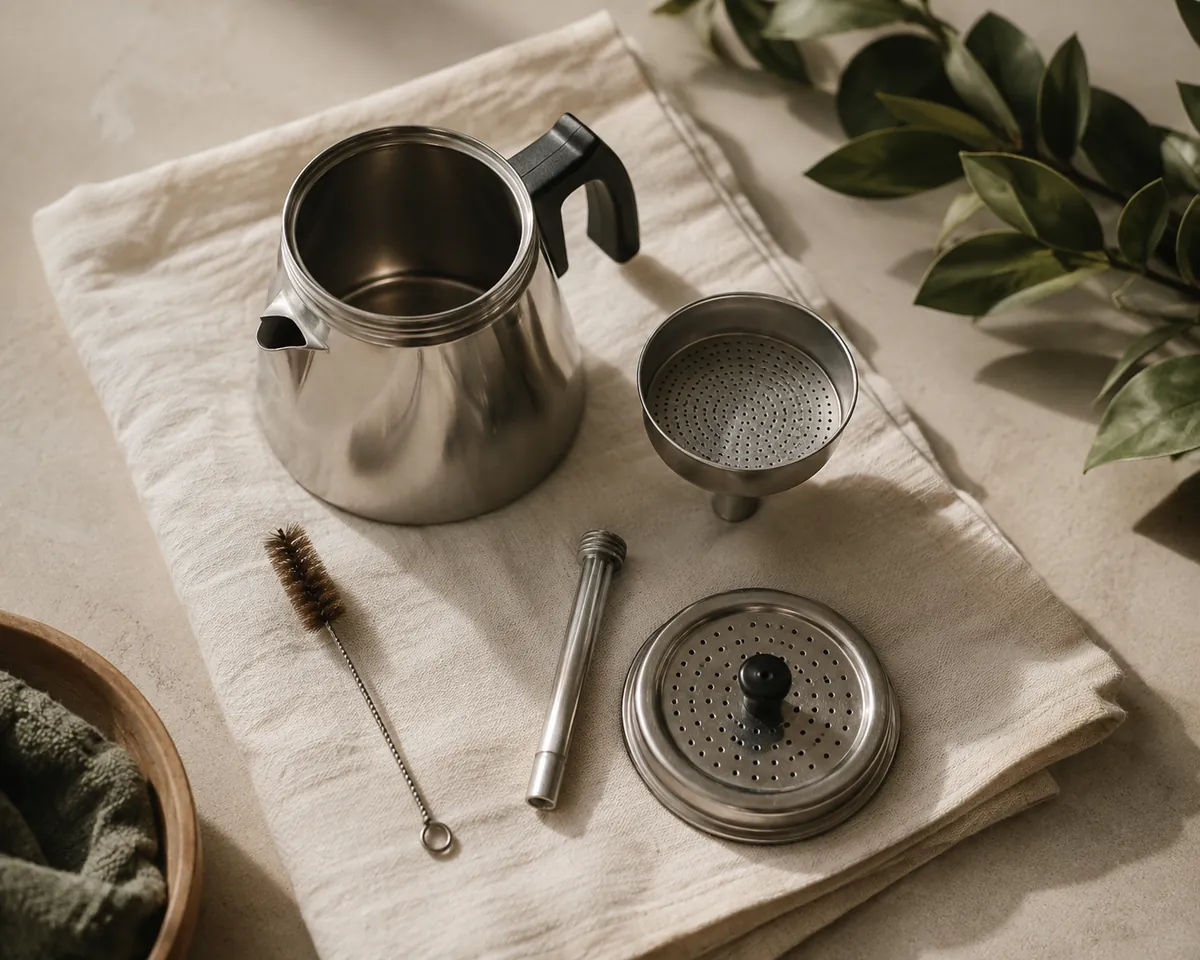
- Rinse everything hot immediately, before the oil in the basket has time to set.
- Run a brush or a thin cloth through the stem, which is where old oil hides.
- Descale a pot used with hard water, using a weak vinegar solution and a long rinse.
- Keep aluminium pots out of the dishwasher, since the detergent darkens and pits them.
- Dry all the parts separately and store the pot with the lid off.
- Replace a cracked glass knob rather than perking blind.
The stem is the part that ruins pots. Coffee travels up its whole length on every cycle and it never gets scrubbed, so a neglected percolator eventually pushes stale oil into every brew and the owner blames the beans.
Aluminium pots ask for one extra habit. They are excellent conductors and much loved for camping, and they discolour with detergent and pit with long soaking, so a rinse and a dry beats leaving one in a washing-up bowl overnight.
Stainless steel forgives all of this and is the sensible choice for a pot that lives in a kitchen. Enamel over steel is the choice for one that lives in a rucksack, since it takes knocks without denting the way bare aluminium does.
Where the percolator wins and where it loses
Everything good and everything bad about this pot comes from the same loop, which makes the trade unusually clean to state.
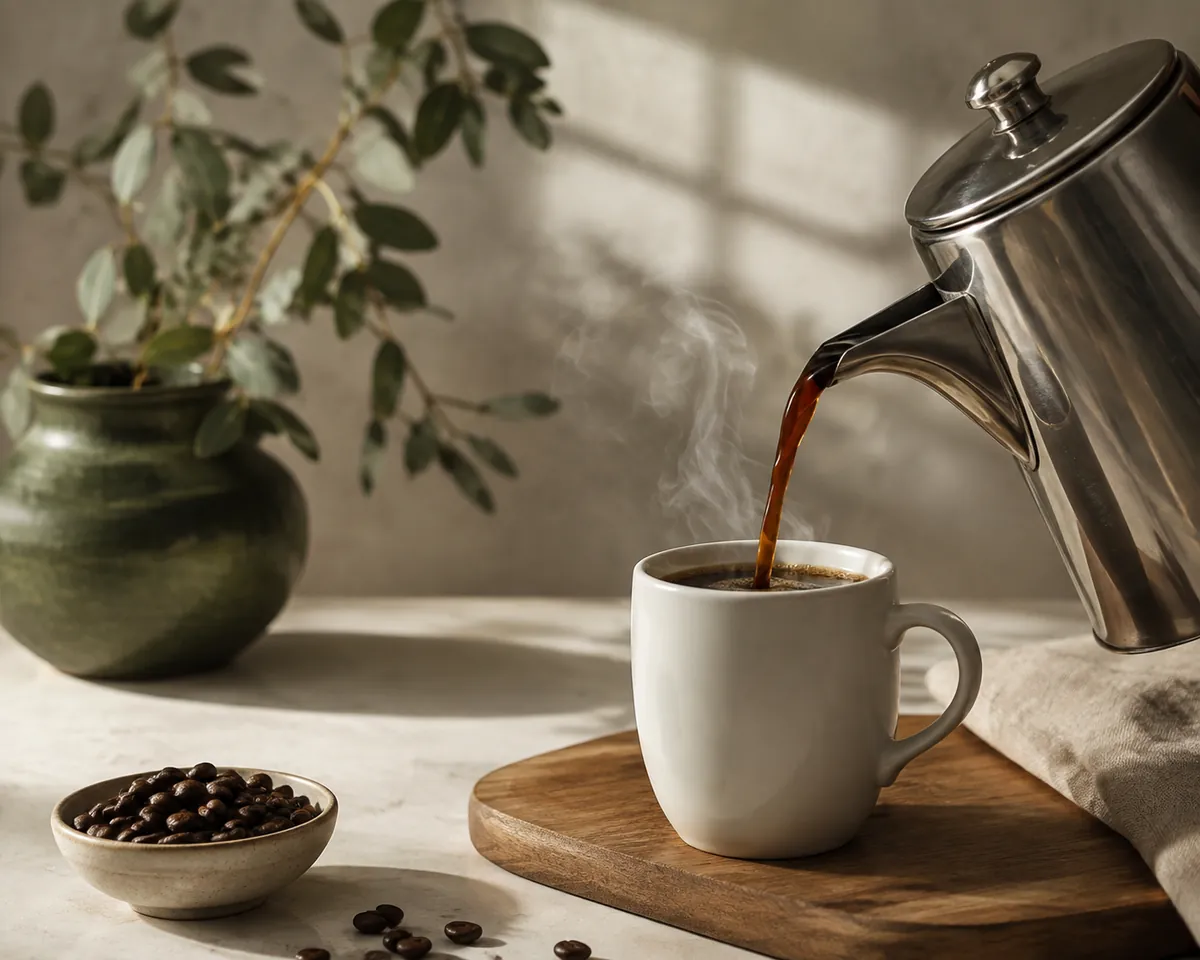
Works well for
- Makes large volumes in one vessel with no filter to limit the batch
- Needs no papers, pods or cartridges, ever
- Works over a fire or a camping stove with no electricity at all
- Nearly indestructible in stainless or enamel
- Keeps the pot hot for serving over a long meal
- Cheap to buy and cheap to run
Struggles with
- Recirculates the brew, so it over-extracts by design
- Brews at or near boiling, well above the useful range
- Boils the finished coffee, driving off the aromatics
- Ruins light and delicate roasts entirely
- Needs watching on a hob, or a thermostat that only approximates
- The stem hides old oil and is easy to neglect
Notice that the first list is about the pot as an object and the second is about the pot as a brewer. That split is the honest summary, and it explains why the design survives in exactly the settings where being an object matters more.
The comparison people reach for is the moka pot, and it is the wrong one. A moka pot pushes water through the bed a single time and then stops, which makes it a very different machine that happens to also stand on a hob.
Against a single-pass brewer of any kind, the percolator loses on flavour and wins on logistics. Against no coffee at all, on a hillside, in the dark, it wins comprehensively.
Who should still own one
Two groups, and the second one is larger than coffee writing usually admits.
Buy one if
You camp, sail, or cook outdoors and want coffee without power or consumables.
Buy one if
You regularly serve eight or more people and want it all hot at once.
Buy one if
You like dark roasts and strong coffee and are not chasing acidity.
Skip it if
You buy single-origin light roasts, which this method flattens.
Skip it if
You make one or two cups at a time.
Skip it if
You will not be in the room to stop it.
Dark roast drinkers are the group most often overlooked. A percolator strips acidity and adds bitterness, which is a disaster for a bright washed arabica and much less of one for a dark roast or a robusta blend that was never bright to begin with, and taken with milk the result is closer to what many people actually want than the critique suggests.
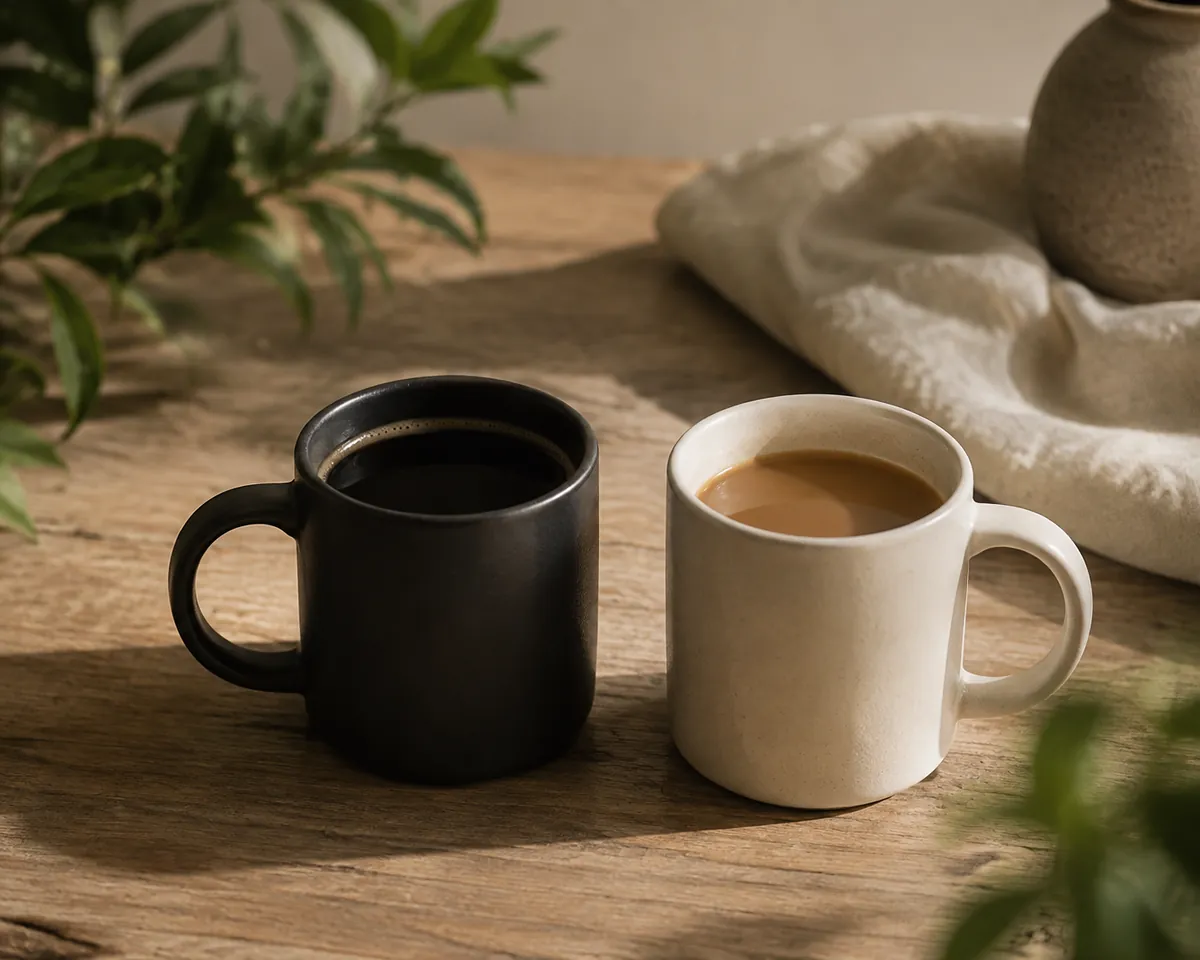
Anyone making a single cup should look elsewhere entirely. A cone, a plunger or an AeroPress all produce a better cup with less equipment, and the choice between the first two is the more useful decision to spend time on.
It is also worth being clear that strength and caffeine are separate questions here. Percolated coffee tastes strong because it is bitter and concentrated, and the figures by brew method do not track that impression closely, in much the same way that instant coffee tastes weak while sitting in the same broad range.
Where a percolator is the right answer, it is completely the right answer, and no amount of technique makes a cold brew vessel or a glass cone work on a campfire at six in the morning.
Common questions
How does a percolator move the water up the tube?
There is no pump. The base of the stem sits in a small well in the floor of the pot, where heat concentrates and the shallow layer of water boils first. The steam bubble that forms is hemmed in and can only expand upwards, so it drives a slug of water up the stem, which strikes the lid and falls onto the grounds. The knock and gurgle of a percolator is that cycle repeating every second or two.
Why does percolated coffee taste bitter?
Two reasons, both structural. The pot has no way to separate finished coffee from unfinished, so it keeps pushing already-extracted liquid back over grounds that have only bitter compounds left to give. It also brews at or near 100 C rather than the 90 to 96 C most methods use, and it boils the finished coffee between cycles, which drives off the aromatics that would otherwise balance it.
What is a percolator still good for?
Volume and independence. It makes twelve cups in one vessel with no filter limiting the batch, it uses no papers or pods at all, and it works over a fire or a camping stove with no electricity. Stainless and enamel pots survive being packed and knocked about, which is why the design persists outdoors long after kitchens moved on.