Why Your AeroPress Coffee Tastes Bad: Two Faults, Opposite Fixes
Bad is not a diagnosis. This brewer goes wrong in two opposite directions, and fixing the wrong one costs you another cup.
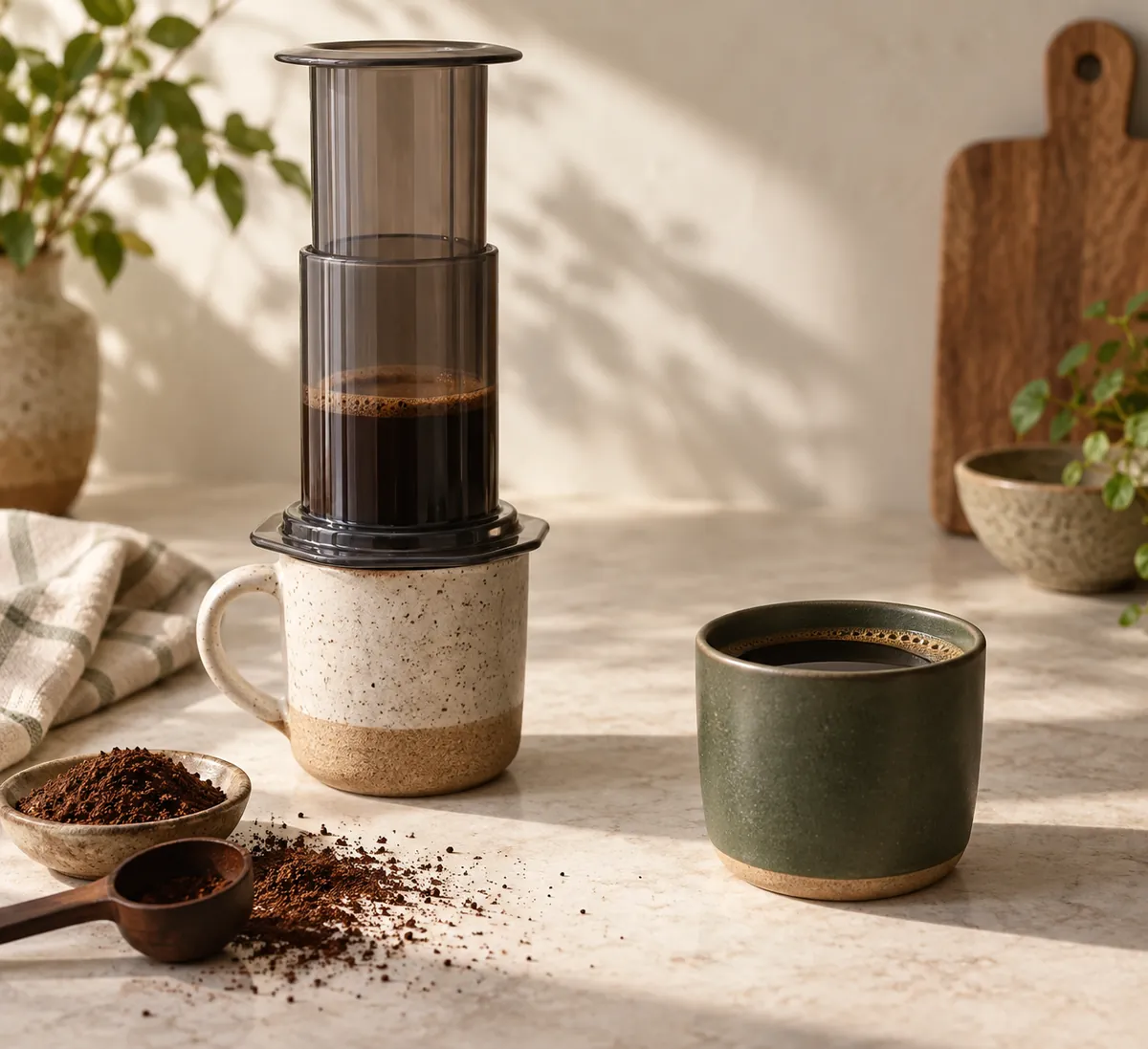
An AeroPress cup goes wrong in two opposite directions, and the correction for one makes the other worse.
Before you change anything or rerun the standard method, work out which end you are at. It takes one more sip and saves a week of guessing.
Which fault is it, sour or bitter?
Sip it and notice where it lands.
Sourness arrives fast and sharp near the front of the tongue, the way a squeeze of lemon does. Bitterness arrives late and stays, drying the back of the mouth after you swallow.
One line, two ends
- Under-extractedSour, sharp, thin finish | Not enough came out
- BalancedSweet, rounded, clean finish | The target
- Over-extractedBitter, drying, hollow | Too much came out
These are ends of one scale rather than two separate problems. Everything you can change on the brewer itself moves the cup along that line, which is why the same adjustment cures one fault and causes the other.
A cup can genuinely be both, because an uneven grind extracts the dust past the point of bitterness while the boulders are still sour, and the result tastes muddled rather than clearly one thing.
Two cases sit outside the scale. A very light arabica roast can taste acidic however well it is brewed, and old beans taste sour in a way no setting reaches.
What if the cup tastes sour and bitter at once?
If you taste both at once, that points to uneven extraction more often than to an average brew that is simultaneously too short and too long.
Fine dust can turn bitter while larger particles and dry pockets remain sour.
| Clue | Likely cause | First correction |
|---|---|---|
| Sour start, dry finish | Wide particle spread | Use a more even grind before changing time |
| Sharp cup with silty bottom | Metal filter plus excessive fines | Grind more evenly or return to paper |
| One good cup, one bad cup at identical settings | Inconsistent stirring or water level | Standardise the wetting step |
| Hard press and muddled taste | Bed compacted by fines | Go slightly coarser and press gently |
| Fast drip followed by sourness | Coarse uneven bed | Level the coffee and grind finer |
Stirring should wet the entire bed without becoming a second uncontrolled variable. Use the same short motion each time, including the edges, then leave the slurry alone for the planned steep.
The filter matters because metal allows more fine material and oil into the cup. That heavier texture can read as harsh even when extraction is reasonable, so compare a paper filter before moving every brew setting.
Fix evenness before moving the average. Once the grounds, wetting, and press are consistent, the sour-or-bitter corrections become useful again.
How do you fix sour AeroPress coffee?
Grind finer first, then add time.
Sour, in order of effect
- Grind finerTwo or three clicks. This is the largest single lever you have.
- Steep longerAdd thirty seconds before you plunge.
- Check the waterIf the cup stays sour, raise temperature in measured steps before changing several settings.
- StirTen seconds after pouring, so every ground is actually wet.
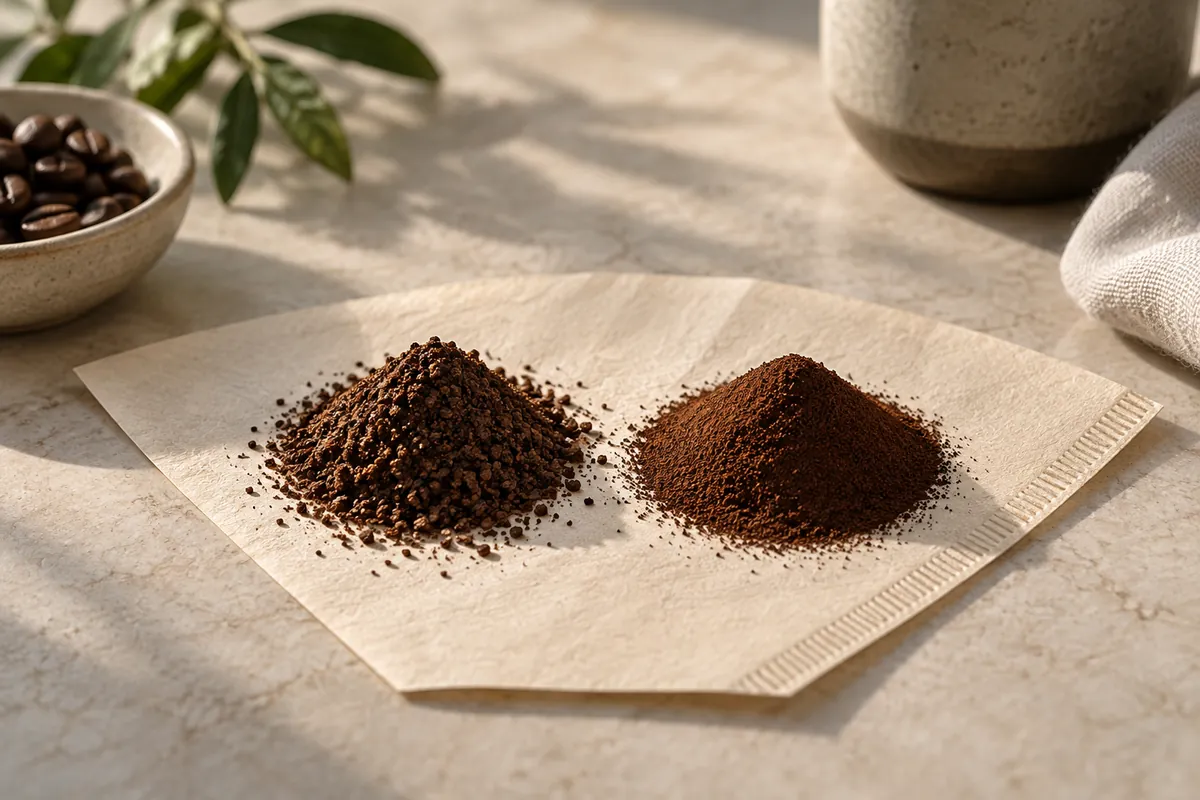
Change one thing per brew. It is slower and it is the only way to learn which setting your grinder and your beans actually needed.
Finer grind works because it exposes more surface. The same water reaches more coffee in the same time, which is the main mechanism behind fine-grind instructions.
AeroPress gives 80 C for dark roasts and 85 C for medium and light roasts as starting points, but water temperature is a lever rather than a universal threshold, and a stubbornly sour light roast may improve as you move hotter in measured steps using clean brewing water.
Stirring is free and it fixes a real fault. Dry pockets in the bed extract nothing at all, so the cup is under-extracted even though the average setting was right.
There is a floor to how fine you can go. Past a point the plunge becomes genuinely hard and the bed chokes, which is the signal to stop and lengthen the steep instead.
How do you fix bitter AeroPress coffee?
Everything runs the other way.
Bitter, in the order the brew meets them
- Grind coarserTwo or three clicks back. The mirror of the sour correction.
- Cooler waterLower the measured temperature in 5 C steps, especially for darker roasts.
- Plunge earlierThirty seconds off the steep, before anything else changes.
- Press gentlyLet your palm rest on it rather than leaning your weight in.
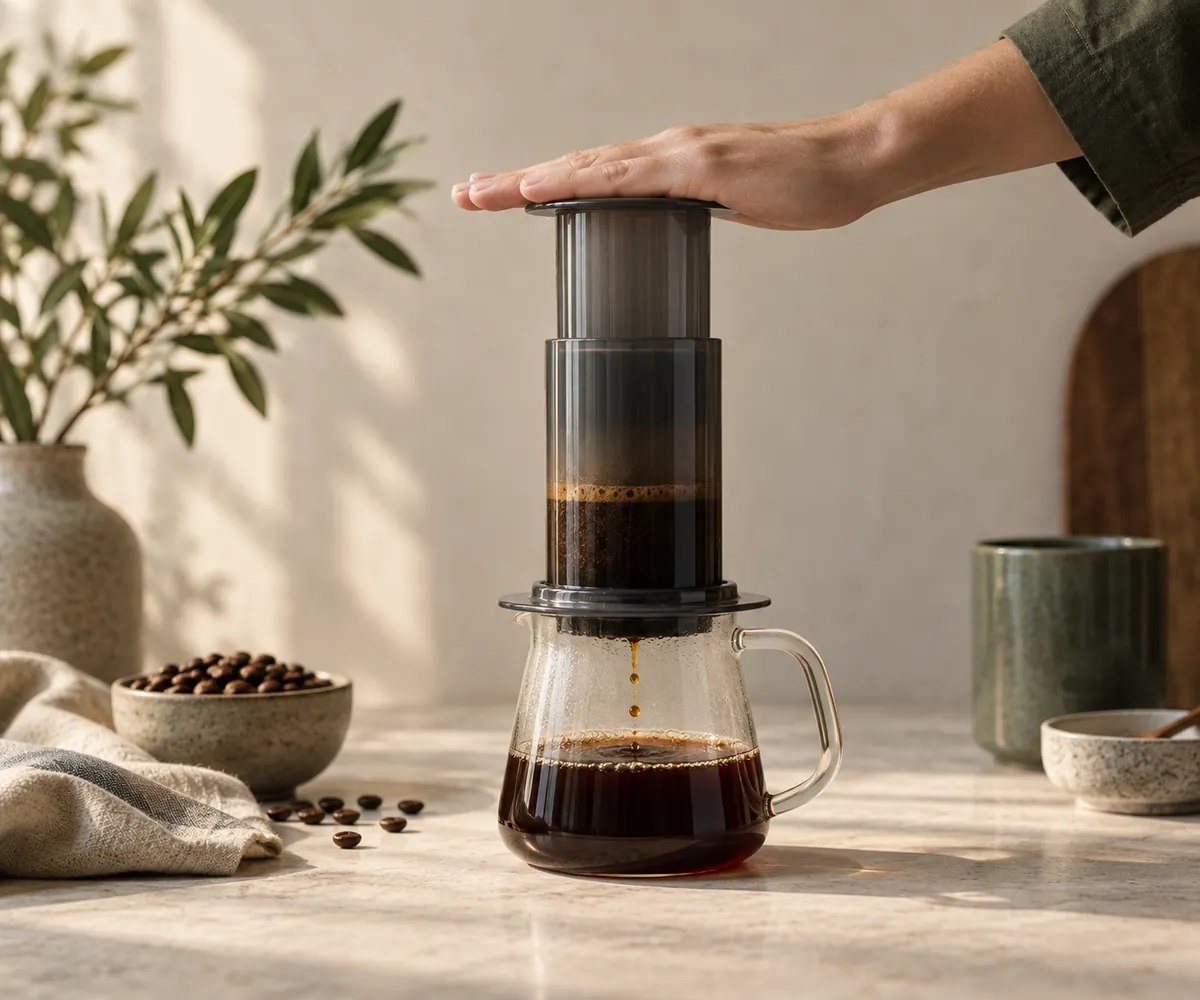
Press force is the hidden variable. Leaning hard compacts fine particles into a tighter bed, which raises resistance and makes an already uneven brew harder for you to control.
Twenty to forty seconds is a reasonable press, far shorter than the full brew cycle for drip coffee. If yours takes five, the grind is too coarse, and if it takes ninety, it is too fine.
Very hot water accelerates extraction, but temperature interacts with grind, time, roast, and agitation.
Measure it when possible, because a fixed wait after boiling lands at different temperatures in different kettles and rooms.
A dark roast or robusta-heavy blend can taste bitter at any sane extraction. It has already been taken most of the way there in the roaster, so the corrections here can only reduce the fault rather than remove it.
Why is the plunger hard to press?
Resistance usually comes from fines blocking the spaces between larger particles or from a bed compacted by too much force. The answer is not to lean harder, because that compresses the coffee and makes the blockage tighter.
- Stop and make sure the filter cap is fully attached
- Rest a flat palm on the plunger instead of using your body weight
- Hold gentle pressure for several seconds and let the bed relax
- Try a slightly coarser, more even grind on the next brew
- Inspect a metal filter for blocked holes and a paper filter for folds
A normal press should move under steady comfortable pressure. AeroPress advises a slow gentle press and notes that a medium-fine grind commonly takes about 20 to 40 seconds.
If the plunger stops abruptly, do not twist or tip a chamber full of hot liquid. Let pressure ease, keep the brewer stable over a sturdy mug, and finish slowly if it resumes moving.
A dull blade grinder can give you the worst combination: large fragments surrounded by powder. Coarsening the nominal setting may not help until the particle spread itself improves.
When resistance changes over time, coffee residue can block a reusable filter, and an ageing or dirty seal can drag against the chamber even when the bed is normal.
Force is a warning, not a brew setting, because a difficult press does not extract more and only correcting the obstruction at its source solves it.
What if it tastes thin rather than sour?
Thin is a different complaint, and treating it as sourness is how people end up with bitter coffee.
Thin
Tastes of water because not enough coffee went in, so add dose.
Sour
Tastes sharp because enough coffee went in but not enough was extracted, so grind finer.
Both at once
A coarse grind at a low dose. Fix the dose first.
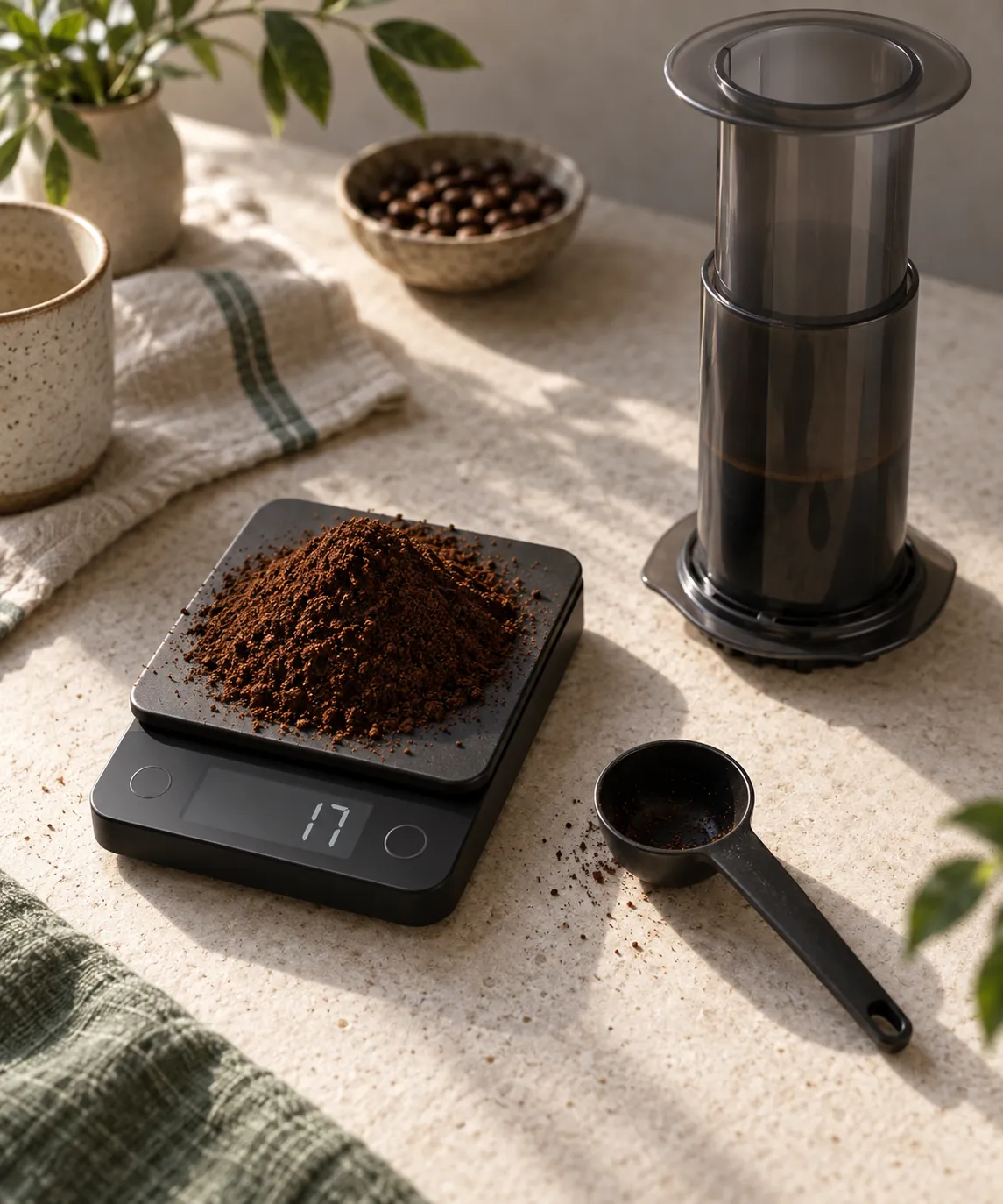
The scoop that comes in the box is the usual culprit. AeroPress gives 11.5 g or 12 to 13 g for a level scoop, depending on the page, against 16 to 18 g as the dose for a cup.
Weigh it once and you will not need to again, because you will know what the right dose looks like in the chamber.
Steeping a weak brew longer does not strengthen it. It extracts more from too little coffee, which is precisely the road to a bitter cup that is also thin.
Concentrate brewing is the exception: if you are pressing a small volume to dilute afterwards, it is meant to taste concentrated before the water goes in, and thin is only a fault after that.
Inverted brewing changes one thing and not the others
Inversion controls steep time and nothing else, so it does not fix flavour.
Inverting a full chamber is heavy and awkward, and the seal can slip if it is not properly seated.
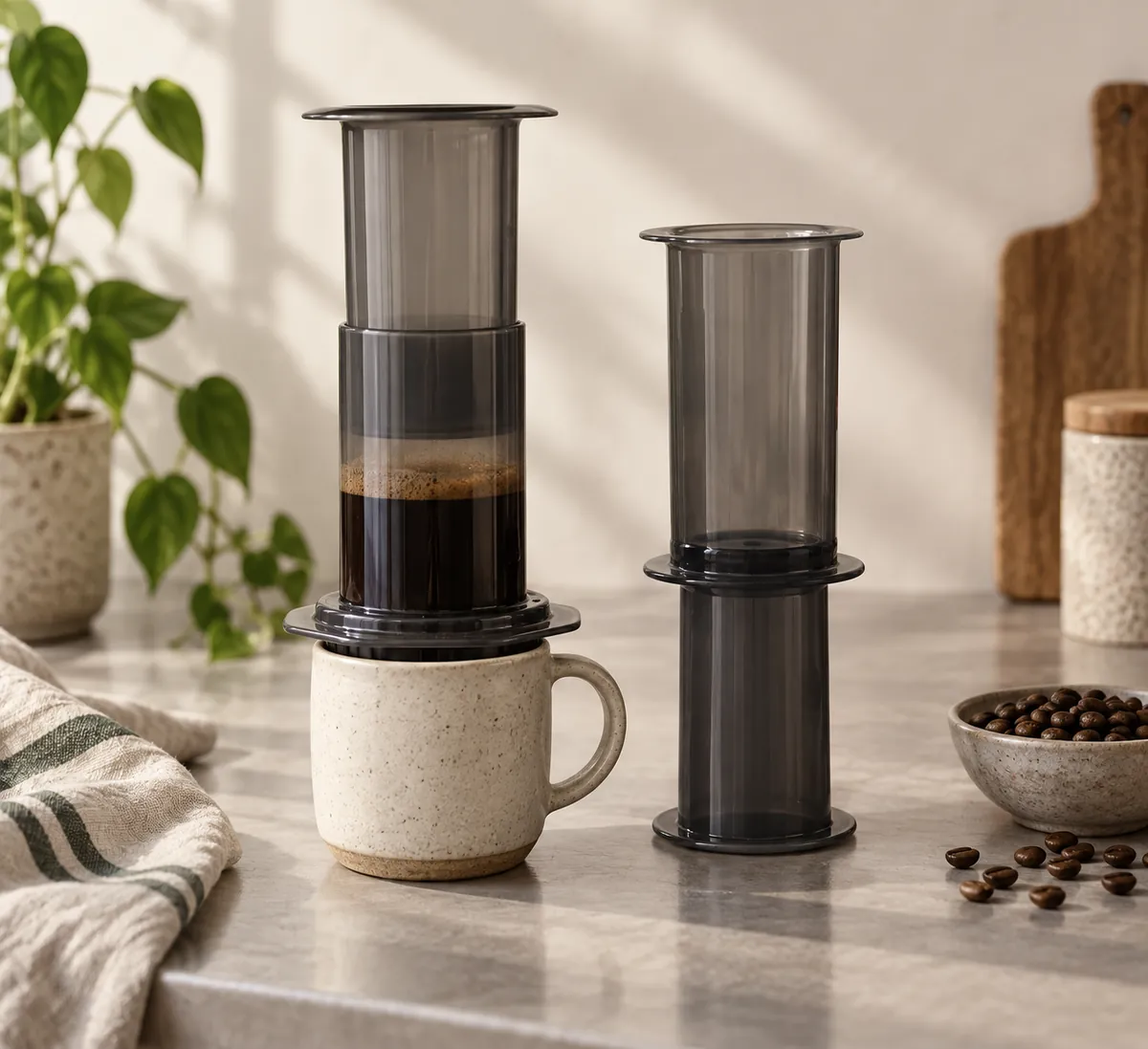
Upright brewing leaks a little during the steep. Water starts passing the filter as soon as it is poured, so a four-minute upright steep is not really four minutes of full immersion.
With a coarse grind that leak is small. The difference matters most at fine grinds and long steeps, which is where inversion earns its reputation.
None of that touches the faults above: a sour cup brewed inverted is still a sour cup, because inversion did not change how much surface the water met.
Inversion works as a control rather than a cure, so if you already know your steep time is right, upright is simpler and spills less.
Why does water run through before you press?
A small amount of early drip-through is normal in upright brewing. A fast stream means the bed offers too little resistance, the grounds are uneven, or the pour has opened a channel through one side.
Trace early drip-through
- Level the dry bedA tilted bed gives water one short route to the filter
- Pour gentlyKeep the stream controlled so it does not bore a hole
- Wet evenlyStir briefly around the edge as well as the centre
- Insert the plungerPull back slightly to create a seal after stirring
- Adjust next brewGrind finer only if the physical steps were consistent
AeroPress describes roughly two to three per cent pre-drip as normal with a medium-fine grind. That small loss does not make the recipe fail, and trying to eliminate every drop can push the grind unnecessarily fine.
Large early loss shortens full-immersion contact and can leave the cup thin or sour. It also changes the final beverage mass, so weighing the output once can show you a problem that chamber markings hide.
A flow-control cap can stop drip-through, but it does not repair uneven grounds or poor wetting. It suits a recipe that needs a sealed steep and proves nothing about whether the underlying grind is correct.
The inverted method prevents pre-drip too, although the manufacturer warns that flipping a chamber of hot water is less stable and can cause burns.
An upright brewer with a level bed and a promptly inserted plunger solves most of the same problem with less risk.
What does the paper filter change?
More than people expect, and in a direction you can choose.
| Filter | Passes oils | Body | Clarity | Note |
|---|---|---|---|---|
| Single paper | No | Light | High | The default, rinse it first |
| Metal | Yes | Heavy | Lower | Some fines reach the cup |
| Double paper | No | Lightest | Highest | Slows the plunge noticeably |
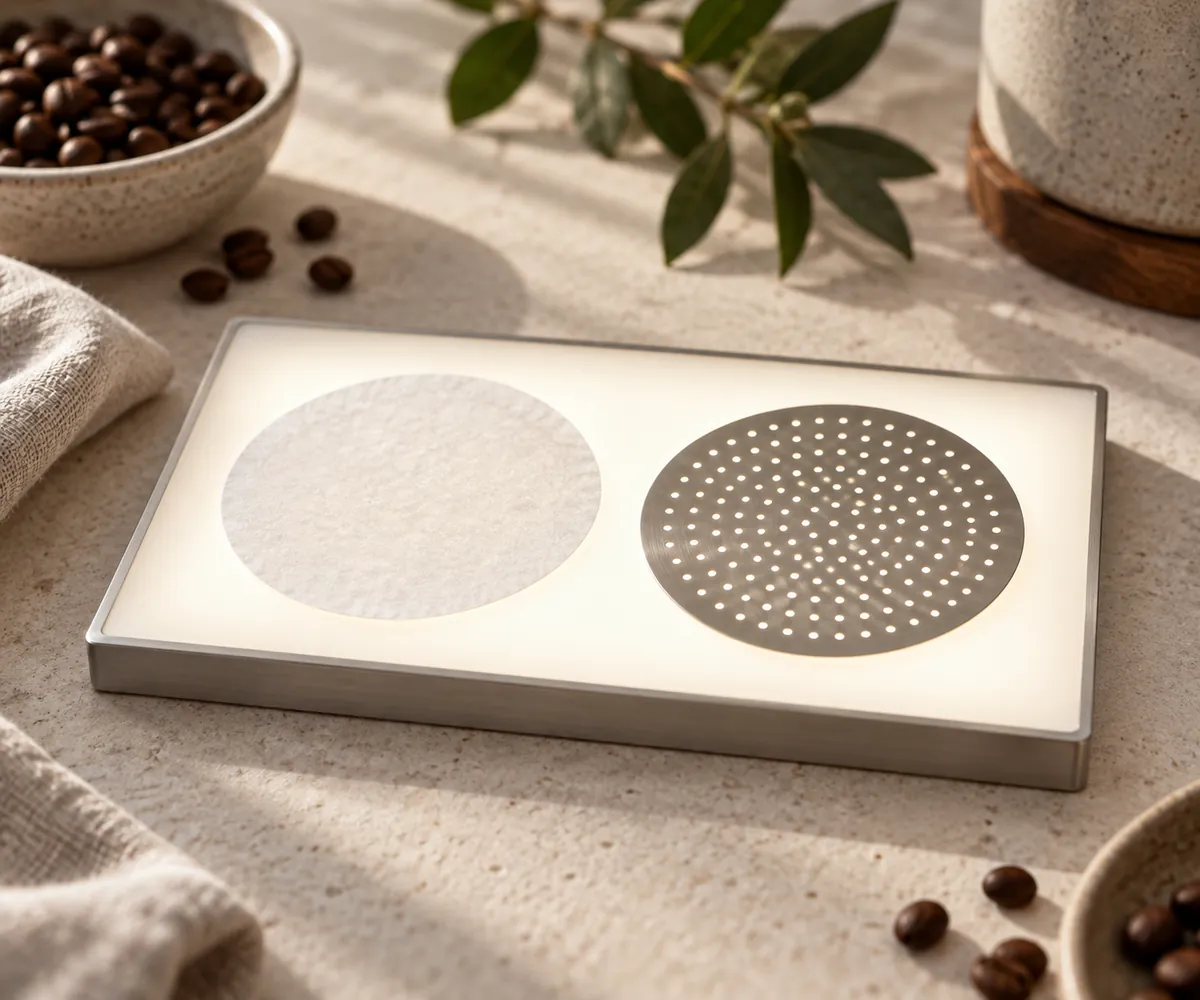
Paper takes out oils and fine particles, which a French press does not. That gives a clean cup with a light body, which some people love and others read as thin.
Metal lets the oils through, so the cup gains weight and loses a little clarity, and a few fines usually make it to the bottom of the mug.
Rinse the paper before you brew. Thirty seconds of hot water removes the cardboard note that cheap paper otherwise puts straight into the cup.
Two papers is a real option rather than a trick. It slows the plunge and produces the cleanest cup this brewer makes, closer to what a filter cone would give you.
Why does my AeroPress coffee taste stale or papery?
Some faults live in the equipment and answer to nothing you do at the grinder.
- When did you last wash the rubber seal rather than just rinse it?
- Did you rinse the paper filter before brewing?
- How long ago were the beans roasted?
- Is the coffee pre-ground, and how long has the bag been open?
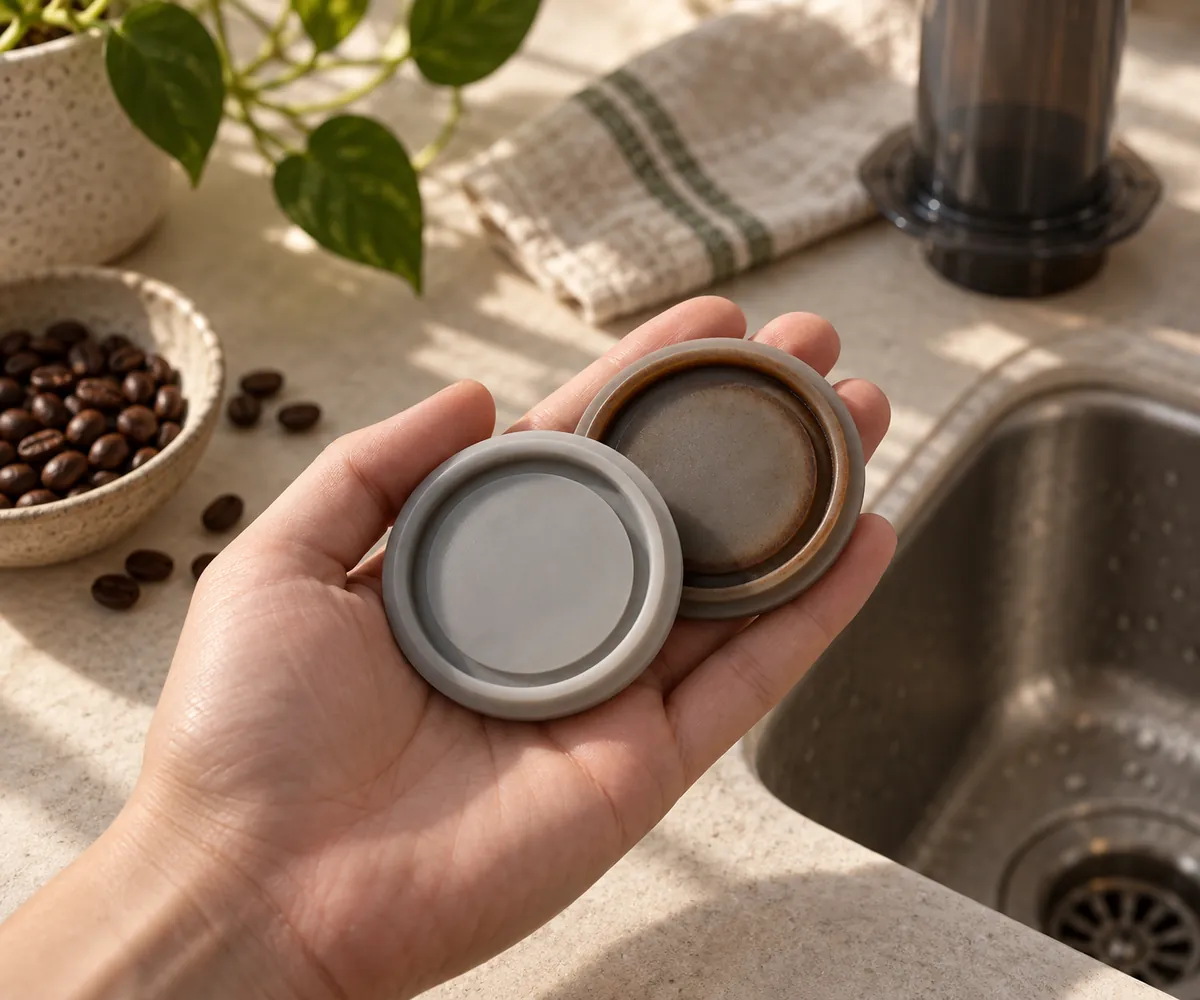
The seal is the part few people inspect. Rubber holds coffee oils, and once they go rancid over weeks, later brews carry a note that tastes like old coffee.
Wash it properly rather than rinsing. Warm water and a little detergent on the seal itself, then rinse thoroughly, roughly once a fortnight.
The papery taste comes straight from an unrinsed paper, and rinsing it costs thirty seconds.
Roast date matters more than roast level here. Coffee more than a month past roast makes a flat cup that reads as under-extracted, and changing the grind does little to fix it.
Pre-ground is the fastest of all to fade, since the surface area that makes grinding fine work for you also makes staling work against you, and an open bag goes dull within days.
Common questions
Should you stop pressing when the AeroPress hisses?
For the standard method, the hiss is a practical stopping point because most liquid has passed through. Pushing harder after that mainly compresses the puck and is unnecessary unless a specific recipe calls for it.
Can you reuse an AeroPress paper filter?
A clean intact filter can be rinsed and reused, but discard it when it wrinkles, tears, smells stale, or slows the press unpredictably. A fresh filter is the clearest troubleshooting control.
Why is the AeroPress puck wet?
A wet puck usually reflects water volume, grind, filter, and how far you pressed rather than cup quality. Judge the drink first unless the brewer is leaking or the press has become abnormal.
Can a metal AeroPress filter make coffee taste harsher?
It can pass more oils and fine particles than paper, which adds body but may read as silty or harsh. Compare one fresh paper filter before changing grind, temperature, and time.