How to Make Hojicha, the One Japanese Tea That Takes Hot Water
Roasting changes the leaf so that it copes with hotter water than other Japanese teas do, so the caution those teas taught you counts for less here.
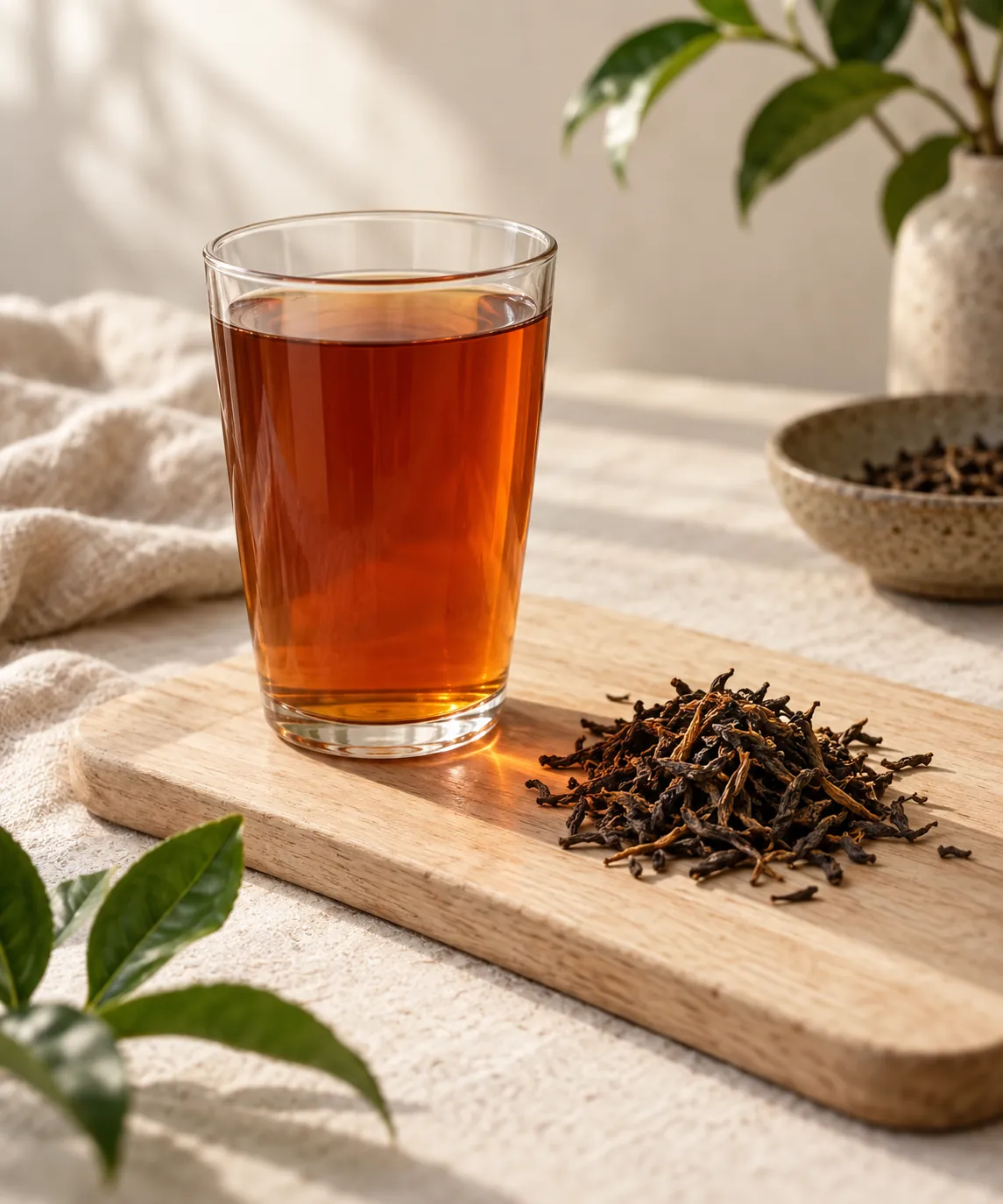
Brew hojicha with 5 g of leaf per 200 ml of water at 90 to 95 C, for 30 to 60 seconds.
That temperature would make many delicate Japanese green teas rough. Hojicha has already been roasted, so its toasted aroma develops quickly in hot water and the useful control shifts from cooling the kettle to keeping the steep short.
Why is hojicha the most forgiving Japanese tea to brew?
Roasting changes the leaf enough to give you a wider brewing margin.
Unroasted green tea can become astringent when hot water and long contact pull more catechins into the cup, whereas a study of roasted stem tea found catechin levels falling and pyrazine roast aromas rising as the roasting temperature went up. Roasting changes the balance, so moderate excess heat is less obvious even though a very long steep can still become drying or ashy.
How roasting changes the brewing decision
- Bancha or stem materialMature leaf and twigs provide the base before roasting
- High heat develops toastGreen and marine notes give way to nutty, caramel-like aromas
- Hot water releases aroma quicklyThe cup reaches full roasted character without a long wait
- A short steep protects the finishDecanting promptly keeps roast from becoming dry or ashy
That sequence shows cause and effect rather than a timetable, since roast depth and material still vary by producer and the colour, aroma, and finish of the bag in front of you settle the last two decisions.
What roasting leaves behind tolerates heat and time, so you can pour water at 90 to 95 C, walk away for a few seconds too long, and still drink something pleasant.
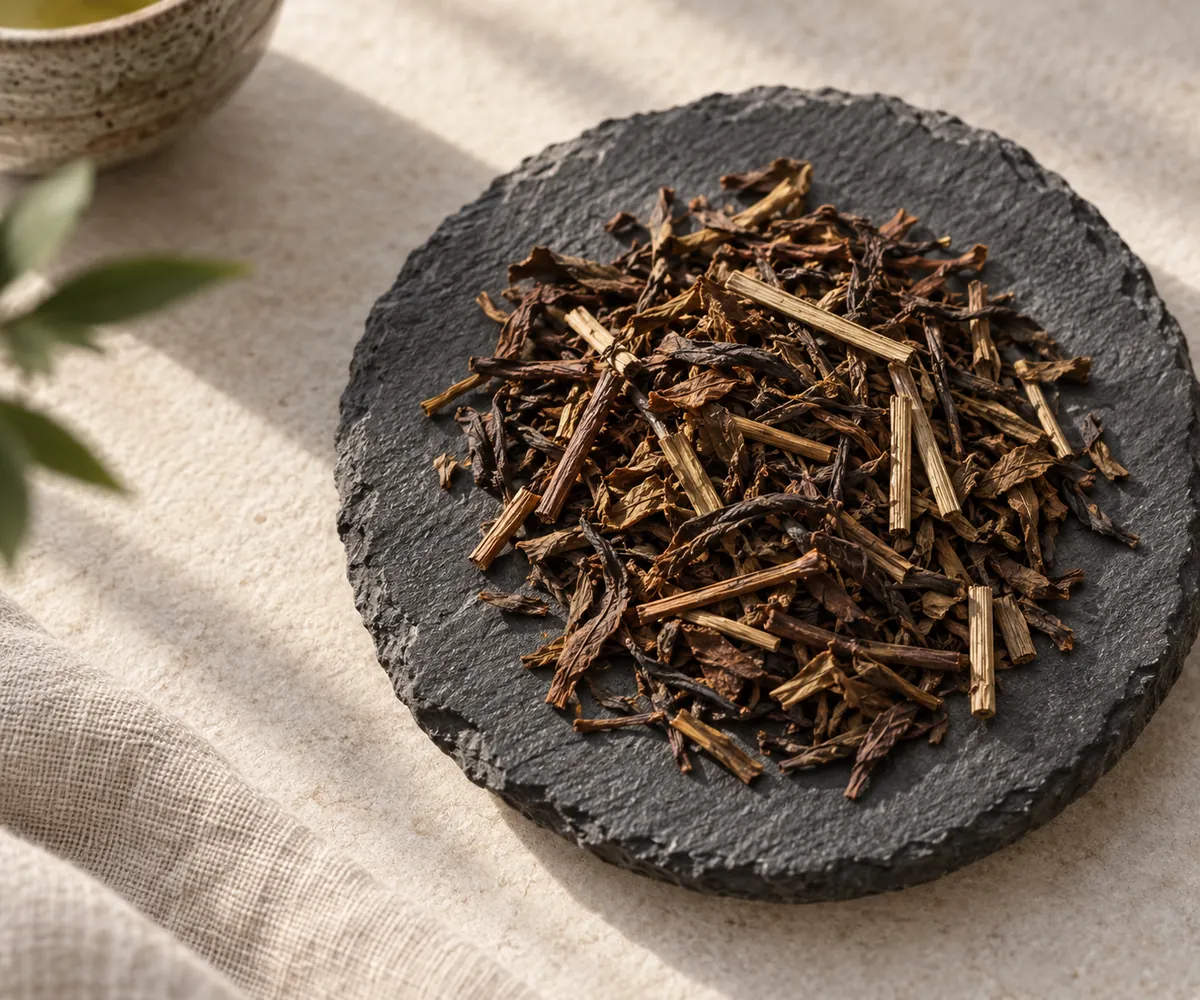
The raw material helps too. Hojicha is often made from bancha and from stems rather than from the young leaf that goes into a premium green, so there was less to protect in the first place.
Every other Japanese green sits in a narrow band. Beside the steeping temperatures for sencha or gyokuro, this one sits about twenty degrees above sencha and thirty-five to forty above gyokuro.
Barley tea is roasted grain and nothing but, which makes a useful reference for what roasting alone tastes like.
The latitude is not unlimited. A dark roast left past about 45 seconds will still turn ashy, which is the one fault this tea keeps.
What ratio and temperature does hojicha need?
Use five grams of leaf to two hundred millilitres of water at 90 to 95 C, steeped for only 30 to 60 seconds despite the heat, because the roasted leaf gives up its colour and flavour quickly.
Weigh it if you can. Hojicha leaf is bulky for its weight because it contains stems and roasted twigs, so a heaped teaspoon holds far less than the same spoon of sencha would.
That single fact accounts for many weak cups. The dose looks generous in the pot and falls well short of what the recipe asked for.
Stem-heavy bags need more volume again. If yours is mostly pale twig rather than curled leaf, expect to use a noticeably larger scoop for the same 5 g.
Leaf, stems, and powder need different starting points
The word hojicha names the roast treatment, not one fixed grade of leaf. A bag may be mostly broad bancha leaf, mostly roasted stems, or a mixture, and that physical difference changes how much fits in a spoon and how quickly the cup gains body.
| What is in the bag | What it tends to do | Brewing adjustment |
|---|---|---|
| Broad curled leaf | Builds body and roast together | Start at the baseline and shorten if the finish dries |
| Pale roasted stems | Smells sweet and woody but weighs very little by volume | Weigh the dose or use a visibly larger scoop |
| Leaf-and-stem blend | Balances aroma, body, and easy straining | Use the baseline, then judge roast depth |
| Fine broken material | Extracts fast and can pass through coarse mesh | Shorten the steep and use a finer strainer |
| Powder | Suspends the whole leaf instead of infusing it | Whisk by weight and do not apply the leaf recipe |
Stem-heavy hojicha is not an inferior leftover. Roasted stems can produce a sweet, woody cup with less body, while leaf-heavy tea often gives a fuller finish and more visible color.
Smell the dry tea before heating water, since a vivid nutty or toasted aroma gives you something to preserve. A bag that smells mainly of cardboard is unlikely to regain its lost aromatics through a longer steep.
Measure by weight when comparing bags. A tablespoon of hollow stems and a tablespoon of dense broken leaf can look equally full while carrying very different masses, which makes volume the least reliable way to transfer a recipe.
The cut also decides the filter. A kyusu with a broad metal screen handles whole leaf and stems well, while fine fragments benefit from a basket or mesh that will not clog halfway through the pour.
How do the roast levels differ?
Roast depth changes how much latitude you actually have.
A light roast keeps some of the green character underneath and reads tan brown in the bag. A dark roast tastes of the roasting rather than of the leaf.
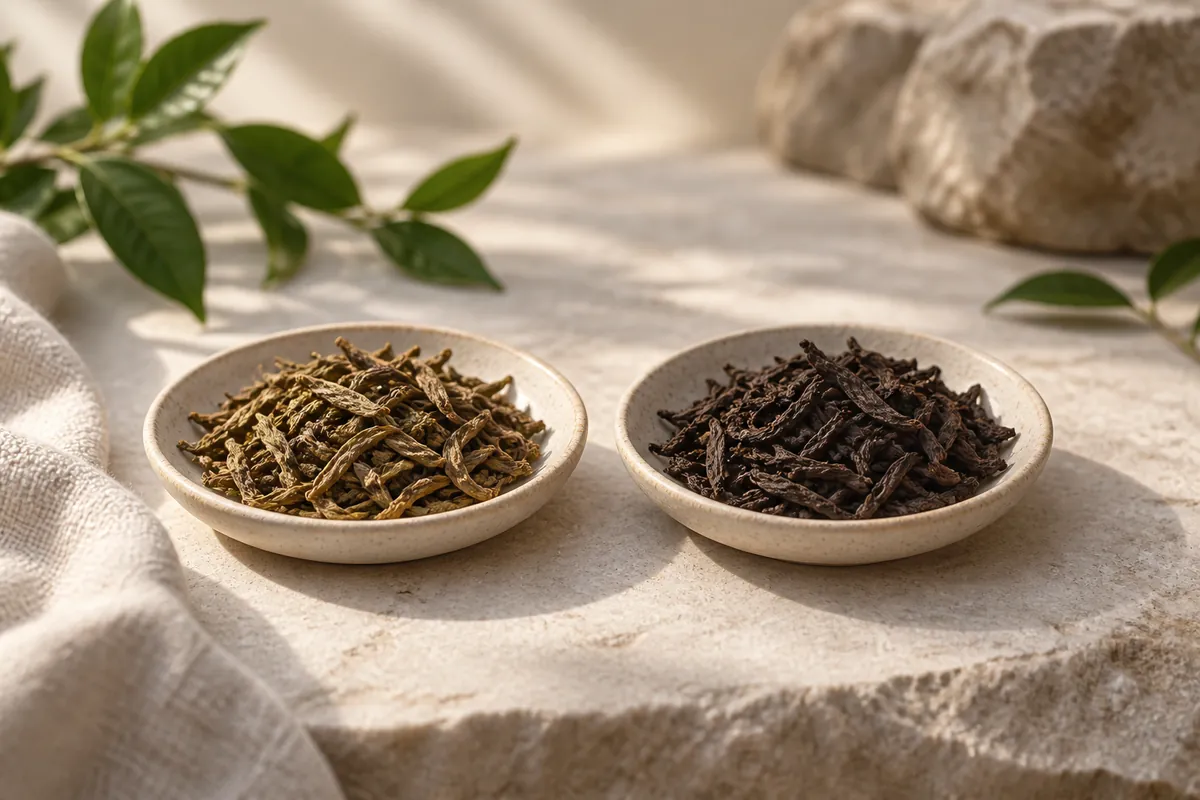
Hojicha roast depth and what it changes
- Light, tan brownSome green character survives, and the steep can run to a minute
- Medium, chestnutThe common middle, forgiving at 45 seconds
- Dark, near-chocolateFull colour arrives fast, and past 45 seconds it goes ashy
Darker roasts brew faster. They reach full colour in a shorter steep, so a minute that suits a light bag will overshoot a dark one.
Because there is no standard behind the labels, one producer's dark roast is another's medium.
Age muddies this. Roast colour fades in storage, so an old dark bag can look lighter than it brews and catch you out at the same steep time.
Roasted character is not unique to this leaf, though the rice blend gets its similar toasted note from rice added to the blend rather than from roasting the tea itself.
How do you brew hojicha in a kyusu?
The sequence is shorter than the kyusu method for any other Japanese tea, because there is no cooling step, no waiting for the kettle to come down, and no pouring through a separate vessel to lose heat.
Hojicha in a kyusu, in order
- LoadAdd 5 g of leaf loosely, without packing the pot.
- PourAdd water straight from the kettle at 90 to 95 C.
- Time30 to 60 seconds, shorter for a dark roast.
- EmptyPour out completely, because the next infusion follows within a minute.
Give the leaf room. Bulky roasted material packed tight sits above the water line and barely extracts, while the leaf underneath extracts more.
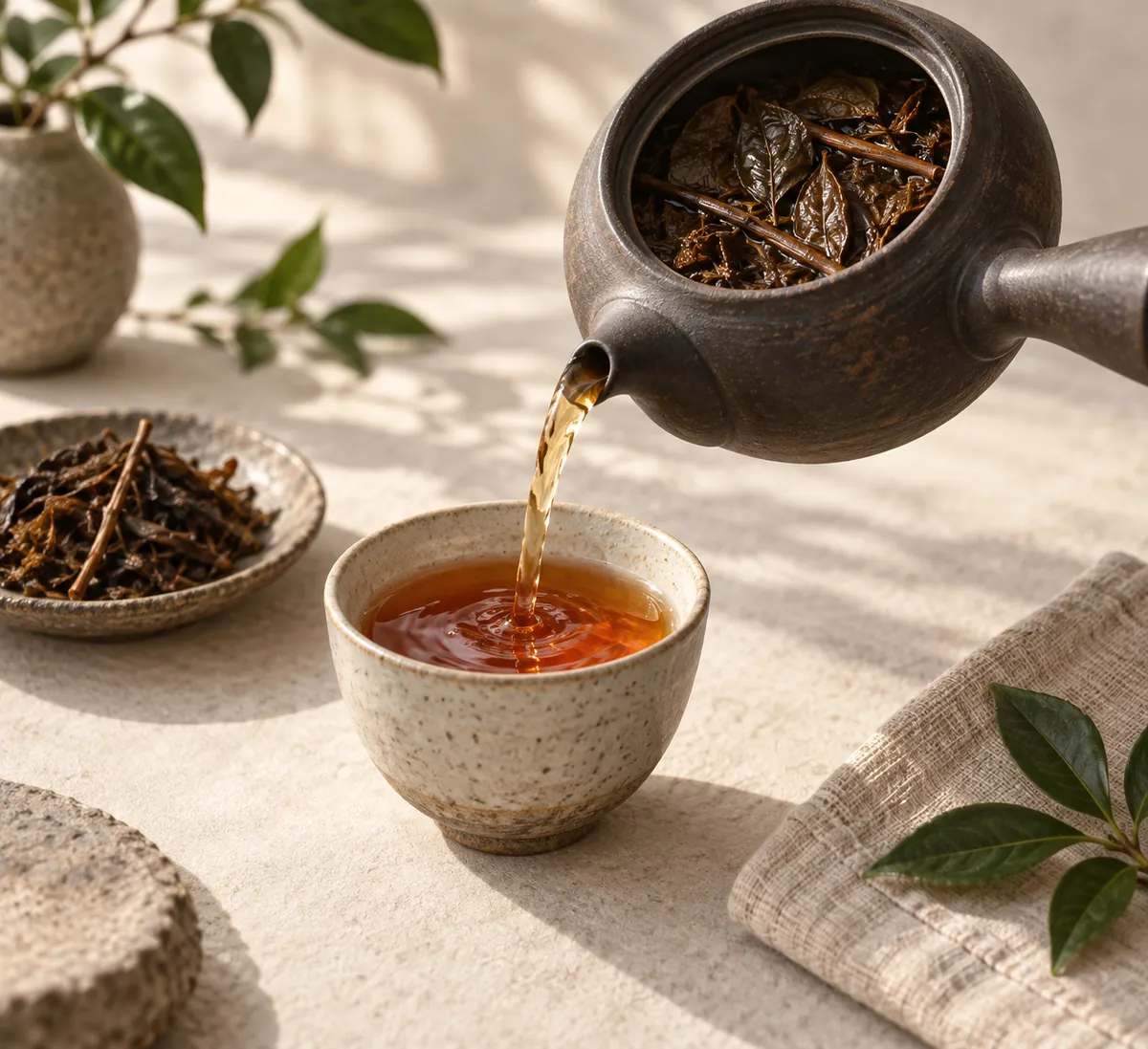
Because the water is already hot, the few degrees a cold side-handled pot takes out make no difference to a leaf this tolerant, so warming the pot matters less here.
Emptying still matters, because a second infusion follows within a minute and water standing on the leaf will have carried on extracting the whole time.
Very fine mesh has one drawback: small roasted fragments clog it, and the pour slows to a trickle until you clear it.
What should change on the second and third infusion?
Pour fresh hot water onto the drained leaf soon after the first cup. The leaf is already warm and hydrated, so later infusions release quickly even though less aroma remains.
For the second infusion, use the same water temperature and begin checking around 20 seconds. A third may need slightly more time, but extending it simply because the liquor looks pale can trade a clean finish for dry roast.
Stop when the cup tastes woody or empty.
Color can outlast aroma. A reddish third cup may look strong while smelling faint, because brown pigments remain easy to see after the most volatile toasted notes have weakened.
Leaving a puddle in the pot joins the infusions together, because the trapped liquid extracts while you drink the first cup and then enters the second as a small dose of over-steeped tea that makes the next pour harder to read.
A complete pour matters more than a perfect timer: tip the pot until the stream ends, return it upright, and leave the lid slightly open so steam does not keep cooking the wet leaf.
Should you use leaf or powder?
Hojicha powder is the whole roasted leaf ground fine, so when you drink it you consume the leaf rather than an infusion strained off it, and powder and leaf are different products, not two grades of the same thing.
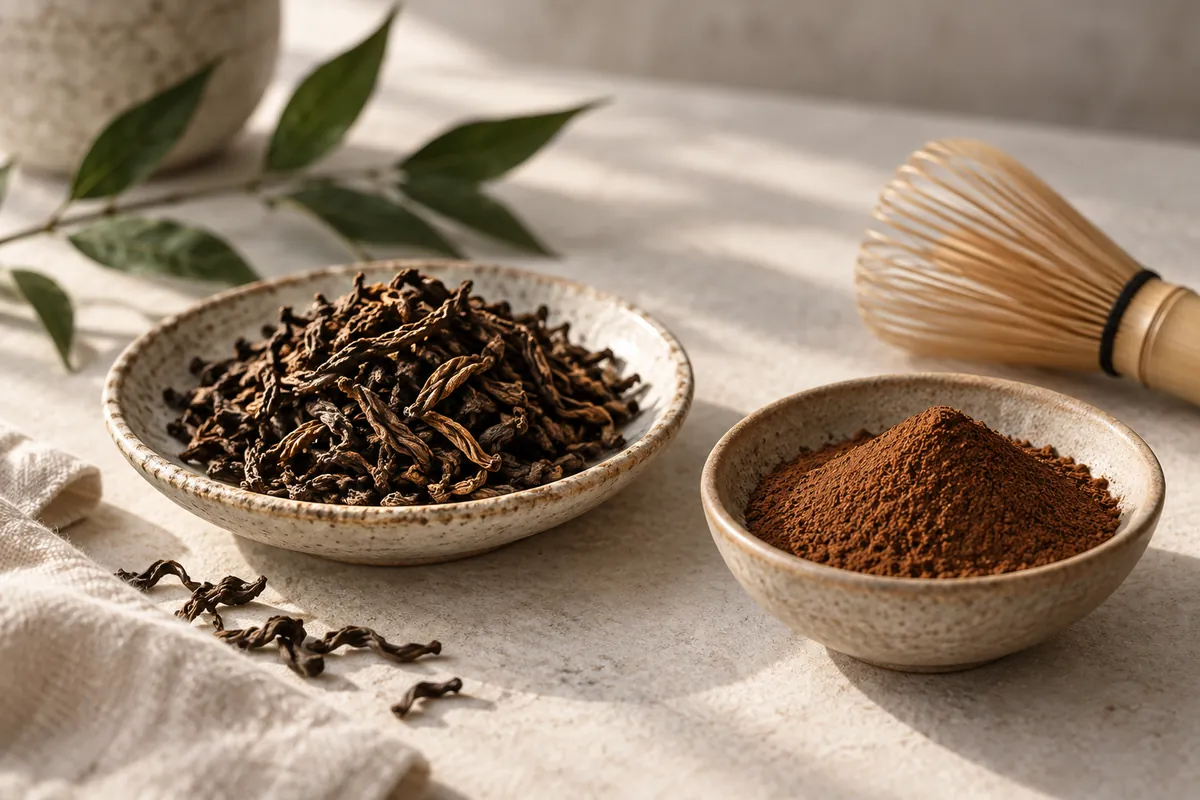
Leaf needs a pot and gives several infusions, and powder wins for milk drinks because it carries through milk without a concentrate.
Powder is faster and stronger for the same effort, with no pot, no straining, and nothing to empty afterwards.
It behaves in milk much as a matcha latte does, because both are suspended powder rather than a strained infusion.
It also has to be whisked, because the powder suspends rather than dissolves, so it settles in a glass within minutes and needs stirring again before the last mouthful.
Storage differs as well. Ground leaf exposes far more surface to air and goes flat faster than whole leaf in the same conditions.
Can you cold brew hojicha?
Yes, though cold water emphasizes sweetness and wood while muting the high roasted aroma that hot water releases. Use about 8 to 10 g of leaf per 500 ml, refrigerate it for several hours, then strain when the cup tastes rounded rather than waiting for maximum darkness.
Wet every piece of leaf when you fill a clean covered jug, and begin checking after four hours.
A dark roast or broken blend reaches its limit sooner than large stems.
When a cold batch turns woody, reduce time before reducing dose. The next version keeps enough aromatic material while avoiding the stale finish.
Cold brew is also different from making hot concentrate for an iced latte. The former extracts gently in the refrigerator, while the latter uses hot water to capture roast intensity before milk and ice dilute it.
Use a clean vessel and keep the finished infusion covered and refrigerated.
Add milk to the serving rather than the whole batch, then discard anything with an off odor or unfamiliar surface change.
Choose cold brew for softness, not because it is automatically stronger or more aromatic. When the roasted top note is the reason you bought the tea, a short hot brew cooled over ice preserves more of that character.
How do you make a hojicha latte, hot or iced?
The concentrate has to be stronger than a drinking brew.
Milk dilutes and it also coats, so tea at normal strength disappears into it and you end up with warm milk carrying a suggestion of roast.
| Version | Leaf | Water | Milk | Method |
|---|---|---|---|---|
| Hot | 3 to 4 tsp | 180 ml at 95 C | 120 to 180 ml warm | Steep 60 s, strain, add milk |
| Iced | 3 to 4 tsp | 180 ml at 95 C | 120 to 180 ml cold | Steep 60 s, cool, pour over ice |
| Powder | 2 tsp | 60 ml at 70 C | 180 ml | Whisk smooth, then add milk |
Roughly three to four teaspoons per 180 ml is the working concentrate, steeped for about a minute. That is meant to be stronger than the drinking recipe, and a spoon of this leaf is light, so weigh it if you can.
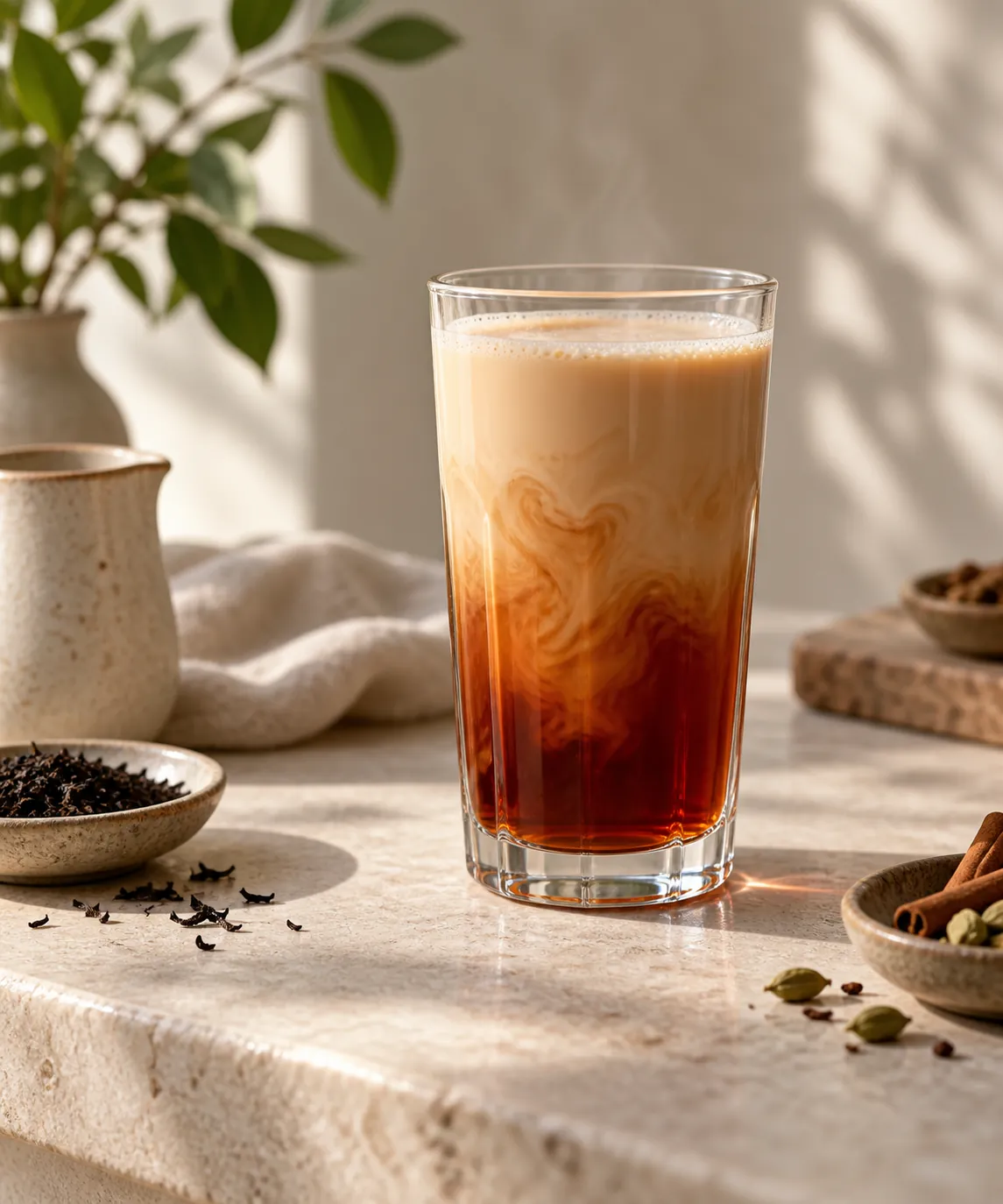
The iced version changes only when the cooling happens. Brew the same concentrate, let it come down to room temperature, then pour it over a full glass of ice with cold milk.
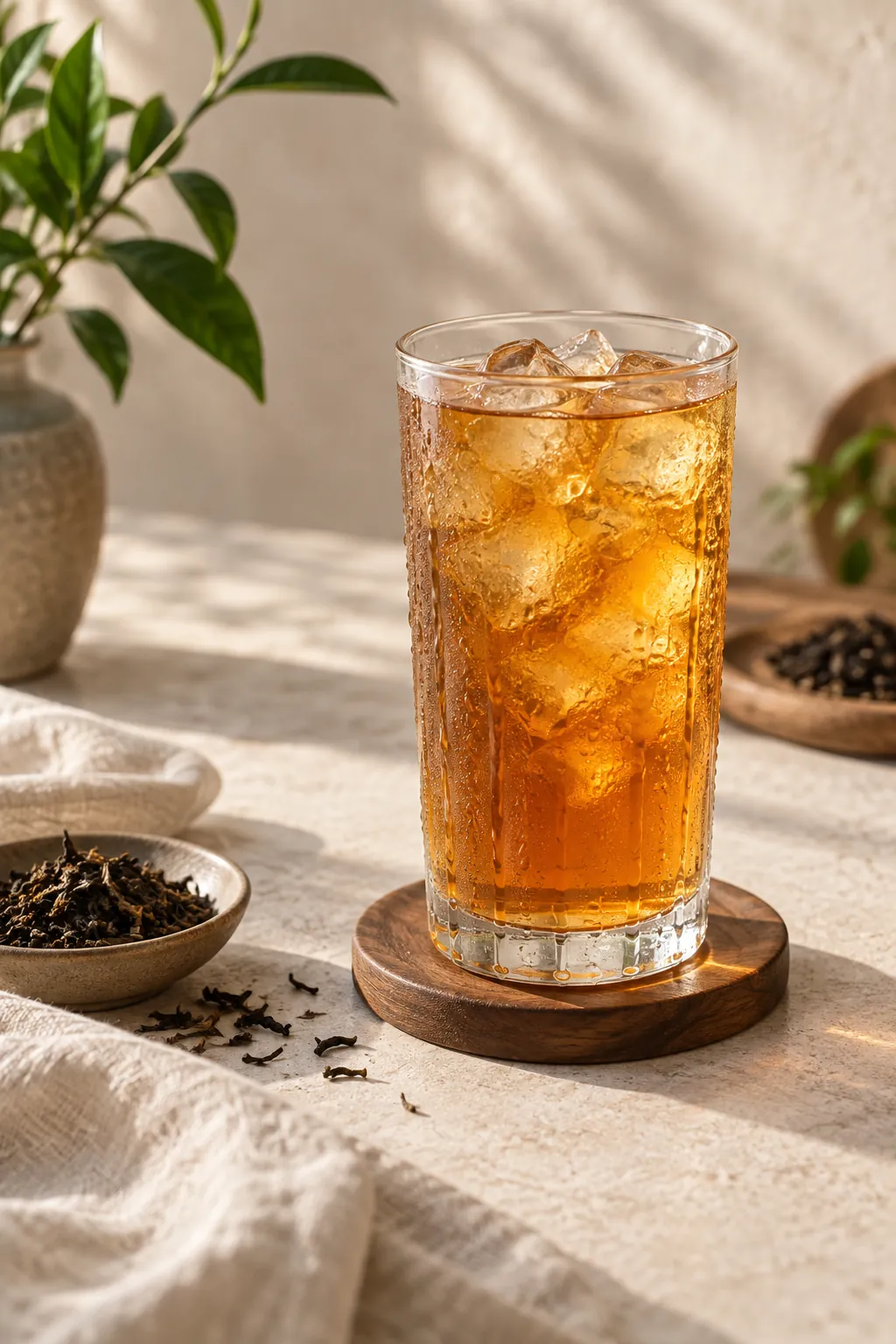
Unlike most chilled tea, hojicha tends not to cloud as it chills.
Plant drinks handle the roast unevenly. Oat carries it best of the common ones, and the toasted character survives there in a way it does not in something thinner.
Why does my hojicha taste thin or ashy?
These come from opposite ends and take opposite fixes.
Thin is a dose problem and ashy is a timing problem, and raising or lowering the temperature does very little to either.
- Was the leaf measured by spoon rather than weighed?
- Was a dark roast left past about 45 seconds?
- Has the bag stopped smelling roasted when you open it?
- Is the blend mostly stems rather than curled leaf?
A thin cup often means too little leaf, and a spoonful of bulky roasted material that looks right can be well under the dose the recipe assumed.
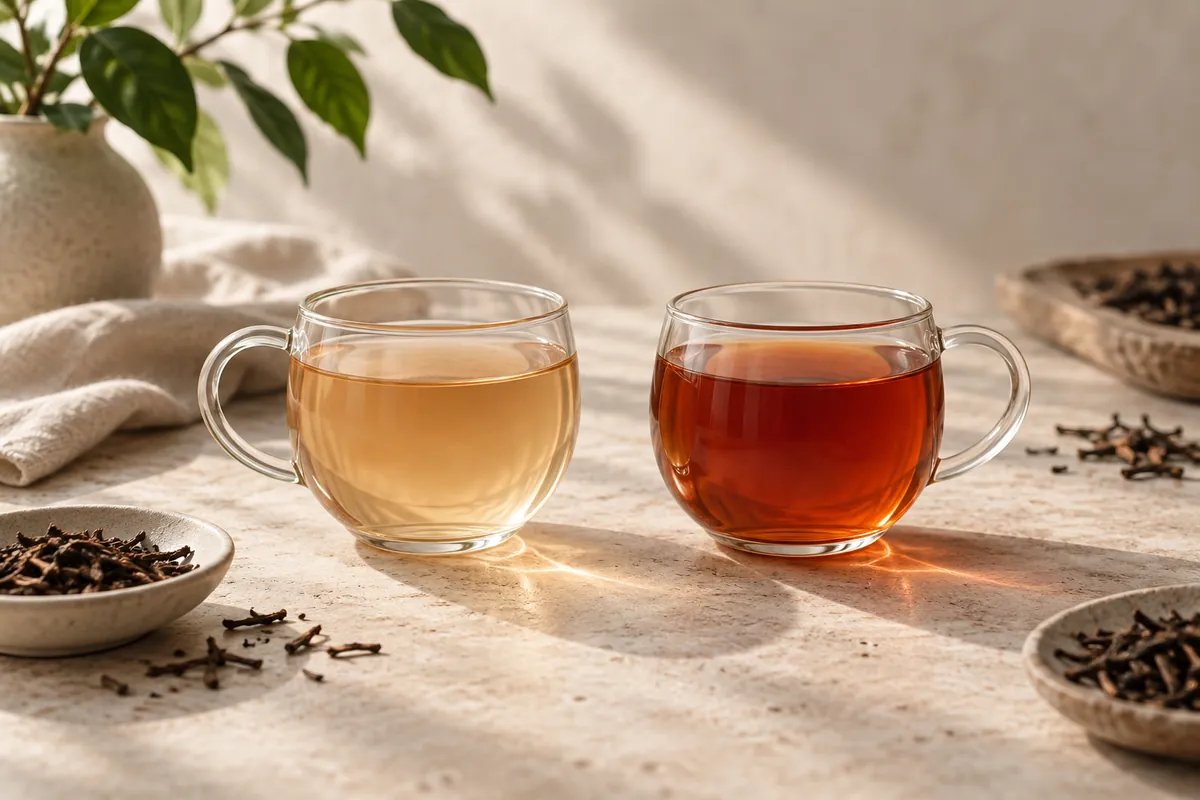
Adding time will not rescue it, since an under-dosed brew left longer arrives thin and bitter, which is the worst of both and sends you back to raise the temperature for no reason.
Ashy is the dark roast overshooting. Pull a dark bag at thirty seconds and the same leaf that tasted burnt will taste of caramel and toast instead.
Two faults are not brewing faults. An old bag has lost its roasted aroma and tastes woody, and hard water flattens hojicha as it flattens any infusion.
Hojicha method
- Makes
- 1 cup, about 200 ml
- Ratio
- 5 g of leaf per 200 ml of water
- Water temp
- 90 to 95 C
- Total time
- 2 min
What you need
- 5 g loose hojicha
- 200 ml water at 90 to 95 C
Equipment
- Kyusu or teapot
- Scale
- Kettle
- Cup
Method
- LoadAdd 5 g of leaf loosely, without packing the pot.
- PourAdd water straight from the kettle at 90 to 95 C.
- Time30 to 60 seconds, and nearer 30 for a dark roast.
- EmptyPour out completely, because a second infusion follows within a minute.
Common questions
Can you brew hojicha with boiling water?
Hojicha Co. calls hojicha too delicate for boiling water and recommends 80 C. The 90 to 95 C used here is a little below the boil.
How many times can hojicha be re-steeped?
Two or three, with each later steep cut to 20 or 30 seconds. The colour holds better than the aroma, so the third cup looks stronger than it tastes.
Does hojicha need a special pot?
No. A kyusu is convenient because the mesh catches stem fragments, but any pot with a filter works and the water needs no cooling vessel.
Does hojicha carry less caffeine than green tea?
It often does, though the amount depends on the blend and the leaf it was made from.