How to Make Gyokuro, and Why the Water Stays at 60 C
Water this cool looks like a mistake until you know which half of the leaf it is choosing to leave behind.
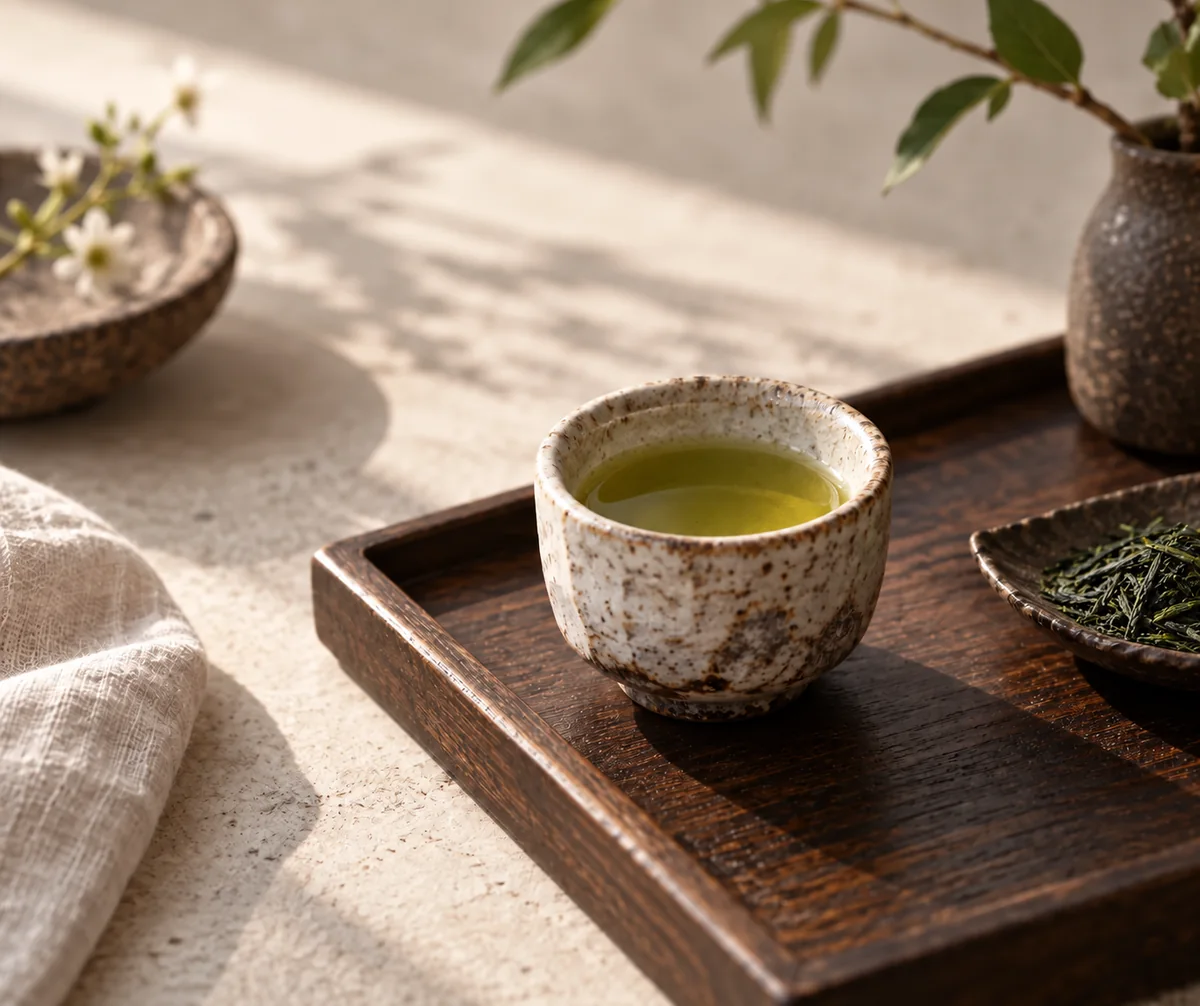
Brew gyokuro at 50 to 60 C, with 3 to 4 g of leaf under only 40 to 60 ml of water, for about two minutes.
That temperature is the whole point of the leaf, and the rest of this method follows from it.
Why does gyokuro want water at 60 C?
Because of what dissolves at that temperature and what does not.
L-theanine, an amino acid associated with gyokuro's sweet savoury character, extracts readily in cool water. Catechin extraction rises as the water gets hotter, bringing more bitterness and astringency into the cup.
At 70 C the sweetness thins as catechins begin to move.
So the low temperature acts as an extraction bias rather than a restraint, favouring the soft savoury side of the leaf before hotter water brings more grip.
Warm it toward 80 C and the choice reverses. The bitterness arrives, and it buries the sweetness the leaf spent weeks under screens producing.
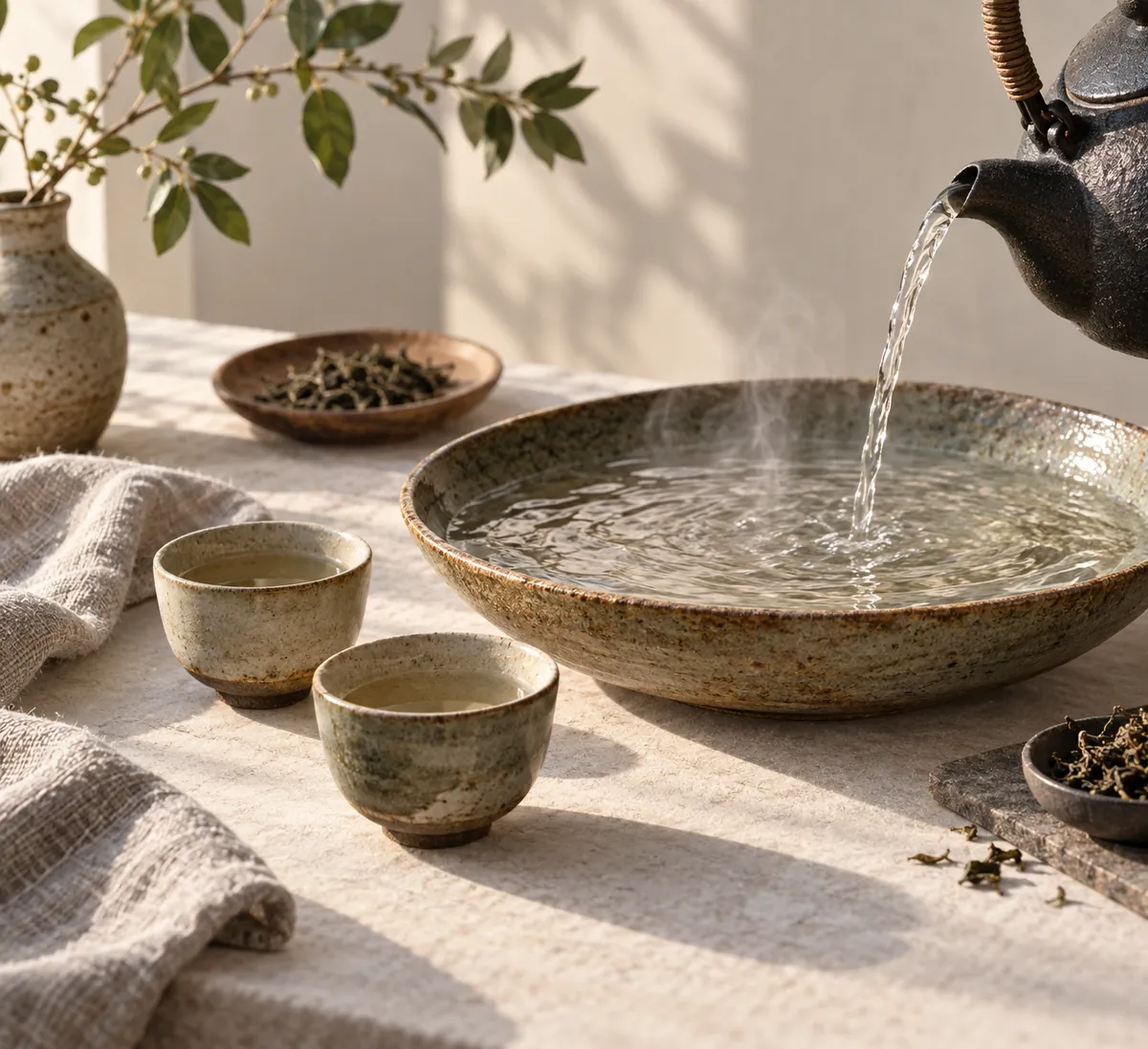
Most kettles will not hold a temperature this low, so you boil the water and then cool it through a wide vessel or through the cups themselves.
Lower grades gain less from the very bottom of the band. There is less theanine in them to protect, so 60 C is a safer target than 50 for anything mid-range, which is the top of the gyokuro band and still below green tea standards.
How much leaf and how little water does gyokuro take?
Gyokuro takes heavier leaf and far less water: three to four grams per person is a bigger dose than sencha takes, and the first pour is only 40 to 60 ml, barely enough to cover it. The World Green Tea Association's brewing guide, written in Japanese, also gives three to four grams of leaf per person, with water of about 50 C for about two and a half minutes.
Gyokuro baseline
- Leaf
- 3 to 4 g per person
- Water
- 40 to 60 ml for the first infusion
- Temperature
- 50 to 60 C
- First steep
- About 120 seconds
- Infusions
- 3 to 4 worthwhile
The cup you end up with is a mouthful or two, which is the correct serving of this tea because the concentration is where the texture comes from.
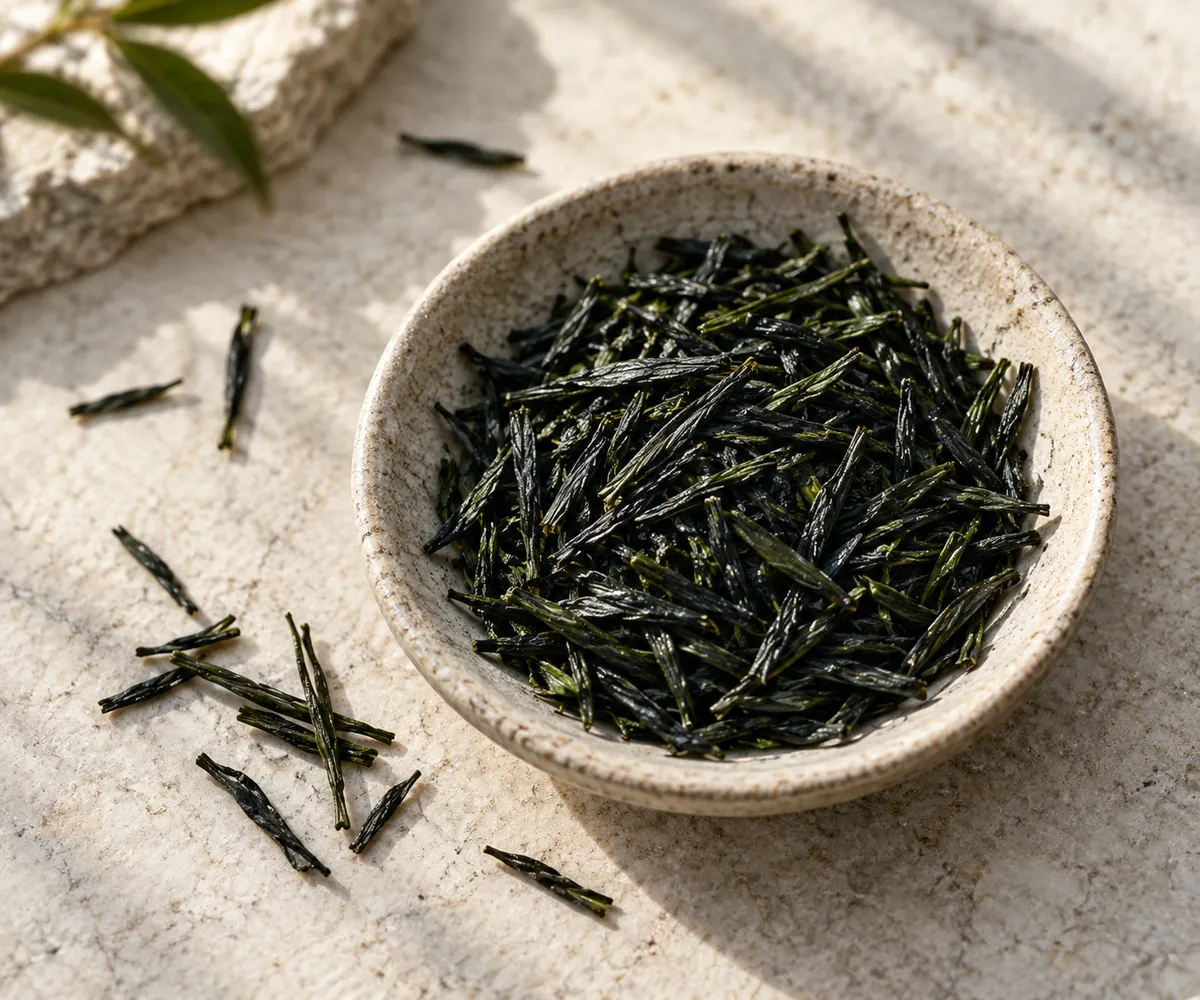
A pot much larger than the pour causes its own problem. Leaf sitting above the water line barely extracts, and the leaf below it extracts more than its share.
Larger everyday servings do exist and are perfectly legitimate. They trade the thick texture for volume, which is a choice rather than an error.
Which pot and water make gyokuro easier to repeat?
A small vessel with a broad floor makes the shallow first pour practical. The leaf should form an even layer under the water rather than a deep mound with dry tips above it.
| Choice | What it controls | Useful starting point |
|---|---|---|
| Small kyusu | Even wetting and a clean complete pour | Match the pot to the total water for all drinkers |
| Shiboridashi or houhin | Very shallow contact and visible leaf | Best for the concentrated first infusion |
| Gaiwan | Fast decanting and easy observation | Use a steady lid gap so fine leaf stays back |
| Wide cooling bowl | Temperature before the pour | Cool the full measured volume together |
| Soft neutral water | Aroma and texture | Filter water that smells of chlorine or leaves heavy scale |
The vessel does not need to be expensive, but it must pour cleanly.
Where a large teapot makes 50 ml spread too thinly and a narrow basket compresses the needles and leaves part of the dose above the water, a gaiwan can work when its base is wide enough, although a Japanese kyusu usually holds the leaf back more neatly.
Thin porcelain loses heat faster than thick clay, so measure the temperature in the filled vessel once before relying on a memorised cooling routine.
Water deserves the same control as temperature. Very hard brewing water can mute the marine aroma and make the liquor feel coarse, while strongly softened water can make it seem flat.
Use water that tastes clean at room temperature and does not smell of chlorine when warmed. Neutral water lets the leaf supply the flavour, which is especially important when the serving is only a few mouthfuls.
If you have no thermometer, pour boiling water into a wide cooler, then into the empty cups, and finally back into the cooler before brewing. Vessel size and room temperature change the drop, so treat that sequence as a household reference and check it with a thermometer once if you can.
How do you brew the first infusion?
Warm the pot, then let it cool, because a cold pot pulls carefully cooled water below the band during a two minute steep and a pot straight off the kettle lifts it above.
The first gyokuro infusion, in order
- WarmRinse the pot with hot water, tip it out, and let it settle.
- LoadAdd 3 to 4 g of leaf per person.
- PourAdd the cooled water gently over the leaf rather than from height.
- WaitTwo minutes, without swirling, stirring or lifting the lid.
Two minutes is long by the standards of Japanese green tea, where a standard sencha is often out in under a minute. The length is what compensates for the low temperature.
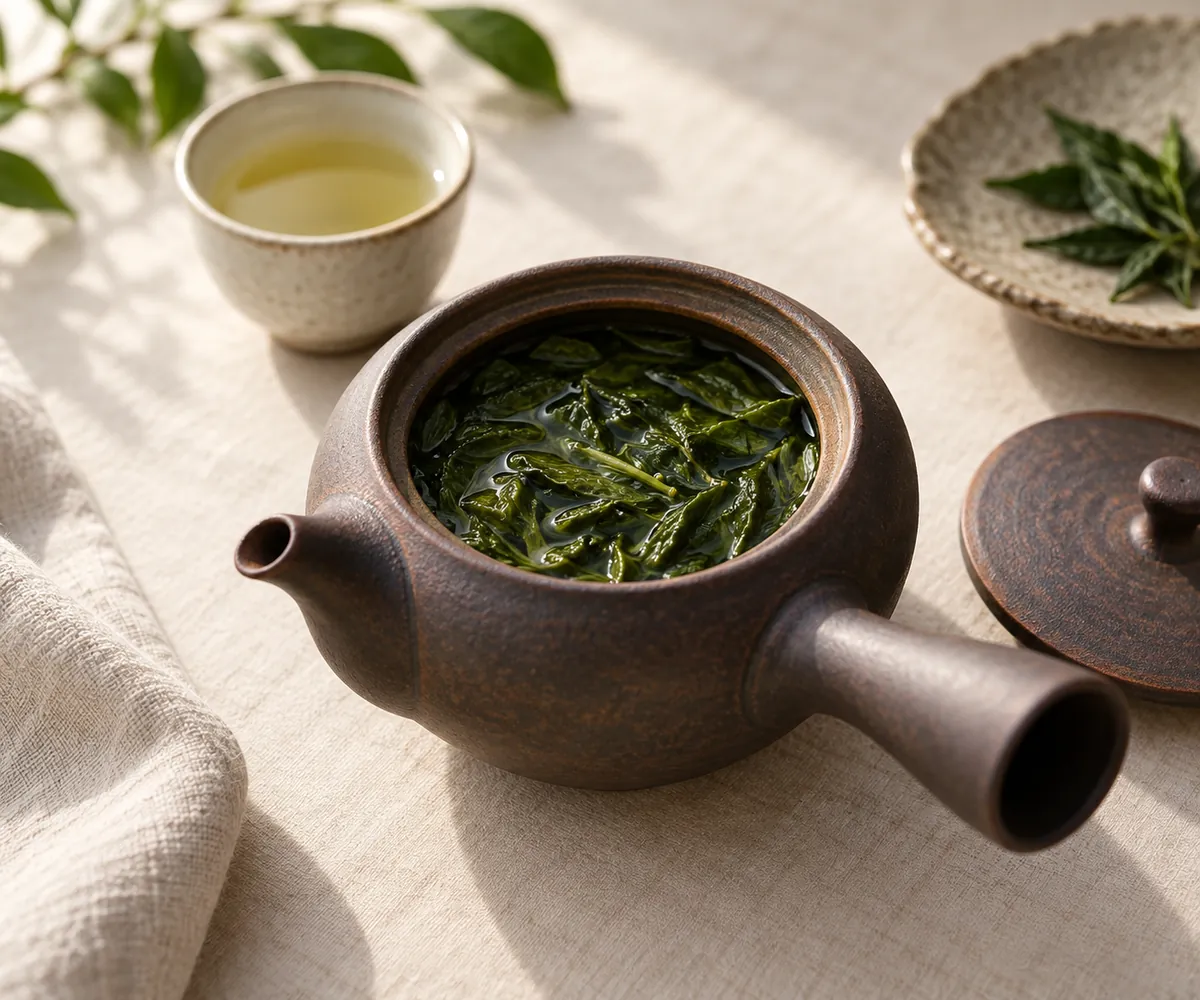
The instruction that matters most is to do nothing. Swirling agitates fine particles into suspension and pushes bitterness out mechanically, which undoes what the temperature just bought you.
Pot material changes heat loss, but shape and capacity matter first. Thick ceramic holds the low starting temperature more steadily than a very thin vessel, while porcelain makes colour and cleanliness easy to inspect.
Heat lost to the walls counts for more in a two minute steep than in a thirty second brew, where the water has no time to lose anything to them.
Deep-steamed gyokuro is the exception to the timing. The leaf is broken finer, releases faster, and can be cut well short of two minutes.
How do you correct a first infusion that tastes wrong?
Begin with the sensation, not the colour. Gyokuro can be deep green or slightly cloudy and still taste balanced, so appearance alone cannot tell you whether the extraction worked.
| What you notice | Most likely cause | Change next time |
|---|---|---|
| Thin with little aroma | Too much water or water cooled too far | Keep the temperature and reduce the pour first |
| Sweet but weak | Dose too low | Add leaf without extending the steep |
| Sharp and drying | Water too hot or leaf agitated | Cool further and leave the pot still |
| Heavy marine note with no lift | Steep too long for that grade | Shorten the first infusion by 20 to 30 seconds |
| Second cup already harsh | First pour left liquor behind | Empty the pot fully and leave the lid ajar |
| Fine sediment | Deep-steamed or broken leaf | Pour gently and use the built-in mesh without squeezing |
Change only one variable on the next session, because lowering temperature, shortening time, and reducing leaf together may improve the cup but leave you unable to repeat the result.
A savoury seaweed note is part of the style. It becomes a fault when it feels sulphurous, stale, or detached from sweetness, which usually points to tired leaf or hot storage rather than a brewing ratio.
Bitterness that appears only in the final sip usually came from retained liquor. Bitterness across the whole cup points earlier, toward water temperature or agitation.
Taste before correcting the colour. Fine leaf fragments and deep steaming can make a good infusion opaque, while a perfectly clear cup can still be thin and empty.
Why must the pot be emptied completely?
The leaf carries on brewing in whatever you leave behind.
Water standing against wet leaf between infusions is hotter and in contact for longer than the recipe allows, so it extracts exactly the compounds the method was avoiding.
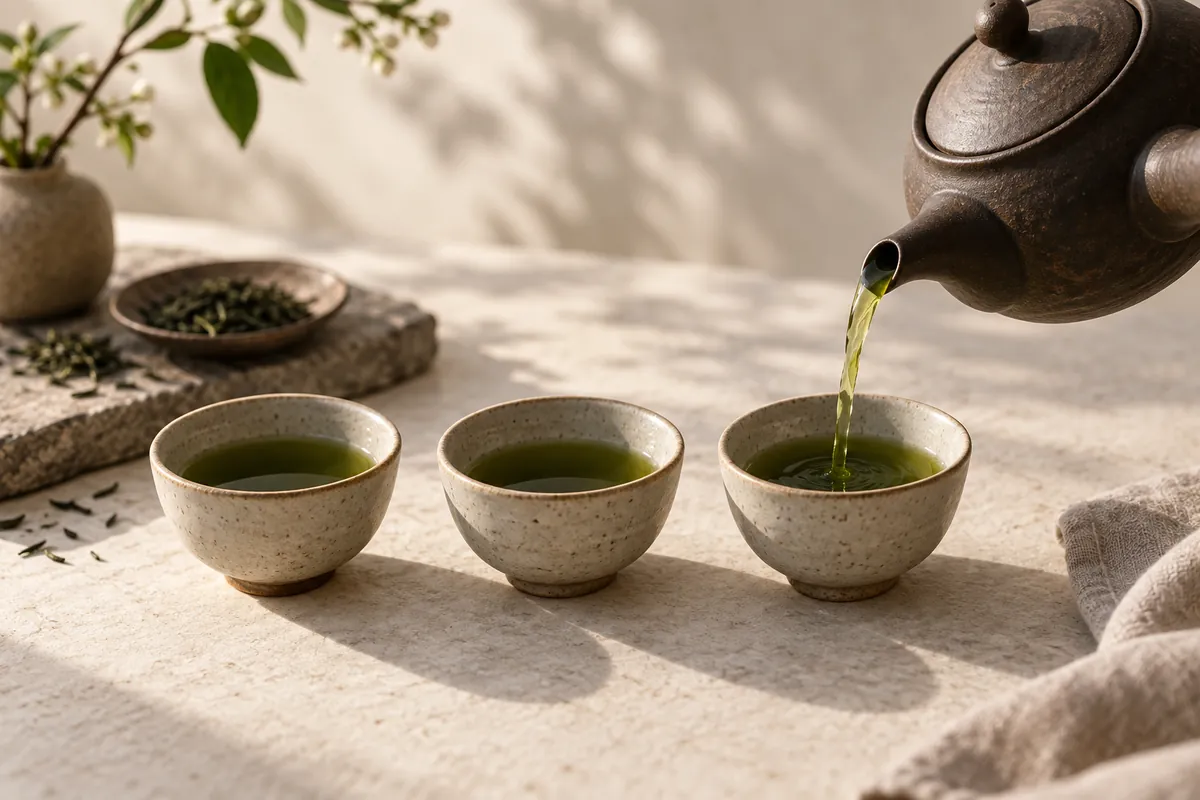
Pouring in rotation solves two problems at once. Tea leaves the pot getting stronger as it goes, so filling one cup at a time gives the last drinker a much heavier cup than the first.
Go back along the row and finish it. The last drops are the most concentrated of the whole infusion, and they are also the ones that would otherwise sit on the leaf.
A rounded-base kyusu empties cleanly, while a flat-bottomed pot keeps a film no amount of tipping removes, which shortens the useful run of the leaf.
Leaving the lid off between infusions helps. The leaf cools faster, and the residual extraction slows with it.
How do the later infusions change?
The water goes up and the time comes down. That feels backwards after your first steep, but the leaf has already given up its most soluble material and needs more help to release what is left.
| Infusion | Water | Time | What the cup does |
|---|---|---|---|
| First | 50 to 60 C | About 120 s | Thick, sweet, almost broth-like |
| Second | 60 to 70 C | 30 to 60 s | Still sweet, noticeably lighter |
| Third | 70 to 80 C | 30 s | Green character comes forward |
| Fourth | 80 C and above | 30 s | Thin and grassy, the end of the leaf |
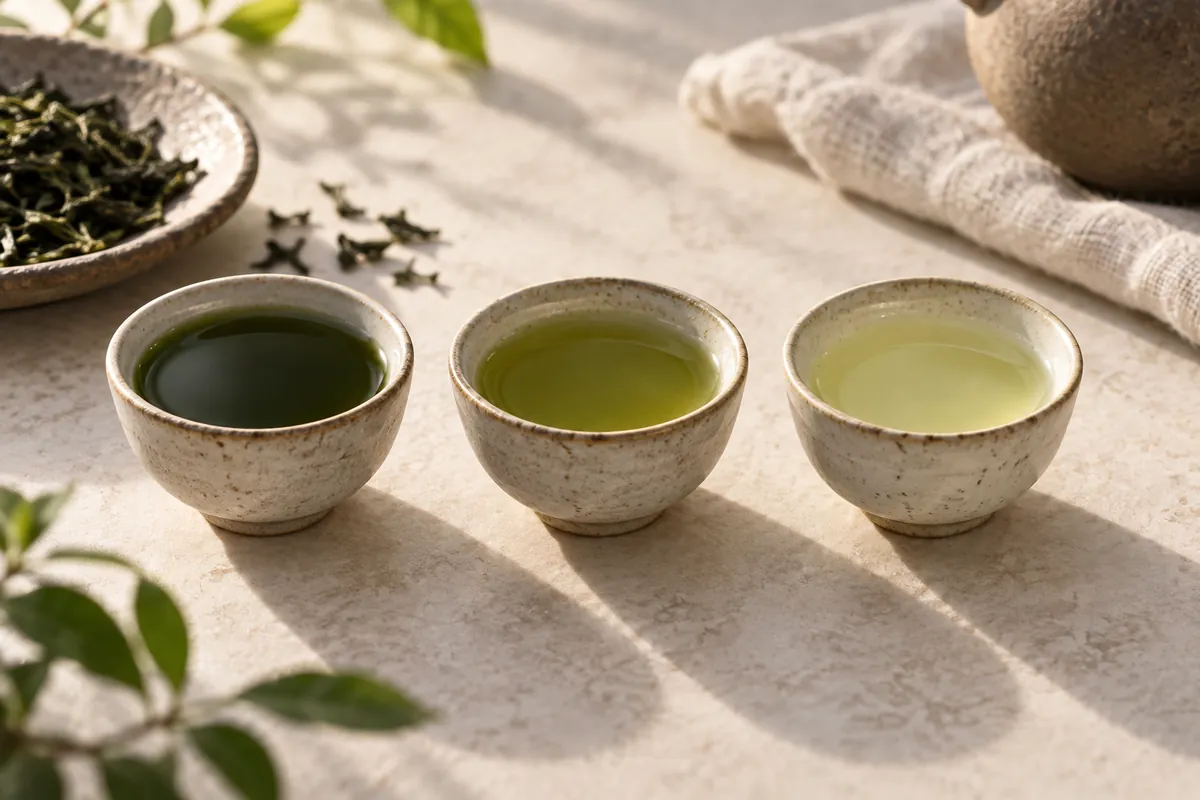
Other Japanese greens follow the same rising pattern, toasted rice blends included, though none of them start as low as this.
The thick character belongs to the first cup and does not come back. Theanine is finite, and once it is in the cup the later infusions are working on what remains.
Three or four steeps is the usual run. Some drinkers finish with genuinely hot water on purpose, accepting the bitterness in exchange for one last strong cup.
Do not leave long gaps. Wet leaf sitting in an emptied pot for an hour dulls, and the next cup is flatter than the schedule promises.
What does shading do to the leaf?
It changes the chemistry before the leaf is ever picked.
ITO EN's tea encyclopedia and the World Green Tea Association, both written in Japanese, give gyokuro about 20 days and two weeks respectively under cover before harvest. The screens or cloth cut most of the light that reaches the plants.
With less light the plant makes more chlorophyll to compensate, and the leaf darkens.
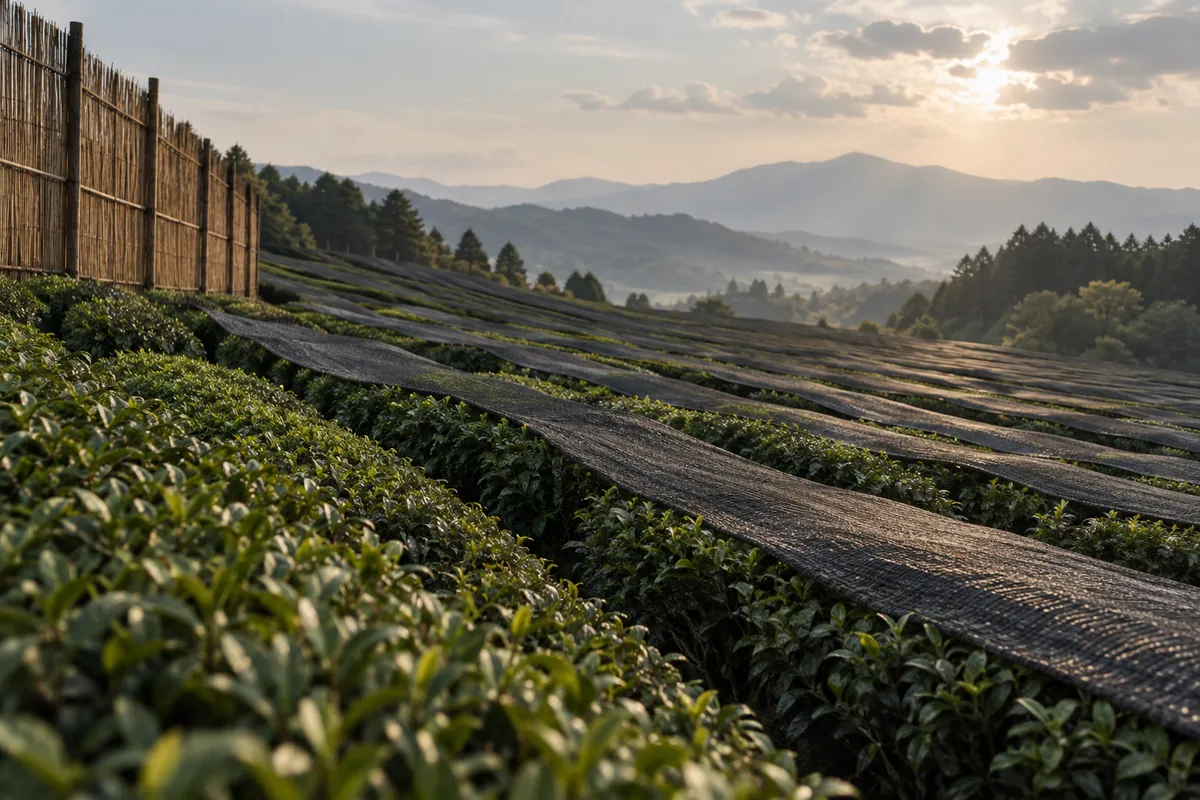
For brewing, the change that matters is the chemistry: amino acids rise and catechins fall, so the finished leaf is loaded with the compounds that dissolve at 60 C and short of the ones that need heat.
The leaf was grown to be extracted cool, so if you brew it hot you use an expensive input to make something ordinary.
Kabusecha sits between the two. It is shaded for a shorter period, so it takes a temperature between ordinary green tea practice and this one.
Matcha is shaded as well, and the same chemistry is behind its sweetness, though it is ground and suspended rather than infused.
What can you do with the leaves afterwards?
Eat them.
Spent gyokuro leaf is sometimes served in Japan as a small dish rather than tipped away, and at this price per gram that is worth knowing.
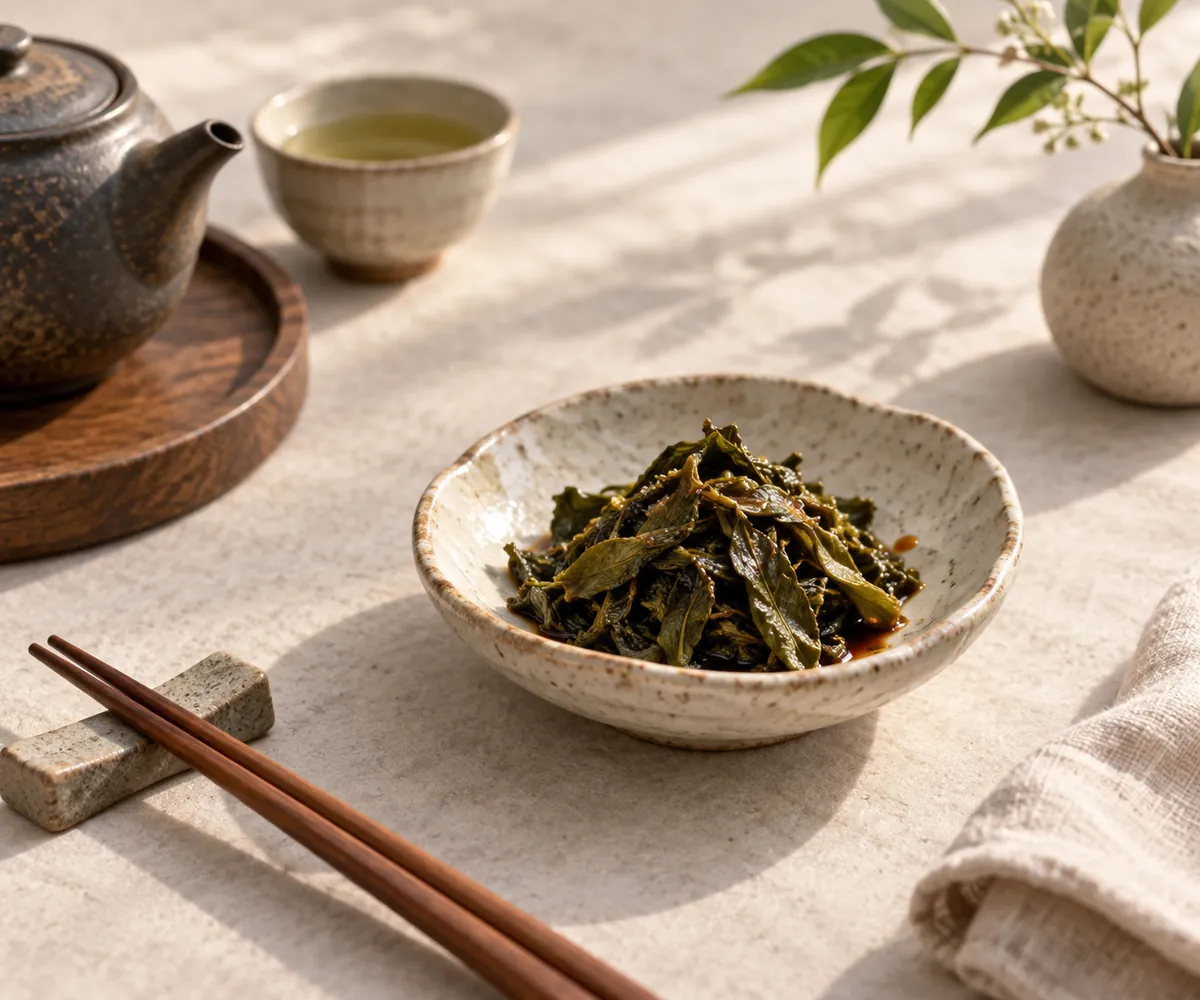
Because low-temperature brewing soaks the leaf rather than cooking it, the spent leaf can stay tender enough to eat and still hold some of the amino acid content that never made it into the cup.
- Use leaf from the earlier infusions, before any hot final steep
- Drain it well so the dressing is not diluted
- Dress lightly, a few drops of soy sauce or ponzu
- Eat it the same day, because wet leaf does not keep
A few drops of soy sauce or ponzu is enough, since anything heavier simply covers what you are trying to taste.
Deep-steamed gyokuro is less suited to it: the leaf breaks up in the pot and arrives closer to a paste than to something you can lift with chopsticks.
How should you store gyokuro between sessions?
Gyokuro loses the aroma that justifies its careful brewing when warm air, moisture, and kitchen smells reach it repeatedly. Keep the daily portion small and let the reserve stay sealed.
- Close the inner pouch immediately after weighing
- Keep it in a cool dark cupboard away from steam, coffee, spices, and cleaning products
- Use a clean dry spoon or scale tray
- Divide a large purchase before opening it repeatedly
- Let a sealed chilled packet reach room temperature before breaking the seal
The general rules for storing loose-leaf tea matter more here because the leaf is delicate and costly. A decorative tin helps only when its lid seals well and the inner pouch is closed inside it.
Do not open a cold packet in a humid kitchen, because condensation can settle on the leaf before you see it, and no later low-temperature steep can restore aroma damaged by moisture.
Buy an amount that fits your drinking pace. Freshness is part of the brewing method, because careful cooling cannot recover sweetness and fragrance that disappeared in storage.
Gyokuro method
- Makes
- 1 small cup, about 50 ml
- Ratio
- 3 to 4 g of leaf per 40 to 60 ml of water
- Water temp
- 50 to 60 C for the first infusion
- Total time
- 7 min
What you need
- 3 to 4 g gyokuro leaf per person
- 40 to 60 ml water cooled to 50 to 60 C
Equipment
- Kyusu with a rounded base
- Wide cooling vessel or small cups
- Scale
- Kettle
Method
- CoolPour boiled water through a wide vessel or the cups to bring it down to 60 C.
- WarmRinse the pot with hot water, tip it out, and let it settle.
- LoadAdd 3 to 4 g of leaf per person.
- PourAdd the cooled water gently over the leaf rather than from height.
- WaitTwo minutes, without swirling, stirring or lifting the lid.
- EmptyPour in rotation across the cups and back again until the last drop is out.
Common questions
Should you rinse gyokuro before the first infusion?
No. A rinse carries away some of the early soluble flavour that the cool first infusion is designed to collect, so begin with the measured brewing water.
Can you use a regular teapot for gyokuro?
Yes, if it is small enough for the shallow pour and empties cleanly. A large pot leaves some leaf dry and holds too much liquor between infusions.
Can wet gyokuro leaves sit between infusions?
Keep the gap brief and leave the lid ajar so heat can escape. Wet leaf loses aroma quickly, and it should not be held for another day.
Can you make gyokuro with melting ice?
Yes, although it is very slow and produces a small, intense volume. Keep the vessel covered and cold, then drink the infusion promptly once enough ice has melted to wet the leaf.