How to Make Sencha: 70 C, Fifty Seconds, and Three Cups
Pour boiling water on these leaves and you get something green and drying, where the same leaves at seventy degrees taste sweet and almost thick.
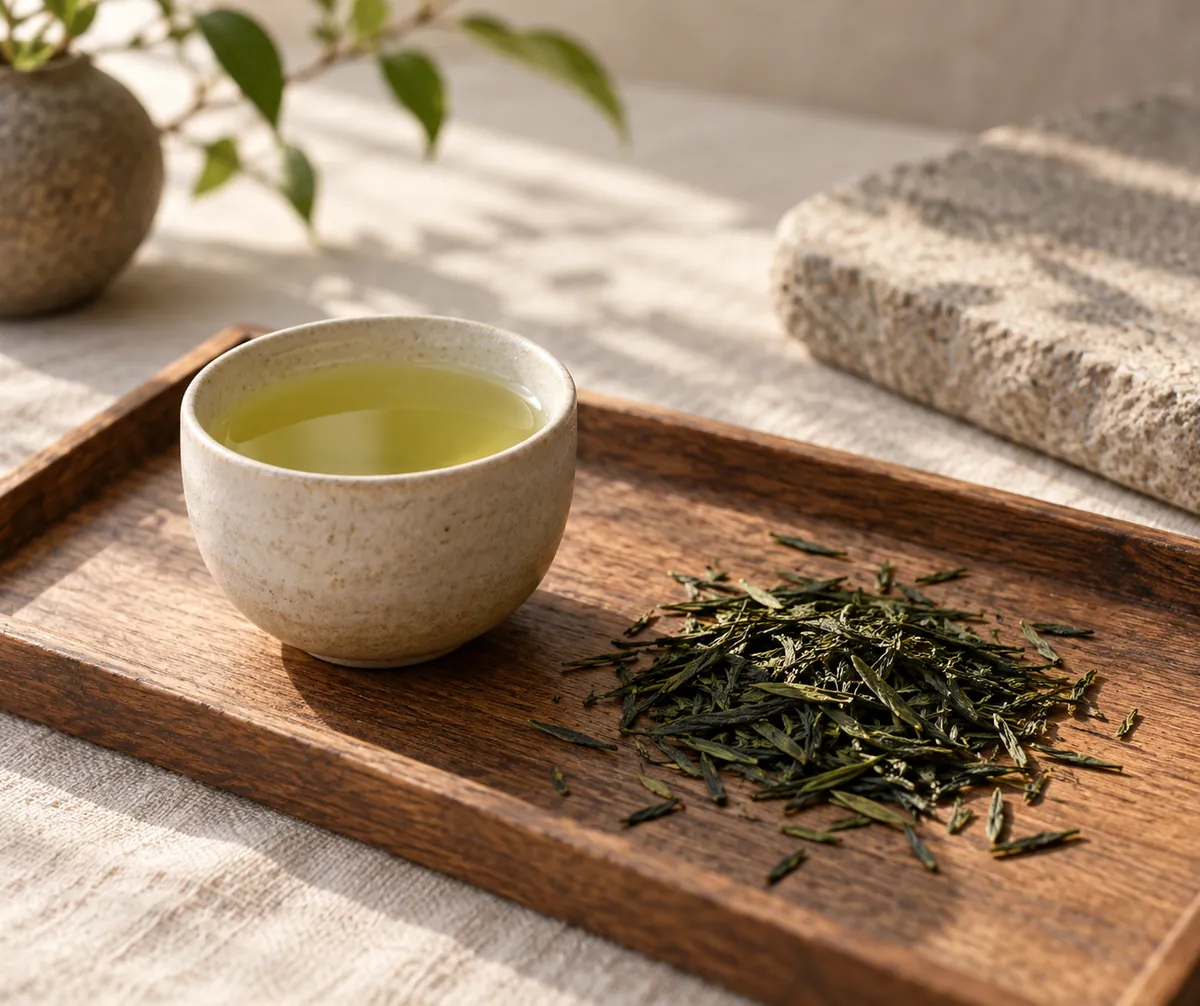
Many other teas in the cupboard want water straight off the boil, but sencha leaf will not forgive it, since boiling water gives you something green, drying and faintly harsh.
What temperature and how much leaf does sencha need?
It comes down to three numbers, and the first one is what the whole method turns on: around 70 C, four to five grams of leaf per 200 ml, and a first steep of under a minute. The World Green Tea Association's brewing guide, written in Japanese, also gives water near 70 C for sencha.
What one pot takes
- Water
- 65 to 75 C
- Leaf
- 4 to 5 g per 200 ml
- First steep
- 45 to 60 seconds
- Ceiling
- Ninety seconds, past which it turns
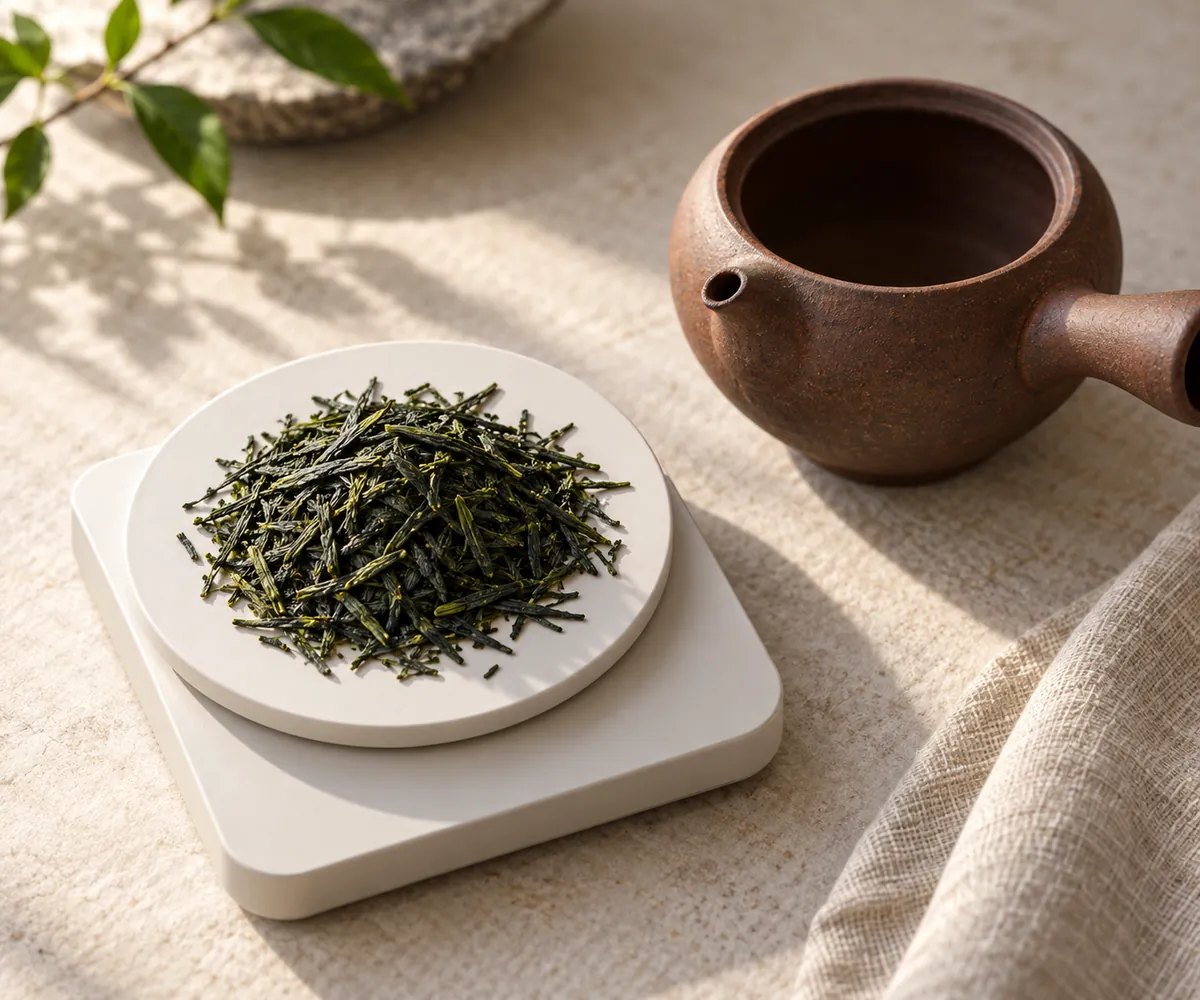
Boiling water is 100 C, so seventy is a long way below what a kettle gives you, and thirty degrees is the difference between two quite different drinks made from the same leaf.
Four to five grams to a small pot is roughly double what a teabag carries, which is heavier than Western habit but deliberate, because this tea is brewed strong and short rather than weak and long.
Under a minute is the other surprise. Most people count in minutes for tea and here you are counting in seconds, with ninety seconds as the point of no return.
Two cases run shorter still. A deep steamed sencha has more broken leaf and extracts faster, and a teabag is broken leaf by definition.
A blended leaf behaves differently again. Toasted rice in genmaicha takes hotter water than the green leaf beside it, but the green leaf sets the temperature, so a blend is brewed differently from a plain sencha.
What do you brew sencha in?
A pot that empties completely is the whole requirement, and it is why the traditional vessel looks the way it does rather than being a matter of style.
| Vessel | Room for leaf | Drains fully | Verdict |
|---|---|---|---|
| Kyusu | Yes | Yes, side handle helps | The reference |
| Basket infuser | Yes, if wide | Yes, lift it out | Works well |
| Small teapot | Usually | If it pours fast | Fine |
| Mesh ball | No | No | Avoid |
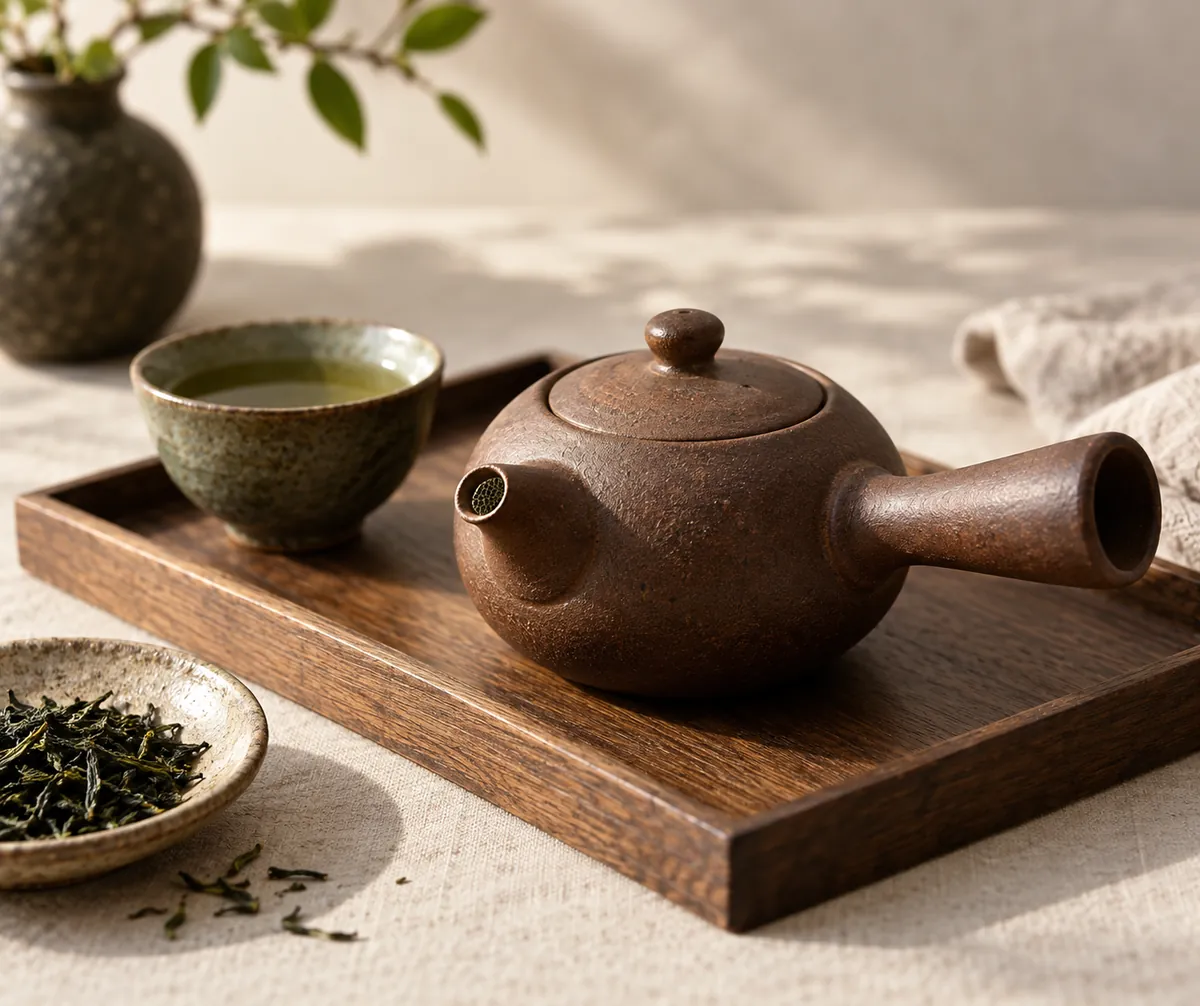
A kyusu teapot holds 200 to 300 ml and carries a fine mesh across the inside of its spout. The mesh means the leaf can sit loose in the pot and still not reach the cup.
The side handle lets you tip a small pot right over and shake out the last drops, which an overhead handle makes awkward.
Leaf needs room to move. Flat needles have to open and circulate, and a mesh ball packs them so tightly that the outside over-extracts while the middle stays dry.
Anything that empties fast will do. A small glass teapot with a wide basket brews sencha as well as anything, provided you take the leaf out or pour the pot dry.
Bigger is harder rather than easier. A 700 ml pot takes so long to pour that the last cup has been steeping thirty seconds longer than the first.
How do you brew sencha step by step?
Boil the kettle, then deliberately throw the heat away before the water ever meets the leaf.
Sencha, in order
- BoilBring the kettle to a full boil as usual.
- CoolPour the boiled water from cup to cup two or three times, losing roughly 5 to 10 C each time.
- LeafFour to five grams into a cold pot, loose.
- Steep and drainFifty seconds, then pour out to the last drop.
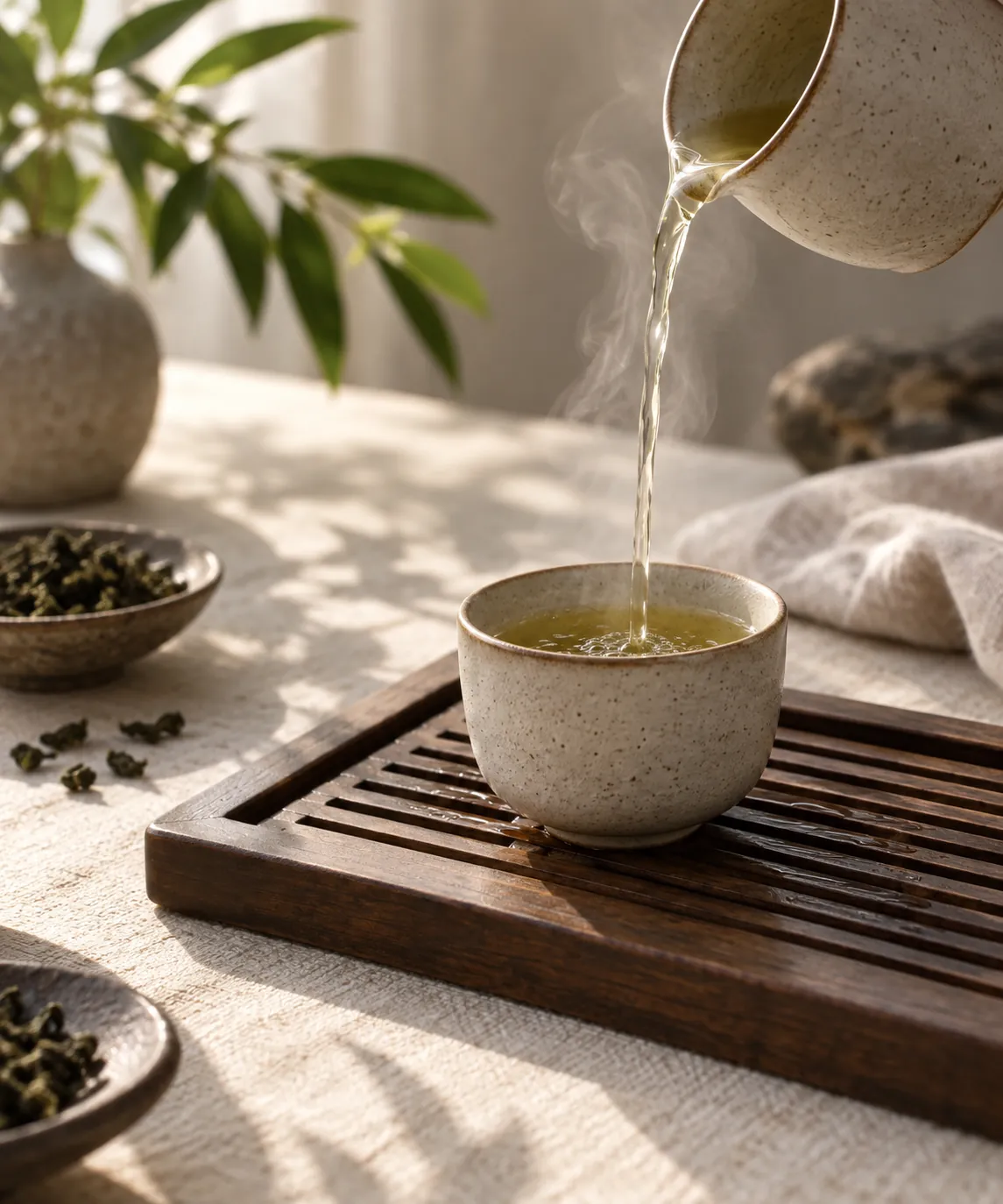
Decanting is how this is done without buying anything. Each transfer between two room-temperature cups costs roughly five to ten degrees, so boiled water reaches the eighties after two pours and the seventies after three, and a thermometer check the first time is worth the trouble.
Do not warm the pot. A warmed pot suits many teas, and here it would put back exactly the heat you just spent those pours removing.
Fifty seconds goes faster than you think. Set a timer for the first few pots, because the difference between fifty seconds and ninety is very obvious in the cup.
Pour it out completely. Liquor left sitting on the leaf carries on extracting, and it does not stop while you drink the first cup.
Why does ten degrees change sencha so much?
Because the water is not simply pulling harder as it gets hotter, it is choosing between two groups of compounds that come out of the leaf at very different rates.
What each band gives
- 65 CSweet, thick, low bitterness | Amino acids dominate
- 75 CBalanced, aromatic, slight edge | The usual target
- 85 C and aboveBrisk, drying, green | Catechins dominate
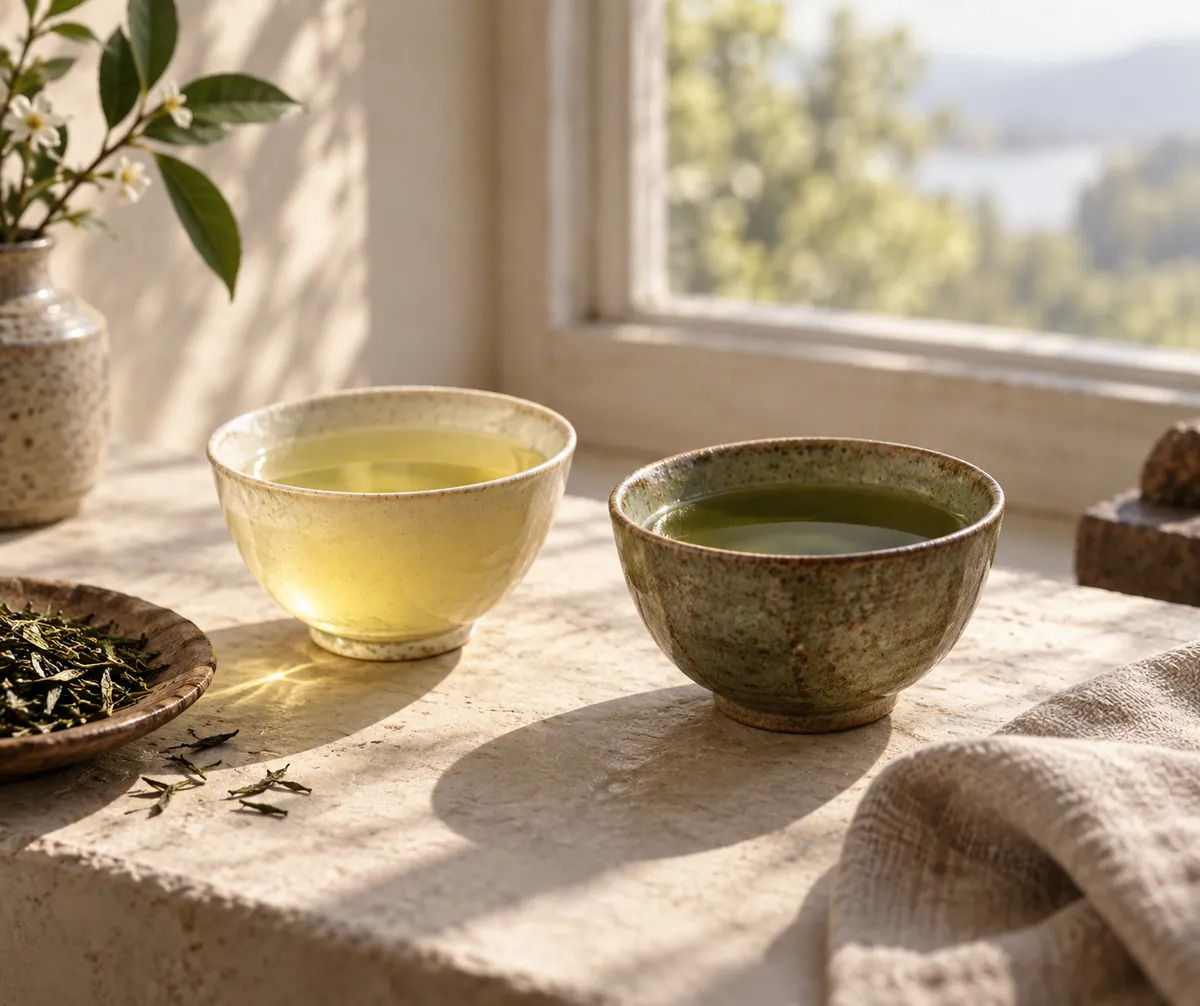
Amino acids, which taste sweet and savoury, dissolve readily even in cool water, and catechins, which taste bitter and drying, need more heat and come out increasingly fast as the water climbs.
So the temperature is a dial between them. At 65 C you get mostly the sweet fraction, and at 85 C the bitter one has caught up and overtaken it.
Hot sencha is not simply stronger: it carries the same amount of tea and a different balance, which is the same distinction that makes green tea taste bitter when it is brewed like a black one.
The extreme case is making gyokuro, which is brewed at 60 C for exactly this reason. Shading the bush builds even more of the sweet fraction, and hot water would waste all of it.
Some people go the other way deliberately. A brisker cup at 80 C gives up some of the sweetness, and that is a preference rather than an error.
How do you resteep sencha?
Sencha is resteeped shorter and hotter, which is backwards from everything else in the cupboard. The second pour runs about thirty seconds rather than fifty, and the water can be five to ten degrees warmer than the first.
Three infusions, as a starting guide
- First70 C, 50 seconds. Sweet and full.
- Second75 to 80 C, 30 seconds. Brisker, more aromatic.
- Third80 C, 40 seconds. Thinner, still worth drinking.
- StopA fourth is water with a memory of tea in it.
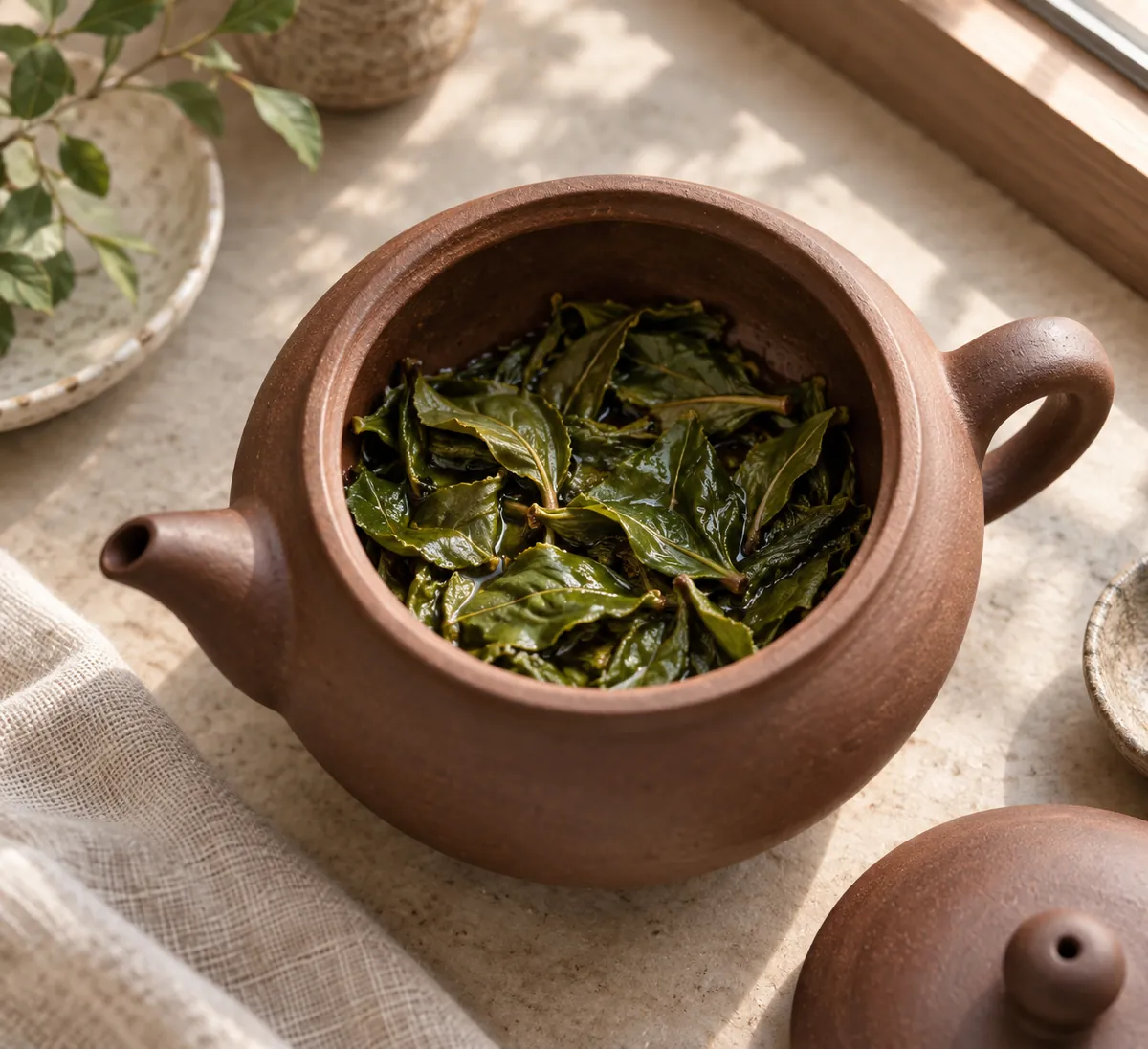
The inversion makes sense once you look at the leaf. It is already fully open after the first pour, so there is no unfurling left to wait for and the surface is entirely available from the first second.
Hotter water on the later rounds pulls out what the cool first pour deliberately left behind. By the third steep the sweet fraction is largely spent, so the extra heat has little sweetness left to spoil.
Three is realistically the limit. A fourth is possible with a generous leaf dose and is usually not worth the pot.
Do not save the wet leaf for tomorrow. It sours within a few hours at room temperature, and the flavour that survives is not the one you wanted.
How do you cold brew sencha?
Take the heat out entirely and the tea cannot fail.
Cold water barely extracts the bitter fraction at all, the same principle that keeps cold brew coffee low in acidity, so a cold brewed sencha has no way of going astringent no matter how long you leave it.
Fridge overnight
10 g per litre, three to six hours, then strain. Sweet and clean.
Ice water, minutes
A few cubes over the leaf, five minutes. Tiny, intensely sweet cup.
Keeping
Keep it in a clean covered container in the fridge, and discard it at the first sign of mould, gas or an off smell. The aroma goes first.
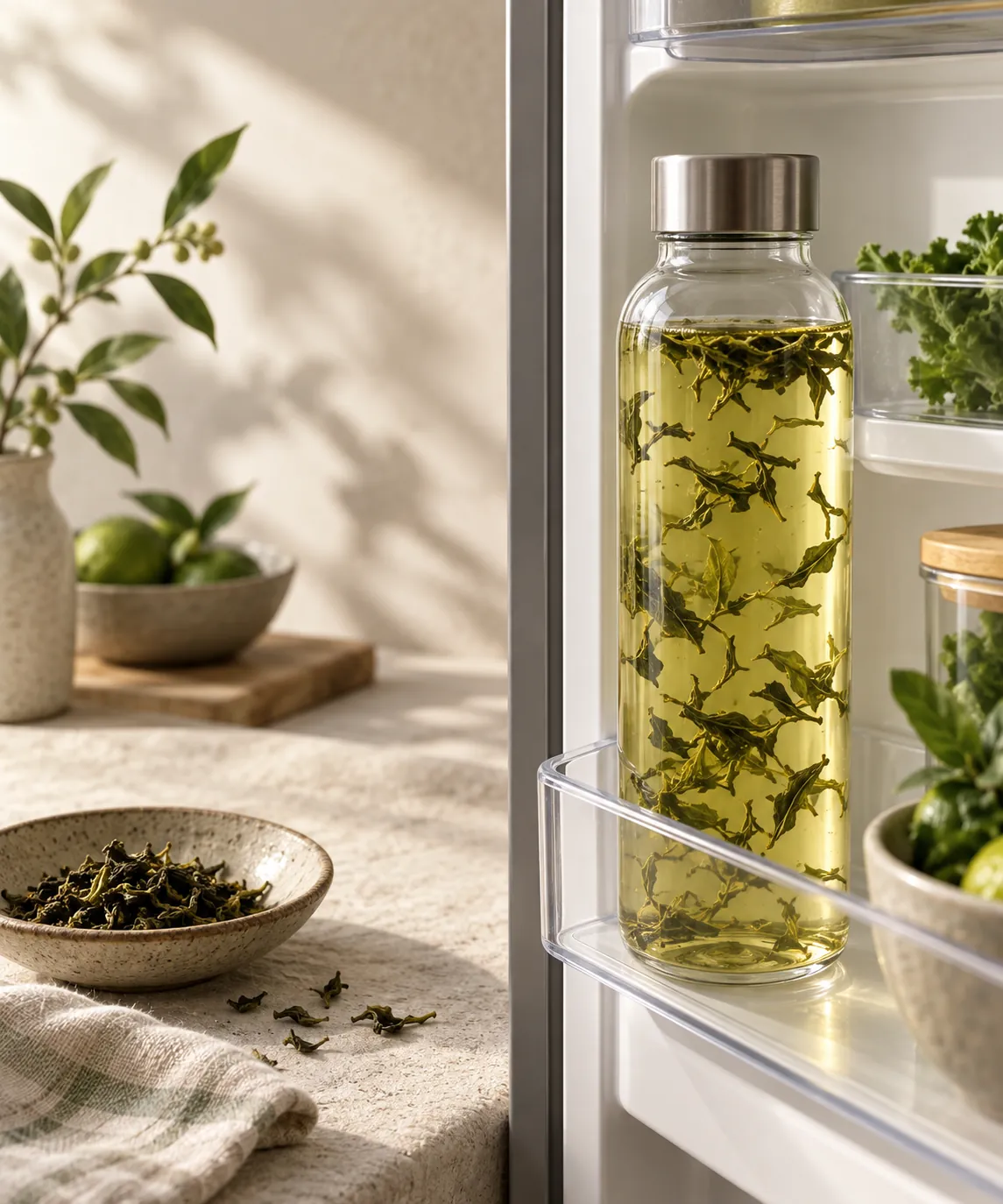
Use more leaf than you would hot. Cold water works slowly and incompletely, so around ten grams to a litre gets you something with body rather than a hint.
The colour will alarm you. Cold brewed sencha comes out much paler than the hot version and tastes considerably sweeter, which is the reverse of what the appearance suggests.
The ice water version is worth trying once. A few cubes melting over a spoonful of leaf gives perhaps thirty millilitres of something extraordinarily sweet, closer to a broth than to tea.
You can use the leaf twice over. A cold brewed leaf still has plenty in it, so pour hot water over it afterwards rather than throwing it out.
Why is my sencha bitter or cloudy?
These are two different complaints with two different causes, and only one of them is actually a fault: bitterness comes from heat or time, while cloudiness usually comes from the leaf being exactly what it is supposed to be.
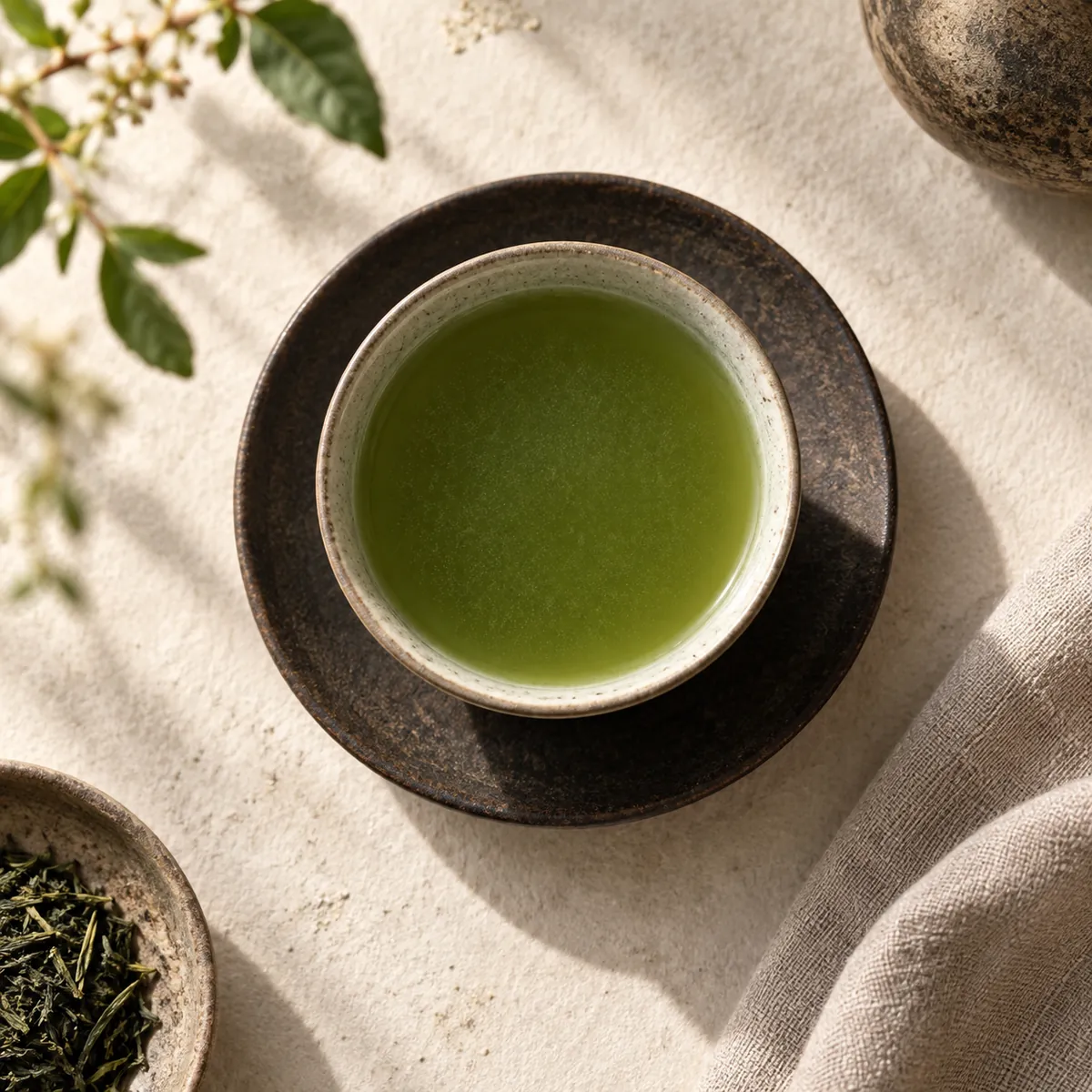
Of the two causes of bitterness, heat leads by a wide margin and is the easiest to test, since one pot made with water you have decanted two or three times settles the question in a minute.
Time is the second cause, and past ninety seconds the astringency arrives quite suddenly rather than building gradually.
Cloudiness, by contrast, is usually not a problem at all, since deep steamed sencha is meant to be cloudy: longer steaming breaks the leaf into finer particles that pass through the mesh and give the cup its thickness.
The third fault, a flat cup, is a storage problem. Sencha kept badly tastes of hay rather than of anything green, and no adjustment you make to heat or time brings it back.
Water hardness dulls this tea more than most. Dissolved minerals flatten the aroma in a way that is easy to blame on technique, and worth ruling out if everything else is right.
Sencha method
- Makes
- 200 ml, and three infusions from the same leaf
- Ratio
- 4 to 5 g of leaf per 200 ml
- Water temp
- 65 to 75 C, reached by decanting two or three times
- Steep time
- 45 to 60 seconds on the first infusion
- Total time
- 4 min
What you need
- 4 to 5 g of sencha leaf per 200 ml
- Water boiled and then cooled to about 70 C
Equipment
- Kyusu or small teapot with a wide basket
- Kettle
- Two cups for cooling water
Method
- BoilBring the kettle to a full boil as usual.
- CoolPour the water from cup to cup two or three times, losing roughly 5 to 10 C each time.
- LeafFour to five grams into a cold pot, loose rather than in a ball.
- SteepFifty seconds, and never past ninety.
- DrainPour out to the last drop, leaving the wet leaf for the next round.
Common questions
What temperature should sencha be brewed at?
Between 65 and 75 C. Boiling water extracts the bitter catechins almost immediately, and at 85 C the cup is noticeably harsher than at 75.
How do you cool water without a variable kettle?
Pour it between two room-temperature cups. Each transfer costs roughly five to ten degrees, so two or three pours takes boiling water down into the seventies.
Why is the second sencha steep shorter than the first?
The leaf is already fully open, so there is no unfurling to wait for. Around thirty seconds with slightly hotter water is a good place to start.
Is cloudy sencha a fault?
No. Deep steamed sencha is cloudy by design, because longer steaming breaks the leaf into fine particles that pass the mesh and thicken the cup.