How to Make Genmaicha Without Scorching the Green Leaf
There are two ingredients in the bag and they want opposite water, so one of them has to set the temperature for both.
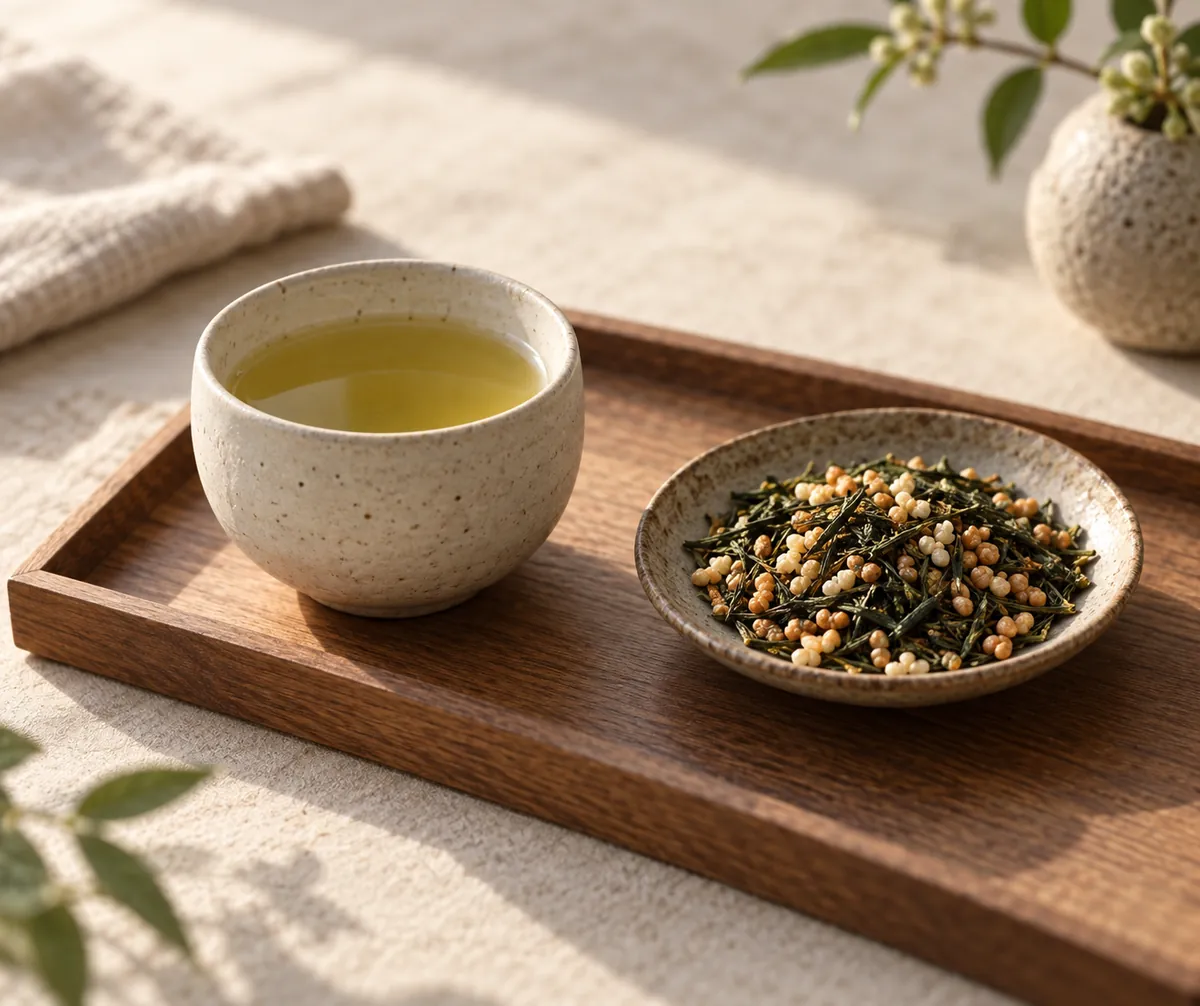
Brew genmaicha with 2 to 3 g of leaf per 150 ml of water at 75 to 80 C, for about 45 seconds.
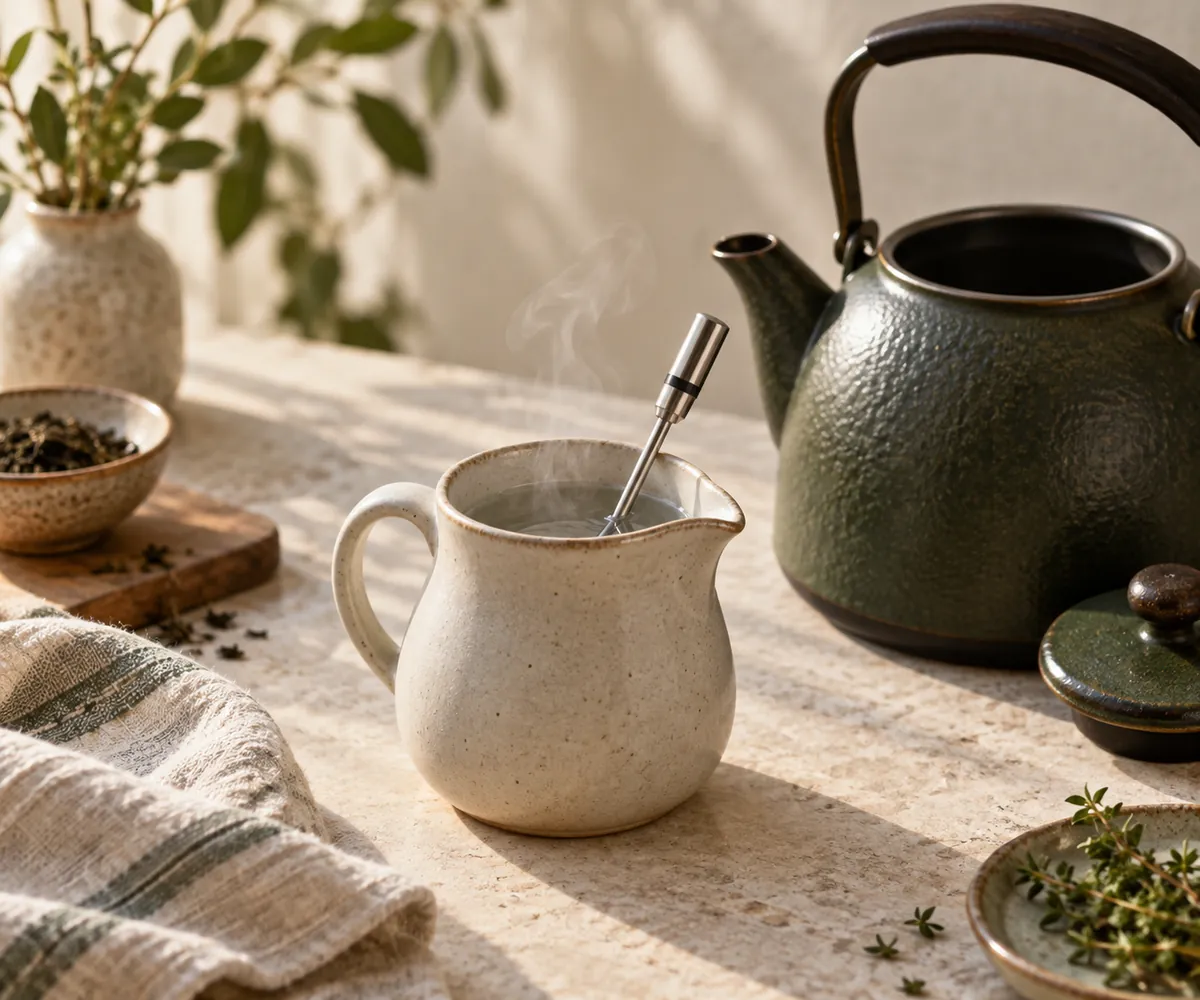
The toasted rice is happy in hot water and the green leaf is not, so the number above is set by the leaf.
What ratio and temperature does genmaicha need?
The recipe is short enough to memorise: two to three grams of leaf per 150 to 180 ml of water, poured at 75 to 80 C, steeped for 45 to 60 seconds and then poured out completely.
That temperature sits inside the green tea range, and it is the number most people get wrong.
Some sources push to 5 g per 150 ml for a fuller cup. That works, but the steep has to come down to compensate.
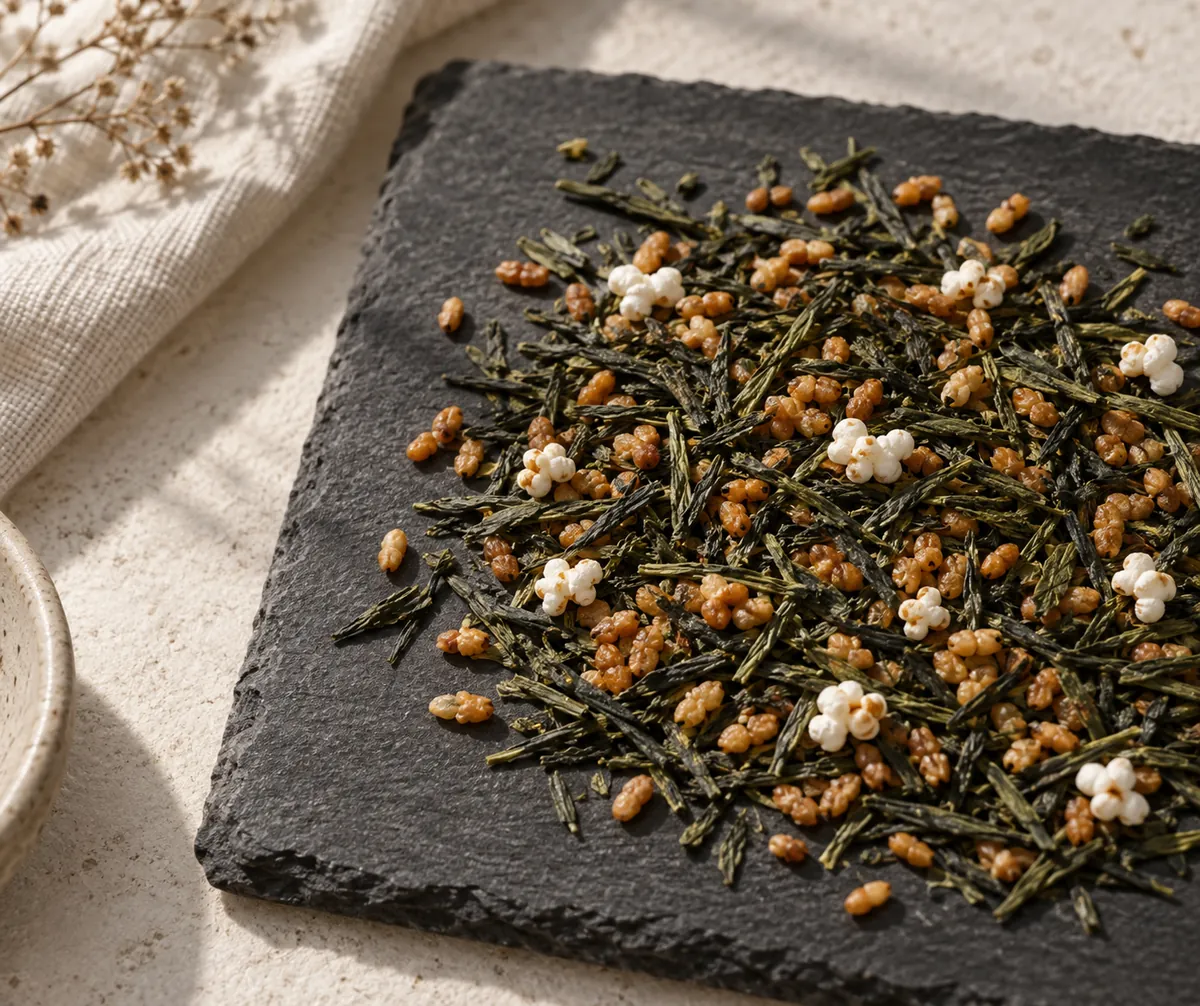
A rice-heavy blend carries less leaf per gram and so wants a slightly higher dose to reach the same strength. Bagged genmaicha is a different case, with a much finer cut that extracts faster at the same temperature, and 45 seconds is usually already too long.
Why does the water have to stay below 85 C?
The leaf cannot take it, because above 85 C the water pulls catechins out of the green leaf far too quickly, and those are what turn the cup harsh and drying.
The rice has no such limit. Toasted grain gives up its aroma readily and would survive water straight off the boil without complaint.
So the ceiling belongs to the leaf, and the rice simply comes along. Hotter water is the instinctive answer to a weak-tasting cup, but it damages the only half of the blend that can be damaged.
The cool end has its own failure. Below about 70 C the leaf barely opens, and the cup tastes of rice and hot water with almost nothing behind it.
The pot matters as well, because water you have carefully cooled drops several degrees the moment it lands in a cold kyusu.
How do you brew genmaicha in a kyusu?
Warm the pot first, since you have just spent effort cooling the water to 80 C and a cold pot will take several degrees back out of it before the leaf has even moved.
Genmaicha in a kyusu, in order
- WarmFill the kyusu with hot water, swirl it, and tip it out.
- LoadAdd the leaf to the empty warm pot.
- PourAdd the cooled water and start timing at 45 seconds.
- RotatePour into the cups in turn, a little into each, then back again.
- EmptyTip the pot until the last drop is out.
A kyusu strains through a mesh built into the body beside the spout, so nothing else is needed between the pot and the cup.
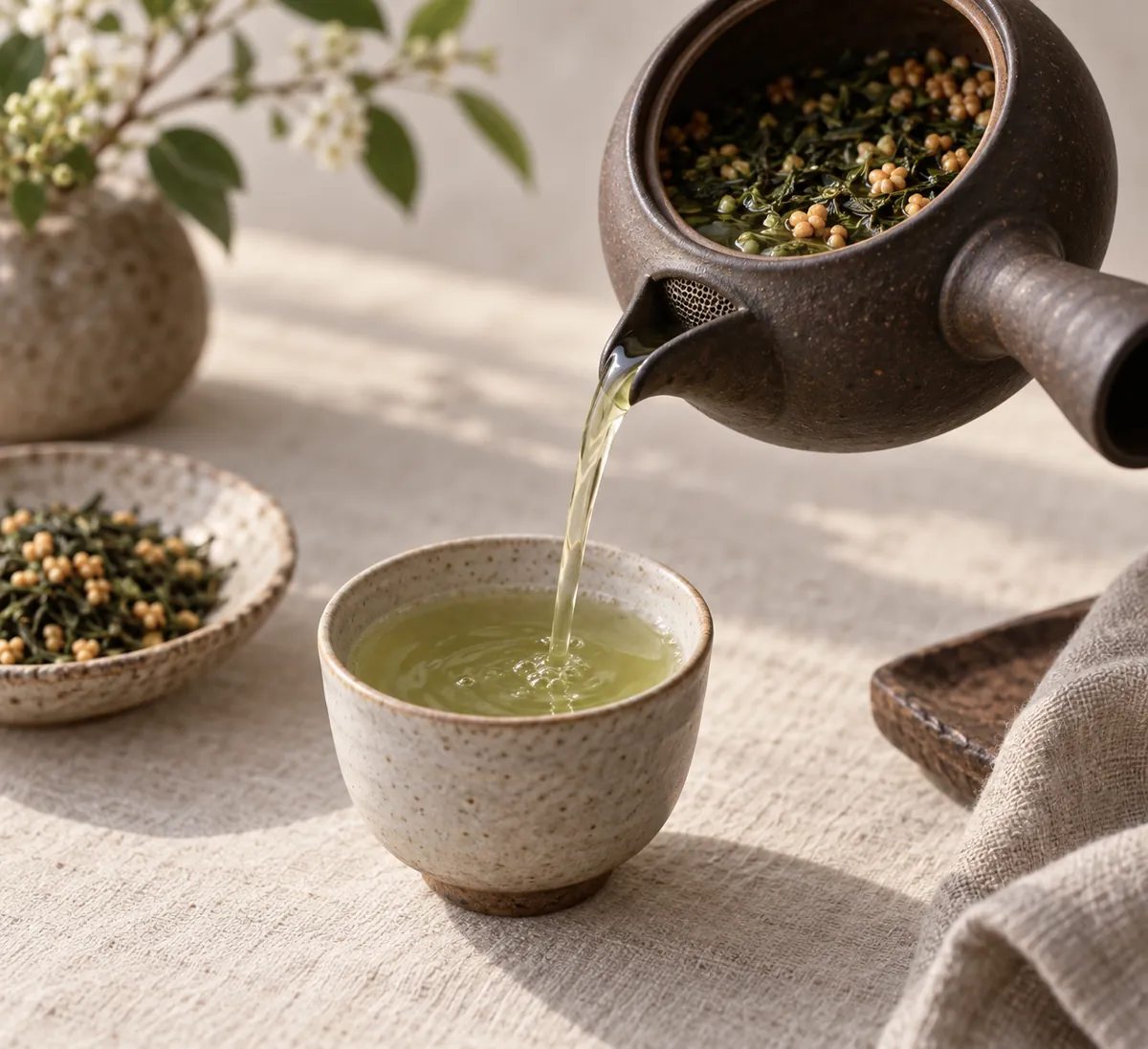
Rotating between cups evens out strength, because tea leaving the pot gets stronger as it goes and pouring one cup full and then the next leaves the second drinker with a noticeably heavier cup.
The last step is the one most guides skip. Empty the pot completely, because any water left sitting against the leaf carries on extracting, and the second infusion arrives already over-steeped.
Very fine mesh has a drawback, since rice fragments clog it, and a pot that starts pouring in a trickle needs the mesh cleared rather than more force.
How many times can you re-steep genmaicha?
Three to five times, from the same measure of leaf.
Later infusions run shorter and hotter than the first, and they taste different rather than weaker.
| Infusion | Water | Time | What changes |
|---|---|---|---|
| First | 75 to 80 C | 45 to 60 s | Green leaf leads, rice sits behind it |
| Second | 80 to 85 C | 20 to 30 s | Often the roundest cup of the set |
| Third | 85 C | 20 to 30 s | Balance tips toward the toasted rice |
| Fourth and after | 90 to 95 C | 30 s or more | Rice only, and pleasant enough to drink |
The second steep is the one people miss. By then the leaf has fully opened, the sharp edge of the first cup has gone, and many drinkers prefer it.
The 85 C ceiling protects fresh leaf. By the fourth cup the leaf is spent and the cup is mostly rice, which has no such limit.
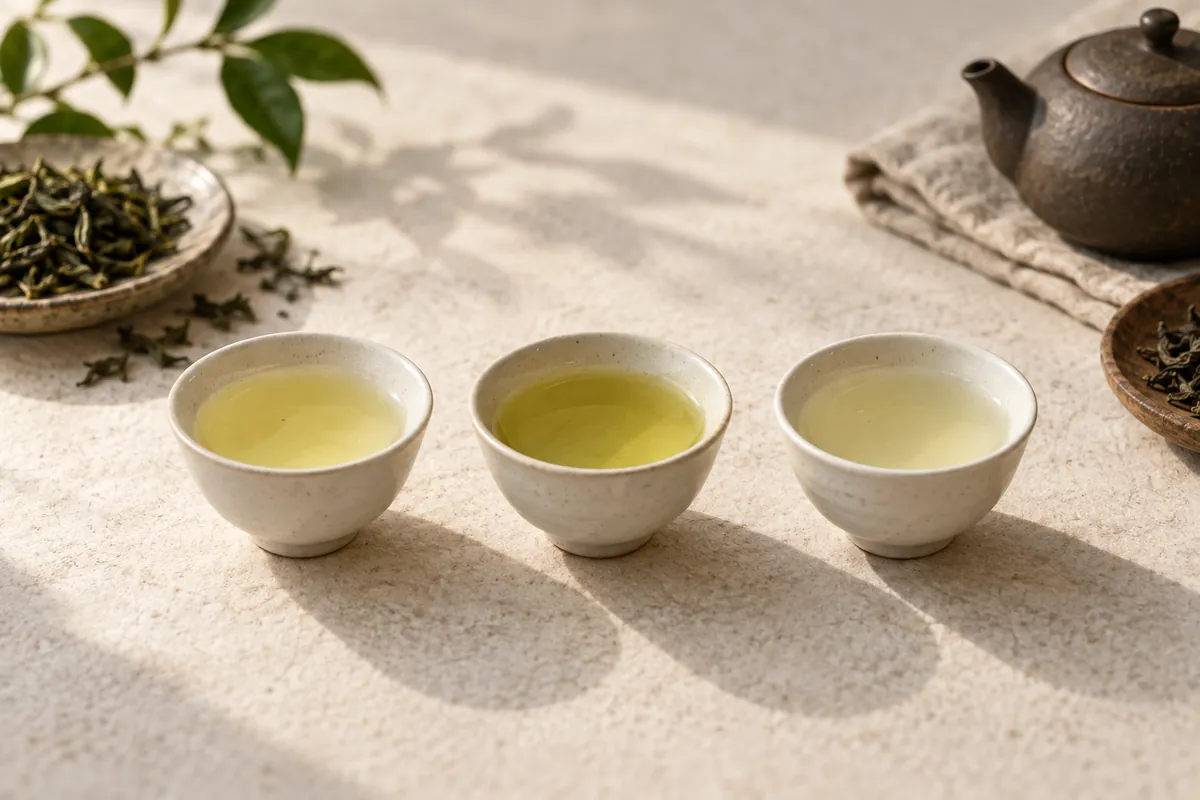
Gyokuro and the sencha base that usually sits under the rice in this blend are re-steeped in the same way, as are other Japanese greens.
The rice outlasts the leaf, because toasted grain keeps releasing aroma long after the green tea has given up what it has, so a fourth cup tastes almost entirely of rice.
That cup is a different drink from the same pot, and drinking it rather than discarding it is the difference between three cups and one.
Two things end the run early: bagged genmaicha is cut too fine to survive past a second steep, and wet leaf you leave sitting in the pot for an hour dulls whatever it had left.
Why does my genmaicha taste bitter or flat?
These are opposite faults and they need opposite corrections.
- Was the water above 85 C, or straight from a boiling kettle?
- Did the steep run past a minute while you were doing something else?
- Was there enough leaf, or did the dose come from a teaspoon rather than a scale?
- Is the bag old enough that the rice has stopped smelling of anything?
Bitterness is almost always heat or time. Both push catechins out of the leaf faster than the sweetness can keep up, and the cup arrives drying at the back of the mouth.
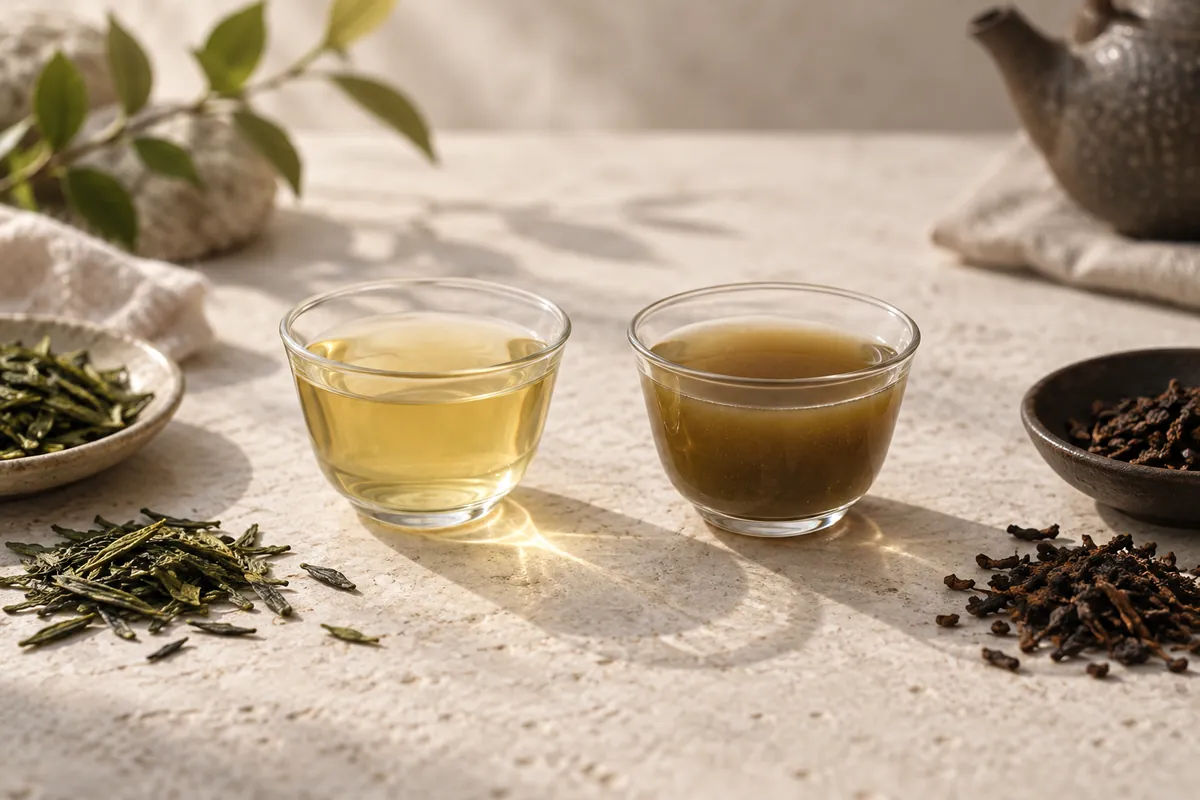
A thin cup is a dose problem, not a time problem. Adding thirty seconds to an under-dosed brew pulls out bitterness before it adds body, so you end up with a cup that is both weak and harsh.
A cup that tastes only of rice means the leaf is gone, whether because the blend was rice-heavy to begin with or because you are further into the infusions than you thought.
Two causes of a flat cup are not brewing faults at all: an old bag has lost its rice aroma first and will taste flat however carefully you brew it, and hard water mutes the whole cup in a way no adjustment to leaf or time recovers.
How do you make genmaicha iced?
There are two routes, and they produce different drinks: the fast one is to brew at roughly double strength and pour it straight onto a full glass of ice, so the melt brings it back to normal concentration rather than diluting a normal cup into a weak one.
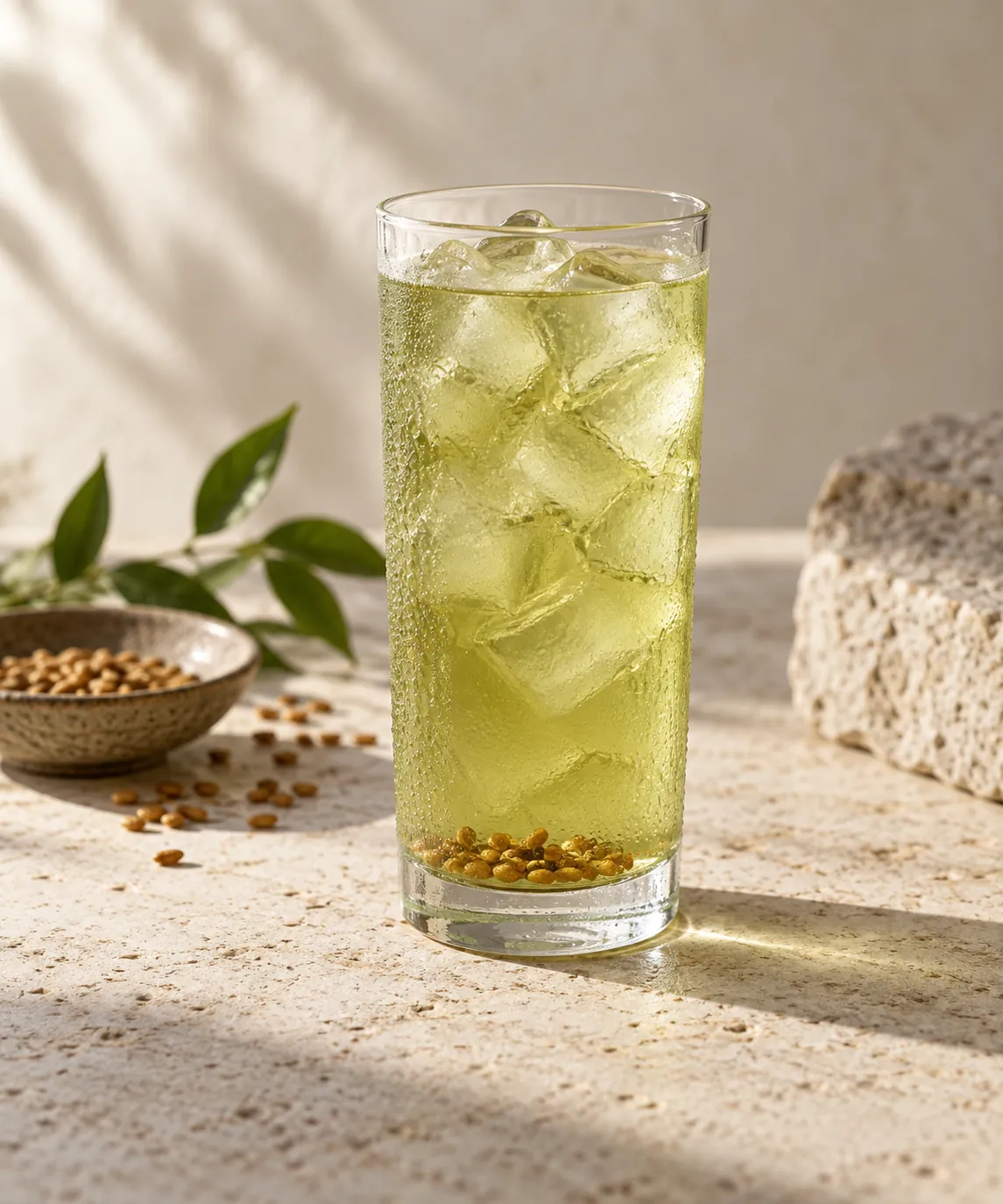
The slow route, a cold steep, means leaving the leaf in cold water in the fridge for several hours, and the result is sweeter because fewer of the compounds that cause bitterness extract at that temperature.
Cold mutes the rice, because its toasted aroma is volatile and needs warmth to carry, so the iced genmaicha you make reads greener and less nutty than the same leaf served hot.
Compensate with leaf rather than time. A little more leaf than the hot recipe gives the rice enough presence to survive both the cold and the dilution.
A cold-steeped glass of iced tea does not keep. A day in the fridge is about the limit before it goes dull, and ice made from hard water will mute the glass as it melts.
Can you toast your own rice for genmaicha?
Yes, and it is an inexpensive way into the blend if you already have green tea.
Brown rice goes into a dry pan in one thin layer, over medium heat, with no oil and no water, and the thin layer is what keeps it from scorching in patches.
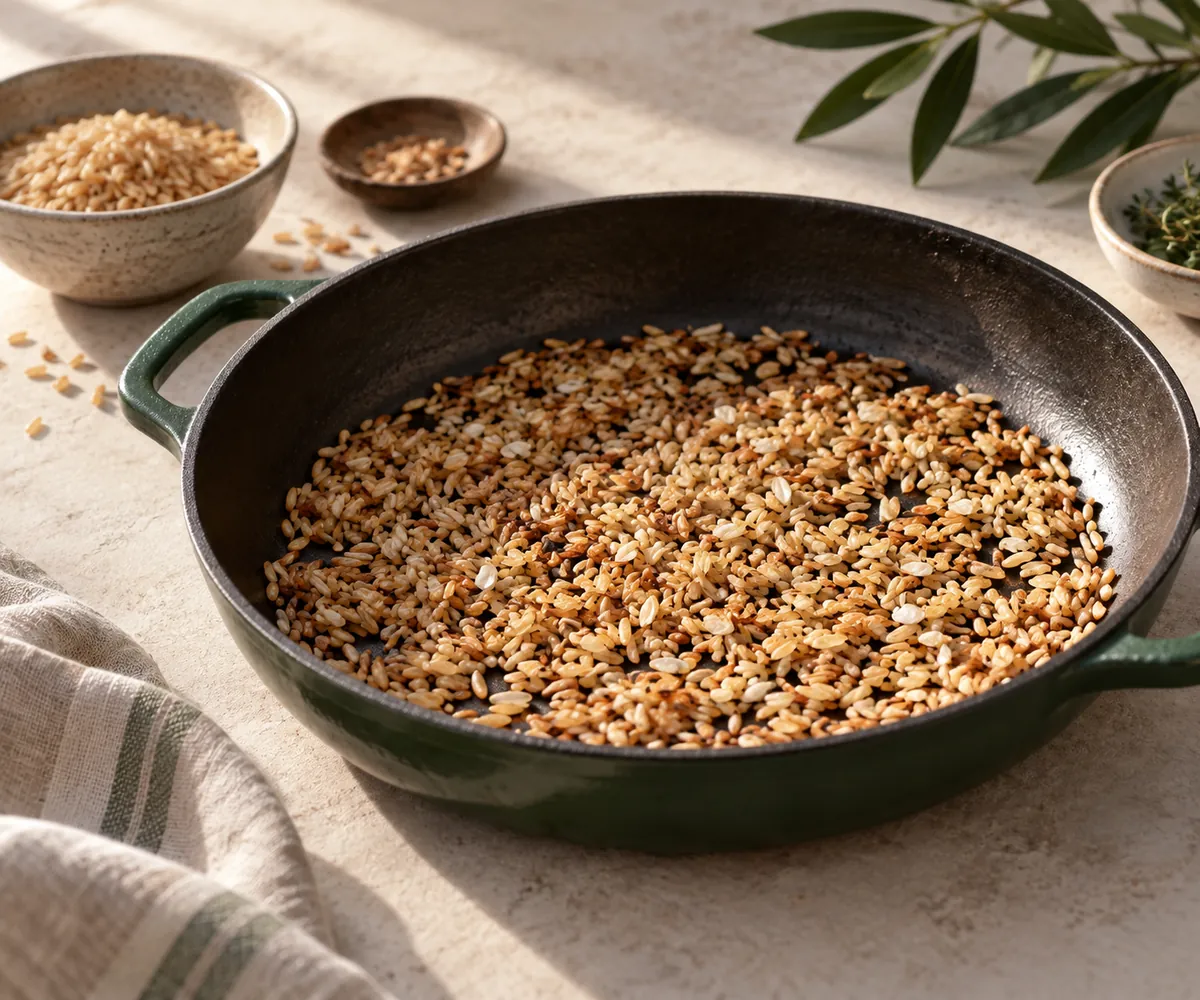
Stir it occasionally and give it 10 to 15 minutes. It is done when the grains have turned light golden and the kitchen smells nutty rather than of plain cooked rice.
Let it cool completely before blending. Warm rice tipped into green tea drives off the aroma you just spent a quarter of an hour making.
Blend at roughly equal weight, rice to leaf, as a starting point.
Barley tea is made from nothing but toasted grain, which makes a useful reference for what the rice alone contributes here.
One difference will remain: commercial rice is often steamed before toasting, which helps some grains pop open white, and a home batch will usually not do that.
The popped grains look like popcorn and taste like the rest of the rice, so the difference is cosmetic rather than one of flavour.
Genmaicha method
- Makes
- 1 small pot, about 180 ml
- Ratio
- 2 to 3 g of leaf per 150 to 180 ml of water
- Water temp
- 75 to 80 C for the first infusion
- Total time
- 4 min
What you need
- 2 to 3 g loose genmaicha
- 150 to 180 ml water at 75 to 80 C
Equipment
- Kyusu or small teapot
- Scale
- Kettle
- Small cups
Method
- WarmFill the kyusu with hot water, swirl it, and tip it out.
- LoadAdd the leaf to the empty warm pot.
- PourAdd the cooled water and time 45 to 60 seconds.
- RotatePour into the cups in turn rather than filling one at a time.
- EmptyTip the pot until the last drop is out.
- Re-steepAdd roughly 5 C for each later infusion and cut the time to 20 to 30 seconds.
Common questions
Can you make genmaicha in a mug with an infuser?
Yes, though the leaf has less room to open and rice fragments clog fine mesh. Lift the infuser out on time rather than leaving it sitting in the water.
Should you rinse genmaicha before brewing?
No. A rinse washes away the toasted rice aroma that sits on the surface of the grain, which is the part you are paying for.
What happens to the rice grains in genmaicha?
The grains soften in the pot, though they are brewed out rather than cooked and have little texture left.
Why do some bags contain green powder?
That is matcha-iri genmaicha, with matcha added to the blend. It clouds the cup, brews faster, and wants a shorter first steep than the recipe here.