What Is a Berry Smoothie? Berries, Liquid, and Something Creamy
A berry smoothie is blended berries with a liquid and usually something creamy. Frozen berries are not a compromise here, they are the better ingredient, and the reason is texture rather than cost.
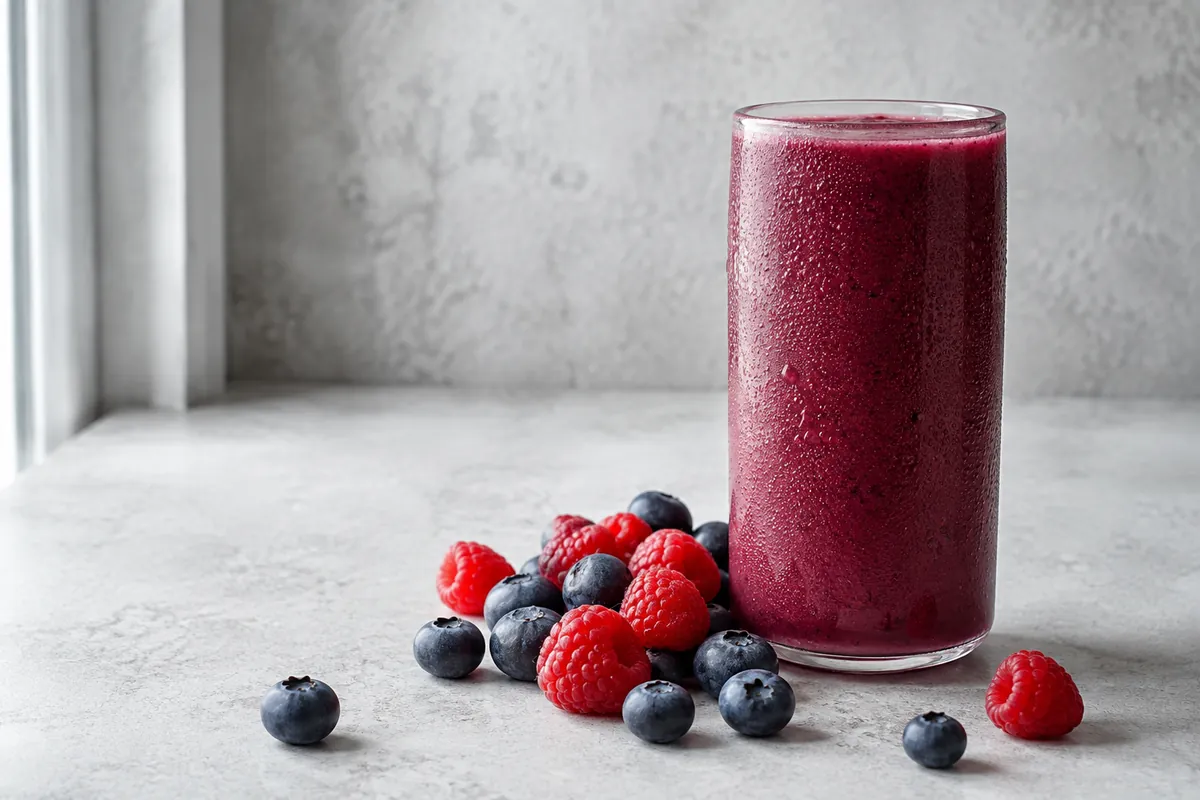
A berry smoothie is berries blended with a liquid and, usually, something that adds body: yoghurt, banana, a plant drink or a nut butter.
Like any smoothie, nothing is strained out. The seeds, skins and fibre all stay in, which is what gives it its particular texture and what makes it the most forgiving drink in this section to get right first time.
Berry smoothie at a glance
- What it is
- Berries blended with a liquid and something that adds body
- A single glass
- 150 g frozen berries, a creamy element, 150 to 200 ml liquid
- Frozen or fresh
- Frozen, unless the fruit is in season where you are
- Blend
- 45 to 60 seconds, starting slow
- Sharpest berries
- Blackcurrant and cranberry, which need a blending partner
- Why not juiced
- Berries yield poorly and their seeds clog a fine screen
Frozen fruit does the job ice cannot
The most useful decision in the category is made in the freezer aisle rather than at the blender, and it is worth stating first.
Frozen berries provide both cold and thickness. Fresh berries plus ice give you cold and dilution, and the ice waters the drink down as it breaks up.
Frozen against fresh
- Texture
- Frozen gives a thick, spoonable result without dilution
- Cold
- Frozen chills the drink without adding water
- Availability
- Frozen berries are picked ripe and available year round
- Cost
- Frozen is usually cheaper, sometimes considerably
- Flavour
- Fresh in season wins; frozen beats out-of-season fresh comfortably
Frozen fruit is the structural ingredient in a smoothie. It does the job ice would do in any other cold drink, without the cost of melting into water part way down the glass.
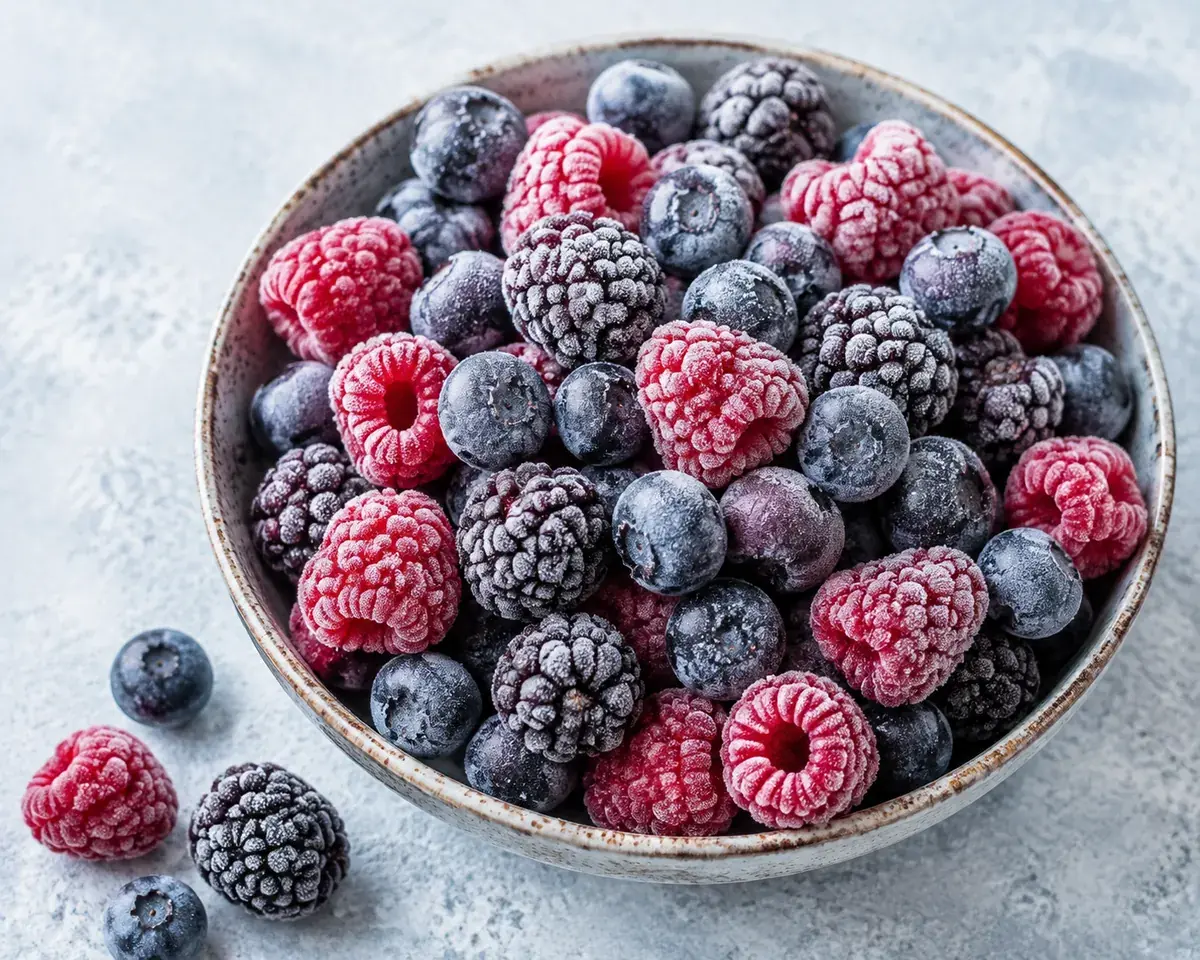
The basic proportions
- Frozen berries
- 150 g, roughly a generous cup
- Creamy element
- Half a banana, 100 g yoghurt, or a quarter avocado
- Liquid
- 150 to 200 ml
- Sweetener, optional
- Only if the berries are sharp
- Blend
- 45 to 60 seconds, starting slow
Fruit, something creamy, and liquid is the whole structure, and everything else on this page is a variation inside it.
Adjust the liquid last and in small amounts. Too thick is fixed with a splash more; too thin cannot be undone without adding frozen fruit, which changes the flavour along with the texture.
The gap between the two versions is not subtle either, and what it tastes like turns out to be governed by temperature and thickness far more than by which berry went in.
Strawberry through to blackcurrant
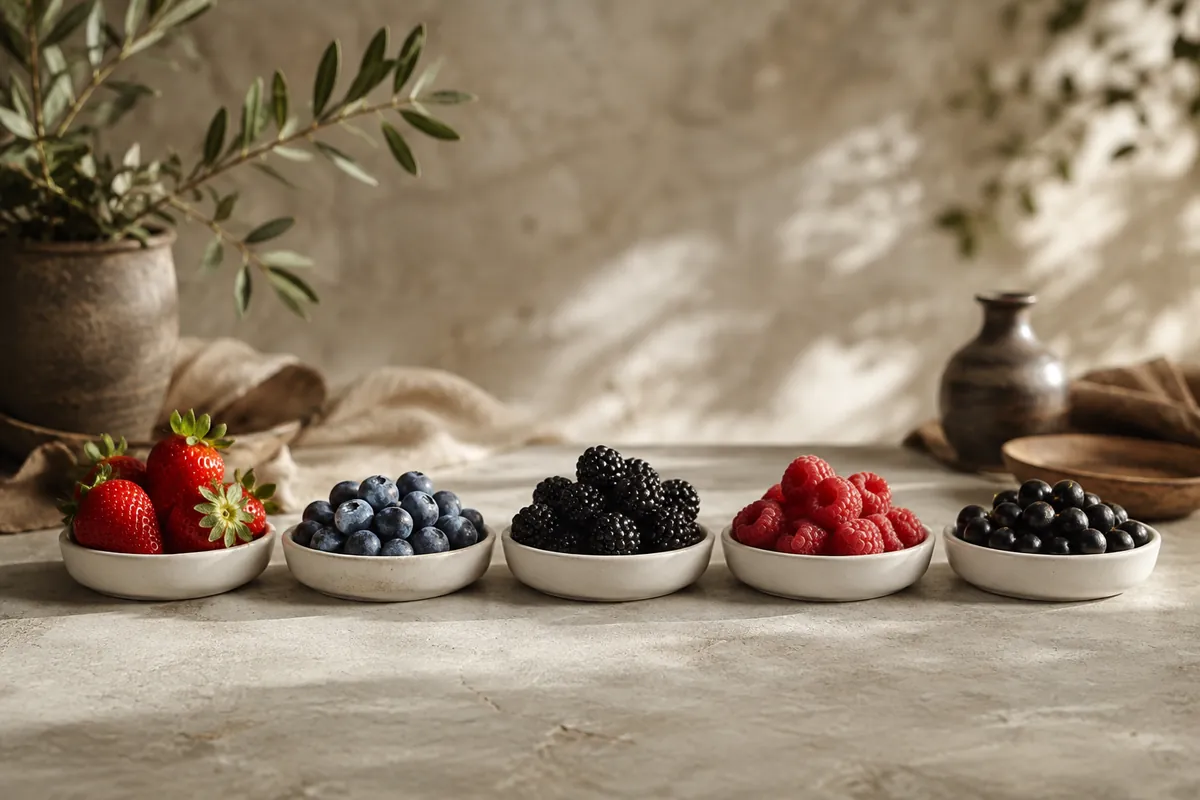
Berries differ enough that the choice changes the drink substantially. Sharpness is the axis that matters, and it runs a long way from one end of a mixed bag to the other.
How sharp each berry is
- StrawberryMild and sweet. The most approachable
- BlueberrySweet and mild, with a slightly waxy skin note
- BlackberryBalanced, with noticeable seeds
- RaspberrySharp and aromatic, and very seedy
- Blackcurrant and cranberryVery sharp. Need sweetening and a blending partner
Mixed frozen bags are the practical default and generally give a better balance than any single berry, because the sharp and the sweet ones offset each other. It is the same balancing act that makes a blended apple juice better than a single-variety one.
Frozen is also the better fruit for most of the year, and the quality gap runs the opposite way to what people expect. Berries destined for freezing are picked ripe and frozen within hours, whereas fresh berries out of season are picked underripe so they arrive intact.
Storage rather than freshness runs most of the fruit trade, which is why nearly all orange juice reaches a carton from a tank rather than straight off the press. In season, fresh berries win; out of season, frozen wins comfortably, and that reversal is unusual enough to be worth remembering.
Freezing your own is worth doing whenever berries are cheap.
Spread them on a tray to freeze individually before bagging, or they set into a solid block that has to be chiselled apart every time.
Raspberry seeds, and the ways round them
Seeds are the usual complaint. Raspberries and blackberries carry hard ones that survive blending, and no amount of extra time at full speed will remove them.
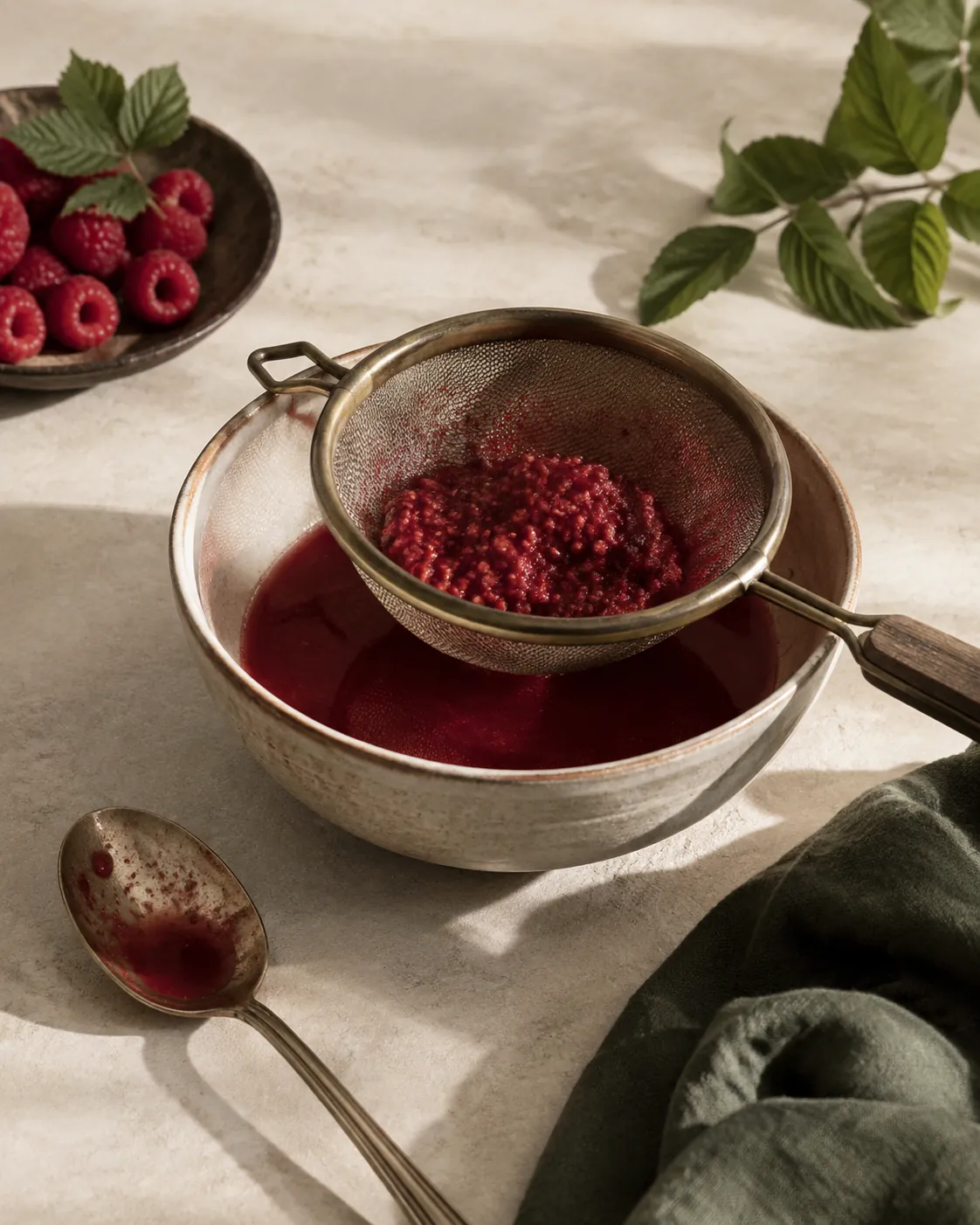
Domestic blenders do not break them down. A high-powered machine pulverises them into a fine grit that is less noticeable but still unmistakably present against the tongue.
Use seedless berries
Strawberry and blueberry avoid the problem entirely.
Strain it
Through a coarse sieve. It costs some fibre and fixes the texture completely.
Blend longer
Helps a little in a powerful machine, not at all in a weak one.
Add something thick
Yoghurt or banana masks the seeds by giving them something to sit in.
Straining is worth considering even though it removes some of the fibre that makes this a smoothie rather than a cold-pressed juice. It is a compromise rather than a defeat, and a coarse sieve costs far less texture than a fine one.
The other three routes cost nothing at all. Choosing strawberry and blueberry sidesteps the problem outright, and a spoon of yoghurt gives the remaining grit something to sit in, which is a good part of why commercial versions are yoghurt-based.
Grittiness that is not seeds at all is a different fault with a different cause, usually skin fragments from a run that stopped early, and what goes wrong separates the two properly.
Why a berry smoothie sometimes comes out grey
Colour is the one thing berries are relied on for. When the glass arrives a flat grey-purple, the cause is almost always something else that went in alongside them.
Berries take their colour from anthocyanins, the same pigment family that colours a hibiscus infusion. Those pigments are pH sensitive and shift toward blue and grey as the mixture around them becomes less acidic.
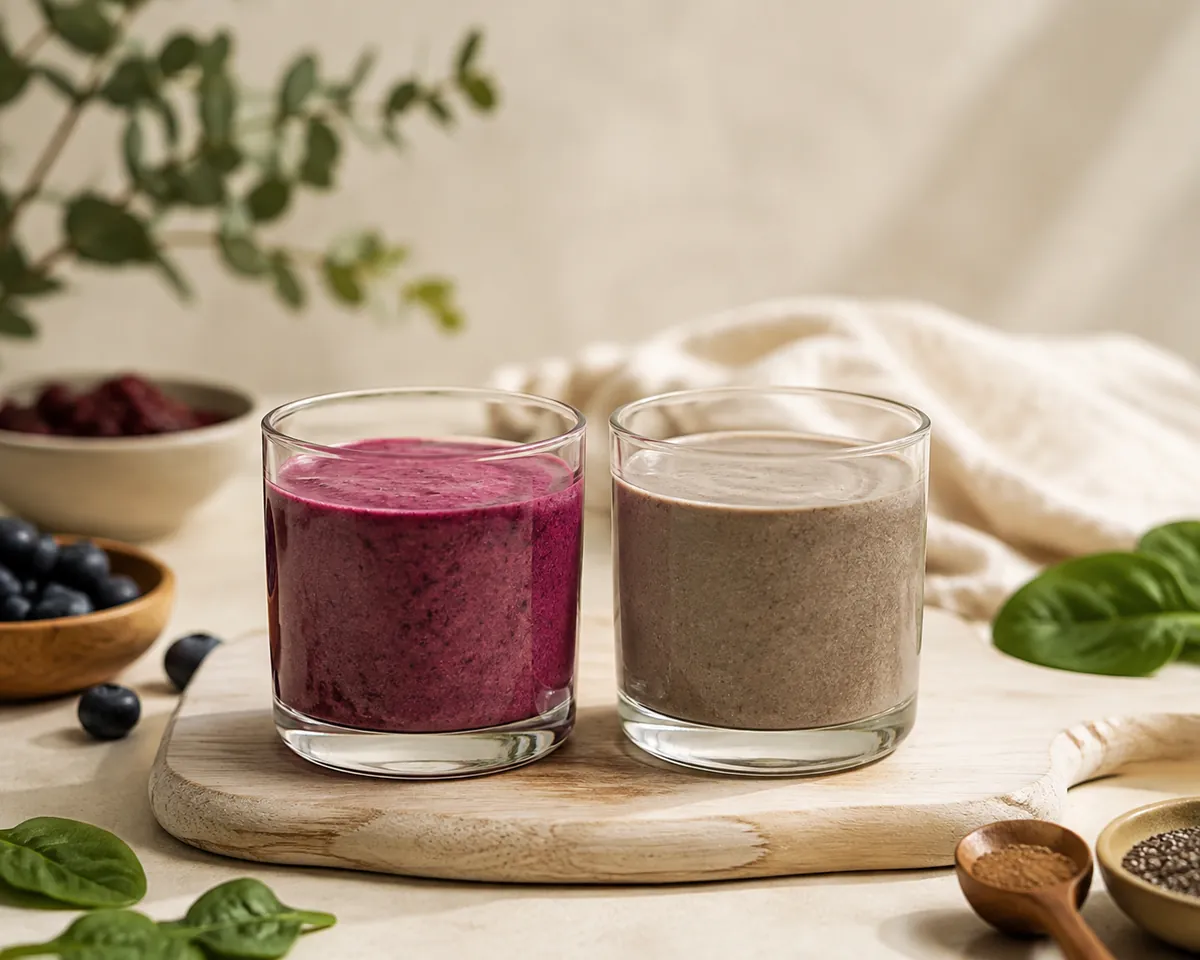
Adding greens is the usual culprit. Chlorophyll against red-purple anthocyanin produces a muddy brown-grey within seconds, which is why a green smoothie and a berry one are best kept apart.
Dairy does something quieter in the same direction. Milk and yoghurt raise the pH and pull the colour toward mauve, which is why berry-and-yoghurt smoothies always look paler than berry-and-water ones made from identical fruit.
A squeeze of lemon reverses most of the shift for the price of half a fruit. None of this touches the flavour, so it matters only if you care how the glass looks, which for a drink built entirely on colour most people do.
Loading order, and the stall that thins it
Two habits account for nearly every thin, disappointing smoothie, and both of them happen at the blender rather than in the shopping.
Loading the blender
- Liquid firstIt lets the blades create a vortex rather than cavitating.
- Soft ingredientsYoghurt, banana, nut butter go in next.
- Frozen fruit lastIt sits on top and is drawn down as the vortex forms.
- Start slowThen move to maximum once everything is moving.
- Blend fully45 to 60 seconds. Most people stop far too early.
If the machine stalls with a pocket of air under the blades, stop and stir rather than adding more liquid. Adding liquid to fix a stall is how a thick smoothie becomes a thin one, and it is the most common self-inflicted fault in the category.
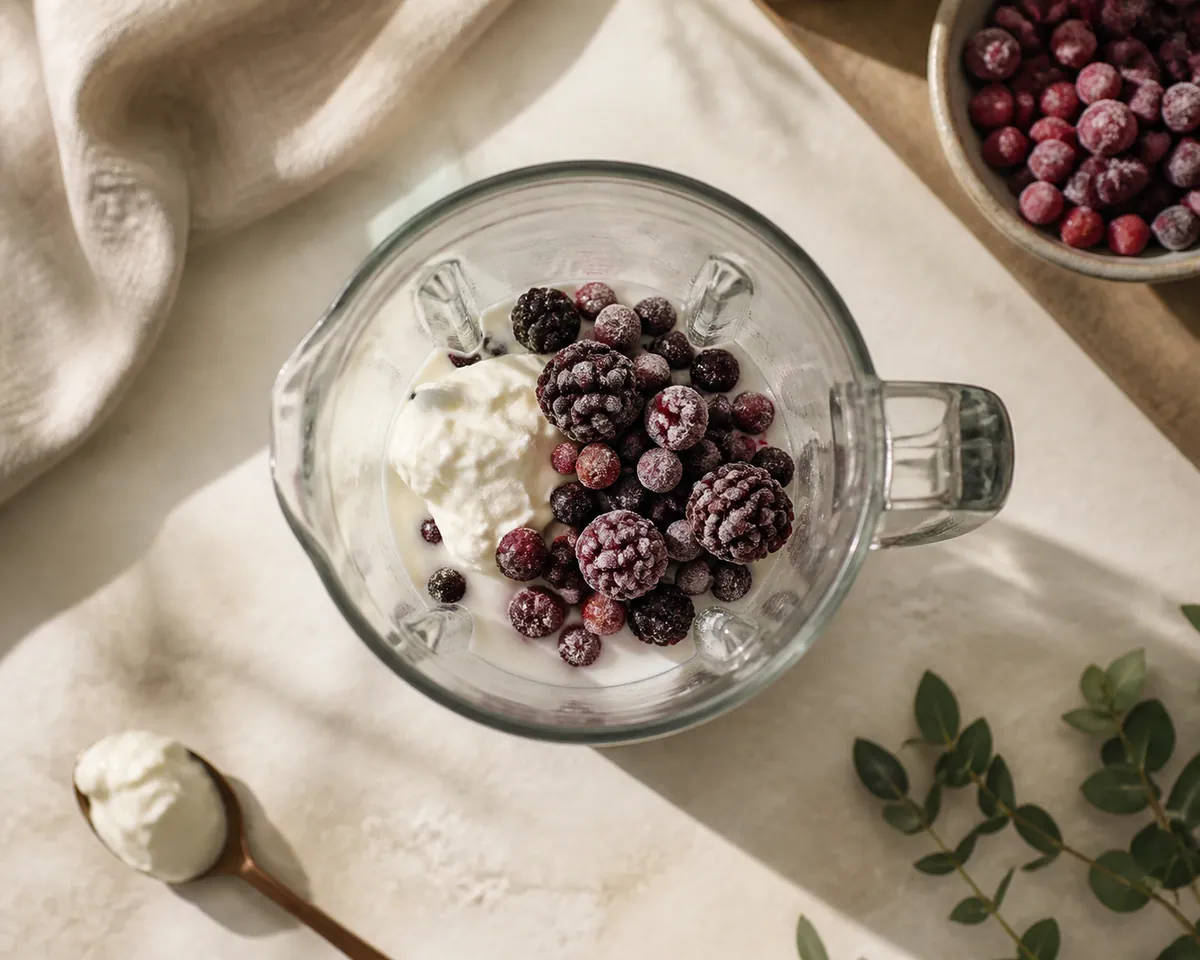
Stopping too early is the other. Forty-five to sixty seconds is a good deal longer than it feels with a blender running, and the last fifteen of them are where skin fragments and seed grit actually disappear.
- Using ice instead of frozen fruit, which dilutes rather than thickens.
- Adding liquid to fix a stalled blender, which thins the finished drink.
- Stopping the blender too early, leaving seeds and skin fragments.
- Using fruit juice as the liquid, which pushes an already sweet drink into cloying.
- Blending berries with greens, which produces a grey-brown drink instantly.
Those five between them account for almost every complaint made about berry smoothies. Not one is a recipe problem, and every one of them is a habit that costs nothing whatever to change.
A protein smoothie makes stalling worse rather than better, since powder thickens as it hydrates and the mixture becomes harder to move as the run goes on rather than easier.
Oats, cocoa and when to sweeten
A berry base takes additions well. The flavour is robust enough to carry a second ingredient without vanishing underneath it, which is not true of the green version.
Oats
A tablespoon adds body and a mild cereal note. Blend them with the liquid first.
Nut butter
Adds fat and richness, and holds the texture together.
Yoghurt
Body and a pleasant tang against sweet berries.
What works less well is fruit juice as the liquid. Berries carry plenty of sugar already, and apple or orange pushes most versions straight past pleasant into cloying.
Most berry smoothies need no sweetener at all, and knowing which ones do is what stops the overshoot. Sweet berries with a banana are already there; blackcurrant, cranberry and sour cherry are not, and those are the cases where a little sweetening earns its place.
Add it at the end and taste first. Frozen fruit reads as less sweet when it is very cold, so a smoothie tasted straight off the blades will seem sharper than the same glass does five minutes later.
Banana, dates and honey all sweeten while adding body, which is usually a better outcome than sugar or syrup, both of which sweeten and thin the drink in the same spoonful.
The liquid, and what yoghurt does
The liquid changes a berry smoothie less than it changes a green one. The differences are still real, and they run through body and colour rather than through flavour.
Water
Cleanest, and lets the berries lead. Underrated.
Dairy milk
Rich, and the protein gives real body. Dulls the colour toward mauve.
Yoghurt counts as a liquid in this context and it is much the most transformative of the options, adding tang and substantial body at the same time. That is why so many commercial smoothies are yoghurt-based, and it is also why they look paler than the fruit on the label suggests.
Water is the one to try if smoothies have been coming out heavy. Berries carry enough sugar and enough acid to hold a glass together unaided, and everything richer than water is adding body rather than flavour.
Salinity is worth a mention because it works in the opposite direction to sweetness. A faintly saline liquid sharpens the fruit rather than rounding it, which is why it suits blackcurrant and cranberry and does very little for a strawberry.
The foam, and the first five minutes
A pale foam head on a fresh smoothie alarms people the first time, and it is an ordinary consequence of what a blender does.
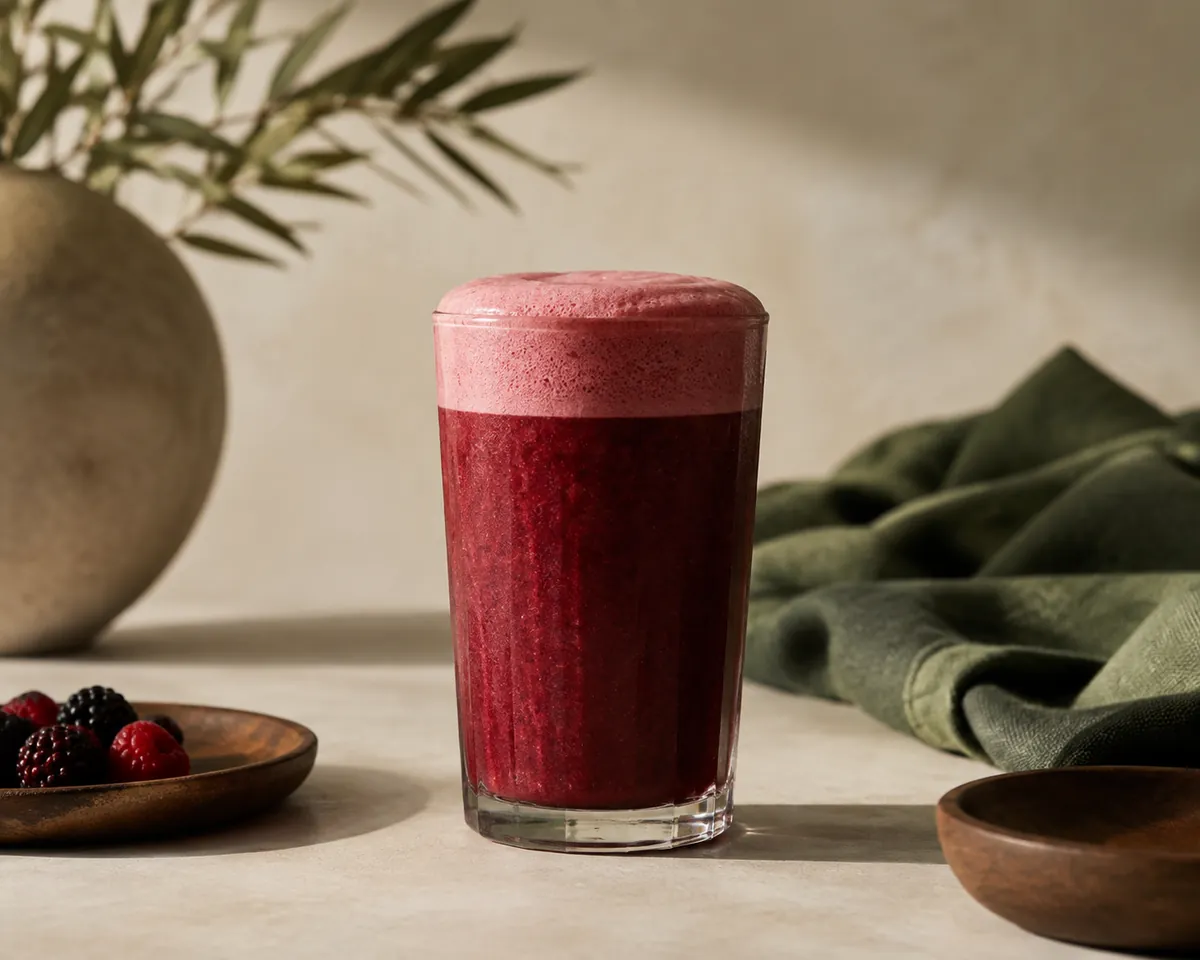
Blending drives a great deal of air into the mixture, and fruit fibre and any protein present stabilise the bubbles that result. It is the same mechanism behind the head on a root beer, arrived at by accident rather than by design.
The foam settles within a few minutes and stirs back in without trouble. Running the blender on a low speed for the final ten seconds reduces it noticeably, if the appearance is what bothers you.
Waiting for it to clear, though, gives the drink the same few minutes to separate, so the practical move is to stir it in and drink. A smoothie is at its best in the first five minutes, and everything after that costs a little texture.
Serve it in a wide glass, which shows the colour the whole drink is built around. If it has thickened past drinking comfortably, add liquid a splash at a time and stir rather than re-blending, which introduces more air and starts the foam again from nothing.
A few whole berries or a spoon of granola on top gives textural contrast against a very smooth base, and it is the same reasoning that makes a thick bowl work in the first place.
One bag, one liquid, thirty seconds
Berry smoothies keep better than green ones. They still decline steadily, and the workable routine is to prepare the solids rather than the finished drink.
- Drink within the hour for the best texture, since it separates and warms.
- Refrigerate in a full sealed container for up to a day if you must.
- Expect separation. Shake or stir; it reverses completely.
- Freeze in portions and blend again briefly, which works better than refrigerating.
- Add lemon if storing, which holds both the colour and the flavour.
Freezing leftovers beats refrigerating them by a wide margin. A smoothie frozen in a jar and re-blended comes back close to fresh, where one left overnight in the fridge is thin, separated and dull.
Portion frozen berries and a chunk of frozen banana into bags or jars, one serving in each, and every morning tip one into the blender with the liquid and any yoghurt. That takes about ninety seconds and produces a fresh drink rather than a tired one.
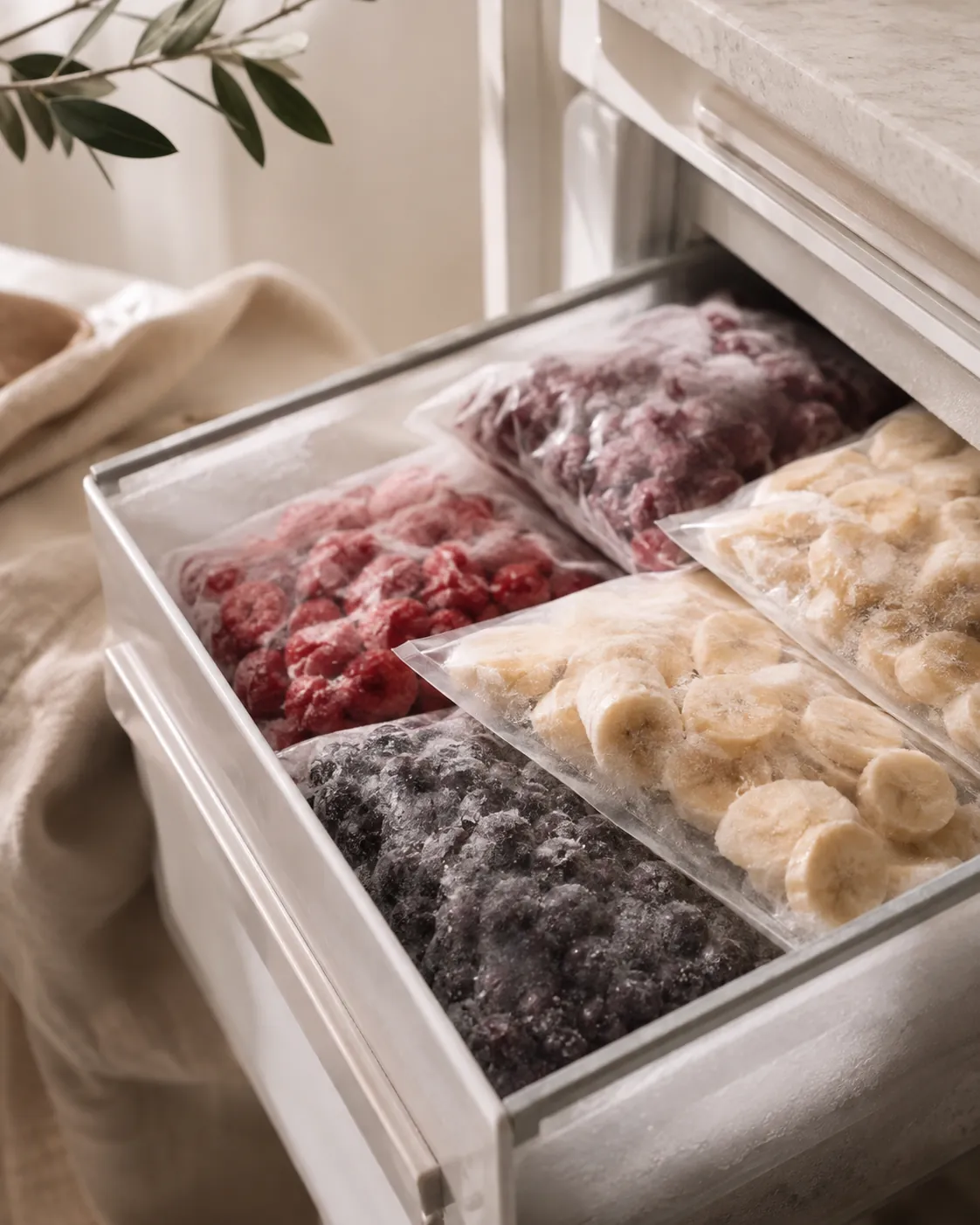
Freeze the liquid separately, or not at all. A bag containing frozen liquid takes far longer to blend and puts real strain on a domestic motor for no gain in convenience.
Banana frozen in chunks does the most for texture of anything in the bag, and it is worth keeping in the freezer even when nothing else is. Making a berry smoothie sets the routine out in order.
The kit also fixes the commonest domestic problem with the category, which is buying fruit that spoils before it is used.
Storing a berry smoothie covers the finished drink, where the honest answer is that there is very little storing to be done.
Thick enough for a spoon
A thicker version is served in a bowl and eaten with a spoon. Ratio is the only thing that changes, and it changes by roughly half.
Bowl proportions
- Frozen berries
- 200 g, more than for a drink
- Creamy element
- A frozen banana, or 100 g thick yoghurt
- Liquid
- 60 to 100 ml only
- Method
- Blend in short bursts, scraping down, with a tamper if you have one
- Serve
- Immediately, since it softens fast
Halving the liquid produces something closer to soft-serve than to a drink, and at that thickness the mixture will not form a vortex on its own. A tamper and a good deal of scraping down are what get it there instead.
The toppings are the point for most people, and they also solve the problem a very smooth base creates: granola, seeds and fresh fruit give the spoon something to bite against.
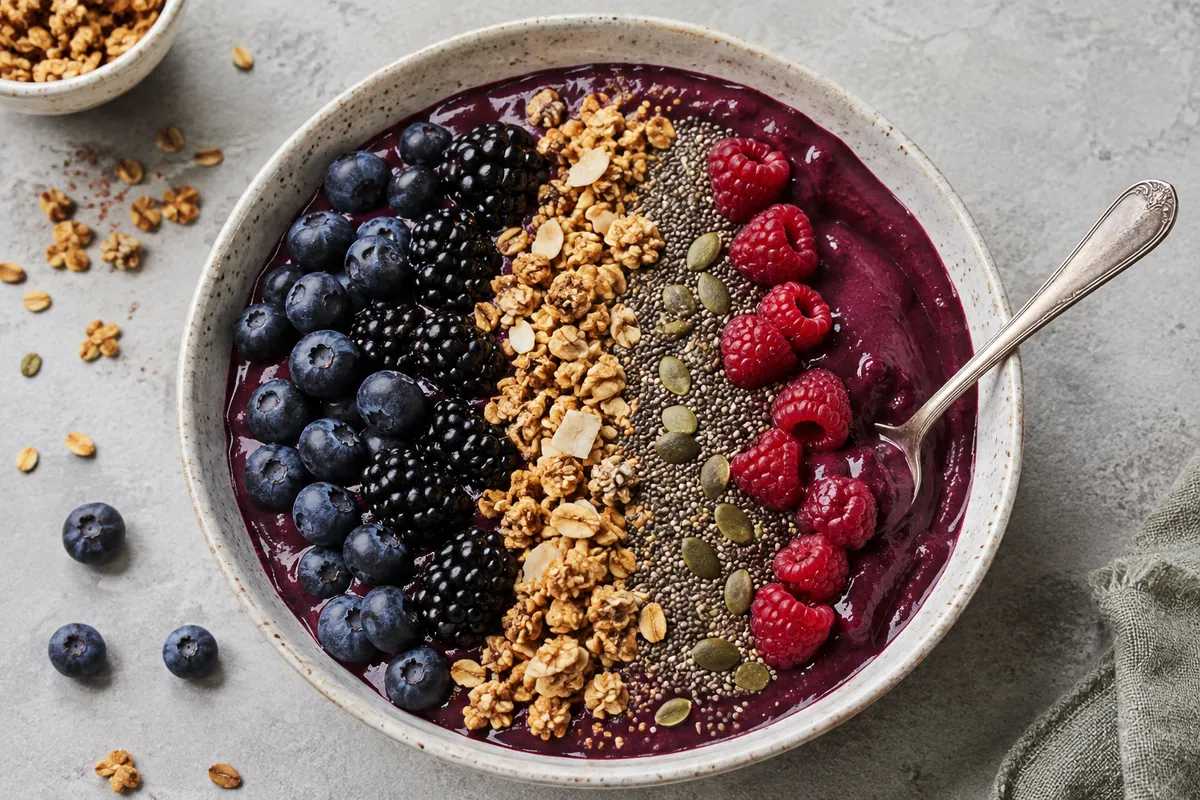
Eat it promptly. A bowl this thick softens to a puddle within about ten minutes at room temperature, and nothing short of the freezer will firm it up again.
The same thickening works with any base at all, and a smoothie bowl built on green ingredients is a harder sell on colour rather than on texture, since the method is identical.
Why berries resist a juicer
A smoothie and a juice made from the same punnet are different drinks, and the difference is the fraction thrown away rather than the machine.
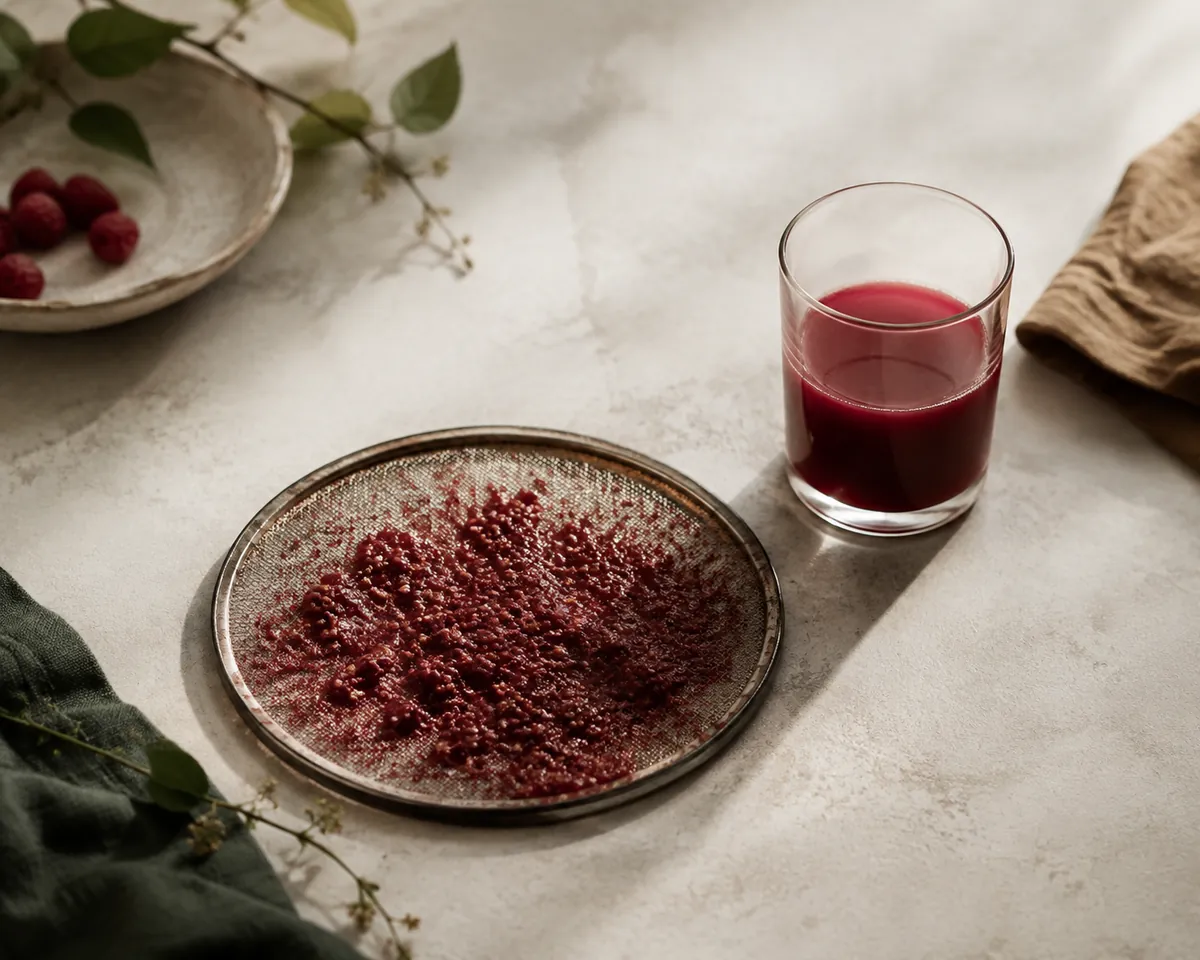
Juicing removes the pulp and the seeds, leaving a thin, intensely coloured liquid that separates within minutes and wants drinking at once. Blending keeps everything, and the thickness comes precisely from what a juicer would have discarded.
| Berries | Apple | Citrus | |
|---|---|---|---|
| Juice yield | Poor | High | High |
| Seeds | Clog a fine screen | Removed whole | Removed whole |
| Colour in the glass | Intense, and fades fast | Browns quickly | Stable |
| Usually sold as | A smoothie | A juice | A juice |
Berries are the worst candidates for juicing of any common fruit. The yield is poor, the seeds clog a screen, and the glass costs several times what a smoothie made from the same fruit does.
That is why berry juice is rare on a shelf while the smoothie is everywhere. The fruit suits one process and resists the other, which is not true of an apple, or of a carrot juice that presses cleanly by any method you choose.
The contrast is sharpest against green juice, where the leaves give up almost nothing and the drink has to be built around a watery base. Berries have the opposite problem entirely: plenty of liquid, and a screen full of seed.
Common questions
Should I use fresh or frozen berries for a smoothie?
Frozen, in almost every case. They provide both cold and thickness without the dilution that ice causes, they are picked ripe, and they are usually cheaper. Fresh berries in season are better on flavour alone.
How do I get rid of the seeds in a berry smoothie?
Domestic blenders will not break down raspberry and blackberry seeds. Either use seedless berries such as strawberry and blueberry, strain the finished smoothie through a coarse sieve, or add something thick like yoghurt to mask them.
Why did my berry smoothie turn grey?
Anthocyanin pigments shift toward blue and grey as acidity falls, so dairy dulls the colour, and adding greens produces a muddy brown-grey. A squeeze of lemon lowers the pH and brings the red back.