How to Brew Robusta So the Strength Is an Asset
Roughly twice the caffeine and more chlorogenic acid mean the same grind and the same water can pull more bitterness out of this bag.
Robusta coffee is not bad coffee brewed badly. It is a different bean brewed on settings tuned for another species, and the settings are what need moving.
What is different about brewing robusta?
More of nearly everything that tastes bitter.
Each of those compounds responds to a setting you already control, so what follows is a list of adjustments.
| Property | Robusta | Arabica | What it changes |
|---|---|---|---|
| Caffeine | About double | Baseline | Caffeine is bitter, so extraction has to be gentler |
| Chlorogenic acid | Higher | Lower | Turns harsh quickly when pushed |
| Sugars and oils | Fewer | More | Less sweetness to balance the bitterness |
| Body and crema | Heavy | Lighter | An asset if the method rewards it |
Caffeine is genuinely bitter on the tongue, so roughly twice as much of it gives a cup that reads harsher at the same extraction, before anything has gone wrong. Chlorogenic acid adds to that, because it turns sharp and metallic when a brew runs long or hot and this bean carries more of it to turn.
Robusta also has less to balance against. Arabica beans bring more sugars and aromatic oils, so their bitterness sits inside something, where robusta's stands rather more exposed.
What robusta gives back is body: a heavier mouthfeel and a much thicker crema, which is an asset if you pick a method that uses it.
Grade matters more here than for arabica. A carefully produced washed robusta is a different drink from commodity dry-processed stock, and much of the species' reputation was built on the latter.
What ratio and temperature does robusta take?
Slightly stronger, noticeably cooler, and coarser than instinct says.
Four settings that move
- Coffee to water
- 1:15, a touch stronger than arabica
- Water
- About 90 C, not off the boil
- Grind
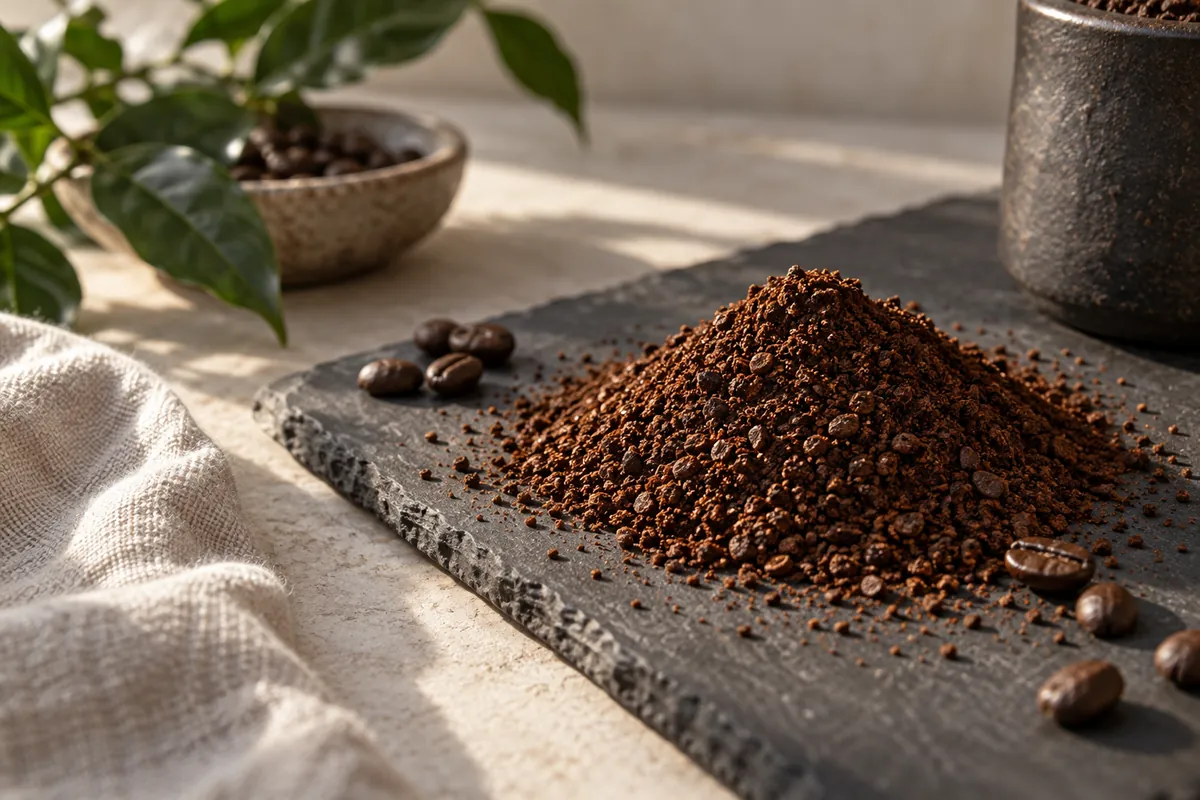
- Medium coarse, like coarse sand
- Contact
- Shorter than you would give arabica
The ratio moves up slightly and the other settings move down, because a little more coffee gives you strength without asking the water to work harder for it.
Ninety degrees is the setting to change first. Water straight off the boil pulls the harsh fraction out immediately, and simply waiting a minute after the kettle clicks is enough.
Coarser feels wrong for a strong bean and is right. A coarse grind slows the extraction so you reach good strength before you reach bitterness, rather than the other way round.
Shorter contact is the same idea from the other end. This bean gives up its solids readily, so it needs less time than the same weight of arabica would.
A dark roast compounds all of it, because roasting makes coffee more soluble and a dark robusta therefore wants the shortest contact of all.
Which brewing method suits robusta best?
Some brewers hide what this bean does and some put it on display.
Phin
Built around it. Slow drip, sweetened base, dense cup.
Espresso
Pressure rewards the heavy crema, and milk cannot bury it.
Filter
Clean and unforgiving. It gives the bean nowhere to hide.
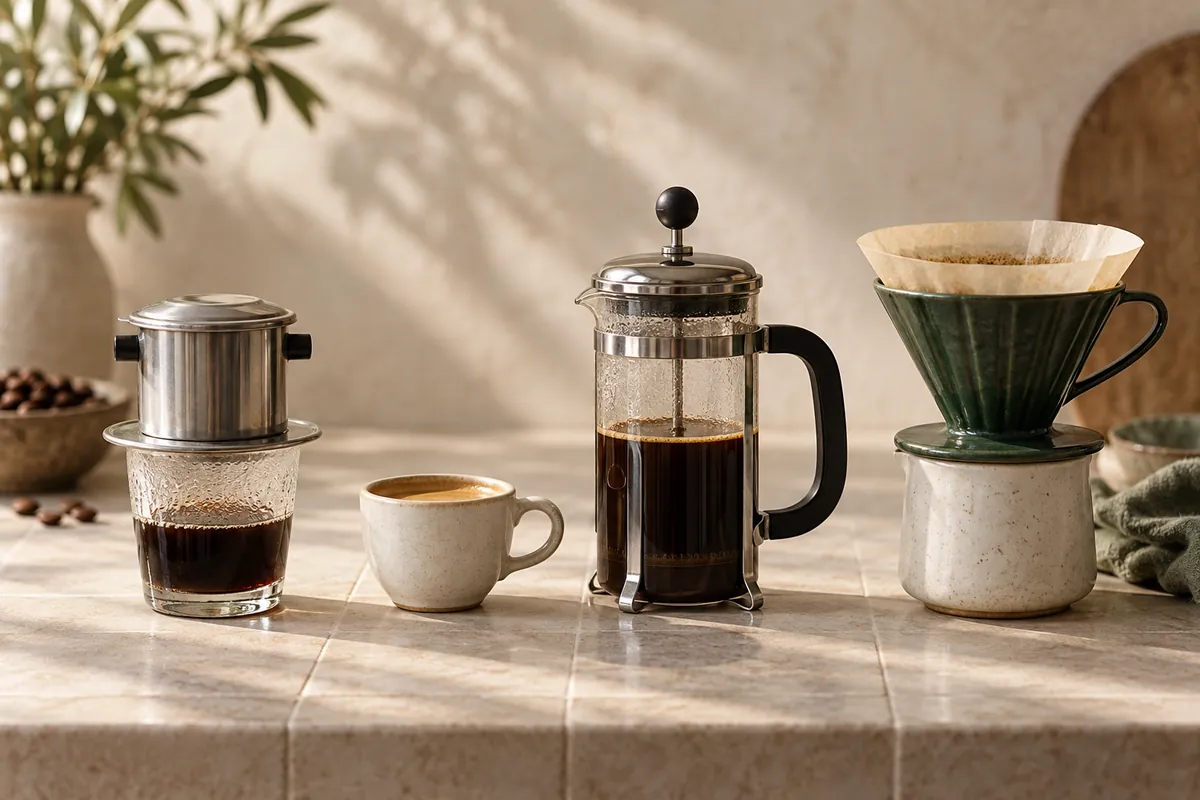
The phin is a specific answer, since it was designed in a country that grows mostly robusta and its slow drip and sweetened base are both responses to what this bean is.
Espresso works because pressure suits body: nine bars through a heavy bean produces the crema that Italian blends have used robusta for, often without advertising it.
Immersion is a reasonable middle. A French press plunged at three minutes rather than four gives the body without the long contact that would push the bitterness through.
Filter is the honest test. A pour over strips away body and leaves flavour exposed, which a fine robusta survives and a commodity one does not.
None of this rules anything out. The choice is a question of how much care each route needs from you, and the filter simply needs the most.
How do you brew robusta in a phin?
Milk in the glass first, then coffee, then patience.
Phin, in order
- BaseTwo tablespoons of condensed milk into the glass, if you want it sweet.
- LoadAbout 20 g of medium-ground robusta into the phin, levelled, press set on top loosely.
- BloomA splash of hot water, wait thirty seconds for the grounds to swell.
- FillTop up to 100 ml, cap it, and leave it for four to five minutes.
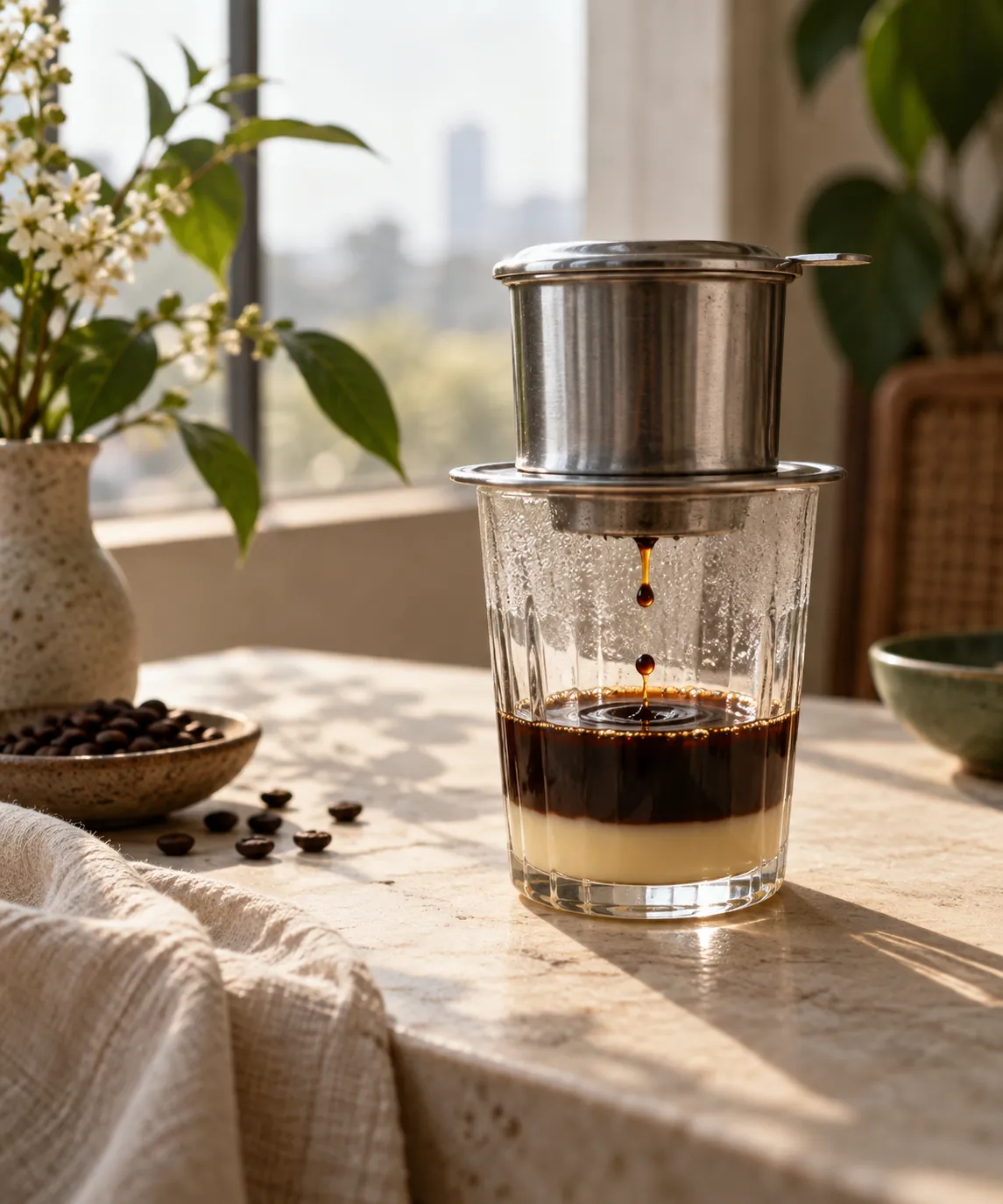
Do not screw the press down. It is meant to rest on the bed under its own weight, and tightening it turns a four-minute drip into a twenty-minute one or stops it entirely.
Because robusta is often roasted dark and holds a lot of gas, the bloom matters more here than it does in most brewing: letting the gas escape first stops the water channelling around the bed.
Timing tells you about the grind. Four to five minutes is right, under two means the grind was too coarse, and a stall means it was too fine or the press was tightened.
Stir it at the end. The coffee sits on top of the milk in two clear layers, and the drink is not finished until they are combined.
Should robusta go in espresso?
Many traditional Italian espresso blends have carried some robusta for decades, which is worth knowing before treating the species as a defect to be avoided.
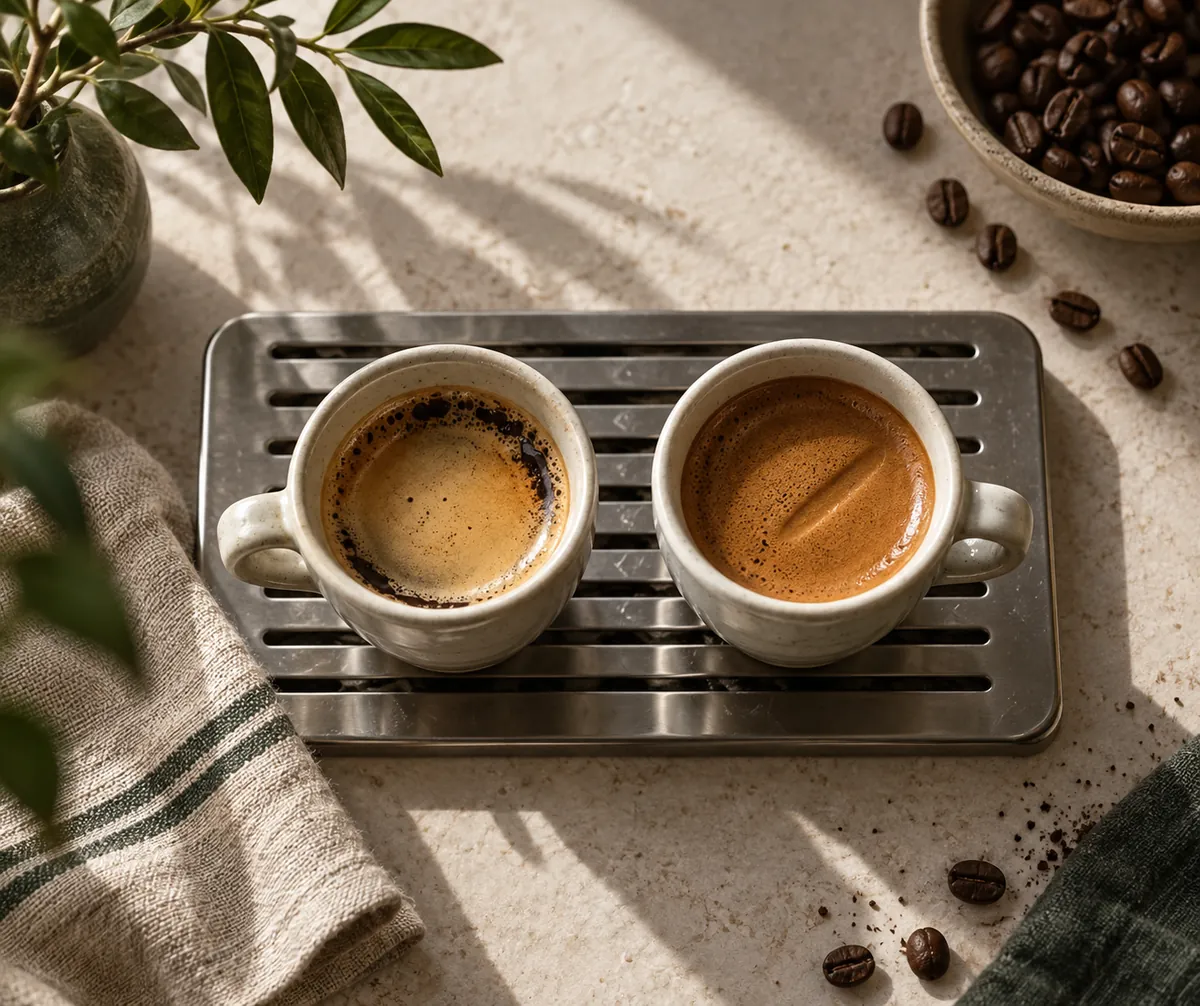
Crema is the visible argument. Robusta produces more of it and it survives longer, which matters in a drink that is judged partly by appearance.
The milk argument is the practical one. A light arabica espresso can vanish under 200 ml of steamed milk, and this bean does not.
The flavour cost is real: that woody grain note is what the species tastes like and not a flaw in the brewing, so the percentage in a blend is a way of choosing how much of it you want.
Blends vary a great deal, and a larger share of robusta brings more crema and body along with more of the woody note.
How do you make robusta cold brew?
Cold water skips the fraction this bean gets criticised for.
The harsh compounds need heat to come out in quantity, so a cold steep leaves most of them in the grounds.
Cold, with two changes
- Grind and doseCoarse, 1:5 by weight for a concentrate, same as any cold brew.
- Shorter steep12 hours rather than 16 to 18. This bean gets there faster.
- StrainThrough paper if you want it clean, cloth if you want the body.
- DiluteFurther than you would arabica. It has strength to spare.
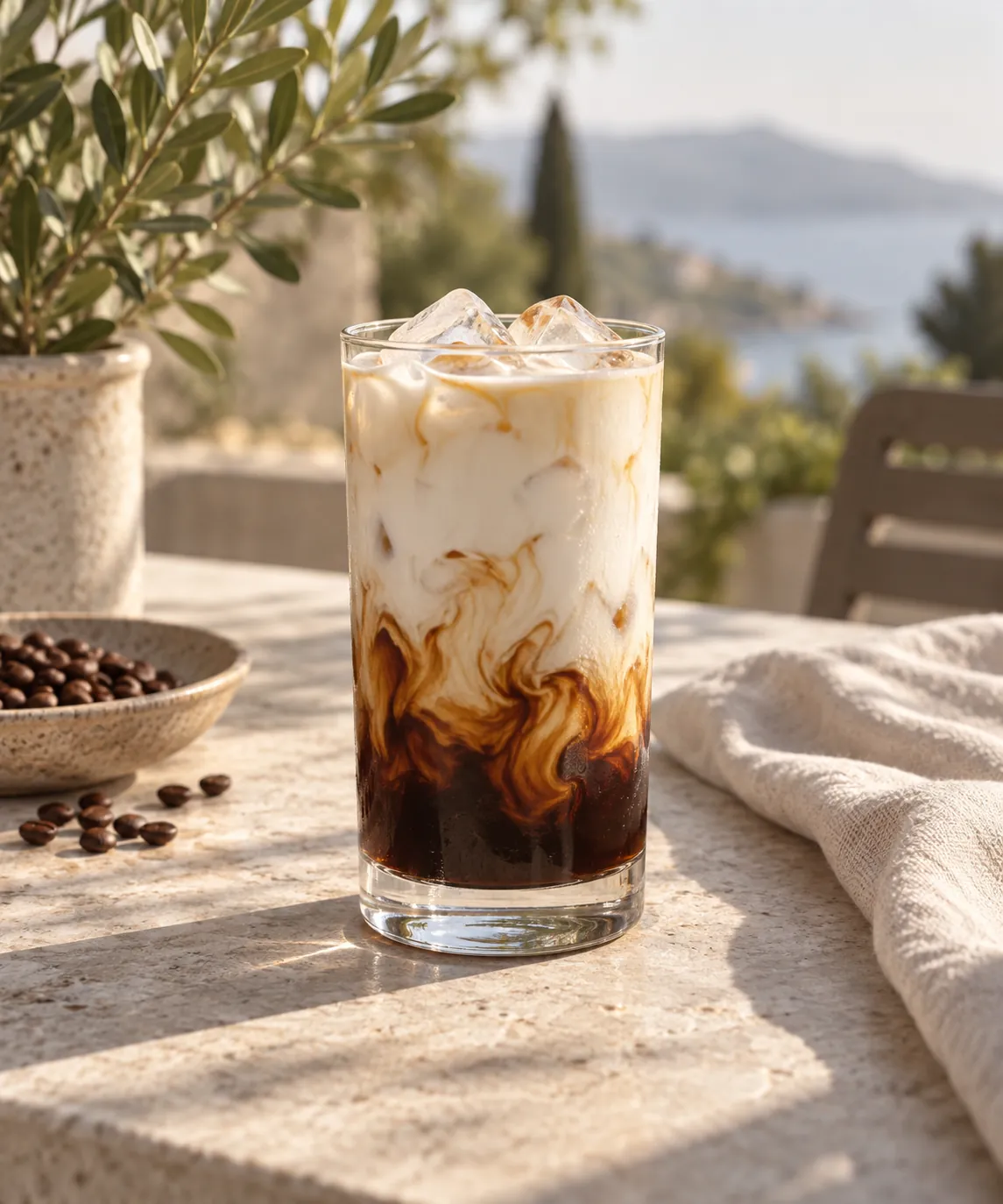
The first change is twelve hours, because robusta is more soluble than arabica and reaches full strength sooner, so the usual overnight figure overshoots.
The payoff comes in the dilution: you can take a robusta concentrate one to three with water or milk and it still tastes of coffee, where arabica at the same dilution starts to thin.
Melting ice is the real test. A drink that survives melting ice and a splash of milk is exactly what this bean is good at, which is why iced coffee cultures reach for it.
Over-steeping fails differently here. Rather than getting bitter, a robusta cold brew that has gone too long turns woody and flat, which is a distinct and less recoverable fault.
Why does my robusta taste rubbery?
Test the brew before you blame the bag.
Over-extraction and poor processing produce a similar rubbery note, and the difference is that one of them disappears when you change a setting.
- Was the water straight off the boil rather than around 90 C?
- Was the grind finer than coarse sand?
- Did the press or the phin run longer than it should have?
- Does the bag say washed, or does it say nothing at all?

Water temperature is the first thing to change. Dropping from boiling to ninety degrees costs nothing, so try it before touching the grind.
Grind is the second and takes one brew to test. Go two clicks coarser and see whether the note lifts, which it usually does.
Contact time is where a press or a phin fails quietly. Both hold the water on the grounds for as long as you let them, so both need watching rather than trusting.
If none of that works, it is the bean. Dry-processed commodity robusta carries a rubbery note that no brewing change removes, so the fix is a different bag rather than a different method.
Two other faults look similar and are not. Stale coffee tastes flat and papery rather than rubbery, and sweetened milk hides the note rather than fixing it, so a cup that tastes fine with milk has not necessarily been fixed.
Robusta in a phin
- Makes
- 1 glass, about 120 ml
- Ratio
- 20 g of coffee to 100 ml of water
- Water temp
- About 90 C rather than a full boil
- Grind
- Medium, coarser than espresso
- Total time
- 7 min
What you need
- 20 g of medium-ground robusta
- 100 ml of water at about 90 C
- 2 tablespoons of condensed milk, optional
Equipment
- Phin dripper
- Heatproof glass
- Kettle
- Long spoon
Method
- BaseTwo tablespoons of condensed milk into the glass, if you want it sweet.
- LoadAbout 20 g of robusta into the phin, levelled, with the press resting on top.
- BloomA splash of hot water, then wait thirty seconds for the grounds to swell.
- FillTop up to 100 ml, cap it, and leave it for four to five minutes.
- StirCombine the coffee and the milk before drinking.
Common questions
What ratio should robusta be brewed at?
About 1:15 by weight, slightly stronger than arabica, with water near 90 C and a medium-coarse grind to slow the extraction.
Which brewing method is best for robusta?
A phin or espresso, because both reward heavy body. Filter brewing works but exposes the bean, so it suits a fine robusta rather than a commodity one.
Why does my robusta taste like rubber?
Usually over-extraction from boiling water or too fine a grind. If dropping to 90 C and going coarser does not lift it, the bean was dry-processed commodity stock.
Is robusta good in espresso?
It gives a thicker, longer-lasting crema and survives milk. Many traditional Italian blends carry some robusta for exactly those reasons.