How to Make Nitro Coffee With a Head That Holds
A cream whipper gets close to the tap drink for a short while, provided the cold brew underneath is strong, fresh and well chilled.
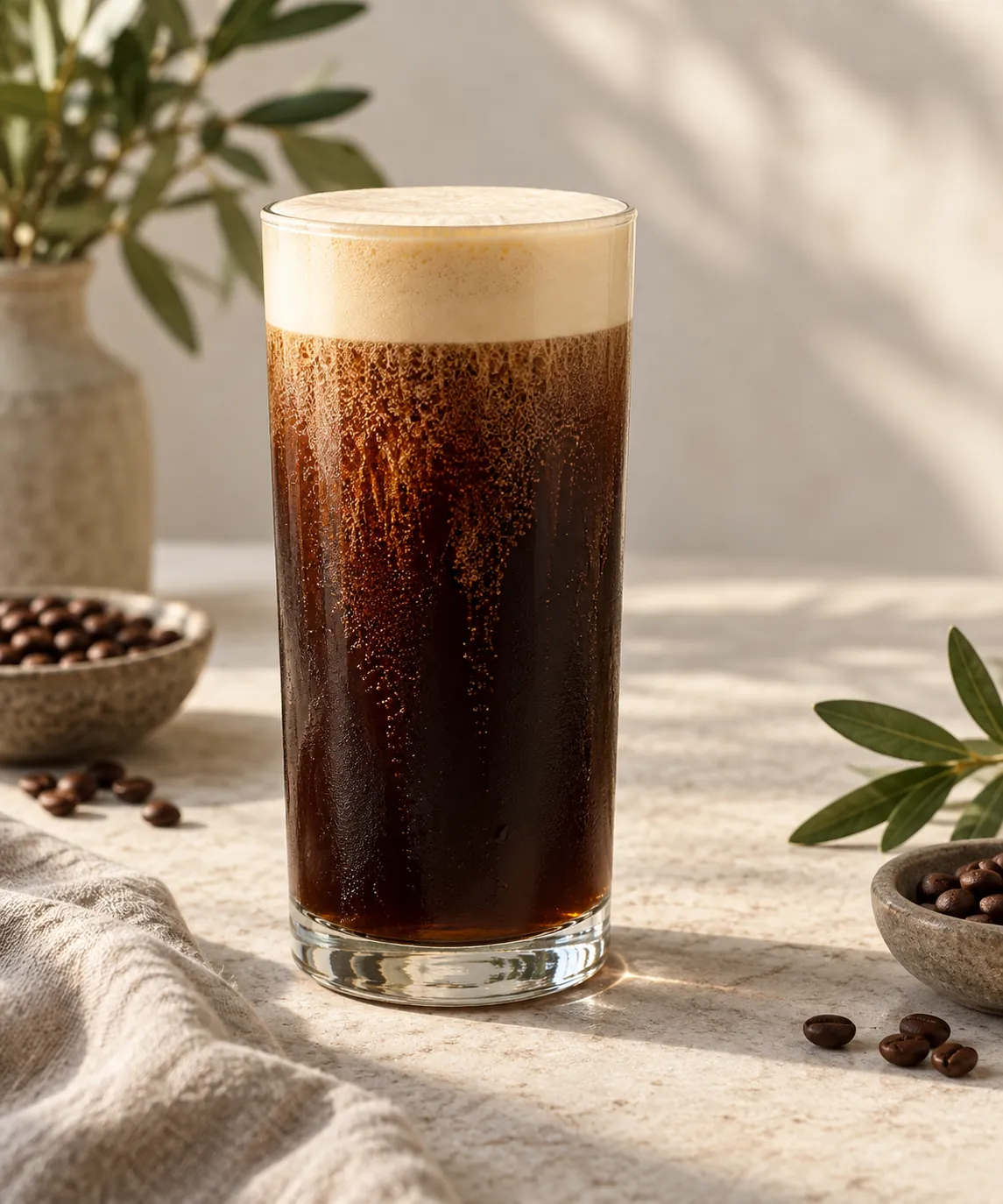
Nitro coffee is cold brew with gas driven into it, and the gas is where home versions fall apart.
Nothing about cold brew coffee is brewed at the moment of making, because the coffee was finished the day before and all that remains is getting the gas in under pressure.
What do you need to make nitro coffee at home?
A cream whipper, a keg system or nothing at all are the three routes, and it is worth knowing before you buy which of them reaches the drink you remember from a tap.
| Route | Cost | Gas | Result | Batch size |
|---|---|---|---|---|
| Cream whipper | Low | One cartridge per fill | Close, briefly | About 500 ml |
| Keg and regulator | High | Tank, set to pressure | Nearest to a tap | 5 to 19 litres |
| No equipment | None | Air only | Foam without infusion | One glass |
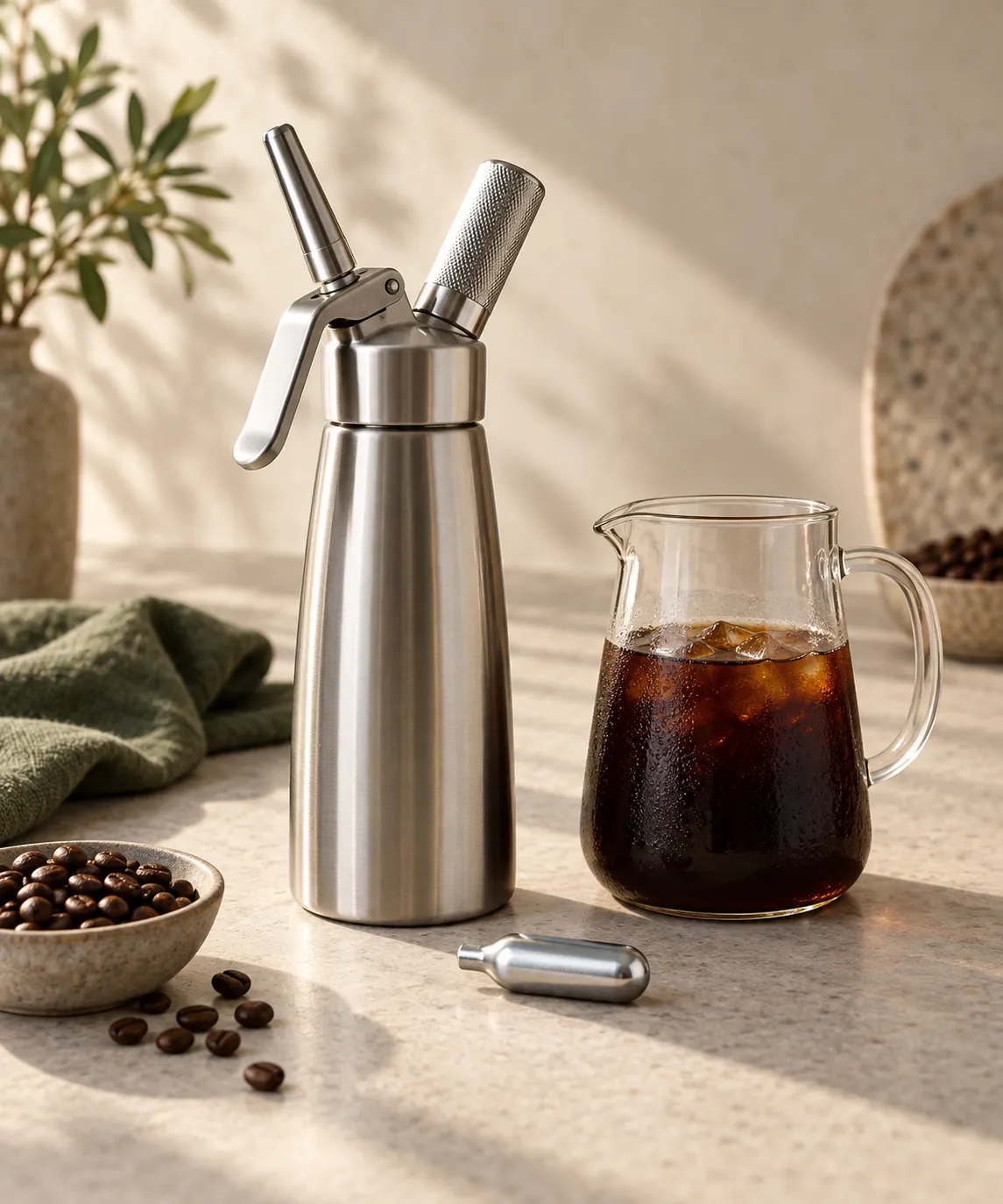
The whipper is the low-cost route in the table above, and one cartridge charges a canister that pours four or five glasses.
A keg is the serious version, holding pressure continuously rather than in one charge, so the last glass out of a keg tastes like the first and the last glass out of a whipper does not.
Whatever route you take, cold brew has to exist first. This is not a drink you can decide to make in ten minutes, because the coffee underneath takes twelve to twenty-four hours.
No home route reproduces the way a commercial tap pushes the drink through a restrictor plate full of tiny holes, and that plate is doing as much work as the gas.
Cans are their own case. The widget inside releases gas as the can opens, which is neither a whipper nor a tap and cannot be copied at home.
The equipment is also what separates this drink from iced coffee in a glass, which needs none at all.
How do you make nitro coffee with a cream whipper?
Fill it two thirds, charge it once, shake it hard, and pour it fast into a tilted glass.
Whipper method, in order
- ChillPut the empty canister and the cold brew in the fridge for an hour.
- FillPour in cold brew to two thirds at most, leaving headspace.
- ChargeScrew in one cartridge and let it discharge fully.
- ShakeThirty seconds, hard, then pour immediately into a tilted glass.

Headspace is not optional. Gas has to occupy a volume above the liquid before it can be driven into it, and a full canister has nowhere for the gas to go.
Chill everything first, because colder liquid holds dissolved gas better than warmer liquid, and a room-temperature charge disappoints even when the technique is right.
Shake for longer than feels reasonable. Thirty seconds is the figure to aim for.
Then pour hard rather than gently. The turbulence at the lip is what breaks the gas out into fine bubbles, so a careful pour gives you a flat glass from a perfectly good charge.
Two equipment faults look like technique faults. An overfilled canister and a perished seal both vent quietly, and in each case the coffee arrives with no gas left in it at all.
Which cartridge should nitro coffee use?
Nitrogen and nitrous oxide are sold in identical-looking boxes and do genuinely different things, which is a common reason a careful home attempt tastes wrong.
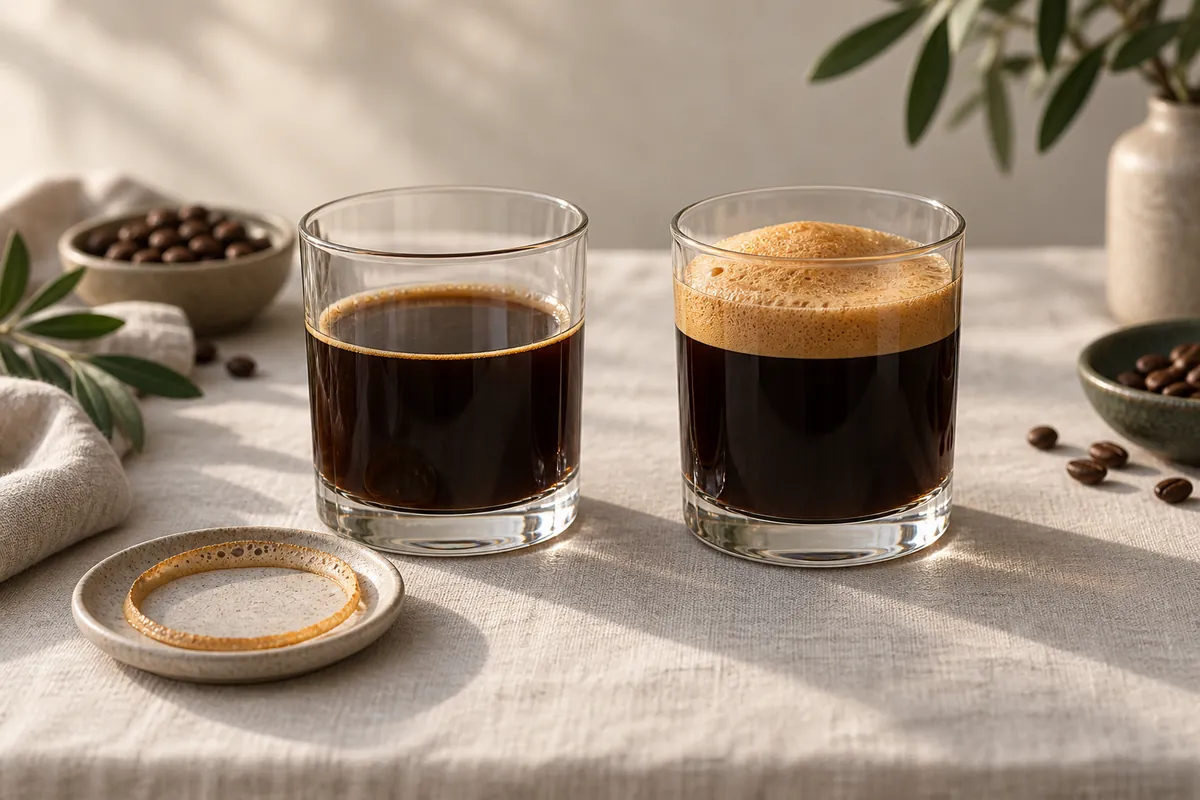
The difference is solubility: nitrogen stays largely undissolved and forms tiny bubbles that rise slowly, so the result looks nothing like the coarse fizz a soda maker produces with carbon dioxide.
Nitrous oxide behaves the way it does in cream. It dissolves into the liquid properly, so the foam it makes is denser and lasts several times as long.
That longevity comes with a cost. Nitrous carries a faint sweetness of its own, and a canister charged with it will sometimes foam straight out of the valve.
Some people charge with one of each as a compromise, which gets you a head that holds without the sweetness that pure nitrous brings.
How strong should the cold brew under nitro coffee be?
About four parts water to one part coffee, by weight, which is stronger than a cold brew you would drink over ice, because this glass is never diluted afterwards.
The brew that goes into the canister
- Coffee to water
- 1:4 by weight
- Steep
- 12 to 18 hours, in the fridge
- Grind
- Coarse, like sea salt
- Dilution
- None, it is poured neat
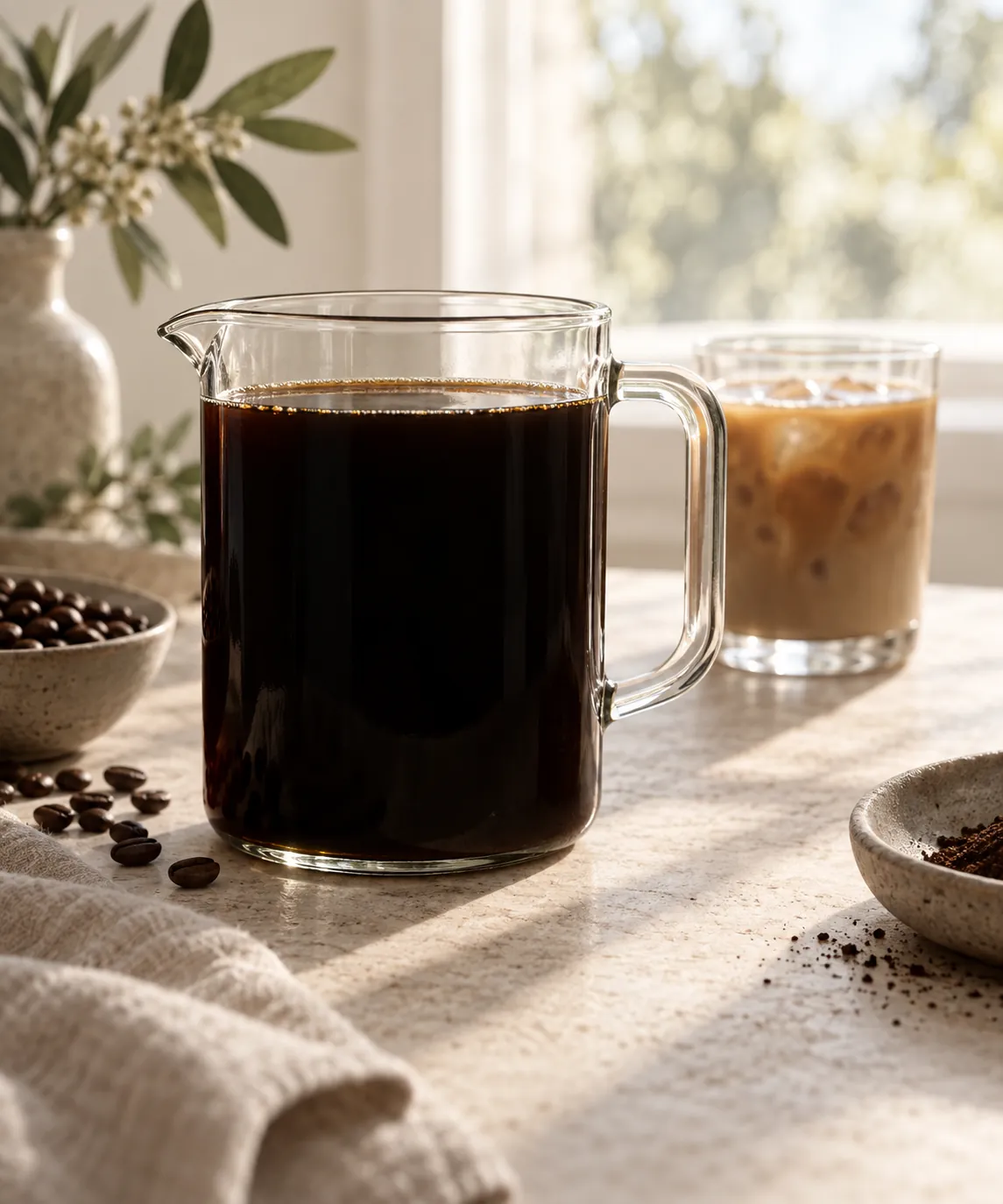
An iced coffee can be built strong and let the melting ice do the rest, but nitro coffee is poured without ice and has no such correction available.
Gas also changes what strength tastes like. The fine nitrogen bubbles soften the sharpness and read as sweetness, so a brew that seemed slightly harsh can still arrive balanced once charged.
Underneath a certain concentration there is nothing to taste. A weak brew charged hard gives you a beautiful head on top of something that tastes mostly of foam.
Sweeten before charging, never after. Stirring cane sugar into a poured glass knocks the head straight down, and a liquid sweetener dissolved into the batch survives the whole canister.
Why does the nitro coffee head collapse?
Foam needs something to form around.
Gas alone makes bubbles, and bubbles alone burst, so a head that stands for minutes is being held up by something in the coffee rather than by the charge.
Coffee oils and dissolved proteins give the foam walls to build on. Nitrogen makes small slow bubbles, where air makes large fast ones that pop.
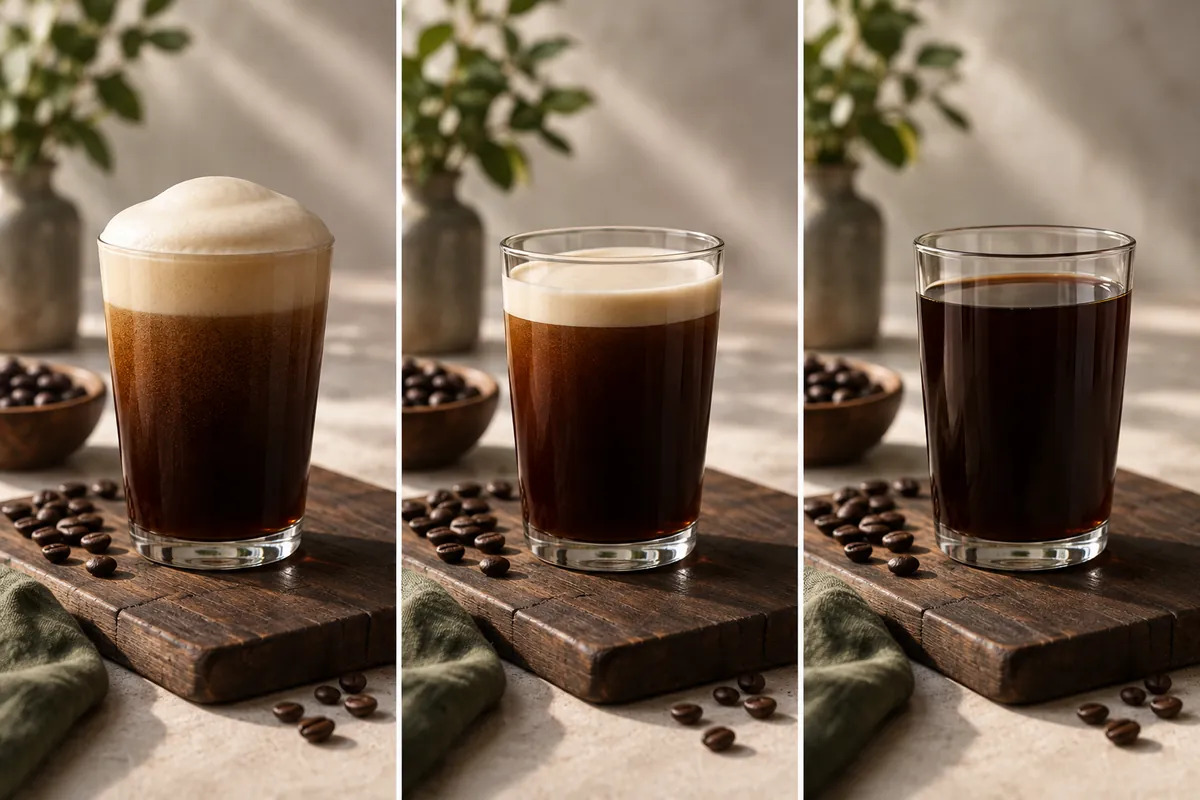
Over-filtering is easy to overlook. Cold brew put through a paper filter twice comes out beautifully clear and stripped of the oils that a head needs, so a cloudy brew often foams better than a clean one.
Chill the glass along with everything else. A glass straight from the cupboard is warm enough to drop a head before you have carried it to the table.
Milk changes the rules entirely. Fat both stabilises and suppresses foam depending on how much arrives, so a splash behaves nothing like a glass poured black.
Some collapse is normal, since nitrogen holds a head for two or three minutes rather than indefinitely, and a glass that is bare after ten is not evidence of anything wrong.
Can you make nitro coffee without a whipper?
Not really: you can put air into cold brew several ways, and air makes foam, but foam and a nitrogen infusion are different things that look similar for about forty seconds.
What each substitute gives
- Sealed jarShake hard for a minute. Coarse foam, gone in under a minute.
- Handheld frotherTen seconds at the surface. Thin, fine, very short lived.
- Blender jugThe biggest head of the three, and the fastest to fall.
- The boundaryNone of them add nitrogen from a cartridge, so none change the mouthfeel.
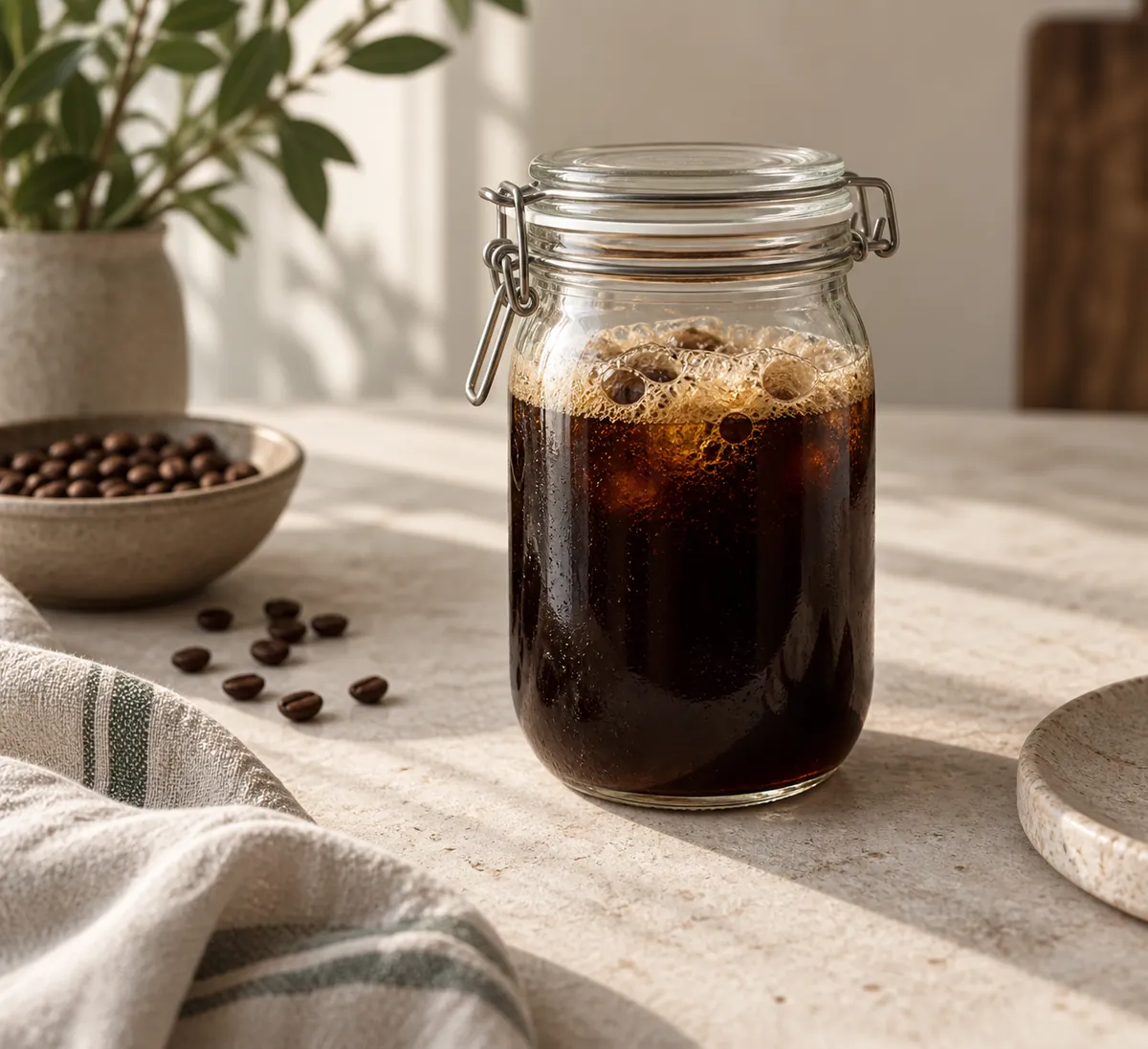
Air bubbles are simply bigger, and larger bubbles have thinner walls relative to their volume and drain faster, so they collapse while nitrogen bubbles are still rising.
The mouthfeel is the part that does not transfer, because the fine nitrogen bubbles are what make real nitro coffee feel thick, while whipping air in changes the surface more than the body underneath.
Shaken cold brew also tastes sharper, with nothing to soften the acidity the way nitrogen bubbles do, so it arrives closer to plain cold brew than to the drink you were copying.
A shaken jar is still a pleasant cold coffee with a head on it, as long as you are not expecting the tap.
Why does my nitro coffee taste sour?
Taste the brew before you charge it, because a sour glass is nearly always a sour cold brew that gas has failed to disguise, and tasting first tells you whether the fault is the brew or the charge.
On the charge side, check that you shook for the full thirty seconds and that the glass and canister were genuinely cold.
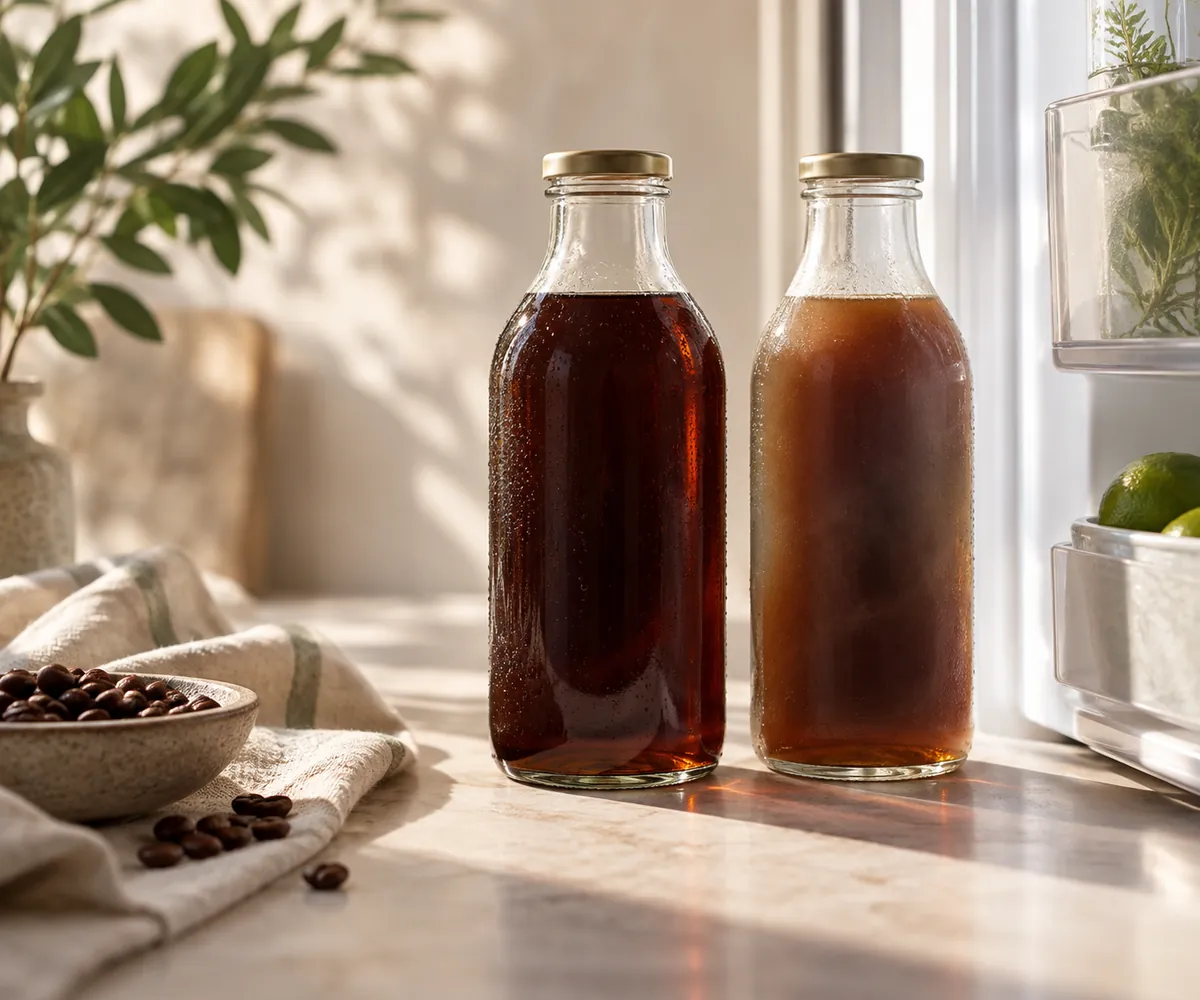
Under-extraction is the usual culprit. A short steep or too coarse a grind leaves sourness in the brew, and no amount of nitrogen covers an extraction fault.
Age is the second and the one people miss. Cold brew keeps for seven to ten days refrigerated, and past that it goes simultaneously flat and sharp in a way that is unmistakable once you know it.
Too little gas reads as plain cold brew with a head on top. If the drink tastes correct but thin, the charge or the shake was short rather than the coffee being wrong.
Two things sit outside the method. A very light roast will taste acidic however well it is infused, and any glass left standing loses its gas and reverts to whatever the brew underneath actually was.
Nitro coffee method
- Makes
- About 500 ml, four or five small glasses
- Ratio
- Cold brew at 1:4 by weight, charged with one cartridge
- Water temp
- Everything at fridge temperature before charging
- Total time
- 15 min
What you need
- Cold brew made at 1:4 by weight, steeped 12 to 18 hours
- One gas cartridge per fill
- Syrup, added before charging, only if wanted
Equipment
- Cream whipper
- Nitrogen or nitrous oxide cartridge
- Cold brew made in advance
- Tall chilled glass
Method
- ChillPut the empty canister and the cold brew in the fridge for an hour.
- FillPour in cold brew to two thirds at most, leaving headspace for the gas.
- ChargeScrew in one cartridge and let it discharge fully.
- ShakeThirty seconds, hard.
- PourDischarge fast into a tilted chilled glass.
Common questions
Can you use nitrous oxide cartridges for nitro coffee?
Yes, and the head lasts far longer than with nitrogen. It can read faintly sweet and sometimes foams out of the valve, which is the trade.
How strong should cold brew be for nitro coffee?
About 1:4 coffee to water by weight. The drink is served without ice, so nothing dilutes the concentrate afterwards.
Why does my nitro coffee head disappear so fast?
Usually a warm glass or over-filtered cold brew. Coffee oils give the foam something to form around, and paper filtering twice strips them out.
How long should you shake a nitro coffee whipper?
About thirty seconds, hard, then pour immediately into a tilted glass.