How to Make Affogato
Affogato succeeds when hot concentrated coffee melts only the outside of a firm frozen scoop, leaving sauce, soft edge, and cold center together.
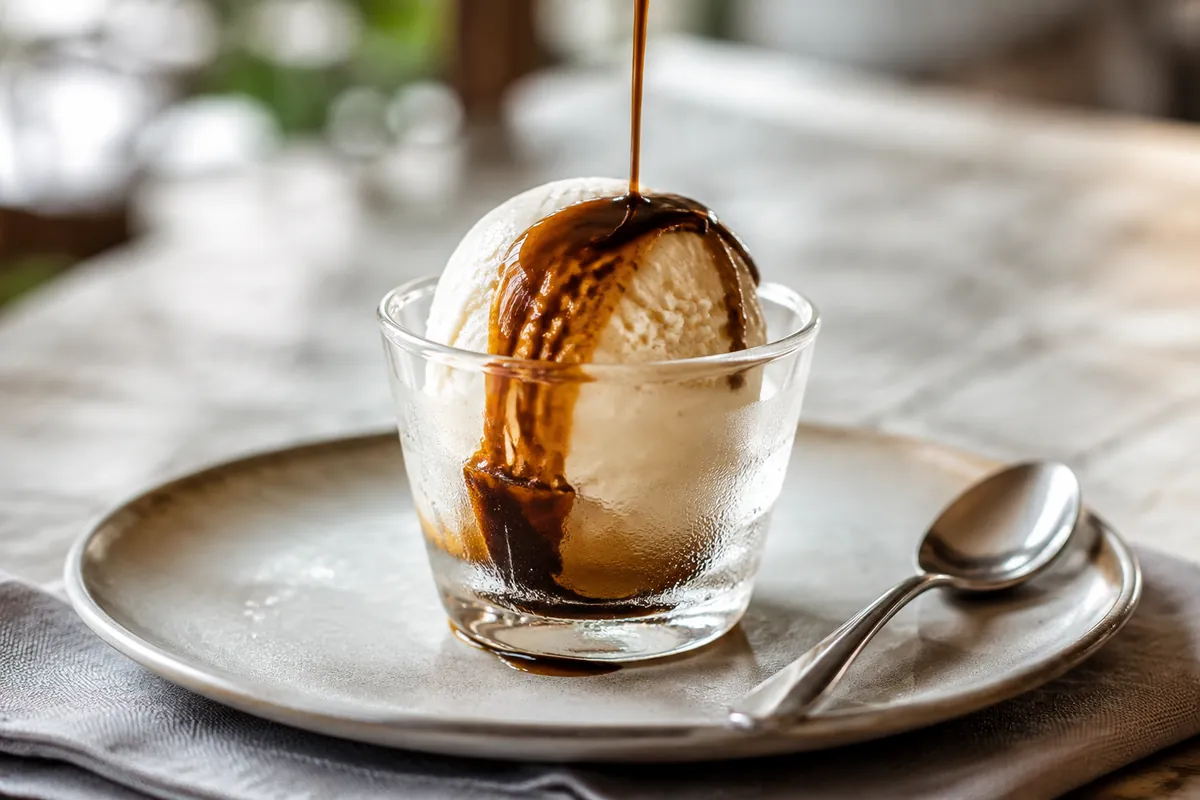
An affogato is made by pouring one fresh shot of hot espresso over one firm scoop of vanilla gelato or ice cream and serving it immediately with a spoon. The method is short, but the result depends on temperature and timing: the shot should melt the scoop's surface into a coffee-cream sauce while its center remains frozen.
Use a small chilled glass, keep the scoop in the freezer until the espresso is ready, and combine the two at the table. The affogato is assembled at the moment it is eaten, because the three useful textures disappear once the scoop fully melts.
Choose the scoop before you pull the shot
Ice cream and gelato do not melt in the same way. Gelato is usually served a little warmer and contains less fat and incorporated air, so coffee moves through it faster and the sauce tastes denser; high-fat ice cream stays firm longer and gives a creamier, slower transition.
The best choice forms a firm scoop at freezer temperature yet yields at the edge when hot espresso touches it.
Plain vanilla or fior di latte gives espresso room to remain recognizable. Dense gelato makes a richer sauce and melts quickly, while harder, more aerated ice cream holds its shape longer and gives you a wider eating window.
Affogato starting point
- Frozen base
- 1 firm scoop, about 60 to 70 g
- Coffee
- 1 fresh espresso, about 25 to 40 ml
- Serving vessel
- A chilled 100 to 150 ml glass or bowl
- Order
- Scoop first, espresso last
- Service
- Pour at the table and eat immediately
- Utensil
- A small spoon, not a straw
The scoop should keep the ridges left by the scoop tool rather than slump against the glass. A firm frozen center creates the contrast after the outer layer meets hot coffee.
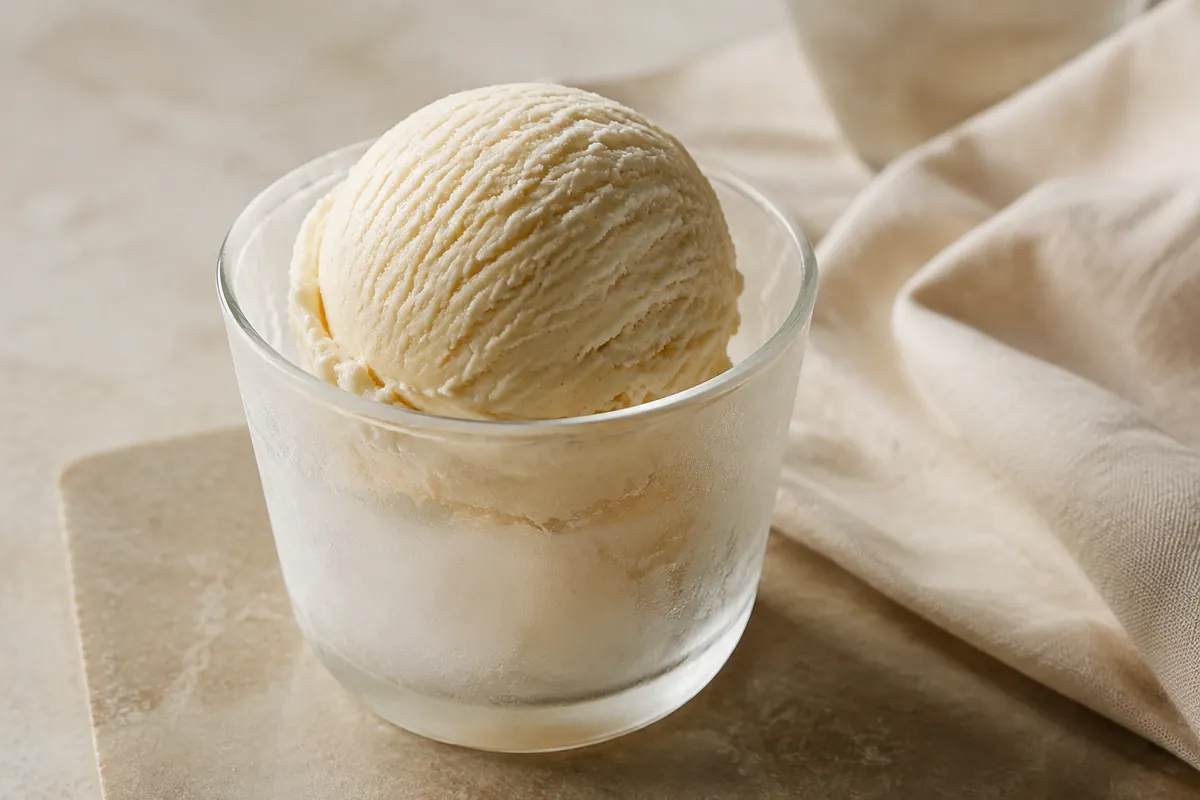
Strongly flavored ice creams can bury the coffee, and fruit sorbet lacks the milk fat and protein that help form a creamy sauce. Vanilla is a reliable baseline because its sweetness and aroma support espresso without adding a competing dominant flavor.
Between gelato and hard-frozen ice cream, neither is automatically better. Choose gelato when you want a thick sauce and plan to eat immediately, or choose firmly frozen ice cream when serving speed is less predictable and the solid center needs to survive longer.
The glass should be cool and narrow enough to hold coffee close to the scoop. A wide warm bowl spreads the shot into a thin film, increasing contact area and accelerating melt across the whole base.
Get the coffee and scoop into balance
One single espresso over one scoop is a practical classic build. A double shot can work with two scoops, but pouring a large volume of coffee over one scoop turns the dessert into diluted, lukewarm coffee before the spoon reaches it.
One balanced affogato
- Vanilla gelato or ice cream
- 60 to 70 g, frozen firm
- Espresso
- 25 to 40 ml, freshly pulled
- Coffee-to-frozen-base
- Roughly 1 part espresso to 2 parts frozen base by volume
- Glass
- 100 to 150 ml, chilled
- Serving time
- Immediately after pouring
The espresso must taste balanced before it touches the scoop. Ice cream can soften bitterness and acidity, but it cannot restore missing aroma or correct a shot that ran sharply sour. Sweetness suppresses some perception of bitterness, which can make a rough shot seem acceptable on the first spoonful. As the sauce cools and dilutes, that bitterness reappears in the dark coffee left at the bottom.
Temperature matters as much as volume. A fresh shot brings enough heat to melt a thin shell, while coffee allowed to cool during scooping makes a sweet cold puddle around an intact scoop instead of a warm sauce.
The goal is controlled melting rather than minimum melting.
The outer millimeters should loosen and combine with coffee while the colder core holds solid dessert for later spoonfuls.
A medium or medium-dark roast is the forgiving choice because cocoa, nut, and caramelized notes remain clear beside vanilla. A bright light roast can make a vivid affogato, but its acidity will be more obvious against cold sweetness.
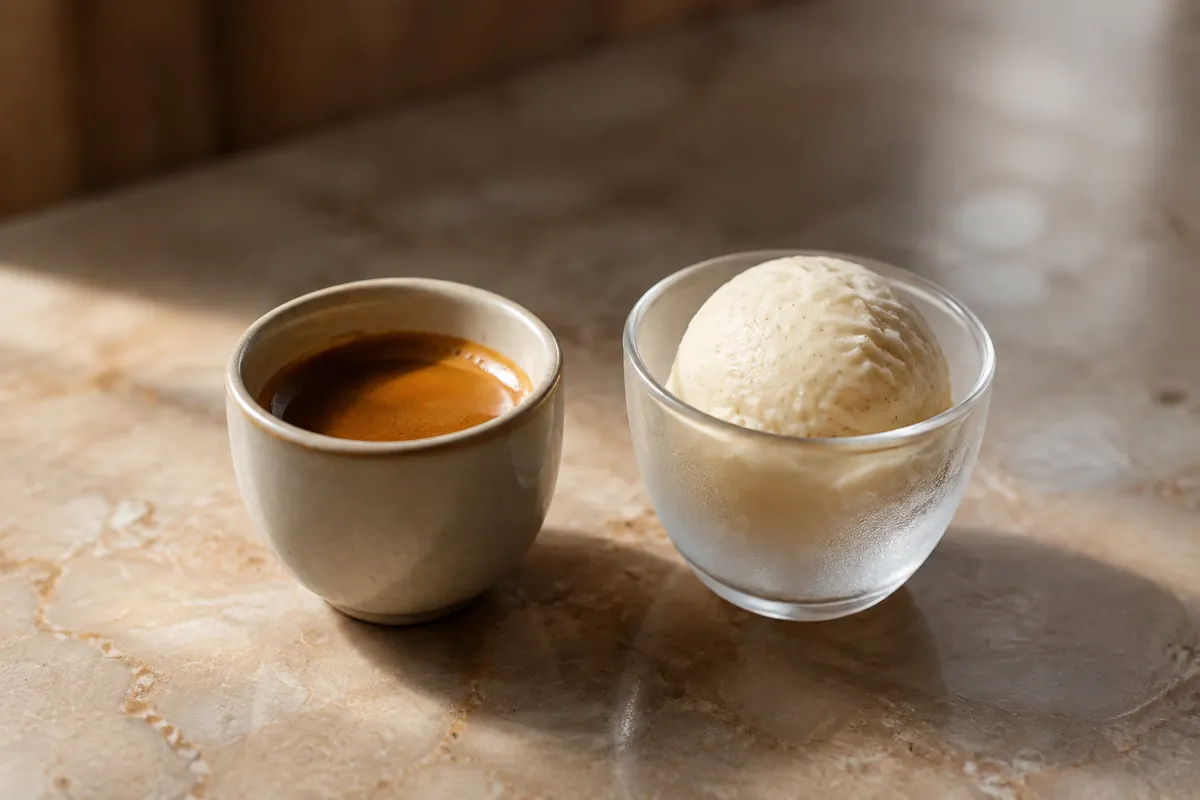
More espresso is not better once heat and dilution outrun useful coffee aroma. Past the point of balance, it adds heat and liquid faster than it adds useful aroma.
Build it in the order that preserves contrast
Chill the empty serving glass while the espresso machine heats. Keep the ice cream in the freezer, prepare the coffee dose, and place a spoon beside the serving position before pulling the shot.
How to make one affogato
- ChillPut the empty glass in the freezer for about 10 minutes
- PrepareSet up the espresso and place a spoon where the affogato will be served
- ScoopPut one firm 60 to 70 g scoop into the cold glass, then return it briefly to the freezer
- PullBrew 25 to 40 ml espresso only after the scoop and table are ready
- PourCarry the shot to the glass and pour it over one side of the scoop
- ServeHand over the spoon immediately and eat from the melting edge toward the frozen center
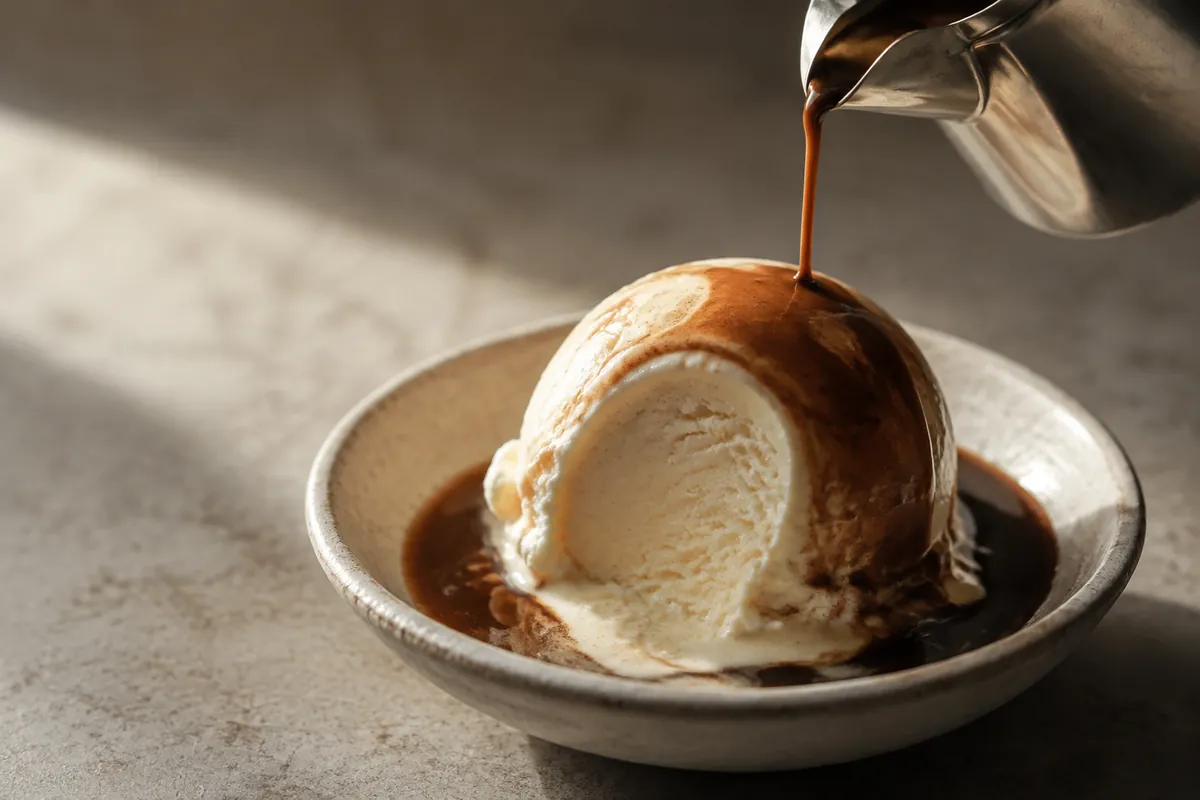
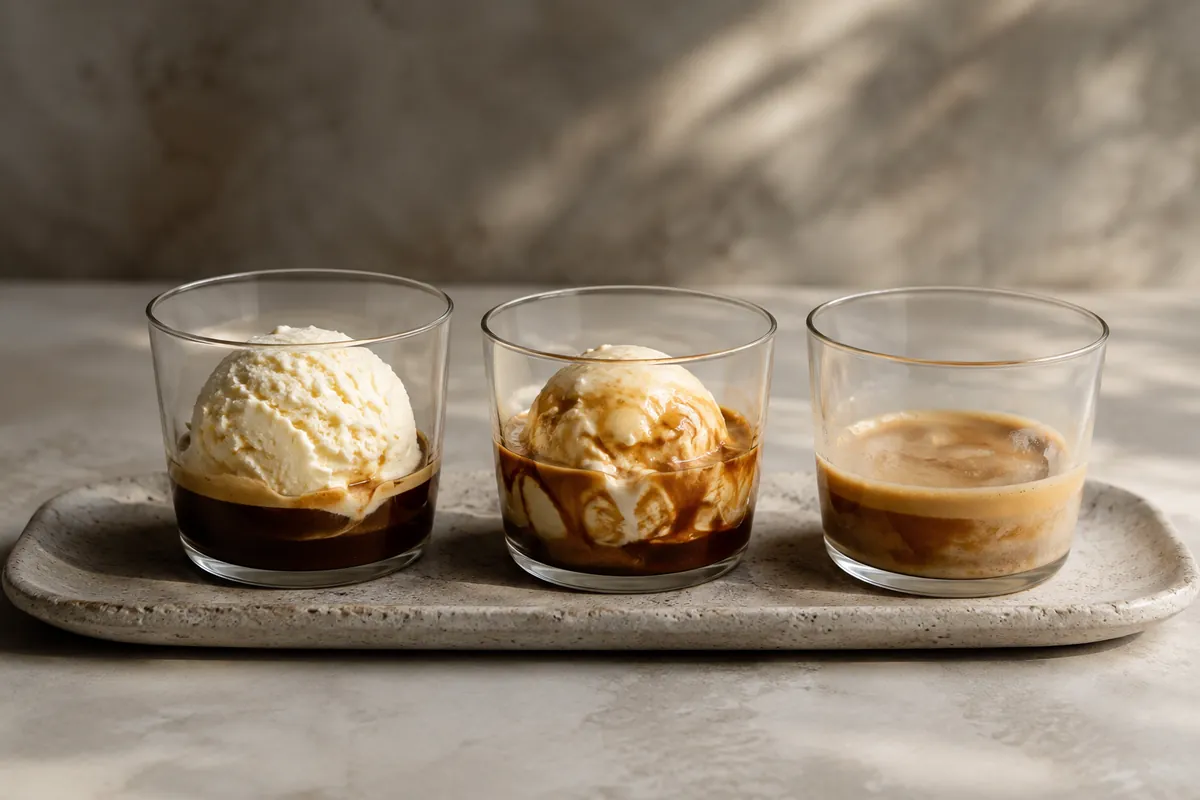
Pouring over one side creates a dark coffee pool, a pale sauce where the liquids meet, and an untouched frozen section. Do not stir the whole glass, since stirring collapses those layers into one tepid mixture.
Pouring directly into the center bores a hot channel through the scoop and can leave coffee trapped beneath it. A side pour creates an exposed boundary where the spoon can reach coffee, sauce, and frozen base.
Move the espresso and dessert together only after the shot is complete. Carrying a prepared scoop to a distant machine adds warming time, while carrying a finished affogato spends much of its short texture window.
Spoon the melting outer edge first, then work toward the cold center. The useful eating sequence follows the heat gradient rather than trying to make every spoonful identical.
Check these details before the espresso starts:
- Chill a small, heat-safe glass rather than a broad dessert bowl.
- Use one compact scoop with a firm center and a clean surface.
- Keep the serving spoon beside the glass so the dessert is not left waiting.
- Return the tub to the freezer before pulling the shot.
Make the coffee without an espresso machine
The substitute has to reproduce three functions of espresso: small volume, high concentration, and immediate heat. A large strong coffee may taste intense on its own, but its extra water melts the scoop before the mixture becomes a sauce.
Moka pot coffee can provide a small, concentrated base with enough aroma and heat to work, although the texture will differ from espresso. Brew it cleanly, use only a small serving, and pour as soon as the coffee reaches the upper chamber.
An AeroPress concentrate is another workable substitute. Use a concentrated recipe rather than a full mug, because volume is the main threat to the frozen structure; AeroPress preparation explains how brew water and later dilution differ.
| Coffee base | Useful amount | Expected result |
|---|---|---|
| Espresso | 25 to 40 ml | Syrupy body, crema disperses into the sauce, most traditional balance |
| Moka pot coffee | 30 to 40 ml | Strong aroma and metal-filtered body, less crema |
| AeroPress concentrate | 30 to 50 ml | Clean texture and controllable strength |
| Strong instant coffee | About 30 ml | Convenient but lighter aroma and body |
| Full mug of filter coffee | Not recommended | Too much water and heat for one scoop |
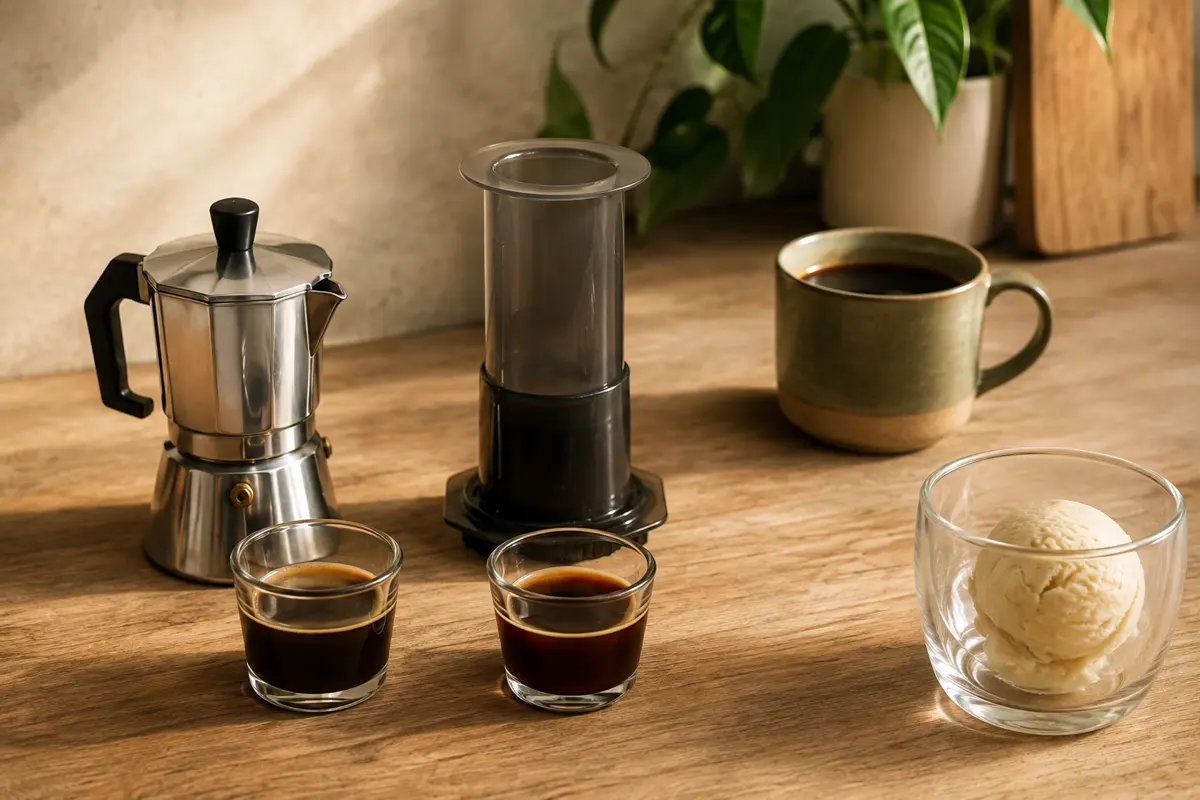
The useful substitutes share concentration and small volume, even though their filtration and body differ. The full mug fails for a separate reason: it delivers more water than one scoop can absorb while retaining a frozen center.
The substitute should be hot, strong, and small.
A cold coffee poured over ice cream produces a float because it cannot melt the quick outer shell that forms the affogato sauce.
Strong drip coffee is rarely concentrated enough at an espresso-sized volume. Reducing a large batch on the stove cooks away aroma, so a purpose-made moka or AeroPress concentrate is preferable to boiling ordinary coffee down.
Instant coffee can work when dissolved in only a small amount of hot water. It produces less body and aroma, so use a clean-tasting product and resist adding powder until the base becomes aggressively bitter.
A decaffeinated espresso behaves the same way physically because caffeine does not create the sauce. Roast, freshness, extraction, temperature, and frozen-base composition matter more to texture, so decaf does not require a different build.
Match the substitute to espresso-sized volume, not to a normal mug. The moka pot and AeroPress can both work when the serving remains concentrated.
A moka pot gives the closest texture because its metal filter preserves oils and body. An AeroPress concentrate is cleaner and lighter, while instant coffee is less aromatic but can preserve the temperature contrast when mixed in a very small volume.
Taste the substitute before it reaches the scoop. Cold dairy can mute some bitterness, but it cannot remove a dry finish, and using more ice cream only makes the balance sweeter.
Keep it from becoming soup
Melting is necessary; uncontrolled melting is the failure.
The outer shell should loosen into a thick coffee cream while the core remains cold enough to resist the spoon for the first few bites.
Premature melting usually starts before the coffee is poured. Soft ice cream, a warm glass, a scoop left on the counter, or a delayed shot can erase the temperature difference the method depends on.
| What happens | Likely cause | Better next move |
|---|---|---|
| The scoop vanishes immediately | Ice cream softened before pouring | Scoop from a colder part of the tub and return the glass to the freezer |
| The drink is lukewarm | Coffee waited while the scoop was prepared | Prepare the glass first and pull espresso last |
| The bottom is watery | Too much coffee for one scoop | Return to one short shot or add a second scoop |
| The coffee tastes sharply sour | Espresso was under-extracted | Correct the shot before combining it with ice cream |
| The sauce tastes flat | Stale coffee or weak substitute | Use fresh coffee in a smaller, stronger serving |
| Large ice crystals appear | Ice cream thawed and refroze | Use a fresh, consistently frozen tub |
Extra toppings should not block the coffee from reaching the scoop. A hard almond biscuit on the side or a small scatter of toasted nuts can add texture, while whipped cream placed on top acts as insulation and interrupts the defining contact.
Chocolate shavings soften into the sauce without stopping the pour, but heavy syrup changes both sweetness and viscosity. Test the basic two-part build first, then add only an element whose flavor remains distinct beside coffee and vanilla.
Food safety follows the ingredients rather than the coffee ritual. Keep the frozen base properly frozen, use a clean scoop, return the tub promptly, and discard an assembled affogato rather than attempting to chill and serve it later.
Never assemble an affogato in advance.
It cannot be held in a refrigerator or carried across a room without continuing to melt, and refreezing it destroys both the coffee aroma and ice cream texture.
For several guests, pre-scoop individual glasses and return the entire tray to the freezer. Pull the shots only when everyone is seated, then pour each one at the table; batching the finished desserts creates different melt states instead of equal servings.
The affogato profile explains how the dessert differs from iced coffee and a coffee float. For making it, the decision is immediate and physical: cold glass, firm scoop, fresh short coffee, then no waiting.
Affogato method
- Makes
- 1 small dessert
- Total time
- 4 min
What you need
- 1 firm scoop vanilla gelato or ice cream, 60 to 70 g
- 1 fresh espresso, 25 to 30 ml
Equipment
- Small chilled heat-safe glass
- Espresso maker
- Spoon
Method
- ChillChill the glass and keep the scoop frozen.
- PullMake the espresso only after the scoop is ready.
- PourPour the espresso down one side of the scoop.
- ServeEat immediately from the soft edge toward the frozen center.
Common questions
What is the best affogato ratio?
Begin with one 25 to 30 ml espresso and one compact 60 to 70 g scoop. More coffee adds melt water and heat faster than useful aroma.
Can you make affogato without an espresso machine?
Yes. Use a very small, hot moka pot or AeroPress concentrate; a normal mug of coffee contains too much water.
Should affogato be stirred?
No. Eat the softened outside first and work toward the frozen center so the different textures remain distinct.