Why Your Affogato Turns to Soup, and the Four Numbers That Stop It
The drink is a contrast between something very hot and something frozen, and that contrast is dismantling itself from the first second.
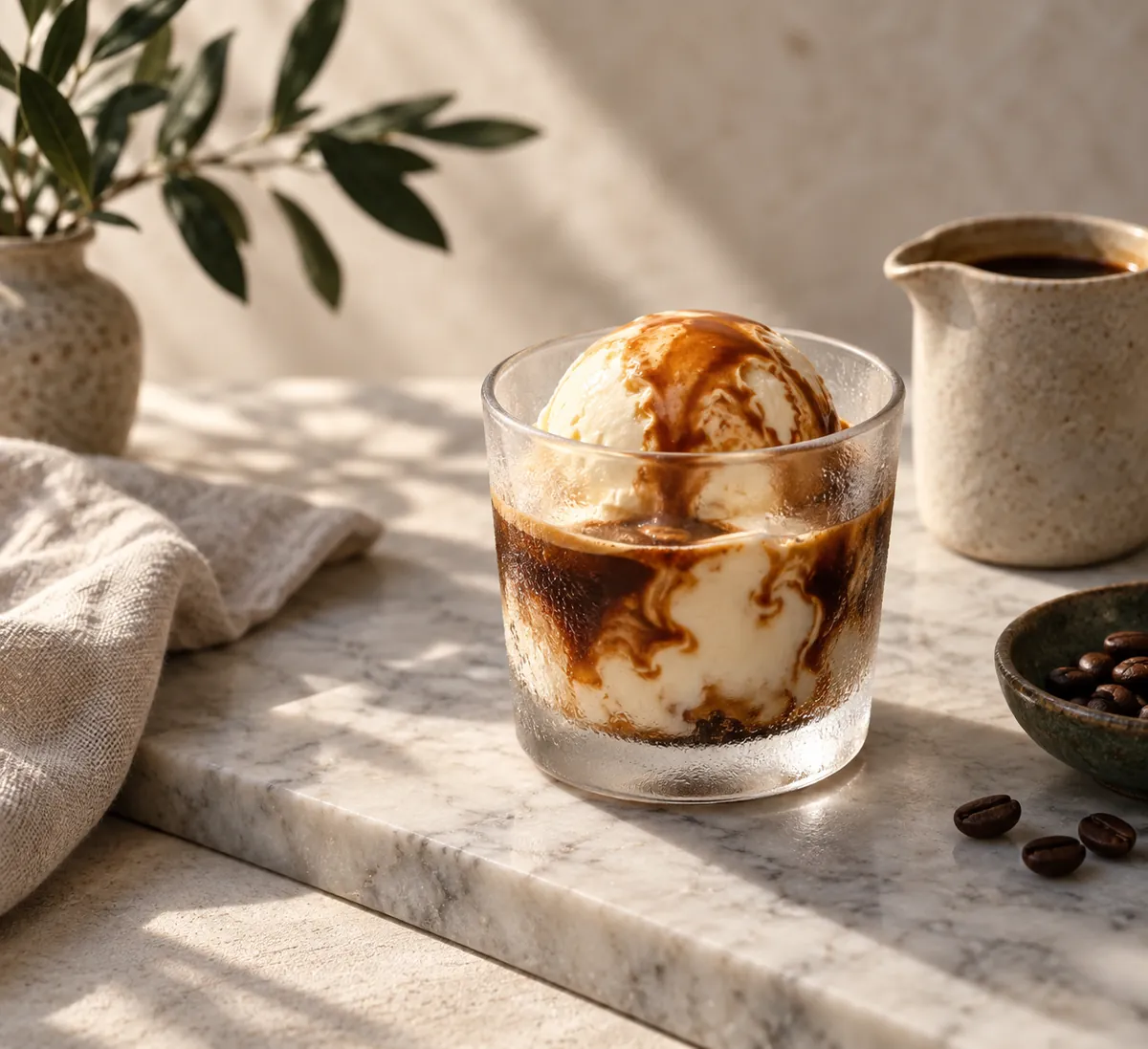
An affogato in a glass starts losing the moment the espresso lands, and almost every fault is a timing rather than an ingredient.
The drink is a contrast between something very hot and something frozen, and the hot half starts melting the frozen half from the first second, which is why so many people describe theirs as fine, then soup.
What numbers does an affogato actually run on?
Four numbers decide it, and none of them is a technique: one scoop to one shot, a glass out of the freezer, a pour that happens the second the coffee stops, and about a minute before the whole thing is over.
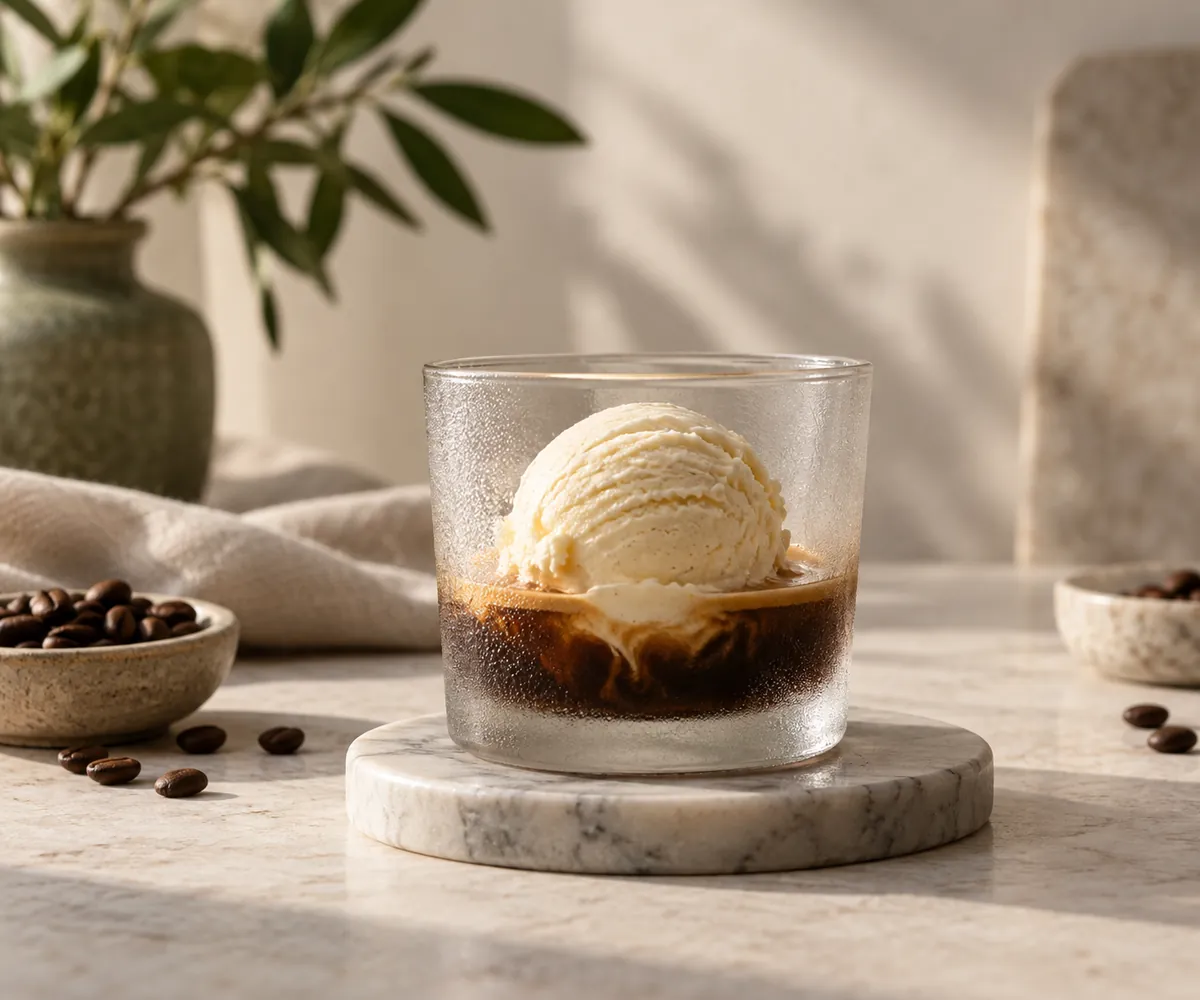
There is no brewing to get wrong at the assembly stage. The shot itself is a separate job with its own settings, and by the time it reaches this glass every decision about it has already been made.
With so little to get wrong at the glass, the faults are very consistent, and nearly everyone who is disappointed by this drink lost it to elapsed time rather than to anything they mixed.
If you want more, scale the shots with the scoops: two scoops want two shots, and a single shot spread over two is the version that tastes of ice cream with a coffee stain in it.
Distance from the machine eats into the minute: an affogato eaten standing at the machine has the full minute, and one carried across a room has already spent part of it.
How do you stop it turning to soup?
Freeze the glass. That single move buys more time than everything else combined, and it costs nothing but ten minutes of forethought.
In order of how much time each buys
- Freeze the glassTen minutes in the freezer before you start the coffee.
- Scoop hardStraight from the freezer, never from a softened tub.
- Assemble where you eatCarry the parts, not the finished drink.
- Pour aroundAim at the gap between scoop and glass rather than the top of the scoop.
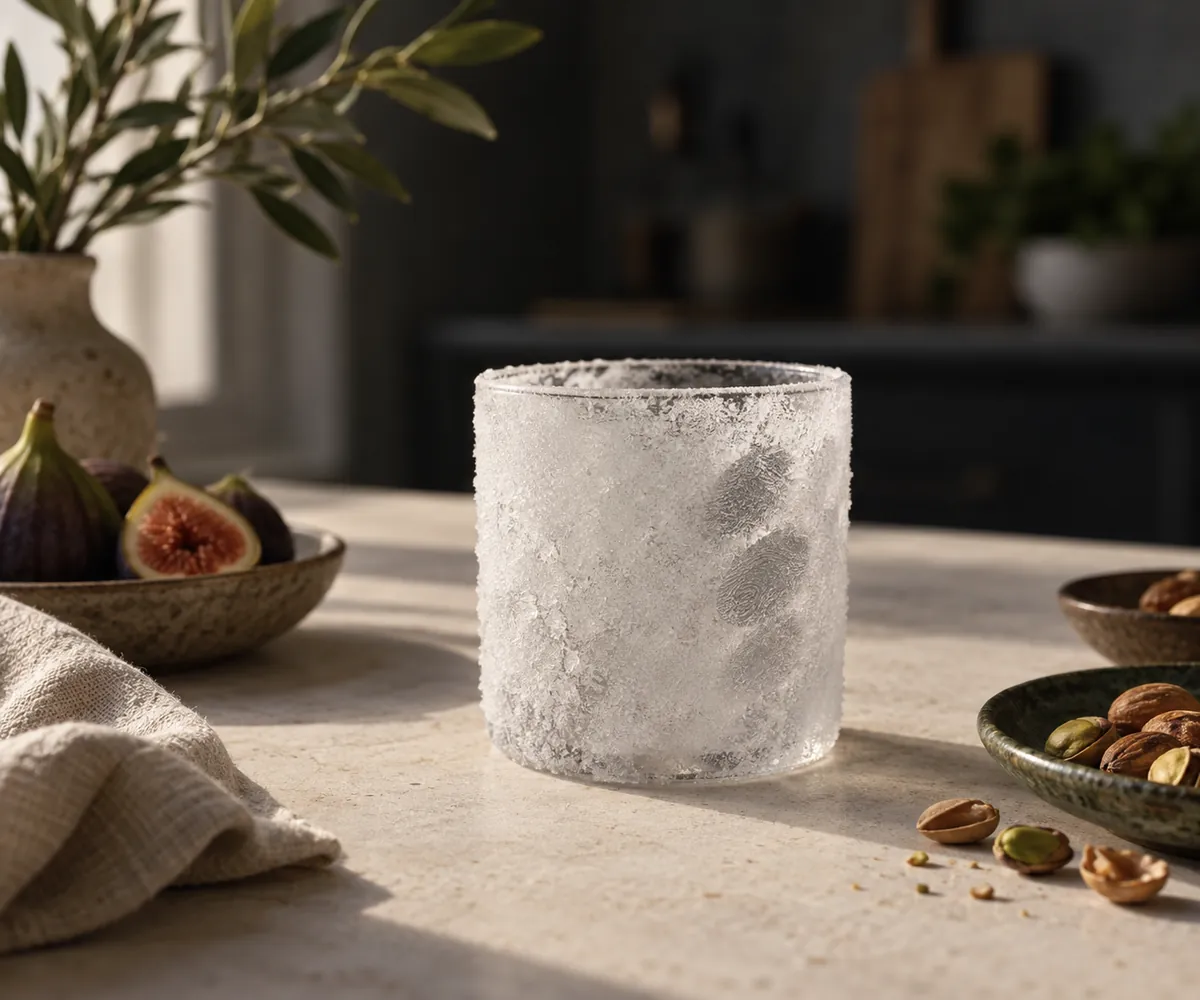
A room-temperature glass is a heat source touching the ice cream on every side. Ten minutes in the freezer turns it into the opposite, and the difference is obvious within the first thirty seconds.
Never soften the ice cream first. That advice belongs to scooping for a bowl, and here it hands away the head start you need.
Pouring around the scoop rather than over it is the least obvious of the four. It keeps the top of the scoop intact and lets the coffee work upward, which is where the marbled look comes from.
There is a limit to all of this. In a warm kitchen the clock runs faster whatever you do, and a scoop frozen genuinely hard will sometimes sit there refusing to marble at all.
Which ice cream survives hot espresso?
Density helps decide it, and density is mostly air.
| Type | Air content | In the glass | Verdict |
|---|---|---|---|
| Gelato | Lower | Holds its shape, melts slowly | Best |
| Standard ice cream | Higher | Softens quickly at the edges | Workable |
| Soft-serve style | Very high | Collapses on contact | Avoid |
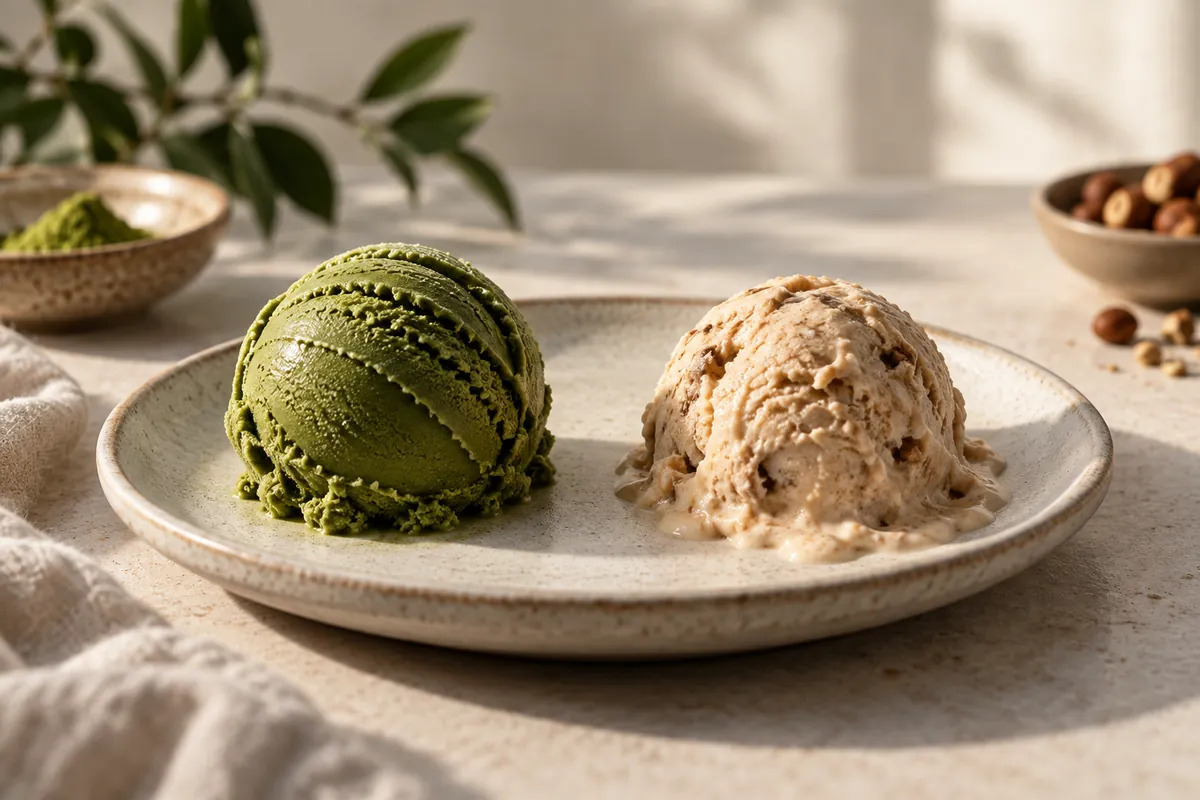
The industry word is overrun, and it means how much the mix grew in volume as air was whipped in. Traditional gelato is churned more slowly and tends to hold less of it, so a scoop feels heavier.
The University of Wisconsin-Madison's Babcock Hall Dairy Plant lists the overrun of its standard ice cream at 80 per cent, so every litre of mix becomes 1.8 litres of ice cream.
You can judge a tub in the hand. A dense one feels heavy for its size, and a light one feels like the packaging is doing most of the work.
Fat matters too, and in the same direction. A higher fat ice cream resists a hot pour better than a low fat one, which is a rare case where the richer option is also the more practical one, unlike the plant milks that struggle here.
The label will not help you. Overrun is almost never printed, so the weight in your hand and the ridges on the scoop are the only tests you have.
Some tubs cannot be rescued. A soft-serve style dessert has so much air in it that no glass temperature or pouring angle keeps it standing.
How much espresso should go over one scoop?
One shot, around thirty millilitres, is less than instinct suggests when you are holding a jug.
Per scoop
- Ice cream
- One scoop, roughly 60 g
- Espresso
- One single shot, about 30 ml
- Alternative
- A ristretto at 20 ml for a drier version
- Too much
- A double over one scoop
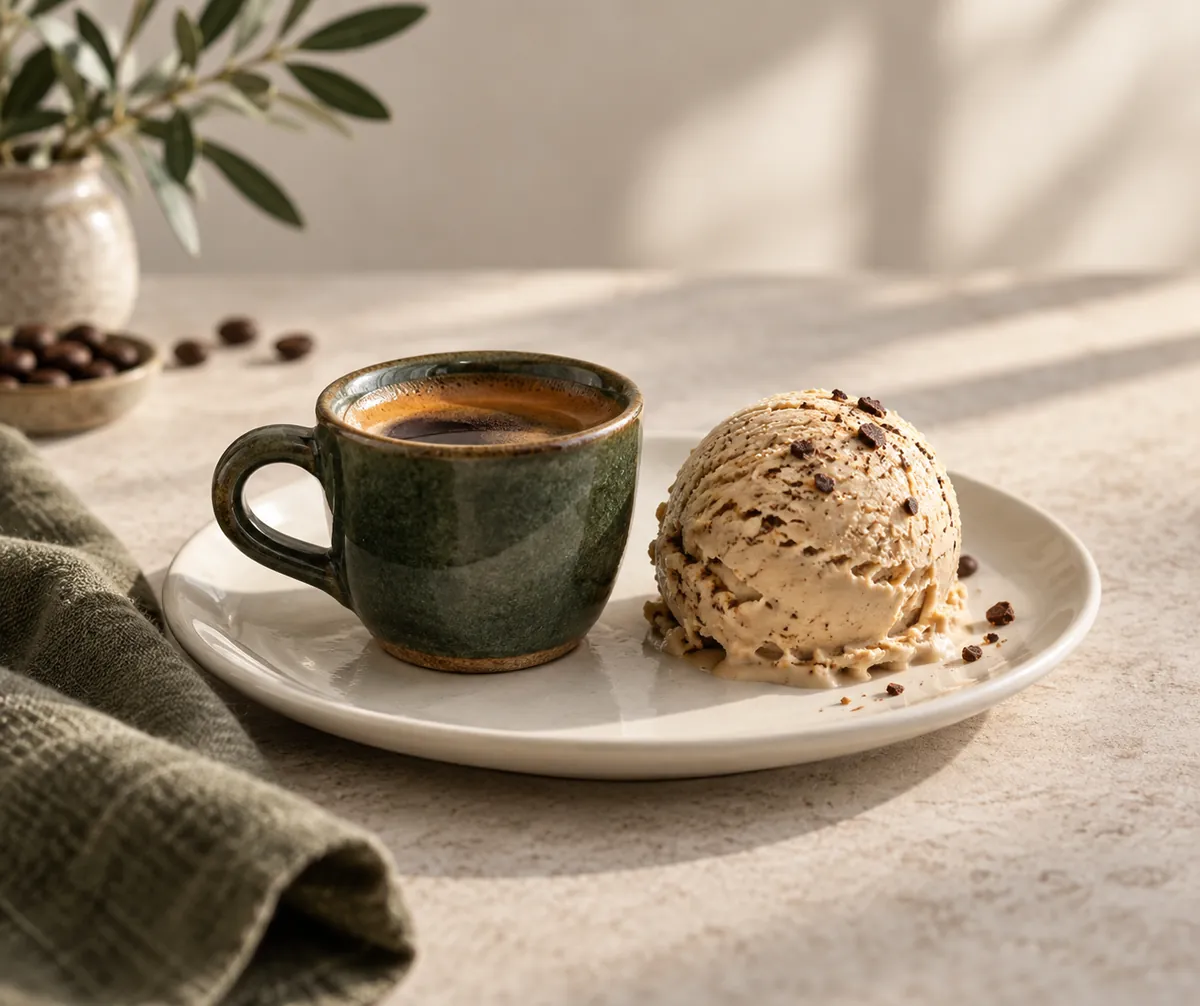
A double over a single scoop floods it. The extra thirty millilitres of hot liquid does not add flavour so much as remove the ice cream, and the drink is over before it is served.
Too little is a real fault as well, since a splash gives you a scoop of ice cream with a brown mark on it, which is pleasant and is not the drink.
If you keep flooding, a short ristretto is worth trying, because twenty millilitres of a more concentrated shot flavours the scoop with a third less liquid to melt it.
Filter coffee does not work here at all. The volume needed to taste of anything is several times what the scoop can survive, and this is one place where the brewing method genuinely is not interchangeable.
When do you pour, and when do you serve?
The clock starts when the shot finishes brewing rather than when you assemble the drink, and everything after that is spent from a budget of about a minute.
Take the first spoonful immediately, while the scoop is still hard in the middle. By sixty seconds the contrast is gone and what is left is cold coffee.
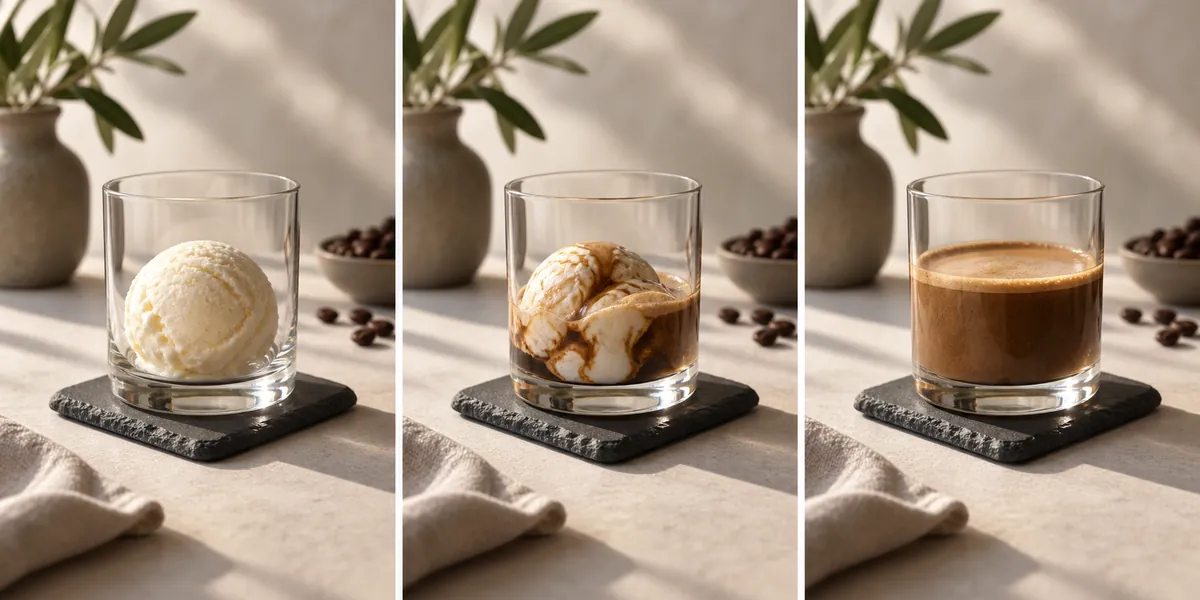
A shot left standing goes flat quickly. Five minutes on the drip tray and it tastes stewed, and pouring that over ice cream gives you something noticeably duller than the same coffee would have been fresh.
Take the drink to the person rather than the person to the drink. It sounds like fussiness and it is thirty seconds of the window.
Start eating at once. There is no resting period here and no reason to photograph it first, since the version worth eating exists for less than a minute.
A cooled shot is a genuine trade. It melts the scoop far more slowly and it tastes flatter, which is a choice rather than a fix.
Why does it taste bitter over cold ice cream?
Because cold suppresses how much sweetness you can taste.
The same espresso poured over something frozen reads more bitter than it does in a cup, because the cold blunts the sweet side more than the bitter side.
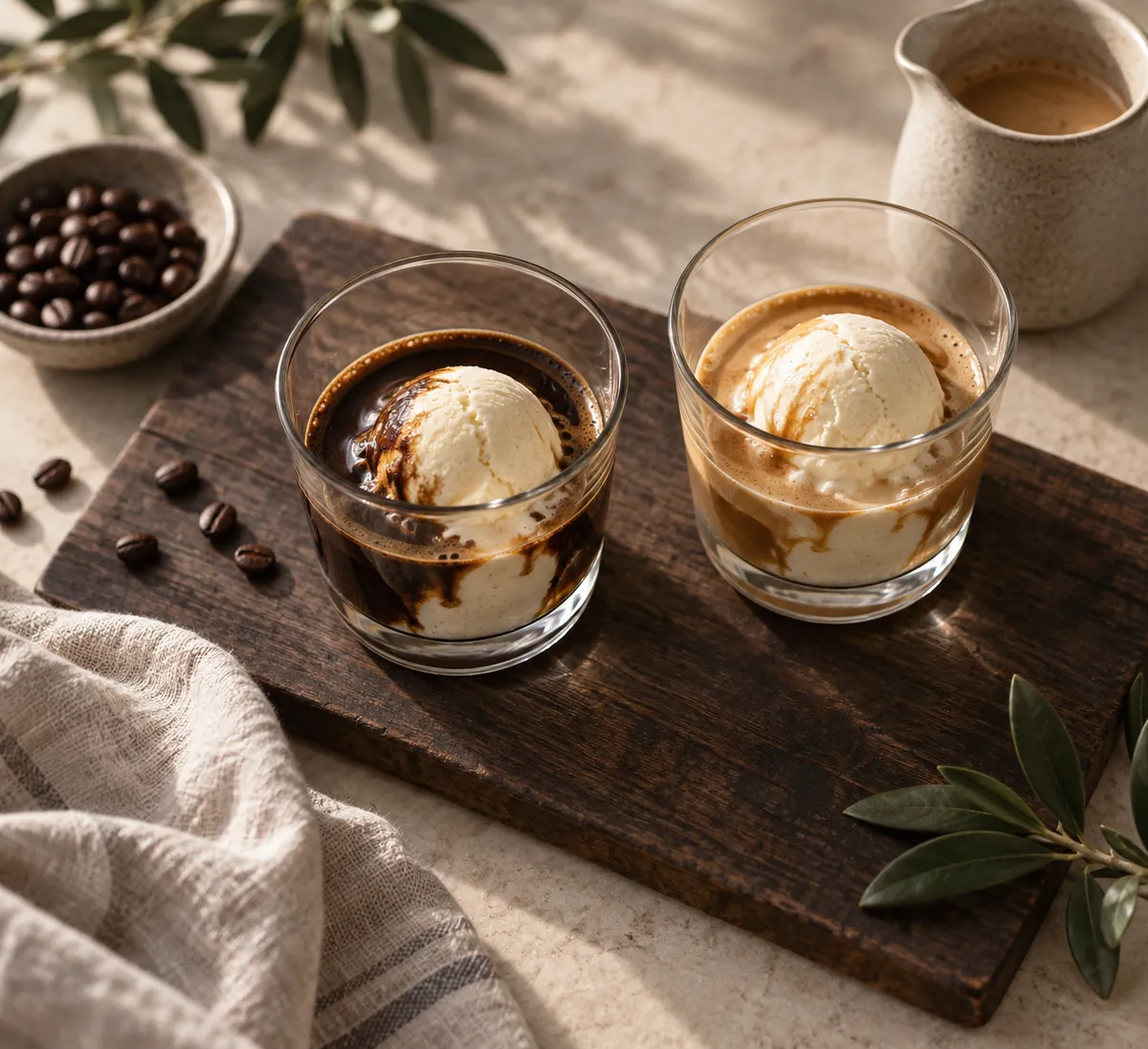
A dark roast is punished by this, and a robusta blend more so. It was already at the bitter end, and once the cold has dulled the sweetness you can taste, it can land as simply harsh.
So change the bag rather than the technique, since a medium roast, or one of the sweeter arabica origins, gives you more sweetness to start with, and more of it survives the cold.
The scoop is the other lever: a sweeter ice cream lifts the whole thing, which is one reason vanilla remains the default rather than anything more interesting.
Pulling the shot short helps too. The bitter compounds come out at the tail end, so a ristretto arrives with less of them to be exposed by the cold.
Not everyone considers this a fault. Plenty of people want the bitter edge as the counterweight, and if that is you, a darker roast is the point rather than the problem.
What else goes wrong with an affogato?
A few faults were decided before the machine was even switched on.
- Is the glass narrow, or wide and shallow?
- What has the ice cream been sitting next to in the freezer?
- Are there ice crystals through the scoop?
- Is the vessel opaque, so nobody can see what is happening?
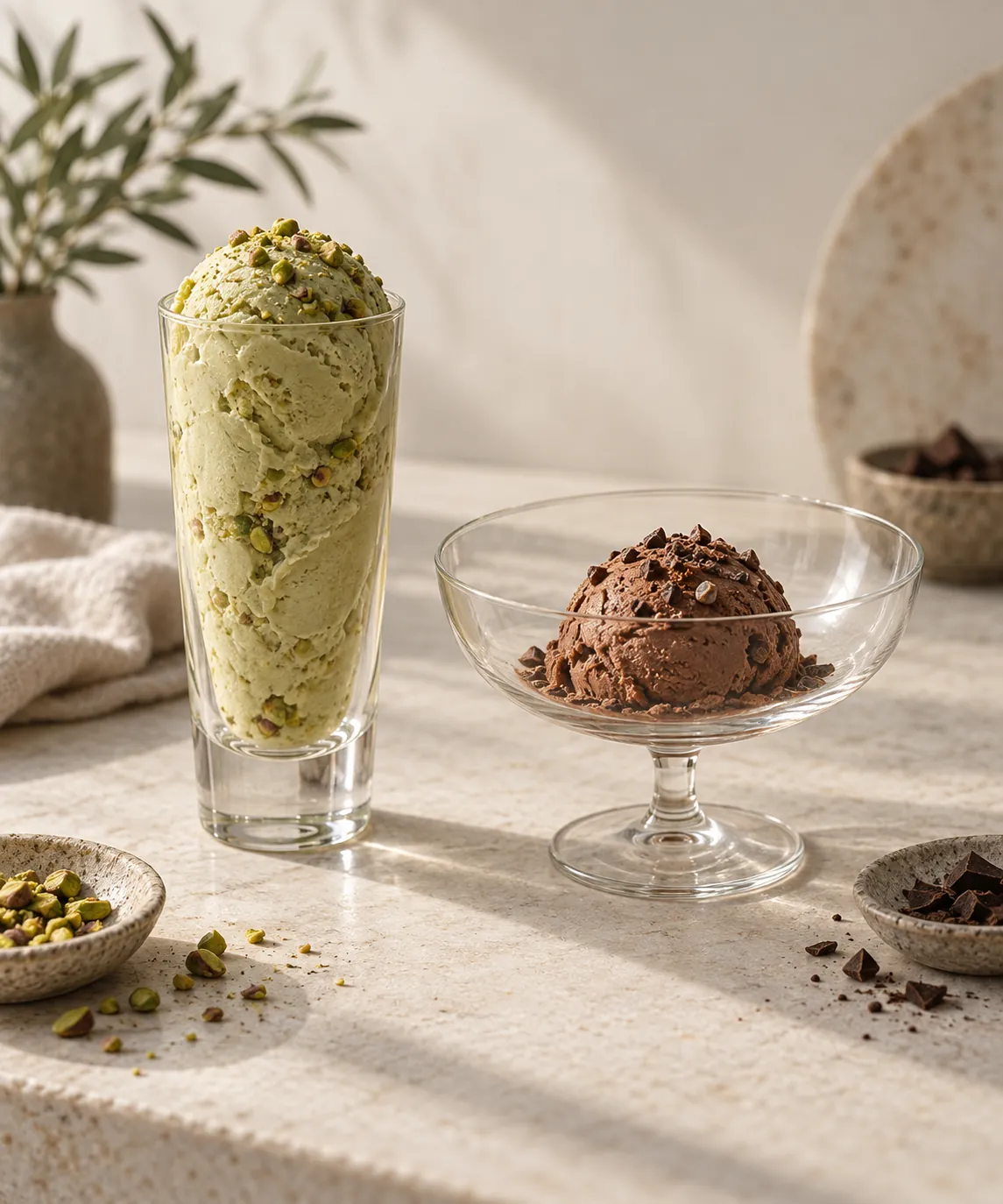
A wide glass exposes more of the scoop to air and to warm glass at once. The same ice cream in a narrow vessel keeps a cold core for noticeably longer.
Ice cream takes on smells with enthusiasm. A tub open beside anything strongly flavoured brings that with it, and against a clean espresso the result is confusing rather than obviously wrong.
Crystals through the scoop mean it thawed and refroze, which is usually a transport or a freezer-door problem, and the texture never comes back.
An opaque cup is not a fault so much as a waste, because half the pleasure is watching the coffee move down through the white, and a ceramic mug hides all of it.
Rule these out before you blame the coffee, because none of them respond to anything you do at the machine.
Common questions
How do you stop an affogato melting so fast?
Freeze the glass for ten minutes, scoop straight from the freezer, assemble where you will eat it, and pour around the scoop rather than over its centre.
Which ice cream works best in an affogato?
A dense one. Gelato tends to hold less air than standard ice cream, and a scoop that keeps its ridges will keep its shape.
How much espresso goes over one scoop?
One single shot, about 30 ml. A double over one scoop floods it and the drink is over before it reaches the table.
Why does the coffee taste more bitter over ice cream?
Cold suppresses how much sweetness you can taste while leaving bitterness alone. A medium roast or a sweeter scoop corrects it better than changing the machine.