What Is Kombucha? Fermented Sweet Tea, and a Two-Stage Relay
Kombucha is fermented sweet tea, and two organisms work on it in sequence: yeasts make alcohol from the sugar, and bacteria turn that alcohol into acid. Where a batch stops on that relay decides everything about it.
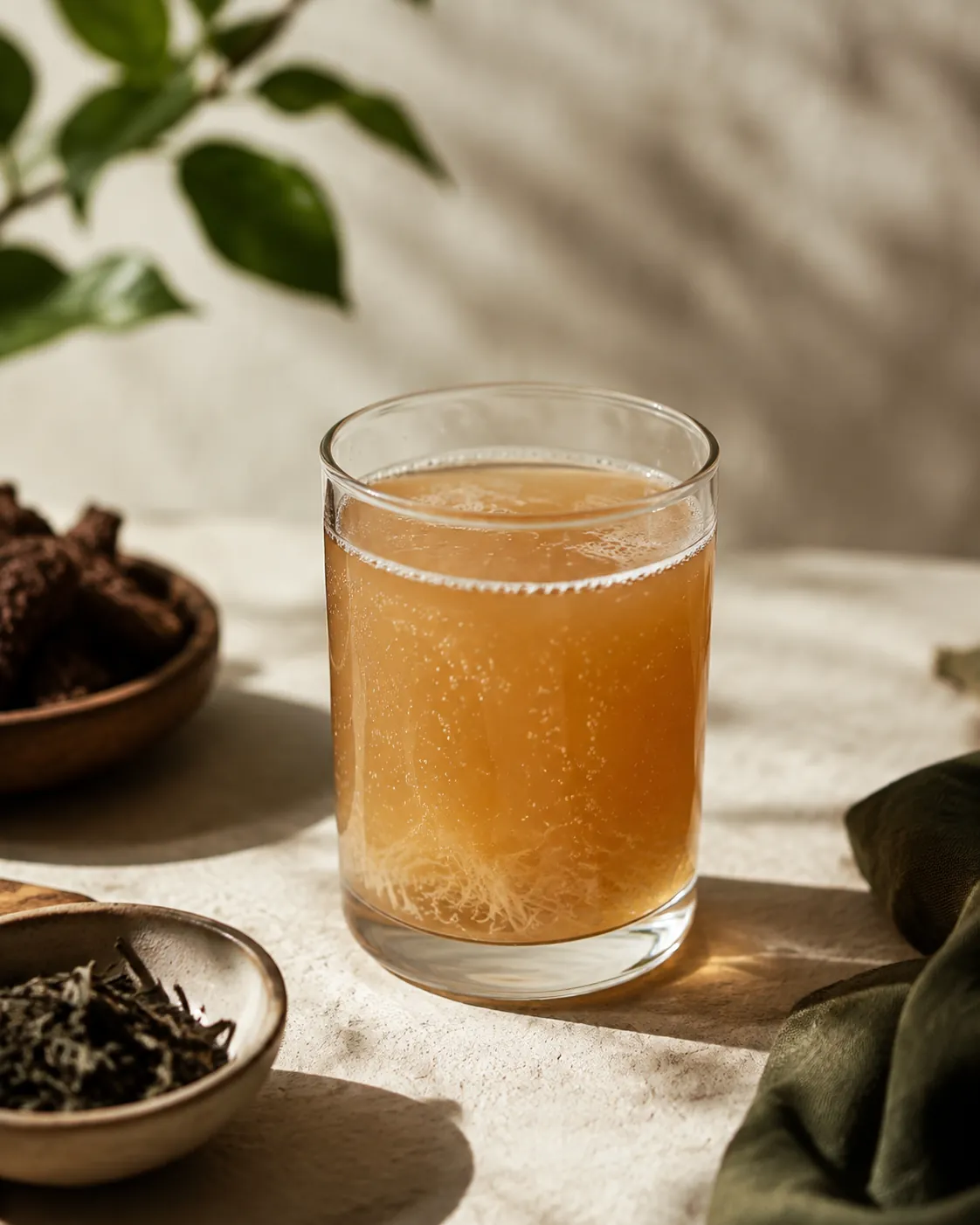
Kombucha is sweetened tea that has been fermented until it turns tart and lightly fizzy. It arrives cloudy, smells faintly of vinegar, and tastes sour in a way that surprises anyone expecting a soft drink.
What makes it unusual is that two different organisms work on it in sequence rather than together. Yeasts turn the sugar into alcohol, and bacteria then turn that alcohol into acid, and almost every question about kombucha is answered by where a given batch sits along that relay.
Stop it early and it is sweet and mild. Let it run and it becomes sharply sour and close to vinegar.
Nothing else about the drink matters as much as that one variable.
Kombucha at a glance
- Base
- Sweetened tea, usually black or green
- Culture
- A SCOBY: yeasts and acetic acid bacteria together
- Taste
- Tart and faintly vinegary, with residual sweetness
- Fizz
- Carbon dioxide from fermentation, not from a carbonator
- Caffeine
- Some, carried over from the tea
- Alcohol
- A trace; commercial products are sold below the non-alcoholic limit
What kombucha is
Start with strong tea, dissolve sugar in it, cool it, and add a culture along with some finished kombucha from a previous batch. Leave it covered at room temperature for a week or two and the liquid turns from sweet tea into something sour.
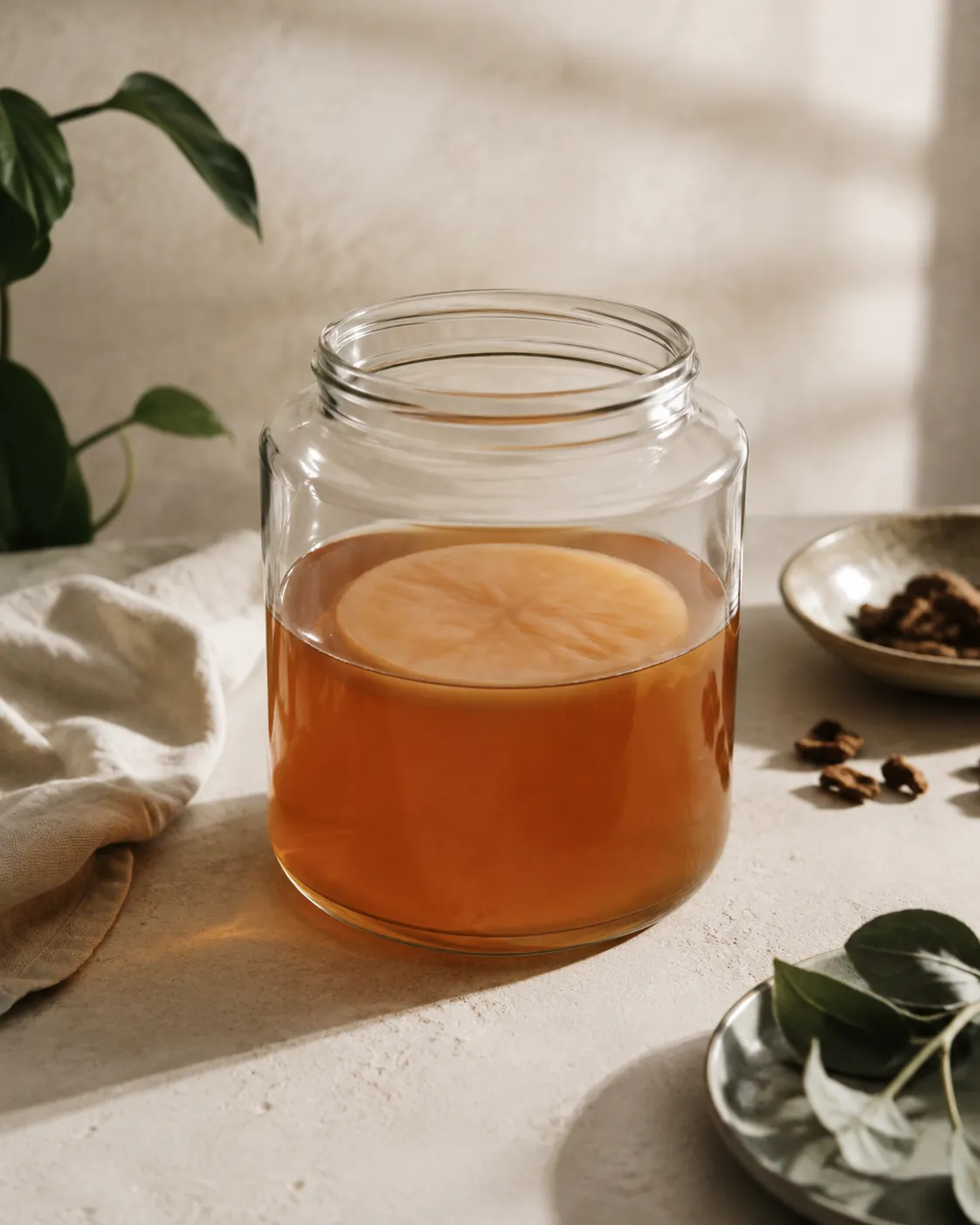
The culture is the part people notice. It forms a pale, rubbery disc on the surface, commonly called a SCOBY, and it is a cellulose mat produced by the bacteria rather than an organism in its own right.
The mat is a by-product rather than the engine. The actual work is done by yeasts and bacteria suspended throughout the liquid, which is why a batch ferments perfectly well if the disc is removed and why a new one forms on every batch.
Strands and sediment in a bottle are the same material in miniature. They look alarming and are entirely normal in an unfiltered product.
The relay: yeast first, then bacteria
Yeasts go first. They consume the sugar and produce ethanol and carbon dioxide, which is ordinary fermentation and the same process behind any leavened or fermented product.
Acetic acid bacteria follow. They oxidise that ethanol into acetic acid, which is the sourness you taste and the vinegar note you smell, and they need the yeasts to have gone first because ethanol is what they eat.
What happens over two weeks
- Day 1Sweet tea, culture added, nothing apparent
- Days 2 to 4Yeasts active; sugar falling, alcohol and gas rising
- Days 5 to 8Bacteria catch up; acidity climbing, sweetness dropping
- Days 9 to 14Acid dominant, sugar low, the drink tastes sour
- BeyondContinues towards vinegar and does not stop on its own
The relay never fully finishes, which is the fact with the most practical consequences.
A live kombucha is a drink caught mid-process, and it keeps moving in the bottle unless something stops it.
That is why refrigeration matters so much here and so little for a soft drink. Cold slows both organisms without killing them, so a bottle in the fridge changes slowly and a bottle in a warm room changes fast.
The same logic governs storing loose leaf, except that a dry leaf fades where this one keeps moving.
Why the tea matters, and which teas work
Tea is not a flavouring choice here. The culture needs the nitrogen compounds and tannins that tea leaf supplies, and a batch made with a herbal infusion instead will ferment weakly or stall.
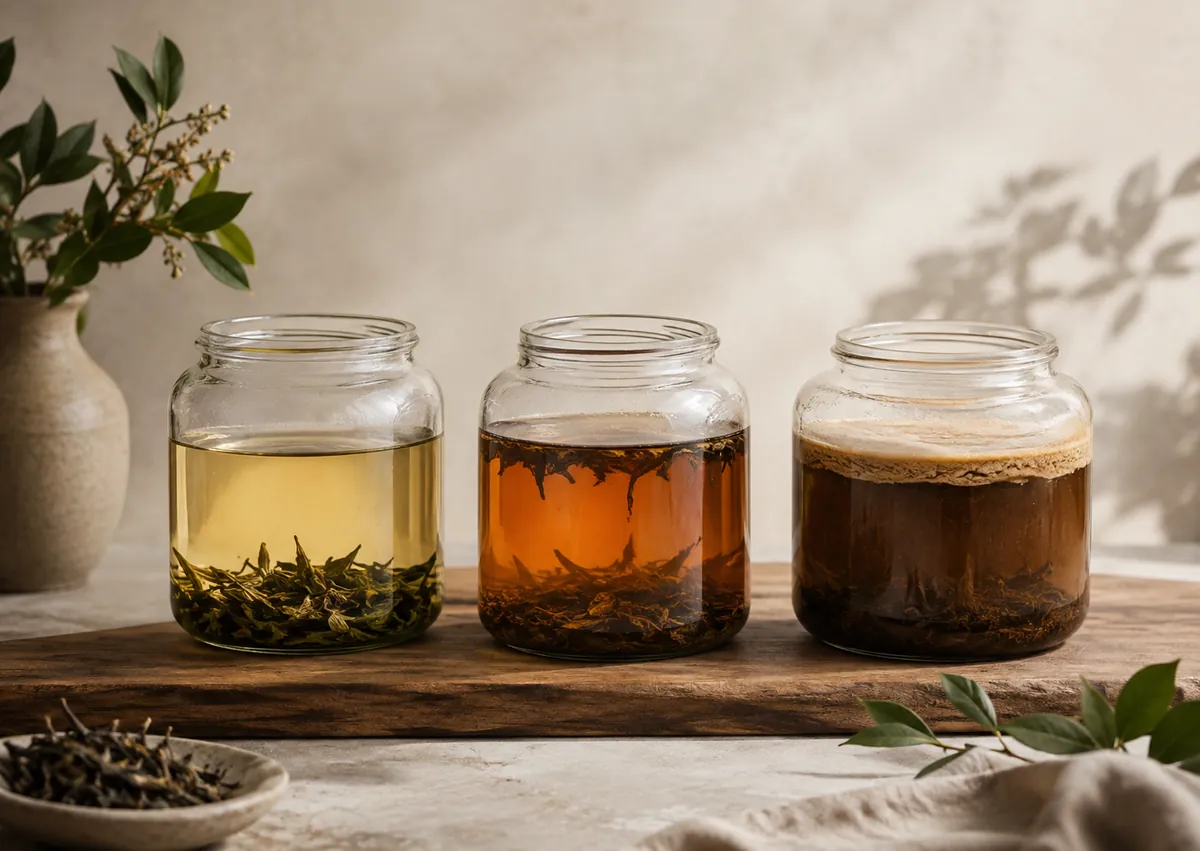
Black tea is the traditional base and the most reliable, giving a fuller, maltier result. Green tea ferments faster and finishes lighter and grassier, and oolong sits between the two.
Flavoured teas are the common mistake. Oils in an Earl Grey or a heavily scented blend can inhibit the culture, and the aroma rarely survives fermentation anyway, so the flavour is added afterwards instead.
Water matters for the same reasons it matters in ordinary brewing, covered under water for brewing. Heavily chlorinated water is the one genuine problem, since it works against the culture rather than merely dulling the taste.
Where the sugar actually goes
The recipe calls for a lot of sugar, and that alarms people who then read the nutrition panel and find far less than they expected. Both figures are correct.
The sugar is food for the culture rather than an ingredient of the finished drink. Yeasts consume most of it during fermentation, and what remains is whatever was left when the batch was stopped or chilled.
Residual sweetness, sweetest first
- Juice-blended kombuchaSweetened again after fermenting
- Short ferment, stopped earlyNoticeably sweet with mild acidity
- Standard commercial bottleLightly sweet behind the sourness
- Long fermentDry and sharply acidic
- Left too longVinegar, and no longer a drink
A longer ferment means less sugar and more acid, which is a single dial rather than two, and it is the reason a very dry kombucha and a very sour one are the same thing.
Sweetened commercial products complicate this, because many are blended with juice after fermenting. That sugar was never offered to the culture and stays exactly where it was put.
What it tastes like
The first impression is sour, and how sour depends entirely on the batch. Underneath the acidity there is a tea note, some residual sweetness, and a faint yeasty character that reads as bready or slightly winey.
Acetic acid gives the vinegar edge, and it is the loudest component in a long-fermented batch. Other acids present are gentler and more citrus-like, closer to the citric acid in a fruit drink, which is why a well-judged kombucha tastes tart rather than simply sharp.
Texture is thinner than a soft drink.
There is no sugar syrup body holding it together, so the drink is light on the palate and the fizz does most of the work of filling it out.
The finish is dry and slightly astringent, from the tea tannins that survived. That drying finish is the tell that separates real kombucha from a soda flavoured to imitate it.
Where the fizz comes from
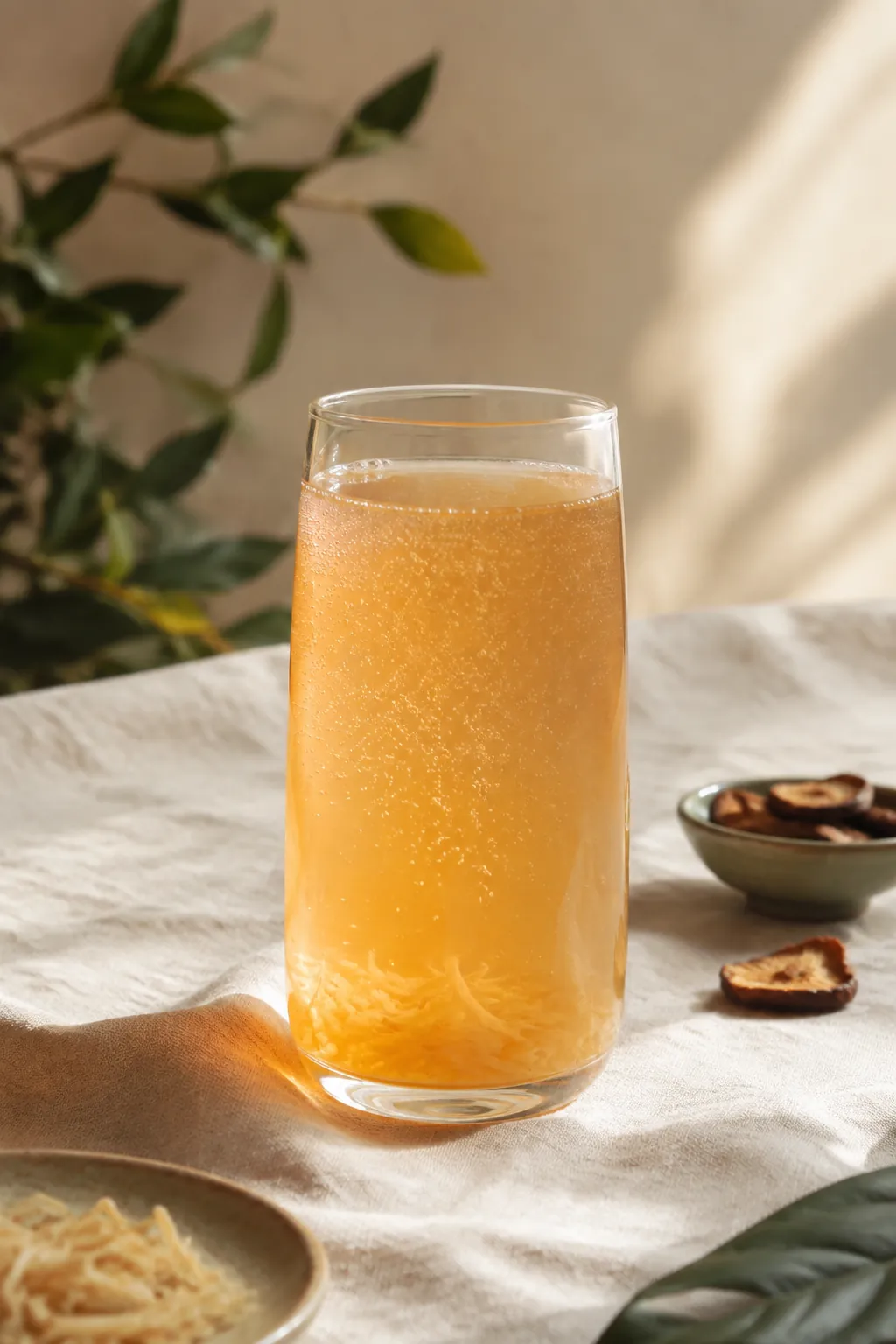
The carbonation is made by the drink rather than added to it. Yeasts release carbon dioxide throughout fermentation, and if that gas is trapped it dissolves into the liquid.
In an open jar it simply escapes, so a first fermentation is nearly still. The fizz is built in a second stage: the liquid goes into a sealed bottle, usually with a little fruit or juice, and the yeasts work on that fresh sugar with nowhere for the gas to go.
That is a different mechanism from a soda water or a seltzer, where carbon dioxide is forced into cold water under pressure and the drink is inert afterwards.
The practical difference is consistency. A carbonated soft drink is the same every time; a live kombucha varies bottle to bottle, and a very fizzy one usually just means it sat somewhere warm.
The trace of alcohol, and what the label means
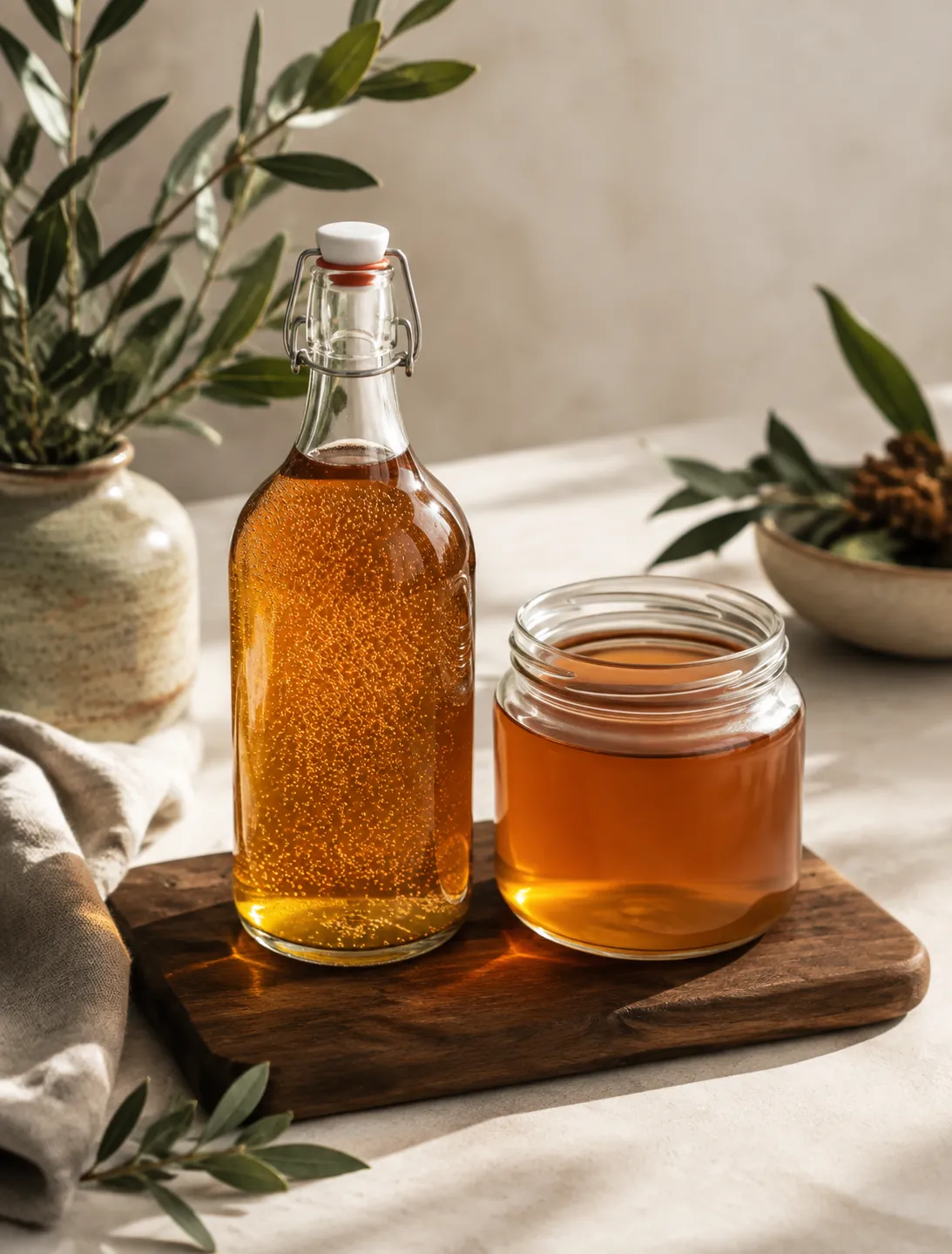
Fermentation produces ethanol by definition, so every kombucha contains some. In a finished commercial product it is a trace, because the bacteria have consumed most of what the yeasts made.
Products sold as non-alcoholic are held below the regulatory threshold, which in most markets is 0.5 per cent, and manufacturers control it by fermenting to a set point and then chilling, filtering or pasteurising.
Unpasteurised bottles can drift upwards if they are stored warm, since the yeasts keep working and the bacteria may not keep pace. Cold storage is what holds the figure where the label says it is, which is a practical reason to treat the fridge instruction as more than a freshness note.
Home-fermented kombucha has no such control and can end up meaningfully higher, which is one reason the commercial and home versions are not quite the same product.
Live, pasteurised and juice-blended
The bottles on a shelf differ more than the category name suggests, and the difference is what was done after fermenting.
| Live | Pasteurised | Juice-blended | |
|---|---|---|---|
| Culture | Active, keeps fermenting | Heat-killed, stable | Usually active |
| Storage | Chilled, always | Ambient until opened | Chilled |
| Taste | Sharpest, most variable | Consistent, slightly flatter | Sweetest, fruit-led |
| Sediment | Strands and cloudiness | Usually filtered clear | Varies |
| Fizz | Can be lively | Controlled | Controlled |
Pasteurised kombucha is a legitimate product and a more predictable one. Heat stops the relay, which fixes the flavour, the fizz and the alcohol figure in place at the cost of some of the brightness.
Juice-blended versions are where most people start, and they are considerably sweeter than the base drink. Read the order of the ingredients: some are kombucha with a splash of apple juice, and some are closer to juice with a splash of kombucha.
A slice of ginger is the most common second-ferment addition, and it survives the process better than most fruit.
Kombucha, jun, water kefir and kvass
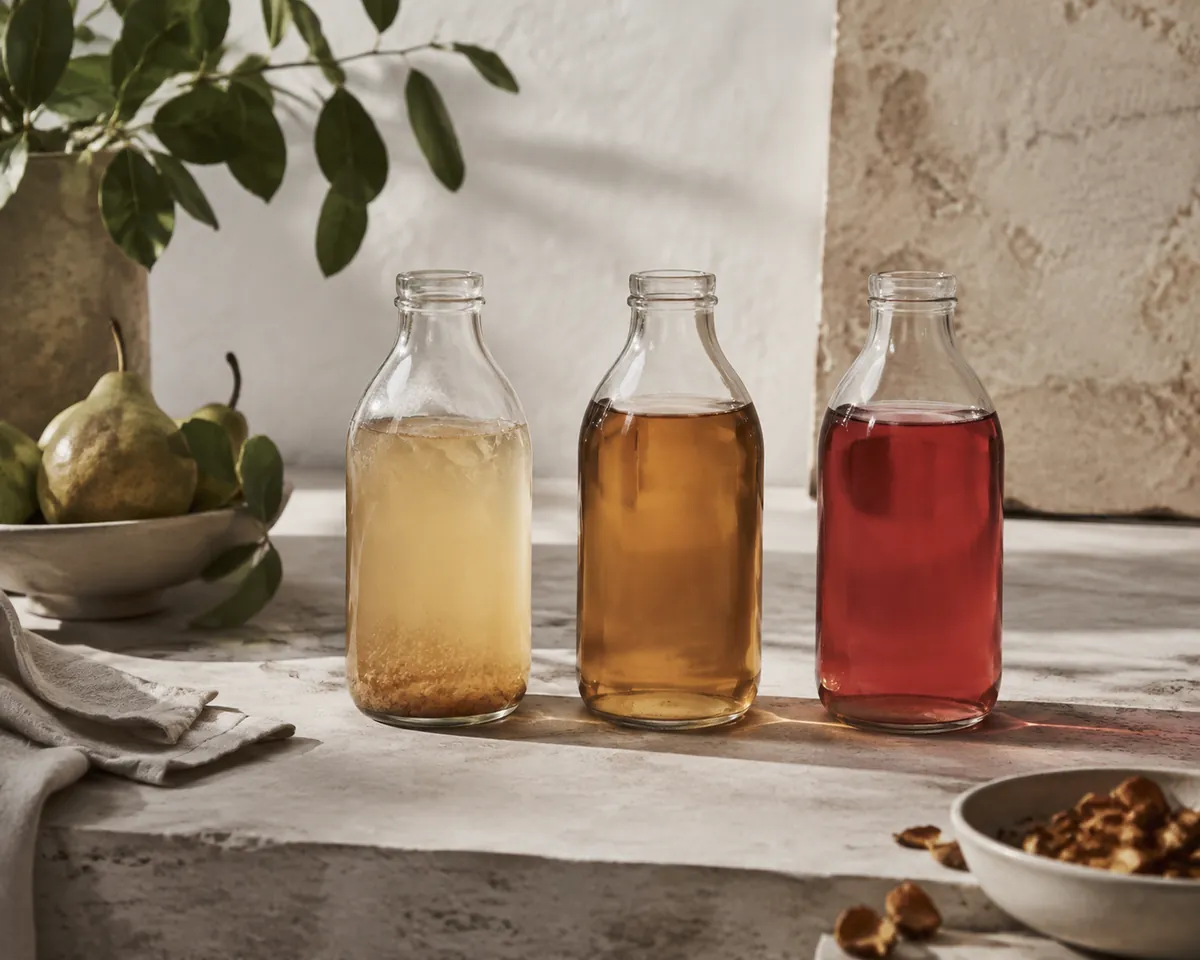
Four fermented drinks are routinely confused with each other, and the differences are in what feeds the culture rather than in the process.
- Kombucha ferments sweetened tea with a SCOBY
- Jun uses green tea and honey, and ferments faster and lighter
- Water kefir ferments sugar water with grains, and has no tea in it
- Kvass is fermented from bread or from beetroot, and is not tea either
- Switchel is not fermented at all, being vinegar mixed into water
Jun is the closest relative and is often described as kombucha made with honey. It ferments at a lower temperature, finishes more delicate, and its culture does not transfer well to a sugar-and-black-tea batch.
Water kefir is the one most often mistaken for it on a shelf, since both are cloudy, sour and lightly fizzy. It is milder, has no tea character and no tannin, so the dry astringent finish is missing and the drink tastes rounder.
Buying and storing a live drink
Treat a live kombucha the way you would treat any chilled fresh product, because that is what it is.
- Buy it from a chilled cabinet, not a warm shelf, unless it is pasteurised
- Check whether juice appears before kombucha in the ingredient list
- Expect sediment and strands; they are the culture, not a fault
- Open a very full or very cold bottle over a sink the first time
- Keep it upright and cold at home, and drink it within its date
An opened bottle goes flat within a day or two and continues souring, so it is not a drink to open and return to later in the week. That is the opposite of a ginger ale or an italian soda, which lose fizz but not character.
Bulging caps and violent foaming mean it fermented warm somewhere in the chain. The bottle is not spoiled so much as further along than intended, and it will taste sharper than the label suggests.
Where it sits among the things you can drink
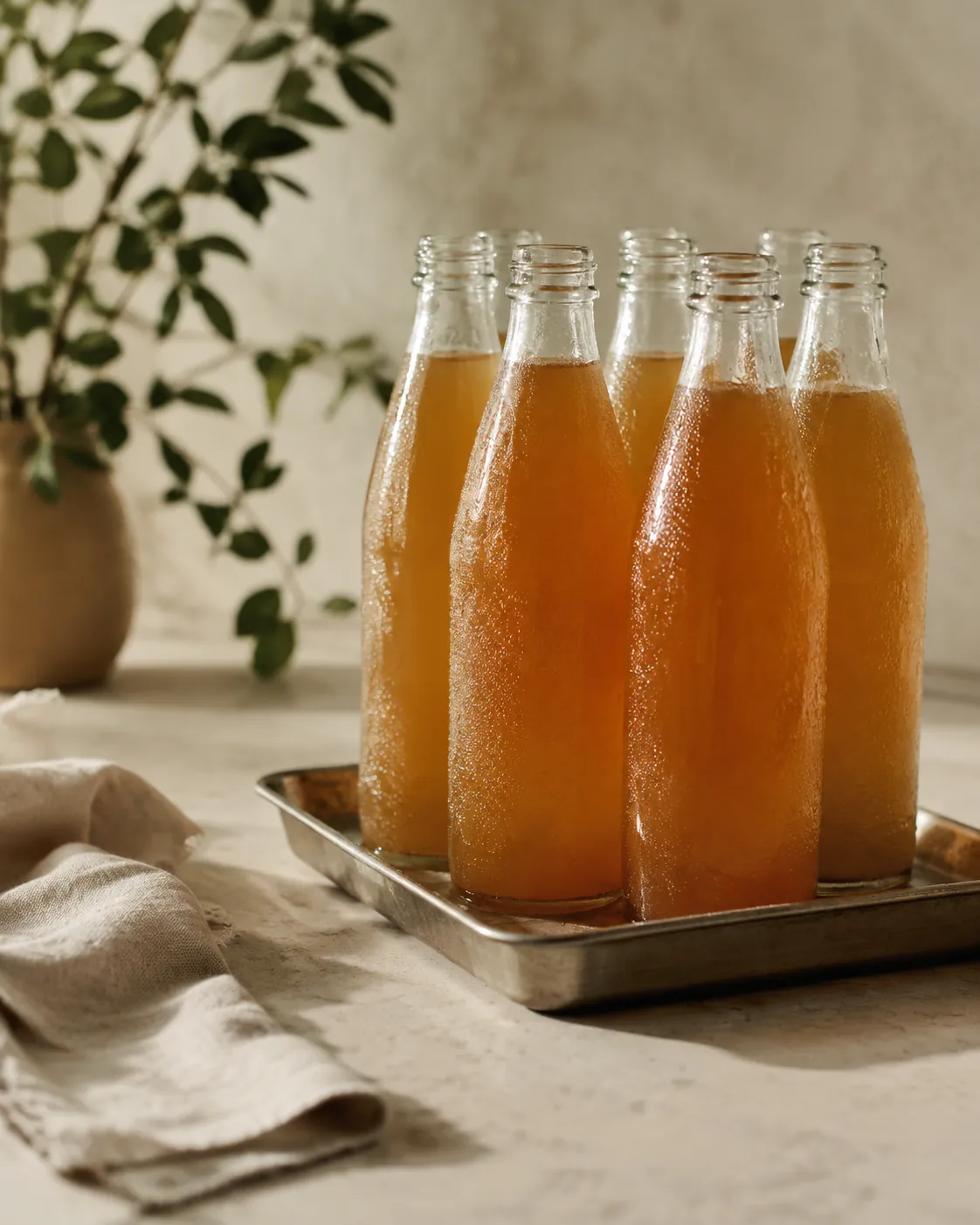
Kombucha does not have an obvious neighbour. It is tart like a fruit infusion, fizzy like a soft drink, dry like a tea, and made by a process neither of those shares.
Across the rest of tea nothing else is fermented in this way at all. Against a soft drink it is far less sweet and considerably more assertive, and against hibiscus or another tart infusion it has fizz, a yeasty depth and the vinegar note none of those carry.
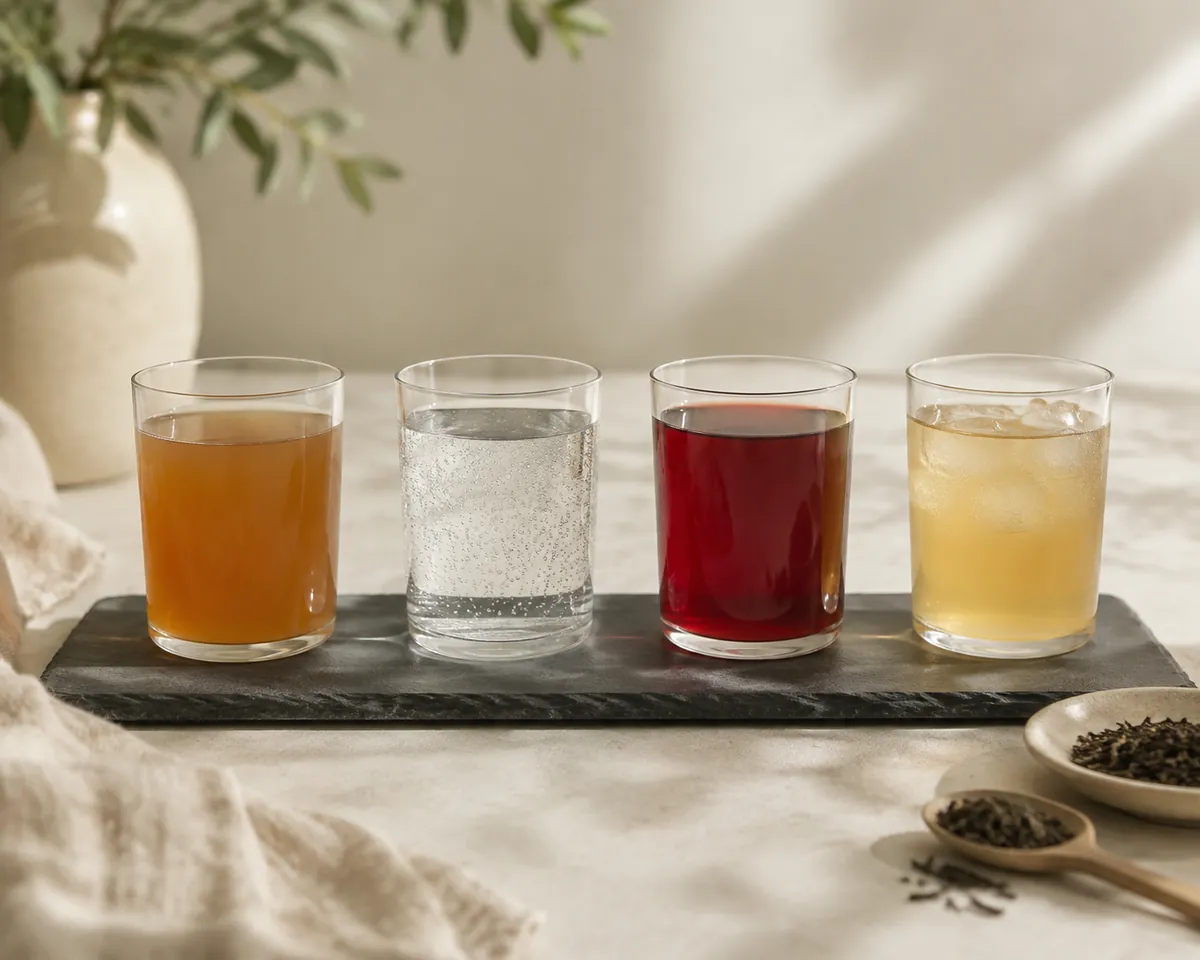
Its limits are honest ones. It is expensive for what it is, it varies from bottle to bottle, it demands fridge space, and the sourness genuinely does not suit everyone.
Anyone who wants fizz without sourness is better served by a seltzer or an iced tea. What it offers that nothing else does is a dry, sour, faintly tannic fizz, which is a gap on the shelf that soft drinks have never filled.
Common questions
Where does the sugar in kombucha go?
Most of it is eaten by the culture during fermentation, which is why the recipe calls for far more sugar than the finished drink contains. What remains is whatever was left when the batch was chilled or stopped. Juice-blended products are the exception, since that sugar was added after fermenting.
Why is kombucha fizzy without being carbonated?
The yeasts release carbon dioxide as they ferment, and if that gas is trapped it dissolves into the liquid. A first fermentation in an open jar is nearly still; the fizz is built in a sealed bottle with a little fresh sugar, where the gas has nowhere to go.
Does kombucha contain alcohol?
A trace. Fermentation produces ethanol by definition, and the bacteria then consume most of it. Products sold as non-alcoholic are held below the regulatory threshold, usually 0.5 per cent, by fermenting to a set point and then chilling, filtering or pasteurising. Warm storage of a live bottle can push it upwards.