How to Make White Hot Chocolate That Stays Smooth
White hot chocolate needs gentle heat because its cocoa butter, sugar and milk solids melt before the milk needs to boil. Chop the chocolate finely, warm the milk only to steaming and whisk off direct heat.
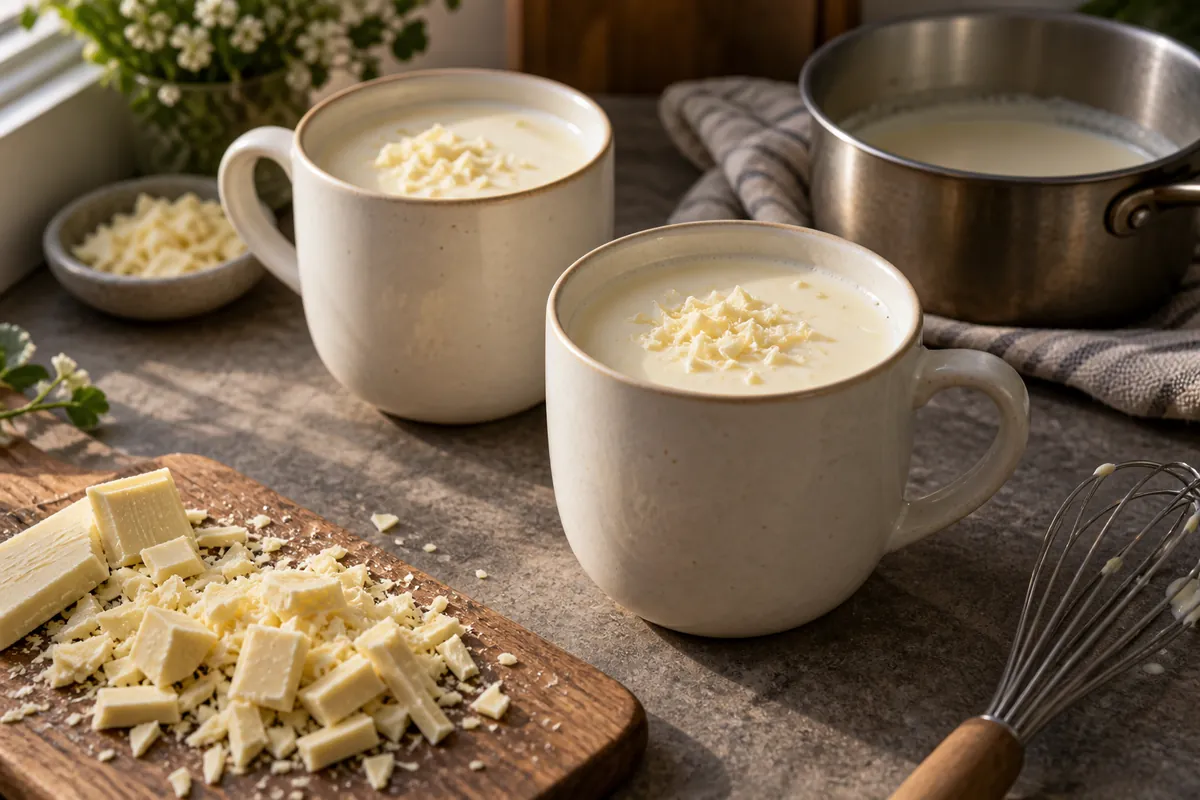
For two mugs of white hot chocolate, warm 500 ml milk until steam appears at the edge, remove the pan from the heat and whisk in 100 g finely chopped white chocolate in two additions. Add a small pinch of sea salt and serve as soon as the mixture is smooth.
The milk should not boil, because white chocolate softens and melts at a much lower temperature and excessive heat can dull its dairy aroma and make the mixture look oily or grainy.
| Ingredient | Starting amount | What it controls |
|---|---|---|
| Milk | 500 ml | Final volume and drinkability |
| White chocolate | 100 g | Cocoa-butter body, sweetness and dairy flavour |
| Salt | A small pinch | Reduces the flat sugary impression |
| Vanilla | Up to 1/2 tsp | Adds aroma but can dominate a mild bar |
| Cream | Optional, replace up to 100 ml milk | Richness and coating texture |
Choose white chocolate that contains cocoa butter
In the United States, the standard of identity for white chocolate requires at least 20 percent cacao fat, 3.5 percent milkfat and 14 percent total milk solids. That composition is why a real bar melts into warm milk differently from a white-flavoured compound coating.
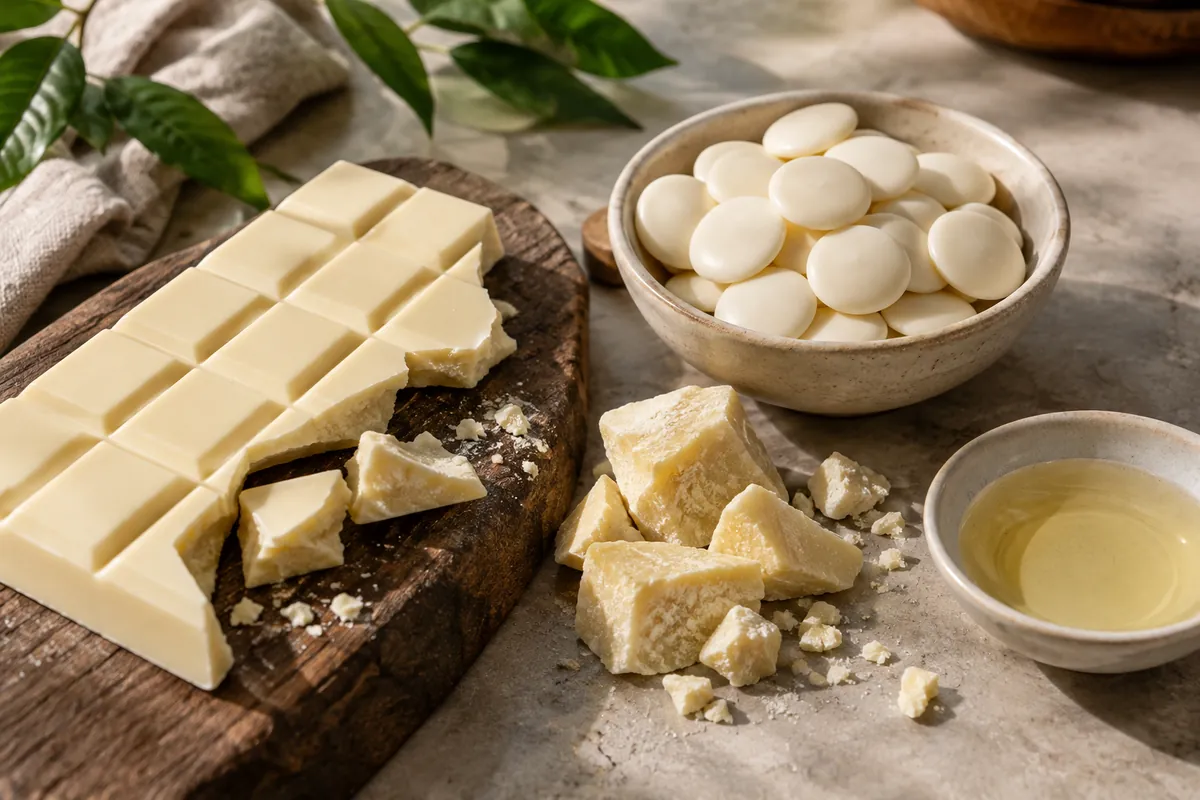
- Find cocoa butter in the ingredient list.
- Expect a genuine bar to look pale ivory rather than paper-white.
- Treat baking chips as a slower-melting format, not an automatic substitute for a chopped bar.
- Do not interpret a cocoa percentage as the dark-chocolate scale for sweetness.
The ratio changes both sweetness and thickness
A heavy chocolate dose gives you a dessert-like cup, while a very low dose leaves sweet warm milk with little cocoa-butter body.
White chocolate per 500 ml milk
- 70 gMild, milk-led and easy to drink
- 100 gBalanced starting point with clear white-chocolate character
- 130 gSweet and coating, suited to small cups
- 160 gVery rich and closer to a pourable dessert
Change the chocolate before adding loose cane sugar. The bar already supplies sweetness, fat and milk solids together, while spooned sugar increases only one of those.
Whole milk gives enough body for the 100 g formula. Replacing up to 100 ml with cream produces a richer drink, but using equal parts cream and milk can hide the chocolate beneath dairy fat.
Why fine chopping and staged melting matter
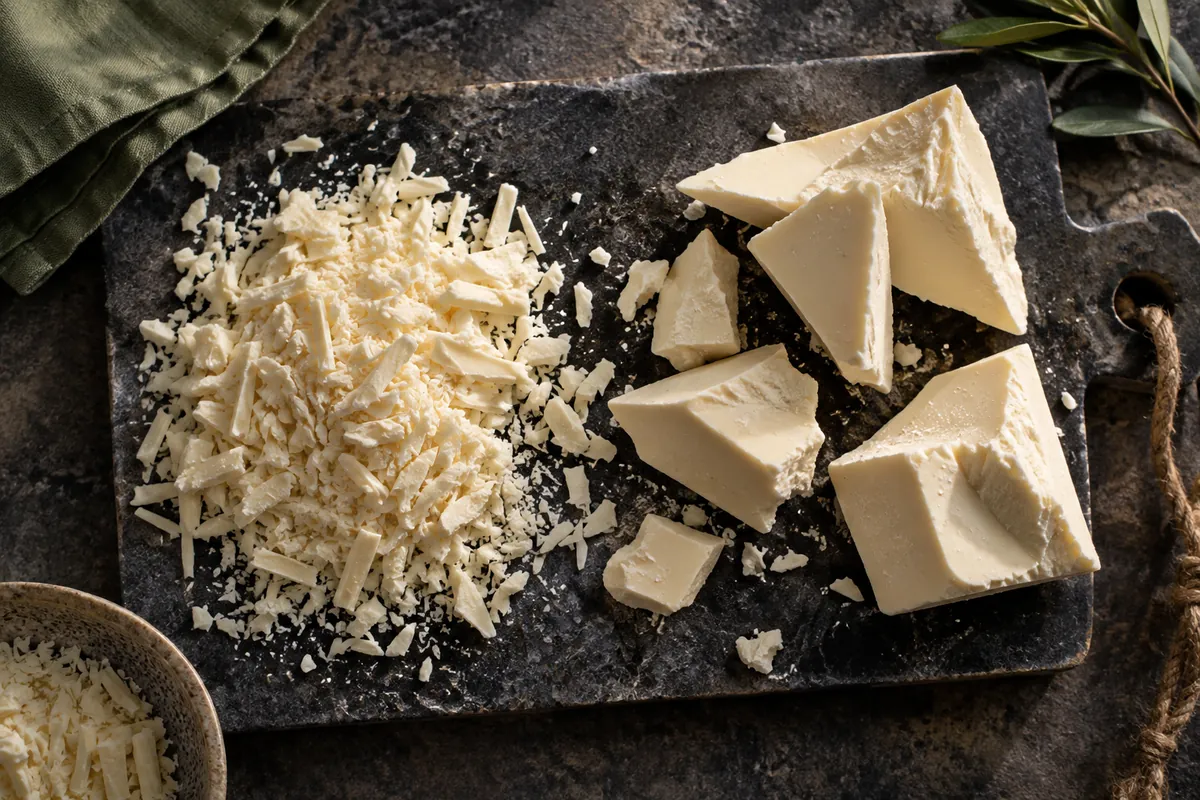
Fine pieces expose enough surface to melt before the milk overheats, unlike large chunks that force you to keep the whole pan on the burner.
Warm the milk first, then take it off the burner. Add half the chocolate, whisk from the centre outward until no pieces remain, then add the rest.
The residual heat should do most of the melting. If pieces remain, return the pan to the lowest heat for only a few seconds while stirring continuously.
A balloon whisk adds foam and a silicone spatula keeps the surface denser, but neither corrects a bad ratio or overheated chocolate.
Keep direct heat away from the final mixture
The finished drink depends on keeping chocolate's sugar and milk particles evenly dispersed through a mostly water-based milk.
Chocolate softens and finally melts between 34 and 36 C, according to the introduction of a paper on heat resistance in white chocolate. Milk warmed until it steams is far hotter than that, so it can melt white chocolate long before reaching a simmer.
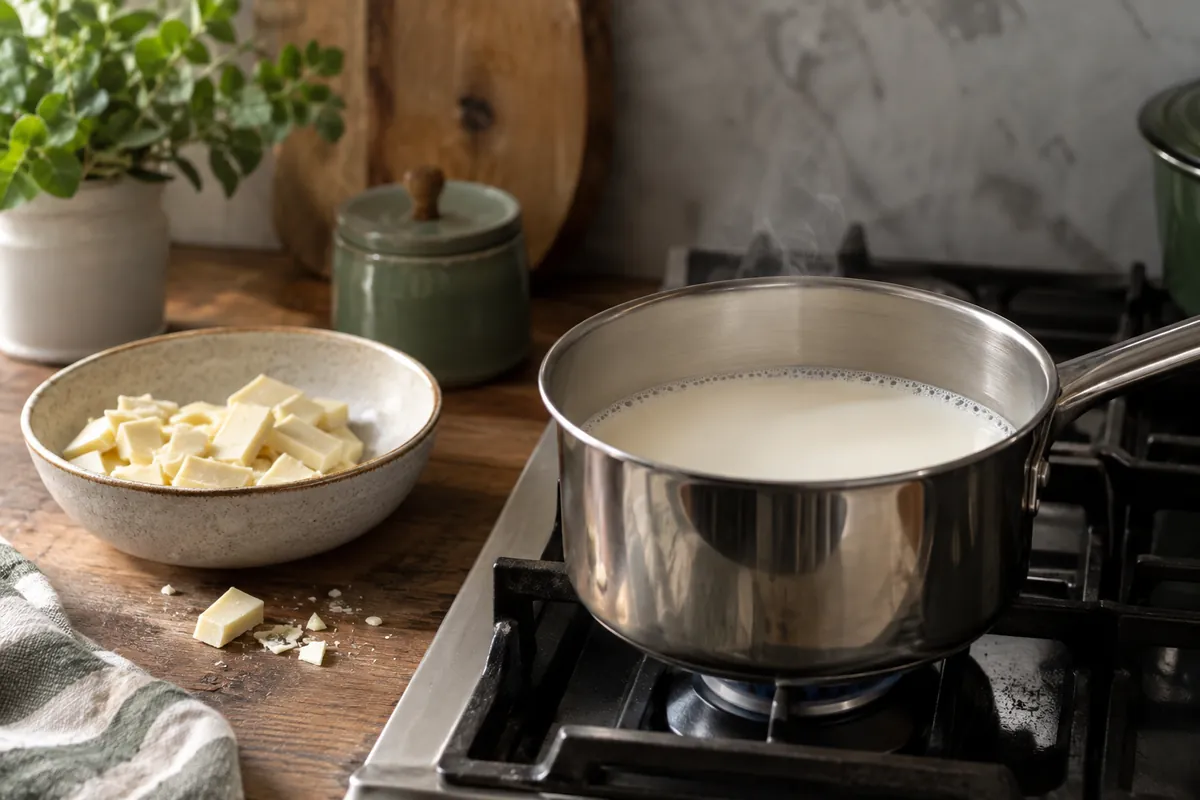
Steam at the edge is your stop signal because a rolling boil has no melting job left to perform.
A thin-based pan creates concentrated hot spots, so lower the burner and stir across the base. A heavy small saucepan gives more control because it distributes heat and matches the batch volume.
Dairy and plant drinks do not behave identically
Whole dairy milk balances water, protein, milk sugar and fat, while skim milk thins the drink and cream increases coating richness.
| Base | Likely result | Adjustment |
|---|---|---|
| Whole milk | Smooth and rounded | Use the starting formula |
| Reduced-fat milk | Lighter body | Add 10 to 20 g more chocolate if needed |
| Skim milk | Thin with little cushion | Prefer reduced-fat milk or accept a lighter cup |
| Oat drink | Mild and naturally cereal-sweet | Use less chocolate if the carton is sweetened |
| Soy drink | Good protein body, clear flavour | Heat gently to avoid a cooked note |
| Almond drink | Light and nut-forward | Choose unsweetened and start with less milk |
| Coconut drink | Strong coconut aroma | Use only when that flavour is wanted |
An unsweetened base leaves room for the bar. Sweetened vanilla plant drinks can push the cup past balance before any white chocolate is added.
Plant drinks also vary by brand because oil, stabilisers and protein levels differ. Test a half batch before scaling for guests rather than treating every carton with the same plant name as interchangeable.
Balance sweetness with contrast, not more flavouring
A pinch of salt sharpens dairy and cocoa-butter notes without adding another dominant aroma, so whisk it fully before tasting.
Vanilla
Softens the edges but can make a mild bar taste more confectionery
Citrus zest
Adds aroma without the water and acid load of juice
Freeze-dried raspberry
Adds tartness and visible fruit pieces
Acidic juice does not belong in the saucepan. It can disrupt the milk and adds water at the wrong stage, while dry zest provides citrus aroma with less risk.
Toppings should remain separate from the base calculation. Marshmallows, syrup and whipped cream all add sweetness or richness after the drink has already been balanced.
For a small batch, heat the milk in short microwave intervals in a large safe jug, stirring as you go, then add the finely chopped chocolate after the final interval.
Do not microwave the complete mixture for long unbroken periods. The centre may look still while the edges overheat, and delayed bubbling can make a full jug unsafe to whisk.
| Input | What it contributes | How to use it |
|---|---|---|
| White chocolate bar | Cocoa butter, sugar and milk solids in a meltable block | Chop finely and use the article's milk ratio |
| White baking chips | A shape-holding formula that can melt more slowly | Add in stages and expect extra stirring |
| White hot-chocolate powder | Sugar, milk powder, flavouring and sometimes fat or starch | Follow its own dilution directions rather than a bar formula |
A reliable ratio must name which input it uses.
Diagnose grainy, oily or thin texture by appearance
A grainy cup points to unmelted particles, overheated milk solids or instability, while surface oil points to separated fat or an excessive chocolate ratio.
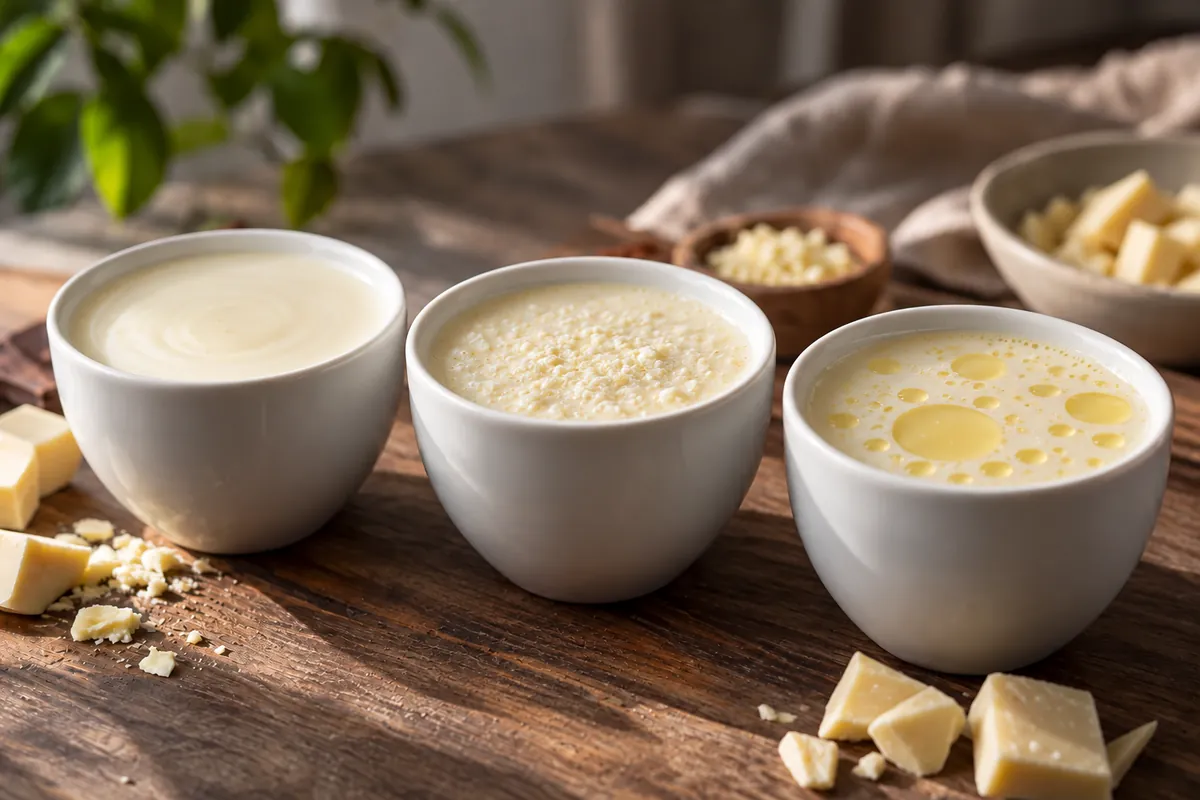
Texture fault finder
- Small soft specks
- Chocolate has not fully melted. Rest off heat and whisk
- Dry graininess
- Heat was too high or solids collected on the pan base. Strain and avoid scraping the scorched layer
- Oil beads
- Cocoa butter separated. Whisk in a small splash of warm milk off heat
- Too thin
- Chocolate dose is low for the milk volume. Melt more chocolate separately with some of the drink
- Too thick
- Ratio is heavy or the cup cooled. Add warm milk gradually
- Skin on top
- Milk proteins dried during standing. Whisk before serving or cover while held briefly
Rescue the texture with small additions, not a second boil. More heat often makes a separated mixture worse.
A stick blender can pull a mildly separated batch together, but keep the head submerged to avoid spraying hot liquid. It also creates foam and cannot remove a scorched flavour.
Use a milk frother only after the base is smooth because hard whisking during melting can hide pieces beneath bubbles.
For a light top, transfer a small portion to a frother and return it to each mug. This keeps the main batch dense enough to inspect and prevents every serving from losing volume as foam collapses.
A skin forms fastest in a wide uncovered pan. Cover it briefly off heat and whisk before pouring, but do not hold the drink so long that the food-safety and texture tradeoffs outweigh serving it fresh.
Smooth first and aerate second because the jobs use different motions and temperatures.
Make a larger batch without scorching the bottom
A deeper batch heats unevenly and holds heat longer, so scaling the ingredients does not solve the pan choice.
Use a wider heavy pot, stir across the entire base and add the chopped chocolate in several portions. Stop heating earlier than with a two-mug batch because the larger milk volume carries more residual heat.
- Multiply milk and chocolate by the same factor.
- Leave headroom for whisking without splashing.
- Warm serving mugs so the first pour does not cool abruptly.
- Whisk before each round of pouring.
- Cool leftovers promptly rather than leaving the pot warm for hours.
A slow cooker is a holding tool, not an excuse for unattended high heat. Stir regularly and use a low setting because white chocolate can settle against the hot crock.
For service, keep extra warm milk nearby. It corrects thickening as the batch stands without forcing the entire pot back to a boil.
Match a small cup to the 130 g dessert formula and an ordinary mug to the lighter 70 g formula instead of diluting at the table.
Serve acidic fruit on the side, while dry spice, shaved chocolate or a little freeze-dried fruit keeps the base stable.
A cold oversized mug can make a correct drink feel thick and waxy within minutes, which is why the list above has you warm the mugs.
Cool and reheat it as a milk drink
Transfer leftovers to a clean shallow container and refrigerate promptly. Use within two days, since the finished drink contains heated milk and has no shelf-stable packaging.
Reheating restores flow when you whisk in a splash of milk as the cocoa butter softens, though it cannot repair every broken emulsion.
Freezing is possible for later blending into a cold drink, but thawed white hot chocolate may separate. It is a poor storage choice when a perfectly smooth hot cup is the goal.
White hot chocolate
- Makes
- 2 mugs, about 500 ml
- Water temp
- Steaming, below a simmer
- Total time
- 10 min
What you need
- 500 ml whole milk or a suitable plant drink
- 100 g real white chocolate, finely chopped
- A small pinch of salt
- 1/2 tsp vanilla extract, optional
Equipment
- A small heavy saucepan
- A whisk or silicone spatula
- A chopping board and knife
- Two warmed mugs
Method
- Read the chocolate labelChoose a bar that lists cocoa butter rather than a white compound coating based only on other vegetable fats.
- Chop it evenlySmall similar pieces melt together and leave fewer hot spots.
- Warm the milkHeat it over medium-low until steaming at the edge, without boiling.
- Melt off the heatRemove the pan, add the chocolate in two portions and whisk each until smooth.
- Balance and serveAdd salt and optional vanilla, return to the lowest heat only if needed, then pour into warmed mugs.
Common questions
What is the best ratio for white hot chocolate?
Start with 100 g real white chocolate for 500 ml milk. Use about 70 g for a lighter milk-led cup or 130 g for a sweeter, more coating result.
Why is white hot chocolate grainy?
The chocolate may be incompletely melted, the pan may have become too hot, or milk solids may have caught on the base. Rest and whisk off heat first, then strain without scraping any scorched layer.
Can you make white hot chocolate with plant milk?
Yes, but use an unsweetened product and test a small batch. Oat, soy, almond and coconut drinks differ in sweetness, protein, fat and stabilisers, so they do not produce identical texture.
Does white hot chocolate contain caffeine?
Plain white chocolate contains cocoa butter but no nonfat cocoa solids, so it generally has little to no caffeine. Added espresso, cocoa, coffee flavouring or some toppings can change that.