The Blender, and Why Circulation Does All the Work
A blender's blades are blunt and far too fast to cut anything. The machine works by circulation, which is why loading order and jar shape decide a blend and the number on the box mostly does not.
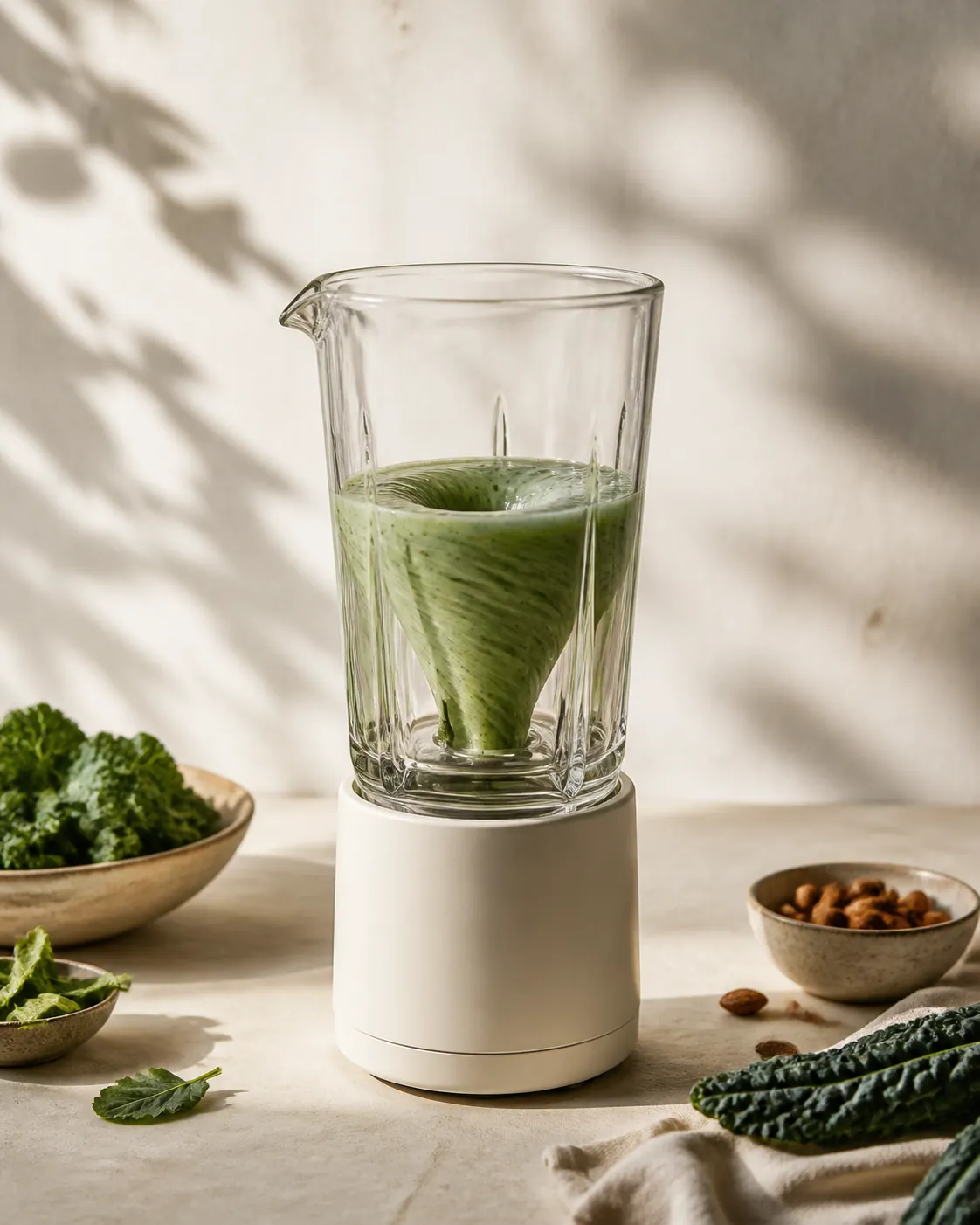
A blender does not chop. Its blades are blunt, they spin far too fast to cut anything cleanly, and what they actually do is throw liquid outwards hard enough to drag everything else through the same path repeatedly.
That distinction explains most of what goes right and wrong with one. A blender works by circulation, not by cutting, so the job of the jar is to keep material moving back down into the blades, and the job of the operator is to give it something to circulate.
Get the circulation going and a cheap machine makes a smooth drink. Break it, and a very expensive machine spins uselessly against an air pocket.
Blender at a glance
- What it does
- Circulates ingredients through fast blunt blades
- Key variable
- Blade tip speed, not the wattage on the box
- Jar shape
- Tall and narrow keeps a vortex; wide and short does not
- Main failure
- Cavitation, an air pocket around the blades
- Loading order
- Liquid first, frozen last
- Not a substitute for
- A juicer, which removes fibre rather than breaking it
What a blender actually does to a drink
Material entering the blade path is torn apart by shear rather than sliced, and each pass reduces it further. A smooth drink is the result of thousands of passes rather than of any single cut.
Cell walls break down as this happens, which releases what was inside them: colour, sugars, aroma and the fibre that gives a smoothie its body. Nothing is removed, which is the whole difference from juicing.
That means the drink you get is the ingredients you put in, thickened. A green smoothie contains everything the leaves contained, in a form the machine has made drinkable, and none of it has been strained out.
The same is true of a berry smoothie, where the seeds and skins stay in and give it the texture.
Texture is the only thing a blender adds. Flavour comes from what went in, and a long blend does not improve taste so much as change mouthfeel.
Why loading order decides the blend
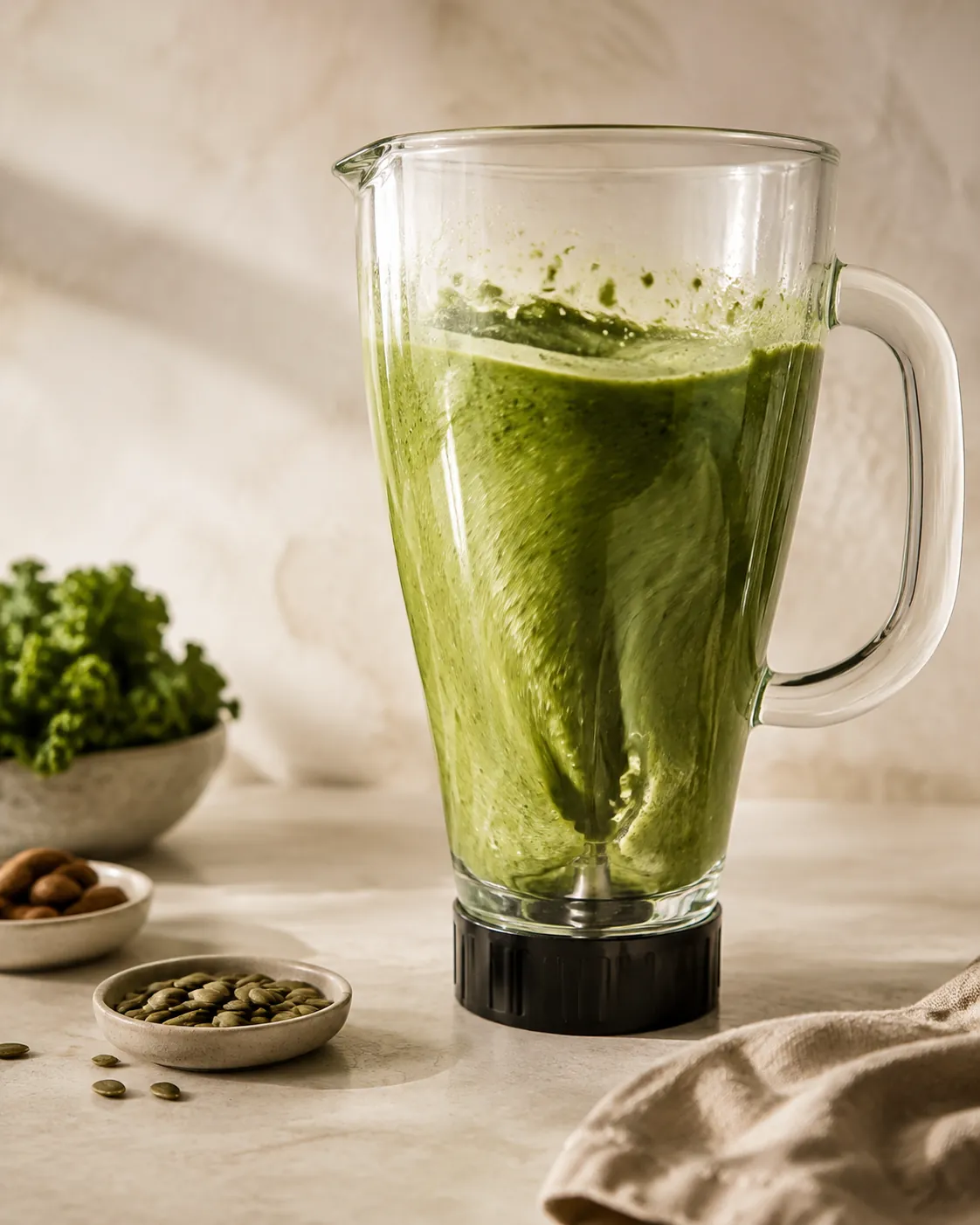
The order ingredients go into the jar is not a nicety. It is the single largest thing an operator controls, and it decides whether a vortex forms at all.
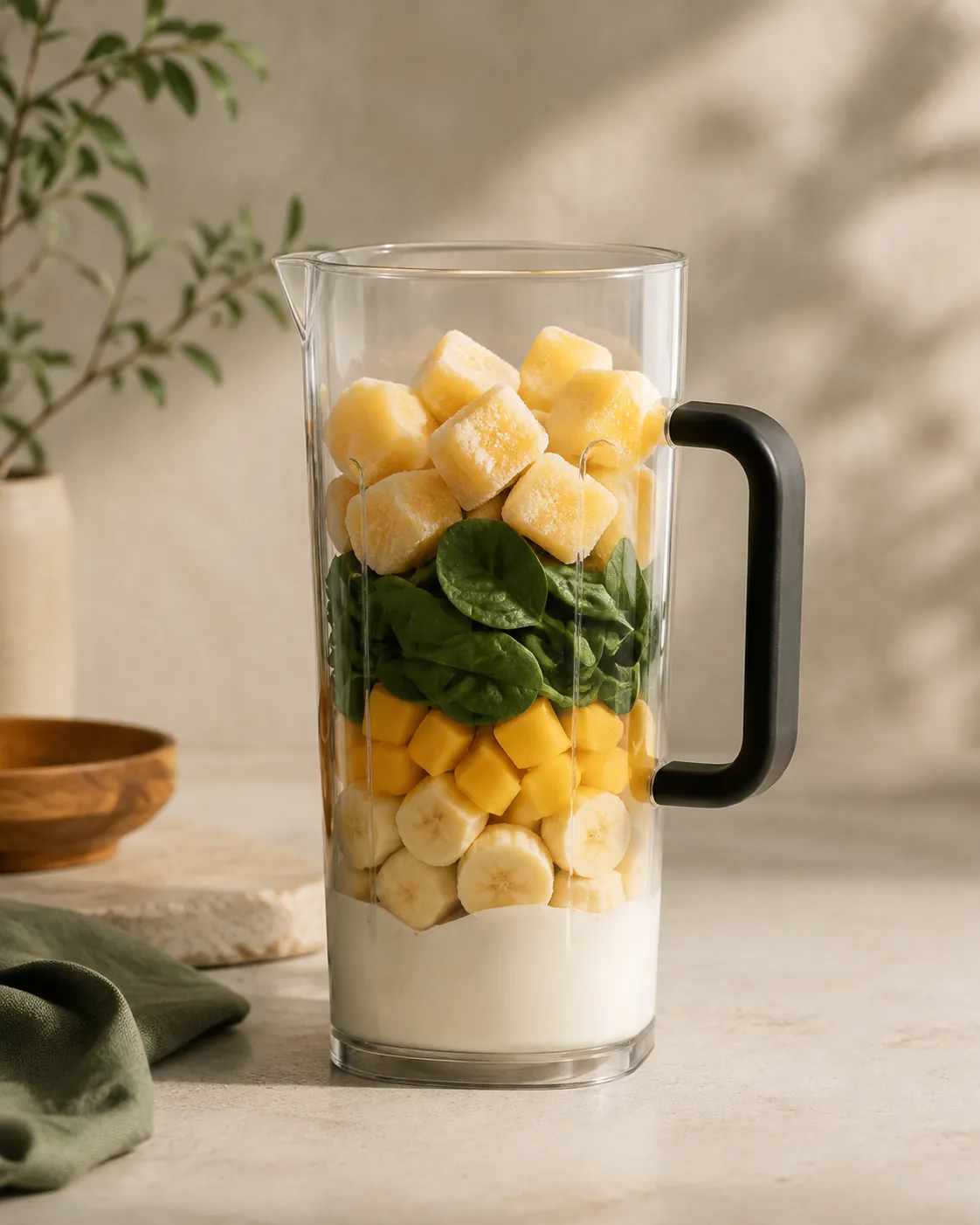
The order that works
- Liquid firstWater, milk or juice, straight onto the blades
- Soft nextYoghurt, banana, soaked oats, anything that flows
- Leaves and powdersPacked down into the liquid so they wet through
- Hard and frozenFrozen fruit and hard vegetables on top
- Ice lastSitting above everything, so it falls in rather than jamming
Liquid first is the load-bearing rule. Blades in air do nothing, and blades in liquid immediately create the pressure difference that pulls everything else downwards.
Frozen material on top is the second rule and the counterintuitive one. Heavy items belong at the top, because they fall into the vortex under their own weight, while the same items packed against the blades simply jam them.
Dry powders are the third trap. A scoop of powder tipped onto liquid clumps at the surface and stays there, so it wants to go under the soft ingredients rather than on top of them.
Cocoa and matcha are the usual offenders, and both are better mixed to a paste first.
Cavitation, and the stall everyone hits
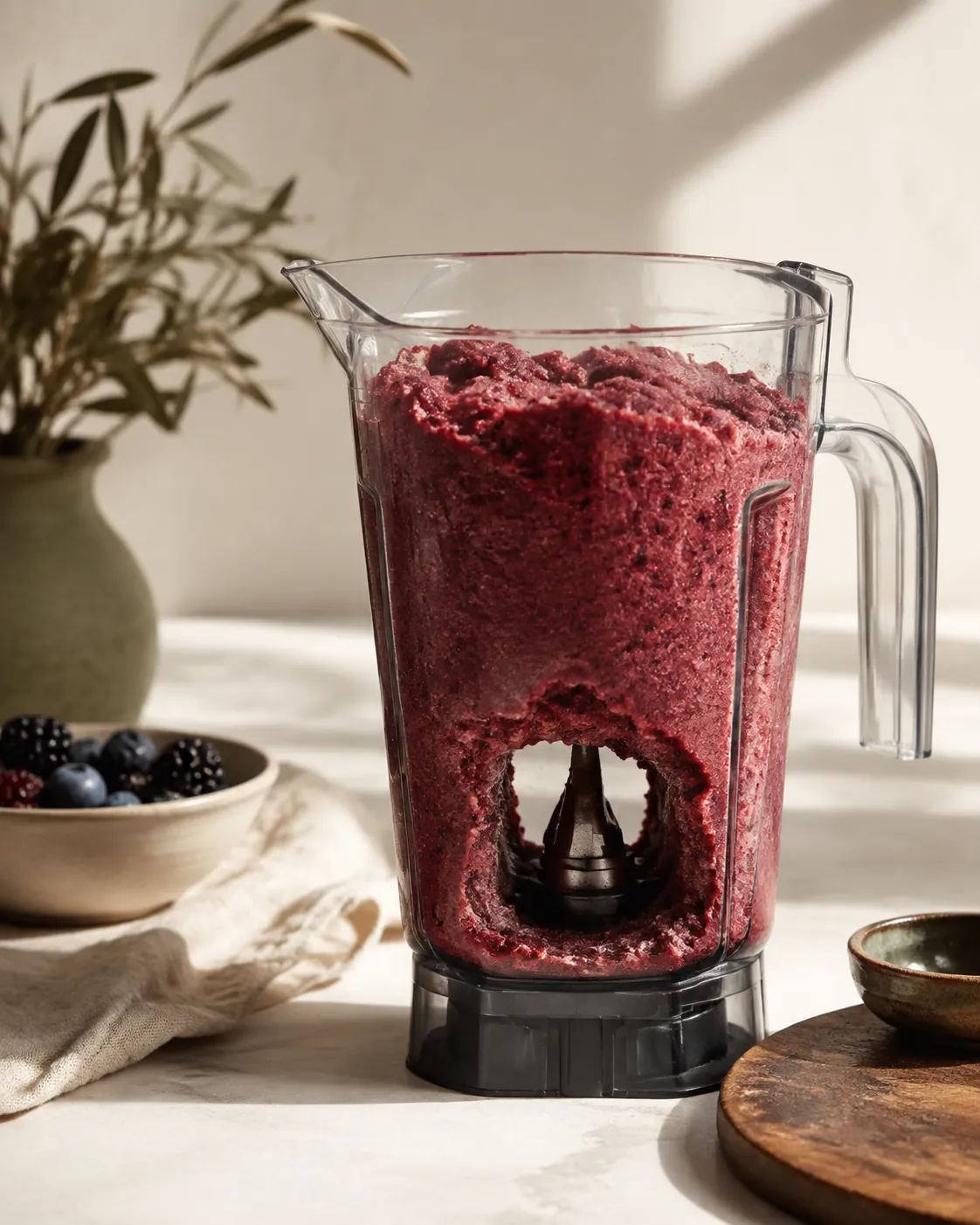
Cavitation is the failure that makes people believe their blender is underpowered. An air pocket forms around the spinning blades, the machine roars, and nothing in the jar moves.
It happens when the mixture is too thick, when there is too little liquid, or when frozen material has bridged across the jar above the blades. The blades keep spinning inside a bubble that nothing can fall into.
A tamper is the proper fix and the reason expensive blenders ship with one. It pushes material back into the blade path while the machine runs, which is exactly what the vortex has stopped doing on its own.
The cheap fix is liquid.
Almost every stalled blend is solved by another 50 ml of water, and almost none is solved by a more powerful motor.
Watts, blade speed, and what the number means
Wattage is what gets printed on the box, and it is a poor guide on its own. It describes what the motor draws, not what the blades do, and two machines at the same wattage can perform very differently.
Blade tip speed is the useful figure, and it depends on motor speed and blade diameter together. A wide blade turning moderately fast has a higher tip speed than a small one turning quickly.
What actually separates machines
- Blade tip speedDecides how finely material is torn
- Jar geometryDecides whether a vortex forms and holds
- TamperRecovers a stall the jar cannot fix alone
- Motor torque under loadWhether it slows down when it meets frozen fruit
- Peak wattageMarketing, mostly
Torque under load is the difference you feel with frozen fruit. A weak machine drops in speed the moment it meets resistance.
That slows the vortex, the mixture thickens, and the machine slows further.
High-speed machines earn their price on thick blends, not on ordinary ones. A banana and milk smoothie is well within any blender; a jar of frozen berries with 100 ml of liquid is not.
Jar shape, and why tall and narrow wins
The jar is doing as much work as the motor and gets a fraction of the attention. Its shape decides whether material comes back down or sits at the sides.
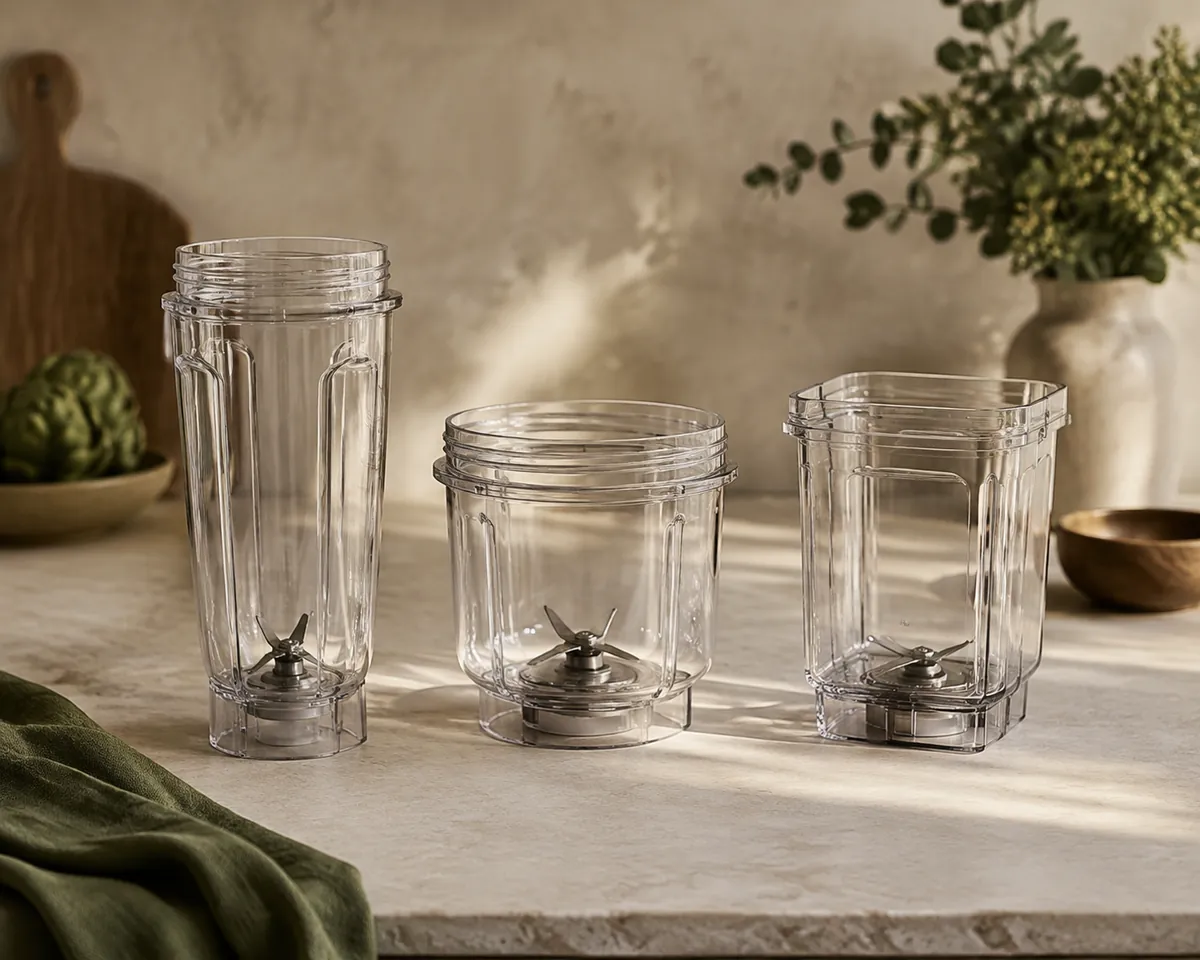
Tall and narrow is the shape that holds a vortex. Liquid thrown outwards has nowhere to go but up the walls and back down the middle, which is precisely the circulation the blend depends on.
Wide and shallow jars struggle. Material flung outwards spreads across a large surface and settles at the edges rather than returning, so the middle empties and the machine cavitates.
Tall and narrow
Holds a vortex; the standard for smoothie jars
Wide and squat
Better for dips and dry grinding, worse for drinks
Square cross-section
Corners disrupt the flow deliberately, which helps thick mixes
Ridged walls
The same idea, breaking up smooth rotation
Overfilled
Any jar past two thirds full loses the vortex
Fill level is the part most people get wrong. A jar filled to the top cannot circulate, and halving the batch usually fixes a blend that a bigger machine would not have.
Jug blenders and personal blenders
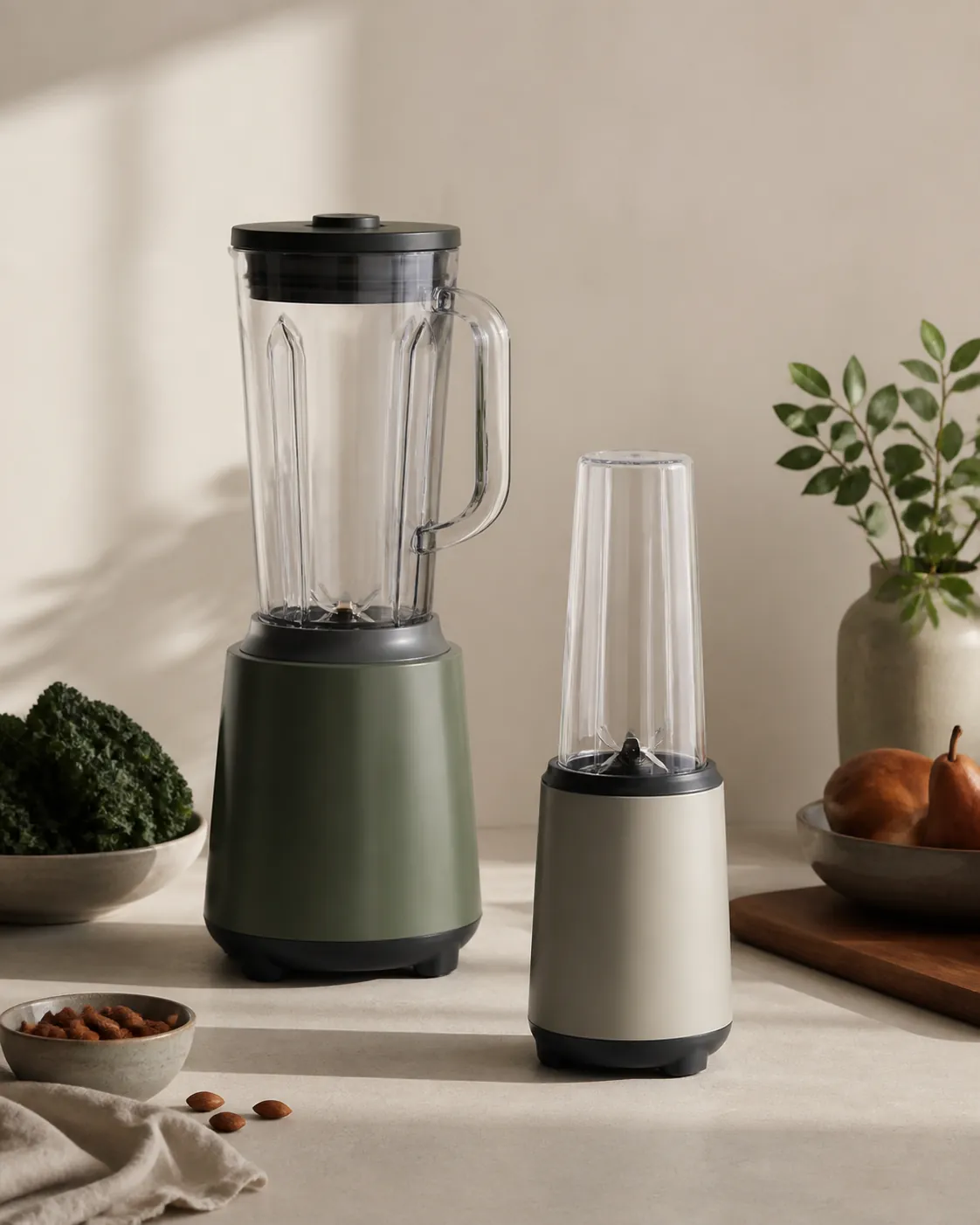
Personal blenders, the bullet type where the cup screws onto the blade unit and inverts, are a genuinely different design rather than a smaller version.
They work well because the cup is narrow and the mixture sits directly on the blades under gravity, which makes cavitation less likely at small volumes. They are limited by that same size, and by having no tamper and no way to intervene mid-blend.
| Jug blender | Personal blender | |
|---|---|---|
| Volume | 1 to 2 litres | 300 to 700 ml |
| Vortex | Depends on jar shape | Assisted by gravity |
| Intervention | Tamper, lid off, pulse | None; stop and shake |
| Cleaning | More parts, wider jar | Fewer parts, drink from the cup |
| Hot liquids | Some jars are rated for it | Generally not |
For one drink at a time the personal blender is the better tool, and for anything thick, hot or large the jug wins. Neither replaces the other.
Sealing is the personal blender's weakness. The cup relies on a gasket compressed by hand, and a worn one leaks under pressure, which is the usual reason these machines are replaced.
Ice, frozen fruit and what breaks a machine
Ice is the hardest thing most blenders meet, and it is where the difference between machines shows most clearly.
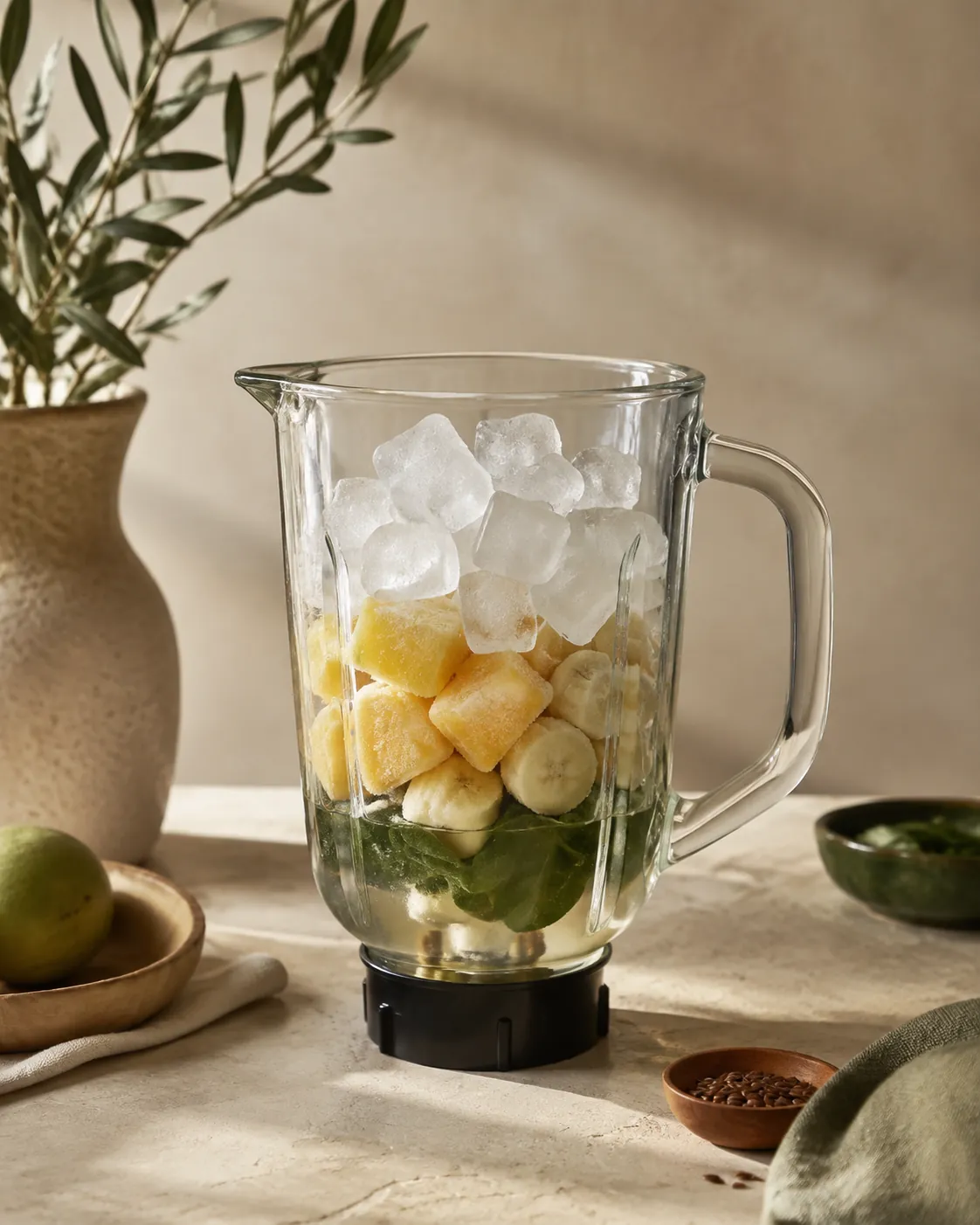
Ice blends best with liquid already in the jar and with the cubes sitting on top, which is what makes a blended iced coffee work at all. Dropped onto dry blades it jams them, and a stalled motor under load is how a blender burns out.
Frozen fruit is easier than ice and harder than fresh. It softens slightly as it works, so a blend that stalls at the start often frees itself after a few seconds of tamping.
- Never start a machine with ice packed against the blades
- Add liquid before anything frozen, without exception
- Break large frozen blocks apart rather than dropping them in whole
- Pulse first to settle the load, then run continuously
- Stop if the motor pitch drops and does not recover
Stones, whole nuts and hard spices belong to a different machine, and coffee belongs to a burr grinder rather than to this one. A blender will attempt them, and the usual outcome is a chipped blade and a jar scored badly enough to look permanently cloudy.
Heat, and what a long blend does to the drink
Friction puts real heat into a mixture.
A high-speed machine running for two or three minutes can raise a smoothie by ten degrees or more, which is enough to notice.
That is why blended drinks lose their chill so quickly and why a long blend of a green smoothie can taste flatter than a short one. Aroma is driven off along with the cold.
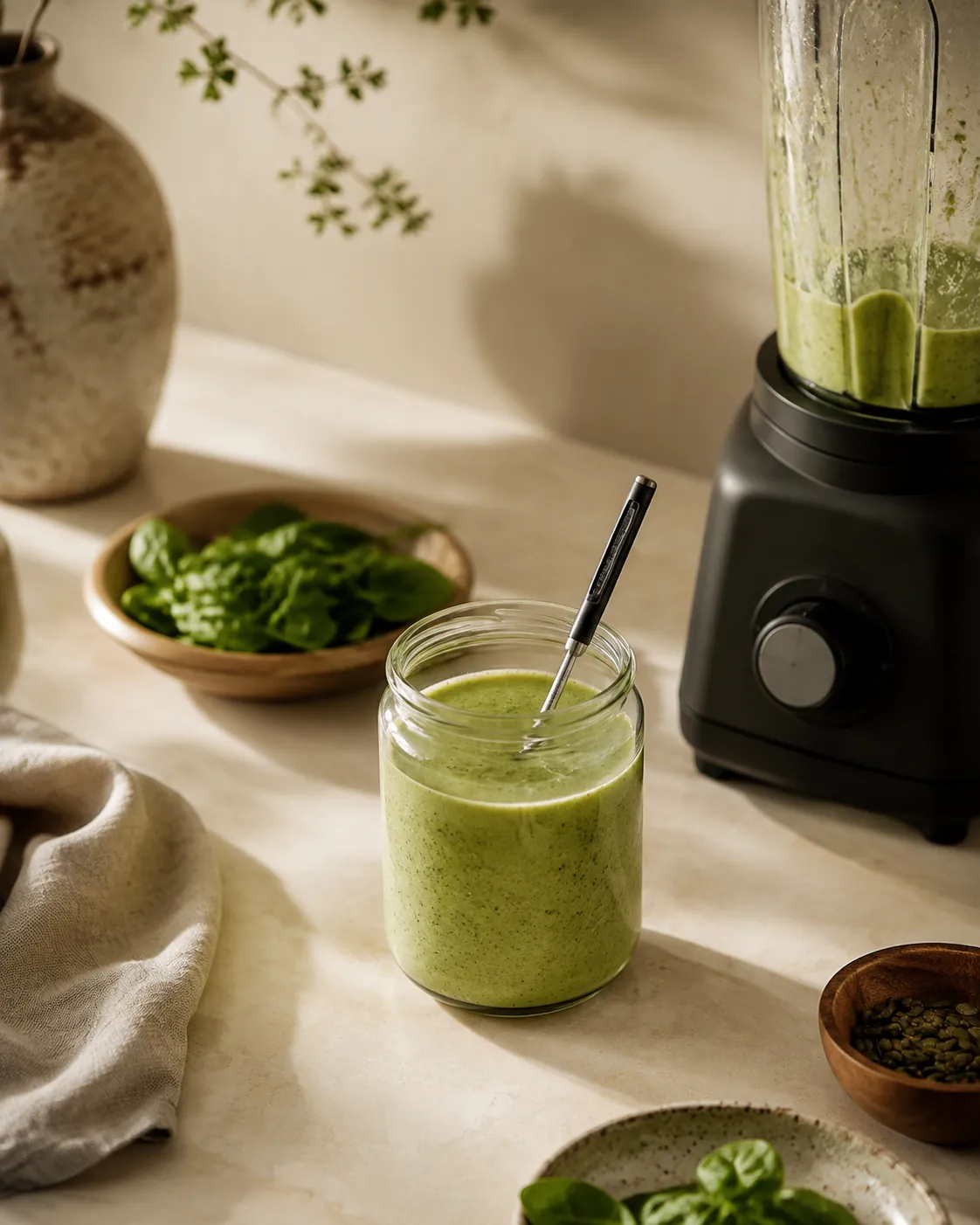
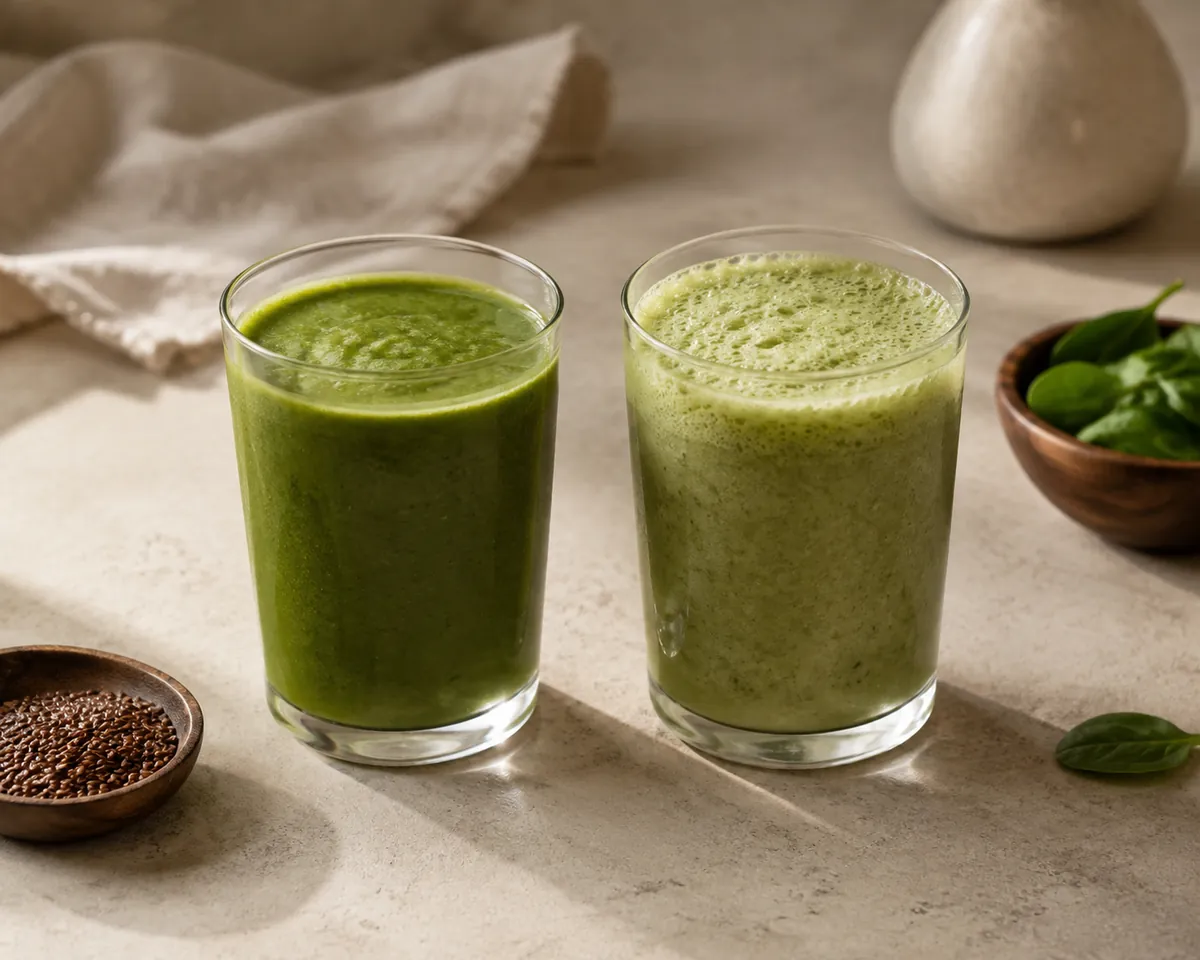
Aeration is the other consequence. A long blend whips air into the drink, which lightens the colour, thickens the foam on top, and speeds up the browning that makes a green juice or smoothie dull within minutes.
Blend for the shortest time that gets the texture right. Thirty to sixty seconds covers most drinks, and anything past two minutes is usually solving a loading problem the hard way.
Cleaning it in thirty seconds
The self-clean is the one genuine trick with a blender, and it works on every design.
Half fill the empty jar with warm water, add a drop of washing-up liquid, run it for twenty seconds, and rinse. The same circulation that blended the drink scrubs the jar, and it reaches the underside of the blades where a sponge cannot.
Doing it immediately is what matters. Dried fruit pulp and, worse, dried leafy material bonds to the blade seal and to the jar base, and once dry it needs disassembly rather than a rinse.
Immediately
Self-clean cycle with warm water and a drop of soap
Weekly
Take the blade assembly out and clean the gasket seat
Never
Boiling water into a cold jar, which can crack glass
Watch for
A gasket that has gone hard, which is where leaks start
Cloudiness in a plastic jar is usually etching from hard water and cleaning agents, and it is cosmetic. A jar that smells is a gasket problem, not a jar problem.
Which features are worth paying for
Most households need far less machine than they are sold, and the useful features are not the ones on the front of the box.
- A tall narrow jar rather than a wide one, whatever the capacity
- A tamper included, if you intend to blend anything thick
- A jar you can fit your hand into, or a removable blade assembly
- Variable speed rather than a row of named programmes
- A gasket you can buy as a spare part
A blender is also not a milk frother, and using one to foam milk gives volume without the fine texture. Programme buttons labelled smoothie or ice are speed and time presets and nothing more.
They are convenient and they replace judgement badly, since the right blend time depends on what is in the jar.
Milk choice affects the blend as well as the taste: whole milk and oat milk both thicken as they aerate, where water does not. Glass against plastic is a real choice.
Glass does not scratch, does not retain smells and is heavy; plastic is lighter, survives being dropped, and clouds over time.
Buy for the thickest drink you actually make. Most machines handle a banana smoothie; the frozen, low-liquid blends are what separate them, and if you never make one, the extra power is idle.
Where a blender stops and a juicer starts
The two machines are often shelved together and they do opposite things. A blender breaks fibre down and keeps it; a juicer removes it and discards it.
That difference decides the drink completely. A blended carrot is a thick purée you can stand a spoon in; a juiced one is a thin bright liquid, and no amount of blending produces the second from the first.
Straining a blend through a cloth gets closer but not there, because a blender has already broken the fibre so fine that much of it passes through. That is also why a blended drink cannot imitate cold-pressed juice.
The full comparison sits under juice against a smoothie.
Works well for
- Makes a whole category of drink nothing else can produce
- Keeps the fibre, so a smoothie is filling in a way juice is not
- Cheap at the entry level and genuinely useful there
- Cleans itself in twenty seconds with warm water and soap
- Handles hot soups and cold drinks in the same jar, on many models
Struggles with
- Aerates and warms the drink, which dulls colour and aroma
- Cavitates readily, and a stall looks like a fault rather than a loading error
- Loud enough to be a household consideration
- Cannot produce a clear juice, however long it runs
- Gaskets and jars wear out faster than motors do
Across the whole of juices and smoothies that split runs through everything. For drinks work on the methods shelf, a blender is the more generally useful machine.
It makes one category of drink very well and touches several others, where a juicer makes exactly one thing and makes it better than anything else can.
Common questions
Why does my blender spin without blending anything?
That is cavitation: an air pocket has formed around the blades and nothing can fall into it. It happens when the mixture is too thick, there is too little liquid, or frozen material has bridged above the blades. Stop the machine, add liquid or push the mixture down with a tamper, and never run it harder to force it.
Does loading order really matter?
It is the single biggest thing you control. Liquid goes in first so the blades have something to move, then soft ingredients, then powders pushed under, then hard and frozen items, and ice last on top. Heavy items belong at the top so they fall into the vortex rather than jamming the blades.
Is a higher-wattage blender better?
Not reliably. Wattage describes what the motor draws, not what the blades do. Blade tip speed, jar geometry and torque under load matter more, and almost every stalled blend is fixed by another 50 ml of water rather than by a bigger motor.