What Is a Green Smoothie? Blended Whole, Fibre and All
A green smoothie is leafy greens and fruit blended whole, fibre and all. That last part is what separates it from a juice, and the ratio between the two is what decides whether it is drinkable.
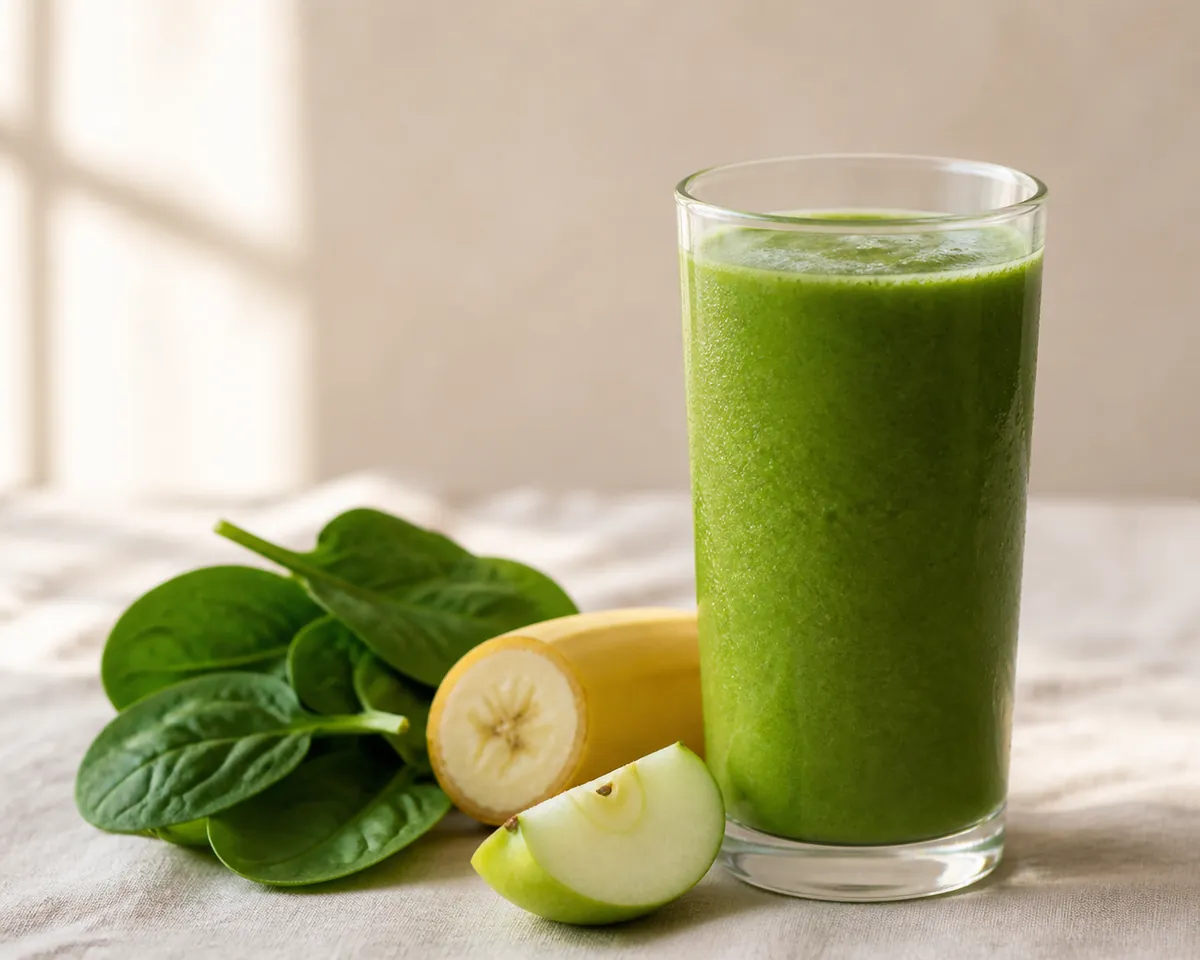
A green smoothie is leafy greens blended with fruit and a liquid, drunk whole. Nothing is strained out, so the fibre that a juicer would discard stays in the glass.
That single difference changes the texture, the sweetness and how long the drink occupies you. It is also why a green smoothie needs a fraction of the produce that anything else in this section asks for.
Green smoothie at a glance
- What it is
- Leafy greens blended with fruit and a liquid, drunk whole
- Ratio
- About 40 per cent greens to 60 per cent fruit by volume
- A single glass
- 60 g greens, 200 g fruit, 200 to 250 ml liquid
- Against juice
- Nothing is strained out, so a fraction of the produce fills a glass
- Mildest green
- Spinach, which is close to undetectable at moderate ratios
- Drink it
- Within the hour, before the colour turns khaki
Blending keeps what juicing throws away
The two drinks get discussed together so often that the difference collapses, and it is worth setting out before any ratio makes sense.
| Smoothie | Juice | |
|---|---|---|
| Equipment | Blender | Juicer or press |
| Fibre | All of it stays in | Removed with the pulp |
| Texture | Thick, sometimes very thick | Thin, liquid |
| Volume from ingredients | High. Nothing is discarded | Low. Most of the produce becomes pulp |
| Sweetness | Reads lower, because fibre slows it | Reads higher and more concentrated |
| Waste | None | Substantial pulp |
Keeping the fibre is the whole point of blending. Cold-pressed juice is built around removing it, and a smoothie is built around keeping it.
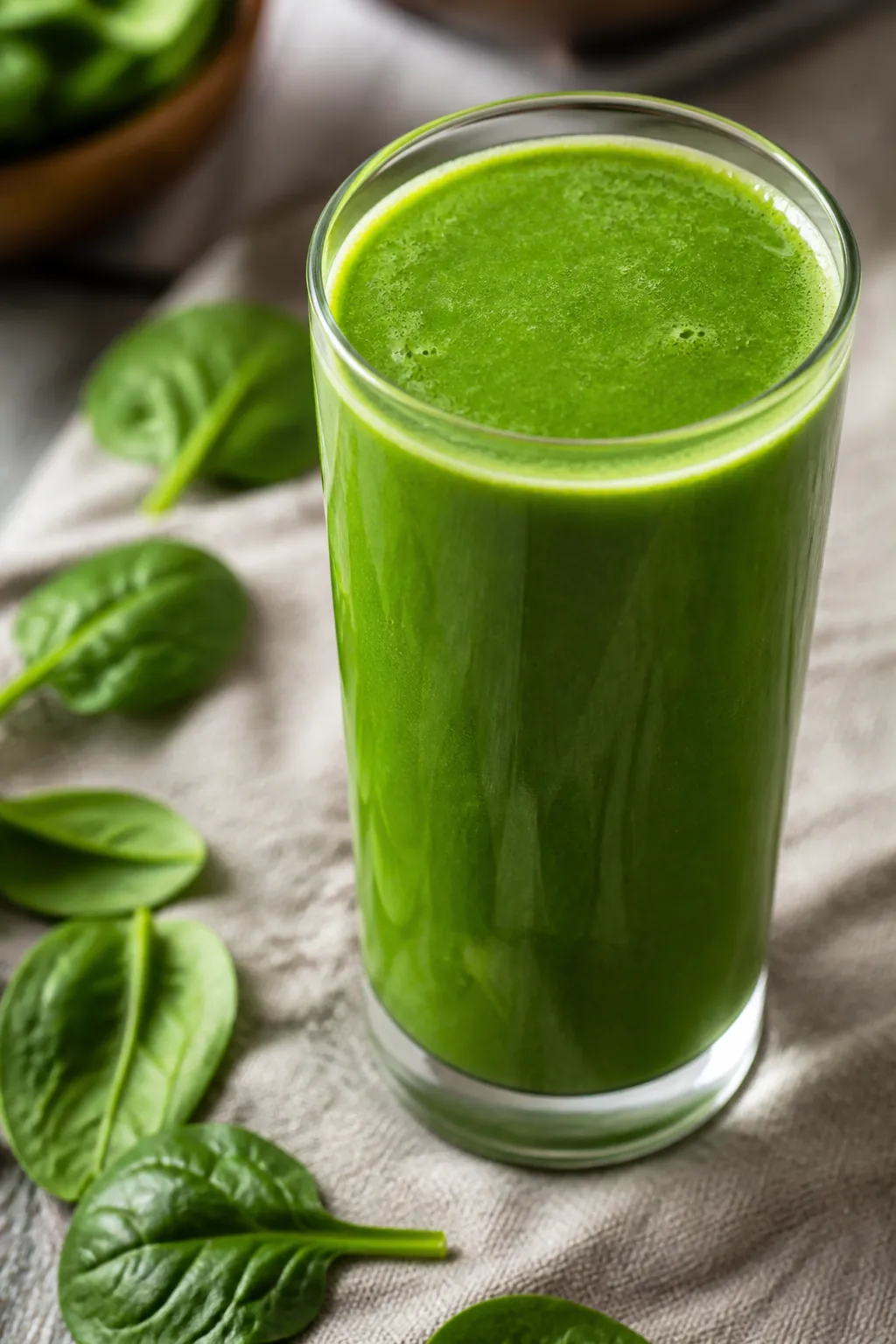
Neither approach is better. They produce different drinks from the same ingredients, and the practical consequence shows up on the shopping list: two handfuls of spinach make a glass here, where green juice would need most of a bag to reach the same volume.
The waste runs the same way. Blending leaves nothing to bin or compost, which for anyone who has emptied a pulp container every morning is the argument that actually decides it.
The 40 per cent rule, and why people give up
Almost every unpleasant green smoothie is a ratio problem. The ingredients were fine and the proportions were not, which is a far easier fault to fix than a dislike of vegetables.
A working starting point
- Greens
- 2 large handfuls, roughly 60 g
- Fruit
- 1 banana plus 1 cup of other fruit, roughly 200 g
- Liquid
- 200 to 250 ml
- Fat, optional
- A tablespoon of nut butter or a quarter of an avocado
- Ratio
- Roughly 40 per cent greens to 60 per cent fruit by volume
Start at 40 per cent greens and move up from there over a few weeks.
Beginners almost always overshoot, produce something harsh, and conclude they dislike the whole idea rather than the proportions.
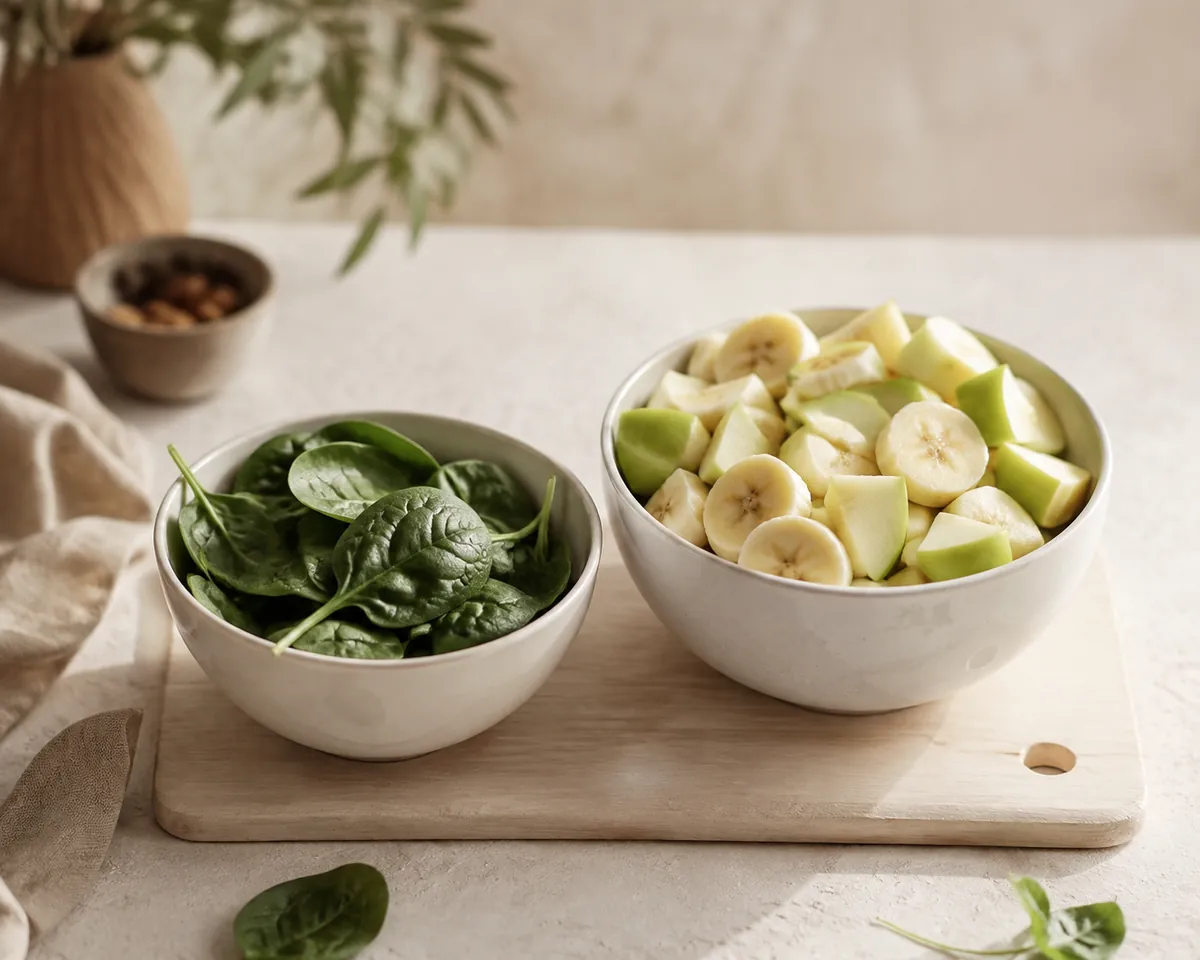
The banana is doing more work than it appears. It contributes sweetness, body and a creaminess that covers the vegetal notes, which is why it turns up in recipes that otherwise share nothing at all.
The bad version is a real thing rather than a myth: too many greens, under-blended, khaki and gritty. Anyone whose first encounter was that has a perfectly reasonable basis for their view of the category.
Ratio and blending time account for nearly all of the difference between that and a good one, and neither costs anything. Most of what goes wrong traces back to one of those two, which is why the category is worth one more attempt.
The good version reads as a fruit smoothie with a vegetal note underneath, a long way from the reputation, and what it tastes like takes that apart in more detail.
Why it turns khaki within the hour
The colour goes first. It is the most-asked question about the drink, and the answer is mechanical rather than mysterious.
Blending drives a great deal of air into the mixture, and chlorophyll degrades on contact with oxygen and with the acid in the fruit. Bright green fades toward olive and then khaki over an hour or two.
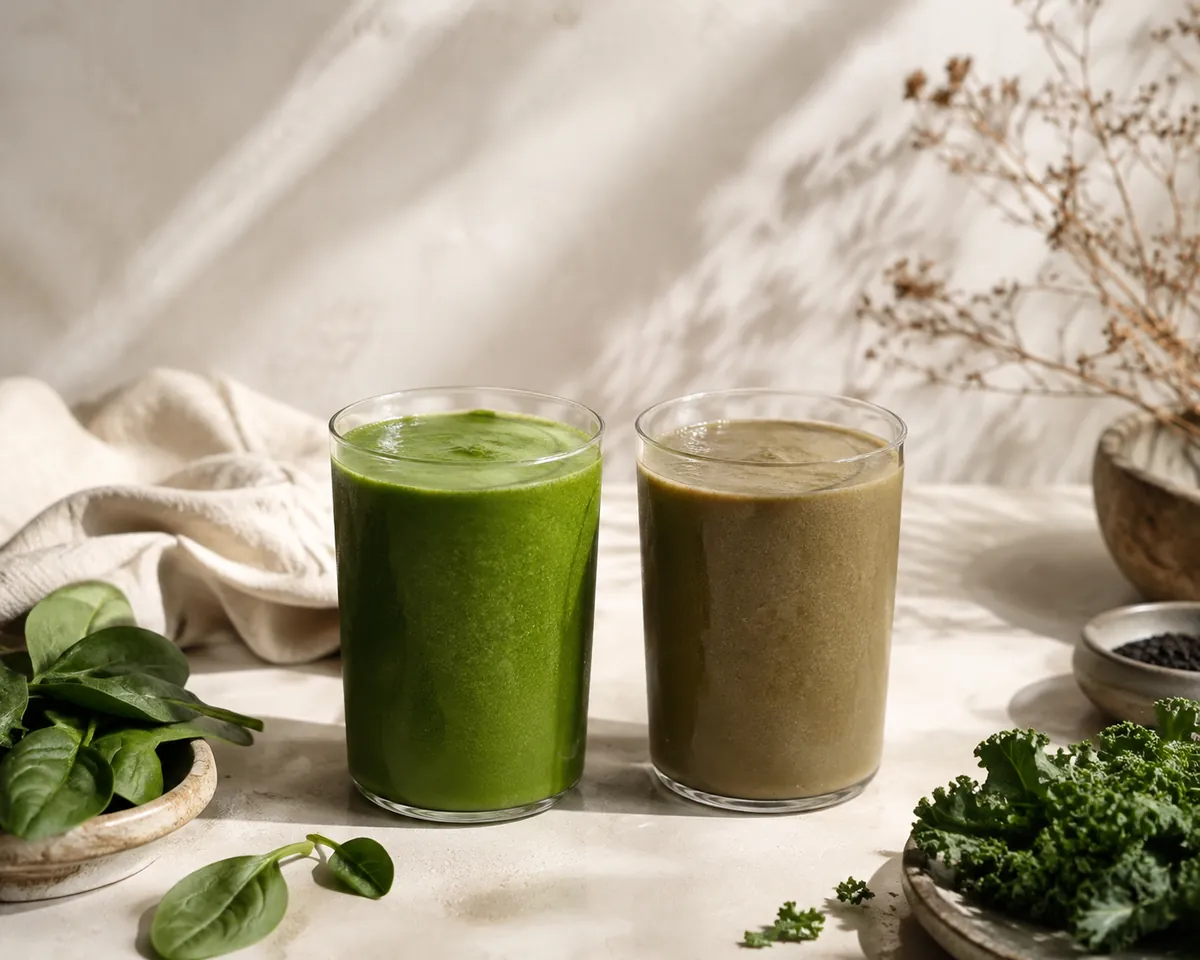
Adding a strongly coloured fruit makes it worse rather than better. Berries plus greens produces a brown-grey drink almost immediately, which is why green and purple smoothies are kept apart in every recipe book that has thought about it.
The window at full brightness is about ten minutes. Serve it cold, and in a glass rather than an opaque bottle if the colour matters to you, because it will never look better than it does in the first minute after blending.
A squeeze of lime just before drinking does two useful things at once: it brightens the flavour and it slows the colour loss. Everything in storing a green smoothie is a variation on losing that battle slowly.
Spinach, chard, kale and rocket
Greens vary enormously in how they behave in a jug.
Choosing badly is the second most common mistake, and it is usually an ambition problem rather than a taste one.
How assertive each green is
- SpinachVery mild, blends smooth, almost undetectable at moderate ratios
- Romaine and lettuceMild and watery, adds volume without much flavour
- ChardNoticeable earthiness, still manageable
- KaleDistinctly bitter and fibrous, needs more fruit to balance
- Rocket and mustard greensPeppery and assertive. Use sparingly
Spinach is the standard beginner green for good reason. It disappears into fruit almost entirely, and at a moderate ratio the only evidence of it left in the glass is the colour.
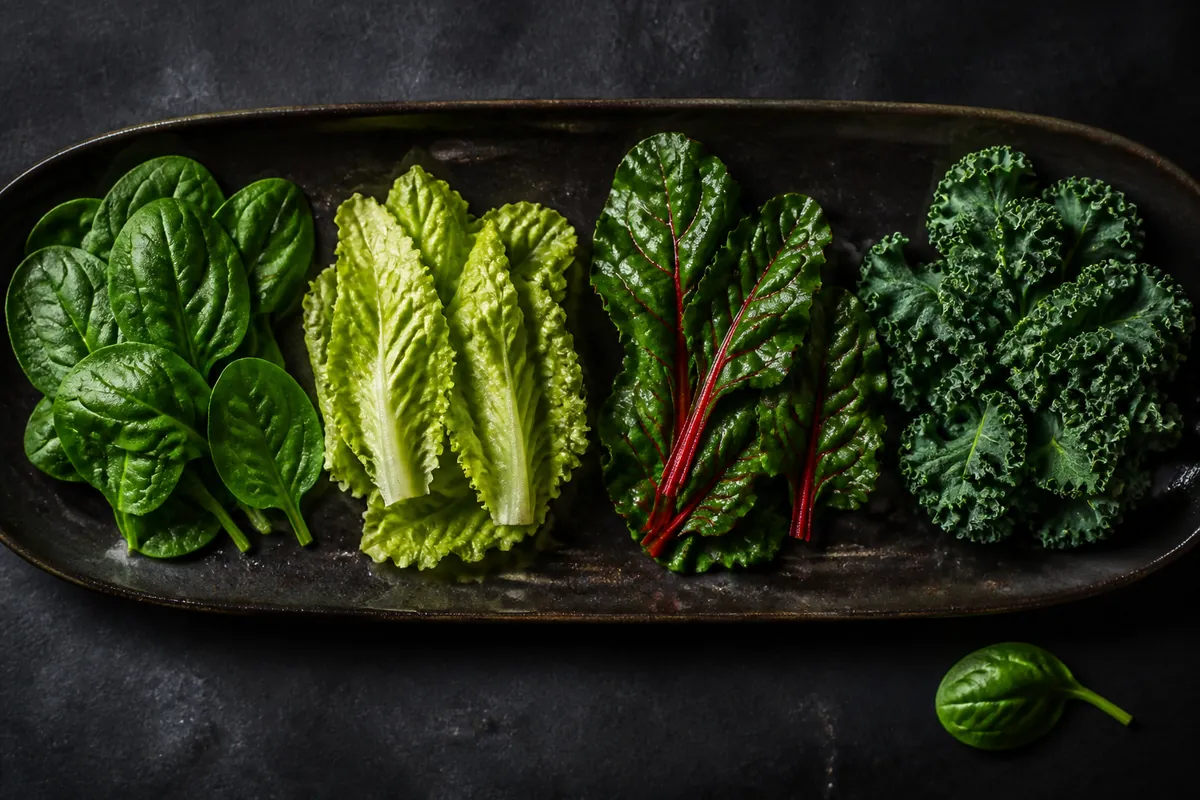
Kale is the leaf most often blamed for a bad smoothie, and it asks for both more fruit and a better machine than spinach does. Its leaf is tough enough that a domestic motor leaves fragments a spinach leaf would never have produced.
Rotating greens rather than using one every day is common advice, and flavour variety is the only basis on which this page offers it. A fortnight of nothing but kale is a reliable way to end up disliking the drink.
A berry smoothie asks none of these questions, which is why it is the easier first smoothie to make well. Greens are the only ingredient in the category that has to be argued into the glass rather than simply added to it.
Loading the jug, and what the machine decides
Order matters more with a green smoothie than with anything else blended, and the machine then sets a ceiling on what any order can achieve.
The order to load a blender
- Liquid firstIt sits at the bottom and lets the blades create a vortex.
- Greens nextThey break down first while the blender is least loaded.
- Soft fruitAdded once the greens are liquefied.
- Frozen and hard items lastThey sit on top and are drawn down gradually.
- BlendStart slow, then go to maximum for 45 to 60 seconds.
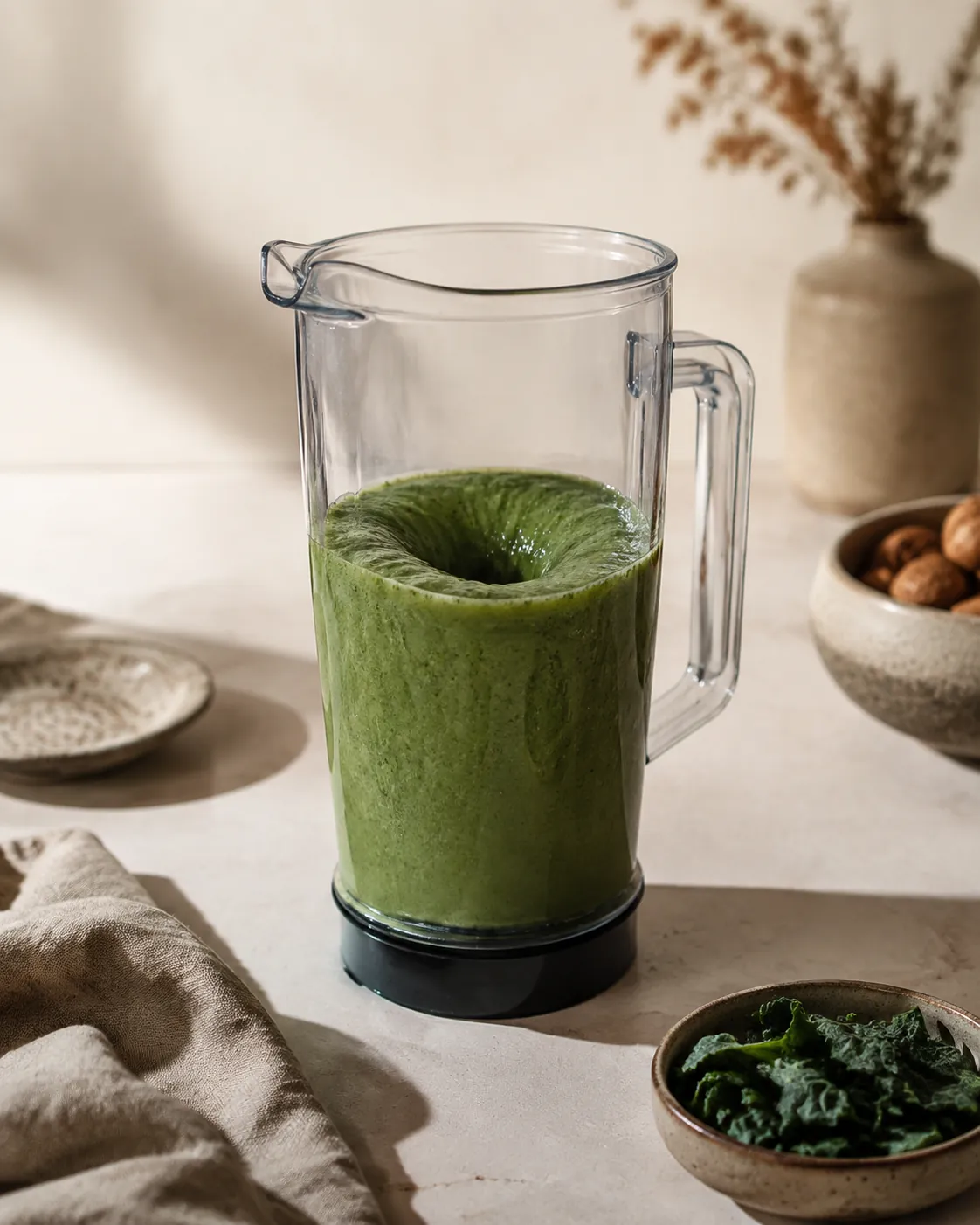
Blending the greens with the liquid first is the single biggest improvement available to anyone with an ordinary machine. It liquefies the leaves while the jug is least loaded, and it removes the fragments that otherwise survive into the finished drink.
Under-blending is the usual cause of a gritty result. Sixty seconds at full speed is longer than most people run a blender, and it is roughly what a domestic motor needs to break a leaf down completely.
What the blender decides
- Motor power
- Whether the greens fully break down or stay as fragments
- Blade design
- Whether a vortex forms, which is what draws ingredients down
- Jug shape
- Tall and narrow works better than short and wide
- Tamper
- Useful for thick mixtures that stall
- Capacity
- Blending a small volume in a large jug works badly
Power matters less than blade geometry and jug shape. A tall narrow jug creates a vortex that keeps pulling material down, where a wide one lets the contents ride above the blades however long it runs.
Frozen fruit separates an adequate machine from a struggling one. Anything that handles a jug of frozen berries will manage greens easily, and anything that stalls on ice will leave leaf fragments whatever technique is applied to it.
Thickness is the other thing a motor limits. A smoothie bowl built from these same ingredients will not form a vortex at all without a tamper and a good deal of scraping down.
The same ceiling applies to anything with powder in it, since a protein smoothie thickens as it blends and asks more of the motor at the end of the run than at the start.
The liquid does more than thin it
Water is underrated here. The drink already carries plenty of sugar from the fruit, and the liquid is the easiest place to add more without noticing you have done it.
Water
Cleanest. Lets the fruit and greens lead, and the cheapest option by a distance.
Dairy milk
Rich, and the protein gives noticeably more body.
Reaching for orange juice or any other juice as the liquid pushes most versions straight past pleasant, because the fruit already in the recipe was doing that job.
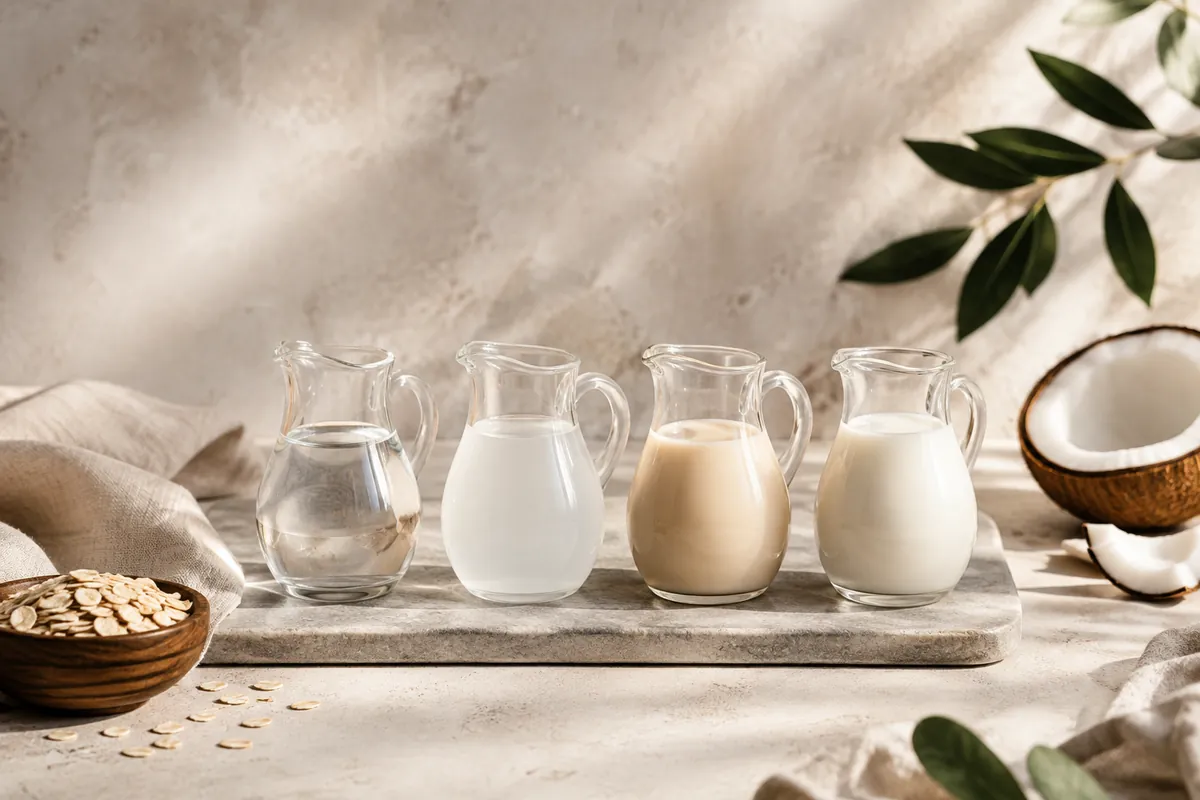
Dairy and the thicker plant drinks change the body rather than the flavour, and the trade is that the greens read as further away. A water-based smoothie tastes greener at exactly the same ratio, which is either the point or the problem depending on who is drinking it.
Salinity is the lever nobody expects. A faintly salty liquid lifts vegetal flavours the way a pinch of salt lifts a soup, and it is most of why coconut water works better here than its sweetness alone would explain.
Citrus, ginger and the things that ruin it
Green smoothies take additions less gracefully than berry ones. The base flavour is fragile, so anything assertive arrives as a replacement rather than as an accent.
Works with care
Nut butter and oats, which add body but mute the freshness.
Works poorly
Berries, which turn the colour brown-grey immediately.
Avoid
Strongly flavoured plant drinks such as coconut, which fight the greens.
Citrus is the most reliable addition of the lot. Half a lemon brightens the drink, slows the colour loss and cuts the vegetal notes that put people off in the first place, which is three jobs from one ingredient.
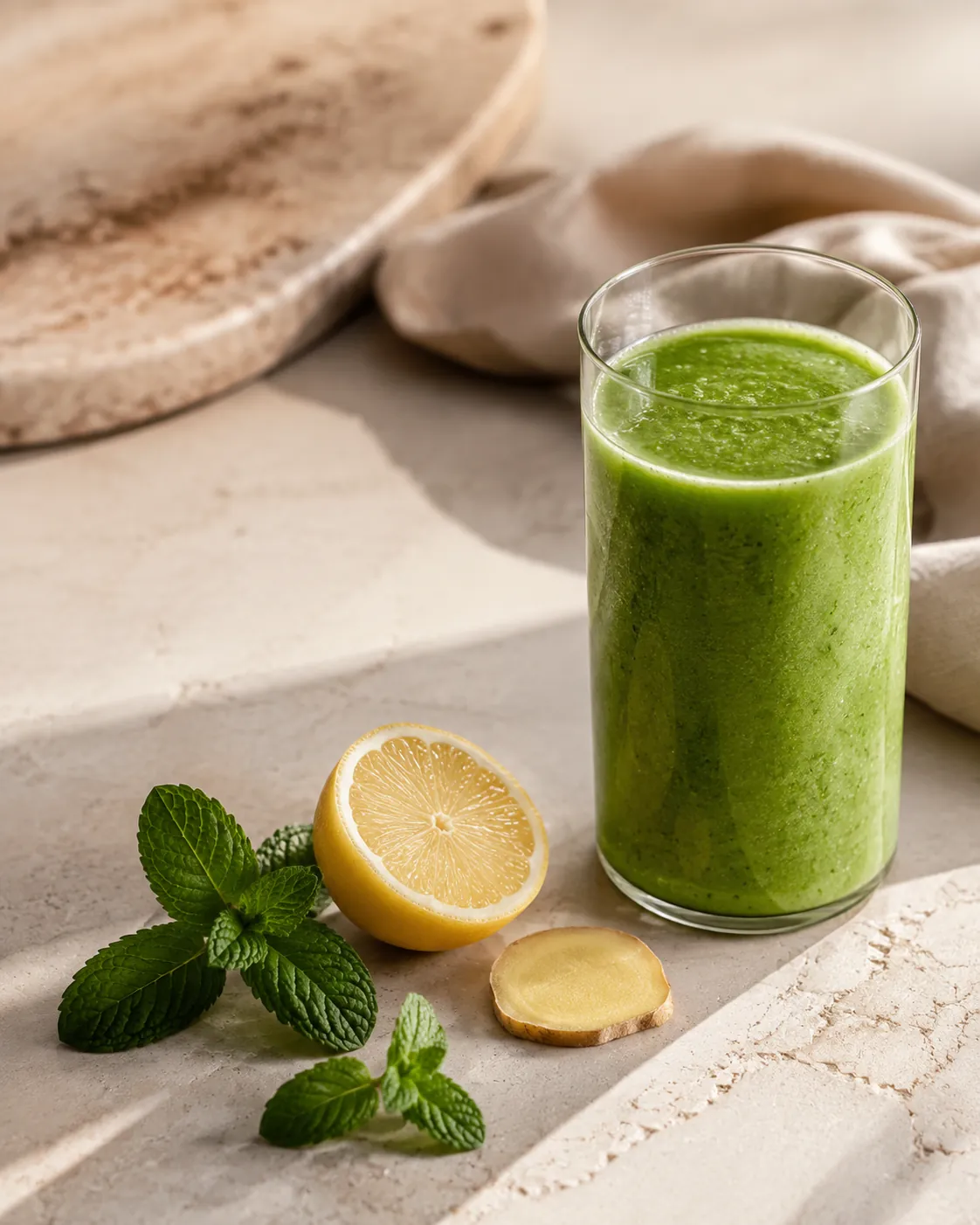
Oats and nut butter are the two worth thinking about twice. Both genuinely improve the body, and both flatten the fresh top notes, so a smoothie built to be filling is a different drink from one built to taste of greens.
Sweet additions are the ones to hold back on. Dates, honey and syrup all work perfectly well, and every one of them moves the glass toward a fruit smoothie with spinach in it, which is a fine drink and not the one this page describes.
Freezer bags, not finished smoothies
The whole category keeps badly enough that the sensible routine is to prepare the solid ingredients rather than the drink.
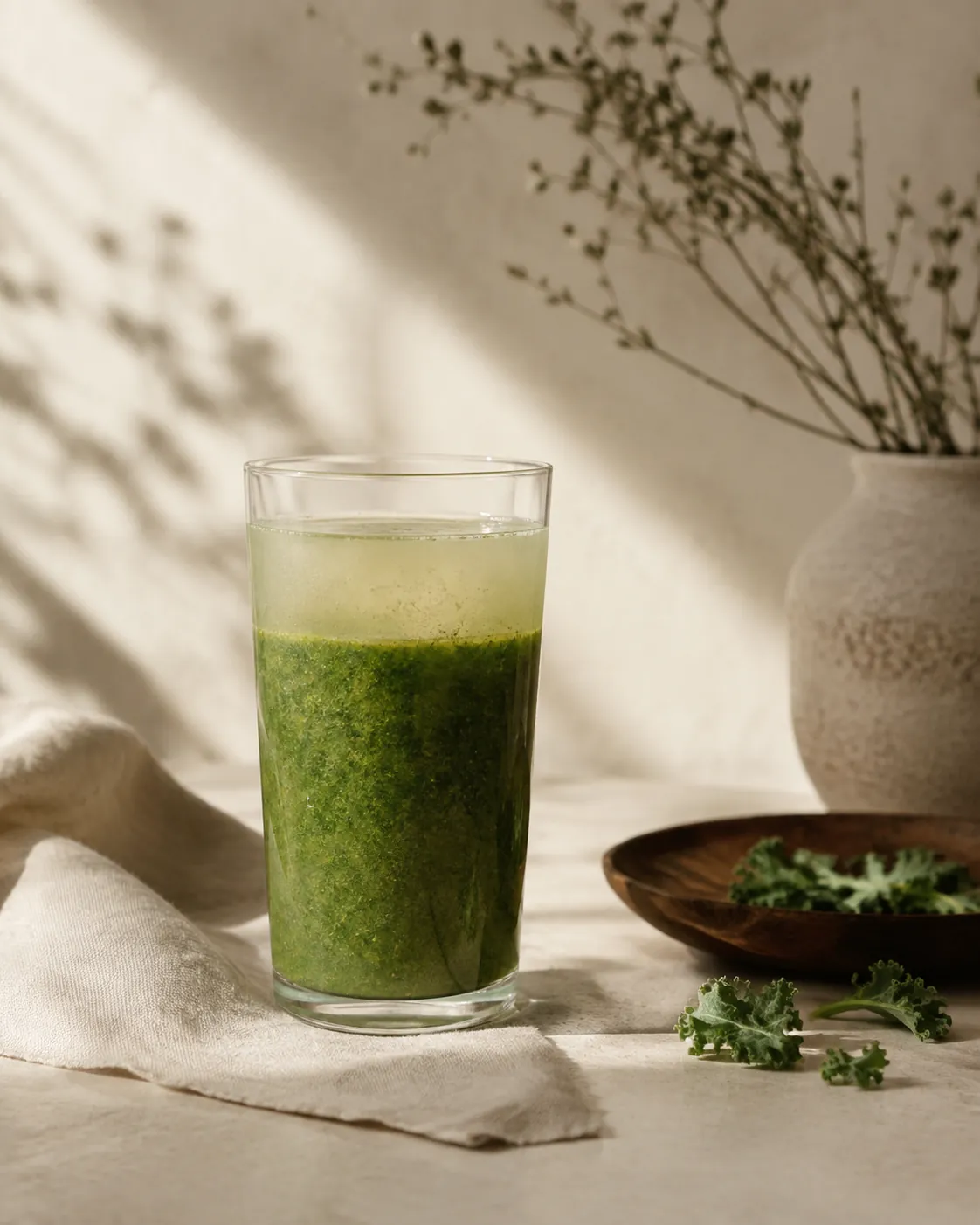
Colour goes first, within an hour or two. Texture follows as the fibre parts company with the water, and the flavour dulls across a day.
- Drink within the hour for best colour and flavour.
- Refrigerate in a full sealed container if keeping it, and expect a day at most.
- Expect separation. It is normal and reverses with a shake.
- Add lemon juice if storing, which slows both browning and colour loss.
- Freeze in portions if you batch, and blend again briefly after thawing.
Frozen ingredients are also what separate a good smoothie from a thin one, so the freezer route wins on both counts at once. Frozen fruit delivers thickness and cold in a single move, where ice delivers cold and dilution.
Frozen banana in particular gives an almost ice-cream texture, and freezing greens works just as well, which is the practical answer to a large bag that wilts three days after it is bought.
- Portion greens and fruit into freezer bags, one serving per bag.
- Freeze banana in chunks rather than whole, so it blends without stalling the machine.
- Keep the liquid out of the bag and add it fresh at blending time.
- Label the bags if you use different combinations, since they look identical frozen.
- Blend straight from frozen. Thawing first costs you the texture entirely.
Blending from frozen takes about ninety seconds and gives a far better result than a week's worth blended in advance ever does. Making a green smoothie sets the routine out step by step.
Keep the liquid out of the bag. A bag containing frozen liquid takes much longer to blend and puts real strain on a domestic motor, which is the opposite of what the whole routine is for.
One ingredient does not survive the round trip, and that is avocado once it has been blended. Freeze it in chunks by all means, but a finished smoothie containing it separates on thawing in a way nothing else in the bag does.
Powders, marketing and what a glass costs
No drink here attracts more marketing. The vocabulary sold alongside it is worth separating from the drink itself, because the two have very little to do with one another.
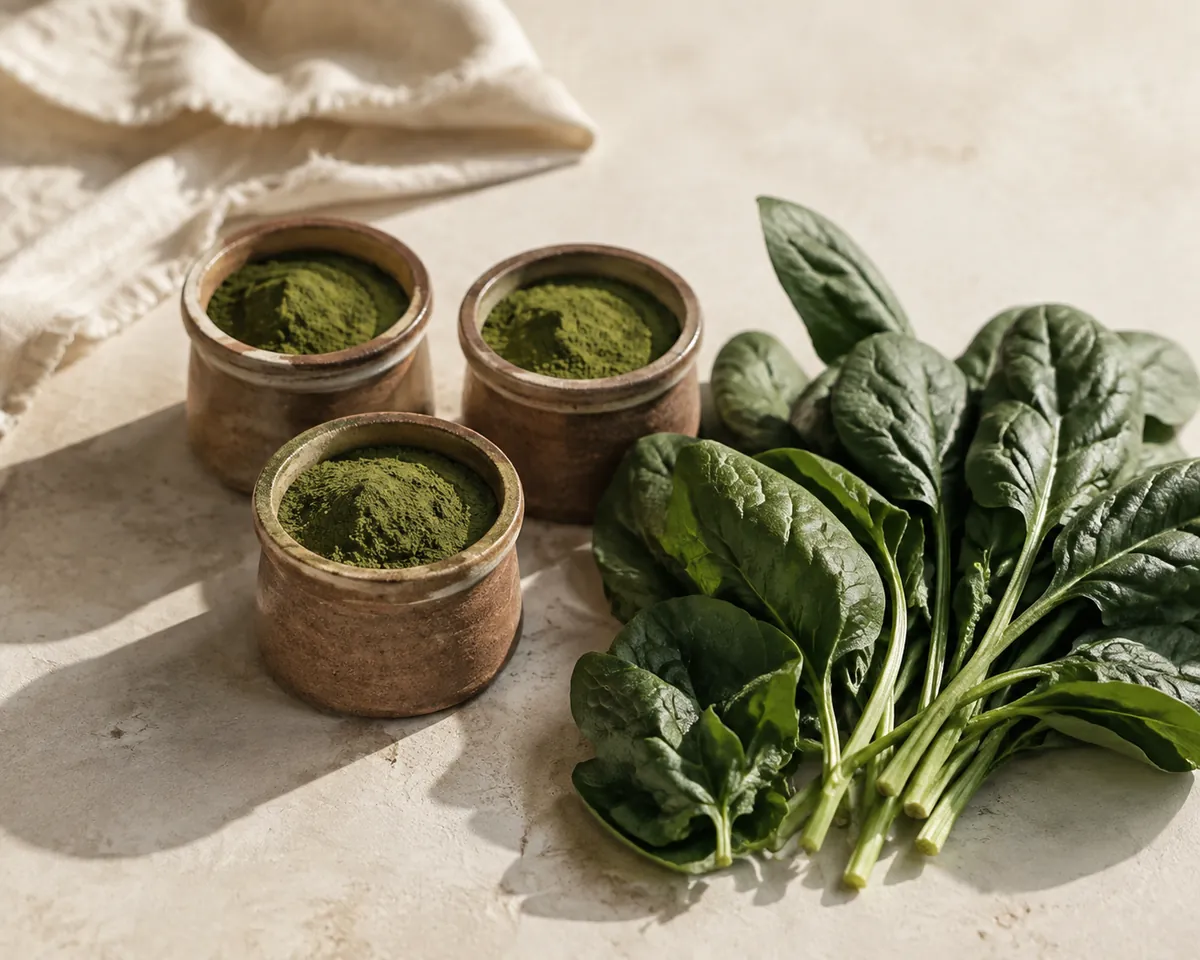
The expensive versions are built on out-of-season berries, coconut water and speciality powders.
The base drink is spinach, a banana and water, and it costs very little by any measure you care to apply.
Frozen spinach is the biggest single saving and is barely worse than fresh once it has been through a blender. Buying greens fresh and freezing them yourself when they are cheap works equally well and gives you the leaf you prefer.
The powders are where the money goes, and they are the most optional part of the entire thing. Nothing in the method on this page requires any of them, and nothing about the drink improves when they arrive.
Against green vegetable juice the arithmetic is not close. A glass here takes two handfuls of spinach where a pressed one takes most of a bag, the machine costs a fraction as much, and there is no pulp container to empty afterwards.
Common questions
Why does my green smoothie turn brown?
Chlorophyll degrades on exposure to the air blended into it and to fruit acid, so the bright green fades toward khaki within an hour or two. It is cosmetic rather than spoilage. Drinking it promptly or adding lemon both slow it.
What ratio of greens to fruit should I use?
Start at roughly 40 per cent greens to 60 per cent fruit by volume, and increase the greens from there. Most unpleasant green smoothies come from starting with too high a proportion of greens, particularly kale.
Which greens are best for smoothies?
Spinach is the easiest, since it blends smooth and is nearly undetectable at moderate ratios. Kale is far more assertive and fibrous and needs more fruit and a stronger blender. Rocket and mustard greens are peppery and should be used sparingly.