How to Make a Cortado With the Right Milk Texture
A cortado is a small espresso drink softened by roughly an equal amount of warm textured milk. The difficult part is preserving coffee intensity while adding enough fine foam to make the milk glossy, not cappuccino-like.
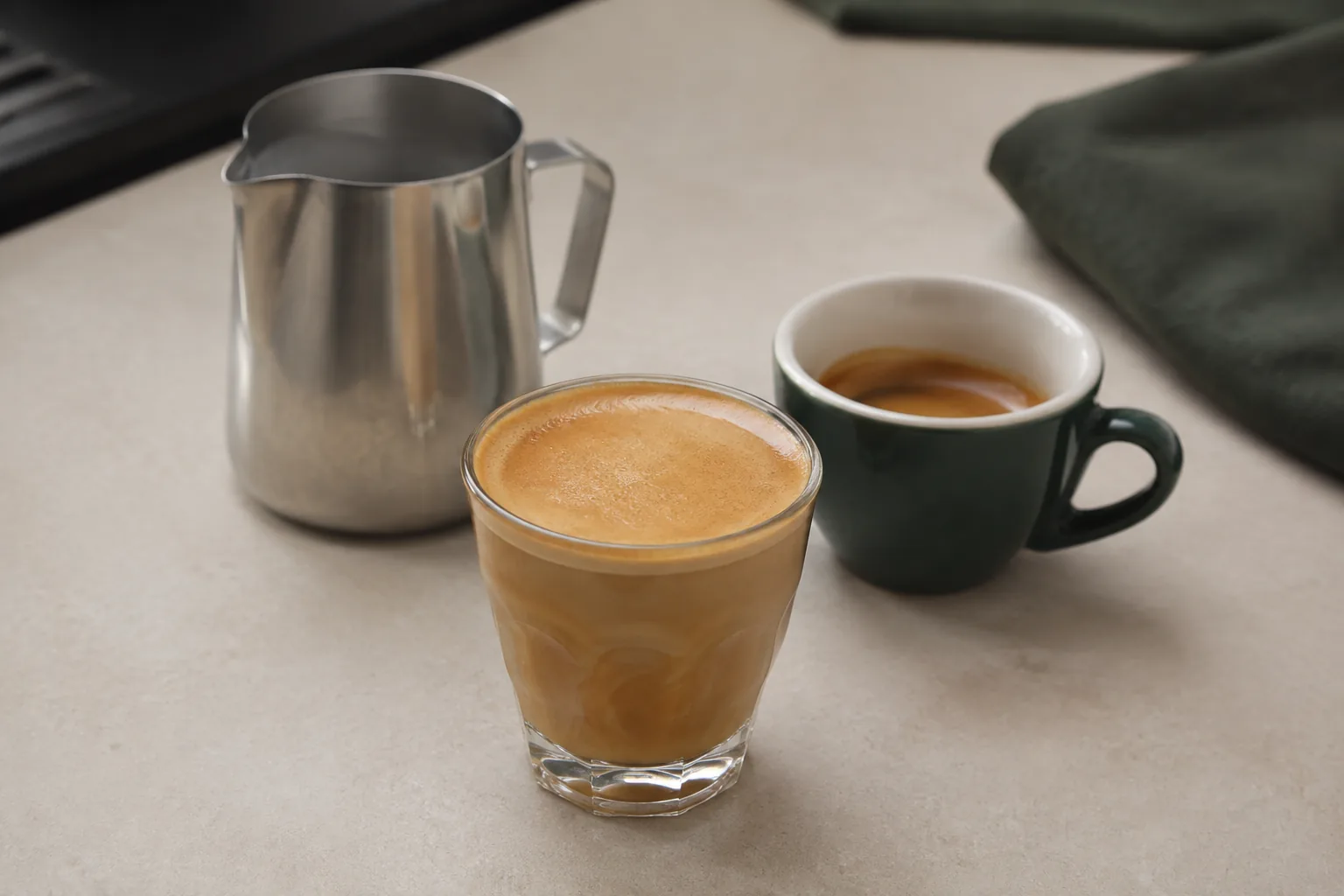
To make a cortado, pull a balanced double espresso yielding about 36 to 40 g, then add roughly the same amount of warm milk with a thin layer of integrated microfoam. Serve it in a 120 to 150 ml glass while the espresso aroma and milk texture are still aligned.
The equal-parts idea describes the finished balance, not an international legal definition. Cafes vary the shot and glass, but the drink should remain small, coffee-forward, and flatter than a cappuccino.
Cortado starting build
- Espresso
- One double shot, about 36 to 40 g out
- Cold milk
- Start with enough for safe steaming, usually 90 to 120 ml
- Milk added
- About 40 to 60 ml, judged against the shot
- Glass
- 120 to 150 ml
- Texture
- Glossy and fluid with very little visible foam
- Temperature
- Warm and immediately drinkable, not scalding
Start with a shot worth softening
Milk rounds acidity and bitterness, but it cannot restore sweetness to a badly extracted shot. Taste or observe the espresso first; if it runs unusually fast, blondes early, or tastes sharply sour, correct the grind and dose before practicing the milk.
A medium or medium-dark roast is an approachable starting point because its chocolate and caramel notes remain clear in a small milk addition. Lighter espresso can work, but its acidity may need a carefully balanced shot and a slightly smaller milk share.
The cortado is built around the espresso, not around a full glass. Choosing the glass first prevents a small shot from being stretched into a weak latte.
The espresso machine guide explains pressure and temperature ownership. This method assumes the machine can already produce a balanced shot and concentrates on assembly.
Use equal parts as a sensory baseline
Mass makes espresso repeatable, while milk is usually easier to judge by final volume and taste. Begin near one part espresso to one part milk, then change the milk by small increments instead of treating a ratio as a rule.
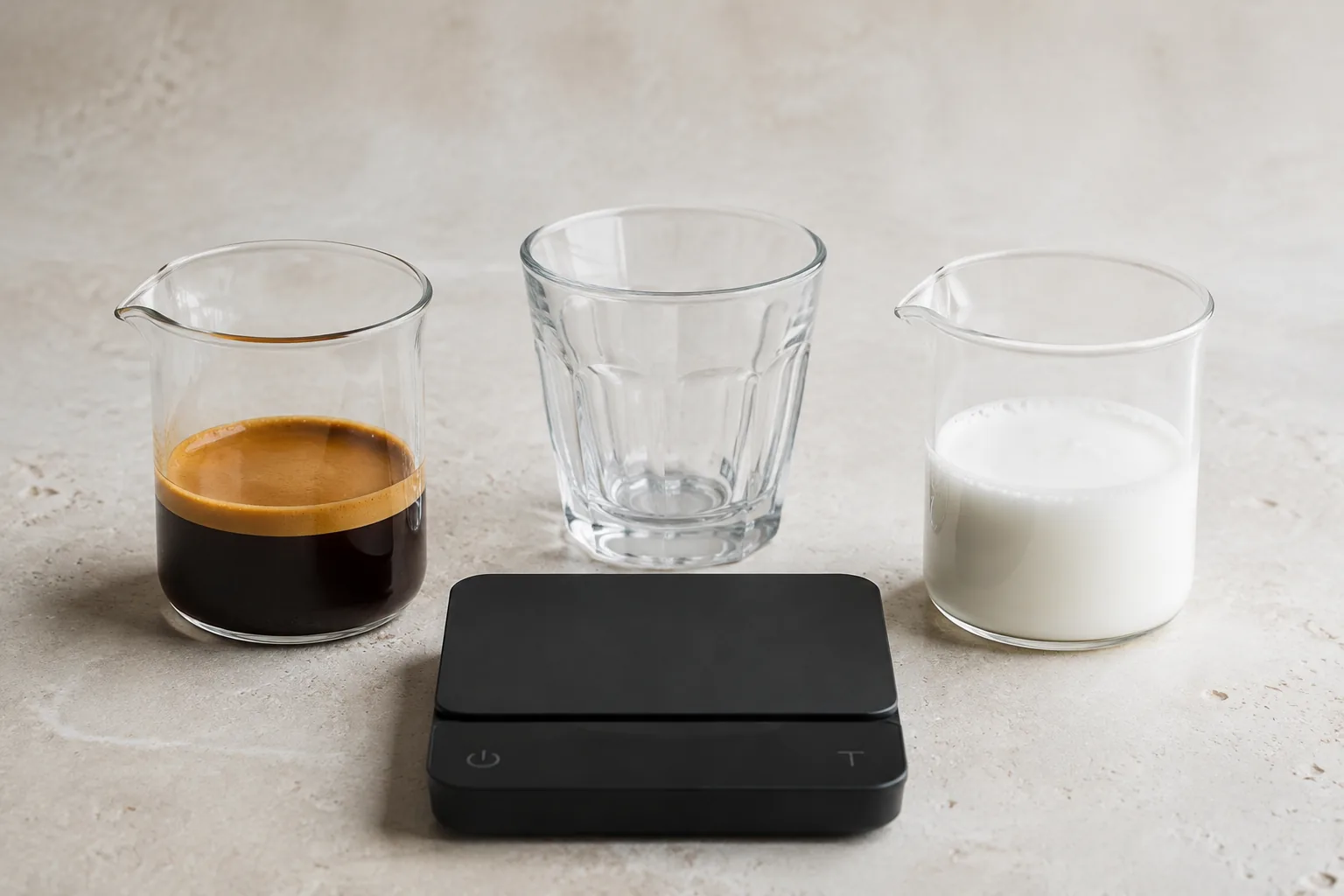
A practical cortado
- Coffee dose
- About 18 g, adjusted for the basket
- Espresso yield
- 36 to 40 g
- Milk in the drink
- 40 to 60 ml
- Finished volume
- Roughly 80 to 110 ml before surface foam
- Foam
- A thin integrated cap, not a dry layer
- Serve
- Immediately in a small glass
The number that matters is the taste after mixing. Add less milk when the espresso is delicate and a little more when it is intense, stopping before the coffee's aroma disappears.
Texture milk with very little added air
Use cold milk and a small pitcher if your steam wand can work at that depth. Purge condensed water, place the tip just below the surface, introduce only a brief whisper of air, then submerge slightly and create a rolling vortex.
Milk texture for a cortado
- PurgeClear water from the steam wand
- PositionSet the tip near the side and just below the surface
- AerateAdd air only during the first brief moment
- RollKeep the milk rotating until bubbles disappear into the liquid
- StopFinish while the milk is sweet, fluid, and comfortable to drink
- PolishWipe and purge the wand, then swirl the pitcher
Cortado milk should look like wet paint but pour more freely than cappuccino milk. Gloss comes from integration; height comes from excess air.
A small drink creates a practical waste problem because many steam wands cannot safely texture only 50 ml. Steam the minimum amount your pitcher and wand can control, pour what the drink needs, and do not re-steam the remainder.
Plant drinks vary in protein, fat, and stabilizers. Barista-formulated oat or soy usually rolls more predictably, while the guide to plant milk curdling explains why heat and espresso acidity can split another product.
Combine the drink before milk separates
Swirl the espresso to recombine a patchy crema, then swirl the pitcher until milk and microfoam move as one liquid. Pour steadily into the center from modest height, lowering the spout only near the end if a thin pale surface is wanted.
You do not need latte art. A continuous glossy pour is better evidence of correct texture than a pattern sitting on milk that has already separated.
What each part contributes
- EspressoConcentration, aroma, acidity, bitterness, and body
- Warm milkSweetness and softening without a large volume increase
- Fine microfoamA smooth first sip and a cohesive surface
- Small glassProtects coffee intensity and makes the ratio visible
- Immediate serviceKeeps aroma, temperature, and texture together
Stop pouring while the drink still tastes clearly of espresso. Filling unused space because the glass allows it changes the drink more than a few grams of shot variation.
Distinguish cortado from nearby milk drinks
Names drift between cafes, so size, milk amount, and texture are more useful than labels alone. A macchiato uses much less milk, a flat white is generally larger with more textured milk, and a cappuccino carries substantially more aeration.
| Drink | Milk amount | Texture | Main impression |
|---|---|---|---|
| Espresso macchiato | A spoonful or small dash | Small foam mark | Espresso with a milk accent |
| Cortado | Roughly equal to the shot | Thin integrated microfoam | Espresso softened but still dominant |
| Flat white | More milk in a larger cup | Fine microfoam | Silky milk and espresso together |
| Cappuccino | More aerated milk | Deeper foam layer | Airy surface and distinct lift |
| Latte | Much more milk | Fine, modest foam | Milk-forward and spacious |
The cortado profile owns the naming and regional variants. Compare the finished build with the flat white and cappuccino when a cafe menu uses the terms loosely.
Diagnose foam, heat, and balance
Read the glass before changing the shot.
A pale drink is not automatically weak, but a cortado that tastes mostly of hot milk has crossed its central boundary. Check glass size and milk volume before changing the espresso recipe.
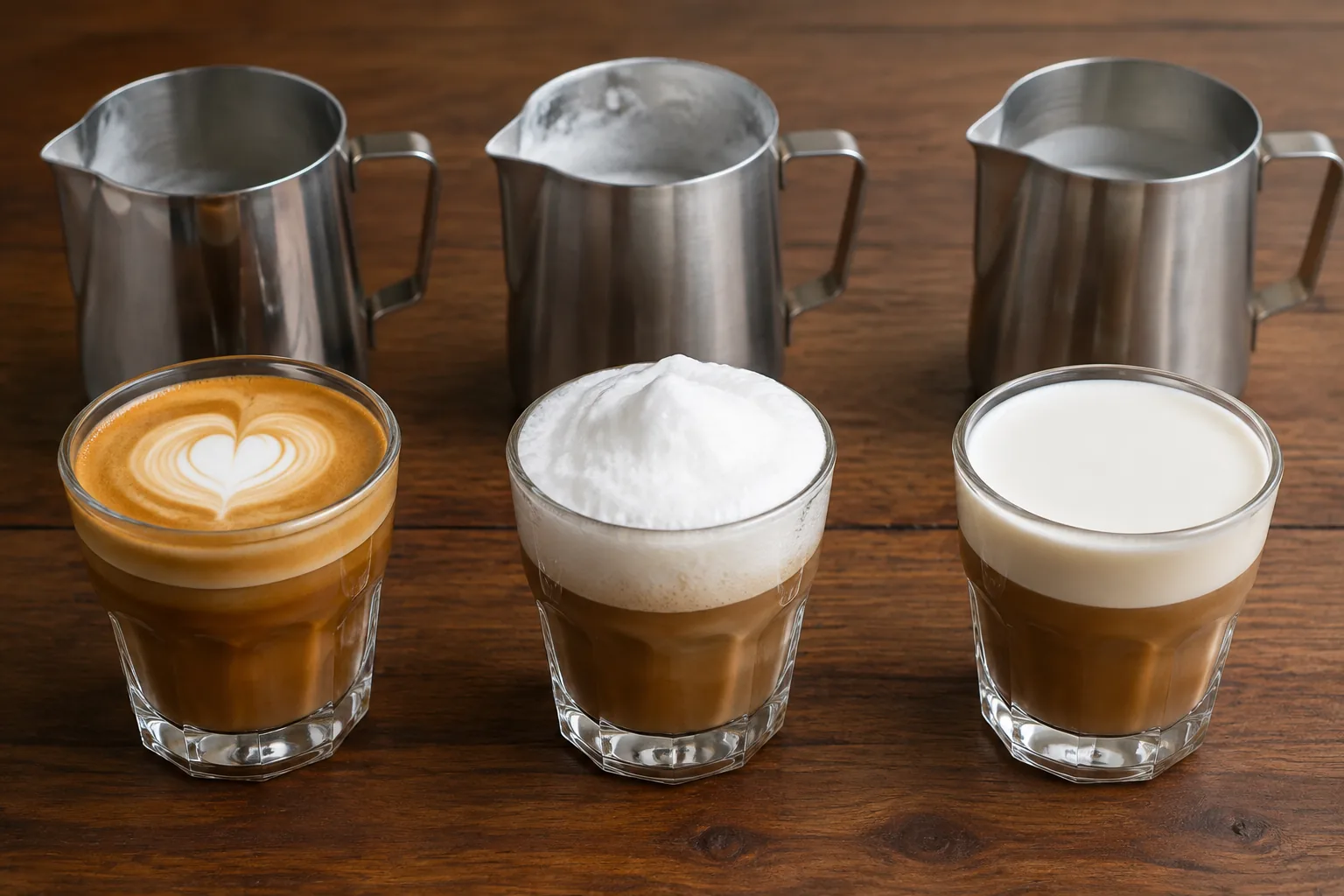
- Large bubbles mean the steam tip repeatedly broke above the surface.
- A thick dry cap means too much air entered or foam was held back until the end.
- Flat milk means the tip stayed too deep throughout steaming.
- A cooked smell means heating continued after sweetness peaked.
- A weak coffee center means too much milk or an under-extracted shot.
Read the surface and the first sip together. The surface shows bubble structure, while the taste reveals whether the milk volume and espresso strength still balance.
The milk frother guide compares steam wands, automatic frothers, handheld tools, and other approaches when the tool itself is the limiting factor.
Dial espresso for a short milk drink
A cortado exposes shot faults more clearly than a latte because there is not enough milk to bury them. Begin from the espresso recipe that tastes balanced alone, then decide whether the milk reveals too much acidity, bitterness, or roast character.
If the shot runs fast and tastes sour, grind finer or adjust preparation before adding more milk. Extra milk may reduce the sharpness, but it also turns a small coffee-forward drink into a larger weak one.
If the shot runs slowly and tastes dry or bitter, grind coarser or reduce resistance in the puck. Using hotter milk or sugar as a cover leaves the heavy finish in place after the sweetness fades.
Shot yield changes the practical ratio. A 36 g espresso needs less milk than a 50 g lungo to reach equal visible parts, but the longer shot may already be thinner and more bitter, so matching volume does not guarantee matching balance.
Taste the combined drink after one stir. Crema, milk, and microfoam can sit in layers even after a careful pour, and a gentle stir reveals whether the underlying liquid is actually balanced.
A cortado recipe begins with a complete espresso recipe. Milk volume is the final adjustment, not the first fix for extraction.
Choose milk for sweetness and integration
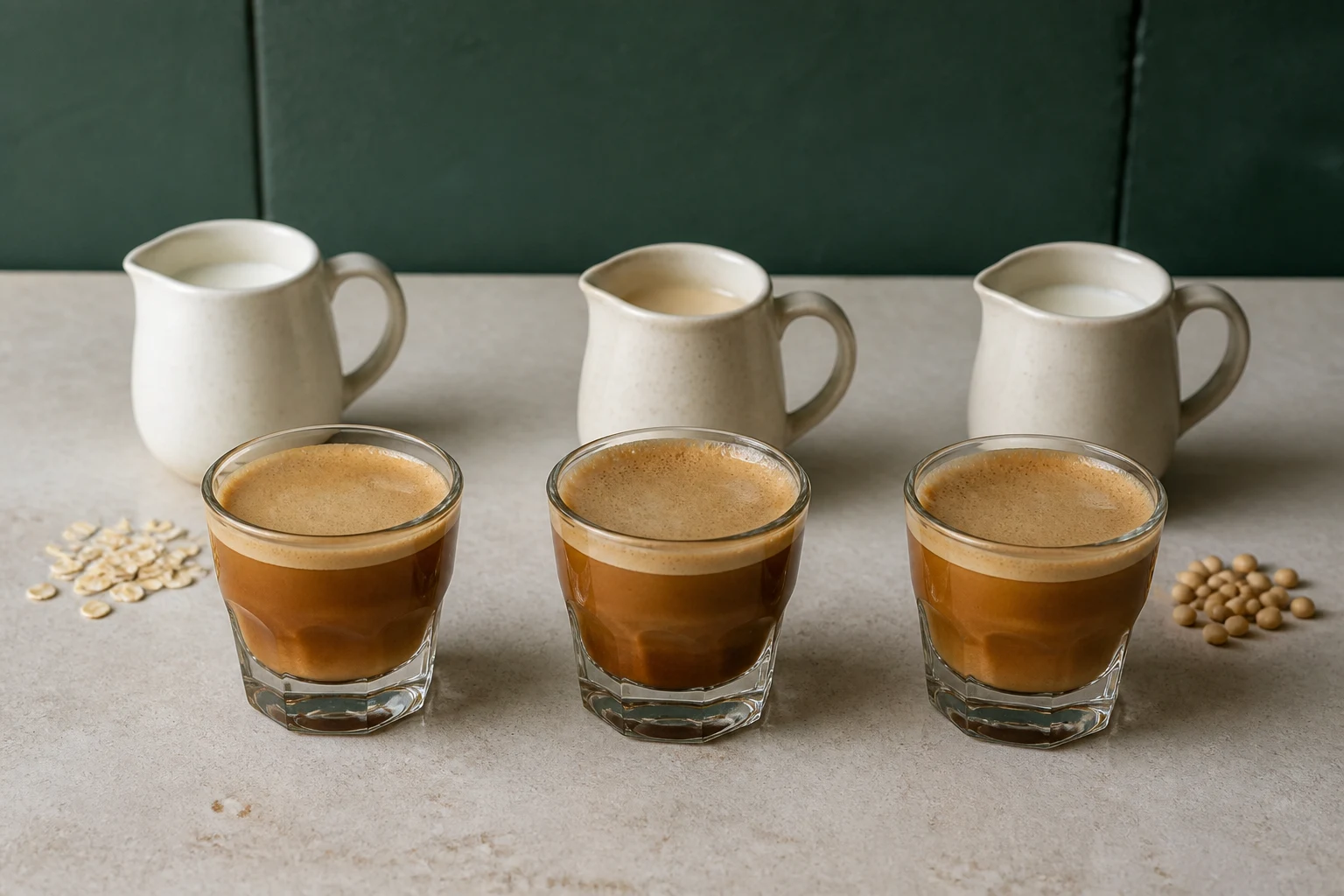
| Milk | Texture tendency | Balance check |
|---|---|---|
| Whole dairy | Rich, glossy, and forgiving | Do not let richness bury the espresso |
| Lower-fat dairy | Lighter body with stable fine foam | Stop before it becomes dry |
| Oat drink | Rounded cereal sweetness | Use less if the roast tastes muted |
| Soy drink | Strong foam structure | Integrate promptly before it separates |
| Almond drink | Often thinner and product-dependent | Judge liquid body, not the foam cap alone |
Whole dairy milk gives rich texture but can soften a delicate espresso quickly. Lower-fat milk feels lighter and may keep the coffee more prominent, though it still needs enough protein and correct technique to hold fine bubbles.
Lactose-free dairy milk often tastes sweeter because its lactose has been split into simpler sugars. Use the same texture method, then reduce added sweetener or milk volume if the coffee seems muted.
Oat drinks add cereal sweetness and can make darker roasts feel rounder, while soy often provides enough protein for stable microfoam. Almond products vary widely and may produce a thinner body even when a surface foam forms.
Whatever the milk, begin cold and use a clean pitcher. Previously heated milk has changed proteins and lost water, so a second steaming produces less predictable foam and a cooked taste.
Do not mix fresh cold milk into steamed leftovers for the next drink. Measure a controllable starting amount, accept a small remainder when necessary, and keep food safety ahead of zero waste.
Control milk temperature without chasing a single number
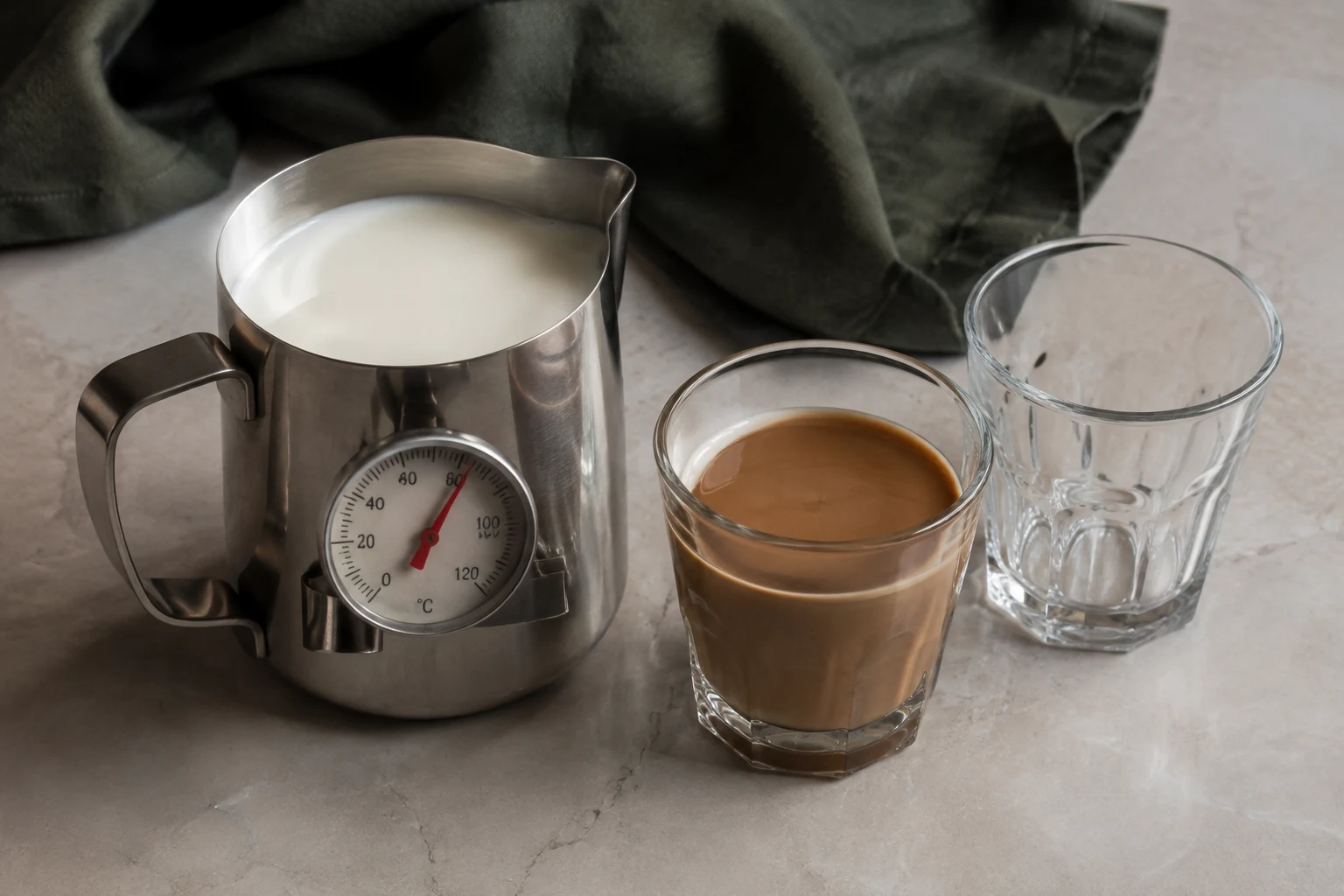
Read milk temperature through the result
- Too coolSweetness and integration remain muted
- Warm and glossyMilk tastes sweet and pours as one fluid texture
- Too hotCooked aroma appears and fine foam begins to coarsen
- After steamingPour promptly because a cortado loses heat quickly
Milk tastes sweeter as it warms because warmth changes how its sugars and aromas register, then loses that advantage when prolonged heat creates cooked flavors. Many baristas work around 55 to 65 C, but pitcher shape, thermometer lag, and immediate pouring all affect the temperature that reaches the glass.
A thermometer helps map your machine during practice. Stop steaming before the displayed number reaches the final target if the reading continues climbing after the valve closes, then compare the result with the first comfortable sip.
The hand-on-pitcher cue is useful but personal. Use touch as an early warning and a thermometer as a learning tool, not as two competing rules.
Cold glass can erase several degrees from such a small drink. Pre-warm it with hot water, empty and dry it before the shot, and avoid a thick oversized tumbler that absorbs more heat than the beverage can spare.
Coordinate shot and milk on home equipment
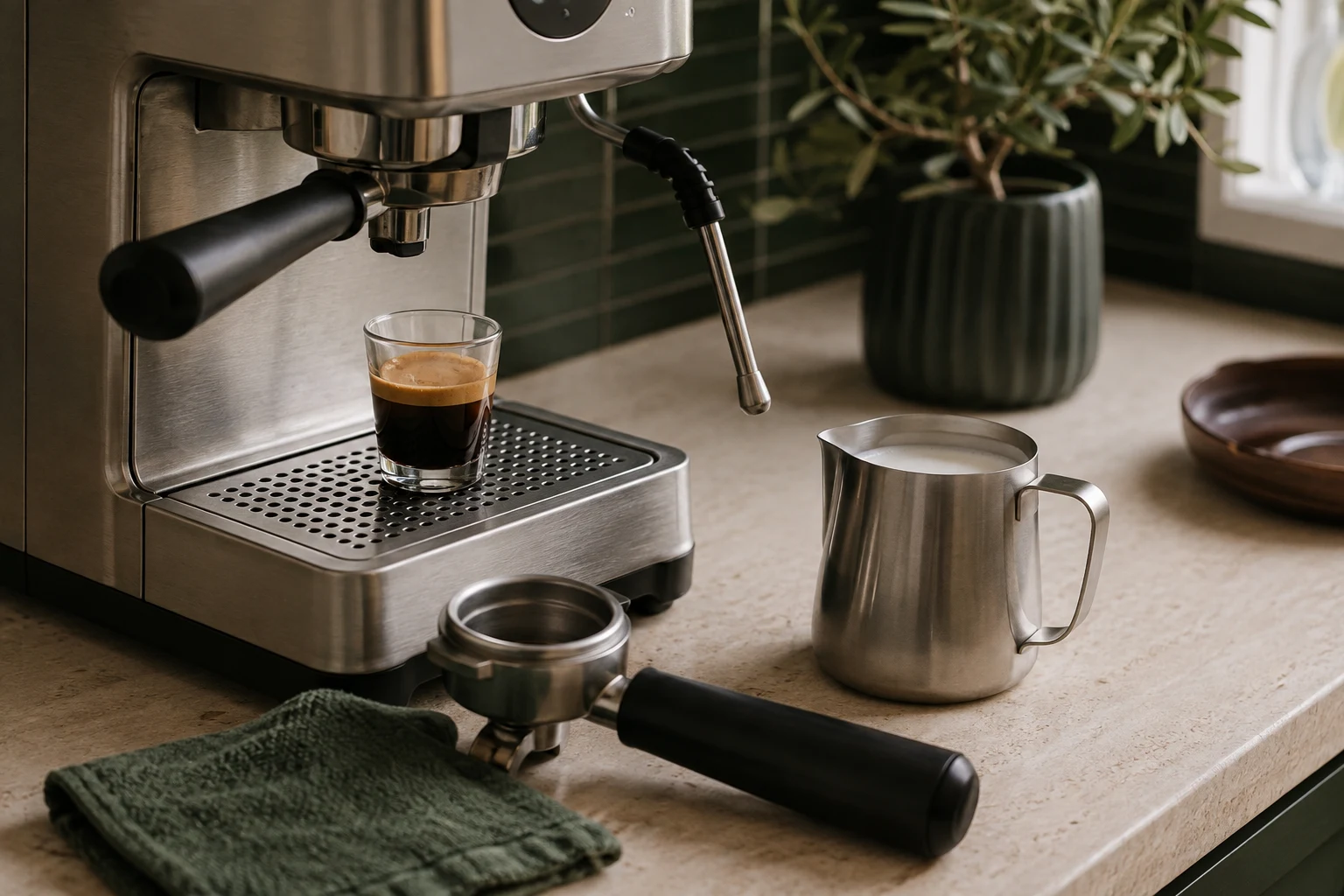
Coordinate a single-boiler cortado
- Prepare | Dose the coffee, measure cold milk, and warm the glass
- Pull | Brew the balanced espresso first
- Transition | Switch immediately to steam mode while protecting the shot from cooling
- Texture | Aerate briefly, roll the milk, and stop before cooked flavors appear
- Combine | Swirl both components and pour without a long pause
A single-boiler machine may require a pause while it changes from brewing to steaming temperature. Pull the espresso first, start the steam transition immediately, and keep the glass warm rather than steaming milk first and letting it separate during the shot.
A heat-exchanger or dual-boiler machine can work simultaneously, but speed is useful only when both tasks stay controlled. Prepare the measured milk, clean cloth, cup, and portafilter before starting so the final interval remains short.
If the espresso waits for a minute, swirl it before pouring. Crema changes quickly but the liquid is not ruined on a timer; separated milk with a dry cap is usually the more serious texture loss.
The best workflow is the one that delivers balanced espresso and integrated milk at the same moment. Machine capability changes the sequence, while the sensory endpoint remains the same.
Make a credible version without a steam wand
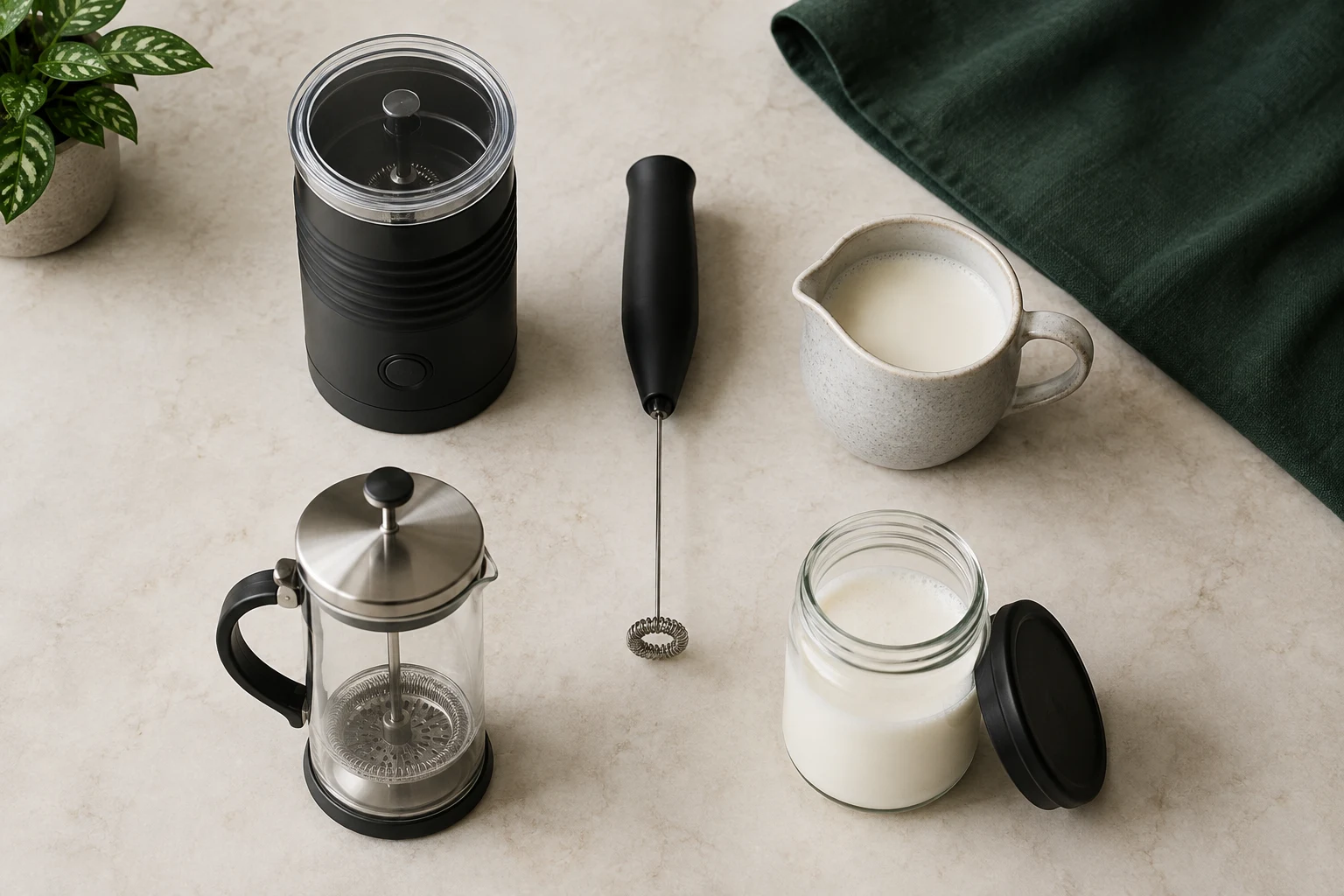
Automatic frother | Select its flat or low-foam program when available
Handheld wand | Aerate at the surface briefly, then circulate deeper
French press | Use a few slow plunges and retain mostly liquid milk
Moka pot base | Keep the serving small and call it cortado-style rather than espresso
Start with the coffee base.
Use real espresso if available and warm the milk separately without boiling it. An automatic frother on its least-aerated setting can work, while a handheld wand should begin near the surface briefly and then move deeper to circulate the liquid.
A French press can create foam, but pumping aggressively usually makes far more than a cortado needs. Use a few slow strokes, swirl firmly, and pour the liquid portion with only a thin share of foam.
Moka pot concentrate can make a small balanced milk drink, but it is accurately described as a cortado-style drink rather than espresso. The comparison of espresso machines and moka pots explains the pressure and texture difference.
Keep the serving small even when the base changes. The balance depends on concentrated coffee meeting a restrained milk addition.
Serve it before the small margin disappears
A cortado cools quickly because its glass and volume are small. Pre-warm the glass, pour as soon as the milk is polished, and bring it to the table without waiting for a second drink to finish.
Sugar is optional and easiest to dissolve in the espresso before milk enters. The finished cortado should be sweet enough from well-textured milk to make sugar a choice, not a repair.
Cortado method
- Makes
- 1 small cortado, about 80 to 110 ml
- Water temp
- Warm and immediately drinkable
- Total time
- 5 min
What you need
- 1 double espresso, about 36 to 40 g
- 90 to 120 ml cold milk for steaming, with about 40 to 60 ml used
Equipment
- Espresso machine
- Small milk pitcher
- 120 to 150 ml glass
- Scale, recommended
Method
- WarmPreheat the small glass.
- PullMake a balanced double espresso.
- AerateAdd only a brief amount of air to cold milk.
- RollIntegrate bubbles until the milk is glossy and fluid.
- PourAdd roughly the shot's volume of milk.
- ServeDrink immediately.
Common questions
What is the milk-to-espresso ratio for a cortado?
Roughly equal parts is the useful starting point. Adjust the milk slightly for the shot, but keep the drink small and stop before it becomes milk-forward.
Should a cortado have foam?
It should have very fine integrated microfoam and only a thin visible cap. A deep dry layer moves the texture toward cappuccino.
Can you make a cortado without a steam wand?
Yes, if you warm milk gently and aerate it very lightly with a suitable frother or French press. The aim is fluid glossy milk, not a large quantity of stiff foam.