Stevia, and Why Doing Nothing Else Is the Whole Story
Stevia sweetens at a few milligrams a cup and does nothing else. That absence is the whole story, because a drink built on it loses the body and the bitterness-masking that sugar was quietly supplying.
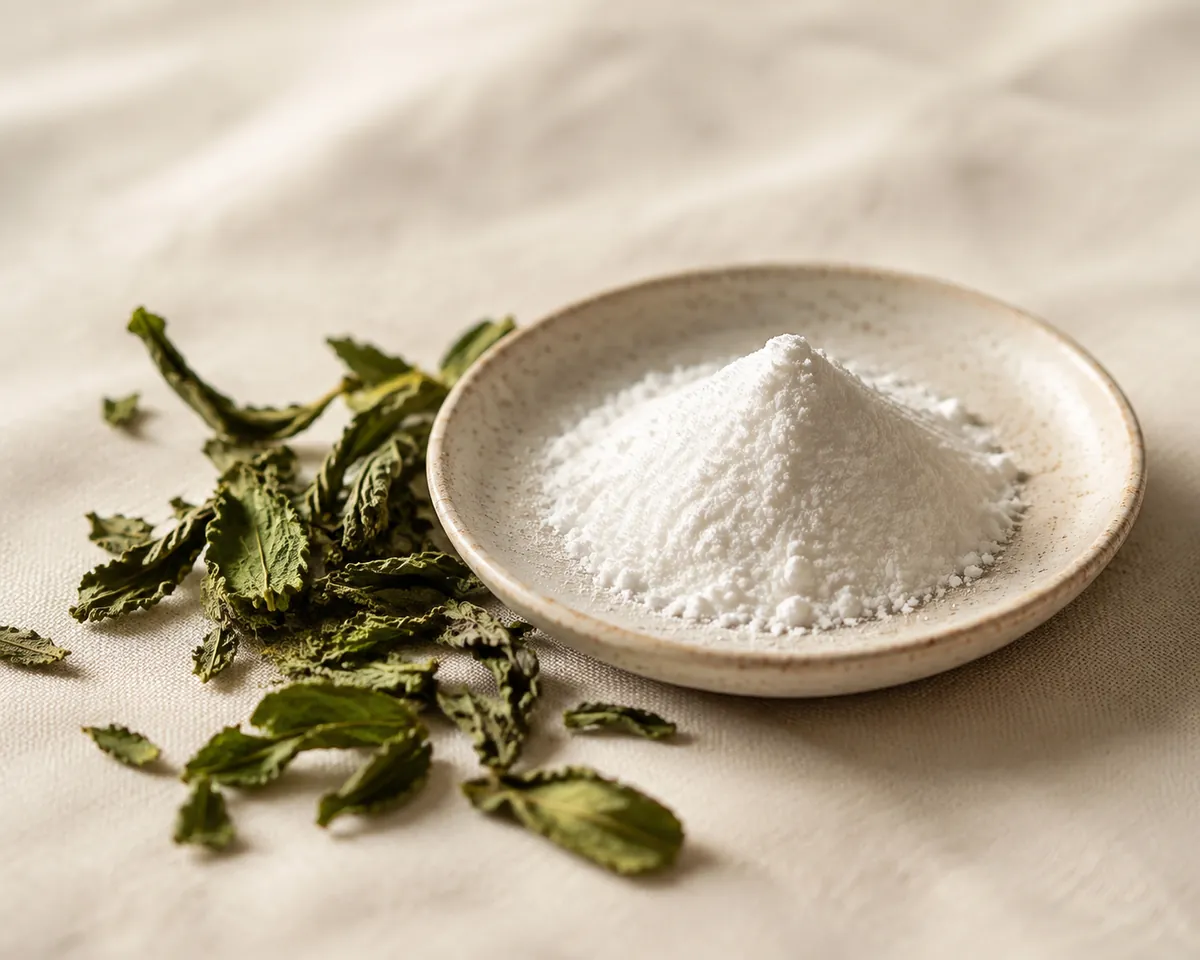
Stevia is a sweetener drawn from the leaves of a South American shrub, and by weight it is somewhere between two hundred and three hundred times as sweet as sugar. The interesting part of that figure is not the sweetness.
It is everything the figure leaves out.
A gram of stevia extract sweetens like a couple of hundred grams of sugar and occupies the space of a grain of rice. It brings no bulk into the tin and no thickness into the glass, and a drink built around it is missing two of the three jobs sugar was quietly doing.
Stevia in a drink, at a glance
- What it is
- Steviol glycosides, extracted and purified from the leaf of Stevia rebaudiana
- Sweetening power
- Roughly 200 to 300 times sucrose, by weight
- Body it adds
- None. The glass is exactly as thin as it was before
- Bitterness it hides
- None either, unlike sugar
- The characteristic note
- A slow, lingering finish often described as liquorice-like
- Sold in Europe as
- E960, the additive number for steviol glycosides
What stevia actually is
The plant is Stevia rebaudiana, a soft-stemmed shrub from the border country between Paraguay and Brazil, where its leaves were used to sweeten drinks long before anybody extracted anything from them.
The sweetness lives in a family of compounds called steviol glycosides. Leaves are dried and steeped in water, and the sweet compounds are then filtered and purified out of that liquid.
The process is closer to making tea than to anything chemical. What comes out is a very fine white powder with no colour, no smell and an enormous amount of sweetness locked into a tiny mass.
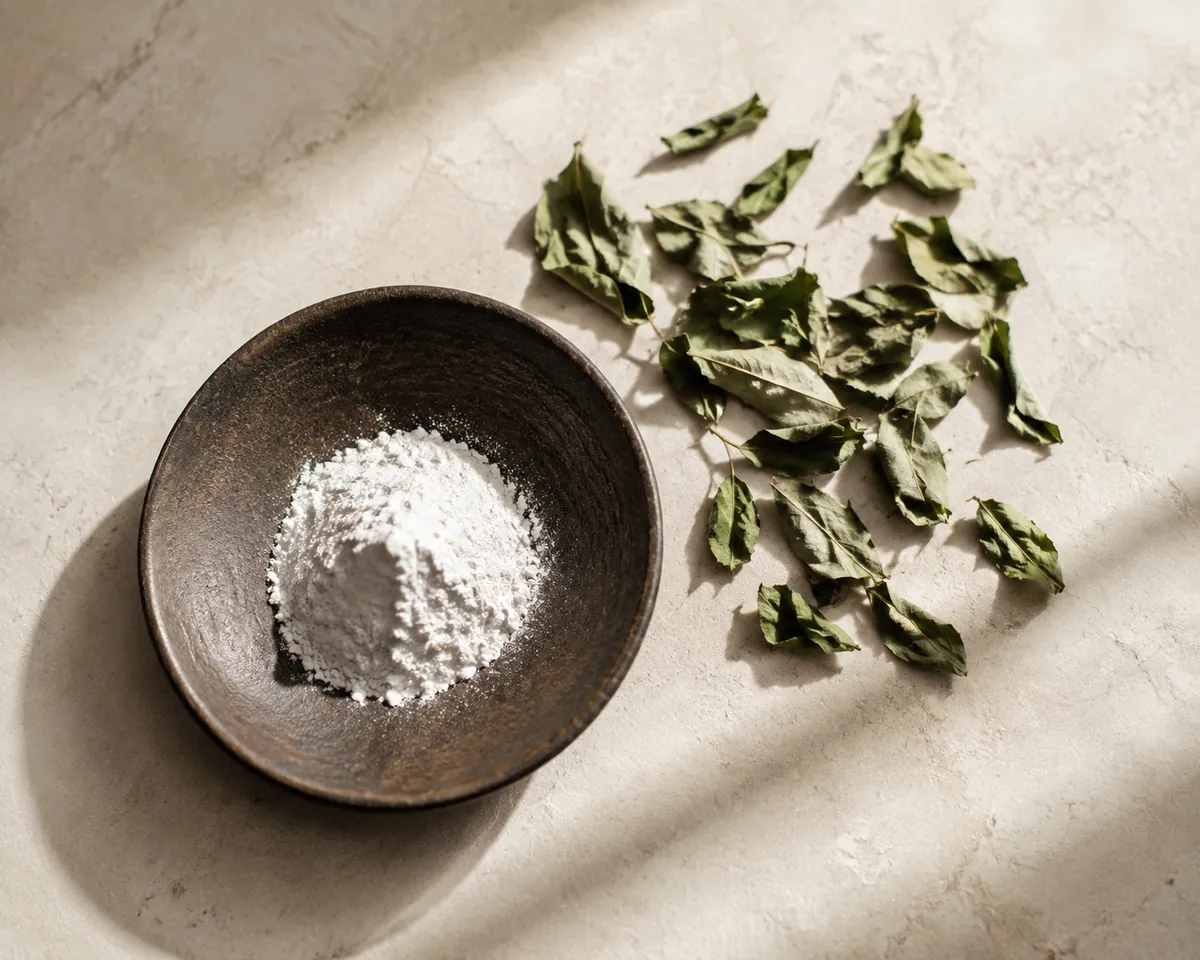
Which glycoside dominates matters more than the brand. Rebaudioside A is the one most tins are built on, stevioside is the cheaper and coarser-tasting relative, and a handful of rarer ones such as Reb M taste noticeably closer to sugar but occur in the leaf in such small amounts that producing them takes extra work.
That is worth knowing because it explains why two products both labelled stevia can taste quite different. A high-purity Reb A extract is clean and slightly slow, and a cheap mixed-glycoside one carries a bitterness that no amount of technique removes.
Why 300 times sweeter is a practical problem
Potency sounds like an advantage. It behaves like an obstacle the moment you try to use it, because sugar for a mug of tea is a level teaspoon and that is about four grams.
The stevia equivalent is around fifteen to twenty milligrams, which is a quantity a domestic kitchen has no way to measure.
Nothing in a drawer weighs that. A teaspoon holds fifty times too much, a pinch between finger and thumb is wildly variable, and the difference between pleasant and unpleasant sits inside that variation.
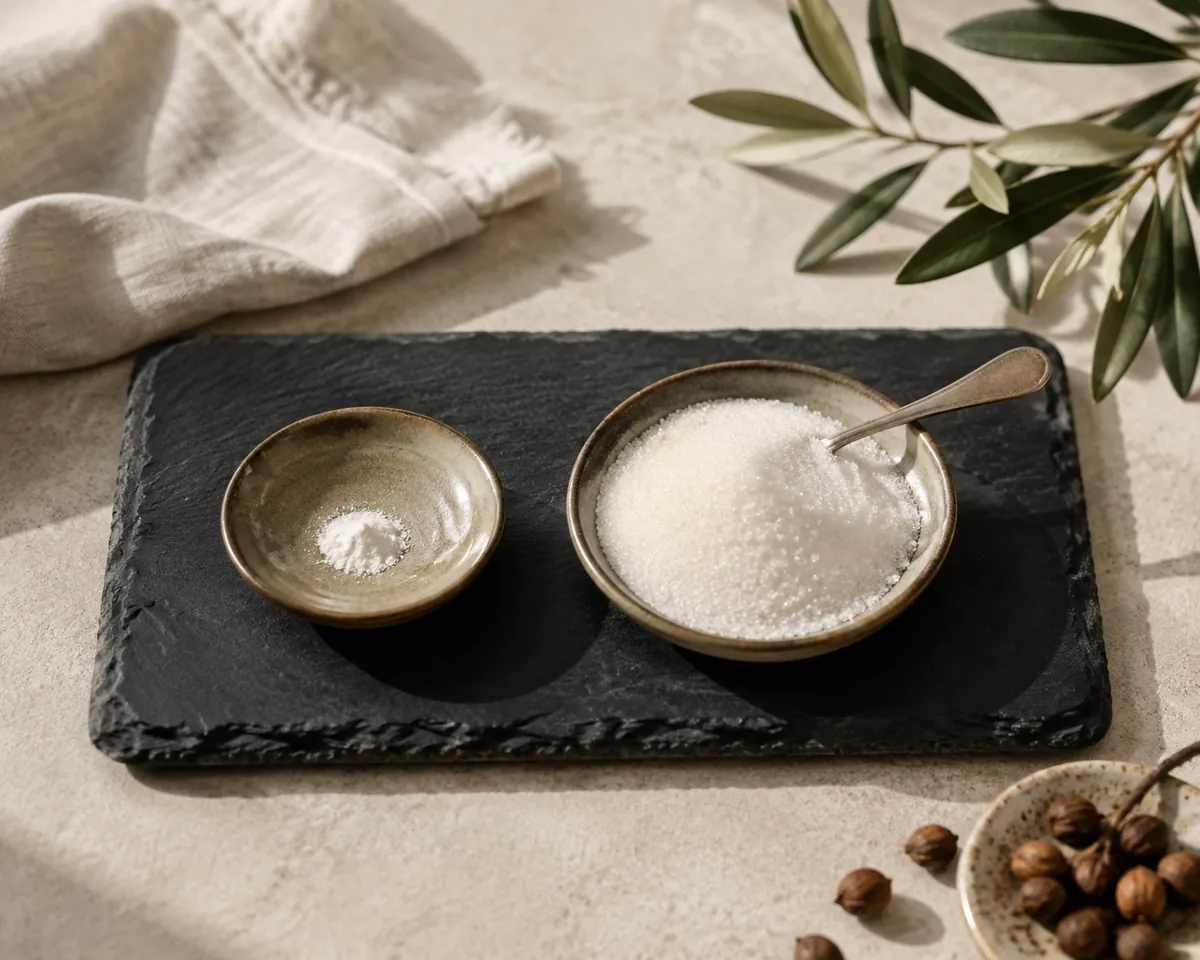
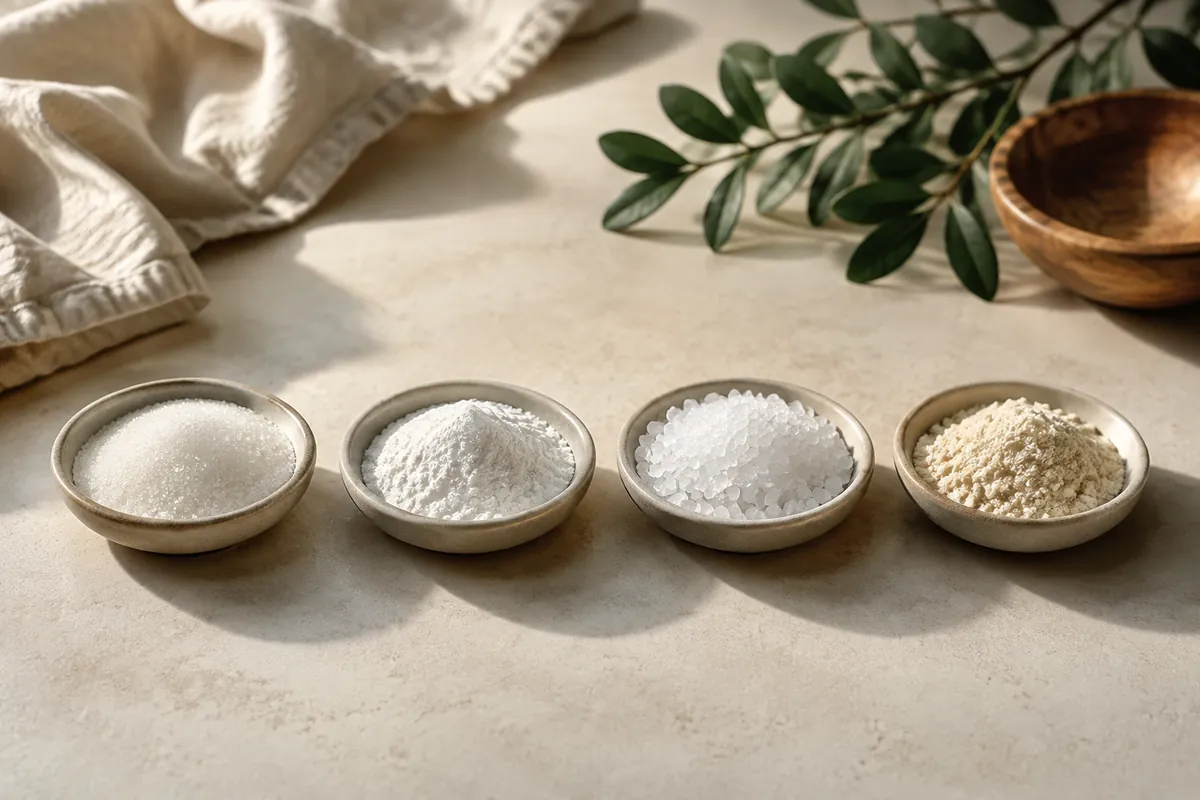
The industry's answer is to sell you something else along with it. Almost every granulated stevia product on a shelf is mostly filler, with the actual sweetener present at a fraction of a per cent, and the filler exists so that a spoon becomes a usable measure again.
Erythritol
The commonest bulking agent. Cooling on the tongue, and it dissolves slowly in cold liquid.
Maltodextrin
A starch-derived powder. Neutral in taste, and it is what makes a spoon-for-spoon product possible.
Dextrose
Sugar, in effect, used in small amounts to carry the extract.
Glycerine or water
The base for liquid drops, which sidestep the measuring problem entirely.
Nothing at all
Pure extract, sold for people who blend their own. Almost impossible to dose by eye.
Reading the ingredients rather than the front of the packet is therefore the whole skill here. A spoon-for-spoon stevia product is mostly not stevia, and what it is mostly made of decides how it behaves in the glass.
What is missing when the sugar comes out
Sweetness is one of three things sugar contributes to a drink, and the other two are set out under what cane sugar does. Stevia delivers the first and neither of the others.
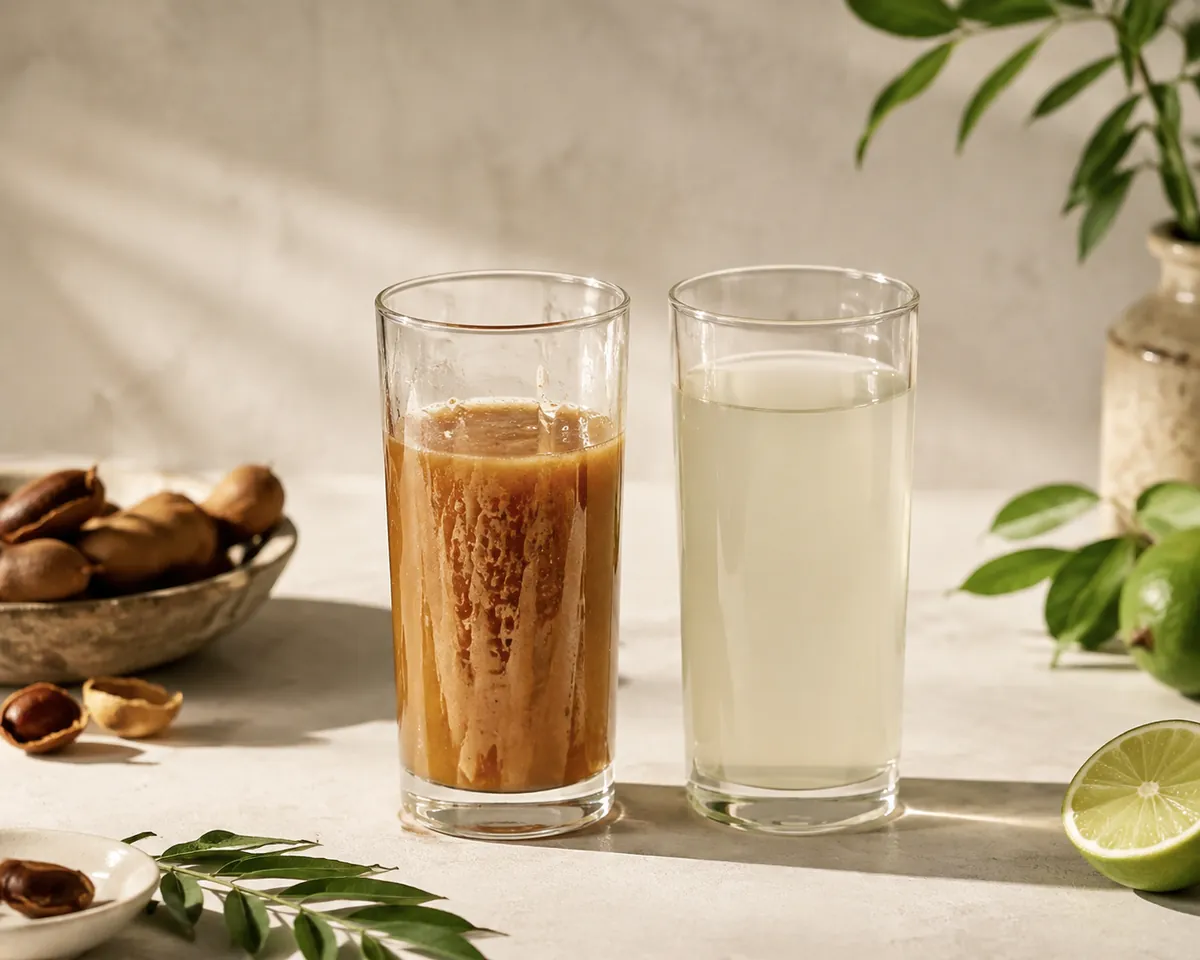
The absence of body is the one you notice first without being able to name it. Dissolved sucrose thickens a liquid slightly and slows it across the tongue, and at twenty-five grams in a can that thickening is a real part of how a soft drink feels.
Take it out and the liquid moves like water, because that is now what it mostly is.
| Sugar | Stevia | |
|---|---|---|
| Sweetness | Yes, at 8 to 12 g per 250 ml | Yes, at a few milligrams |
| Body | Thickens the liquid slightly | None |
| Bitterness and acid suppression | Lowers how much of both you perceive | None |
| Mouth-coating finish | Yes | No, and the finish is drier |
| Behaves in cold liquid | Poorly. Needs syrup | Dissolves readily |
The absence of suppression is the more consequential of the two. Sugar does not merely sit alongside bitterness and acid, it lowers how much of them reaches you, so a drink formulated at a given acidity was formulated on the assumption that a large mass of sugar would be standing in front of it.
Remove that mass and nothing stands in front of it any more. The acid arrives unbuffered, which is a different experience from the same drink being less sweet.
Why a reformulated drink tastes sharper
Anyone who has moved from a full-sugar cola to a stevia-sweetened one has met this directly, and the usual description is that the new version tastes thin and a bit sour rather than simply lighter.
Three changes are happening at once and only one of them was intended. The sweetness is matched, so on paper nothing has moved.
The body is gone, the suppression is gone, and the acid that was always in the recipe is now unopposed.
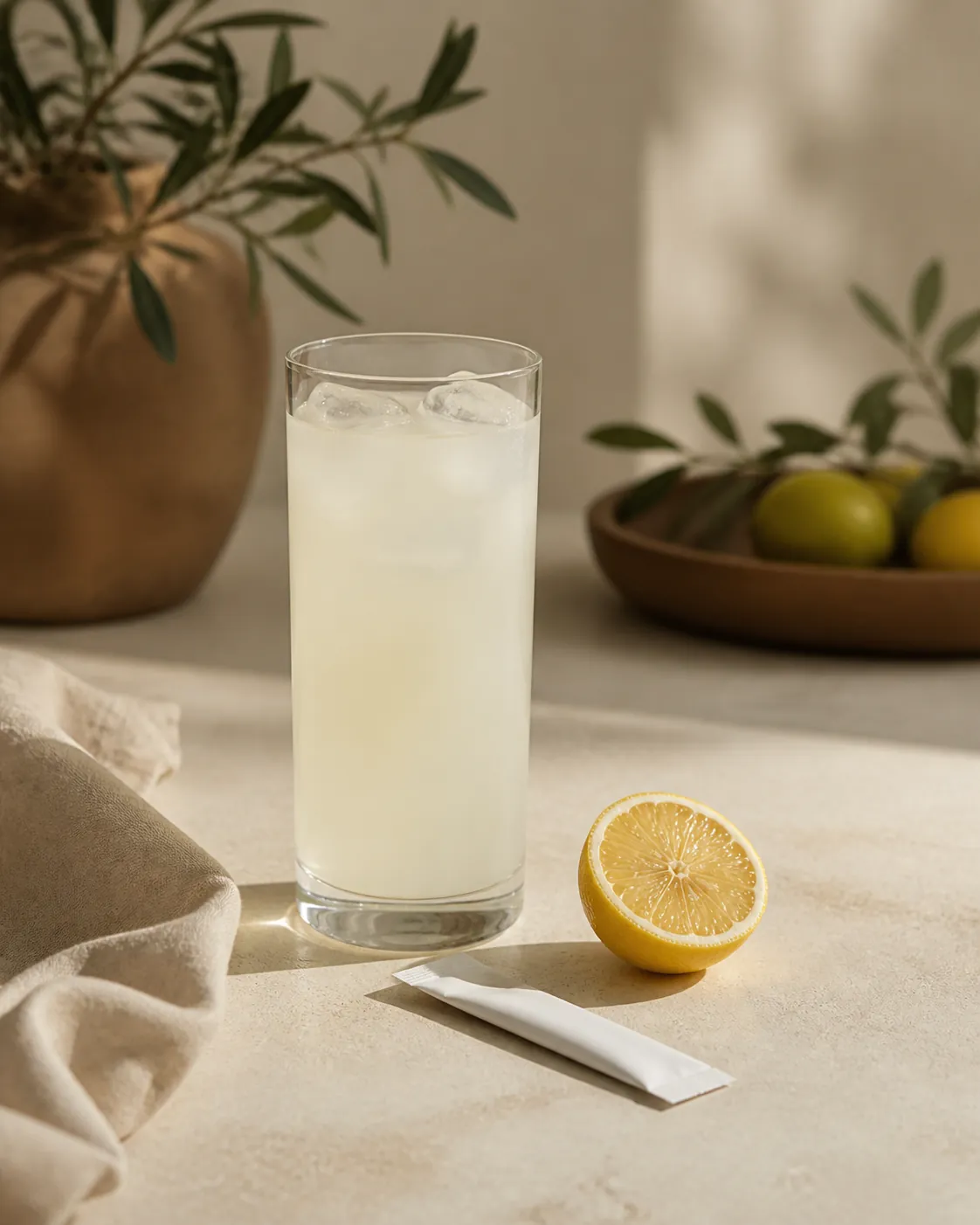
How much a drink suffers, most to least
- Acidic soft drinksWorst affected. Citric acid and phosphoric acid arrive naked
- Tonic waterQuinine bitterness was being masked, and now is not
- Home lemonadeSharp, and needs less lemon than the sugared version did
- Iced teaNoticeable but manageable. Tannin reads harder
- Coffee and cocoaManageable, since fat and solids supply some body
- Herbal infusionsBarely affected. Little acid and little bitterness to expose
The practical response is to reformulate rather than to substitute. A lemonade sweetened with stevia wants less lemon juice than the sugared recipe called for, because the acid figure in that recipe was chosen against a spoonful of sugar that is no longer there.
Where the drink cannot be reformulated, a partial swap is the honest compromise. Keeping a third of the sugar and covering the rest with stevia holds on to some of the body and most of the suppression, and it is what commercial blends do for exactly this reason.
Why tonic water tastes bitter is the clearest case of a drink whose whole balance depends on the sugar being there.
The liquorice note, and where it comes from
Almost everyone tastes something, and the descriptions cluster around liquorice, aniseed and a faint cooling menthol quality that arrives after the sweetness rather than with it.
Two separate things are producing that impression. The steviol glycosides themselves carry flavour of their own beyond sweetness, and the sweetness has a different shape in time from sucrose, coming on more slowly and staying far longer.
How the sweetness arrives
- SugarFast onset, peaks quickly, and clears the palate within seconds.
- SteviaSlower onset, a lower peak, and a finish that persists well past the swallow.
- The gapThat lingering tail is what most people register as an aftertaste.
- At high doseBitterness appears on top of it, and it does not go away with more sweetener.
Purity is the lever that moves it. Stevioside is the harsher of the two common glycosides, so a high-purity Rebaudioside A extract tastes cleaner.
The newer Reb M and Reb D products go further again.
Whole-leaf green stevia is a different proposition altogether and should not be confused with the white extract. It is perhaps thirty to forty times as sweet as sugar rather than three hundred, it is a dull olive powder, and it carries a strong herbal, grassy flavour that suits a robust herbal infusion and overwhelms anything delicate.
How much a drink actually needs
The arithmetic is simple. Measuring it is not, so the honest approach is to work from the product in front of you rather than from any general figure.
| Product | Amount | Note |
|---|---|---|
| Pure white extract | About 15 to 20 mg | A dust. Not measurable with kitchen equipment |
| Liquid drops | 2 to 4 drops | The most controllable form for a single cup |
| Spoon-for-spoon blend | 1 teaspoon | Bulked so the volume matches sugar |
| Tablets | 1 tablet | Sized for a mug of tea or coffee |
| Green whole-leaf powder | About a third of a teaspoon | And it brings its own flavour with it |
Start below where you think you should and work up. Undersweetening is fixed in two seconds, and oversweetening cannot be fixed at all short of diluting the drink, because the bitterness that arrives at high concentration is not covered by anything else in the glass.
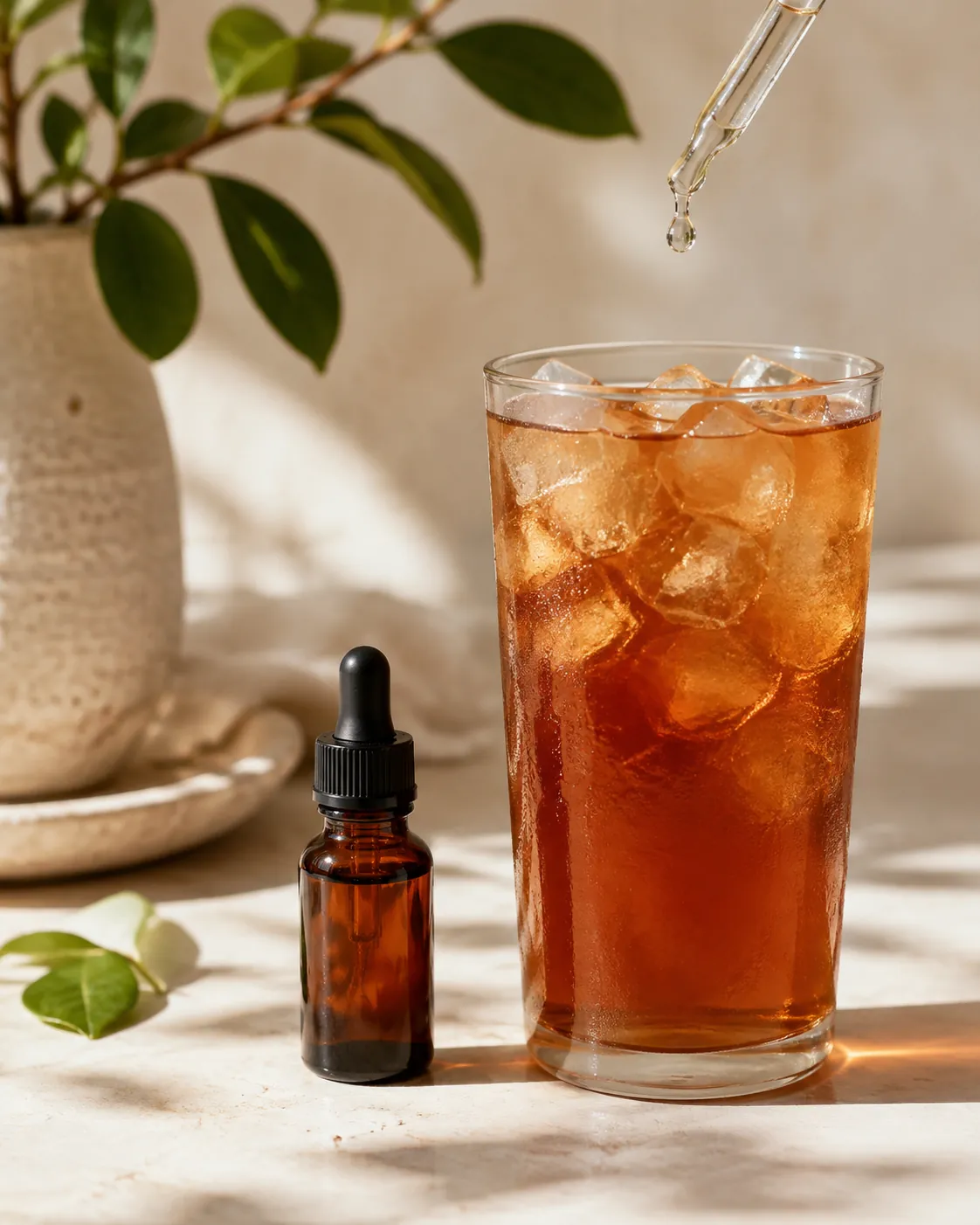
The other half of the dosing question is what else you can put in. A pinch of sea salt suppresses bitterness from the opposite direction and does part of the job the missing sugar used to do, and a little glycerine or fruit purée restores some of the body without much sweetness.
Neither is a complete answer, and both are more useful than simply adding more stevia.
Forms on a shelf, and which one to keep
Five formats are widely sold, and they differ far more than the shared name suggests. Most of what is in the packet is not the sweetener at all.
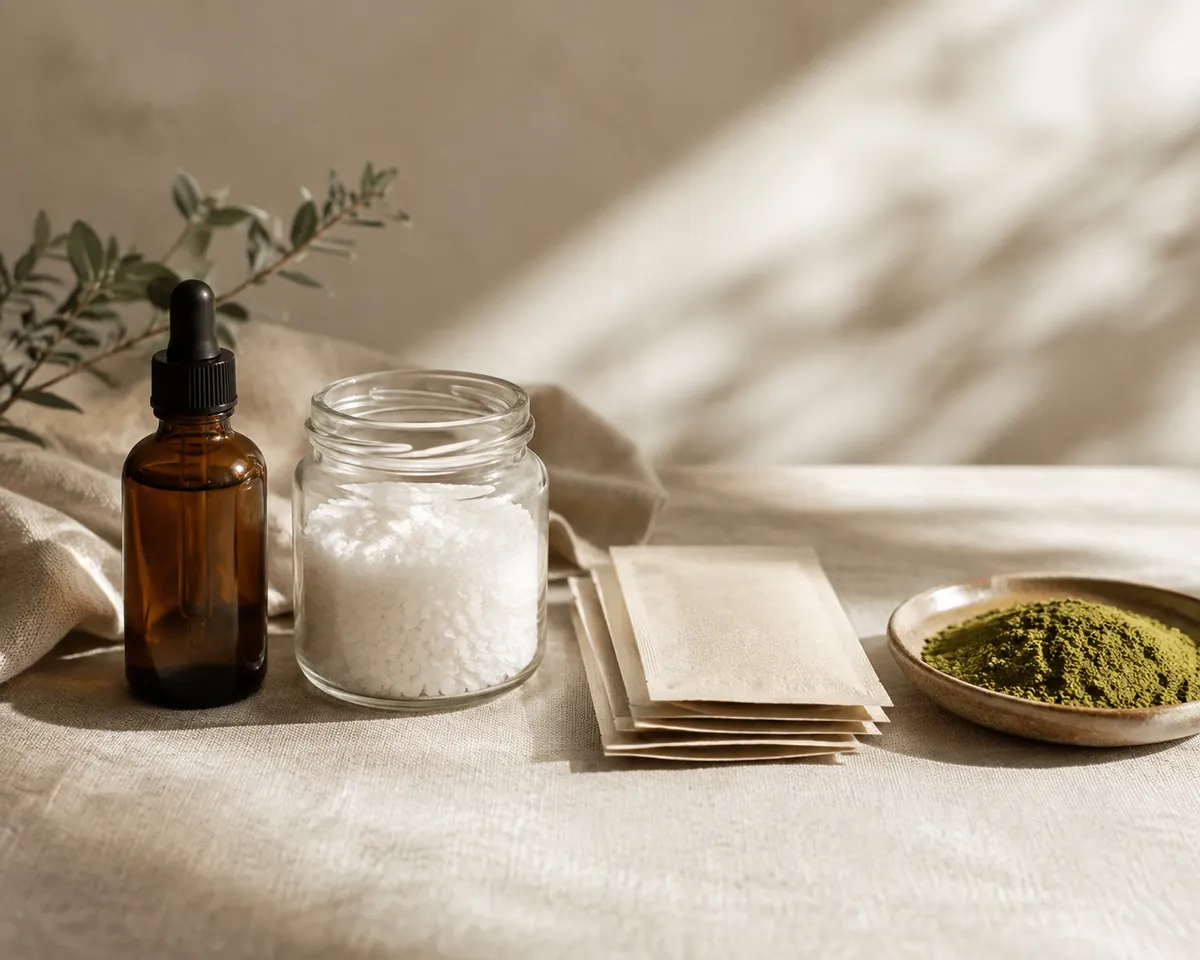
Liquid drops
The most controllable, and the easiest thing to dose into a single mug. Flavoured versions exist, including vanilla and mint.
Granulated blends
Bulked with erythritol or maltodextrin so a spoon works. Read which one.
Sachets
A fixed dose per packet, which is convenient and inflexible.
Tablets
For hot drinks, since they need liquid and a moment to break down.
Green leaf powder
A herb rather than a sweetener. Strong flavour, far less sweetness.
For most drink-making, drops are the sensible first purchase. They dissolve instantly in anything, hot or cold, they carry no bulking agent to argue with the drink, and the dose moves in small enough increments to find the edge without going over it.
Keeping any of it is easy. The dry powders are stable, absorb moisture rather than spoiling, and last for years in a sealed container, while liquid drops carry water and should be treated like any other opened bottle in a cupboard.
Where a granulated blend is what you have, check whether the bulk is erythritol before using it in a cold drink. Erythritol dissolves slowly and gives a distinct cooling sensation, which is pleasant in a mint drink and odd in a cold brew.
Heat and acid leave it alone
This is the part where stevia genuinely outperforms sugar rather than merely standing in for it, and it comes down to the molecules being unusually tough.
Steviol glycosides survive boiling without breaking down and hold their sweetness across a wide range of acidity, so a stevia-sweetened drink tastes the same after twenty minutes in a pan as it did going in. Some other intense sweeteners do not manage that, which is why they are added at the end of a process rather than the beginning.
- Add it at any stage. There is no heat window to work inside.
- It dissolves in cold liquid, so no syrup step is needed for an iced drink.
- It does not caramelise, so nothing browns and nothing thickens.
- It does not crystallise, so a bottled drink will not go grainy in the fridge.
- It leaves no sticky residue on a jug or a shaker.
The cold-liquid point is the one worth remembering, since it is the exact opposite of how granulated sugar behaves. Sugar has to be dissolved before it meets ice or it sits at the bottom of the glass, and stevia simply goes in.
Everything absent from that list is also worth noticing. Nothing browns, nothing sets, nothing thickens and nothing keeps, so a stevia syrup is not a syrup at all in any useful sense and a vanilla syrup made with it will be flavoured water with sweetness in it.
Where stevia belongs, and where it does not
Timing barely matters here. That is unusual for a drink ingredient, so the real question is which drinks suit stevia and which fight it.
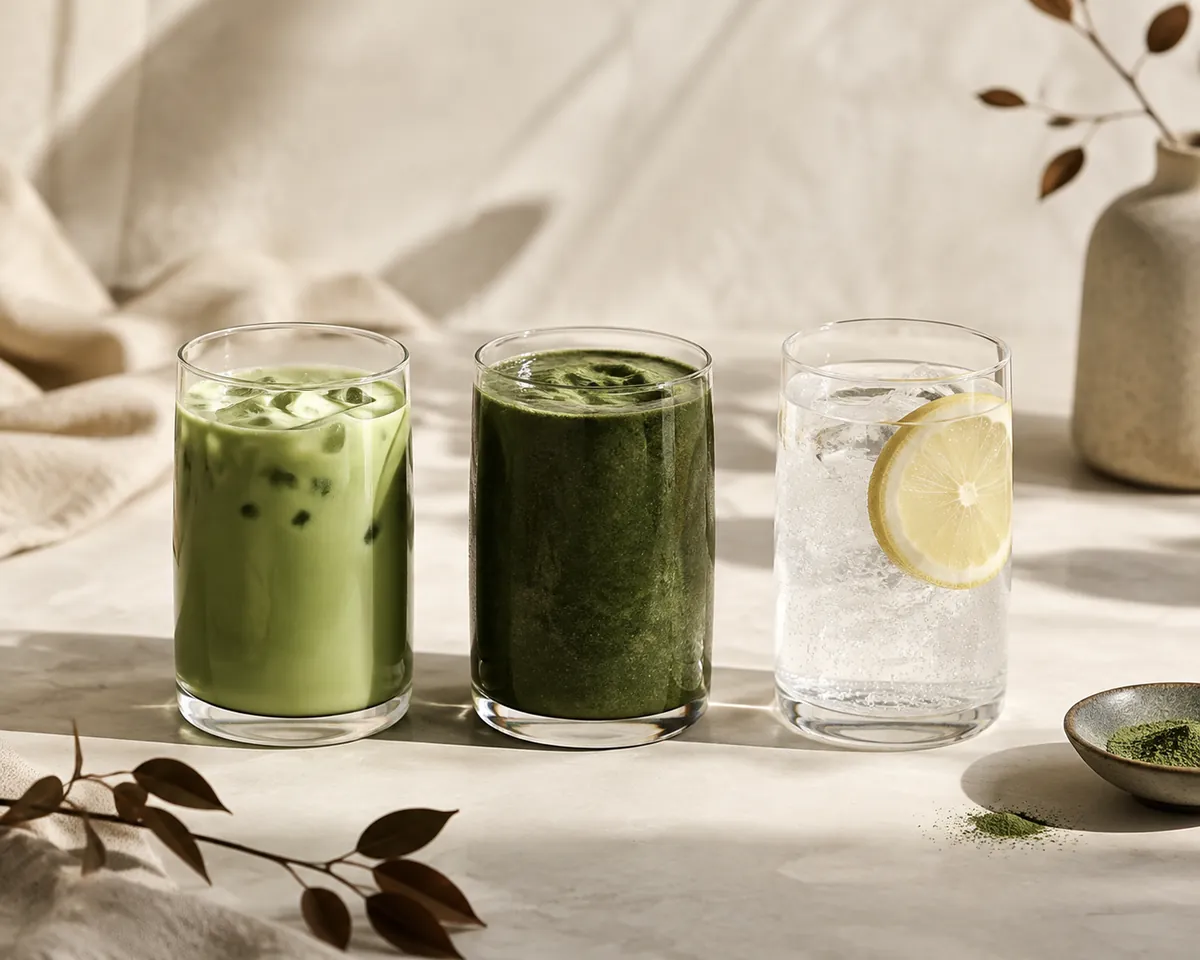
Anything already carrying its own body copes best. A matcha latte has milk fat and suspended solids holding the drink together, and a green smoothie has fibre doing the same.
Neither depends on sugar for texture in the way a clear soft drink does.
Hot tea and coffee
Straightforward. Nothing was relying on the sugar for texture.
Milk drinks
Good. Fat and protein supply the body that stevia does not.
Smoothies
Good, since fibre carries the weight.
Clear soft drinks
The hard case. Thin, sharp, and worth reformulating rather than swapping.
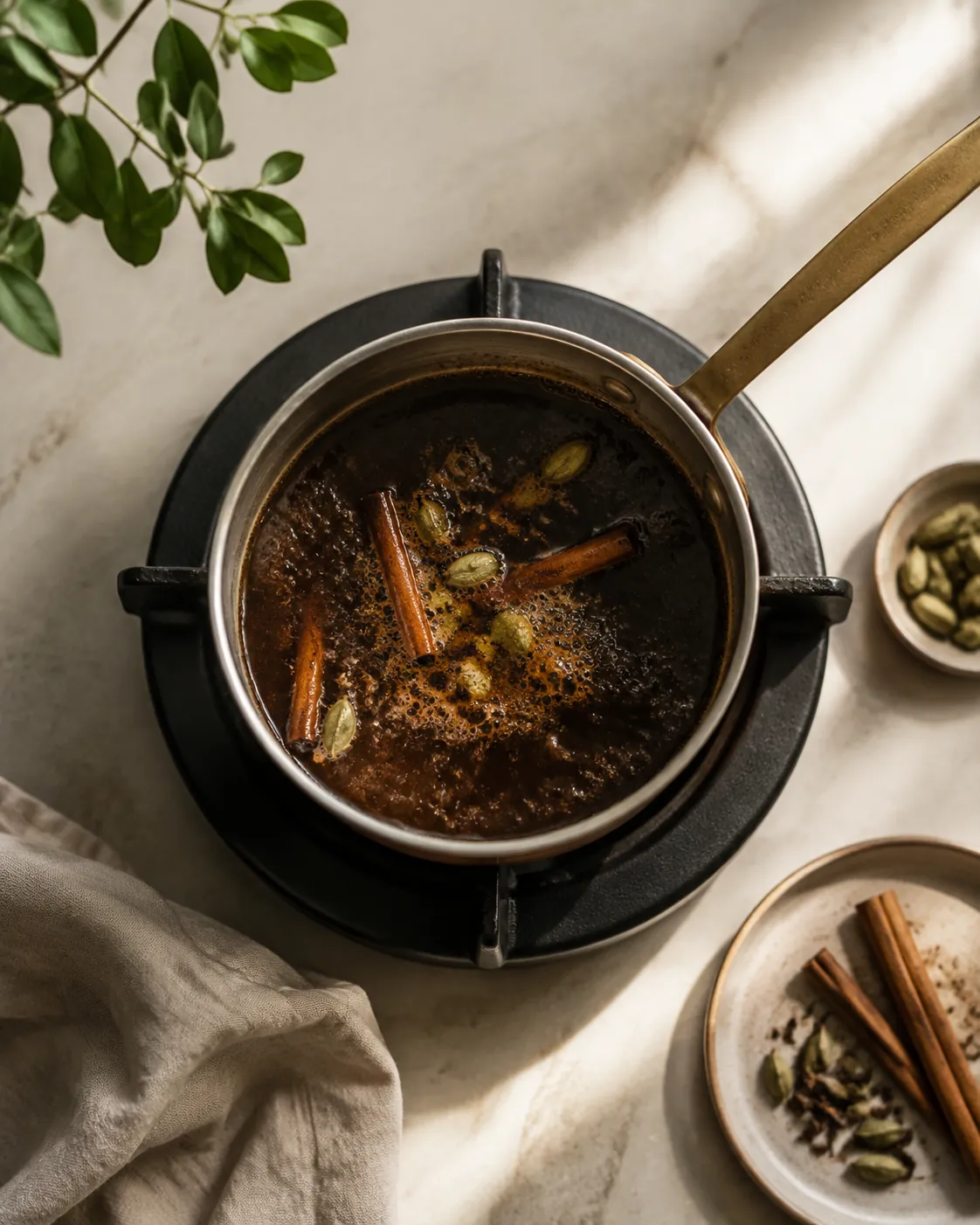
Spiced chai
Fine, and it survives the simmer, though the drink loses the rounding sugar gave the spices.
Where a drink genuinely needs sweetness and body together, the answer is a blend rather than a straight swap. Half the usual sugar plus enough stevia to close the gap keeps most of the mouthfeel and most of the suppression, and it is a far better drink than either extreme.
What else does the same job
Stevia is one of several sweeteners that deliver sweetness alone, and the differences between them are in the aftertaste rather than in the arithmetic.
| Sweetener | Sweetness against sugar | The characteristic note |
|---|---|---|
| Stevia | 200 to 300 times | Liquorice, slow onset, long finish |
| Monk fruit | 150 to 250 times | Fruitier, and often blended with erythritol |
| Sucralose | About 600 times | Clean, with a slight metallic edge for some people |
| Erythritol | Around 0.7 times | Cooling on the tongue. Adds bulk, and only mild sweetness |
| Aspartame | About 200 times | Clean, and it breaks down under prolonged heat |
Erythritol is the odd entry on that list and the useful one, because it is the only member that brings bulk. Blending it with stevia gets back some of the volume and a little of the mouthfeel, which is why so many products pair the two rather than selling the extract alone.
The whole-food sweeteners solve a different problem and should not be read as competitors. Honey and maple syrup bring more body than sugar rather than less, along with flavours of their own, and agave syrup is sweeter and thinner than sugar without being anywhere near stevia's territory.
Where the drink should taste of itself and nothing else, plain sugar as a syrup remains the reference. Stevia is the right answer when sugar is being reduced on purpose, and the drink usually has to be rebuilt around it rather than simply handed a substitute.
Common questions
Why does a drink sweetened with stevia taste thinner than the sugared version?
Sugar does three jobs in a glass and stevia does one. Dissolved sucrose thickens the liquid slightly and lowers how much bitterness and acid you perceive, and at a few milligrams a cup stevia adds neither. The sweetness can be matched exactly while the body disappears and the acid that was always in the recipe arrives with nothing standing in front of it.
Why is granulated stevia mostly something else?
Purified stevia extract is 200 to 300 times as sweet as sugar, so the equivalent of a level teaspoon of sugar is around 15 to 20 mg, which no kitchen can measure. Bulking agents such as erythritol, maltodextrin or dextrose are added so that a spoon becomes a usable measure again, and the actual sweetener is present at a fraction of a per cent.
What causes the aftertaste people describe as liquorice?
Two things at once. The steviol glycosides carry flavour of their own beyond sweetness, and the sweetness has a different shape in time from sugar, arriving more slowly and persisting well past the swallow. Cheaper mixed-glycoside products taste harsher than a high-purity Rebaudioside A extract, and bitterness appears on top of the sweetness at high doses.