Chamomile tea vs Peppermint tea
Chamomile Tea vs Peppermint Tea: A Flower Against a Leaf
Chamomile is a flower whose character is spread thinly across delicate oils. Peppermint is a leaf carrying one robust compound. One is fragile and one is loud, and everything else follows from that.
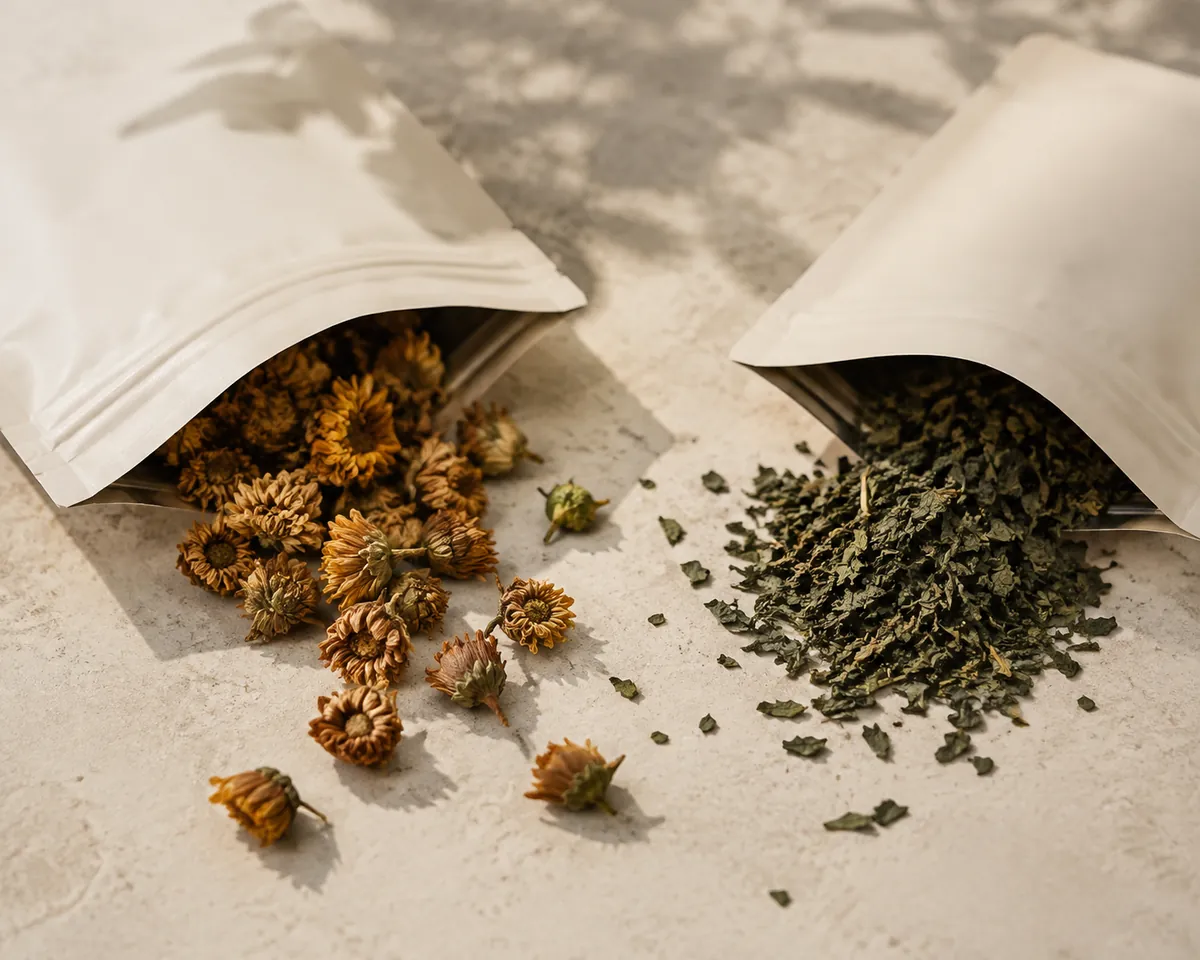
Chamomile is a dried flower head with no dominant aroma compound, so it needs covering while it steeps, fades within months, and shows the difference between whole heads and dust in every cup. Peppermint is a dried leaf carrying menthol in quantity, so it brews fast, survives neglect, keeps for a year or more, and tastes clearly of itself even from a cheap bag. Neither carries caffeine. Spend on the chamomile and economise on the peppermint, which is the reverse of how most people buy them.
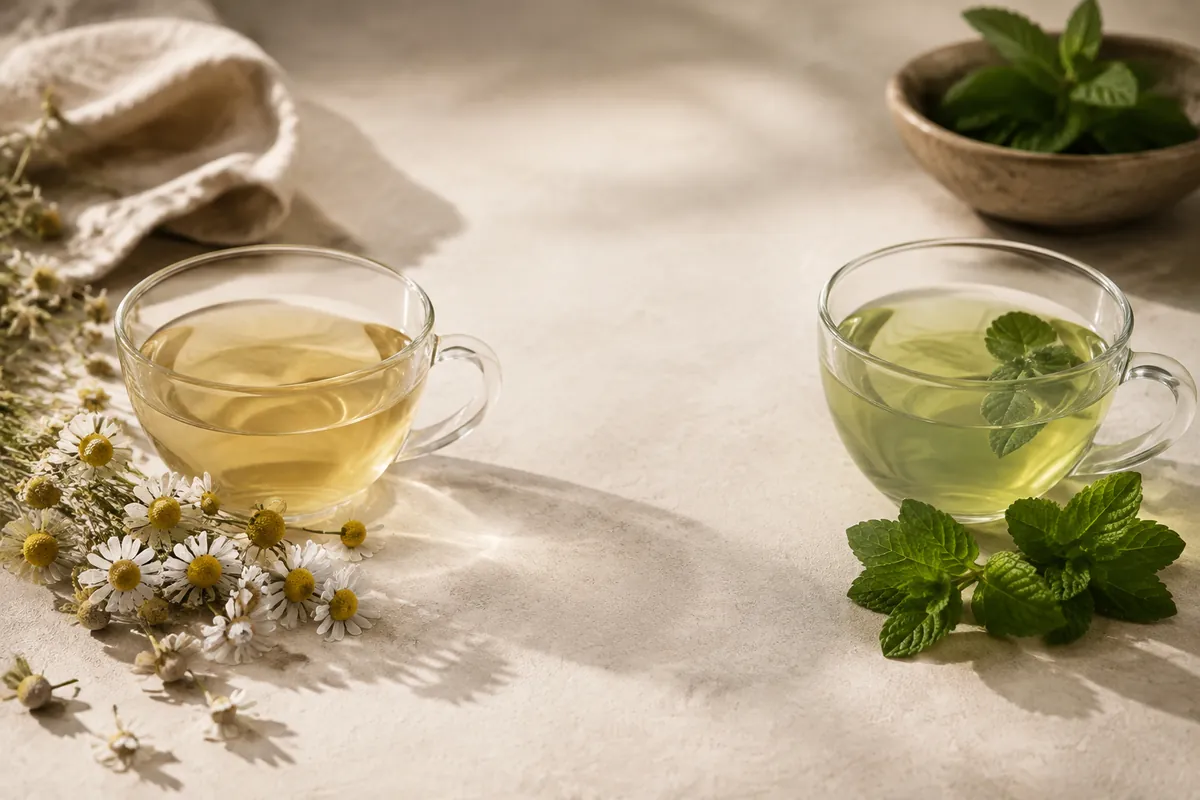
Side by side
| Attribute | Chamomile tea | Peppermint tea |
|---|---|---|
| Part used | Dried flower head | Dried leaf |
| Key compounds | A spread, none dominant | Menthol, plus menthone |
| Taste | Apple-like, honeyed, floral | Sharp, cooling, clean |
| Cooling sensation | None | Pronounced |
| Steep | 5 to 7 minutes, covered | 3 to 5 minutes, lid optional |
| Over-steeped | Bitter and hay-like by 8 minutes | Green and dull, still drinkable |
| Quality gap | Enormous; whole heads against dust | Small; cheap bags still taste of mint |
| Iced | Loses its top notes | Keeps its whole identity |
| Shelf life | About six months | A year or more |
| Caffeine | None | None |
These two sit next to each other in every supermarket and in most cupboards, both caffeine-free, both sold as the gentle option. In the pot they behave almost nothing alike.
Chamomile is a dried flower whose character sits in a set of delicate volatile oils, spread thin and easily lost. Peppermint is a dried leaf whose character is dominated by one robust compound, menthol, which arrives fast and does not need looking after.
One is fragile and one is loud, and that asymmetry decides how each is brewed, how each behaves in a blend, how much the quality of the packet matters, and which of the two survives being iced.
A flower and a leaf
Chamomile tea is made from the flower heads of Matricaria chamomilla, the small daisy-like plant usually sold as German chamomile. What goes in the cup is the whole head: yellow disc, white petals, and in cheaper products a good deal of broken stem and dust.
Peppermint tea is made from the leaf of Mentha piperita, a natural hybrid of watermint and spearmint. The leaf is the entire product, and the stem is trimmed out of anything decent.
That structural difference has practical weight. A flower head is bulky, fragile and easily crushed into powder in transit, while a mint leaf is tougher and holds its shape, which is why a bag of chamomile degrades in the packet in a way a bag of mint does not.
Both are true herbal infusions rather than tea, so neither carries caffeine at any strength, and neither has the tannin that gives green tea its grip. In that they sit with rooibos and honeybush rather than with anything from a tea bush.
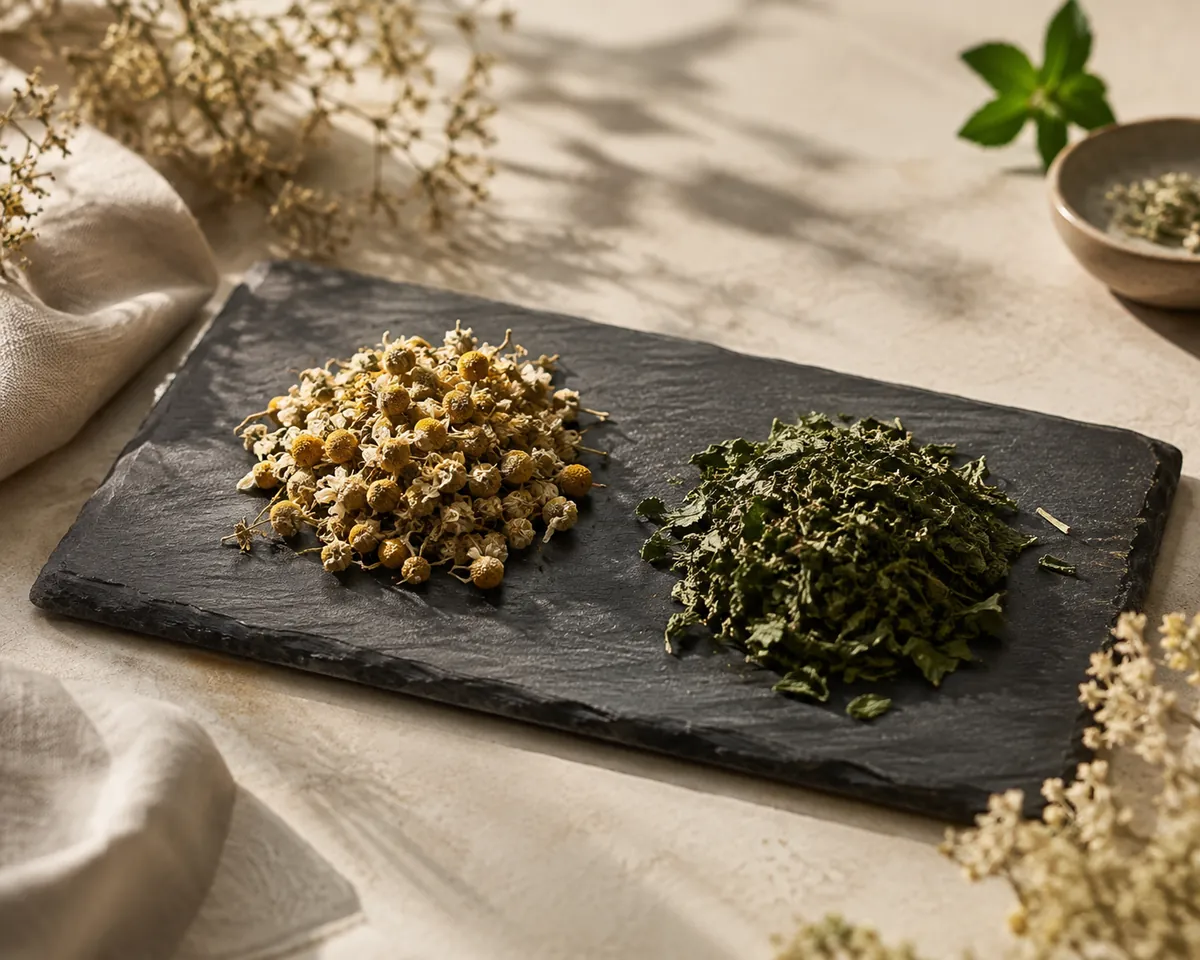
Where each one's flavour actually lives
Chamomile's aroma comes from a spread of compounds, none of them dominant. Bisabolol and chamazulene are the ones usually named, and the effect is cumulative: no single molecule carries the flavour, so losing some of them thins the whole thing rather than removing one note.
Peppermint is the opposite case, and unusually so. Menthol accounts for a large share of the character, and it is both strongly aromatic and physically detectable, because it triggers the same receptors that respond to cold.
| Chamomile | Peppermint | |
|---|---|---|
| Key compounds | A spread, none dominant | Menthol, plus menthone |
| Aroma strength | Low to moderate | High |
| Cooling sensation | None | Pronounced |
| Robustness | Fragile; fades quickly | Durable; survives handling |
| Effect of losing some | Thins across the board | Still recognisably mint |
That cooling feeling is a sensation rather than a temperature, which is why iced peppermint tea reads as colder than it is. Nothing in chamomile does anything comparable.
The asymmetry is the whole comparison in miniature. A weak peppermint still tastes of peppermint, while a weak chamomile tastes of warm water and hay.
What they taste like side by side
Brewed properly, chamomile is soft and rounded, with an apple-like sweetness at the front, a honeyed middle and a faint hay note underneath. There is no sharpness anywhere in it and very little length.
Peppermint arrives immediately. The aroma reaches you before the cup does, the first sip is sharp and cooling, and the finish is clean and slightly drying with the cooling sensation lingering well after the liquid has gone.
How assertive each is
- Peppermint, strong brewDominates anything it is near
- Peppermint, light brewStill unmistakably itself
- Chamomile, good flowersGentle, sweet, floral
- Chamomile, ordinary bagsFaintly sweet, mostly hay
- Chamomile, staleClose to nothing
Body separates them too. Chamomile has a slightly fuller, rounder texture that reads as soft; peppermint is thin and clean, and the cooling does the work that body would otherwise do.
Colour is a poor guide for both.
Chamomile brews pale gold and peppermint pale green-gold, and neither deepens much however long you leave it, which is the opposite of hibiscus or barley tea, where colour tracks strength closely.
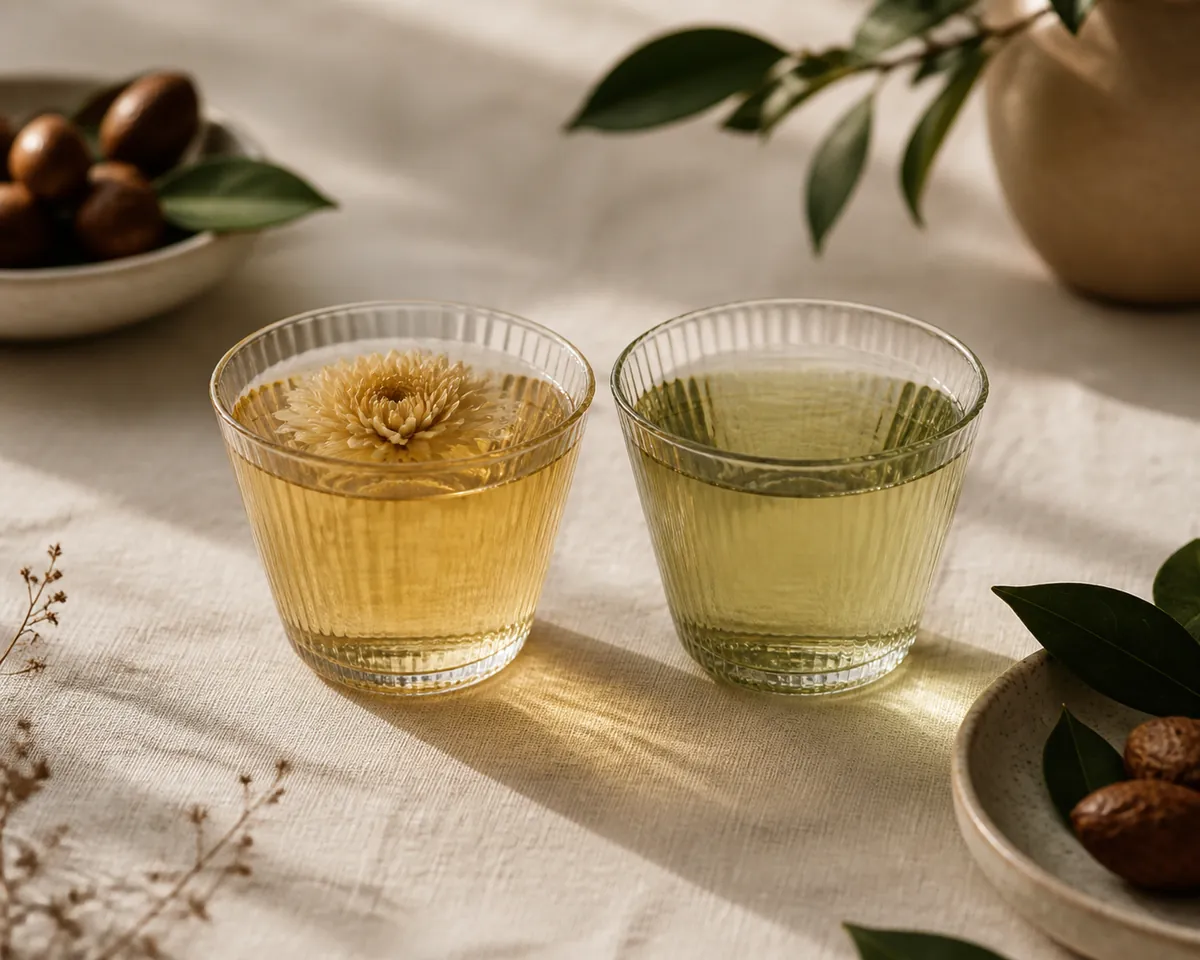
Why one needs covering and the other does not
Volatile compounds leave a cup as it steams. That is the same for both infusions, but the consequences are not, because of how much each one has to spare.
Chamomile needs a lid or a saucer over the cup, and the difference is easy to taste in a side-by-side test. Covered chamomile is noticeably sweeter and rounder, because the aroma that would have gone into the room stayed in the water.
Peppermint loses aroma just as readily and hardly suffers. There is so much menthol in the leaf that giving up a share of it to the air still leaves a firmly minty cup, so covering is a small refinement rather than a requirement.
Brewing each one properly
- ChamomileWater just off the boil, covered, five to seven minutes
- PeppermintWater just off the boil, three to five minutes, lid optional
- QuantityA generous tablespoon of chamomile flowers; a teaspoon of mint
- VesselA basket infuser for both, since flowers and leaf both need room
- StrainingChamomile sheds fine dust, so a finer mesh helps
Temperature matters less for both than it does for leaf tea, since neither has the tannin that punishes boiling water, and the general case is set out under steeping temperature. A basket infuser suits both, and soft water flatters the chamomile more, for the reasons under water for brewing.
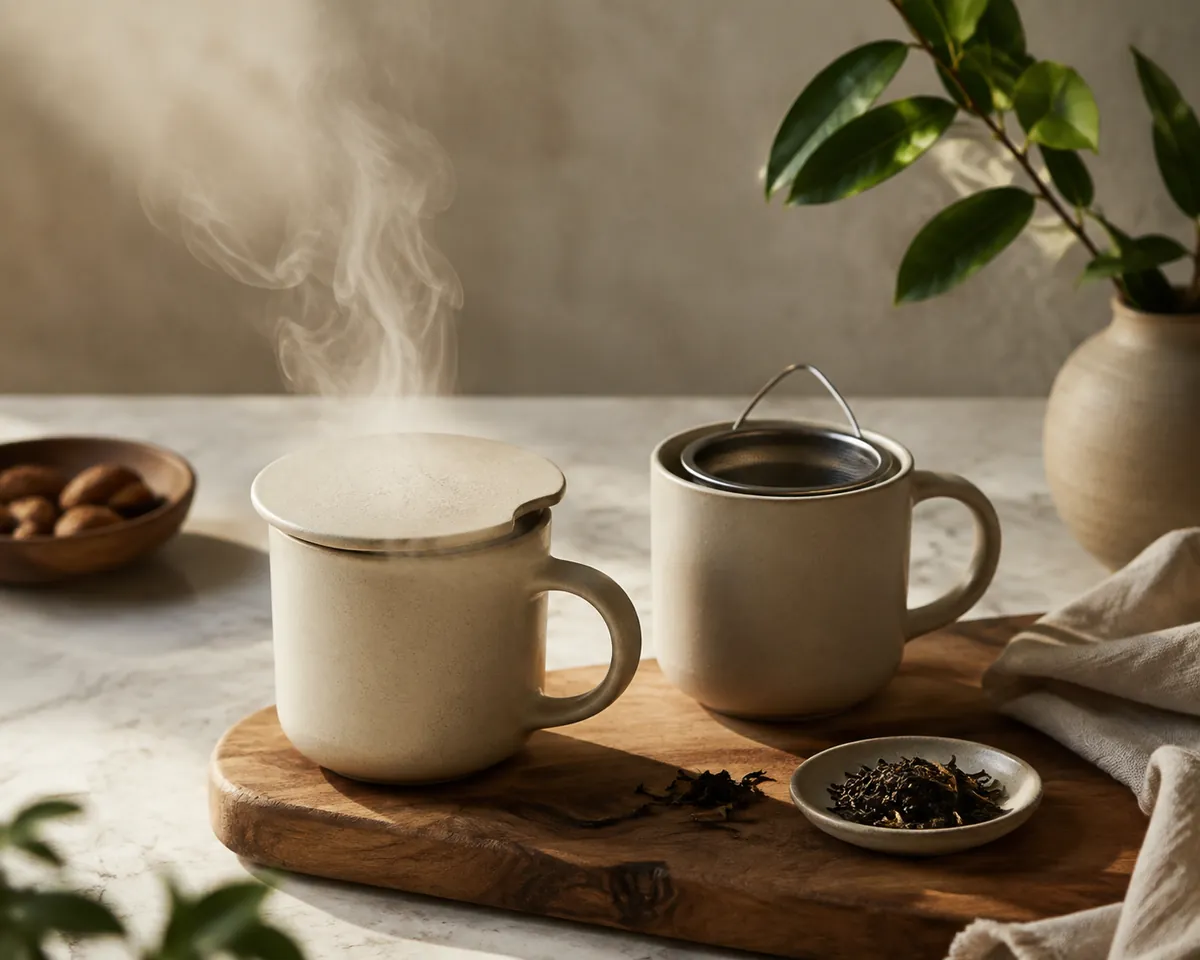
How each behaves when over-steeped
Left too long, both turn, but they turn in different directions and at different speeds.
Chamomile goes bitter and increasingly hay-like after about eight minutes, and the sweetness that made it pleasant fades first. What is left is a slightly grassy, faintly medicinal drink that most people abandon halfway down the cup.
Peppermint holds up much longer and then goes green and vegetal rather than bitter, with the cooling still present. It is a duller drink rather than an unpleasant one, which means a forgotten mug is usually still drinkable.
Neither develops the harsh astringency of an over-steeped black tea, because neither has the tannin to produce it. The failure is flavour loss rather than grip, in both cases.
Strength is set by quantity rather than by time with both of them, which follows from the same absence. Doubling the leaf gives a genuinely stronger cup; doubling the steep gives a duller one, and that is the opposite of the instinct most drinkers bring from tea.
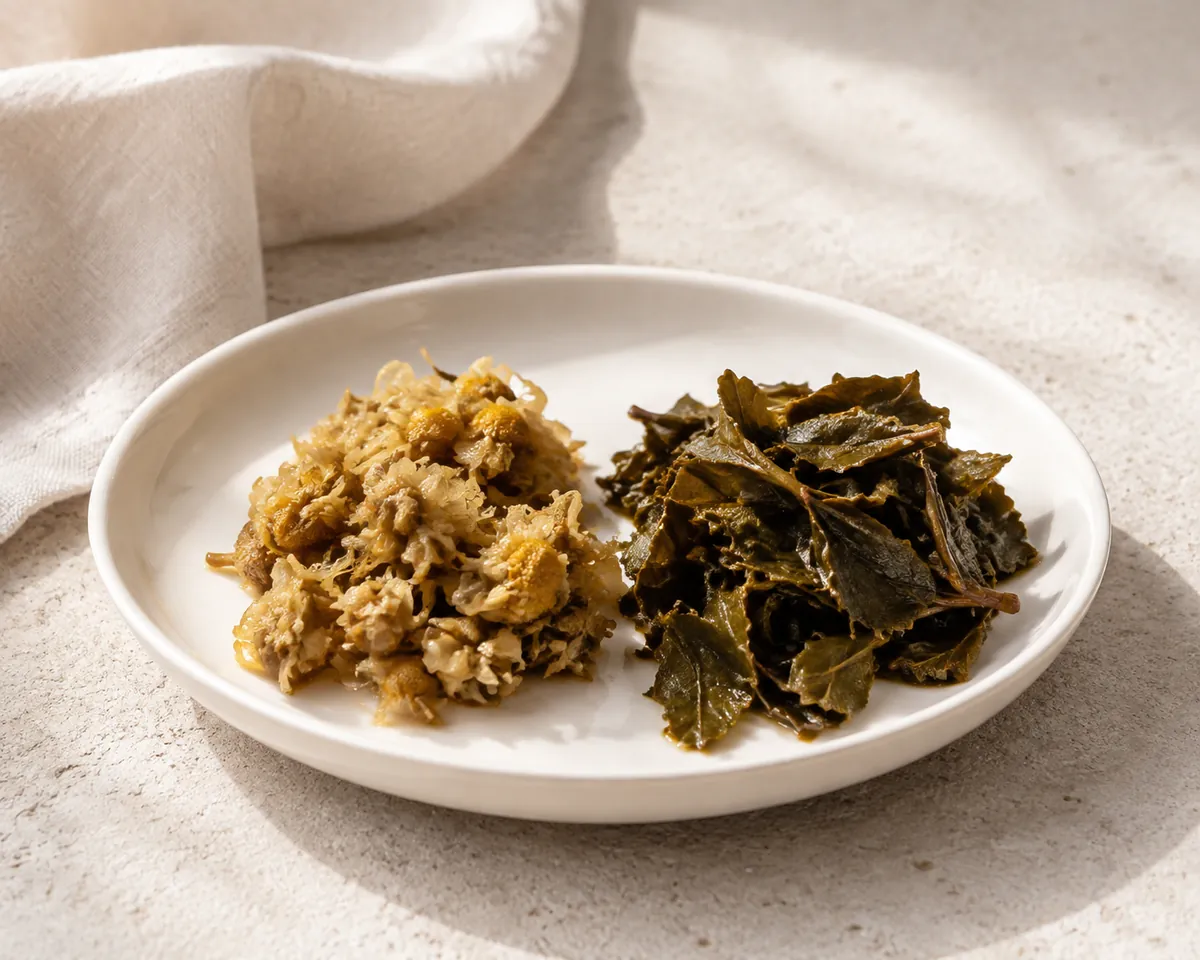
Re-steeping is worth trying with peppermint and not with chamomile. A second pour over the same mint leaf gives a light but recognisable cup, where chamomile flowers have given up almost everything they have in the first brew and the second is little more than coloured water.
Quality: where it shows and where it does not
This is where the two diverge most sharply as purchases, and where money is well or badly spent.
Chamomile quality is enormously visible in the cup. Whole flower heads give a sweet, honeyed, distinctly apple-like drink; the crushed yellow dust in a cheap bag gives something flat and hay-flavoured, and no brewing technique closes that gap.
Peppermint quality matters far less. A cheap bag of cut mint and an expensive tin of whole leaf both taste clearly of peppermint, and the difference is one of refinement rather than of kind.
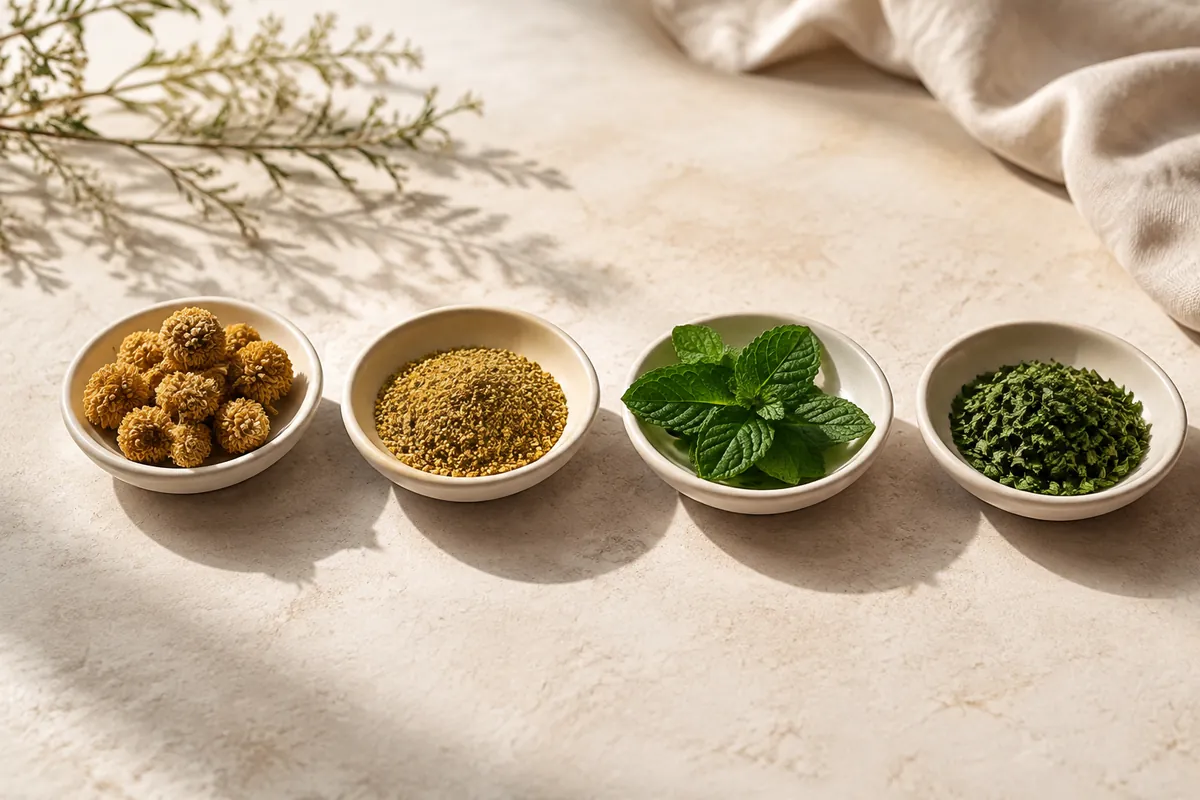
Chamomile, good
Whole heads, sweet and honeyed, worth paying for
Chamomile, poor
Yellow dust, flat and hay-like, barely worth brewing
Peppermint, good
Whole leaf, cleaner and more aromatic
Peppermint, poor
Cut leaf, still recognisably peppermint
So the buying advice differs by herb rather than by principle. Spend on chamomile and economise on peppermint, which is the opposite of what most people do when they buy both from the same range.
Blending, and why one always wins
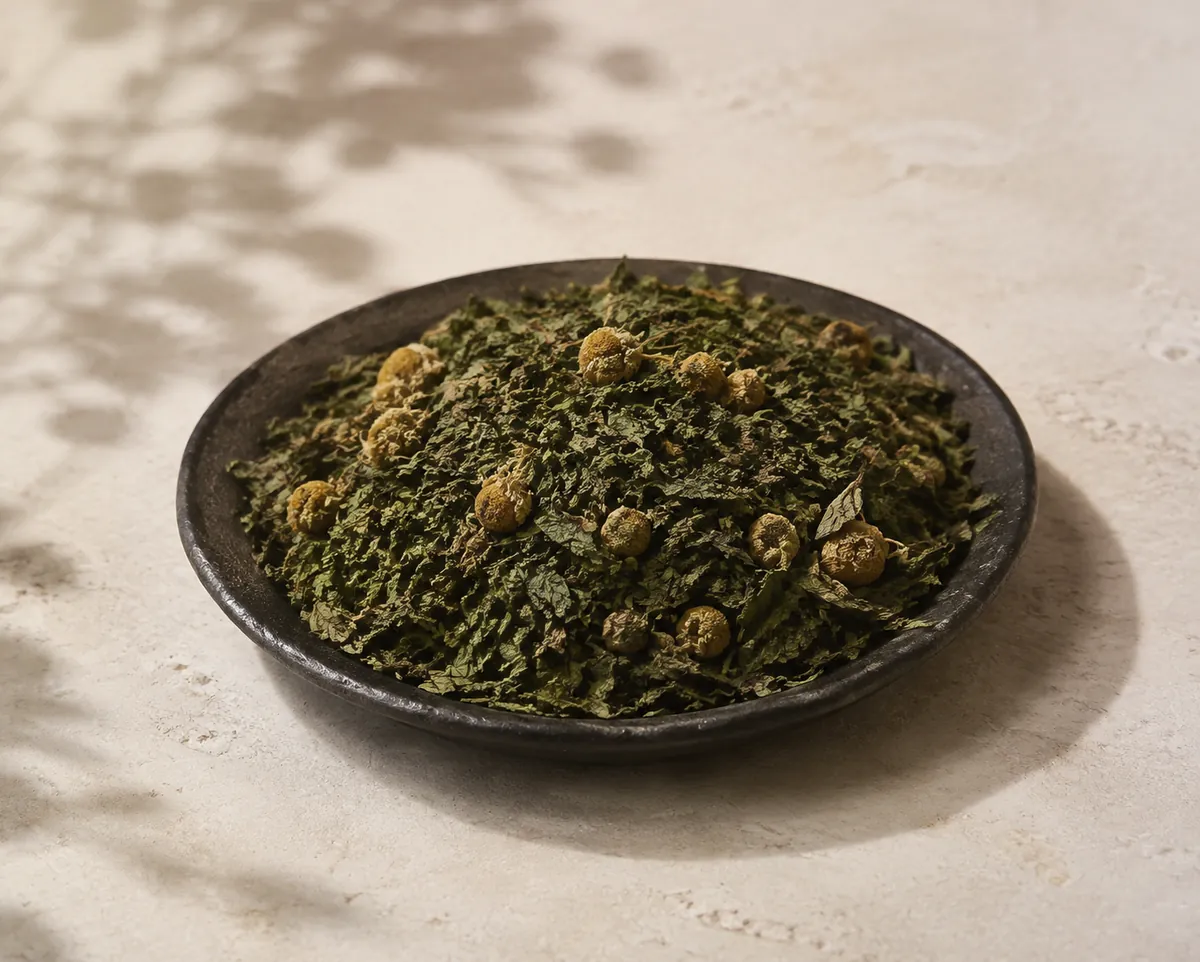
Put the two together and you get peppermint tea with a slightly odd background. That is not a failure of proportion; it is what happens whenever menthol meets anything gentler.
Chamomile blends well with quiet partners. Lemongrass extends it, honey suits it, and a little dried lavender or apple works because none of those shouts.
Peppermint blends by dominating, and the useful pairings are the ones that can hold their own. Ginger works because heat and cooling occupy different territory, and rooibos works because its body sits underneath rather than competing.
- Chamomile with lemongrass, for length without noise
- Chamomile with honey, which suits the existing sweetness
- Peppermint with ginger, warmth against cooling
- Peppermint with rooibos, body underneath the sharpness
- Peppermint with cocoa, which is a dessert rather than an infusion
The one blend to avoid is the two together, unless what you actually wanted was mint, in which case the chamomile is simply money you did not need to spend.
Which one survives being iced
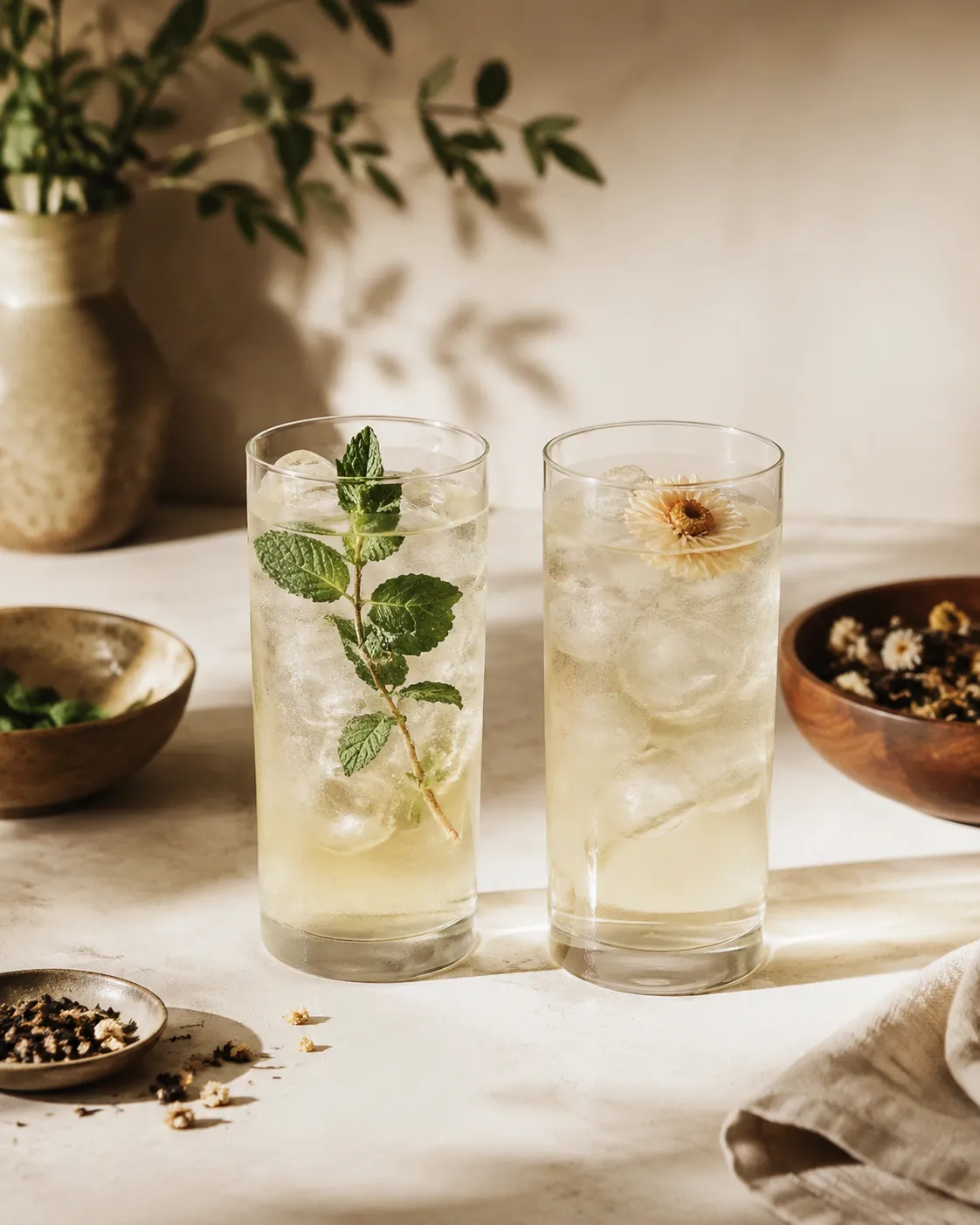
Peppermint is one of the best herbs on the shelf for cold drinks, and chamomile is one of the least suited, for reasons that follow directly from the chemistry.
Cold suppresses aroma. Menthol's cooling sensation is not an aroma and works just as well cold, so an iced peppermint keeps its whole identity, while iced chamomile loses the delicate top notes that were most of what it had.
Cold infusion, per litre
- Peppermint leaf
- 15 g, 6 to 8 hours in the fridge
- Chamomile flowers
- 25 g, 8 hours, and expect a quiet drink
- Water
- 1 litre, cold from the tap
Iced from hot works better for chamomile than cold infusion does, brewed at double strength, since at least the hot stage lifts some aroma out of the flower. The usual technique is covered in iced tea.
For peppermint, either route works and cold infusion is cleaner. A squeeze of lemon suits both, and it does more for the chamomile, which needs the lift.
Buying each of them
The checks are different because the failure modes are different, and a single rule for both leads you wrong.
- For chamomile, look for whole flower heads and reject yellow dust
- For chamomile, smell for apple and honey rather than hay
- For peppermint, whole or coarsely cut leaf is enough; dust is acceptable
- For peppermint, check it says peppermint rather than simply mint
- For both, prefer opaque resealable packaging over a clear window
The mint labelling point catches people out. Spearmint is a different plant with far less menthol, sweeter and much milder, and a packet marked only mint may be either, or a blend of the two.
Chamomile has its own confusion. Roman chamomile is a different species, more bitter and more strongly aromatic, and it is uncommon in tea but does appear, so a packet that names the species is telling you something useful.
Price is a fair guide for the flowers and a poor one for the leaf. A cheap chamomile is usually cheap for a visible reason, and you can see it through the packet before you spend anything.
Storage, and which fades faster
Both fade, and chamomile fades considerably faster, which follows from having a spread of fragile compounds rather than one durable one.
Chamomile is worth buying in small quantities and using within about six months. After a year the sweetness has largely gone and what remains is the hay note that was always underneath.
Peppermint holds for a year or more without dramatic loss, and even a two-year-old packet is recognisably itself. The menthol simply does not disappear at the rate the chamomile compounds do.
The general rules under storing loose leaf apply to both: sealed, dark, dry, cool, and away from the shelf above the kettle. Chamomile is the one to buy little and often, and peppermint is safe to buy in bulk.
Which to keep in the cupboard
Most cupboards should hold both, because they are not really alternatives to each other. They occupy opposite corners of the herbal shelf: one soft, sweet and floral, the other sharp, cooling and assertive.
If only one, the honest answer depends on how you buy. Good chamomile is the more interesting drink and the one that rewards attention; ordinary chamomile is forgettable, and against an ordinary peppermint it loses easily.
The practical division is simple enough. Peppermint for when you want something to taste of, chamomile for when you want something quiet, and a willingness to spend properly on the flowers or not to bother with them at all.
Common questions
Why does chamomile tea need a lid and peppermint does not?
Both lose volatile aroma into the steam, but they have different amounts to spare. Chamomile's character is spread across several compounds with none dominant, so losing a share thins the whole drink. Peppermint carries so much menthol that giving up some to the air still leaves a firmly minty cup.
Is it worth paying more for either one?
For chamomile, yes. Whole flower heads give a sweet, honeyed, apple-like drink and the crushed yellow dust in a cheap bag gives something flat and hay-like, and no brewing technique closes that gap. For peppermint the difference is refinement rather than kind, so a cheap bag is a reasonable buy.
Which one works better iced?
Peppermint, clearly. Cold suppresses aroma, but menthol's cooling is a sensation rather than an aroma and works just as well cold, so an iced peppermint keeps its identity. Iced chamomile loses the delicate top notes that were most of what it had.