What Is Green Juice? The Hardest One to Make Well at Home
Green juice is the hardest of these drinks to make well at home, for a simple mechanical reason: leaves contain very little juice and give it up reluctantly.
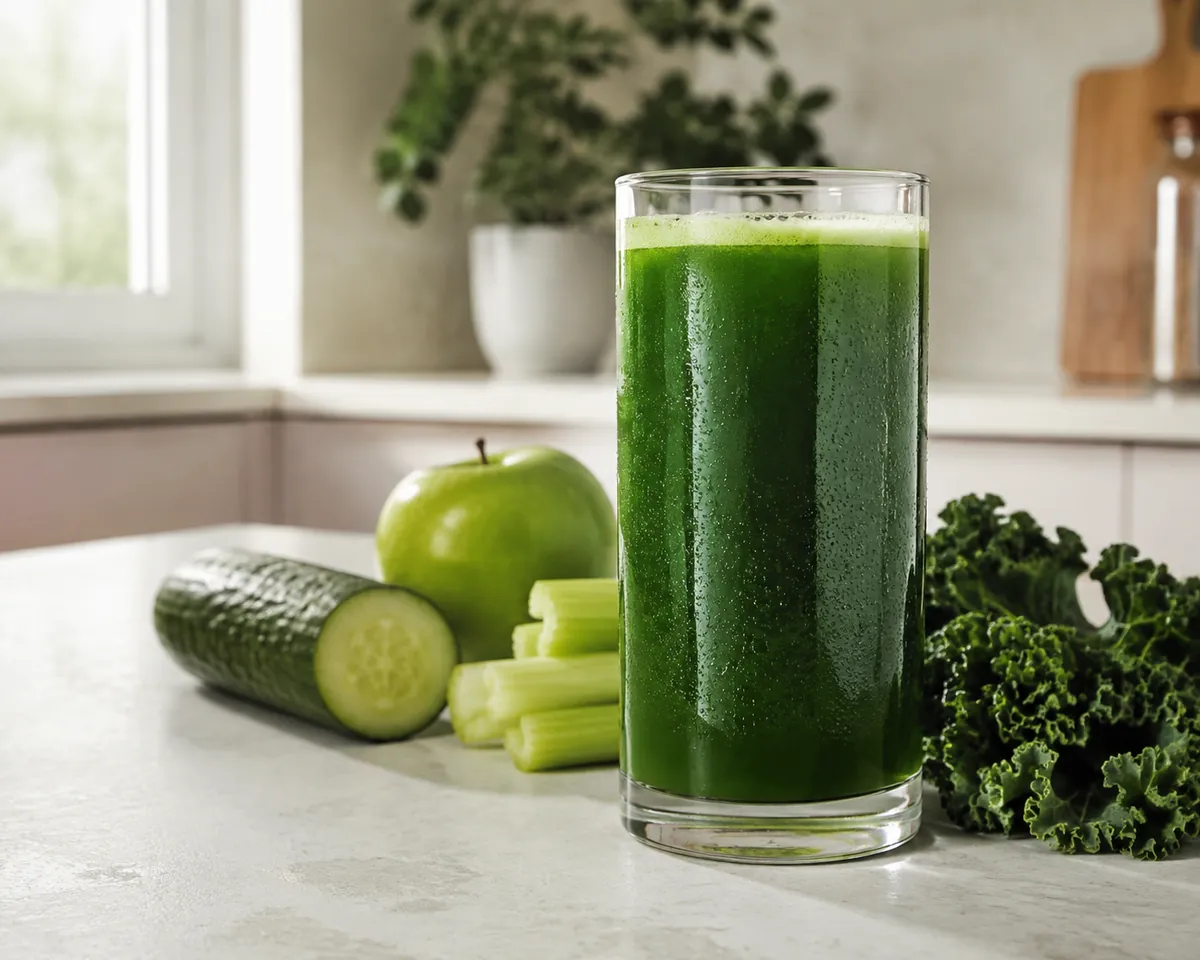
Green juice is leafy greens and green vegetables pressed to remove the fibre, leaving the liquid. Unlike a green smoothie, where everything stays in, juicing discards the pulp entirely, and that is the whole difference between them.
Keeping the pulp or throwing it away changes texture, how filling the drink is and how long it keeps, all of which juice against a smoothie covers across the whole category.
It is also the hardest drink in this section to make well, for a reason that has nothing to do with recipes: the ingredients it is named after barely produce any liquid.
Green juice at a glance
- What it is
- Leafy greens and green vegetables juiced, with the fibre discarded
- The volume base
- Cucumber, celery or apple, never the leaves
- Leaf proportion
- Around a quarter by volume in a balanced glass
- Machine
- A masticating juicer, or a blender and a cloth
- The usual complaint
- Bitterness, from kale stems, citrus pith and standing time
- Shelf life
- Twenty minutes at its best, a day at a push
Leaves barely yield, and what a glass costs
This is the practical fact that shapes every green juice recipe, and the one most of them quietly work around.
Roughly how much juice each gives
- CucumberAround 95 per cent water. Yields enormously
- CeleryVery high yield, and it carries the salt note
- Apple and pearGood yield, and they supply the sweetness
- SpinachLow. A large bag gives a small amount
- KaleLowest. Tough, fibrous, and it clogs the machine
Almost every green juice is built on cucumber, celery or apple. The leaves supply flavour and colour; the watery ingredients supply the volume, and a juice made only of leaves is not practical at home in any quantity a domestic machine could manage.
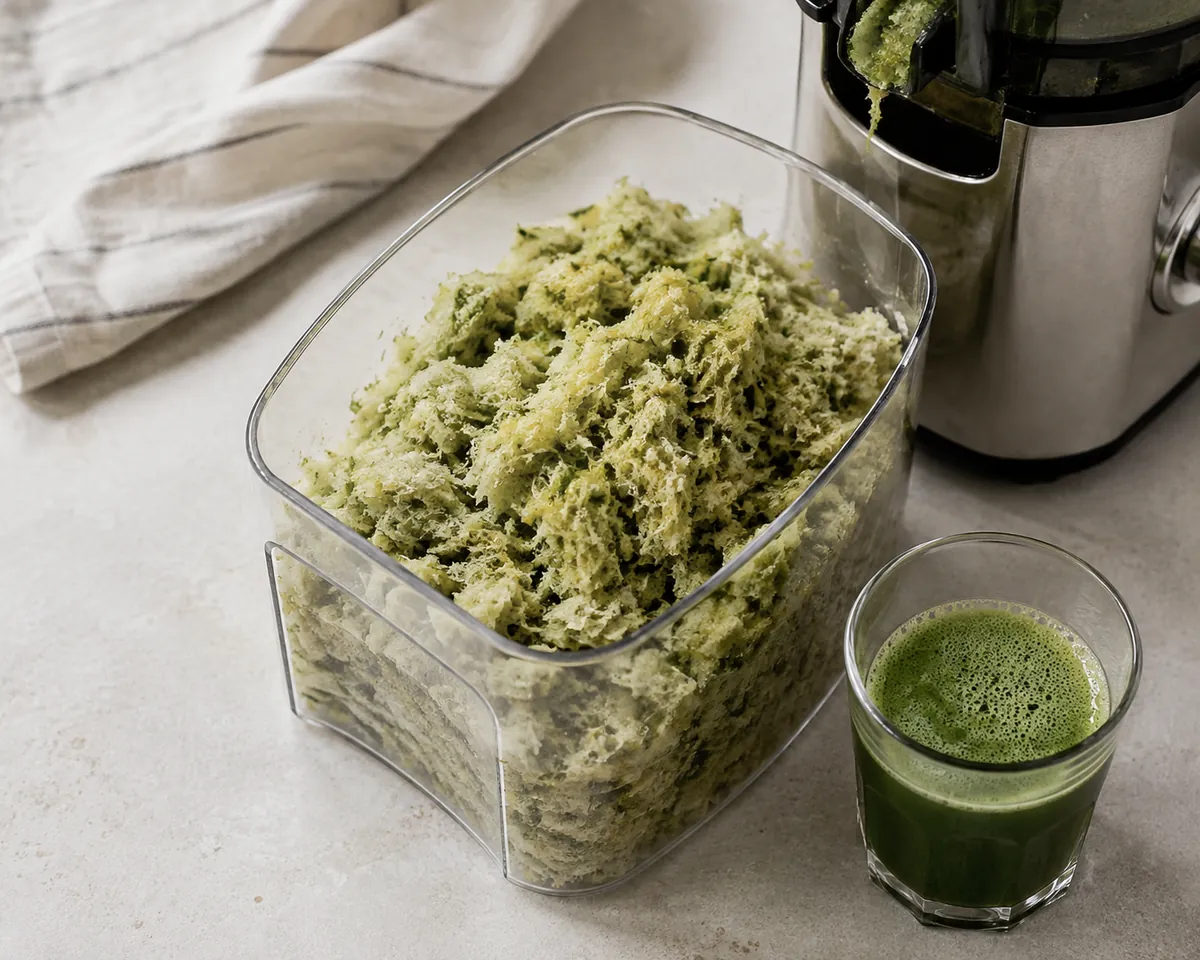
That yield problem is also why green juice is the most expensive drink on this site to make at home, and the arithmetic is worth doing before buying a machine.
That ratio is the honest reason most home juicers end up in a cupboard. It is not the machine and it is not the recipe: a daily glass means a kilogram of vegetables through the kitchen every day and a sink to clear afterwards.
Bought cold-pressed juice costs several times the produce, and the gap is mostly labour and waste rather than margin. Knowing that makes the shop price look less unreasonable, and the home version rather less obviously cheap.
The machine matters here
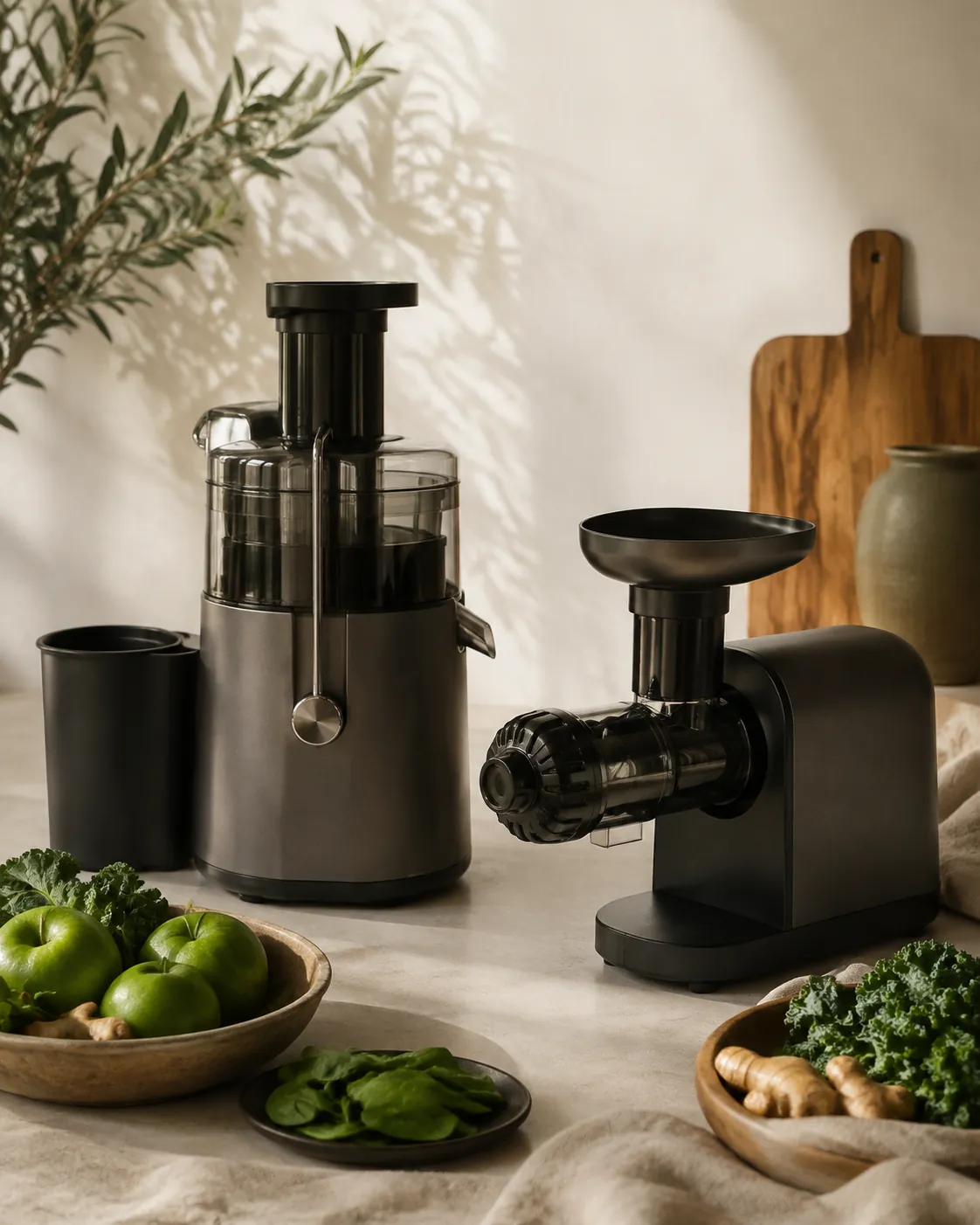
Green juice is the one case in this section where juicer type genuinely changes what is possible, rather than just how long it takes.
| Centrifugal | Masticating | |
|---|---|---|
| How it works | Shreds against a fast grater | Crushes slowly with an auger |
| Yield on leaves | Poor. Leaves pass through largely intact | Good. It crushes them properly |
| Yield on hard veg | Good | Good |
| Speed | Fast | Slow |
| Foam and oxidation | High | Low |
| Price | Lower | Higher |
A centrifugal juicer struggles with leaves because they wrap around the shredding disc rather than being cut by it. On hard produce the two machines are close enough that price decides; on spinach and kale they are not comparable, and if green juice is the main use a masticating machine is close to necessary.
The other difference shows up in the glass rather than in the yield. A centrifugal machine whips air through the juice at speed, which produces a head of foam and starts the oxidation clock early, so a centrifugal green juice dulls visibly faster than a masticating one made from the same board of vegetables.
Why does green juice taste so bitter?
The complaint about green juice is almost always bitterness, and it has identifiable sources rather than being an inherent property of vegetables.
Where bitterness comes from
- Kale and mustard greens
- Genuinely bitter, and more so in mature leaves
- Citrus pith
- If a whole lemon goes in, the pith comes with it
- Stems and stalks
- More bitter than the leaves, particularly on kale
- Over-juicing greens
- Too high a proportion of leaf to watery base
- Standing time
- Oxidation sharpens the bitter notes within the hour
The fixes follow from the list: peel the lemon, strip kale from its stems, keep the leaf proportion to about a quarter by volume, and drink it promptly. Beyond that there are three levers, and none of them involves adding more fruit.
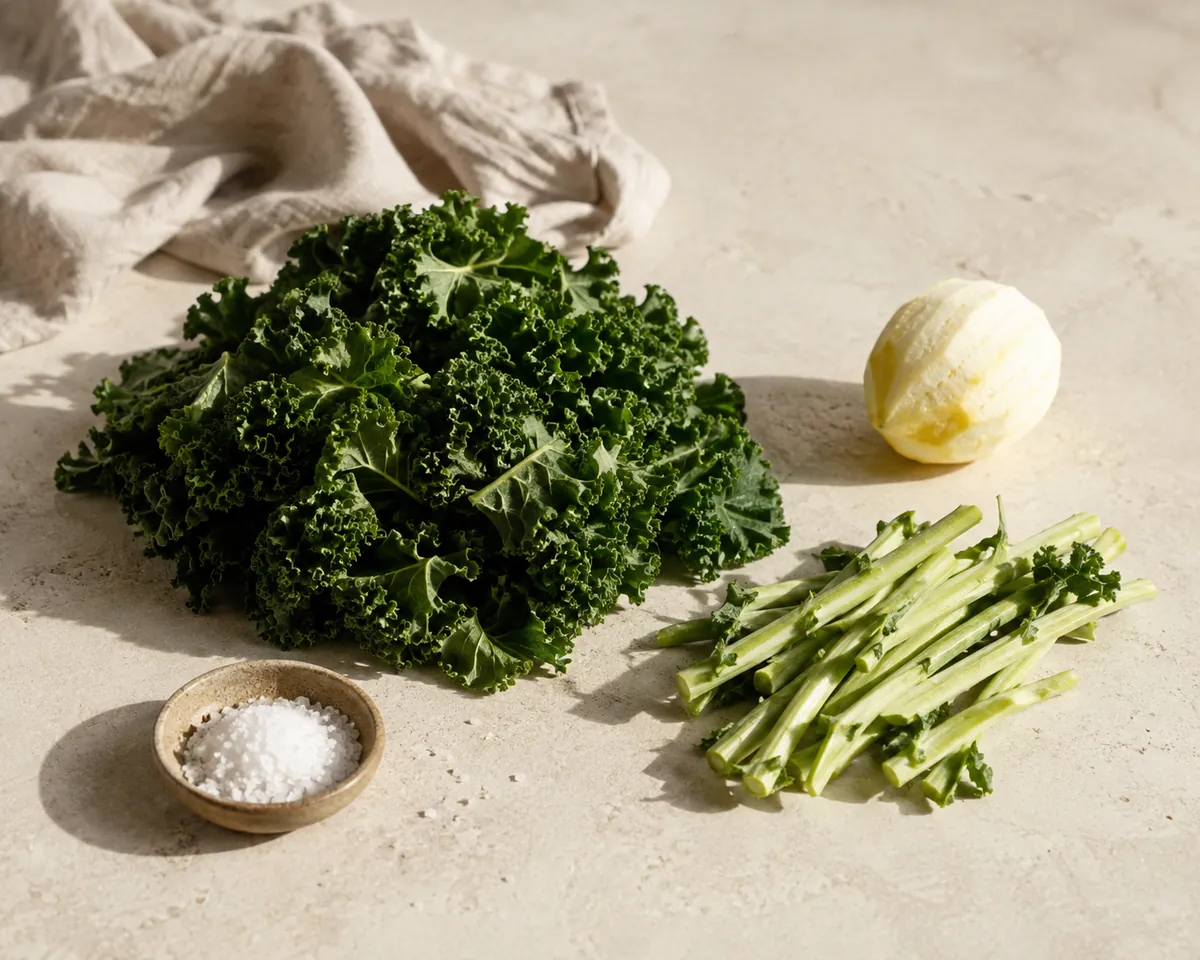
Acid is the strongest of the three. Lemon or lime, peeled, cuts vegetal bitterness far more effectively than sweetness does, and it holds the colour a little longer by slowing oxidation.
A few grains of salt do to green juice what they do to coffee, which is suppress the bitterness rather than mask it. The quantity is smaller than seems useful, and it is the reason celery-heavy juices taste rounder than their ingredients suggest they should.
Temperature is the lever people skip. Green juice served properly cold reads as considerably less bitter than the same juice at room temperature, because cold suppresses bitter perception, and chilling the produce before juicing works better than adding ice afterwards.
Why green juice tastes wrong works through the rest.
A working ratio, and the order to juice in
Most balanced green juices sit inside a narrow range, and the proportions matter more than the specific vegetables.
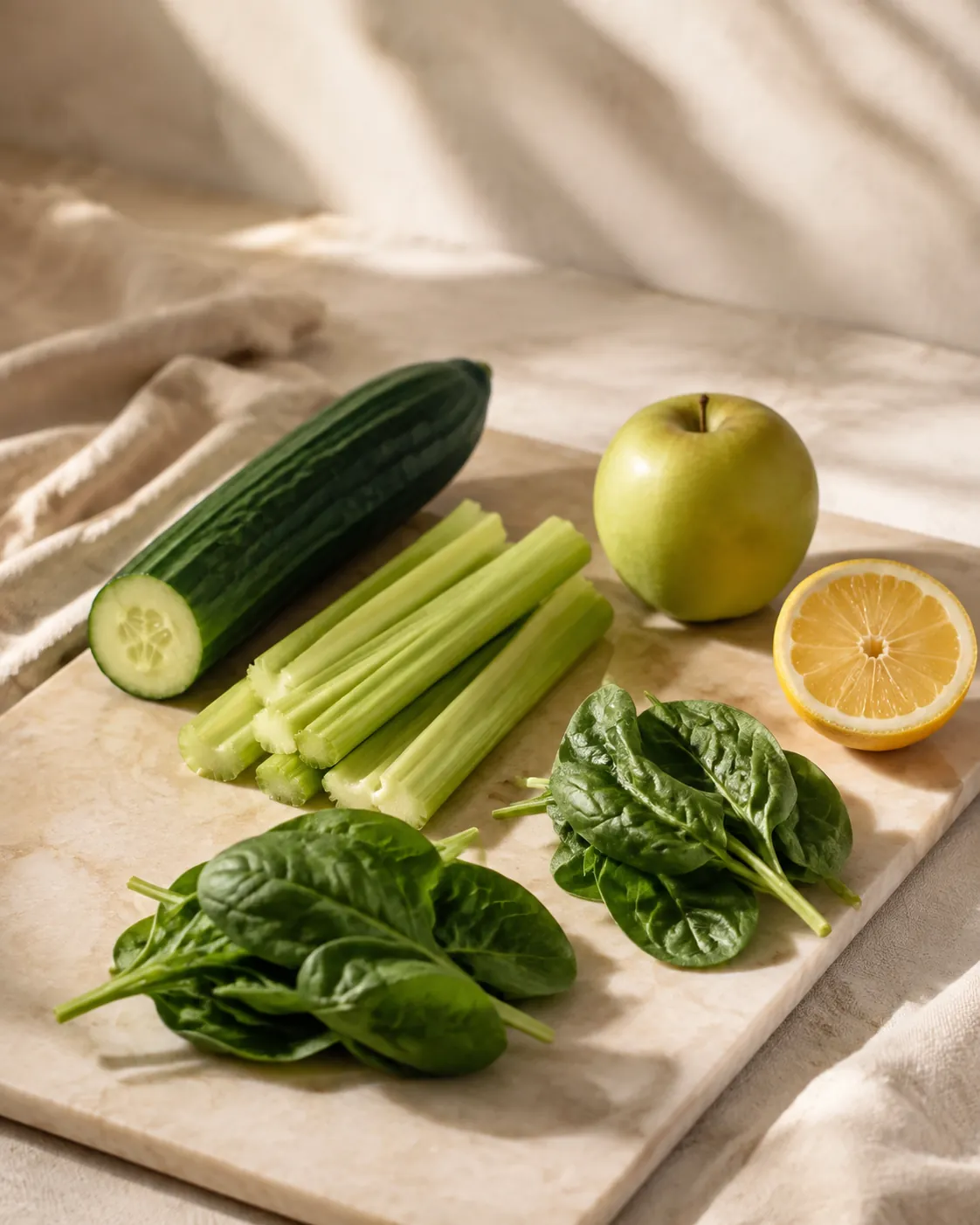
A starting point
- Cucumber
- 1 large, the volume base
- Celery
- 3 or 4 sticks
- Green apple
- 1, for sweetness and acidity
- Leafy greens
- 2 large handfuls, spinach for mildness or kale for depth
- Lemon
- Half, peeled
- Ginger
- A thumb of fresh ginger, optional
That gives roughly 500 ml. The apple and lemon are doing more work than they look: sweetness and acid together mask the vegetal bitterness that puts people off, and removing either one changes the glass more than removing a handful of spinach would.
Sequence is the other half of it, and the order changes both the yield and how long the machine takes to clean afterwards.
A jug of green juice
- Chill everything firstCold produce juices better and the result tastes noticeably less bitter. An hour in the fridge is enough.
- Wash and dryWet leaves slip on a shredding disc and dilute the juice.
- Prep to fit the chuteCut to size before starting rather than pausing mid-run with a machine full of pulp.
- Start with something wateryCucumber or apple first. It primes the screen and carries what follows through.
- Roll the leavesBundle spinach or kale tightly and feed it between two firm pieces so the machine has something to grip.
- Finish with hard produceApple, carrot or fennel last, which pushes the leaf residue through rather than leaving it on the screen.
- Stir before pouringThe juice separates in the jug as it is made, and the last of it is much stronger than the first.
Finishing on hard produce is the trick that most improves yield on a cheap machine, since an apple pushed through last acts as a plunger for everything the leaves left behind. Making green juice sets out variations on the same ratio.
Drinking it fresh
Green juice degrades faster than any other juice on this site, and it does so visibly, which at least makes the deadline easy to judge.
With the fibre removed there is nothing holding it together, and the chlorophyll and the more delicate aromatic compounds oxidise quickly once air is worked into them. Colour dulls within the hour, moving from bright green towards a flat olive, and flavour follows the colour down.
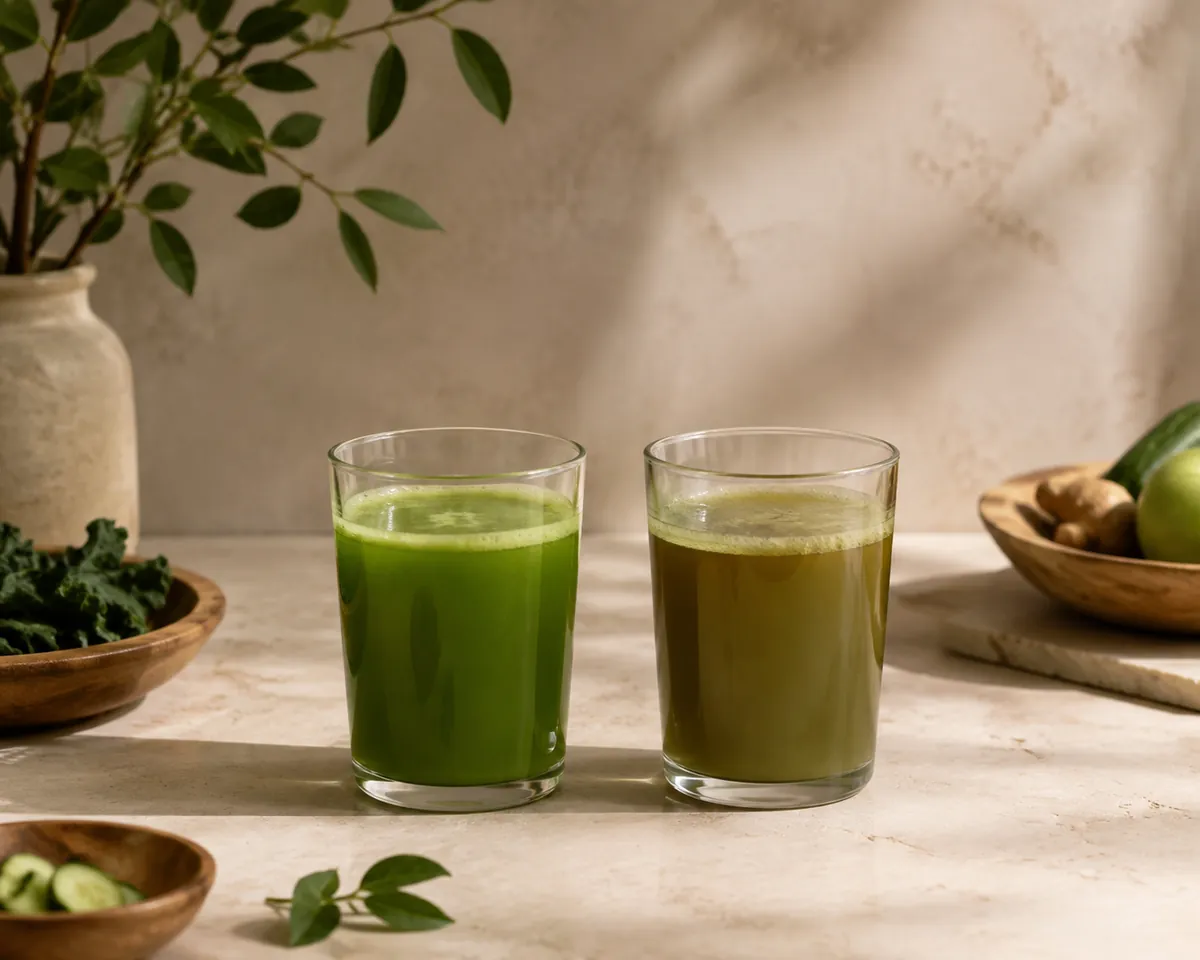
Twenty minutes is the window in which it is at its best. Beyond that, filling the container to the top, sealing it and refrigerating buys a day at the outside, and the reason topping up the container works is simply that there is less air left in contact with the juice.
Cold-pressed commercial green juice is a different proposition, since high-pressure processing extends its life without heat, as cold-pressed juice sets out.
Storing green juice covers the home case, where the honest answer is that there is not much storing to be done.
The pulp is not worth saving
Carrot pulp goes into soup and cake. Green pulp mostly does not, and pretending otherwise wastes an evening.
What comes out is dry, pale, fibrous and bitter, having given up its water and kept all of its stem material. It has none of the sweetness that makes carrot juice pulp usable, and it holds precisely the harsh notes the juice was constructed to avoid.
Composting is the realistic answer. It breaks down quickly and, unlike fruit pulp, it does not sour into something unpleasant in the caddy within a day, which is a small mercy given how much of it a single glass produces.
If the waste bothers you, the drink is wrong rather than the technique. A green smoothie keeps everything, produces nothing to throw away, and takes a fraction of the produce for the same volume in the glass.
Greens beyond spinach and kale
The two usual suspects are also the two worst yielders in the category, which is a reasonable argument for looking past them entirely.
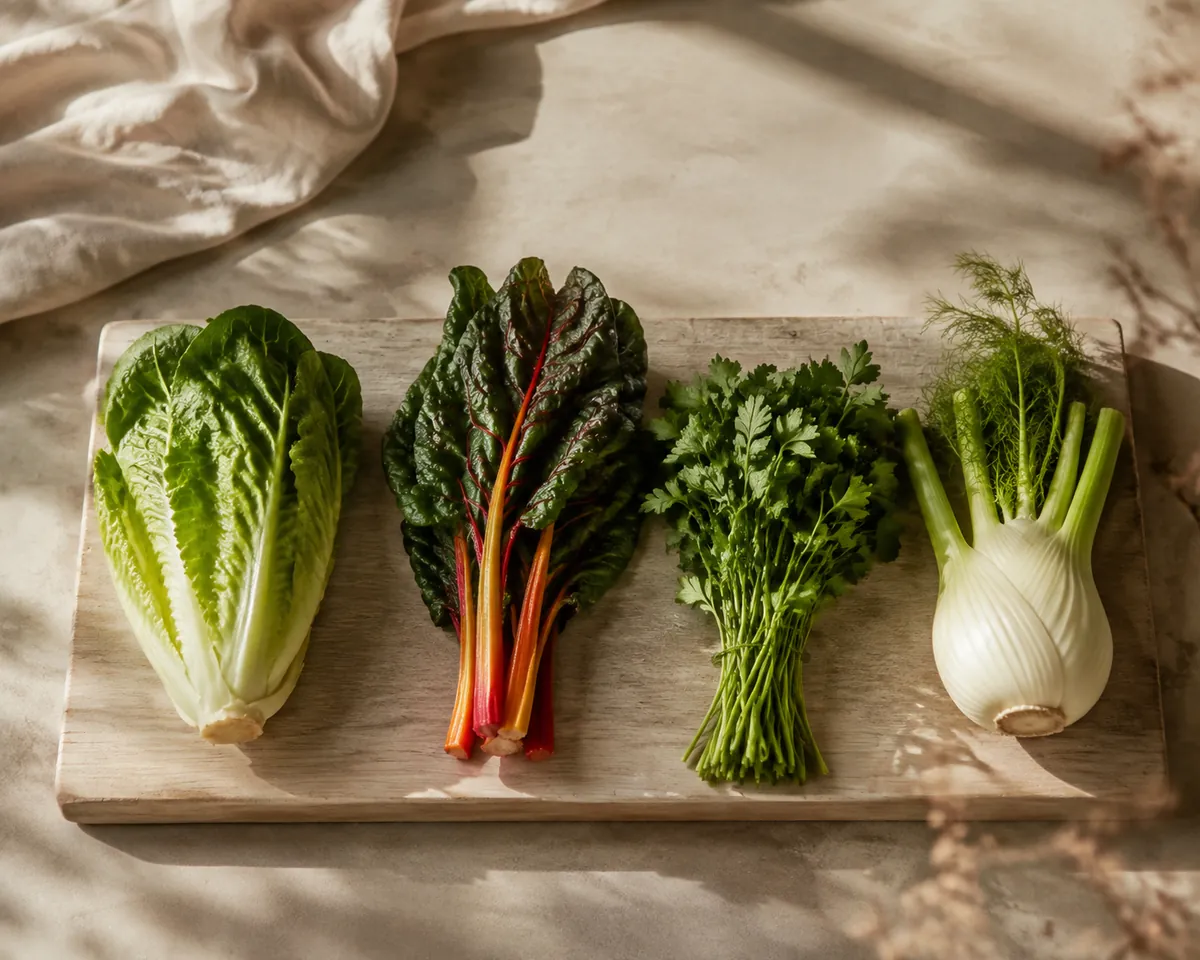
Romaine
High water content and a mild flavour. The easiest leaf to juice and the friendliest to drink.
Chard
Yields moderately and tastes distinctly earthy. Use the stems, which juice better than the leaves.
Parsley
Intense, and used in small quantities. A large handful will dominate a whole glass.
Fennel
Juices well and brings anise sweetness, which covers bitterness more elegantly than apple does.
Broccoli stems
The part usually binned. Firm, high-yielding and surprisingly sweet.
Wheatgrass
Needs a dedicated press. A standard juicer of either type will not touch it.
Romaine is the one to try first if green juice has previously been unpleasant. It gives volume and colour without the sulphurous edge that makes kale hard work, and because it yields well it can carry a much higher leaf proportion without the glass emptying.
Fennel is the other underused one, and it solves a different problem. Where apple covers bitterness with sugar, fennel covers it with anise, which leaves the juice tasting like a vegetable rather than like a diluted fruit drink.
What green juice tastes like takes the flavour apart in more detail.
Cleaning the machine
This is what decides whether a juicer stays on the counter, and no recipe mentions it.
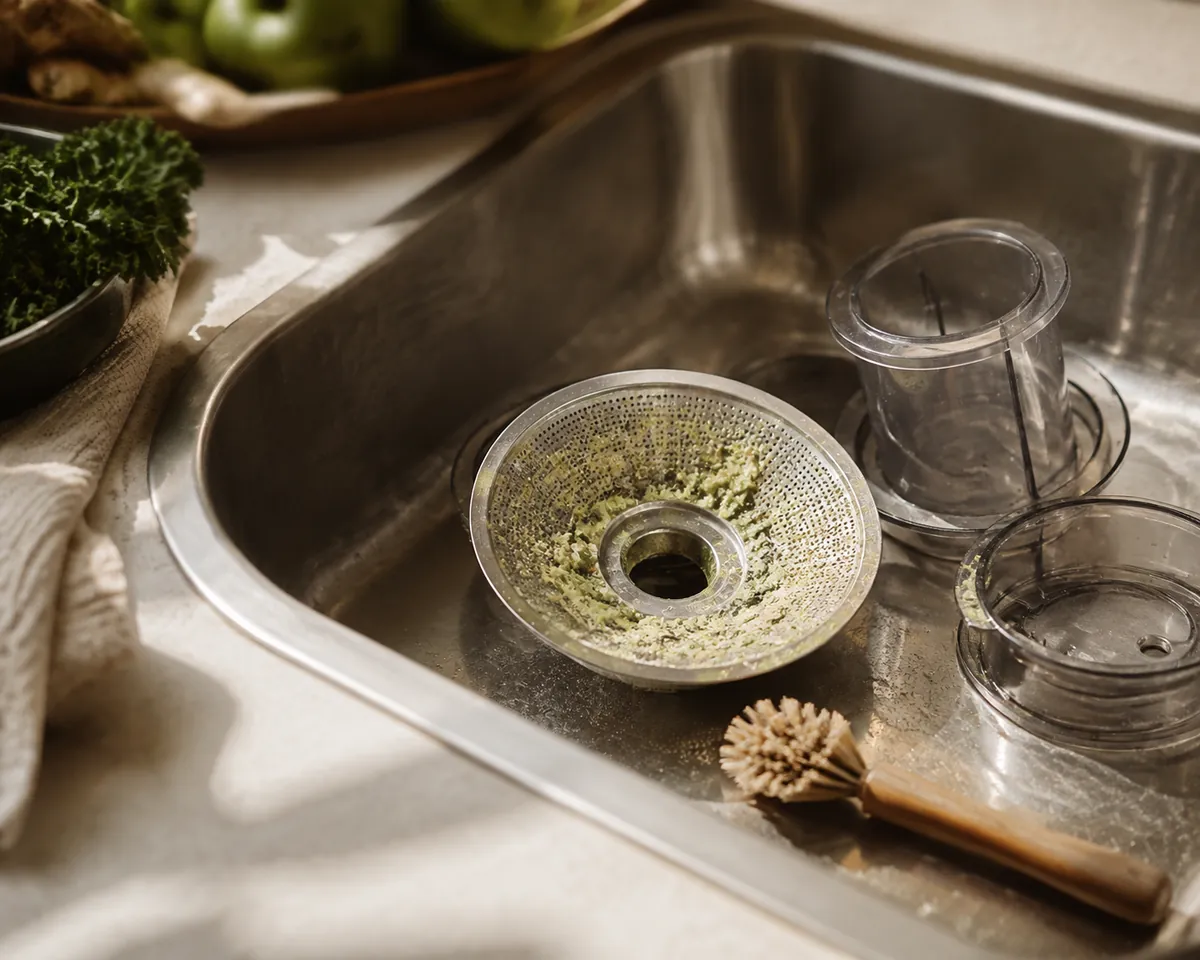
- Rinse every part immediately. Dried green pulp welds itself to a mesh screen.
- The fine screen needs a stiff brush; a cloth will not clear the holes.
- Centrifugal machines have fewer parts but a screen that clogs faster on leaves.
- Masticating machines have more parts and are easier to get properly clean.
- Run a jug of water through at the end to flush the chute before dismantling.
Leaf residue stains, and it smells within hours rather than days. A machine left in the sink to deal with later is the single most common reason a household stops juicing greens, and a two-minute rinse while the juice is still in the jug is what prevents it.
The staining is worth planning around rather than fighting. Chlorophyll marks white plastic permanently, so a machine used mainly for greens will look used within a month regardless of how carefully it is washed, and that is cosmetic rather than a sign anything is wrong with it.
Juicing without a juicer
A blender and a cloth will make green juice, and the result is closer to the machine version than the effort suggests.
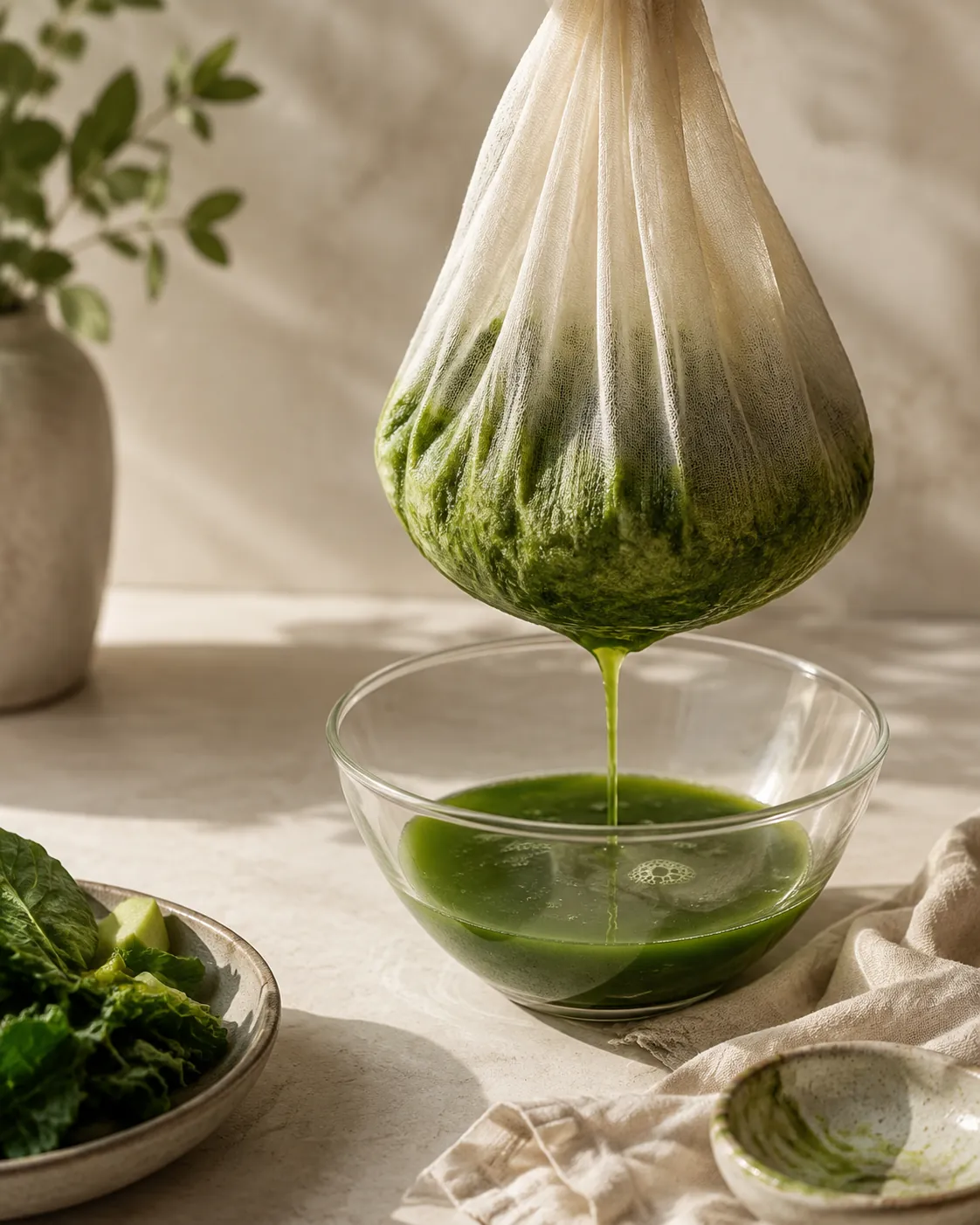
Blend the produce with a small amount of water until completely smooth, then pour it into a muslin cloth or a nut milk bag held over a bowl and wring it out firmly. What comes through is juice; what stays behind is the pulp a juicer would have separated mechanically.
- Add as little water as the blender will run on, or the juice is diluted before it starts.
- Blend for longer than seems necessary. Anything not broken down will not pass the cloth.
- Wring hard and keep wringing; the last third comes out slowly and is worth having.
- A nut milk bag is far easier to work with than muslin and is cheap.
- Chill the produce first, since blending warms it and warm green juice tastes worse.
The yield is respectable: better than a centrifugal machine manages on leaves, and short of a masticating one. What it costs is the wringing, which is genuinely hard work for a large batch and perfectly fine for one glass.
This is also the sensible way to find out whether you will keep doing it. A juicer is a significant purchase for a habit most people abandon, and a cloth answers the question for the price of the vegetables.
Single-ingredient juices, wheatgrass and shots
A large part of the category is sold as one vegetable rather than a blend, and the mechanics change once there is nothing else in the glass.
Celery juice yields heavily and produces a saline, grassy liquid that most people find easier to drink than the colour suggests. Cucumber yields more still and tastes of very little, which makes it a base rather than a drink.
Neither behaves like a blended juice when it stands: without the acid an apple or lemon would contribute, a single-vegetable juice dulls and separates faster, so the twenty-minute window tightens rather than relaxes.
A further corner of the category is sold in 30 ml measures rather than glasses, and it works differently again. Wheatgrass is a grass rather than a leaf vegetable and its fibres are long and tough, so neither a centrifugal nor a standard masticating juicer handles it; it needs a dedicated single-auger wheatgrass press or a manual screw press.
The taste surprises people who expect something bitter. It is intensely sweet and strongly grassy, closer to sugarcane than to anything in the vegetable aisle, and it is served in small measures because the flavour is overwhelming at any volume rather than for any other reason.
Ginger and turmeric shots are the other common format and they need no special equipment, since both are dense rhizomes that any masticating machine handles comfortably. What they do need is dilution, or something sweet such as honey or a splash of apple, because undiluted ginger juice is aggressively hot in a way that ginger tea never is.
Among the juices
Green juice sits at one end of this section, and the contrast with the others explains most of its difficulty.
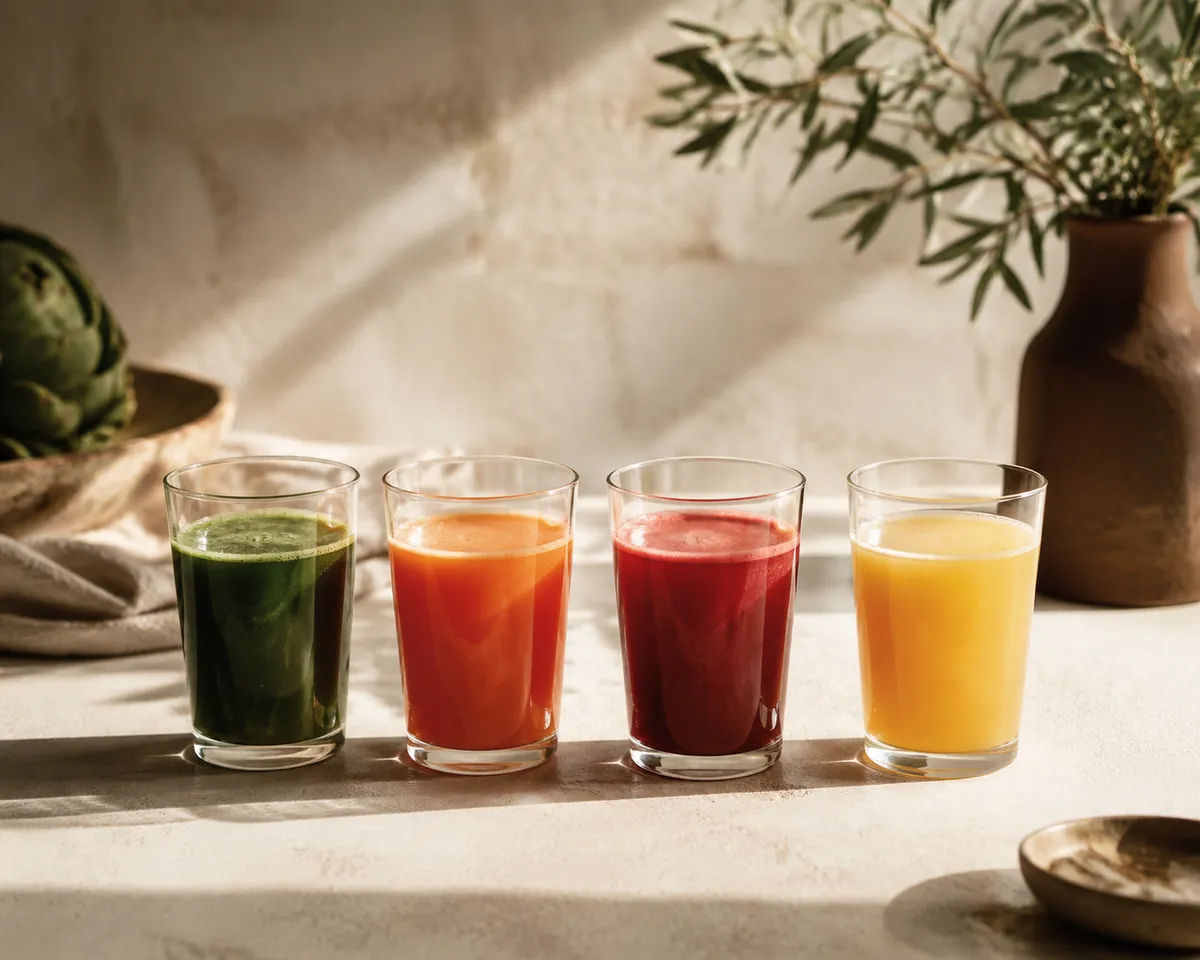
Orange juice and apple juice are high-yield, sweet and palatable without any help at all. They need no acid added, no sweetness balanced and no technique to be drinkable, which is why nobody writes ratios for them.
Carrot juice sits between the two extremes: a vegetable, and sweet enough to drink on its own. It is the bridge most people cross on the way to green juice, and it is also the one that teaches the yield lesson gently, since carrots give up their liquid far more willingly than leaves do.
Cold-pressed juice is the shop version of the same problem, solved with a hydraulic press and a pressure vessel rather than with an apple, which is most of what the price difference buys.
Green juice is the only drink in this section that has to be constructed rather than simply extracted. The leaves supply almost no volume and the palatability comes entirely from what is added around them, which is why every recipe on this page is a ratio rather than an ingredient, and why the arithmetic above matters more than the shopping list.
Common questions
Why does my green juice yield so little?
Leaves contain very little juice and give it up reluctantly, and centrifugal juicers handle them badly because leaves wrap around the shredding disc. Most green juice is built on cucumber, celery or apple for volume, with leaves for flavour.
Why is my green juice bitter?
Usually kale stems, citrus pith from an unpeeled lemon, or too high a proportion of leaf. Strip kale from its stems, peel the lemon, keep leaves to about a quarter by volume, and drink it promptly since oxidation sharpens bitterness.
Do I need a masticating juicer for green juice?
Close to it, if greens are the main use. Centrifugal machines shred rather than crush and leaves pass through largely intact. Rolling leaves tightly and feeding them with apple or cucumber helps, but the yield gap is real.