Coffee Creamer, and What It Imitates About Milk
Coffee creamer is not imitating milk, it is imitating what milk does in a cup. That narrower brief explains the ingredient list, the labelling, and why it never curdles.
Coffee creamer is an engineered emulsion built to do the two things milk does in a cup of coffee: whiten it and soften it. It contains no cream, it usually contains no milk fat, and in most formulations it contains no water until you add some.
Understanding it means dropping the idea that it is a milk substitute in the way oat milk is. Creamer is not imitating milk, it is imitating what milk does, which is a narrower brief and a much easier one to engineer around.
The result is a product that survives a warehouse, a hot cup, an acidic brew and a year on a shelf, and that is the whole reason it exists.
Coffee creamer at a glance
- Category
- A manufactured emulsion, not a dairy product
- Typical base
- Vegetable oil, sugars, and a protein to hold them together
- Milk content
- Usually none as fat or lactose, often a milk-derived protein
- Forms
- Liquid, powder, and single-serve pots
- Job in the cup
- Whitening, body, and softening bitterness
- Keeping
- Shelf-stable unopened, which is the point
What is actually in a coffee creamer
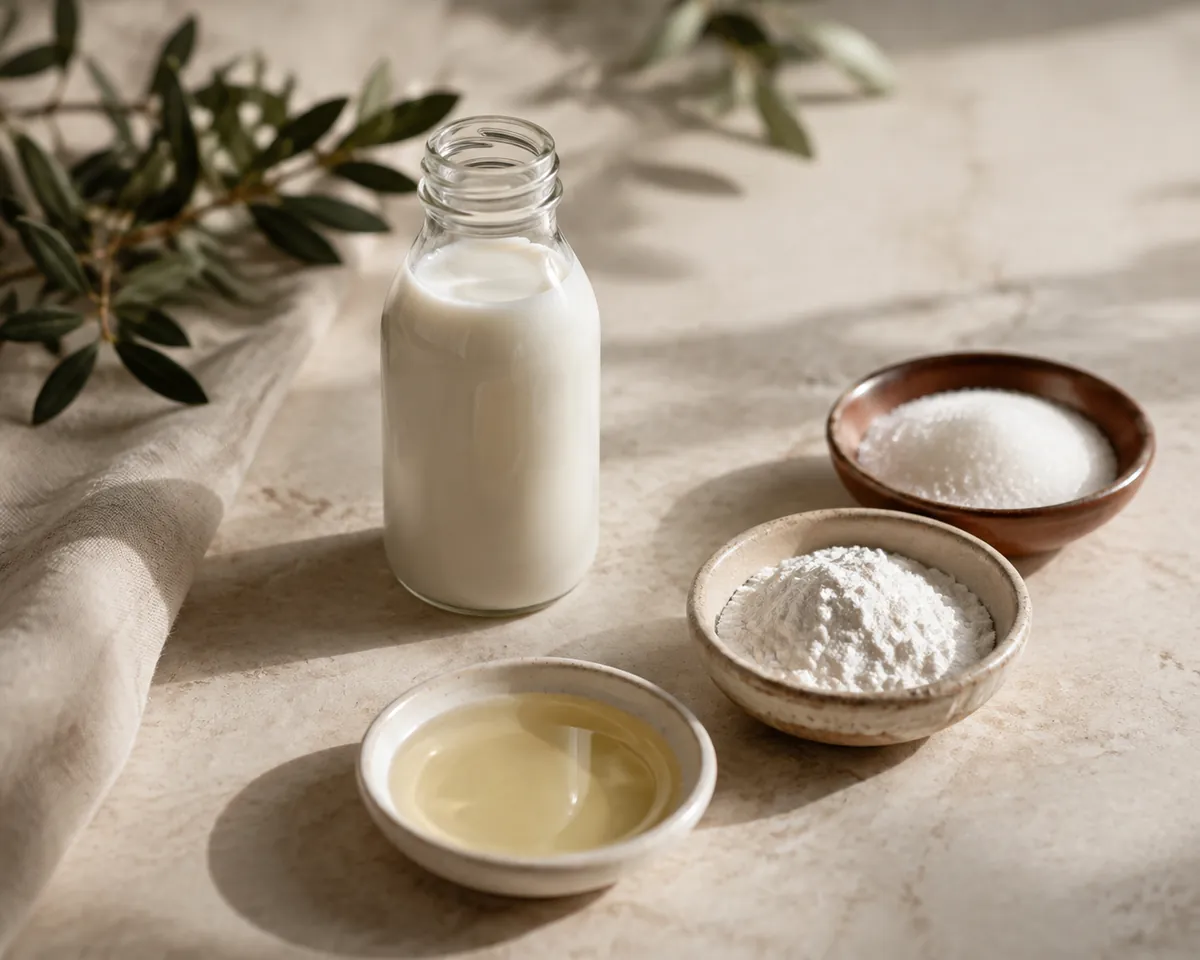
Read the back of a bottle and the pattern is consistent across brands. There is water in a liquid creamer, a sugar of some kind, a vegetable oil, a protein to bind the oil to the water, and a short list of salts, emulsifiers and stabilisers that keep the whole thing from separating.
The oil is usually palm, coconut or rapeseed, chosen for how it behaves rather than for how it tastes. The protein is most often sodium caseinate, and that detail carries more weight than its position on the label suggests.
Sugars do double duty. They sweeten, and they supply the dissolved solids that give the liquid enough body to read as creamy rather than as flavoured water.
The stabilisers are the unglamorous part and the reason the product works at all.
Dipotassium phosphate is common, and its job is to hold the pH steady when the creamer meets hot, acidic coffee, which is exactly the condition that curdles milk.
Why it is called non-dairy when it usually contains a milk protein
Sodium caseinate comes from milk. It is casein, the same protein family that makes up most of the protein in whole milk, processed into a salt form that dissolves readily and emulsifies well.
So the standard non-dairy creamer contains a milk-derived ingredient while being labelled non-dairy, and that is a labelling convention rather than a contradiction. The term is defined around milk fat and lactose, neither of which is present.
The reason manufacturers reach for caseinate is that it is very good at the job. It stabilises an oil-in-water emulsion at low concentrations, it tolerates heat, and it whitens well, and the plant proteins that replace it generally do at least one of those things less cleanly.
That is the honest summary of the category: the label describes what has been left out, not what has been put in.
How it whitens coffee without milk
Whitening is optical rather than chemical. Milk looks white because its fat globules and protein clusters scatter light across the visible spectrum, and anything that suspends similar-sized particles in a liquid will do the same.
Creamer is engineered to produce exactly that. The oil is homogenised into droplets in the same size range as milk fat globules, held there by the emulsifier, and the effect in a dark cup is indistinguishable from a splash of milk.
What happens when it hits the coffee
- DispersalEmulsion droplets spread through the hot liquid
- ScatteringDroplets scatter light, and the coffee lightens
- BufferingPhosphate salts hold the pH away from the curdling point
- CoatingOil coats the palate, which reads as body
- SettlingA stable emulsion stays put; a poor one rings the cup
Droplet size is the quiet variable. Too large and the emulsion breaks, leaving an oily film on the surface; too small and the whitening weakens because very fine droplets scatter less effectively.
This is also why creamer whitens more per millilitre than milk does. A creamer can carry a higher proportion of dispersed oil than milk carries fat, so less of it goes further in a mug of drip coffee.
Why it does not curdle
Milk curdles in coffee when acid and heat push the casein past the point where it stays dissolved, and the protein clumps into visible flecks. The mechanism is covered in detail under curdling in coffee, and it is the failure creamer is specifically designed to avoid.
Three things in a creamer work against it. The buffering salts hold the pH up, the protein is present in a form already stabilised against aggregation, and there is far less protein overall than in milk to begin with.
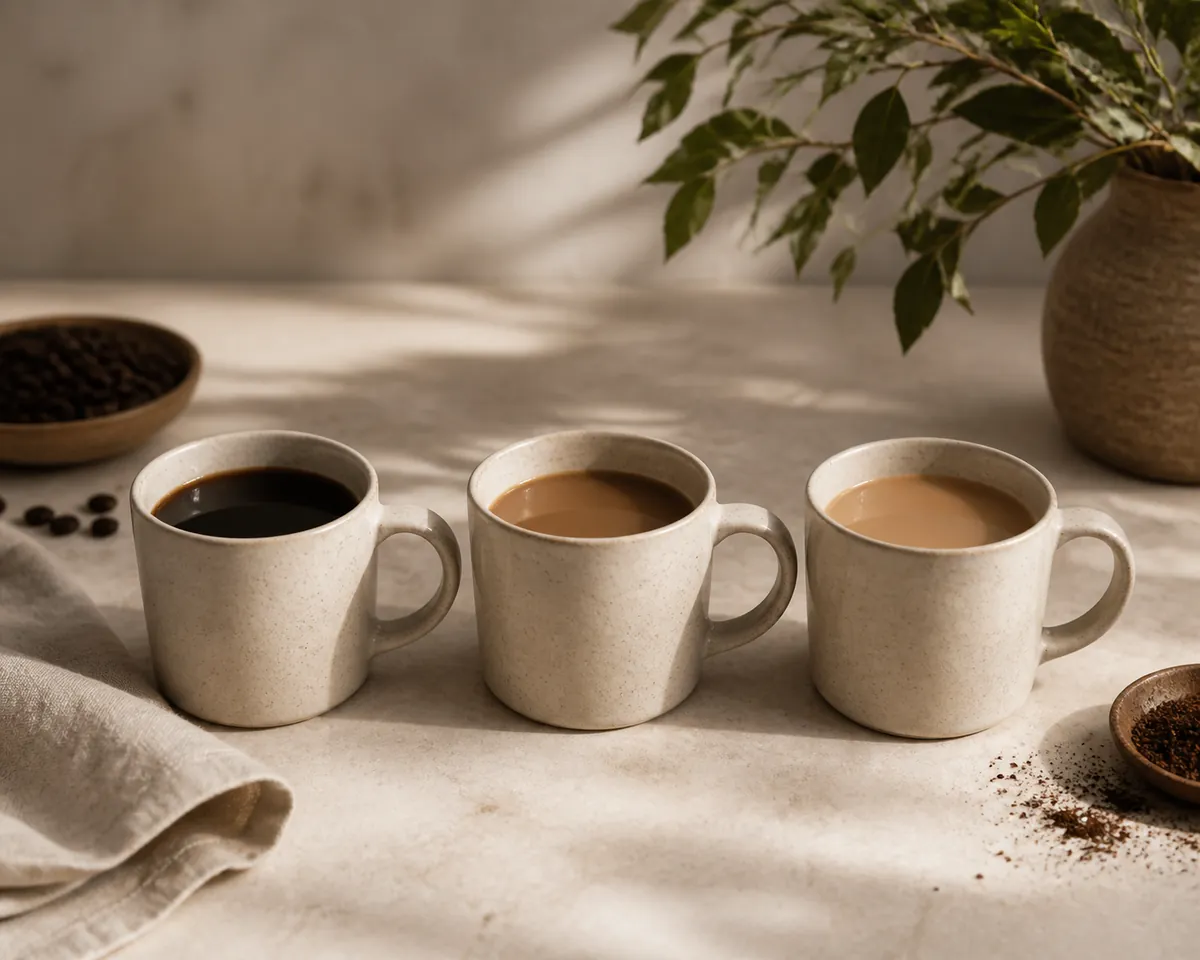
The practical effect is that creamer behaves the same in a fresh cup and in one that has sat on a hotplate for an hour, and it behaves the same over espresso, a dark roast, or a bright acidic filter coffee where milk sometimes flecks.
Reliability is the product, and it is worth being clear that this is a real advantage rather than a marketing one. Plant milks, in particular, are far more temperamental in this respect, and so is evaporated milk once a tin has been open a day.
Powder and liquid, and what changes between them
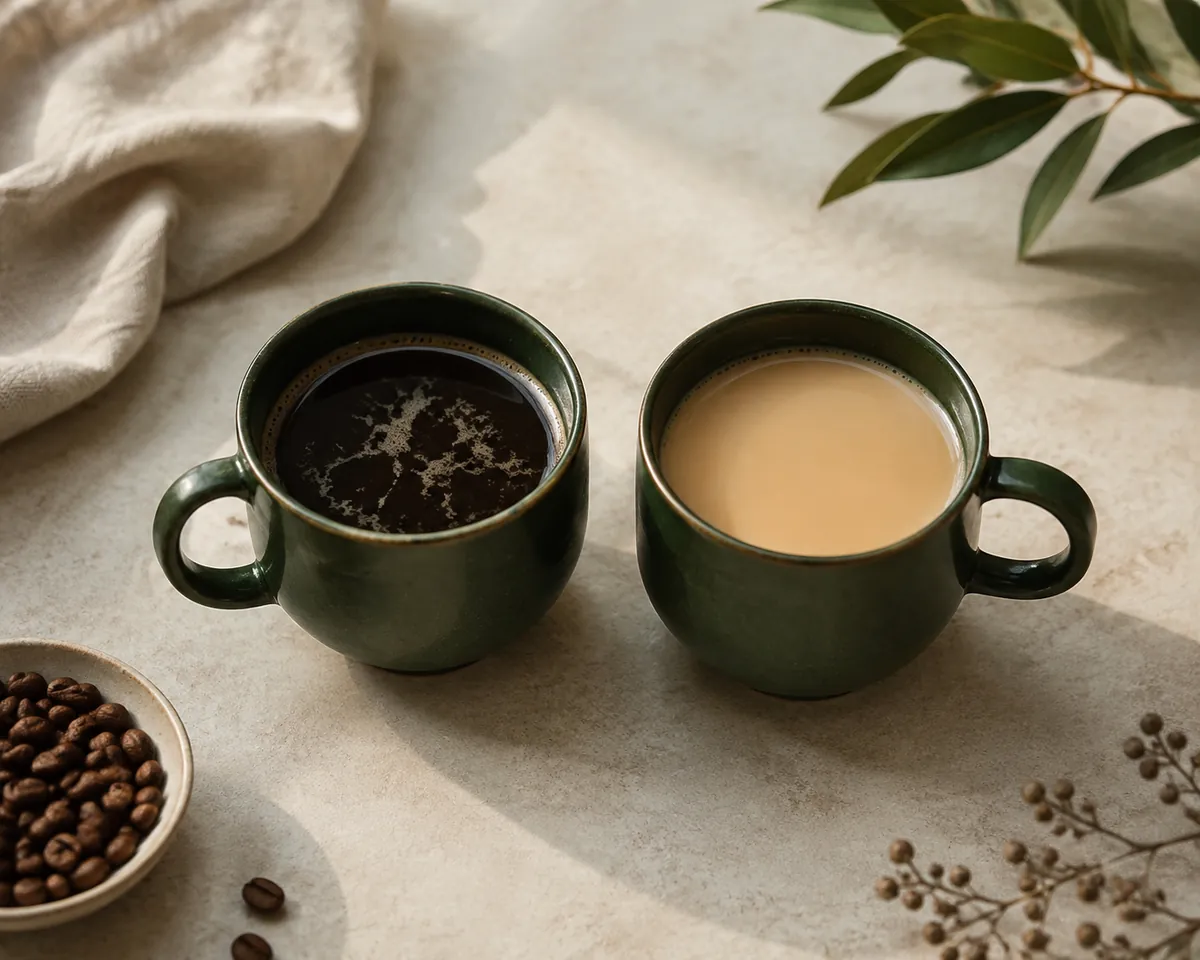
The two forms are the same idea with the water taken out of one of them, but they do not behave identically in a cup.
| Powder | Liquid | |
|---|---|---|
| Dissolving | Needs hot liquid and stirring | Instant |
| Whitening | Slightly duller | Cleaner and brighter |
| Body | Thinner | Fuller |
| Keeping | Two years or more | Shelf-stable, then fridge |
| Common failure | Lumps and floating specks | Separation near the end of the bottle |
Powder is the format built for logistics. It weighs less, needs no refrigeration ever, and is why the sachet beside a hotel kettle is powder rather than a small carton.
Its weakness is dissolution. Powdered creamer needs genuinely hot liquid to disperse, so it lumps in iced coffee or in cold brew and leaves specks on the surface that no amount of stirring recovers.
Liquid is the better product in the cup and the worse one in a cupboard. Once opened it needs the fridge and a couple of weeks, which is exactly the constraint the whole category was built to escape.
What it tastes like, and what it covers up
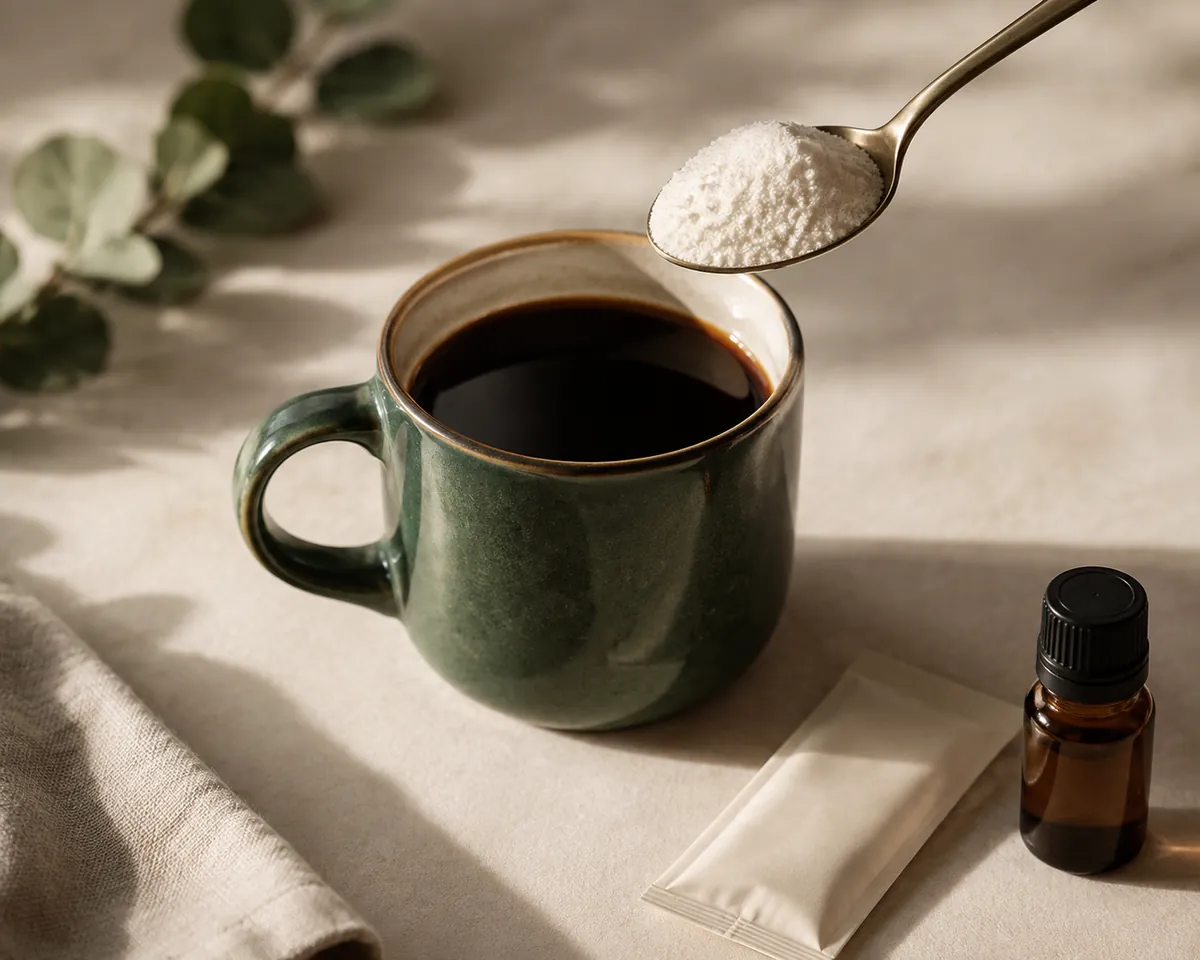
Unflavoured creamer tastes faintly sweet, faintly of the oil it is built from, and otherwise of very little.
Tasted from the spoon it is unremarkable; its character shows only in what it does to the coffee.
What it does is round off edges. The oil coats the palate and mutes bitterness, the sugar suppresses acidity, and the result is a cup with less definition and fewer sharp corners than the same coffee taken black.
That is a genuine benefit with harsh coffee and a genuine cost with good coffee. A well-made filter cup loses most of what distinguishes it under a creamer, in a way it does not under a small splash of milk.
Instant coffee is where the trade is most clearly worth making, since there is little delicacy to protect and a good deal of harshness to soften. At the other end, adding creamer to a carefully brewed pour-over is a waste of the brewing.
An americano sits between the two, harsh enough to benefit and clean enough to lose something.
Flavoured creamers, and why they dominate the shelf
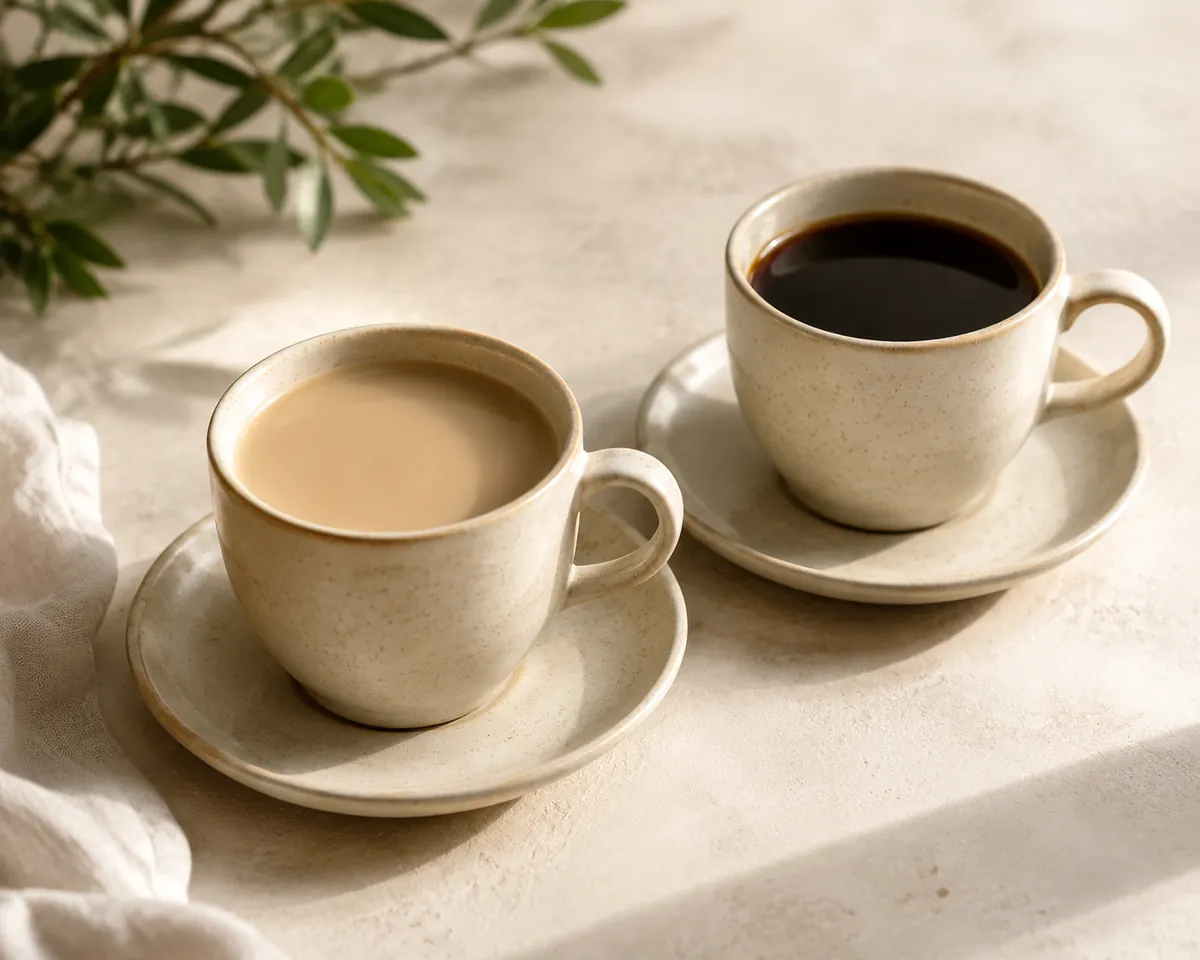
Most of the shelf is flavoured, and the reason is straightforward: an emulsion carrying sugar and oil is an unusually good vehicle for flavour. Oil holds aroma compounds that water cannot, and sugar carries them onto the palate.
- Expect vanilla, caramel and hazelnut to lead almost every range
- Treat seasonal flavours as the same base with a different aroma package
- Check the sugar content, which is often well above the unflavoured version
- Compare against a flavoured syrup, which does the same job differently
- Taste unflavoured once, to know what the base actually contributes
The comparison worth making is with vanilla syrup or plain simple syrup plus milk. A syrup separates the two jobs, letting you set sweetness and whitening independently, where a flavoured creamer welds them together at a ratio the manufacturer chose.
Flavoured creamer is convenience priced as flavour, and it is a reasonable trade for anyone who wants the same cup every morning without measuring anything.
Creamer against milk, cream and plant milk
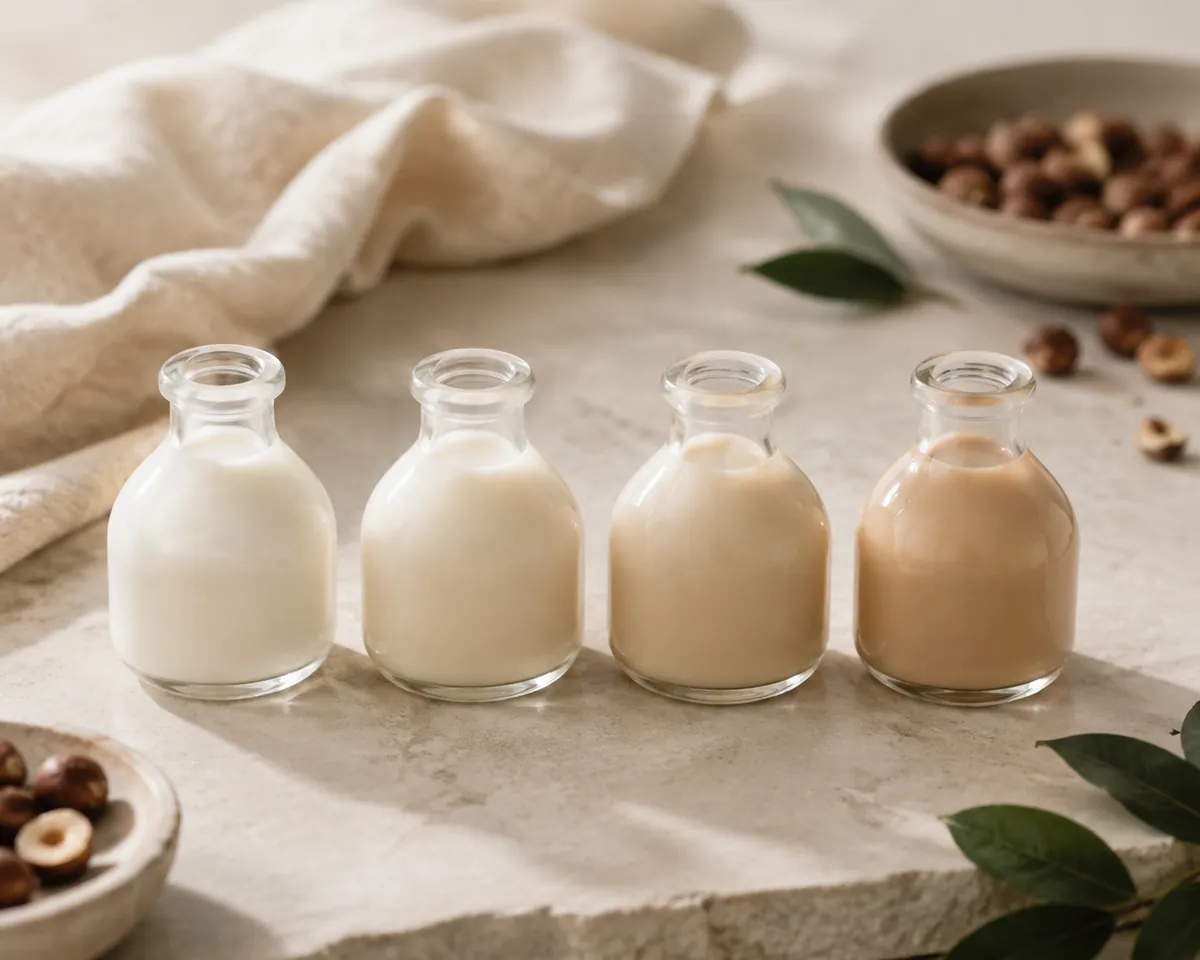
Each option is solving a slightly different problem, and creamer is the only one designed backwards from the coffee.
Body in the cup, heaviest first
- Single or double creamHeavy, and it flattens coffee flavour completely
- Liquid coffee creamerRich for its volume, on emulsified oil
- Whole milkBalanced body with real dairy flavour
- Oat milkComparable body, with its own cereal sweetness
- Powdered creamerThe thinnest of the group, whitening more than enriching
Against whole milk, creamer wins on shelf life and consistency and loses on flavour and on how it behaves under steam. It does not foam usefully, so it is no use for a latte or a cappuccino, and a milk frother will churn it without building anything that lasts.
Against oat milk and the rest of the plant drinks, the comparison is closer than it looks. Barista-formulated plant milks are themselves stabilised emulsions built to survive coffee, which makes them nearer relatives of creamer than of milk.
Against cream, creamer is lighter and far more stable. Actual cream flattens coffee, which is why it appears in dessert coffee drinks rather than in a working morning cup.
What the ingredient list tells you
The ingredient list tells you more than the front of the pack, and the useful information is in the first four items.
- Check the allergen line if you need genuinely milk-free, not just non-dairy
- Look at where sugar sits in the order, especially in flavoured versions
- Prefer a named oil over an unspecified vegetable fat
- Choose liquid for cold drinks and powder for travel and storage
- Buy the smallest liquid bottle you will finish in two weeks
Single-serve pots are the most expensive format by a wide margin and the most useful when there is no fridge. That is the whole calculation, and it is a fair one to make deliberately rather than by default.
Barista or professional labelling on a creamer usually means a higher oil content and better emulsion stability. It rarely means it will foam, and any creamer sold on foaming is worth testing before buying a case of it.
Storage and shelf life
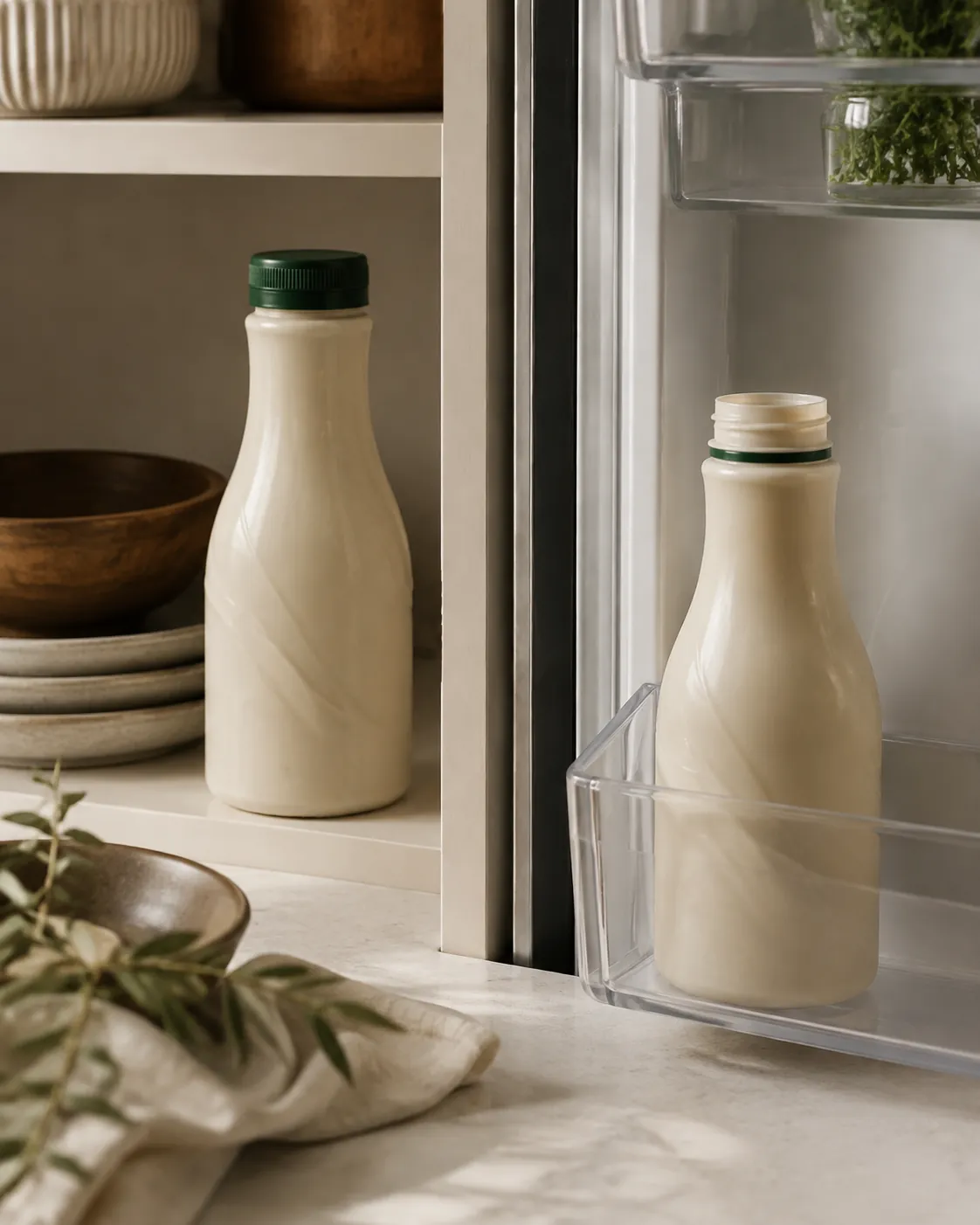
Unopened, shelf stability is the category's defining feature. A sealed liquid creamer sits in a cupboard for months and a powder for years, because there is not enough free water in either for anything to grow.
Unopened liquid
Cupboard, cool and dark, until the printed date
Opened liquid
Fridge, and realistically two weeks
Powder
Cupboard indefinitely, kept dry and sealed
Damp
The one thing that ruins powder; it cakes and stops dispersing
The failure to watch in an opened liquid bottle is separation. A ring of oil around the neck, or a thin layer that does not stir back in, means the emulsion has broken, and it will not recover no matter how hard you shake it.
Powder fails differently and more slowly. It cakes, then it stops dispersing cleanly, and the result is white specks floating on the coffee rather than a smooth lightening.
A hard lump in the tub is the point to replace it.
Where it earns its place
Coffee creamer is a specialist product that gets judged as a general one, which is why opinion on it runs so hot. As a milk substitute it is unimpressive.
As a shelf-stable whitener that never curdles, never needs a fridge and never varies, nothing else comes close.
The places it clearly wins are offices, travel, camping, and any kitchen where milk is thrown away more often than it is finished. Across the whole of coffee that covers a great many cups.
It also wins with coffee that needs help, which is a larger share of the coffee people actually drink than enthusiast discussion admits.
Its limits are equally clear. It will not foam, it flattens good coffee, it costs more per cup than milk, and the flavoured versions decide your sugar level for you.
The honest position is that it is a tool with a narrow brief, and inside that brief it is very well made.
Common questions
Why is coffee creamer called non-dairy if it contains milk protein?
The term is defined around milk fat and lactose, and a standard creamer contains neither. Most do contain sodium caseinate, which is a milk-derived protein, so the allergen line will declare milk. Non-dairy on the front of the pack does not mean milk-free.
Why does creamer never curdle when milk sometimes does?
Three things work against it. Buffering salts hold the pH away from the point where protein clumps, the protein present is already stabilised against aggregation, and there is far less protein in a creamer than in milk to begin with. That is what the product is engineered for.
Can you use coffee creamer in iced coffee?
Liquid creamer, yes; it is already dissolved and disperses in seconds. Powder is the problem, because it needs genuinely hot liquid to disperse and will lump in a cold drink, leaving specks on the surface that stirring does not recover.