What Is Drinking Chocolate? A Bar Melted, Not a Powder Mixed
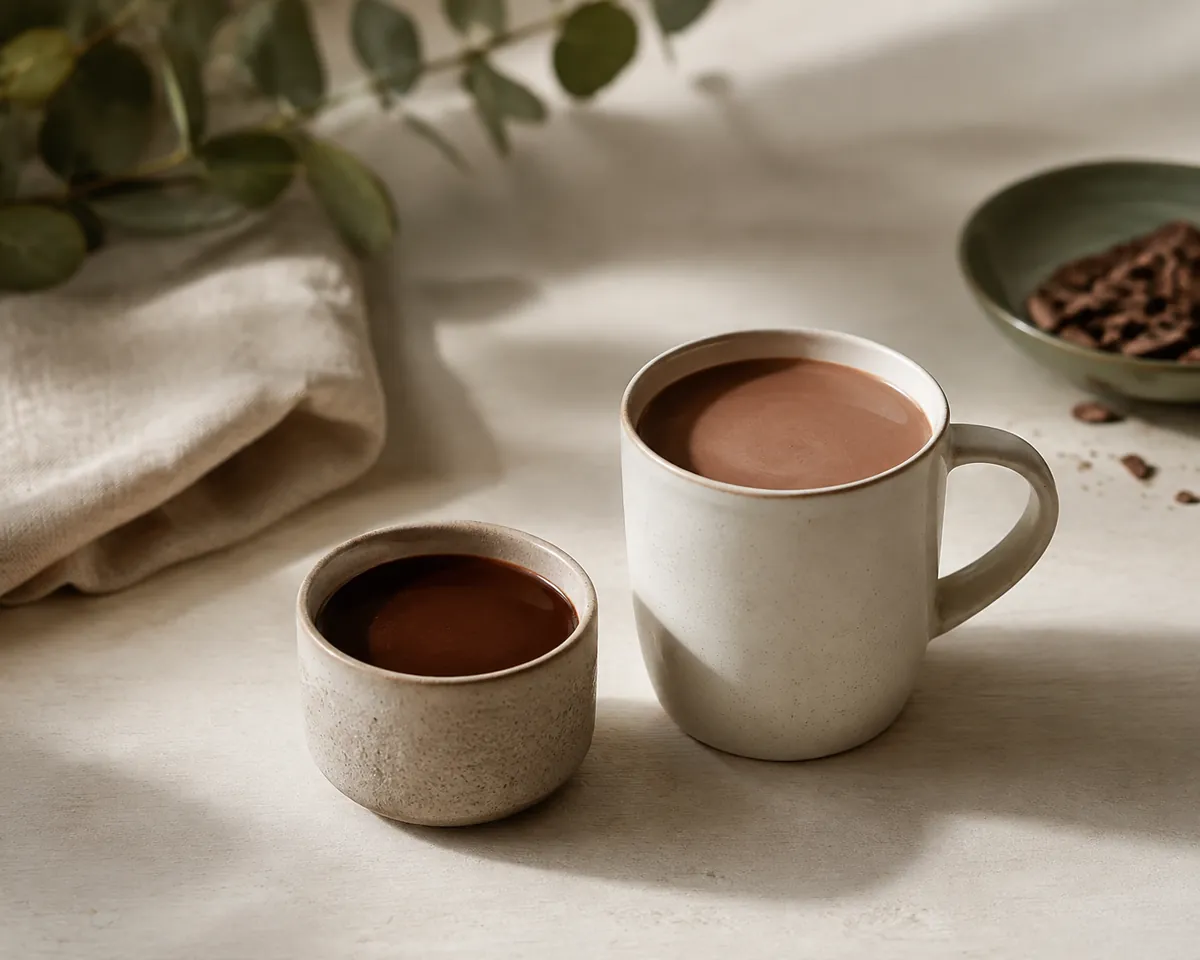
Drinking chocolate is a bar melted into liquid, not a powder mixed into it. The cocoa butter that comes with the bar is what makes the drink thick enough to coat a spoon, and it is also why the cup it arrives in is so much smaller than a mug.
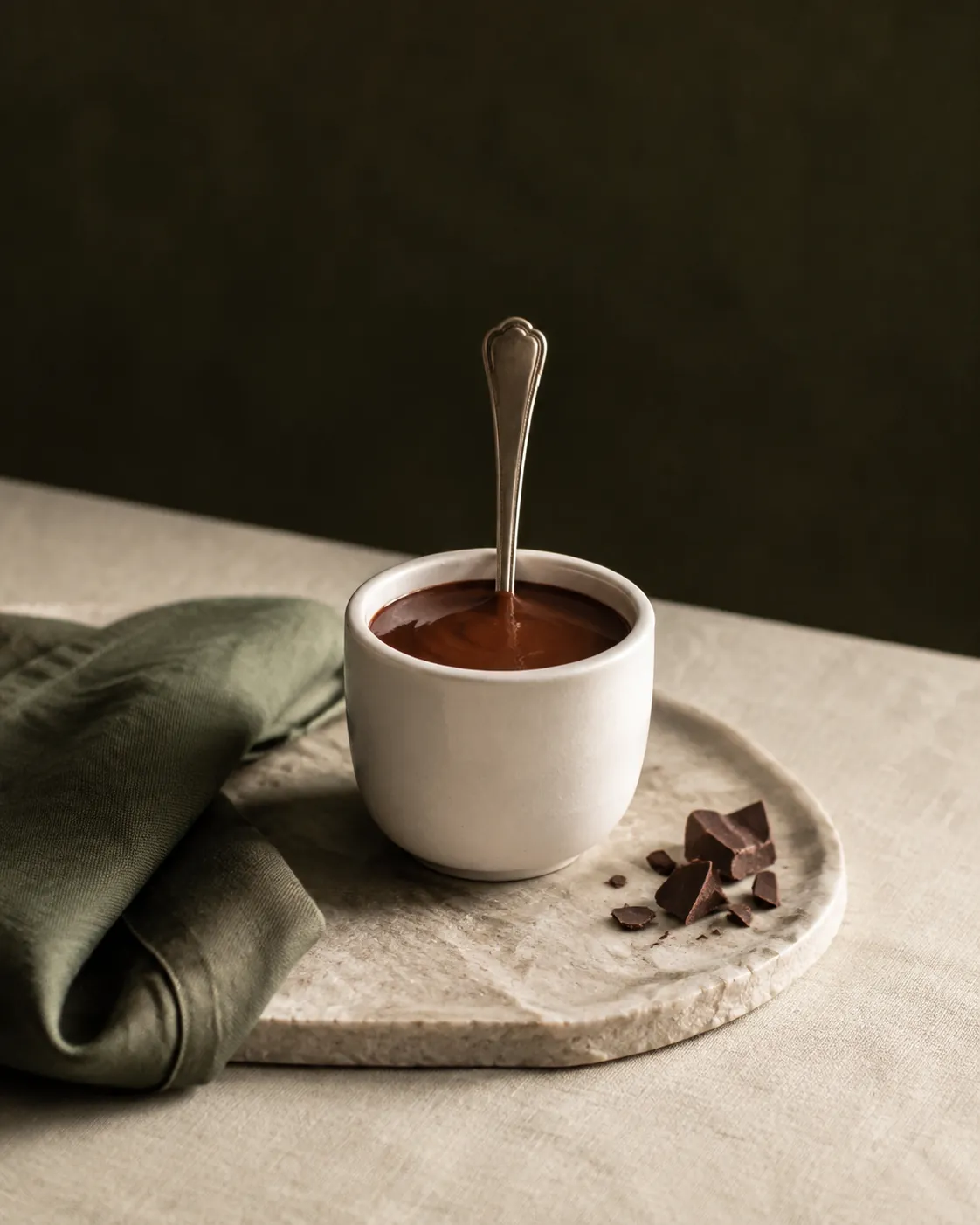
Drinking chocolate is chocolate melted into liquid. That sounds like a small distinction from a spoonful of powder in a mug, and it is not: the two drinks behave differently in the pan, in the cup and in the mouth, because one of them brings the cocoa butter along and the other has had it pressed out.
Everything below follows from that fat. It is why the drink is thick, why it sets as it cools, why it is served in a cup a third the size of a mug, and why the European versions and the American one went in opposite directions.
Drinking chocolate at a glance
- What it is
- Real chocolate melted into milk or water
- Fat source
- Cocoa butter, which comes with the bar
- Texture
- Thick enough to coat a spoon
- Typical serving
- 100 to 150 ml, in a small cup
- Served at
- Around 60 to 65 C, well below boiling
- Sweetness
- Fixed by the bar rather than added by you
- Relatives
- Hot chocolate and powder-based hot cocoa
Melted chocolate, not mixed powder
Drinking chocolate is a bar melted into liquid rather than a powder stirred into it, and every meaningful difference between it and a mug of cocoa follows from that single choice of raw material.
Cocoa powder is what is left after the fat has been pressed out of ground cocoa. Chocolate is the opposite: cocoa solids and sugar carried in cocoa butter, with the fat making up close to half the weight of a good dark bar.
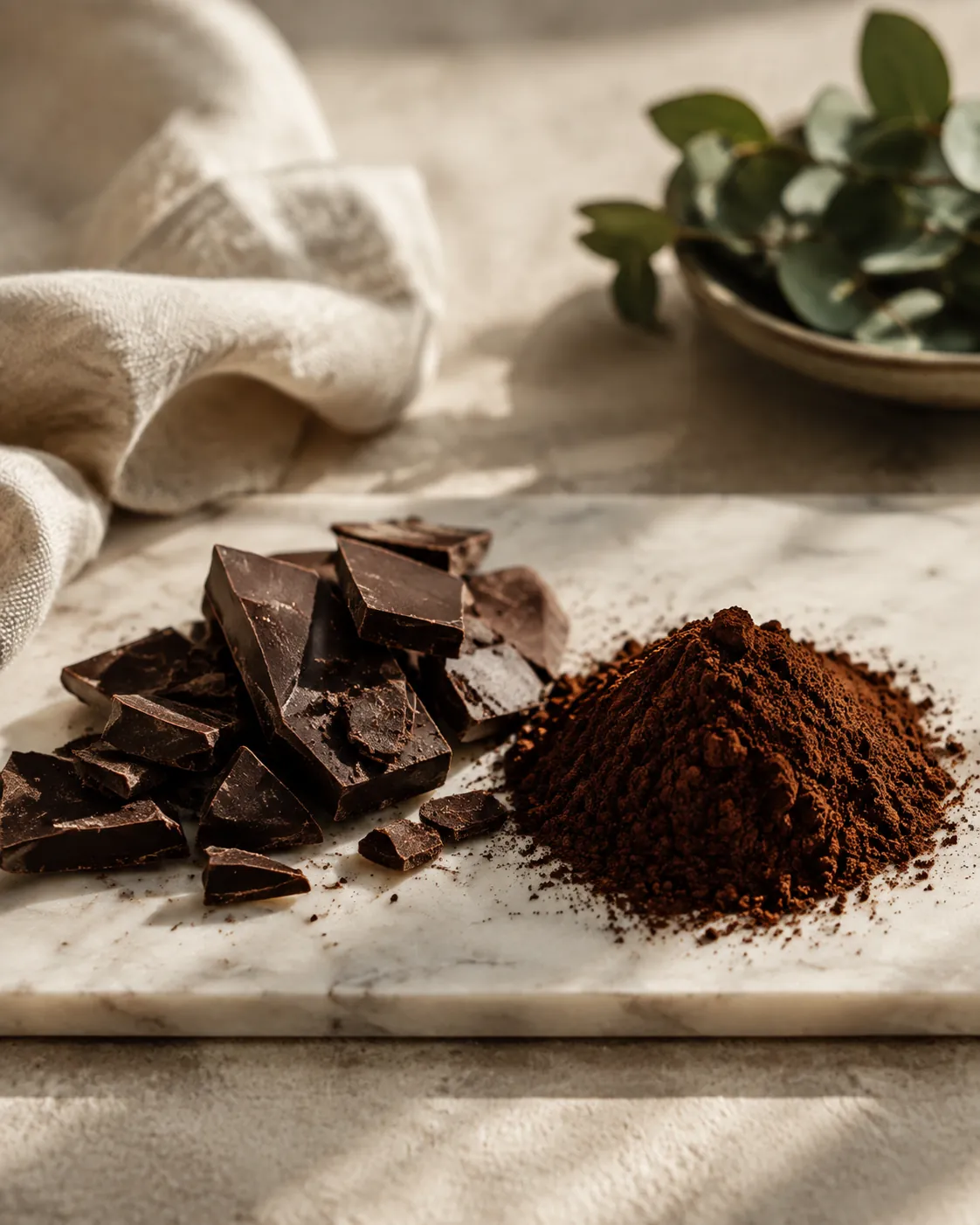
Two routes from the bean
- The beanRoasted and ground to a thick paste, roughly half fat by weight.
- PressedMost of the cocoa butter is squeezed out. What remains is powder.
- RecombinedFat, solids and sugar are conched back together into a bar.
- Powder routeLight, thin, controllable sweetness. A mug of cocoa.
- Bar routeThick, rich, sweetness fixed in advance. A small cup of drinking chocolate.
The powder-against-bar question in general belongs to hot chocolate, which sets out what each one gives you. With the bar chosen, what matters is what it actually does once it is melted into liquid.
Why cocoa butter changes the drink and not just the richness
Chocolate is already an emulsion before you do anything to it, and understanding which way round it faces explains almost every practical fact about the drink.
In a solid bar, fat is the continuous phase. Sugar crystals and cocoa particles are suspended in cocoa butter like gravel in setting concrete, and there is essentially no water anywhere in the system.
Adding liquid asks that arrangement to invert. You are trying to end up with fat droplets dispersed through a watery liquid, which is the opposite of what you started with, and the failure mode in between is the reason a splash of water ruins melted chocolate while a jugful does not.
A little liquid dissolves some of the sugar into a syrup that glues the solid particles together, which is what seizing actually is. Enough warm liquid, added steadily, carries the system past that point and out the other side into a smooth drink.
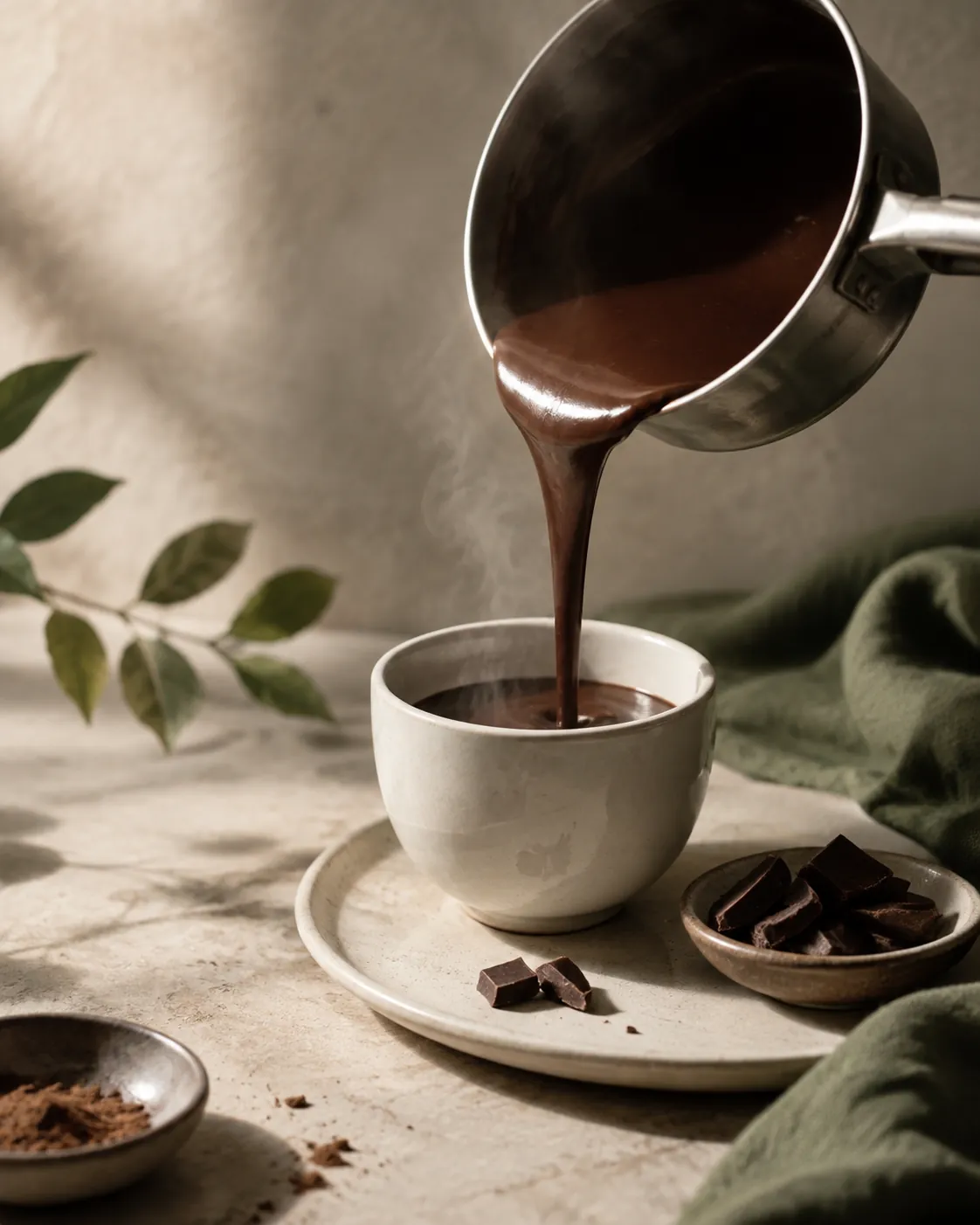
What you get at the end is a drink whose body comes from fat rather than from starch or protein. Cocoa butter melts at close to body temperature, so it arrives liquid, coats the mouth and then begins to firm up again the moment the cup cools, which is a sensation no powder drink produces.
The pan-side failures around all of this are collected in hot chocolate rather than repeated here.
How much chocolate goes into a cup this small
Weigh the chocolate.
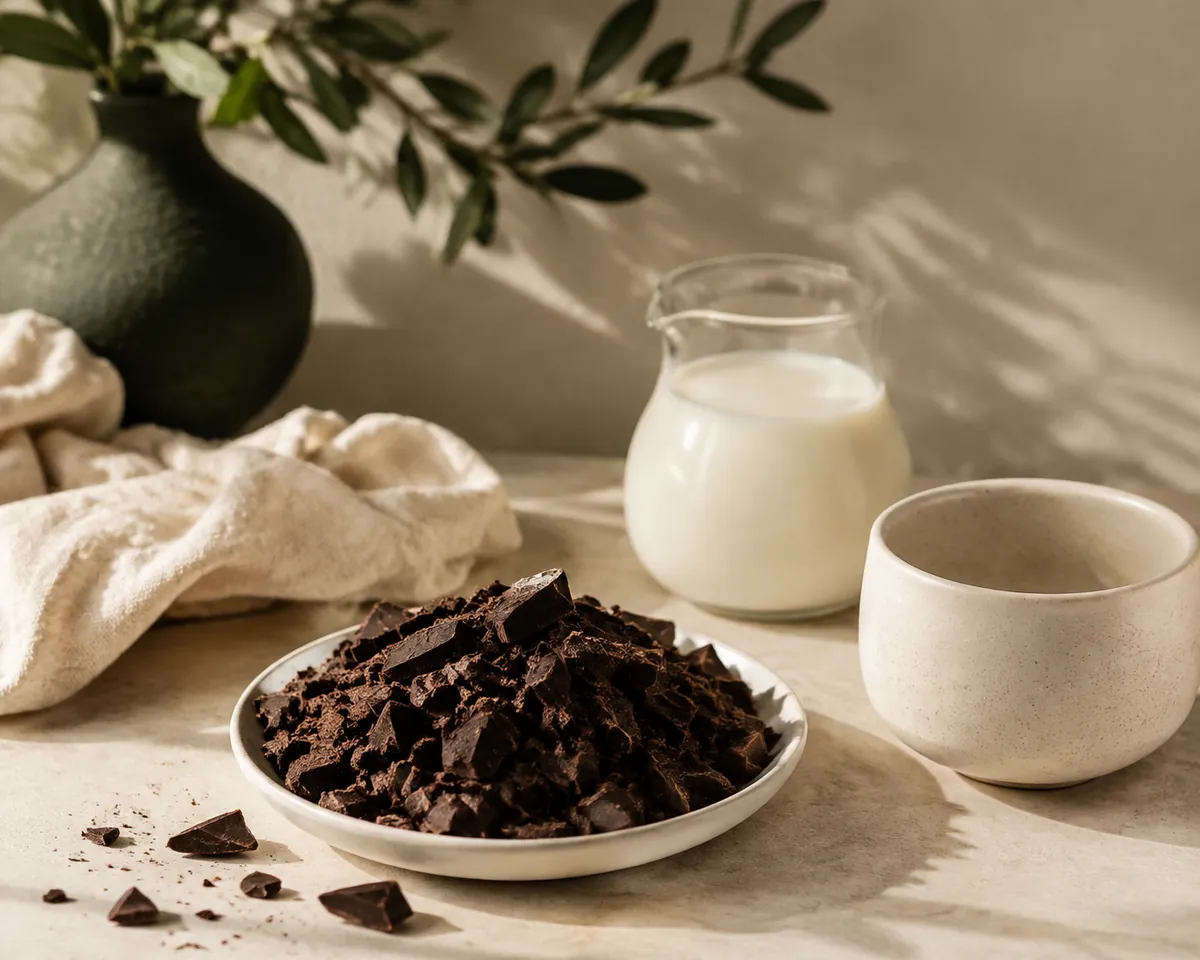
Volume measures are hopeless with a chopped bar, and the ratio is the entire recipe. A serving is somewhere between a third and a half chocolate by weight, which is a proportion that looks wrong written down and is correct in the cup.
A single cup, three ways
- French style
- 45 g chocolate, 150 ml whole milk. Rich but pourable
- Italian style
- 60 g chocolate, 120 ml milk, 3 g cornflour. Spoonable
- Spanish style
- 70 g chocolate, 120 ml milk, 6 g cornflour. Close to a sauce
- Made on water
- 50 g chocolate, 130 ml water. Cleanest, most direct
- Serves
- One small cup in every case
Compare that with three teaspoons of powder in 250 ml of milk and the gap is not a matter of degree. The chocolate route is several times the concentration of the powder route, and it delivers it into half the volume.
That arithmetic is also why the drink cannot simply be scaled up into a mug. Tripling the liquid to fill one gives you a thin chocolate milk, and tripling the chocolate as well gives you 200 g of melted bar in a cup, which nobody finishes.
A hundred millilitres is not meanness
A small cup looks stingy and is not. Roughly half the weight of a dark bar is cocoa butter, so a 60 g serving carries around 25 to 30 g of fat before the milk contributes any of its own, and that is what sets the sensible volume.
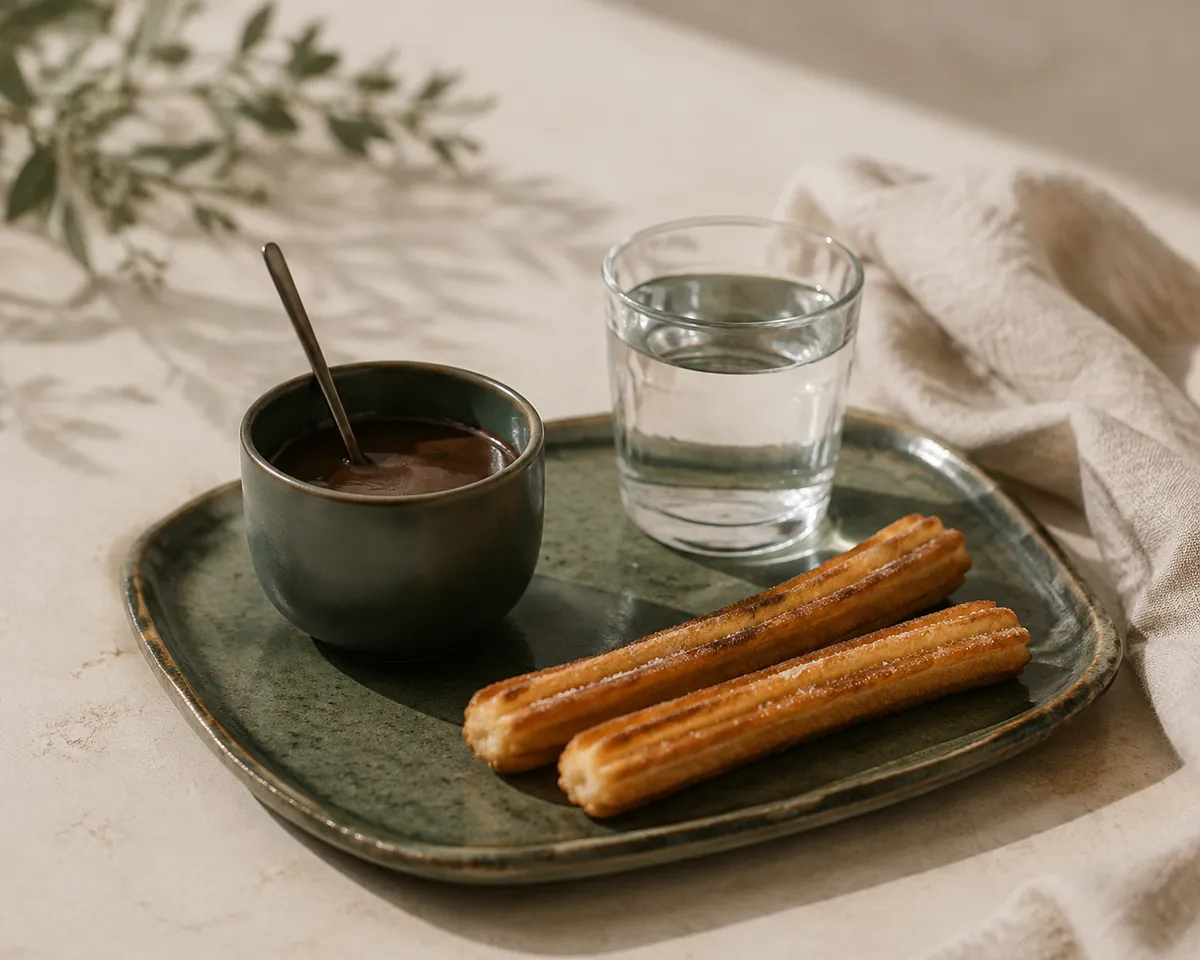
The formats built around the drink all assume this. A Spanish cup comes with churros to dip and a glass of water alongside, an Italian one comes with a spoon rather than a handle, and a French one is poured from a jug so the drinker decides how much to take.
The cup
Small, thick-walled, often handleless. It holds heat and slows drinking.
The spoon
Standard in Italy and Spain, because the drink is thick enough to need one.
The water
Served alongside to clear the palate between mouthfuls.
The dip
Churros in Spain, biscuits elsewhere. The drink doubles as a sauce.
The refill
Rare. One cup is the serving, not the first of several.
Someone handed a small dense cup while expecting a large sweet one usually reports that it is too much rather than too little, which is a mismatch of expectation rather than a fault in the drink.
The drink came first, and the bar came later
For most of chocolate's history it was something you drank, and the eating bar is the recent arrival rather than the other way round. Cacao was prepared as a beverage in Mesoamerica for centuries before it reached Europe, unsweetened, often at ambient temperature, and frothed by pouring it from height between two vessels.
Spain took it up in the sixteenth century and made two changes that stuck: sugar, and heat. What arrived in the rest of Europe was already a hot sweet drink, and it spread through the courts and then the chocolate houses as a luxury priced accordingly.
How the drink became a bar
- MesoamericaCacao ground and drunk, unsweetened, frothed by pouring.
- Spain, 16th centurySugar and heat are added. The format we recognise appears.
- Amsterdam, 1828A hydraulic press separates cocoa butter from the solids.
- PowderCheap, light, mixable. It becomes the everyday chocolate drink.
- The 1840sRecombining the pressed fat with solids and sugar gives a moulded bar.
The press is the hinge. Once cocoa butter could be taken out and sold separately, two products existed where there had been one, and the drink and the bar went their own ways from that point on.
Melting a bar back into milk is therefore a return rather than an innovation. It reassembles what the press separated, which is why the result tastes closer to old descriptions of the drink than anything made from a tin does.
Why Europe kept the bar and America went to powder
One press, patented in Amsterdam in 1828, is a large part of why a Spanish cup and an American mug are different drinks today. It made cocoa powder cheap, light to ship and easy to mix, and those three properties decided the shape of the market that grew around it.
Powder suited a mass drink. It keeps for months, needs no chopping, dissolves into a large volume without the fat separating out, and it can be sold pre-sweetened in a sachet that requires only hot water.
| European cup | American mug | |
|---|---|---|
| Built from | Melted chocolate | Cocoa powder or a sachet |
| Volume | 100 to 150 ml | 250 ml and upwards |
| Body | Fat, and often a little starch | Thin, sometimes thickened by milk powder |
| Sweetness | Set by the bar | Added, and usually generous |
| Served with | A spoon, water, something to dip | Marshmallows or cream |
| The point | Concentration | Comfort and volume |
Neither branch is a degraded version of the other.
The American mug is genuinely better at being a large warm drink you hold for twenty minutes, and the powder route on the stove is the honest way to make it well.
The label confusion is a consequence of the split rather than a cause. In much of Europe drinking chocolate means flaked or grated real chocolate, and in much of the English-speaking world it is printed on tubs of sweetened powder, which is why the words on a package settle nothing at all.
A milk frother belongs firmly to the second tradition, since there is nothing thin enough to foam in the first.
Why the Spanish version has cornflour in it
Cornflour has a bad reputation it does not deserve here. In chocolate a la taza it is not padding out an underpowered drink; it is doing a job cocoa butter cannot do at any sensible dose.
Fat gives richness and a coating quality, but it does not give viscosity in the way starch does. To reach the spoon-standing thickness the Spanish style aims at using fat alone, you would need considerably more chocolate than a person wants to drink, and the result would be heavy rather than thick.
How thick each style runs
- Powder-based mugBarely thicker than milk. No coating at all
- French chocolat chaudPourable, glossy, coats a spoon lightly
- Viennese styleRicher again, often finished with cream
- Italian cioccolata caldaSpoonable. A little starch, a lot of chocolate
- Spanish a la tazaClose to a warm sauce. Holds a churro upright
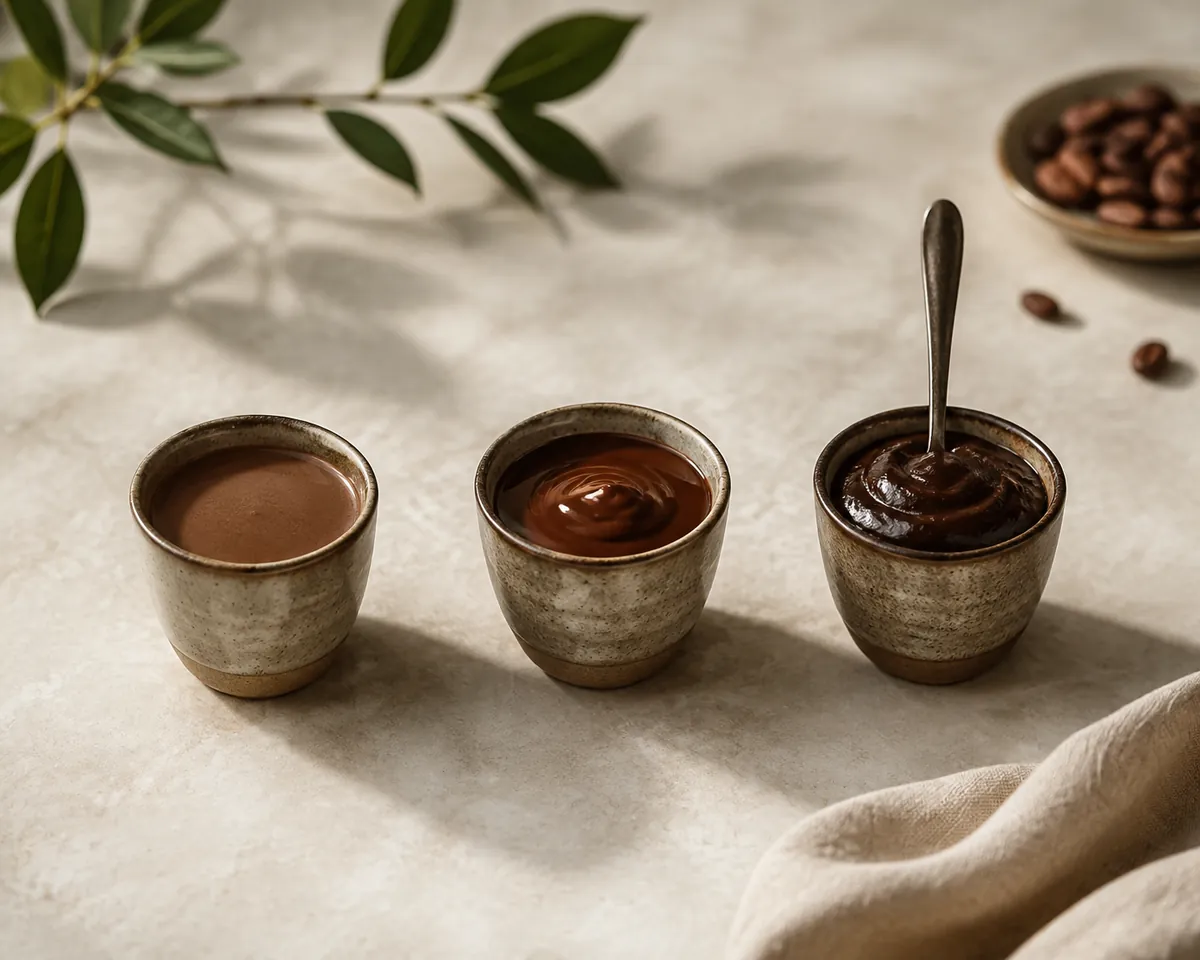
Three to six grams of cornflour per cup is the working range, slaked in a spoonful of cold milk before it goes anywhere near the pan. Adding it dry to hot liquid produces exactly the lumps it was supposed to prevent.
Starch thickness and fat thickness feel different, which is the point worth taking away. Starch gives body without richness, so it lets a maker push the texture further without pushing the intensity along with it, and a cup that tastes thin but pours thick has usually been built the wrong way round.
Reading a bar before you melt it
Not every dark bar behaves in a pan.
The percentage printed on the front tells you how much of the bar is cocoa rather than sugar, and it says nothing at all about how that cocoa is divided between solids and butter, which is what actually decides the drink.
Two bars at the same percentage can carry noticeably different amounts of fat, because makers add cocoa butter back at their own discretion. Couverture is the version made with extra fat specifically so it flows, which is why it melts cleanly and why cafés serving the drink daily tend to buy it.
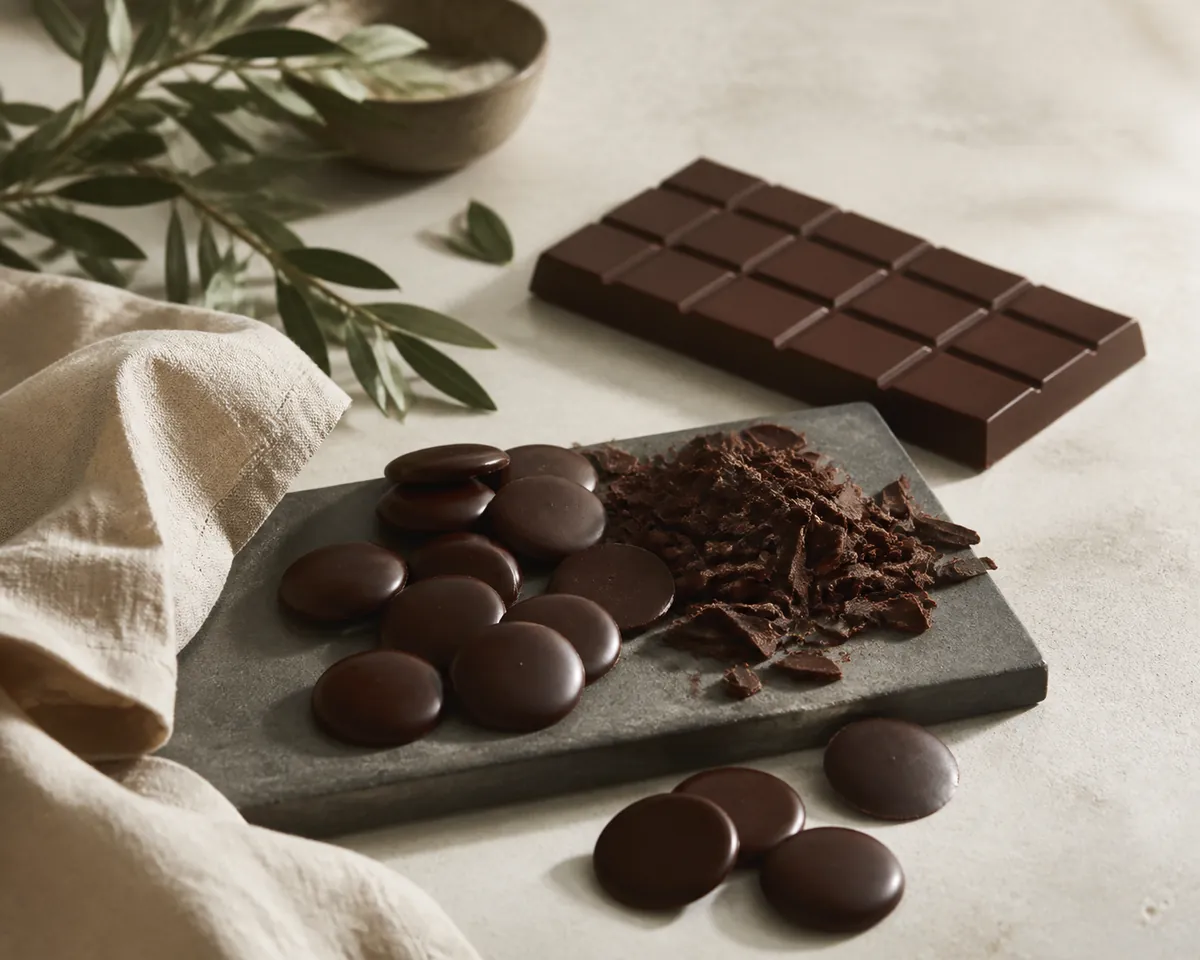
- Read the ingredients, not the front. Cocoa mass and cocoa butter should lead.
- Avoid anything listing vegetable fat, which behaves badly and tastes waxy.
- Skip chocolate chips, which carry stabilisers designed to resist melting.
- Lecithin is fine and helps the drink hold together.
- Chop it small and even, so it melts before the milk gets too hot.
Percentage still matters for balance rather than texture. Somewhere between 60 and 70 per cent is the reliable centre; below that the cup arrives sweet with little to push against, and much above it the low sugar makes the emulsion harder to hold and the drink can turn dry.
Single-origin character does survive into the cup, more than most people expect, since nothing here is roasted or brewed a second time. A bar with a pronounced red-fruit note gives a cup with the same note, and a pinch of sea salt sharpens it in the same way it does elsewhere, while cinnamon pushes the whole thing towards the spiced Mexican version.
What happens to the cup as it cools
The cup changes while you drink it.
Cocoa butter is liquid at serving temperature and begins to set as the cup falls back towards room temperature, so drinking chocolate does not simply get colder in the way tea does. It thickens, and past a certain point it stops being a drink at all.
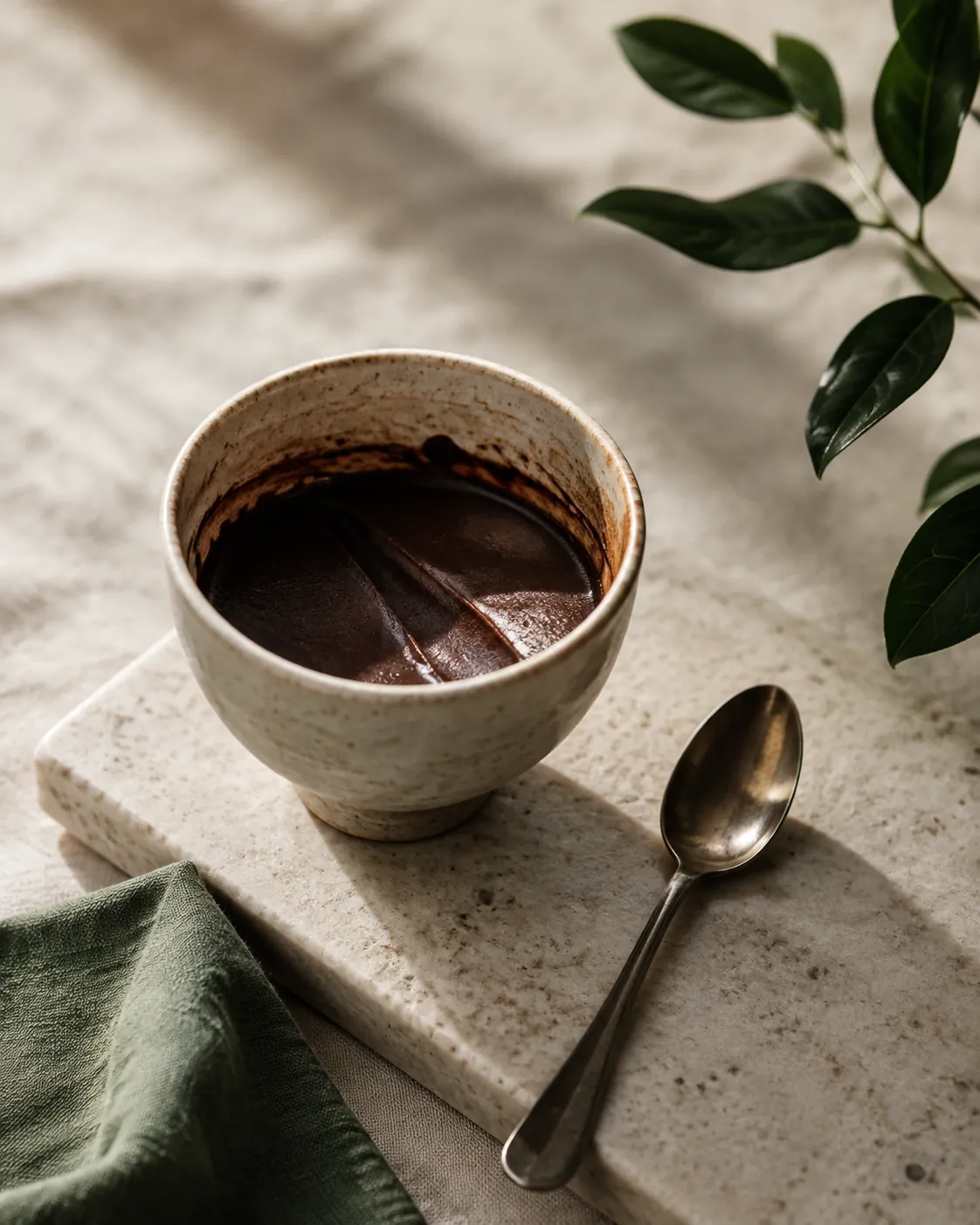
That is the mechanical reason for the small cup, the thick-walled ceramic and the absence of a leisurely refill. The format is built around a drink with a deadline, and a large mug of it would be unpleasant long before it was empty.
The skin
Milk proteins and fat at the surface. Harmless, and easily stirred back.
The thickening
Cocoa butter crystallising. Expected, and the reason to drink it warm.
A greasy film
Fat separating out. Usually too much heat, or too little stirring.
Grain in the last mouthful
Cocoa solids settling. Stir once halfway down.
Reheating
Gentle heat and constant stirring. It will never be quite as good.
Made on water rather than milk, the drink cools with less to hold it together and separates sooner, which is one reason the milk versions travel better from kitchen to table. What each liquid contributes is worked through under hot chocolate, and an oat drink is the plant option that behaves most like dairy here.
What is actually in the tub sold as drinking chocolate
The words on a package are close to useless, because two entirely different products are sold under them and neither is labelled dishonestly. One is real chocolate in small pieces; the other is cocoa powder with sugar and usually milk powder.
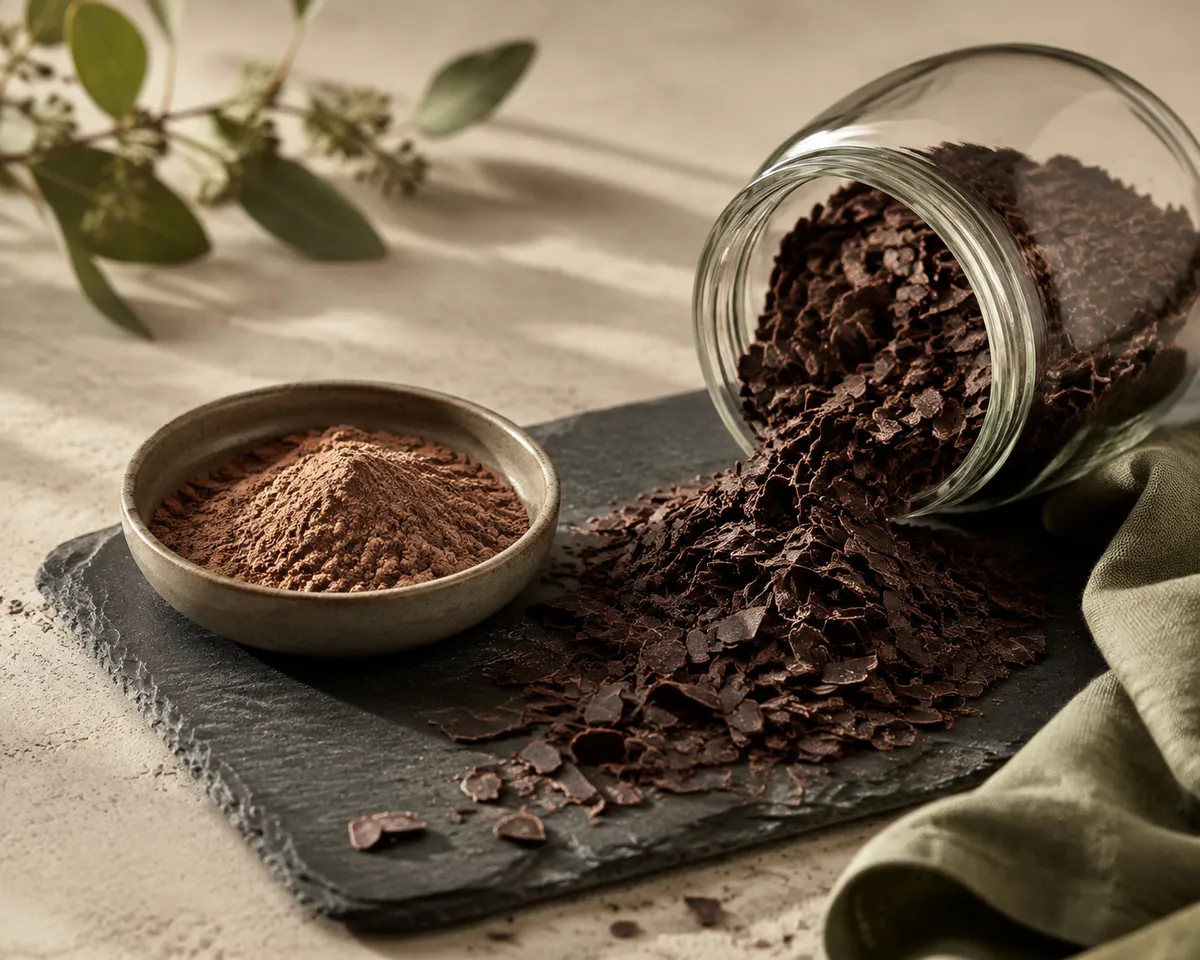
Telling them apart takes five seconds at the shelf. Read the first ingredient: if it is cocoa mass, cocoa butter or simply chocolate, you are buying the melting kind, and if it is sugar you are buying a mix.
| Product | First ingredient | What it makes |
|---|---|---|
| Flaked or grated chocolate | Cocoa mass or chocolate | The real drink, thick and rich |
| Sweetened cocoa mix | Sugar | A powder mug, lighter and sweeter |
| Pure cocoa powder | Cocoa | Nothing on its own. You add the sugar |
Fat content on the nutrition panel is the other quick test, since a real drinking chocolate runs to something like 30 g of fat per 100 g and a sweetened mix rarely reaches a third of that. Neither figure is a verdict on the product, only on which drink it will make.
How a tub behaves after opening is a separate question again, and it is taken up in keeping drinking chocolate.
Plain unsweetened cocoa powder is the third thing on the shelf and the most useful of the three for anyone who wants to control the sugar, though it makes a different drink entirely. Whether the powder is natural or alkalised changes its behaviour again, which is set out in Dutch-process cocoa and natural cocoa.
Which drink each occasion actually wants
Neither format is better in the abstract; they are answers to different questions, and the choice is usually settled by volume and by how much control you want over the sweetness.
Drinking chocolate is the right call when the chocolate itself is the subject. A good bar makes a cup with its origin character intact, and the intensity is the point rather than a side effect.
| Drinking chocolate | Powder-based cocoa | |
|---|---|---|
| Volume | Small, 100 to 150 ml | Large, 250 ml and up |
| Time to make | 5 minutes, gentle heat | 3 minutes, easy to rush |
| Sweetness control | None. The bar decides | Complete. You add it |
| Cost per cup | High, since it is mostly chocolate | Low |
| Best at | Concentration and origin flavour | Comfort, volume and speed |
Reach for powder when you want a large warm drink, when you want to decide the sugar yourself, or when several cups are going out at once. The stovetop method makes a genuinely good version of that, and white hot chocolate sits outside both categories since it carries cocoa butter with no cocoa solids at all.
For the melted route, the practical sequence is a separate matter from what the drink is, and it belongs to making drinking chocolate. What the cup tastes like across styles is covered in drinking chocolate flavour, the faults that show up on the way in what goes wrong, and how the two families compare head to head in hot chocolate against hot cocoa.
Common questions
What is the difference between drinking chocolate and hot chocolate powder?
Drinking chocolate is made by melting real chocolate, so the cocoa butter in the bar comes with it. Powder has had most of that fat pressed out, which is why a powder drink is lighter and thinner and why a melted one coats the cup.
Why is drinking chocolate served in such a small cup?
The fat load per millilitre is several times that of a powder-based mug, because roughly half the weight of a good dark bar is cocoa butter. A hundred millilitres of it carries about as much richness as most people want, and the traditions built around the drink all assume a small cup and a spoon.
Why does chocolate seize when you add a splash of liquid?
Chocolate is sugar and cocoa solids suspended in fat. A small amount of water dissolves some of the sugar into a syrup that glues the solid particles together, so the mixture stiffens. Enough liquid, added warm, flips the system the other way and gives a smooth drink instead.