Drip coffee vs Instant coffee
Drip Coffee vs Instant Coffee: Extracted Now or Months Ago
Drip coffee extracts in front of you and instant coffee was extracted months ago and dried into granules. That is subtraction rather than adulteration, and it decides aroma, dose, cost, cleanup and the jobs each one is actually best at.
Drip coffee is percolation in the kitchen: hot water falls once through a flat bed of medium grounds at about 60 g per litre over four to six minutes, and nothing has been dried out of it. Instant coffee is brewed at industrial scale, concentrated and then freeze-dried or spray-dried into granules, so adding water reconstitutes an extract rather than making one. Aroma leaves with the water during drying and no technique brings it back, while instant wins on speed, waste, cost and any job where the coffee is an ingredient.
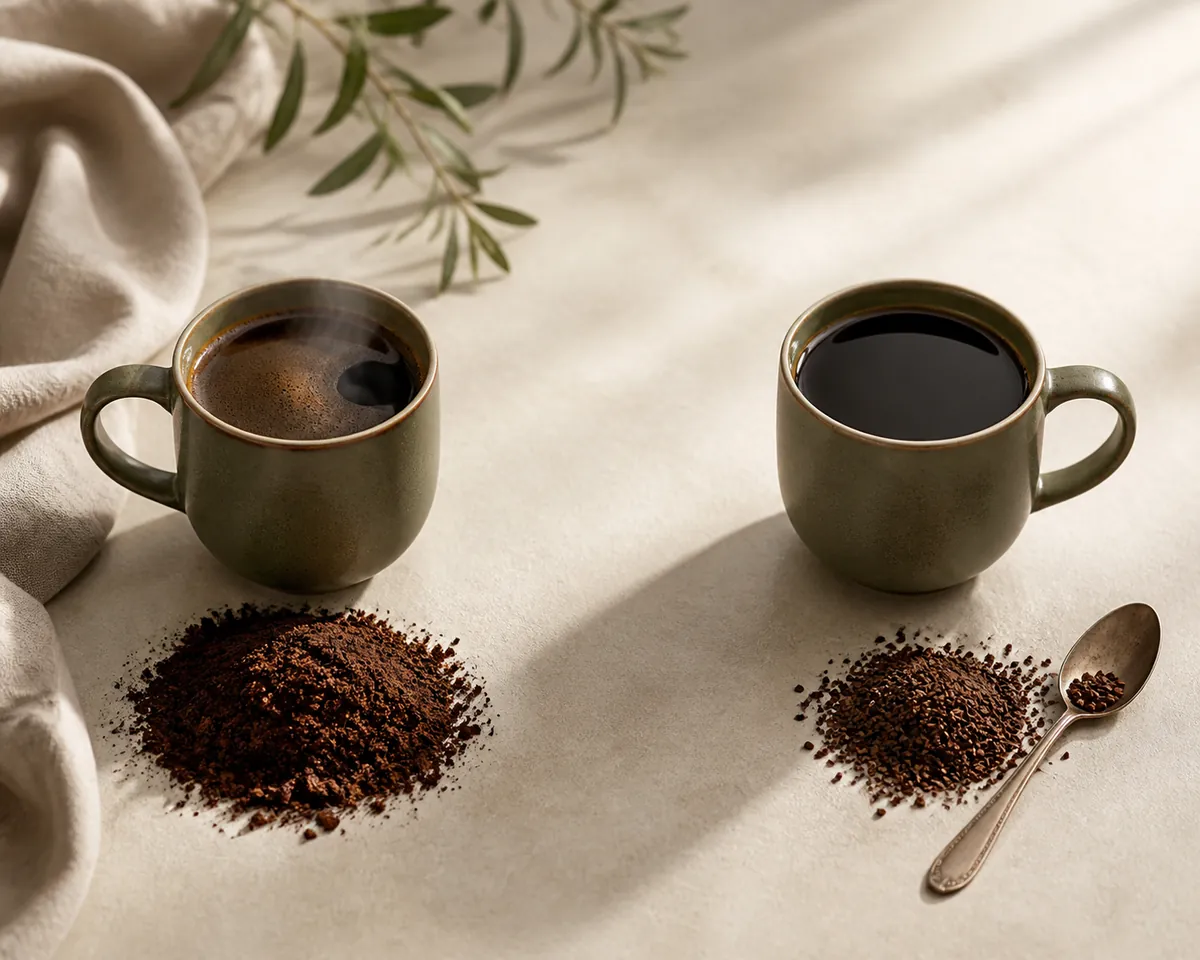
Side by side
| Attribute | Drip coffee | Instant coffee |
|---|---|---|
| Where the extraction happened | In the basket, four to six minutes ago | At industrial scale, months ago |
| What happens in the mug | Nothing. The brewing finished in the machine | Dissolution, since the granules are a dried extract |
| Aroma | Full, and highest at the moment of brewing | Reduced by drying, and not recoverable |
| Coffee per mug | About 15 g for a large mug, at 60 g per litre | About 4 g, one heaped teaspoon per 200 ml |
| Time to a cup | Four to six minutes, plus grinding | Around thirty seconds, including the stir |
| Waste per cup | A wet paper filter and a bed of spent grounds | None beyond a spoon to rinse |
| Beans used | Any, and a good bag shows plainly | Heavily robusta, for yield and caffeine |
| Best job outside the mug | A pot for several people at once | Baking and cold drinks, since it dissolves |
One is brewed in your kitchen, the other was brewed in a factory
The usual framing of this pair is real coffee against a substitute, and that framing is wrong in a way worth correcting before any axis is measured. Both cups are brewed coffee.
Only one of them was brewed in the room you are standing in.
Drip coffee is hot water falling once through a flat bed of medium grounds, draining into a pot after four to six minutes, at around 60 g of coffee per litre. The extraction happens in front of you.
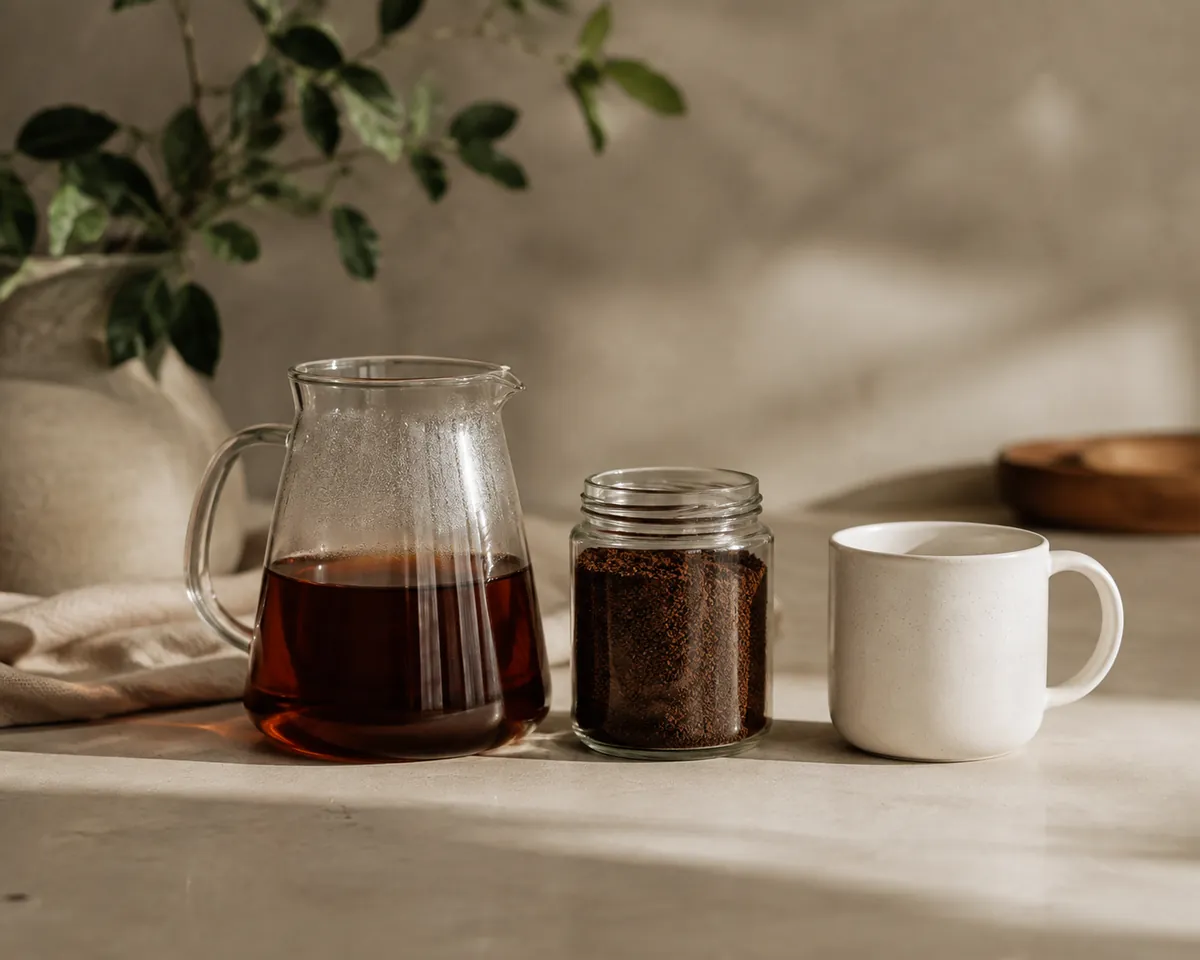
Instant coffee was extracted months ago at industrial scale, concentrated, and then dried into a soluble powder or granule. Adding water puts the water back.
Nothing is being extracted in the mug at all.
That single difference in where and when the extraction happened decides every axis below, including the ones where instant wins. It also explains why the gap between them is not adulteration but subtraction: what separates the two cups is what the drying removed.
Why one is a brewing method and the other is a reconstitution
Naming the operation correctly makes the rest of the comparison much easier to follow.
Percolation is what a drip machine does. Fresh water meets the grounds continuously, keeps the concentration gradient steep from the first drop to the last, and carries the soluble material away as it goes, which is the same family a pour-over cone belongs to.
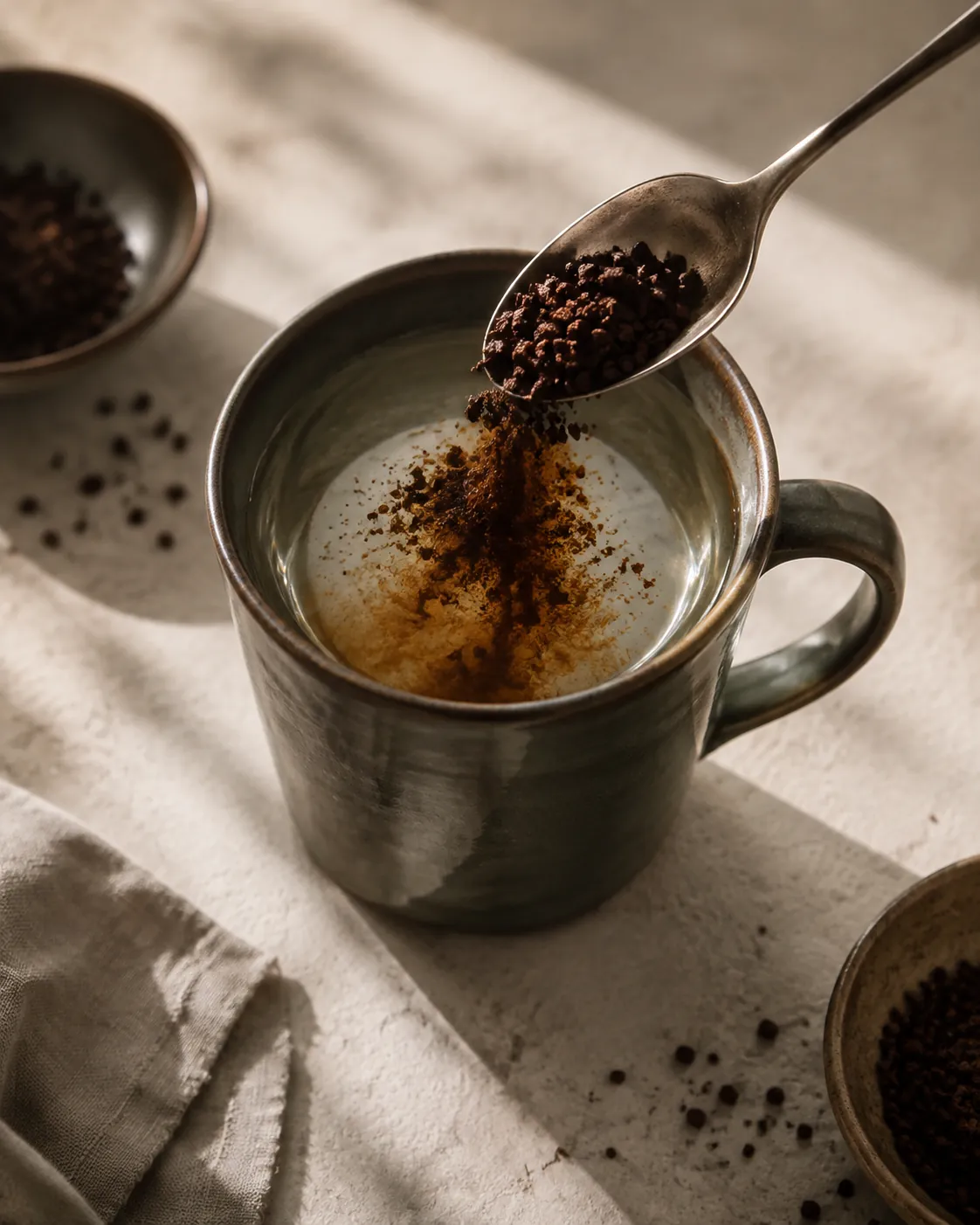
Dissolution is what happens in a mug of instant. The granules are already the finished extract with the water taken out, so nothing is left in the bottom of the cup and there is no bed, no filter, no yield and no extraction percentage to hit or miss.
Two different sequences, ending in the same mug
- Drip, at homeGrind, dose, wet the bed, wait four minutes, discard the grounds
- Instant, at the factoryBrew at scale, concentrate, freeze-dry or spray-dry, seal the jar
- Instant, at homeAdd water, stir, drink
- What is left overA wet paper filter and spent grounds, against nothing at all
- What can go wrongExtraction, on one side. Dose and water temperature, on the other
The practical consequence is that drip has an extraction to get right and instant does not. That protects instant from a whole category of failure and denies it the whole category of improvement, which is the trade sitting underneath everything below.
Where the aroma goes, and why no technique gets it back
Drip wins this axis outright, and the reason is structural rather than a matter of quality control.
Coffee's smell comes from several hundred volatile compounds, and volatile is precisely the property that makes them leave along with water. Every drying process exists to remove water, so every drying process removes aroma with it.
Freeze-drying limits the damage because it never heats the coffee, and spray-drying does much more of it, since the mist meets hot air at the moment the aromatics are freest to escape.
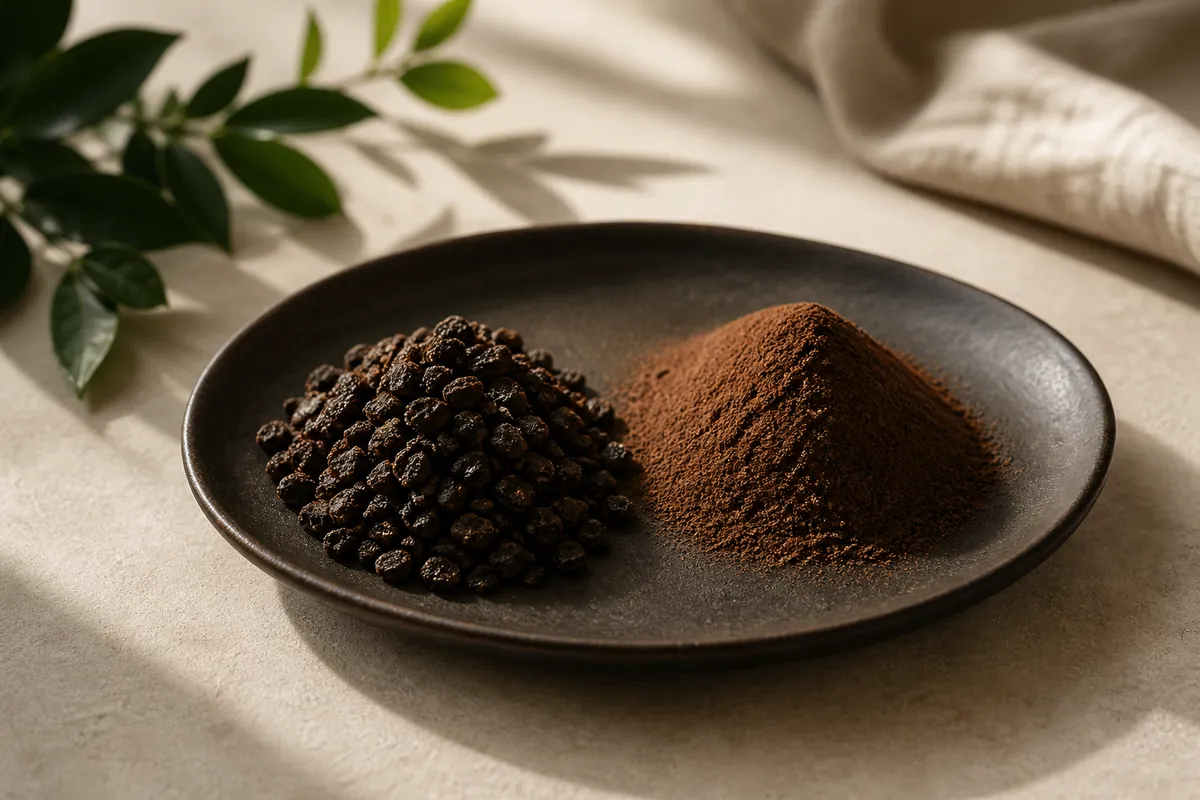
A fresh drip bed loses nothing at that stage, because there is no drying stage. Aroma comes off the grounds, into the water and up out of the mug, which is why the smell of a pot brewing is one of the things people buy the machine for.
| Drip coffee | Instant coffee | |
|---|---|---|
| Extraction happens | In the basket, four to six minutes ago | Months ago, at industrial scale |
| Aroma | Full, and highest at the moment of brewing | Reduced by drying, and never recoverable |
| Sediment | None, since paper holds the fines back | None, unless it is a microground product |
| Oils | Held back by the paper filter | Mostly gone with the water |
| Jar or bag smell | The beans themselves | Often coffee oil sprayed back onto the granules |
| Ceiling | A very good cup of clear filter coffee | A recognisable cup with the top notes missing |
The sprayed-on aroma is worth knowing about, because it sets up a familiar disappointment. The hit when a jar is opened is largely added back, from coffee oil recovered earlier in the process, so the jar can smell far better than the cup ever tastes, and how instant tastes works through what is left on the palate.
What each one leaves you to decide
Fewer levers is not the same as more control.
A drip machine hands over three variables and keeps the rest. Dose, grind size and the water in the tank belong to the person, while pour rate, pour pattern, spray position and total contact time were all settled at the factory, which is why arguing about technique in front of a filter machine is arguing about nothing.
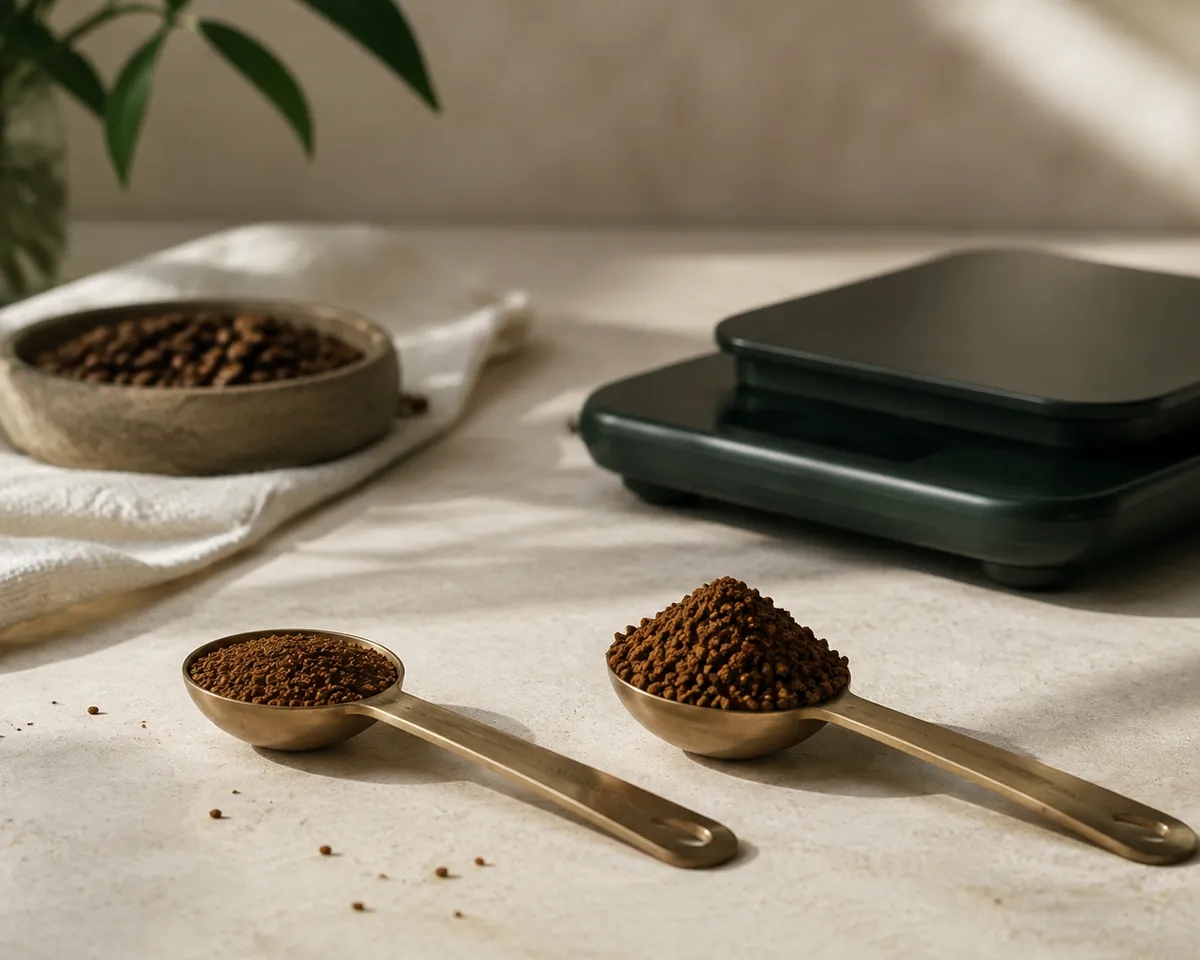
Instant hands over two, and one of them is far looser than it looks. A level teaspoon is roughly 2 g and a heaped one can be 4 g or more, so two mugs made by the same person on consecutive mornings can differ twofold in strength, which is more slack than any other preparation carries in its dose.
- Weigh a drip dose at about 60 g per litre rather than scooping it, since a scoop measures volume and the recipe is in mass.
- Set the drip grind to caster sugar and move it one step at a time.
- Standardise the instant spoon and the heap instead of weighing, and expect to want more than the jar suggests.
- Wet instant granules with a splash of cool water first, since they absorb heat as they dissolve.
- Use water at 80 to 90 C for instant rather than boiling, which scalds the granules and adds bitterness.
- Try a few grains of sea salt in a bitter mug before reaching for sugar.
So the honest reading is a split. Instant is more repeatable as a product and less repeatable as a habit, while drip is the reverse, and a burr grinder closes the gap on one side while nothing closes it on the other.
Full sequences sit with making drip coffee and with making instant coffee.
Which beans go into each, and why the choice matters more in one
Species is where the two diverge for reasons that are commercial rather than culinary.
Instant leans heavily on robusta, and it does so for three reasons at once. Robusta is cheaper per kilo, it carries more caffeine, and it yields more soluble solids, which at industrial scale means more jars from the same tonnage of green coffee.
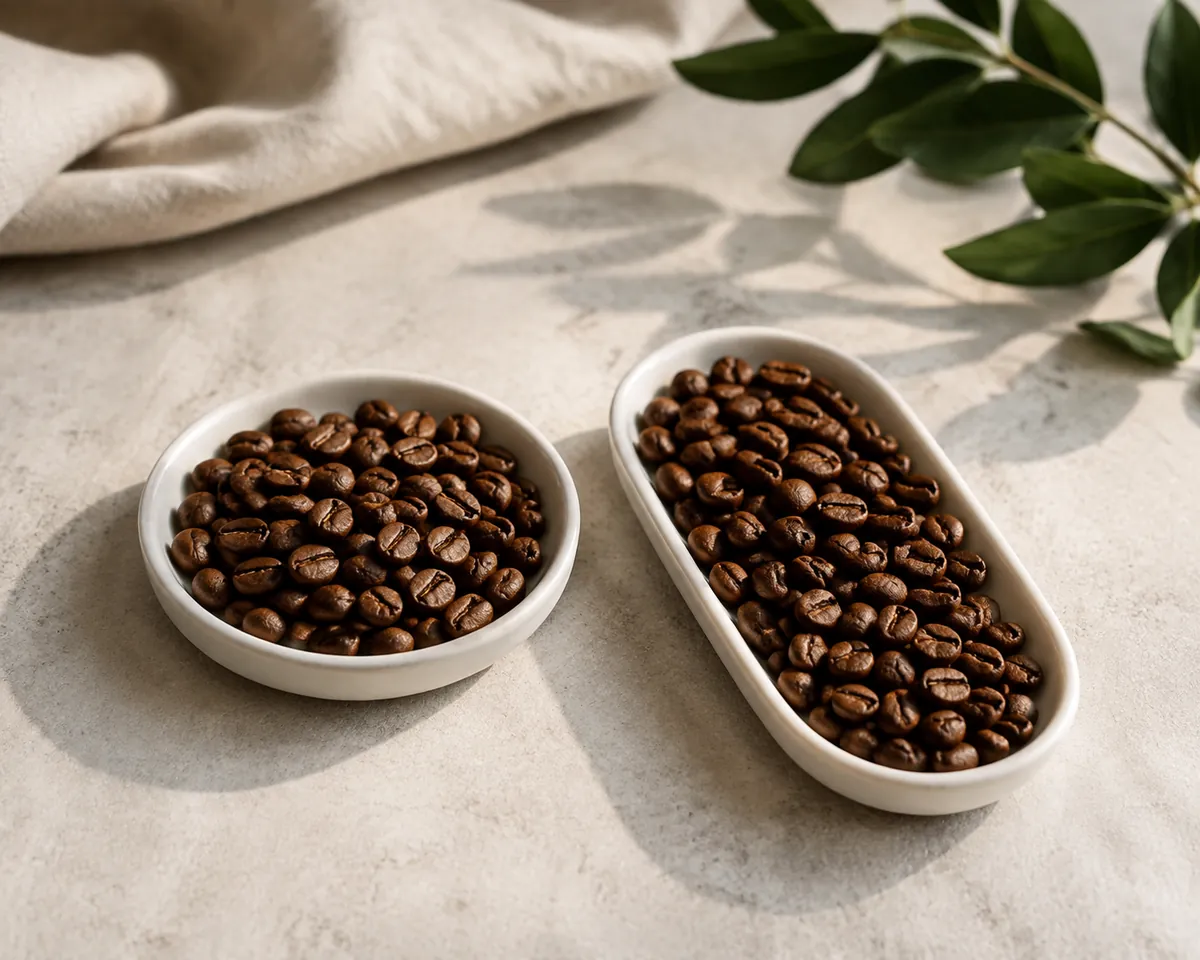
Drip has no such pressure on it. Any bean can go through a filter bed, the method shows a good one more plainly than most, and cafes pour batch brew precisely when they want a coffee to speak for itself.
How much the bag decides the cup
- Drip, single origin, ground freshThe origin is audible, and the method stays out of the way
- Drip, supermarket blendStill recognisable, and the water starts to matter more
- Instant, 100 per cent arabicaNoticeably smoother, with less of the rubbery edge
- Instant, microground addedSome aroma back, plus a slight sediment in the mug
- Instant, unstated blendRobusta content that is implied rather than declared
The labelling asymmetry follows from that. A bag of beans carries a roast date, an origin and often a producer, while a jar carries a best-before and, if you are lucky, the words freeze-dried.
Tipping a little out is the one check no marketing copy can obscure, since irregular glassy chunks mean freeze-dried and fine uniform powder means spray-dried.
How much caffeine ends up in the mug
Drip carries slightly more per serving, and the gap is smaller than the difference between two spoonfuls of the same jar.
Brewed coffee sits near 95 mg per 8 fl oz on the USDA figure. A typical mug of instant lands somewhere around 60 to 80 mg, and the variable moving it is not the process but the hand holding the spoon.
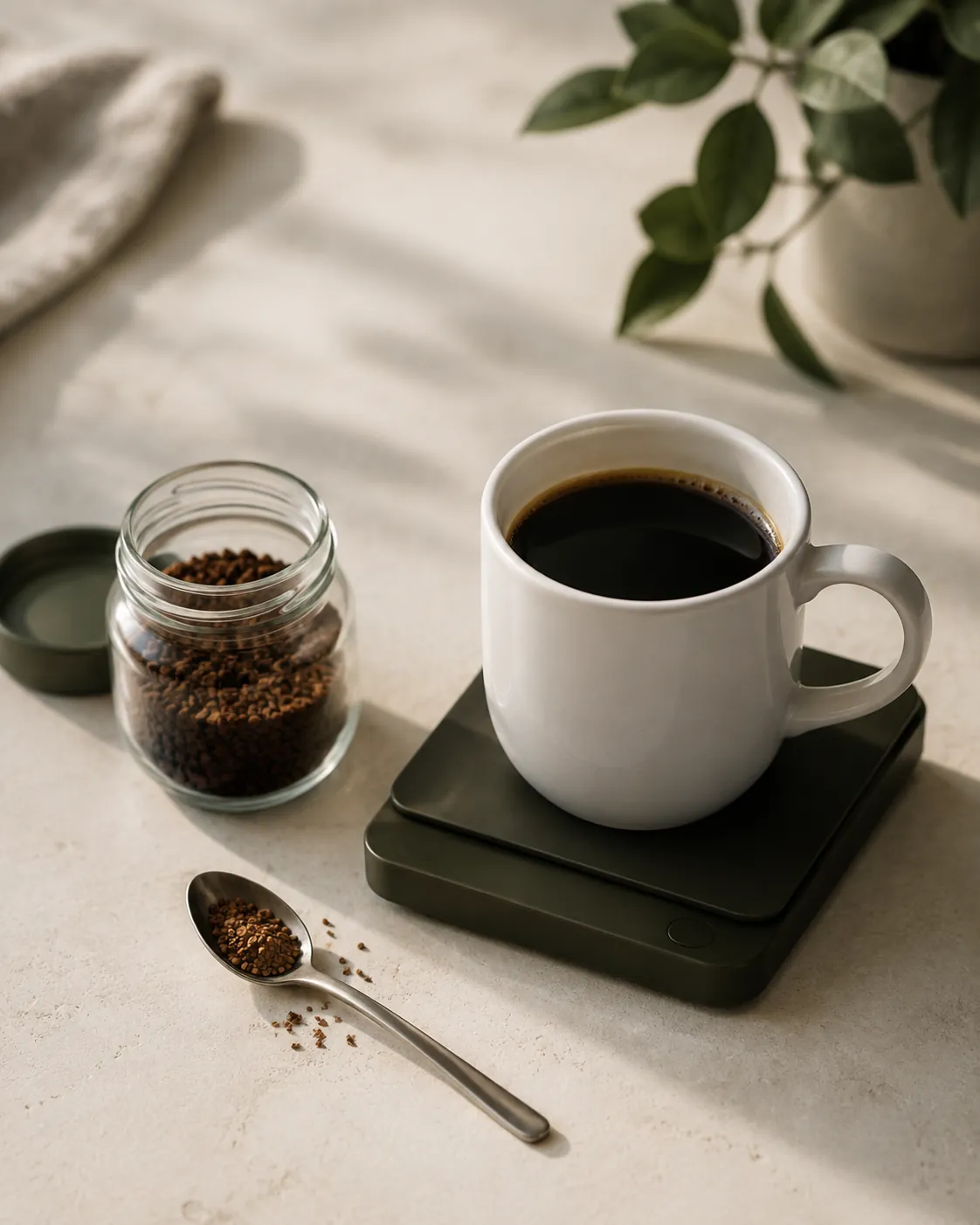
Robusta pushes the instant figure up, since it carries roughly twice the caffeine of arabica by dry weight, which is one reason a budget jar can be stronger than a premium one and why the ranking between the two drinks is not fixed. A decaf version of either is reduced rather than emptied.
These are descriptive figures about drinks as they are usually prepared. Caffeine by brew method sets out the wider comparison, and instant coffee caffeine works through a single mug in detail.
Thirty seconds against four minutes, and the mess afterwards
Speed and cleanup are the two axes instant wins without qualification, and they are worth separating because they favour it for different reasons.
Time first. A mug of instant is half a minute from cupboard to hand, including the stir, and a drip pot is four to six minutes of brewing plus the grinding, the filter, the fill and the wait.
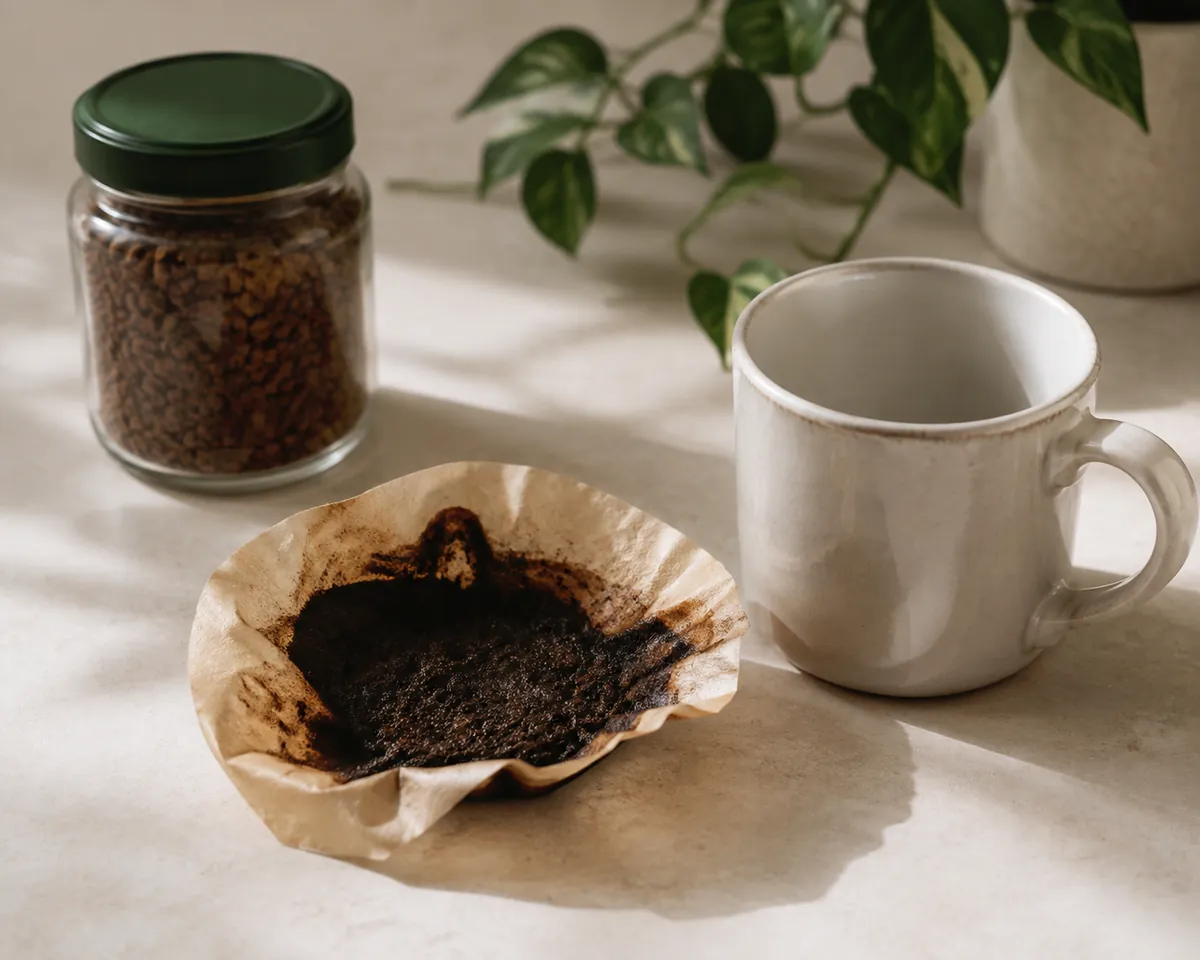
Waste second. A drip brew leaves a soaked paper filter and a bed of spent grounds every time, plus a carafe and a basket to rinse, while instant leaves a spoon.
Time to a mug
Around thirty seconds, against four to six minutes plus the grinding
Equipment
A spoon and a kettle, against a machine, a grinder and a supply of paper
Waste per cup
None, against a wet filter and a bed of grounds
Cleanup
Rinse a spoon, against rinsing a basket and a carafe
Travel and camping
A jar weighs a fraction of beans plus a brewer
Batch size
One mug at a time, against up to a litre and a half in one go
Batch size is the one entry in that list that runs the other way, and in a household it often outweighs everything above it. A drip coffee maker makes six mugs for the same four minutes it spends on one, while instant charges the same thirty seconds per mug forever.
What each costs, per mug and up front
Instant wins on money too, and the win is larger at the counter than in the cup.
The up-front figure is the obvious half. A jar and a kettle against a machine, a grinder, a stock of paper cones and a filter jug is not a close contest, and the grinder alone usually costs more than a year of jars.
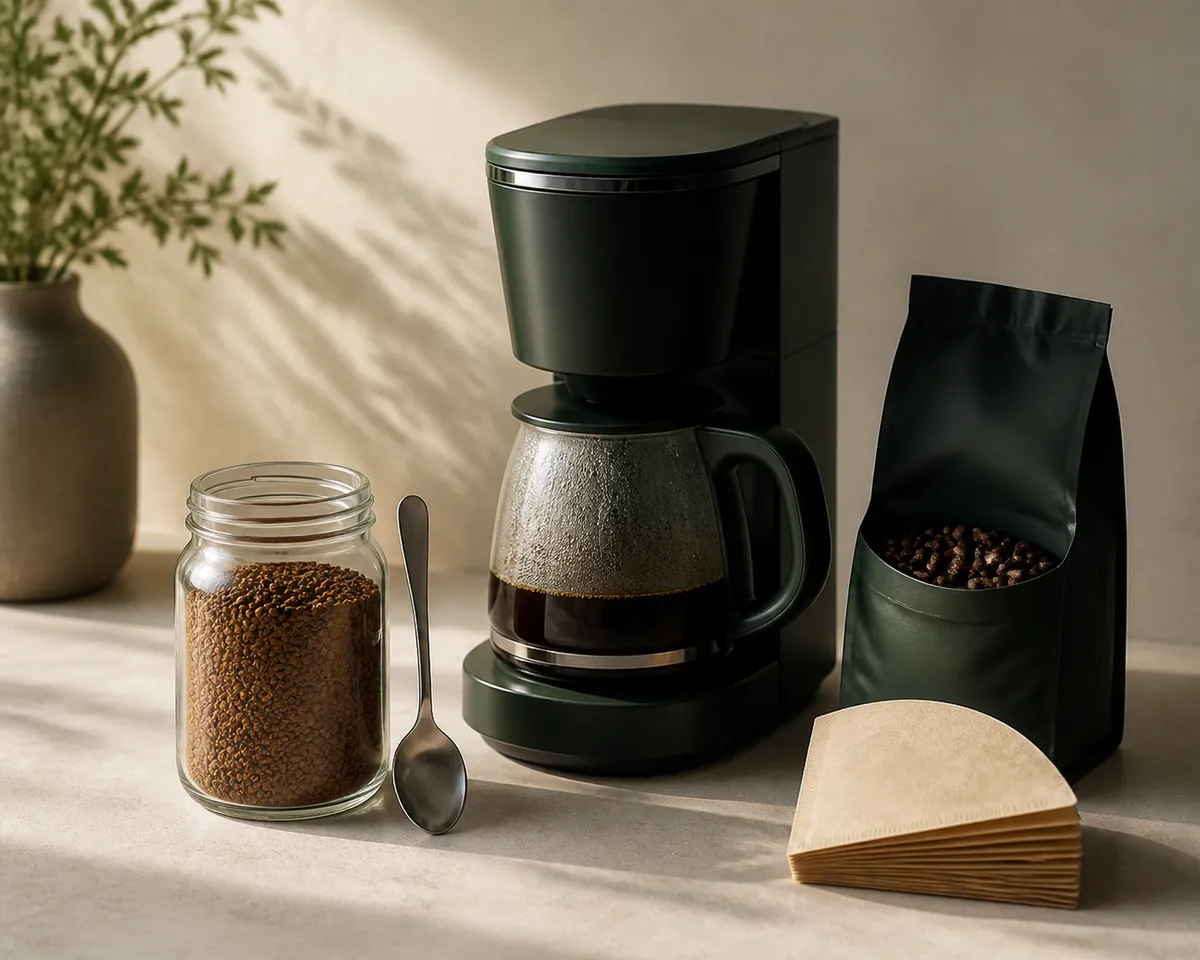
Per mug the gap narrows and does not close. A heaped 4 g spoonful is a fraction of the 15 g a large drip mug takes, and the soluble yield per kilo of green coffee is higher on the industrial side, which is a large part of why the category exists at all.
| Drip coffee | Instant coffee | |
|---|---|---|
| Up front | Machine, grinder, filter jug | A jar and whatever heats water |
| Consumables | Beans, paper filters, electricity | Granules, and hot water |
| Coffee per mug | About 15 g for a large mug | About 4 g, heaped |
| Cheapest usable version | A cheap machine and a decent grinder | The supermarket own-label jar |
| Where quality costs more | The grinder, ahead of the machine | Freeze-drying, and arabica content |
| Hidden cost | Four minutes and a bin of grounds | Aroma, permanently |
One honest caveat belongs on that last row. Specialty instant in single-serve sachets uses better green coffee and gentler processing and costs several times as much per cup, and it still does not close the gap, because the limitation lives in the drying rather than in the beans.
When instant is the right answer rather than the fallback
There are jobs instant does better, and treating them as concessions misreads the category.
Baking is the clearest. Instant dissolves completely and ground coffee does not, so it adds coffee flavour to cakes, brownies, ganache, icing and ice cream without adding liquid that would wreck the texture, and a teaspoon in a chocolate recipe deepens the cocoa without tasting of coffee at all.
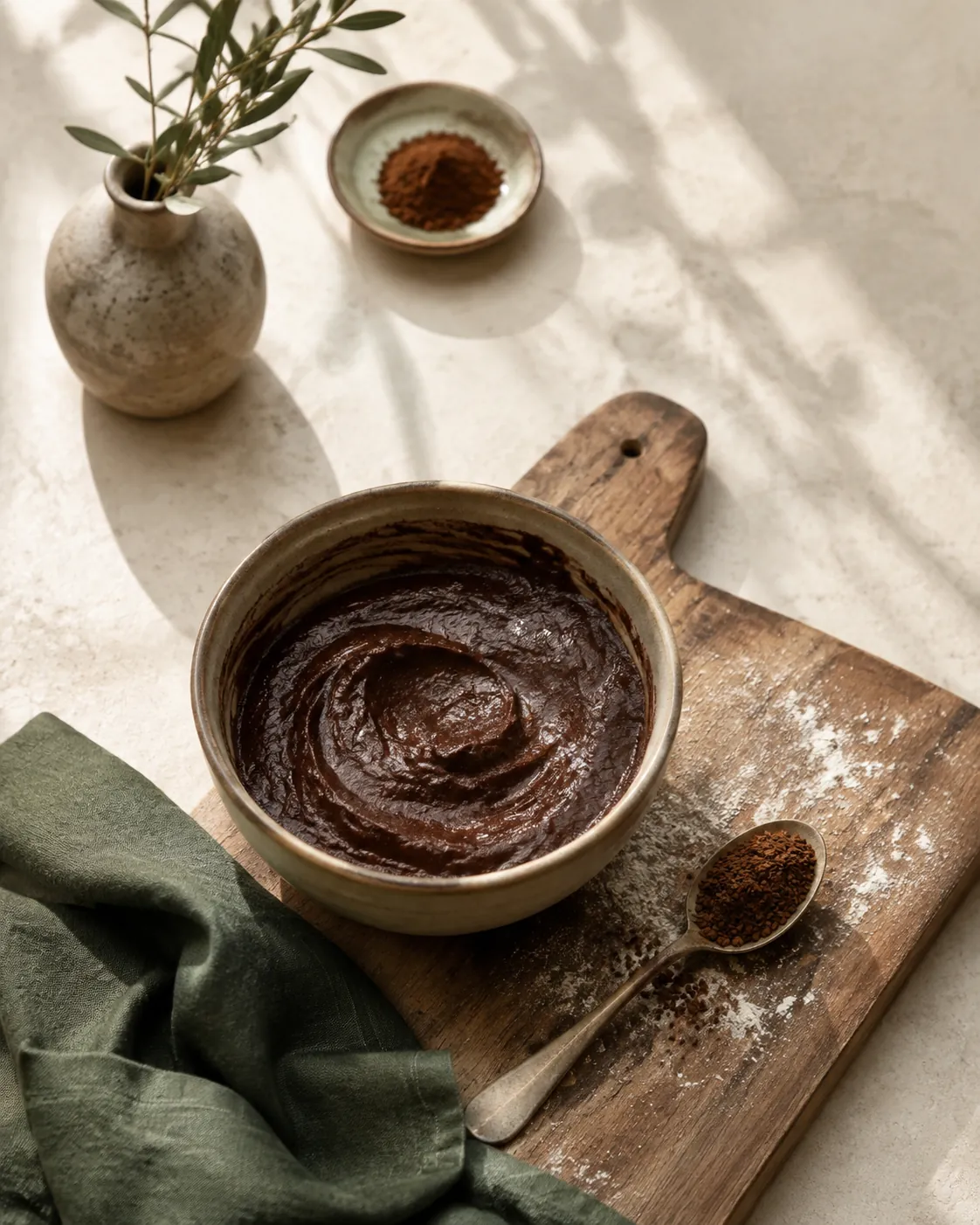
A cold glass is the second. Granules go into cold liquid in about a minute once they have been wetted with a splash of warm water first, where a bed of grounds needs a cold steep of twelve hours or a hot brew and a pile of ice to get to the same place.
Baking and desserts
The right tool, since it dissolves and ground coffee does not
A cold glass
About a minute, against twelve hours or a hot brew chilled hard
Travel and camping
Weight and volume are a fraction of beans plus a brewer
One mug, once
No brewer to clean for a single cup
A pot for four
The drip machine, easily, and for less coffee per head
Showing off a bag
The filter bed, since the drying flattens what you paid for
Neither of those wins transfers to the mug you drink black at a table, and that is the point of listing them separately. The category is at its strongest where the coffee is an ingredient, and at its weakest where the coffee is the whole drink.
Where neither wins
Some of the comparisons made between these two turn out not to separate them, and saying so keeps the rest honest.
Water is the first. A mug of either is above 98 per cent water by mass, both taste of a heavily chlorinated supply, and both go flat and hollow on very soft water, so the tap decides more than most kitchens expect on either side.

Water quality
Decisive for both, and the first thing to check when either tastes wrong
Milk and sugar
Both take them the same way, and both hide a great deal behind them
Bitterness
Fixable on both sides, by grind on one and by temperature on the other
Storage
Both degrade in air. Beans stale, and granules clump when damp
Caffeine
Overlapping ranges, and the spoon or the scoop sets the figure
Which tastes better
A preference, once the aroma question has been stated plainly
Storage is worth a line of its own, because the two spoil in opposite ways. Beans lose aroma from the roast date onward and storing beans is a race against that clock, while granules do not go rancid, since almost no oil is left in them, and instead absorb moisture until they clump and dissolve badly, which is the whole of storing instant coffee.
Faults divide the same way. A bad drip mug points at the grind, the dose or the water, and a bad instant one points at dose, water temperature or a damp jar, so drip coffee faults and instant coffee faults share almost no entries.
Choosing between them on the alternative you would actually have made
The fair comparison is not against the best cup imaginable but against the cup that would otherwise have existed.
At a desk, on a train or in a hotel room, the alternative to instant is usually no coffee, and a recognisable cup in half a minute wins that contest easily. In a kitchen with a machine on the counter and a bag of beans in the cupboard, the alternative is a good pot for four minutes of waiting, and instant loses it just as easily.
| Question | Drip coffee | Instant coffee |
|---|---|---|
| Ready in under a minute | No | Yes |
| Makes a pot for several people | Yes | No |
| Keeps the full aroma | Yes | No |
| Works with no equipment at all | No | Yes |
| Rewards a good bag of beans | Yes | No |
| Right for a cake or a cold glass | No | Yes |
Two of those rows never move. Aroma belongs to the method that never dried anything, and speed belongs to the method that did the brewing months ago somewhere else, and no technique on either side trades one for the other.
Around the pair sit the other routes to the same mug. A French press is immersion rather than percolation and gives more body, an espresso shot is the same coffee concentrated to a twentieth of the volume, and the wider family of gravity brews is gathered under brewed coffee.
Common questions
Is instant coffee real coffee?
Yes. It is coffee that was brewed at industrial scale, concentrated and then dried into a soluble powder or granule, so adding water puts the water back rather than extracting anything. The gap between it and a drip brew is not adulteration but subtraction, since the volatile aromatic compounds leave along with the water during drying.
Does drip coffee have more caffeine than instant?
Usually, though not by much. Brewed coffee sits near 95 mg per 8 fl oz on the USDA figure and a typical mug of instant lands around 60 to 80 mg. The spoon moves that more than the process does, since a level teaspoon is roughly 2 g and a heaped one can be 4 g or more, and robusta content pushes the instant figure up again.
Why does the jar smell better than the cup tastes?
Because much of that aroma was added back. Coffee oil recovered earlier in the process is often sprayed onto the finished granules, so the burst on opening a jar is not what survived the drying. What reaches the mug is the extract with its volatile compounds already gone, and no dose or water temperature recovers them.