How to Make Moka Pot Coffee Without Burning It
A moka pot has no dials, timer or pressure gauge, so the fill, the grind and the heat you choose decide the cup.
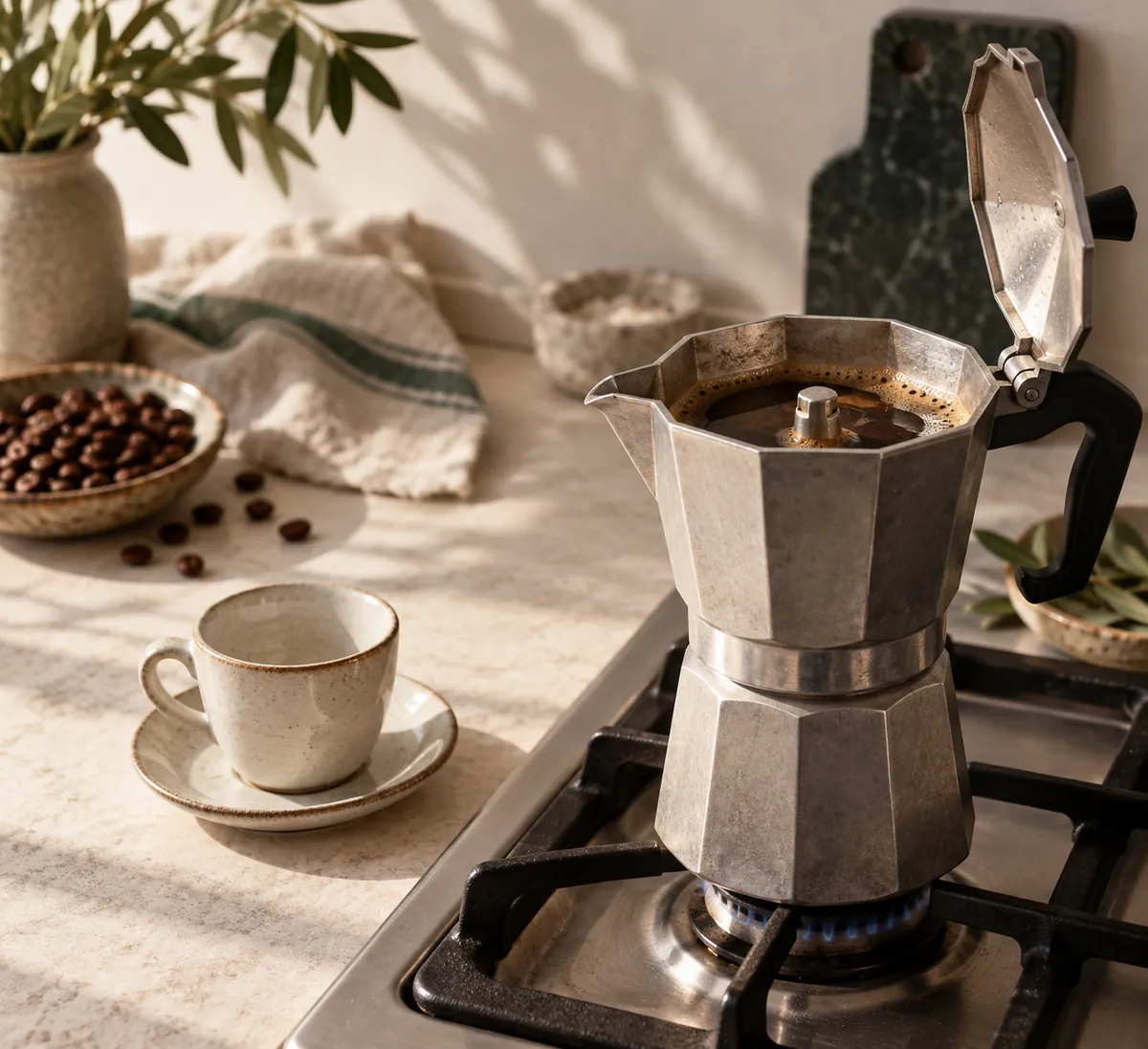
A moka pot has no dials, no timer and no pressure gauge, which means every decision is made before it goes on the stove. Almost everyone who calls moka pot coffee burnt is describing their hob rather than their pot.
How much coffee and water does a moka pot take?
Water goes to just below the safety valve, coffee fills the basket level, and there is no ratio to calculate, because the two chambers already fix the proportion between them.
What a six-cup pot takes
- Water
- To just below the safety valve
- Coffee
- 20 to 22 g, filling the basket level
- Yield
- About 300 ml, in six 50 ml cups
- Tamping
- None at all
That valve is a pressure release rather than a marker. Water over it cannot escape if something blocks, so the line is a safety limit that happens to also be the right fill.
Do not tamp. If you are coming from making espresso, the habit is to press the grounds down, and a compressed basket in this pot raises pressure it was never built to handle.
Fill the basket level and tap it once. That settles the bed without compacting it, which is the whole difference.
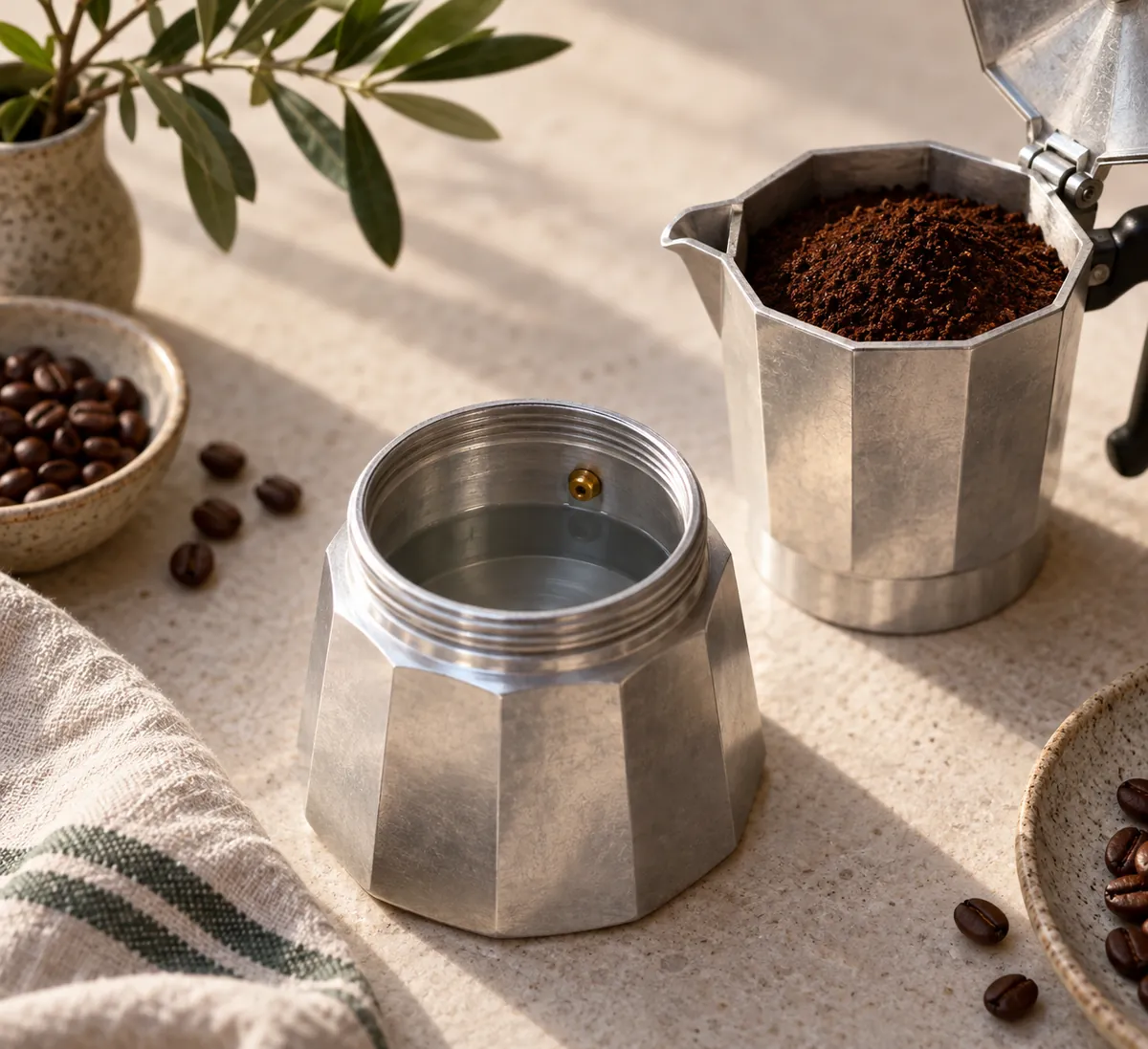
Use hot water from the kettle rather than cold from the tap. It cuts several minutes off the time the coffee spends sitting over a flame, and those minutes are where scorching happens.
Box numbering misleads here: a moka pot cup is about 50 ml, so a six-cup pot gives you roughly one mug and a half rather than six servings.
How do you brew coffee in a moka pot?
Kettle first, then assemble, then medium heat and leave it alone until the colour changes in the chimney.
Moka pot, in order
- FillPour just-boiled water into the base, stopping under the valve.
- LoadSpoon ground coffee into the basket and level it with a tap.
- AssembleScrew the top on firmly, using a cloth if the base is already hot.
- BrewMedium heat, lid open, flame no wider than the base.
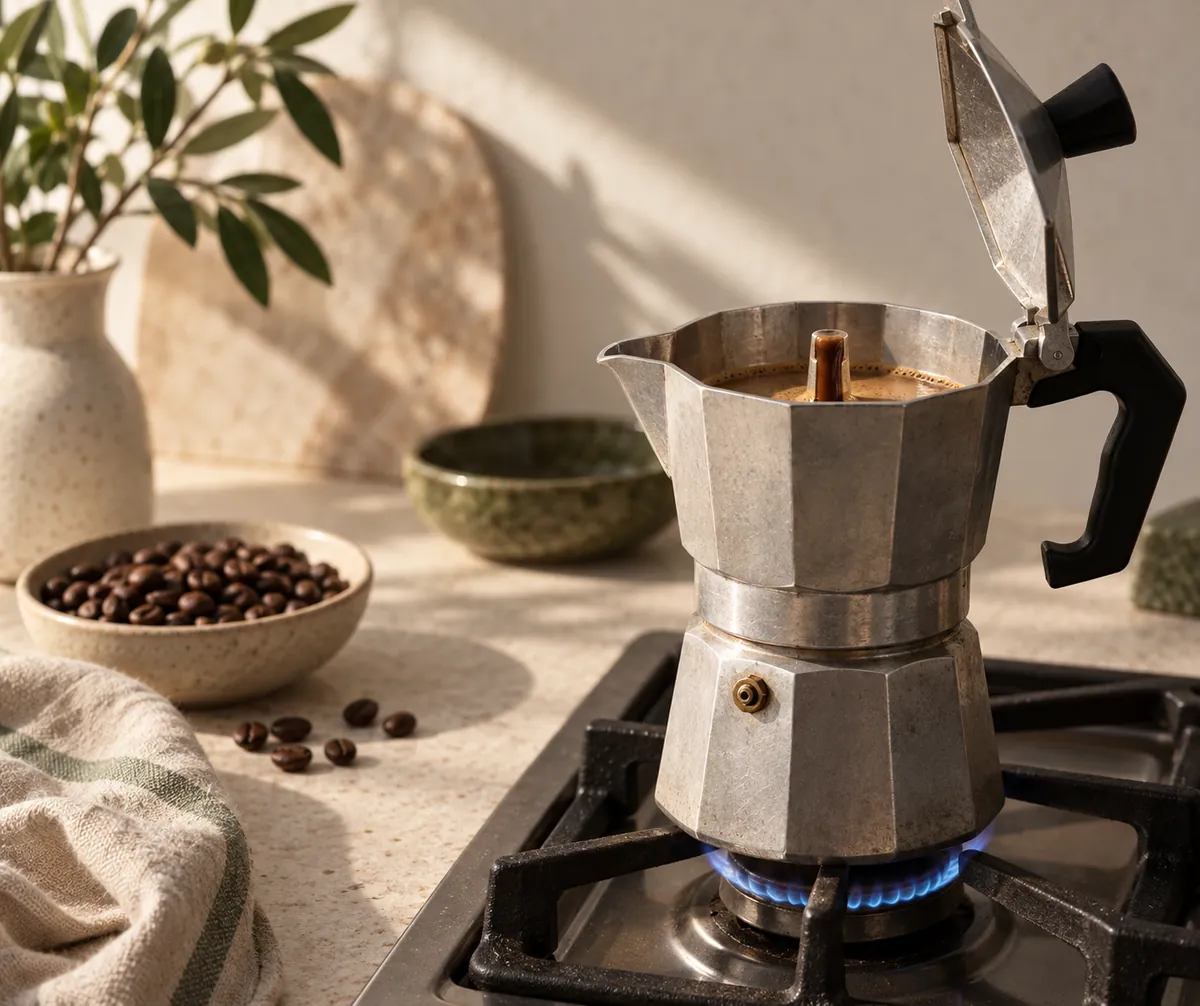
Screw it tight. A loose seal leaks pressure sideways instead of driving water upward, and the brew stalls half finished.
Leave the lid open while it runs. It is the only window you have into what the pot is doing, and closing it means brewing blind for the sake of a few degrees.
The stream should arrive slowly and stay dark for most of the run. Watching it is the whole technique, and it takes about four to five minutes on a domestic ring.
Induction hobs are the one hardware exception. Aluminium will not couple with the field, so an induction kitchen needs either a steel pot or a magnetic plate under an aluminium one.
Keep the handle out of the flame on gas. It sits low and close to the metal, and a flame reaching past the base will soften it over a few months.
What grind does a moka pot need?
Granulated sugar is the reference: the grind sits coarser than a true espresso grind, finer than anything you would put in a filter, and close enough to table sugar that you can check it between finger and thumb.
An espresso grind is a powder that packs into a lump, and a filter grind is coarse sand with loose grains.
Too fine and the basket chokes. Pressure climbs behind a blocked bed, the pot spits rather than pours, and what does come through is over-extracted.
Too coarse and water rushes past the coffee, the way it would in a filter brewer. The pot fills quickly and the cup is thin, which readers usually misdiagnose as needing more coffee.
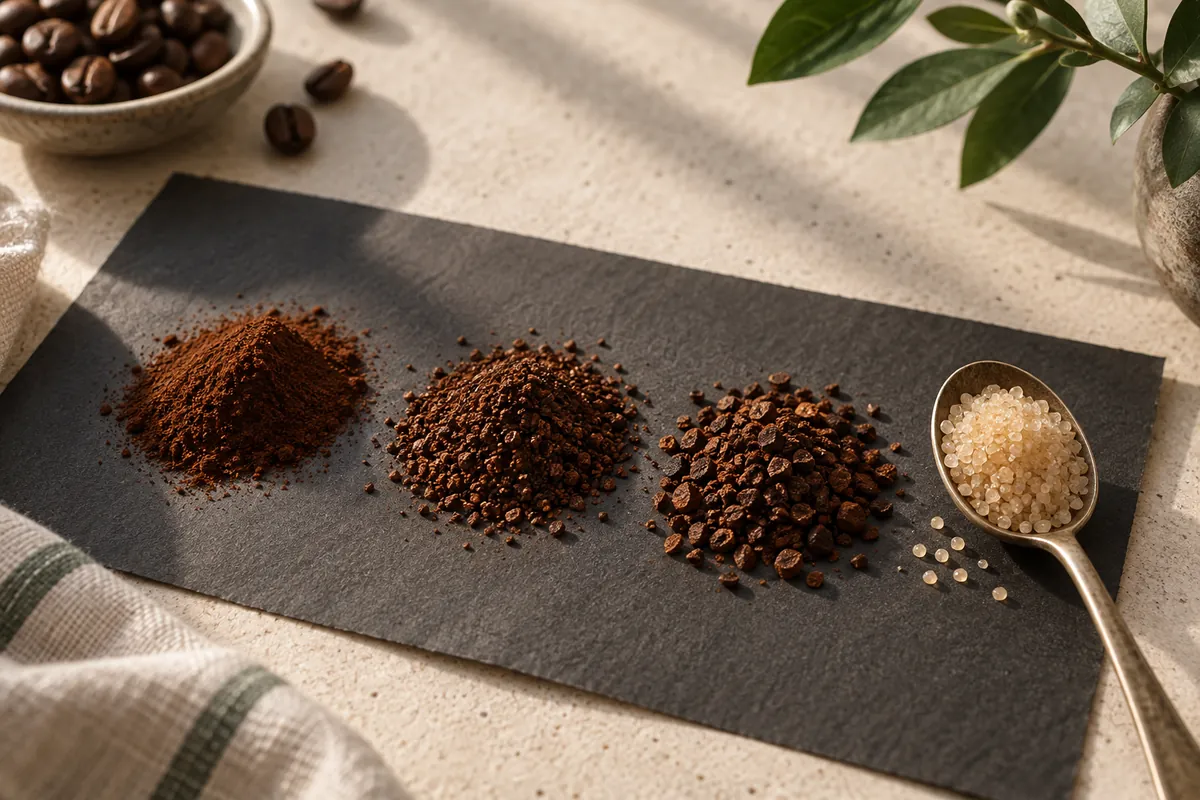
A burr grinder makes this setting reachable in a way a blade grinder does not. Blades produce dust and boulders together, and the dust is what blocks the basket.
Pre-ground espresso coffee still works if you keep the heat low. It sits on the fine side of ideal, so it needs the gentler flame rather than a different pot.
Roast level shifts the grind under you. A darker bean is more brittle and grinds finer at the same setting, so a bag change can push a working setting into choking.
Why does the heat setting decide the taste?
Because heat controls how fast water crosses the coffee, and a moka pot has no other flow control at all.
Two things go wrong when the ring is hot. Water crosses the bed faster than it can extract evenly, which on a machine would be controlled by pressure rather than by a flame, and the base of the basket sits directly over metal hot enough to scorch the grounds from below.
The second is what people taste as burnt. It is a roasting effect happening in your kitchen, and a change of coffee will rarely cover it.
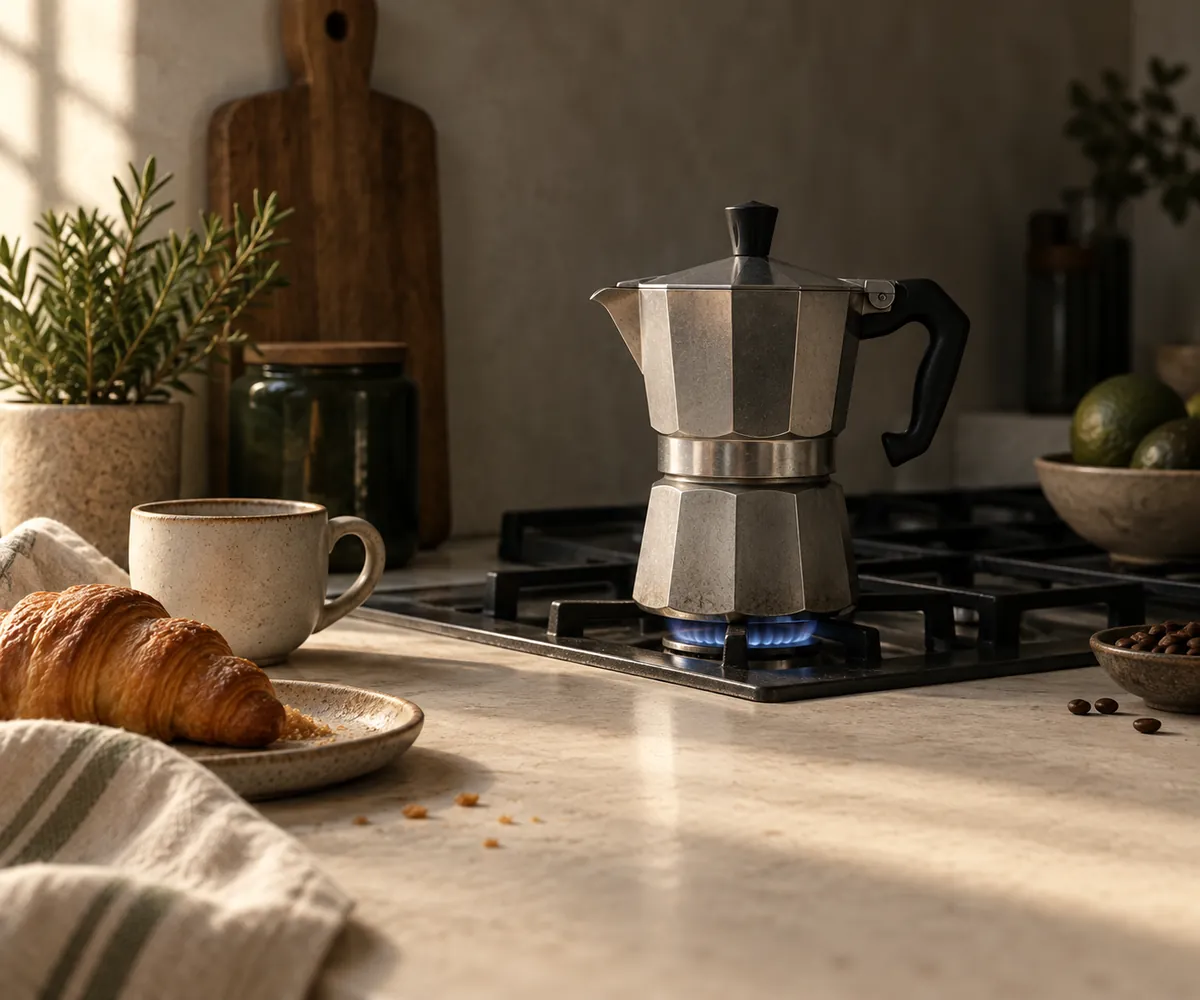
Pushed harder still, the pot starts sending steam through instead of water. Steam extracts differently and harshly, and it is one reason a fast brew tastes worse than a slow one.
Electric rings need a different move. They hold their heat after being turned down, so the pot has to come off the ring rather than the dial come down.
Too low is a real failure too, though a rarer one. A flame that cannot build pressure leaves the pot dribbling, and the result is sour rather than bitter.
When do you take a moka pot off the heat?
Watch the colour rather than the clock: the stream runs dark for most of the brew, then pales quite suddenly toward honey, and that change is the signal to move.
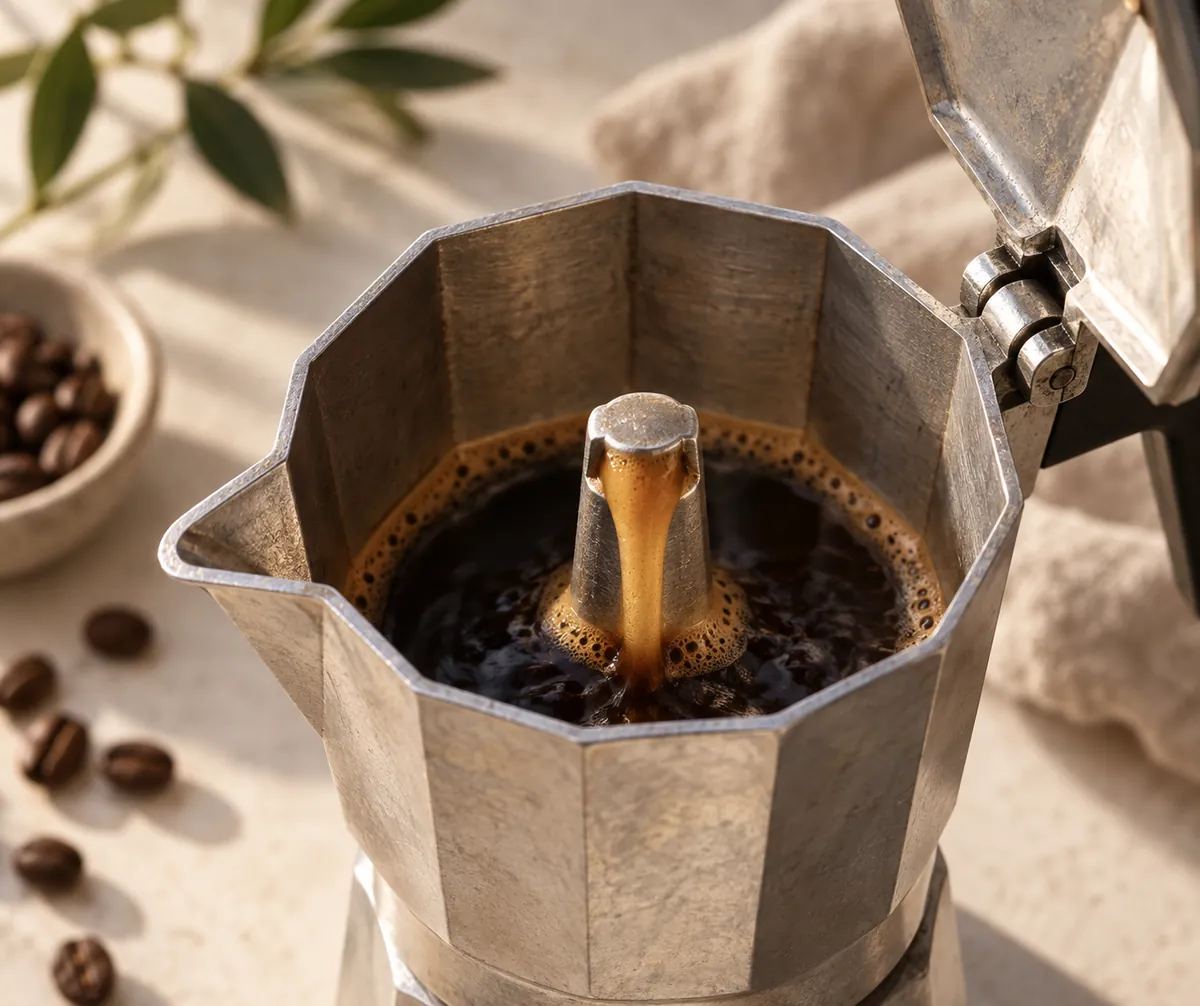
The gurgle comes after the right moment rather than at it, because a pot making that noise is already pushing steam through spent grounds, and everything arriving after it is harsh.
A cold cloth round the base stops the brew immediately. Without it the pot keeps its heat and keeps pushing, so taking it off the ring alone is not quite enough.
Some pots hide the stream entirely. A dark chimney or a closed lid means going by sound, in which case the first faint change in pitch is your cue rather than the full gurgle.
Running the base under the tap works and is faster. It also thermally shocks the metal every time, so a cloth is kinder to a pot you intend to keep.
Why does my moka pot coffee taste bitter?
The hob is the first suspect, because it is the cause far more often than anything else.
- Was the ring above medium, or the flame wider than the base?
- Did the grind pack into a lump when you pressed it?
- Was the pot still on the heat when it gurgled?
- When was the inside of the upper chamber last washed?
The spent grounds are evidence worth reading: a basket that is uniformly wet brown came off a controlled brew, and one scorched dark underneath was cooked from below.
Species plays a part too, since the robusta species carries more of the bitter compounds than arabica beans do.
Grind is the second suspect, once the beans themselves are ruled out. Too fine over-extracts and stalls together, so a pot that both spat and tasted harsh is usually telling you about the grinder rather than the stove.
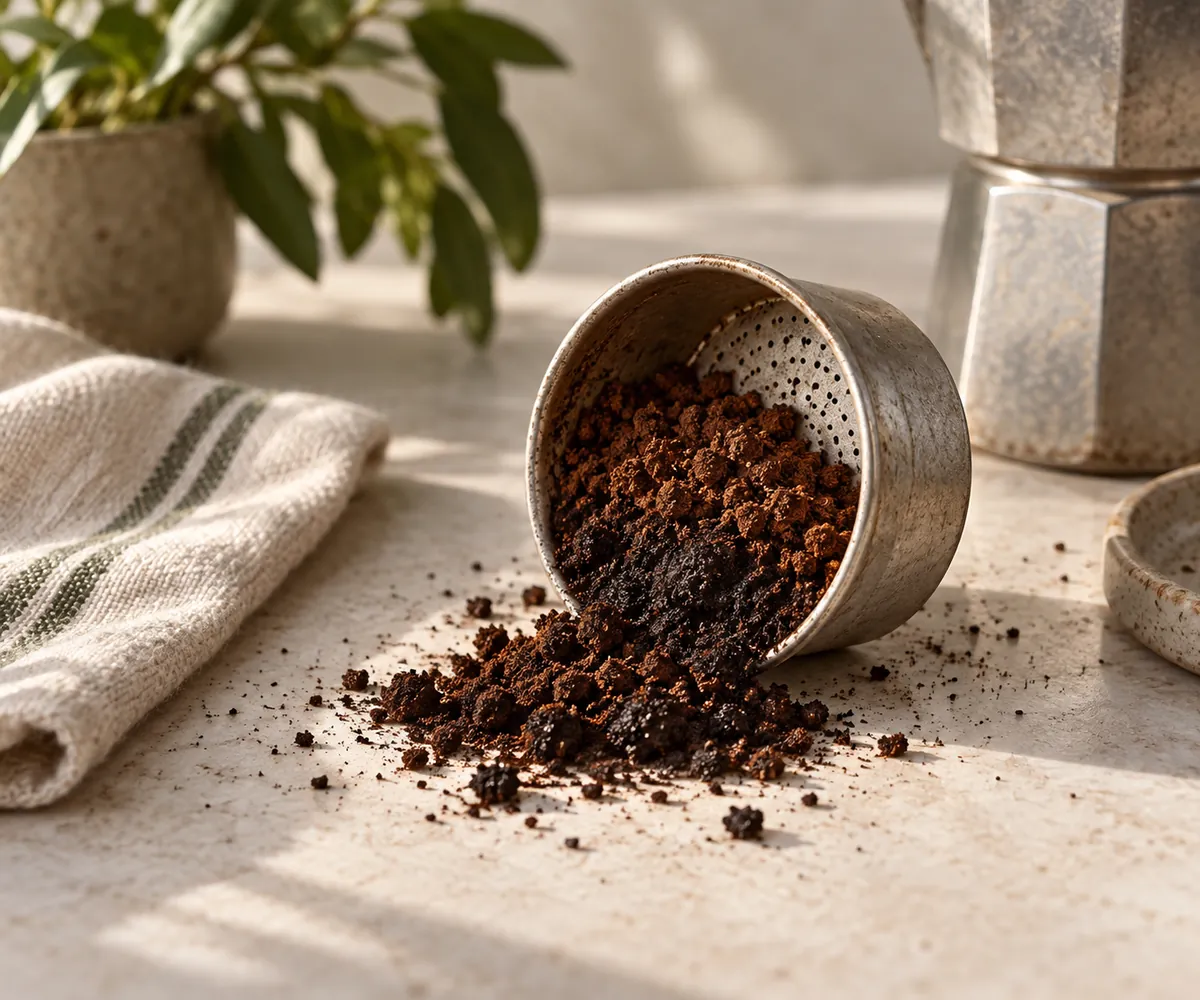
Late removal is the third. The tail of a moka pot brew carries the harshest fraction of the whole run, and letting it in undoes careful work upstream.
Old oil in the pot carries bitterness forward from previous brews. Rinse the upper chamber with hot water after every use, which takes ten seconds and is not the same as a wash.
Two causes sit outside your control. A very dark roast can taste bitter however gently it is brewed, and hard water leaves scale that sharpens the cup over time.
Why does moka pot coffee taste metallic?
Metallic and bitter are different faults, and a metallic edge points at the pot itself rather than at the brew, coming from a pot that is either too new or too old.
New pot
Manufacturing residue on bare aluminium. Season it with two or three brews you throw away.
Old pot
Rancid coffee oil filming the walls. Scrub with hot water and a soft brush.
Washing rule
Hot water only, no detergent, dried open so nothing stays damp.
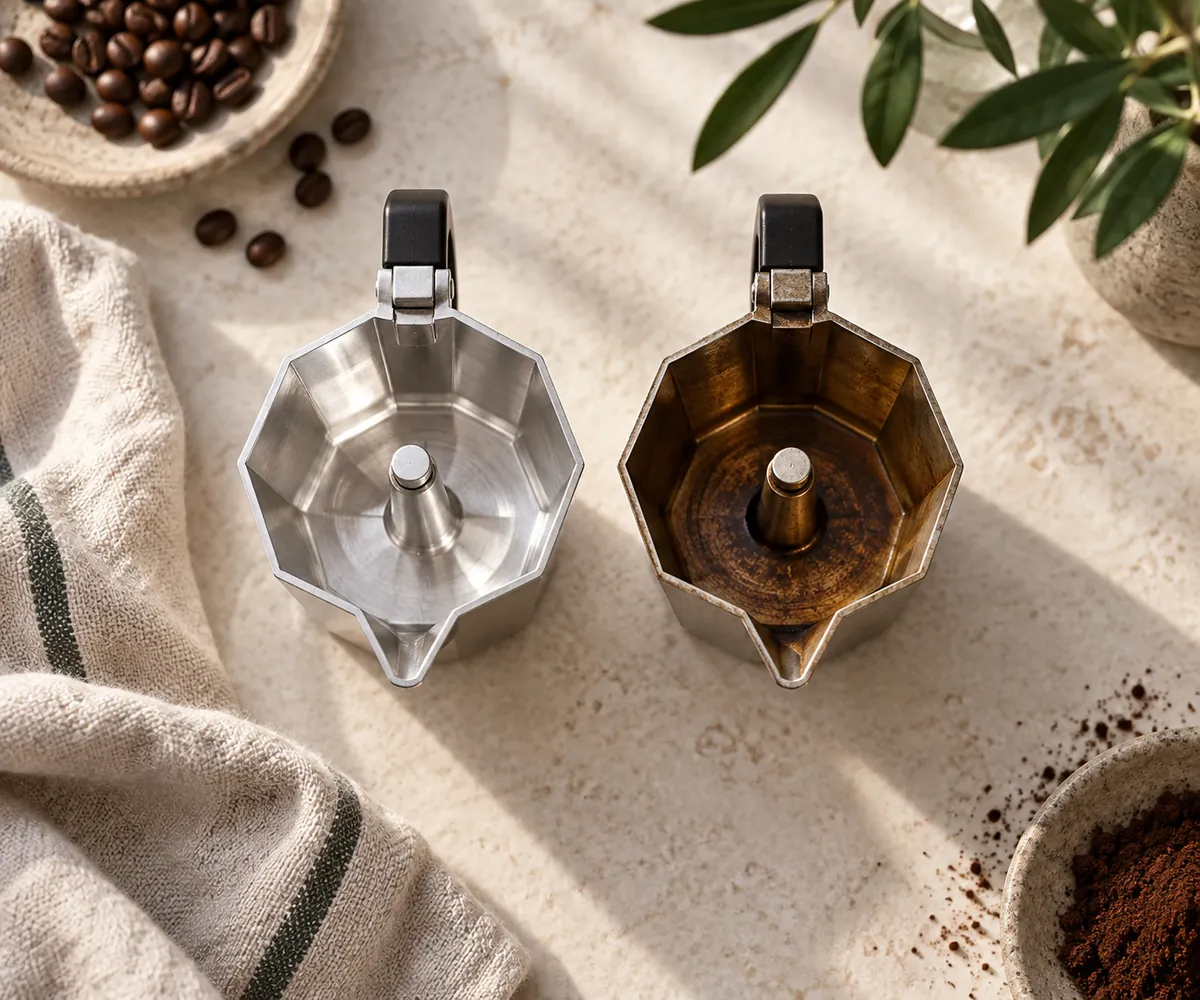
A new aluminium pot arrives with residue from being machined. Two or three sacrificial brews take it off, and the third cup is usually noticeably rounder than the first.
The opposite problem is stale fat. Coffee oil left on warm metal goes rancid over months, and every later brew is flavoured by it.
Wash with hot water and no detergent. Soap leaves its own taste, which readers then mistake for the metallic problem they were trying to solve.
Dry it apart rather than screwed together. Water trapped in a sealed pot can corrode aluminium and encourage the brown film that causes a metallic cup.
A steel pot sidesteps the whole question. There is no reactive surface to season, though the equipment comparison covers what else changes when you move away from aluminium.
Moka pot method
- Makes
- About 300 ml, from a six-cup pot
- Ratio
- 20 to 22 g of coffee to water filled just under the valve
- Water temp
- Medium heat, flame no wider than the base
- Total time
- 8 min
What you need
- 20 to 22 g coffee, ground like granulated sugar
- Hot water, filled to just below the safety valve
Equipment
- Moka pot
- Kettle
- Burr grinder
- Cloth for the base
Method
- FillPour just-boiled water into the base, stopping under the valve.
- LoadSpoon ground coffee into the basket and level it with a tap, never tamping.
- AssembleScrew the top on firmly, using a cloth if the base is already hot.
- BrewMedium heat, lid open, flame no wider than the base.
- StopTake it off when the stream pales to honey, and wrap the base in a cold cloth.
Common questions
Should you tamp the coffee in a moka pot?
No. The basket is filled level and tapped to settle, because a compressed bed raises pressure the pot was not built to handle.
Why does my moka pot coffee taste burnt?
The heat is almost always too high. A hot ring scorches the grounds through the base of the basket, which is a genuine roasting reaction rather than over-extraction.
Do you use hot or cold water in a moka pot?
Hot, from the kettle. It cuts several minutes off the time the coffee spends sitting over the flame, which is where scorching happens.
How do you fix a metallic taste in a moka pot?
A new aluminium pot needs seasoning with two or three discarded brews. An old one needs scrubbing with hot water to remove rancid coffee oil.